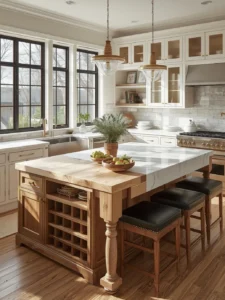
Cozy kitchens are taking center stage in 2026, blending warmth with functionality in ways that make you never want to leave the heart of your home. These designs prioritize comfort, natural materials, and intimate atmospheres while maintaining the modern conveniences we rely on daily.
1. Warm Wood Cabinetry with Textured Grain
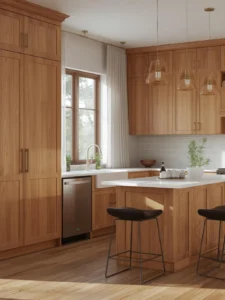
The shift toward warm-toned wood cabinetry marks a deliberate move away from the stark white kitchens that dominated previous years. Natural wood grains in honey oak, walnut, and cherry bring an organic warmth that instantly makes a kitchen feel more inviting. These materials age beautifully and create a lived-in quality that aligns with the broader trend of designing homes that feel collected rather than decorated. The visible grain patterns add depth and character, transforming cabinetry from mere storage into a focal point that grounds the entire space.
In practical application, homeowners are installing these wood cabinets as full-wall installations or mixing them with lighter elements to prevent the space from feeling too heavy. Pair warm wood lowers with open shelving or glass-front uppers to maintain visual breathing room. The key is selecting wood with prominent grain patterns and applying matte or satin finishes rather than high-gloss treatments, which can feel too formal. Consider extending the wood treatment to a kitchen island or a floor-to-ceiling pantry wall for maximum impact.
2. Layered Lighting for Ambient Warmth
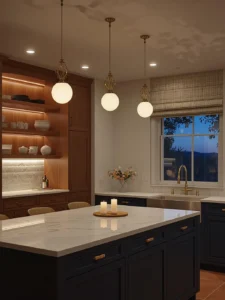
Cozy kitchens in 2026 abandon the single overhead light fixture in favor of layered lighting schemes that create depth and atmosphere. This approach combines ambient, task, and accent lighting to establish different moods throughout the day. Pendant lights, under-cabinet strips, toe-kick lighting, and even candles work together to soften hard surfaces and create pools of warm light that make the kitchen feel like a gathering space rather than a utilitarian work zone. The focus is on dimmable fixtures with warm color temperatures that mimic natural firelight.
To implement this in your kitchen, start by assessing your lighting needs by zone rather than treating the room as a single space. Install under-cabinet lighting to illuminate countertops for food preparation, add pendant fixtures over islands or dining areas for focused task lighting, and incorporate recessed lights or flush mounts for general ambient light. Use dimmer switches on all circuits so you can adjust intensity based on time of day and activity. Consider adding picture lights above open shelving or installing LED strips inside glass-front cabinets to create a soft glow that highlights your dishware collection.
3. The Return of the Breakfast Nook
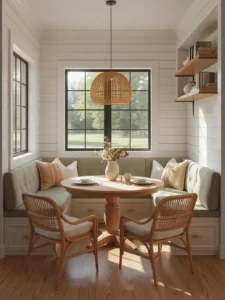
Built-in breakfast nooks are experiencing a resurgence as homeowners prioritize dedicated spaces for casual dining and morning rituals. These cozy alcoves typically feature banquette seating, often upholstered in durable fabrics, surrounding a compact table that creates an intimate dining experience separate from the main kitchen workspace. The breakfast nook satisfies our desire for defined zones within open-concept layouts and provides a comfortable spot that encourages lingering over coffee rather than eating on the go. This design element adds architectural interest while maximizing seating capacity in compact footprints.
Installing a breakfast nook works best in a corner or along a window wall where natural light enhances the cozy factor. Build fixed seating with storage drawers beneath the cushions for practical functionality. Choose upholstery in washable fabrics or leather that can withstand daily use and food spills. The table should be scaled appropriately to the space—typically a round or square table works best—and positioned to allow comfortable entry and exit from the banquette. Add throw pillows in complementary textures and a pendant light fixture centered above the table to define the zone and provide adequate task lighting for meals.
4. Earthy Color Palettes with Natural Tones
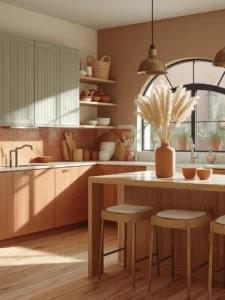
The cozy kitchen trend embraces earthy color palettes drawn directly from nature—think terracotta, sage green, warm clay, mushroom taupe, and soft cream. These colors create a soothing backdrop that feels grounded and timeless, moving away from the cool grays that can feel clinical in kitchen environments. The psychological effect of earth tones promotes calm and comfort, making the kitchen a place where people want to spend time. These colors also provide versatility, working beautifully with various wood tones and metal finishes while offering enough visual interest to prevent the space from feeling bland.
Introduce these colors through cabinetry, wall paint, tile selections, or even painted ceiling treatments for an unexpected touch. A two-tone cabinet scheme with sage green uppers and natural wood lowers creates depth while maintaining the cozy aesthetic. Terracotta or clay-colored tiles work beautifully as backsplash materials, adding warmth and texture. If you’re hesitant about committing to color on permanent fixtures, start with painted walls in mushroom or warm greige, then layer in colorful textiles, pottery, and accessories. The key is building a cohesive palette where each color relates to the others through shared warm or cool undertones.
5. Open Shelving with Curated Displays
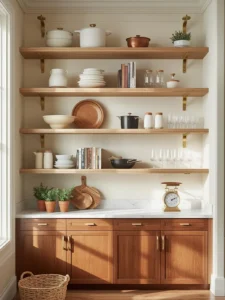
Open shelving continues to define cozy kitchens, but the approach in 2026 focuses on curated, intentional displays rather than cluttered storage. These shelves showcase beautiful dishware, glassware, cookbooks, and small plants, transforming functional storage into decorative focal points. The openness prevents the space from feeling closed in while allowing you to personalize the kitchen with items that reflect your aesthetic preferences. This trend aligns with the desire for kitchens that feel lived-in and personal rather than showroom-perfect, though it does require maintaining an organized and visually pleasing arrangement.
When incorporating open shelving, limit it to one or two walls to avoid overwhelming the space and creating excessive visual clutter. Install shelves in areas where you naturally reach for frequently used items—near the stove for oils and spices, or adjacent to the dishwasher for everyday dishes. Use matching or coordinating dishware and containers to create visual cohesion. Mix practical items with decorative elements: stack plates and bowls, display a few cookbooks vertically, add small plants or herbs in simple pots, and include a piece or two of art or sculptural objects. Maintain negative space on each shelf to prevent the display from appearing crowded, and edit regularly to keep the arrangement fresh.
6. Natural Stone and Raw Material Surfaces
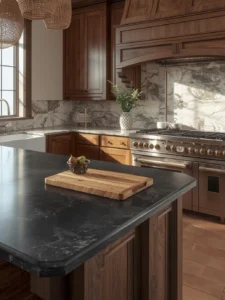
Cozy kitchens in 2026 embrace the beauty of natural stone and raw materials that showcase inherent variations and imperfections. Honed marble, leathered granite, soapstone, limestone, and quartzite appear in their most natural states rather than polished to high gloss. These materials bring an element of nature indoors, with each slab offering unique veining, color variation, and texture that cannot be replicated. The tactile quality of these surfaces adds sensory richness to the kitchen, making it feel more grounded and connected to the natural world. This trend reflects a broader movement toward celebrating materials that age gracefully and develop character over time.
When selecting natural stone, embrace the unique characteristics of each piece rather than trying to match perfectly uniform slabs. Honed finishes work particularly well for countertops as they’re less reflective and feel warmer than polished surfaces. Consider using different stones in different applications—perhaps soapstone for a prep area where the natural patina adds character, and marble for a baking station where the cool surface is functionally beneficial. Extend stone materials to backsplashes, islands, or even a full-height accent wall for dramatic impact. Pair these raw materials with warm wood cabinetry and brass or bronze fixtures that share the same organic quality and patina potential.
7. Integrated Banquette and Island Seating
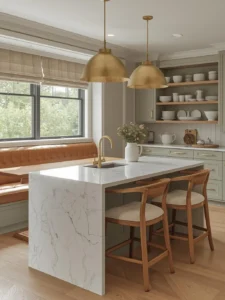
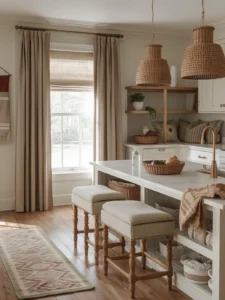
The integration of comfortable seating directly into kitchen islands or as built-in banquettes transforms the kitchen into a true gathering space where family and guests naturally congregate. This design approach goes beyond simple bar stools by incorporating upholstered seating, booth-style arrangements, or built-in benches that encourage people to settle in for extended periods. The seating becomes part of the kitchen architecture rather than furniture placed as an afterthought, creating a seamless flow between cooking and socializing zones. This trend acknowledges that modern kitchens serve as informal living spaces where multiple activities happen simultaneously.
To incorporate integrated seating, consider lowering one section of your island to dining table height with built-in seating on one or both sides, creating a booth-like arrangement that feels restaurant-inspired yet intimate. Alternatively, extend your island to include a lower peninsula with upholstered seating facing into the kitchen so seated guests can interact with the cook. For banquettes, build them into corners or window areas with storage beneath. Use performance fabrics or leather that can handle daily use and spills. Add lumbar pillows for comfort and visual softness. Ensure adequate clearance for entry and exit—at least 18 inches between the seat edge and table edge when seated—and plan lighting above seating areas to define the zone.
8. Textile Layers and Soft Furnishings
Cozy kitchens break away from the purely hard-surface aesthetic by incorporating textile layers and soft furnishings that add warmth, texture, and sound absorption. Linen curtains, woven Roman shades, upholstered seating, area rugs, and even fabric wall hangings introduce softness that balances the hard materials typically found in kitchens. These elements make the space feel more residential and comfortable while serving practical functions like privacy, light control, and noise reduction. The trend toward kitchen textiles reflects a desire for spaces that feel homey and layered rather than clinical and sparse.
Introduce textiles strategically in areas where they won’t be subjected to heavy soiling or safety hazards. Window treatments in natural linen or cotton provide light filtering while adding vertical softness—choose Roman shades or simple panels that can be easily removed for washing. Place a kitchen runner or area rug in zones away from the cooking area, such as in front of the sink or beneath a dining table, selecting flat-weave or low-pile options that won’t trip anyone and can be cleaned easily. Add cushions to seating areas in performance fabrics that resist stains. Consider a fabric pendant light shade, woven baskets for storage, or linen cafe curtains on lower cabinet fronts for an unexpected textural element. Layer different natural fibers—linen, cotton, wool, jute—for dimensional interest.
9. Multifunctional Kitchen Islands as Centerpieces
The kitchen island has evolved into a multifunctional centerpiece that serves as prep area, dining space, storage hub, and visual anchor all in one. In 2026’s cozy kitchens, islands are thoughtfully designed with varied features—integrated cutting boards, wine storage, open shelving, appliance garages, and multiple material combinations that create visual interest while enhancing functionality. These islands are substantial pieces that command attention and organize the kitchen’s workflow, often featuring different countertop materials on different sections to designate specific uses. The trend favors islands that feel like furniture pieces rather than generic cabinets, with details like turned legs, decorative corbels, or contrasting finishes.
When planning a multifunctional island, start by identifying your kitchen’s greatest needs and build solutions into the design. Incorporate a butcher block section for chopping if you do significant meal prep, or add a marble inset if you bake frequently. Include electrical outlets for appliances, considering pop-up or side-mounted options that don’t interrupt the countertop plane. Design storage for specific items—deep drawers for pots and pans, vertical slots for baking sheets, pull-out trash and recycling bins, or open shelving facing the living area for cookbooks and decorative items. If space permits, vary the island height to create different zones, or extend it to include a lower dining area. Choose details like furniture-style legs on the ends, decorative trim, or a contrasting paint color to make the island feel like a considered piece rather than standard cabinetry.