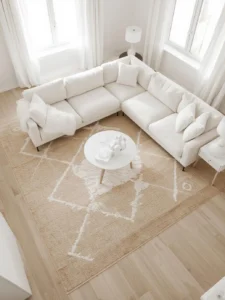
White living rooms continue to dominate luxury interiors in 2026, but the approach has evolved beyond stark minimalism. Today’s white spaces embrace layered textures, architectural details, and sophisticated material contrasts that create depth and warmth. These ideas will help you design a white living room that feels elevated, timeless, and unmistakably luxurious.
1. Layer Multiple White Textures for Dimensional Depth
The 2026 approach to white living rooms rejects flat, one-dimensional surfaces in favor of rich textural layering that creates visual interest and tactile luxury. This technique combines various white materials—bouclé, linen, silk, wool, plaster, marble, and matte paint—each reflecting light differently to build dimensional depth. The result is a room that feels sophisticated and collected rather than sterile or clinical.
Start with a foundational texture like a plush white wool area rug or natural jute in cream, then layer in upholstered pieces in varied white fabrics: a linen sofa paired with velvet accent chairs and a bouclé ottoman. Add architectural texture through lime-washed walls, textured wallpaper, or three-dimensional wall paneling. Incorporate natural materials like raw silk curtains, chunky knit throws, and woven baskets. The interplay of matte and subtle sheen, smooth and nubby, soft and structured creates a living room that reads as intentionally luxurious.
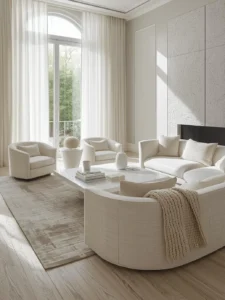

2. Incorporate Architectural Millwork and Wainscoting
Custom millwork and wainscoting elevate white living rooms from simple painted spaces to architecturally significant interiors that evoke traditional luxury with contemporary relevance. These permanent architectural features add three-dimensional interest to walls, create visual rhythm, and establish a sophisticated backdrop that makes any furniture placement feel more intentional and refined.
Install floor-to-ceiling paneling in a board-and-batten pattern painted in soft white, or opt for classic raised-panel wainscoting that extends three-quarters up the wall. Picture frame molding creates elegant geometric patterns that add formality without overwhelming the space. Crown molding and baseboards in generous proportions complete the polished look. Paint all millwork in the same white as your walls but in a different sheen—semi-gloss trim against matte walls creates subtle definition. This approach works equally well in modern spaces with clean-lined millwork or traditional rooms with more ornate detailing.
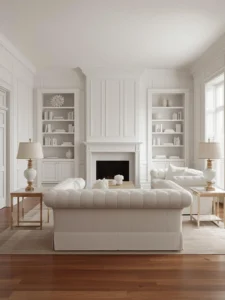
3. Mix White with Warm Metallic Accents
The integration of warm metallic finishes—brass, bronze, gold, and copper—into white living rooms creates an instant sense of luxury and prevents the space from feeling too cool or austere. These metallic elements catch and reflect light throughout the day, adding sparkle and visual warmth while maintaining the serene foundation of an all-white palette.
Introduce metallics through lighting fixtures like a statement brass chandelier or bronze floor lamps with adjustable arms. Select coffee tables and side tables with gold-leafed bases or antique brass frames supporting white marble or glass tops. Hardware on built-in cabinetry, curtain rods, and decorative objects like picture frames, mirrors, and sculptural bowls in warm metals create cohesive luxury. The key is restraint—metallics should feel like intentional accents rather than overwhelming the white foundation. Aged or brushed finishes offer more sophistication than shiny, polished metals and integrate more naturally into contemporary white spaces.
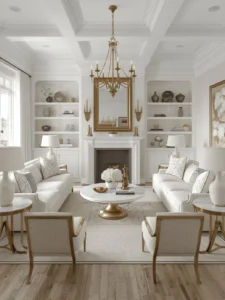
4. Create a Monochromatic Gallery Wall with White Frames
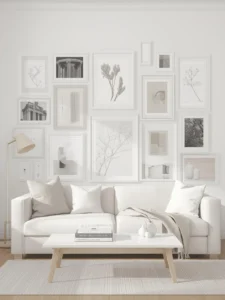
A curated gallery wall executed entirely in white frames brings artistic sophistication to white living rooms while maintaining the cohesive, serene aesthetic that defines luxury minimalism in 2026. This approach allows the artwork itself to provide subtle tonal variation while the uniform white framing creates a structured, intentional installation that feels gallery-worthy.
Select a mix of white-matted photography, abstract art in cream and taupe tones, botanical prints, line drawings, and textural pieces like pressed florals or woven fiber art. Frame everything in matching white frames—choose between clean modern profiles for contemporary spaces or ornate vintage-style frames painted white for traditional interiors. Arrange the gallery wall in a salon-style cluster or a precise grid depending on your aesthetic preference. The white-on-white approach creates a sophisticated focal point that adds personality without introducing color, maintaining the luxurious calm of your white living room while showcasing your personal taste.
5. Install Floor-to-Ceiling White Drapery for Elegance
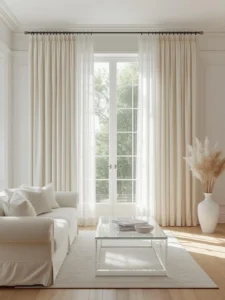
Luxurious window treatments in pristine white fabric create an instant sense of height, elegance, and refined comfort in living rooms. Floor-to-ceiling drapery installed at ceiling height rather than just above the window frame is a key design element in high-end white interiors, drawing the eye upward and making spaces feel more grand and architecturally significant.
Choose natural fabrics like linen, Belgian linen, or lightweight wool in bright white or soft ivory that puddle slightly on the floor for maximum luxury impact. Install drapery hardware as close to the ceiling as possible and extend rods beyond the window frame on both sides to allow panels to stack back fully, maximizing natural light when open. Layer sheer white curtains underneath for daytime privacy with light filtration, then draw the heavier white drapery in the evenings. The soft, flowing fabric adds movement and organic texture to the structured elements of furniture and architecture. For added sophistication, consider motorized tracks hidden behind crown molding or modern white curtain rods in matte finish.
6. Design a White Living Room with Statement Lighting
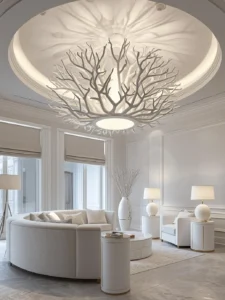
A sculptural statement light fixture serves as functional jewelry in white living rooms, providing necessary illumination while acting as the room’s focal point and primary expression of design personality. In 2026, oversized, architecturally significant lighting in white, cream, or natural materials elevates the entire space and anchors the design scheme.
Consider a large-scale white plaster chandelier with organic, hand-sculpted forms, or a modern white globe pendant in massive proportions that appears to float above the seating area. Tiered white drum chandeliers, oversized white paper lanterns, or contemporary white metal fixtures with geometric forms all create dramatic impact. The fixture should be proportionally bold—in a living room with standard 9-foot ceilings, aim for a chandelier at least 30 inches in diameter; in rooms with higher ceilings, go even larger. Pair your statement overhead lighting with complementary white or neutral table and floor lamps to create a layered lighting scheme that’s both beautiful and functional.
7. Combine White Built-In Storage with Open Shelving
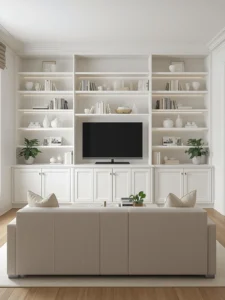
Custom white built-in cabinetry and shelving systems deliver the dual benefits of substantial storage and architectural presence, transforming ordinary living room walls into functional design features that epitomize organized luxury. The combination of closed storage and open display creates visual rhythm while keeping clutter concealed and cherished items beautifully showcased.
Design floor-to-ceiling built-ins flanking your fireplace or television, or cover an entire wall with a combination of closed lower cabinets topped with open shelving. Paint everything in the same white as your walls for a seamless, built-in appearance. Style open shelves with carefully curated collections: white ceramic vases, cream-bound books arranged by color, sculptural objects in white marble or plaster, and small-scale greenery in white pots. Use closed cabinets for media equipment, board games, and everyday items that detract from the serene aesthetic. Include interior lighting within shelving to highlight displayed items and add ambient glow during evening hours.
8. Introduce Organic Natural Elements in White Tones
Bringing nature indoors through organic elements in white, cream, and natural tones prevents white living rooms from feeling disconnected from the natural world while maintaining the cohesive luxury aesthetic. These elements—bleached wood, white stone, natural fibers, and live plants—add warmth, authenticity, and visual interest through their inherent textures and imperfections.
Incorporate a large piece of bleached driftwood as sculpture, or a whitewashed coffee table with visible wood grain and organic edge. Add seagrass baskets in natural cream, a jute area rug in ivory, or woven wall hangings in white cotton. White marble and limestone bring geological beauty with their unique veining and variation. Include living greenery—fiddle leaf figs, bird of paradise, or olive trees in large white ceramic planters, or smaller succulents and air plants in white vessels. Dried botanicals like pampas grass, white hydrangeas, or bleached bunny tails in white vases extend the natural theme. These organic touches create a living room that feels connected to nature while remaining thoroughly luxurious and cohesive.
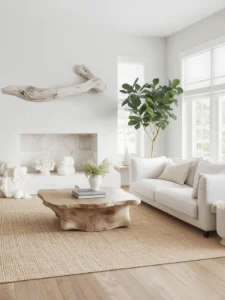
9. Layer White Area Rugs for Cozy Sophistication
The strategic layering of area rugs in complementary white and cream tones creates visual depth, defines distinct zones within open-plan living rooms, and introduces luxurious texture underfoot—all while maintaining the serene monochromatic palette that defines elegant white interiors. This technique adds warmth and coziness without compromising the sophisticated aesthetic.
Start with a large foundational rug in a durable natural fiber like jute, sisal, or seagrass in cream or ivory that covers most of the seating area and extends under all furniture front legs. Layer a smaller, plush white rug on top—a Moroccan-style shag, a sheepskin, or a high-pile wool rug in bright white positioned under the coffee table or in the primary seating zone. This creates both visual and tactile interest, with the textural contrast between the nubby natural fiber base and the soft luxurious top layer. The layering technique also allows flexibility to change the top rug seasonally—a lighter weave for summer, a thicker pile for winter—while keeping the foundational layer constant. Ensure both rugs are large enough to feel intentional rather than like afterthoughts.