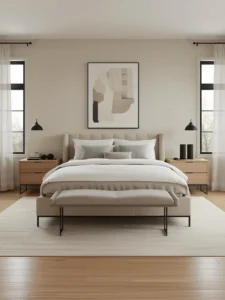
Neutral bedrooms are having a major moment, and for good reason. These calming, versatile spaces create the perfect foundation for restful sleep while offering endless styling possibilities. Whether you’re craving soft beiges, warm taupes, or cool grays, these nine neutral bedroom ideas will transform your space into a serene retreat that never goes out of style.
1. Layered Cream and Natural Wood Warmth
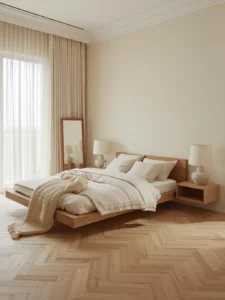
The combination of cream tones with natural wood creates an effortlessly sophisticated bedroom that feels both modern and timeless. This pairing works because cream provides a soft, enveloping backdrop while wood introduces organic texture and visual interest without disrupting the neutral flow. The warmth of wood grain against pale cream walls and linens creates depth that prevents the space from feeling flat or sterile, making it ideal for those who want a neutral bedroom with character.
In practice, start with cream-colored walls and bedding as your foundation, then introduce wood through a platform bed frame, floating nightstands, or even a wood-beamed ceiling. Layer in cream and ivory textiles of varying textures—linen duvet covers, cotton sheets, and wool throws—to create dimension. Natural wood picture frames, a simple wooden bench at the foot of the bed, or even exposed wood flooring ties the entire look together while maintaining that coveted neutral aesthetic.

2. Greige: The Perfect Gray-Beige Balance
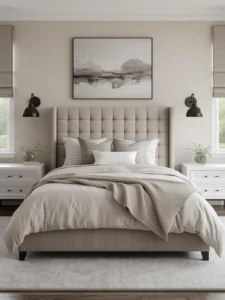
Greige has become the go-to neutral for modern bedrooms because it bridges the gap between cool and warm tones, creating a sophisticated middle ground that works in virtually any lighting condition. This gray-beige hybrid offers more complexity than pure beige while remaining softer and more approachable than stark gray. The beauty of greige lies in its adaptability—it can lean warmer with beige undertones or cooler with gray influences, allowing you to customize the mood of your bedroom while staying firmly in neutral territory.
To implement greige successfully, paint your walls in a true greige shade with balanced undertones, then build your bedding and textiles around this foundation. Mix greige linen sheets with slightly warmer beige pillows and a cooler gray throw to create subtle layering within the same color family. Incorporate greige upholstered furniture like a tufted headboard or reading chair, and add depth with darker charcoal accents in artwork frames or hardware. The key is varying the shades of greige throughout the room to create visual interest without introducing competing colors.
3. Warm Taupe with Architectural Interest
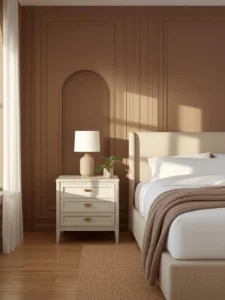
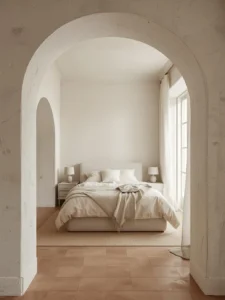
Warm taupe creates a cocooning effect in bedrooms, especially when paired with architectural details that add dimension and shadow play to the space. This deeper neutral works beautifully because it provides enough color saturation to feel intentional and designed while remaining completely versatile for styling. Taupe walls create a backdrop that makes white bedding pop while complementing natural materials, and when combined with architectural elements like arched doorways, wall paneling, or ceiling beams, the result is a bedroom with genuine depth and character.
Bring this concept to life by selecting a warm taupe paint with brown or mushroom undertones for your walls, then introduce architectural interest through wood paneling, board-and-batten details, or even decorative wall molding painted in the same taupe shade. Keep bedding predominantly white or cream to create contrast against the richer walls, and incorporate taupe-toned window treatments that enhance the enveloping feeling. Add furniture in natural wood tones or whitewashed finishes to prevent the space from feeling too monochromatic, and consider taupe-colored ceramic or plaster accessories that reinforce the earthy, grounded aesthetic.
4. Cool Gray Minimalism
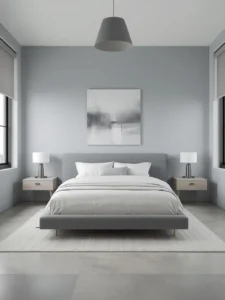
Cool gray creates a serene, minimalist bedroom that feels like a modern sanctuary, offering a crisp, clean aesthetic that promotes rest and mental clarity. This approach works particularly well in contemporary homes because cool grays provide a neutral foundation that feels fresh and uncluttered, allowing the architecture and a few carefully chosen pieces to take center stage. Unlike warmer neutrals, cool gray has an almost meditative quality that can make a bedroom feel like a true escape from visual noise and daily chaos.
To achieve this look, paint walls in a light to medium cool gray with blue or green undertones, and keep furnishings minimal and purposeful. Choose a low-profile upholstered bed in soft gray, and dress it with white or pale gray bedding in natural fabrics like cotton or linen. Limit furniture to only essential pieces—two streamlined nightstands, perhaps a simple dresser—all in matching or complementary gray tones. Keep surfaces mostly clear, add one piece of monochromatic artwork, and incorporate subtle texture through a wool area rug or linen window treatments. The goal is to create a space where every element serves a purpose and nothing competes for attention.
5. Beige with Organic Curves and Soft Shapes
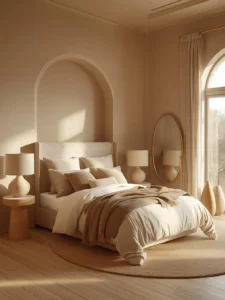
The resurgence of beige in bedroom design comes with a modern twist—organic curves and rounded shapes that soften the entire space and create a more approachable, lived-in feel. This trend works because it combines the timeless appeal of beige with contemporary design elements that prevent the space from feeling dated or boring. Curved furniture, arched architectural details, and rounded accessories introduce movement and visual interest while maintaining the calming neutral palette that makes beige bedrooms so appealing for rest and relaxation.
Implement this concept by painting walls in a warm, sandy beige and selecting furniture with rounded edges—an upholstered bed with a curved headboard, circular nightstands, or an oval mirror above a dresser. Introduce arched shapes through wall niches, curved window treatments, or an arched floor mirror leaning against the wall. Layer in beige textiles with varying tones and textures, from sandy sheets to deeper tan throws, and add organic-shaped decorative objects like rounded ceramic vases or spherical pendant lights. The combination of beige’s inherent warmth with soft, flowing shapes creates a bedroom that feels both modern and nurturing.
6. Bright White and Off-White Layering
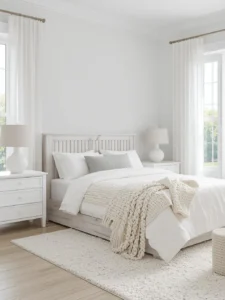
An all-white or off-white bedroom creates the ultimate clean slate, offering a bright, airy environment that feels expansive and peaceful. This approach works because layering various shades of white—from bright white to ivory to cream—creates surprising depth and sophistication without introducing actual color. The key to preventing an all-white bedroom from feeling cold or clinical lies in the layering of textures and the subtle variations in white tones, which together create a luxurious, hotel-like atmosphere that remains neutral yet far from boring.
To execute this look successfully, start with bright white walls in a soft matte or eggshell finish, then build layers using off-white, ivory, and cream textiles throughout the bedding. Mix white cotton sheets with an ivory linen duvet, add cream euro shams, and incorporate a chunky white knit throw for texture. Choose furniture in whitewashed wood or painted white finishes, and vary the surface textures—smooth painted nightstands, a textured white rug, linen window panels, and perhaps a white-washed wood headboard. The abundance of natural light is essential here, so maximize window exposure and add white sheer curtains that diffuse rather than block sunlight.
7. Sandy Neutrals with Woven Textures
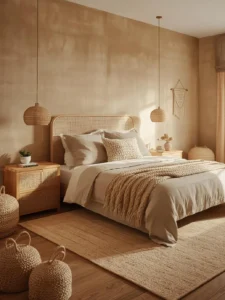
Sandy neutrals paired with woven textures bring an organic, coastal-inspired warmth to bedroom design without literal beach themes. This combination works because sandy tones—those warm beiges and tans with golden undertones—naturally complement woven materials like rattan, jute, seagrass, and linen, creating a cohesive look that feels relaxed yet refined. The tactile quality of woven textures prevents sandy neutrals from appearing flat, adding dimensional interest that engages the eye and creates a more inviting, layered space.
Apply this concept by painting walls in a warm sand or oatmeal tone, then introducing woven elements throughout the room. Consider a rattan headboard or woven pendant light as focal points, add jute area rugs for natural texture underfoot, and incorporate seagrass baskets for storage that doubles as decor. Layer sandy-toned linen bedding with a textured woven throw, and add linen or woven wood Roman shades at windows. Furniture in natural light wood tones or woven materials maintains the organic feeling, while sandy-colored ceramic accessories and woven wall hangings reinforce the textural theme without cluttering the neutral palette.
8. Soft Ivory with Plaster and Limewash Finishes
Soft ivory paired with textured plaster or limewash wall finishes creates a European-inspired bedroom aesthetic that feels both rustic and refined. This approach has gained popularity because limewash and plaster finishes add organic imperfection and visual texture that makes ivory walls feel intentional and artistic rather than simply painted. The subtle variations in tone and the matte, chalky finish of these treatments catch and reflect light in unique ways throughout the day, creating a dynamic neutral backdrop that adds character without requiring pattern or color.
Achieve this sophisticated look by applying a limewash or textured plaster finish to walls in a soft ivory or pale cream tone, embracing the natural variations and subtle imperfections that make these finishes special. Keep the bedding simple in coordinating ivory linens with varied textures, and choose furniture with natural or whitewashed wood finishes that complement the organic quality of the walls. Add depth through ivory-toned accessories in different materials—linen curtains, wool throws, ceramic lamps—that share the same soft color but offer textural contrast. The result is a bedroom that feels collected, timeless, and deeply calming.
9. Neutral Foundation with Strategic Black Accents
A neutral bedroom with carefully placed black accents creates sophisticated contrast and visual anchoring that prevents the space from feeling too soft or undefined. This design strategy works because black provides definition and graphic impact in a neutral room without overwhelming the calm, restful atmosphere. The key is using black sparingly and strategically—in hardware, frames, light fixtures, or furniture legs—to create moments of visual interest that guide the eye and add a modern edge to classic neutral palettes.
Implement this look by establishing your neutral foundation first—walls in any shade from white to beige to gray—then introducing black elements as intentional punctuation marks throughout the space. Consider matte black picture frames for artwork above the bed, black metal nightstand lamps or wall sconces, black hardware on furniture drawers, or a black metal bed frame against neutral bedding. A black-framed mirror, black window frames if possible, or even black decorative objects on shelving add additional touchpoints. The amount of black should remain minimal—roughly five to ten percent of the room’s visual weight—allowing it to define the space without dominating it.