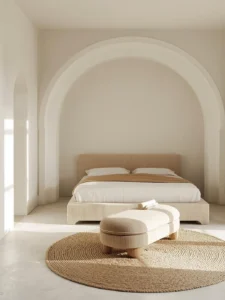
Minimalist design in 2026 transcends basic decluttering to focus on sensory richness and architectural intentionality. In modern USA homes, the bedroom is increasingly viewed as a high-performance sanctuary where visual noise is eliminated to prioritize rest and mental clarity. This shift reflects a move away from cold, stark interiors toward “warm minimalism,” utilizing organic materials and soft geometries to create spaces that feel both curated and comfortable.
Implementing minimalist bedroom ideas 2026 requires a balance between functional storage and aesthetic restraint. Whether in a compact urban apartment or a spacious suburban house, these trends emphasize the quality of materials over the quantity of decor. By focusing on integrated elements and a cohesive tonal palette, homeowners can achieve a sophisticated environment that remains timeless and highly practical for daily living.
Low-Profile Sculptural Platform Beds
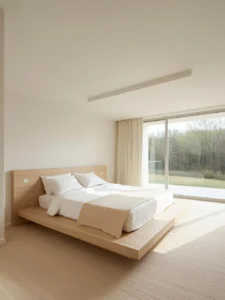
The bed frame serves as the primary architectural anchor in a minimalist room. Current trends favor low-profile platform designs that utilize heavy-set proportions and soft, rounded edges to ground the space. These frames often incorporate integrated side tables or extended headboards crafted from light-toned woods like white oak or maple. This approach removes the need for additional furniture legs, creating a seamless visual flow across the floor and enhancing the perceived height of the ceiling.
For practical application in American bedrooms, choosing a platform with built-in discreet storage drawers maximizes utility without adding bulk. In smaller apartments, a frame that sits flush against the floor prevents the accumulation of dust and maintains a clean perimeter. Styling should remain restrained, utilizing a single duvet in a heavy-weight cotton or linen that drapes naturally over the sides of the frame to emphasize the bed’s silhouette.

Monochromatic Earth-Toned Textures
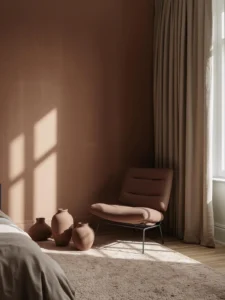
Moving away from sterile whites, the 2026 minimalist aesthetic embraces a monochromatic palette centered on earth tones such as taupe, mushroom, and warm clay. This strategy involves layering different textures within the same color family to provide depth without introducing visual chaos. Wool throws, bouclé accent chairs, and matte-painted walls work together to create a cocoon-like environment that feels warm yet strictly organized.
In a residential context, this look is achieved by matching the wall color to the primary furniture pieces. Using a matte or lime-wash paint finish adds subtle movement to the walls, preventing the single-color scheme from feeling flat. Homeowners can apply this by selecting curtains, rugs, and bedding that vary only slightly in shade. This creates a cohesive “all-over” color effect that softens the sharp lines typical of minimalist architecture.
Integrated Architectural Lighting
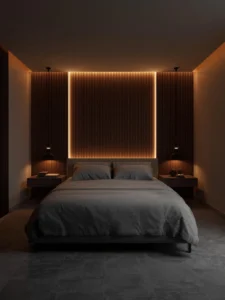
Lighting in the modern minimalist bedroom is treated as a built-in architectural component rather than a decorative afterthought. Indirect LED strips are recessed into ceiling coves, behind headboards, or under floating nightstands to provide a soft, ambient glow. This eliminates the need for bulky floor lamps and keeps surfaces clear of cords and clutter. The focus is on “layered” lighting that can be adjusted to suit different times of day, moving from bright morning light to warm, low-level evening tones.
To implement this in a standard home or rental, plug-in motion-sensor LEDs can be installed under existing furniture to mimic a high-end integrated look. Replacing traditional overhead fixtures with recessed “can” lights or sleek, low-profile surface mounts keeps the sightlines open. Wall-mounted swing-arm sconces in matte black or brushed nickel provide functional reading light while freeing up space on bedside tables for a more streamlined appearance.
Biophilic Nooks and Natural Transitions
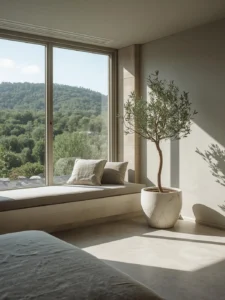
Incorporating nature remains a core tenet of minimalism, but the 2026 approach is more structural. Rather than scattered potted plants, design focuses on creating dedicated “green zones” or window nooks that frame outdoor views as live art. Large-scale windows with minimal frames allow the landscape to dictate the room’s color story, while internal stone elements like travertine or basalt bridge the gap between the indoors and outdoors.
In urban apartments where outdoor space is limited, a dedicated “nature nook” can be created by placing a single, large-scale tree—such as an olive or black olive—in a hand-finished stone planter near a light source. Using natural stone for small surfaces like a nightstand top or a decorative bench adds a cooling, grounded element to the room. The goal is to use natural materials as the primary “decor” rather than synthetic accessories.
Hidden Functional Zones
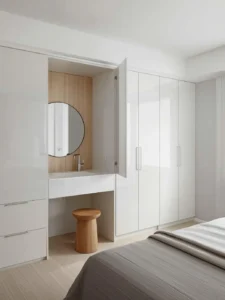
As the bedroom becomes a multi-functional space, the 2026 minimalist trend prioritizes the concealment of non-sleep functions. Workspaces, vanities, or storage units are tucked behind sleek, handle-less cabinetry or sliding pocket doors. This “closet-office” or hidden vanity concept ensures that once the task is finished, the visual reminders of work or grooming are removed from the sleep environment, maintaining the room’s primary purpose as a place of rest.
For homeowners, this can be achieved through custom floor-to-ceiling cabinetry that blends into the wall. In smaller spaces, a minimalist desk can be placed inside a closet with the doors removed or replaced with a soft textile screen. The key is to ensure that every functional item has a designated, concealed home. Using push-to-open hardware on all drawers and doors maintains a flat, uninterrupted surface that mimics the appearance of a solid wall.
Curved Architectural Silhouettes
Sharp angles are being replaced by soft, organic curves in minimalist design to create a more inviting and less clinical feel. This is seen in arched doorways, curved headboards, and rounded furniture corners. These “soft” geometries break up the rigid lines of traditional bedroom layouts, making the space feel more fluid and restorative. Curvature is used sparingly as a focal point, such as an arched alcove behind the bed or a circular rug that centers the room.
Applying this trend involves selecting furniture with softened edges, such as a round nightstand or a bed frame with a curved headboard. In a renovation, adding an arched entry to a walk-in closet or a curved drywall detail can instantly elevate the room’s architectural interest. These shapes should be balanced with straight lines elsewhere to maintain the minimalist discipline, ensuring the curves feel intentional rather than decorative.