I’ve walked through thousands of front doors in my career — and I can tell you with certainty that the entryway is the most emotionally powerful room in any home. It sets the tone before a single word is spoken. Yet it remains the most neglected space in most remodels. In 2026, that’s finally changing in the most exciting ways I’ve ever seen.
What I’m witnessing now is homeowners treating their entryway like a design manifesto — a bold, intentional statement that says this is who we are before guests even remove their shoes. These 19 entryway remodel ideas for 2026 are drawn from real projects, emerging materials, and a genuine understanding of how a great entry transforms not just a room, but how you feel every single time you come home.
1. Fluted Plaster Entry Columns
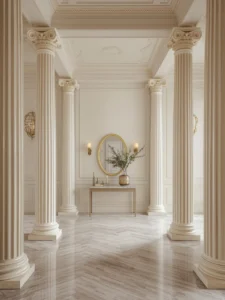
Flat, featureless entryway walls are disappearing fast. In 2026, fluted plaster columns — either freestanding or built into wall transitions — are becoming the architectural signature of a well-considered entry remodel. I’ve used them to frame doorways, define the boundary between entry and hallway, and add instant gravitas to homes that previously felt completely unremarkable.
The texture of fluted plaster catches light in a way that changes throughout the day, making your entry feel dynamic and alive. It works in traditional, transitional, and contemporary homes with equal elegance — a rare quality in any single design element.
2. Dramatic Arched Front Door Surrounds
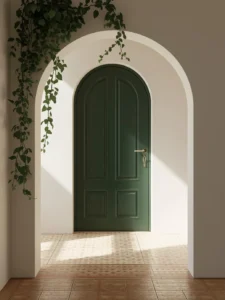
The front door is the handshake of your home. In 2026, I’m designing dramatic arched surrounds — built up with plaster molding, tile, or stone cladding — that transform a standard door into a true architectural moment. Even a modest suburban entry becomes something guests photograph and remember.
The arch surround works both on the exterior approach and the interior entry side, creating a framed, gallery-like welcome. Paired with a bold door color — deep forest green, lacquered black, or warm terracotta — it signals that everything beyond the threshold has been designed with equal care and intention.
3. Zellige Tile Entry Floors
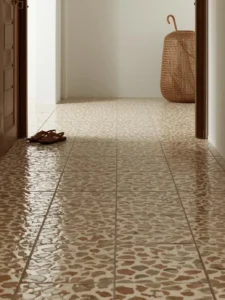
Zellige tile — the handmade Moroccan ceramic with its irregular glaze and subtle variation — is having its biggest residential moment yet in 2026. I’ve laid it in entryways from Brooklyn townhouses to Arizona desert homes, and it never fails to create an entrance floor that looks like it belongs in a boutique hotel in Marrakech.
Each tile is unique, which means no two zellige floors are identical. That handcrafted imperfection is exactly what makes it magnetic. In creamy whites, sage greens, or warm terracotta tones, it introduces color, history, and texture the moment someone steps through your door.
4. Built-In Mudroom Bench With Hidden Storage
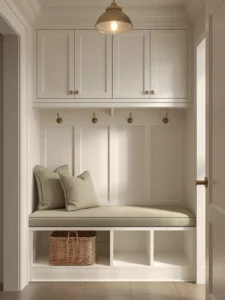
Function and beauty rarely collide as perfectly as they do in a built-in mudroom bench. In 2026, this is the entryway upgrade I’m recommending to virtually every family client — because it solves the chaos of daily life while adding genuine architectural value to the home. Shoes, bags, scarves, and keys all disappear behind beautiful millwork.
The best versions integrate cushioned seating, overhead cubbies with doors, under-bench drawers, and hooks at varying heights for adults and children. Done in painted wood or natural oak, it transforms the entry from a dumping ground into a composed, organized arrival experience every single day.
5. Statement Pendant Lighting Over Entry
Overhead lighting in an entryway is one of the most overlooked design decisions homeowners make. In 2026, statement pendant fixtures — oversized, sculptural, and bold — are becoming the centerpiece that ties an entire entry remodel together. I’ve hung a single dramatic pendant and watched it become the first thing every guest comments on.
Whether it’s a rattan globe, a blown-glass cluster, a forged iron lantern, or a sculptural brass piece, the right pendant sets the light quality, height perception, and aesthetic tone of the entire space. It’s an investment that costs far less than a renovation but delivers renovation-level impact.
6. Limewash Painted Entry Walls
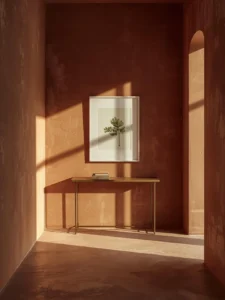
Flat latex paint in an entryway communicates nothing. Limewash does everything. In 2026, limewash-painted entry walls are giving homeowners that aged, layered, European plaster finish at a fraction of the cost of actual plaster work. I’ve transformed entryways in a single weekend with this technique — and the results consistently look like they took months.
The beauty of limewash is its movement: no two sections look identical, which creates a living, breathing wall surface that catches light like nothing else. In warm whites, dusty terracottas, sage greens, or moody charcoals, it works in both compact and grand entryways with equal sophistication.
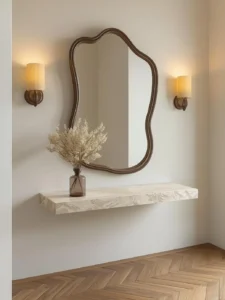
7. Floating Console Table With Sculptural Mirror
The entryway vignette — console table plus mirror — is a design classic, but in 2026 it’s being executed with far more sculptural boldness than ever before. I’m pairing wall-mounted floating consoles in stone, resin, or live-edge wood with mirrors that function as pure art objects: arched, asymmetric, antiqued, or backlit.
This combination serves practical needs — a place to drop keys, check your reflection before leaving — while delivering a composed moment of beauty that elevates the entire entry. When lit properly from above or beside, a great console-and-mirror pairing becomes a gallery installation in miniature.
8. Wainscoting & Wall Panel Moulding
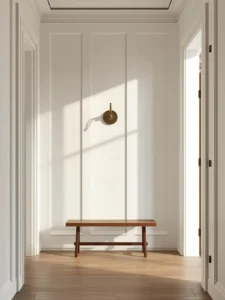
Wainscoting is experiencing a dramatic renaissance in 2026 — not the dusty Victorian version, but a cleaner, more graphic interpretation that works in modern and transitional homes with surprising versatility. I’ve used it to add architectural weight to rental apartments, new-build homes, and century-old townhouses with equal success.
Board and batten, shaker-style panels, or oversized raised moulding grids painted in a single tone — even just white on white — introduce shadow lines, rhythm, and genuine craftsmanship to an entryway that previously had nothing going on architecturally. It’s the upgrade that makes a home feel built, not just assembled.
9. Black-and-White Graphic Entry Tile
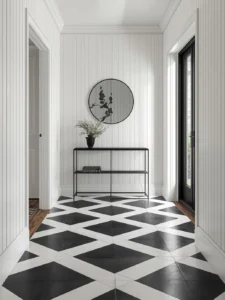
In a sea of neutral entryways, a black-and-white graphic tile floor is a declaration of personality. In 2026, I’m seeing a revival of bold geometric encaustic cement tiles — checkerboard, starburst, diamond grid, and Moroccan lattice — in high-contrast monochrome palettes that make small entry floors feel intentional and unforgettable.
The key is restraint above the tile: let the floor be the statement and keep walls, furniture, and lighting clean and simple. The graphic floor does all the heavy lifting — and it does it every single day, for every single person who crosses your threshold. It’s visual confidence in underfoot form.
10. Vertical Shiplap Entry Accent Wall
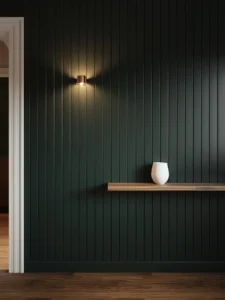
Horizontal shiplap had its decade. In 2026, vertical shiplap — installed floor-to-ceiling on a single entry wall — is delivering something more dynamic: height, energy, and an almost gallery-like sense of intentional design. I’ve used it painted in dramatic tones like deep navy, forest green, or warm black to create an entry wall that functions as a full backdrop.
Vertical lines naturally draw the eye upward, making ceilings feel taller and entries feel more grand regardless of their actual square footage. It’s an accessible, DIY-friendly upgrade that punches far above its material cost when executed with confidence and the right color choice.
11. Arched Built-In Niches for Display
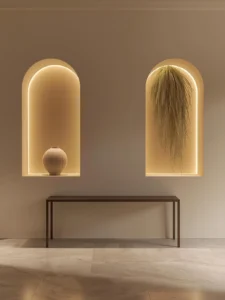
In 2026, the arched built-in niche is becoming the entryway’s answer to the gallery wall — a permanent, architectural display moment that requires no hanging, no patching, and no rearranging. I’ve incorporated them into plaster walls, wood-paneled entries, and even tiled alcoves, and they consistently become the feature everyone asks about.
A pair of flanking arched niches at console height, backlit with LED strip lighting and styled with a single sculpture or plant, transforms an ordinary hallway wall into something that looks designed from the very structure of the building. It’s effortless elegance in architectural form.
12. Sustainable Reclaimed Wood Accent Walls
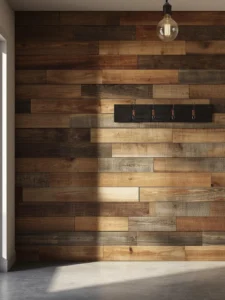
In 2026, sustainability in design is no longer a compromise — it’s a competitive advantage aesthetically. Reclaimed wood accent walls in entryways bring history, warmth, and texture that no new-cut timber can replicate. I’ve sourced barn wood, factory flooring, and deconstructed pallets and turned them into entry features that stopped people the moment they walked in.
Every knot, nail hole, and weathered grain tells a story — which is exactly what a great entryway should do. It introduces character before a single piece of furniture is placed, and it anchors the entire home’s design narrative in something real, tactile, and genuinely irreplaceable.
13. Curved Entryway Ceiling Details
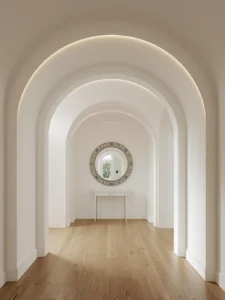
Most people remodel entry walls and floors but completely forget the ceiling. In 2026, curved ceiling details — coved transitions, barrel vault entry ceilings, and smooth plaster dome effects — are the unexpected upgrade that makes an entry feel truly custom and architecturally considered. I’ve added a barrel vault to a standard 8-foot entry ceiling and the transformation was genuinely jaw-dropping.
The curve overhead draws the eye up and forward simultaneously, creating a sense of journey and arrival that flat ceilings simply cannot provide. Paired with recessed lighting or a single central pendant, a curved entry ceiling elevates every other element beneath it.
14. Smart Entry Systems Integrated Into Design
Technology in the entryway used to mean a clunky keypad bolted beside a door. In 2026, smart entry systems — video doorbells, keyless locks, hidden intercom panels, and motorized door hardware — are being integrated into the design so seamlessly that guests never notice the tech, only the elegance. I now design around smart systems from the very beginning of every entry project.
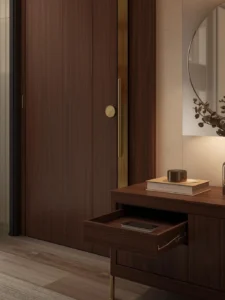
Flush-mounted smart locks in brushed brass, recessed camera housings that blend into doorframes, and hidden charging drawers in console tables all serve function without sacrificing the design integrity of a beautifully considered entryway. Smart and beautiful are no longer in conflict.
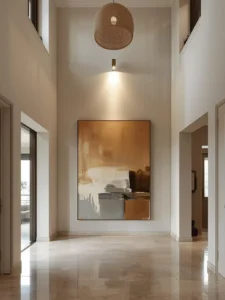
15. Double-Height Entry With Oversized Art
When a home has double-height entry volume, the single biggest mistake I see is treating it like a normal room. In 2026, I’m filling those soaring walls with a single oversized artwork — canvas, tapestry, or framed print — that commands the vertical space and gives arriving guests an immediate emotional anchor.
A piece scaled to 6 feet tall or larger, hung at the right height with precise picture lighting, transforms a double-height entry from an awkward tall box into a private gallery moment. It’s one of the highest-impact, lowest-renovation-cost moves available in a grand entry remodel.
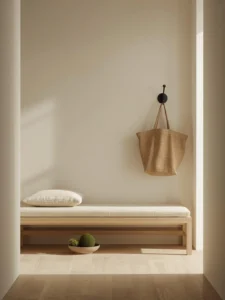
16. Japandi-Inspired Minimalist Entry
The Japandi entry for 2026 is not about emptiness — it’s about precision. Every element chosen with specific purpose. Nothing wasted, nothing missing. I’ve designed Japandi entryways that use just four elements — a low bench, a single hook, a small plant, and one mirror — and created spaces that feel more complete than entries filled with twenty pieces of furniture.
In warm ash or white oak tones, matte plaster walls, and woven textile accents, this approach creates an arrival experience of genuine calm. For homeowners whose lives are overfull and overstimulating, stepping into a Japandi entry is the daily exhale they didn’t know they needed.
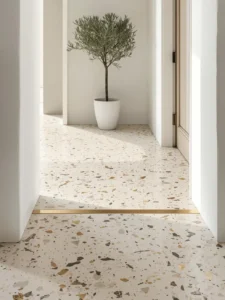
17. Terrazzo Flooring Revival
Terrazzo is back — and in 2026 it’s better than ever. Modern poured terrazzo in entryways delivers a seamless, grout-free floor surface embedded with chips of marble, glass, or even recycled material in endlessly customizable compositions. I’ve specified terrazzo in everything from cream-and-gold to charcoal-and-blush, and it never fails to feel both timeless and completely of-the-moment.
Beyond beauty, terrazzo is extraordinarily durable, easy to clean, and genuinely sustainable when made with recycled aggregate. For a high-traffic entryway floor that needs to handle daily use while looking like a design decision, it’s one of the most intelligent choices available in 2026.
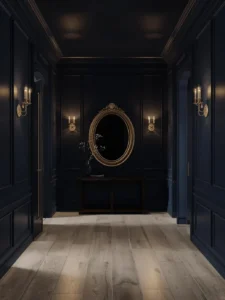
18. Moody Dark-Painted Entry Halls
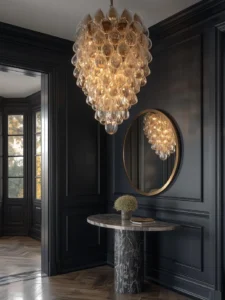
The all-white entry hall is quietly stepping aside for something far more emotionally compelling in 2026: the moody, dark-painted entry. I’ve painted entry halls in deep charcoal, midnight navy, forest green, and oxblood — and the transformation from ordinary to extraordinary is instant, dramatic, and deeply personal.
Dark entries work by creating a cocoon effect — a sense of intimate arrival before the home opens up. When paired with warm brass hardware, rich wood tones, and deliberate lighting, a dark entry hall doesn’t feel small or oppressive. It feels curated, confident, and like nothing else on the street.
19. Living Moss or Botanical Wall Panel
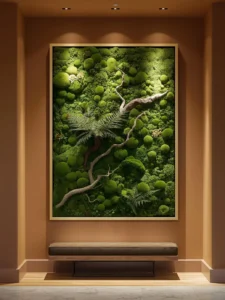
The final frontier of 2026 entryway design is bringing living nature directly into the arrival experience. Framed living moss panels — using preserved or living moss, ferns, and air plants arranged in a shadow-box frame — create a wall feature that is simultaneously art installation, air purifier, and conversation starter from the very moment someone enters.
I’ve installed these in everything from compact apartment entries to grand foyer walls, and they share one universal quality: they make people stop, lean in, and touch them — which is exactly the engagement a great entryway should create. Nature at the threshold signals a home that is alive in every sense of the word.