I’ve seen hundreds of homes where shelves were nothing more than storage afterthoughts — plain boards holding random clutter with zero personality. But the moment color enters the equation, everything shifts. A well-styled shelf in a colorful interior doesn’t just hold things; it tells a story, anchors a room’s energy, and makes visitors stop mid-step to take it all in. I’ve seen ordinary alcoves become the most photographed corners of a home simply because someone dared to treat their shelves like a canvas.
What I’ve noticed most is that people underestimate how much shelf styling influences the emotional temperature of a room. Color isn’t just decoration — it’s communication. Whether you’re layering bold jewel tones, balancing warm terracottas with cool sage greens, or letting one electric accent pop against neutral wood, your shelves can carry the entire visual weight of a colorful interior. These 25 ideas are born from real design challenges, real rooms, and a genuine obsession with making color work harder and smarter on every shelf.
1. The Gradient Color Stack
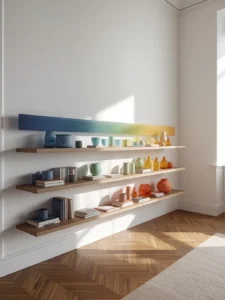
Arrange books and objects on your shelf in a deliberate color gradient — from deep violet at one end to soft blush at the other. This ombré effect creates a visually satisfying flow that draws the eye across the entire shelf without feeling chaotic.
In colorful interiors, the gradient shelf acts as a built-in piece of wall art, tying together multiple tones already present in the room’s palette while giving the space a curated, editorial quality that feels intentional and sophisticated.
2. Painted Shelf Back Panel in Contrast Color
Paint only the back panel of your shelf in a bold, contrasting color while keeping the shelf structure neutral. This framing technique makes every object placed on the shelf pop like it’s displayed in a gallery.
In colorful interiors, a mustard yellow, forest green, or burnt sienna back panel creates a dramatic backdrop that amplifies decorative pieces and adds architectural depth — making a simple IKEA unit look like a custom built-in worth thousands.
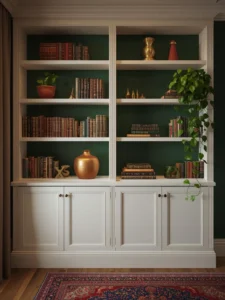
3. Monochromatic Tonal Shelf Zones
Dedicate each shelf tier to one dominant color family but vary the shades, textures, and materials within that tone. One shelf holds all warm amber objects — honey glass, caramel leather book spines, wooden figurines — while the shelf below lives entirely in dusty blues.
This zoning approach creates visual rhythm and prevents colorful interiors from feeling overwhelming. It gives the eye a place to rest and then explore, which is exactly the balance bold, layered interiors need to feel designed rather than decorated.
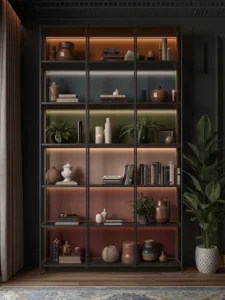
4. Floating Color Block Shelves
Install multiple small floating shelves in different bold colors — cobalt, vermillion, chartreuse — at staggered heights across a white wall. Each shelf is itself the color statement, with objects kept simple and neutral on top. This turns the shelving system into a geometric wall art installation.
In colorful interiors, this approach is especially powerful in children’s rooms, creative studios, or eclectic living spaces where the architecture itself needs to carry the playful energy of the room.
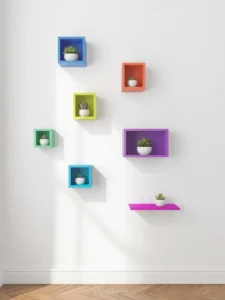
5. The Bookend Color Anchor Technique
Place two boldly colored statement objects — matching or intentionally contrasting — at each end of a shelf to visually “anchor” a more neutral or varied arrangement in the middle. These bookend anchors could be oversized ceramic vases, sculptural objects, or stacked art books in vivid covers.
This technique brings color into a shelf composition without requiring every item to compete for attention, giving colorful interiors a sense of structured boldness that feels both dynamic and controlled.
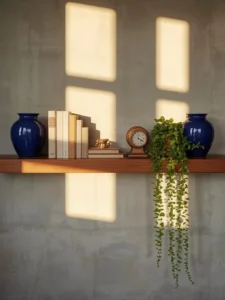
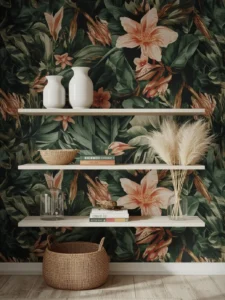
6. Wallpaper-Backed Open Shelving
Apply a bold, patterned wallpaper to the wall directly behind open shelving before installing the unit. Floral, geometric, or abstract patterns in rich colors transform the shelf into a layered visual composition where the background is as active as the foreground.
This works beautifully in colorful interiors where one feature wall is already expected to carry maximum visual weight — the shelving becomes a frame for the pattern while the objects create a three-dimensional layer over the art.
7. Neon Accent Object Shelf Styling
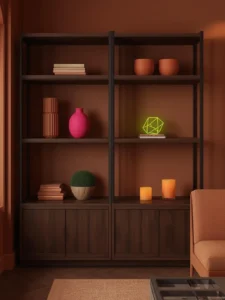
Introduce one single neon or fluorescent-colored object per shelf as a deliberate accent — a neon pink vase, an electric yellow sculpture, or a lime green candle holder. Against more muted or earthy colorful interiors, these neon punctuations create an unexpected energy that modernizes traditional styling.
The key is restraint: one neon per shelf, never more, so the accent retains its power and doesn’t dissolve into visual noise. It’s a bold move that signals confidence and a sharp eye for contemporary design.
8. Color-Matched Plant and Pot Pairings
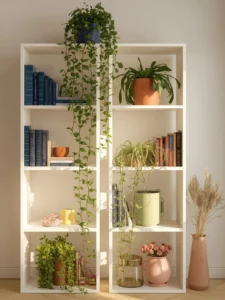
Select trailing or potted plants and intentionally match or contrast their pot colors with surrounding shelf objects to create cohesive color stories. A cobalt blue pot beside blue-spined books and a blue abstract print creates a micro color-world on one shelf.
Plants already bring organic color into shelving — when the containers are treated as part of the color palette rather than afterthoughts, the shelf composition gains a sophisticated layering that makes colorful interiors feel genuinely thoughtful and personally curated.
9. The Rule of Odd Numbers in Color Groups
Style shelves by grouping colorful objects in sets of three, five, or seven — never even numbers. Within each odd group, use two items of one color and one item of a complementary contrasting color to create visual tension and resolution simultaneously.
This classic design principle, applied deliberately with color as the variable, prevents shelf arrangements from feeling static or symmetrical. In colorful interiors, this technique creates the kind of dynamic, alive-looking shelf compositions you see in high-end interior magazines.
10. Vintage Color-Pop Collectibles Curation
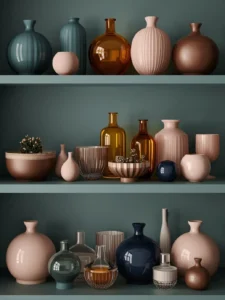
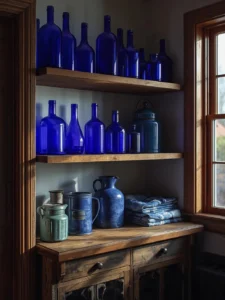
Dedicate a shelf entirely to a curated collection of vintage objects unified by a single unexpected color — vintage cobalt blue glass bottles, retro orange kitchen ceramics, or antique green enamelware. The age and patina of vintage items gives color a depth and warmth that new objects rarely achieve.
In colorful interiors, these vintage color collections become conversation pieces that add cultural richness and historical texture, making the room feel collected over time rather than assembled overnight from a single shopping trip.
11. Art Print Layering Behind Shelf Objects
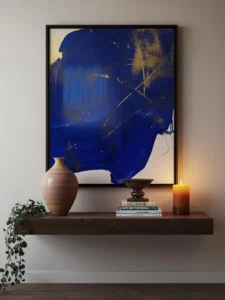
Lean small framed art prints or unframed canvas pieces against the shelf’s back wall, then layer objects in front of them at varying depths. The art adds color and pattern at the rear plane while three-dimensional objects create depth in the foreground.
In colorful interiors, this creates a multi-layered visual composition that mimics the depth of a gallery installation — except it lives on your shelf. The technique makes small shelves feel expansive and gives color multiple planes to exist on simultaneously.
12. Color Dipped Object Arrangements
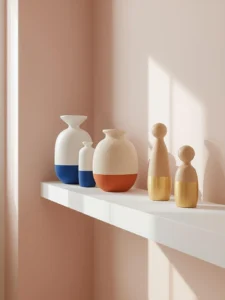
Source or DIY objects that are partially color-dipped — a white vase with a cobalt blue bottom third, a natural wood sculpture with a gold-dipped base, or ceramic mugs with color-blocked handles. Grouping these partially colored objects creates a sophisticated color palette that feels modern and artisanal simultaneously.
In colorful interiors, color-dipped objects add palette without visual heaviness — they introduce color as an accent rather than a full commitment, giving shelves an airy, considered aesthetic.
13. Seasonal Color Rotation System
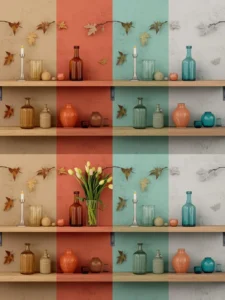
Design your shelf with a deliberate seasonal color rotation in mind — warm burnt oranges and deep reds for autumn, icy blues and silvers for winter, fresh greens and yellows for spring, and bold corals and turquoises for summer.
Keep a core arrangement of neutral structural objects permanent and rotate only the color-accent pieces with each season. This gives colorful interiors a living, breathing quality that evolves through the year — and gives you a built-in creative ritual that keeps your space feeling fresh and emotionally resonant.
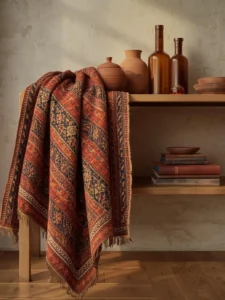
14. Textile Drape and Color Fold Technique
Drape a small, folded textile — a richly colored kilim runner, a hand-dyed linen cloth, or a folded velvet scarf — over the edge of a shelf tier to introduce soft color, texture, and movement into what is otherwise a rigid arrangement. Textiles bring warmth, handcraft, and organic color variation that ceramics and books cannot.
In colorful interiors, a single draped textile on a shelf can tie the entire room’s soft furnishing palette back to the shelf, creating a cohesive color conversation between the walls, sofa, and storage.
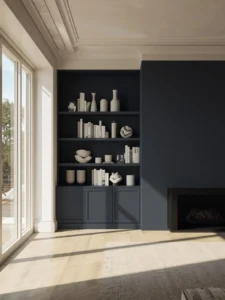
15. The Dark Shelf in a Light Room Contrast
Paint or install shelving in a deep, saturated color — midnight navy, charcoal black, deep forest green — within an otherwise bright and light-colored room. This contrast technique makes the shelf unit itself the bold color statement, with objects styled in lighter, more neutral tones on top.
In colorful interiors that are predominantly warm or neutral, one dramatically dark shelf creates a visual anchor that grounds the entire room, adds architectural drama, and makes every object displayed feel elevated and intentionally spotlit.
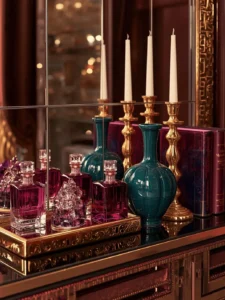
16. Mirrored Shelf Backing for Color Amplification
Install small mirror tiles or a single mirror panel as the back surface of a shelf unit. Mirrors behind colorful objects double the visual impact of every colored item, reflect natural light deeper into the room, and create an illusion of infinite depth.
In colorful interiors with curated collections of glass, ceramic, or metallic objects, a mirrored shelf back transforms a standard arrangement into something that feels luminous and extravagant — like a jeweler’s display case brought into a living room or bedroom.
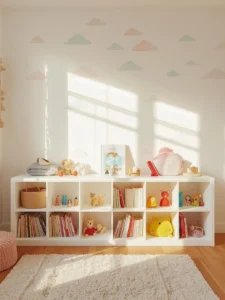
17. Children’s Rainbow Shelf Theater
Style a child’s bedroom shelf as a full rainbow sequence — red, orange, yellow, green, blue, indigo, violet — using toys, books, small figurines, and art objects arranged in spectral order. The rainbow becomes the organizing logic, the color theme, and the educational tool simultaneously.
In colorful children’s interiors, this approach makes tidying up a color-sorting game and gives the room an exuberant, joyful energy that stimulates creativity. It’s one of the most photographed shelf styles in family homes for very good reason.
18. Architectural Color Zoning With Shelf Placement
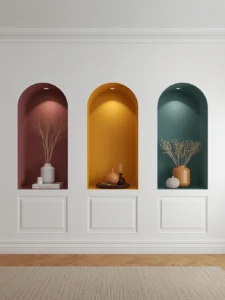
Use shelf installation as an opportunity to create color zones on a wall — painting the recessed wall area or alcove behind the shelves in a specific color that differs from surrounding walls. Each alcove becomes its own color room: one niche in deep plum, one in warm ochre, one in teal.
In colorful interiors with multiple alcoves or recessed shelving, this technique creates a gallery-wall-meets-architecture effect that makes the shelving system feel like a bespoke installation designed specifically for the space.
19. Floating Shelf Color Horizon Line
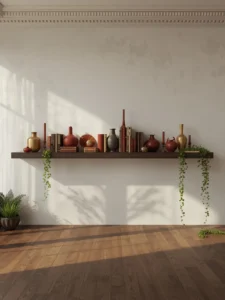
Install a single continuous floating shelf at eye level across an entire wall, spanning corner to corner, and style it as a continuous color narrative — one long panoramic color story that the eye travels across like a landscape horizon. Varying heights of objects create a skyline silhouette effect.
In colorful interiors, this uninterrupted horizontal shelf at eye level creates a commanding design statement that acts as both functional storage and an immersive color installation that defines the entire room’s character.
20. Translucent Colored Glass Object Composition
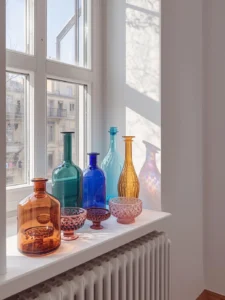
Build shelf arrangements around translucent or semi-transparent colored glass objects — amber bottles, cobalt blue vases, green glass bowls, pink depression glass. When light passes through these objects, they cast colored shadows and light projections onto the shelf surface and wall behind, creating a living, light-reactive color display that changes throughout the day.
In colorful interiors near windows, glass object shelves become dynamic light installations that cost nothing to run and transform the room’s color mood from morning to evening.
21. Wabi-Sabi Imperfect Color Arrangement
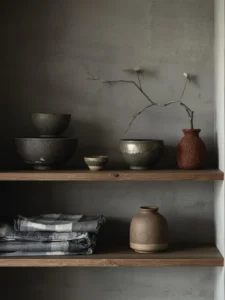
Embrace the Japanese aesthetic of wabi-sabi by styling shelves with intentionally imperfect, asymmetrical color arrangements — hand-thrown ceramics with uneven glazes, crackled paint finishes, chipped vintage enamel, and irregularly dyed textiles.
The beauty lies in the visible imperfection of the color itself: glaze variations, natural dye irregularities, aged patinas. In colorful interiors that lean organic and artisanal, this approach creates shelf compositions with profound emotional warmth and authenticity that perfectly manufactured objects can never achieve.
22. Book Spine Color Blocking Technique
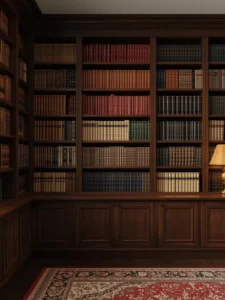
Remove all book dust jackets to reveal the original colored spines beneath, then arrange them in deliberate color blocks of 5–8 books per group — a block of deep red spines, a block of forest green, a block of cream and gold, a block of black.
This typographic color blocking approach gives shelves a graphic, editorial quality and works exceptionally well in colorful interiors where the book collection itself becomes a designed color element rather than visual background noise crowding the shelf.
23. Sculptural Object Color Conversation
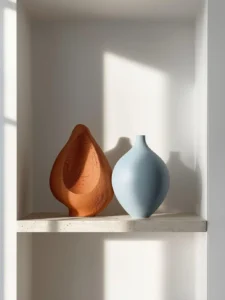
Pair two sculptural objects on the same shelf that hold a deliberate color conversation — one in a warm tone, one in its cool complement. A burnt orange abstract sculpture beside a powder blue ceramic figure. A deep gold bust beside a sage green vessel.
These color dialogues create visual interest and psychological tension that draws the viewer in. In colorful interiors, sculptural color conversations on shelves elevate the space from decorated to genuinely art-directed, signaling a sophisticated understanding of color theory in action.
24. Heritage Tile Color Reference Shelf
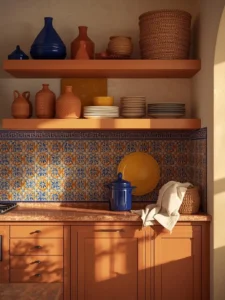
Draw your shelf color palette directly from the colors of heritage or encaustic tiles used elsewhere in your home — kitchen backsplash, bathroom floor, or entryway. Mirror those exact terracotta, cobalt, mustard, and white tones in your shelf objects to create a whole-home color narrative that feels architecturally deliberate.
In colorful interiors inspired by Moroccan, Spanish, or Portuguese design, this tile-to-shelf color referencing technique creates a sense of deeply unified, culturally coherent design that resonates throughout every room.
25. Illuminated Color Shelf With LED Underlighting
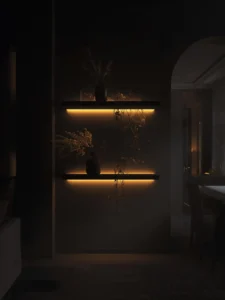
Install subtle LED strip lighting underneath each shelf tier in a warm or color-tinted tone that washes the objects in colored light from below. Warm amber LEDs make terracotta and wood objects glow like embers. Soft teal LEDs transform white and clear glass objects into ethereal luminous forms.
In colorful interiors designed for evening ambiance, illuminated shelves become the room’s most dramatic feature after dark — transforming a daytime display into a moody, atmospheric installation that makes every color object appear to radiate its own inner light.