I’ve spent year walking into nurseries that feel either too sterile or too cartoon-overloaded — rooms that stop working the moment a child turns two. What I’ve seen shifting in 2026 is something genuinely exciting: parents are finally designing with both heart and longevity in mind. The nursery is no longer just a functional sleep space. It’s the first environment a child’s senses will absorb, and designers — myself included — are treating it that way.
I’ve seen organic textures replace plastic finishes, earthy palettes replace candy colors, and smart storage dissolve invisibly into walls. What I’m sharing here are 19 nursery ideas that don’t just look beautiful in photos — they work in real life, grow with your child, and make daily caregiving genuinely easier. These aren’t trends borrowed from last year. This is where nursery design is heading right now.
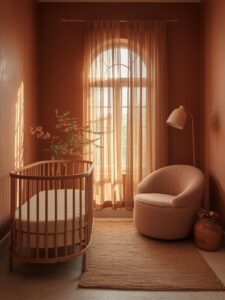
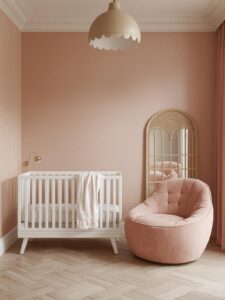
1. Earthy Monochrome Palette with Warm Undertones
Forget stark white nurseries. In 2026, the most compelling nurseries I’ve designed lean into a single warm earthy tone — think terracotta blush, warm sand, or muted clay — and layer it across walls, textiles, and furniture in varying depths.
This monochrome approach feels visually calming for infants, whose developing vision responds better to soft contrast than to bright multicolor chaos. It also photographs beautifully and ages gracefully as your child grows, eliminating the need to redecorate at toddler stage.
2. Biophilic Wall Murals with Living Edge Details
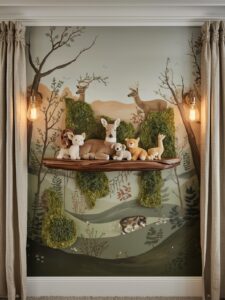
Nature-inspired murals have moved far beyond painted trees. What I’m designing now are immersive botanical wall scenes where the painted world meets real-world texture — think a hand-painted forest mural where actual preserved moss panels extend from the wall art, or a meadow scene that transitions into a real wooden branch shelf holding soft toys.
This biophilic layering engages a baby’s visual curiosity while rooting the room in organic calm. It becomes a focal wall that functions as both art and sensory stimulation.
3. Convertible Crib-to-Bed Furniture Systems
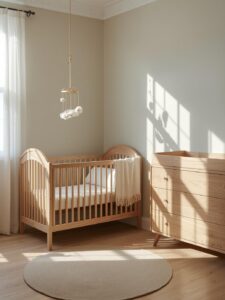
One of the smartest investments I recommend to every parent in 2026 is a convertible crib system that transitions through at least three stages: crib, toddler bed, and full daybed. Modern versions now come with tool-free conversion mechanisms and grow with a child from birth through age seven or beyond.
This eliminates the emotional and financial cost of replacing furniture every two years. The best designs on the market now mimic high-end adult furniture aesthetics — no cartoon cutouts, just clean sculptural lines in solid wood.
4. Cloud Ceiling Installations with Ambient Lighting
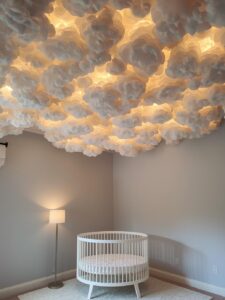
I’ve started installing sculptural cloud ceilings in nurseries and the response from parents — and babies — has been extraordinary. Using lightweight polyester fiber or acoustic foam shaped into soft cumulus forms and backlit with warm dimmable LEDs, these ceiling features create a dreamy overhead environment that soothes infants during feed times and bedtime.
Unlike projector nightlights that sit on a shelf, cloud ceilings are architectural — they transform the room rather than accessorizing it, and they work equally well as a toddler-age wonder ceiling.
5. Gender-Neutral Mushroom and Botanical Theme
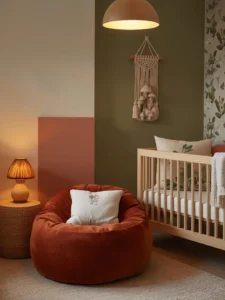
The mushroom aesthetic — earthy, whimsical, and deeply nature-connected — has become the defining nursery theme of 2026, replacing unicorns and space rockets entirely. What I love about it is its total gender neutrality and its connection to grounding, natural imagery rather than fantasy excess.
Think hand-stitched mushroom cushions, ceramic mushroom nightlights, botanical print quilts, and earthy brown-and-rust color palettes. It’s a theme that feels storybook-charming without being childish, and it grows with kids beautifully into the preschool years.
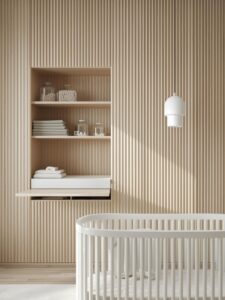
6. Invisible Smart Storage Behind Panelled Walls
The biggest complaint I hear from parents isn’t about aesthetics — it’s about storage chaos. In 2026, the solution I’m building into nurseries is concealed storage behind decorative wall panelling. Flush-fitted cabinet doors disguised as shiplap, board-and-batten, or fluted wood panels hide nappy stations, formula organizers, clothing drawers, and even fold-out change tables.
The result is a nursery that looks impossibly clean and design-forward, where nothing is visible unless you need it. This is especially powerful in smaller nurseries where visual clutter is the enemy of calm.
7. Japandi Nursery — Wabi-Sabi for the Baby’s Room
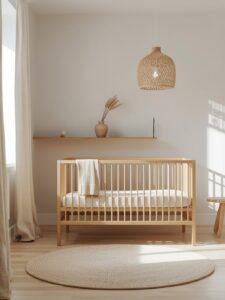
Japandi — the fusion of Japanese minimalism and Scandinavian warmth — has fully arrived in nursery design. What I apply in these rooms is the wabi-sabi principle: beauty in imperfection and simplicity. This means handthrown ceramic accessories, unfinished natural wood furniture, neutral linen textiles with slight texture irregularities, and absolutely no visual noise.
The nursery becomes a meditative space that benefits both the baby’s developing nervous system and the parents’ sanity. It’s the antithesis of the overstimulating, brightly colored nursery — and research on infant calm increasingly supports it.
8. Arch-Framed Reading Nook Built Into the Wall
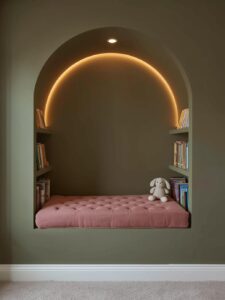
Even before a baby can hold a book, creating a designated reading nook within the nursery establishes a ritual space that grows in meaning as the child develops. What I’ve been building in 2026 are recessed arched alcoves — carved directly into the wall or framed with drywall and casing — fitted with a low cushioned bench, soft LED strip lighting, and built-in bookshelves at child height.
It becomes the coziest corner in the home and, in my experience, the place toddlers gravitates to naturally as they develop their love of stories.
9. Terrazzo Accent Flooring with Radiant Heat
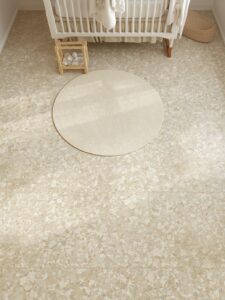
Flooring is the most underdesigned element in most nurseries I walk into. In 2026, I’m specifying terrazzo-look porcelain tile — with actual radiant underfloor heating — for nursery floors, layered with a large organic wool rug.
The terrazzo pattern in soft pinks, creams, and warm greys creates an artistic base layer that elevates the whole room, while the radiant heat means the floor is always warm for tummy time, crawling, and play — with no cold shock for little hands and knees touching the ground.
10. Floating Shelf Gallery with Heirloom Display
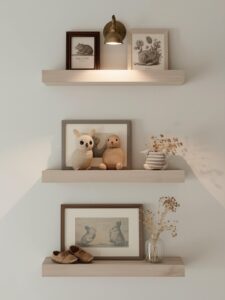
Rather than hanging mass-produced wall art, I’m designing floating shelf galleries in nurseries that display curated heirloom objects — a grandparent’s ceramic figurine, a first pair of shoes, a hand-knitted toy, framed vintage children’s book illustrations.
These layered gallery shelves tell the family’s story while creating a visually rich, deeply personal wall feature. In 2026, the most meaningful nurseries I’ve seen are the ones that feel like they belong to a specific family — not to a furniture catalogue.
11. Acoustic Felt Wall Panels as Art
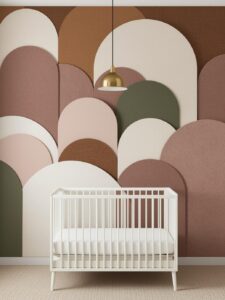
Sound management in nurseries is something parents discover the hard way — after the first echoing cry at 3am. In 2026, I’m specifying decorative acoustic felt panels as a design-first sound solution. These panels — shaped into geometric forms, abstract arches, or organic cloud silhouettes — are available in a beautiful range of muted colours and mount directly onto walls like art installations.
They reduce echo and ambient noise significantly while functioning as the room’s primary visual statement. Sound control and beauty, finally solved together.
12. Celestial Midnight Blue Accent Wall
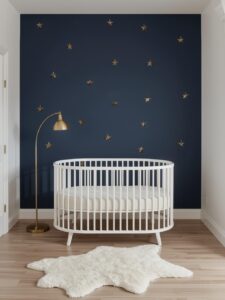
Deep, rich colour in nurseries is something many parents fear — but I’ve seen it transform a room completely when used with precision. A single midnight blue accent wall, applied in a matte chalky finish behind the crib, creates a dramatic, womb-like sense of security that actually supports infant sleep.
Paired with brass star-shaped wall sconces, a white crib, and cream textiles, it feels celestial and sophisticated rather than dark or heavy. In 2026, deep colour confidence is one of the hallmarks of a beautifully designed nursery.
13. Canopy Crib with Draped Organic Linen
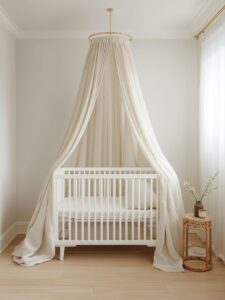
Few nursery features are as visually enchanting as a crib fitted with a flowing canopy — and in 2026, the version I’m designing is nothing like the fussy tulle canopies of the past. I’m using unbleached organic linen, loosely draped from a simple ceiling-mounted raw brass ring, falling softly around the crib in relaxed, unstructured folds.
It creates an intimate sleeping sanctuary within the larger room, adds incredible visual texture, and photographs as if it belongs in an architecture magazine. It’s romantic, natural, and completely safe when correctly installed.
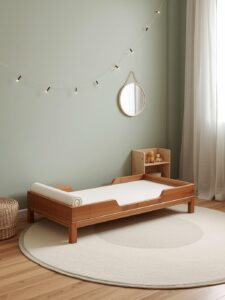
14. Sensory Corner with Montessori Floor Bed Setup
The Montessori floor bed — a low-profile mattress set directly on the floor rather than inside a raised crib — is gaining serious traction in 2026, and I’ve started integrating it into full sensory corner designs. The setup includes a low platform frame in solid wood, surrounded by a soft play mat, a low open shelf with rotating toys, a small mirror panel at floor level, and a string of warm fairy lights along the wall above.
It encourages independence, supports motor development, and creates a designated exploration zone that evolves with the child through every developmental stage.
15. Scallop-Edge Wallpaper with Tonal Layering
Scallop and arch motifs have become the defining pattern of 2026 interiors — and nurseries are embracing them fully. What I’m specifying is scallop-edge wallpaper in tonal colourways — where the scallop pattern is printed in a tone-on-tone finish, creating subtle visual texture rather than loud pattern.
In nurseries this works brilliantly because it adds design sophistication without visual overstimulation. Paired with curved furniture and arch-top windows or mirrors, it creates a room with extraordinary visual coherence and a quiet elegance that feels completely current.
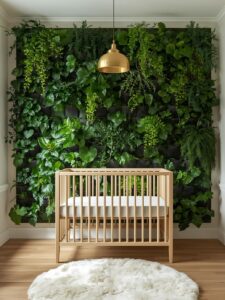
16. Vertical Garden Panel as a Nursery Backdrop
Living walls have entered the nursery — and done correctly, they are breathtaking. I’ve been designing modular vertical garden panels for nursery accent walls using only non-toxic, air-purifying plants: pothos, peace lilies, and soft ferns — all mounted in a felt pocket panel system that holds moisture within the structure.
The result is a living green backdrop behind the crib that actively improves air quality, adds natural humidity beneficial for infant respiratory health, and creates an immersive biophilic environment unlike anything a painted wall can achieve.
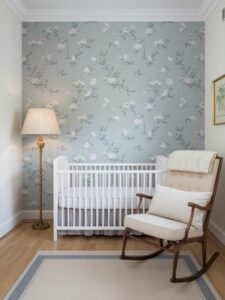
17. Grandmillennial Nursery — Chinoiserie Meets Modern
The grandmillennial aesthetic — traditionally inspired but freshly interpreted — has a surprisingly perfect application in nurseries. What I’m designing in 2026 are rooms where soft chinoiserie wallpaper panels, ruffled linen lampshades, antique-style illustrated prints, and heirloom rocking chairs sit confidently alongside modern convertible cribs and organic textiles.
It’s a layered, storied look that feels inherited rather than purchased. Babies born into these rooms will grow up surrounded by beauty that has genuine visual culture — not disposable trends.
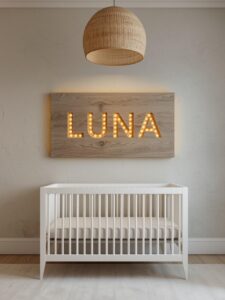
18. Personalised Name Installation as Structural Art
Moving beyond the standard wooden name letters on a shelf, in 2026 I’m designing personalised name installations that are structural, large-scale, and fully integrated into the nursery architecture. Think a child’s name routed directly into a plywood wall panel and backlit with LED strip lighting, or individual letters cast in plaster and set into a limewash wall as relief sculpture.
These installations are unique, permanent, and create an emotional anchor in the room that connects the space unmistakably to the child it belongs to.
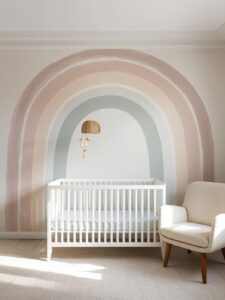
19. Dreamy Pastel Rainbow Arch Mural — Hand Painted
The rainbow mural is far from new — but the 2026 version I’m painting is nothing like the bright primary arches of a few years ago. These are oversized, softly blended pastel arches in colours like lilac haze, peach sorbet, powder blue, and mint cream — painted in a watercolour-wash technique directly on a limewash or plaster wall, so the texture of the wall shows through the paint.
The effect is atmospheric and ethereal, not cartoon-like. Paired with a neutral room and natural wood furniture, it becomes the most beautiful kind of statement wall — soft enough to soothe, striking enough to take your breath away.