
Kids room remodel ideas 2026 are moving away from themed, trend-heavy spaces and toward rooms that are flexible, functional, and genuinely beautiful. Whether you are starting from scratch or refreshing an existing space, these ideas will help you make smarter design decisions that last well beyond one age or phase.
1. Loft Bed With a Study Zone Underneath
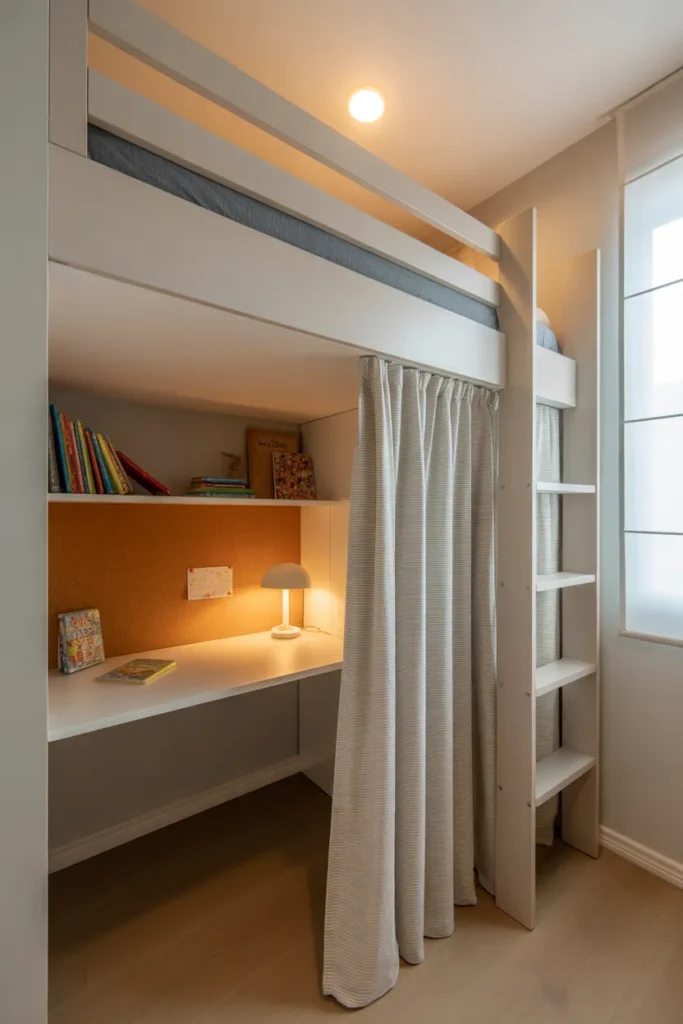
A loft bed is one of the highest-impact kids room remodel ideas because it solves two problems at once — sleeping and studying — without using any extra floor space. The bed sits elevated, and the area underneath becomes a fully dedicated desk zone with shelving, a task light, and a pinboard wall.
Keep the loft structure in white or natural wood so it does not compete with the rest of the room. Add a curtain at the base of the loft ladder for a small sense of privacy that kids genuinely love. Below, a floating desk with two deep drawers and open shelving above handles homework, art, and reading with ease.
This layout works especially well in smaller bedrooms where every square foot has to serve more than one purpose.

2. A Gender-Neutral Room in Warm Earth Tones
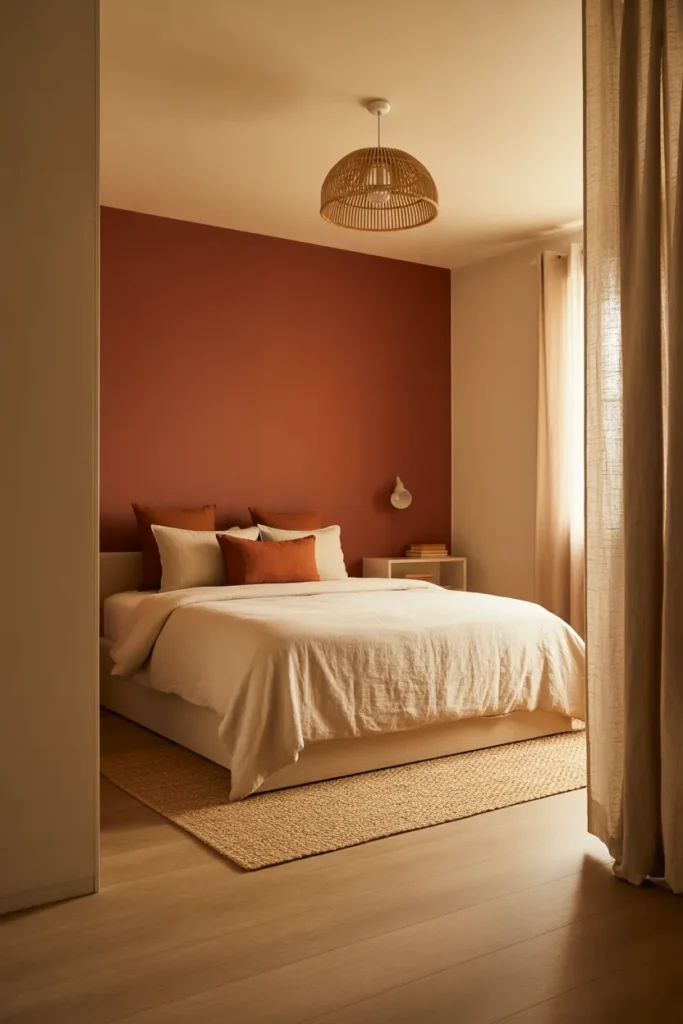
Warm earth tones are leading the way in kids room design for 2026 — terracotta, warm sand, burnt sienna, and dusty clay replace the predictable blue-and-pink split entirely. These colors work for any age, any child, and repaint beautifully as kids grow into teenagers.
Paint one accent wall in a deep terracotta or warm rust tone and keep the remaining three walls in a soft warm white. Layer in natural materials — a jute rug, rattan light fixture, linen curtains — to build texture without adding visual clutter.
This palette also photographs beautifully, which matters when you are designing a room you want to love looking at every day.
3. Built-In Window Seat With Hidden Storage Below
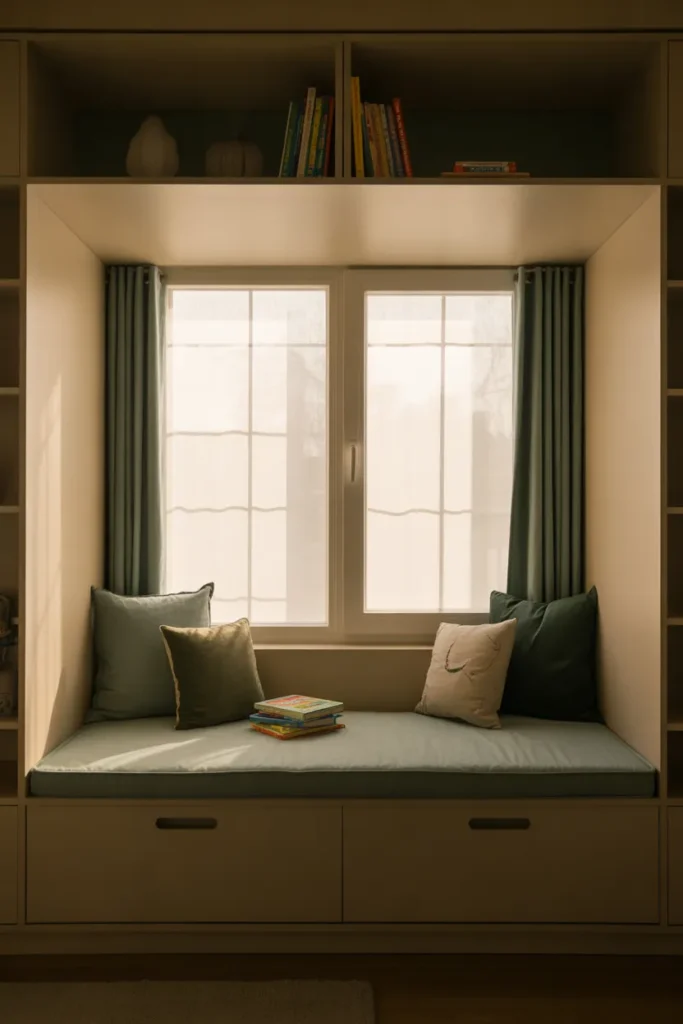
A window seat transforms an otherwise unused wall into the most loved spot in the room. Built directly into a window alcove or along a full wall under a window, it creates a reading nook, a lounging spot, and a storage solution all in one.
Build the seat at 18 inches high with hinged top panels that open to reveal deep storage inside — perfect for extra bedding, toys, or seasonal clothing. Cushion the top in a durable indoor fabric in a solid neutral or subtle pattern. Add two or three throw pillows to make it feel inviting.
Paint the built-in the same color as the walls for a seamless architectural look, or contrast it in white against a colored wall for a more classic feel.
4. A Montessori-Inspired Floor Bed Setup
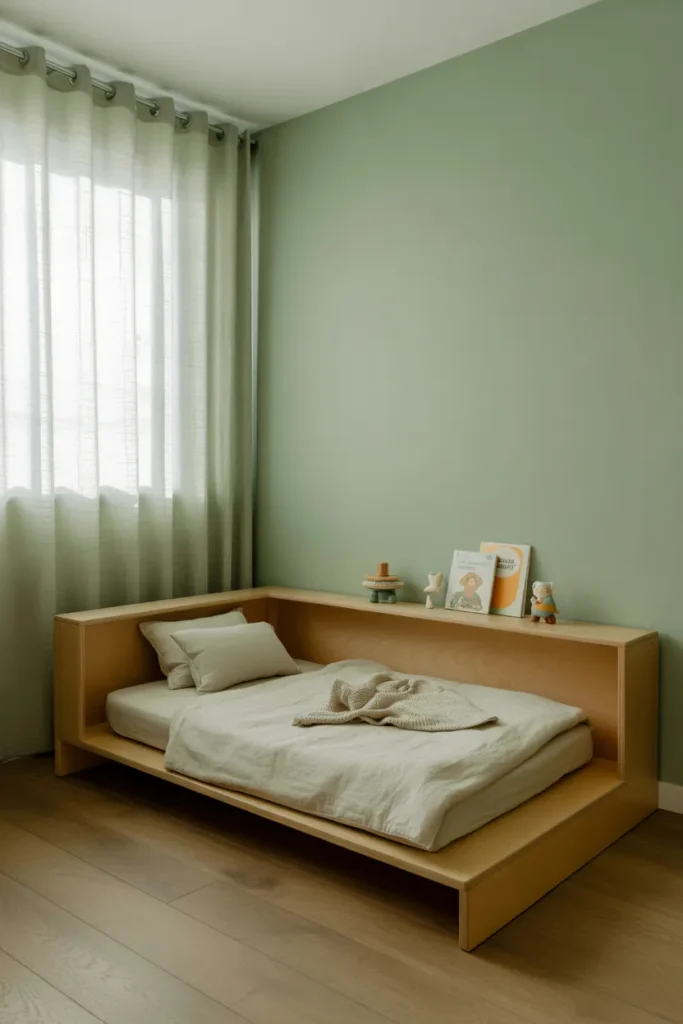
The Montessori floor bed is one of the most searched kids bedroom remodel ideas for young children — and it is easy to understand why. A low platform bed or a mattress directly on the floor gives toddlers and young children full independence to get in and out safely without needing help.
Keep the surrounding area intentional — a small low shelf with a few books and toys within reach, a soft rug beside the bed, and nothing on the walls above the child’s eye line that could feel overwhelming. The room should feel spacious, calm, and child-scaled rather than adult-designed with a small bed dropped in.
Choose muted, calming colors for this setup. Pale sage, warm oat, or dusty blue work better than bright primary colors in a Montessori-style room.
5. Maximizing a Small Kids Room With Smart Built-Ins
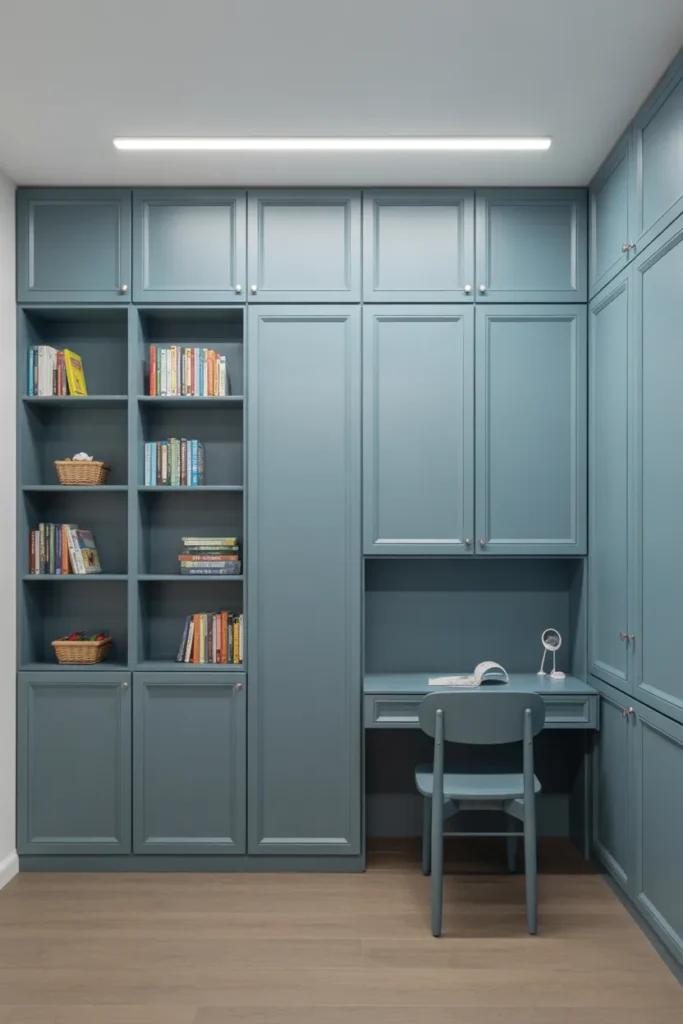
Small kids room remodel ideas almost always come down to one thing — built-ins. Custom or semi-custom built-in cabinetry along one full wall turns a cramped bedroom into an organized, spacious-feeling room by pushing all storage to the perimeter and freeing the center floor completely.
Design the built-in with a mix of open shelves, closed cabinet doors, and one or two deeper cubbies for larger items like backpacks and sports equipment. Leave one section open at desk height to create a built-in homework area. Use the full height of the wall all the way to the ceiling — those top shelves are ideal for books, display items, and less-accessed storage.
Paint the entire built-in the same color as the wall for a seamless look that makes the room feel larger, not more built-up.
6. A Bold Mural Wall as the Room’s Design Anchor
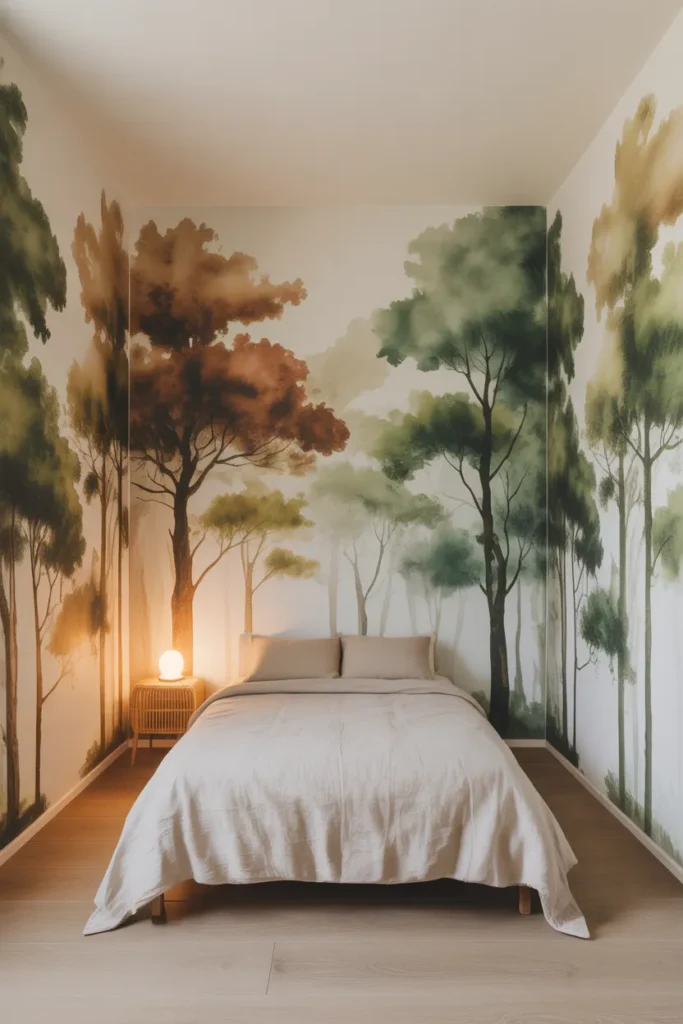
A hand-painted or wallpaper mural wall is one of the highest-impact kids room remodel ideas you can execute in a single weekend. One wall covered in a forest scene, abstract shapes, a mountain landscape, or a simple geometric pattern instantly defines the entire room’s personality.
Choose a mural that has a long visual life — abstract or nature-based murals age better than character-specific designs that children outgrow quickly. Keep the remaining three walls in a neutral tone pulled from the mural’s palette so the whole room feels cohesive rather than chaotic.
Furniture in the room should be simple and secondary. When the wall is the statement, everything else supports it quietly.
7. A Shared Kids Room With Defined Personal Zones
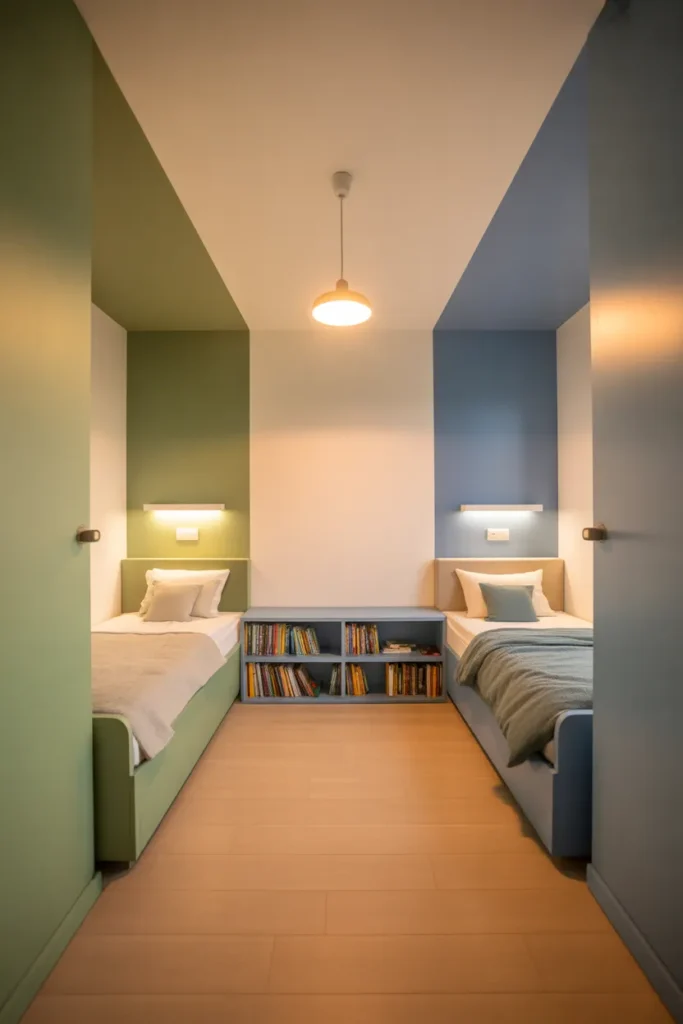
Designing a shared kids room that feels fair and functional for two children is one of the most common kids bedroom remodel challenges for families. The solution is defined personal zones — each child gets their own clearly delineated side of the room, their own color accent, their own storage, and their own light source.
Use a bookshelf or open shelving unit as a room divider running perpendicular from a wall to create a soft visual separation without closing the room off completely. Each side has its own bed, its own bedside surface, and its own wall-mounted light. Keep the floor, ceiling, and shared wall elements in a unified neutral so the room reads as one cohesive space.
Let each child choose one accent color for their side — pillows, a small rug, a lamp shade — and keep both within the same tonal family so they do not clash across the divide.
8. A Teen Bedroom That Feels More Like a Studio
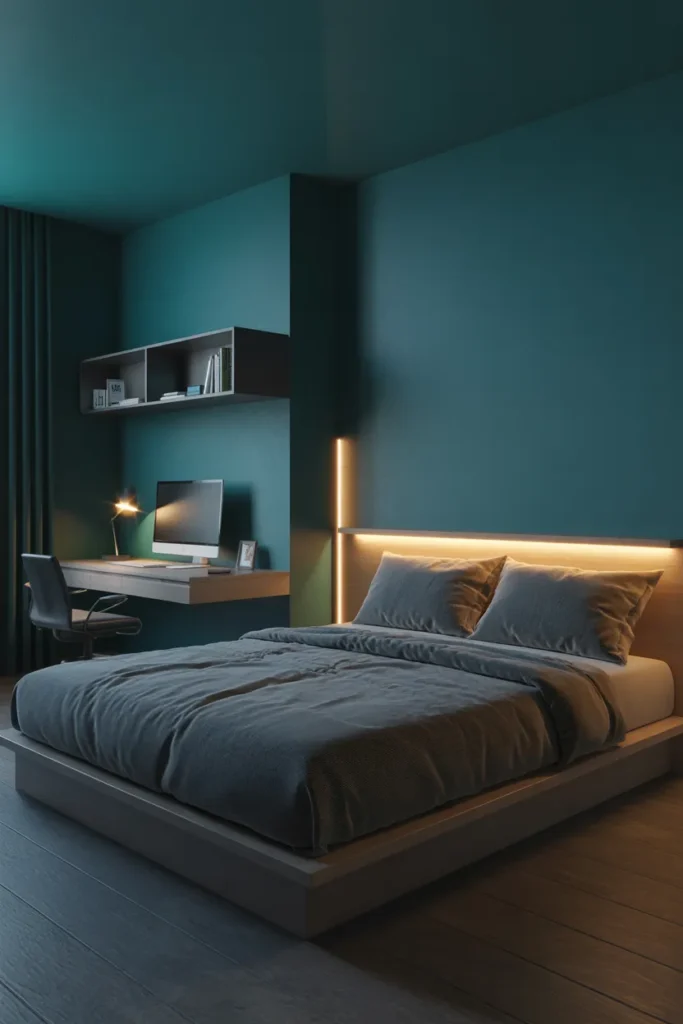
One of the most requested kids room remodel ideas for older children is a space that no longer reads as a kids room at all. A teen bedroom designed to feel like a small studio apartment — with a dedicated lounge area, a proper desk setup, and a bed that looks like a sofa during the day — gives teenagers the grown-up environment they are craving.
Use a darker, more sophisticated color palette: deep teal, moody blue-gray, charcoal, or warm forest green. Layer in better lighting — a floor lamp, a desk lamp, and warm LED strips behind the bed headboard replace the single overhead light that makes teen rooms feel flat and institutional.
A daybed or a platform bed with a simple linen cover and structured pillows completes the studio feel during daytime hours.
9. Rainbow Color Blocking Done the Modern Way
Color blocking in a kids room does not have to mean primary red, yellow, and blue painted randomly across walls. Modern color blocking for 2026 uses muted, sophisticated versions of color — dusty rose, pale butter yellow, soft sage — applied in clean geometric sections across one or two walls.
Paint a half-wall in one color and leave the top half white. Or block out a large rectangle on one wall in a contrasting muted tone to frame the bed. These techniques add color and personality without overwhelming a small room or making it feel chaotic.
This approach is particularly good for kids room remodel ideas on a budget because paint is the lowest-cost, highest-impact change you can make.
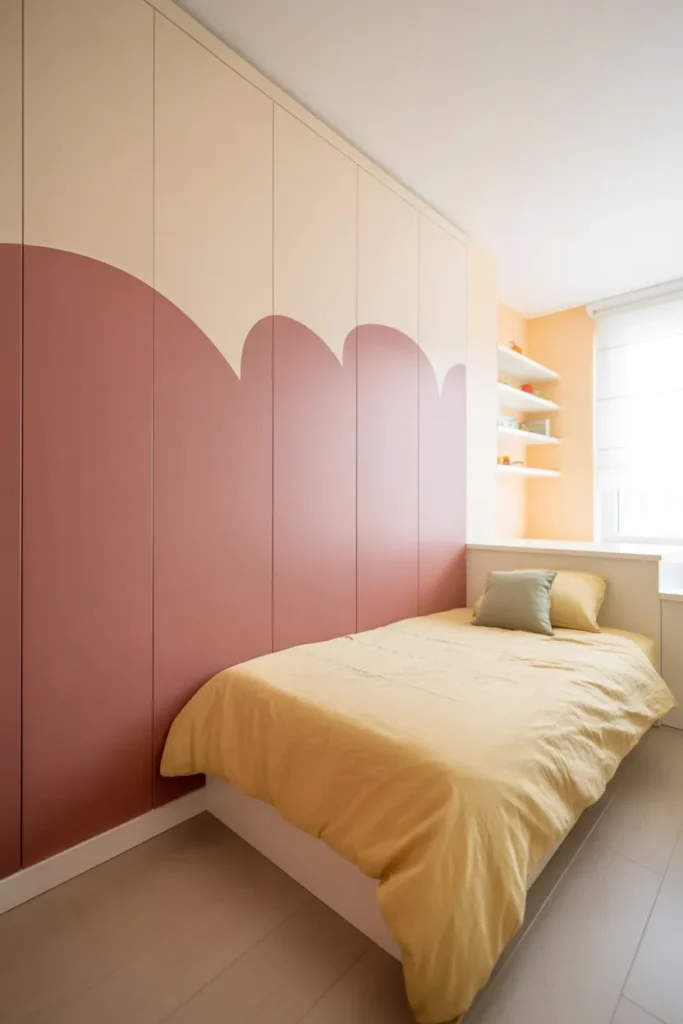
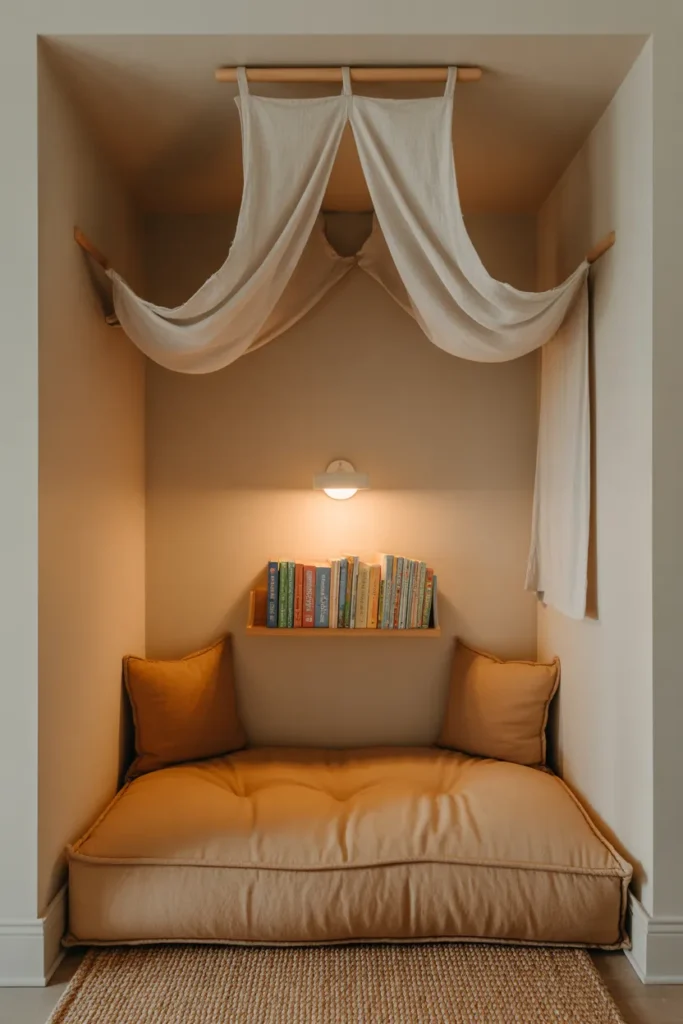
10. A Reading Corner That Kids Actually Use
A dedicated reading corner is one of the most consistently popular kids room ideas — but most of them go unused because they are not comfortable or accessible enough. The ones that actually get used share three things: a proper cushioned seat at the right height, good lighting directly over the reading spot, and books within arm’s reach.
Build or buy a corner seat with a thick cushion at floor level or low platform height. Mount a small wall shelf directly beside or above it to hold a rotating selection of books — no more than 10 to 15 at a time so the choice does not feel overwhelming. Add a plug-in wall sconce or a small arc floor lamp positioned directly over the seat.
A canopy, curtain, or simple overhead arch above the corner makes the space feel intentionally separate from the rest of the room — which is exactly what makes children want to sit in it.
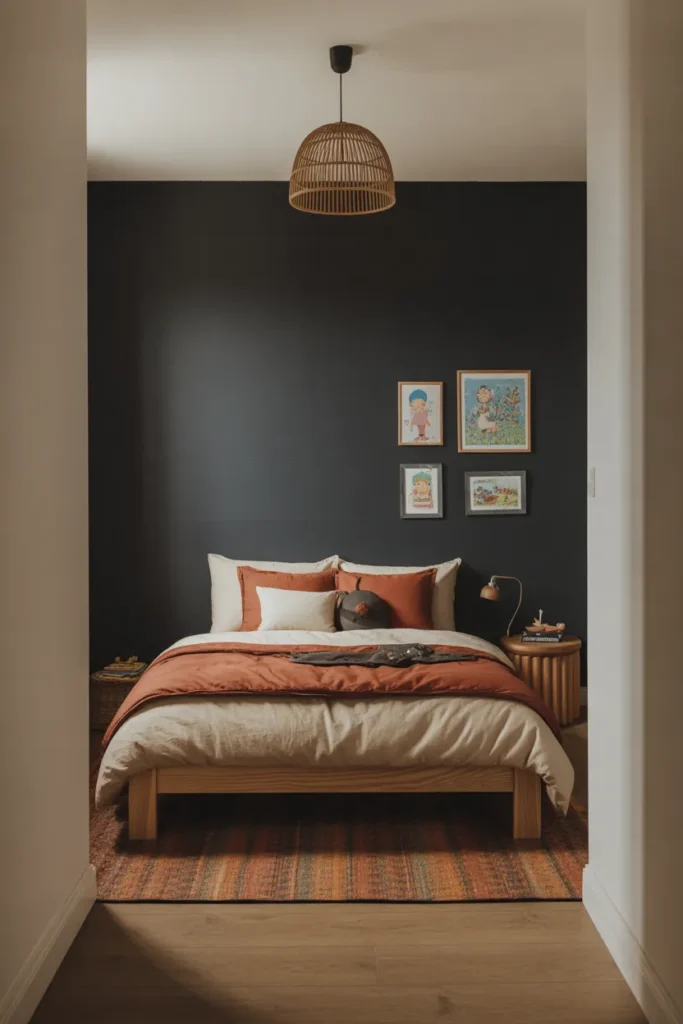
11. A Black Accent Wall in a Kids Room (Yes, Really)
A deep charcoal or soft matte black accent wall in a kids room is one of the most surprising and effective kids room design ideas for 2026 — and it consistently gets saved on Pinterest because it defies expectations. Dark walls in a kids room look dramatic, sophisticated, and actually make colorful artwork, books, and accessories pop far more than a white wall ever could.
Use the dark wall as the bed wall. Keep the other three walls in a warm white or very light complementary tone. Layer on warm wood furniture, a patterned rug in warm tones, and warm-temperature lighting to stop the dark wall from feeling cold or heavy.
This is an especially powerful idea for kids transitioning out of a young child’s room — the dark wall does the heavy lifting of making the room feel instantly older and more sophisticated.
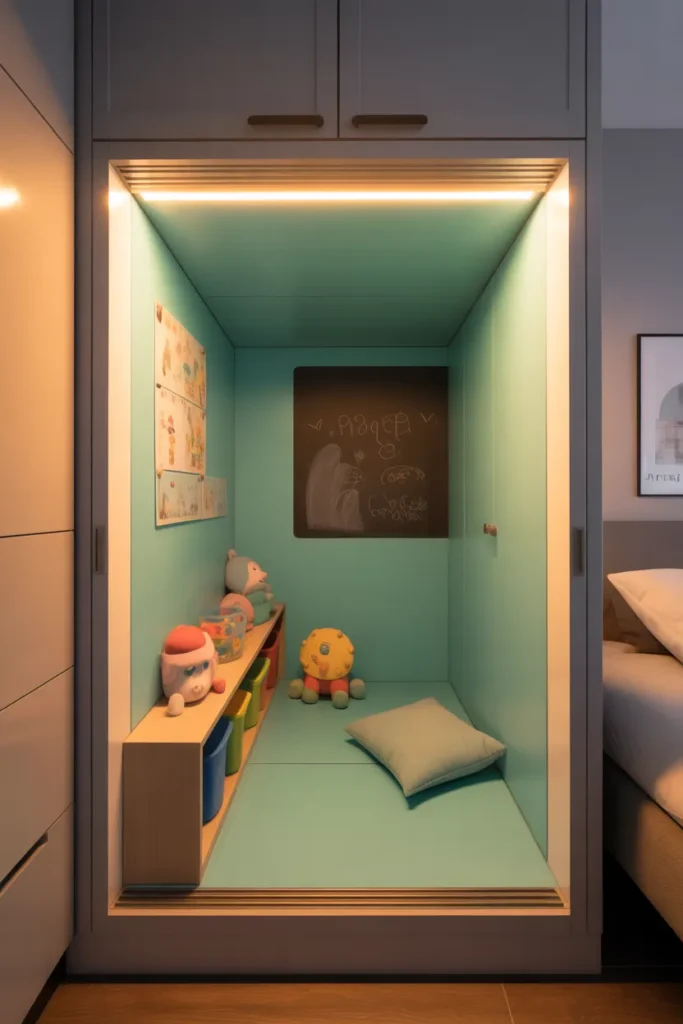
12. A Play Zone Built Into a Closet
Converting a standard closet into a dedicated play zone is one of the most creative small kids room remodel ideas for homes where floor space is limited. Remove the closet doors, paint the interior in a fun accent color, add a low shelf along one side, and suddenly you have a defined, enclosed play space that children treat as their own private world.
Keep the play closet stocked with accessible open bins and baskets at the child’s height — everything visible, everything reachable. Add a small LED strip light inside the top of the closet for a fun, cozy glow. A small chalkboard panel on the back wall of the closet adds an interactive element that costs almost nothing.
The remaining clothing storage moves to a freestanding wardrobe or a slim built-in on another wall — a trade that almost always results in a more functional overall room layout.
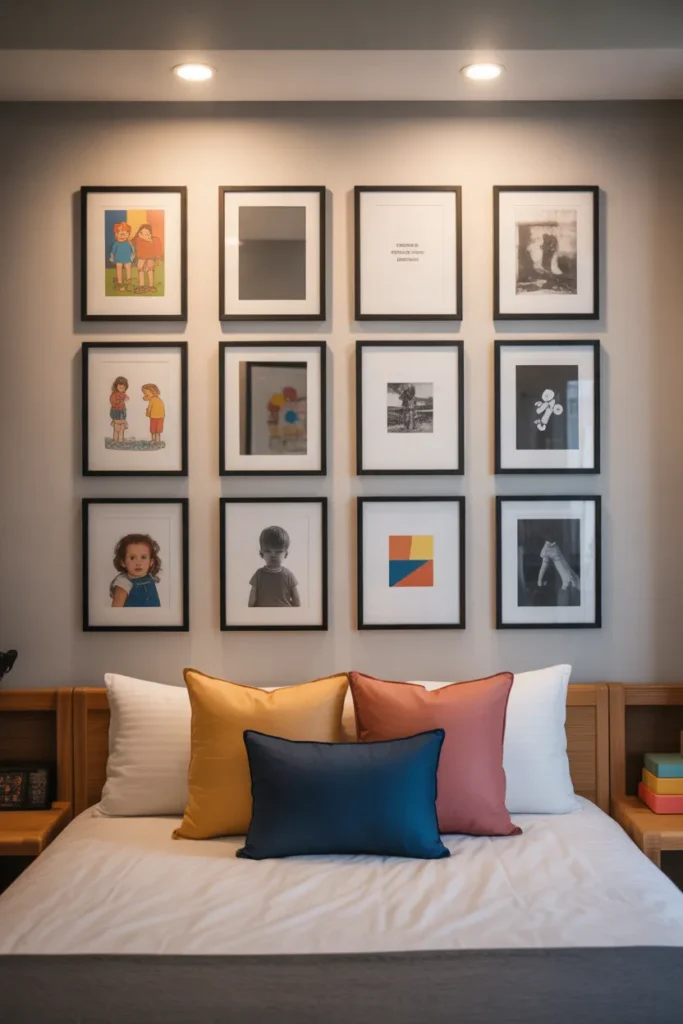
13. Maximalist Gallery Wall Done Right for a Kids Room
A gallery wall in a kids room works best when it has a clear organizing principle rather than random artwork scattered at different heights and sizes. Choose one frame style — all thin black, all natural wood, or all white — and vary only the content inside: artwork, photos, prints, and small mirrors.
Arrange the gallery in a tight grid formation rather than a loose organic layout. A grid reads as intentional and calm even when the content inside the frames is colorful and playful. Keep the bottom row of frames at the child’s eye line so they can actually see and enjoy the art closest to them.
Rotate the artwork inside the frames seasonally or as the child’s interests change — the frames stay, the content evolves. This makes a gallery wall one of the longest-lasting kids room decor investments you can make.
14. A Nature-Themed Room Using Only Natural Materials
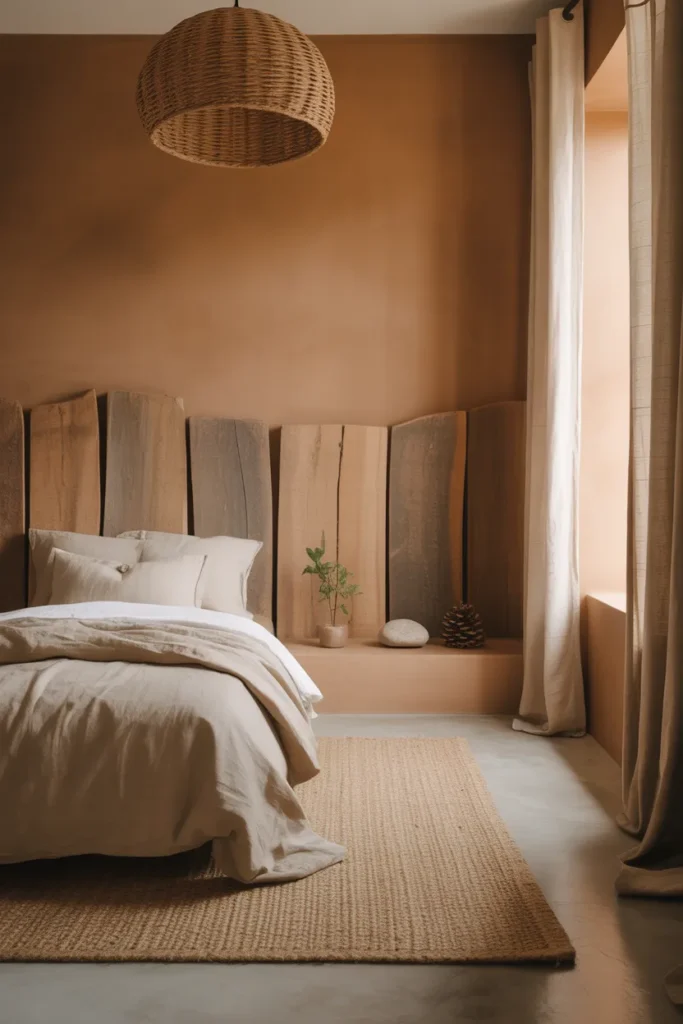
A nature-inspired kids room for 2026 skips the printed leaf wallpaper and cartoon animals entirely. Instead it uses real natural materials — raw wood, rattan, linen, jute, stone-look plaster — to create a room that genuinely feels connected to the natural world in a lasting, sophisticated way.
A raw wood plank headboard, a rattan pendant light, a jute rug, and linen curtains do more for a nature theme than any themed bedding set ever could. Add a small collection of real items — a smooth stone, a pinecone, a small plant — on a low shelf to reinforce the natural connection without relying on printed graphics.
Keep the wall color in a soft organic tone — warm clay, pale moss, or natural linen white. Avoid anything that looks too designed or too deliberate. The beauty of this aesthetic is in how effortless and grounded it feels.
15. A Room That Grows With the Child — The Forever Room
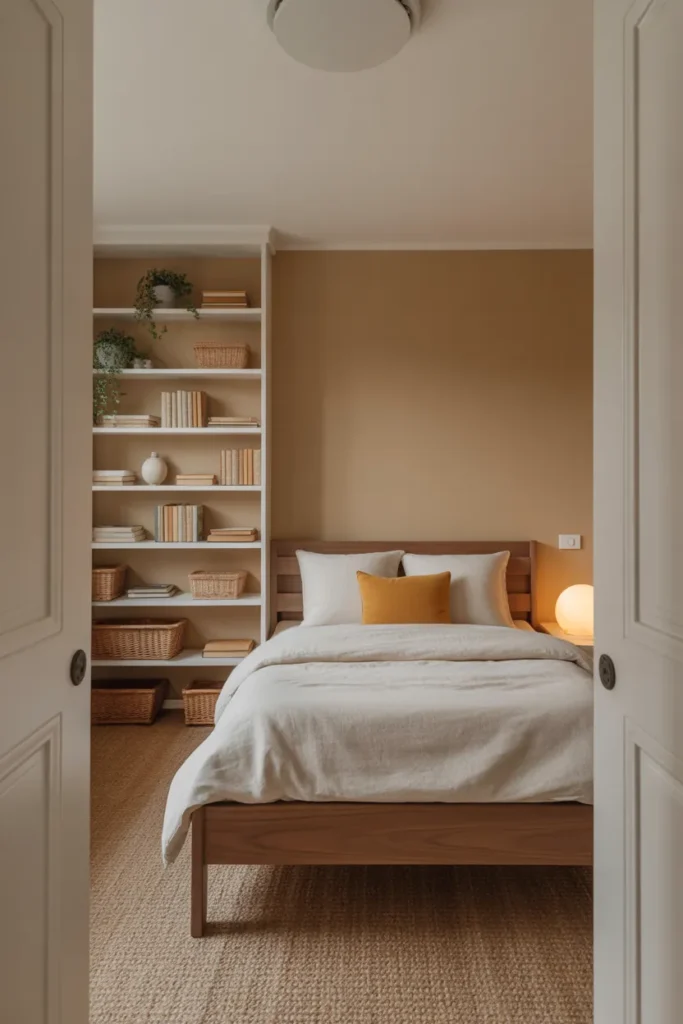
The smartest kids room remodel idea of 2026 is designing for change from the very beginning. A forever room uses neutral architecture — white or greige walls, natural wood floors, simple built-in shelving — paired with easily swappable accents that can evolve as the child grows from toddler to teen.
The bones of the room stay the same for years: the built-in shelving, the quality bed frame, the overhead lighting. What changes is everything layered on top — the bedding, the art, the rug, the throw pillows, the accessories on the shelves. These are all low-cost, low-effort swaps that make the room feel completely different without touching the architecture.
Invest in quality for the permanent elements and stay flexible on everything else. This single design philosophy will save significant time and money across an entire childhood.
Ready to Start Your Kids Room Remodel?
The best kids room remodel ideas 2026 are the ones that solve real problems — not enough storage, a room that feels too young, a shared space that does not work for two children, or a layout that wastes the room’s potential. Pick the one idea that solves your biggest challenge first and build from there.
Save this post to your Pinterest boards so you can come back to it when you are ready to plan. More home design and kids room inspiration is coming — save it now so you do not lose it.