
Most pantries waste half their space — and most people don’t realize it until they’re reorganizing for the third time. This post gives you the best small pantry design 2026 ideas to turn even the tightest cabinet or closet into a fully functional, beautiful storage system. If you’ve ever stared at a chaotic pantry and thought “there has to be a better way” — you’re in exactly the right place.
1. How Floor-to-Ceiling Shelving Doubles Your Pantry Storage Overnight
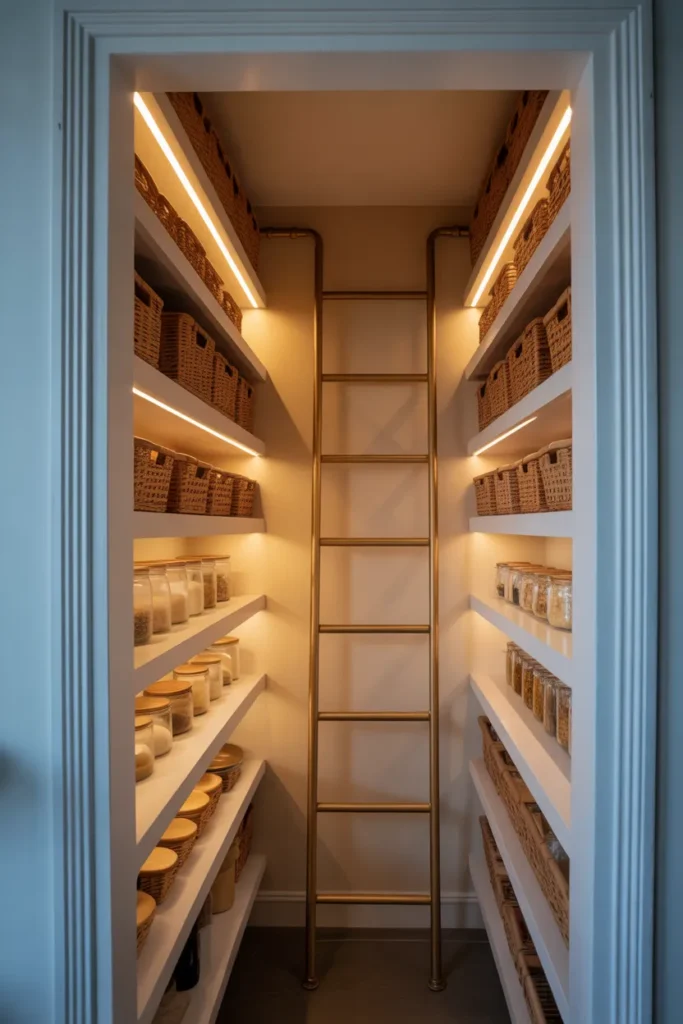
Picture open shelves running from baseboard to ceiling — every inch of vertical wall claimed. Lower shelves hold everyday staples at eye level. Upper shelves store seasonal items and bulk goods. Nothing is on the floor except maybe one slim rolling cart.
Vertical space is the most underused asset in any small pantry. Most pantries stop shelving at 6 feet and leave 2 feet of dead air above. That gap can hold an entire category of items — baking supplies, extra paper goods, holiday entertaining essentials.
Use a slim library ladder on a rail if the top shelves feel inaccessible. It makes the pantry feel intentional and architectural — not just functional.
The shelves themselves matter. Adjustable shelving lets you customize depth by zone. Fixed shelves look cleaner. Choose based on how often your storage needs change.
2. The Shelf Depth Mistake That Makes Small Pantries Feel Impossible
Do this: Use shallow shelves — 12 inches deep maximum for canned goods and jars, 16 inches for larger items. One row of products visible per shelf. Everything seen at a glance.
Not that: Deep 24-inch shelves where cans hide three rows back. You buy duplicates of things you already own because you can’t see what’s there.
Shallow shelves are the single biggest organizational upgrade in small pantry design. They force single-row storage, which means zero hidden items and zero forgotten food.
If you’re retrofitting existing deep shelves, add a riser or a pull-out drawer insert at the front half. It immediately creates two functional zones on one shelf without any construction.
3. How Pull-Out Drawers Transform a Dead-Zone Cabinet Into Prime Storage
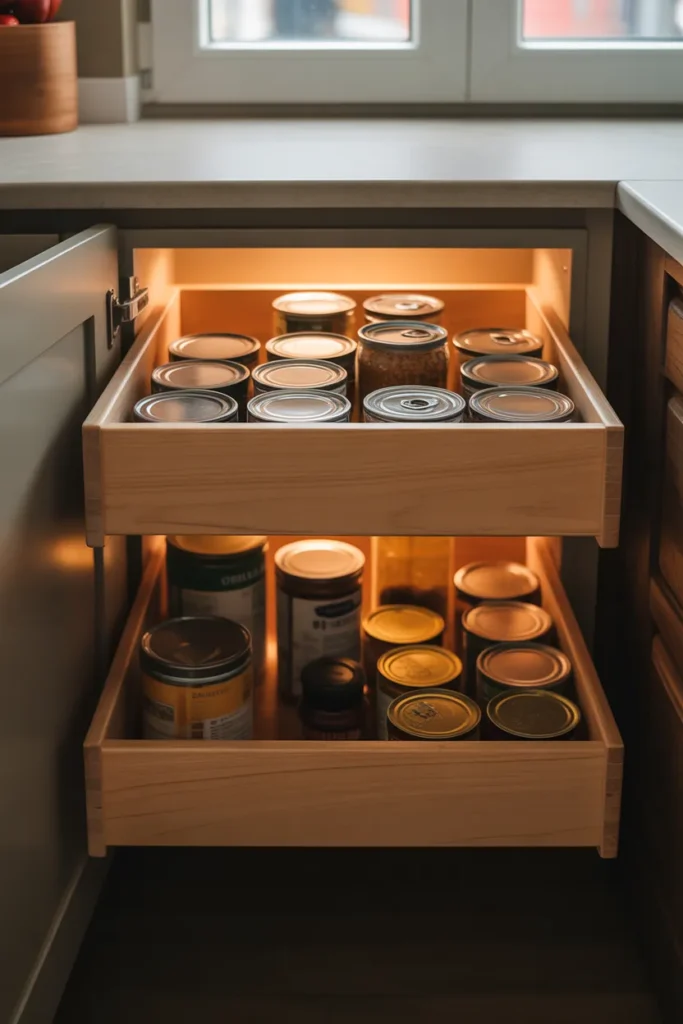
A standard pantry cabinet with fixed shelves loses about 40% of its usable space to inaccessible corners and back zones. Pull-out drawers reclaim every inch of that.
Pull-outs work because they bring the back of the cabinet to you. No reaching, no rearranging, no forgotten items. Everything slides forward on demand. This is especially transformative for base-level cabinet pantries where bending down to see inside is a daily frustration.
Full-extension drawer slides are essential — anything less and you’re still losing the back third of the drawer. Look for soft-close mechanisms as a quality signal.
In a small pantry closet, replace the bottom two fixed shelves with two pull-out drawers. Keep upper shelves as-is. That single change solves 80% of access problems without touching the rest of the system.
4. Why a Dedicated Spice Zone Makes Your Entire Pantry Feel Organized
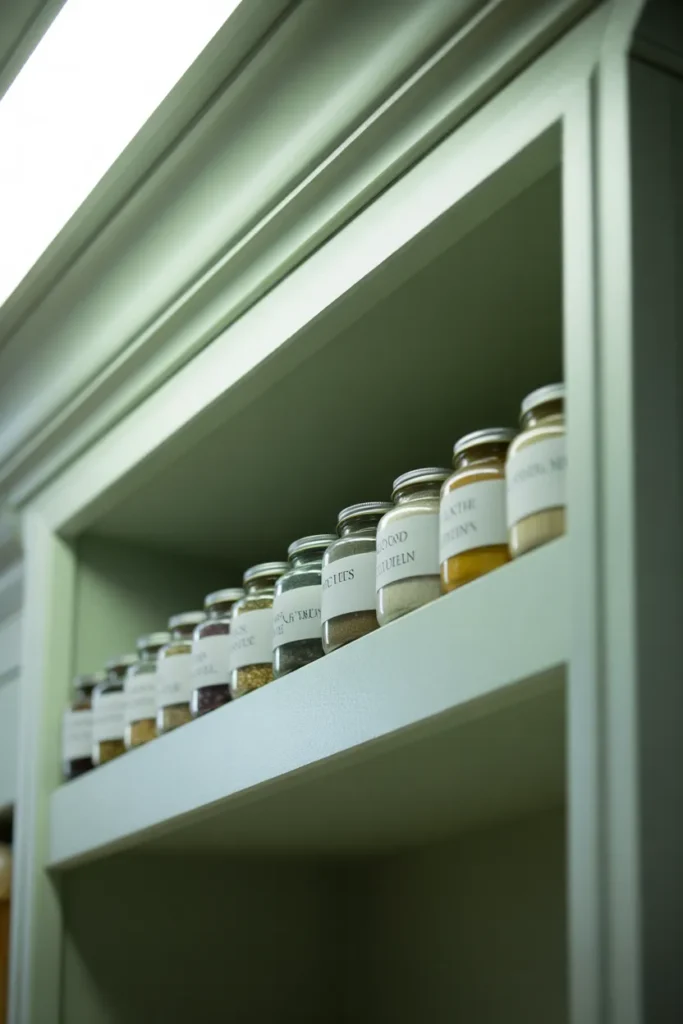
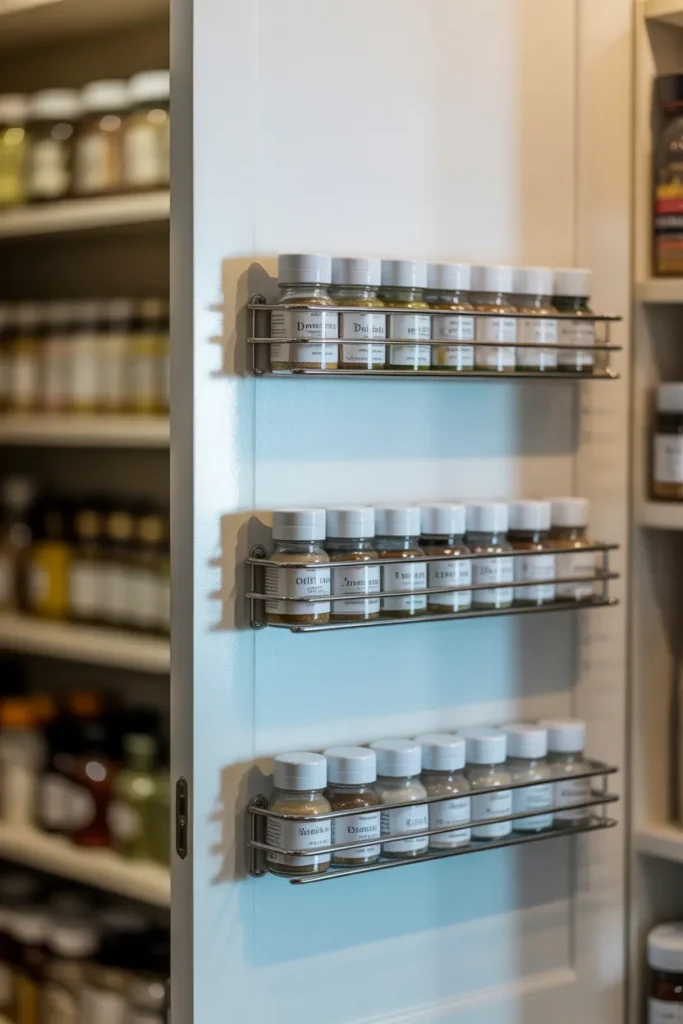
Picture one wall section or cabinet door fitted with a slim tiered spice rack — every jar visible, labeled on top, arranged by category. No rummaging. No doubles. No expired oregano from 2021.
When spices have a dedicated zone, the rest of the pantry organizes itself. Spices are the most chaotic category in most kitchens because they’re small, numerous, and easily scattered. Contain them and the entire system feels more controlled.
Tip: Label the tops of spice jars, not the sides. When they’re stored in a drawer or tiered rack, top labels are the only ones you’ll ever see.
5. The Basket System That Makes an Open Pantry Look Like a Design Feature
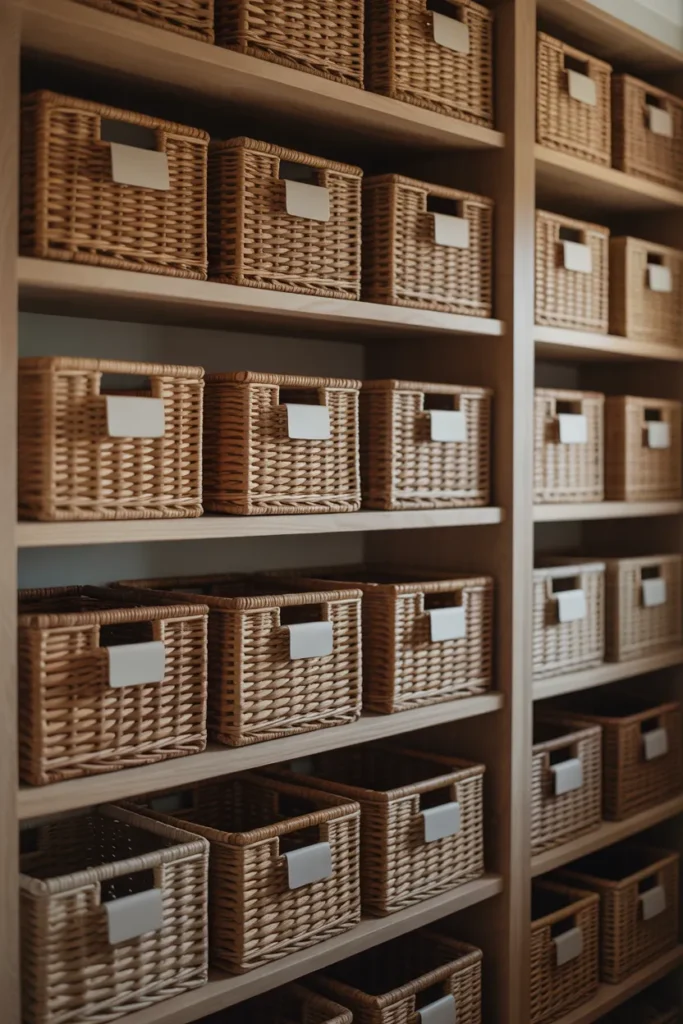
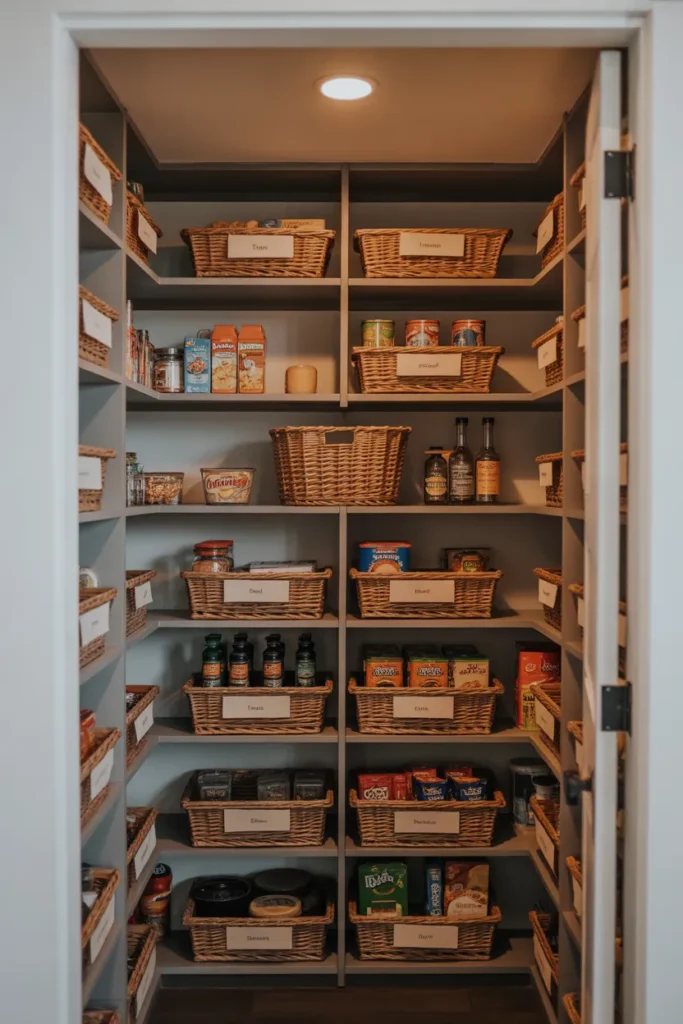
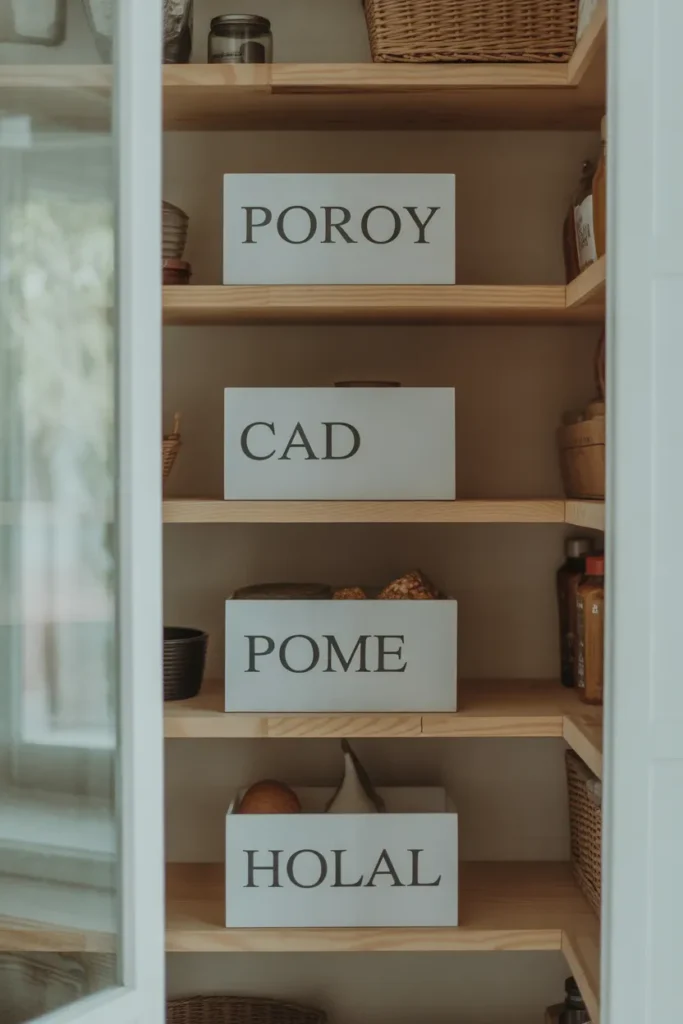
Woven baskets in uniform sizes, lined up on open shelves with small labels at the front — this is the look that dominates Pinterest pantry boards in 2026, and it works because it hides visual chaos behind beautiful texture.
The key is uniformity. One basket style, one size per shelf zone, consistent labels. Mix basket styles and the system looks messy even when it’s organized.
For small pantry closet organization, baskets work best for categories that don’t need to be seen: snacks, baking extras, kids’ items, packets and pouches. Glass jars for things you want to see — grains, pasta, legumes. Baskets for everything else.
Use a label holder at the front face of the basket, not on top. It makes the category readable at a glance when you’re standing in front of the shelf.
6. How Under-Shelf Lighting Turns a Functional Pantry Into a Beautiful One
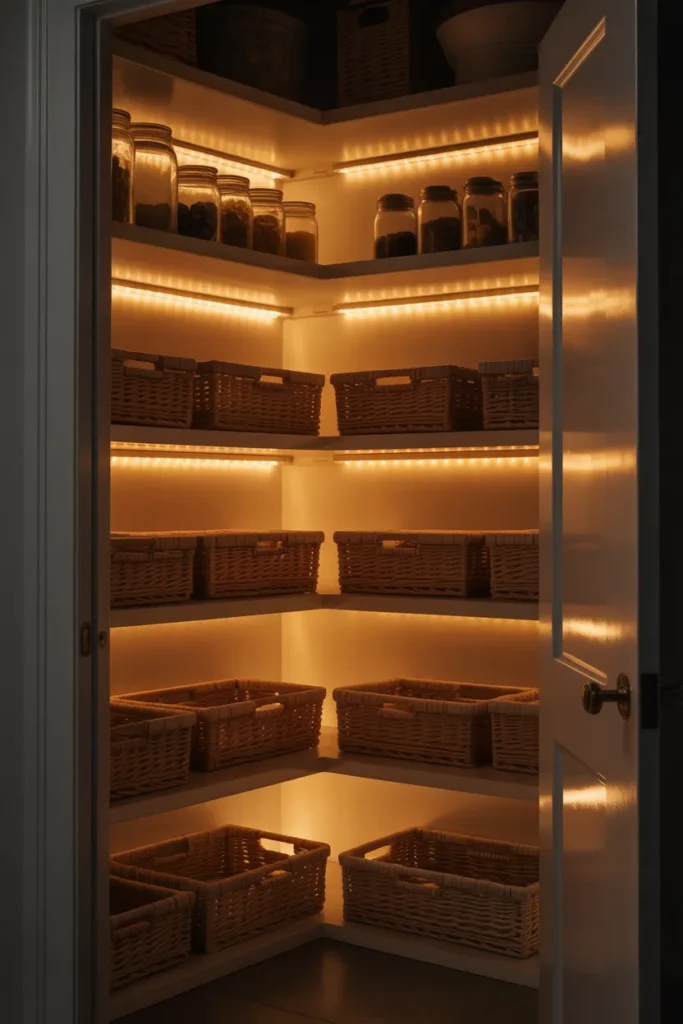
Most pantry lighting is a single overhead bulb that casts shadows on every shelf below it. Under-shelf LED strip lights solve this completely — each shelf illuminates the one below it, creating even, warm light at every level.
The lighting upgrade is the most underrated move in small pantry design 2026. It doesn’t add storage. It doesn’t add organization. But it makes everything else look better and function better — you can actually see what’s on every shelf at a glance, even in a deep pantry closet.
Warm white LED strips (2700K–3000K) photograph beautifully and feel inviting rather than clinical. Rechargeable puck lights work for renters. Hardwired strips are cleaner for permanent installations.
The rule: if you can’t see it clearly, you won’t use it consistently.
7. Three Door Styles That Instantly Upgrade a Small Pantry Closet
The door is the first thing you see. These three options each solve a different problem:
- Sliding barn door: No swing clearance needed — perfect when the pantry is near a kitchen island or tight corner. Adds character. Works in modern farmhouse and transitional kitchens.
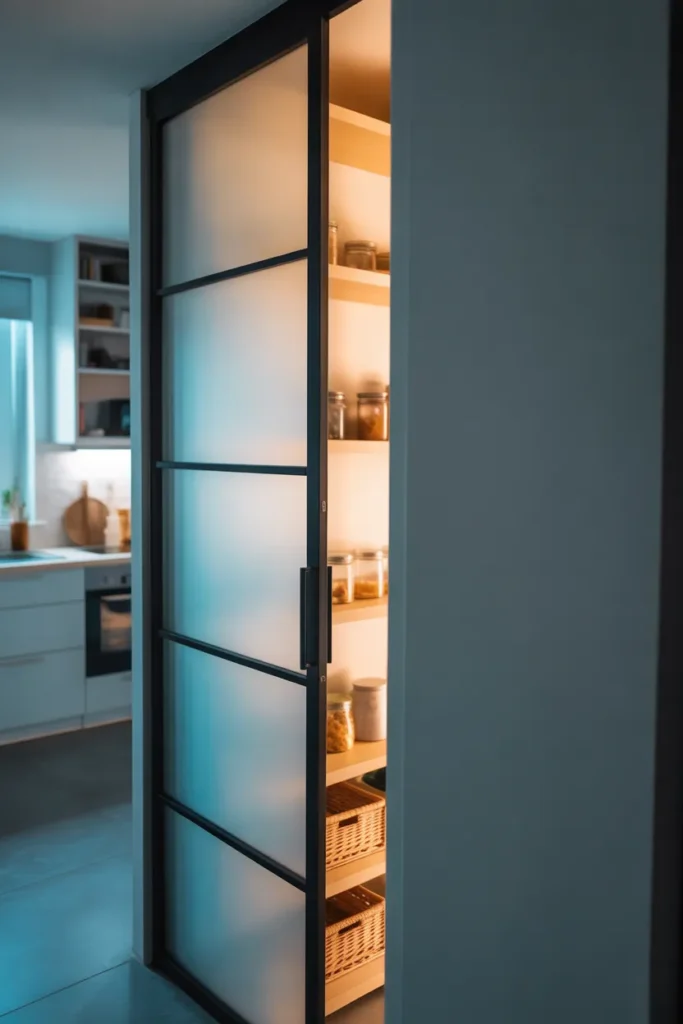
- Frosted glass panel door: Lets light pass through, makes the pantry feel less cave-like, and looks architectural. Ideal for open-plan kitchens where the pantry door faces the main living space.
- No door at all: Open pantries with a styled shelving system are increasingly popular in 2026 small kitchen pantry design. Removes the door obstacle entirely and treats the pantry as a design feature.
The worst option for a small pantry: a standard swing door that eats into kitchen floor space every time it opens.
8. How to Design a Small Pantry That Works Without a Walk-In Space
No walk-in closet? A single tall cabinet — floor to ceiling, 18–24 inches deep — can hold more than most people’s walk-in pantries when it’s designed correctly.
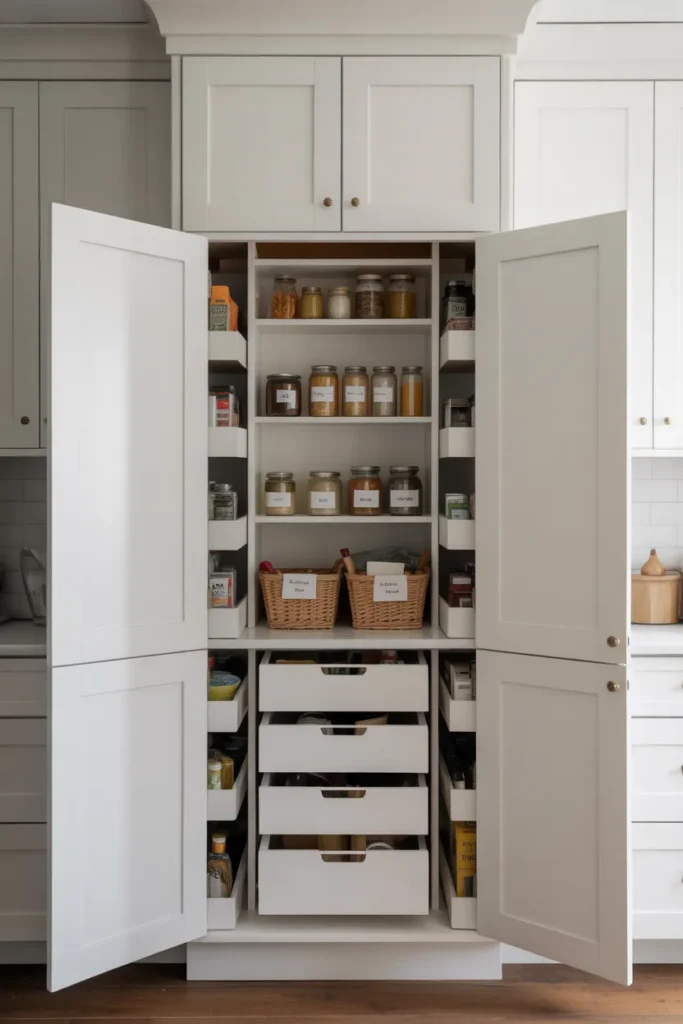
Tall pantry cabinets work because they commit fully to vertical storage. Two doors open to reveal pull-outs at the base, adjustable shelves in the middle, and fixed narrow shelves at the top for rarely used items. Every zone has a purpose before a single item goes in.
The configuration order matters: most-used items at eye level, second most-used items just above and below, bulk and seasonal items at the very top and very bottom.
For a rental or apartment kitchen with no dedicated pantry, two tall cabinets side by side — treated as one unified pantry zone — replicate the function completely.
9. The Labeling System That Keeps a Small Pantry Organized for More Than a Week
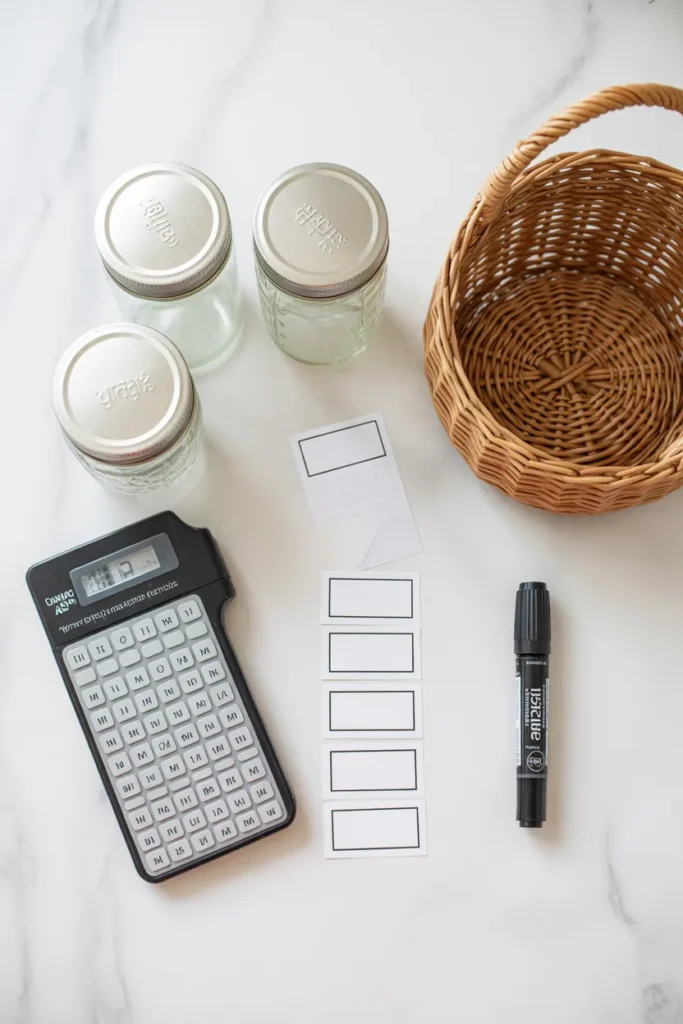
Do this: Label every container and basket with category names, not specific contents. “Pasta” not “penne.” “Baking” not “all-purpose flour.” Categories stay consistent even when products change.
Not that: Hyper-specific labels that become wrong the moment you buy a different brand or switch products. You stop trusting the system and stop using it.
A pantry organization system only works long-term if it requires zero maintenance to stay accurate. Category labels do this. Product-specific labels don’t.
Use a single label style throughout — same font, same color, same size. Consistency is what makes the system look designed rather than DIY.
10. How to Create a Pantry Zone System That Eliminates Daily Searching
Zone your pantry like a grocery store — and you’ll never search for an item again.
The zone system works because it removes decision fatigue. Every item has a permanent category address. You don’t decide where something goes — the zone decides for you. Put it back in the zone, always. Done.
Recommended zones for a small pantry in 2026: breakfast zone (top, easy reach), cooking staples zone (eye level, most used), snacks zone (lower shelf, accessible to all), baking zone (upper shelf or dedicated basket), bulk and backup zone (very top or very bottom).
The transition zone is the most overlooked: a small tray or basket near the pantry entrance for “needs to be used soon” items. It reduces food waste and keeps inventory rotating naturally.
11. The Countertop Pantry Setup for Kitchens With Zero Cabinet Space
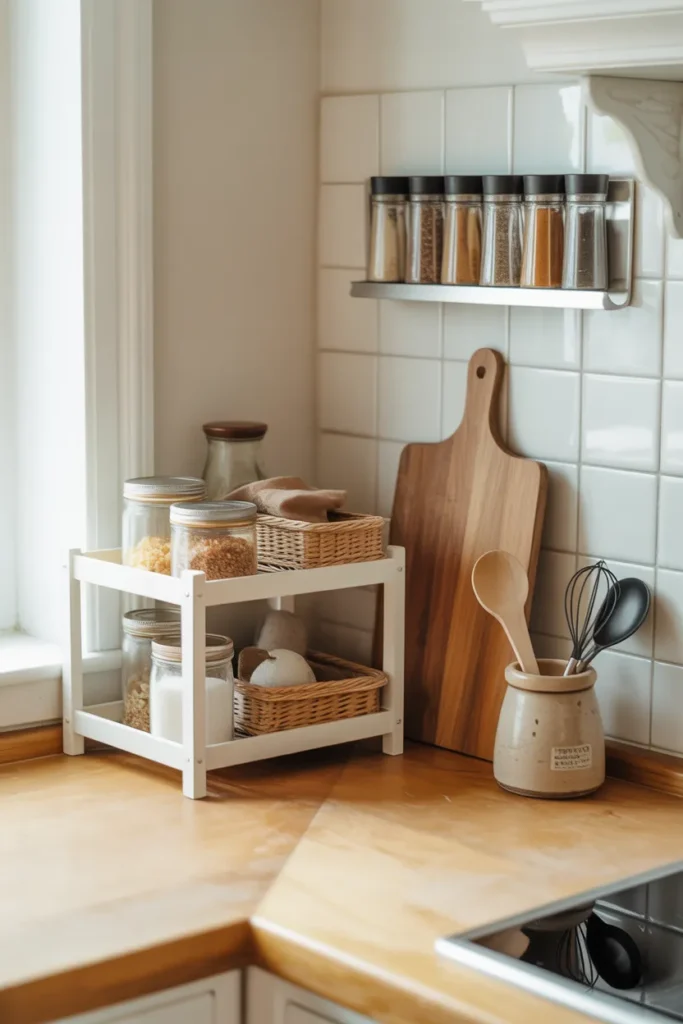
Picture a kitchen counter corner claimed entirely as a pantry station: a tiered shelf riser holding labeled jars, a small crock with cooking tools, a wooden tray corralling oils and vinegars, and a single wall-mounted magnetic strip for spices above.
A countertop pantry works because it externalizes storage — trading hidden cabinet space for visible, accessible organization. It only works if every item on it is used regularly. Anything you use less than weekly should live elsewhere.
Tip: Contain the countertop pantry within a defined footprint — one tray or one shelf unit. The moment it spreads past its boundary it reads as clutter, not design.
12. What the Most Functional Small Pantry Designs All Have in Common
After looking at hundreds of small pantry organization ideas, one pattern is consistent: the most functional pantries have fewer categories, not more. They collapse their storage into 5–7 zones and commit to them.
The mistake most people make is over-categorizing. Fourteen zones sounds more organized — it’s actually harder to maintain. When a system has too many rules, humans abandon it within two weeks.
The best small pantry design 2026 approach is a simple framework: everyday zone, cooking zone, snack zone, baking zone, and overflow zone. Everything maps to one of five. The pantry stays organized because the rules are simple enough to follow without thinking.
Simple systems survive. Complex systems don’t.
13. How to Make a Rented Apartment Pantry Look Like It Was Custom Built
You can’t drill, you can’t paint, you can’t modify. Here’s what you can do:
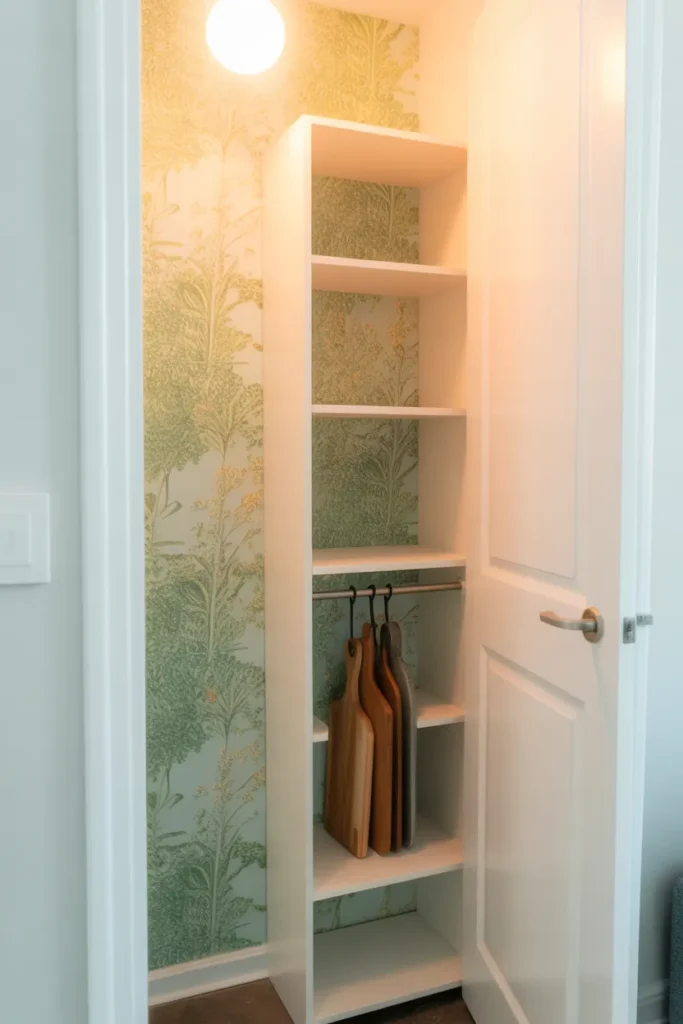
- Freestanding shelf unit: A tall, slim shelving unit placed inside an existing cabinet or closet transforms it completely. No installation. Takes it with you when you move.
- Removable wallpaper on the back wall: One pattern on the back wall of a pantry closet makes the whole space feel intentional and designed — even with rental-standard shelves.
- Tension rod dividers: Installed horizontally between shelves, they create vertical storage for cutting boards, baking sheets, and trays. No tools. No damage. Completely reversible.
These three moves together can make a builder-grade pantry closet look like a custom small pantry design — without spending much or risking your security deposit.
Conclusion
Your pantry is one of the hardest-working spaces in your home — and one of the easiest to genuinely improve with the right framework. Save this post to your home organization board on Pinterest so these ideas are ready when you’re ready to act, and keep exploring for the next upgrade that fits your space perfectly.
Still Confused? Have a sight on other pantry organization ideas!