
Your bedroom doesn’t need more space — it needs smarter decisions. These small bedroom ideas 2026 cover everything from layout strategies and storage solutions to lighting tricks and color choices that make compact rooms feel designed, not compromised. If you’ve been waiting for ideas that actually work in a real small room, this is the post to save.
1. The Platform Bed That Eliminates the Need for a Bed Frame AND Storage
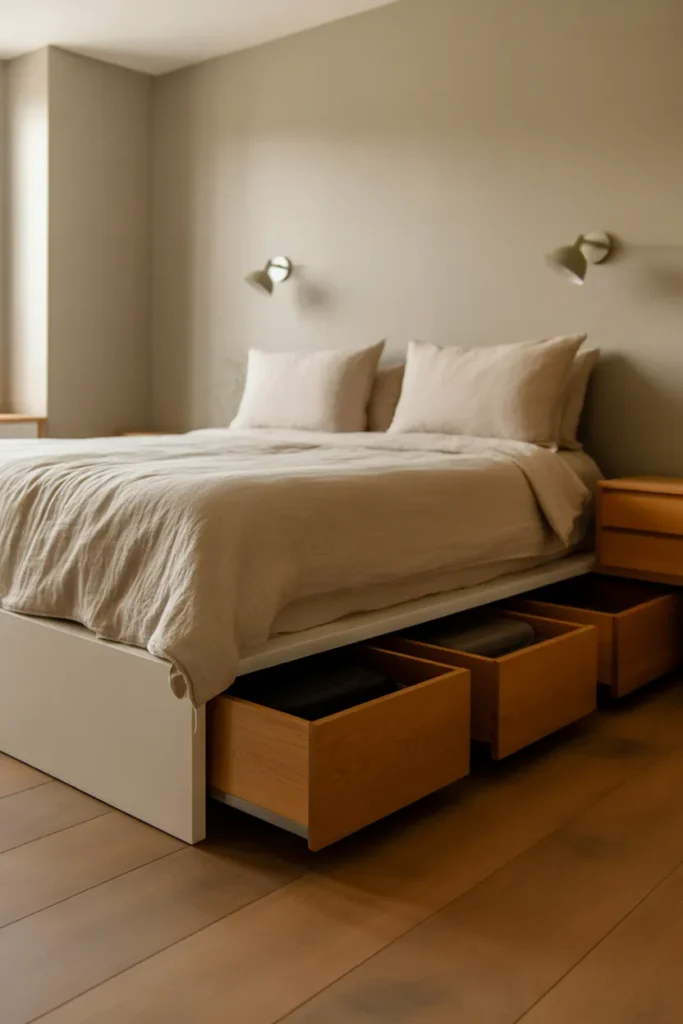
A platform bed with built-in drawer storage underneath does two jobs at once — it replaces the bed frame and eliminates the need for a separate dresser in a small bedroom. The result is a cleaner floor plan with more breathing room around the perimeter of the room.
The visual effect is immediate. A low-profile platform sits closer to the floor, which makes the ceiling feel higher by contrast. Choose a platform in warm oak, painted MDF, or upholstered linen depending on the room’s overall tone.
The drawers underneath handle off-season clothing, extra bedding, and anything else that would otherwise require a separate piece of furniture. In a truly small room, every piece needs to do more than one thing.

2. How to Use a Dark Accent Wall to Make a Small Bedroom Feel Bigger
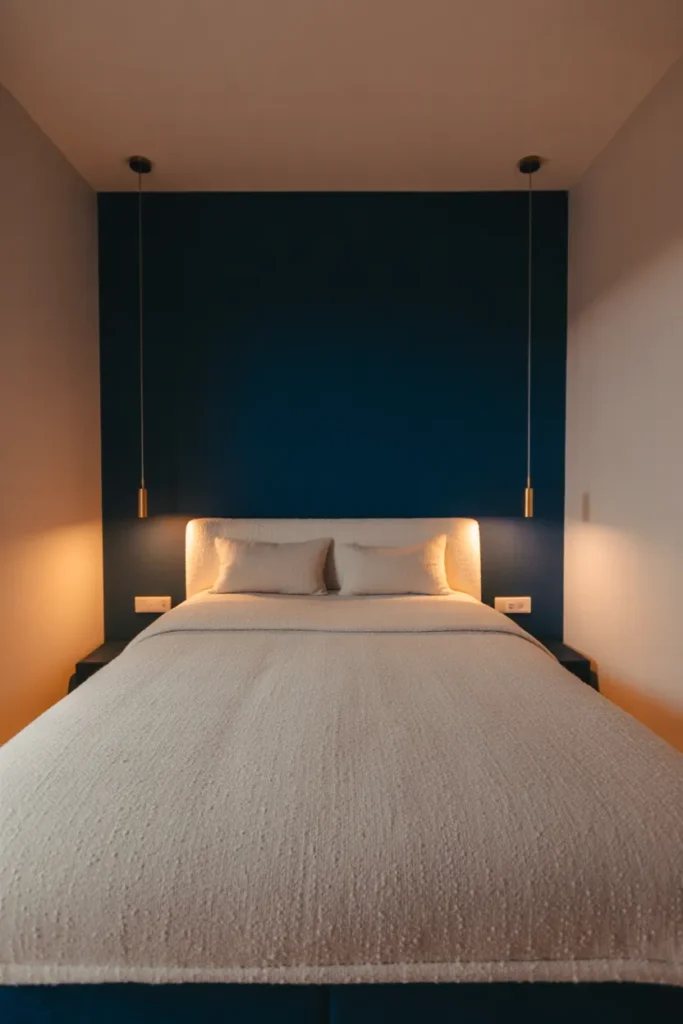
It sounds backward — but a dark accent wall behind the bed in a small bedroom creates depth rather than closing the room in. The wall visually recedes, making the room feel longer than it actually is.
Choose the wall behind the headboard and take it deep: forest green, navy, charcoal, or warm terracotta all work. Keep the remaining three walls in a light complementary tone so the contrast does the heavy lifting.
The accent wall also frames the bed as the room’s focal point, which gives a small bedroom a designed, intentional quality that light-all-around rooms often lack. One bold decision anchors the whole space.
3. Floating Nightstands That Give You Surface Space Without Stealing Floor Space
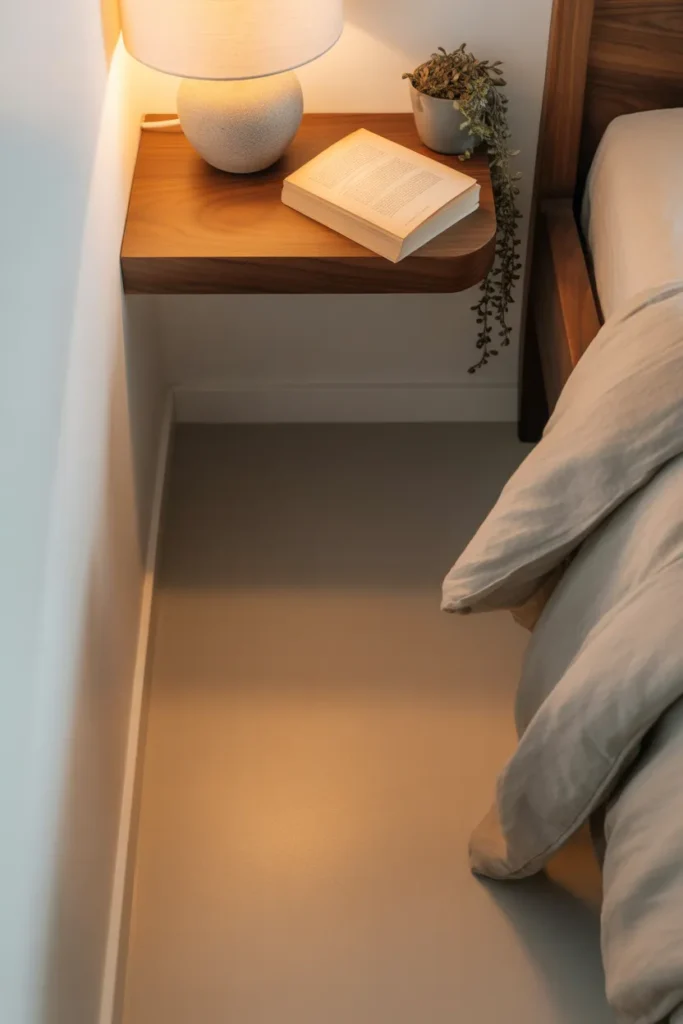
In a small bedroom, floor space is the most valuable resource. Every furniture leg touching the floor competes for that space visually — and wall-mounted floating nightstands eliminate the problem entirely.
A floating shelf at nightstand height — 24 to 28 inches off the floor — gives you a surface for a lamp, a book, and a phone without any visual weight below it. The floor reads as continuous and uncluttered, which makes the room feel larger.
Go asymmetrical if the layout calls for it. One floating shelf on the tighter side, one small freestanding table on the open side — the mix feels collected rather than matched, and it solves the space problem without looking like a compromise.
4. The Curtain Trick That Makes Low Ceilings Disappear
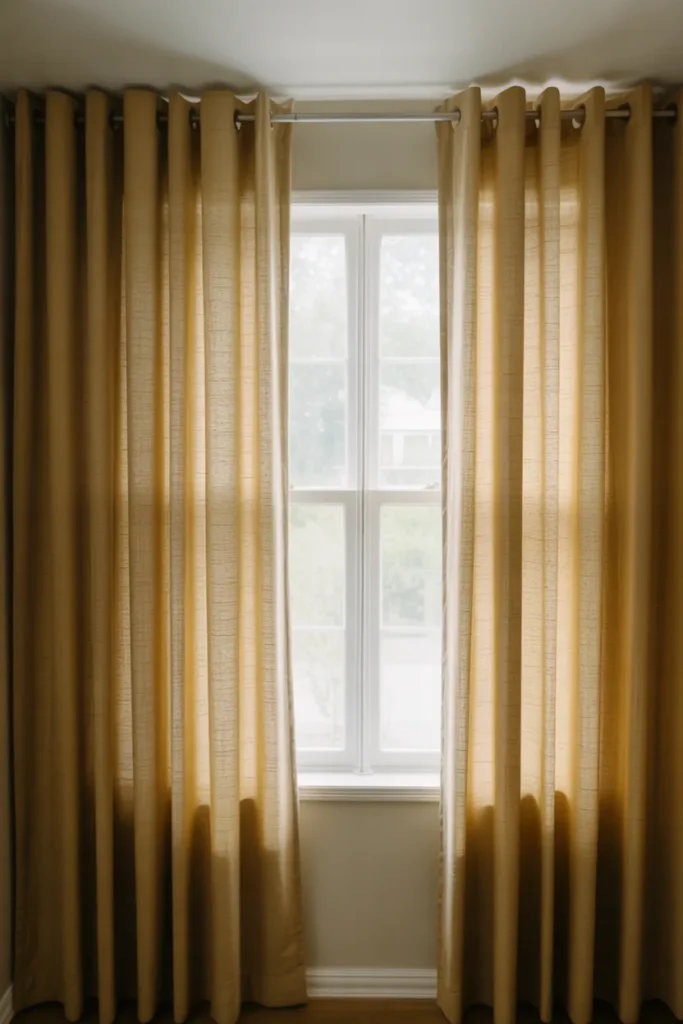
Hang curtains from the ceiling — not from the window frame. This single decision is the most effective low-cost ceiling height illusion in a small bedroom, and it works in every room regardless of actual window size.
Mount the rod as close to the ceiling line as possible. Let the curtains fall in a long, unbroken vertical line all the way to the floor. The eye follows the fabric from ceiling to floor and reads the full height as the room’s height — not the actual ceiling-to-window distance.
Use curtains in a tone close to the wall color for a seamless, elongated effect. A stark contrast between wall and curtain draws attention to the curtain itself — which breaks the illusion.
5. Built-In Shelving That Turns Dead Wall Space Into the Room’s Best Feature
- Flank the bed with floor-to-ceiling built-ins — use the wall on both sides of the headboard for shelving that replaces nightstands, dressers, and a bookcase in one continuous unit
- Build into the alcove or recessed wall — if the room has any architectural recess, a built-in shelf fits flush and adds storage without projecting into the room at all
- Go over the door — the wall space above the bedroom door is almost always unused; a single deep shelf there holds books, baskets, or folded textiles with zero floor impact
- Use the closet wall exterior — if the closet doesn’t reach the ceiling, the exterior top surface becomes a display or storage shelf with simple bracket additions
- Paint built-ins the same color as the wall — this makes them read as architecture rather than furniture, which is the difference between a room that feels designed and one that feels storage-heavy
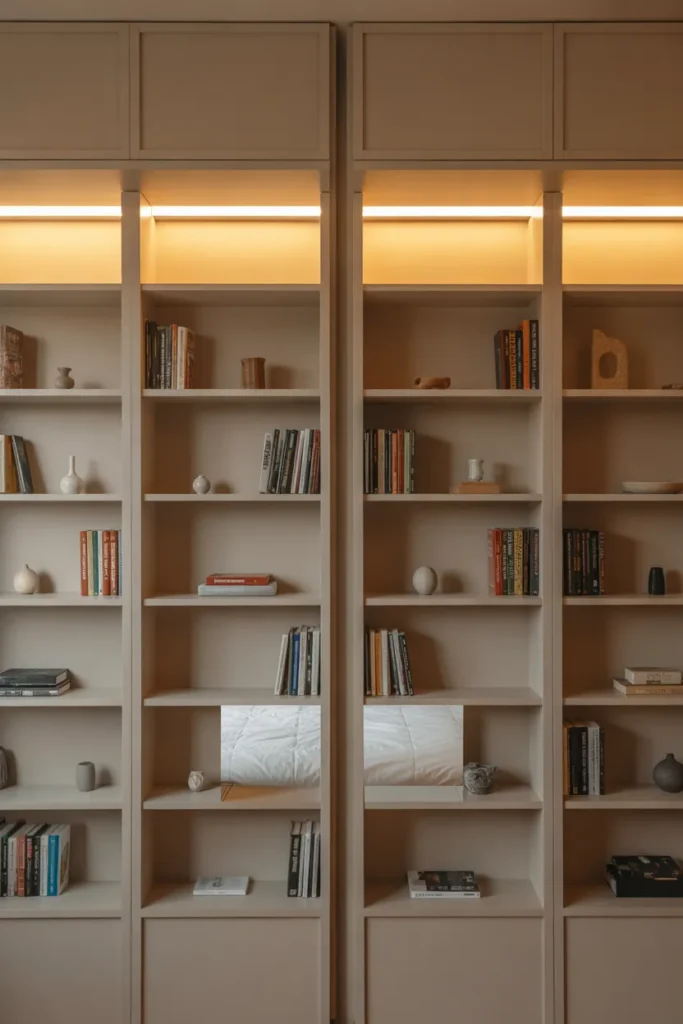
6. How the Right Mirror Placement Doubles the Visual Size of a Small Bedroom
A mirror in a small bedroom is only useful if it’s placed to reflect something worth doubling. The most effective placement: directly across from the window, so it reflects natural light back into the room.
Size matters more than style. A mirror that’s too small reads as decorative — it doesn’t change the room’s perceived scale. Go as large as the wall allows. A full-length leaner mirror or a wide horizontal mirror above a low dresser both work if the scale is right.
Avoid placing mirrors on the wall directly opposite the bed. It works in some design philosophies, but for most people it creates discomfort at night — and that’s not a trade worth making for square footage.
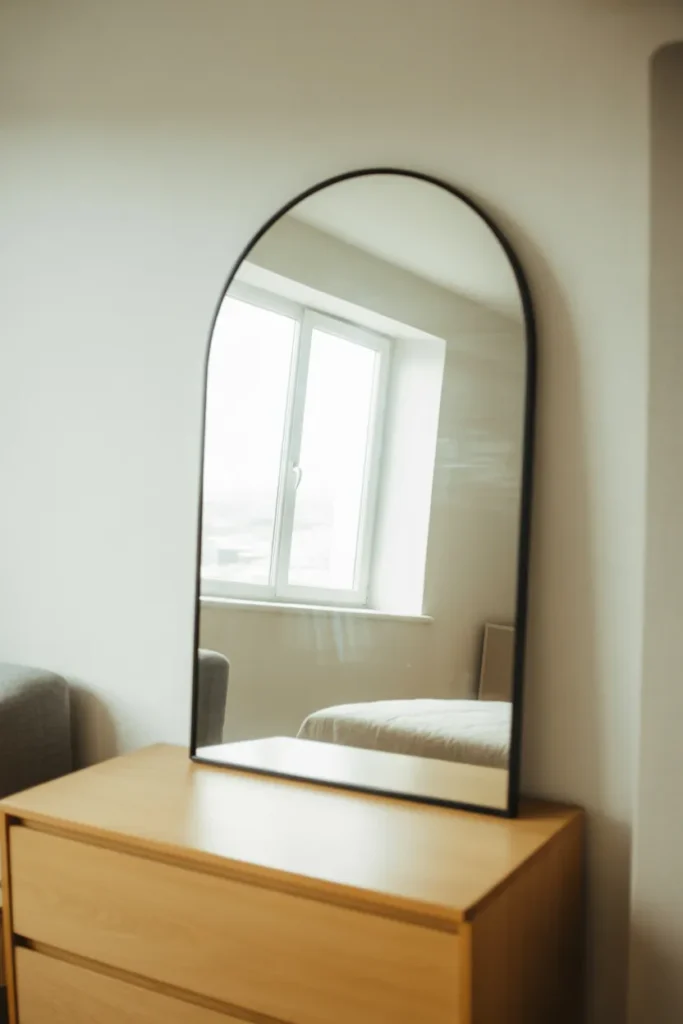
7. The Color Strategy That Makes a Small Bedroom Feel Like a Suite
DO: Paint the walls, ceiling, and trim the same color — or within two shades of each other. This “color drenching” technique eliminates the visual breaks that make a small room feel choppy and boxed-in.
DON’T: Use stark white trim against a colored wall in a small room. The contrast creates a frame around every surface that makes the room feel smaller by drawing attention to where each plane ends.
DO: Choose mid-tone warm neutrals — warm greige, soft clay, aged linen — rather than the palest possible shades. These tones photograph warmly, feel cozy, and don’t show every scuff.
DON’T: Go all-dark in a room with no natural light. Dark color drenching works beautifully in rooms with at least one window — without light to bounce off it, the result is a room that feels underground.
DO: Carry the wall color behind built-ins and inside shelving bays. The seamless continuation reads as architectural and intentional.
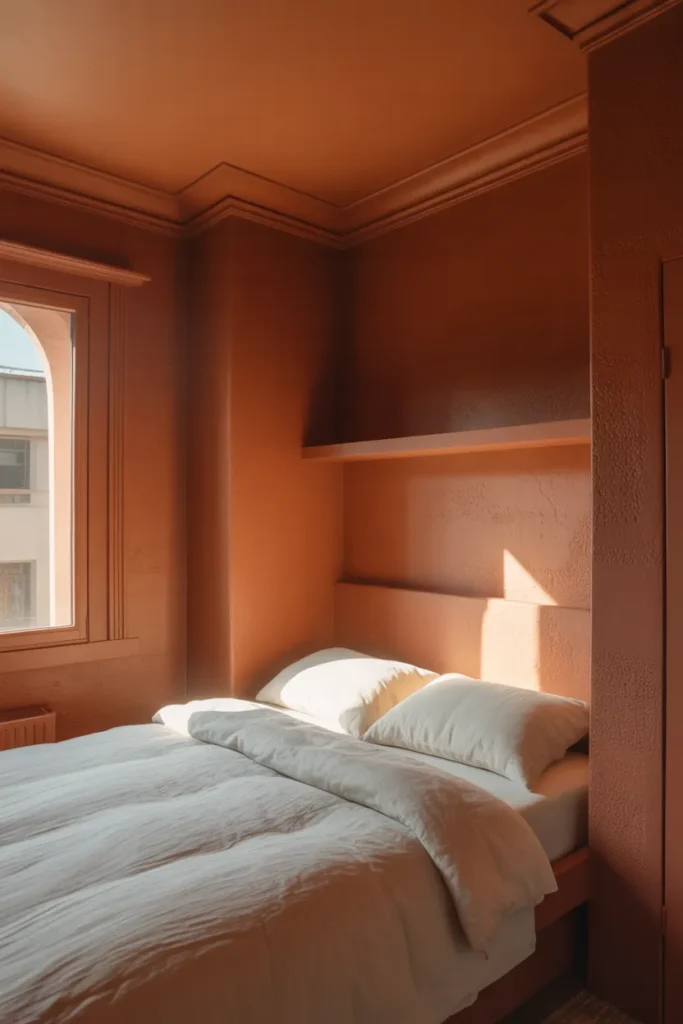
8. Vertical Storage That Uses the Wall — Not the Floor
In a small bedroom, the floor plan is fixed. The wall is not. Going vertical — using the full height of the wall rather than the full width — is the defining storage strategy for small bedroom ideas in 2026.
A narrow, tall wardrobe that reaches the ceiling stores more than a wide, short dresser while occupying less visual real estate. Wall-mounted hooks at varying heights handle bags, hats, and accessories without a single furniture piece. A pegboard panel painted to match the wall becomes organized storage that reads as a design feature.
The 2026 version of vertical storage is intentional and styled — not utilitarian. Every storage element on the wall should look considered: matching baskets, uniform hooks, consistent finishes.
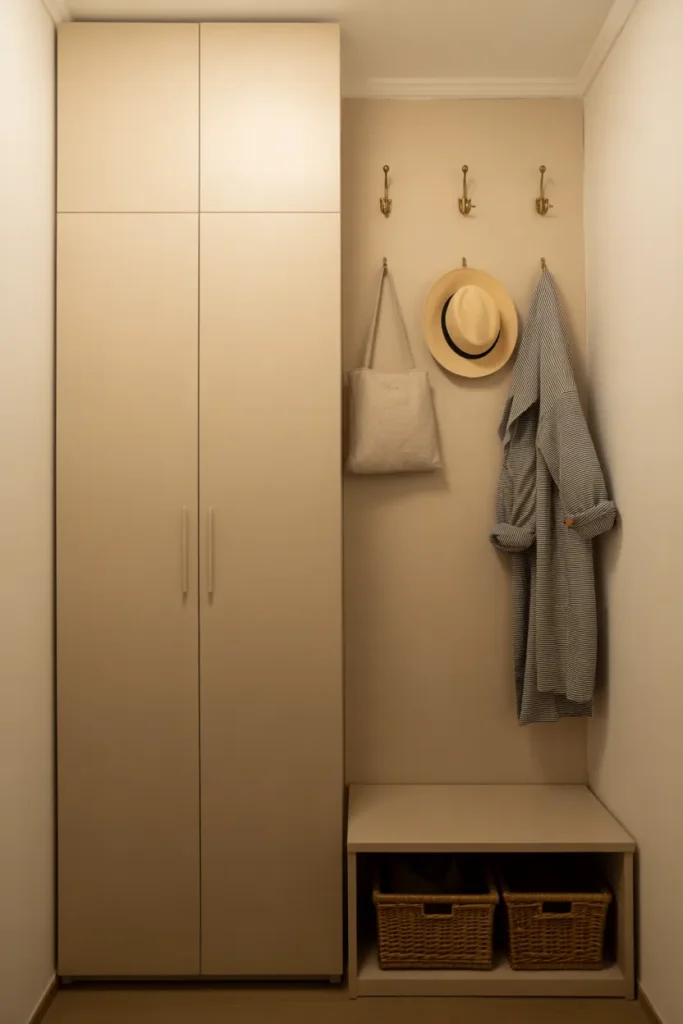
9. How to Design a Small Bedroom That Feels Calm, Not Cramped
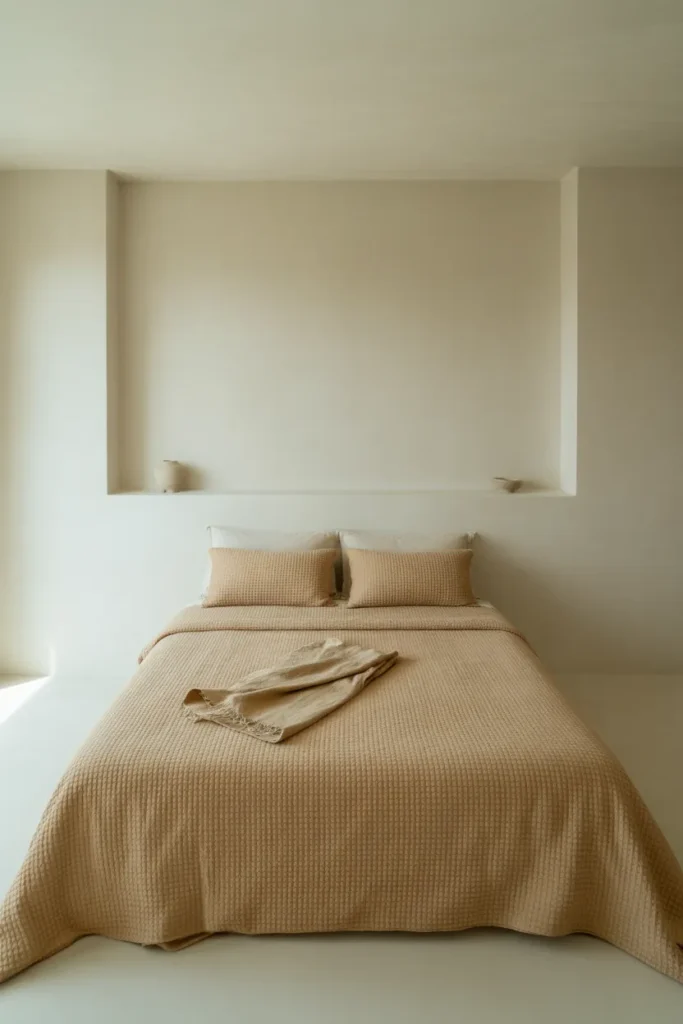
The difference between a small bedroom that feels cozy and one that feels cramped is almost never square footage — it’s visual noise. Cramped rooms have too many competing elements. Calm rooms have a clear hierarchy.
Pick one focal point — the bed, a gallery wall, a built-in — and let everything else support it. Limit decorative objects to three surfaces maximum. Every item on display should earn its place by adding visual weight, warmth, or height variation.
Textiles do the most work in this equation. A textured linen duvet, a woven throw, and a single lumbar pillow create layered warmth without adding a single piece of furniture. The more you invest in textile quality, the less you need in terms of quantity.
10. The Lighting Setup That Makes a Small Bedroom Feel Luxurious
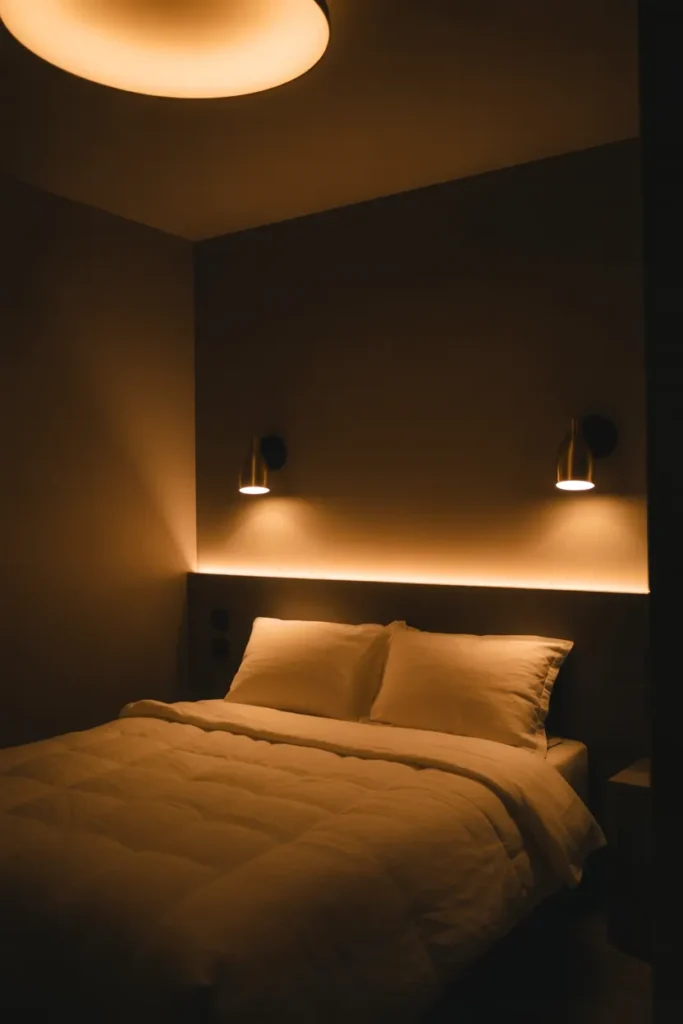
Overhead lighting alone makes a small bedroom feel like a utility room. Luxury in a small bedroom comes from layered lighting at multiple heights — and none of it needs to be expensive to work.
Layer three sources: a soft ambient light (recessed or a ceiling fixture on a dimmer), a task light at each side of the bed (wall sconce or clip-on), and at least one accent source (a small lamp on a shelf, LED strip behind the headboard, or cove lighting if the budget allows).
The dimmable element is non-negotiable. A bedroom at full brightness and a bedroom at 20% are completely different rooms emotionally — and a small room benefits from that flexibility more than a large one does.
Warm bulbs only: 2700K maximum. Anything cooler reads as clinical in a bedroom context and undoes every warm design decision you made with the palette and textiles.
11. The Headboard Wall That Does the Work of Three Furniture Pieces
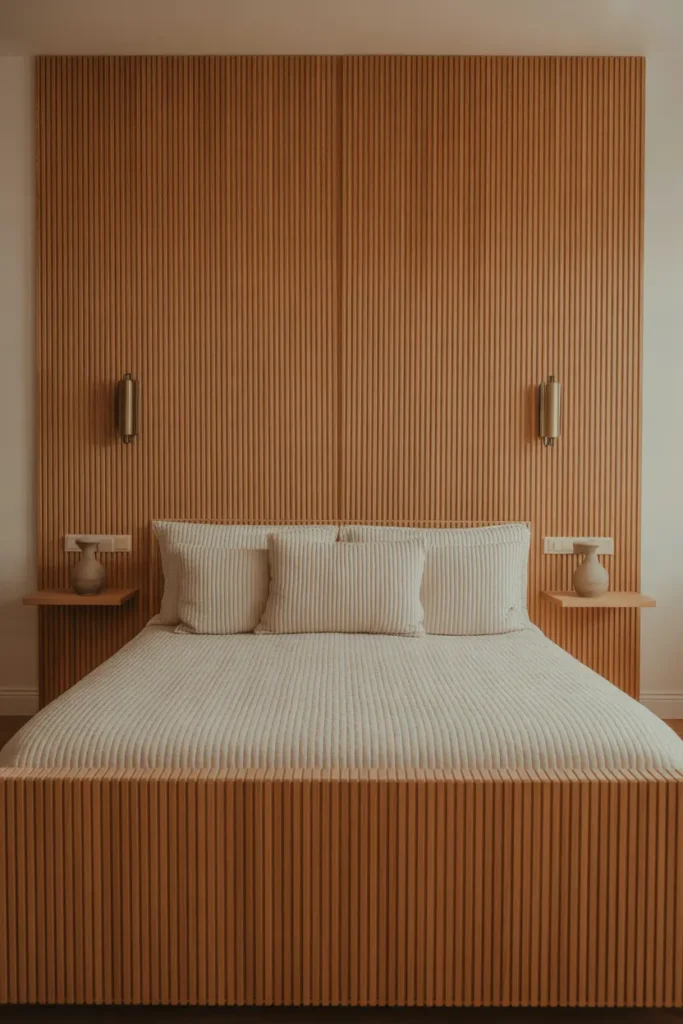
A headboard wall — the wall behind the bed treated as one intentional design unit — can replace a headboard, two nightstands, and a dresser when designed correctly.
Build or install a simple panel of shiplap, fluted wood, or limewash plaster behind the bed. Mount two sconces at reading height on either side. Add two floating shelves at nightstand level — one on each side — and the wall becomes a fully functional bedroom station without a single piece of furniture touching the floor behind the bed.
This approach works especially well in rooms where the bed must sit flush against the wall due to space constraints. It turns a layout limitation into a design feature.
12. Window Treatment Decisions That Control Light AND Add Visual Height
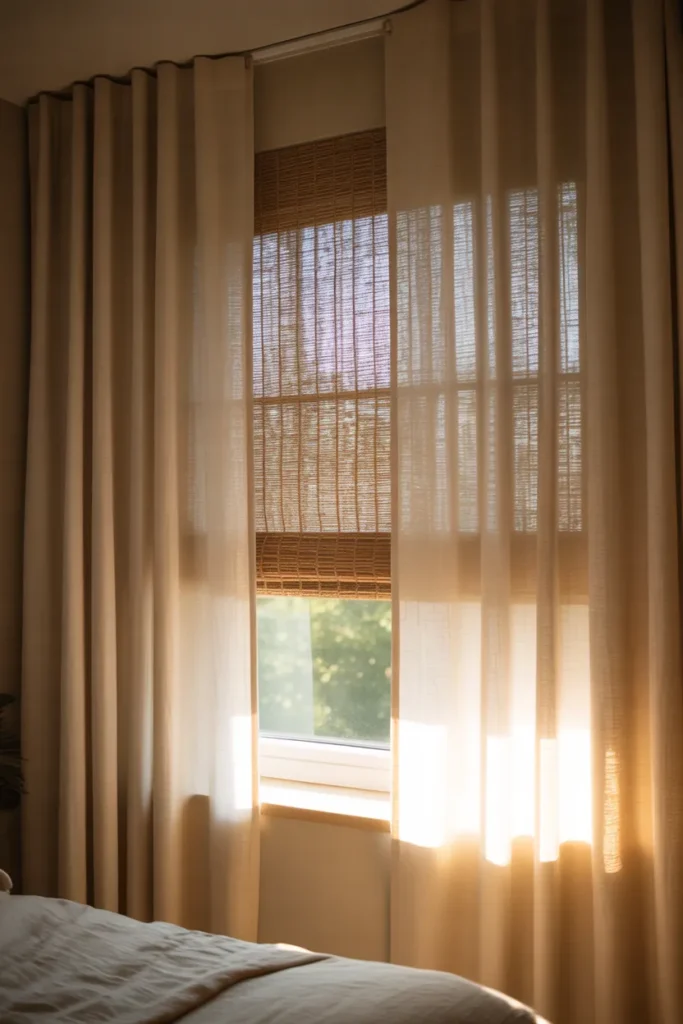
- Sheer linen floor-length panels — diffuse harsh light without blocking it, add softness and height when hung from the ceiling
- Roman shades inside the window frame — clean and minimal, keep the wall around the window visible, best for rooms where wall space is precious
- Blackout roller blinds behind sheer panels — the practical two-layer system; blackout for sleep, sheers for daytime softness
- Woven wood shades — add natural texture and warmth, filter light beautifully, work in every neutral palette
- No curtains at all — valid in rooms where privacy isn’t a concern; a bare window with clean trim reads as intentional if the rest of the room is designed well
The rule of thumb: if the room needs more light, go sheer and ceiling-hung. If the room needs more warmth, go woven wood. If the room needs height, always hang from the ceiling regardless of which style you choose.
13. How to Create a Bedroom Closet That Feels Built-In on a Budget
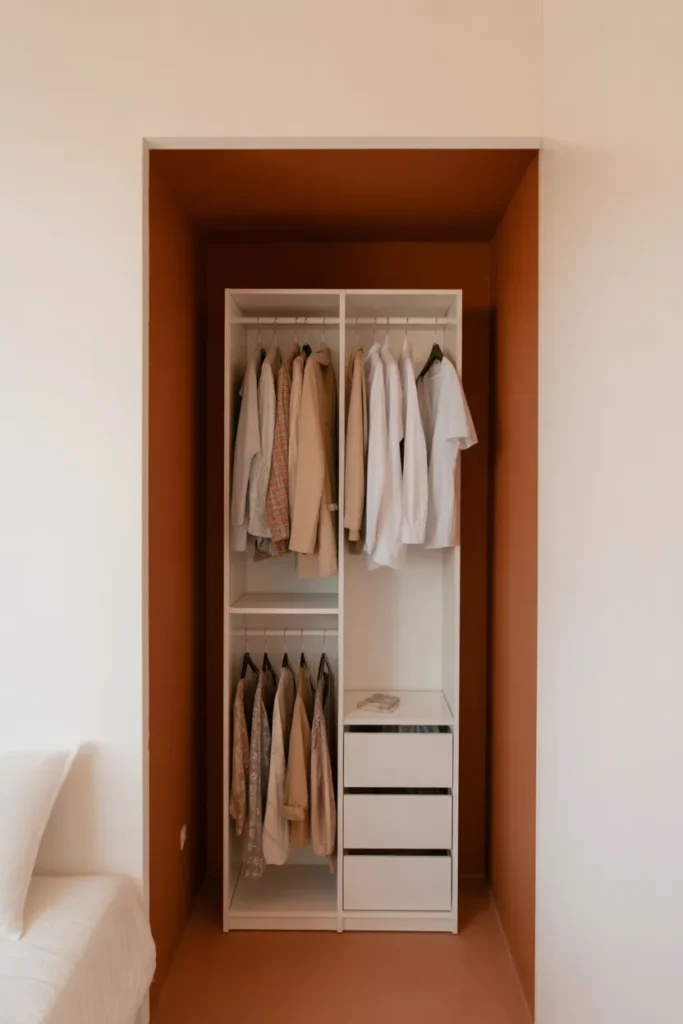
A closet that looks custom doesn’t require a custom build. The single biggest upgrade to a budget bedroom closet is replacing the single hanging rod and shelf with a modular system that uses the full height and width of the space.
Double-hang sections for shorter items — shirts, jackets, folded trousers — and single hang for longer items. Add a drawer unit or pull-out bins at the base. Every inch from floor to ceiling should have a job.
Paint the interior of the closet a different color than the bedroom walls — a deep tone inside a white closet, or a warm neutral inside a dark room. It makes opening the closet feel like a moment rather than an afterthought.
Remove the closet door entirely if the layout allows. An open closet with a well-organized, visually consistent interior reads as a styled dressing area — and it makes the room feel more open by removing a swinging door from the floor plan.
14. The Small Bedroom Rug Rule That Changes the Whole Room’s Proportions
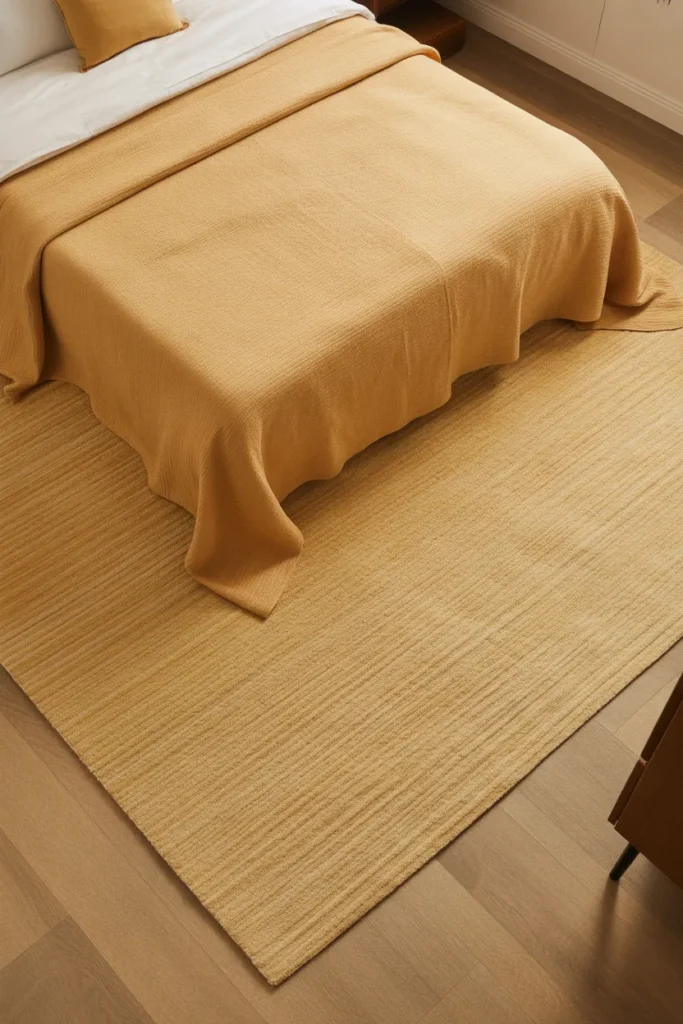
Most small bedrooms have the wrong size rug — too small, placed too close to the bed, or missing entirely. The rug is the room’s anchor. Get it wrong and even good furniture looks like it’s floating.
In a small bedroom, go larger than feels comfortable — not smaller. A rug that extends at least 18 to 24 inches beyond each side of the bed grounds the entire sleeping area and makes the room feel defined rather than cramped.
If a large rug isn’t viable, use two matching runners — one on each side of the bed. The parallel placement creates the same grounding effect as a single large rug and is often more budget-friendly for queen or king beds.
The rug tone should contrast gently with the floor. A light rug on light flooring disappears. A medium-toned rug on light flooring defines the zone. A dark rug on light flooring makes a bold statement — but in a small room, keep the pattern minimal or solid to avoid visual competition.
15. The One Declutter Decision That Instantly Makes Any Small Bedroom Feel Larger
No design decision — no color choice, no furniture arrangement, no lighting layer — has more immediate impact on a small bedroom than removing what doesn’t belong there.
A bedroom has one primary function: rest. Every object in it that serves a different function — a work desk, exercise equipment, overflow storage — competes with that function and makes the room feel smaller by adding visual complexity.
The 2026 small bedroom design philosophy is simple: if it doesn’t help you sleep, rest, or get dressed, it doesn’t belong in the room. This isn’t minimalism for aesthetics — it’s function driving design, which is a different and more durable thing.
Start with the surfaces. Clear every horizontal surface except the two nightstand areas. Then address the floor. Then the walls. Work outward from the bed. The room that emerges will feel larger before you’ve changed a single design element — because space is always the first design decision.
These small bedroom ideas for 2026 are worth keeping close — the best rooms are built from decisions made slowly and intentionally, not all at once. Save this post to your Pinterest bedroom board so it’s there when you need it, and explore more design guides when you’re ready to go deeper on any one of these ideas.