Most small living rooms feel cramped because of one overlooked mistake — and it has nothing to do with furniture size. This post covers the most effective small living room decor ideas for 2026, from layout strategies to the color and texture shifts defining this year’s design direction. If you’ve been scrolling for real answers, not just pretty pictures, you’re in the right place.
1. How to Make a Small Living Room Feel Twice as Big With Paint Alone
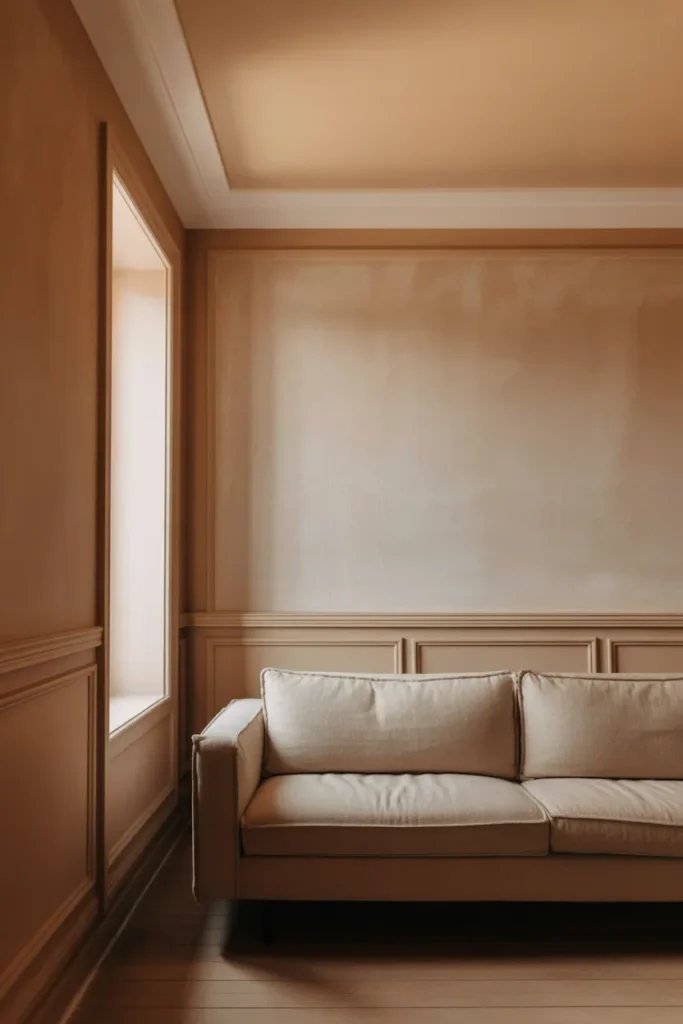
Picture this: a soft, warm greige on all four walls — including the trim. No harsh white breaks. No visual “stop” signals. The room reads as one continuous, calm surface.
This is called monochromatic tonal painting, and it’s one of the biggest shifts in 2026 small-space design. When walls, trim, and ceiling share the same color family, the eye travels without interruption. The room feels larger because there’s no visual edge to land on.
The secret competitors miss: paint the ceiling the same hue, just two shades lighter. Not white. Lighter. This lifts the perceived ceiling height without breaking the tonal flow.
2. The Furniture Layout Rule That Opens Up Every Small Living Room
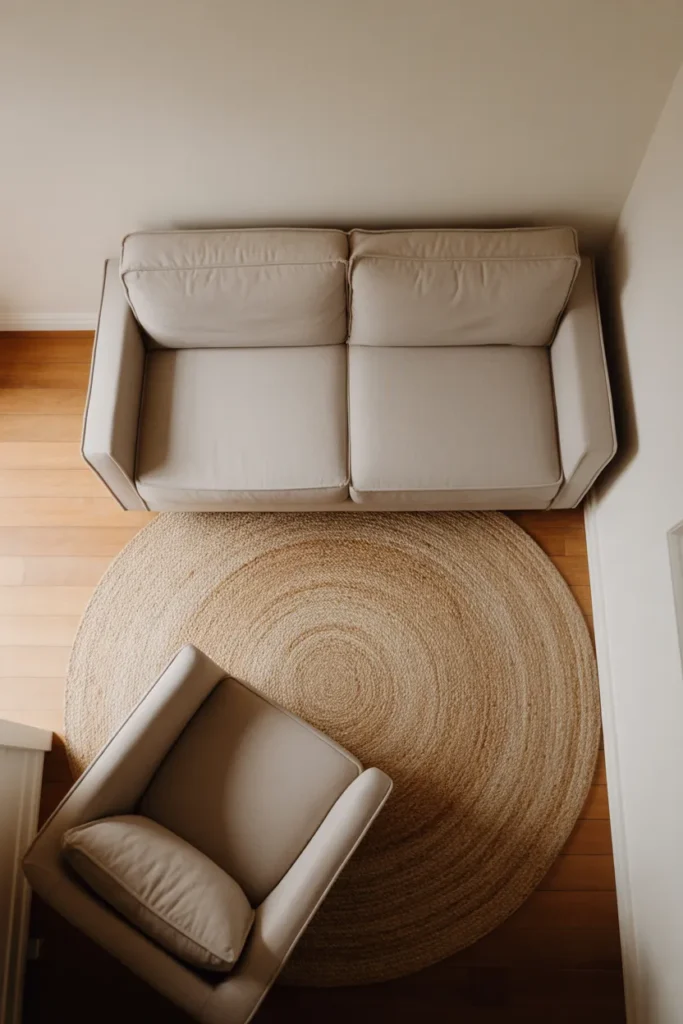
Floating furniture — not pushed against walls — is counterintuitive but consistently effective. Pulling your sofa 6 to 10 inches from the wall creates a sense of depth and makes the room feel intentionally designed, not squeezed in.
The real reason this works: when furniture hugs the walls, the center of the room becomes dead space. Floating pieces define a “zone,” which reads to the brain as a purposeful, larger room.
For truly tight spaces, use a loveseat instead of a full sofa — but still float it. Pair it with one accent chair placed at a slight angle. That angle alone adds visual energy without consuming more floor space.
3. Vertical Storage Walls That Look Like Art, Not Storage
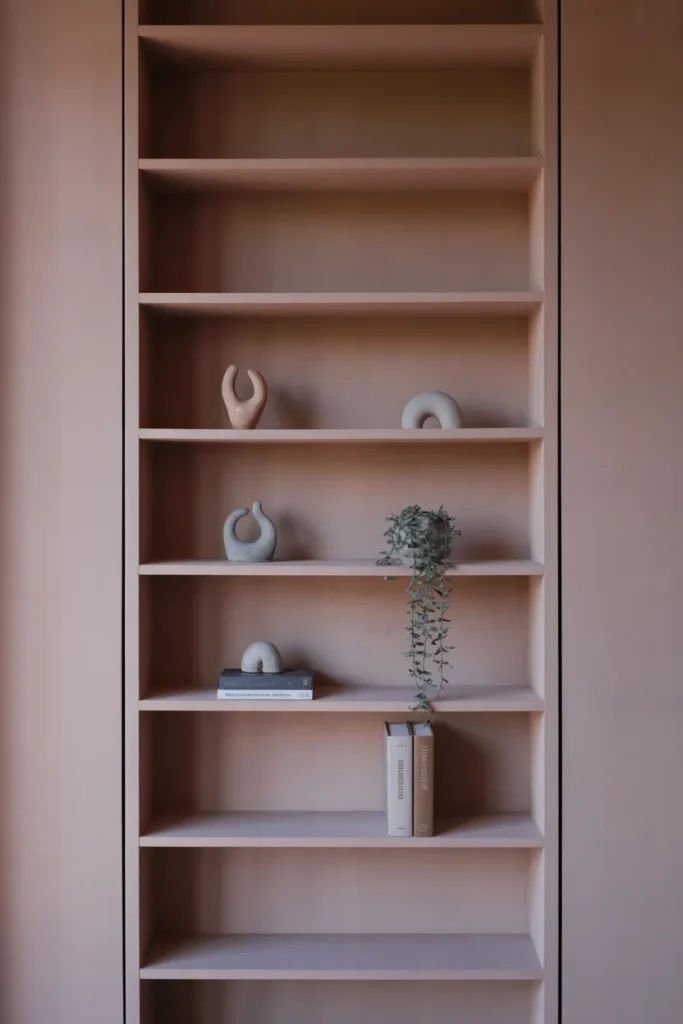
Built-in shelving from floor to ceiling is the workhorse of small living rooms — but in 2026, the style is shifting from maximalist displays to curated, breathable arrangements.
Think: two-thirds empty. Intentional negative space. A few sculptural objects, a plant, one or two books turned spine-in. The shelving becomes a backdrop, not a bulletin board.
The unexpected detail: paint the inside of the shelving unit the same color as the wall behind it. This makes the shelves appear to recede, and the objects appear to float. It reads as elegant, not utilitarian.
This also answers one of the top questions for small space decorating: how do I add storage without making my living room feel smaller? The answer is always: go vertical, and edit ruthlessly.
4. The 3 Rug Sizes That Actually Work in Small Living Rooms (And 1 That Never Does)
Rug size is the most common small-room mistake. Here are your three safe choices for 2026 — and the one to always skip:
- 5×8 ft — Best for a loveseat + one chair arrangement. Front legs of all seating on the rug. Never all legs floating off it.
- 6×9 ft — Works for a standard 3-seat sofa in a room 12 ft or wider. Grounds the whole seating zone without overwhelming it.
- Round, 5–6 ft diameter — Best under a single accent chair or in a reading nook. Softens hard geometry in tight spaces.
- Skip: 4×6 ft rugs — Too small for almost any arrangement. They shrink the seating zone visually and make the room feel unresolved.
5. How Mirrors Should Be Used in 2026 (The Old Rules No Longer Apply)
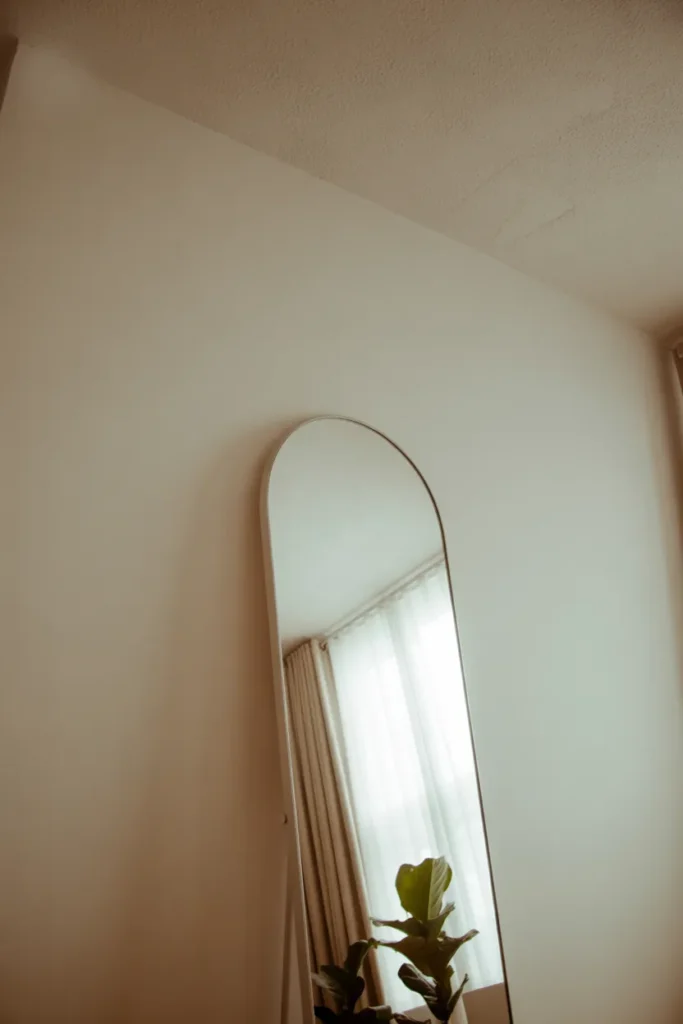
The “big mirror on every wall” era is over. In 2026, mirrors are used as architectural accents — strategic, not decorative filler. One oversized leaning mirror. One narrow vertical panel beside a window. Not three decorative mirrors clustered together.
The goal is to catch natural light and reflect a view — ideally a plant, a window, or a clean wall. Never position a mirror so it reflects clutter. Whatever it mirrors, it amplifies.
Do this: Position a leaning floor mirror at an angle beside the window to bounce light across the room.
Not that: Hang a mirror directly across from the TV — it creates glare and doubles the visual chaos.
6. Lighting Layers That Make a Small Living Room Feel Luxurious
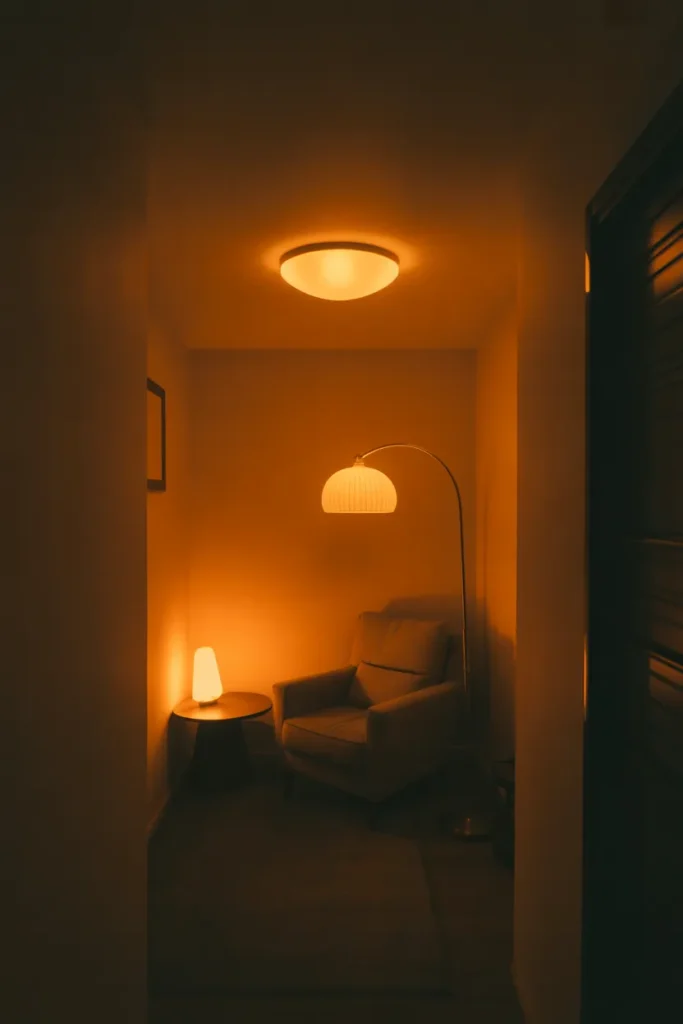
Overhead lighting alone is the fastest way to flatten a small room. In 2026, the move is three-layer lighting — ambient, task, and accent — even in the smallest spaces.
Ambient: a flush mount or semi-flush with a warm bulb (2700K). Task: a floor lamp beside the reading chair. Accent: a plug-in sconce or small table lamp in a corner. Three sources, all dimmable.
A room that draws the eye around feels larger than one that pools light in the center. Multiple light sources create depth. The eye travels instead of landing in one flat, bright spot.
7. The Sofa Color Strategy Designers Are Using for Small Spaces in 2026
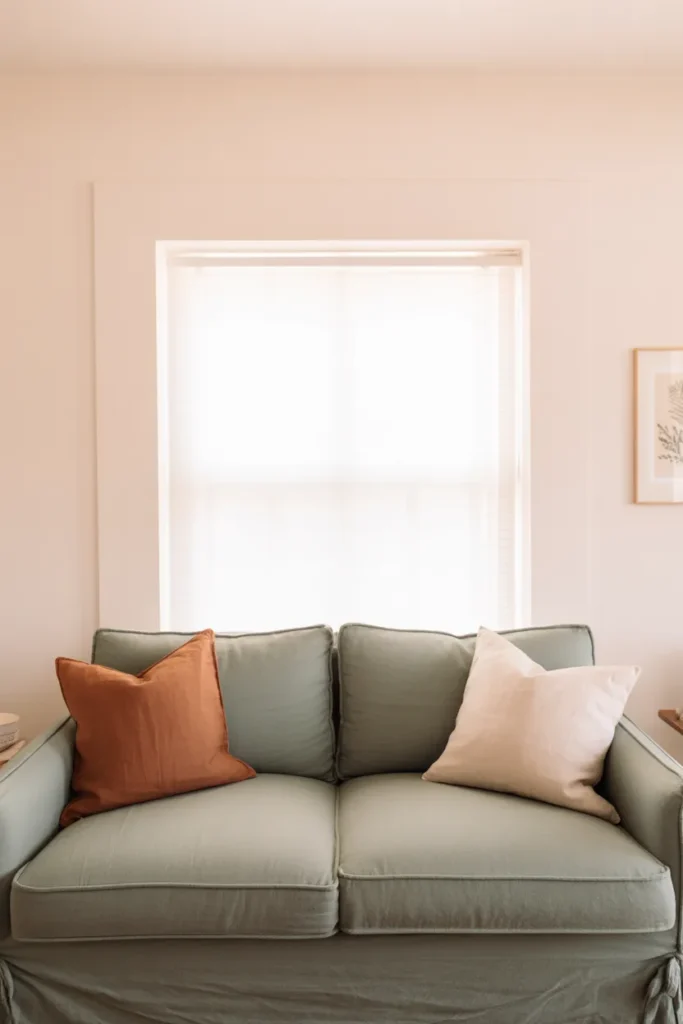
The safest sofa colors for small living rooms in 2026 aren’t neutrals in the traditional sense — they’re tonal mid-tones. Warm sand, dusty terracotta, sage green, mushroom. These colors do two things simultaneously: they blend with the room’s background so the sofa doesn’t dominate, and they add enough warmth or hue to feel intentional.
A stark white sofa creates too much contrast in a small room. A dark charcoal absorbs light and makes the space feel dense. The sweet spot is always a tone that sits three to four shades deeper than your wall color.
Your sofa should feel like it belongs to the room — not like a statement piece dropped into it.
8. Window Treatments That Steal Space vs. Ones That Return It
The way you hang curtains changes how tall and wide a room reads — dramatically.
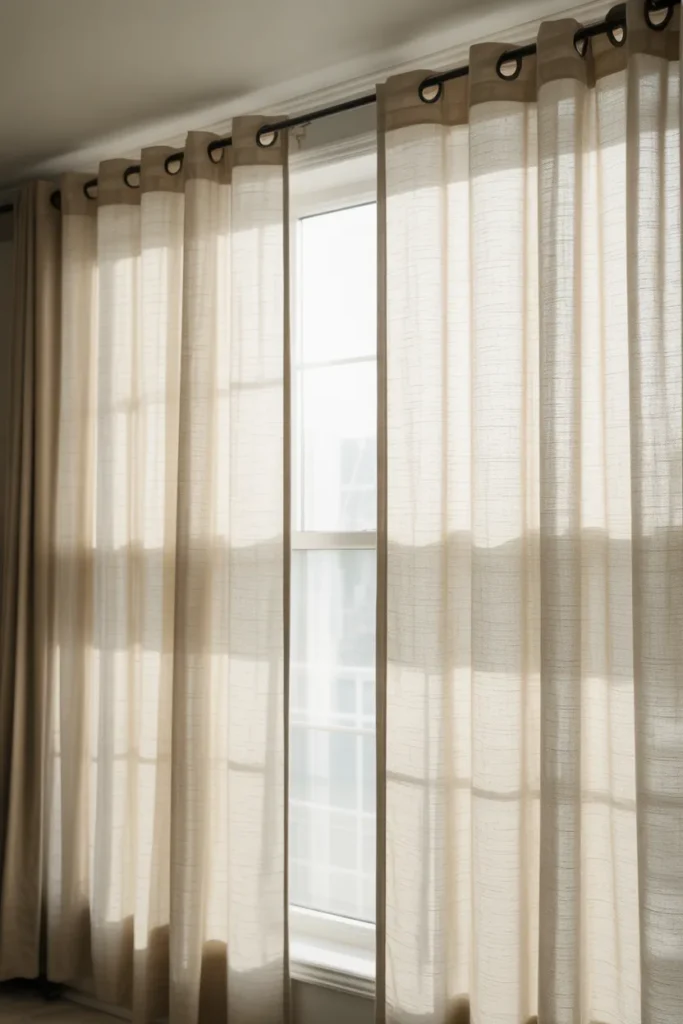
Do this: Hang curtains as close to the ceiling as possible, and extend the rod 8–12 inches beyond each side of the window frame. This visually widens the window and lifts the ceiling.
Not that: Mount the curtain rod directly above the window frame. This shortens the perceived ceiling height and makes the window look small and cramped.
For fabric, lightweight linen or cotton voile in a tone close to the wall color is the 2026 approach. The curtain and wall read as one surface. The window becomes a light source, not an interruption.
Avoid heavy blackout curtains in small living rooms — unless they’re floor-to-ceiling and wall-width. Half-measures always shrink the space.
9. Multifunctional Furniture Combinations That Don’t Look Like a Dorm Room
Multifunctional furniture in 2026 has finally graduated from “storage ottoman + sofa bed” to something that actually looks designed. The key shift: the function hides completely.
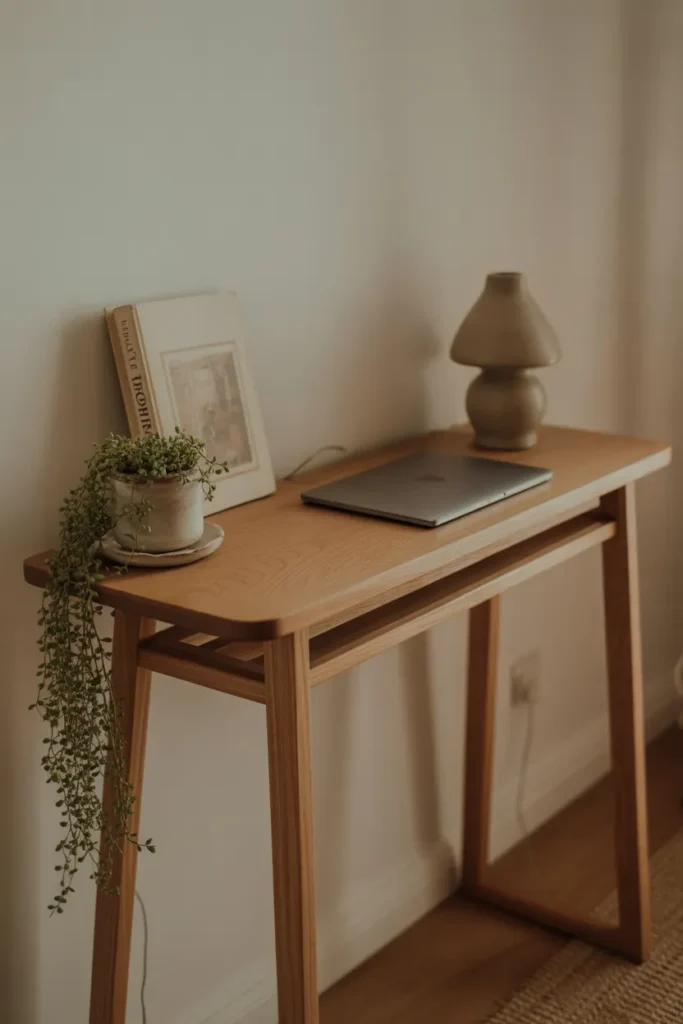
A console table that doubles as a desk, with legs slender enough to read as sculptural. A bench at the end of a small sofa that opens for blanket storage but looks like a solid wood accent piece. Nesting side tables that stack cleanly when not in use.
If the second function is visually obvious, the piece is doing too much. Multi-use furniture should be identified by use — not by appearance.
10. 5 Small Living Room Color Palettes Trending in 2026
Color is shifting away from stark minimalism toward warmer, earthier combinations. Five palettes that work specifically for small living rooms this year:
- Warm Stone + Terracotta + Linen — Grounding, Mediterranean-influenced. Best paired with natural wood and rattan.
- Greige + Sage + Warm White — The most versatile 2026 palette. Works in any light direction.
- Dusty Blue + Cream + Aged Brass — Quiet sophistication. Reads largest in east or west-facing rooms.
- Mushroom + Burnt Sienna + Ivory — Rich without going dark. Works especially well in north-facing rooms that need warmth.
- Chalk White + Warm Charcoal + Natural Oak — The updated modern minimal. Wood brings warmth; charcoal grounds it.
11. How to Use Plants in a Small Living Room Without Making It Feel Busier
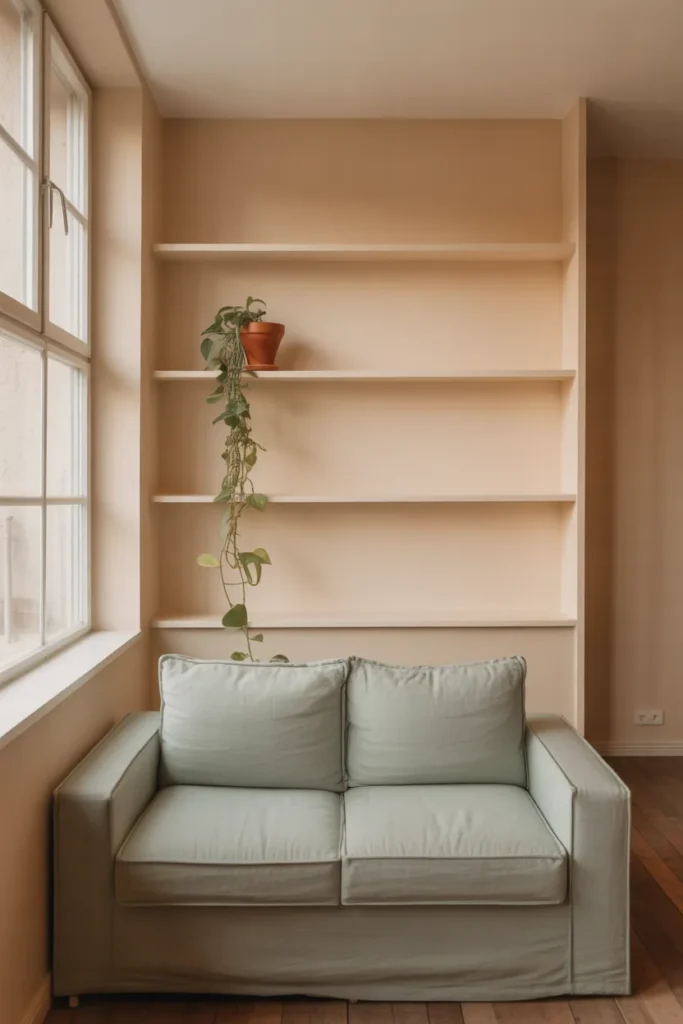
Plants add life — but in small spaces, the wrong plant in the wrong spot adds visual noise. The 2026 approach is fewer plants, bigger impact.
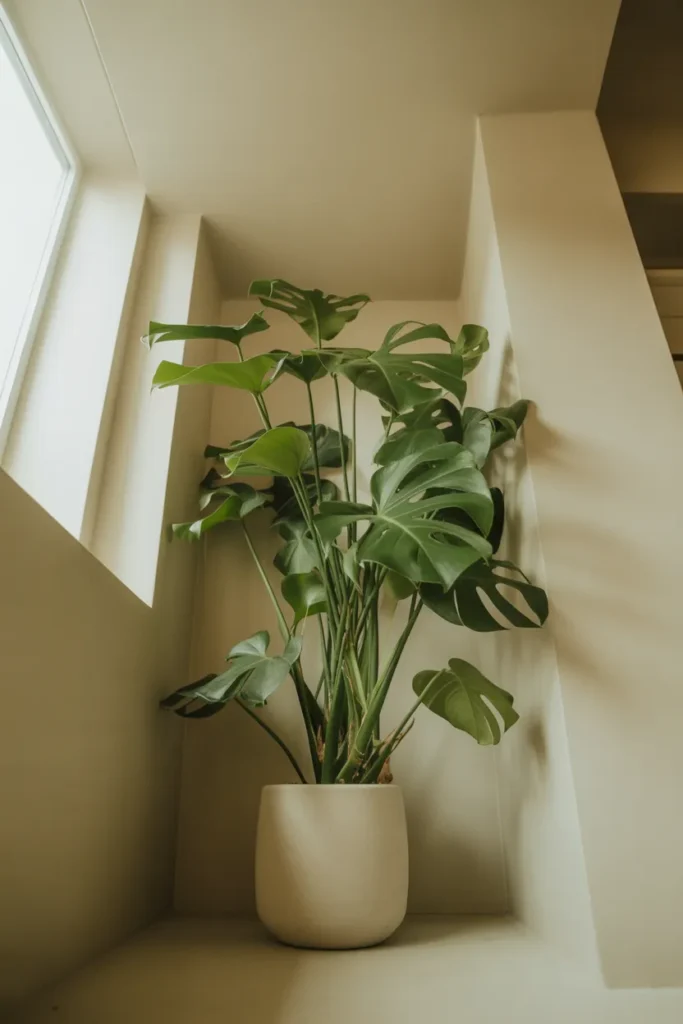
One large statement plant — a fiddle leaf, a monstera, a tall snake plant — does more for a small living room than six small pots scattered across shelves. The large plant reads as an architectural element, not decoration.
For shelves and tables, limit to one trailing plant per surface. Let it hang or spill naturally. The plant should feel found, not arranged.
12. Texture Over Pattern — The 2026 Shift That Changes Everything
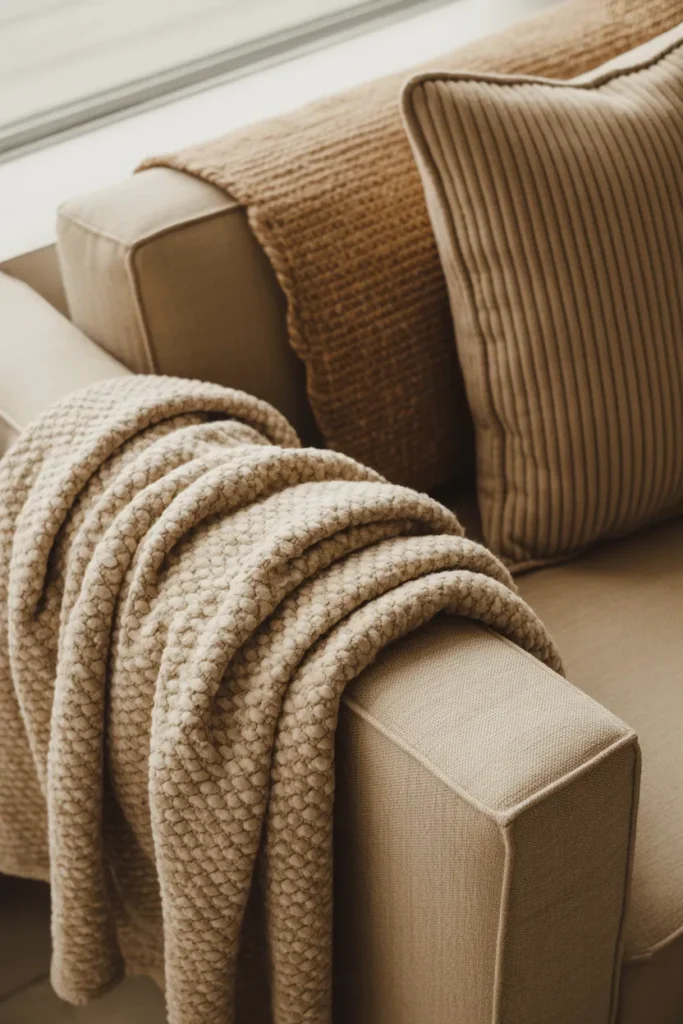
In 2026, the move is away from bold patterns and toward layered tactile texture. Boucle, ribbed linen, chunky knits, raw linen, aged leather — these materials create visual depth without adding visual noise. In a small room, that distinction is everything.
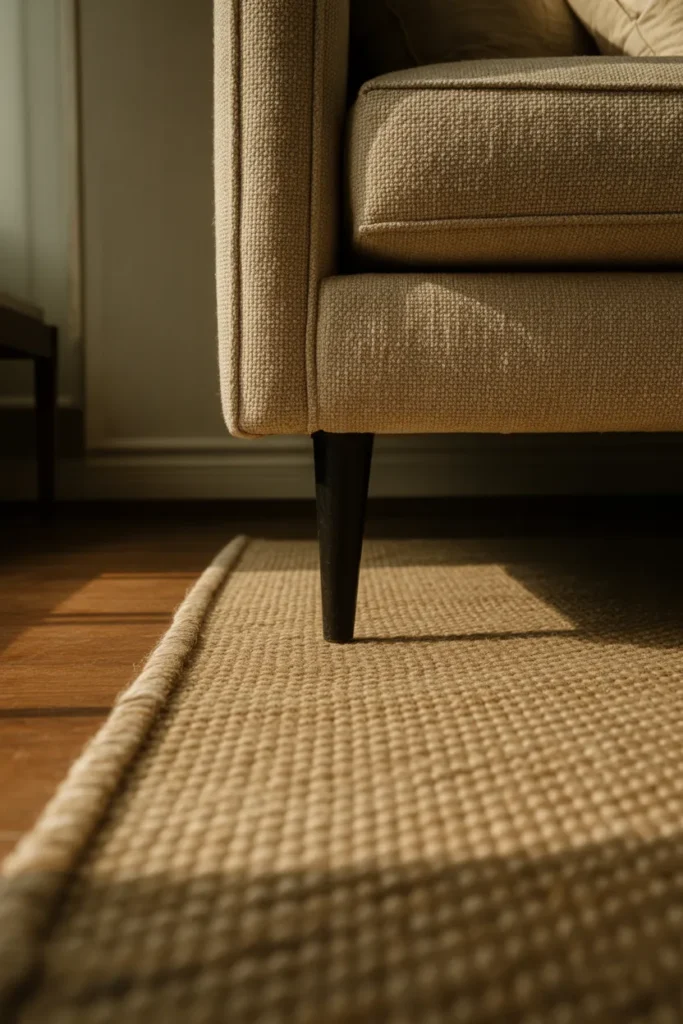
A bold geometric rug in a tiny living room competes with everything around it. A natural jute rug in the same space disappears into the design and lets the furniture do the work. Texture gives warmth without demanding attention.
In small spaces, choose materials you can feel — not patterns you can read.
13. The Gallery Wall Formula That Works for Small Living Rooms (Without Overwhelming Them)
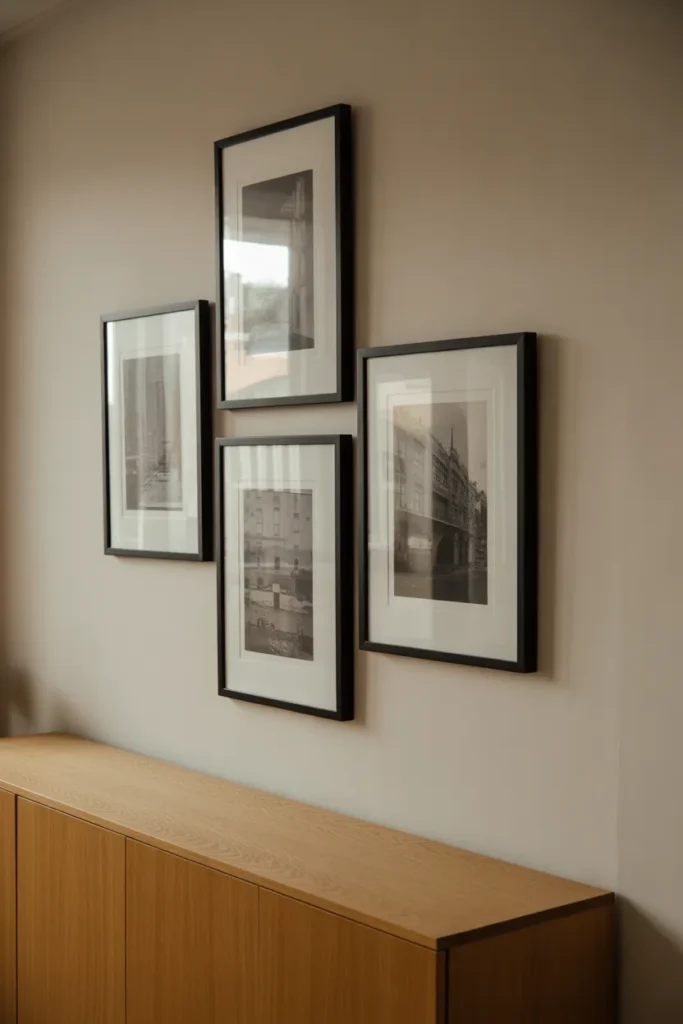
Gallery walls in small living rooms work only when they follow one rule: treat it as one large piece, not many small ones.
Choose a tight cluster of 3 to 5 frames — all in matching or complementary thin-profile frames, all in the same tonal family (all warm, all black and white, or all muted). Space them 2 to 3 inches apart. Hang the cluster as if it were one oversized artwork.
The mistake that makes gallery walls feel chaotic: mixing too many frame styles, too many subject matters, or spacing pieces too far apart. Distance between frames breaks the cluster and turns it into scattered wall stuff.
14. Decluttering as a Design Strategy — Not Just a Cleaning Tip
This is the question every small living room eventually forces: what is the right amount of stuff? The honest answer in 2026 design: less than you think.
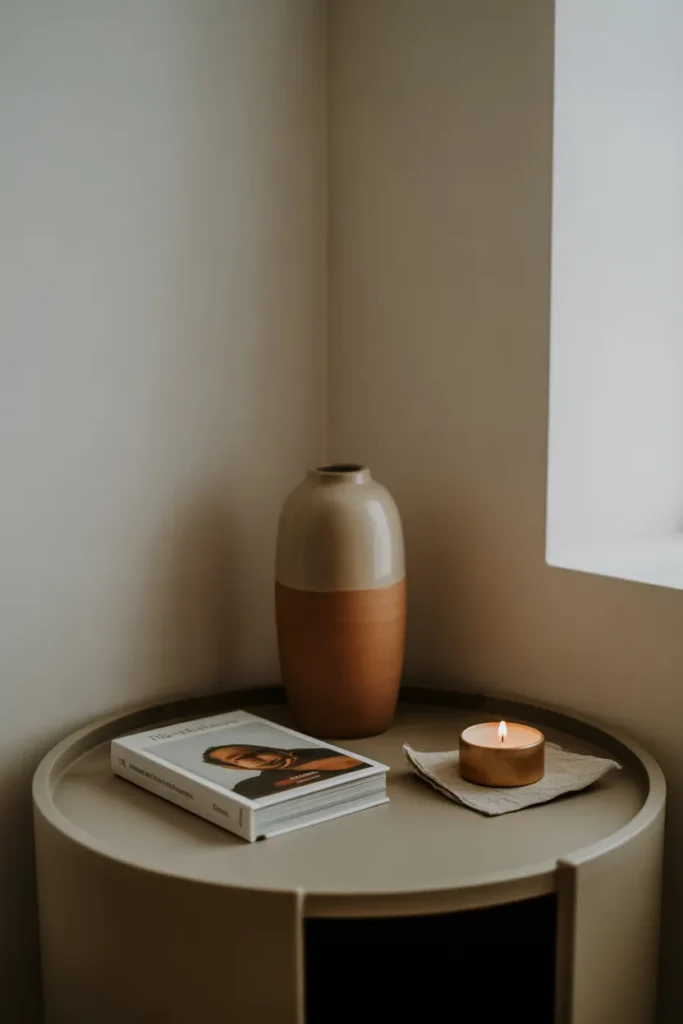
Every object you add to a small room takes up psychological space, even if it doesn’t take up floor space. A side table crowded with 8 items reads as chaos. The same table with 2 items reads as curated.
Do this: Edit your surfaces down to 3 objects maximum. One tall, one low, one with texture or life (plant, candle, book).
Not that: Fill every surface as if more objects equals more personality. In a small room, restraint IS the personality.
Rotating objects seasonally — rather than displaying everything at once — also keeps a small living room feeling fresh without adding a single square foot.
15. The One Design Move That Instantly Elevates Any Small Living Room
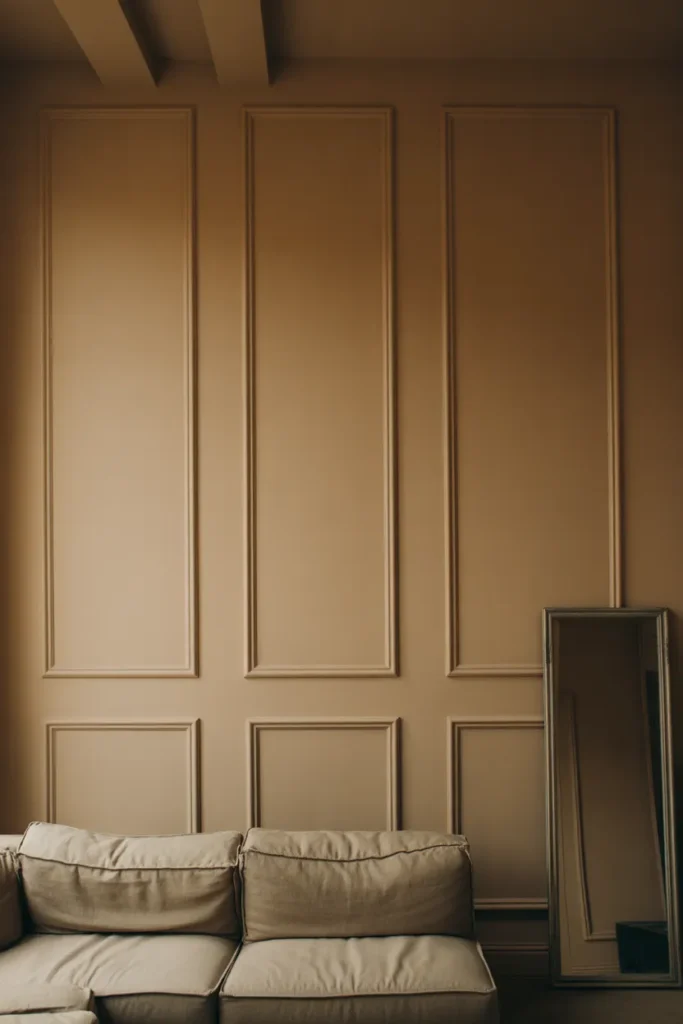
One trim upgrade transforms a small living room faster than almost any furniture change: add simple panel molding to the lower half of the wall.
Panel molding creates the illusion of architectural detail — the kind that reads as “this room was designed, not just decorated.” It draws the eye horizontally around the room, making the space feel wider. It adds texture without adding objects.
Painted the same color as the wall (not white, unless the wall is white), the molding creates depth through shadow, not contrast. It’s one of the most underused small-room strategies in residential design — and one of the most consistently effective.
Every idea here is designed to help you make real decisions — not just scroll and dream. If this post gave you even one strategy you’ll actually use, save it to your Pinterest boards so it’s there when you’re ready to start. There’s always more to explore — your small living room has far more potential than its square footage suggests.