
If your kitchen storage feels chaotic or underused, the right corner pantry ideas 2026 can completely change how your space functions. This post breaks down 15 practical, layout-specific pantry designs — each one chosen to help you decide what actually works for your kitchen size, style, and daily routine.
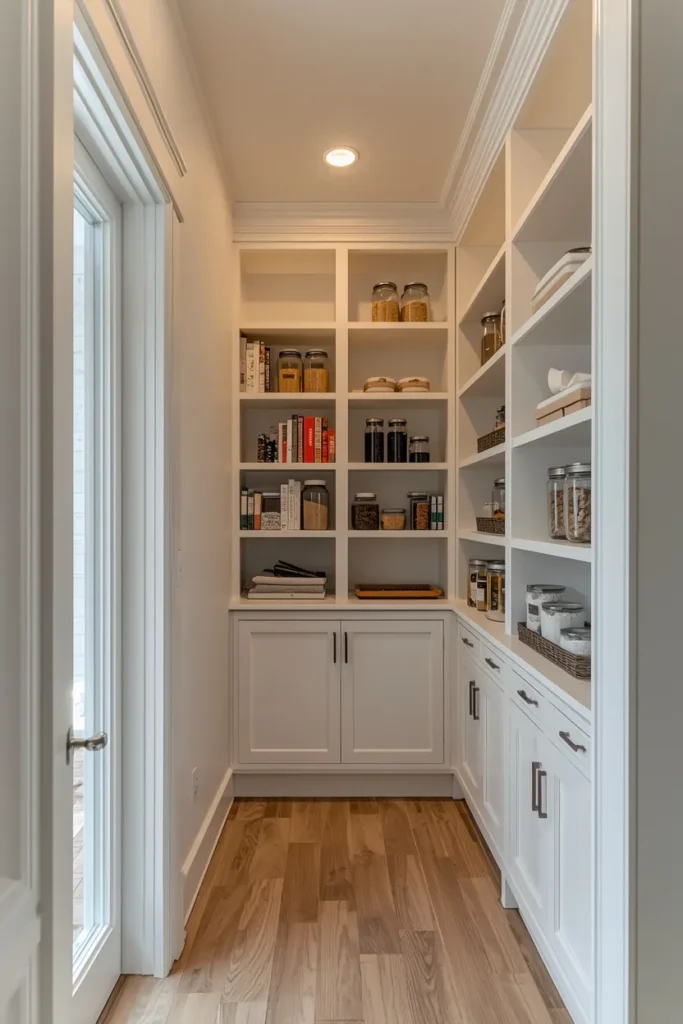
1. Floor-to-Ceiling Shelving That Uses Every Inch of a Tight Corner
Most homeowners waste the upper third of their corner pantry by stopping shelves at eye level. A floor-to-ceiling built-in changes that completely. By running shelves from baseboard to ceiling, you can store bulk dry goods below, everyday items at mid-height, and seasonal or rarely used items up top.
This layout works best in kitchens where cabinet space is limited and counter space is already stretched thin. It is especially effective in galley-style kitchens where a dedicated pantry corner compensates for the lack of a walk-in.
The mistake most people make here is using uniform shelf spacing throughout. Instead, vary the heights — taller gaps near the bottom for cereal boxes and large containers, shallower spacing in the middle for canned goods and jars. This prevents wasted air space on every shelf.
2. Lazy Susan Corner Pantry With Pull-Out Tiers for Blind Corners
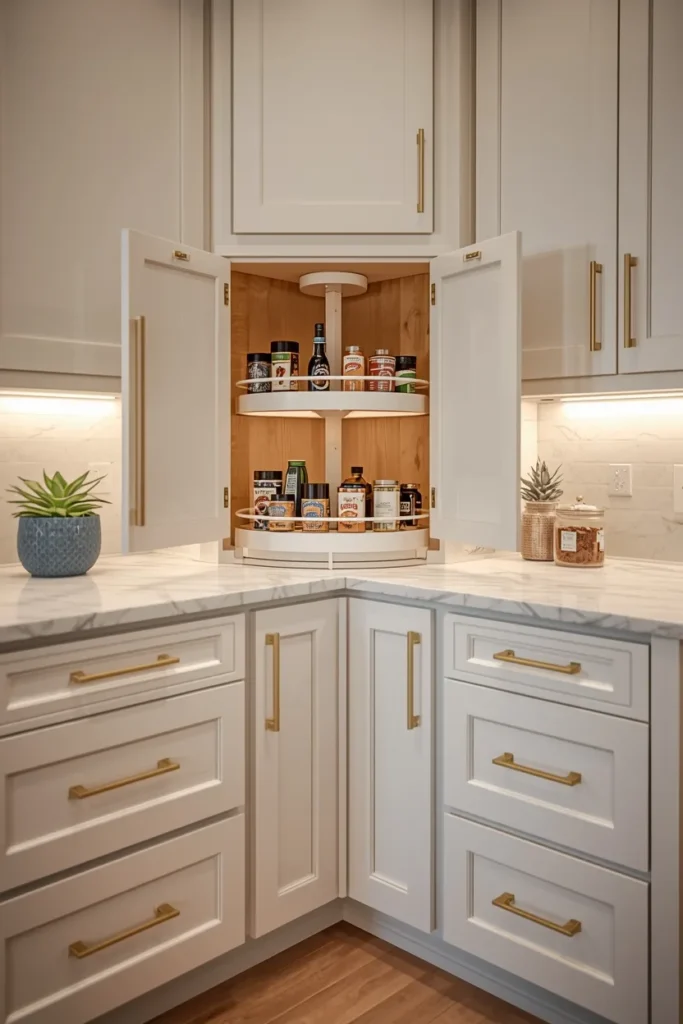
Blind corners are one of the most frustrating storage problems in any kitchen layout. A rotating lazy Susan system installed inside a corner pantry cabinet solves this without a full renovation. Items stored at the back are always reachable with a single spin.
This approach works in L-shaped kitchens where base cabinets meet at a 90-degree corner. Rather than letting that dead zone collect forgotten cans and expired spices, a two or three-tier lazy Susan turns it into highly functional daily storage.
Avoid overloading the rotating tiers with heavy items like large jars or bulk bottles. The hardware wears faster under excess weight, and heavier items are better suited to pull-out drawers at a lower level instead.
3. Diagonal Corner Pantry Door Entry for Walk-In Access in Small Homes
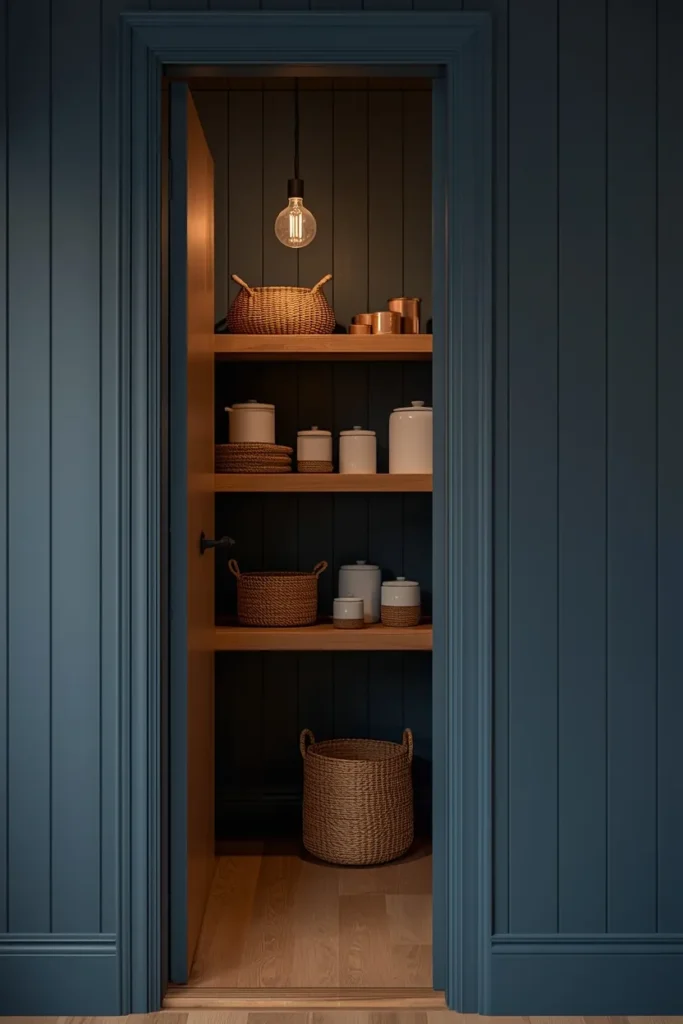
A diagonal entry pantry cuts across the corner of a room at a 45-degree angle, creating a small walk-in space without requiring a full wall. This is one of the most space-efficient walk-in pantry solutions available for homes under 2,000 square feet.
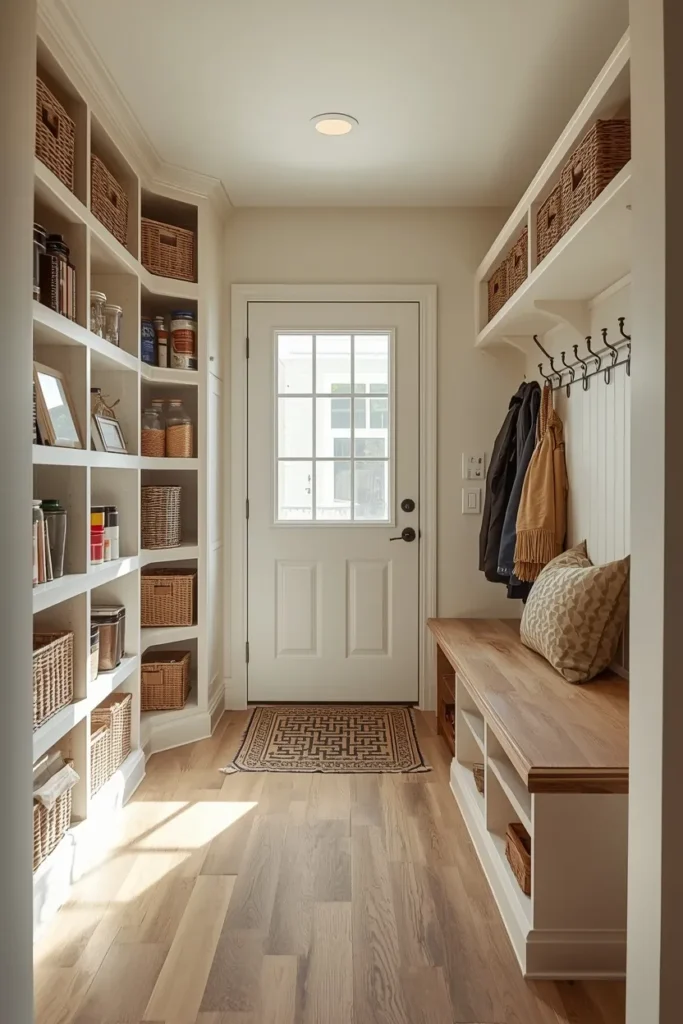
The interior typically offers shelving on two or three walls and fits into what would otherwise be dead corner square footage. In open-plan kitchens, this type of pantry can be positioned where the kitchen meets a hallway or dining area, keeping it accessible without disrupting traffic flow.
The key detail to get right is the door clearance. A standard hinged door can block adjacent cabinets when opened. Opt for a barn door slider or a pivot door to keep the entry clean and functional.
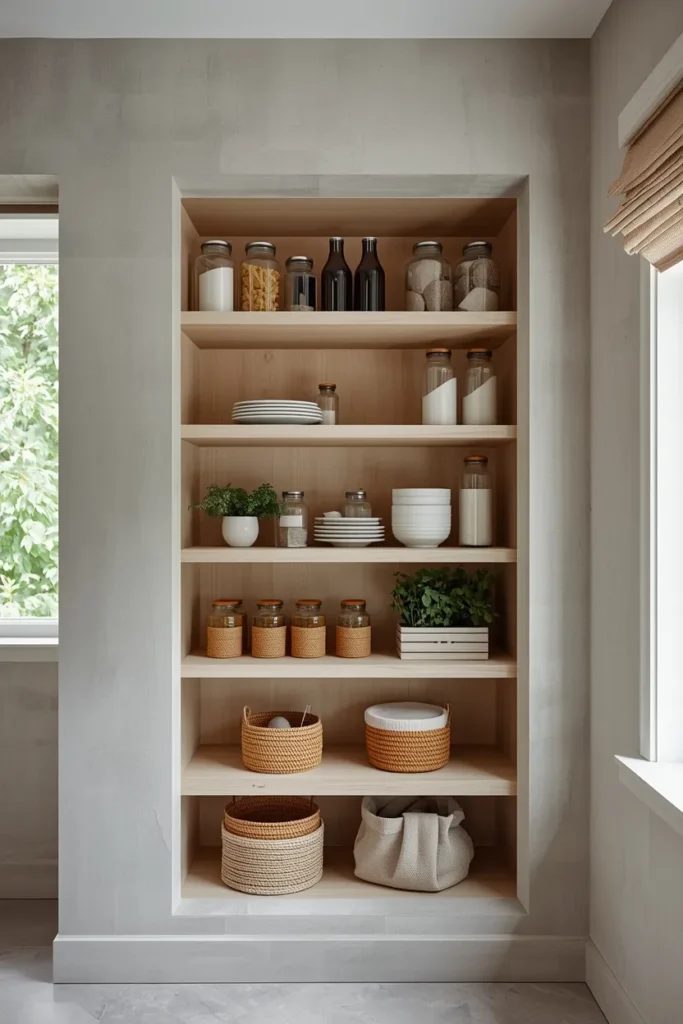
4. Open Corner Pantry Shelving Built Into a Kitchen Alcove
Not every pantry needs a door. Open shelving built into a natural kitchen alcove or recessed wall corner offers both storage and visual display space. When organized well, it functions as a working pantry and a design feature at the same time.
This layout suits modern, transitional, and Scandinavian-style kitchens where visual openness is a priority. It works particularly well in apartments or condos where adding enclosed cabinetry would feel heavy and reduce perceived square footage.
The practical risk with open shelving is clutter visibility. Every item is always on display. This style rewards households that store things in uniform containers — matching glass jars, labeled bins, and consistent basket styles keep it looking intentional rather than messy.
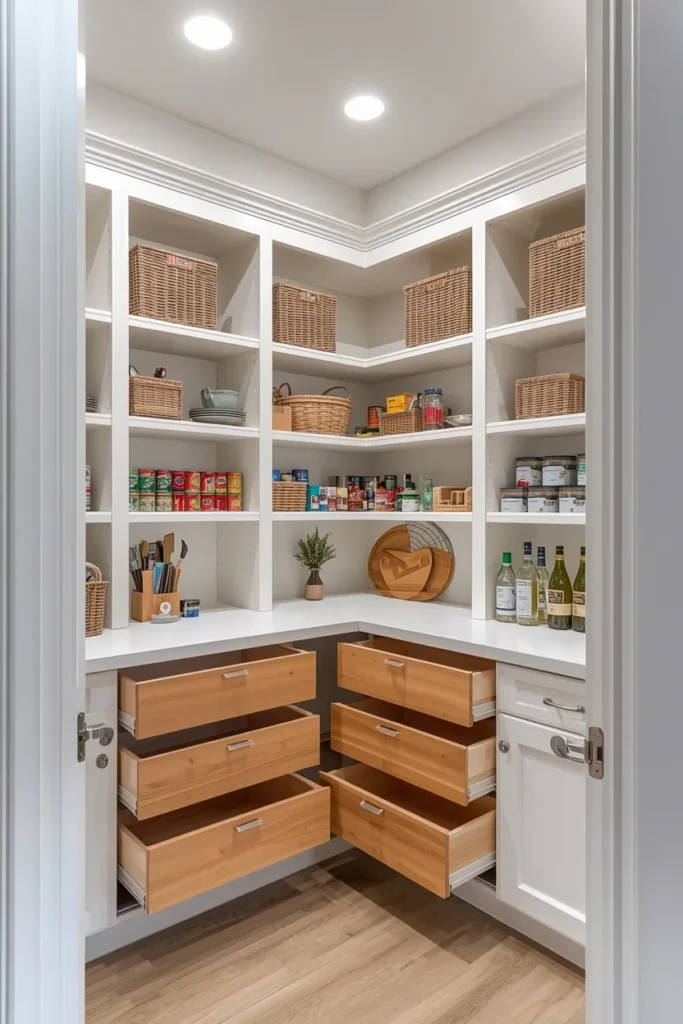
5. L-Shaped Built-In Pantry With Pull-Out Drawers at Base Level
An L-shaped pantry configuration wraps shelving along two adjacent walls inside a corner space, with deep pull-out drawers at the base. This layout maximizes usable depth at every level, including the lower section that traditional fixed shelves often make awkward to access.
Pull-out drawers at the base are particularly practical for storing heavy items like large cans, bulk grains, and small appliances. Because the drawers extend fully outward, nothing gets buried or forgotten at the back.
This is one of the most functional pantry formats for families who do large weekly grocery shops. It accommodates significant volume without requiring the user to crouch, reach, or restack items to find what they need.
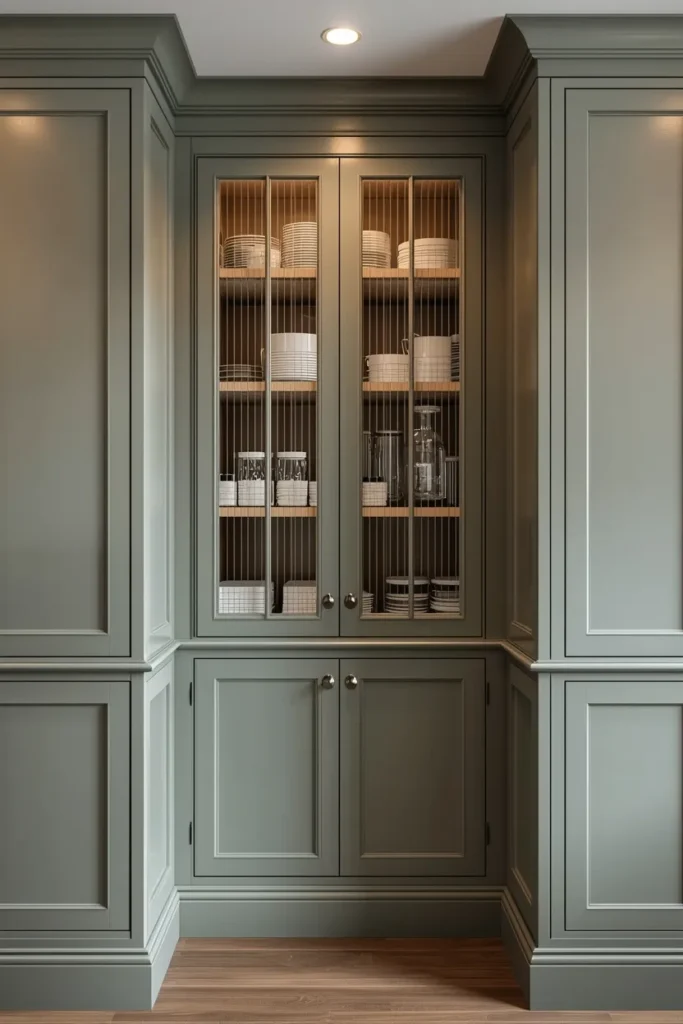
6. Glass-Front Corner Pantry Cabinet for Visual Depth in Open Kitchens
A glass-front pantry cabinet in the corner of a kitchen creates the illusion of depth while keeping contents protected and dust-free. This works especially well in open-plan kitchen-living layouts where the kitchen is visible from multiple angles.
Ribbed glass or seeded glass panels offer partial concealment, which is more forgiving than clear glass if your storage organization is not perfectly curated. Clear glass requires more visual discipline but delivers a cleaner, more modern look.
In terms of placement, a corner glass-front pantry cabinet works best when it sits between full-height solid cabinetry on either side. This anchors it visually and draws the eye without overwhelming the space.
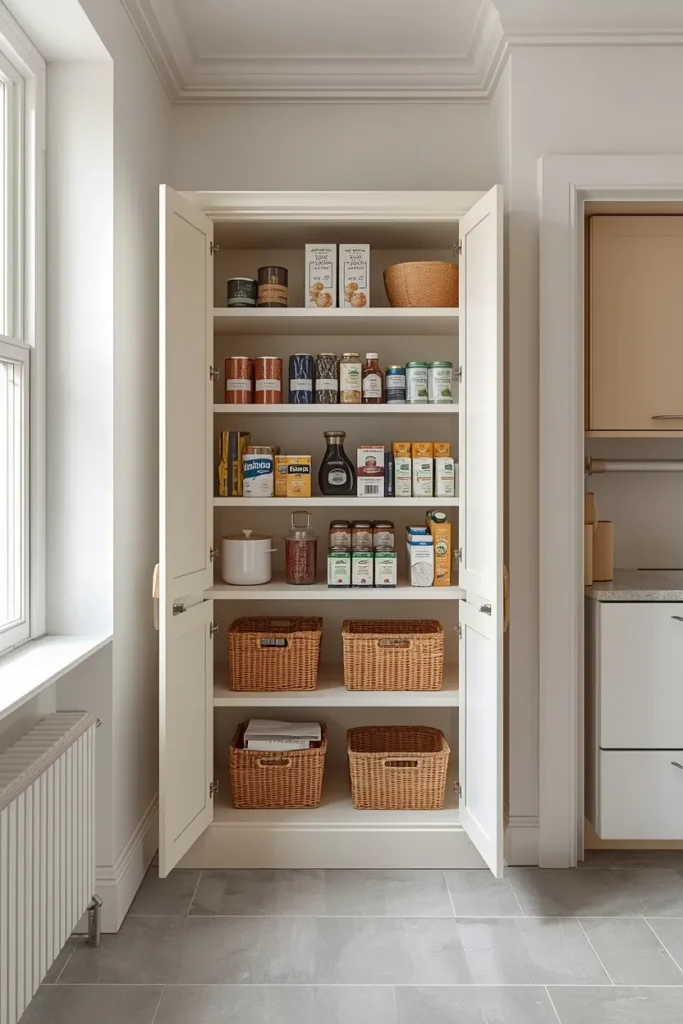
7. Freestanding Corner Pantry Cabinet for Renters and Flexible Layouts
A freestanding corner pantry unit is the most adaptable option for renters, those in temporary housing, or anyone not ready to commit to built-ins. These units come in hutch style, armoire style, or open shelving tower formats and can be positioned in any corner without installation.
The advantage beyond flexibility is cost. A well-chosen freestanding unit can deliver nearly the same storage volume as a built-in at a fraction of the price and effort. When styled consistently with surrounding furniture, it can also look intentional rather than improvised.
The key selection criterion is depth. Units that are too shallow for the actual products you store end up being decorative rather than functional. Look for units with at least 14 to 16 inches of usable shelf depth for general pantry use.
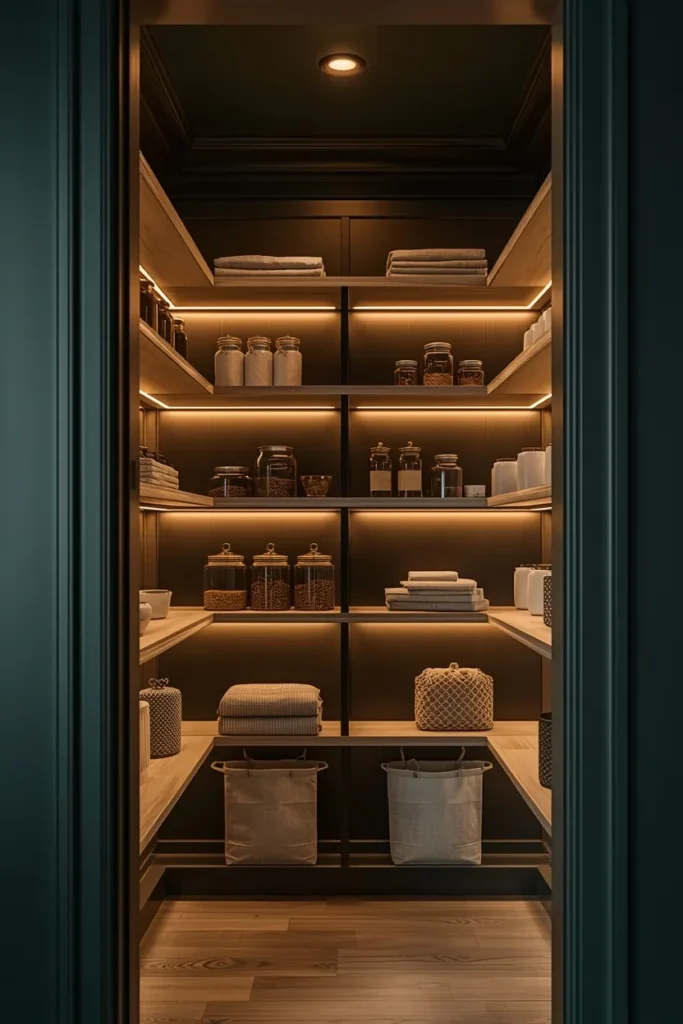
8. Dark Interior Corner Pantry With Accent Lighting for a Luxury Feel
A corner pantry with a dark-painted interior — navy, charcoal, forest green, or deep terracotta — creates a strong sense of depth and intentionality. When paired with internal LED strip lighting or small puck lights under each shelf, it becomes one of the most visually striking pantry styles in modern kitchen design.
This is not just an aesthetic choice. The contrast between the dark background and the products stored inside actually makes it easier to locate items at a glance. Light-colored canisters, white labels, and natural baskets all pop clearly against a dark wall.
This style suits larger pantries where the interior is visible when the door is open. In a very compact space, a dark interior can feel visually cramped rather than dramatic.
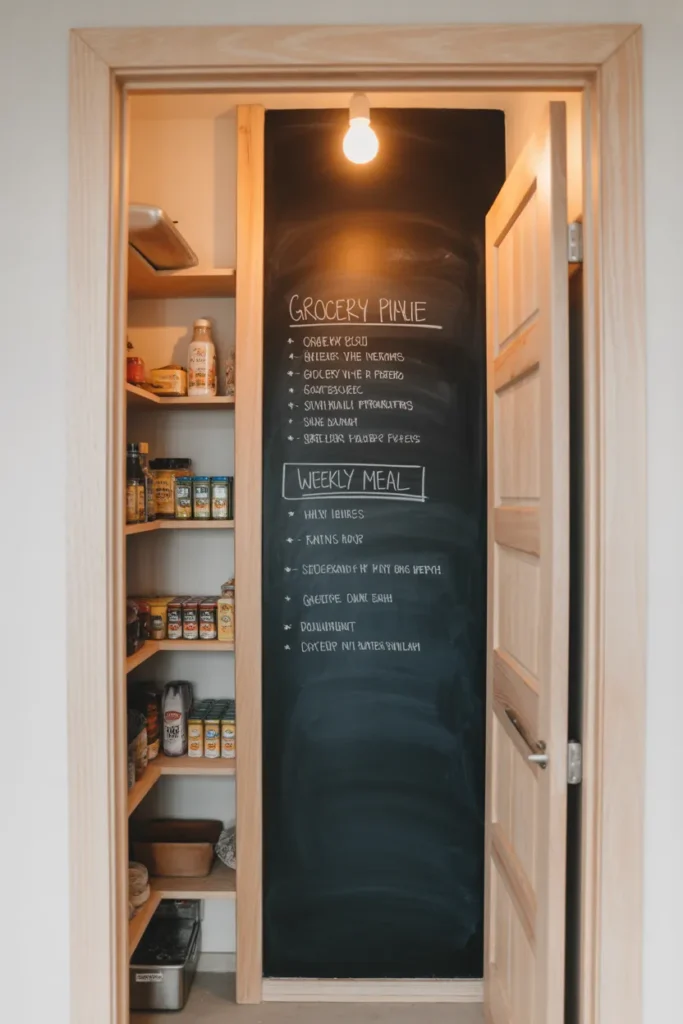
9. Corner Pantry With Chalkboard or Whiteboard Wall for Household Organization
A functional corner pantry does not stop at storage. Adding a chalkboard or whiteboard panel to one interior wall turns the space into a household command center — a place to track grocery lists, meal plans, expiration dates, and weekly menus.
This works especially well in family kitchens where multiple people shop, cook, and manage food inventory. Instead of keeping lists on a phone or paper pad that gets lost, the pantry wall becomes the default reference point every time someone reaches for an ingredient.
The practical note here is surface placement. Position the writing surface at a height that every adult in the household can read and write on comfortably. Avoid placing it above the top shelf line where it becomes inaccessible.
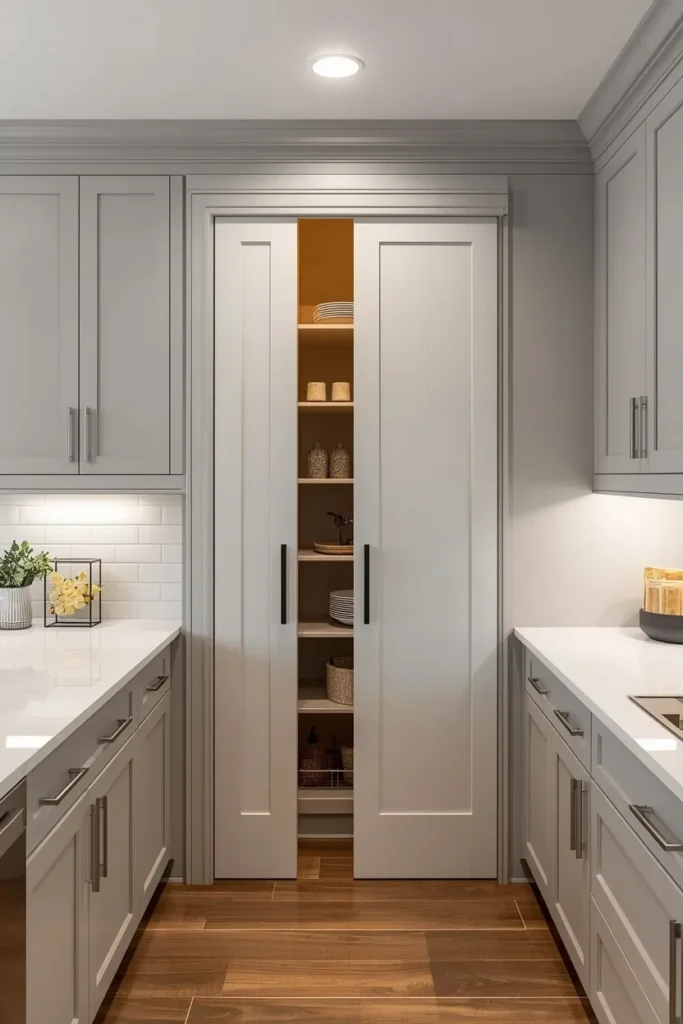
10. Sliding Pocket Door Corner Pantry for Kitchens With Tight Clearance
When a corner pantry sits next to a high-traffic zone — an island, a kitchen table, or a main walkway — a standard hinged door becomes a daily hazard. A sliding pocket door solves this completely by disappearing into the wall when open, leaving the entry fully clear.
This is especially relevant in smaller kitchen layouts under 150 square feet, where every square foot of swing clearance matters. A pocket door also allows the pantry to remain open during meal prep without blocking movement through the space.
The installation requires wall cavity space to accommodate the door as it slides in. This is best planned during a renovation rather than retrofitted. In existing walls, a barn-style sliding door is a simpler alternative that achieves a similar result.
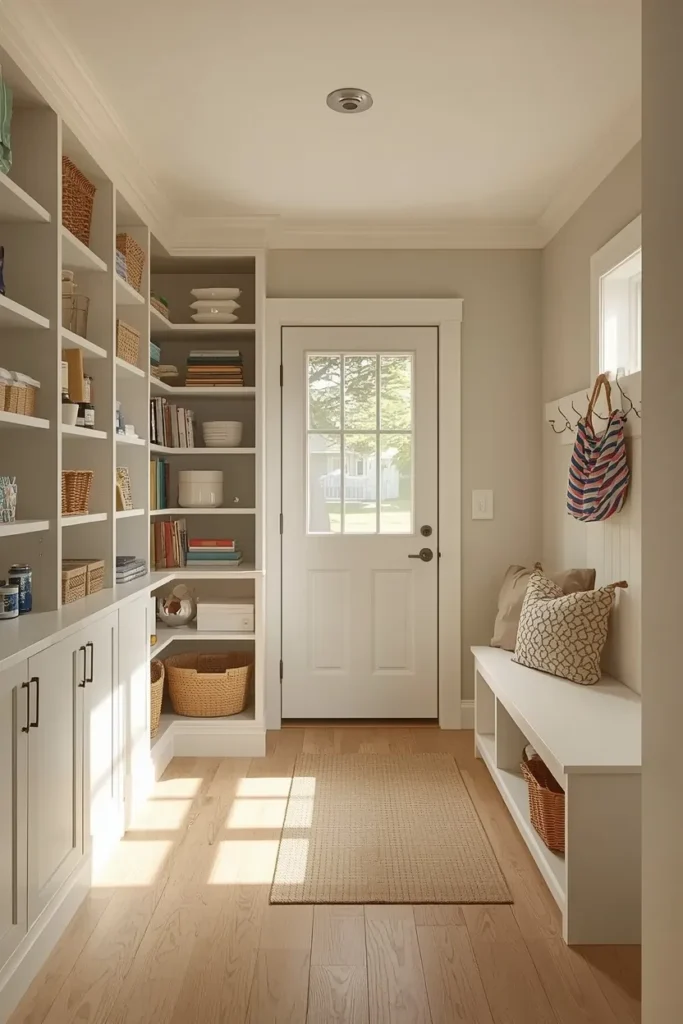
11. Corner Pantry Integrated With a Mudroom Entry for Multi-Use Efficiency
In homes where the kitchen connects directly to a garage, side yard, or laundry area, a corner pantry can be extended or positioned to serve double duty — one side storing kitchen pantry goods, the other side handling entry storage like reusable grocery bags, backpacks, or cleaning supplies.
This dual-zone pantry is one of the most efficient uses of a transitional corner in a home. It reduces the number of separate storage solutions you need and keeps related items close to their point of use.
The design challenge is maintaining visual separation between zones so the pantry side remains food-safe and organized differently from the utility side. A simple interior dividing shelf or cabinet section achieves this without requiring a wall.
12. Minimalist Corner Pantry With Uniform Containers for a Seamless Look
A minimalist corner pantry achieves its impact through discipline, not size. When every item is decanted into matching containers — clear canisters, identical bins, uniform label styles — even a small corner pantry looks intentional and high-end.
This approach suits open shelving designs and glass-front pantries where contents are always visible. It also improves daily function because uniformly sized containers stack predictably and use shelf space efficiently without wasted gaps.
The upfront time investment in decanting and labeling is real, but the maintenance is easier than it appears. Once systems are established, restocking simply means refilling the same containers rather than reorganizing loose packaging every week.
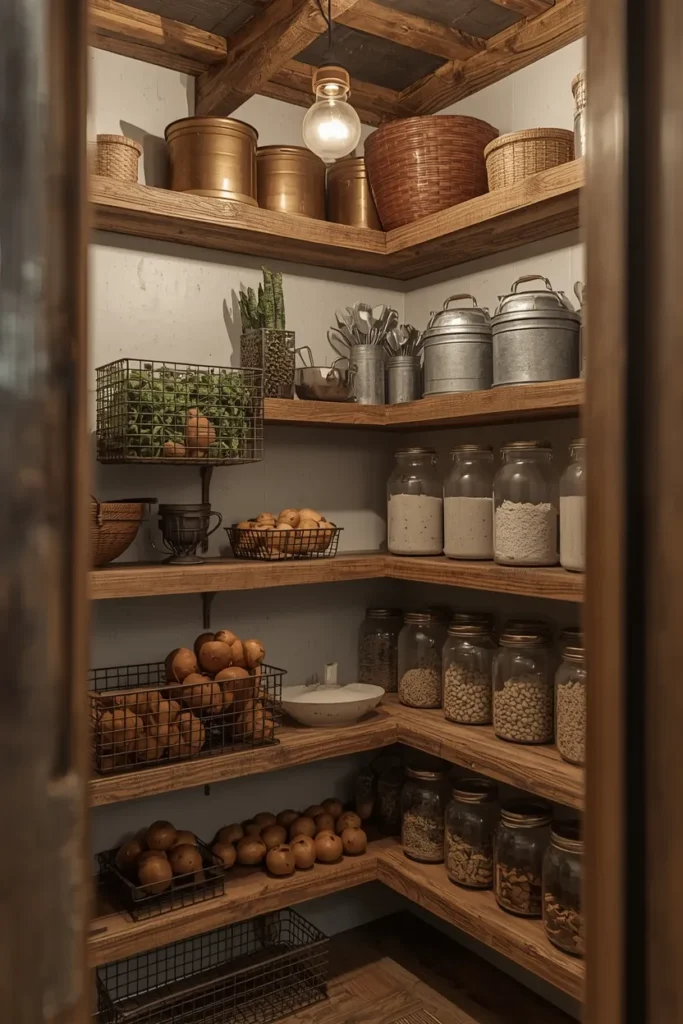
13. Rustic Corner Pantry With Reclaimed Wood Shelves and Wire Baskets
A rustic-style corner pantry uses raw, natural materials to create warmth and texture in a kitchen that might otherwise feel flat or overly polished. Reclaimed wood floating shelves paired with wire or woven baskets achieve this without requiring extensive renovation.
This style bridges traditional farmhouse aesthetics and modern practical storage. It works in kitchens with mixed material palettes — shaker cabinets, apron-front sinks, or stone countertops — where the pantry corner becomes a grounding, textured element.
One important functional note: reclaimed wood shelves must be properly sealed and treated before use in a food storage environment. Unsealed raw wood can harbor moisture and is harder to clean if spills occur.
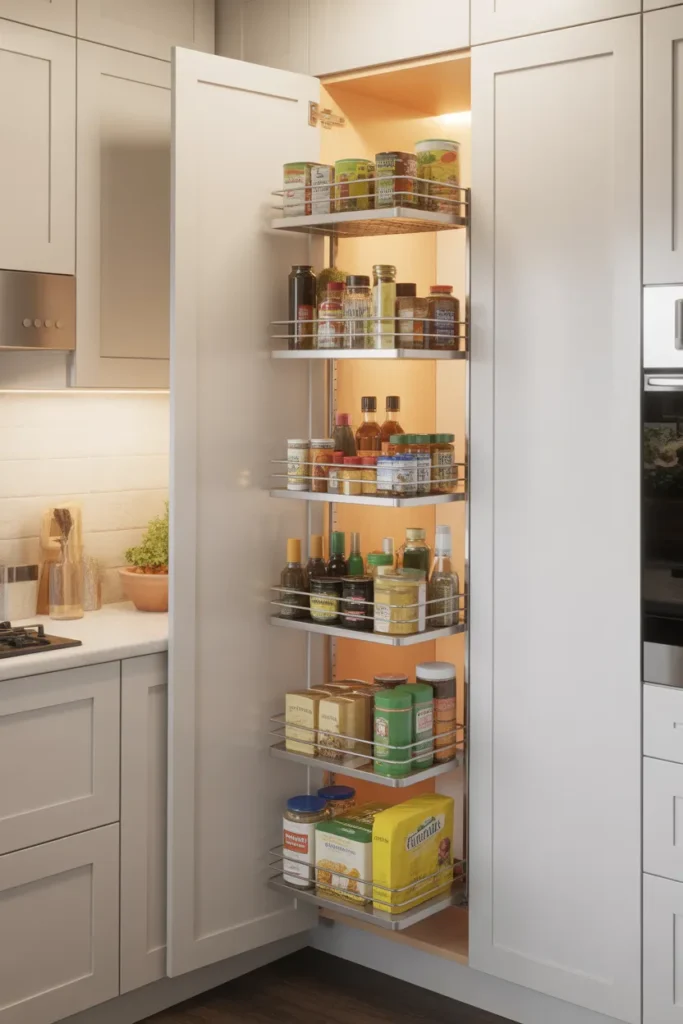
14. Narrow Corner Pantry Tower With Pull-Out Spice and Can Organizers
A narrow pull-out pantry tower — sometimes called a larder pull-out — fits into corners and tight gaps as slim as 9 inches wide. It extends fully outward on smooth gliding hardware, revealing multiple tiers of organized storage that would otherwise be completely inaccessible.
This is one of the best solutions for small kitchen layout design where no corner space can be wasted. It is particularly effective for spices, condiments, canned goods, and small packaged items that tend to pile up in cabinet dead zones.
The practical consideration is weight capacity. Cheaper versions have a weight limit that makes them unsuitable for heavy jars or large canned goods. Look for units with full-extension soft-close hardware and a minimum 50-pound capacity per tier for reliable long-term use.
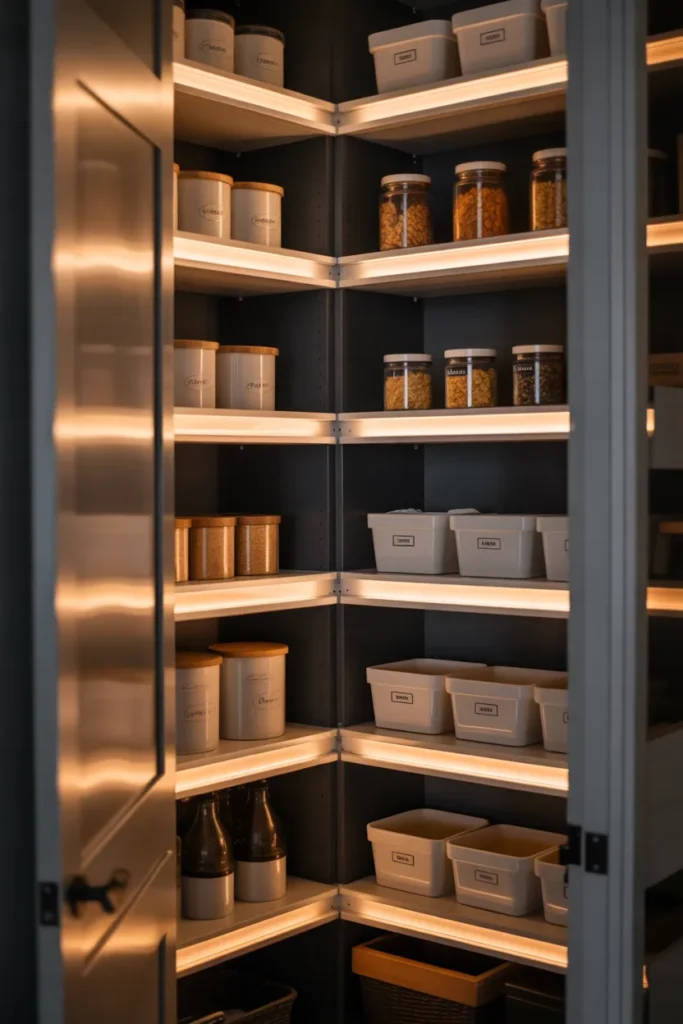
15. Corner Pantry With Interior Task Lighting for Practical Daily Use
Lighting inside a corner pantry is one of the most underestimated functional upgrades in kitchen space planning ideas. A pantry without internal lighting — particularly one in a corner where ambient kitchen light does not reach — means items at the back are always in shadow and harder to locate.
Battery-operated LED puck lights, plug-in strip lighting under each shelf, or hardwired recessed can lights all solve this problem at different budget levels. Motion-activated lights are particularly practical since they turn on automatically when the door opens.
The most common mistake is placing a single overhead light in the pantry center. This creates shadows on lower shelves directly beneath items stored above. Under-shelf lighting at each level eliminates this problem entirely and makes the full depth of every shelf clearly visible.
Final Thoughts
Corner pantry ideas 2026 are moving toward layouts that combine maximum function with intentional design — spaces that are easy to use every day, not just beautiful to look at once. Whether you are working with a small kitchen corner or planning a full walk-in, the right configuration depends on your household size, shopping habits, and how your kitchen actually moves.
Save this post so you can come back to it when you are ready to plan or renovate. Each idea here is designed to help you make a real decision, not just gather inspiration. If you are exploring broader kitchen space planning ideas, look into functional kitchen floor plans and open kitchen layouts that pair well with the pantry styles covered above.