If you have been collecting elegant bedroom ideas for 2026 without knowing where to start, this guide cuts straight to what works. Most bedroom refreshes fail not from lack of inspiration but from unclear decisions about layout, lighting, and layering — and this post fixes that. Below you will find 18 highly specific, visually distinct bedroom design ideas, each explained with practical detail so you can decide whether it fits your space, not just your mood board.
1. The Warm Minimalist Platform Bed Setup That Grounds Small Bedrooms
A low-profile platform bed in natural oak or light walnut is one of the strongest moves in modern elegant bedroom design for 2026. It works because it drops the visual center of gravity, making ceilings feel taller and rooms feel larger without a single structural change. If your bedroom is under 200 square feet, this is the starting point.
Pair the platform frame with a linen headboard panel in warm ivory that runs floor to ceiling. This creates an intentional backdrop rather than a floating furniture piece. The result is a bedroom that looks designed, not assembled.
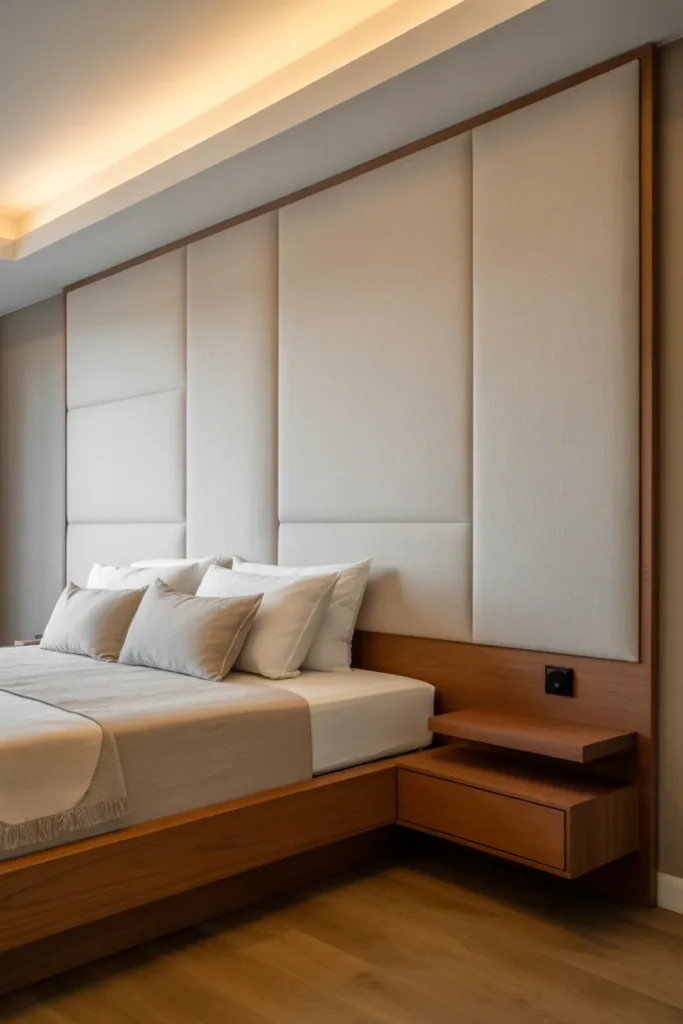

Keep nightstands minimal — a single floating shelf on each side rather than a bulky table. This keeps the floor visible, which is critical for making small spaces feel open. Avoid adding a bench at the foot of the bed in tight rooms. It blocks circulation and makes the space feel smaller than it is.
Design Tip: Natural linen in warm ivory photographs beautifully and never reads as cold. It is the most forgiving neutral in small elegant bedroom ideas 2026.
2. Deep Navy Bedroom That Feels Luxurious Without Feeling Heavy
Navy is one of the most searched elegant bedroom colors for 2026, and for good reason. Used correctly, it creates depth and sophistication that neutral beiges simply cannot match. The key distinction is saturation: choose a deep, slightly muted navy — not bright cobalt — on three walls only, leaving the wall behind the bed a warm white or soft plaster finish.
This asymmetrical color approach keeps the room from closing in. Add brass or antique gold hardware throughout — drawer pulls, lamp bases, curtain rods — to break up the darkness with warmth. A velvet duvet in deep teal or ink blue adds textural contrast without fighting the palette.
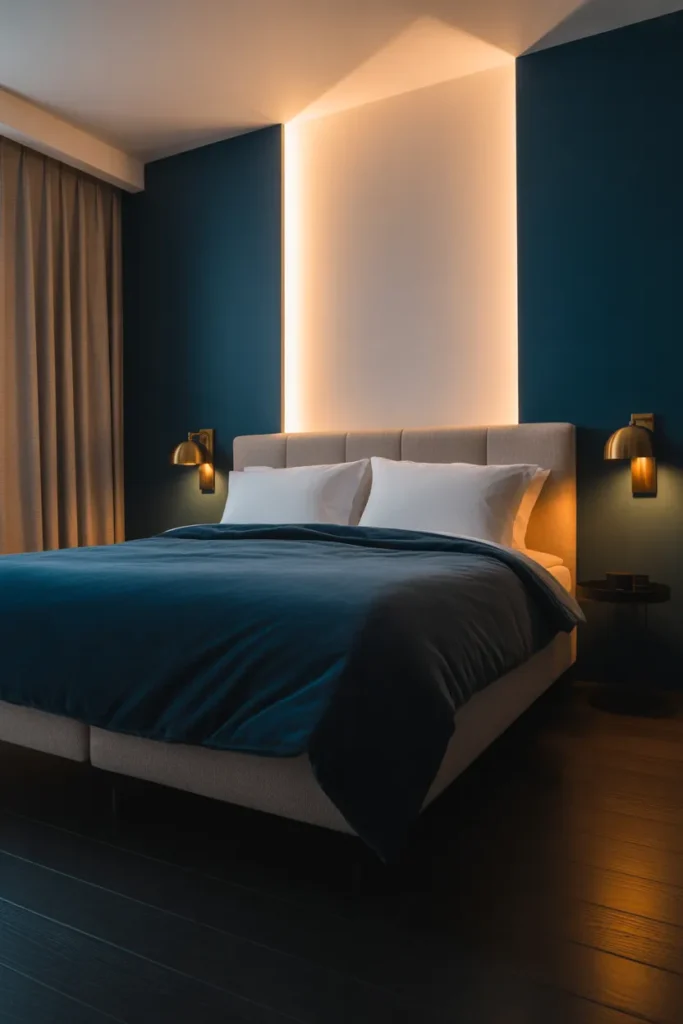
Lighting is critical here. Avoid overhead cool-white LEDs. Use warm-toned bulbs or integrated LED strips behind a floating headboard to produce an ambient glow. Navy absorbs light, so you need multiple sources at different heights to make the space feel rich rather than dim.
Mistake to Avoid: Painting all four walls navy in a bedroom smaller than 12×12 ft creates an oppressive, closed feel. The three-wall rule preserves elegance while avoiding the tunnel effect.
3. Japandi Neutral Bedroom That Works in Any Size Home
Japandi — the blending of Japanese minimalism with Scandinavian warmth — remains one of the most practical elegant bedroom design ideas for 2026 because it scales beautifully. Whether you have a 150-square-foot city apartment or a spacious primary suite, the principles are the same: eliminate visual noise, select materials intentionally, and let negative space do the work.
The palette is warm greige, light ash wood, and washed linen. Furniture profiles are low and simple — no ornate detailing, no chunky hardware. An ash wood bed frame with clean horizontal lines, a single ceramic lamp with a raw linen shade, and a low dresser with recessed pulls are all you need.
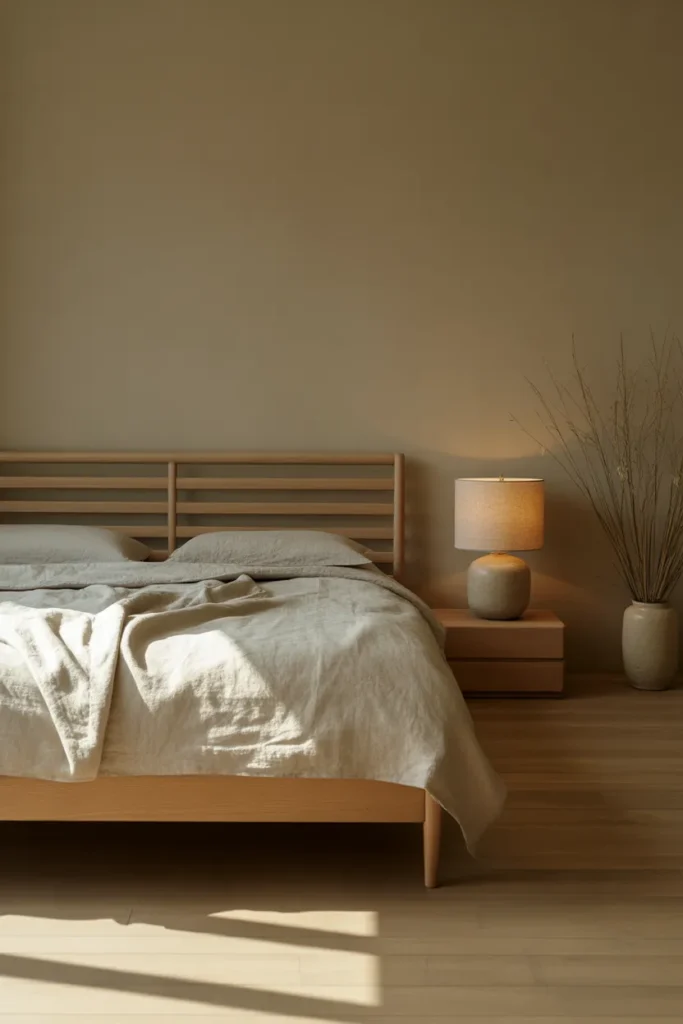
One element that separates a real Japandi bedroom from a generic minimal one is a single organic object — a dried grass arrangement, a stoneware bowl on the dresser, or a low wooden tray holding a candle. These details signal intentionality without adding clutter.
Best For: Simple rectangular rooms with no crown molding or dramatic architectural features. Japandi is layout-neutral but thrives in calm, unornamented spaces.
4. Dark Luxury Statement Wall With Integrated Lighting for a Five-Star Feel
One of the highest-performing elegant bedroom ideas on Pinterest right now is the dark statement wall — specifically a charcoal or near-black feature wall behind the bed integrated with built-in shelf niches and concealed LED lighting. This is not a simple accent wall. It is an architectural approach to making the headboard wall feel custom-built.
The structure works like this: install tall vertical panels in a dark finish flanking the bed on either side, with open niches for books or objects. The panels should rise to ceiling height to anchor the room vertically. Between the panels, mount a simple upholstered headboard in charcoal or deep slate velvet.
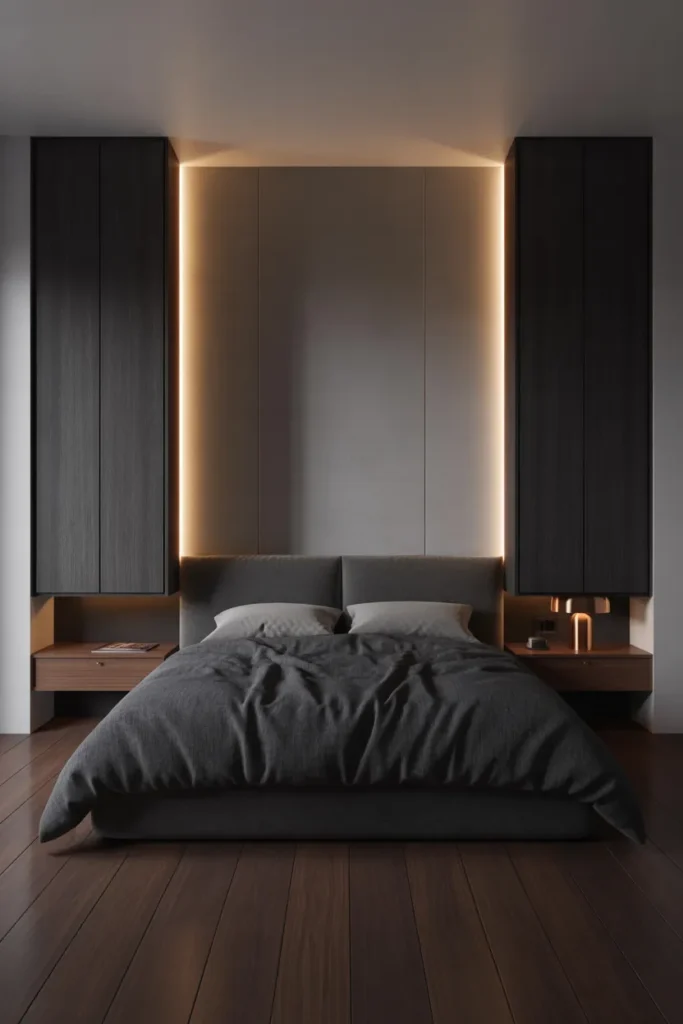
This setup solves a common problem in American bedrooms: a large empty wall behind the bed that needs to feel designed without expensive renovation. The dark paneling adds depth and drama while integrated lighting keeps the room from feeling cave-like. Use warm 2700K LED strips tucked behind the panels to produce a soft halo effect at night.
Avoid This: Cold-white LED strips in a dark luxury bedroom undercut the warmth entirely and make the space feel clinical. Stick to 2700K or 2400K for maximum elegance.
5. Sage Green Organic Bedroom That Feels Calm Without Feeling Bland
Sage green is one of the defining colors of elegant bedroom ideas 2026, but the version that works is specific: a muted, grey-toned sage, not a bright mint or yellow-green. This particular shade reads as grounded and sophisticated rather than playful, which is why it holds up over time and photographs well in all seasons.
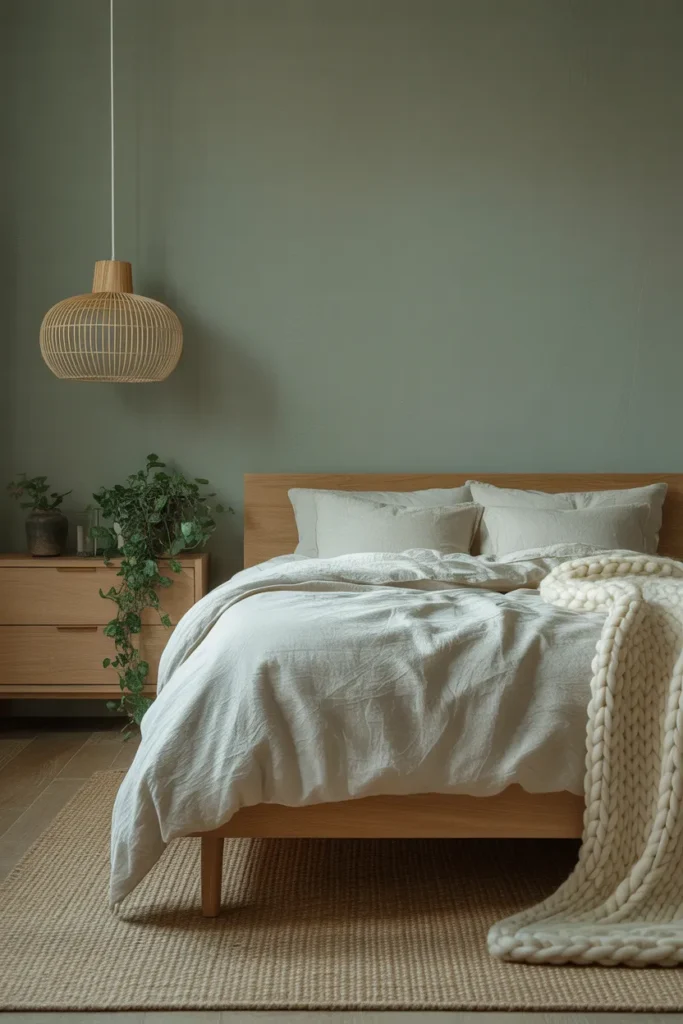
Pair sage walls with natural materials — jute rug, unbleached linen bedding, rattan pendant or table lamp, and light oak furniture. The combination creates an organic, biophilic bedroom that feels restorative. This palette works especially well in east-facing rooms where morning light brings out the green undertones without making the space feel cold.
Add texture through layering: a chunky knit throw, a linen euro sham, a woven cushion. The most common mistake in sage green bedrooms is introducing too many competing organic materials — rattan, wicker, macrame, and jute all together creates visual noise rather than calm.
6. Soft Lavender Cloud Bedroom That Photographs Beautifully All Year
Soft lavender is moving from accent color to full-room palette in 2026. The version that works in an upscale residential context uses a lavender with warm grey undertones — not a cool or overly purple tone — which prevents the room from reading as a child’s bedroom or a passing trend.
Build the palette like this: pale lavender-grey walls, white painted trim and ceiling, a soft white or blush linen duvet, and furniture in warm white, cream, or light ash. Avoid introducing too many competing colors. Let the lavender carry the room and support it with textural variation — velvet pillows, a waffle-weave throw, a knit euro sham.
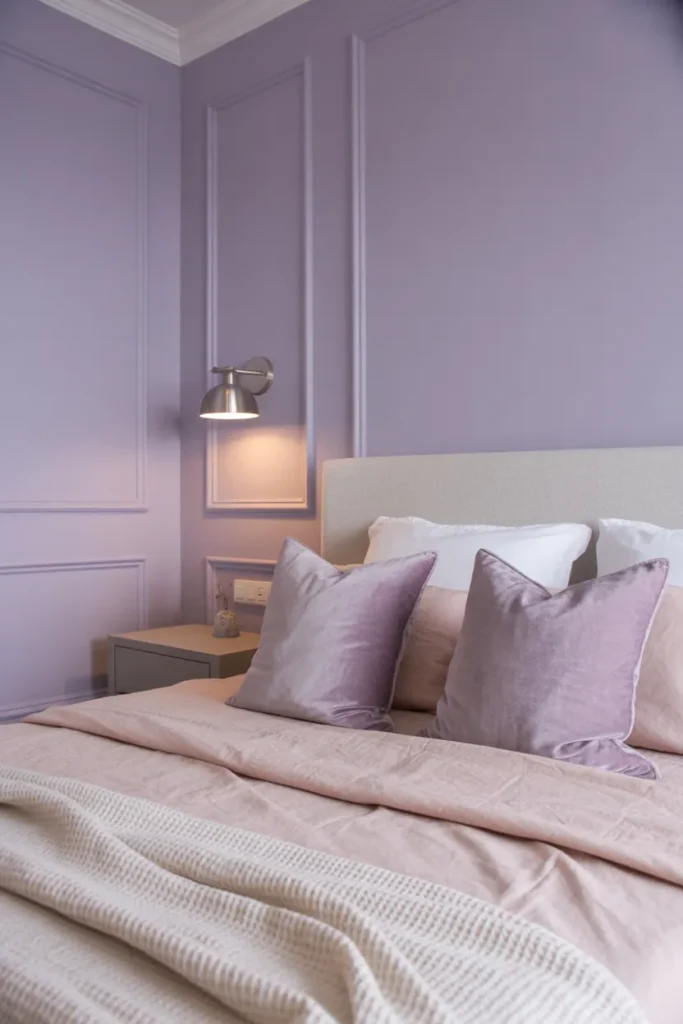
Lavender bedrooms benefit from layered soft lighting. Wall sconces in brushed nickel or antique brass at nightstand height provide the warm glow that lavender walls reflect beautifully. Overhead cool lighting completely kills this palette, so plan your light temperature before committing to this direction.
Design Note: Soft lavender-grey is one of the few wall colors that looks more expensive at night than it does during the day. Warm evening light amplifies its sophistication in ways that photograph exceptionally well.
7. Warm Terra Cotta and Linen Bedroom That Brings Depth and Character
Terra cotta has earned its place in elegant bedroom design for 2026 as a full atmospheric palette rather than just an accent. The version that works in an upscale residential context is a dusty, clay-toned terra cotta — more burnt sienna than pumpkin — applied to walls or introduced through a plaster-finish paint treatment on a single accent wall.
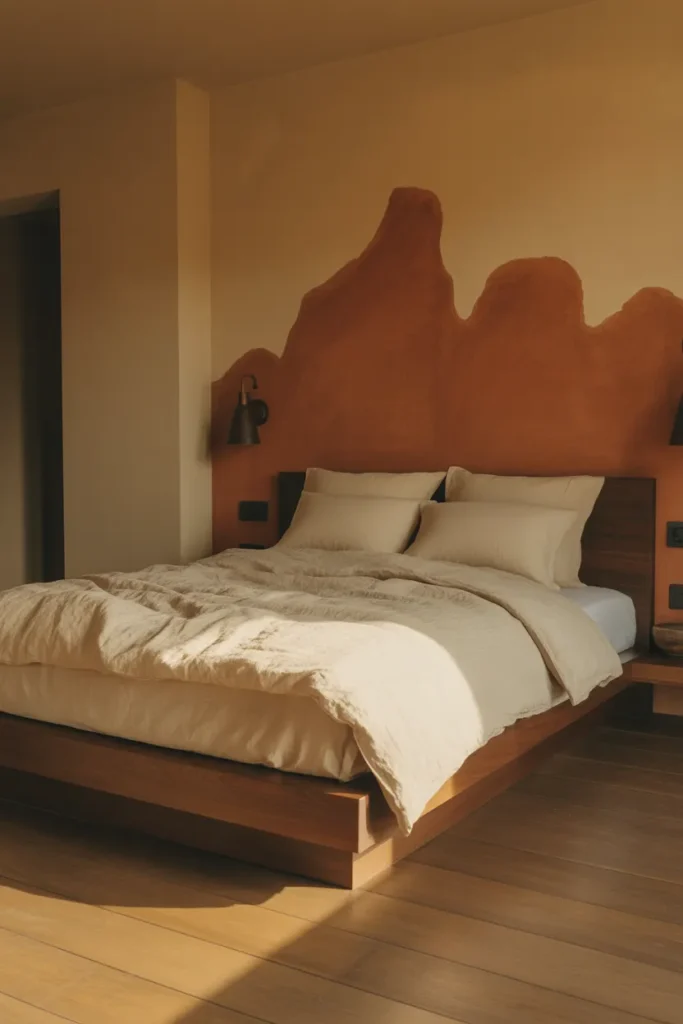
Pair this palette with natural linen in cream or sand, raw plaster texture, and furniture in dark walnut or iron. The combination is warm, grounded, and deeply tactile. This is a strong choice for primary bedrooms in warmer climates — the American Southwest, California, Texas, and Florida — where warm-toned, sun-aligned palettes feel natural and connected to the exterior environment.
The structural risk with terra cotta is saturation. Too much of it — walls, bedding, curtains, and rugs all in the same tone — creates a single-note room that quickly feels heavy. Balance it with generous cream neutrals and anchor the floor in light stone, concrete-finish tile, or warm wide-plank wood.
8. Steel Blue Architectural Bedroom for Modern Homes With High Ceilings
Steel blue — a grey-toned, desaturated blue — is a sophisticated color choice for elegant bedroom ideas 2026 that reads as architectural rather than decorative. This makes it ideal for contemporary or new-construction homes that lean toward clean lines and structured interiors rather than organic or traditional aesthetics.
Steel blue works exceptionally well in bedrooms with high ceilings because the cool, slightly receding quality of the color pulls the walls back, making vertical space feel even more dramatic. Pair it with warm white ceilings, brushed chrome or polished nickel fixtures, and bedding in pale cloud grey to stay within a cohesive cool-neutral palette.
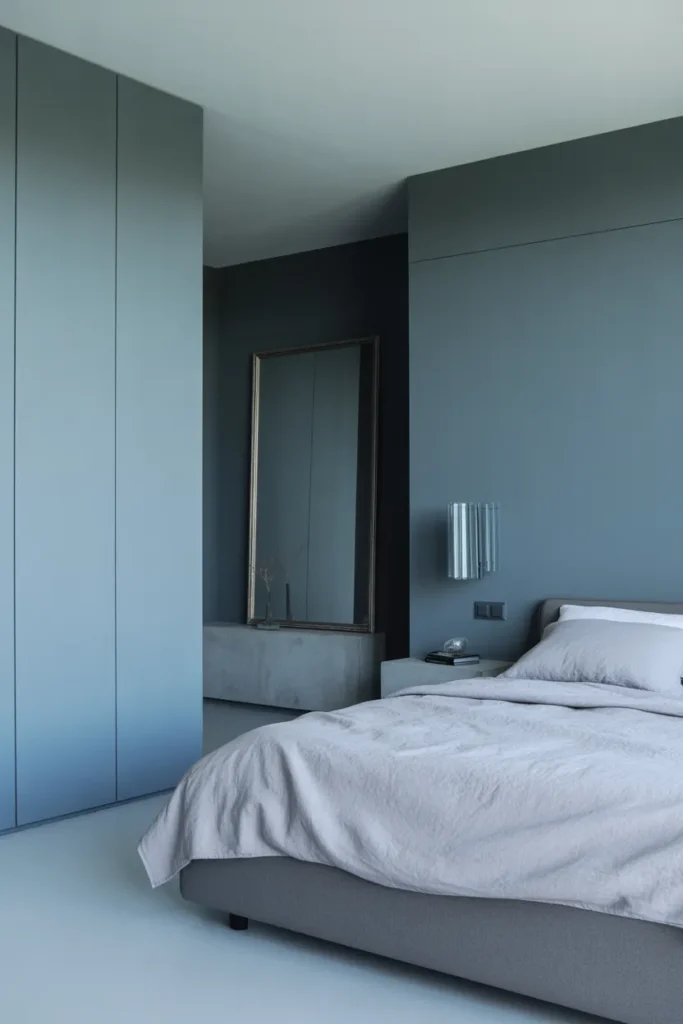
The materials that elevate this combination are smooth concrete, polished stone, and cool-toned metal. Avoid warm woods like oak or walnut — they fight the palette. If you want natural material warmth, use grey-toned ceruse-finish wood instead.
Avoid This: Steel blue with warm brass reads as mismatched in a cool-toned bedroom. Commit to one metal temperature — chrome, nickel, or polished steel — and keep it consistent throughout.
9. Olive and Walnut Earthy Bedroom Retreat for a Grounded, Refined Look
Olive green with dark walnut furniture is one of the more underutilized combinations in modern elegant bedroom design for 2026. It creates a rich, earthy palette that reads as sophisticated without relying on classic neutrals. This is a strong choice for gender-neutral or masculine primary bedrooms where the goal is warmth without softness.
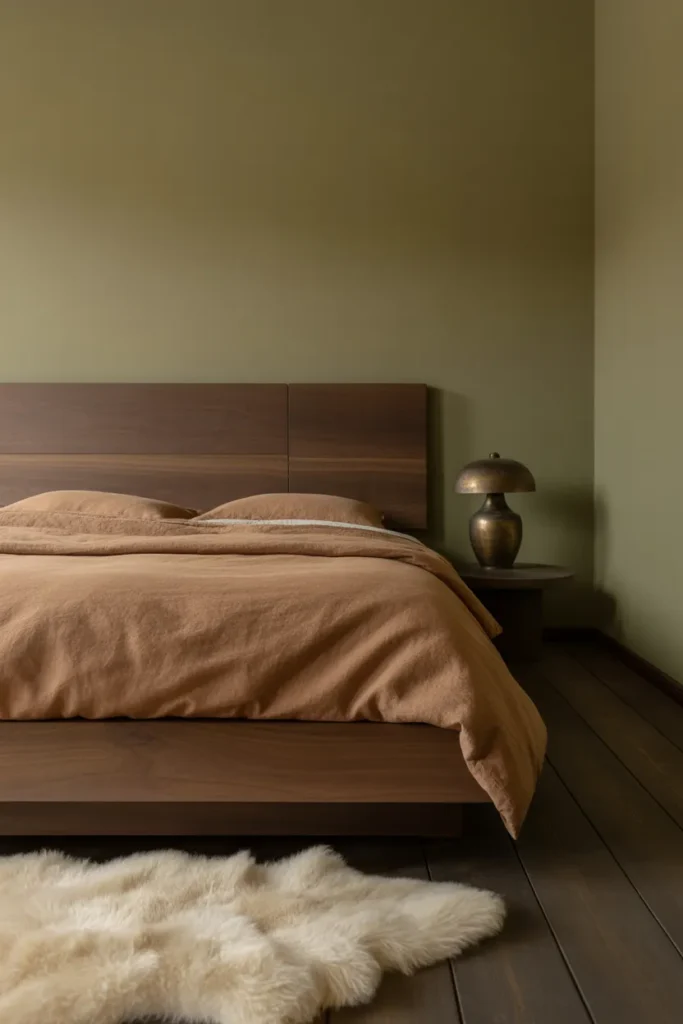
Muted olive walls — dusty and grey-green with no bright yellow saturation — pair naturally with dark walnut or blackened oak bed frames and dressers. Layer in linen bedding in dark sand or warm mushroom, and add a low sheepskin or ivory area rug at floor level. This introduces lightness and prevents the room from reading as too dark or heavy.
Use warm antique brass or dark bronze fixtures — never polished gold, which reads as too formal. A single oversized ceramic or concrete table lamp with a flat-weave shade keeps the atmosphere grounded. This is a bedroom that feels like a high-end lodge or a carefully curated boutique hotel.
10. Creamy Tonal All-White Bedroom That Avoids the Cold, Clinical Look
The all-white bedroom remains a perennial Pinterest favorite, but the 2026 version that actually works is not flat, cool white — it is a layered, tonal warm white composition that uses texture and material variation to create depth. This approach directly solves the most common complaint about white bedrooms: they feel sterile or hospital-like.
The palette works by layering whites with different undertones. A warm white wall, an off-white linen duvet, a cream euro sham, a soft ivory knit throw, and a pale greige rug all read as white but with enough tonal variation to create genuine visual interest. Add a white plaster or matte ceramic lamp and chalky white-painted furniture to complete the picture.
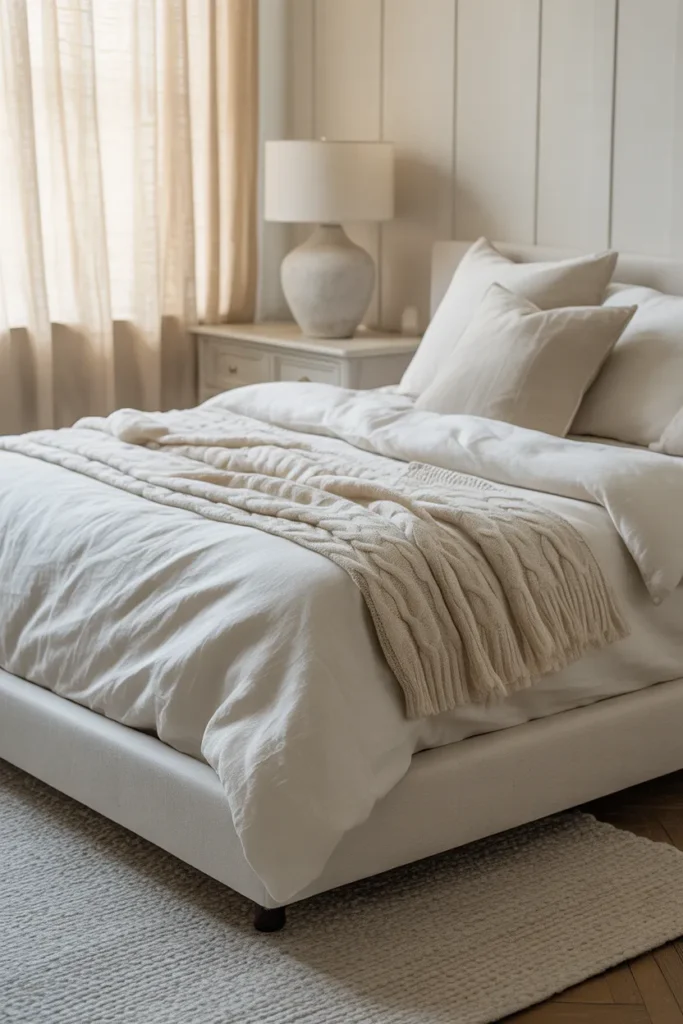
Materials carry the story here: rough linen, smooth cotton, matte plaster, woven wool, and nubby boucle — all in the white-cream-ivory spectrum. This is also the most forgiving elegant bedroom idea for small apartments and rental units, as it maximizes perceived space and works with almost any existing trim color.
Best For: North-facing bedrooms with little direct sunlight. Warm-toned whites prevent the space from reading cold or bluish during the day.
11. Deep Burgundy Drama Bedroom That Commands Attention Without Renovation
Burgundy is making a serious move in 2026 bedroom design as a full-room color that creates a theatrical, deeply luxurious atmosphere. The key to making it feel elegant rather than dated is choosing a wine-toned, slightly desaturated burgundy in a matte or eggshell finish so the walls absorb light rather than reflect it.
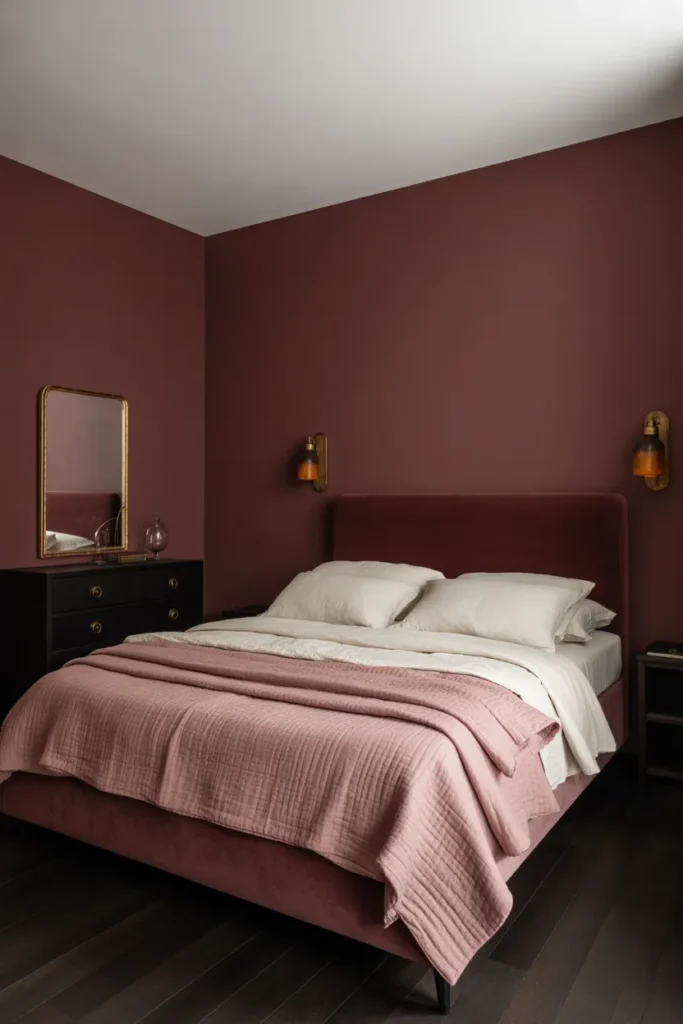
Paint three walls in deep burgundy, leave the ceiling soft white or very light blush, and use bedding in ivory, warm cream, and dusty rose to balance the intensity. The ceiling contrast is what keeps the room from feeling enclosed rather than enveloping. Furniture should be dark and substantial: ebonized oak, dark walnut, or aged iron with antique brass fixtures.
Avoid patterned textiles in this color scheme. Solid textures in velvet, boucle, and heavy linen provide all the visual complexity the room needs without competing with the dramatic wall color. This is one of the most impactful elegant bedroom ideas for anyone who wants a memorable guest room or a primary suite that feels genuinely different.
12. Soft Sage and White Scandi Bedroom for Bright Apartment Living
This is a lighter, airier interpretation of the sage bedroom designed specifically for small apartments and city homes where maximizing light and perceived space is the primary design challenge. Rather than full sage walls, this version uses white as the dominant tone with sage as a supporting accent — on a single headboard wall, through pillow color, or via a painted wood panel only.
Furniture is white or very light grey, the floor is light blonde wood or white tile, and the ceiling is pure white. Sage enters through the headboard wall, a few linen shams, a soft throw, and one or two small potted plants. This restraint is what makes the design work in compact spaces where too much color creates visual compression.
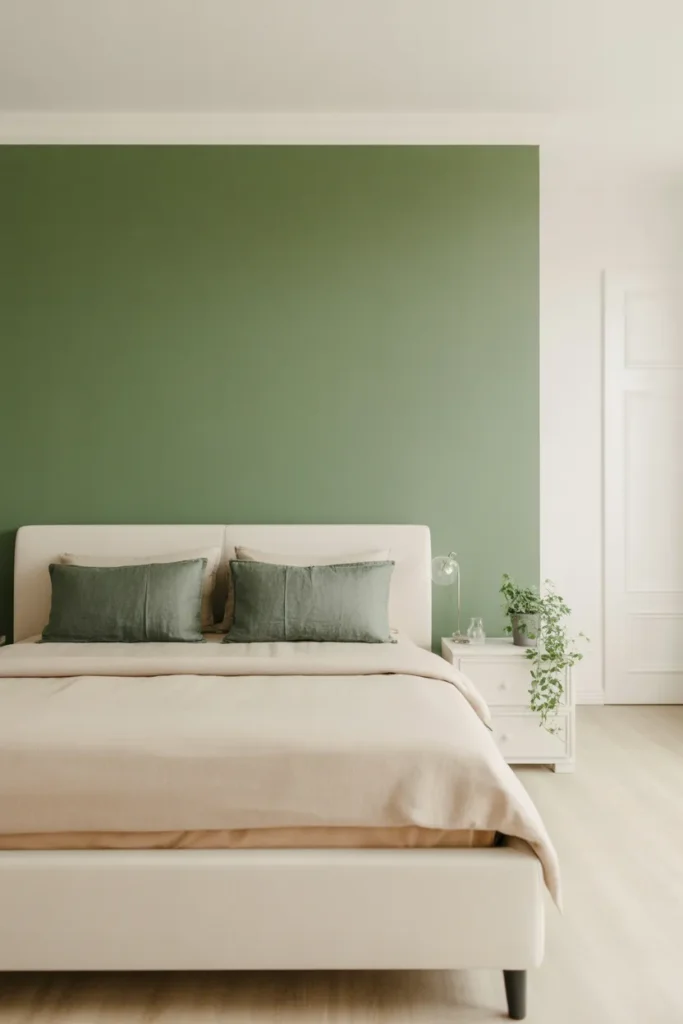
This is also an ideal setup for renters who cannot paint all four walls. A painted headboard wall or a large fabric panel in sage green achieves nearly the same effect without committing to a full repaint.
Renter-Friendly Tip: Use a floor-to-ceiling sage-painted plywood panel behind the bed as a removable headboard wall. It installs in an afternoon and leaves no damage when you move out.
13. Moody Plum and Velvet Bedroom That Transforms a Builder-Grade Space
Moody plum is one of the most dramatic and effective elegant bedroom ideas for 2026 for anyone working with a flat, characterless builder-grade room. Choose a warm, red-leaning plum — between eggplant and mauve — rather than a cold purple, and apply it in matte finish so it absorbs light and creates depth rather than reflecting it.
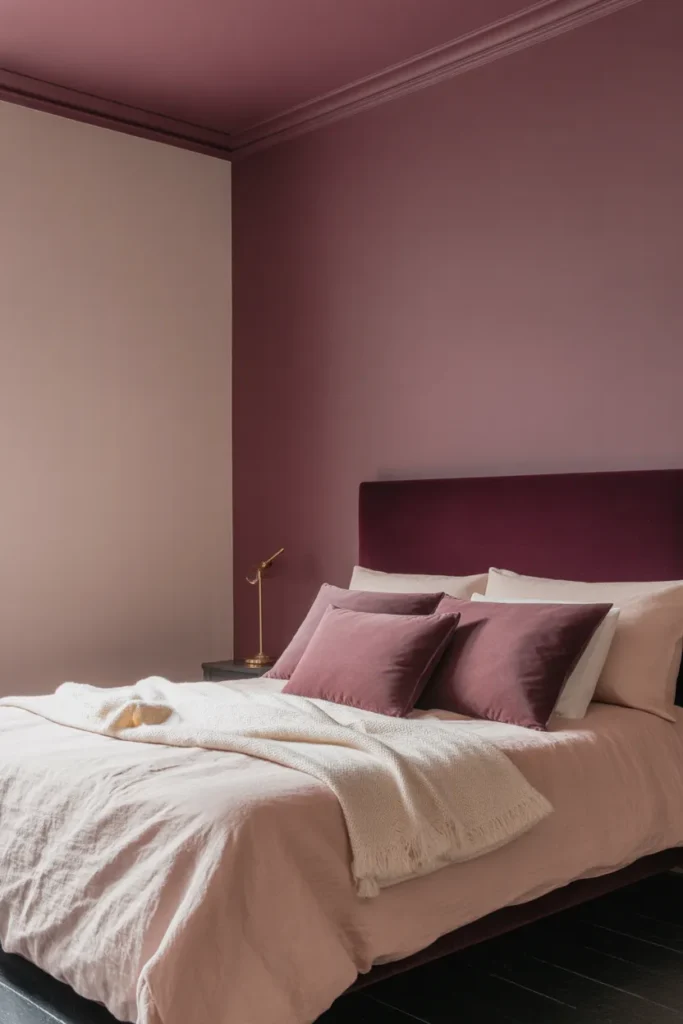
Apply the plum to both the headboard wall and the ceiling simultaneously — a technique called monochromatic enveloping — which removes the harsh visual break at the wall-ceiling junction and makes the room feel far more intimate and intentional. Keep the remaining three walls in soft warm white or blush plaster to provide breathing room. This one technique alone can make a flat, ordinary bedroom feel architecturally interesting without touching the floors or trim.
Introduce velvet through the headboard upholstery and throw pillows in a tonal variation — deep plum velvet headboard with dusty mauve velvet cushions, for example. Add a boucle throw in cream or ivory for textural contrast. Avoid satin or silk, which reflect light in a way that competes with the matte wall and undermines the moody effect.
14. Warm Brass and Cream Maximalist Bedroom That Layers Without Looking Cluttered
Maximalism in elegant bedroom design for 2026 is not about adding more — it is about layering intentionally within a unified palette. The brass and cream combination achieves this because every element, regardless of how ornate, sits within the same warm tonal range. Nothing fights. Everything adds to the same visual story.
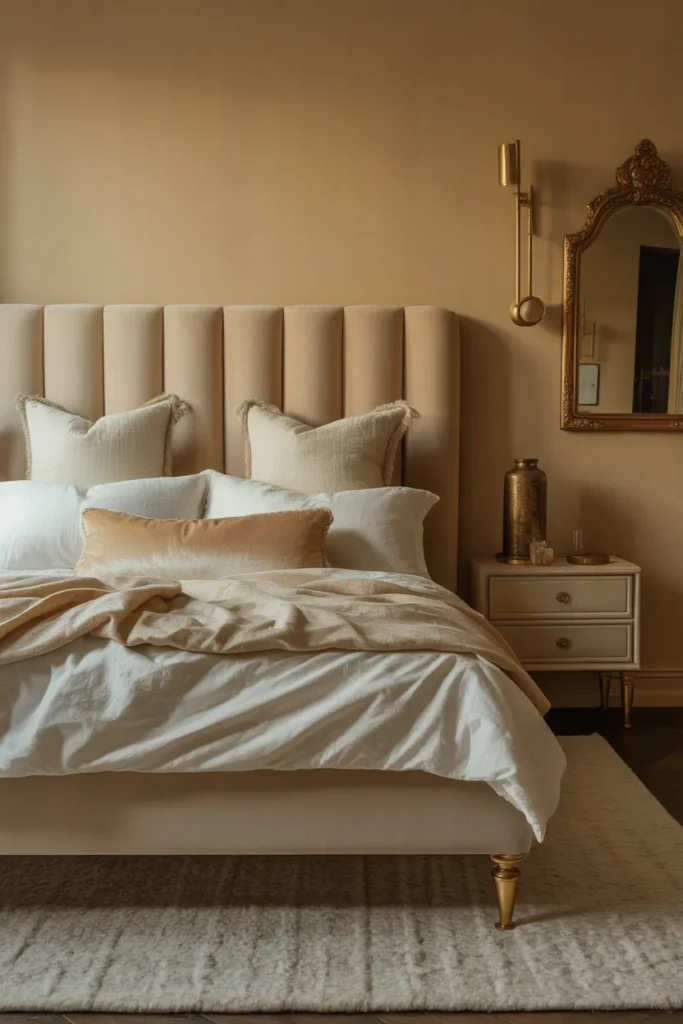
Start with warm cream or aged ivory walls in matte finish. Layer in furniture with brass hardware throughout — dresser pulls, bed frame legs, mirror frame, wall sconces, curtain rod finials. The bed should be substantial: a tall upholstered headboard in cream or pale champagne velvet, with at minimum six layered pillows in varying textures — smooth velvet, rough boucle, and solid linen. Add a large ornate brass mirror above the dresser and a thick wool area rug in ivory or warm sand.
The key to preventing this from tipping into excess is maintaining consistent color temperature. Every element, from the brass fixtures to the cream textiles, should lean warm. The moment you introduce a cool-toned white or a grey-based neutral, the cohesion breaks. Stay fully within the warm cream-brass-gold spectrum.
15. Ultra-Clean Japandi Studio Bedroom for Open-Plan Living
This idea addresses a specific and growing challenge in American homes: the studio apartment or open-plan loft where the sleeping area must function as a bedroom, a living area, and sometimes a workspace — all within the same visual field. The ultra-clean Japandi studio bedroom is the most effective solution for this situation in 2026.
The approach uses furniture placement and a low-profile bed to define the sleeping zone without walls or dividers. A low ash or bamboo bed frame sits on a distinct area rug — a jute or flatweave in warm greige — which visually separates the sleeping zone from the rest of the floor plan. A simple shoji-inspired floor screen or slatted wood panel can serve as a lightweight visual divider without blocking light or airflow.
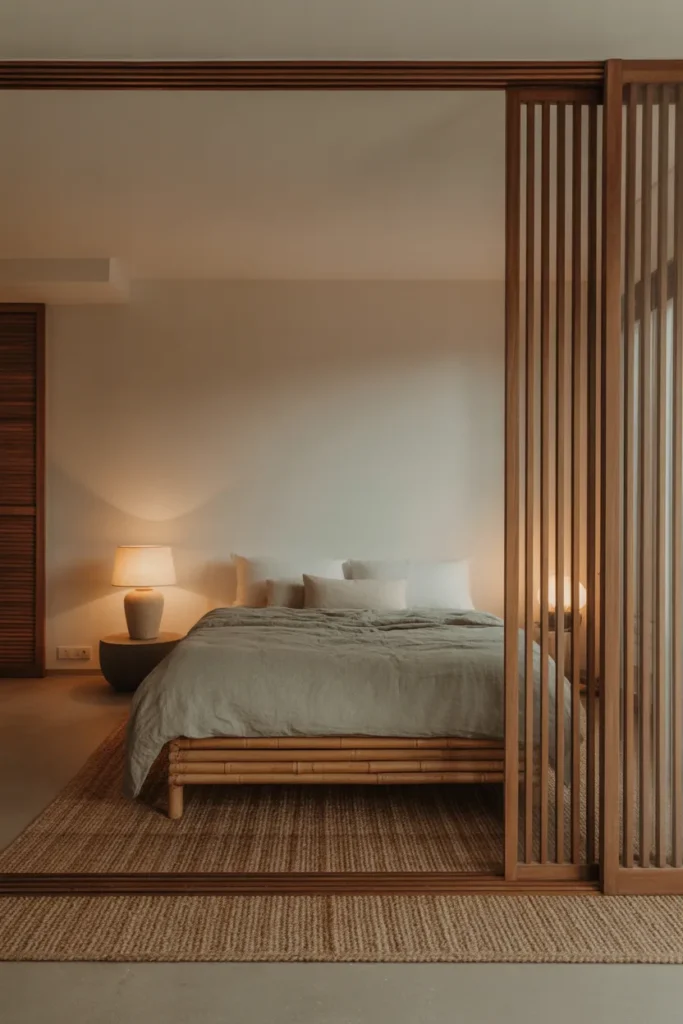
Color palette is strictly limited: warm white walls throughout, warm wood tones, and a single textile accent in one muted tone — sage, dusty clay, or soft charcoal. No more than three materials should be visible at any one time. The discipline of this palette is what makes an open-plan bedroom feel calm rather than confused.
Best For: Studio apartments, lofts, and open-plan homes where the bedroom area cannot be fully enclosed but needs to feel intentionally designed and separated from the living zone.
16. Dark Forest Green Bedroom That Feels Like a Private Retreat
Deep forest green is one of the most powerful and underused tools in elegant bedroom design for 2026. Unlike sage, which is light and organic, forest green is deep, saturated, and deliberately moody. When applied in a matte finish to three walls of a medium or large primary bedroom, it creates a retreat-like atmosphere that is completely distinct from any other color in this guide.
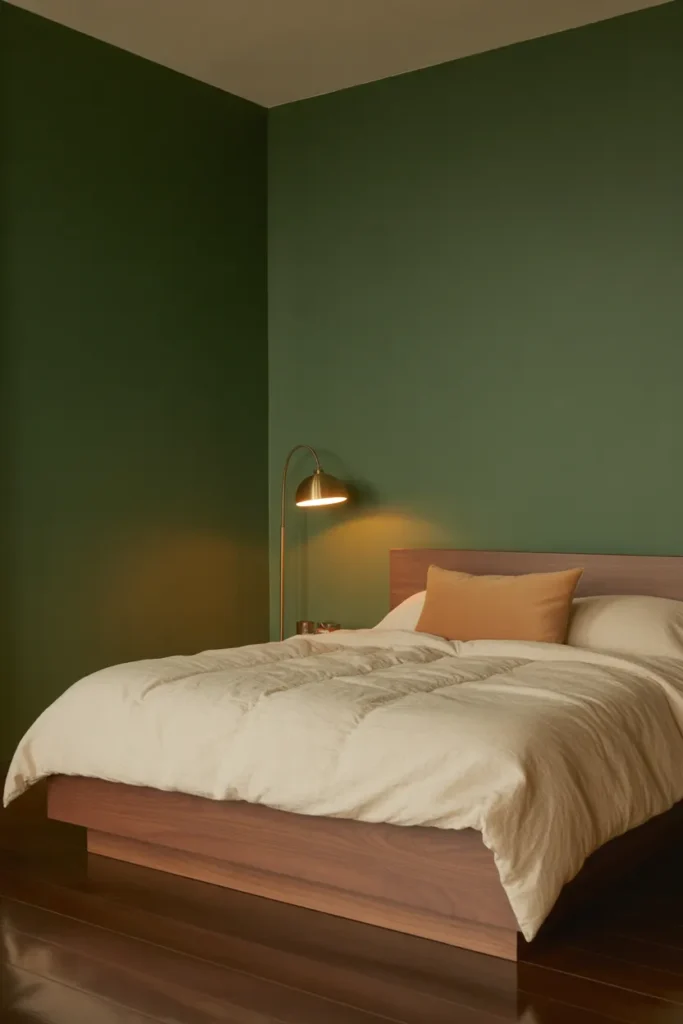
Pair dark forest green walls with natural, warm-toned wood furniture — medium walnut, teak, or pecan — to introduce warmth and prevent the palette from feeling cold. Bedding should be in ivory, warm white, or a soft camel linen. Avoid green bedding with green walls, which removes all contrast and flattens the room.
Lighting is the deciding factor in a dark green bedroom. A single antique brass arc floor lamp positioned to cast warm light across the bed is far more effective than overhead fixtures. If you use ceiling lights, use warm-toned pendant lamps in dark matte black or antique bronze rather than recessed can lights, which will bleach the wall color under cool-white light.
17. Blush and Terracotta Boho Chic Bedroom That Avoids the Cliché
The boho bedroom has been done to death, but the 2026 version that reads as elegant rather than dated uses a very specific palette: dusty blush and terracotta in matte, slightly chalky tones rather than the bright pinks and loud patterns that defined the earlier wave of boho design. This is a more sophisticated, editorial interpretation that works in both casual and refined home contexts.
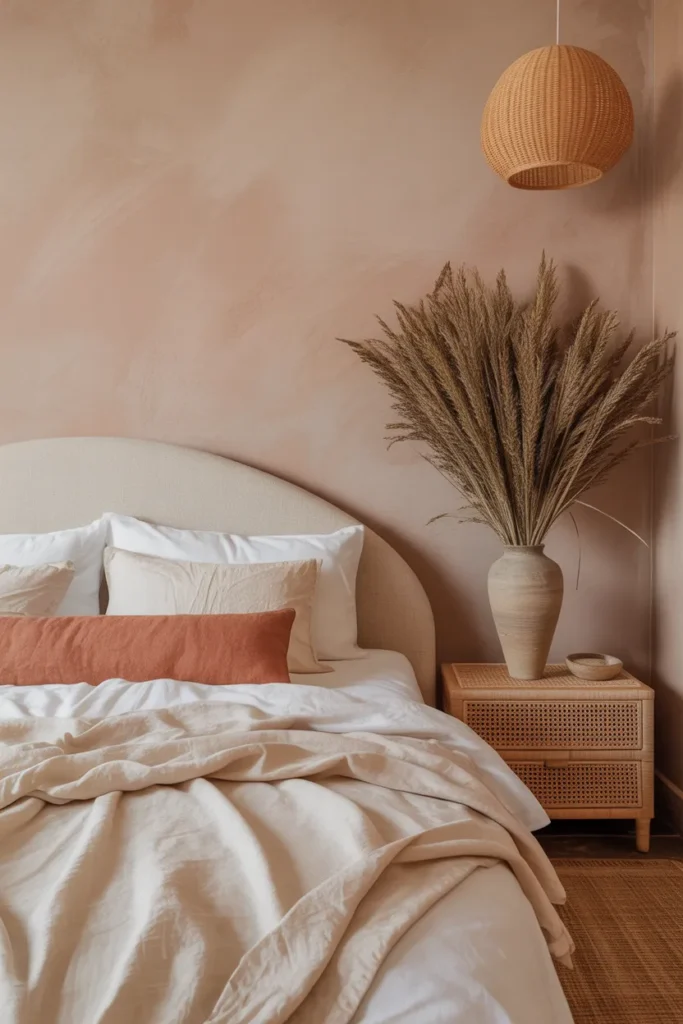
Walls are in soft blush plaster — a chalky, matte finish rather than a flat painted wall — which adds texture and warmth simultaneously. Layer in terra cotta through one or two textile accents: a lumbar pillow, a woven throw, or a terra cotta ceramic lamp base. Keep the remaining textiles in warm cream, sand, and ivory so the palette stays airy rather than heavy.
The furniture in this version of boho is curated and intentional — a low curved upholstered bed in warm cream fabric, a rattan or cane nightstand, a single woven pendant lamp. The macrame and dream catchers are replaced by one large organic object: an oversized dried palm or grass arrangement, a large hand-thrown ceramic vase, or a raw-edge wooden wall panel. The edit is what elevates it.
18. Charcoal and Oak Modern Luxury Bedroom That Works in Any American Home
Charcoal and oak is the definitive modern luxury bedroom combination for 2026 — sophisticated enough for high-end primary suites, practical enough for homes at any price point, and timeless enough to not feel dated in three years. It works because the contrast between the warm, light oak and the cool, deep charcoal creates immediate visual tension that reads as designed and intentional.
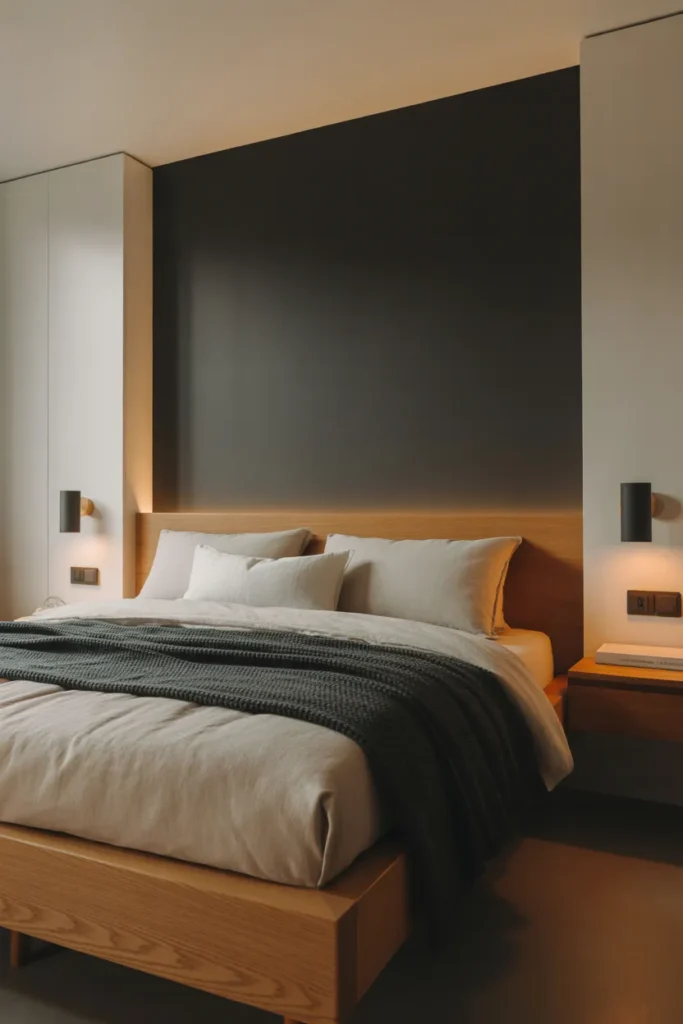
Apply charcoal to the headboard wall in a smooth matte finish and leave the remaining three walls in warm white. Use a medium or light oak platform bed frame — not too pale and not too orange — with clean, contemporary lines and no carved detailing. Bedding is in warm white or soft greige linen, layered with a charcoal or deep grey throw for tonal connection to the wall.
Hardware and fixtures are the finishing detail: brushed or matte black throughout for a completely cohesive look. Matte black wall sconces, matte black window hardware, and matte black door handles pull the charcoal wall into the rest of the room in a way that feels intentional rather than accidental. This is one of the most refined elegant bedroom design ideas for 2026 precisely because it requires discipline rather than decoration.
Final Thoughts
These 18 elegant bedroom ideas for 2026 cover every room size, palette preference, and design personality — from the ultra-minimal Japandi studio to the maximalist brass and cream suite. The goal of this guide was not to show you what looks good on a screen but to give you enough practical detail to make a real decision about your own space.
If one of these ideas fits your room, save this post and come back to it when you are ready to shop, paint, or plan. Bedroom design works best when it is approached one section at a time — start with the wall color and the bed frame, and let the rest follow.
Save this guide to Pinterest so you can reference it alongside your other bedroom ideas as you narrow down what direction is right for you.