
Your master bedroom should be the one room in your home that feels completely intentional. This guide covers 18 distinct master bedroom layout and design ideas to help you make smart, confident decisions — whether you are working with a small space, an awkward floor plan, or a room that simply never felt finished.
1. The Symmetrical Bed Wall: Why Balance Creates Instant Calm
A symmetrical bed wall — matching nightstands, identical lamps, centered headboard — is one of the most reliable layouts in master bedroom design. It works because the human eye naturally relaxes when visual weight is evenly distributed. You do not need expensive furniture to achieve it. Even budget pieces arranged with intention create a pulled-together look.
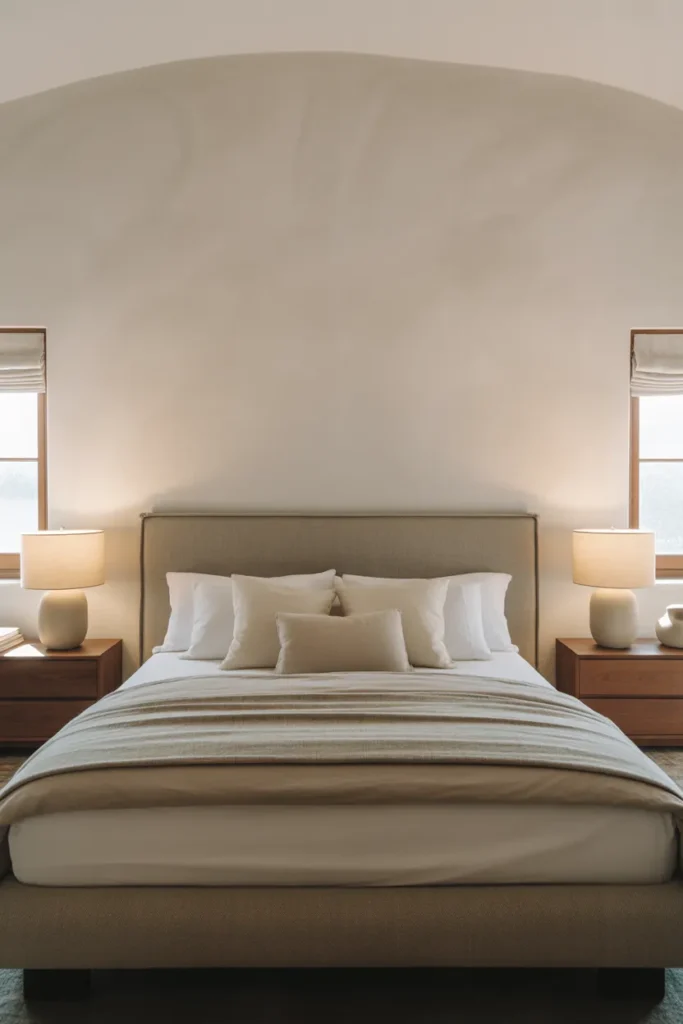
This layout works best in rectangular rooms where the bed sits on the longest uninterrupted wall. Avoid placing the bed on a wall with a window directly behind it — this creates glare and disrupts the visual anchor. The most common mistake is using nightstands that are too small or lamps that are mismatched in scale.
For a modern American master bedroom, pair a low-profile platform bed with ceramic table lamps and a soft linen headboard in warm white or greige. Keep the palette to three tones maximum.
2. The Floating Bed Layout: Gain Visual Space Without Moving Walls
Pulling your bed away from every wall and floating it in the center of the room changes how large the space feels. This works because your eye travels around the entire perimeter of the room rather than stopping at the bed. It is one of the most underused tricks in master bedroom space planning.
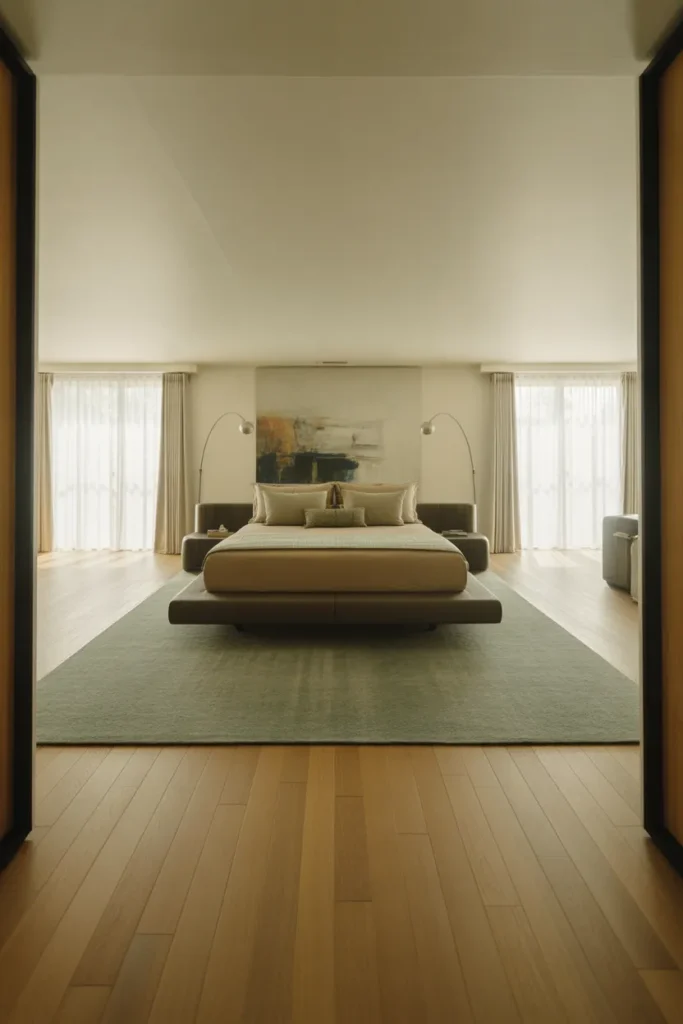
This approach works best in rooms that are at least 12 by 14 feet. Floating a bed in a smaller room will make circulation tight and create frustration, not flow. Leave at least 24 to 30 inches on either side and 36 inches at the foot of the bed if possible.
A floating bed layout also signals intentional design to guests, which is why it is common in high-end primary suites. Keep the rug anchored beneath the full bed frame to hold the composition together.
3. Built-In Headboard With Storage: The Smart Solution for Small Master Bedrooms
A built-in headboard wall with integrated shelving and hidden storage solves one of the most common master bedroom problems — nowhere to put things. Instead of floating nightstands that collect clutter, the entire wall becomes functional. Shelves, reading lights, charging ports, and closed cabinetry can all live within the headboard structure.
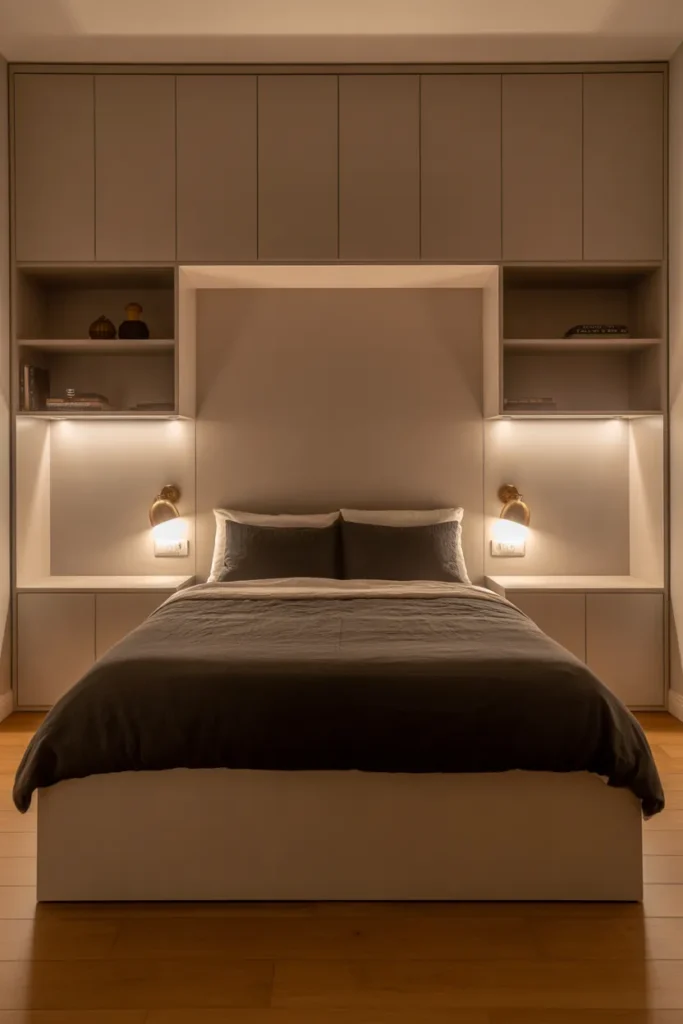
This is particularly valuable in smaller master bedrooms under 200 square feet where every inch matters. It also works well in primary bedrooms that double as reading rooms or home offices, since the shelving handles both functions.
The mistake most people make is overbuilding. Keep the shelving above the mattress line clean and minimal — use it for books, one plant, and a candle. Below the mattress line is where closed storage should go.
4. The Dark Moody Master Bedroom: When Deep Color Outperforms White
Dark walls in a master bedroom — deep navy, forest green, charcoal, or even near-black — create a level of intimacy and enclosure that light rooms simply cannot. This is not a trend. It is a design principle: darker rooms feel more restful because the walls recede and the eye is not stimulated by reflective surfaces.
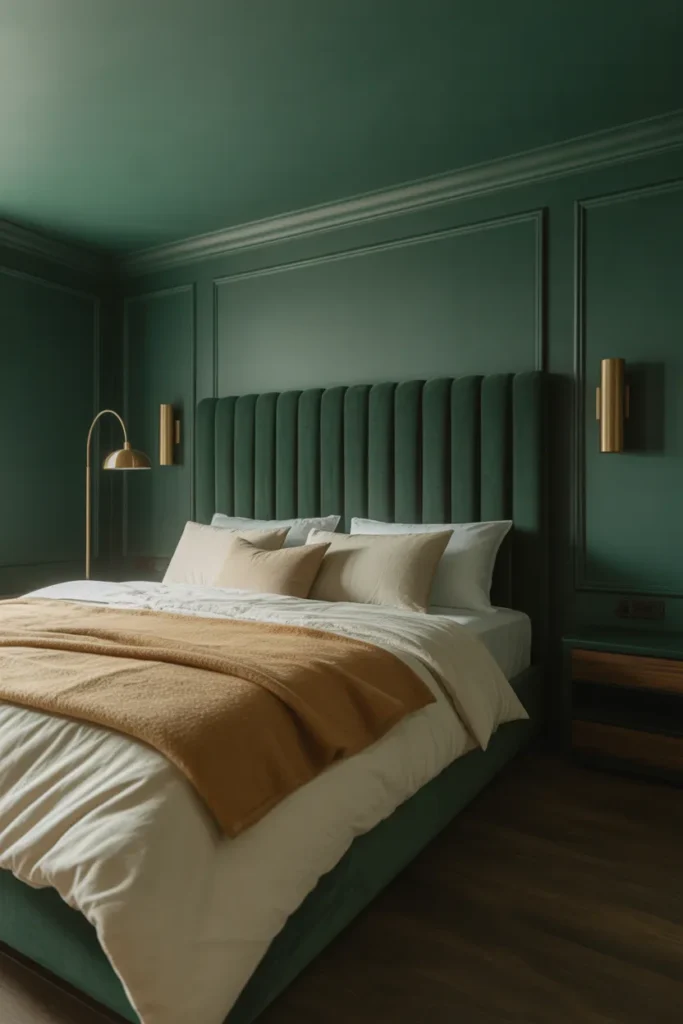
Use this approach in rooms that already lack natural light, or in rooms where you want to create a boutique hotel feeling. Pair dark walls with warm brass or bronze hardware, rich textured bedding, and ambient lighting rather than harsh overhead fixtures.
The biggest mistake with dark bedrooms is under-lighting them. You need layered lighting — a statement pendant or chandelier, bedside sconces, and at least one floor or table lamp — to make a dark room feel luxurious rather than depressing.
5. Master Bedroom With a Sitting Area: How to Define Two Zones in One Room
Adding a sitting area to a master bedroom elevates it from a sleeping room into a private retreat. Two armchairs or a small loveseat at the foot of the bed, or angled in a corner near a window, define a distinct zone without requiring a wall or divider.
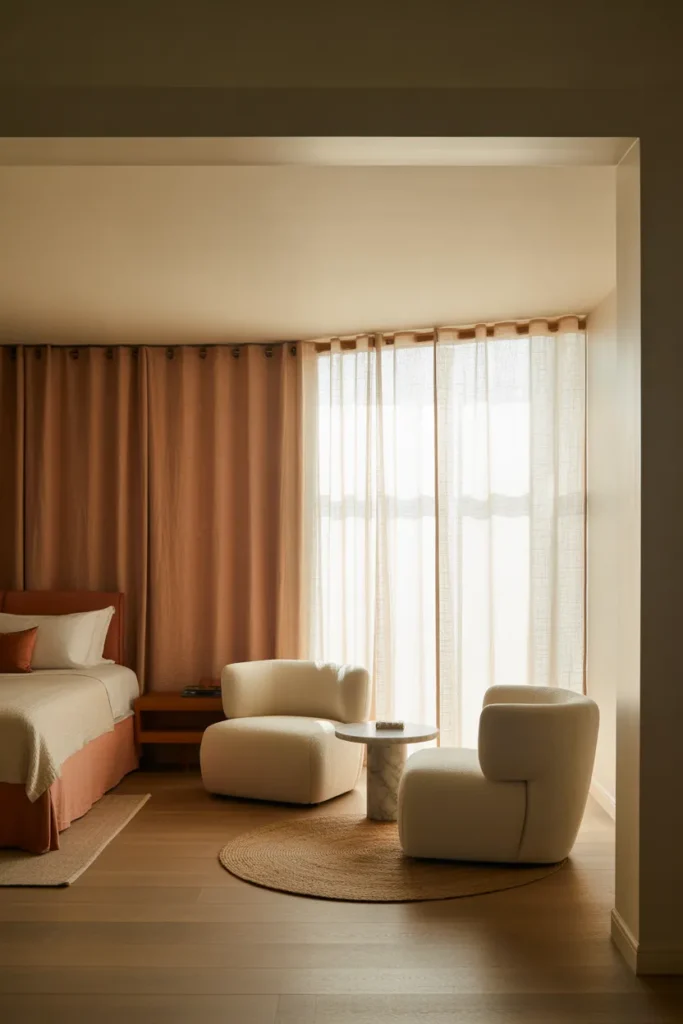
This works best in rooms over 250 square feet. The key is to use a rug to anchor the sitting zone separately from the sleeping zone — two rugs, two defined areas, one cohesive palette. If you use the same rug under both zones, the room will feel like one large unresolved space.
Choose seating that is lower in profile than the headboard to maintain visual hierarchy. A reading chair near a window with a small side table is the most functional and photographically appealing version of this layout.
6. The Minimalist Master Bedroom: How to Design Restraint That Still Feels Warm
A minimalist master bedroom does not mean cold or empty. It means every object earns its place. The goal is to reduce visual noise so the room feels expansive and intentional. In the American home, this translates to: one strong bed frame, one clear palette, no excess accessories on surfaces.
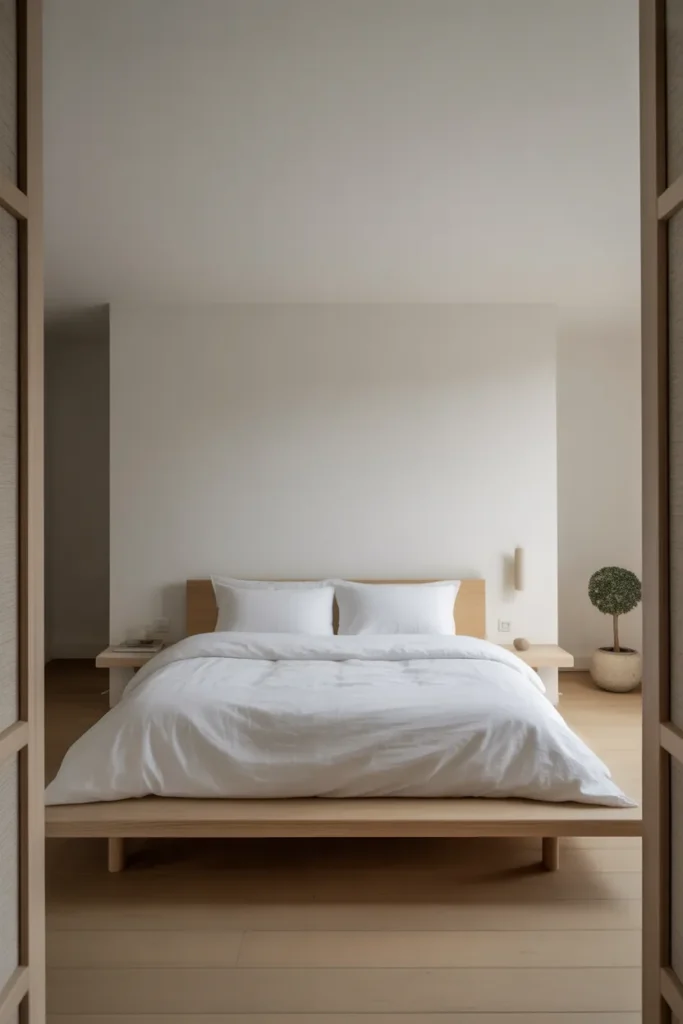
The rule of thumb is to cut your planned accessories in half, then cut them in half again. If you have six decorative items in mind, use three. Negative space — bare wall, uncluttered nightstand — is a design choice, not a mistake.
Minimalist bedrooms work especially well in urban apartments and modern new construction homes where the architecture is already clean-lined. Avoid minimalism in rooms with busy window trims, crown molding, or irregular ceilings — the contrast will fight itself.
7. The Gallery Wall Behind the Bed: Making Art the Focal Point
A gallery wall above the headboard transforms a plain bedroom wall into a personal, layered statement. Unlike a single large mirror or artwork, a gallery arrangement lets you mix scales, frames, and subjects while keeping everything cohesive through a consistent frame finish or color story.
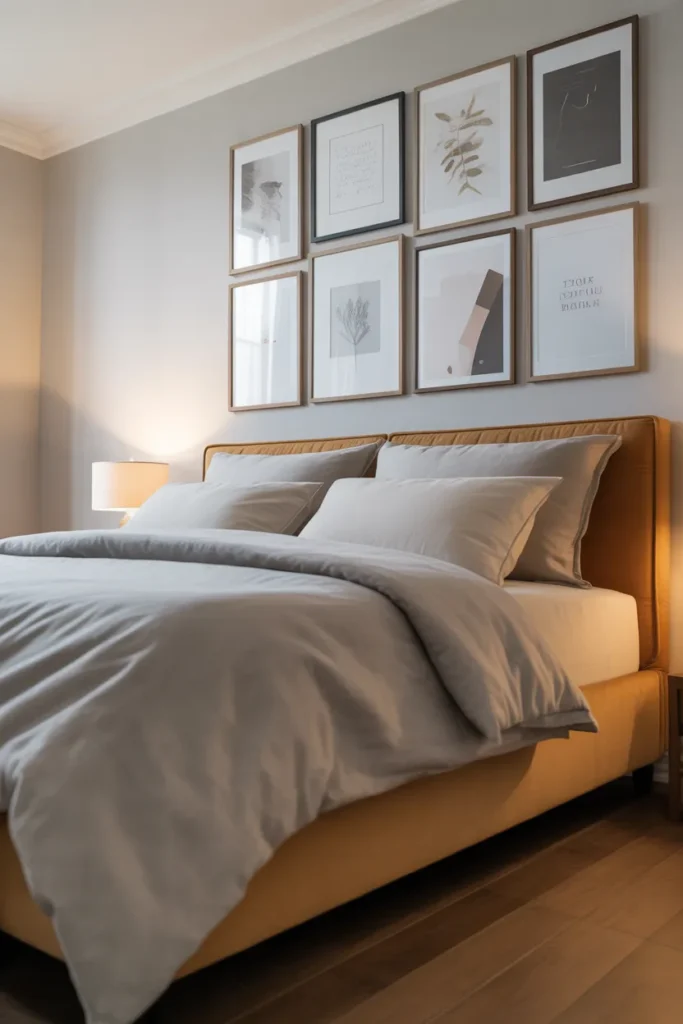
For a master bedroom, keep the gallery tight and intentional — five to nine pieces is the sweet spot. Spread too wide and it looks like a waiting room. Too centered and it looks like a Pinterest mockup. Let it breathe slightly beyond the headboard width by six to twelve inches on each side.
Mix one or two larger anchor pieces with smaller prints to create rhythm. Black frames on a white wall, or natural wood frames on a warm plaster wall, are the two combinations that photograph best and age well.
8. The Warm Neutral Master Bedroom: Designing With Sand, Cream, and Warm White
Warm neutrals — sand, warm white, cream, soft taupe — remain the most universally livable palette for a master bedroom in American homes. They reflect light beautifully, photograph well, and create a backdrop that adapts with seasonal decor without feeling dated.
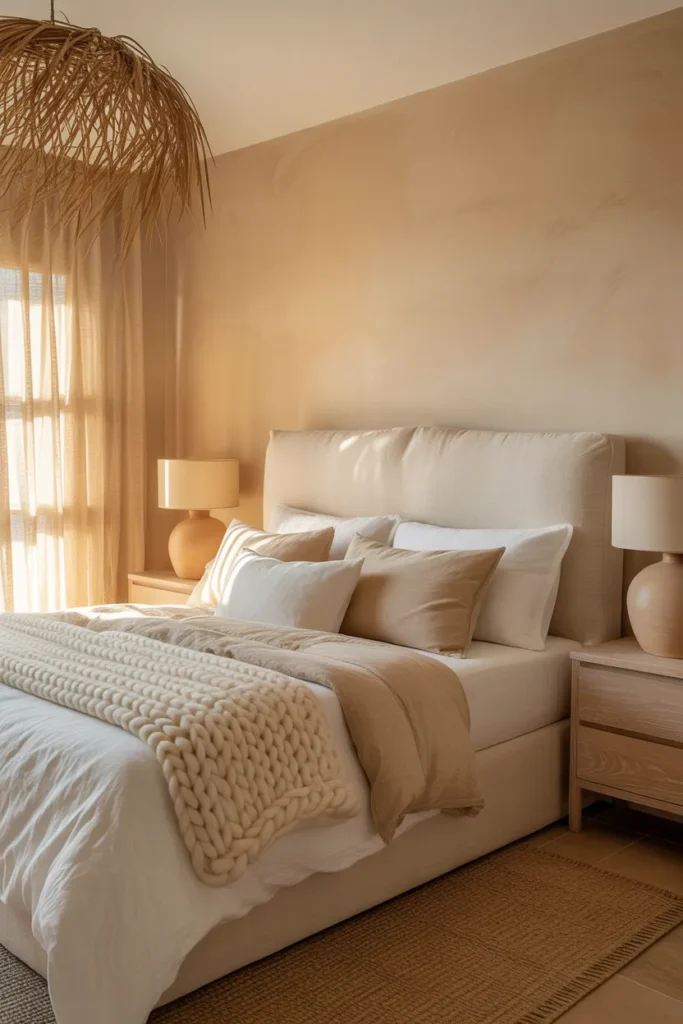
The key to making warm neutrals work is texture variation. If every element is the same tone and finish — matte wall, flat bedding, smooth furniture — the room will look flat. Layer a linen duvet, a chunky knit throw, a bouclé pillow, and a grasscloth or wood-toned nightstand to create tactile depth in the same color family.
This palette is particularly effective in master bedrooms with south or west-facing windows, where the natural light has a golden quality that enhances warm undertones.
9. The Master Bedroom With Exposed Brick: Texture as the Main Design Statement
An exposed brick wall in a master bedroom does the heavy lifting of design for you. It adds texture, warmth, and architectural character that no paint color or wallpaper can fully replicate. If your home has original brick, preserve it. If it does not, thin brick veneer panels are an effective and widely available alternative.
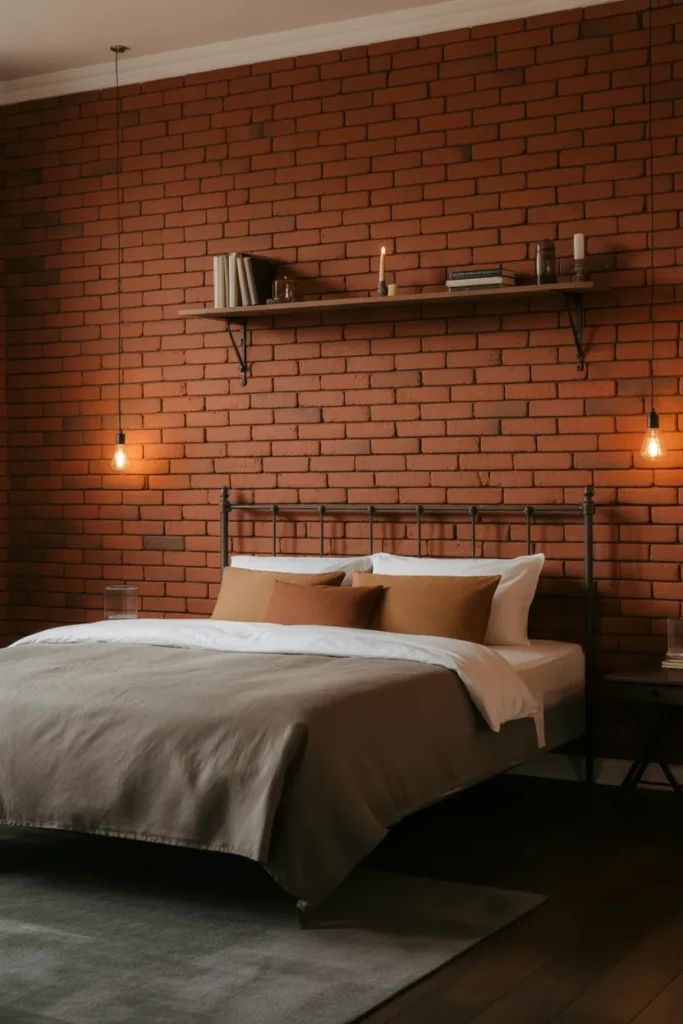
Exposed brick works best behind the bed as an accent wall. It pairs naturally with warm wood tones, black iron, and soft white bedding. Avoid pairing it with cold gray or stark white palettes — the contrast reads as unresolved.
One common mistake is painting the brick white to “modernize” it. This destroys the texture that makes it interesting in the first place. If the brick is stained or uneven, a clear matte sealer is a better choice than paint.
10. The Coastal Master Bedroom: Achieving a Clean, Airy Look Without Going Kitschy
Coastal design in a master bedroom is about texture and light — not anchors and seashells. The right coastal bedroom feels like a high-end resort: white oak furniture, linen bedding, rattan accents, woven textures, and blue-green tones used sparingly as accents rather than the dominant color.
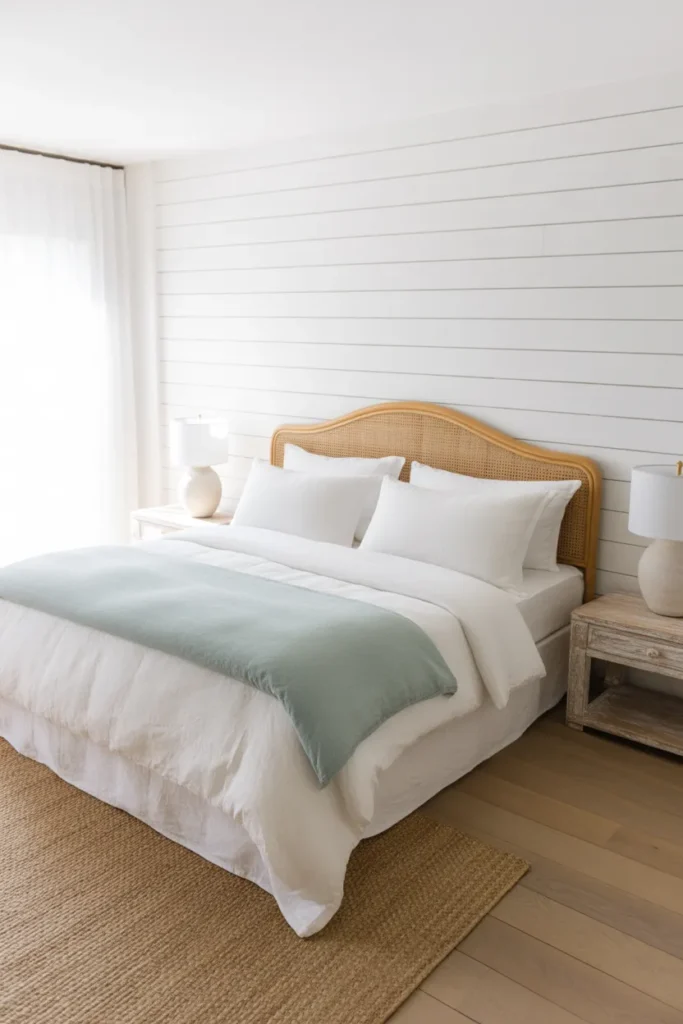
This look works in any home, not just those near water. It is particularly effective in master bedrooms with large windows, since the natural light amplifies the airy feeling. In rooms with limited light, boost it with warm-white artificial lighting rather than cool-white bulbs that create a clinical effect.
Avoid novelty coastal decor — anything with literal beach motifs. Instead, let the materials tell the story: seagrass rugs, linen drapes, bleached wood, and soft blue-green accents through bedding or a single ceramic vase.
11. The Master Bedroom Accent Wall With Wallpaper: One Wall, Maximum Impact
A single wallpapered accent wall behind the bed is one of the most impactful updates you can make to a master bedroom without a full renovation. It anchors the room, eliminates the need for art or additional decor, and creates a layered, designed feeling that paint alone cannot achieve.
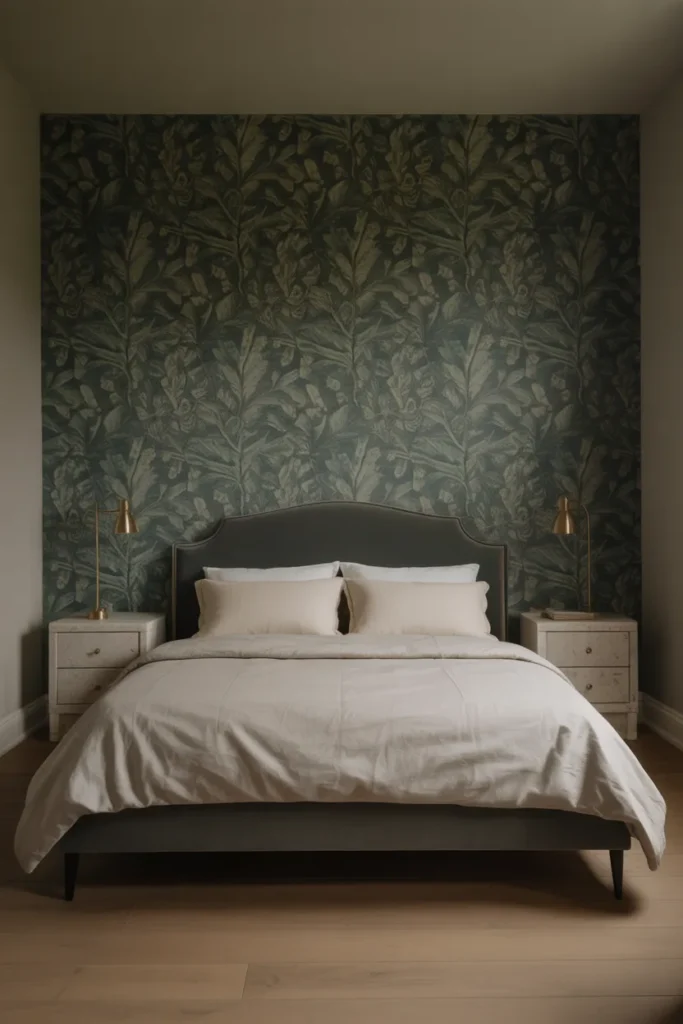
Choose patterns that complement rather than compete: large-scale botanicals, geometric linework, textural grasscloth, or abstract watercolor. Avoid busy small-repeat patterns in master bedrooms — they are visually fatiguing when viewed from bed daily.
The rule is simple: if the wallpaper is bold, keep everything else quiet. Neutral bedding, simple furniture, and minimal accessories let the wall lead without creating chaos.
12. The Master Bedroom With Vaulted Ceiling: How to Design Vertically
A vaulted ceiling in a master bedroom is an architectural gift — but only if the design responds to it. The height draws the eye upward, which means tall elements like floor-to-ceiling curtains, statement light fixtures, and tall headboards actually belong here in a way they do not in standard eight-foot ceiling rooms.
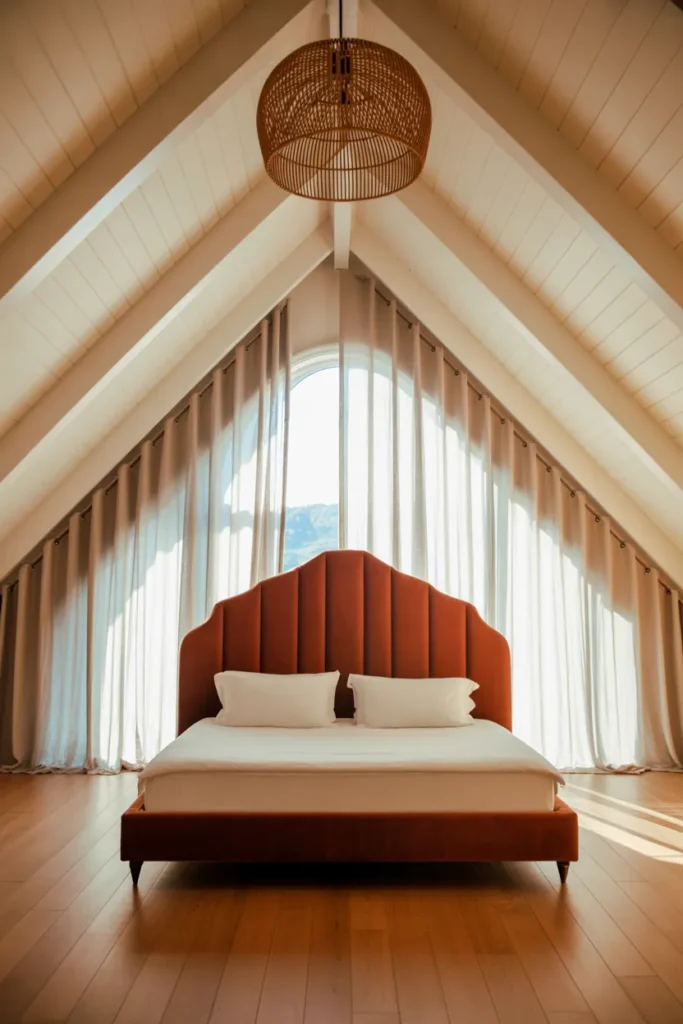
Hang curtain rods at ceiling height, not just above the window frame. This draws the eye up the full height of the wall and makes the room feel even more expansive. A statement pendant or chandelier hung at the peak of the vault becomes the room’s defining visual element.
Avoid filling a vaulted bedroom with low furniture only — the proportional imbalance will make the furniture look undersized and the ceiling look unintentional. Use at least one tall vertical element per wall.
13. The Small Master Bedroom Layout That Actually Works
A master bedroom under 180 square feet requires deliberate space planning — not just downsizing furniture. The most effective strategy is to eliminate every piece of furniture that does not serve a direct function. This usually means removing the dresser and relocating clothing storage to the closet, and replacing bulky nightstands with wall-mounted shelves or sconces.
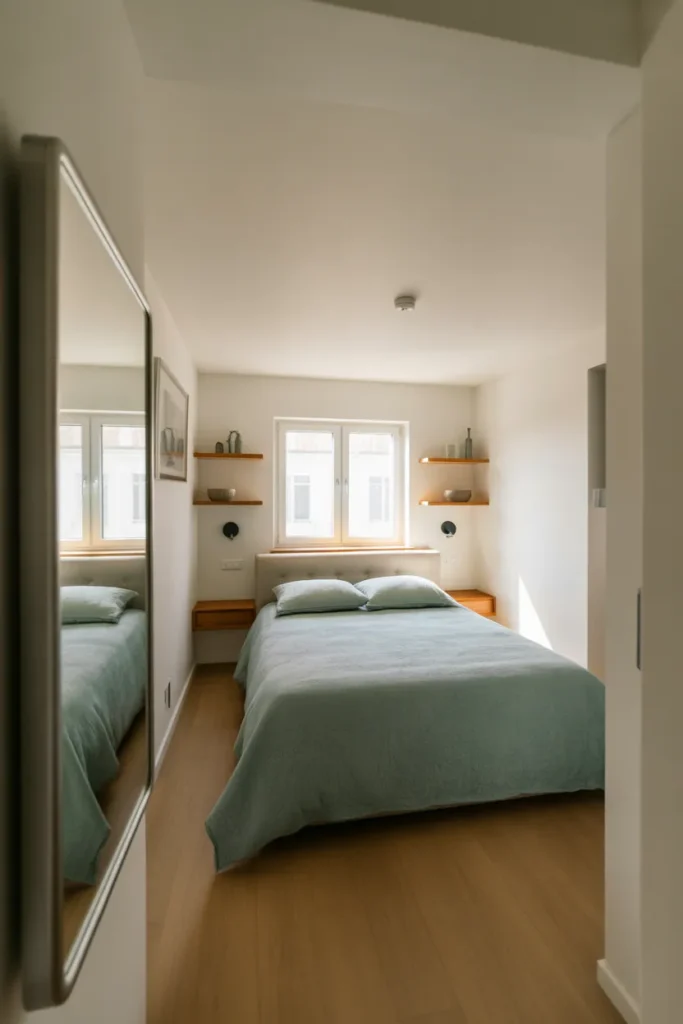
A queen bed rather than a king is often the right call in a small master, not because of preference but because 24 inches of walkable clearance on each side makes a dramatic difference in how livable the room feels day to day. Going below 18 inches on either side creates a cramped corridor effect.
Use mirrors strategically — not a mirrored wall, but one large mirror on the wall perpendicular to the bed to bounce light and extend the perceived depth of the room.
14. The Master Bedroom With Indoor Plants: Designing With Greenery for Real Homes
Plants in a master bedroom are not just decorative — they reinforce the sense of calm that a bedroom is meant to provide. The key is using them architecturally: one large floor plant in a corner anchors the room the way a piece of furniture would. Small plants grouped on a nightstand or shelf create a curated, lived-in quality.
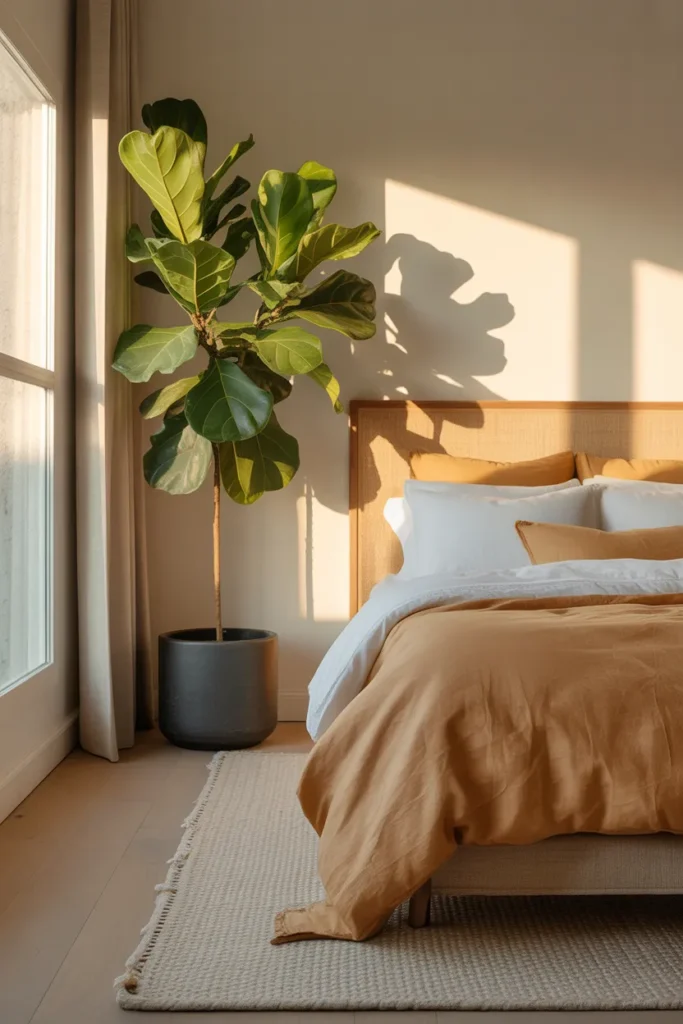
Choose low-light tolerant species for bedrooms that do not receive direct sun — pothos, snake plants, and ZZ plants are reliable and require minimal maintenance. Avoid anything that flowers heavily or has strong fragrance in a sleeping space.
The most effective placement is in the corner diagonally opposite the bed, or beside a window where natural light creates a silhouette effect. One large plant makes more of a design statement than five small ones scattered around the room.
15. The Master Bedroom With a Window Seat: A Functional Feature Most Rooms Can Have
A window seat in a master bedroom adds a reading nook, extra storage, and an architectural focal point without requiring a major renovation. Even a simple built-in bench with a cushion and storage drawers beneath transforms an underused window wall into the most desirable spot in the room.
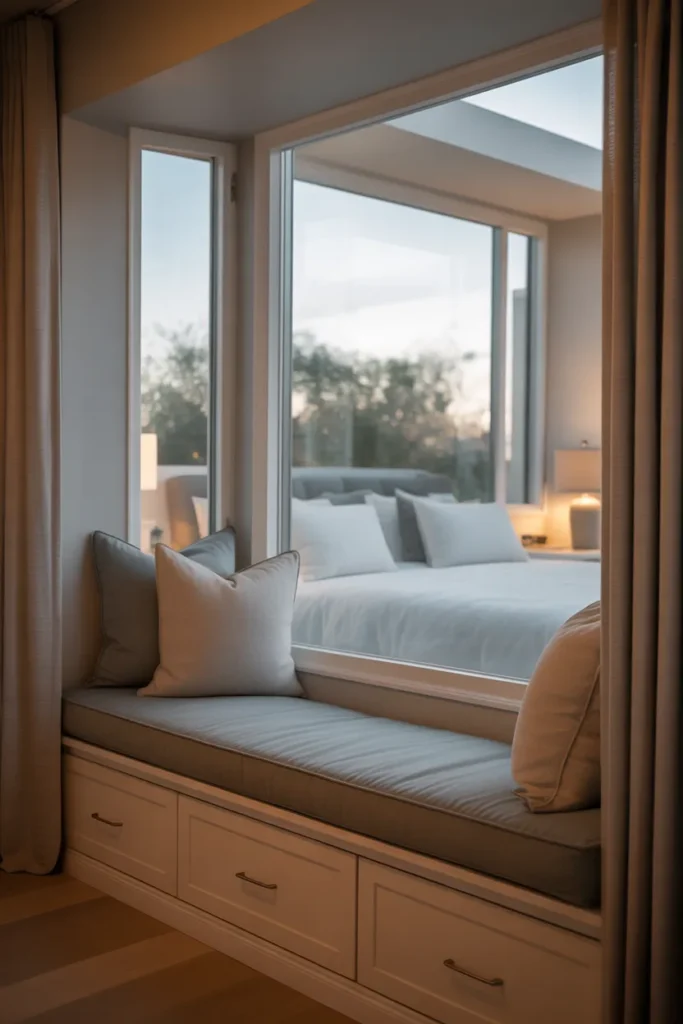
This works best on windows that sit lower to the floor — standard sill height of 18 to 24 inches is ideal. Bay windows are the natural choice, but a flat wall with a double or triple window can support a built-in seat equally well.
Keep the cushion simple — a tight, clean upholstered pad rather than a deep sofa cushion. Add two or three pillows, leave the rest of the seat clear. Overloading it defeats the purpose of having a usable seating area.
16. The Industrial-Style Master Bedroom: Concrete, Steel, and Warmth Done Right
Industrial design in a master bedroom works when warmth is layered deliberately into a raw material base. The risk with industrial style is that it tips into cold and uninviting — which is the opposite of what a bedroom should feel. The solution is contrast: exposed concrete or steel paired with warm textiles, wood tones, and amber lighting.
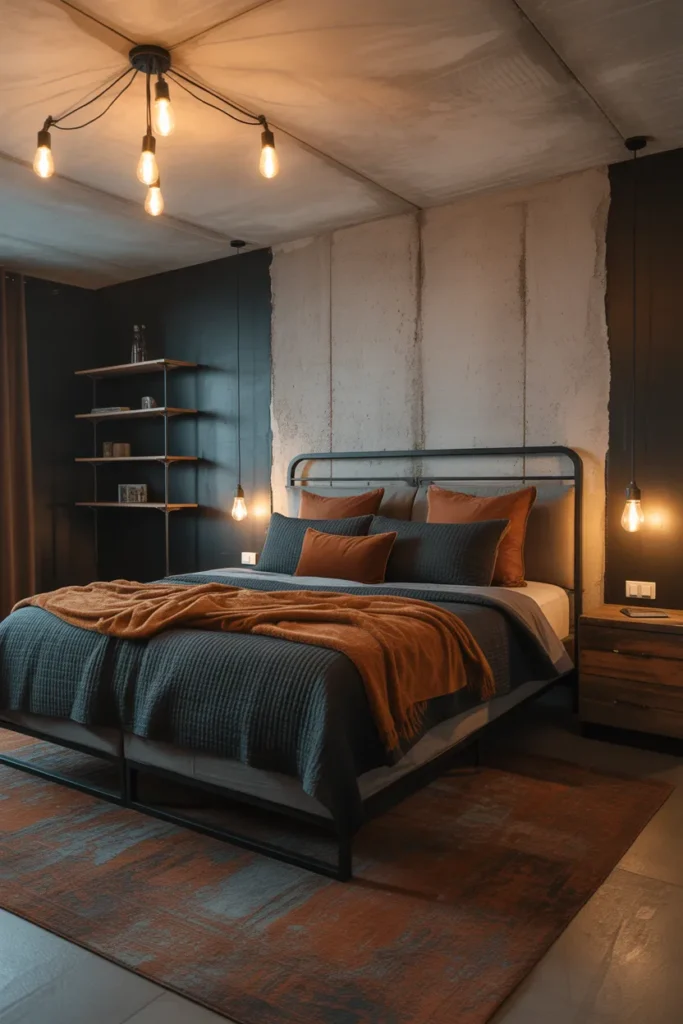
Concrete feature walls, black steel window frames, exposed ceiling beams, and metal bed frames are the primary industrial elements. Layer over these with a deep, plush bedding set, a thick area rug, and warm wood nightstands to ground the rawness.
This style is best suited to loft conversions, urban apartments, and modern new-build homes where the architecture already lends itself to raw materials. Forcing industrial elements into a traditional home with ornate trim or carpeted floors creates a jarring contrast that does not resolve well.
17. The Master Bedroom Color Palette Using Earthy Terracotta Tones
Terracotta and earthy warm tones — burnt orange, clay, rust, warm adobe — have become a defining color direction for master bedrooms in current American interior design. These tones are grounding, warm, and flattering in both natural and artificial light. Unlike cooler trends, they age well and are easy to adapt seasonally.
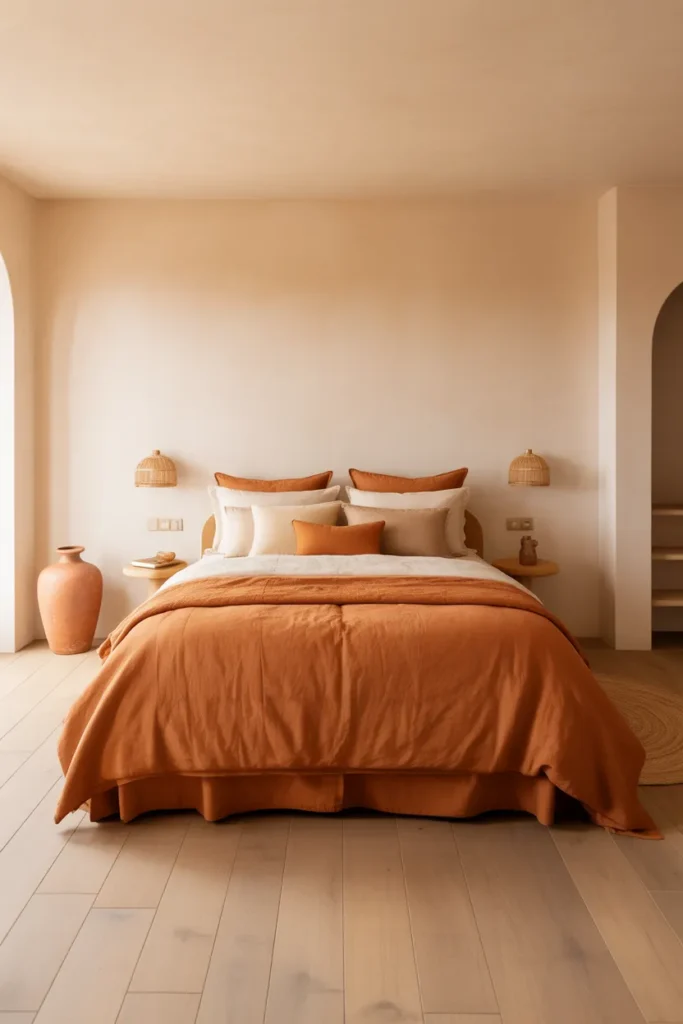
Use terracotta as an accent rather than the wall color in most cases. A terracotta duvet, throw pillow, or ceramic lamp base against warm white or greige walls is more livable than four terracotta walls, which can feel overwhelming in a room you wake up in daily.
The strongest pairings for terracotta in a master bedroom are: warm white walls, natural linen, raw wood furniture, and woven rattan accents. Avoid pairing it with cool gray or stark white — the undertone conflict is immediately noticeable.
18. The Luxury Master Bedroom on a Realistic Budget: What to Prioritize First
A master bedroom that feels luxurious is not about spending more — it is about spending correctly. The four elements that have the most impact on perceived luxury are: bedding quality, lighting layering, window treatment height, and one strong anchor piece (usually the headboard or rug).
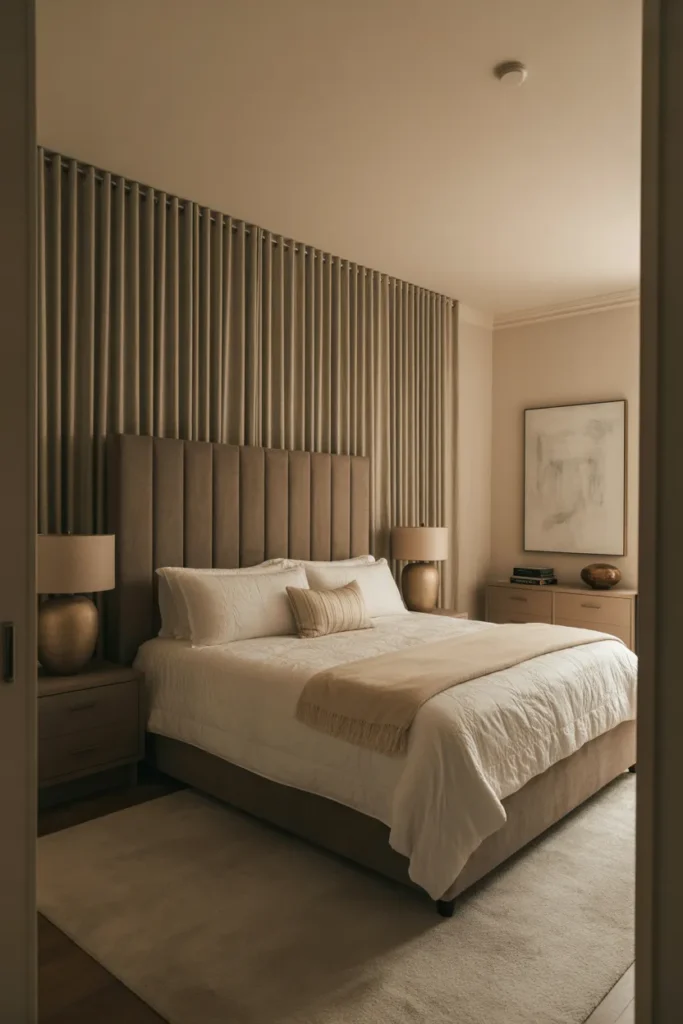
Invest first in high-thread-count or linen bedding — this is what you interact with daily and it changes the sensory experience of the room more than any wall color. Second, add a dimmer switch to your overhead light and at least one additional light source at a lower level. A room lit only from overhead always looks like a hotel hallway, not a retreat.
Hang your curtains at ceiling height regardless of where the window actually sits — this single change is one of the most impactful and affordable visual improvements you can make. Everything else is secondary.
Final Thoughts
The right master bedroom layout and design decisions come down to understanding your space, your lifestyle, and your priorities — not following a single trend. Whether you are working with a compact room that needs smart planning or a larger suite that needs defined zones, every idea in this guide offers a practical starting point rather than just visual inspiration.
Save this post so you can come back to the layouts and image prompts as your project evolves. If you found these ideas useful, explore more bedroom design and layout guides to keep building toward a space that genuinely works for you.