
Your coffee table is the visual anchor of your living room, and most people get it wrong by either overdoing it or leaving it bare. This guide covers 18 practical coffee table decor ideas that balance style with function, helping you make smart decorating decisions for any space, budget, or aesthetic.
1. The Rule of Three: Why Odd Numbers Make Coffee Table Decor Look Intentional
Most coffee tables look cluttered or flat because items are arranged in even numbers or random groupings. Decorators rely on the rule of three because the human eye finds odd-numbered groupings more visually interesting and balanced.
Place three objects of varying heights together: a low tray, a medium vase, and a tall candle or plant. This creates a natural visual triangle that draws the eye across the surface rather than landing on one spot.
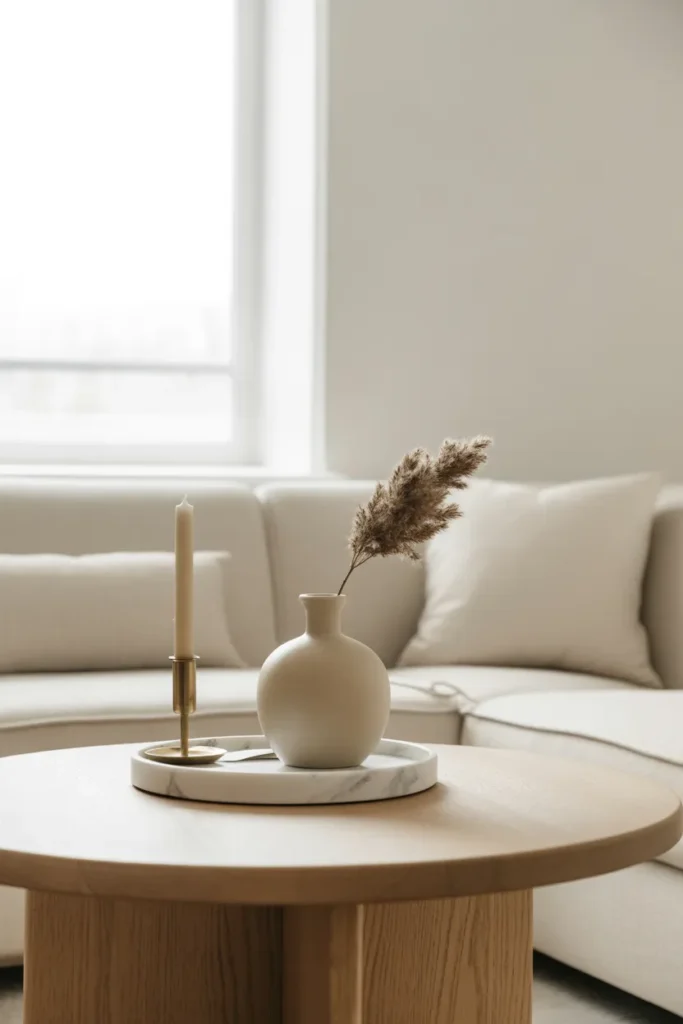

The key is contrast in height, not just in type. A common mistake is grouping three items of the same height, which makes the arrangement look unfinished. Vary by at least three to four inches between each object.
Use this approach when you want a curated but not over-styled look. It works in both small apartments and large living rooms because it scales easily.
2. Tray Styling: The Easiest Way to Contain and Elevate Coffee Table Decor
A tray does two things: it defines a zone and gives your decor a finished boundary. Without one, objects on a coffee table look scattered even when they are not.
Choose a tray that contrasts your table surface. A dark walnut tray on a light table creates depth. A white lacquer tray on a dark wood surface looks clean and modern. The tray itself becomes part of the decor.
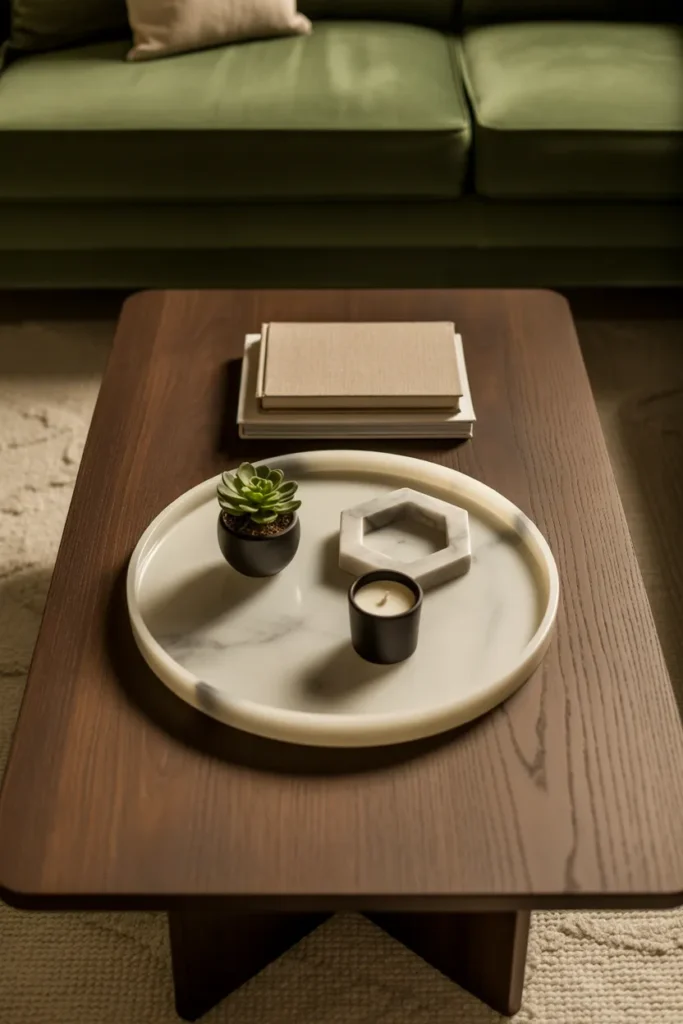
Inside the tray, limit yourself to three to four objects. Include one functional item like a coaster set or small remote holder so the arrangement does not feel purely decorative. This is what separates a styled table from a display shelf.
Avoid trays that are too small for your table scale. A tiny tray on a large table looks like an afterthought. Aim for the tray to occupy roughly one third of the table surface.
3. Books as Decor: How to Stack Them So They Look Styled, Not Stacked
Coffee table books are one of the most versatile tools in home decor, but most people stack them vertically like a library shelf, which kills the visual appeal. Lay them flat and stack two to three at most.
The stack creates a platform. Place one object on top, such as a small dish, a candle, or a figurine. This elevates the secondary piece and adds dimension to the flat table surface.
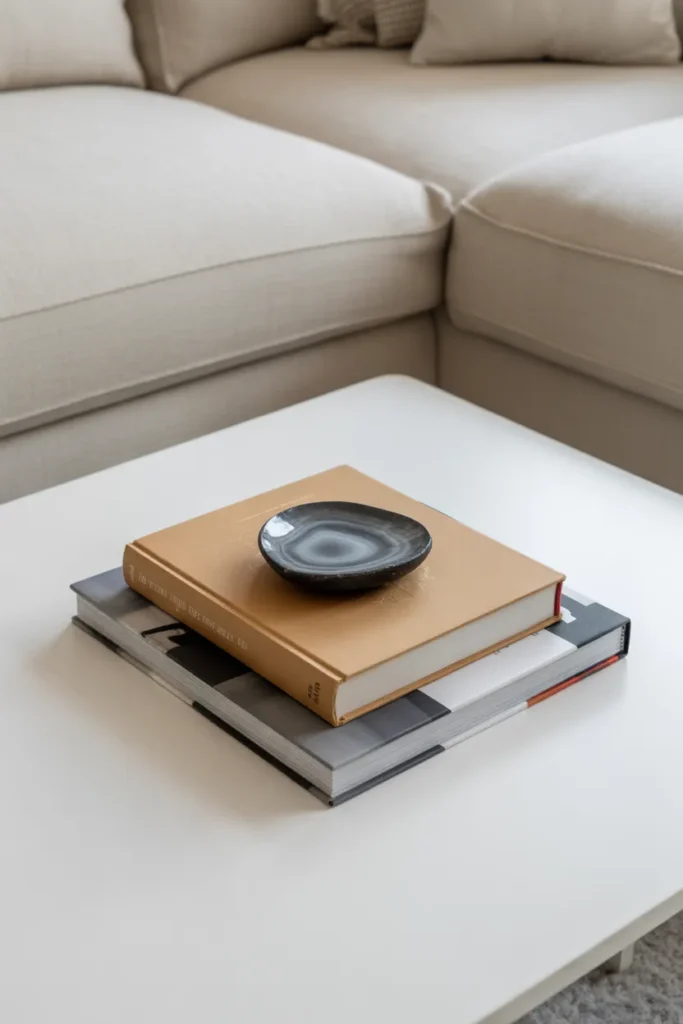
Choose books with muted, neutral, or monochromatic covers. Loud colors or mismatched spines compete with the rest of your decor. Remove the dust jacket if it clashes.
Avoid stacking more than three books because the tower becomes unstable and looks crowded. Two books with one object on top is often the cleanest and most effective combination.
4. Adding a Living Element: Why a Plant or Greenery Changes Everything
A single living plant on a coffee table immediately makes a room feel inhabited and fresh. It adds organic texture that no candle or book can replicate.
The best choices for coffee table plants are low-profile varieties that do not obstruct eye contact across the seating area. Succulents, small pothos in a compact pot, or a single stem in a bud vase all work well. Avoid tall or wide plants that block sightlines.
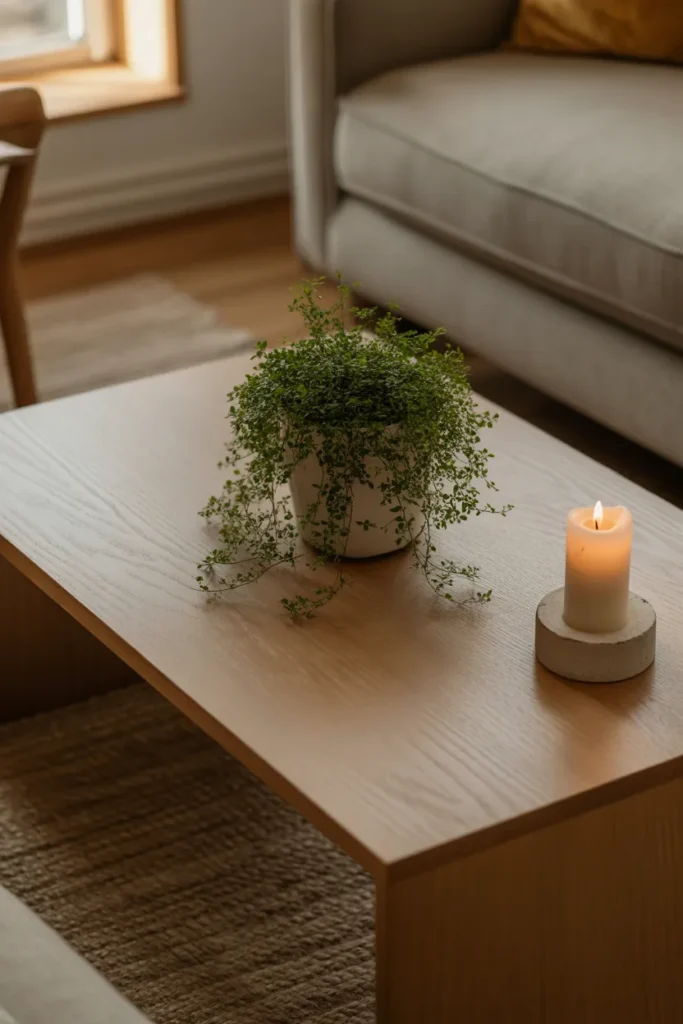
Place the plant off-center rather than in the middle of the table. Centering it makes the table feel like a display, while an offset placement looks more natural and intentional.
If you prefer low maintenance, a simple branch of eucalyptus in a narrow vase or a cluster of dried botanicals achieves the same organic effect without watering schedules.
5. The Monochromatic Approach: One Color Family, Maximum Sophistication
Monochromatic coffee table decor is one of the most underused strategies in home styling. Choosing objects in one color family with varying textures creates a quiet, high-end look that photographs beautifully and feels cohesive in person.
For example, an all-white arrangement might include a white ceramic tray, a white marble sphere, white linen books, and a frosted white candle. The variation comes from material, not color.
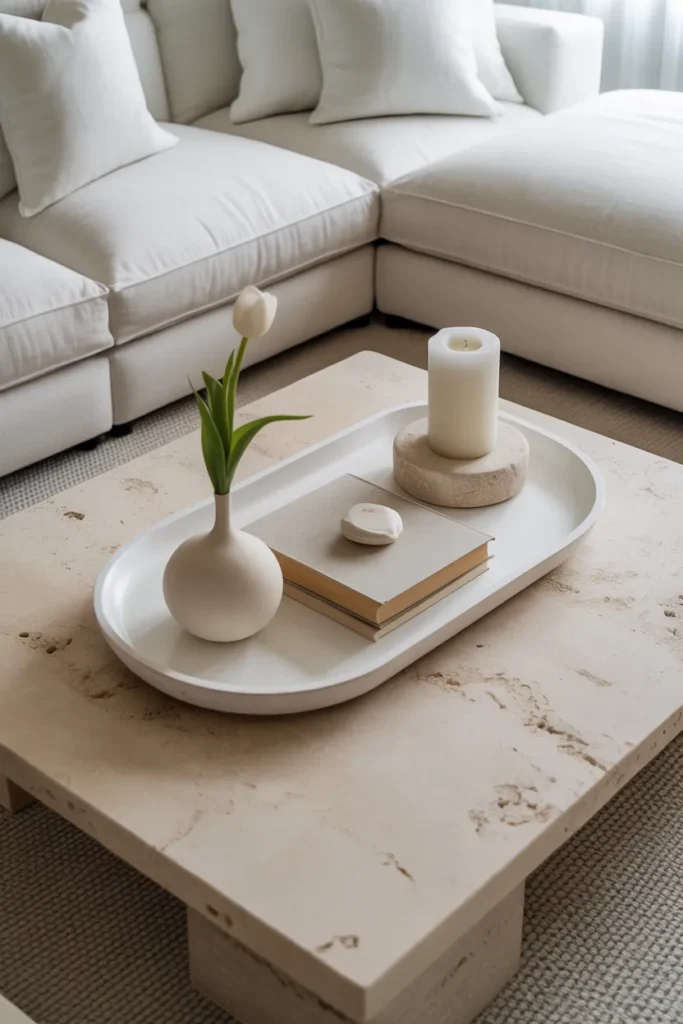
This approach is especially effective in open-plan spaces where the coffee table needs to look calm and not compete with surrounding furniture. It also works well in smaller rooms where too much contrast can feel visually busy.
The mistake most people make is adding one accent color “for interest” and breaking the whole concept. Trust the monochromatic palette and let texture carry the visual weight.
6. Layering Textures: The Secret Behind Coffee Table Decor That Looks Expensive
A coffee table that looks expensive is not about price. It is about texture contrast. Smooth, rough, matte, and reflective surfaces placed together create visual richness that reads as luxury.
A concrete tray next to a glass bud vase next to a woven rattan coaster set creates three distinct surface textures in one small area. Each material catches light differently, giving the arrangement depth and dimension.
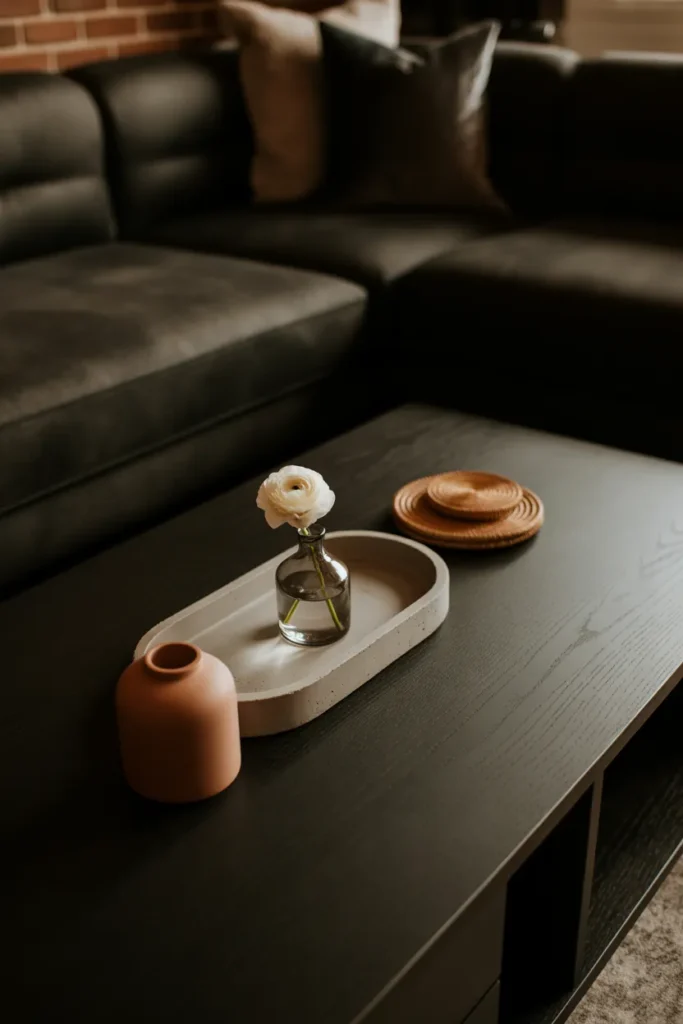
Start with your table surface as the base texture. If your table is polished wood, pull in matte or woven objects. If it is metal or glass, add warm and organic textures like linen, wood, or clay.
Avoid grouping too many reflective surfaces together. Glass plus chrome plus lacquer creates visual noise rather than richness. Balance reflective pieces with at least one matte or organic material.
7. Minimalist Coffee Table Decor for Small Apartments and Tight Spaces
In a small living room or studio apartment, a heavily styled coffee table makes the space feel cluttered fast. Minimalist coffee table decor prioritizes breathing room over volume of objects.
The rule here is fewer pieces, better quality. Two or three well-chosen objects with clear space around them feel intentional. Five to six objects in a small space feel overwhelming.
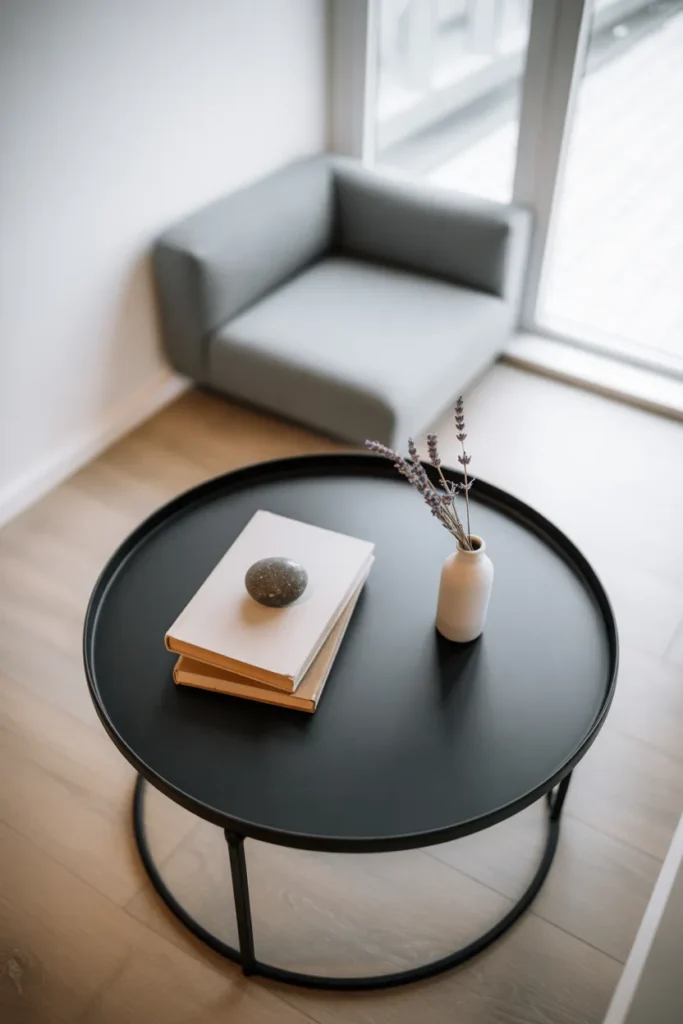
A single sculptural object, like a small abstract piece or an interesting stone, paired with a neat stack of two books is enough. The negative space around those objects does as much visual work as the objects themselves.
Avoid trays in very small spaces because they add a layer that compounds the feeling of fullness. Instead, place items directly on the table surface with clear margins on all sides.
8. Candles as a Styling Tool: Placement, Height, and Why Clusters Win
Candles are one of the most flexible coffee table decor elements because they work in almost every style, from rustic to ultra-modern. The mistake is using a single candle alone, which always looks like an afterthought.
Cluster candles in odd numbers and at varying heights. Three pillar candles of different heights grouped together create a centerpiece-level moment without requiring any additional objects. Add a simple tray beneath to anchor them.
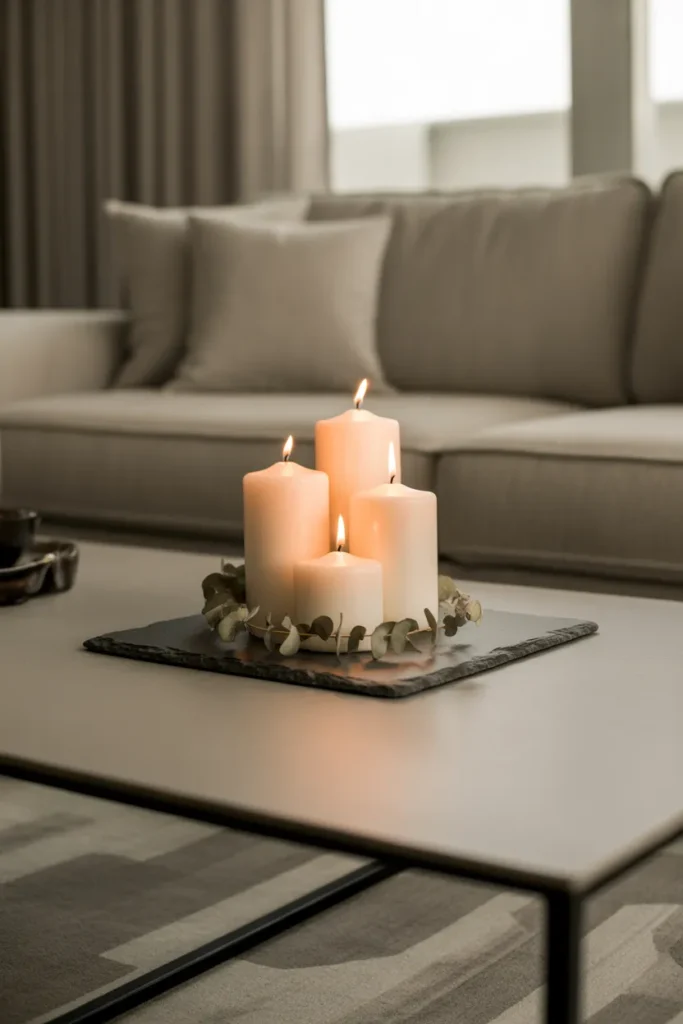
Choose candle colors that blend with your palette rather than contrast. An ivory candle on a cream-toned table disappears softly into the decor. A bright red candle on a neutral table becomes the only thing you see.
During daytime, unlit candles still serve as sculptural objects. Choose those with interesting shapes, materials, or holders so they earn their place even when not burning.
9. Sculptural Objects: Adding Artistic Interest Without Artwork on the Wall
Not every home has the wall space or budget for large art pieces, but a sculptural object on a coffee table delivers the same artistic impact in a much smaller footprint.
Abstract sculptures in stone, ceramic, or resin add a gallery-level quality to a coffee table arrangement. Choose pieces that have an interesting silhouette from multiple viewing angles since the coffee table is seen from the sofa, the entryway, and standing positions.
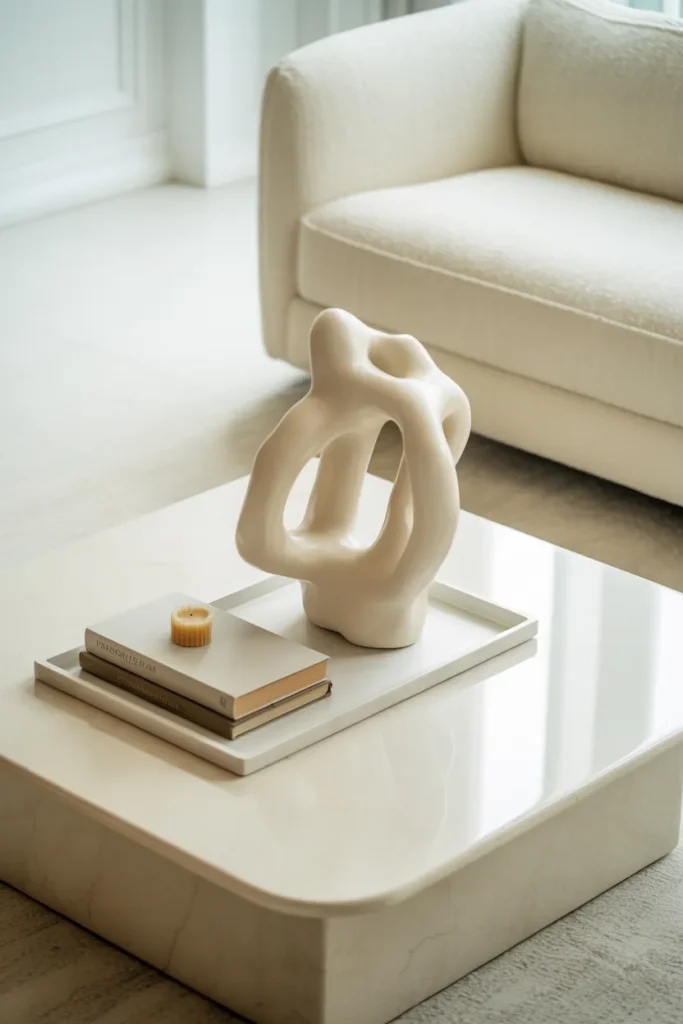
Limit yourself to one prominent sculptural object per arrangement. Two sculptures compete. One sculpture anchors.
This approach works especially well in modern and contemporary interiors where the furniture is clean-lined and the decor needs visual interest without pattern or color.
10. The Functional Coffee Table: Styling Around Remote Controls and Daily Use
The biggest challenge of coffee table decor is that real life involves remote controls, coasters, and everyday clutter. Decor that ignores function fails within a day.
The solution is to build function into the styling. A small lidded box or a shallow bowl handles remotes and small items without breaking the visual arrangement. Style around it rather than hiding the need.
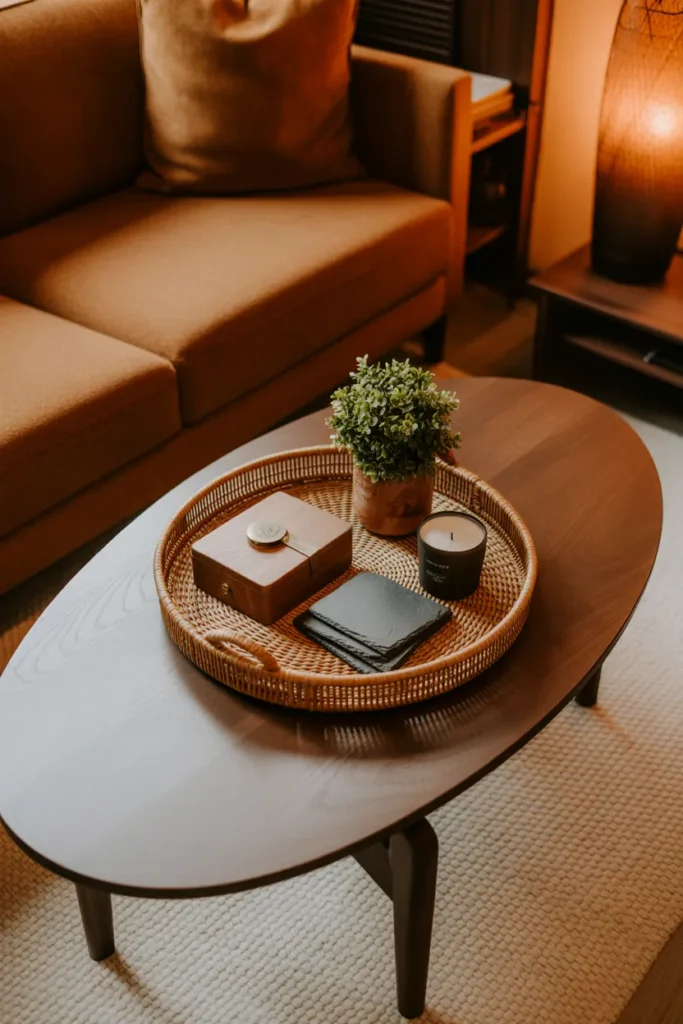
Place the functional container inside your tray so it becomes part of the curated zone rather than separate from it. A beautiful wooden box or a woven basket keeps the aesthetic but solves the clutter problem.
Always include at least one coaster set in your arrangement. A set of stacked stone, marble, or concrete coasters looks deliberate and serves a purpose simultaneously.
11. Seasonal Coffee Table Decor: How to Refresh Without Buying New Things
Refreshing your coffee table decor seasonally does not require buying new objects each time. It is about rotating what you already own and making small swaps in color temperature or organic materials.
In warmer months, introduce light textures: a white ceramic vase, bright dried botanicals, and open surfaces with breathing room. In cooler months, layer in warmth: heavier candles, darker woven trays, pinecones, or a darker stone object.
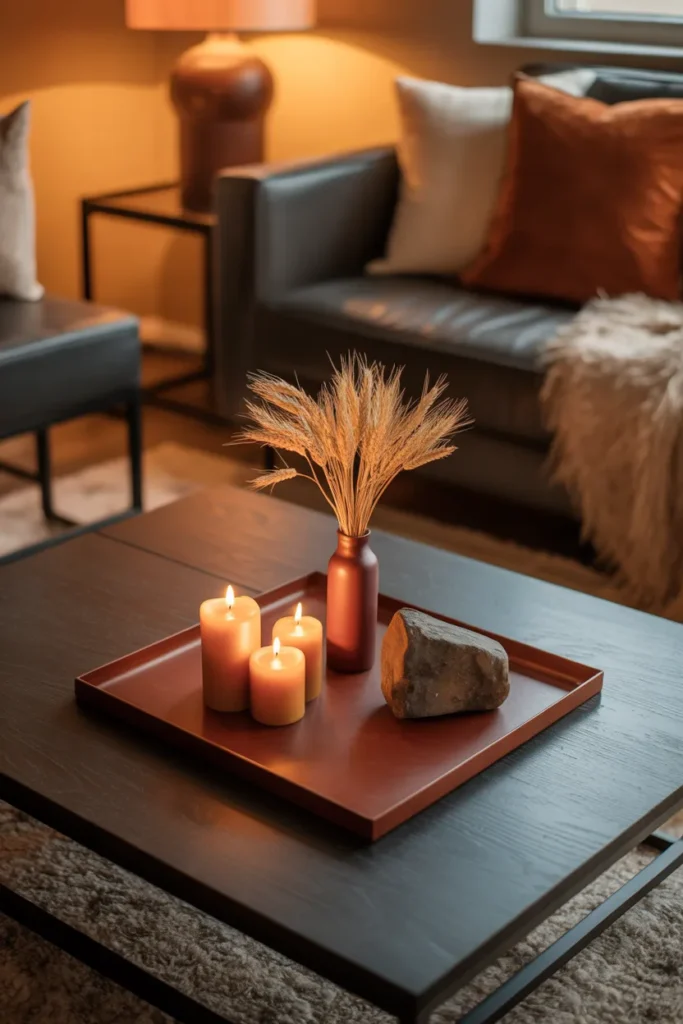
Keep a small collection of seasonal items like a bundle of cinnamon sticks, some dried seed pods, or a few natural stones that you rotate in and out of the arrangement as the seasons shift.
This approach gives your living room a refreshed feeling regularly without the cost or clutter of accumulating more decor.
12. Glass Coffee Tables: Decor Strategies That Actually Work With a See-Through Surface
Glass coffee tables present a unique styling challenge because the surface reveals everything underneath it, including the floor, the rug, and the table legs. What sits on top must work in harmony with what shows through.
Keep arrangements lighter and more open than you would on a solid table. Heavy, dark, or matte objects can look disconnected when floating visually above a transparent surface.
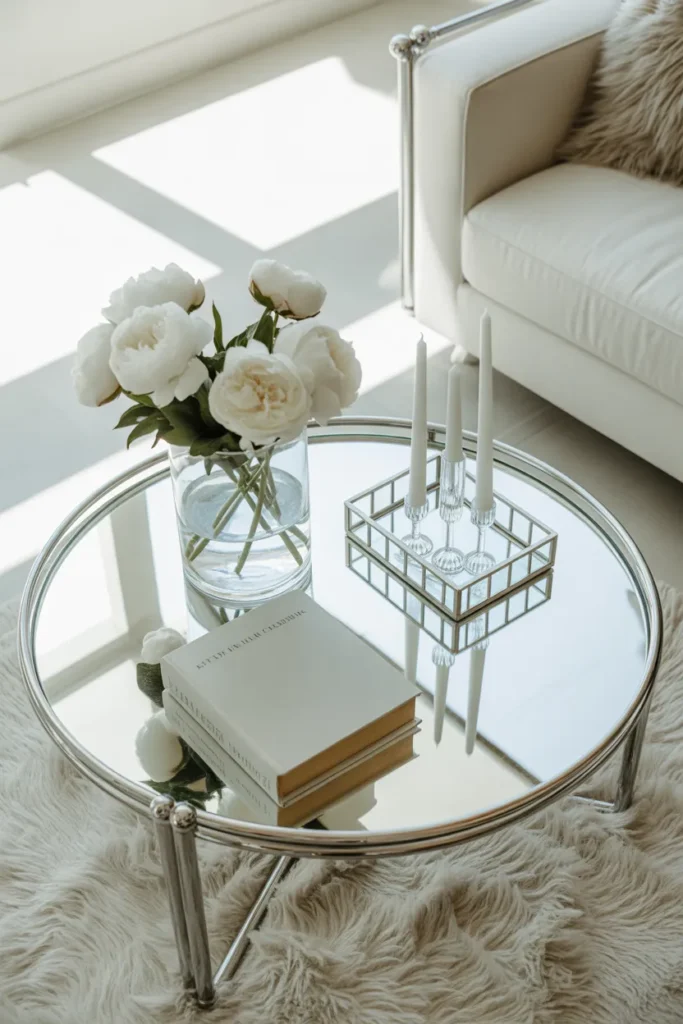
Use clear, white, or metallic objects that complement the glass’s transparency. A clear glass vase, a crystal object, or a small chrome sculpture looks intentional on a glass table in a way a terracotta pot would not.
The rug beneath the table becomes part of the decor. Choose a rug with an interesting texture or subtle pattern because it will always be visible and functions as the visual base of the arrangement.
13. Dark and Moody Coffee Table Decor for Dramatic Living Rooms
Not every living room is light and airy, and not every homeowner wants it to be. A dark and moody coffee table arrangement creates a dramatic, sophisticated atmosphere that feels intentional rather than simply dim.
Work with deep tones across the decor: black, charcoal, forest green, deep burgundy, and raw metal. A matte black tray, a dark green ceramic vase, a black pillar candle, and a dark stone coaster set form a complete dark palette without a single light object.
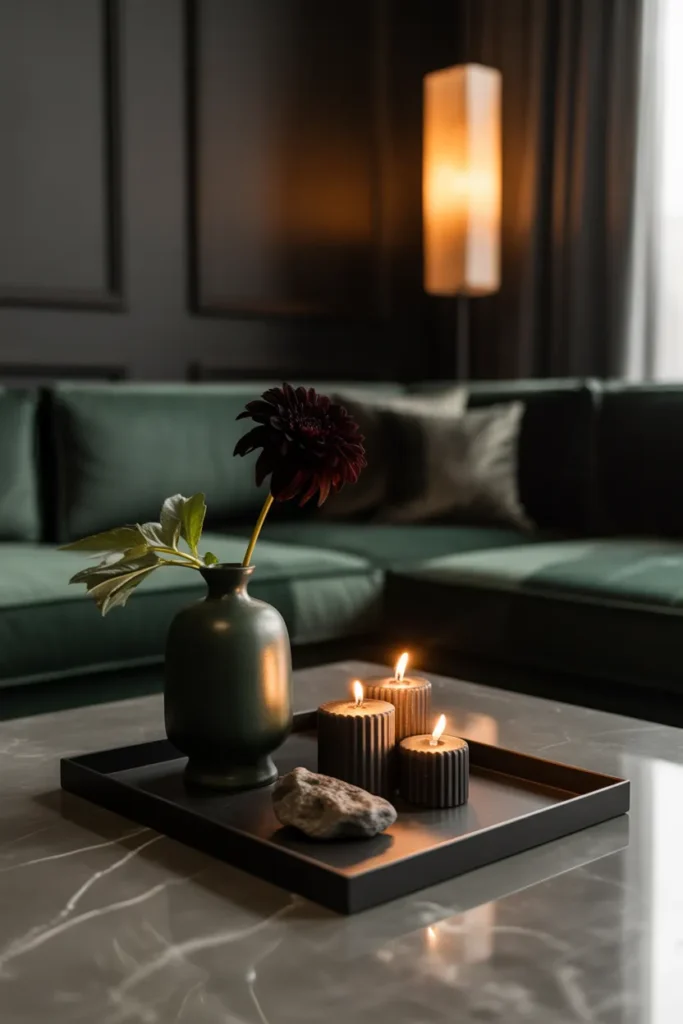
The key is that dark decor needs strong lighting to read well. In a moody room, a lit candle or a nearby lamp gives the arrangement shadow and depth rather than making it disappear into the background.
Avoid mixing too many shades of black and brown without a unifying tone. Choose either warm darks or cool darks within one arrangement for cohesion.
14. Bohemian Coffee Table Decor: How to Layer Without Looking Cluttered
Bohemian coffee table decor relies on layering, but without a clear strategy, it becomes visual chaos. The difference between artfully layered and simply messy comes down to intentional variety and controlled color.
Start with a woven or rattan tray as your base layer. Then add items in organic materials: a clay candle holder, a small brass figurine, a raw crystal, a dried floral arrangement. Each object should feel like it has a history or a purpose.
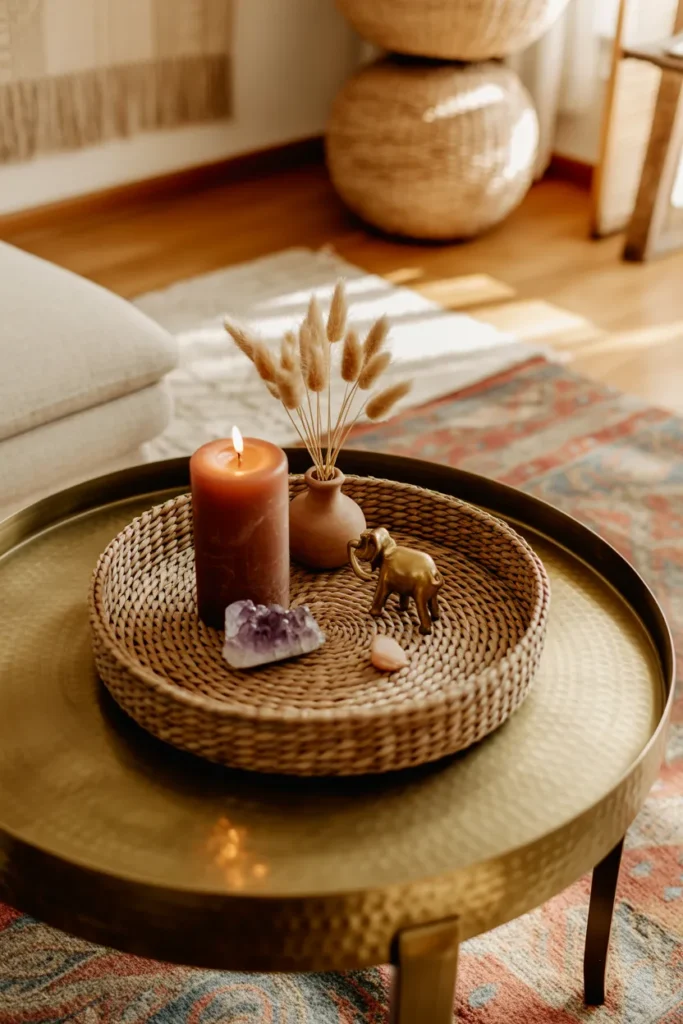
Limit your color story to three tones even within a maximalist arrangement. Earthy neutrals, terracotta, and gold work reliably together in a boho context. Introducing too many colors even in small objects tips the balance into clutter.
The ground rule for bohemian styling is that every object should look like it was chosen, not collected by accident. If something does not add to the arrangement, remove it.
15. Coastal Coffee Table Decor Without Looking Like a Gift Shop
Coastal decor is one of the most popular home aesthetics in the USA, but it is also one of the most commonly overdone. A coastal coffee table arrangement should feel natural and restrained, not themed.
The difference is in the restraint. Natural driftwood, a few shells arranged in a shallow dish, and a simple bud vase with sea grass or white anemones communicate coastal without a single starfish or lighthouse in sight.
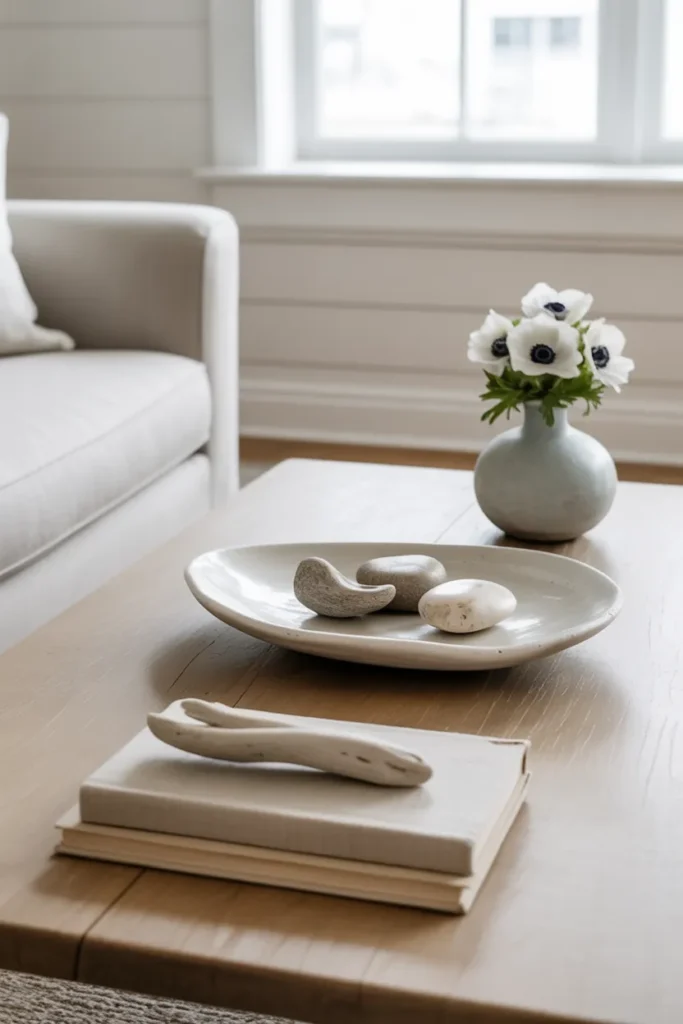
Stick to a palette of white, warm sand, and pale blue-grey. These tones evoke the coast organically without requiring literal coastal objects. A white marble tray, linen-covered books, and a blue-tinted glass vase are coastal when grouped together even without a single seashell.
Avoid purchasing overly themed items like printed beach towels, novelty anchors, or rope-wrapped objects. These immediately date the decor and move it from tasteful to touristy.
16. Coffee Table Decor for Large Sectional Sofas and Oversized Living Rooms
A coffee table in a large open-plan living room needs a decor arrangement that reads from a distance. Small objects that work beautifully in a compact space become invisible in a large room.
Scale your objects up. Use a large low bowl instead of a small dish, a tall architectural plant instead of a miniature succulent, and a wide tray that occupies a meaningful portion of the table surface.
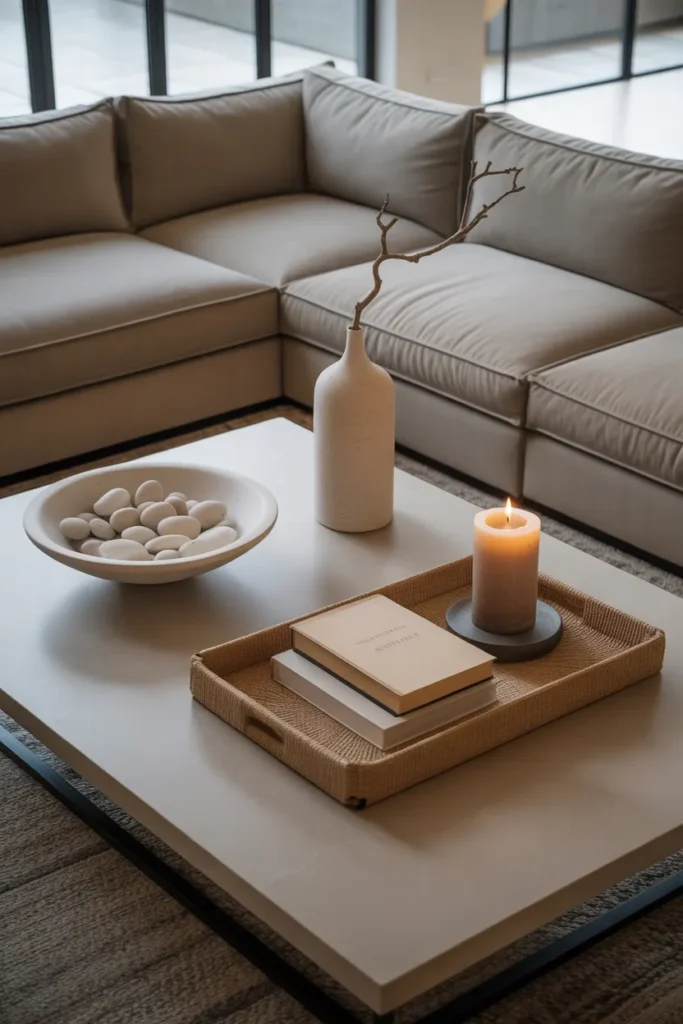
In large rooms with sectional sofas, the coffee table is often seen from multiple angles simultaneously. Make sure the arrangement looks balanced from the sofa side and from the open room side. A symmetrical layout or a rotating grouping works better here than a single directional arrangement.
Do not try to fill every inch of a large table. One or two well-scaled anchoring objects with deliberate open space between them feels more sophisticated than a table crowded with small items trying to fill a large surface.
17. The Edit-Down Method: How to Know When Your Coffee Table Is Overcrowded
Knowing what to remove is as important as knowing what to add. An overcrowded coffee table is one of the most common decorating mistakes, and it is easy to make when you are adding pieces one at a time.
The edit-down method works like this: place everything you want on the table, photograph it, then remove one item and photograph it again. Compare the two. In most cases, the version with fewer items photographs better and feels more intentional.
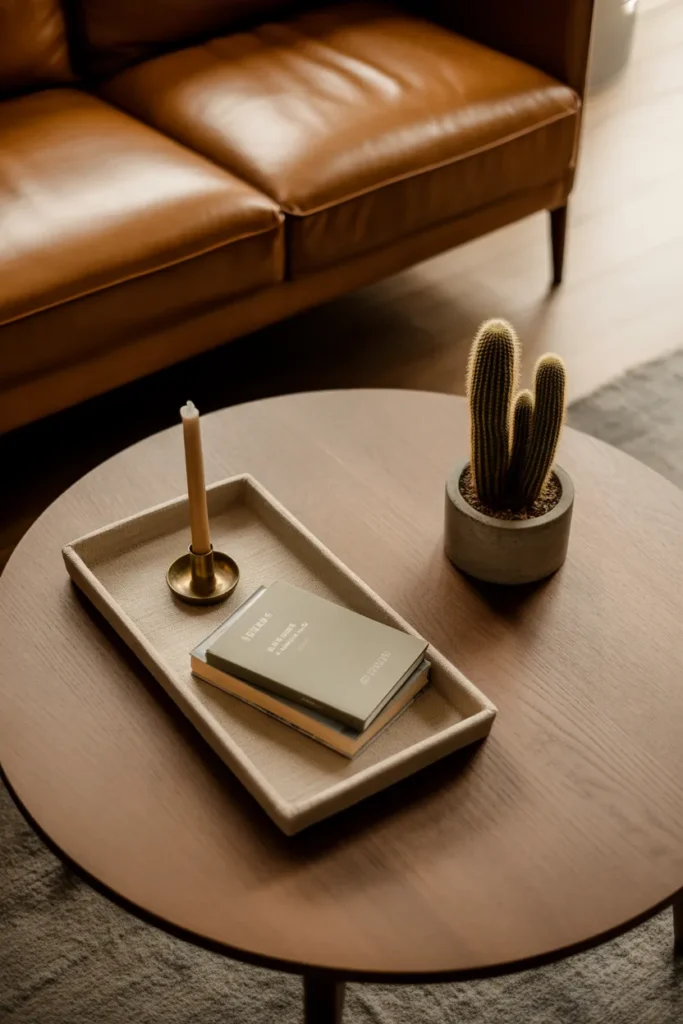
A practical rule is that every object on a coffee table should be able to breathe. If you cannot trace a clear line of open table surface between your items, you have too many pieces.
Ask yourself whether each object adds something the others do not. If two objects serve the same visual purpose, such as two similarly sized candles or two vases, remove one. The arrangement becomes stronger through reduction.
18. Coffee Table Decor That Photographs Well for Social Media and Home Listings
Whether you are staging your home for sale or building a lifestyle presence online, coffee table decor that photographs well follows specific rules that differ slightly from everyday styling.
Photography flattens depth and washes out texture under bright lighting. To compensate, increase texture contrast in your arrangement: use matte against glossy, rough against smooth. These contrasts still read clearly in a photograph.
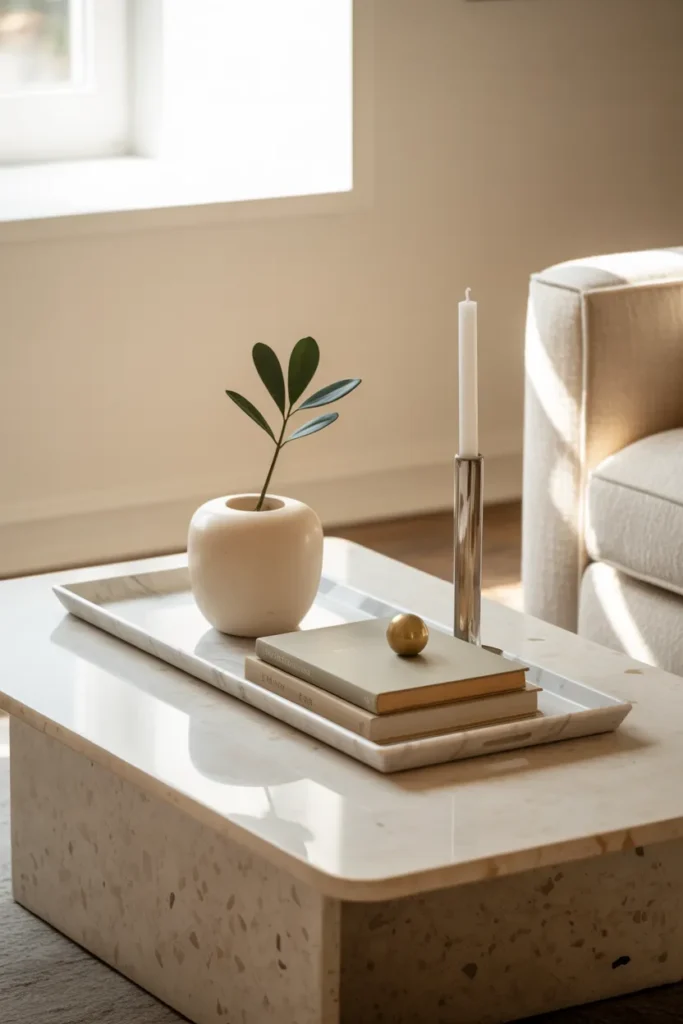
Use natural side lighting rather than direct overhead lighting when photographing your table. Morning or late afternoon window light creates the soft shadows that give objects dimension in photos.
Remove all functional objects like remote controls, magazines, and charging cables before photographing. Even one out-of-place item will draw the eye immediately in a flat image. Style purely for the camera, then reintroduce function after.
Final Thoughts
Good coffee table decor comes down to three things: scale, restraint, and intention. Every idea in this guide is built around making real decisions, not just adding more things to a surface. Whether your space is a small studio or a large open-plan home, the principles stay the same: anchor with a tray, vary your heights, balance texture, and edit down until every object earns its place.
If this guide helped you think differently about your coffee table, save it to your Pinterest boards so you can come back to it when you are ready to style or restyle. Explore more living room decor ideas to build on these foundations and create a space that feels as good to live in as it does to look at.