
If your kitchen feels cramped, dark, or visually heavy, the right small kitchen decor tips for a bright airy feel can completely change how the space functions and looks. This guide gives you 18 specific, decision-ready ideas that address the most common small kitchen problems including poor lighting, visual clutter, dark surfaces, and inefficient layouts. Every idea is practical, USA-home tested, and designed to help you make a real decorating decision, not just collect inspiration.
1. Paint Cabinets in Soft White or Warm Cream to Instantly Open the Space
Cabinet color is the single highest-impact decision in a small kitchen. Soft white and warm cream tones reflect natural and artificial light more effectively than any other color family, making walls appear further apart and ceilings appear higher than they actually are.
This works in every small kitchen layout, from galley kitchens in city apartments to L-shaped kitchens in older ranch homes. The key is choosing a white with a warm undertone rather than a stark cool white. Cool whites can make a small kitchen feel clinical rather than airy.
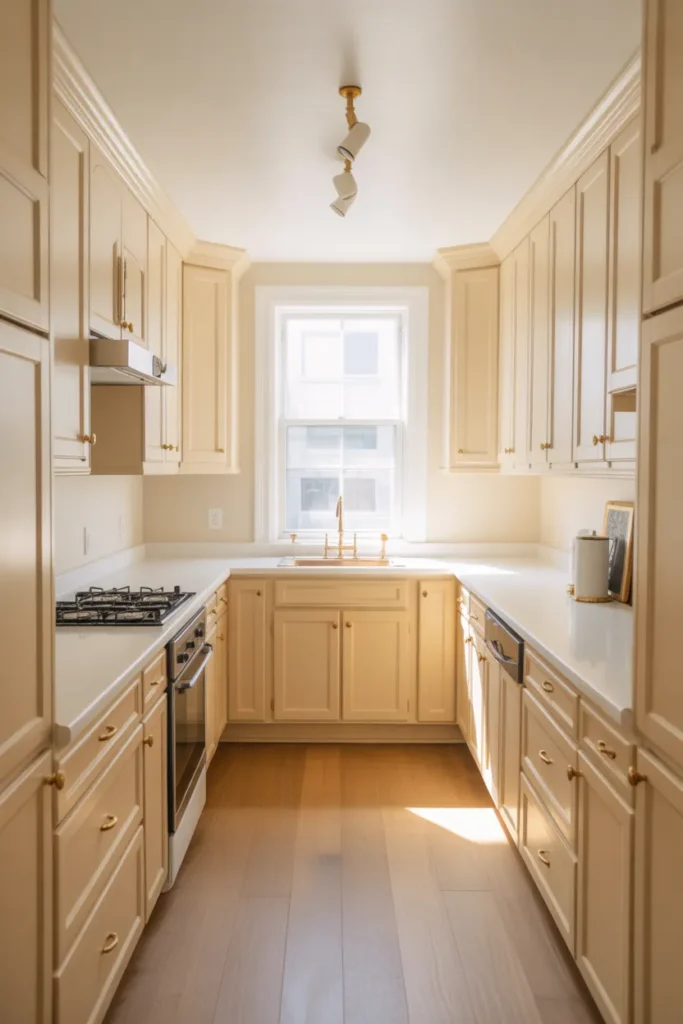

Avoid painting lower cabinets a different dark color as a contrast technique in small kitchens. While this works in larger spaces, in a compact kitchen it visually cuts the room in half and reduces the open, lifted quality you are trying to achieve.
If repainting all cabinets is not currently feasible, prioritize the upper cabinets first. Upper cabinets sit at eye level and have the greatest influence on how open the kitchen feels from the primary viewing angle.
2. Replace Upper Cabinet Doors With Open Shelving to Reduce Visual Weight
Solid cabinet doors create visual stops that make a small kitchen feel boxed in. Removing some or all upper cabinet doors and replacing them with open wood shelves eliminates that visual barrier and allows the eye to travel continuously across the wall.
This approach works best when your dishware and everyday items are visually consistent. White dishes, clear glass, and neutral ceramics displayed on open shelves become part of the decor rather than clutter. Avoid open shelving if your storage items are mismatched or if you accumulate grease and dust quickly, as open shelves in a kitchen require regular maintenance to stay visually clean.
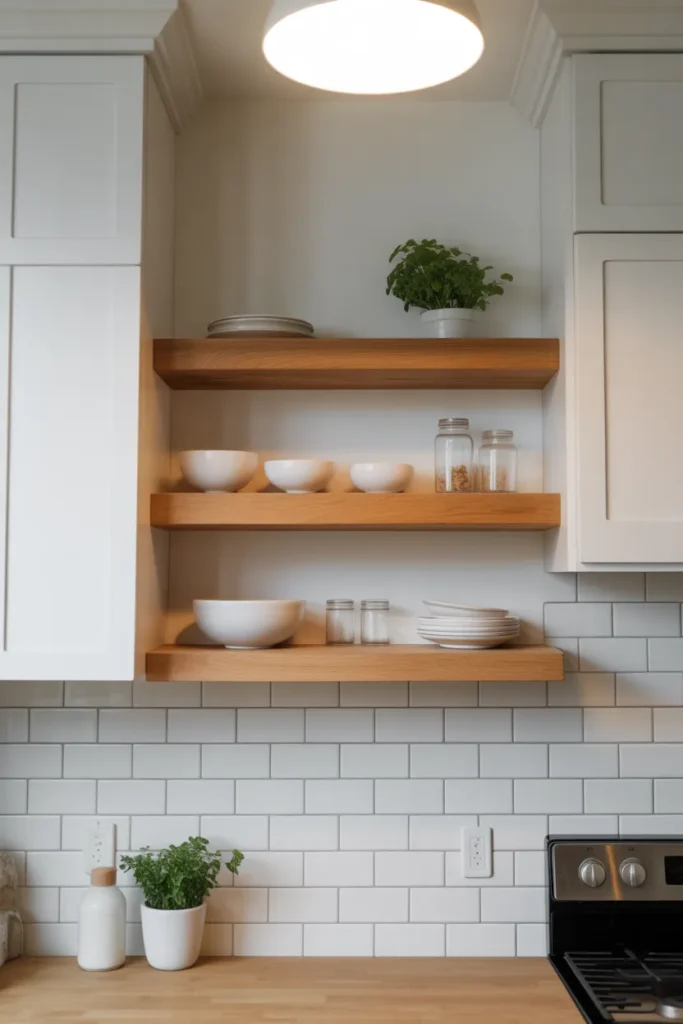
For a middle-ground solution, replace only one or two upper cabinet doors directly above the countertop work zone. This creates a focal display area without committing to full open shelving throughout.
Natural wood floating shelves in light oak, maple, or whitewashed pine perform best in bright airy kitchen styling because the warm wood tone adds depth without adding visual weight.
3. Install Under-Cabinet LED Lighting to Eliminate Dark Counter Shadows
Dark countertops are one of the primary reasons small kitchens feel heavier and smaller than they are. Under-cabinet LED strip lighting solves this by casting a continuous band of light directly onto the work surface, which visually extends the counter and brightens the space at the most functional level.
Use warm white LEDs at 2700K to 3000K color temperature. This range enhances the warmth of wood, cream, and natural stone surfaces without creating the cold clinical feel of daylight-balanced bulbs. Avoid cool white or blue-toned LEDs in a small kitchen aiming for an airy feel.
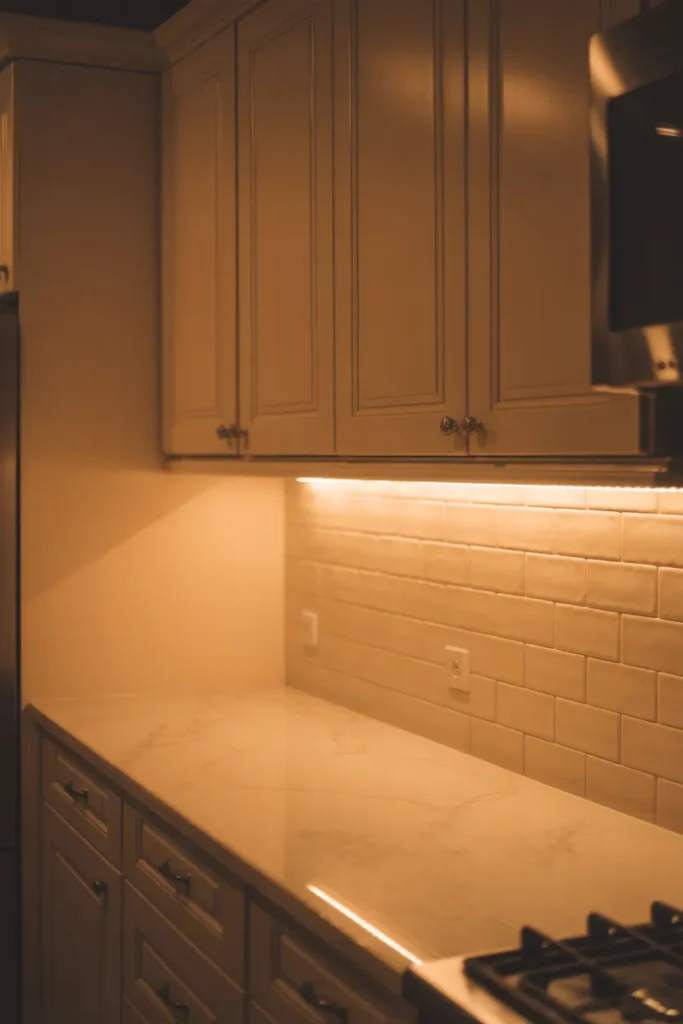
This upgrade works in every kitchen size and layout and requires no renovation. Plug-in LED strip options are available for renters who cannot hardwire lighting. The visual payoff relative to the effort and cost of installation is higher for this single change than almost any other small kitchen decor update.
Position the strips toward the front edge of the cabinet underside rather than the back, so the light falls directly onto the counter surface rather than the backsplash.
4. Choose a Light-Reflective Backsplash to Multiply Natural Light
The backsplash occupies the most visually active zone in any kitchen, the space between the counter and the upper cabinets. In a small kitchen, choosing a light-reflective backsplash material is one of the most effective small kitchen decor tips for a bright airy feel because it bounces both natural and artificial light back into the room.
White or cream subway tile in a classic brick pattern is the most proven choice. The slightly beveled edge on traditional subway tile creates a subtle three-dimensional reflection that flat tiles cannot replicate. Large-format white tiles in a grid pattern achieve a more modern version of the same effect.
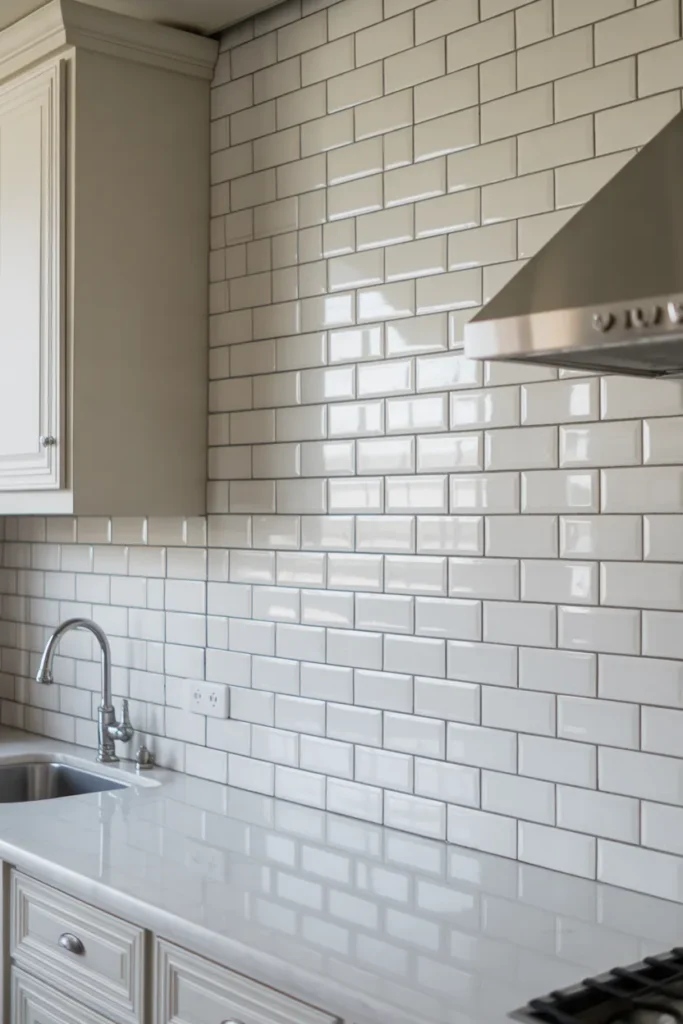
Mirror tile and polished white metro tile take reflectivity further and work well in kitchens with limited window access. Avoid matte dark tiles, heavily textured stone, or busy patterned tiles in a small kitchen targeting brightness, as these absorb light rather than reflecting it.
Grout color matters more than most people expect. White or light gray grout keeps the backsplash reading as one continuous bright plane. Dark grout creates a grid pattern that visually fragments the surface and reduces the perceived size.
5. Use a Light-Toned Stone or Quartz Countertop to Visually Expand the Room
Countertop color and finish have a direct impact on how light moves through a small kitchen. Light-toned countertops in white, cream, light gray, or warm beige reflect overhead lighting downward and bounce natural light sideways, which expands the perceived width of the kitchen.
Polished or honed quartz in a white or light veined finish performs best for light reflection and is more practical for everyday kitchen use than natural marble. For a warmer feel, butcher block in a light natural wood tone adds texture without adding visual weight.
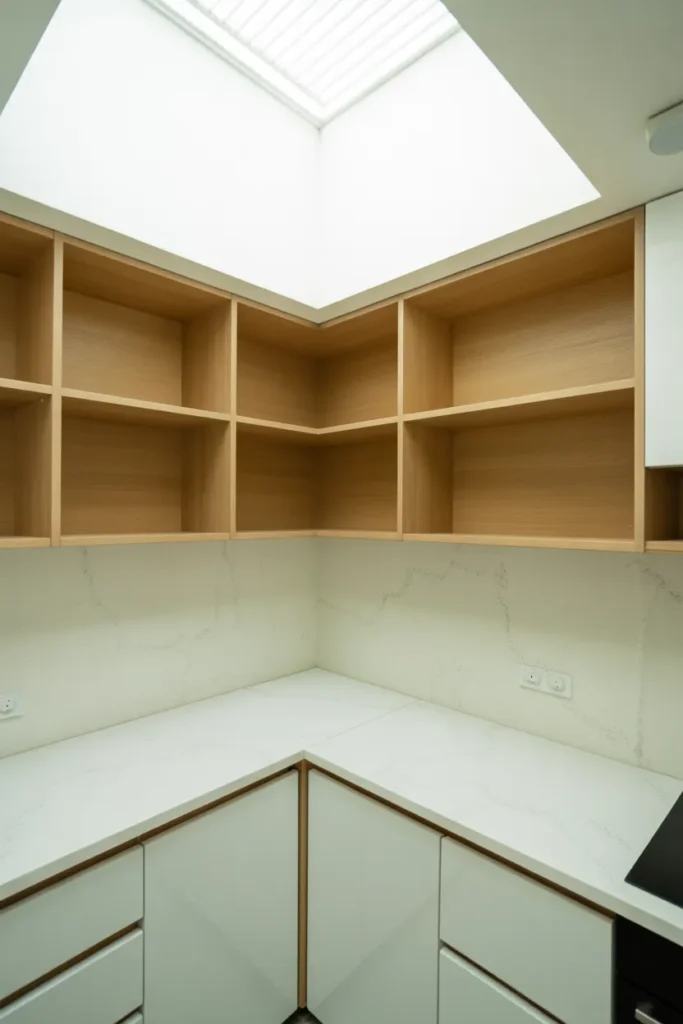
Avoid dark granite or black quartz countertops in a small kitchen that is already struggling with brightness. While these materials look striking in larger kitchens, they absorb light in compact spaces and make the room feel heavier and lower.
If you are unable to replace countertops, a coat of light-toned concrete resurfacing product or a high-quality countertop paint in cream or warm white can achieve a similar brightness effect at a fraction of the replacement cost.
6. Hang a Single Large Window Curtain in Sheer Linen to Soften Without Blocking Light
Window treatment choice in a small kitchen directly affects how much natural light enters the space and how airy the room feels. Heavy curtains, dark Roman blinds, or solid shutters block light at the source and immediately make a small kitchen feel enclosed.
A single panel of sheer linen or cotton voile fabric hung from a simple wooden rod allows full daylight diffusion while still providing a soft decorative layer. The fabric filters harsh direct sunlight into a warm, even glow that is ideal for the bright airy kitchen aesthetic.
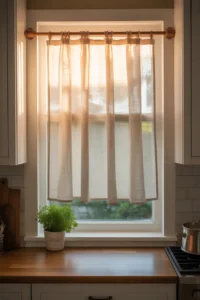
If privacy is a concern, a bottom-up cellular shade that covers only the lower half of the window gives you privacy while leaving the upper half fully open to natural light. This is a practical solution for ground-floor or street-facing kitchen windows.
Avoid mini blinds, heavy valances, or any window treatment that cuts across the top portion of the window opening, as this reduces the perceived ceiling height and blocks the part of the window that delivers the most usable daylight.
7. Keep the Kitchen Island or Cart in a Light Tone to Avoid Visual Blocking
A kitchen island or rolling cart adds function in a small kitchen but also introduces a solid mass into the center of the floor plan. If that mass is dark in color, it creates a visual barrier that makes the kitchen feel divided and smaller.
Choosing an island or cart in white, cream, light gray, or natural light wood keeps the floor plan feeling open even when a central piece is present. The lighter the island color relative to the floor, the more it recedes visually and preserves the sense of open floor space.
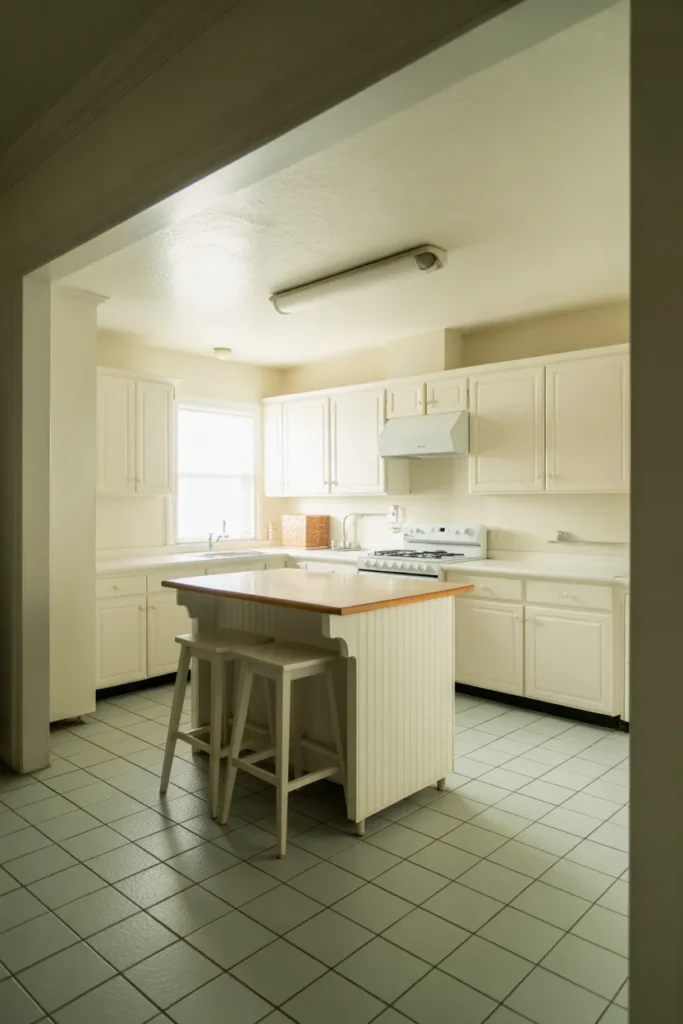
This principle applies to both permanent islands and portable rolling carts. A white or cream rolling butcher block cart on wheels is one of the most flexible and airy-feeling additions to a small kitchen because it can be moved to open the floor plan when needed.
Avoid oversized islands in small kitchens regardless of color. The rule of thumb for small kitchen islands is to maintain at least 42 inches of clearance on all working sides. If clearance is less than this, the island creates a bottleneck that defeats both the functional and visual purpose.
8. Use Vertical Lines to Draw the Eye Upward and Make Ceilings Feel Higher
One of the most underused small kitchen decor tips for a bright airy feel is directing the eye vertically rather than horizontally. Vertical tile patterns, tall narrow cabinet doors, floor-to-ceiling cabinetry, and vertical shiplap all create upward visual movement that makes low ceilings feel taller and the room feel more open.
Vertical subway tile installed in a stacked or herringbone vertical pattern on the backsplash is the easiest application of this principle. It costs no more than a horizontal installation but creates a noticeably taller feeling wall.
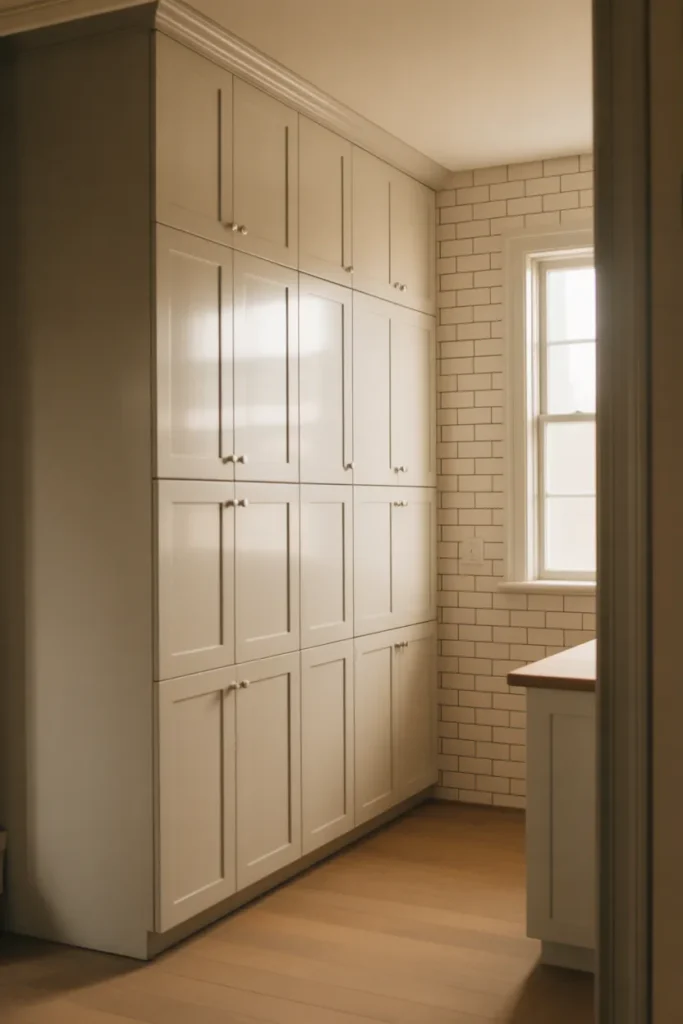
Floor-to-ceiling cabinetry eliminates the gap above standard upper cabinets, which collects dust and visually caps the room. Extending cabinets to the ceiling uses that dead space for storage while also making the wall read as a continuous tall plane rather than a cabinet with awkward empty space above it.
Avoid horizontal stripe patterns, wide horizontal tile formats, or chunky crown molding at mid-height, as these cut the vertical line of the room and make it feel shorter and more compressed.
9. Hang Pendant Lights at the Right Height to Layer Light Without Crowding Space
Pendant lighting in a small kitchen serves two purposes simultaneously: it adds task lighting where it is most needed and it introduces a decorative focal point that draws the eye upward. The key variable that most people get wrong is hanging height.
Pendants over a kitchen island or peninsula should hang 30 to 36 inches above the countertop surface. Too high and they lose their lighting effectiveness. Too low and they create a visual barrier across the kitchen that makes the space feel smaller.
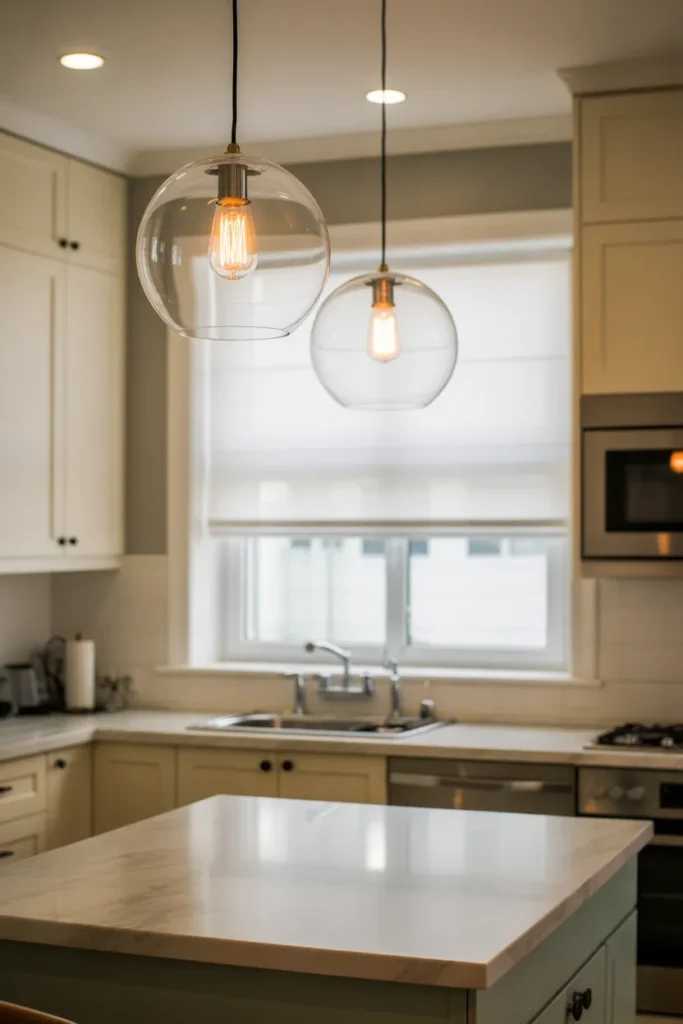
Choose pendants with open or semi-open shades in glass, rattan, or metal with an interior white finish. Closed opaque shades direct all light downward, which creates harsh pools rather than the even ambient glow that contributes to an airy feel.
In kitchens without an island, a single pendant hung centered in the room or over the sink area provides the same layered lighting effect without requiring additional counter mass.
10. Declutter the Counter Surface to Restore Visual Breathing Room
Counter clutter is the most common reason small kitchens feel darker and smaller than their actual dimensions. Every object on the counter creates a visual stop that fragments the surface and reduces the sense of continuous open space.
The practical rule for a bright airy small kitchen is to keep only the items you use every single day on the counter. Everything used less frequently belongs in a cabinet, drawer, or pantry. This is not a styling preference. It is a spatial principle that directly affects how much light the counter reflects and how open the room reads.
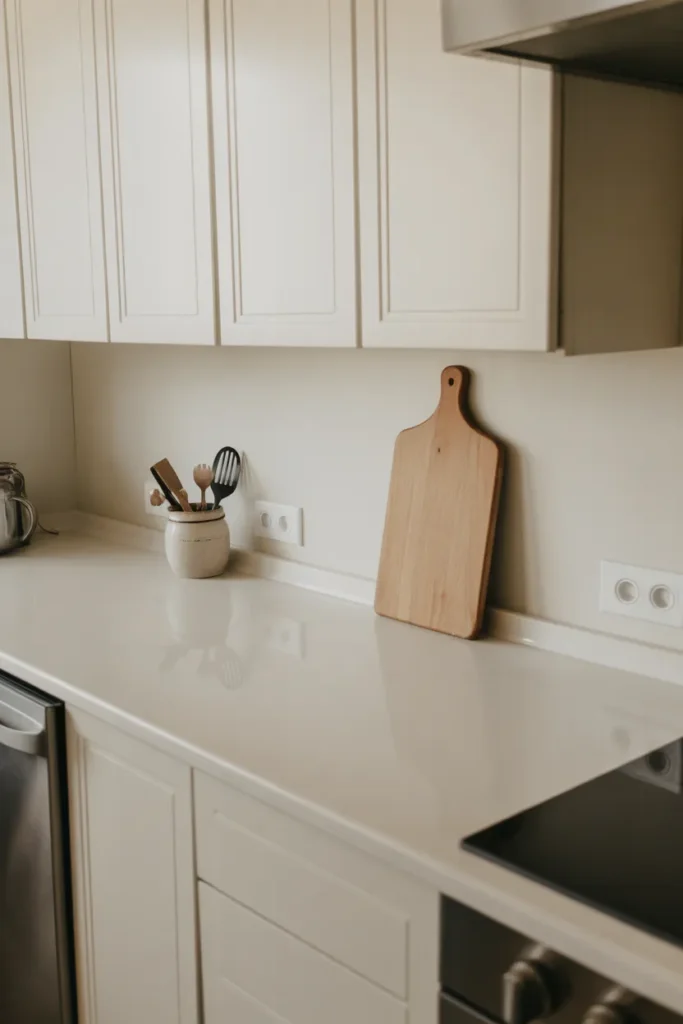
If counter storage is genuinely limited, add one slim open shelf on an adjacent wall or inside a nearby closet to absorb the overflow. A single wall-mounted magnetic knife strip also removes the knife block from the counter without losing accessibility.
The most common mistake is keeping large appliances on the counter for convenience when they are used only occasionally. A toaster oven, stand mixer, or air fryer used three times a week belongs in a cabinet. The daily visual penalty of that counter mass is not worth the occasional convenience.
11. Add a Mirror or Mirrored Backsplash Panel to Double Perceived Depth
A mirrored panel or mirrored tile section on one wall of a small kitchen is one of the most powerful tools for creating perceived depth and amplifying natural light. The mirror reflects the opposite wall, the window, and the light source, visually doubling the size of the room.
This works most effectively on the wall directly opposite the primary window or main light source. A single large-format mirror panel, mirrored subway tile section, or antique mirror backsplash above the range or on a side wall are all practical applications.
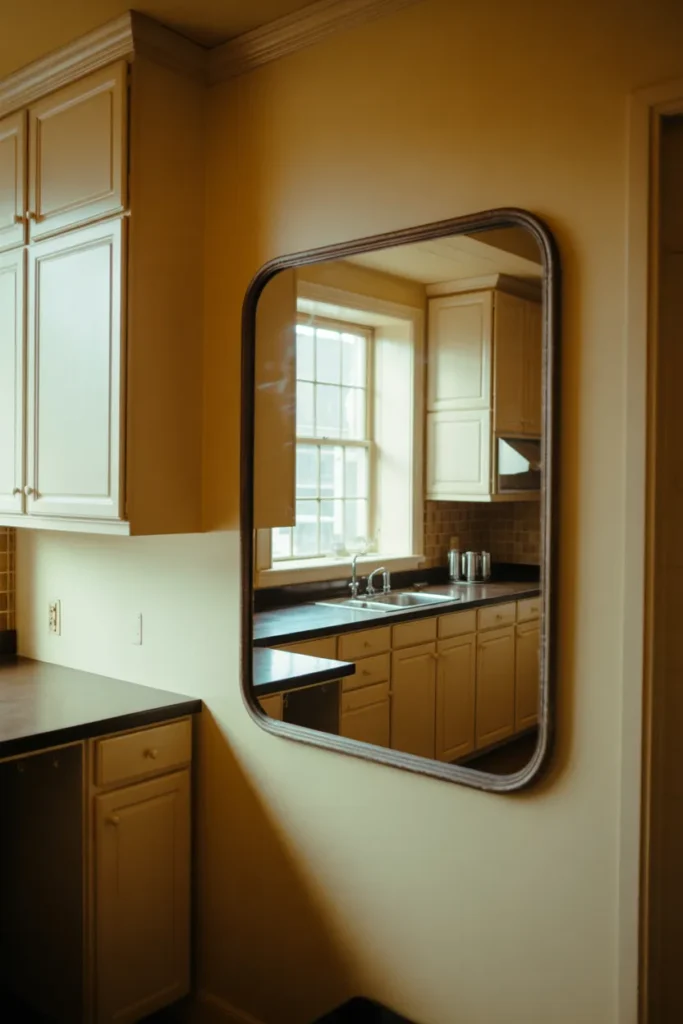
Avoid covering the entire backsplash in mirror, as this creates a bathroom-like quality that reads as out of place in a kitchen. A partial panel of 24 to 36 inches wide, positioned strategically, delivers the reflective benefit without overdoing the effect.
If mirror in a kitchen feels too unconventional, polished stainless steel panels on appliance surfaces or a metallic tile backsplash in brushed silver or warm gold achieves a softer version of the same light-multiplication effect.
12. Choose Hardware in Brushed Gold or Warm Brass to Add Warmth Without Weight
Cabinet hardware is a small detail with a disproportionate visual impact. In a small kitchen focused on brightness and airiness, hardware color and finish affect the overall warmth tone of the space more than most people expect.
Brushed gold and warm brass hardware on white or cream cabinets creates a warm, collected quality that reads as curated rather than generic. It adds visual interest without introducing the cold, heavy feeling of matte black hardware, which while popular in larger kitchens can make a small kitchen feel heavier and darker.
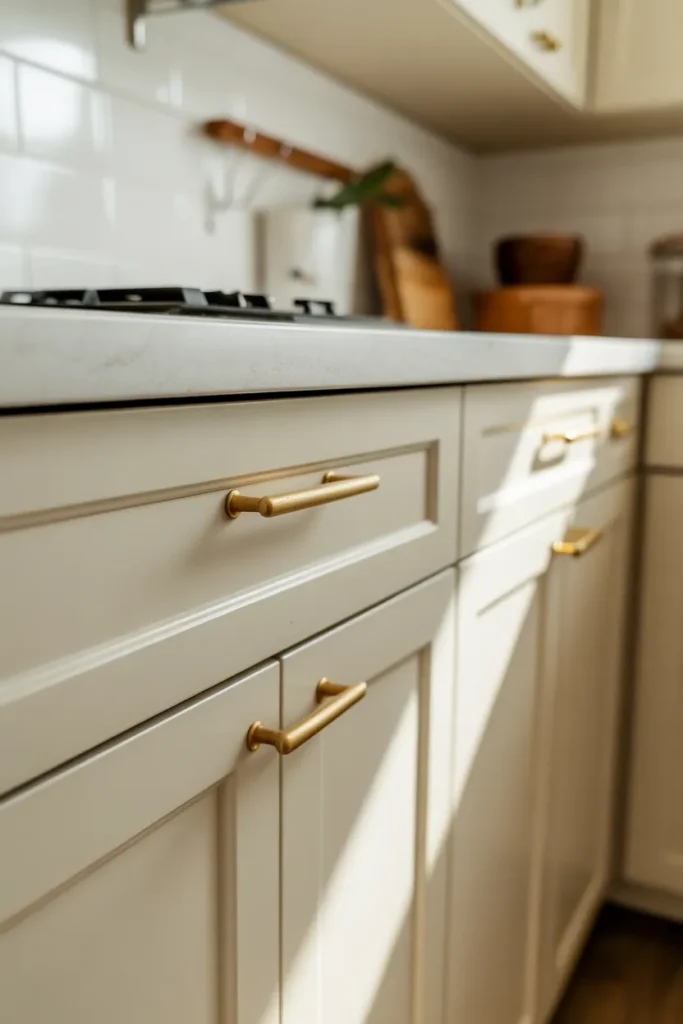
Replace hardware in a single afternoon with a screwdriver. It is one of the highest-return, lowest-effort upgrades available in a small kitchen. Choose bar pulls in a slim profile, 3 to 5 inches in length, for upper cabinets and slightly longer pulls for lower drawers and doors.
Avoid oversized, ornate, or highly decorative hardware in a small kitchen. Large hardware draws the eye to the cabinet face rather than the open space, which works against the airy feeling you are building.
13. Paint the Ceiling the Same Color as the Walls to Eliminate Visual Boundaries
Most small kitchens have white ceilings and painted walls, which creates a visible line where the wall ends and the ceiling begins. This line acts as a visual cap that reinforces the room’s boundaries and makes the ceiling feel lower than it is.
Painting the ceiling the same soft tone as the walls, whether that is warm white, pale cream, or very light gray, eliminates that boundary line and allows the eye to travel upward without stopping. The result is a room that feels taller and more open without any structural change.
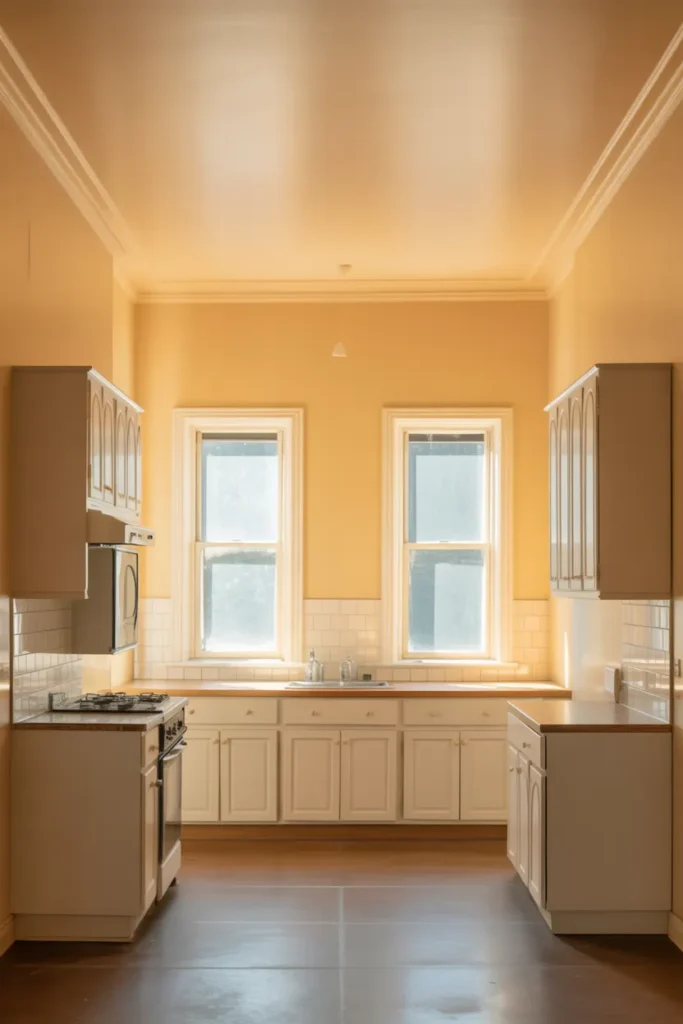
This technique, sometimes called color drenching, works especially well in small kitchens where the ceiling height is already low, typically 8 feet or under. In kitchens with 9-foot or higher ceilings, the benefit is less critical but still adds a cohesive, enveloping quality.
Use the same paint formula for both walls and ceiling but request the ceiling version in a flat finish rather than eggshell. The flat finish reduces glare from overhead lighting and keeps the ceiling from drawing unnecessary attention.
14. Introduce a Small Herb Garden on the Windowsill for Natural Freshness
A windowsill herb garden is one of the most visually effective and functional small kitchen decor tips for a bright airy feel because it places living greenery directly in the path of natural light. The combination of light, green color, and organic texture creates a fresh, alive quality that no artificial decor can replicate.
Use three to five small matching pots in white, cream, or terracotta. Consistency in pot style is important. Mixed pots in different colors and sizes create clutter rather than a curated display. Rosemary, basil, thyme, and mint are the most reliable performers in a kitchen windowsill environment.
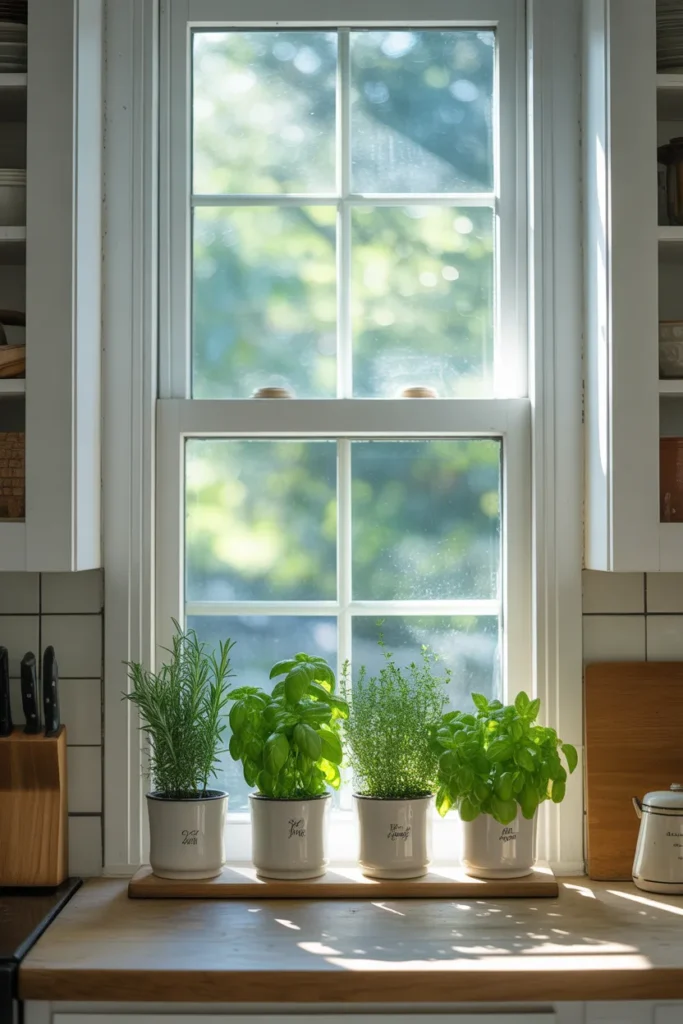
Keep the plants well-trimmed and healthy. A dying or overgrown herb garden is visually worse than no plants at all. If your windowsill receives less than four hours of direct light daily, choose low-light tolerant herbs like mint or chives, or supplement with a small grow light.
Avoid placing herb pots on the counter away from the window. Herbs moved away from natural light deteriorate quickly and the counter placement adds clutter at the most visually active surface level.
15. Use Light-Toned Flooring to Reflect Light Upward and Widen the Room
Floor color and finish in a small kitchen have a greater impact on perceived room size than most decorating guides acknowledge. Light-toned floors, specifically light oak hardwood, pale limestone tile, large-format cream porcelain, or whitewashed wood look vinyl, reflect light upward from the floor plane and visually widen the room.
Large-format tiles are particularly effective in small kitchens because fewer grout lines mean fewer visual interruptions across the floor surface. A 24 by 24-inch cream or warm gray porcelain tile reads as a near-seamless light plane that makes the kitchen feel significantly larger than the same floor in a smaller tile format.
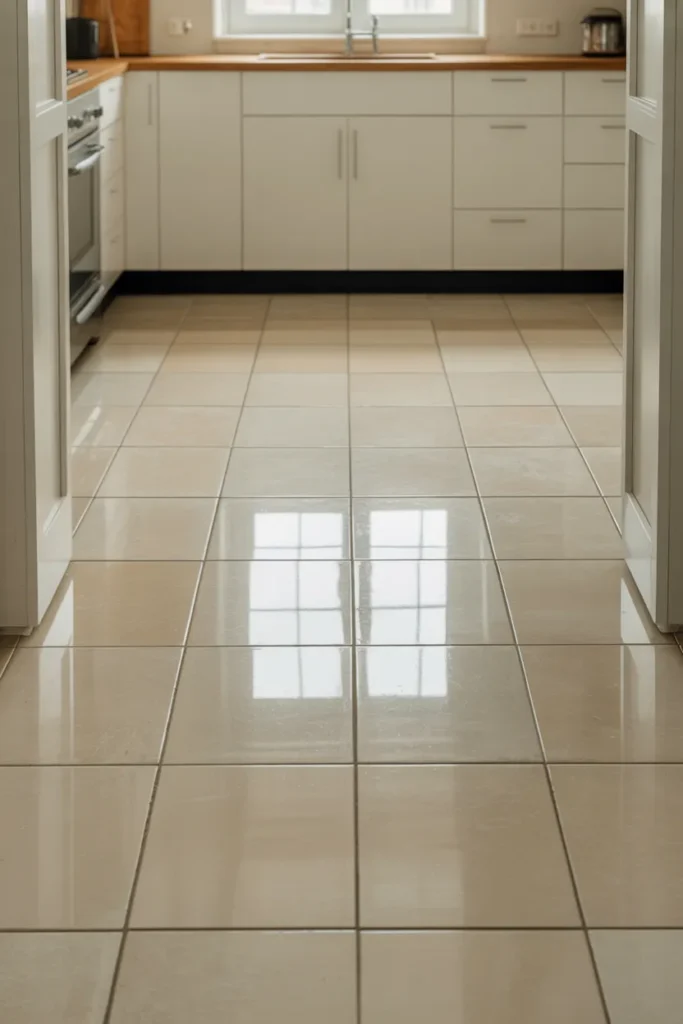
If you cannot replace existing flooring, a large light-toned area rug that extends across most of the kitchen floor creates a similar visual effect and can be changed seasonally. Choose a rug with a low pile and a washable material for practical kitchen use.
Avoid dark wood floors, black tile, or heavily veined dark stone in a small kitchen. These choices absorb light at the floor level and create a heavy base that makes the room feel grounded in the wrong direction.
16. Organize Inside Cabinets With White or Clear Bins to Prevent Hidden Clutter From Spreading
Interior cabinet organization directly affects how a small kitchen functions and, by extension, how it looks. When cabinet interiors are disorganized, items overflow onto counters and create the surface clutter that is the primary visual enemy of an airy kitchen.
White or clear stackable bins, drawer dividers, and shelf risers inside every cabinet keep items contained, visible, and accessible. When you can find what you need quickly inside a cabinet, you stop leaving items on the counter for convenience.
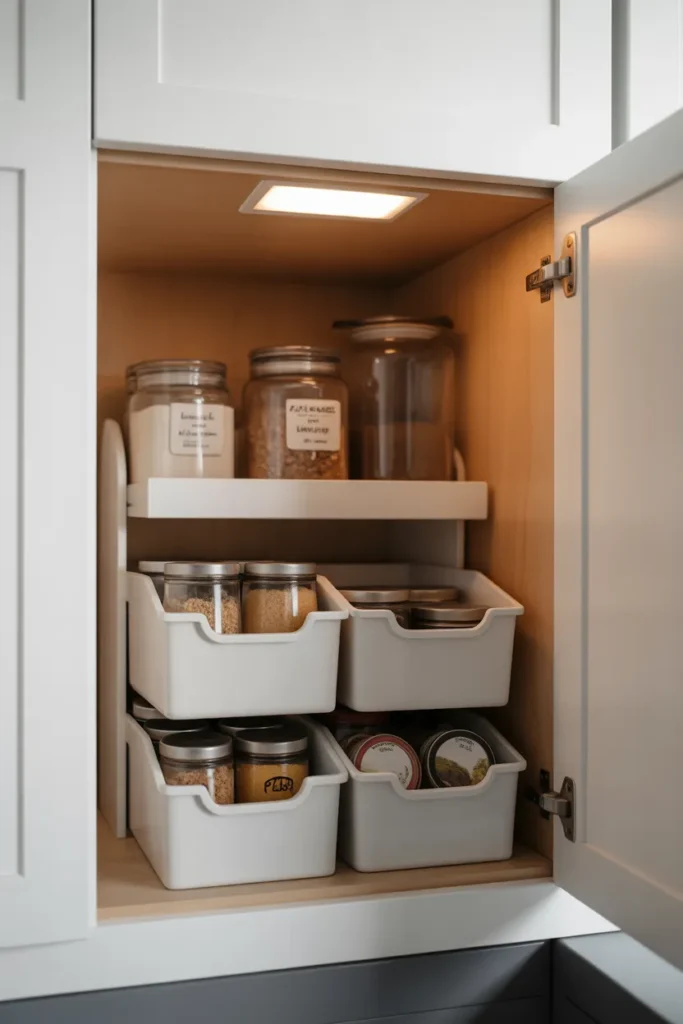
This is a practical EEAT principle backed by real kitchen design behavior: counter clutter in small kitchens is almost always a symptom of inefficient cabinet organization, not a shortage of storage space. Most small kitchens have adequate cabinet volume but poor interior organization.
Apply this to one cabinet at a time rather than attempting a full kitchen reorganization in a single session. Start with the cabinet that currently overflows onto the counter most frequently, resolve that specific problem, and move methodically through the remaining spaces.
17. Add a Narrow Floating Shelf Above the Window for Vertical Storage and Display
The wall space directly above a kitchen window is almost always unused. In a small kitchen, adding a single narrow floating shelf in this zone creates storage and display space without consuming any counter or floor area.
This shelf works best for infrequently used items that are visually appealing, such as a collection of matching glass jars, a row of cookbooks with light-toned spines, or small decorative ceramic pieces. The high placement draws the eye upward, reinforcing the vertical emphasis that makes small kitchens feel taller.
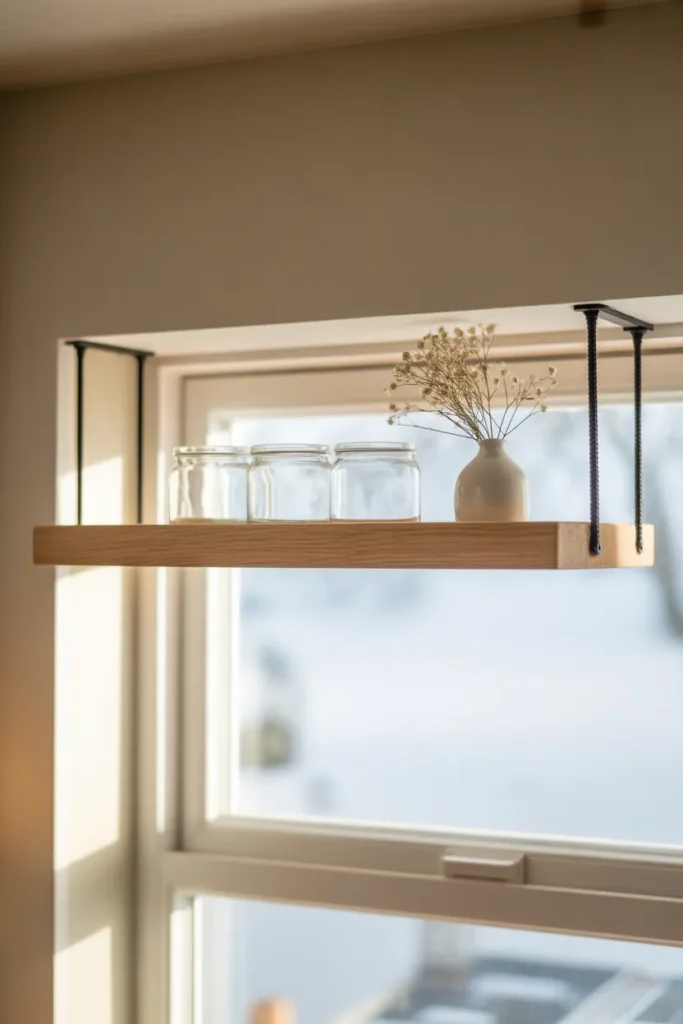
Keep the shelf narrow, no deeper than 6 inches, so it does not intrude on the window light below. A shelf deeper than this begins to block daylight from the upper portion of the window and defeats the purpose of the display zone.
Install it with a clean bracket style, either a simple L-bracket in brushed gold or an invisible floating bracket, that does not compete with the shelf content or the window below.
18. Style Open Shelves With a Consistent Color Palette to Avoid Visual Noise
Open shelving is one of the most popular small kitchen decor tips for a bright airy feel, but it fails more often than it succeeds because of inconsistent styling. When open shelves hold mismatched colors, random objects, and varied materials, the visual noise they create makes the kitchen feel more cluttered than closed cabinets would.
The solution is a consistent palette across everything displayed on the shelf. Choose one primary material, such as white ceramic, clear glass, or natural wood, and let it dominate at least 70 percent of the shelf surface. Introduce a secondary material, such as a brass vessel or a small plant, as a deliberate accent rather than a default catchall.
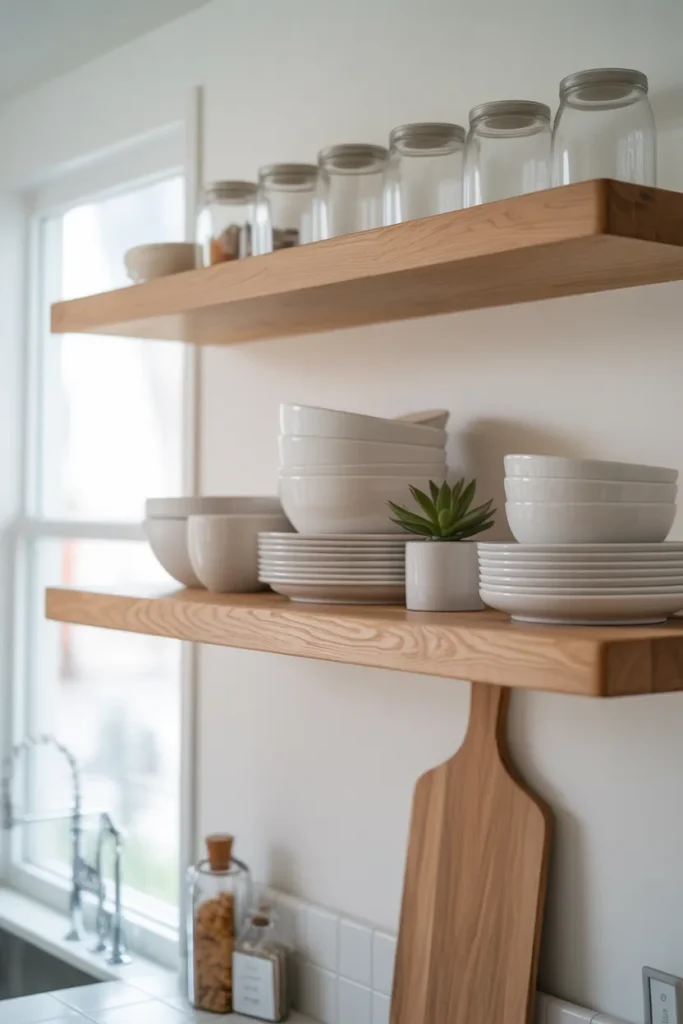
Remove everything from your current open shelves and start with a blank surface. Only return items that fit the chosen palette and serve a daily function or a clear decorative purpose. Everything else moves into a closed cabinet.
Reassess open shelf styling every three to four months. Kitchens accumulate items quickly, and what started as a curated shelf can become a dumping ground within weeks without intentional maintenance.
Conclusion
Applying the right small kitchen decor tips for a bright airy feel does not require a renovation, a large budget, or a complete redesign. It requires making better decisions about color, light, surface clarity, and material consistency, one idea at a time. The 18 approaches in this guide address the real reasons small kitchens feel dark and cramped, and each one gives you a specific, actionable solution you can apply at your own pace.
Save this post so you can return to it as you work through each idea in your kitchen. Every small kitchen has different constraints, and the most effective transformations happen when you layer several of these ideas together rather than applying just one. For more practical design guidance, explore additional kitchen layout ideas, storage solutions, and styling approaches throughout the site.