
If your front porch feels flat, forgettable, or visually disconnected from the rest of your home, the right stunning front porch ideas to elevate curb appeal can change the entire first impression your property makes from the street. This guide gives you 10 specific, decision-ready ideas covering seating arrangements, lighting, planting, color, and material choices that work across every USA home style and porch size. Every idea is practical, clearly explained, and designed to help you make a real upgrade decision rather than simply browse for inspiration.
1. Paint the Front Door a High-Contrast Color to Create an Instant Focal Point
The front door is the visual anchor of every porch and the single element that delivers the most curb appeal return per dollar spent. A door painted in a high-contrast, deliberate color immediately signals that the exterior has been thoughtfully considered, which elevates the entire porch composition without touching any other element.
The most effective color choices for 2026 curb appeal are deep navy, matte black, warm terracotta, forest green, and rich burgundy. Each of these works against a different house body color. Navy and black perform on white, gray, and cream exteriors. Terracotta and burgundy read beautifully against beige, tan, and warm brick. Forest green works on white, cream, and gray with equal strength.
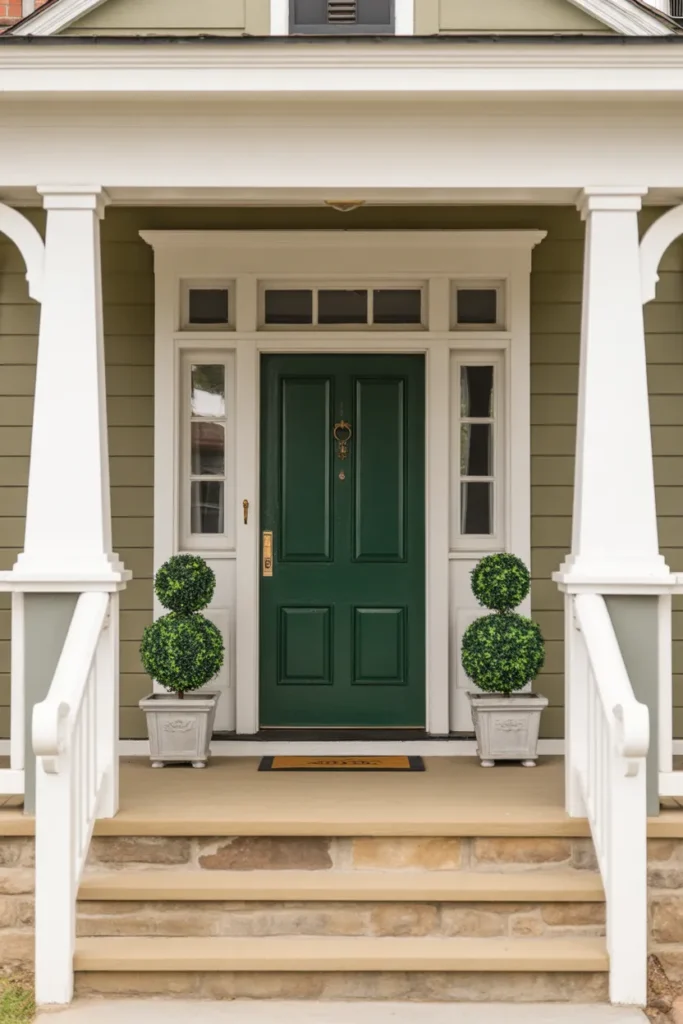

Finish matters as much as color. A satin or semi-gloss finish on the door reflects light and stays cleanly wipeable, which is critical for a surface that is touched multiple times daily. Flat or matte finishes on front doors show handprints and weather more visibly and require more frequent repainting.
Avoid painting the door the same color as the shutters, trim, or siding. A door that disappears into the surrounding facade loses its focal point function. The door needs contrast to perform its visual role from the street.
2. Add a Porch Swing or Rocking Chairs to Create a Lived-In, Welcoming Presence
An empty porch reads as unfinished from the street regardless of how well the surrounding landscaping and architecture are executed. Adding a porch swing or a pair of rocking chairs immediately communicates that the space is intentionally used, which is one of the most powerful curb appeal signals a front porch can send.
A porch swing suspended from the ceiling joists works best on porches with at least 7 feet of depth and a ceiling height of 8 feet or more. It should hang level with 17 to 19 inches of clearance from the floor, which is standard chair seat height. Position it to one side of the porch rather than centered on the door, so it frames the entrance without blocking the visual path to the front door.
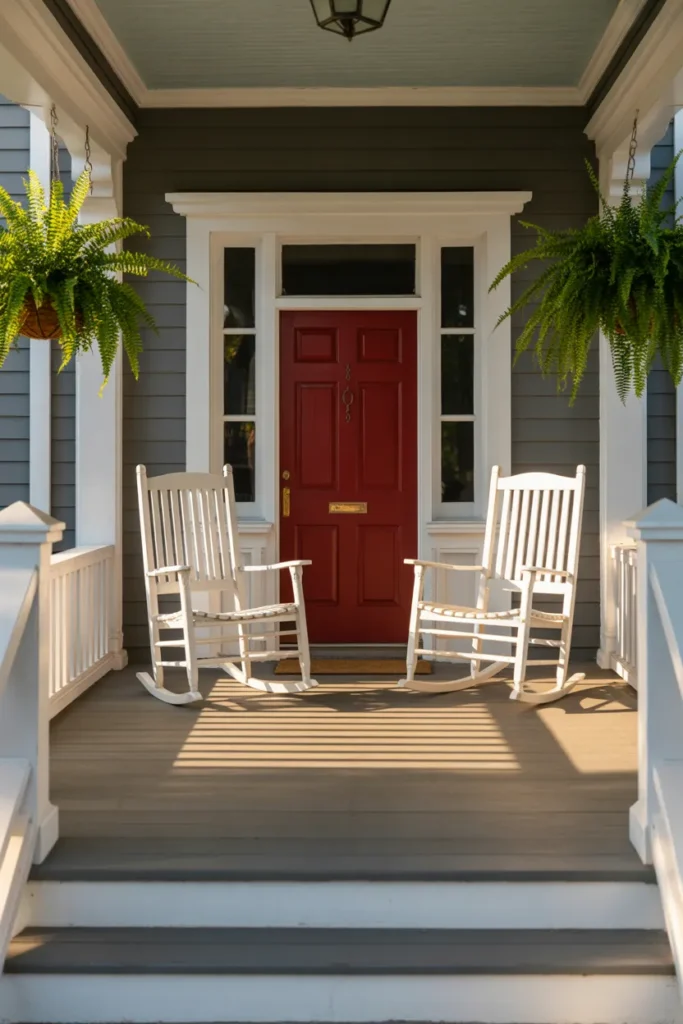
Rocking chairs in pairs work on shallower porches with as little as 5 feet of depth. Painted wood rockers in white, black, or a color that complements the door are the most versatile choice across American home styles. Natural teak or eucalyptus rockers work better on homes with a more contemporary or coastal aesthetic.
Avoid plastic rocking chairs in colors that do not connect to the overall exterior palette. Even on a well-planted and well-lit porch, mismatched plastic furniture signals a lack of design intention and undermines the curb appeal investment made elsewhere.
3. Install Layered Porch Lighting to Add Warmth and Security After Dark
Most USA homes rely on a single wall-mounted fixture beside the front door for porch lighting, which produces flat, harsh illumination that reads as purely functional rather than designed. Layering two or three light sources at different heights transforms the porch after dark and dramatically improves nighttime curb appeal.
The three-layer approach combines a primary overhead or wall fixture, a secondary ground-level or step light, and an accent source such as a lantern or string light. The overhead fixture should be proportional to the door width, roughly one-third the door height in fixture height, and positioned at eye level rather than at the top of the door frame where most builder-grade fixtures are incorrectly placed.
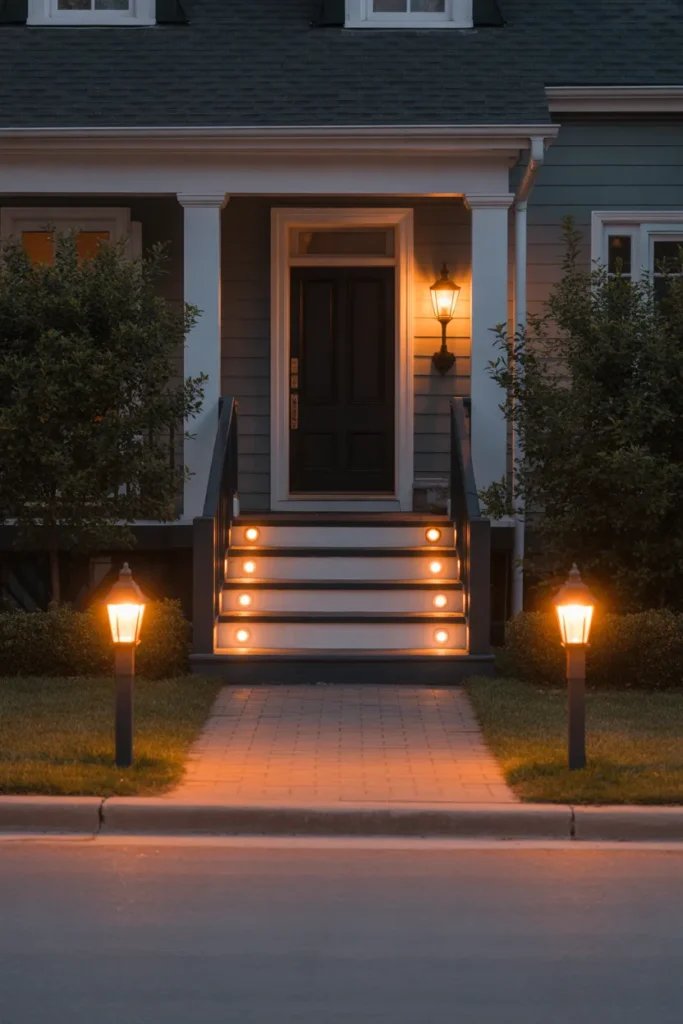
Step lights recessed into the riser face of each porch step provide low-level illumination that defines the entry path and adds a premium layered quality that single-fixture porches cannot achieve. These are low-voltage and straightforward to install on existing wood or composite steps.
For the accent layer, a pair of matching lanterns on tall shepherd hooks flanking the walkway or path leading to the porch steps creates a welcoming visual corridor from the street to the door. Use warm white bulbs at 2700K across all three layers for a cohesive, warm, inviting glow rather than the cold blue-white of daylight-balanced LEDs.
4. Use Symmetrical Planters to Frame the Entry and Ground the Porch Composition
Symmetry is the fastest visual shortcut to a polished, intentional porch. Placing matching planters on either side of the front door creates a framing effect that draws the eye directly to the entry point and gives the porch a finished, designed quality that asymmetrical arrangements rarely achieve with equal efficiency.
Choose planters that are proportional to the door and porch scale. On a standard single door with a 4-foot-wide porch, planters 14 to 18 inches in diameter are the correct scale. On a wider double-door entry or a porch with 8 or more feet of width, planters 20 to 26 inches in diameter provide the visual weight needed to balance the larger opening.
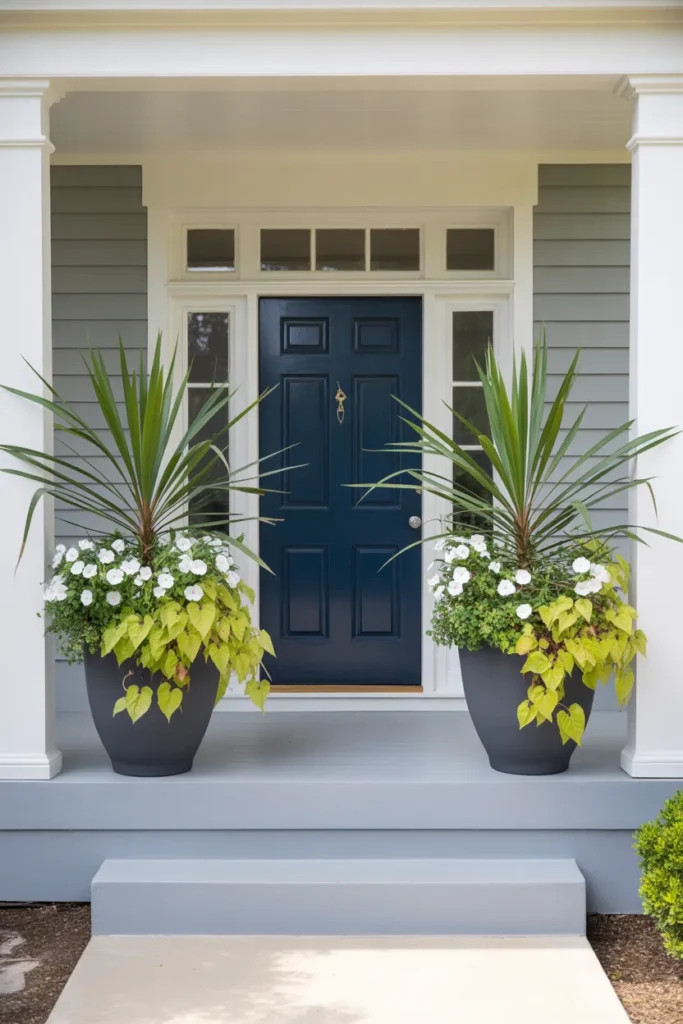
Material choice affects the overall porch aesthetic significantly. Fiberglass planters in a matte black, white, or terracotta finish work across contemporary, transitional, and traditional home styles. Cast stone and concrete planters skew traditional. Glazed ceramic in a solid deep tone works well on modern and eclectic exteriors. Avoid lightweight plastic planters that tip in wind or fade within a single season.
Plant selection within the planters should follow the thriller, filler, spiller formula for maximum visual density. One tall architectural plant such as a dwarf ornamental grass, small boxwood cone, or cordyline as the thriller, surrounded by a compact filler such as impatiens or petunias, with a trailing element such as sweet potato vine or creeping jenny spilling over the edge.
5. Replace a Builder-Grade Mailbox and House Numbers for an Immediate Detail Upgrade
Small hardware details like the mailbox and house numbers have an outsized impact on porch curb appeal because they are among the first specific elements a visitor or passerby reads at close range. Builder-grade black plastic mailboxes and adhesive vinyl house numbers communicate generic builder quality regardless of what surrounds them.
Replacing the mailbox with a wall-mounted solid metal option in a finish that matches the door hardware takes less than 30 minutes and immediately elevates the entry composition. Brushed bronze, matte black, and antique brass are the three finishes with the broadest compatibility across exterior color palettes and architectural styles.
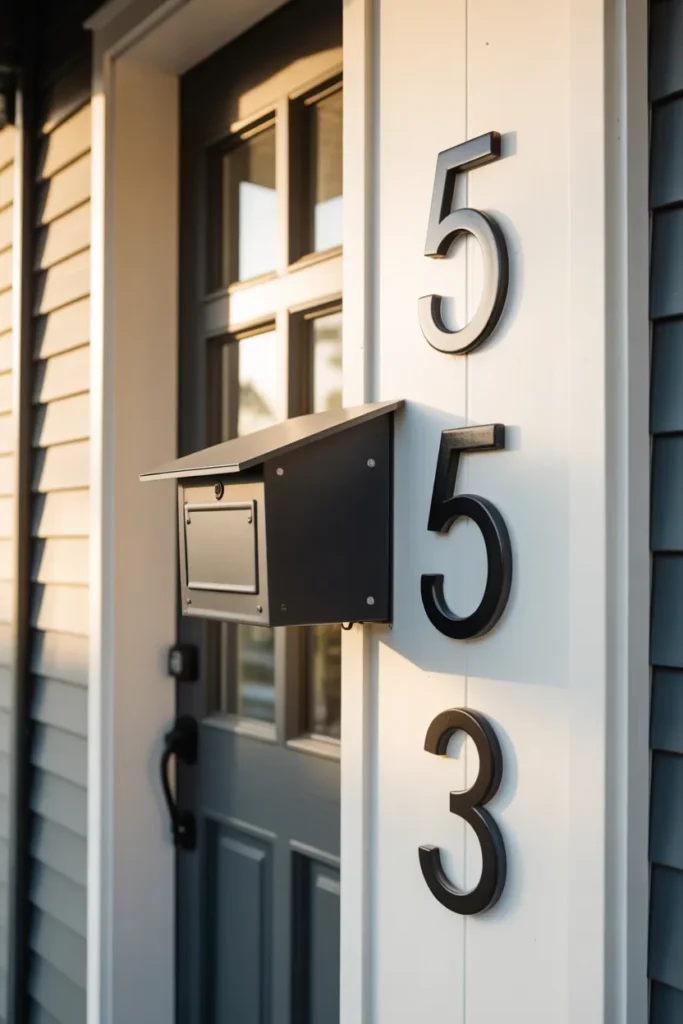
House numbers in a large-format, architecturally scaled font mounted directly on the exterior wall beside or above the door are one of the most specific curb appeal upgrades available. Numbers should be large enough to read clearly from the street, a minimum of 4 to 5 inches in height for standard residential lots, and mounted in a finish that either matches or intentionally contrasts the wall color.
Avoid mixing hardware finishes between the mailbox, house numbers, door handle, and light fixture. Even a single mismatched finish introduces visual inconsistency that experienced eyes read as unresolved. Commit to one metal finish across all exterior hardware and apply it consistently.
6. Lay a High-Quality Natural Fiber or Stone Entry Mat to Define the Threshold
The entry mat is the first object a visitor physically encounters at the front door and the last decorative element in the curb appeal composition. A cheap, faded, or incorrectly sized mat signals neglect at the precise moment it matters most, directly at the door threshold.
A correctly sized mat extends at least two-thirds the width of the door it serves. For a standard 36-inch front door, a mat of 24 to 30 inches in width is the minimum. For a double door or wider entry, a mat of 36 to 48 inches reads proportionally correct. A mat that is too small floats awkwardly in the threshold and looks like an afterthought.
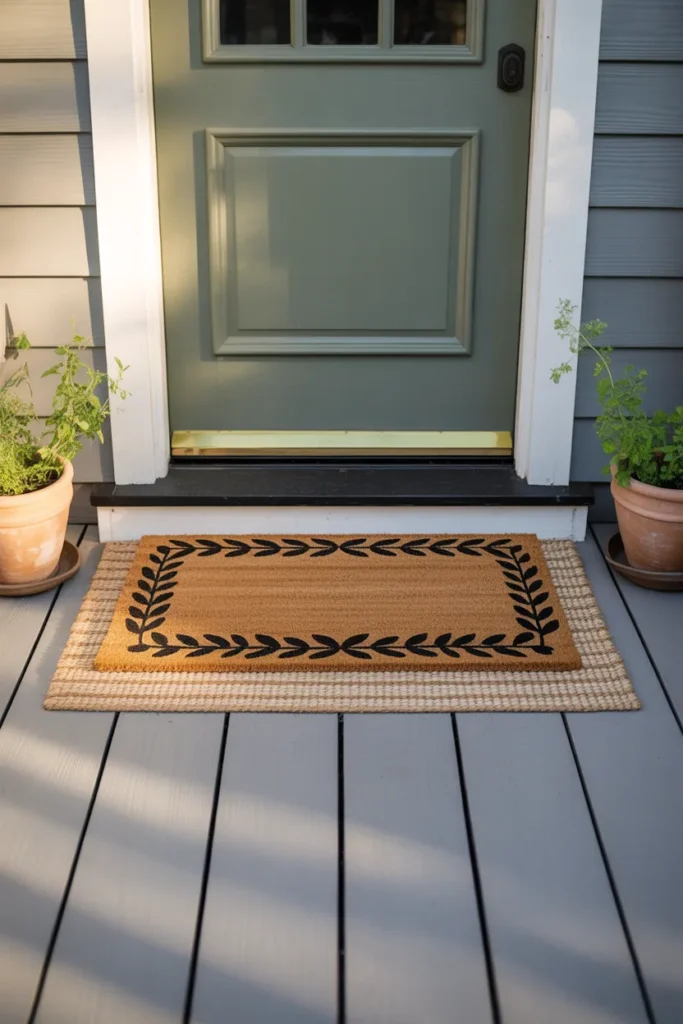
Natural coir mats with botanical motifs, simple linear borders, or clean text in a serif font are the most versatile choices across American home styles. They age gracefully, drain well, and provide effective shoe cleaning texture. Rubberized backing keeps the mat in position through daily foot traffic and wind without curling.
For porches with stone, tile, or brick flooring, an additional indoor-outdoor area rug layered under or beside the coir mat adds a second texture layer and defines the entry zone more fully. A jute or sisal rug in a neutral warm tone works well in this layering context and visually widens the perceived entry space.
7. Paint or Stain the Porch Floor to Unify the Space and Modernize the Palette
A porch floor in poor condition, whether cracked, peeling, stained, or in an outdated color, undermines every other curb appeal investment made above it. Repainting or restaining the porch floor is one of the highest-return exterior projects available because it transforms the entire horizontal plane of the porch in a single application.
Porch and floor enamel paint in a satin or semi-gloss finish is the correct product for horizontal wood porch surfaces. It resists foot traffic, moisture, and UV exposure far better than interior paint or standard exterior wall paint, both of which are common and costly mistakes in DIY porch floor projects.
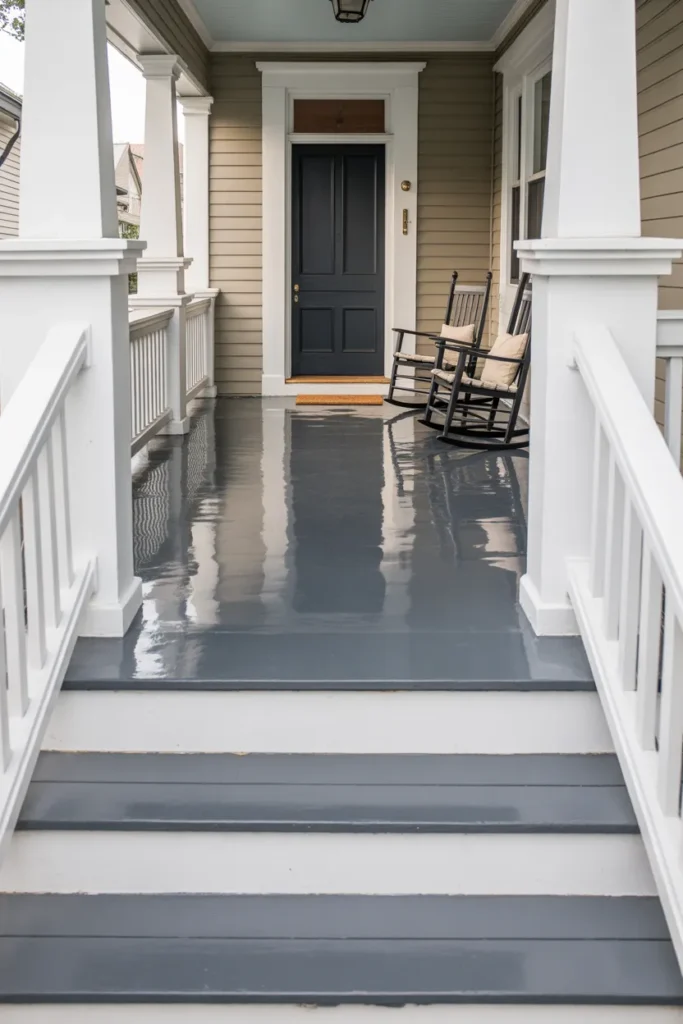
Gray is the most popular and broadly compatible porch floor color in the current USA design landscape. A medium warm gray works with white, cream, tan, and brick exteriors equally well and recedes visually so the door, planters, and seating become the focal elements rather than the floor. Soft sage, charcoal, and warm greige are effective alternatives depending on the surrounding exterior palette.
For concrete porch floors, a penetrating concrete stain in a warm stone or slate tone is more durable than surface paint and does not peel. Apply a clear concrete sealer over the stain after curing to extend the finish life and simplify cleaning.
8. Hang a Seasonal Wreath That Connects to the Architecture, Not Just the Season
A wreath on the front door is one of the most universally practiced front porch curb appeal moves, but it is also one of the most frequently executed poorly. The most common mistake is choosing a wreath based purely on seasonal theme rather than scale, material, and architectural compatibility.
A wreath should be approximately half the width of the door panel it hangs on, not the full door frame. For a standard 36-inch door, a wreath of 16 to 20 inches in diameter is the correct proportion. Larger wreaths can work on double doors or oversized entry statements, but on a standard single door they fill the visual field and crowd the door hardware.
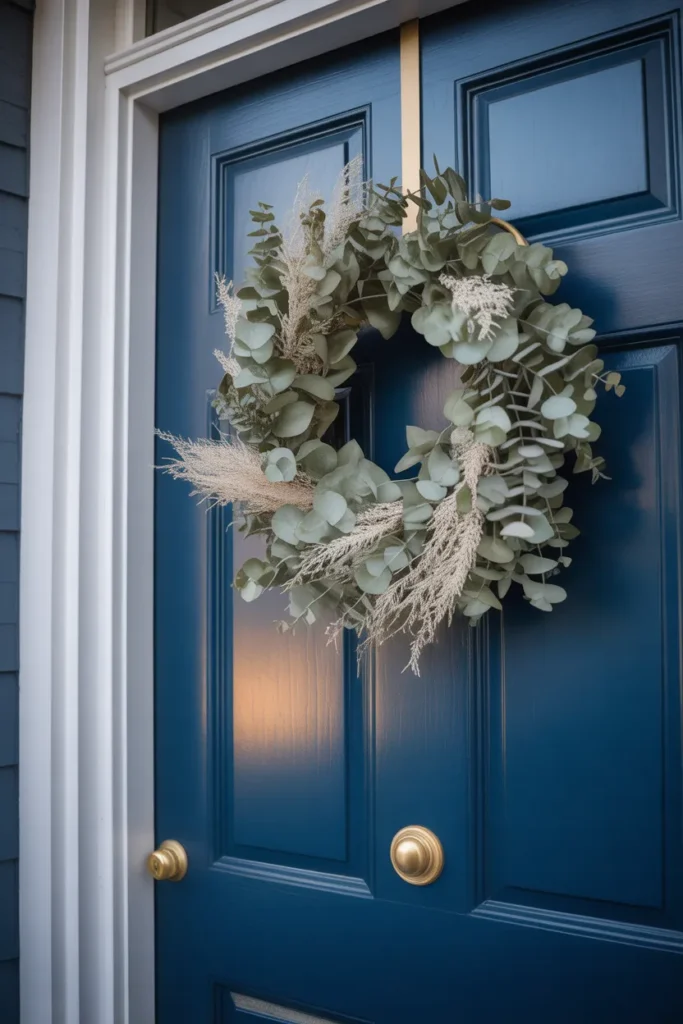
For year-round curb appeal rather than seasonal rotation, a preserved or dried botanical wreath in eucalyptus, olive branch, or dried lavender maintains a natural, composed quality across multiple seasons. These materials age gracefully and shift in tone rather than deteriorating the way fresh-cut wreaths do.
Hang the wreath at eye level on the door panel rather than centered on the full door height. Most front doors are 80 inches tall and hanging the wreath at true center places it above the natural viewing line from the street. Positioning it at 55 to 60 inches from the ground places it at optimal visual and photographic height.
9. Create a Layered Planting Bed at the Porch Foundation to Connect Architecture to Landscape
A front porch that sits on a bare foundation or surrounded by a single row of flat shrubs looks architecturally unfinished regardless of how well the porch itself is decorated. A layered foundation planting bed that connects the porch structure to the surrounding landscape is one of the most powerful and lasting stunning front porch ideas to elevate curb appeal at a property level rather than just a porch level.
Layering means using three height tiers within the planting bed. A tall background layer of columnar shrubs or small ornamental trees such as arborvitae, holly, or ornamental cherry provides vertical structure. A mid-height layer of rounded shrubs such as boxwood, loropetalum, or spirea fills the middle zone. A low front layer of perennial groundcover, ornamental grasses, or seasonal color annuals softens the bed edge at ground level.
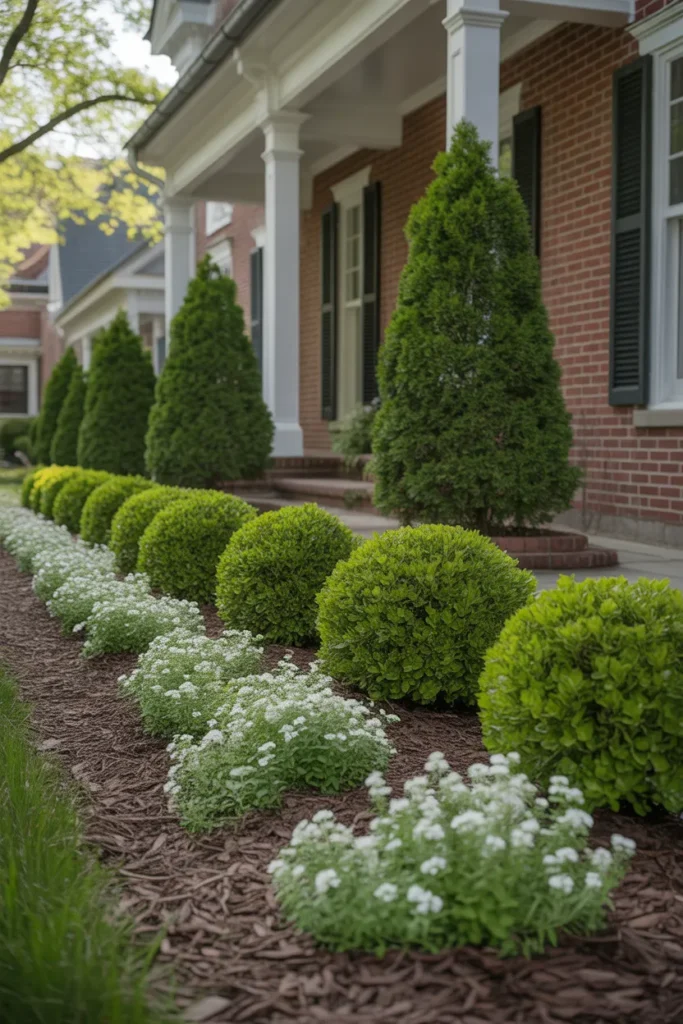
Mulch the bed in a dark brown or black hardwood mulch to a depth of 3 inches. Fresh mulch dramatically improves the finished appearance of any foundation bed because it unifies the soil surface, suppresses weeds, and makes every plant within the bed read more clearly against a consistent dark background.
Keep the bed width proportional to the porch height. A porch with 8-foot ceilings generally reads best with a planting bed 4 to 5 feet deep. A narrower bed looks insufficient against a taller structure and fails to bridge the visual gap between the architecture and the ground plane.
10. Power Wash and Refresh All Surfaces Before Any Decorative Investment
The most impactful and most overlooked of all stunning front porch ideas to elevate curb appeal is the one that costs the least: a thorough power wash of every porch surface before a single decorative dollar is spent. Mildew-stained columns, dirty porch ceilings, grimy floors, and weathered railings visually cancel the effect of new planters, furniture, and lighting.
A residential electric pressure washer at 1600 to 2000 PSI is sufficient for painted wood, composite decking, and concrete porch surfaces. Use a 25-degree nozzle on painted surfaces and a 15-degree nozzle on concrete and brick. Keep the nozzle moving at a consistent distance of 12 to 18 inches from the surface to avoid etching or paint lifting.
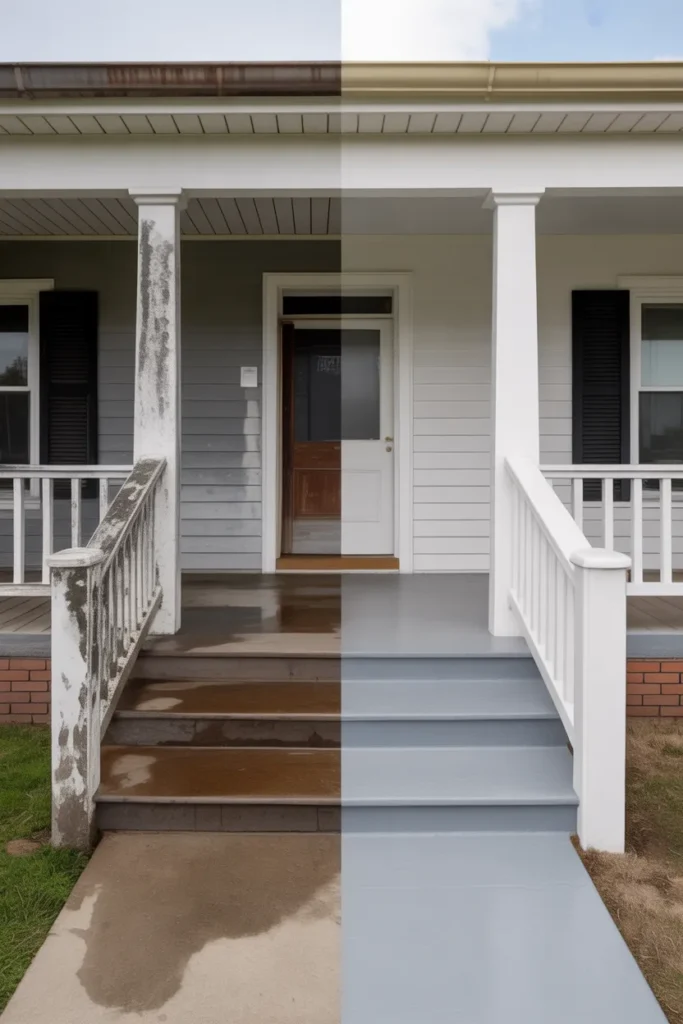
After washing, inspect the porch ceiling for any peeling paint, the railings for loose balusters, and the floor for soft or damaged boards. Address these structural and finish issues before introducing any new decor. A well-decorated porch with a peeling ceiling or a loose railing communicates deferred maintenance rather than elevated curb appeal.
This step is also essential before any painting, staining, or sealing project. Paint and stain applied over dirt, mildew, or loose material fail significantly faster than those applied to a clean, prepared surface. The power wash is not optional preparation. It is the foundation that every other upgrade builds on.
Conclusion
The most effective approach to stunning front porch ideas to elevate curb appeal is to start with surfaces and structure, then layer in furniture, lighting, and planting in that order. A power-washed, freshly painted porch with proportional planters and layered lighting will consistently outperform a heavily decorated porch on a neglected base.
Save this post so you can return to it as you work through each upgrade at your own pace and budget. Every home has a different porch footprint, architectural style, and regional climate to work within, and the ideas here are designed to adapt to all of them. For more exterior design guidance covering landscaping, garage doors, shutters, and driveway improvements, explore the rest of the site for practical curb appeal ideas that go beyond the porch.