
Most bathrooms default to white, grey, or beige — not because those colors are best, but because color feels risky in a small, high-moisture space. This guide covers 14 unexpected ways to create a joyful colorful bathroom without making design mistakes that are expensive to fix. Every idea here is practical, decision-focused, and built around real bathroom constraints so you can move forward with confidence rather than guesswork.
1. Paint Only the Ceiling to Introduce Color Without Commitment
The ceiling is the most underused surface in any bathroom — and the safest place to introduce bold color for the first time. When you paint the ceiling a saturated tone while keeping walls neutral, the room gains personality and visual depth without the color ever feeling overwhelming at eye level.
This works particularly well in small bathrooms where a colored wall might feel oppressive. Looking up, the eye catches the color as a surprise rather than a constant presence. It creates the joyful, unexpected quality that distinguishes a well-designed colorful bathroom from one that simply has color applied without thought.
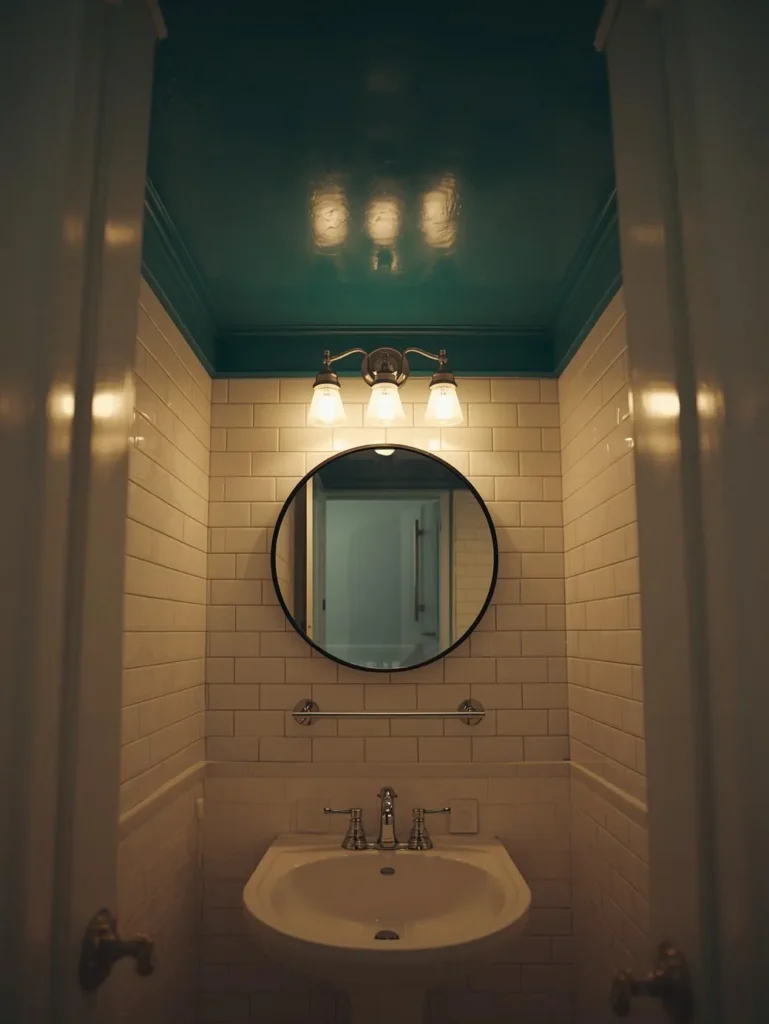
Deep teal, dusty terracotta, soft cobalt, or warm mustard all perform well on bathroom ceilings. The key is choosing a color with enough saturation to read as intentional — pale pastel ceilings tend to look like unfinished primer rather than a design decision.
Avoid high-gloss finishes on bathroom ceilings unless your ventilation is excellent. Gloss picks up moisture condensation visibly. A satin or eggshell finish in a moisture-resistant formula gives the color its best chance of lasting.
2. Use Colorful Grout Between White Tiles to Reframe the Entire Surface
White tile with white grout is safe. White tile with colored grout is a statement. Switching the grout color on an existing or new white tile installation completely transforms how the surface reads — and it costs a fraction of retiling.
Terracotta-toned grout with white rectangular tile gives the bathroom a warm, Mediterranean quality. Cobalt blue grout with white square tile reads graphic and modern. Sage green grout with white penny tile feels fresh and botanical. The tile stays neutral; the grout carries the color story.
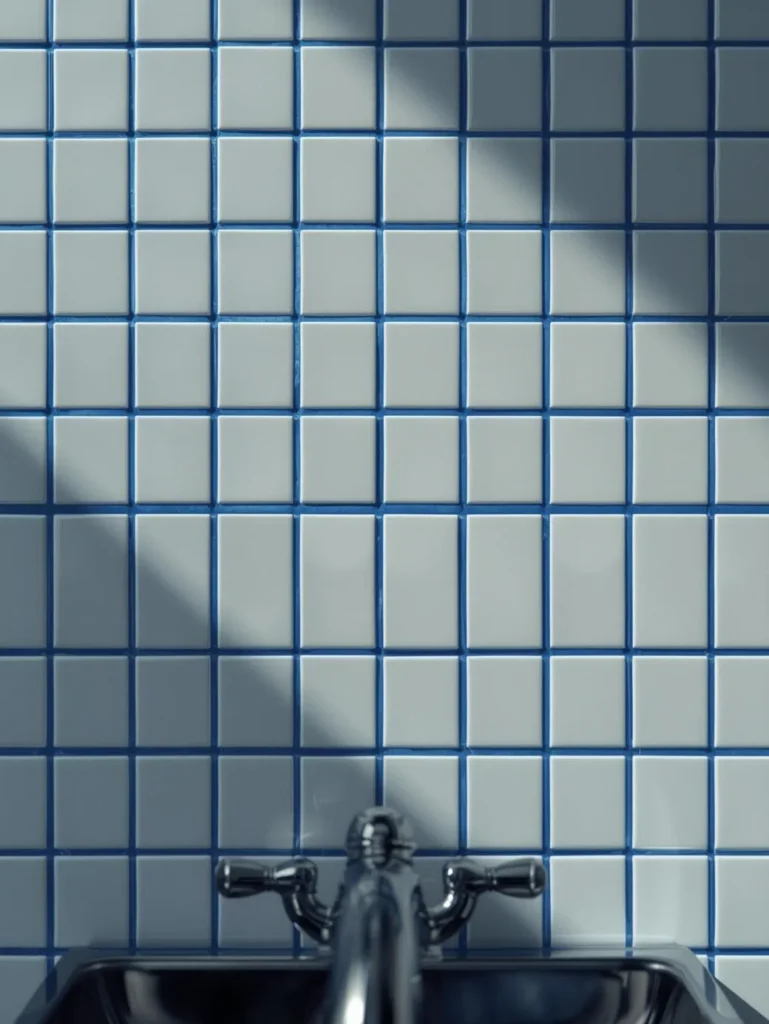
This is one of the most effective unexpected ways to create a joyful colorful bathroom because the impact far exceeds the investment. In rental situations where tile cannot be replaced, colored grout applied over existing light-colored grout using a grout colorant product can achieve a similar result without permanent alteration.
The mistake to avoid is choosing a grout color that is too close to the tile color — the contrast needs to be clear enough to read as intentional. A subtle difference just looks like discoloration.
3. Install a Single Colorful Freestanding Bathtub as the Room’s Focal Point
A freestanding bathtub in a non-white color is one of the most dramatic single-object decisions in bathroom design. In a room where everything else is neutral — white walls, light flooring, simple fixtures — a deep sage green, burnt sienna, navy, or matte black tub becomes a piece of functional sculpture.
This approach works best in larger bathrooms where the tub can sit with space around it and be appreciated from multiple angles. The contrast between the colorful tub and a restrained surrounding environment is what creates the joyful, unexpected quality. Crowding it against walls or surrounding it with competing colors diminishes the effect significantly.
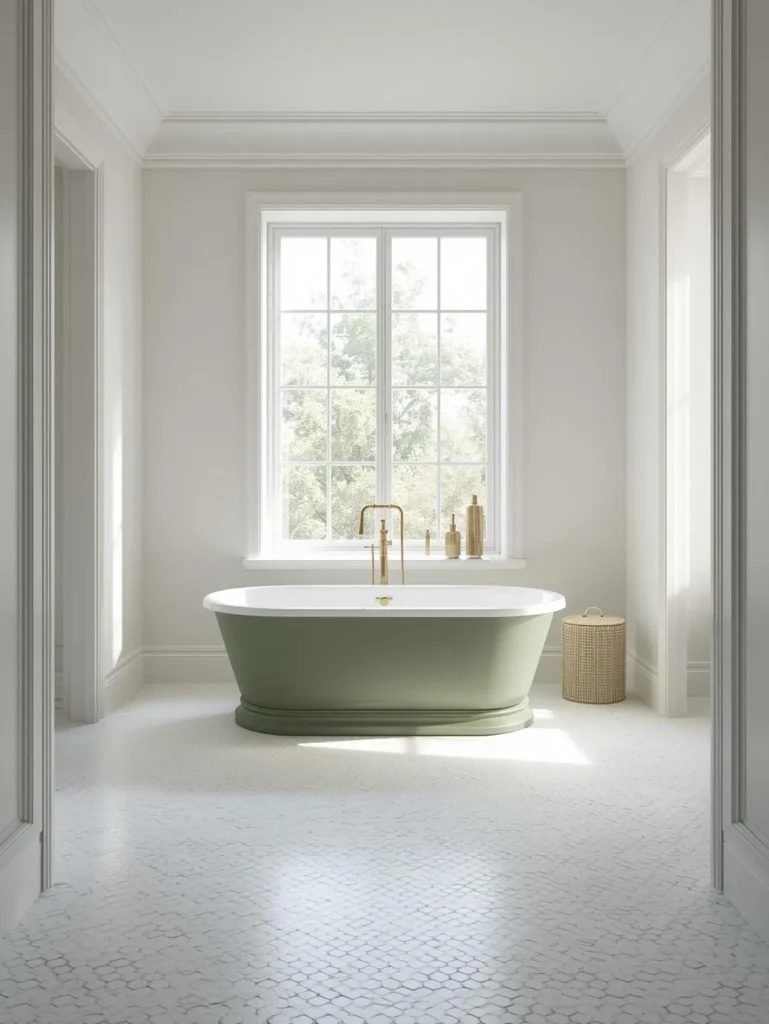
For smaller bathrooms where a freestanding tub is not practical, the same principle applies to a colorful pedestal sink. A terracotta or cobalt pedestal sink against white walls delivers a comparable level of unexpected visual impact in a much smaller footprint.
Choose matte finishes over glossy for colored tubs — they are more forgiving of watermarks, soap residue, and everyday contact marks, and they photograph better in both natural and artificial light.
4. Hang Colorful Artwork in Moisture-Resistant Frames as Wall Decor
Most people treat bathroom walls as purely functional surfaces — tile, paint, mirror, done. Introducing framed artwork is one of the simplest unexpected ways to create a joyful colorful bathroom because it brings in color, personality, and visual interest without touching the architecture at all.
The critical factor is moisture resistance. Frames need to be sealed or made from materials that handle humidity — acrylic glazing rather than glass, sealed wood or metal frames, and art printed on quality paper sealed behind the glazing. Placing artwork away from the direct splash zone of the shower or sink extends its lifespan significantly.
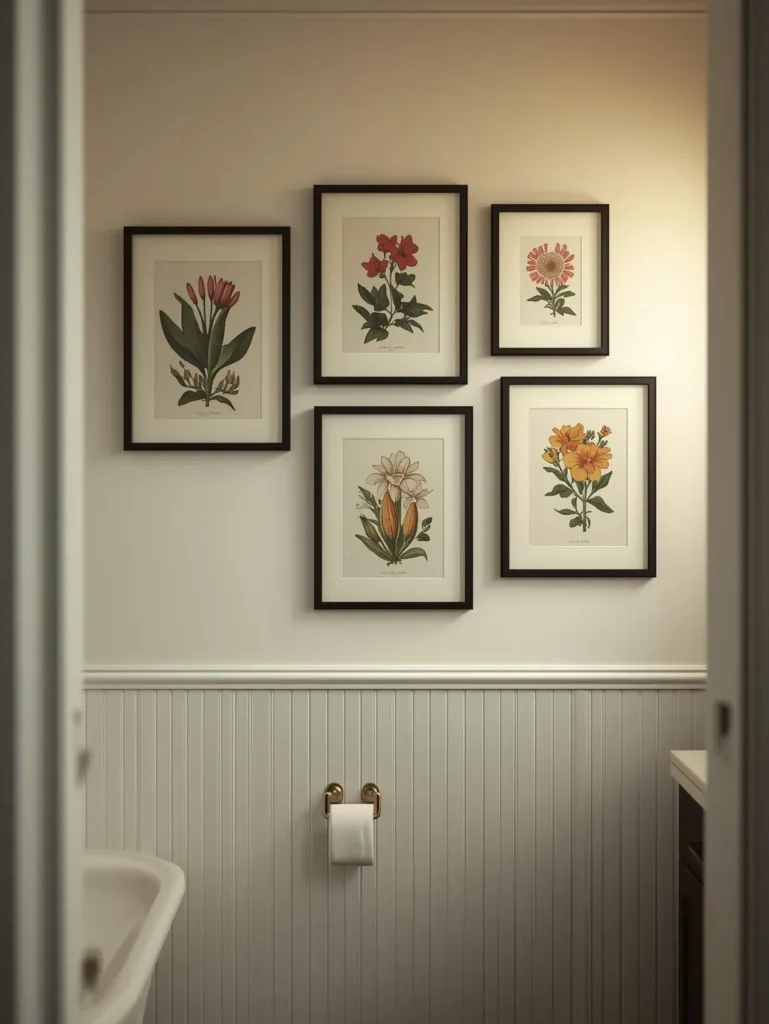
Choose prints with strong, saturated color — abstract botanical prints, geometric color-block art, or illustrated patterns in coral, golden yellow, emerald, or cobalt all perform well against white or neutral bathroom walls. A grouping of three to five smaller prints creates more impact than a single piece and allows for a more layered, curated feel.
Avoid cheap frames that show rust at the corners within months. Powder-coated metal frames or solid sealed-wood frames are the minimum standard for a bathroom environment.
5. Apply Bold Color to Vanity Cabinets While Keeping Everything Else Neutral
Painting existing vanity cabinets a saturated color is the bathroom equivalent of a sofa change in a living room — it shifts the entire energy of the space without structural work. In a bathroom where walls, tile, and flooring remain neutral, a boldly colored vanity becomes the clear visual center.
Forest green, deep navy, warm terracotta, dusty violet, and rich ochre all work well on bathroom vanity cabinets because they contrast cleanly against white countertops, chrome or brass hardware, and light tile. The surrounding neutrality gives the color room to perform rather than compete.
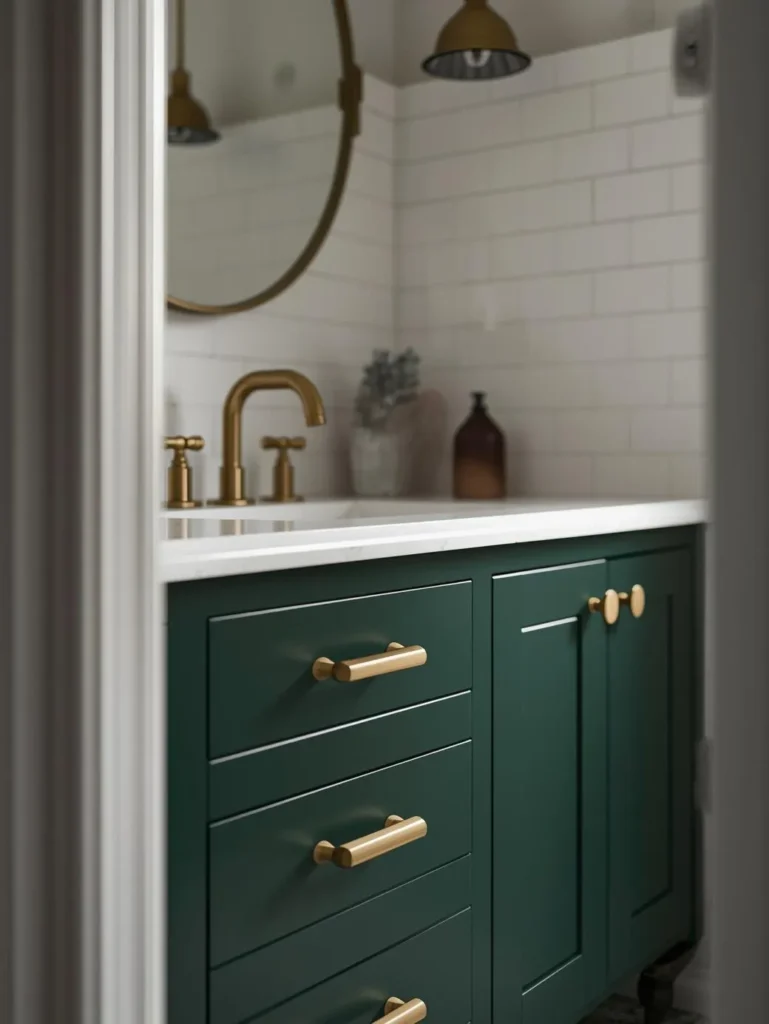
This is particularly effective in powder rooms and half baths — smaller spaces where a single bold element can be experienced at close range and makes an outsized impression on anyone who enters. In a full bathroom, pair the colored vanity with white or very light walls so the room does not feel visually dense.
Use a cabinet-specific paint with a satin or semi-gloss finish for durability in a moisture-heavy environment. Flat finishes on cabinetry absorb moisture and mark easily — they are not appropriate for this application.
6. Use Colorful Towels and Textiles as a Non-Permanent Color Strategy
Textiles are the most reversible color tool in any bathroom. A set of coordinated towels in a bold, saturated palette — warm terracotta, electric blue, citrus yellow, or rich plum — adds immediate color with zero commitment and zero installation. It is the fastest path to a more joyful colorful bathroom for renters, temporary spaces, or homeowners who are not yet ready to commit to permanent color decisions.
The approach works because textiles occupy significant visual real estate in a bathroom — hung towels, a bath mat, a shower curtain, and a small storage basket together cover enough surface area to establish a clear color story. Choosing two to three complementary colors across these elements creates cohesion without monotony.
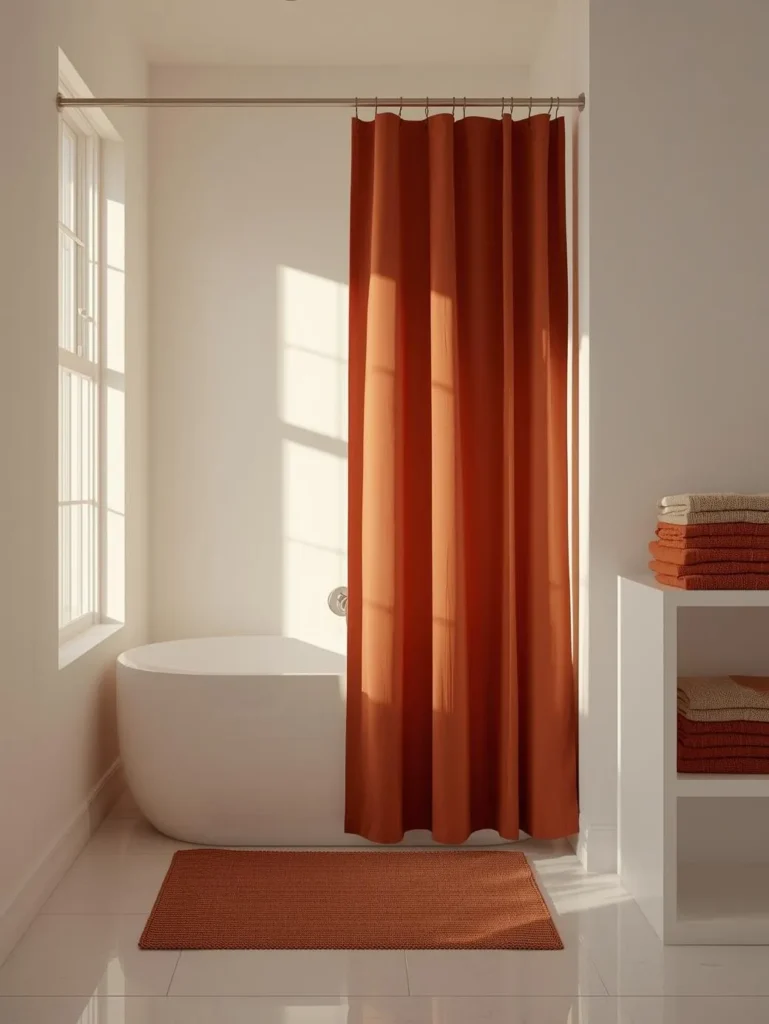
The mistake most people make is choosing towels in colors that are too close to the existing neutral backdrop — light grey towels against a grey bathroom just look flat. The textiles need to contrast with the walls and flooring to do their job effectively.
A patterned shower curtain with a strong color palette is the single highest-impact textile purchase in this category. It covers a large vertical surface and sets the color tone for everything else in the room.
7. Install Colorful Zellige or Handmade Tile as an Accent Band
Zellige tile — the handmade Moroccan clay tile known for its slight irregularity and rich glaze variation — brings color, texture, and artisanal quality to a bathroom surface simultaneously. A single horizontal band of zellige tile running across the middle of a white-tiled wall introduces color without requiring the entire surface to change.
The variation in zellige glaze means a “green” tile installation contains flashes of teal, olive, sage, and gold within a single field. This natural variation creates visual richness that machine-made solid-color tile cannot replicate, and it is exactly the kind of unexpected detail that makes a bathroom feel genuinely designed rather than assembled from standard options.
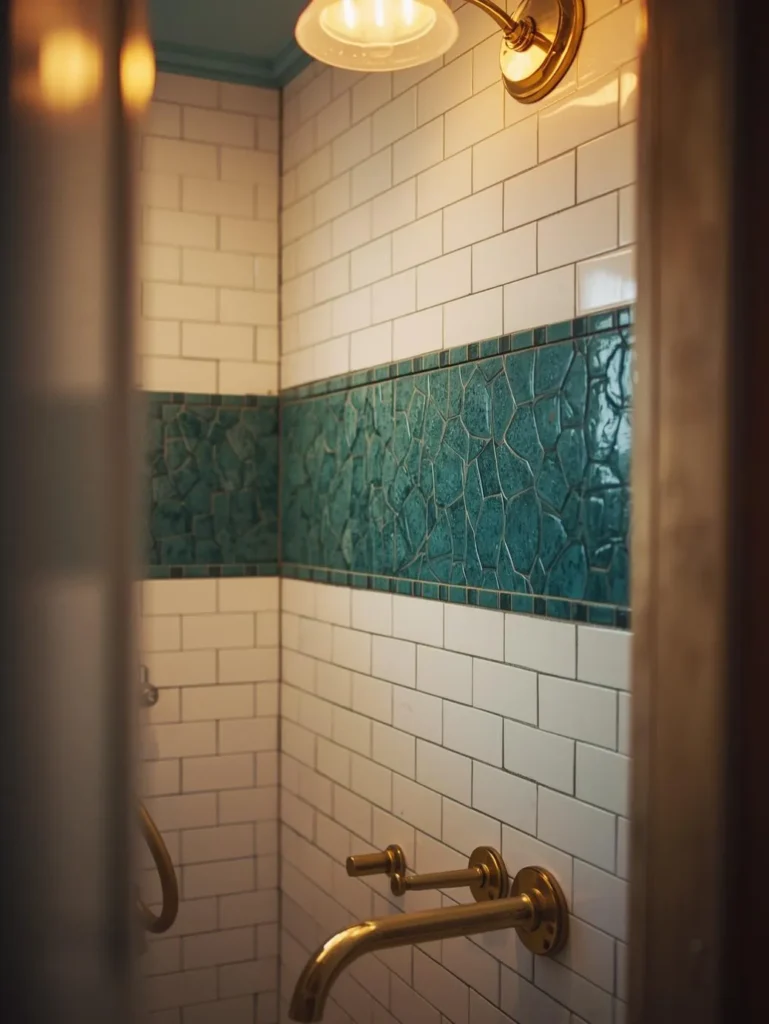
This technique works in bathrooms of every size. In small bathrooms, keep the band narrow — four to six inches — at counter height or as a border at the top of a tile wainscot. In larger bathrooms, a full accent wall or floor-to-ceiling zellige installation behind the vanity reads as a true design statement.
Use a grout color that is close to the tile’s dominant tone to allow the tile variation to be the focal point rather than the grid.
8. Choose a Colorful Patterned Floor Tile That Does All the Heavy Lifting
In a bathroom where walls stay white and fixtures stay neutral, a patterned colorful floor tile carries the entire color narrative of the space entirely from the ground up. This is one of the most unexpected ways to create a joyful colorful bathroom because the color source is underfoot — where people rarely expect it — rather than at eye level where it might feel too intense.
Encaustic cement tiles in geometric patterns, vintage-style Spanish floor tiles, and bold terrazzo with multicolor aggregate all work well for this purpose. A pattern with two or three strong colors — cobalt and white, terracotta and cream, emerald and black — establishes the room’s palette and informs every other material choice.
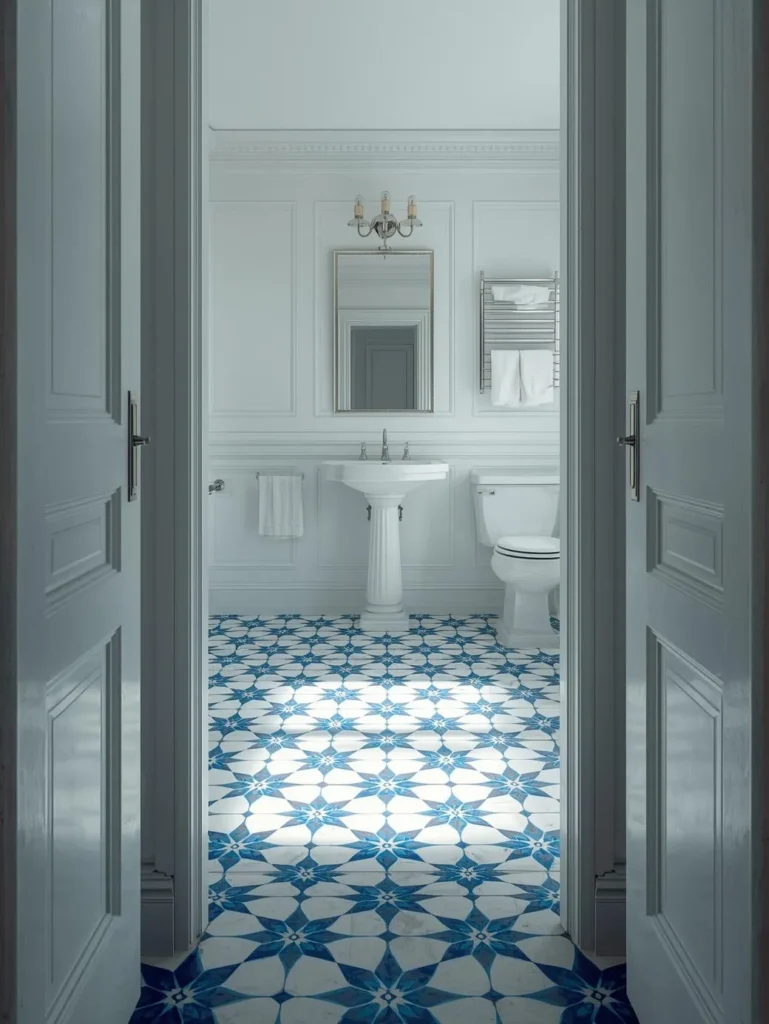
For small bathrooms, smaller-scale tile patterns are safer. Large patterns on very small floors can feel disorienting rather than joyful. For larger bathrooms, bold oversized patterns read confidently and anchor the space with real visual authority.
Keep the grout color neutral and close to the lighter tile color in the pattern — this lets the pattern read clearly rather than fragmenting into individual pieces.
9. Add Color Through Open Shelving Styled With Purposeful Objects
Open shelving in a bathroom is most often styled with white towels and clear bottles — which is clean but completely devoid of personality. Replacing or supplementing those items with colorful, purposeful objects turns the shelving into a curated color moment without any structural change to the room.
Terracotta pots with small trailing plants, colorful ceramic soap dishes, stacked books with bright spines, colored glass vessels, and woven baskets with warm natural tones all contribute to a color story while remaining completely functional. The key is editing ruthlessly — open shelving only looks intentional when it is not overcrowded.
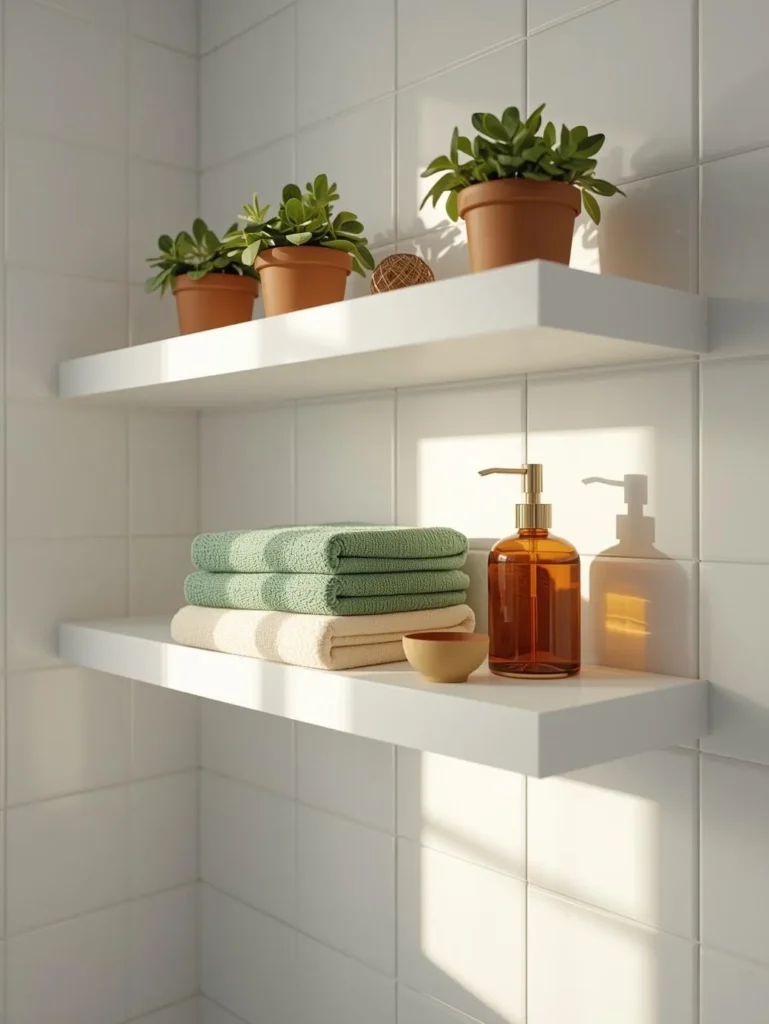
This approach is ideal for colorful bathroom ideas for small spaces because the shelf itself remains compact while the items on it do significant visual work. It is also the most budget-conscious approach on this list — swapping out existing shelf objects costs far less than any material or fixture change.
Choose objects in two to three colors maximum per shelf unit. More colors than that reads as clutter rather than curation, even when the objects themselves are interesting.
10. Use a Colorful Vanity Mirror Frame as the Room’s Accent Piece
A mirror frame is one of the most overlooked surfaces in bathroom design. Most vanity mirrors are frameless or come in chrome — which is fine functionally but adds nothing to the room’s personality. Replacing or reframing the vanity mirror in a bold color or finish immediately gives the room a focal point above the sink.
A mirror with a wide frame in cobalt blue, warm terracotta, deep green, or mustard yellow against white walls reads as a confident design statement that requires no other color in the room to feel complete. The mirror itself reflects light and space while the frame contributes color — making it a particularly efficient design tool in compact bathrooms.
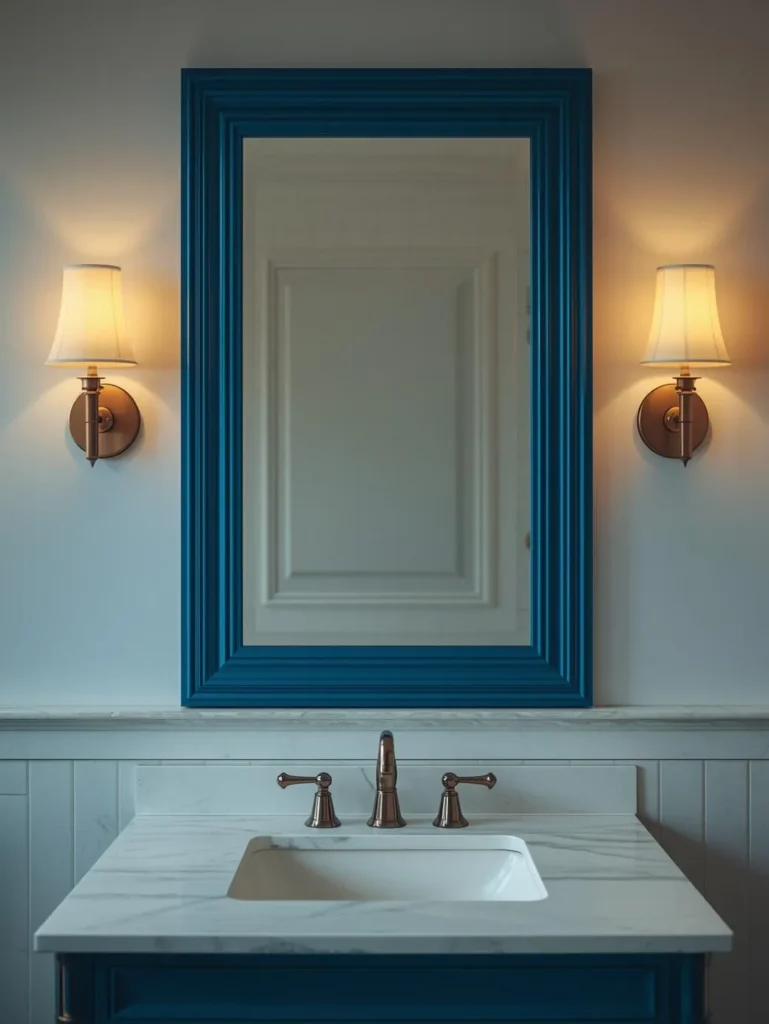
For renters or those working with existing frameless mirrors, adhesive mirror frame kits in various finishes are widely available and can be removed without damage. This is one of the most reversible color additions available in a bathroom context.
Sizing matters: the mirror frame should be proportional to the vanity below. A frame that is too small above a wide double vanity looks like an afterthought. When in doubt, go larger.
11. Introduce Color Through Limewash or Venetian Plaster on One Wall
Limewash paint and Venetian plaster finish are two of the most sophisticated wall treatments available for a colorful bathroom because they introduce color through depth rather than flatness. The layered application creates variation within a single color — lighter and darker tones shifting across the same surface depending on the light source and viewing angle.
A limewash wall in blush terracotta, aged sage, or dusty rose adds warmth and texture that flat paint cannot replicate. It reads as artisanal and considered — a quality associated with high-end bathroom interior design — while remaining achievable as a DIY project or affordable professional application.
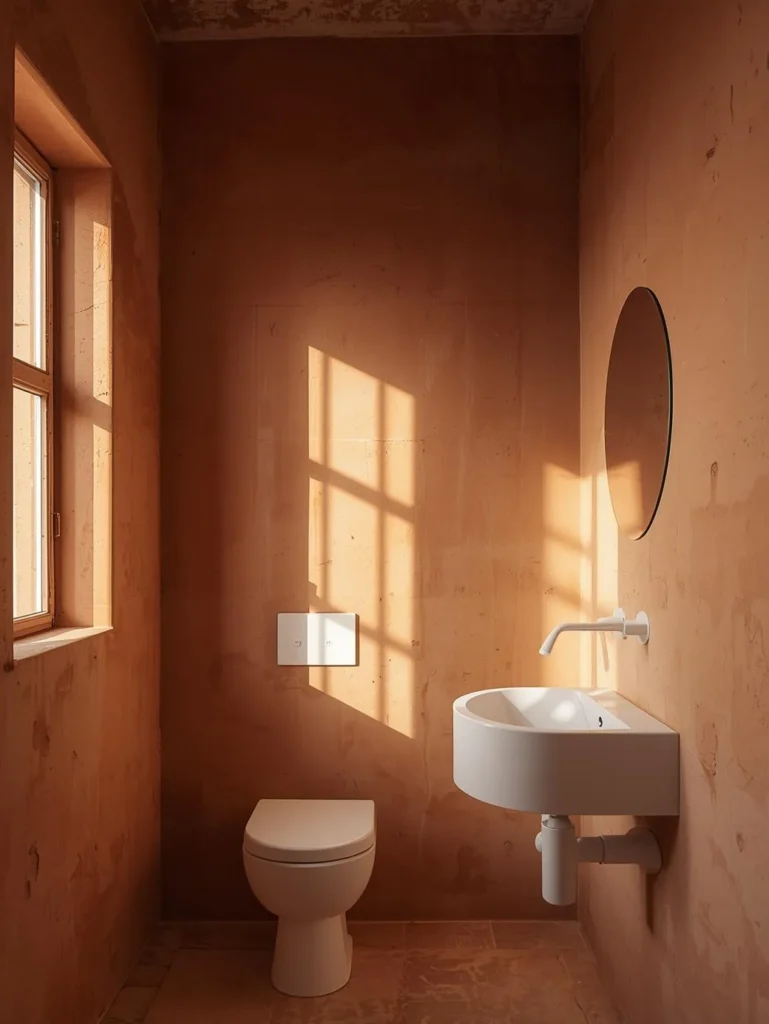
This technique works on a single accent wall in a bathroom of any size. In small bathrooms, applying it to the wall facing the door creates maximum impact for someone entering the space. In larger bathrooms, the wall behind a freestanding tub or behind the vanity are the strongest placement choices.
Ensure the wall is properly sealed for moisture resistance before application. Some limewash products are inherently moisture-tolerant; others require a topcoat sealer in wet bathroom environments.
12. Mount Colorful Wall Sconces Instead of Standard Chrome Fixtures
Lighting fixtures are functional objects that most homeowners choose purely for output — warm white, correct brightness, done. Treating lighting as a color opportunity is one of the most unexpected decisions you can make in a colorful bathroom makeover because it adds color precisely where the eye already goes: around the mirror, at face level, at the most-used surface in the room.
Ceramic wall sconces in sage green, cobalt blue, or warm amber are widely available and install in the same mounting position as standard vanity lights. They bring color to the functional zone of the bathroom — the area around the mirror — rather than confining it to a corner or accent wall where it might be missed.
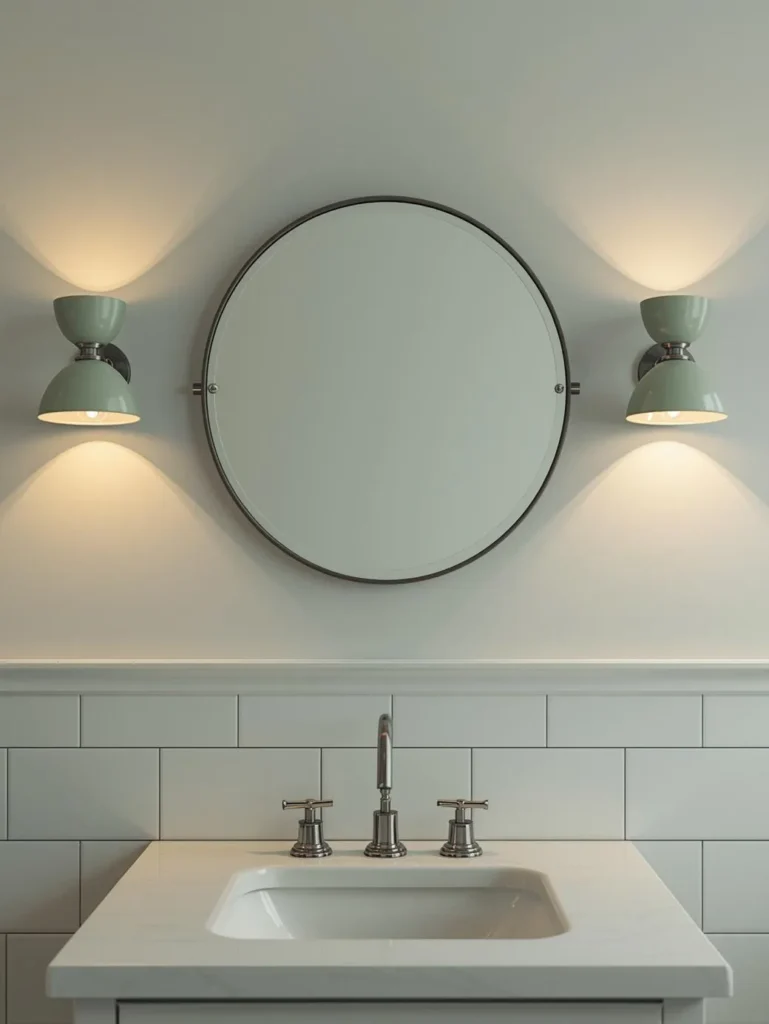
This works in bathrooms at every scale. In a powder room with limited wall space, a single colorful sconce on each side of a small mirror makes more design impact than any other single change. In a full bathroom, a pair of bold ceramic or colored-glass sconces frames the mirror and establishes the color intent of the entire space.
Verify the fixture’s UL wet or damp rating before installing near a shower. Fixtures rated for dry locations only should not be mounted within the splash zone of any water source.
13. Layer Multiple Shades of One Color for a Tonal Colorful Bathroom
Most colorful bathroom advice pushes contrast — bold color against white, one accent against neutral. A tonal approach does the opposite: it builds the entire bathroom from multiple shades of a single hue, creating a rich, immersive, and deeply joyful color environment without visual chaos.
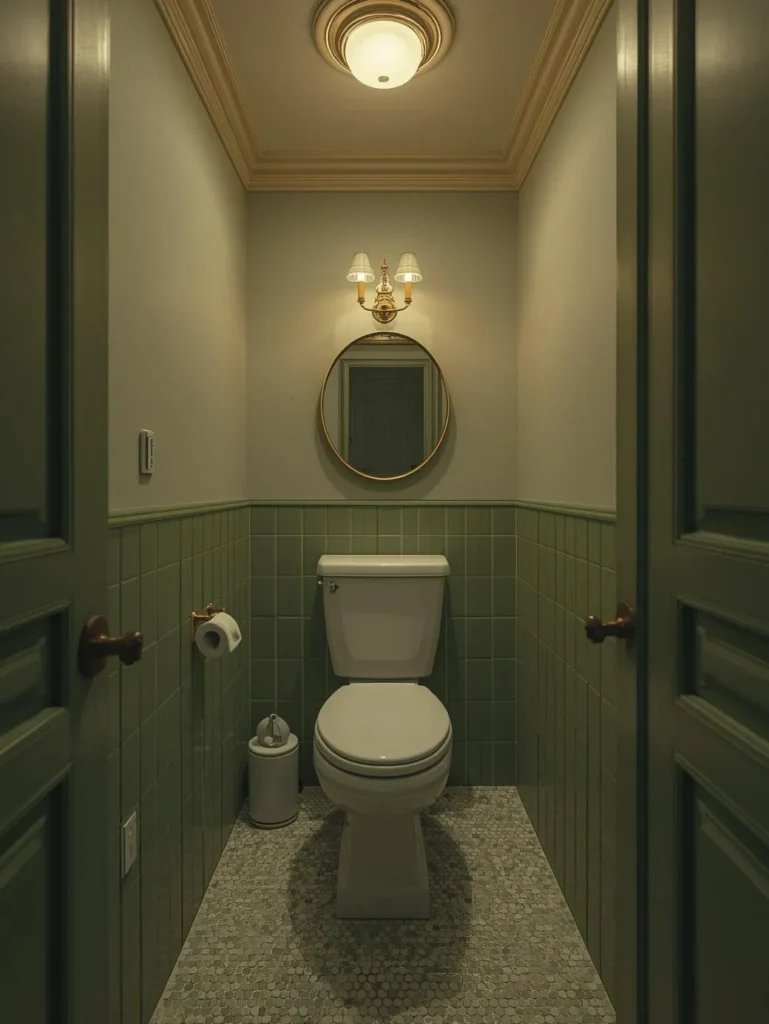
A tonal green bathroom might include sage tile on the floor, a deeper forest green on the lower wall, a mid-tone eucalyptus on the upper wall, and cream or warm white at the ceiling. The colors are clearly related, the transitions are intentional, and the overall effect is sophisticated rather than overwhelming. This is one of the most underutilized colorful small bathroom ideas because it solves the most common fear — that color will make a small space feel smaller — by using one color family throughout rather than introducing contrast that breaks the room into smaller visual zones.
Anchor a tonal bathroom with one slightly darker accent — the vanity, the floor tile, or a single wall — to provide enough contrast for the lighter tones to read clearly. Without any variation in depth, tonal rooms can flatten out.
14. Replace a Standard Door With a Colorful Painted Interior Bathroom Door
The bathroom door is a surface that almost nobody thinks about — which is exactly why painting it a bold, saturated color is one of the most unexpected ways to create a joyful colorful bathroom. From inside the bathroom, a painted door adds a wall of color. From outside, it signals a thoughtful, designed interior the moment someone approaches it.
Deep coral, bright cobalt, warm saffron yellow, and rich forest green all perform well on interior bathroom doors because they are viewed primarily in close proximity — making the color feel vivid and intentional rather than distant and subtle. The door frame can remain white to make the door color pop cleanly.
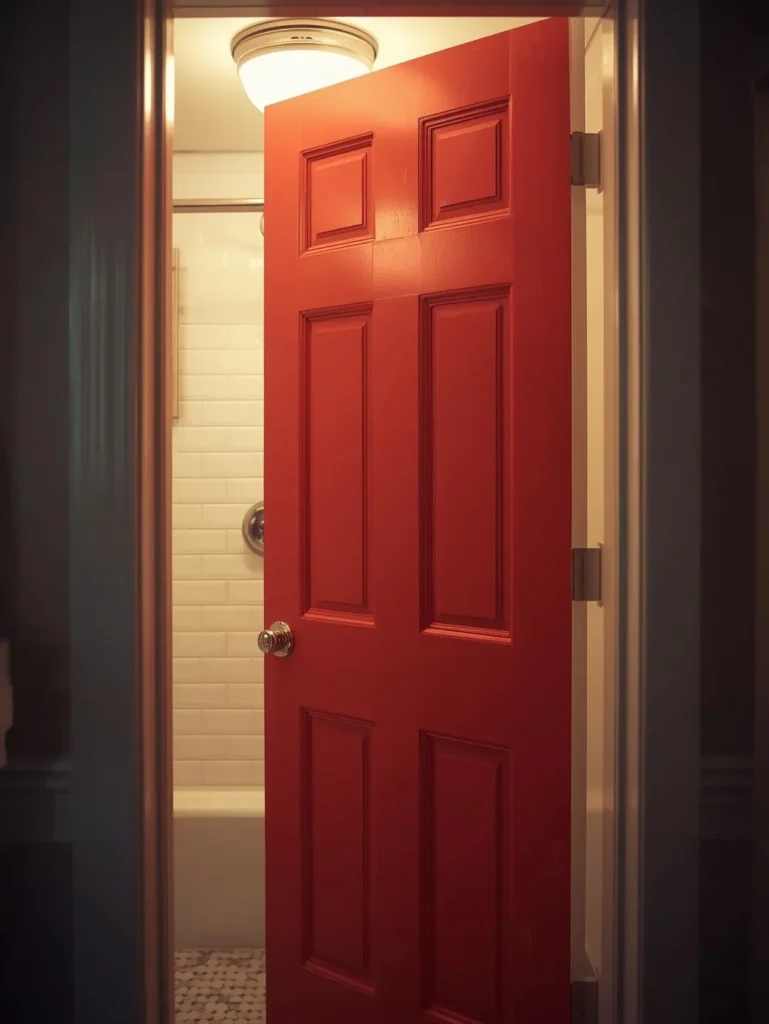
This approach costs very little — a quart of quality interior paint covers a standard door with two coats to spare — and it is the only idea on this list that impacts both the interior and the exterior visual environment simultaneously. In hallways with multiple doors, a single painted bathroom door becomes a deliberate punctuation in an otherwise neutral corridor.
Use a semi-gloss finish for bathroom doors — it is durable, wipeable, and reflects enough light to make the color vibrant without being overly shiny.
Conclusion
Color in a bathroom does not have to be risky, expensive, or permanent to be effective. These 14 unexpected ways to create a joyful colorful bathroom range from completely reversible textile swaps to considered architectural decisions — so there is a realistic starting point regardless of your budget, rental situation, or design confidence level.
Save this post so you can return to it as you work through your bathroom one decision at a time. The ideas here are designed to be used individually or layered together progressively. When you are ready to go further, explore more colorful bathroom ideas and small bathroom design guides to keep building a space that feels genuinely yours.