Choosing the right king size bed setup is one of the most impactful decisions you can make for your bedroom. If your space feels off but you can’t pinpoint why, the layout, frame style, or headboard choice is usually the culprit. This guide covers 15 king size bed ideas for 2026 that go beyond aesthetics — each one solves a real design problem so you can make a confident, informed choice.
1. Floating Platform Bed With Integrated LED Base
A floating platform bed uses a recessed base to create the illusion that the bed hovers above the floor. The LED strip lighting underneath adds a soft ambient glow without requiring a separate lamp. This works especially well in bedrooms with limited natural light, where overhead lighting feels harsh at night.
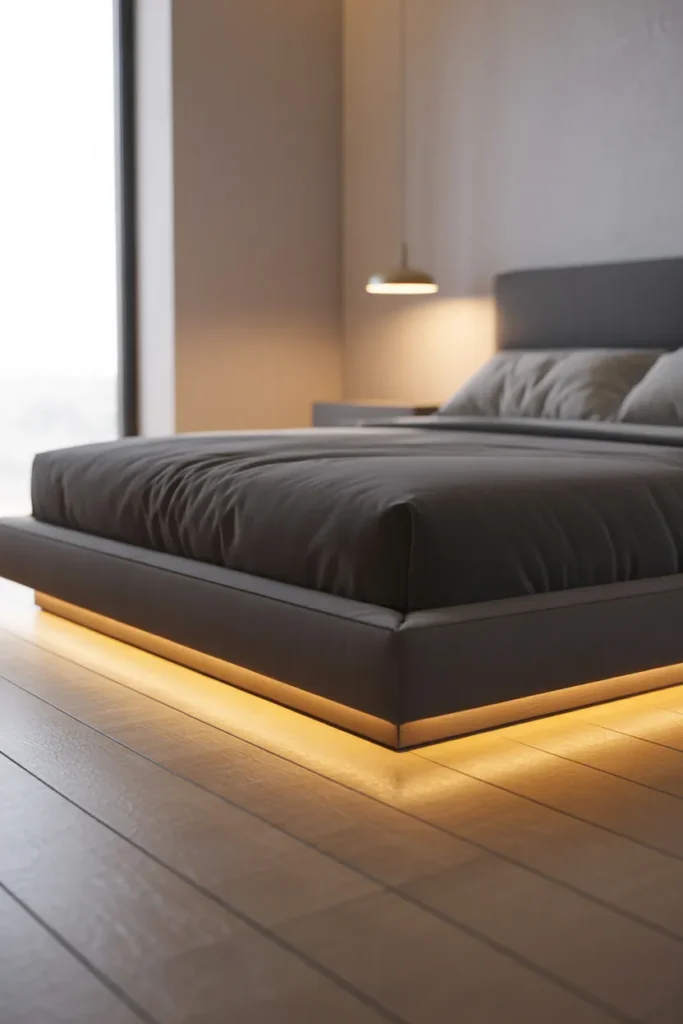
The key reason this layout works: it visually lowers the ceiling height perception while making the floor feel more expansive. For rooms under 200 square feet, that visual breathing room matters. Avoid overloading the rest of the room with furniture — this bed is a statement piece and needs clear floor space around it to land properly.
Best for: contemporary apartments, urban bedrooms, minimalist interiors.
2. Tall Upholstered Headboard With Neutral Linen Fabric
A floor-to-ceiling or oversized upholstered headboard anchors the entire room and eliminates the need for wall art above the bed. Linen in warm neutral tones — oatmeal, greige, or soft taupe — works across a wide range of paint colors and wood finishes. This is one of the most versatile king size bed ideas you can implement in 2026 regardless of room size.
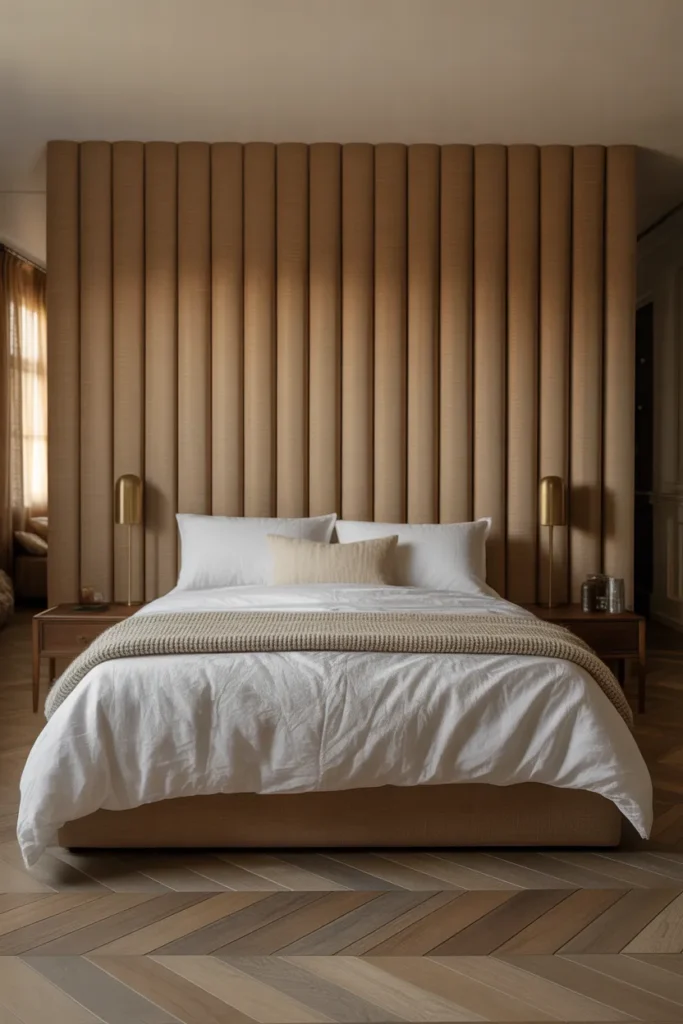
The practical reason to choose this: it instantly makes a bedroom feel designed and finished. Many bedrooms look incomplete because the wall above the bed is empty or underscaled. A tall headboard solves that without requiring gallery wall planning. Avoid pairing this with a busy duvet pattern — keep the bedding simple so the headboard remains the focal point.
Best for: primary bedrooms, rental spaces where you cannot paint or hang art, rooms with high ceilings.
3. Japandi-Style Low Bed With Natural Wood Frame
Japandi design — the blend of Japanese minimalism and Scandinavian warmth — produces some of the most livable bedrooms in 2026. A low solid wood king frame in walnut or white oak, kept close to the floor, creates a grounded, calm energy that feels intentional rather than sparse.
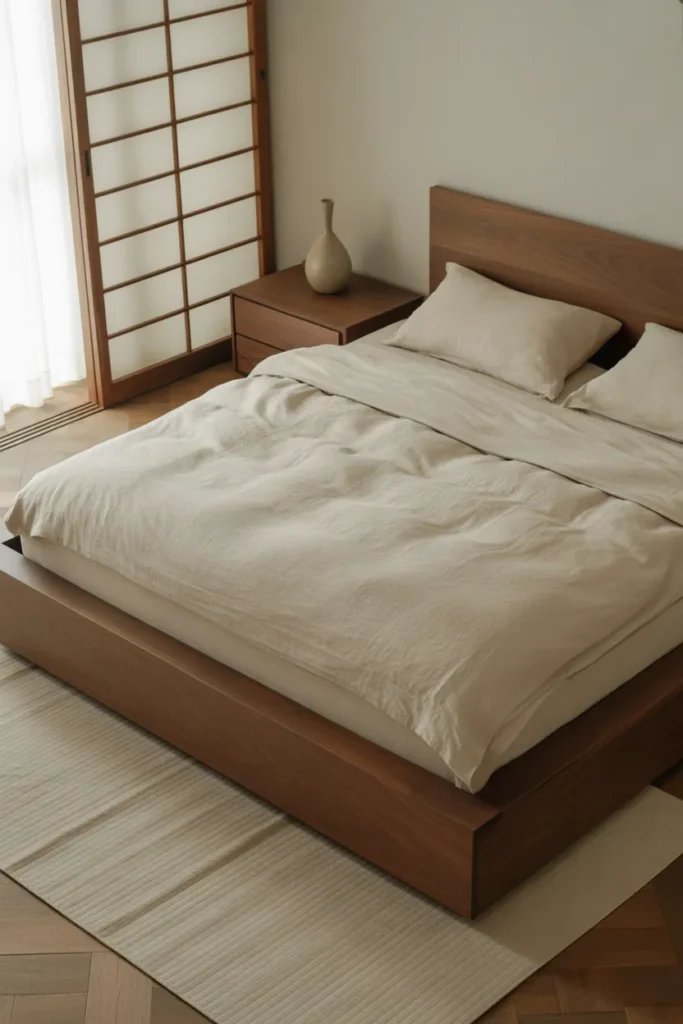
This works because the low profile draws the eye horizontally across the room, making narrow bedrooms feel wider. The natural wood adds warmth without introducing pattern or color that competes with other elements. The mistake most people make here is using too many pillows or a fussy duvet — keep the bed itself clean and let the material do the work.
Best for: small to medium bedrooms, open-plan spaces, homes with natural material palettes.
4. Built-In Bed With Flanking Storage Alcoves
A built-in king bed framed by custom cabinetry on both sides eliminates the need for separate dressers and nightstands. The flanking alcoves handle storage, display, and lighting in one architectural move. This is particularly effective in bedrooms that lack closet space or where the layout makes furniture placement awkward.
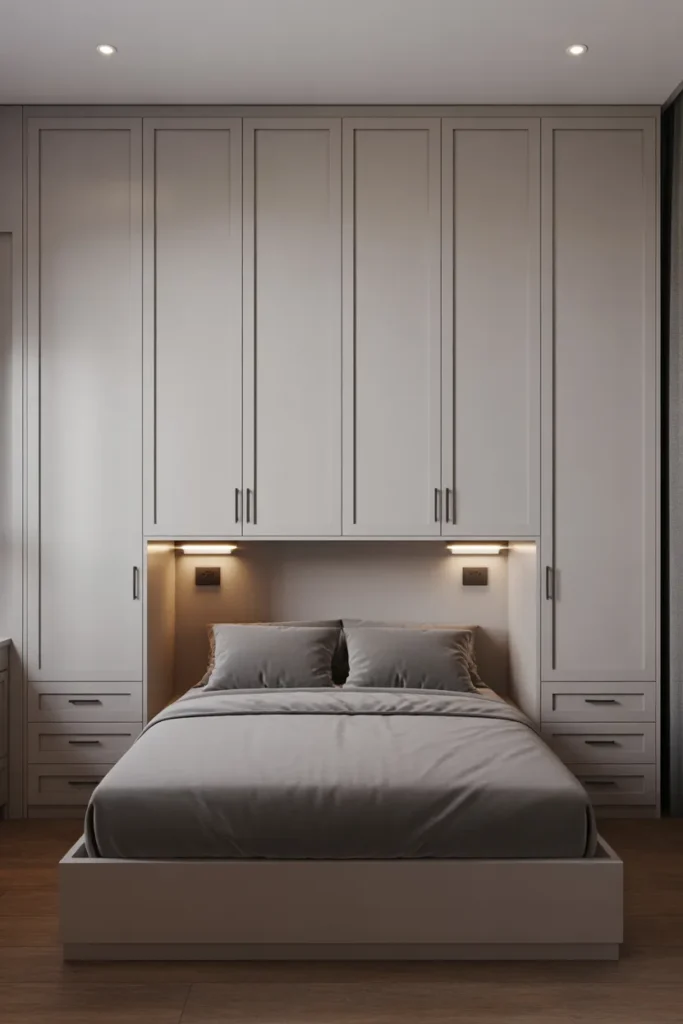
This approach is a long-term investment but one of the smartest king size bedroom layout decisions you can make for a permanent home. The built-in nature of the design also makes a mid-size room feel custom and intentional rather than assembled from separate pieces. The one pitfall: make sure the storage depth is functional — shallow shelves look good but add no real value.
Best for: rooms with awkward layouts, primary bedrooms in homes where you plan to stay long-term, spaces that need storage solutions.
5. Four-Poster King Bed in a Minimalist Bedroom
A four-poster king bed does not have to feel traditional or heavy. In 2026, the updated version uses slender steel or solid wood posts with no canopy fabric — just the clean vertical lines framing the bed. This creates a sense of enclosure and intimacy without making the room feel smaller.
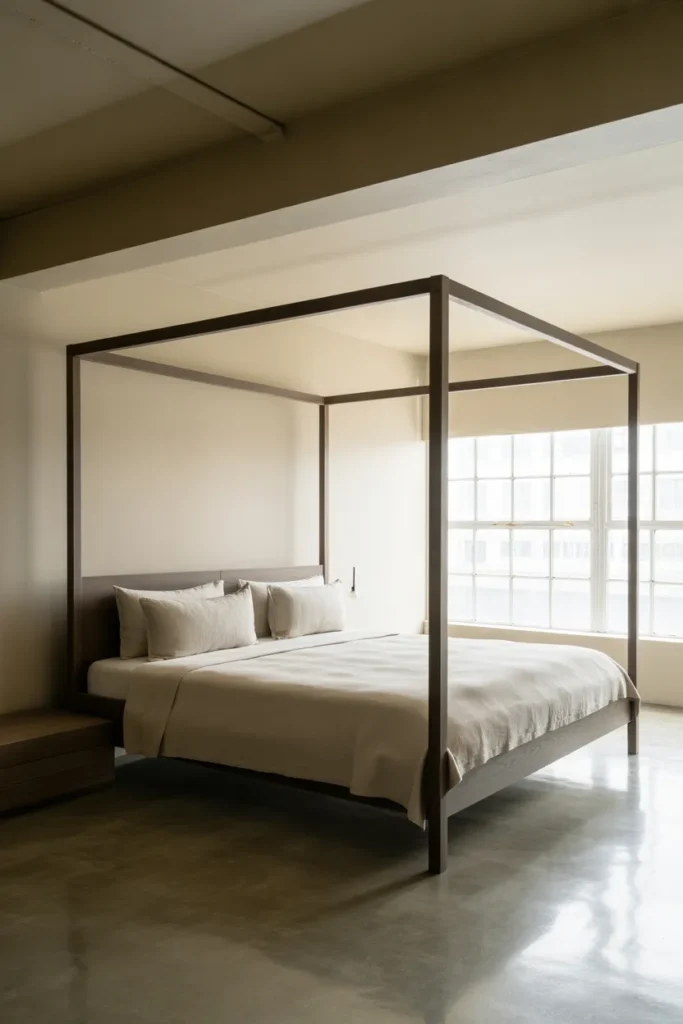
The reason this layout succeeds: vertical lines draw the eye upward, making rooms with standard 8-foot ceilings feel taller. It also defines the sleeping zone clearly in open-plan loft spaces where the bedroom has no physical walls. Avoid heavy drapery or ornate bedding with this style — the posts provide enough visual structure.
Best for: loft apartments, open-plan bedrooms, rooms with high ceilings.
6. Upholstered Bed With Storage Drawers in a Small Bedroom
A king bed with built-in drawer storage underneath is one of the most practical solutions for smaller bedrooms where square footage is limited. Upholstered in a performance fabric — dark grey, navy, or deep green — it looks elevated while quietly handling the storage burden that would otherwise require a separate dresser.
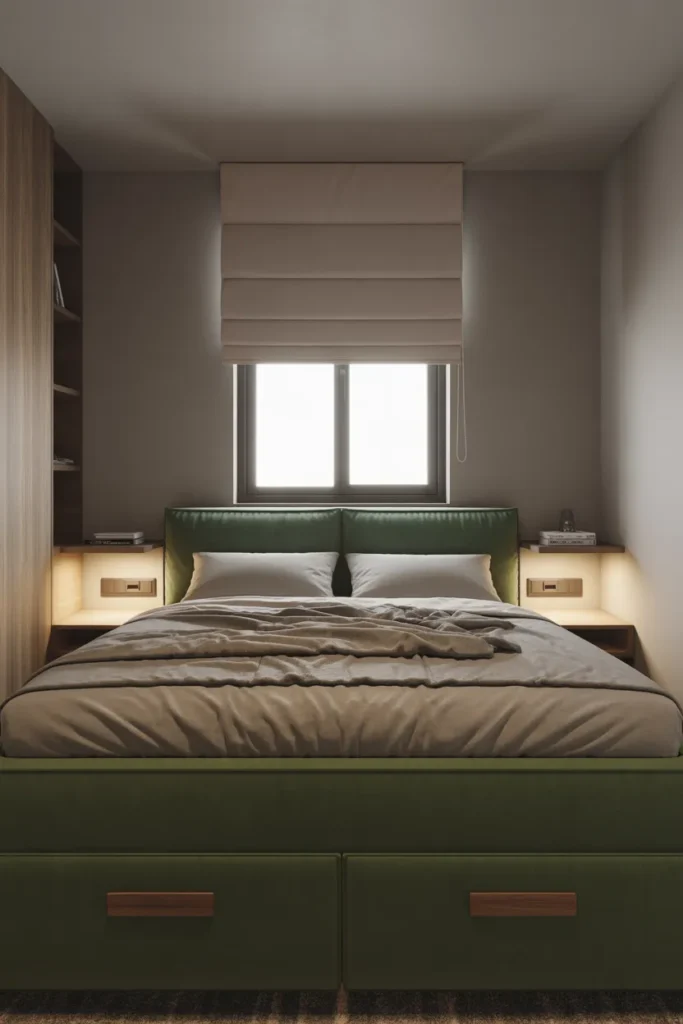
The functional logic is straightforward: a standard king occupies the majority of a small room’s floor area, so every inch beneath it becomes prime real estate. Drawers on both sides maintain accessibility for both sleepers. The mistake to avoid is choosing a frame height too low to accommodate functional drawer depth — check interior measurements before purchasing.
Best for: guest rooms, smaller primary bedrooms, apartments, homes without walk-in closets.
7. Canopy King Bed With Sheer Linen Drapes
A canopy bed with sheer linen fabric creates soft, romantic enclosure without making the room feel heavy or dated. The key in 2026 is keeping the hardware minimal — matte brass or black powder-coated frames — and the fabric light enough to let the surrounding room breathe through it.
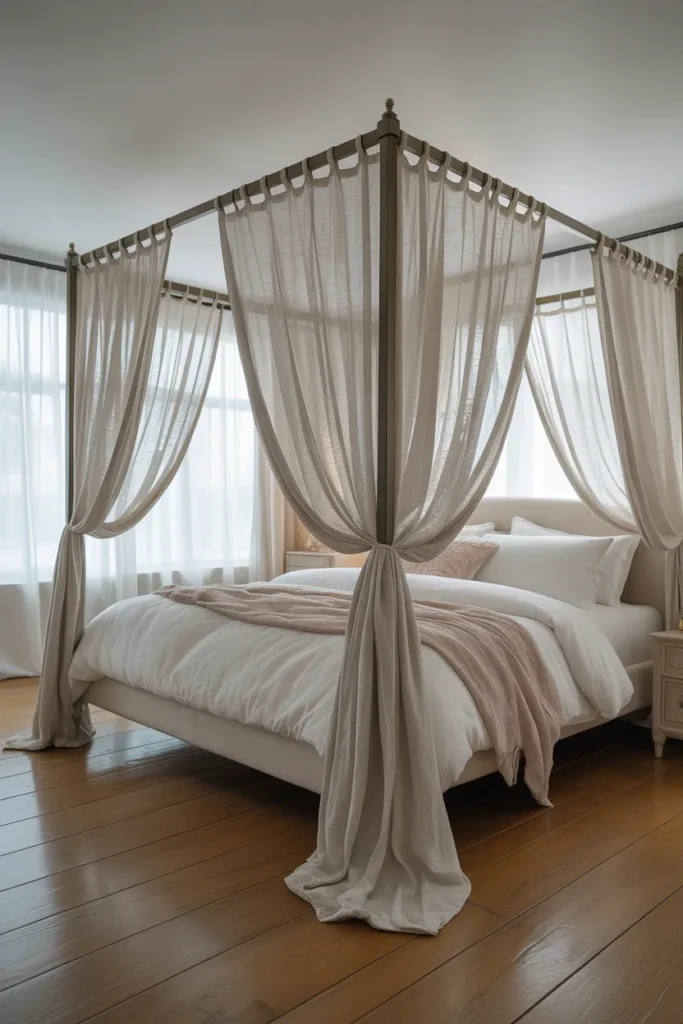
This layout works particularly well in large primary bedrooms where a standard bed can look adrift in the space. The canopy defines the sleeping zone and gives the room an intentional focal point. If ceiling height is below 9 feet, skip the canopy fabric and use bare posts instead — draped fabric on a low ceiling creates visual compression.
Best for: large primary bedrooms, rooms with 9-foot-plus ceilings, maximalist-leaning interiors.
8. Dark Bedroom With Black or Charcoal King Bed Frame
A dark bedroom — deep charcoal walls, black bed frame, tonal layered bedding — is one of the most searched king size bed ideas going into 2026. When executed correctly, it feels luxurious rather than oppressive. The trick is layering warm-toned textiles against the dark backdrop so the room reads as rich, not cold.
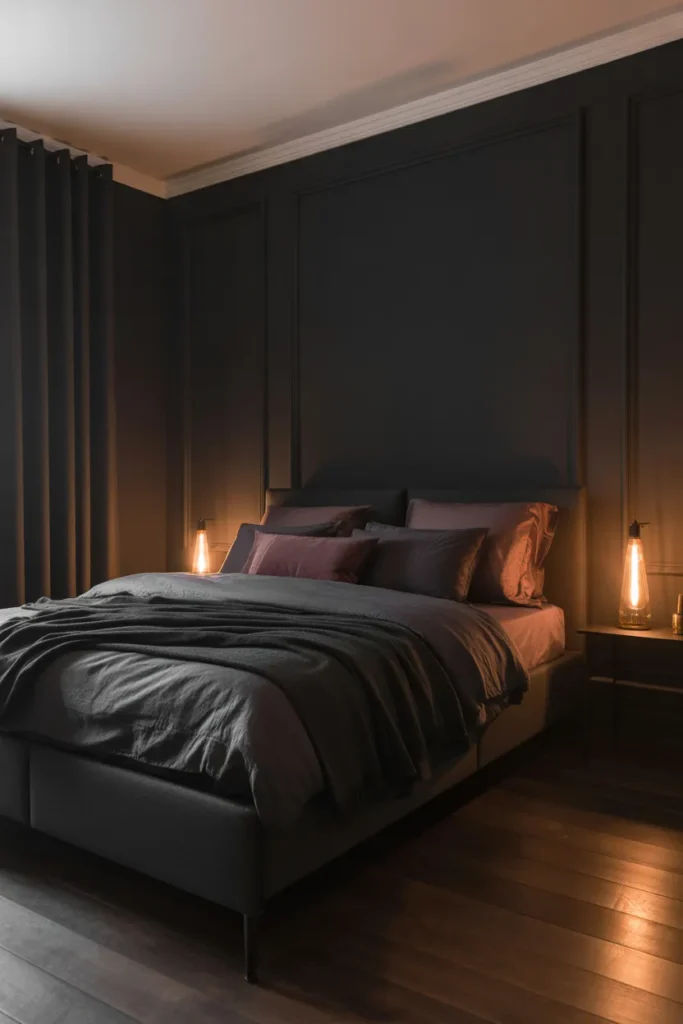
Dark rooms work best when the light sources are deliberate and positioned low — wall sconces, bedside lamps, and LED underlighting are more effective than relying on overhead fixtures. Avoid cool-toned greys, which amplify the darkness in an uncomfortable way. Stick to charcoal, near-black navy, or warm espresso tones that absorb light without feeling sterile.
Best for: primary bedrooms with controlled light, rooms where blackout curtains are used, adults who prefer a cocooning sleep environment.
9. Coastal Modern King Bedroom With Rattan and Linen
A coastal modern bedroom for 2026 is not the same as beach-themed decor with seashells and anchor prints. The updated version uses rattan bed frames or headboards, linen bedding in sand and white, and organic shapes to create a relaxed, sun-warmed atmosphere that works in any geography.
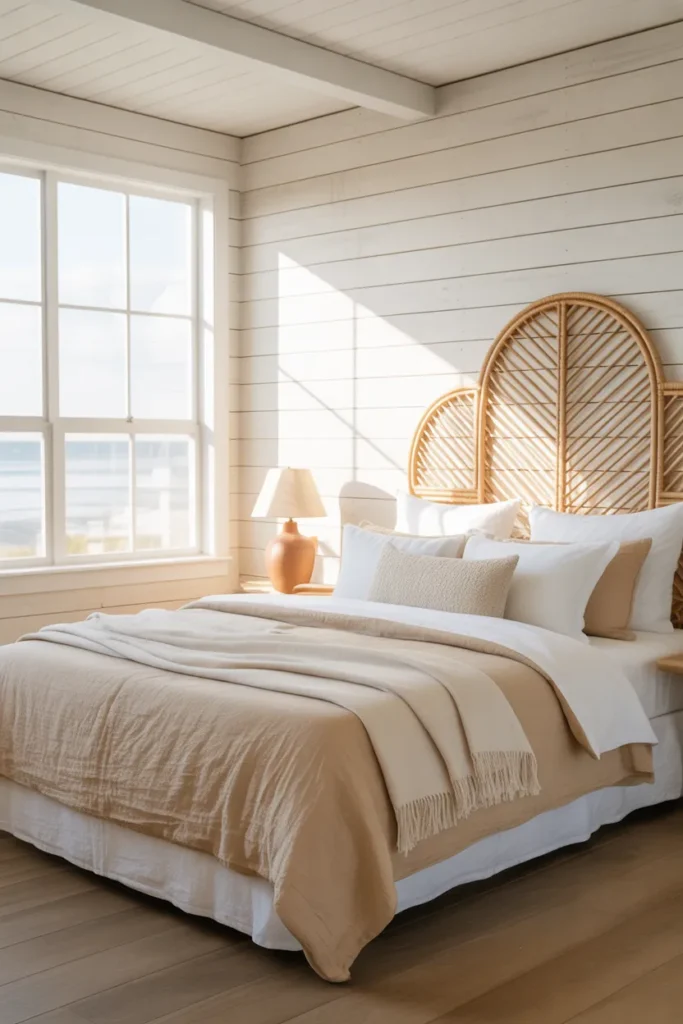
The layout logic here: rattan introduces natural texture without adding visual weight, which keeps the room feeling light and open. Linen bedding in undyed or sand tones reads as effortlessly calm. The mistake people make is over-decorating — add one or two textural elements and stop. A woven rattan headboard, linen duvet, and a single ceramic lamp are more effective than a room full of coastal props.
Best for: master bedrooms in warmer climates, vacation homes, light-filled rooms with good natural light.
10. Symmetrical King Bedroom Layout With Matching Nightstands
Symmetry is the most reliable layout strategy for a king size bedroom, and in 2026 it remains one of the strongest decisions you can make in a primary bedroom. Identical nightstands, matching lamps, and mirrored wall treatment on both sides of the bed create a sense of calm order that feels intentional and visually complete.
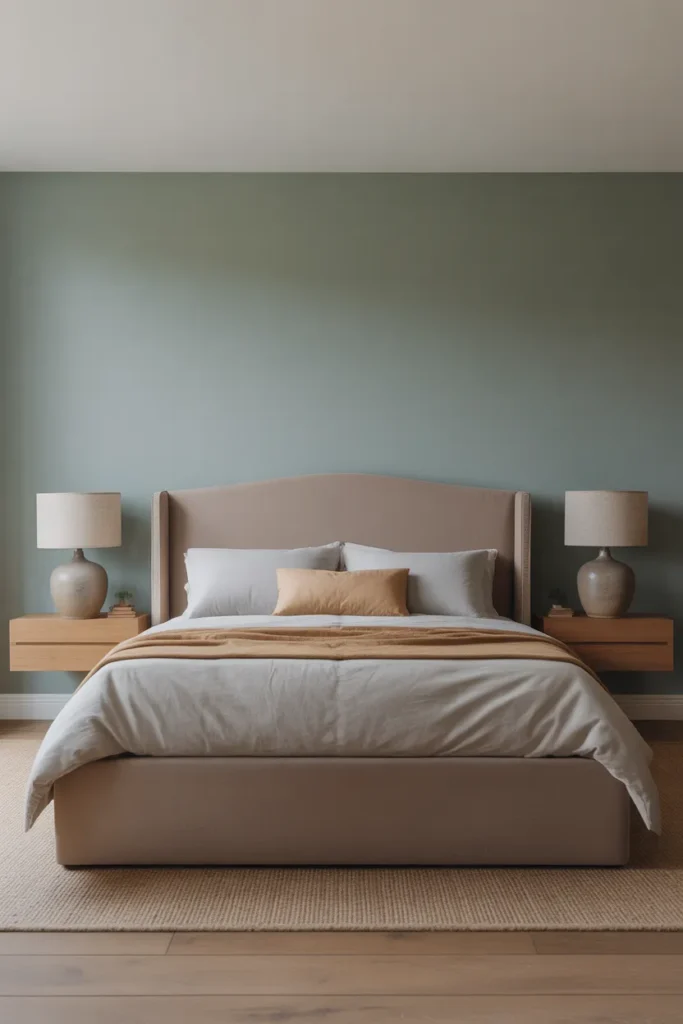
This is particularly effective in rectangular bedrooms where the king bed is centered on the longest wall. The matching elements do not need to be expensive — consistency in scale, finish, and proportion matters more than material cost. The one thing to avoid: using mismatched heights on either side, which immediately undermines the balanced effect.
Best for: shared primary bedrooms, rectangular room layouts, transitional and traditional interiors.
11. King Bed in an Open-Plan Studio With a Room Divider
Placing a king size bed in a studio or open-plan space is a real challenge that requires a clear spatial strategy. Using a bookshelf divider, half-wall, or curtain panel to define the sleeping zone keeps the bed from visually competing with the living area while maintaining the open floor plan.
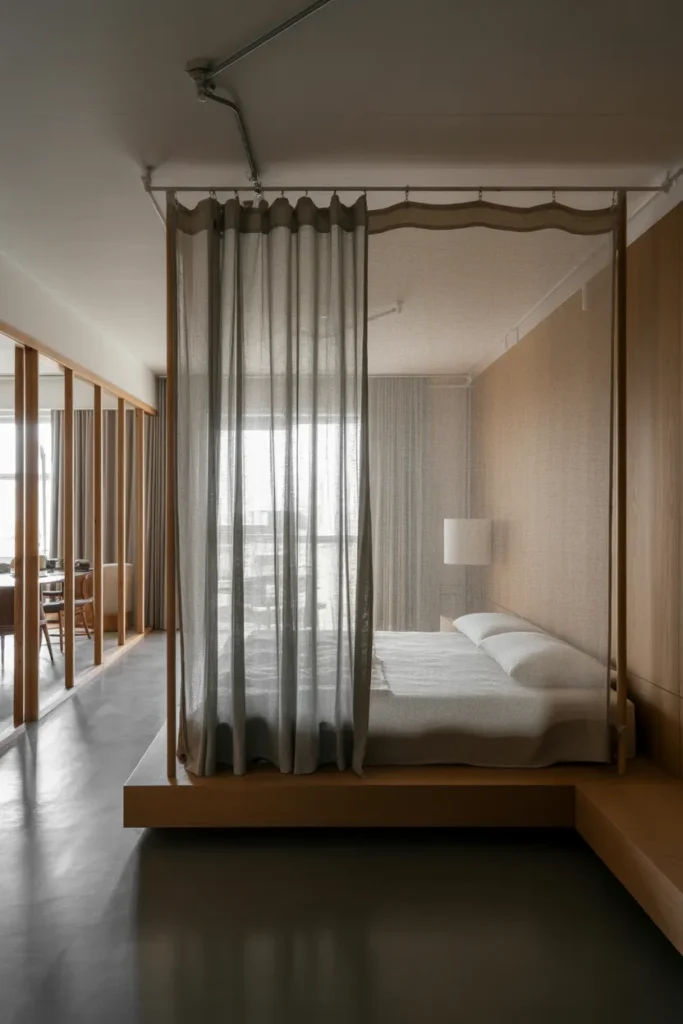
The layout works because it gives the sleeping area a psychological boundary — even if that boundary is a sheer curtain — which improves both sleep quality and the overall visual organization of the space. A low-profile bed frame is critical here to avoid cutting the sight lines of the room. Avoid using a heavy solid partition unless the ceiling height is above 10 feet.
Best for: studio apartments, loft conversions, open-plan homes where a bedroom wall cannot be added.
12. Velvet Upholstered King Bed in a Jewel-Tone Bedroom
A jewel-tone bedroom — emerald, sapphire, rust, or deep plum — paired with a velvet upholstered king bed is one of the most visually distinctive directions for 2026. The combination creates a rich, layered interior that performs exceptionally well in low-light conditions where other color schemes fall flat.
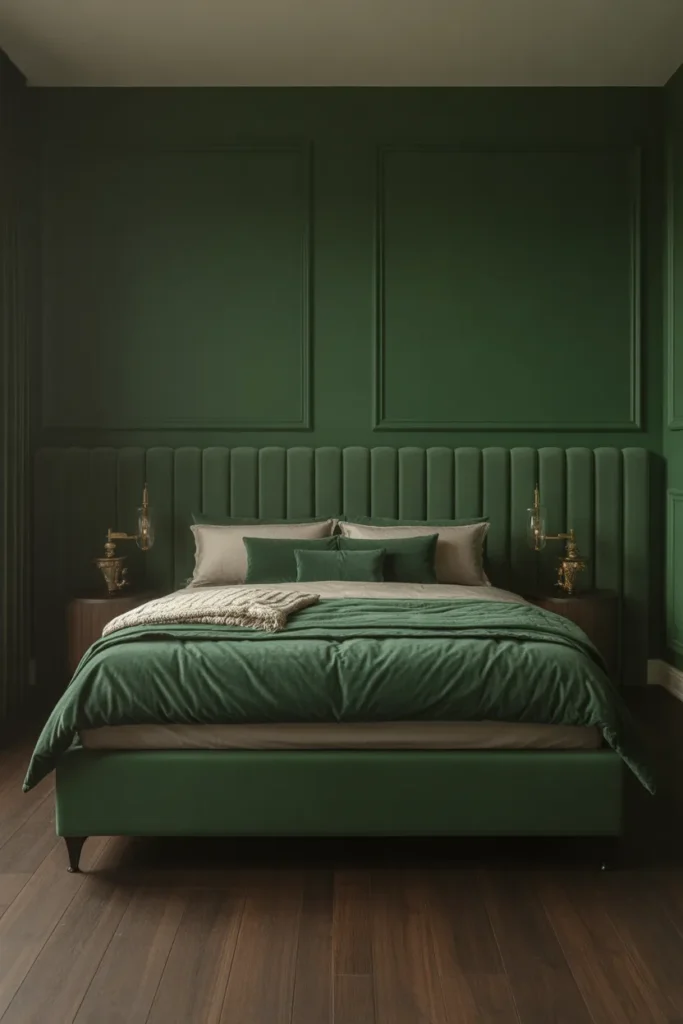
The key to making this work is limiting the jewel tone to one dominant surface — usually the wall behind the headboard — and pulling the same hue into the bedding in a lighter or more muted form. Velvet upholstery amplifies depth and adds tactile interest without requiring pattern. Avoid pairing multiple jewel tones together — pick one and let it lead.
Best for: primary bedrooms, rooms with limited natural light, interiors leaning maximalist or eclectic.
13. White and Wood King Bedroom With Warm Minimalism
White walls paired with warm wood tones is one of the most enduringly practical combinations in bedroom design because it works with nearly any furniture style and does not become visually exhausting over time. For 2026, the warmth comes from medium-toned woods — honey oak, walnut, or teak — rather than the cool grey-washed tones that dominated the previous decade.
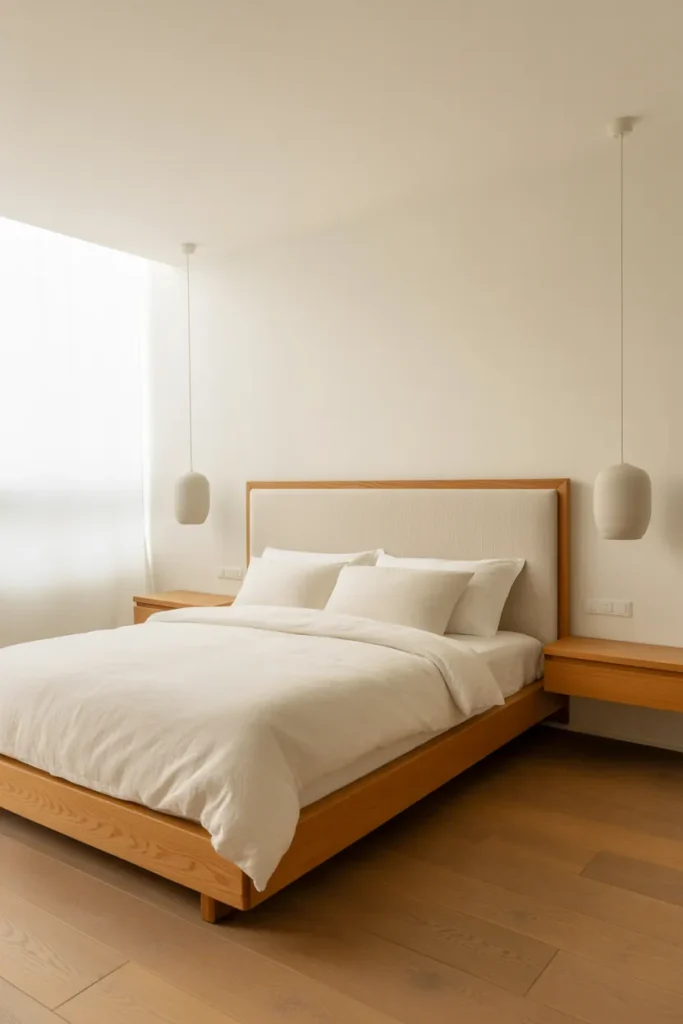
The reason this combination stays popular: it reads as clean and airy during the day and warm and restful at night when artificial light shifts the color temperature of the wood tones. The layout typically centers the king bed against the white wall with wood elements on the floor, nightstands, and ceiling. Avoid cold white undertones — choose off-white or warm white paint to keep the room from feeling clinical.
Best for: any size bedroom, transitional and modern interiors, rooms that need to feel larger.
14. King Bed With an Accent Wall Using Limewash or Texture
A textured accent wall — limewash paint, plaster, grasscloth wallpaper, or board-and-batten paneling — behind the king bed replaces the need for a large headboard while adding architectural depth to the room. This is one of the most cost-effective king size bed ideas for 2026 when working with a simpler bed frame.
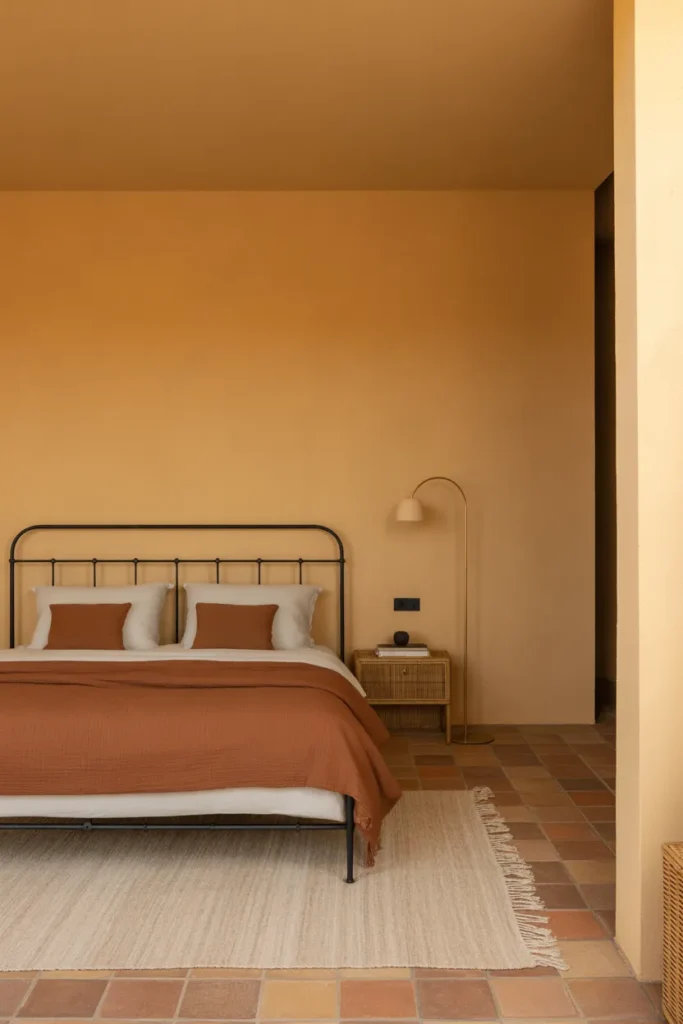
The texture creates visual interest without pattern, which means it adapts across seasons and decor changes without requiring updates. Limewash in particular gives walls a layered, aged quality that photographs beautifully and looks more expensive than it is. The mistake to avoid is using texture on all four walls — keep it to the wall directly behind the bed and let the other three walls remain neutral.
Best for: rental-friendly updates where limewash is allowed, rooms with a plain or simple bed frame, transitional and Mediterranean-style interiors.
15. Bedroom-as-Suite Layout With Seating Area Facing the King Bed
The bedroom-as-suite concept positions a small seating area — typically two chairs or a small loveseat — at the foot or across from the king bed, treating the bedroom as a multi-functional private retreat rather than just a sleeping space. In 2026, this layout is increasingly relevant as people use their bedrooms for more than sleeping.
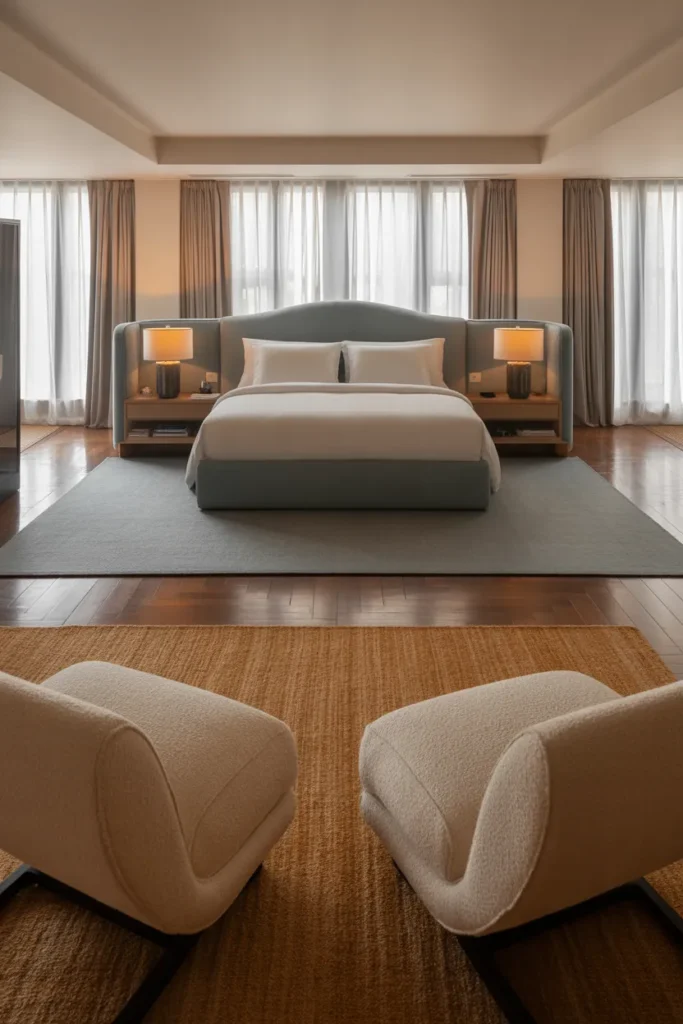
The layout works when the room is at least 14 by 16 feet, which gives enough clearance for the seating area without crowding the bed. Keep the seating and bed in the same color family to maintain visual cohesion. The most common mistake is choosing seating that is too large — two smaller accent chairs are more proportionally correct than a full sofa in most bedrooms.
Best for: large primary bedrooms, master suites, bedrooms used for reading, working, or relaxing independently of the living room.
Conclusion
These 15 king size bed ideas for 2026 cover the full range of what is possible — from compact studio solutions to large primary suites, from dark and moody to bright and coastal. The goal with any king size bedroom is not just to fill the space but to solve for how you actually live in it. Save this post to your Pinterest boards so you can reference these ideas and image prompts when you are ready to plan your space. If you are still deciding between layouts, the most reliable starting point is always the room size and the amount of natural light — let those two factors lead the decision, and the style will follow naturally.