
A small balcony is one of the most underused areas in any apartment or home, and the reason is almost always a planning problem rather than a space problem. This guide covers 18 genius small balcony hacks for tiny spaces that go beyond decoration — each one solves a specific functional challenge so you can turn even a 30-square-foot balcony into a space you genuinely use every day.
1. Use a Folding Wall-Mounted Table to Reclaim Floor Space
A wall-mounted folding table is one of the highest-impact small balcony hacks available because it gives you a full surface when you need it and disappears completely when you do not. Most small balconies fail as functional spaces because a permanent table occupies the majority of the floor area, leaving no room to move around it comfortably.
Mount the table at standard dining height — 30 inches — if you plan to use it for meals, or at counter height — 36 inches — if it will primarily serve as a workspace. The wall bracket should be secured into a stud or masonry anchor, not just drywall, especially in outdoor conditions where wind load is a real factor.
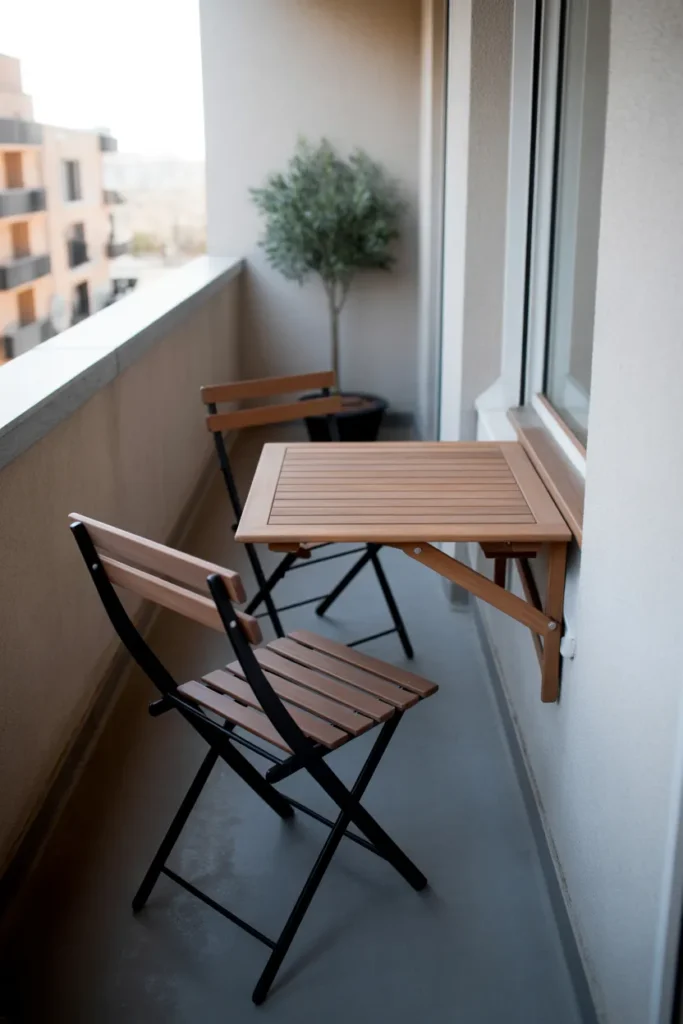

Pair it with one or two folding chairs that hang on wall hooks when not in use. This combination takes up almost no floor space in its stored position and creates a fully functional dining or work setup when deployed.
Avoid choosing a table surface material that warps in weather — teak, aluminum, and powder-coated steel all hold up outdoors. Untreated wood and standard MDF will deteriorate within one season.
Best for: balconies under 40 square feet, apartment renters who cannot make permanent modifications beyond basic wall anchors.
2. Stack Vertical Plant Shelving Instead of Using Floor Planters
Floor planters on a small balcony consume the one resource you cannot recover — floor space. A vertical plant shelf or wall-mounted tiered planter system moves the greenery upward and frees the entire floor for furniture and movement. This is one of the most practical small balcony ideas for apartment dwellers who want plants without sacrificing usability.
A three-tier wall shelf in powder-coated steel or bamboo can hold six to nine plants in the space that a single large floor planter would occupy. Position it on the wall that receives the most light so the plants thrive, and angle the shelves slightly forward so water drains away from the wall surface rather than pooling and causing moisture damage.
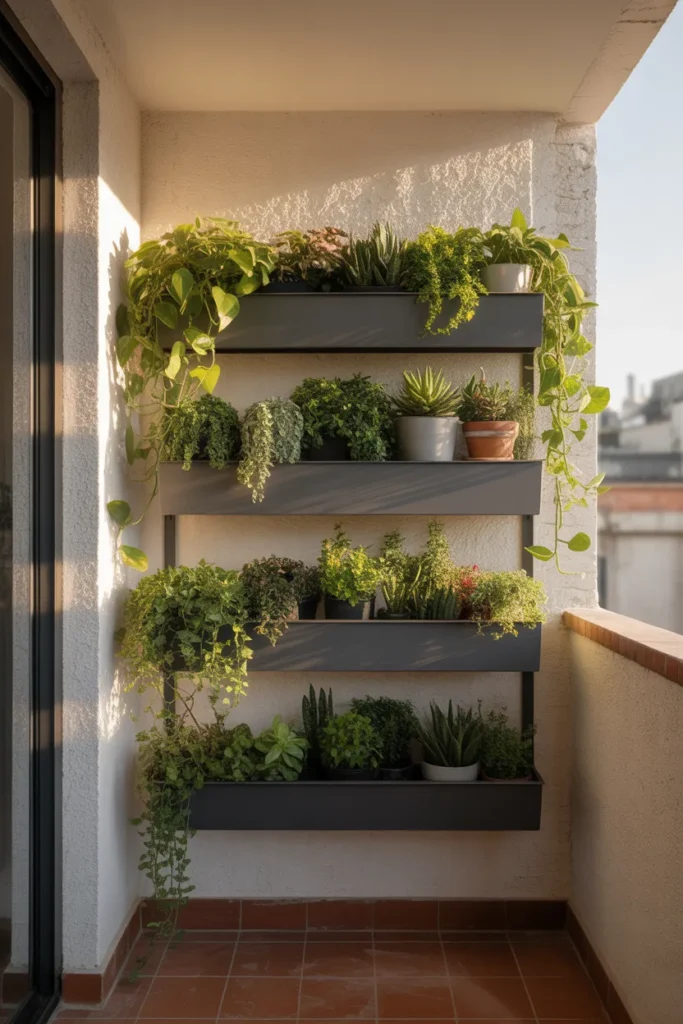
Choose plants appropriate for container growing in your climate zone — succulents, herbs, trailing pothos, and compact ferns all perform well in balcony conditions. Avoid large-rooted plants like tomatoes or dwarf citrus unless the shelf structure is rated for significant weight.
The visual benefit is equally important: vertical greenery draws the eye upward, which makes a small balcony feel taller and more layered rather than cramped and flat.
Best for: south or west-facing balconies, plant lovers in apartments, balconies where floor space is under 35 square feet.
3. Install a Slim Railing Planter to Add Greenery Without Floor Loss
A railing planter clips or bolts directly onto the balcony railing and holds plants at the perimeter of the space rather than within it. This is one of the most space-neutral genius small balcony hacks because the planter occupies zero floor space and zero wall space — it uses the one surface on a balcony that is almost always ignored.
Choose planters sized to match your railing width — most standard apartment balcony railings accept planters between 6 and 10 inches wide. Ensure the clips are rated for outdoor use and that the combined weight of planter, soil, and plant does not exceed your railing’s load specification, which is especially important on upper-floor units.
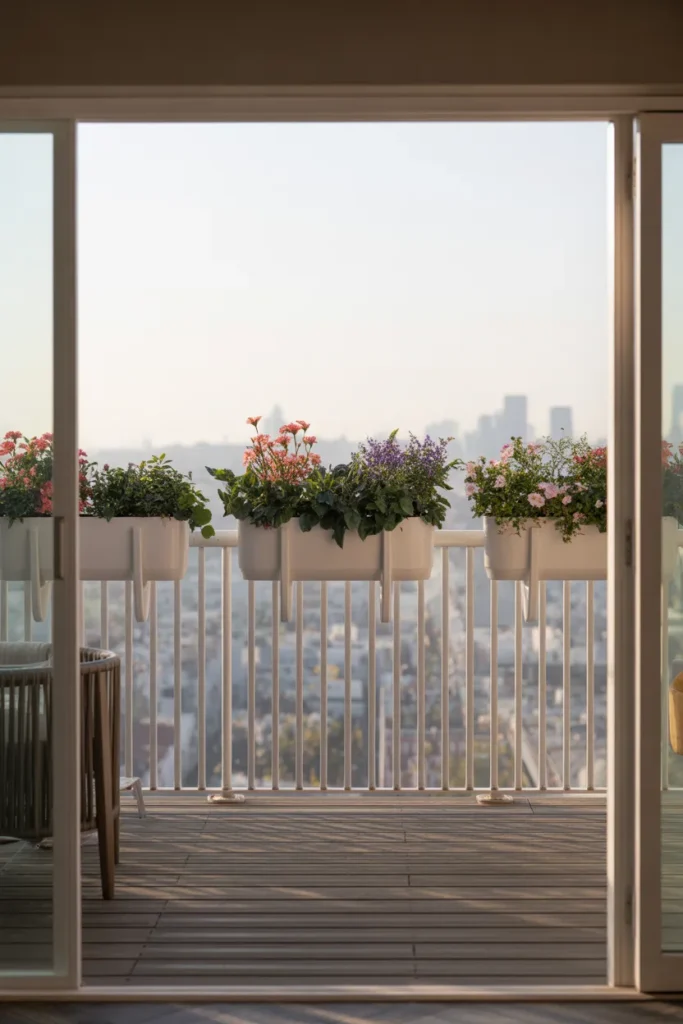
Herbs, trailing flowers, and compact ornamental grasses all work well in railing planters because their root systems are shallow and they benefit from the air circulation at railing height. Avoid anything top-heavy — tall plants at railing level catch wind and can destabilize the planter or block sight lines.
Best for: balconies with solid or bar-style railings, renters who cannot drill into walls, anyone wanting greenery without using floor or wall space.
4. Lay Interlocking Deck Tiles Over a Concrete Balcony Floor
A bare concrete balcony floor is one of the main reasons people avoid spending time on their balcony. Interlocking deck tiles in teak, acacia, or composite material install without adhesive or professional help and transform the surface in an afternoon. This is one of the most visible and immediate small balcony upgrades available to renters.
The tiles simply click together and sit on the existing surface — no drilling, no permanent modification, and fully removable when you move. A 40-square-foot balcony requires roughly 40 to 50 square feet of tile to account for edge trimming. Most tile systems include edge trim pieces to finish the perimeter cleanly.
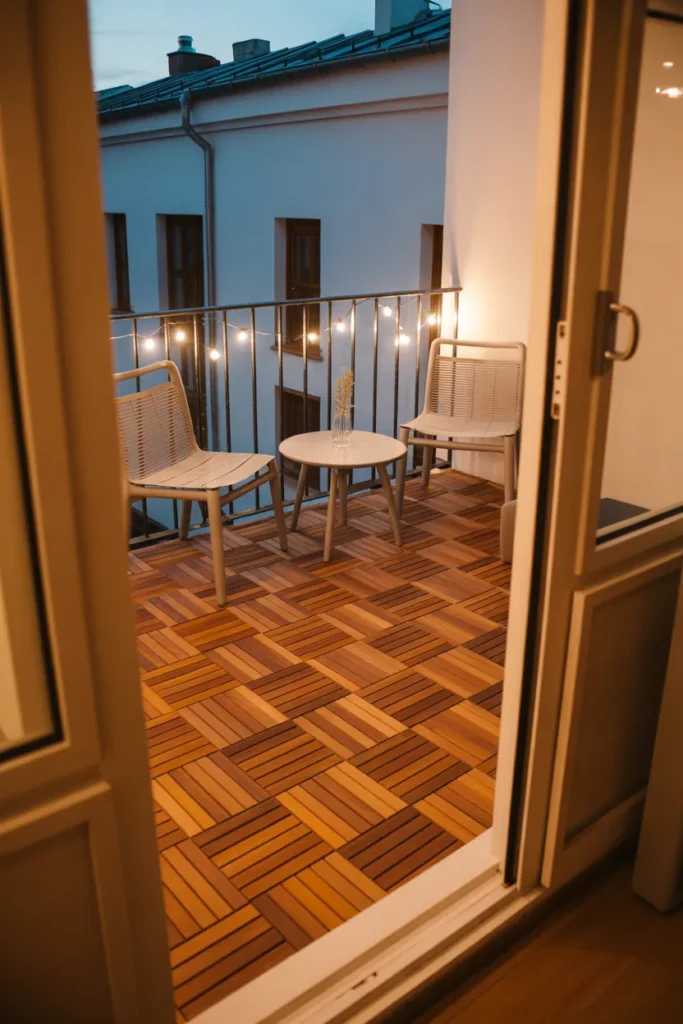
From a design standpoint, the wood tone of the tiles introduces warmth and texture to a balcony that is otherwise dominated by concrete, metal railings, and exterior wall surfaces. It also makes the space feel more intentional — like a room extension rather than a utility ledge.
Use composite tiles rather than real wood if the balcony is exposed to heavy rain or direct sun for most of the day. Real teak holds up well but requires annual oiling to maintain its color — untreated, it fades to a silver-grey within one season.
Best for: renters, concrete balcony floors, any balcony where warmth and texture are the primary design goals.
5. Use a Two-Person Bistro Set Instead of Standard Outdoor Furniture
Standard outdoor furniture — a four-chair dining set or a full sofa configuration — overwhelms any balcony under 60 square feet. A compact bistro set, two small chairs and a round table roughly 24 inches in diameter, provides a complete seating and surface solution that leaves meaningful floor space on either side.
The round table form is deliberate — it eliminates corners that catch knees and clothing in tight spaces and allows two people to sit at comfortable angles rather than directly across from each other. Folding bistro chairs add further flexibility, allowing you to push both chairs and the table against the railing when the space needs to be fully open.
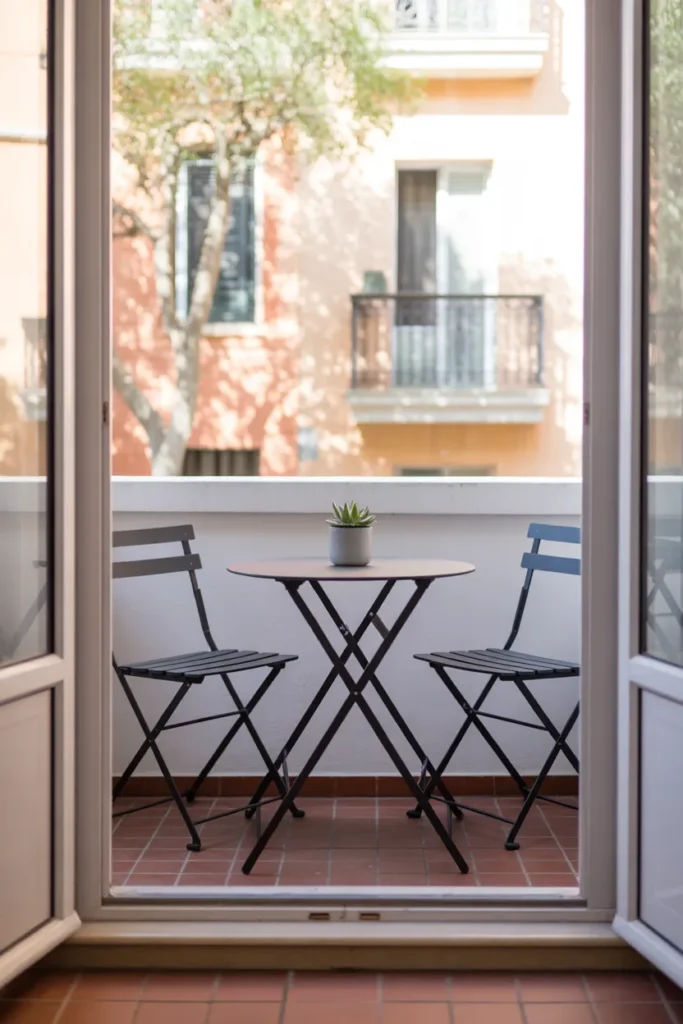
Choose a set in materials that suit your climate: powder-coated steel or aluminum for wet climates, wrought iron for dry ones. Avoid wicker or resin weave sets in high-UV balcony conditions unless they are UV-rated — standard outdoor wicker fades and becomes brittle within two seasons in direct sun.
Best for: balconies between 30 and 60 square feet, couples, anyone who wants a functional outdoor dining setup without dominating the space.
6. Hang String Lights to Define the Space After Dark
Most small balconies are unusable after dark because there is no lighting. Overhead building lights are typically harsh and utilitarian — they illuminate but do not create a reason to be outside. String lights solve this by adding warm, low-level ambient light that makes the balcony feel like a destination rather than a transit space.
Run string lights along the railing perimeter, zigzag them overhead between two anchor points, or drape them along the ceiling soffit if your balcony is covered. Solar-powered options eliminate the need for an outdoor outlet, which is the main barrier for renters. Battery-operated sets with timers are equally practical.
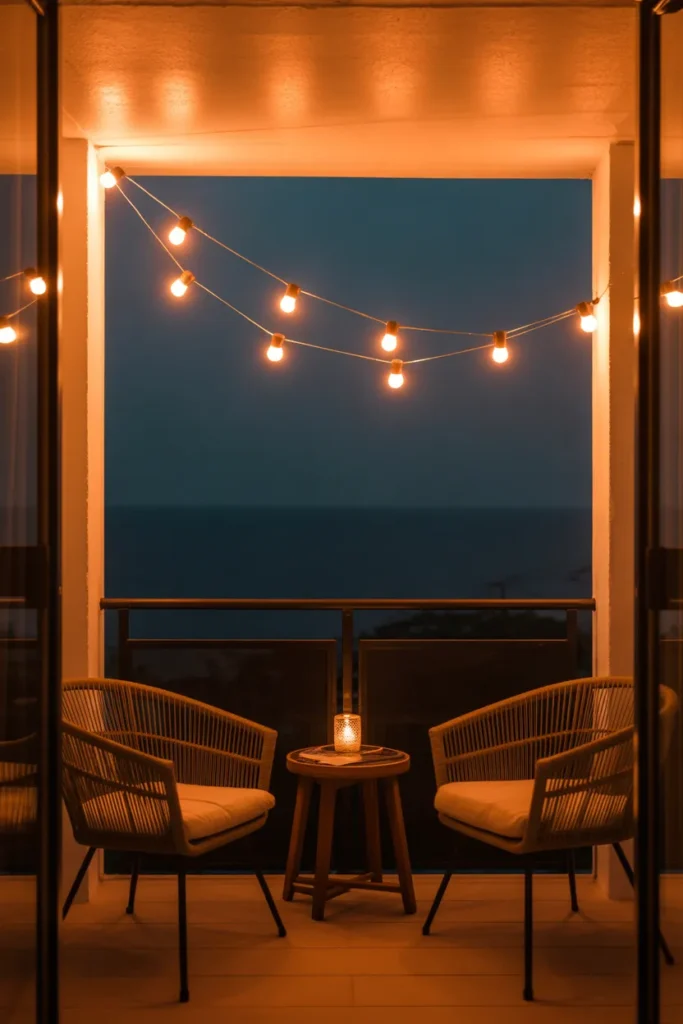
The practical reason this matters beyond aesthetics: a balcony that is enjoyable after work hours gets used far more than one that is only functional during daylight. Extending usable hours is one of the most underrated small balcony hacks for maximizing the value of the space.
Use warm white bulbs — 2700K to 3000K color temperature — rather than cool white or daylight-rated bulbs. Cool lighting outdoors at night reads as clinical rather than relaxing and undermines the ambient effect entirely.
Best for: any balcony regardless of size, renters without outdoor outlets, anyone who wants to use their balcony in the evening.
7. Mount a Privacy Screen to Create an Enclosed Feel
An open balcony that faces neighboring units or a busy street rarely gets used consistently — the lack of privacy creates a psychological barrier even when the space itself is pleasant. A mounted privacy screen on the side or front railing changes this immediately by creating a sense of enclosure without requiring structural modification.
Bamboo roll screens, powder-coated metal panels, outdoor fabric screens, and slatted wood panels all attach to standard railings using cable ties, clamps, or simple bolt hardware. Most options are removable and renter-friendly. The screen does not need to cover the entire railing — covering the sides is often enough to create the enclosed feeling while preserving the view forward.
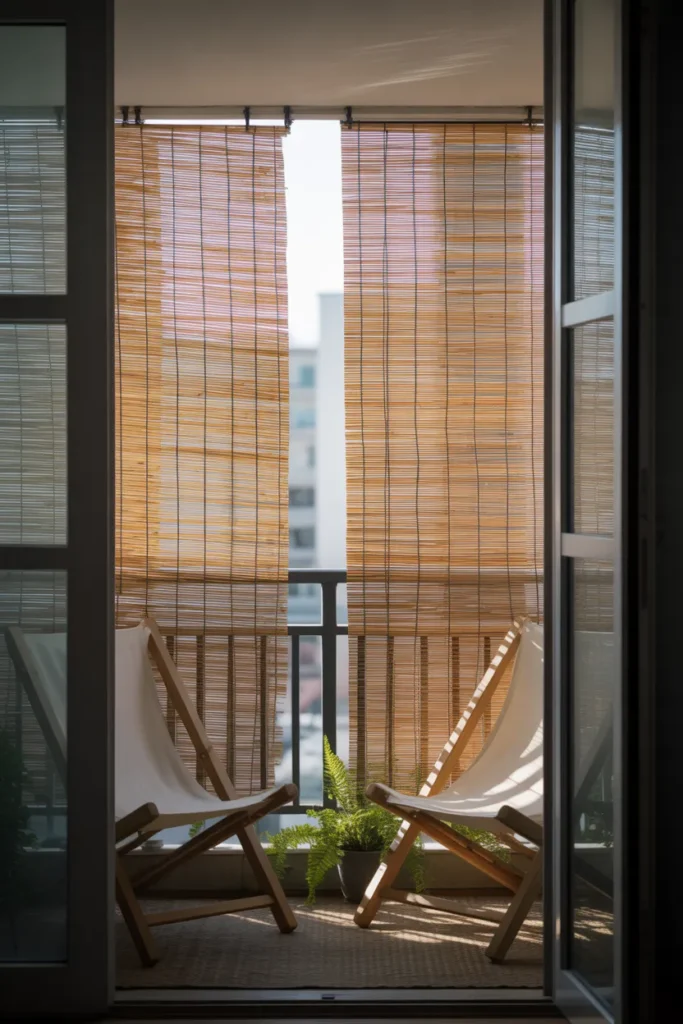
Beyond privacy, screens also function as wind breaks on exposed balconies. A balcony that is windy is an uncomfortable balcony regardless of how well it is furnished. A partial screen on the prevailing wind side can reduce wind speed enough to make the space genuinely comfortable.
Avoid solid screens that completely block airflow — this creates heat buildup on west-facing balconies in summer and can make the space feel stuffy rather than sheltered.
Best for: balconies in dense urban buildings, ground or low-floor units, west-facing balconies with afternoon wind exposure.
8. Use a Slim Vertical Storage Cabinet for Outdoor Essentials
Balcony clutter — cushions, gardening tools, candles, plant care supplies — accumulates quickly and destroys the visual calm of any small space. A slim vertical outdoor storage cabinet, typically 12 to 15 inches deep and 60 to 70 inches tall, stores everything behind closed doors while taking up a minimal footprint.
Position it against the exterior wall rather than the railing wall so it does not block the view or the light. A cabinet in this location reads as a built-in architectural element rather than additional furniture, especially when the color is matched to the exterior wall tone. Dark grey, white, and natural teak are the most visually neutral options.
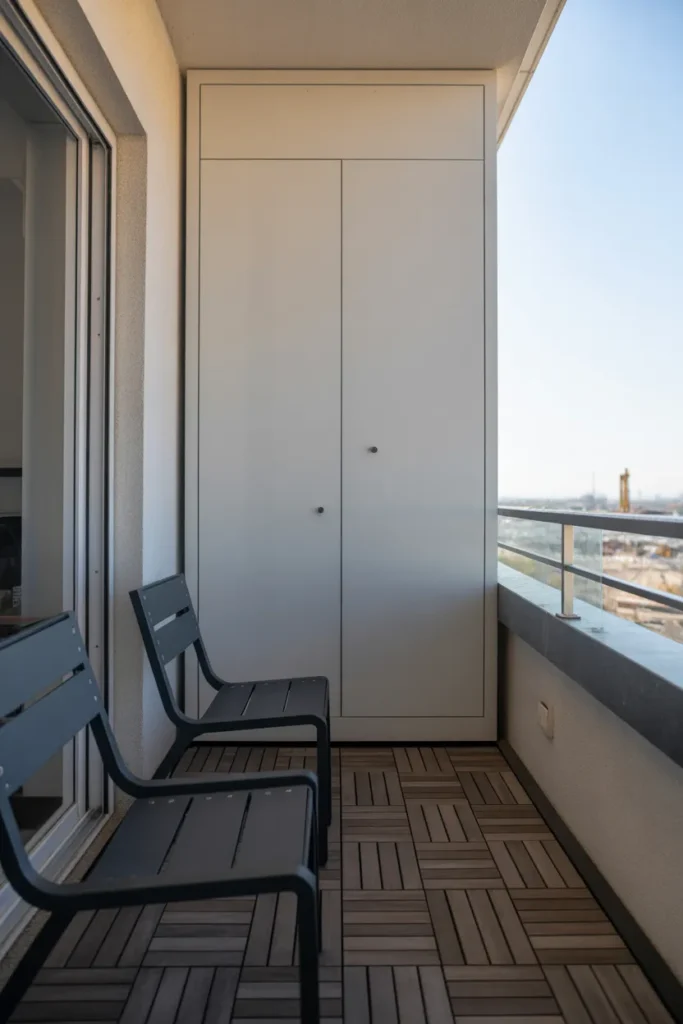
This is particularly valuable for balconies that double as utility spaces — where the outdoor hose connection or HVAC access panel is located. A cabinet placed strategically can conceal these functional elements while housing storage simultaneously.
Ensure any cabinet used outdoors is rated for exterior conditions — interior furniture will warp, rust, or delaminate within one season when exposed to moisture and temperature cycling.
Best for: balconies that accumulate outdoor gear, homes without separate outdoor storage, any balcony where visual clutter is the primary problem.
9. Create a Herb Garden With a Wall-Mounted Pocket System
A fabric or metal wall pocket planter system turns a blank exterior wall into a productive herb garden without using any floor or shelf space. This is one of the most practical genius small balcony hacks for cooking-oriented households — having fresh herbs accessible from an outdoor space that is steps from the kitchen changes how you cook.
Each pocket holds one plant or one herb variety. A standard six-pocket system mounted on a 24-by-36-inch wall section can support basil, mint, rosemary, thyme, parsley, and cilantro simultaneously. Mount at a height where watering is comfortable — between waist and shoulder height — so maintenance does not become a deterrent.
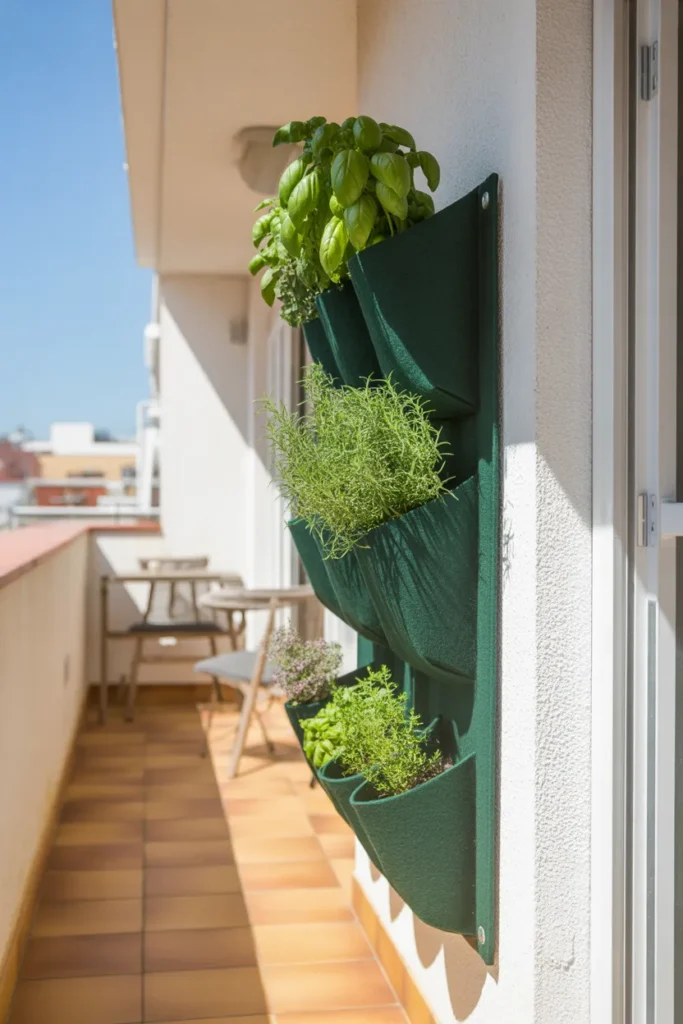
Ensure the wall-mounted system has a drip barrier or that you mount it above a surface that can tolerate water runoff. Watering pocket systems without drainage management will cause moisture staining on the wall beneath, which becomes a problem for renters at move-out.
Water individual pockets more frequently than ground-planted herbs — pocket systems dry out faster due to air exposure on multiple sides. In full sun positions, daily watering in summer is often necessary.
Best for: south-facing balconies, cooking households, anyone who wants productive outdoor space rather than purely decorative greenery.
10. Add an Outdoor Rug to Define the Zone and Add Warmth
An outdoor rug is one of the lowest-effort, highest-impact small balcony hacks because it does something no amount of furniture or plants can do on its own — it makes the balcony feel like a room rather than an outdoor ledge. The rug defines the boundary of the usable zone and signals that the space was designed with intention.
Choose a rug that covers the majority of the floor area rather than a small accent rug centered under a table. A rug that is too small visually floats in the space and makes the balcony feel more cluttered, not less. On a 40-square-foot balcony, a 4-by-6-foot rug is usually the appropriate scale.
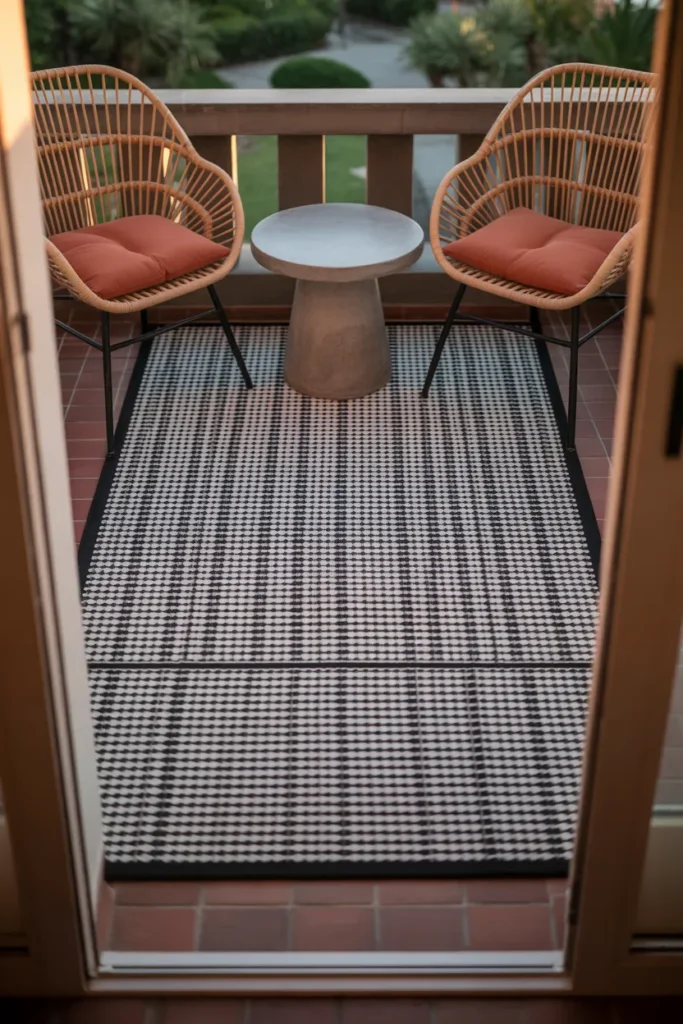
Outdoor-rated polypropylene rugs are the most practical choice — they are UV-resistant, mold-resistant, easy to clean with a hose, and available across a wide range of patterns and textures. Flat-weave styles dry faster after rain than looped or high-pile options.
Anchor the rug edges with furniture legs to prevent wind from lifting it. On very exposed balconies, non-slip rug tape rated for outdoor use provides additional security without damaging the floor surface.
Best for: any balcony, renters, balconies where the concrete or tile floor undermines the visual warmth of the space.
11. Install a Ceiling-Mounted Shade Sail for Sun Control
A balcony that receives direct afternoon sun becomes too hot to use for several hours each day in warmer months. A shade sail mounted overhead using ceiling hooks and railing anchor points reduces direct sun exposure by 70 to 90 percent depending on material density, making the space usable through the full day rather than only in the morning.
Triangular shade sails work well for smaller balconies — they can be positioned to block the primary sun angle while leaving the sides open for airflow. Rectangular sails provide more complete coverage but require four anchor points, which may be a limitation on some balcony configurations.
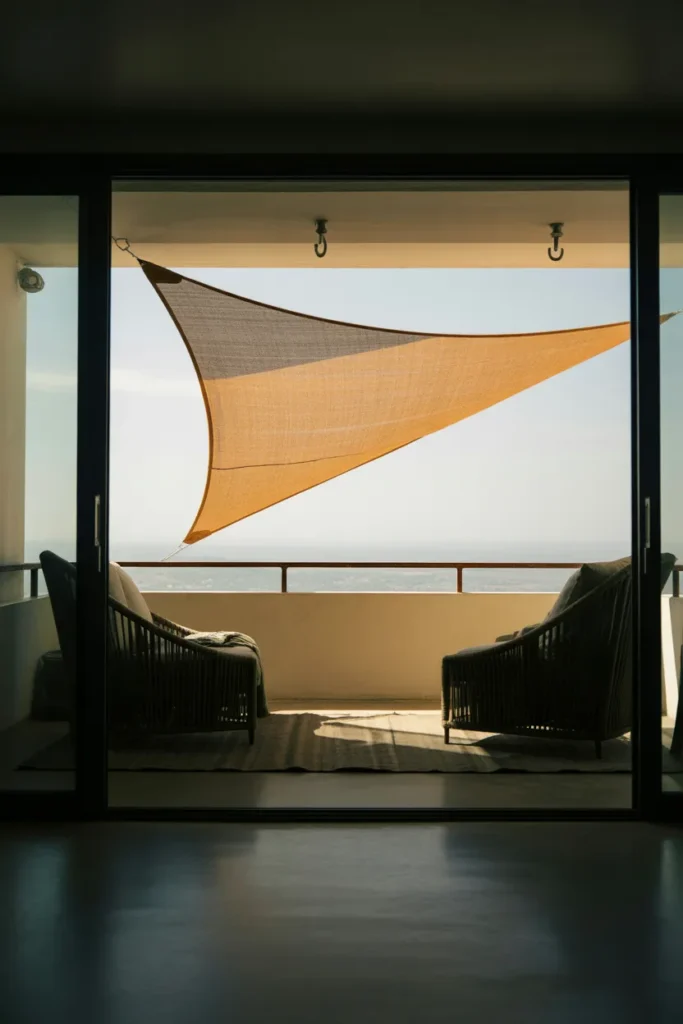
Choose a UV-stabilized high-density polyethylene fabric rather than standard canvas — HDPE breathes better in high heat, dries faster after rain, and resists UV degradation significantly longer than woven cotton or polyester alternatives.
The practical impact of adding overhead shade is significant enough to make this one of the most functional small balcony ideas you can implement before summer. A shaded balcony in a warm climate gets used year-round where an unshaded one becomes seasonal.
Best for: west or south-facing balconies, warm climate apartments, any balcony that receives more than four hours of direct afternoon sun.
12. Use Mirror Panels on the Wall to Visually Double the Space
An outdoor-rated mirror panel or a series of smaller mirrors mounted on the exterior wall of a small balcony creates the illusion of depth and makes the space feel significantly larger than its physical dimensions. This is one of the most underused genius small balcony hacks for tiny spaces because the effect is immediate and dramatic.
The mirror works by reflecting the sky, plants, and railing — typically the most visually appealing elements of the balcony — back into the space, which doubles the perceived depth of the view. Position the mirror on the wall opposite or adjacent to the railing so it reflects outward rather than reflecting the interior of the apartment.
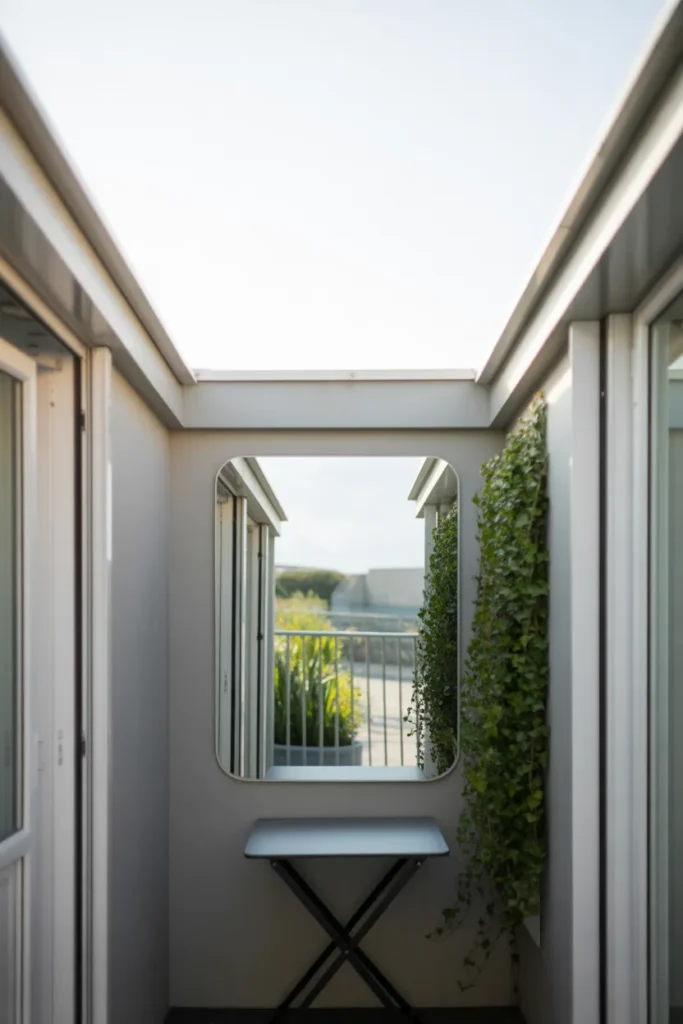
Use mirrors rated for exterior conditions — standard interior mirrors will delaminate at the edges within one season when exposed to outdoor humidity and temperature change. Acrylic mirror panels are a lightweight and shatter-resistant alternative to glass for balcony use.
Keep the mirror surface clear of direct plant contact — trailing vines or leaves pressed against a mirror surface trap moisture and cause edge deterioration over time regardless of the mirror rating.
Best for: balconies enclosed on multiple sides, north-facing balconies with limited natural light, any small balcony where the goal is to visually expand the space.
13. Create a Reading Nook With a Hanging Egg Chair
A hanging egg chair mounted from a ceiling beam or a freestanding stand frame turns a corner of even the smallest balcony into a dedicated single-person seating zone that feels like a destination. Unlike standard chairs, a hanging chair requires no floor footprint beneath it — just the mount point above.
The freestanding stand option is the most renter-friendly because it requires no ceiling drilling. Position the stand in a corner to maximize remaining floor space. A freestanding hanging chair and stand combination typically fits within a 4-by-4-foot footprint while providing a seating experience far more comfortable and visually interesting than a standard chair of the same size.
Pair it with a small wall-mounted side ledge rather than a floor-level side table — the floor-level table creates a tripping hazard in the already-compact space around the chair base. A narrow wall ledge at armrest height holds a drink or a book without interfering with the floor plan.
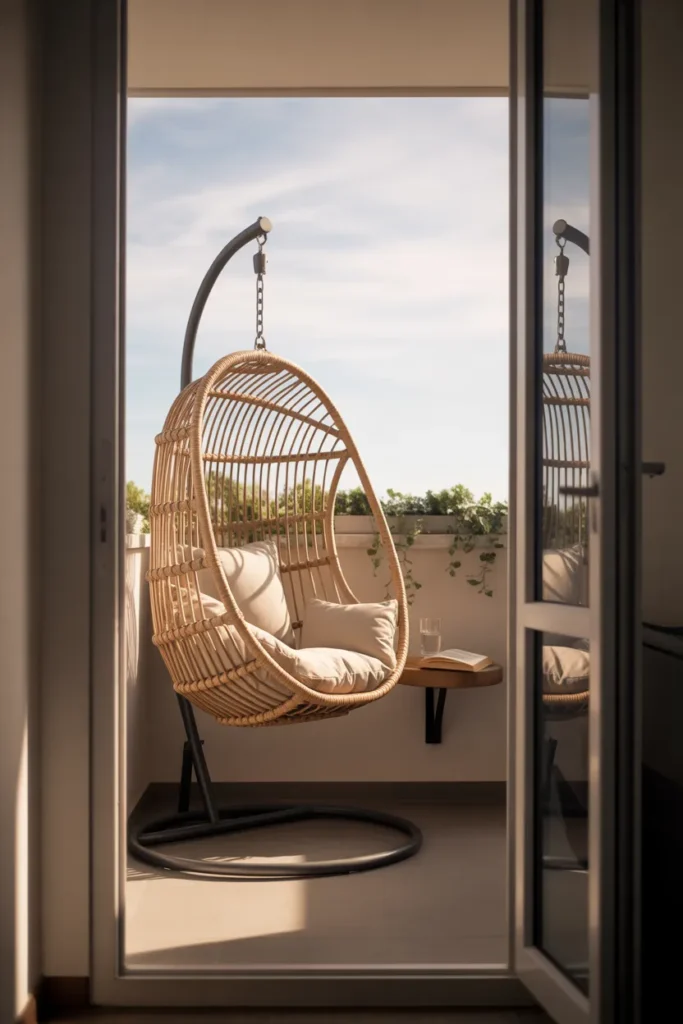
Choose a chair with an outdoor-rated cushion insert — indoor cushions compress and absorb moisture quickly in exterior conditions and become unusable within a single rainy season.
Best for: solo-use balconies, readers, apartment dwellers who want a high-impact seating upgrade without filling the entire floor area.
14. Zone the Balcony Into Two Functions With a Divider Element
Even on a balcony under 50 square feet, creating two distinct zones — one for seating and one for plants or storage — makes the space feel more organized and intentional. Without zoning, small balconies feel like random collections of objects rather than designed spaces. A simple divider element, a slatted screen, a tall planter, or a half-height shelf unit, creates the boundary without a physical wall.
Position the divider perpendicular to the railing rather than parallel to it. Parallel placement cuts the balcony into front and back halves, which feels restrictive. A perpendicular divider creates a left and right arrangement that feels more like two adjacent areas with a shared connection.
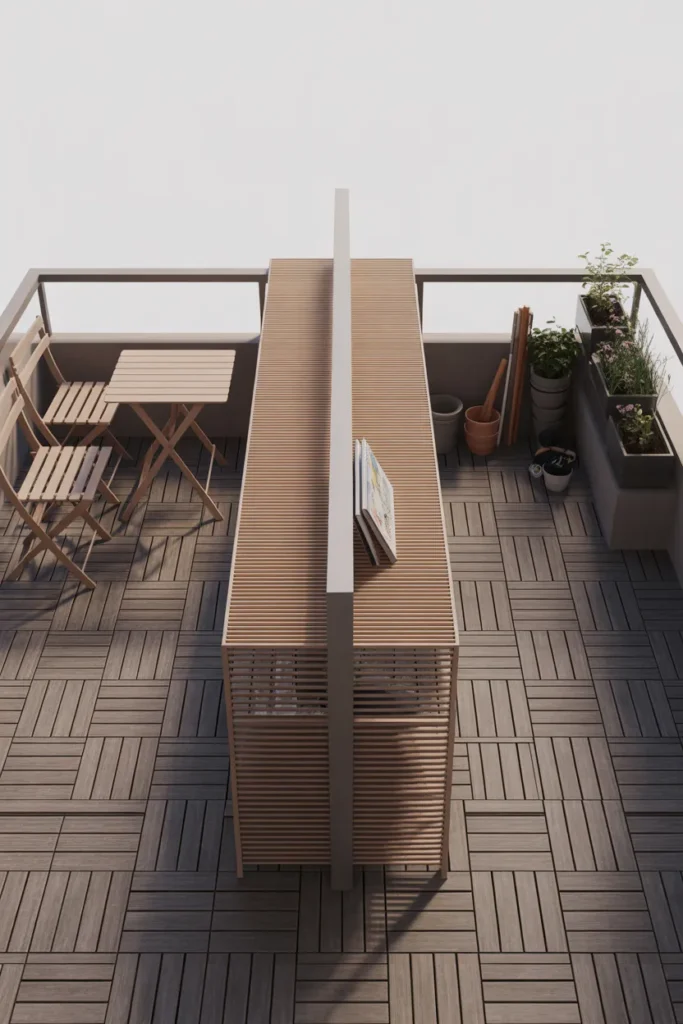
The divider element itself can be functional — a tall narrow shelving unit used as a divider provides storage on both sides while serving as the zone boundary. A planter used as a divider contributes greenery to both zones visually.
Avoid using furniture that is too heavy or tall as a divider on upper-floor balconies — wind load on a tall unsecured element is a genuine safety consideration and most balcony railing systems are not designed to brace freestanding furniture against lateral wind force.
Best for: balconies between 40 and 80 square feet where a single-function layout feels incomplete.
15 The Slim Console Table as a Balcony Bar or Prep Surface
A slim console table — 10 to 14 inches deep — placed against the exterior wall of a balcony creates a standing bar surface, a plant display ledge, or an outdoor prep counter without projecting significantly into the floor space. Standard outdoor furniture occupies 18 to 24 inches of depth minimum — a console table cuts that nearly in half.
Use the surface for bar setups when entertaining, as a plant ledge during the week, or as a standing workspace if the balcony doubles as an outdoor office. The narrow depth keeps it from feeling like a barrier between the door and the railing and maintains clear sight lines across the space.
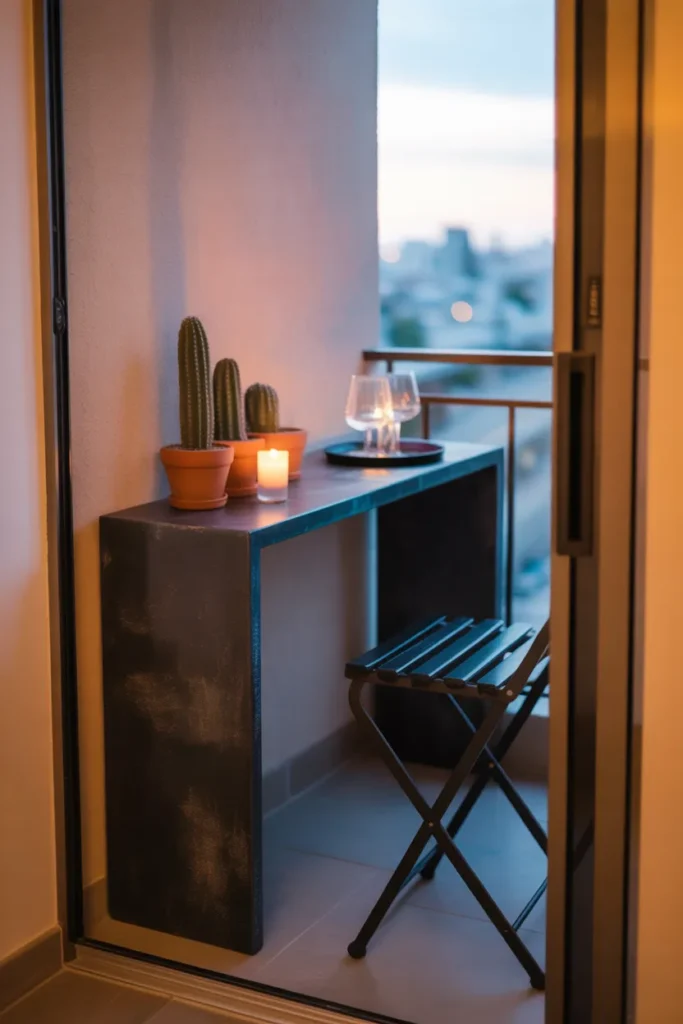
Choose a console in powder-coated steel, teak, or aluminum for outdoor durability. A lower shelf below the main surface adds a second storage tier for pots, tools, or a small speaker without adding any additional footprint.
Wall-mount the console if the balcony wall allows it — a wall-mounted version with no legs eliminates the floor footprint entirely and makes the deck surface below visually continuous and easier to clean.
Best for: balconies used for entertaining, outdoor bar setups, anyone who wants a surface without a dining table footprint.
16. Paint the Exterior Wall a Bold Color to Define the Space
The exterior wall of a balcony is almost always left in the default building finish — white, beige, or grey — because most people do not consider it a designable surface. Painting it a intentional color, a terracotta, deep olive, charcoal, or dusty blue, transforms the balcony from an afterthought into a visually distinct space that reads as designed.
Check your lease or building rules before painting — many buildings prohibit exterior surface modification. In those cases, outdoor peel-and-stick removable wallpaper rated for exterior use or a large format art panel achieves a similar effect without permanent modification.
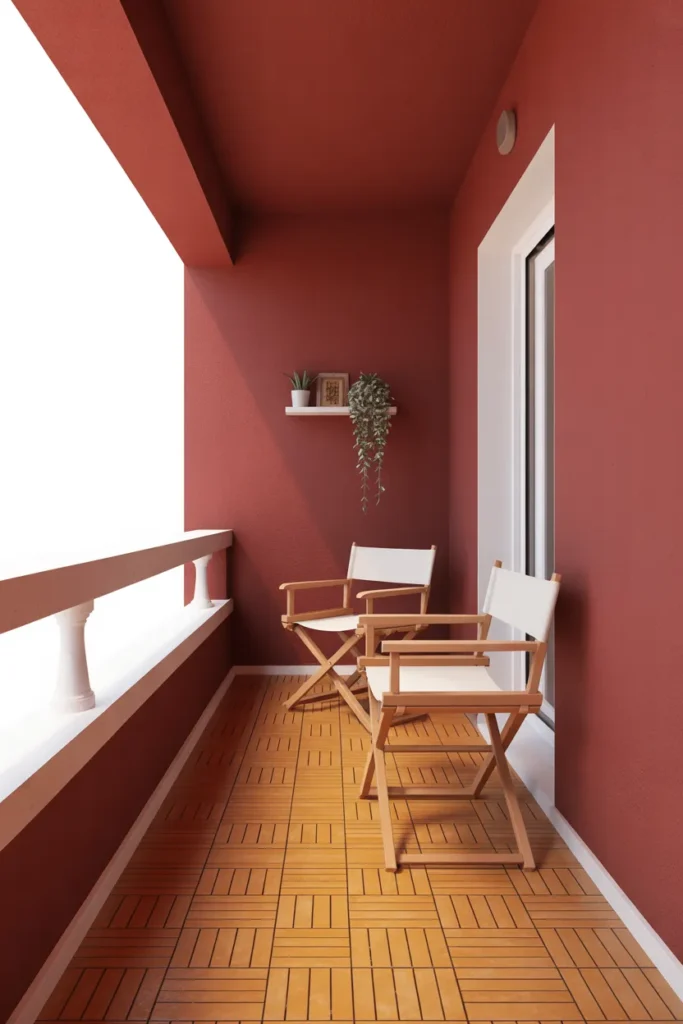
The color you choose should contrast with the flooring and furniture to create depth rather than blending everything together into a flat visual field. A dark wall with light flooring and natural wood furniture creates a layered, considered look that photographs well and feels premium in person.
Avoid painting the wall a color that the building exterior conflicts with — the adjacent building surfaces will be visible and a color that clashes with the overall building palette will feel jarring rather than intentional.
Best for: owned properties or rentals where exterior painting is permitted, balconies with a plain or unattractive default wall finish.
17. Use Stackable Furniture That Stores Itself When Not in Use
Stackable outdoor chairs and nesting tables solve the primary problem of small balcony furniture: it occupies space even when nobody is using it. A set of four stackable chairs takes up the footprint of one when stored — meaning you can accommodate guests when needed and reclaim the floor completely afterward.
Keep one chair out as the daily-use piece and stack the remaining three against the wall. The stack reads as a deliberate design element rather than clutter when the chairs are in a consistent color and clean condition. Pair with a nesting side table set that collapses flat against the wall when not extended.
This approach makes the balcony genuinely multi-functional — capable of seating one person daily and four people for weekend use without requiring any additional furniture or permanent configuration changes.
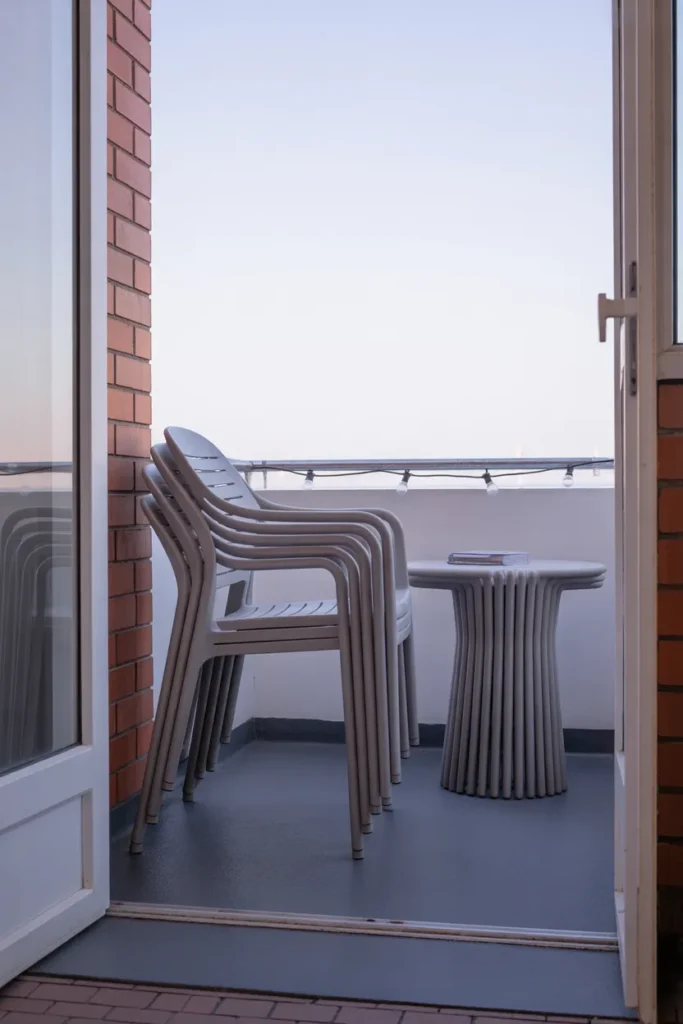
Choose stackable chairs in aluminum or polypropylene rather than steel — both materials are significantly lighter, which makes the stacking and unstacking process practical rather than laborious.
Best for: balconies used for occasional entertaining, anyone who wants flexible capacity without permanent furniture commitment.
18. Build a Simple DIY Pallet Daybed for a Lounge-Style Balcony
A daybed built from two standard wooden pallets stacked and fitted with a weatherproof outdoor cushion converts a small balcony into a lounge-style retreat that feels far more luxurious than its cost or square footage suggests. This is one of the most saved small balcony hacks on Pinterest because the transformation is dramatic and the execution is straightforward.
Sand the pallet surfaces thoroughly to remove splinters and apply a weatherproof exterior wood stain or paint before use. Two pallets stacked create a platform height of approximately 12 inches, which sits lower than standard furniture and contributes to the lounge atmosphere. Position the daybed against the exterior wall with the length running parallel to the railing so it does not block movement along the balcony perimeter.
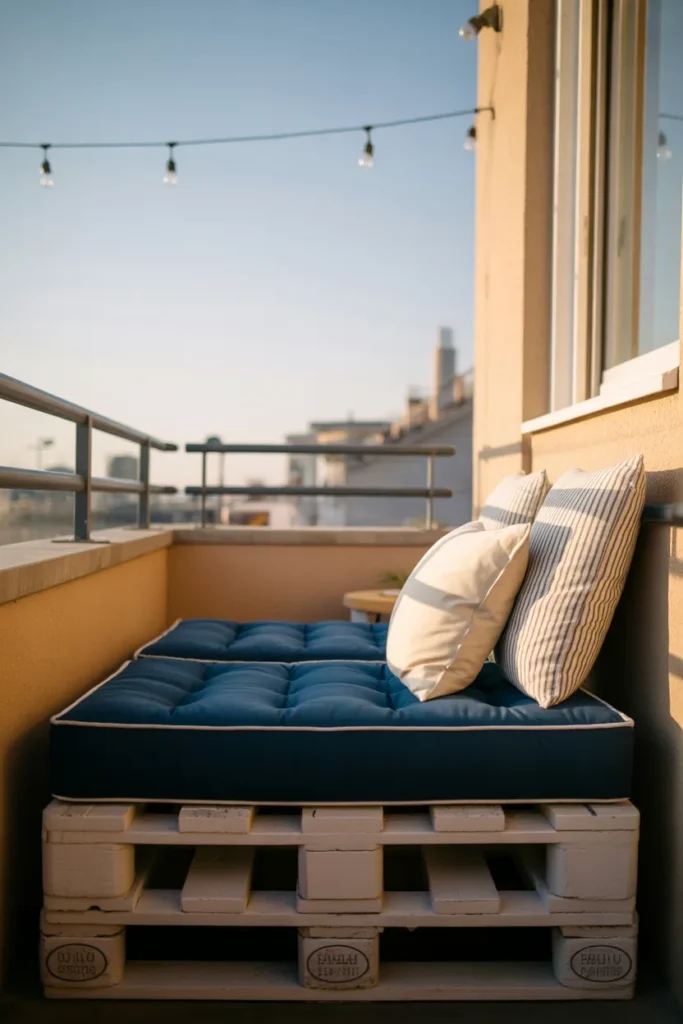
Use a cushion at least 4 inches thick in an outdoor-rated fabric — thinner cushions compress quickly and lose comfort within one season. Add a fitted outdoor cushion cover that zips off for washing. Throw pillows in weather-resistant fabric complete the setup without requiring any additional structure.
The key practical note: pallets vary significantly in quality and treatment. Always source heat-treated pallets — marked HT — rather than chemically treated ones marked MB, which contain methyl bromide and should never be used in living spaces.
Best for: owned or long-term rental balconies, anyone willing to do a half-day DIY project for a significant lounge upgrade.
Conclusion
These 18 genius small balcony hacks for tiny spaces cover the full range of what is possible — from afternoon-long DIY projects to one-decision furniture upgrades that change how you use the space every single day. The consistent thread across all of them is this: small balcony problems are almost always planning problems, not space problems. Save this post to your Pinterest boards so you can reference these ideas when you are ready to work on your space. If you are still deciding where to start, begin with the floor and the lighting — those two changes alone will make your balcony feel like a different space before you add anything else.