
Most entryways are an afterthought — and it shows. If your entry feels cluttered, dark, or disconnected from the rest of your home, these entryway makeover ideas 2026 are exactly what you need. This guide covers 15 specific, decision-ready layouts with honest guidance on what works, what to avoid, and which idea fits your actual space.
1. Add a Floating Bench With Hidden Storage to Reclaim Floor Space
A wall-mounted floating bench is one of the smartest moves you can make in a small entryway. By lifting the seat off the floor, you visually open the space while adding a functional surface for putting on shoes or setting down bags. Most floating bench designs include a hinged lid that gives you clean, hidden storage for items you reach for every day.
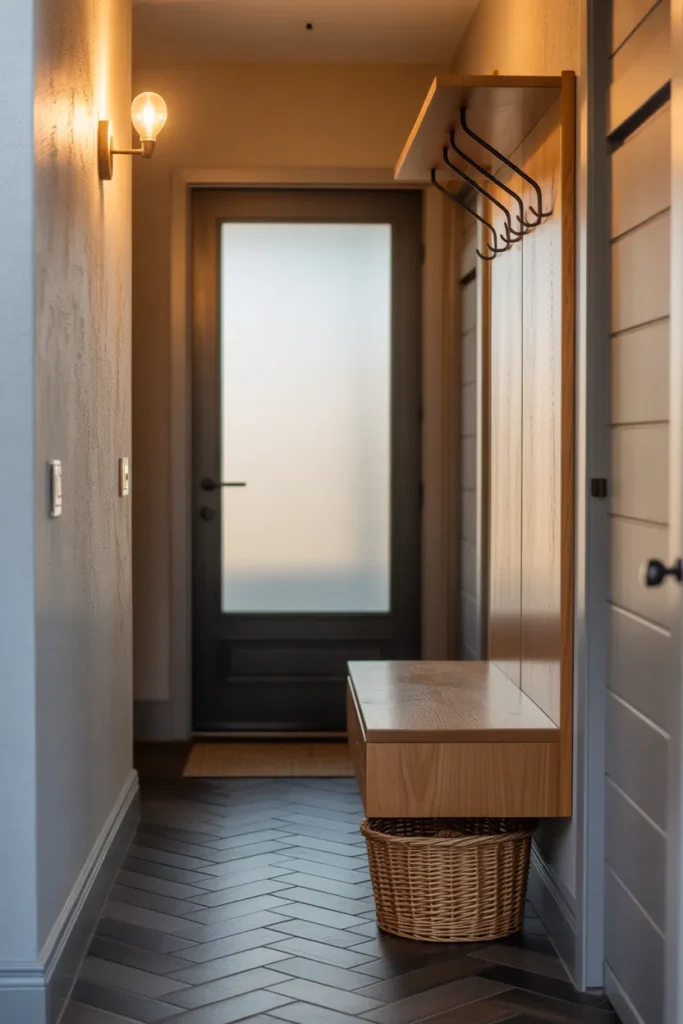
This layout works best when your entryway is narrow — under six feet wide — and you need to keep the walkway clear. Pair it with hooks directly above the bench to create a compact drop zone that handles coats, bags, and keys without spreading clutter across the room.
The most common mistake is choosing a bench that is too long. Measure your wall carefully and leave at least 18 inches of clearance on each side. A bench that overwhelms the wall creates a cramped feel rather than solving the problem it was meant to fix.
2. Use a Slim Console Table to Define the Entry Without Blocking Traffic
A console table is the go-to solution for entryways that have enough width to spare but lack a clear visual anchor. The right console creates an instant arrival moment — a place for keys, a small tray, and a single decorative object — without interrupting the flow from door to hallway.
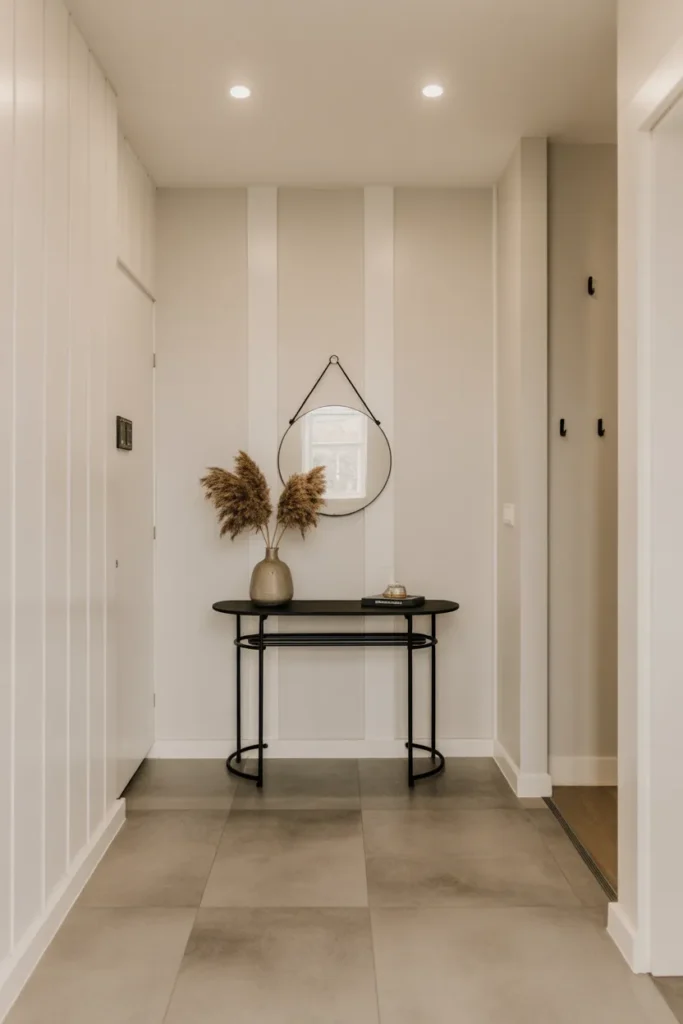
For functional entryway space planning, choose a console no deeper than 12 to 14 inches. Anything deeper starts to feel like furniture blocking traffic rather than framing the space. Keep the surface organized with one small tray for everyday carry items and one vertical object — such as a narrow lamp or a simple vase — to draw the eye upward.
This setup works well in medium-sized entryways where there is wall space to spare but no room for a full bench. If you also need shoe storage, add a small upholstered footstool underneath the console. It pulls out when needed and tucks back cleanly.
3. Install a Built-In Mudroom Locker System for Families With Heavy Daily Use
For households with kids, pets, and active daily schedules, a built-in locker system is the most practical entryway investment you can make. Each locker section handles one person’s gear — coat, bag, shoes, and sports equipment — so clutter stays contained and the space stays functional regardless of how chaotic the morning rush gets.
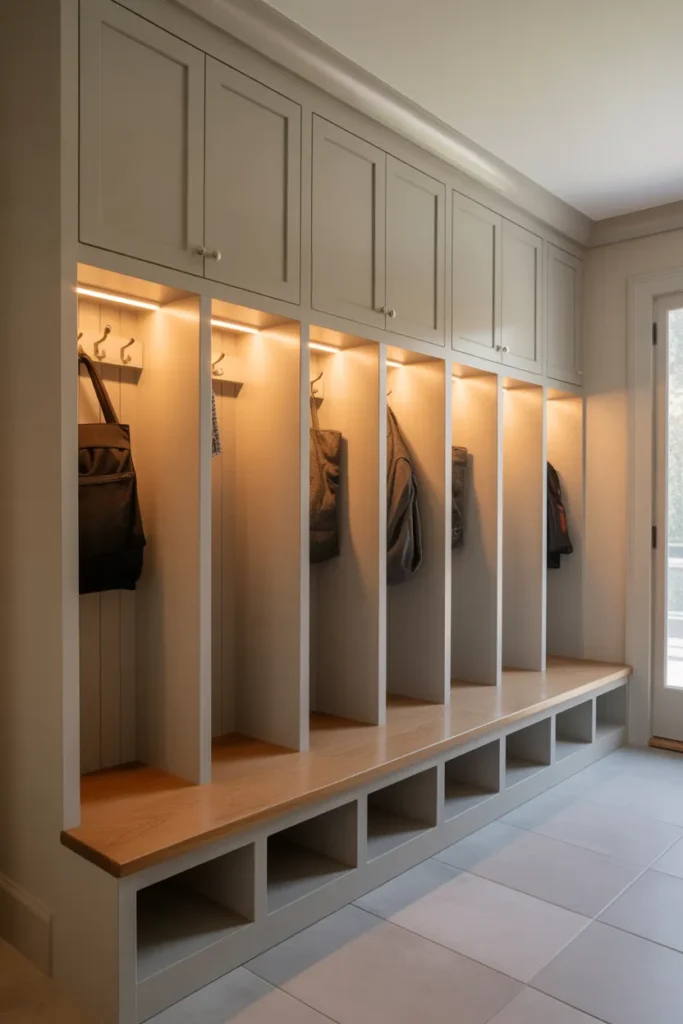
This design is best suited for entryways connected to a garage or side door where the volume of items entering the home is highest. A standard four-panel locker system fits comfortably in a 10-foot-wide space and can be customized with different heights to accommodate both adults and children in the same row.
Avoid going open-shelf only. Families with heavy foot traffic need doors that close. A mix of closed cubbies at the top and open slots at the bottom for shoe drop keeps daily chaos out of sight while still being fast to use when everyone is rushing out the door.
4. Hang a Large Statement Mirror to Make a Small Entryway Feel Twice as Big
A large mirror is the most cost-effective way to visually expand a tight entryway. When positioned directly opposite or adjacent to the front door, it reflects light back into the space and creates the perception of depth where none actually exists. This is one of the few design moves that is simultaneously decorative and architectural in effect.
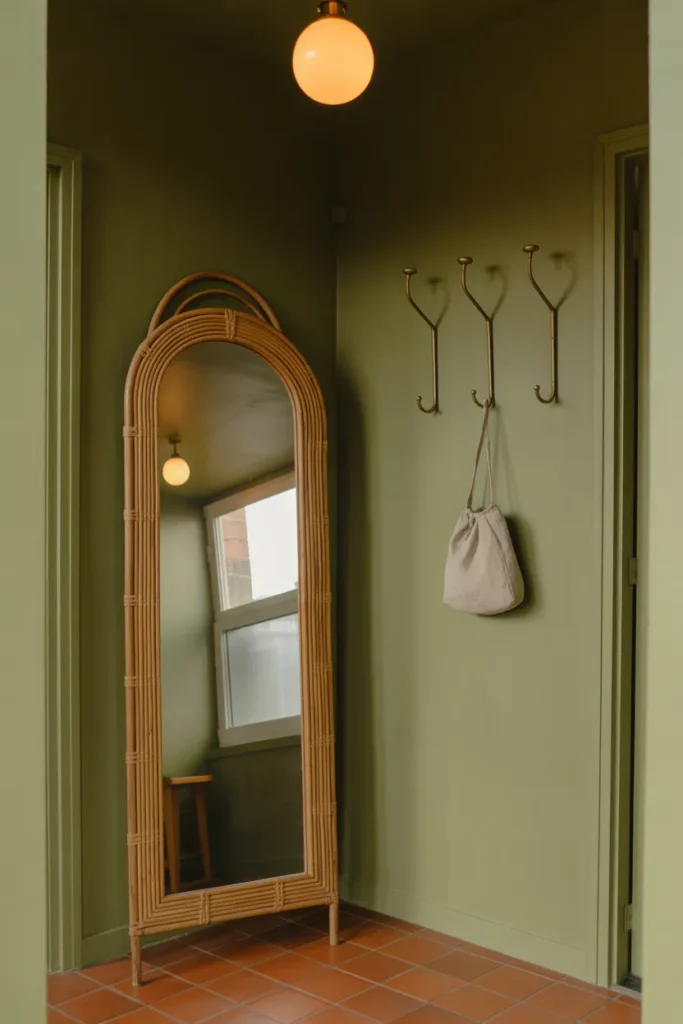
Scale matters more than style here. A mirror that is too small reads as a decorative afterthought and does nothing to change how the room feels. Choose a mirror that fills at least 60 to 70 percent of the wall height. Arched tops and vertical rectangles both work well — what matters is vertical presence.
The mistake to avoid is placing the mirror where it only reflects a blank wall or a ceiling. Position it where it captures natural light from a window or reflects an interesting element — a lamp, a plant, or daylight coming through the front door. That reflection is what makes the space feel alive.
5. Layer Overhead and Accent Lighting to Set the Right First Impression
Lighting is the single most overlooked element in any entryway makeover. Most entryways rely on one ceiling fixture that creates flat, uninspiring light. Layering a pendant or flush mount with a small wall sconce or table lamp changes the entire character of the space — making it feel intentional rather than purely functional.
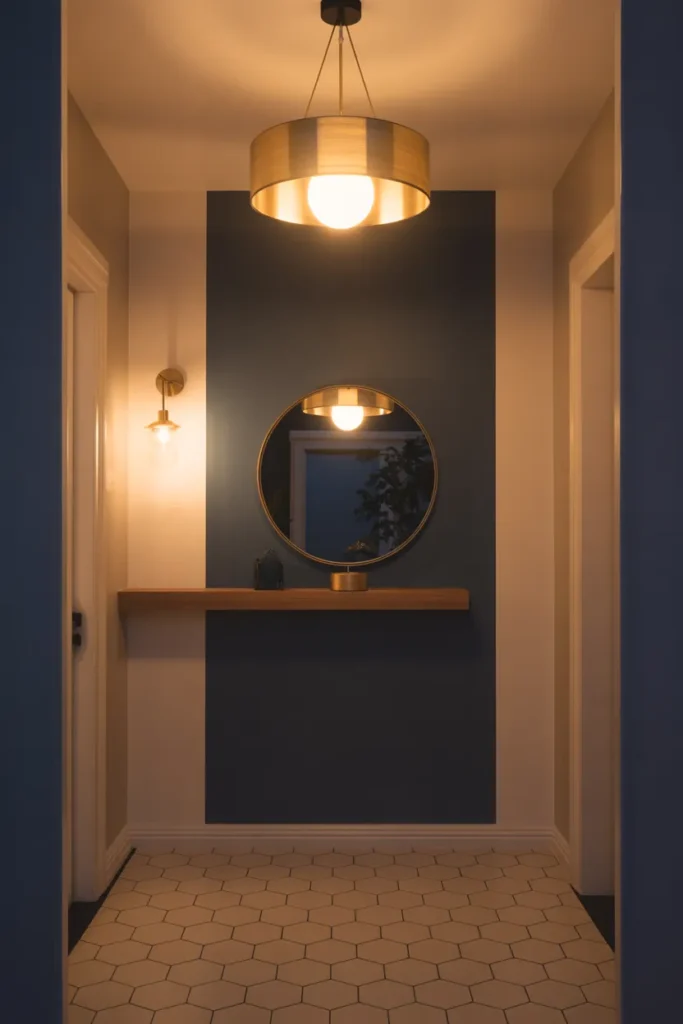
Warm-toned bulbs in the 2700K to 3000K range are consistently the right choice for entryways. They create a welcoming residential feeling that cooler daylight bulbs cannot replicate. If your entryway has a bench or console, position one lower light source near it to create visual warmth at eye level when guests arrive.
Dimmer switches are a small investment with significant payoff. An entryway that is fully bright during the day but drops to a warm, low level in the evening feels far more considered than one stuck at a single brightness setting. Install one wherever your wiring allows.
6. Choose a Patterned Runner Rug to Anchor the Entry and Protect High-Traffic Flooring
A runner rug does more work in an entryway than almost any other single element. It defines the zone visually, protects the floor from daily wear, adds acoustic softness, and signals to anyone walking in that this is a considered space. A well-chosen runner ties together furniture, wall color, and lighting into a cohesive look.
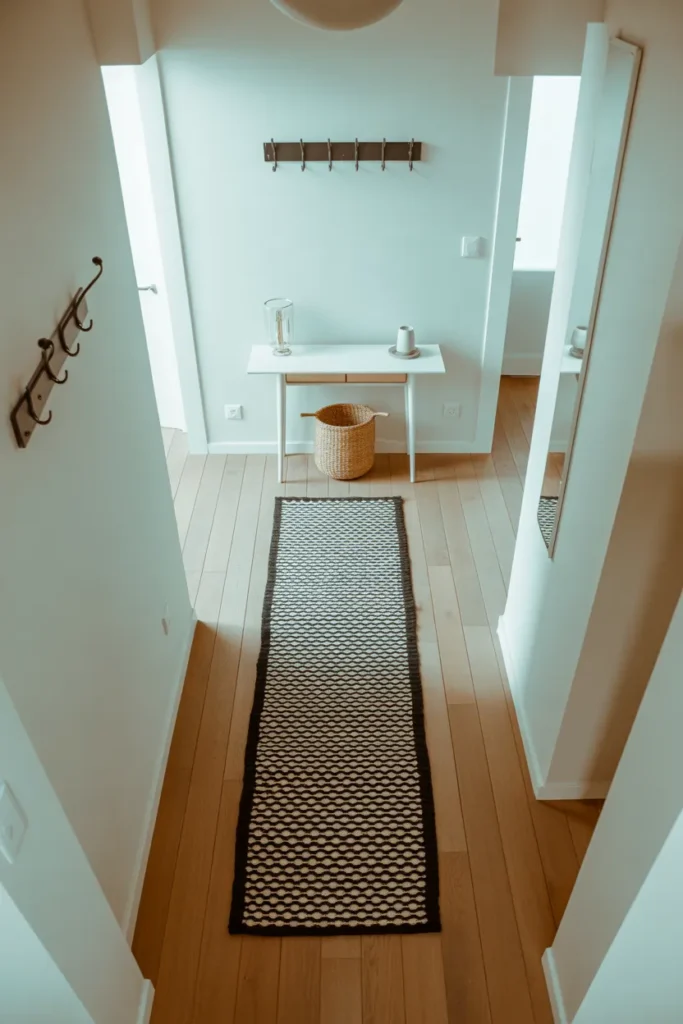
For narrow entryways under five feet wide, choose a runner that is no wider than 80 percent of the floor width. Leave visible floor on both sides. In wider entries, a bold pattern works well because there is enough surrounding space to let it breathe without overwhelming the room.
Durability is non-negotiable in this zone. Low-pile flatweave rugs in wool or polypropylene hold up better than high-pile options and are far easier to clean. If you have kids or pets, a washable cotton runner is the smarter long-term choice over a more delicate option.
7. Paint the Interior Door Face a Bold Color to Create Curb-to-Interior Impact
When viewed from inside the home, the front door itself becomes the first design decision anyone sees. Painting the interior face of the door — and optionally the frame — a deliberate, saturated color creates an immediate focal point that no amount of furniture or accessories can replicate.
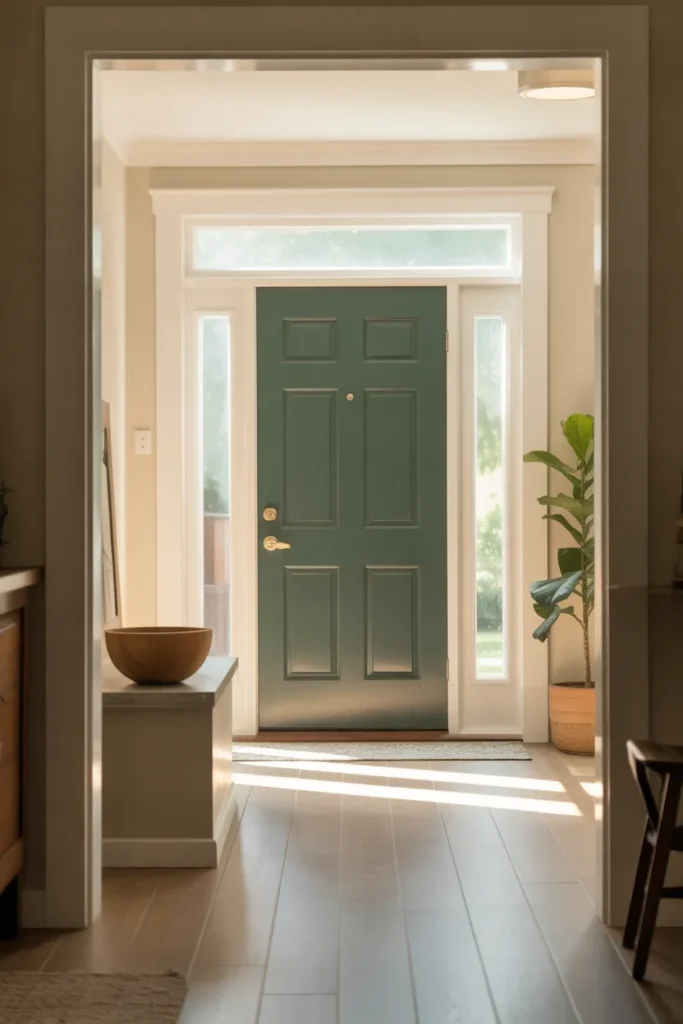
Deep forest green, matte black, terracotta, and navy blue consistently work well because they anchor the space without darkening it. The key is to choose a color that connects — however loosely — to something visible in the adjoining room, so the transition feels designed rather than accidental.
This works best in entryways with natural light. If your entry is dark with no windows near the door, a lighter chalky matte in dusty sage or warm off-white will read better than a deep tone that disappears into shadow. Always test a large sample on the actual door before committing.
8. Add Vertical Open Shelving for Display and Accessible Daily Storage
Vertical shelving installed beside or above the main entry furniture maximizes a dimension that most entryway designs completely ignore: height. In apartments and homes with limited floor space, going vertical is one of the most effective functional entryway floor plan strategies available. A tall narrow shelf unit that reaches near the ceiling stores significantly more than a wide low unit of the same footprint.
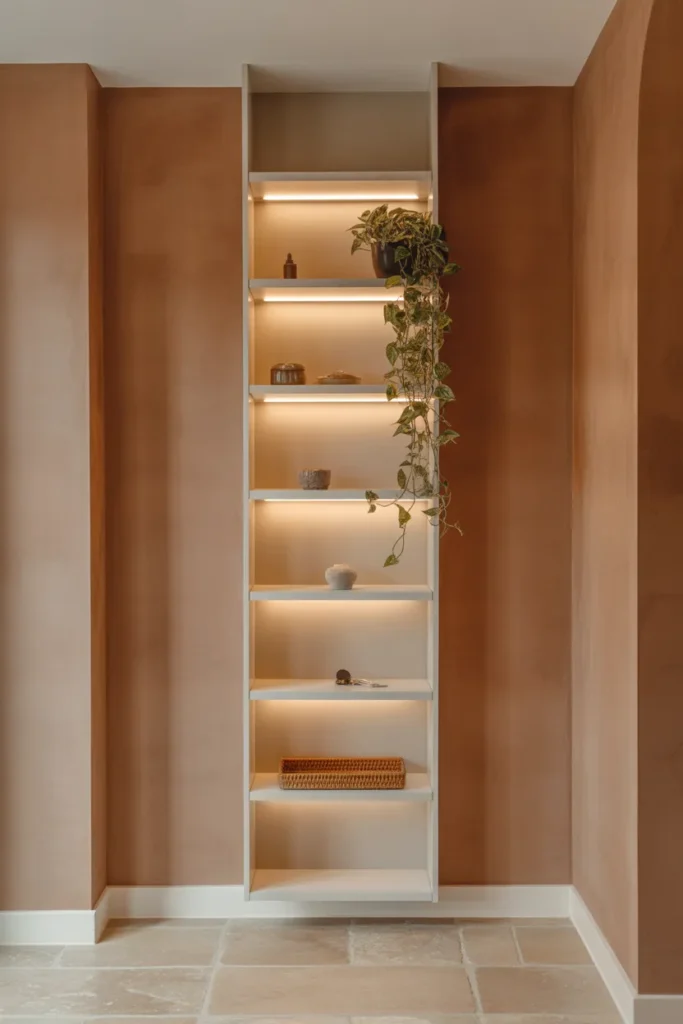
Use the lower shelves for daily-access items — a basket for mail, a small tray for sunglasses, a spot for keys — and reserve the upper shelves for less-used items or decorative objects. This tiered approach keeps the eye moving upward while keeping practical items within easy reach.
The mistake most people make is treating vertical shelves as purely decorative from top to bottom. Every shelf should serve a purpose. Decorative objects are fine, but they should anchor shelves that also hold functional items. An all-decorative vertical shelf in an entryway is wasted storage potential.
9. Use Wallpaper or a Mural on One Wall to Create Maximum Impact With Minimal Space
In a small entryway where square footage is tight, a single wallpapered or hand-painted accent wall delivers more visual impact per dollar than almost any other single change. Because the entry is a transitional zone people move through quickly, a bold pattern or graphic texture works here in a way it might not in a living room or bedroom where it would be seen for extended periods.
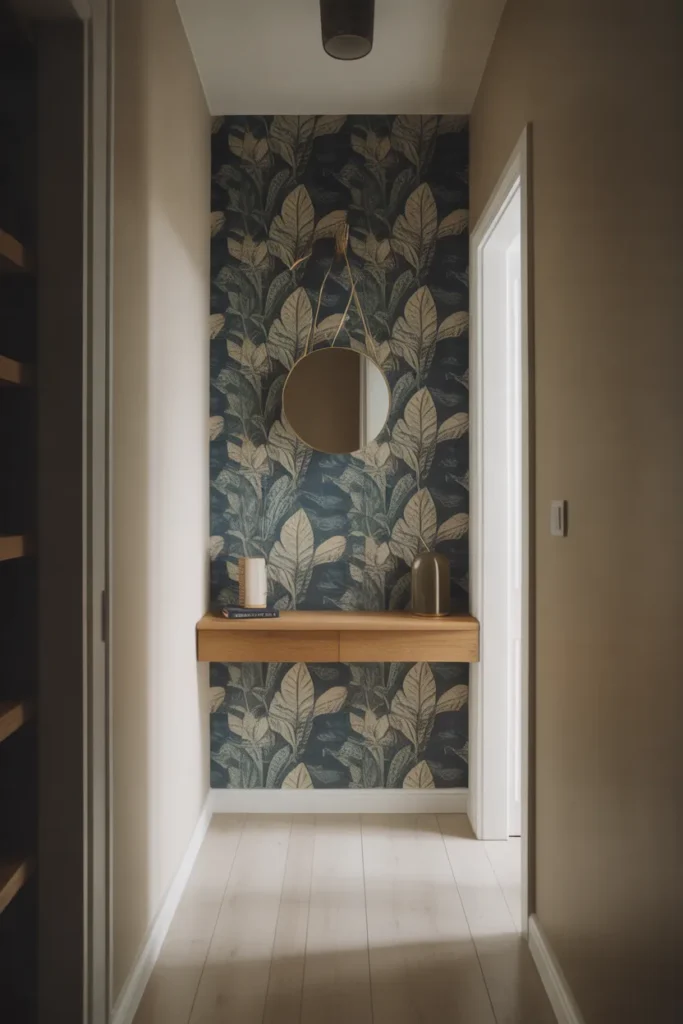
Botanical prints, abstract geometric patterns, and large-scale linen textures all perform well on entryway accent walls. The scale of the pattern matters: in a very small entry, oversized repeating patterns can feel claustrophobic. Choose a pattern whose repeat is no larger than 12 to 18 inches for spaces under 30 square feet.
This approach is ideal when you want a strong design statement but are working with a rental space or a tight budget. Removable peel-and-stick wallpaper has improved dramatically in quality and now offers a fully reversible option that does not compromise the look.
10. Create a Dual-Function Drop Zone With Hooks, a Tray, and a Charging Station
A drop zone is not just a row of hooks — it is a system. The most effective modern entryway makeover ideas 2026 center on creating a spot that handles the five things people actually do when they walk in the door: hang a coat, drop keys, set down a bag, take off shoes, and plug in a phone. When all five of those functions have a designated place, the entry stays organized without requiring any ongoing effort.
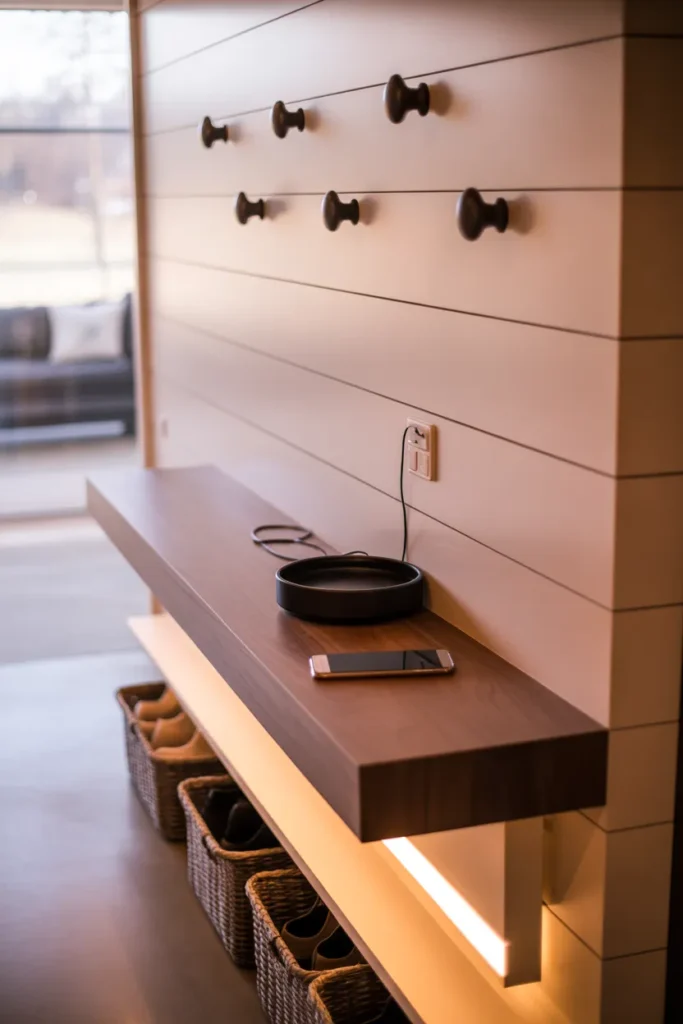
Position the hooks at 66 to 72 inches from the floor for adult coats, with a secondary lower row at 48 inches if children also use the space. Place a small tray or shallow bowl directly below or beside the hooks for keys and wallet. Add a discrete charging cable tucked into a shallow drawer or clipped to the underside of a shelf.
What does not work is a row of hooks with no surface below them. Without a place to set things down at waist height, items end up on the floor. The tray or shelf is the detail that makes the entire system function as designed.
11. Install Wainscoting or Beadboard Paneling to Add Architectural Character on a Budget
Flat painted walls in an entryway feel unfinished compared to what the rest of a well-designed home delivers. Wainscoting — whether traditional raised panel, flat shaker-style, or vertical beadboard — adds the kind of architectural detail that makes a space feel custom-built rather than builder-grade. It is one of the highest-impact changes you can make to a plain entry for a modest material investment.
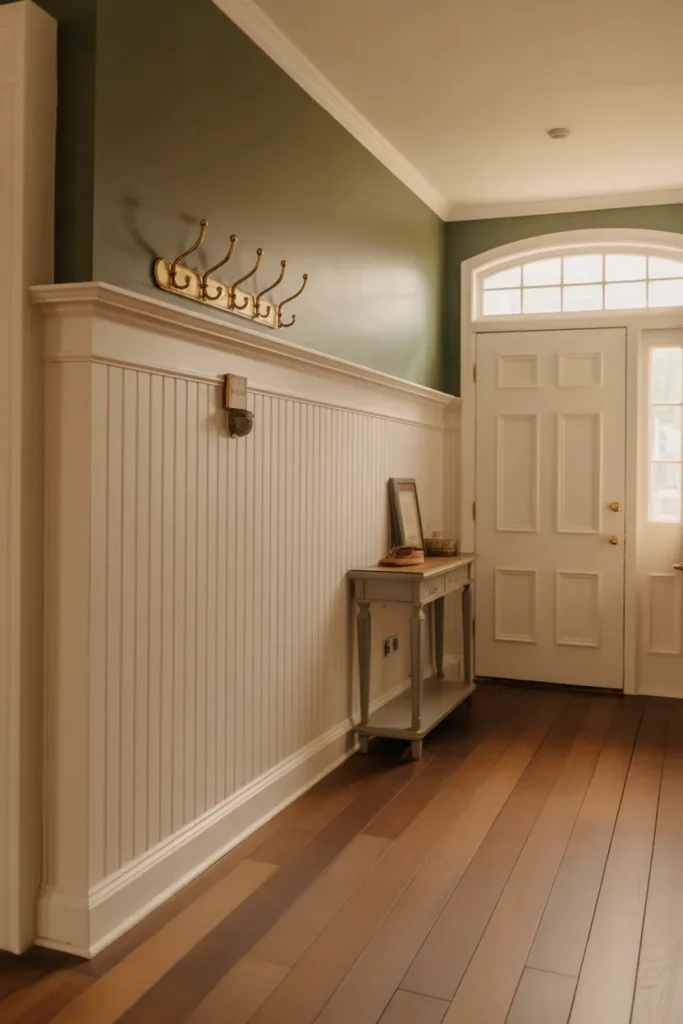
Wainscoting typically runs from the floor to 36 to 48 inches up the wall. The height you choose should relate to your ceiling height — taller ceilings can support taller paneling without feeling heavy. Painting the paneling a tone or two darker than the upper wall creates subtle contrast that adds visual depth without dramatic color.
This is particularly effective in traditional, transitional, and farmhouse-style homes where architectural detail is expected. In ultra-modern or minimalist homes, a flat vertical groove panel in the same color as the wall achieves a similar effect with a cleaner, more contemporary result.
12. Bring in a Potted Plant or Tall Indoor Tree to Add Life and Scale
A single well-chosen plant changes the energy of an entryway in a way that no furniture or color choice fully replicates. It introduces organic texture, movement, and a sense that the space is alive and maintained. In entryways that feel stiff or sterile despite good furniture choices, a plant is almost always the missing variable.
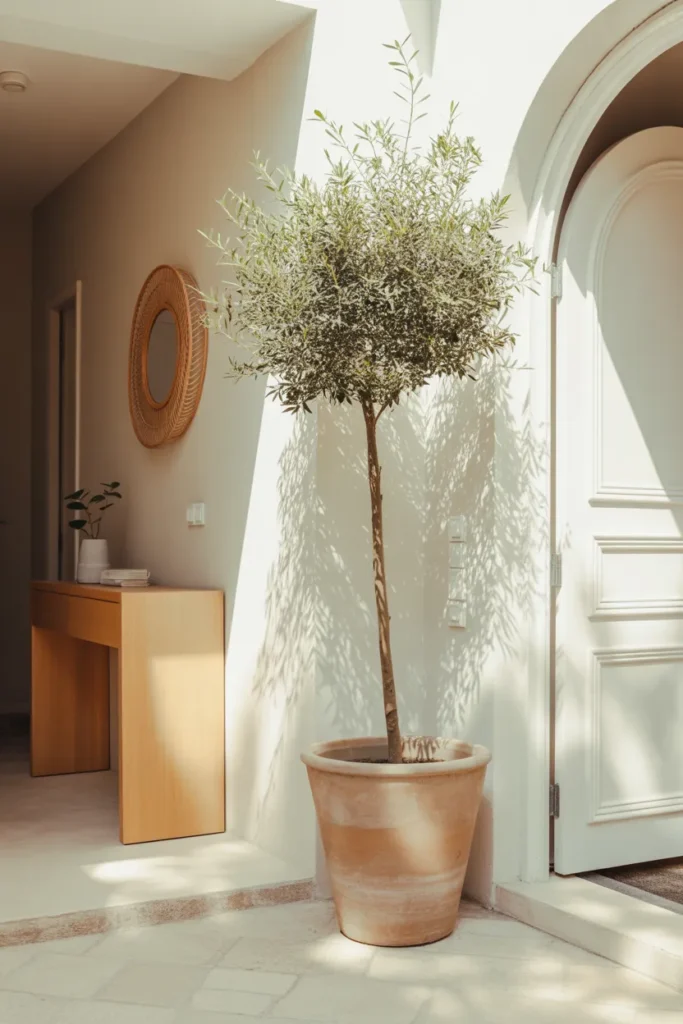
For small entryways, a potted snake plant, a ZZ plant, or a compact rubber tree in a quality ceramic pot does the job without taking up meaningful floor space. For larger entries with higher ceilings, a fiddle leaf fig or an olive tree in a tall terracotta planter adds scale that furniture alone rarely achieves.
The practical concern most people have is light. Most entryways do not receive enough natural light to sustain high-maintenance plants. The species listed above — snake plant, ZZ plant, cast iron plant — are specifically suited to low-light conditions and tolerate the temperature fluctuations that come with a space near an exterior door.
13. Use a Cohesive Color Palette Across All Entry Elements to Unify the Space
One of the most common reasons an entryway looks unfinished — even with good individual pieces — is that the colors do not connect. A console table in one finish, hooks in another metal, a rug in a third color family, and a mirror frame that matches nothing creates visual noise rather than visual calm. A cohesive three-color palette applied across every surface and object solves this instantly.
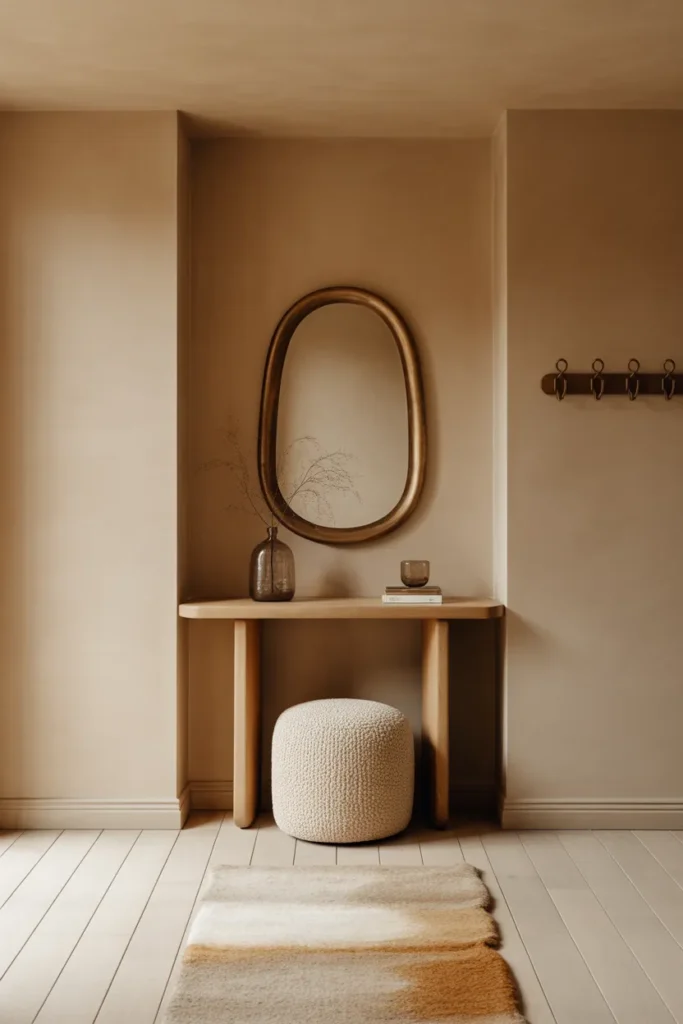
Choose one dominant neutral (the wall color or largest surface), one secondary tone (the furniture or rug), and one accent (hardware, mirror frame, and small objects). Limit metals to one finish throughout — mixed metals are a detail that works in larger rooms where the eye has room to travel. In a small entryway, they read as unplanned.
This principle applies to open kitchen layouts and entryways equally because both are transitional spaces seen from multiple angles simultaneously. When every element shares a color conversation, the eye reads the space as intentional and complete rather than assembled over time from unrelated purchases.
14. Add a Shallow Shoe Cabinet to Solve the Most Common Entry Clutter Problem
Shoes on the floor are the number one reason entryways fail to function as designed. A shallow shoe cabinet — one specifically sized for an entryway rather than a full closet — contains the problem without requiring a full mudroom renovation. Modern shoe cabinets are available in depths as slim as nine inches, which makes them usable in hallways and entryways where a standard cabinet would be completely impractical.
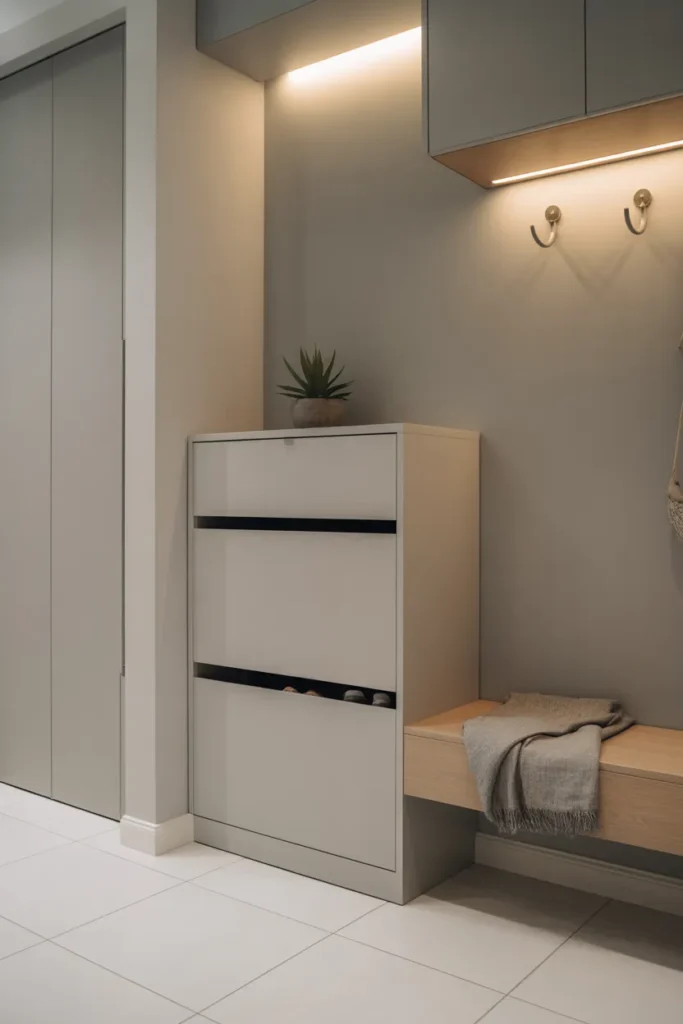
A flip-door or tilt-out front panel keeps the cabinet face clean and closed, which is critical in a space that visitors see immediately upon arrival. Choose a finish that matches or closely relates to your other entry furniture rather than treating the shoe cabinet as a standalone utility piece.
For households where shoe volume is high, look for a stacked two-tier design. A unit that holds 12 to 16 pairs in a 36-inch-wide, 42-inch-tall footprint is a realistic benchmark for a family of four. Pair it with a low upholstered bench on one side to complete a full shoe-changing station.
15. Define the Entryway With a Ceiling Detail That Creates a Sense of Arrival
In open-plan homes and apartments where the entryway bleeds directly into the living room with no architectural boundary, a ceiling treatment is one of the most effective ways to define the entry zone without building walls. A painted ceiling rectangle, a simple wood beam frame, a coffered detail, or even a change in light fixture type signals that the entry is its own distinct space.
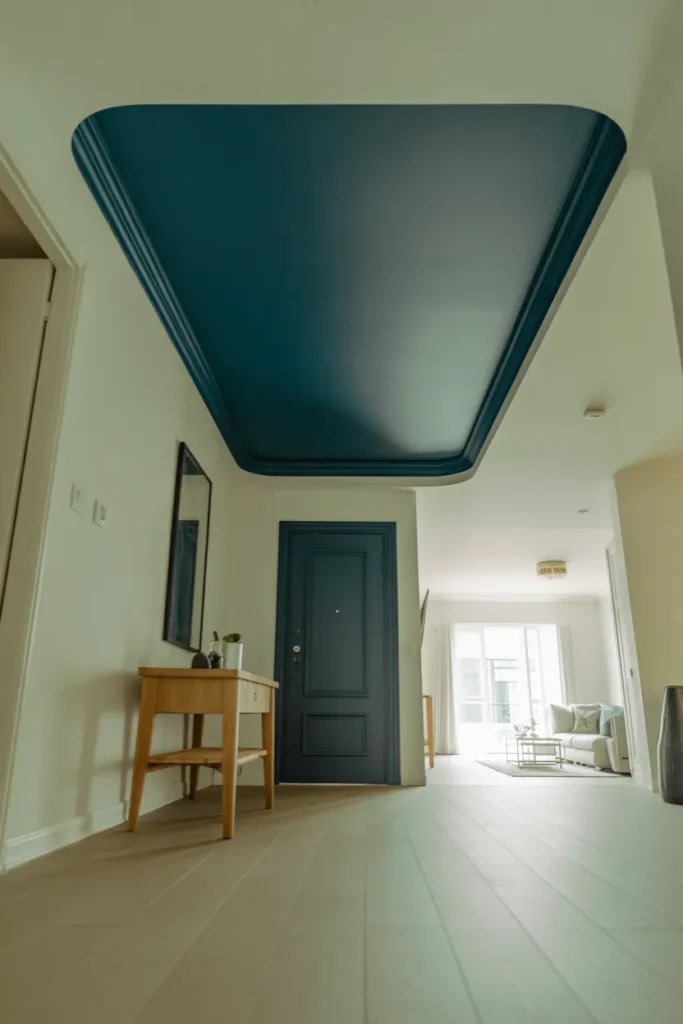
This works in both small and large open-plan layouts. In a small apartment, painting a 4-by-6-foot ceiling rectangle in a contrasting color directly above where the front door opens costs almost nothing and creates a surprisingly strong zone definition. In a larger home, a shallow wood-beam frame that mirrors the entryway furniture arrangement below gives the space an anchored, architectural feel.
The decision to go with a ceiling detail rather than a room divider or rug alone is particularly smart in modern entryway makeover ideas 2026 because it leaves the floor plan completely open while still communicating spatial hierarchy. No furniture is rearranged, no traffic flow is blocked, and the visual organization is immediate.
Final Thoughts
Your entryway is the first and last room you experience every day — it deserves as much thought as any other space in your home. Whether you are working with a narrow apartment hallway or a wide open entry with room to design, these entryway makeover ideas 2026 give you a clear starting point based on your actual space, lifestyle, and priorities.
Save this post before you start shopping or planning. Having a visual reference of the ideas that resonated with you will make every decision faster and more consistent. If you are still working through your layout, explore more functional home design ideas to find the approach that fits your home best.