
Picking the wrong bathroom mirror is one of the easiest ways to throw off an otherwise well-designed space, and most guides focus on aesthetics without addressing scale, lighting, or function. This post gives you 15 distinct bathroom mirror ideas for 2026 with clear guidance on what works in each room type, what to avoid, and how to make the right call for your specific layout and budget.
1. Arched Mirror Above a Single Vanity for Instant Architectural Character
An arched mirror is one of the most effective ways to add architectural interest to a bathroom that has no built-in character. The curved top softens the hard horizontal lines of a vanity, countertop, and tile grid, and creates a focal point that makes the room feel designed rather than assembled from defaults.
This works in bathrooms of almost any size, but it is particularly valuable in small to medium bathrooms where a rectangular mirror would simply blend into the surrounding tile and drywall. The arch introduces a shape that the eye reads as intentional and finished.
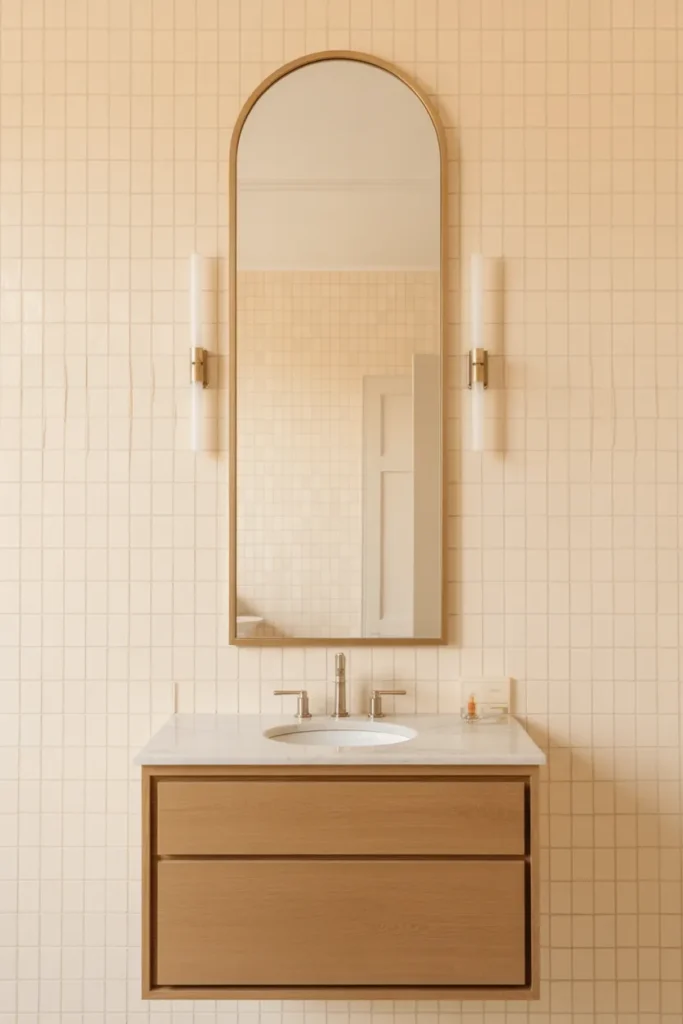

The proportional decision here is critical. The mirror width should be no wider than the vanity cabinet below it and no narrower than two-thirds of the vanity width. An arch that is too narrow looks like it belongs in a different room. An arch that is too wide overwhelms the vanity and makes the whole wall feel unresolved.
Frame material changes the entire mood. A thin black metal arch reads as modern and graphic. A plaster or unlacquered brass arch reads as warm and organic. A frameless arched mirror cut to shape reads as clean and transitional. Choose based on your existing fixtures and hardware finish, not on what is trending in isolation.
2. Full-Width Mirror That Spans the Entire Double Vanity Wall
A full-width mirror that runs edge to edge across the entire vanity wall is one of the most practical and spatially intelligent bathroom mirror ideas for any double vanity setup. It eliminates the awkward gap between two separate mirrors, doubles the perceived width of the room, and gives both users a full, unobstructed reflection at the same time.
This approach works best in master bathrooms and shared bathrooms where two people regularly use the vanity simultaneously. A continuous mirror surface removes the territorial division two separate mirrors create and makes the room feel more generous and cohesive.
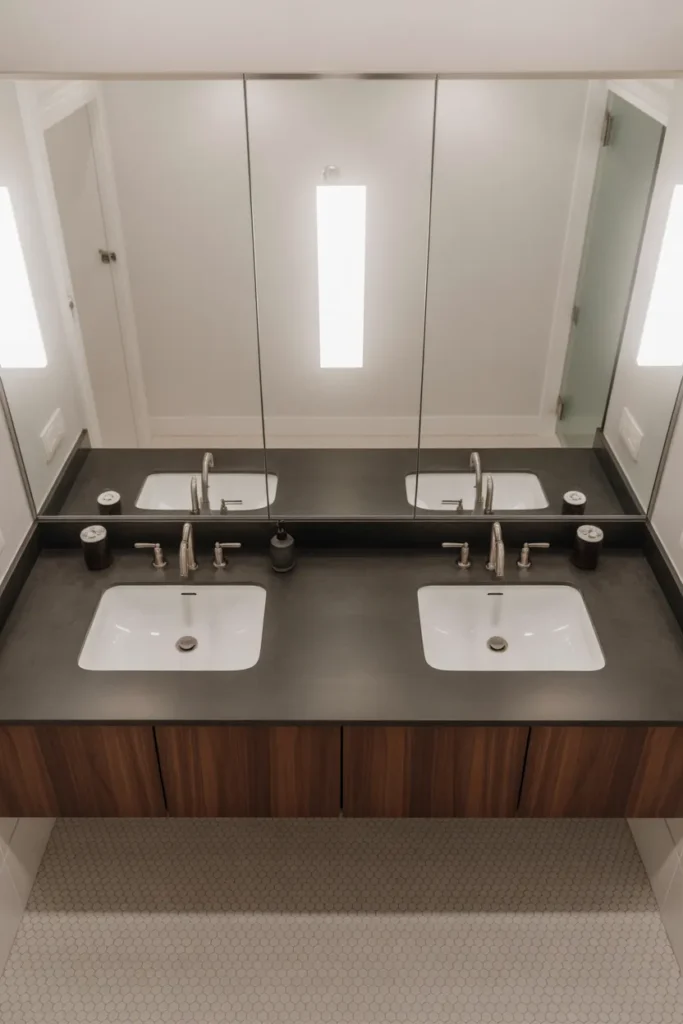
The most important decision is how the mirror meets the wall on either side. A mirror that butts directly into the side wall with no frame looks clean and modern but requires precise installation. A mirror with a thin metal or wood frame gives you a more forgiving edge detail and adds a layer of visual finish that frameless versions lack.
Avoid stopping the mirror short of the vanity edges by more than a few inches on either side. A full-width mirror that does not actually reach to the edges of the vanity reads as a sizing mistake rather than a design decision. If the mirror cannot span the full width, two coordinated individual mirrors are a stronger visual choice than one undersized panel.
3. Vintage Ornate Frame Mirror for an Eclectic or Maximalist Bathroom
A vintage or vintage-inspired ornate frame, whether in gilded plaster, carved wood, or cast resin, brings personality and visual weight to a bathroom that could otherwise read as a generic renovation. The contrast between an elaborate antique-style frame and contemporary bathroom fixtures is one of the most reliable design moves in eclectic interior styling.
This works best when the rest of the bathroom is relatively simple. White or neutral walls, straightforward tile, and basic fixtures give the ornate mirror the space it needs to read as a deliberate design statement rather than clutter. When surrounded by too many competing decorative elements, an ornate mirror loses its impact entirely.
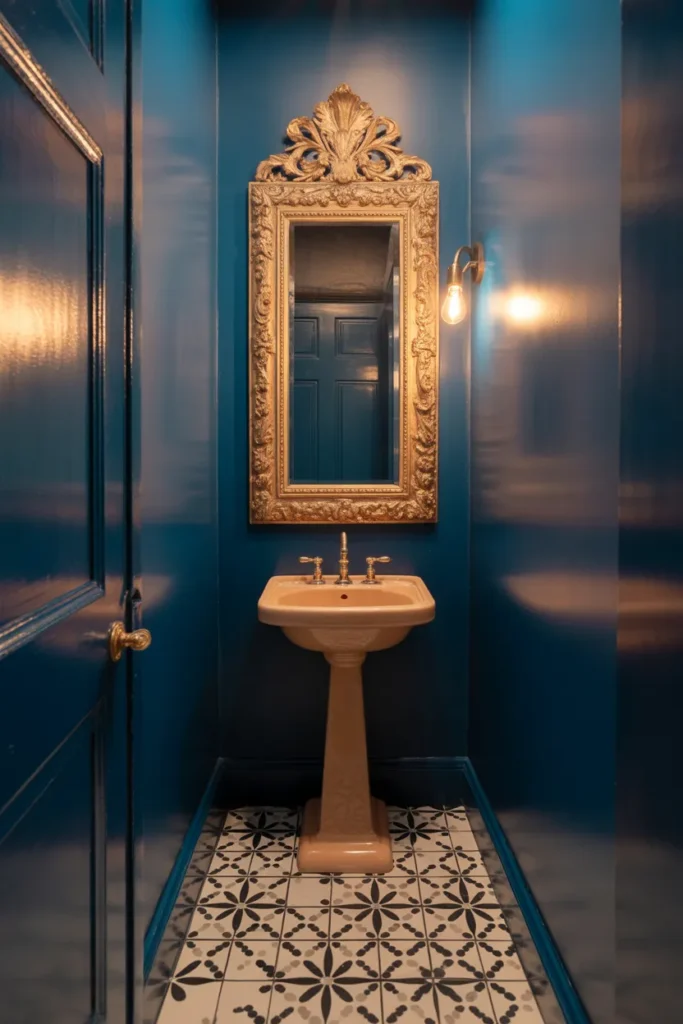
Scale is the primary decision point. An ornate mirror that is too small for the wall it occupies looks like a misplaced decoration. In a bathroom with an 8-foot ceiling, an ornate mirror should be at least 30 by 40 inches to command the space properly. In a powder room, even a smaller ornate mirror can be impactful because the room itself is compact enough to make it feel filling.
Avoid gilded gold frames in bathrooms with warm brass fixtures unless the gold tone of the frame is carefully matched or intentionally contrasted. Mismatched gold tones, one yellow-gold mirror frame paired with rose gold faucets, for example, create a color tension that reads as unresolved rather than eclectic.
4. Backlit LED Mirror for a Clean Spa-Like Glow
A backlit LED mirror, where the light source is built into the mirror and emits a soft glow around or behind the mirror perimeter, is one of the most functional bathroom mirror ideas in 2026 for anyone who wants both flattering task lighting and a clean, spa-like aesthetic without visible light fixtures on the wall.
The backlight provides ambient fill light that eliminates the harsh shadows created by overhead-only lighting, which is the most common bathroom lighting complaint. Because the light comes from around the face rather than above it, the illumination is more even and more flattering for everyday grooming tasks.
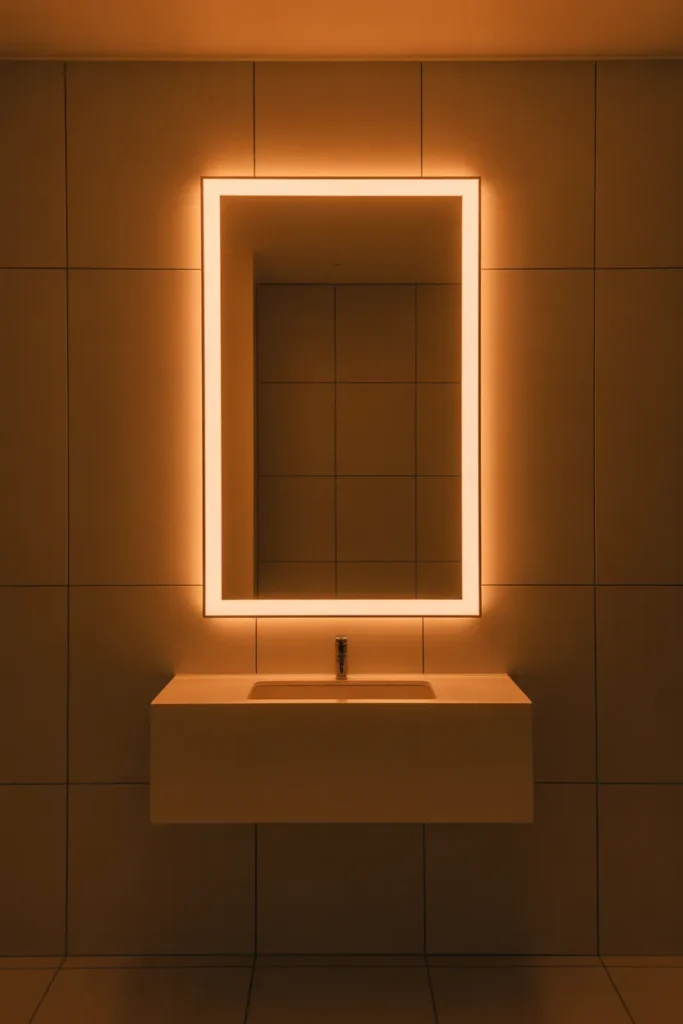
This mirror type suits modern, minimalist, and transitional bathrooms where exposed bulb sconces or ornate fixtures would feel out of place. It is also a strong choice for bathrooms with limited wall space on either side of the mirror, where traditional sconce placement is not possible.
Color temperature is a practical decision that most buyers overlook. A backlit LED mirror with a color temperature of 2700 to 3000 Kelvin produces warm light that is flattering and residential in feel. Mirrors with cooler 5000 to 6500 Kelvin settings produce a clinical daylight that looks good in product photography but tends to feel stark and unflattering in a home bathroom. Look for mirrors with adjustable color temperature if you are uncertain.
5. Round Mirror Above a Wall-Mounted Sink in a Compact Bathroom
A round mirror is the single most space-efficient shape for a small bathroom or powder room with a wall-mounted sink. It introduces a soft organic shape that contrasts with every other hard angle in a compact space, making the room feel less rigid, and its circular footprint takes up less visual real estate than a rectangle of equivalent size.
This is the correct mirror choice when the sink is wall-mounted rather than set in a vanity, because a wall-mounted sink has no horizontal cabinet surface to anchor a wide rectangular mirror against. A round mirror centered above the sink creates a self-contained visual unit that needs no surrounding cabinet to feel resolved.
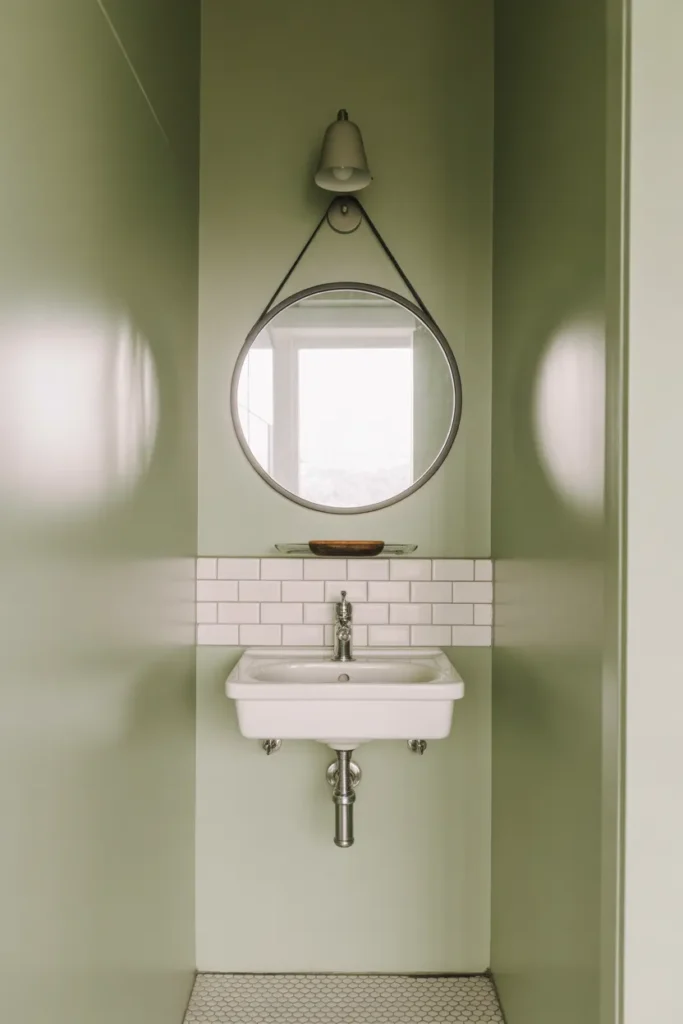
Diameter sizing is the most common mistake. A round mirror above a wall-mounted sink should be between 20 and 30 inches in diameter for most standard sink widths. Smaller than 20 inches looks like an afterthought. Larger than 30 inches starts to dominate a small bathroom wall in a way that feels out of scale.
For small bathrooms and apartment bathrooms where storage is a constant issue, consider a round mirror with a built-in medicine cabinet behind it. From the front it reads as a simple, clean circle. From a practical standpoint it functions as concealed storage, which is one of the most intelligent uses of mirror real estate in a limited space.
6. Leaning Floor Mirror in a Large Primary Bathroom for Layered Depth
A large leaning floor mirror positioned in a primary bathroom, either against an open wall or beside the vanity, adds a layer of depth and utility that a wall-mounted mirror alone cannot provide. It provides a full-length reflection that most bathroom mirrors do not offer, and its casual, leaning posture introduces a relaxed, editorial quality that feels more like a designed room than a functional one.
This works in larger primary bathrooms where there is sufficient floor space for the mirror to lean without blocking movement between the vanity, shower, and toilet zones. It is not a practical option in bathrooms under 60 square feet, where the footprint of a leaning floor mirror creates a navigation obstacle.
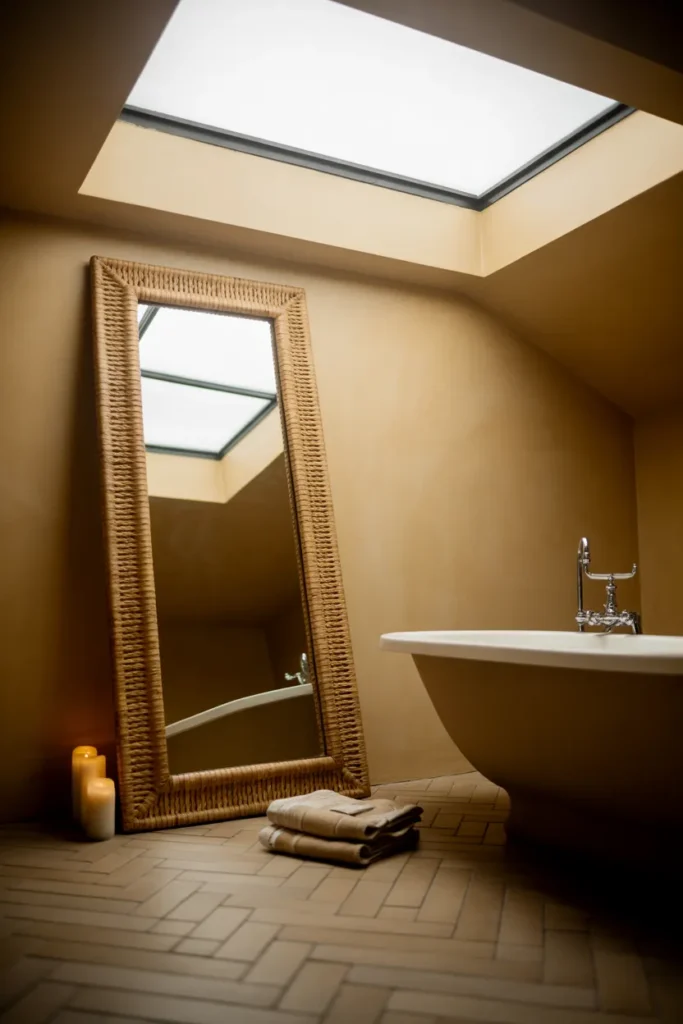
The frame of a leaning floor mirror should coordinate with, but not necessarily match exactly, the existing hardware and fixtures. A large unlacquered brass frame in a bathroom with brushed nickel fixtures creates an intentional mixed-metal moment. A wood frame in a bathroom with matte black fixtures adds warmth without competing with the hardware.
Secure a leaning floor mirror to the wall with a furniture strap or an anti-tip anchor, especially in households with children. A mirror of this size and weight is a genuine safety concern when unsecured, and the installation is simple enough that there is no reason to skip it.
7. Two Side-by-Side Round Mirrors for a Modern Double Vanity
Replacing the standard wide rectangular mirror above a double vanity with two individual round mirrors, one centered above each sink, is a design decision that brings personality and a sense of personalization to a shared bathroom. Each mirror becomes its own zone, which makes the double vanity feel like two considered individual spaces rather than one long utilitarian counter.
This works best when the double vanity has two clearly separate sink basins with a defined stretch of countertop between them. If the sinks are very close together, two large round mirrors will overlap visually and lose the clean individual-zone effect that makes this idea compelling.
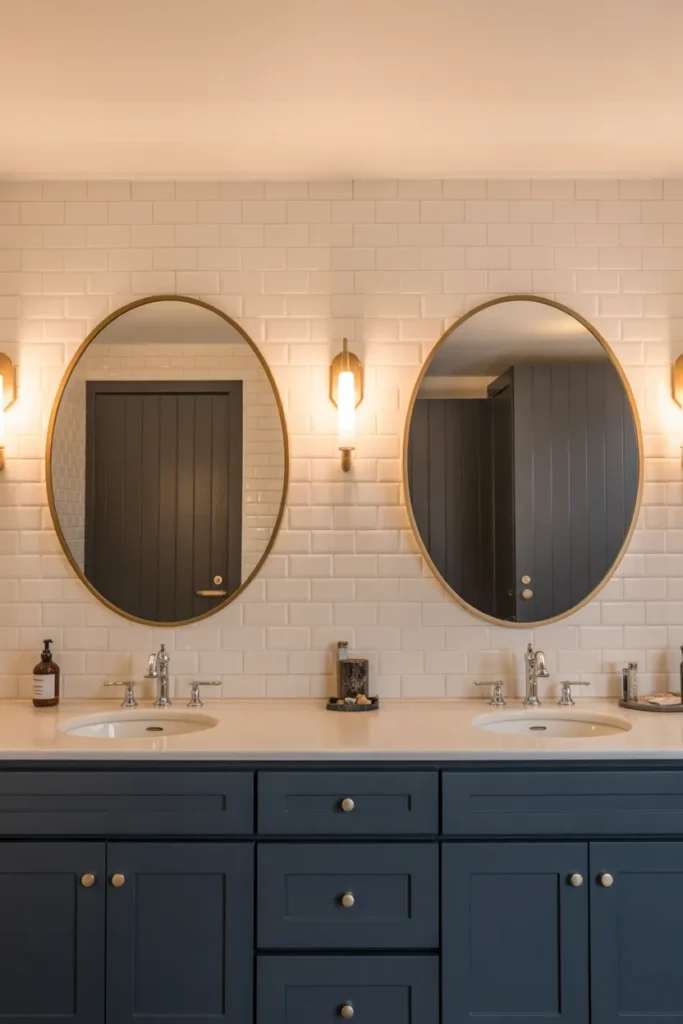
Mirror diameter should match the width of each sink basin roughly. If each sink section is 24 inches wide, a 22 to 24 inch diameter mirror centered above it reads as proportional. Going significantly smaller creates a floating, unanchored look. Going larger causes the mirrors to crowd each other in the middle.
Sconce placement shifts with this configuration. Instead of flanking the full mirror on either side, single sconces mounted between the two mirrors and on the outer edges of each provide more balanced, even illumination for both users. This is one of the most practical lighting considerations in bathroom mirror ideas for shared spaces.
8. Oversized Rectangular Mirror With Integrated Shelf Below
A bathroom mirror with a narrow integrated shelf along its lower edge is a practical innovation that bridges the gap between a standard vanity mirror and a medicine cabinet. The shelf provides a landing zone for small everyday items, a hand soap dispenser, a small plant, a candle, without requiring counter space on the vanity itself.
This works particularly well in bathrooms with pedestal sinks or vessel sinks where countertop real estate is minimal or entirely absent. The mirror shelf effectively creates a horizontal surface that the sink itself does not provide, which solves one of the most common functional complaints about pedestal and vessel sink setups.
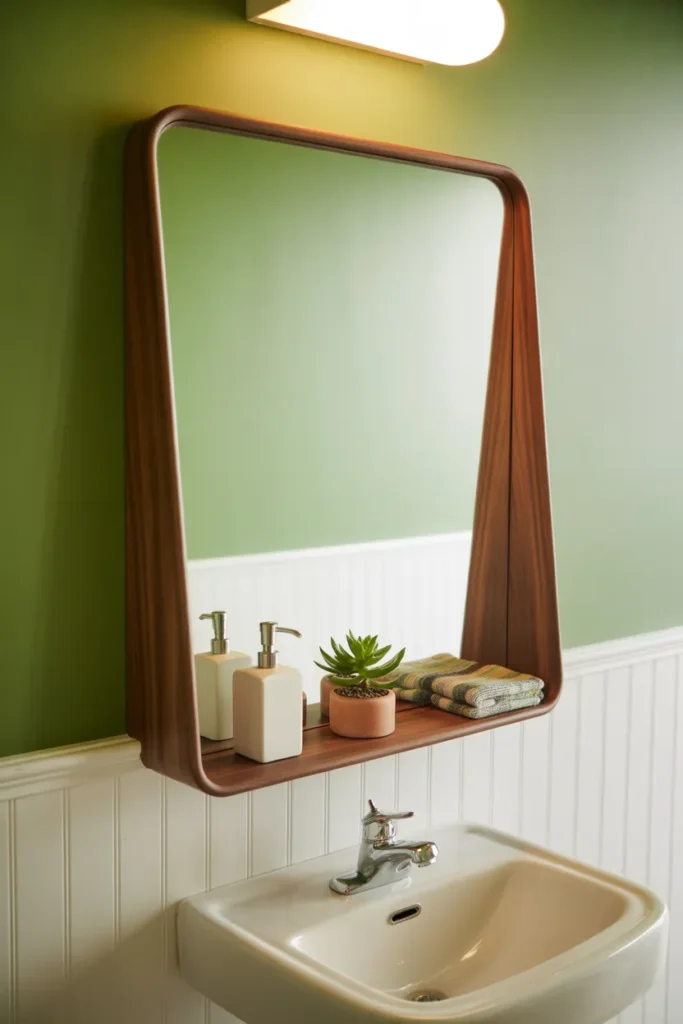
The shelf depth should be sufficient to hold real objects without items falling forward. A minimum of 3 inches of shelf depth is practical. Anything narrower is a styling surface only and will not hold a soap dispenser or a candle securely.
Frame and shelf material should be unified. A mirror with an oak frame and an integrated oak shelf reads as a single intentional object. A mirror where the shelf is in a different material or finish from the frame reads as two separate pieces awkwardly combined. This is a detail worth examining closely before purchasing, since many versions of this mirror style execute the integration poorly.
9. Triptych Three-Panel Mirror for a Wide Vanity With Pivot Functionality
A triptych mirror, consisting of one central panel and two hinged side panels that can pivot inward, is one of the most functional bathroom mirror ideas for anyone who needs to see multiple angles simultaneously. The angled side panels allow you to see the back and sides of your head without a second mirror, which makes it a practical choice for anyone with detailed grooming routines.
This works best on wide single vanities or in primary bathrooms where the user wants professional-level visibility without installing a full salon-style mirror system. The three-panel format fits naturally on walls between 36 and 60 inches wide, making it suitable for a broader range of bathroom sizes than many people assume.
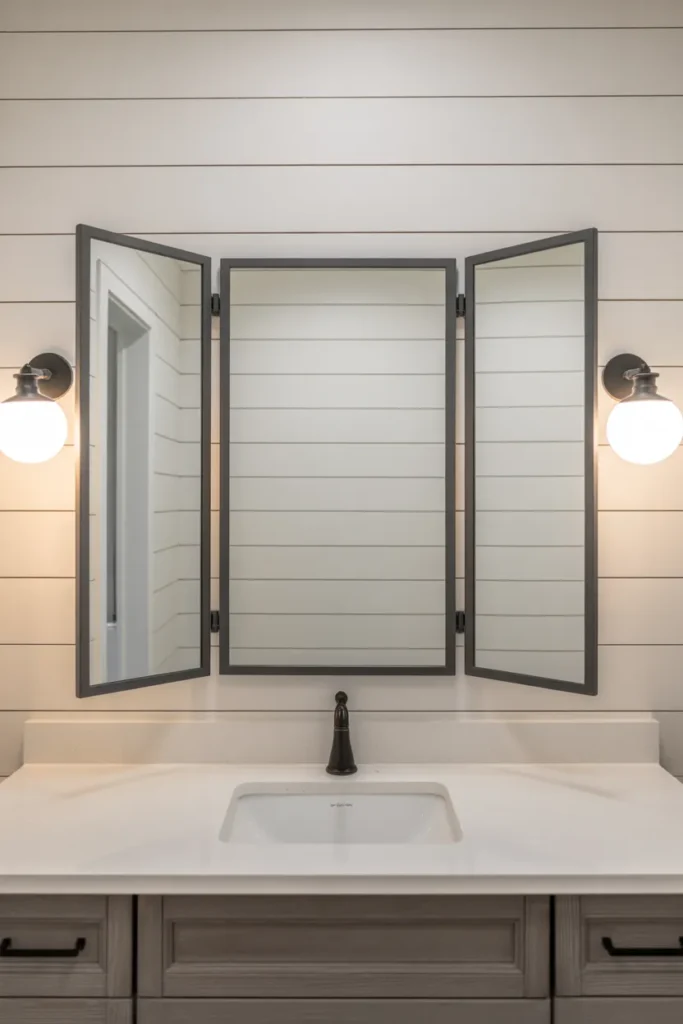
The pivot functionality is only useful if the hinges are high quality and hold the side panels in position without drifting. Cheap hinges on triptych mirrors cause the side panels to slowly fall flat again after adjustment, which eliminates the entire functional advantage. This is one of the most reliable indicators of quality to check before purchasing.
Frame style determines whether the triptych reads as vintage or contemporary. A frameless triptych in clean rectangular panels reads as modern. A triptych with beveled edges on each panel reads as transitional. A triptych with ornate molded frames reads as traditional or maximalist. Match the frame style to your existing vanity hardware and overall bathroom direction.
10. Smoked Glass Mirror for a Moody Sophisticated Bathroom
A smoked or tinted glass mirror, where the reflective surface carries a warm gray, bronze, or amber tint, is one of the most distinctive bathroom mirror ideas for 2026, particularly for bathrooms aiming for a sophisticated, moody, or luxury aesthetic. Unlike a standard mirror, a smoked mirror reflects with a depth and warmth that adds atmosphere to the space rather than simply bouncing light.
This works in bathrooms where the design direction is deliberately moody, warm, or layered. Dark wall colors, natural stone, warm metals, and textured tiles all look richer and more complex when reflected in a smoked rather than a clear mirror. The tinted reflection does not distort color accuracy significantly for everyday grooming but adds a quality of light that standard mirrors cannot replicate.
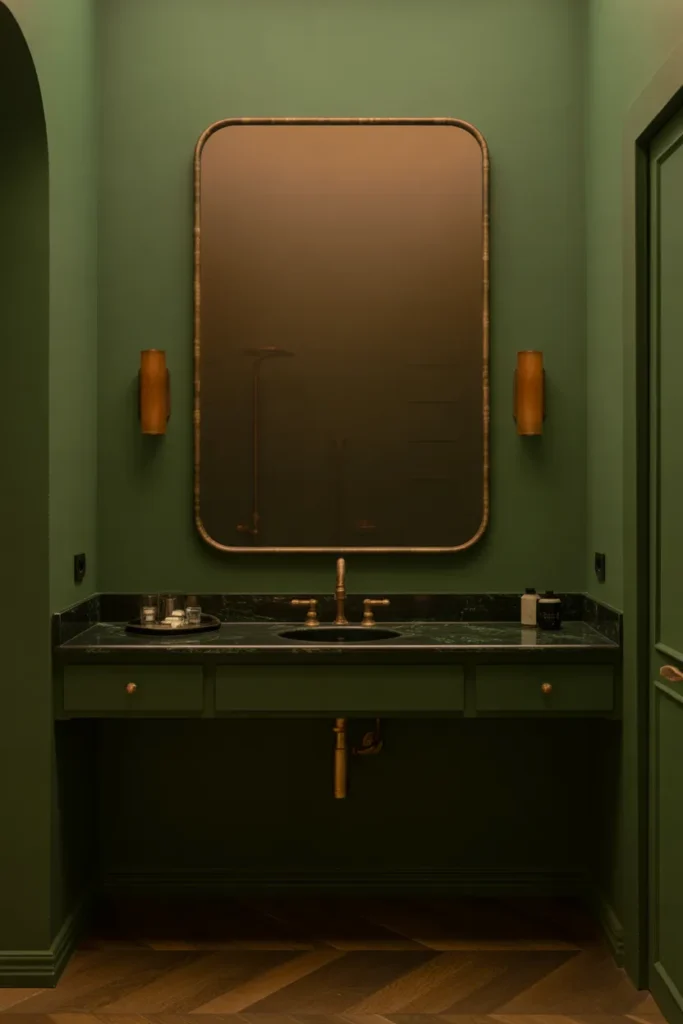
The tint level matters. A very dark smoked mirror can make a small bathroom feel dim and hard to use for makeup or detailed grooming tasks. A light bronze or warm gray tint delivers the aesthetic effect without compromising the practical reflection quality. If the bathroom has good natural light, a slightly darker tint is manageable. In a windowless bathroom, stay with the lightest tint available.
Pair a smoked mirror with warm metallic fixtures, unlacquered brass, aged bronze, or antique gold, rather than chrome or polished nickel. The warm tint of the mirror harmonizes with warm metals and creates a unified palette. Cool chrome against a warm smoked mirror creates a color tension that makes neither element look intentional.
11. Medicine Cabinet With Flush Frameless Door That Reads as a Clean Mirror
A frameless recessed medicine cabinet that sits flush with the wall and presents as a clean mirror from the front is one of the most practical and underused bathroom mirror ideas in any size home. From across the room it reads as a simple, clean mirror. When opened, it reveals organized storage for medications, toiletries, and daily essentials that would otherwise crowd the vanity countertop.
This is the most functionally intelligent mirror choice for small bathrooms and apartments where every inch of storage matters. It eliminates the need for a separate storage cabinet or over-the-toilet shelving, both of which take up space and add visual clutter.
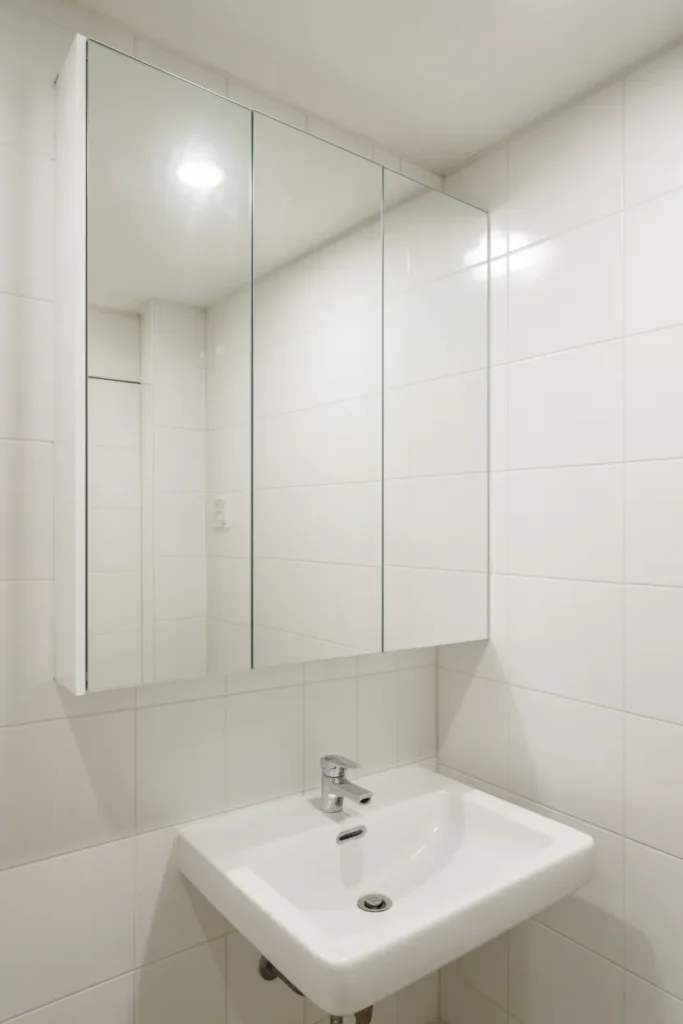
Installation requires recessing the cabinet into the wall, which means cutting into the drywall between two wall studs. Standard stud spacing of 16 inches on center accommodates most standard medicine cabinet widths. Before purchasing, confirm the rough opening dimensions and verify that there are no electrical wires or plumbing pipes in the cavity behind your chosen installation wall.
The frameless flush design works best in modern and minimalist bathrooms. In traditional or transitional bathrooms, a medicine cabinet with a simple wood or metal frame around the mirror door integrates more naturally with the rest of the room’s trim and molding detail.
12. Unlacquered Brass Framed Mirror for a Warm Evolving Bathroom Finish
An unlacquered brass framed mirror is one of the most interesting material choices in bathroom mirror ideas for 2026 because it changes over time. Unlike lacquered or polished brass, unlacquered brass develops a natural patina as it reacts with humidity and air, shifting from a bright gold toward a deeper, richer, more complex warm brown tone over months and years.
This works best in bathrooms that lean into warm, organic, or aged material palettes. Travertine tile, warm plaster walls, natural wood vanities, and stone countertops all harmonize with the evolving tone of an unlacquered brass frame. In a bathroom that is deliberately clean and cool, the patina of unlacquered brass will look like tarnish rather than character.
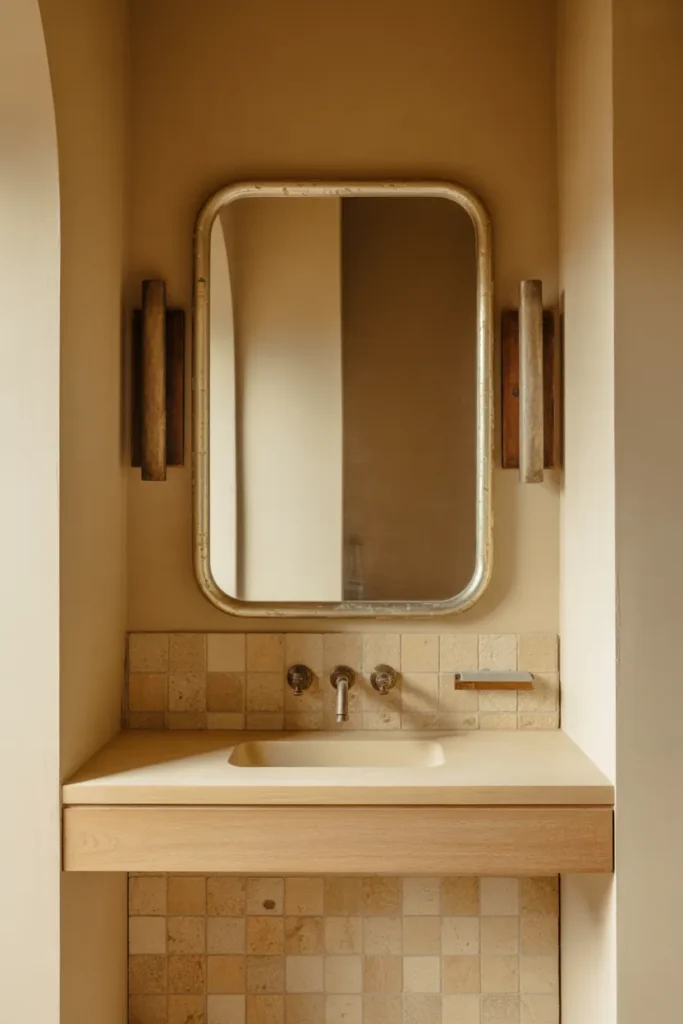
The practical implication of choosing unlacquered brass is that maintenance is minimal but care is required. Cleaning with harsh chemical cleaners will strip the developing patina. A soft damp cloth is sufficient for routine cleaning. If the patina develops unevenly, a light application of wax can help even out the tone.
Frame weight and profile matter with this material. A thin wire-profile unlacquered brass frame has a delicate, almost jewelry-like quality. A heavier cast brass frame with a more substantial profile reads as architectural and serious. Choose based on the scale of your vanity and the overall weight of your bathroom finishes.
13. Vertical Floor-to-Ceiling Slim Mirror for a Narrow Bathroom
A tall, slim vertical mirror that runs from just above the floor to near the ceiling is one of the most spatially transformative bathroom mirror ideas for narrow bathrooms and galley-style layouts. The vertical orientation draws the eye upward, makes the ceiling feel higher, and creates the illusion of more width than the room actually has, all from a single fixture choice.
This works best in narrow bathrooms under 6 feet wide where a standard horizontal vanity mirror would only emphasize the room’s limited width. By redirecting the dominant visual axis to vertical rather than horizontal, the slim mirror reframes the proportions of the room in the most flattering possible way.
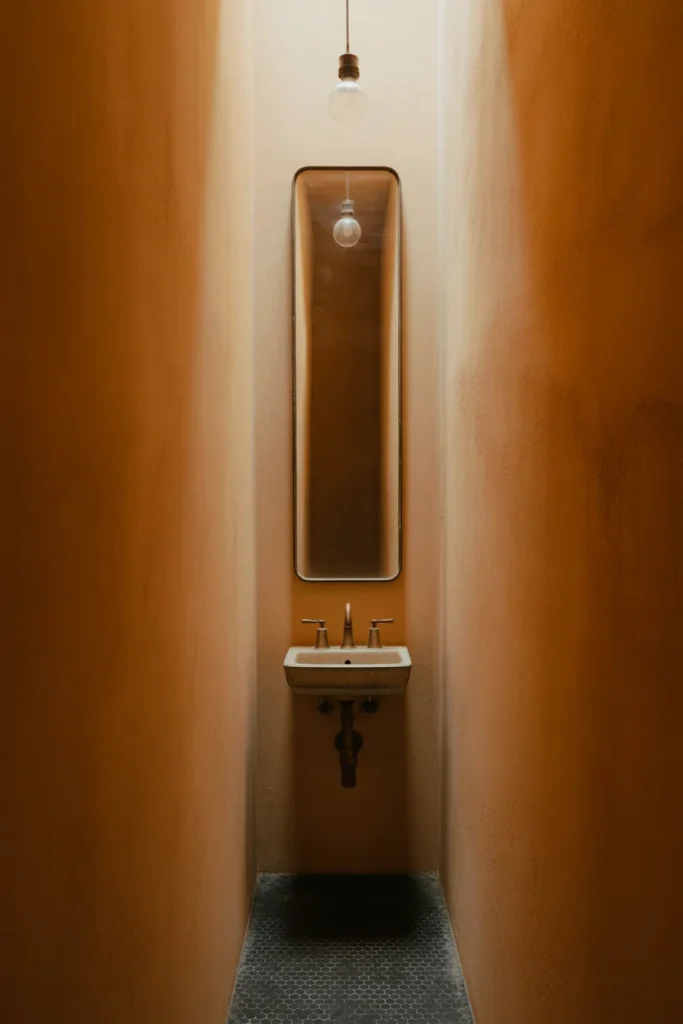
The mirror width should be kept intentionally narrow relative to its height. A mirror that is 12 to 18 inches wide and 60 to 72 inches tall achieves the vertically elongating effect. A mirror that is 24 or more inches wide at that height starts to read as a standard rectangular mirror simply mounted higher rather than as a vertically oriented design element.
Position matters significantly here. Centering the mirror above the vanity sink in a narrow bathroom keeps the layout logical and functional. Mounting it to the side as a secondary mirror beside the main vanity works as a full-length reflection point, which is a practical bonus in a bathroom that otherwise has no full-length mirror elsewhere in the home.
14. Scalloped or Shaped-Edge Mirror for a Playful Transitional Bathroom
A mirror with a shaped or decorative edge, whether scalloped, sunburst, irregular organic, or petal-shaped, is one of the more expressive bathroom mirror ideas in 2026 and one that is growing in confidence as homeowners move away from strictly rectangular forms. These mirrors function as wall art and practical reflection surface simultaneously, which makes them particularly effective in bathrooms where wall art is otherwise difficult to hang due to moisture and humidity.
This works best in transitional and eclectic bathrooms where the overall direction allows for one expressive decorative element. A scalloped mirror in an otherwise clean, neutral bathroom becomes the focal point of the entire room. In a bathroom with already heavy pattern and texture, a shaped mirror can tip the room into visual overload.
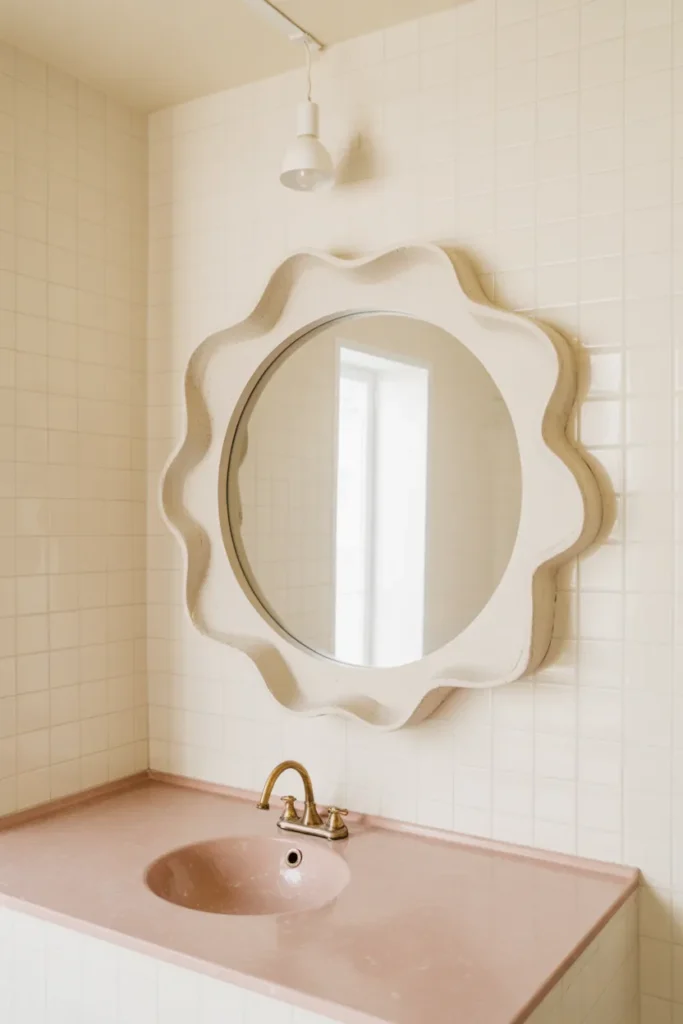
Frame material for shaped and scalloped mirrors most commonly comes in plaster, resin, and wood, since metal is difficult to shape into irregular curves. Plaster frames are the most design-forward and work best in warm, textured bathrooms. Resin frames are more affordable and widely available but can look light and toy-like in larger sizes. Solid wood frames in unusual shapes are the most durable and the most expensive.
Avoid mounting a scalloped or shaped mirror too high. Because the shape of the mirror is the primary visual element, it needs to sit at eye level to be properly appreciated. A shaped mirror mounted too high loses its detail and reads as a generic decorative object rather than a considered design choice.
15. Frameless Beveled Mirror for a Timeless High-End Bathroom Finish
A frameless beveled mirror is one of the most enduring and versatile bathroom mirror ideas available, and it remains a strong choice in 2026 precisely because it does not follow a specific trend. The beveled edge, where the glass is cut at an angle around the perimeter, creates a subtle prismatic detail that catches light without requiring a frame for visual definition.
This works in almost every bathroom style except the most stark industrial or utilitarian. In traditional bathrooms it reads as refined and classic. In transitional bathrooms it adds a layer of material quality without introducing a competing design element. In modern bathrooms it provides a clean finish that frameless without the beveled edge sometimes lacks.
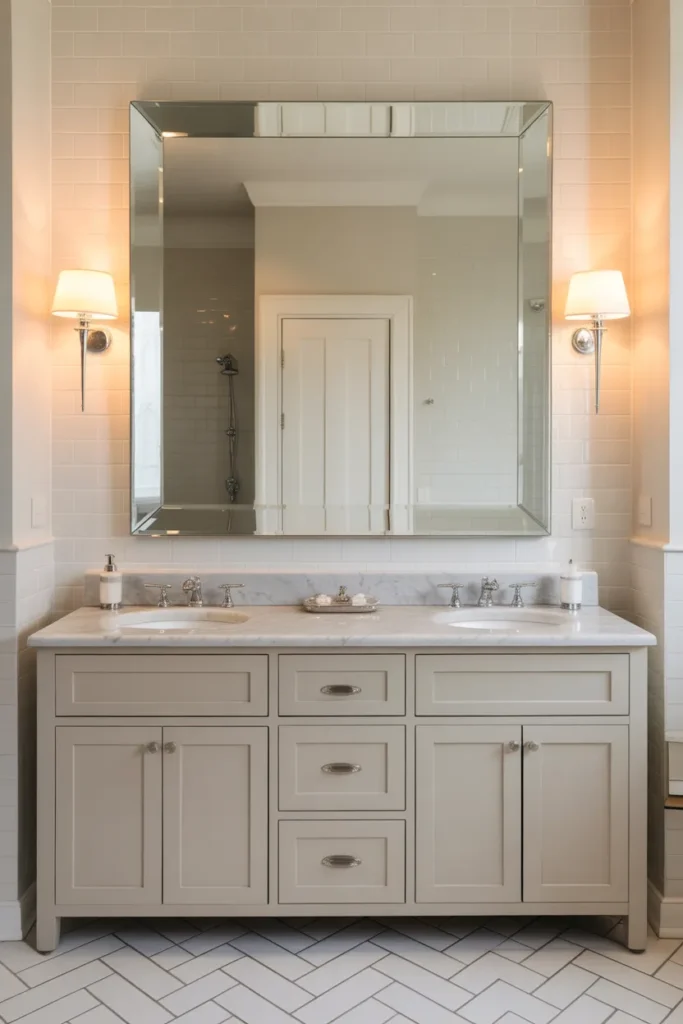
Size is the primary decision. A frameless beveled mirror needs to be substantial enough to feel intentional without a frame to give it visual weight. In a standard single vanity bathroom, 30 by 40 inches is the practical minimum for a frameless beveled mirror to read as a design decision. Smaller than that, and it reads as a framed mirror where the frame is missing.
The bevel width affects the overall quality impression significantly. A narrow 1-inch bevel reads as a budget option. A 2-inch bevel reads as standard. A 3-inch or wider bevel reads as a premium, custom-quality finish. If you are investing in a frameless beveled mirror as a long-term bathroom fixture, the wider bevel is worth prioritizing because it is the detail that distinguishes an ordinary mirror from a finished architectural element.
Final Thoughts
The right bathroom mirror does more work than most people expect. It sets the proportion of the wall, anchors the vanity, controls how light moves through the room, and in many cases solves real storage or functionality problems that no other single fixture can address. The 15 bathroom mirror ideas in this guide cover every room size, budget approach, and design direction so you can move from inspiration to a confident, informed decision.
Save this post to your Pinterest boards so you can come back to it when you are ready to shop or plan your bathroom update. If you are still exploring, look into bathroom vanity lighting ideas for 2026, small bathroom layout strategies, and modern tile ideas that work alongside these mirror styles for a fully considered bathroom design.