
Most master bedrooms look fine but feel forgettable, and the difference between a room that feels expensive and one that simply looks decorated comes down to a few specific decisions most people never make intentionally. This guide gives you 18 modern luxury master bedroom decor ideas for 2026 that feel expensive, with clear practical guidance on what to choose, what to avoid, and how to make each idea work in your actual room.
1. Upholstered Wall Panels Behind the Bed That Replace the Headboard Entirely
A full upholstered wall panel that runs floor to ceiling or at least from the floor to two thirds of the wall height behind the bed is one of the single most impactful changes you can make to a master bedroom. It replaces the visual fragmentation of a standard headboard and creates a unified, architectural backdrop that makes the entire room feel custom-built rather than furnished from a catalog.
This works in bedrooms of any size but is most transformative in rooms with ceilings at 9 feet or higher. The vertical continuity of a full panel installation draws the eye upward and makes the ceiling feel even taller than it is. In a standard 8-foot ceiling room, stop the panel at 72 inches rather than going all the way up, which avoids the cramped feeling a full-height panel can create at lower ceiling heights.
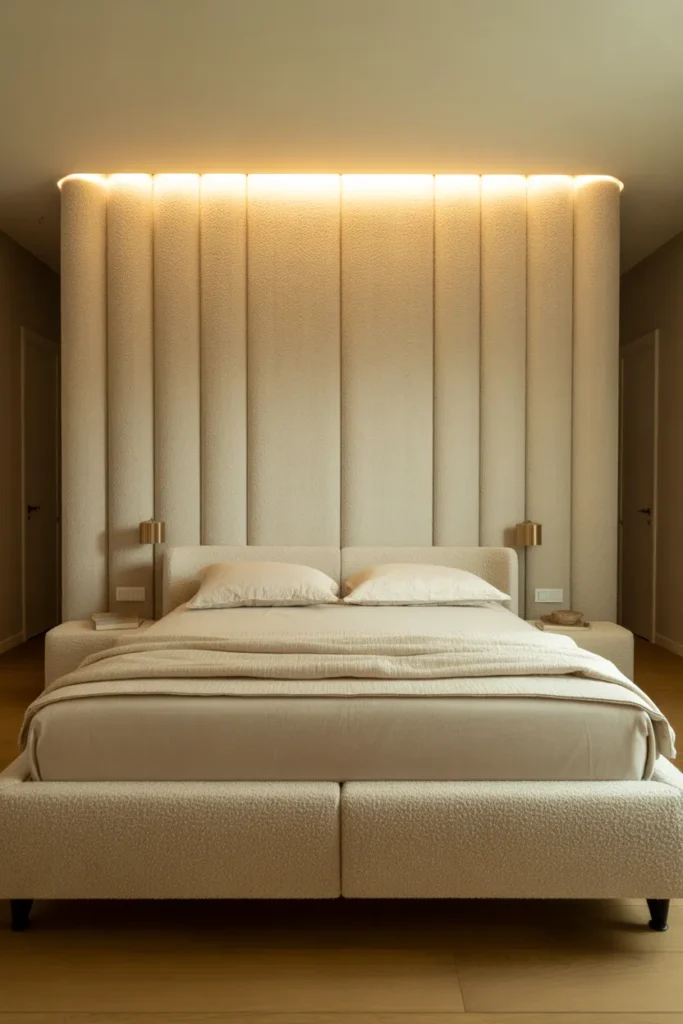

Fabric choice determines whether this reads as luxury or heavy. Bouclé in a warm cream or oatmeal tone reads as contemporary luxury. Velvet in a deep jewel tone reads as dramatic and bold. Linen reads as calm and organic. Avoid synthetic fabrics with visible sheen, as they reflect light unevenly and make the installation look cheap regardless of how well it is executed.
Panel seams are the detail that separates a professional result from a DIY one. Seams should align with the edges of the bed frame below or fall at equal intervals across the wall width. Randomly placed seams read as a mistake, not a design decision.
2. Double-Layer Curtains From Ceiling to Floor in a Neutral Tone
Curtains that begin at the ceiling and fall all the way to the floor add more perceived height and luxury to a master bedroom than almost any other single textile decision. The double-layer approach, a sheer linen panel underneath and a heavier fabric panel on top, creates depth, controls light precisely, and gives the window wall a layered, intentional quality that single curtains cannot achieve.
This works in every bedroom size. In a small master bedroom it is one of the most space-expanding tricks available because it makes the window appear taller and wider than it actually is. Mount the curtain rod as close to the ceiling as possible, ideally within 2 to 4 inches of the ceiling line, regardless of where the actual window frame sits.
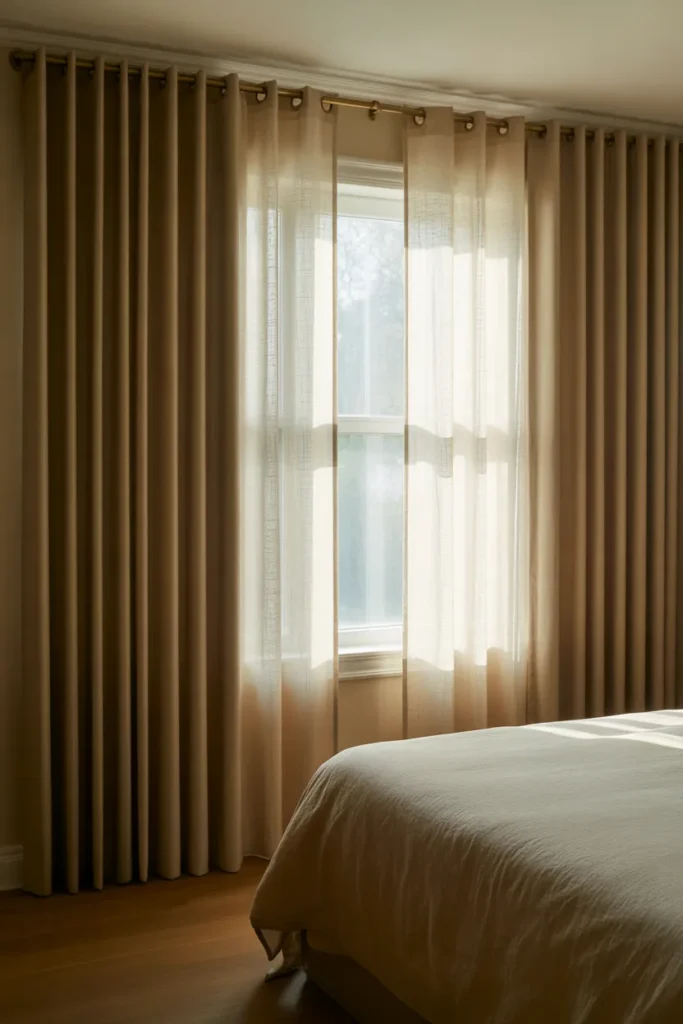
Fabric weight in the outer panel matters significantly. A curtain panel that is too lightweight billows and loses its clean drape, which undermines the luxury effect entirely. Look for curtains with a fabric weight that hangs in clean, stable vertical folds without needing to be weighted at the hem.
Color should be pulled from the lightest neutral in your existing room palette. Curtains that are too dark make a bedroom feel heavier and smaller. Curtains that exactly match the wall color in a lighter or slightly warmer tone create a seamless, sophisticated effect that reads as very considered and very expensive.
3. A Statement Chandelier Centered Over the Bed Instead of Ceiling Fan
Replacing a standard ceiling fan or basic flush-mount fixture with a statement chandelier centered directly over the bed is one of the fastest ways to shift a master bedroom from functional to genuinely luxurious. The chandelier does not need to be large or elaborate. A simple sculptural form in aged brass, matte black, or natural rattan at the right scale is enough to completely redefine the visual hierarchy of the room.
The scale rule is the most important decision here. A chandelier centered over a king bed in a standard master bedroom should be between 24 and 36 inches in diameter. Smaller than 24 inches disappears visually. Larger than 36 inches becomes the only thing the eye sees when entering the room, which throws the entire composition off balance.
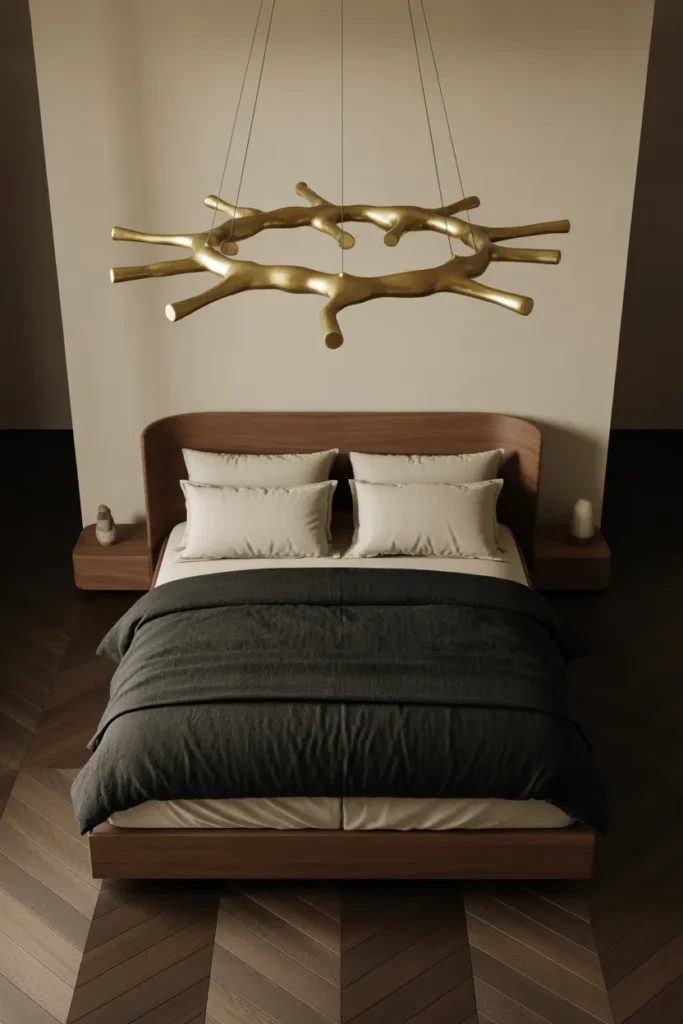
Hanging height is the second critical decision. The bottom of the chandelier should hang no lower than 7 feet from the floor in a bedroom with 8-foot ceilings. In rooms with 9-foot or higher ceilings, dropping the chandelier lower, to around 6.5 feet from the floor, creates a more intimate and enveloping effect that suits the bedroom environment better than a high-hung fixture.
Avoid crystal chandelier styles in modern luxury bedrooms unless the rest of the room’s direction is specifically traditional or maximalist. In a modern bedroom, crystal reads as dated. Sculptural organic forms, woven natural materials, or clean geometric metal work are the chandelier directions that age best in a contemporary master bedroom.
4. Built-In Bedside Niches Cut Into the Wall for a Custom Hotel Finish
Recessed bedside niches built directly into the wall on either side of the bed eliminate the need for freestanding nightstands and create the kind of seamless, architectural detail that makes a bedroom feel genuinely custom-designed. When lit from within using small recessed puck lights or LED strip lighting, they add a layer of ambient illumination that transforms the entire mood of the room at night.
This works best during a renovation when wall access is available. The niche depth should be at least 6 inches to hold practical items, a phone, a glass of water, a small lamp, without things falling forward. Standard niche width for a bedside application is 18 to 24 inches, and height between 12 and 18 inches creates the most proportional result relative to a standard bed height.
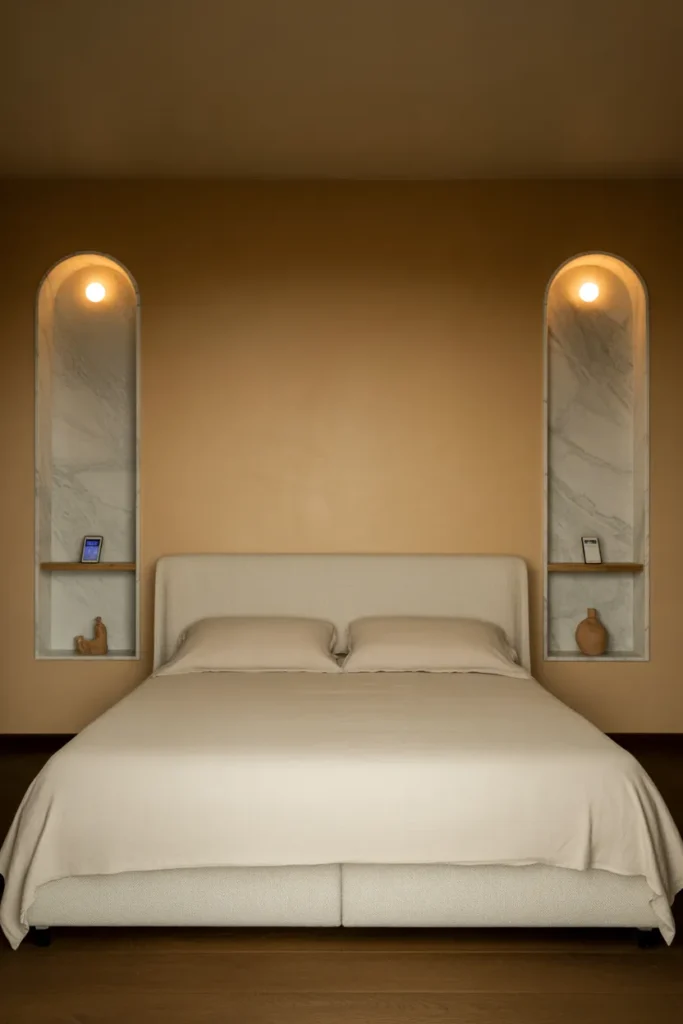
Finish the interior of the niche in a contrasting material to the surrounding wall. A plaster-finished niche with a marble or stone interior reads as highly designed. A painted niche with a wood interior reads as warm and considered. Leaving the niche in the same paint finish as the surrounding wall is a missed opportunity that makes the recess feel like an accident rather than a feature.
For apartments or rooms where cutting into the wall is not possible, a surface-mounted shadow box shelf with integrated lighting achieves a similar effect and reads far more intentional than a standard nightstand.
5. Limewash or Plaster Finish Walls That Add Texture Without Pattern
A limewash or Venetian plaster wall finish in the master bedroom is one of the most sophisticated and increasingly popular luxury wall treatments heading into 2026. Unlike paint, which sits flat on the surface, these finishes have depth, movement, and a quality of light absorption that makes the room feel warmer, quieter, and more considered at every hour of the day.
Limewash is more forgiving to apply and creates a softer, cloudier effect with subtle color variation across the surface. Venetian plaster is smoother and can be burnished to a low sheen that catches light in a way standard paint never can. Both are appropriate for master bedrooms, but they suit different design directions. Limewash suits organic, warm, and relaxed luxury. Venetian plaster suits cleaner, more architectural luxury.
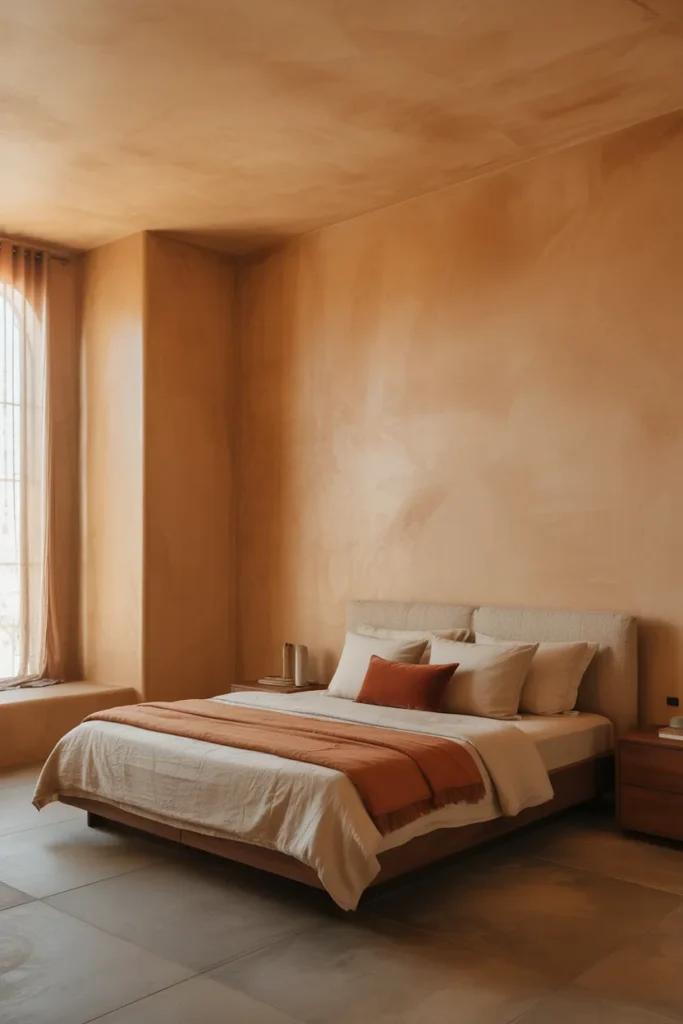
Color selection is critical with both finishes. Because these treatments have inherent depth and variation, the color you choose will read as slightly different across different walls and at different times of day. This is the effect you are seeking, but it means you should test a large sample area before committing to the full room. A 2 by 3 foot sample in natural and artificial light will show you exactly how the finish will behave.
Avoid applying these finishes only to one accent wall. A single limewash accent wall surrounded by flat painted walls looks disconnected. For the full luxury effect, all four walls should carry the finish, or at minimum three walls with the fourth being a built-in element like a wardrobe or upholstered panel.
6. A Continuous Built-In Wardrobe Wall With Flush Panel Doors
A full wall of built-in wardrobe storage with flush panel doors that run from floor to ceiling on one entire wall of the master bedroom creates the kind of seamless, architectural storage that defines high-end residential design. When done well, the wardrobe wall reads as a continuation of the room’s architecture rather than furniture placed against a wall.
The flush panel door is the detail that separates a luxury result from a standard one. Routed groove handles rather than applied hardware create a completely clean surface with no visual interruption. Push-to-open mechanisms achieve an even cleaner result but require precise installation to function reliably over time.
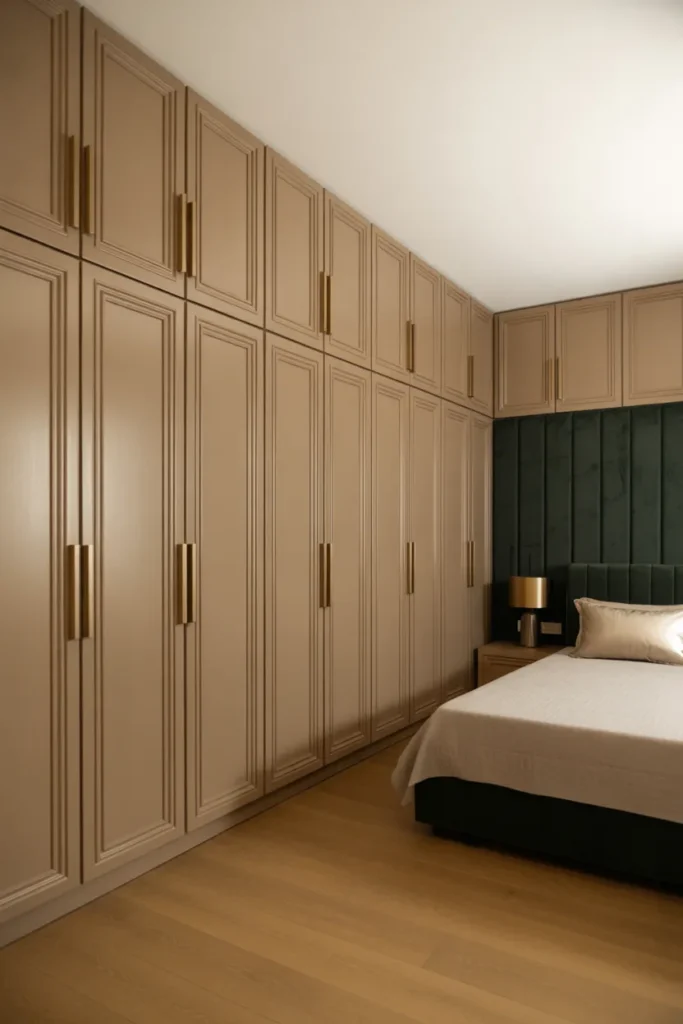
Door finish should coordinate with the overall room palette without disappearing into it. A wardrobe wall in a slightly different tone than the surrounding walls, a warm greige wardrobe against an off-white wall, creates a subtle but clear architectural distinction. A wardrobe wall that exactly matches the wall paint is only effective when the grooves or reveals between panels are deep enough to cast a shadow that defines the form.
Interior organization is a practical decision that most people defer too long. Before the wardrobe is built, map out exactly what needs to be stored and in what quantities. A wardrobe built without this planning almost always ends up with the wrong ratio of hanging to folding space, which defeats the functional purpose of the investment.
7. Layered Bedding in Three Coordinated Neutral Textures
The bed is the visual center of every master bedroom, and the single fastest way to make it look expensive without touching anything else in the room is to layer it correctly. A properly layered bed uses three coordinated but distinct textures in the same neutral color family, a fitted sheet in a smooth material, a duvet or coverlet in a heavier woven fabric, and a textured throw across the lower third.
This works because texture variation within a single color palette creates visual richness without the visual noise of pattern and color mixing. From across the room, the bed reads as a composed, cohesive element. Up close, the layering reveals quality and intention.
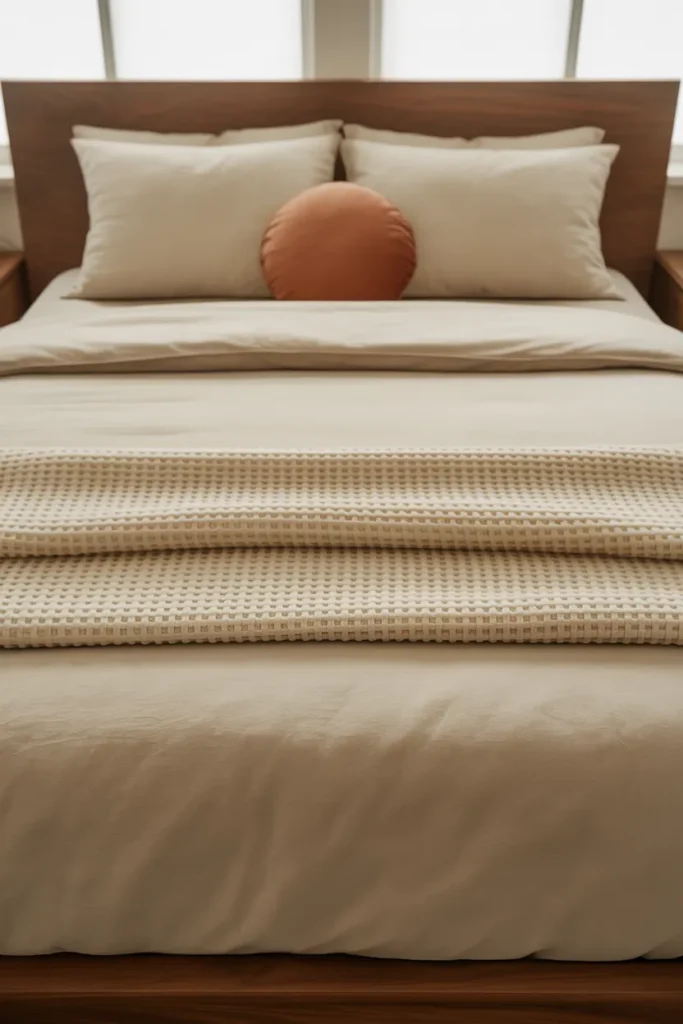
Thread count and fabric quality are more important here than most people assume. A crisp percale cotton fitted sheet, a linen or bouclé duvet cover, and a waffle-knit or chunky-weave throw create the ideal material contrast. Avoid mixing fabrics that are too similar in texture, such as two smooth cotton layers, as the layering effect collapses and reads as simply undone.
Pillow arrangement is the finishing decision. For a king bed, two standard sleeping pillows in plain pillowcases, two Euro shams behind them, and one or two accent pillows in front creates a full, hotel-caliber arrangement. More than five pillows starts to look excessive. Fewer than three looks sparse.
8. Recessed Indirect Lighting Around the Ceiling Perimeter
Indirect lighting installed in a recessed cove around the ceiling perimeter is one of the most transformative lighting decisions available in a master bedroom renovation. The light source itself is hidden, and the glow that washes upward across the ceiling creates a soft, even ambient illumination that no surface-mounted fixture can replicate. The effect is immediately read as high-end because it is the lighting approach used in luxury hotels and high-end residential projects.
This requires a small soffit or cove to be built around the ceiling perimeter, typically 6 to 8 inches wide and 4 to 6 inches deep, with LED strip lighting installed inside facing upward. The investment in construction is modest relative to the visual impact, and the result is permanent.
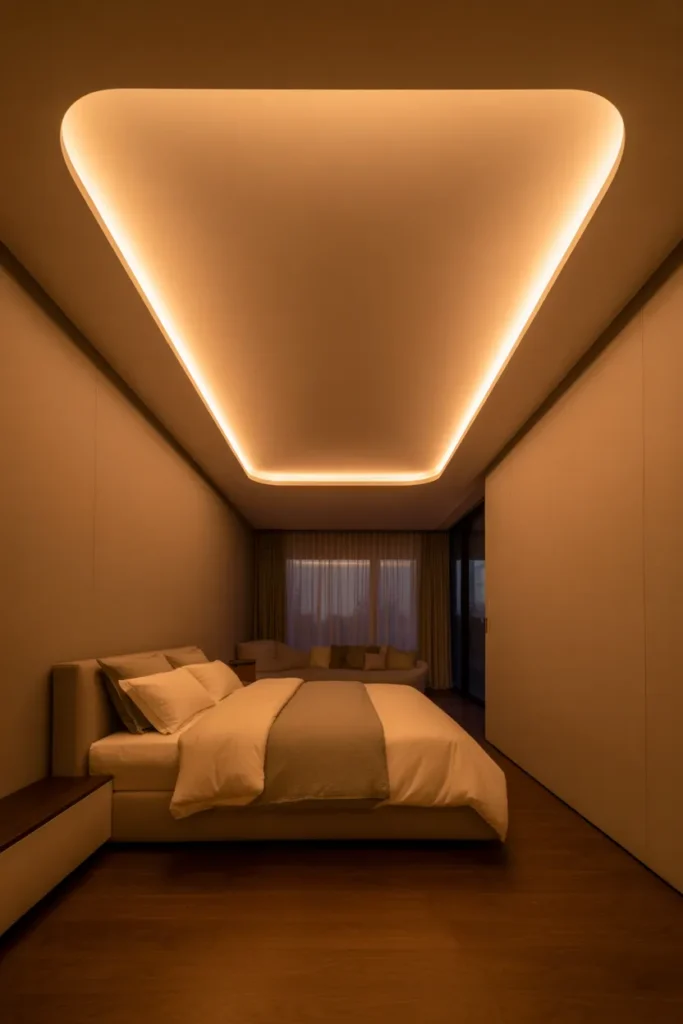
Color temperature is the most important specification decision. For a master bedroom, 2700 Kelvin is the correct choice. It produces a warm, golden glow that is flattering, restful, and residential in quality. Cooler temperatures above 3000 Kelvin produce a whiter light that feels clinical in a bedroom environment regardless of how well the cove is constructed.
Dimmer compatibility is non-negotiable for this application. Indirect cove lighting at full brightness is too intense for evening use. At 20 to 30 percent brightness on a dimmer, it creates the perfect ambient glow for winding down. Always specify LED strips that are rated for dimmer compatibility before installation.
9. A Single Large-Scale Piece of Art Above the Bed Instead of a Gallery Wall
One large artwork positioned centered above the bed is a more confident and more luxurious design choice than a gallery wall in a master bedroom. A gallery wall distributes visual attention across multiple pieces and multiple decisions. A single large work commands the space with one clear statement and makes the room feel curated at a level that a collection of smaller prints rarely achieves.
The scale of the artwork is the critical decision. In a king bedroom, the artwork above the bed should be between 60 and 72 inches wide. Narrower than the nightstand span reads as undersized. Wider than the headboard reads as the correct choice because it visually anchors the entire bed wall.
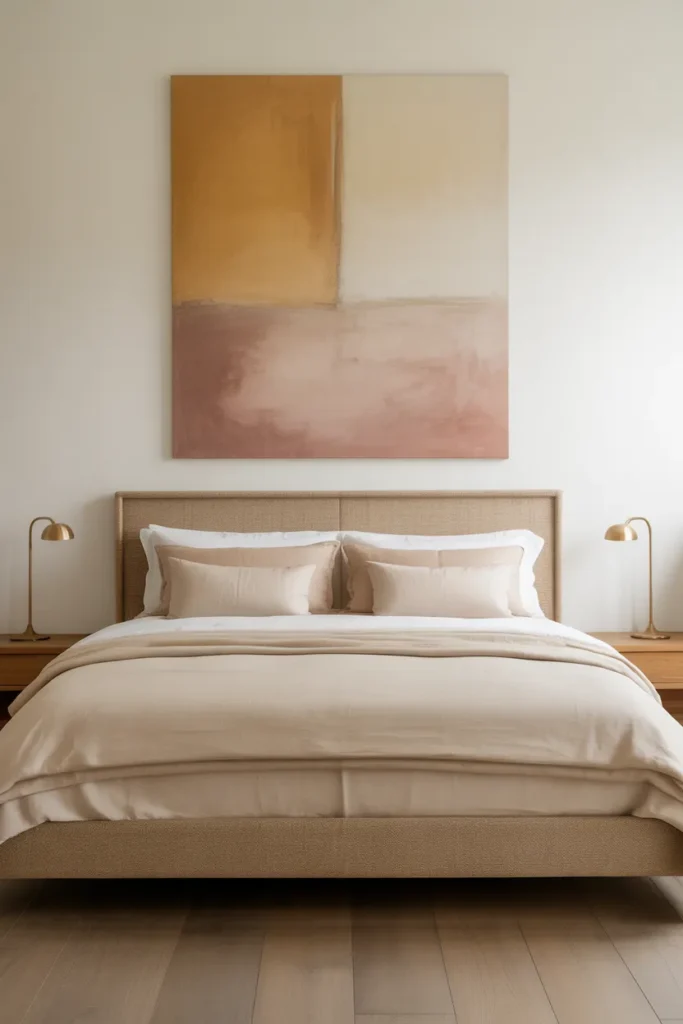
Art selection for a luxury master bedroom should prioritize works with a limited color palette that pulls from the room’s existing tones. An abstract piece in warm ochre, cream, and dusty terracotta above a neutral bed reads as intentional and cohesive. A work with too many colors creates visual competition between the art and the room rather than harmony between them.
Hanging height is consistently mishandled. The center of the artwork should sit approximately 60 inches from the floor, which is the standard gallery hanging height, regardless of how high the ceiling is. Above a tall headboard, this may mean the artwork sits quite close to the top of the headboard, which is correct and intentional.
10. Underbed LED Lighting for a Floating Bed Effect
LED strip lighting installed along the underside of the bed frame, facing downward toward the floor, creates the illusion that the bed is floating above the ground. The soft pool of light beneath the bed adds a layer of ambient illumination to the room at night and gives the entire furniture piece a presence and weight that a standard bed frame simply does not have.
This works on any platform or low-profile bed frame where the gap between the frame and the floor is at least 4 inches. Less than 4 inches and the LED strip has nowhere to conceal itself properly, and the light source becomes visible from certain angles, which undermines the floating effect entirely.
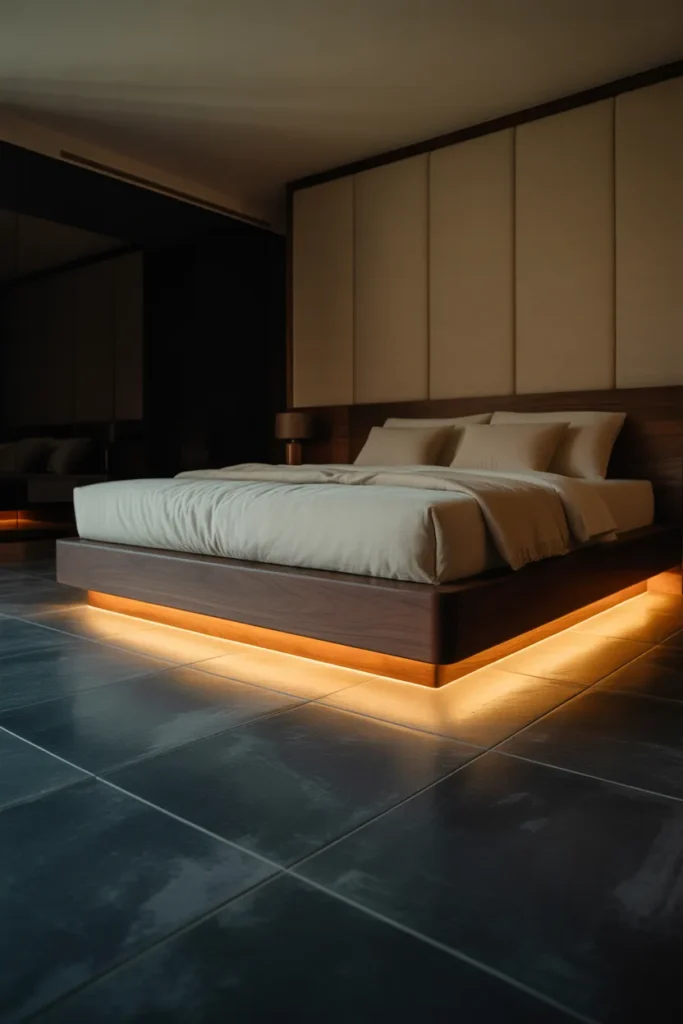
The LED strip should be installed on the inner edge of the frame’s underside, recessed back from the outer edge by at least 2 inches so the strip itself is never visible from a standing position. The light should pool onto the floor, not spill outward onto the room walls.
Color temperature for underbed lighting should match the rest of the bedroom’s ambient lighting. A 2700 Kelvin warm white is the standard choice. Avoid color-changing RGB strips in a luxury master bedroom. The effect reads as playful rather than sophisticated and dates very quickly.
11. Matching Bedside Table Lamps With Linen or Drum Shades
Bedside lighting is one of the most overlooked decisions in master bedroom decor, and mismatched or incorrectly scaled bedside lamps are one of the most common reasons a bedroom fails to feel finished and expensive. A matching pair of table lamps with linen or drum shades on both sides of the bed creates visual symmetry, balanced light distribution, and a composed quality that reads immediately as considered.
Lamp height is the functional specification most people get wrong. When sitting up in bed, the bottom of the lampshade should sit approximately at shoulder height. This positions the light source where it is most useful for reading without shining directly into your eyes when lying down. A lamp that is too short sits below the sight line and casts light onto the nightstand surface rather than the bed. A lamp that is too tall creates glare.
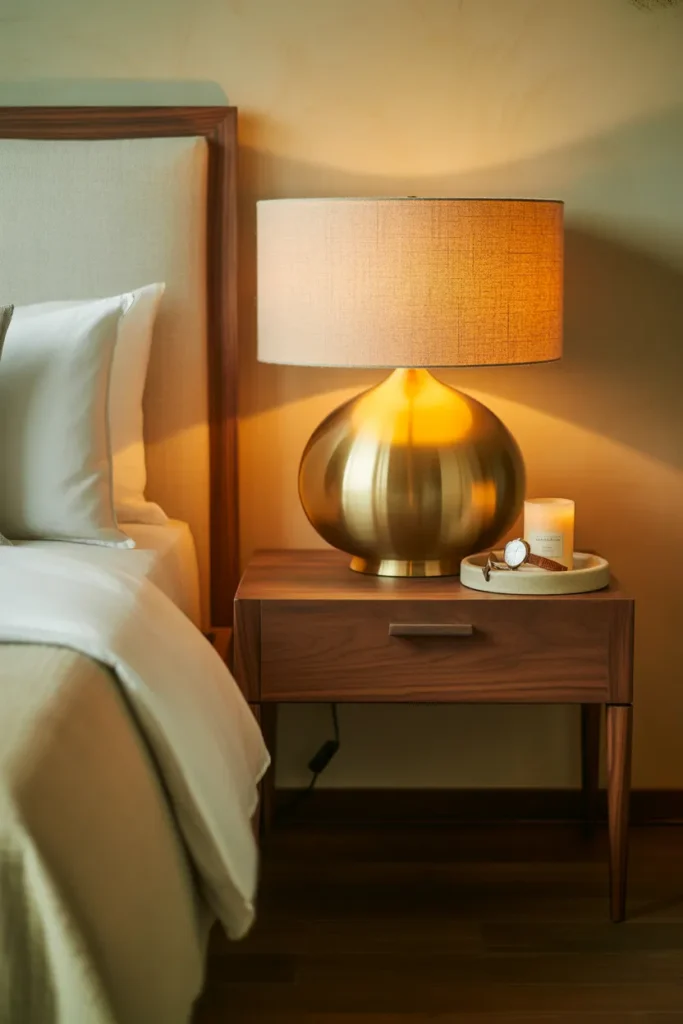
Shade material affects the quality of light more than the base style does. A linen shade produces a warm, diffused glow that flatters the entire room. A white cotton shade produces a slightly cooler, brighter light. An opaque shade focuses all light downward and creates a more dramatic, directional effect. For a luxury master bedroom, linen shades are the most consistently successful choice because they produce the warmest and most flattering light quality.
Base material should coordinate with the other metal or wood tones in the room. A brushed brass base in a room with brushed brass hardware creates cohesion. A ceramic base in a tone pulled from the room’s palette adds texture and warmth. Avoid chrome or polished nickel bases in warm-toned rooms, as the cool metal creates a visual tension that is difficult to resolve.
12. A Dedicated Seating Area With Two Chairs and a Small Table
A seating area within the master bedroom, even a compact one consisting of two chairs and a small side table positioned near a window or in a corner, is one of the clearest signals of a genuinely luxurious bedroom. It communicates that the room is large enough and well-considered enough to serve more than one function, which is the defining quality of a primary suite rather than simply a bedroom.
This works in master bedrooms of at least 200 square feet. In rooms smaller than that, a single chair in a corner with a floor lamp achieves the same signal at half the footprint. The chair needs to be proportional to the room and to the bed. An oversized lounge chair in a small bedroom reads as crowded. A scaled accent chair reads as intentional.
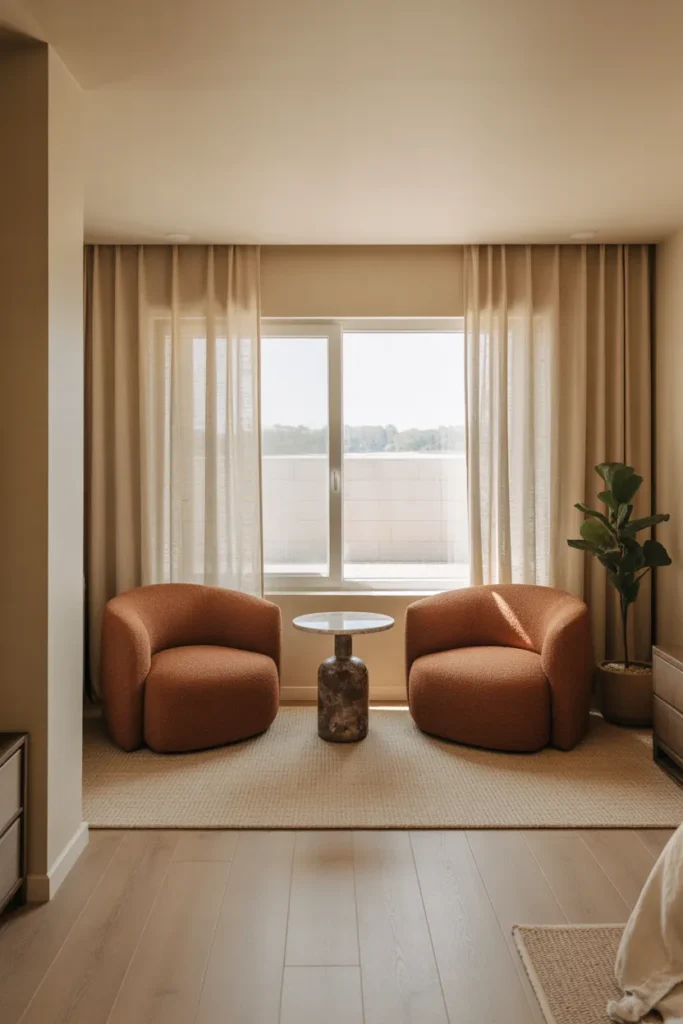
Chair upholstery should complement the bed and curtain palette without matching exactly. Two chairs in a warm terracotta boucle in a room with cream bedding and ivory curtains creates a color relationship that feels designed. Two chairs in the exact same fabric as the bedding creates a matchy effect that reads as less considered.
Position the seating area to take advantage of a natural light source if one is available. Chairs positioned near a window with a small table between them create an immediately readable vignette that photographs well and functions as a genuine reading or morning coffee spot.
13. Dark Accent Wall Behind the Bed in a Deep Saturated Paint Color
A single deeply saturated paint color applied to the wall directly behind the bed, from floor to ceiling, creates a strong architectural anchor for the entire room without requiring any construction or permanent material installation. It is one of the highest-impact, most reversible changes available in master bedroom decor, and when executed with the right color and the right finish, it reads as a considered design decision rather than simply a painted wall.
This works in master bedrooms of any size, but the color selection needs to account for room size. Deep forest green, charcoal, navy, and warm near-black tones all work beautifully in larger rooms with good natural light. In smaller rooms with limited windows, choose a color that is deeply saturated but not excessively dark, such as a dusty teal, a complex sage, or a warm terracotta, which deliver richness without closing the space in.
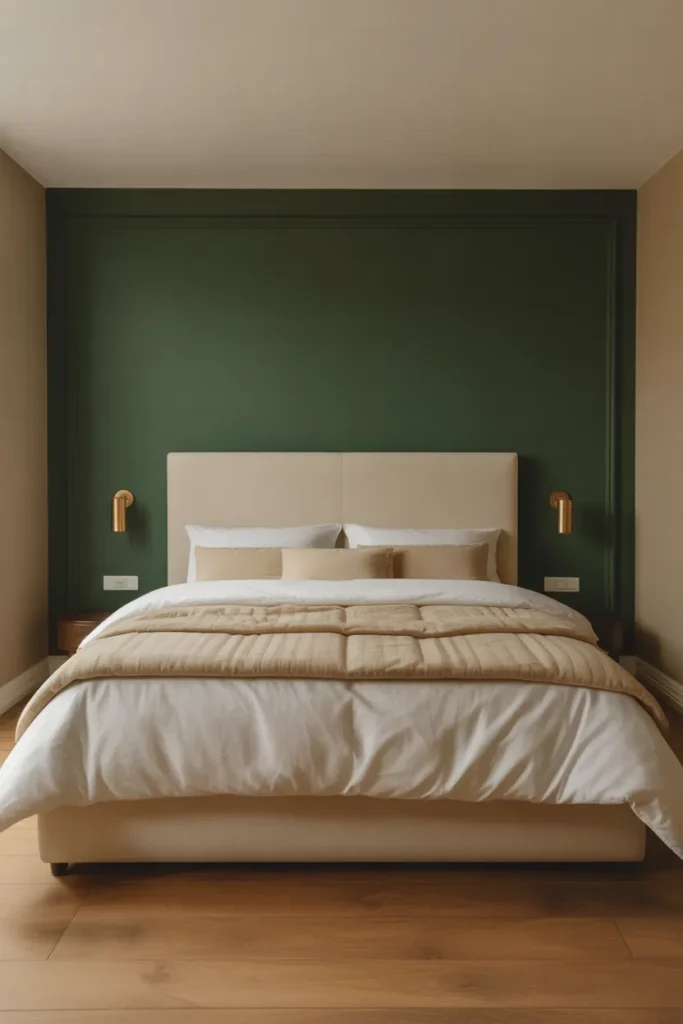
Paint finish matters significantly here. An eggshell or satin finish on a dark accent wall reflects light enough to prevent the wall from feeling cave-like while still delivering the depth of color you are seeking. Flat paint on a dark wall absorbs so much light that the room can feel dim even in good natural light.
The accent wall approach is most successful when the surrounding walls remain in a significantly lighter tone. The contrast between the dark anchor wall and lighter surrounding walls is what creates the architectural drama the look depends on.
14. Integrated Bedside Shelving Built Into the Headboard Structure
A headboard with integrated shelving or side tables built into its structure as one unified piece replaces the visual fragmentation of a separate headboard plus two separate nightstands with a single composed architectural element that spans the entire bed wall. This built-in quality is one of the strongest signals of luxury in a master bedroom because it is the approach used in high-end hotel suite design.
The most functional configuration combines a central upholstered headboard panel with slim shelving extensions on either side that serve as nightstand surfaces. These side shelves should be at least 12 inches wide and positioned at a height that functions as a nightstand, roughly 24 to 28 inches from the floor depending on your mattress height.
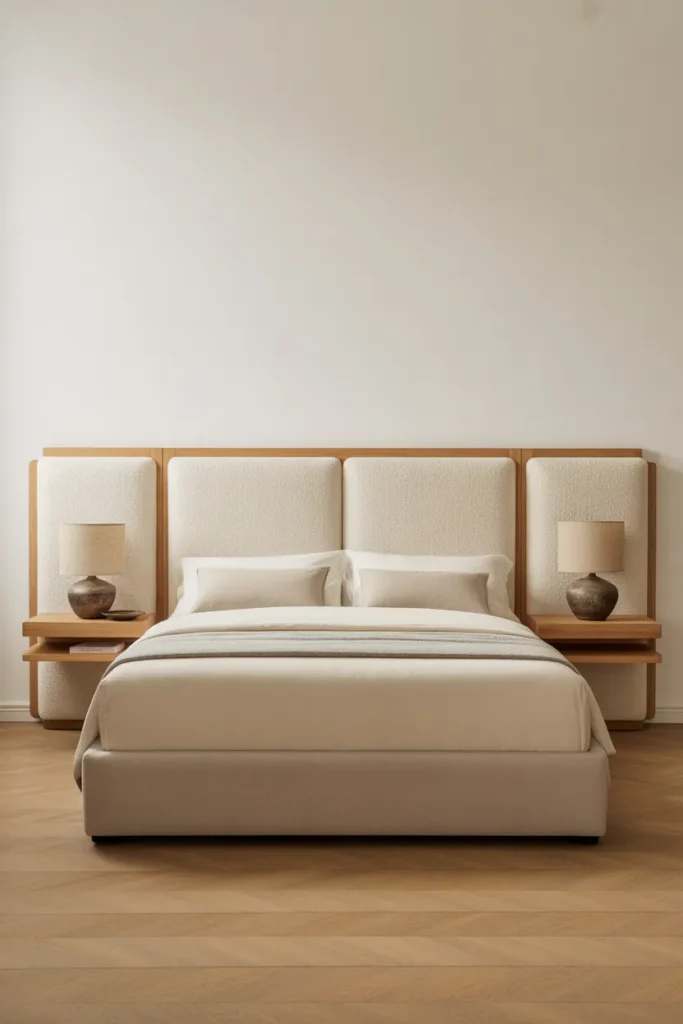
Material consistency across the headboard and shelf structure is what makes this read as a single designed object rather than separate components placed together. An upholstered center panel with side shelves in a coordinating fabric or in a warm wood tone that matches the bed frame creates the most cohesive result.
This configuration is particularly effective in master bedrooms where freestanding nightstands are impractical due to room layout, narrow passageways, or door swing conflicts. The integrated shelf solves the functional requirement without adding any floor footprint beyond the bed itself.
15. A Statement Rug That Extends Well Beyond the Bed Frame on All Sides
The rug beneath a master bedroom bed is one of the most size-dependent decisions in the entire room, and undersizing it is one of the most reliable ways to make an otherwise well-decorated bedroom feel incomplete and unfinished. A rug that extends at least 24 inches beyond the bed frame on all three exposed sides, both sides and the foot, creates the grounded, layered quality that defines a genuinely considered luxury bedroom.
For a king bed, a 9 by 12 foot rug is the minimum size that achieves the correct proportion. A 10 by 14 foot rug is the ideal size in most standard master bedrooms and creates the most generous, hotel-like feel underfoot. An 8 by 10 foot rug under a king bed is almost always too small and creates the visual impression of a floating rug island rather than a grounded room anchor.
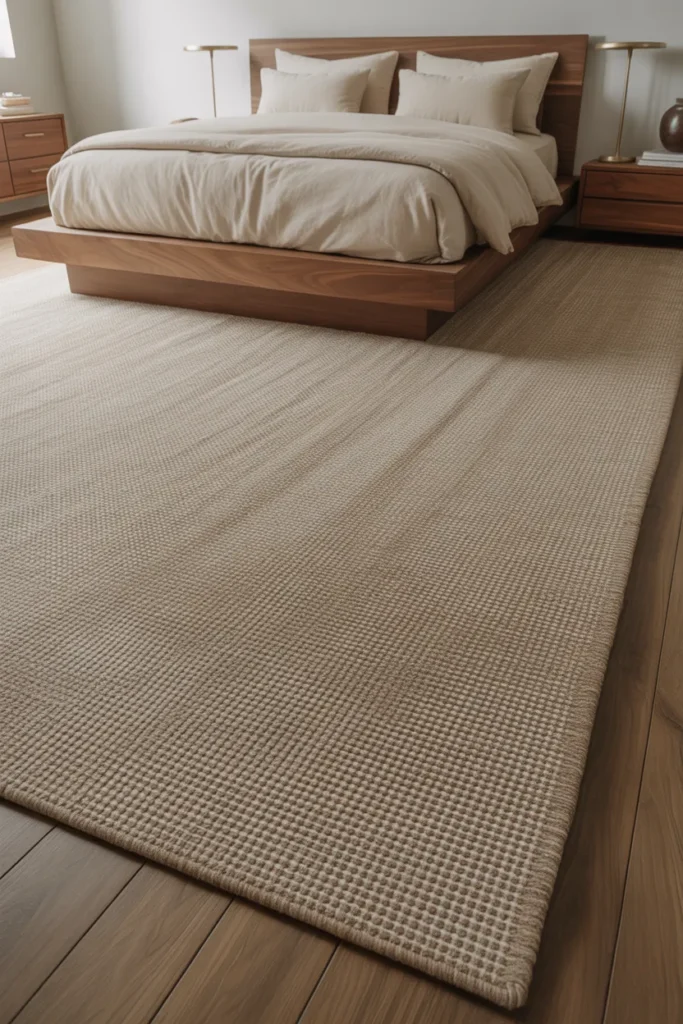
Pile height and material affect both the look and the functional experience of a bedroom rug. A low-pile rug in a natural fiber or a flat-woven wool reads as clean and modern. A medium-pile rug in a cut-pile pattern reads as warm and traditional. A high-pile or shag rug reads as casual and tactile. For a modern luxury master bedroom, a low to medium pile rug in a solid or subtly textured pattern is the most consistently successful choice.
Rug color should anchor rather than compete. A rug that is two to three tones darker than the lightest element in the room creates depth and grounds the bed. A rug that matches the wall color exactly flattens the room. A rug in a bold contrasting color becomes the dominant visual element of the room, which only works if the rest of the room is deliberately composed to support that focal point.
16. Mirror Placement That Reflects Light Rather Than Simply Decorating
A large mirror in a master bedroom serves a more important function than decoration when it is positioned deliberately to reflect a light source, a window, a lamp, or an indirect light fixture, back into the room. This strategic placement can effectively double the perceived brightness of the space without any additional lighting installation, which makes it one of the most functional and underutilized luxury tools in bedroom design.
The correct placement for light-amplifying effect is on a wall perpendicular to or directly opposite the room’s primary light source. A mirror placed on the wall directly opposite a window reflects the window’s daylight back across the room. A mirror placed adjacent to a bedside lamp reflects the lamp’s warm glow in a way that fills the corner of the room with light that the lamp alone cannot reach.
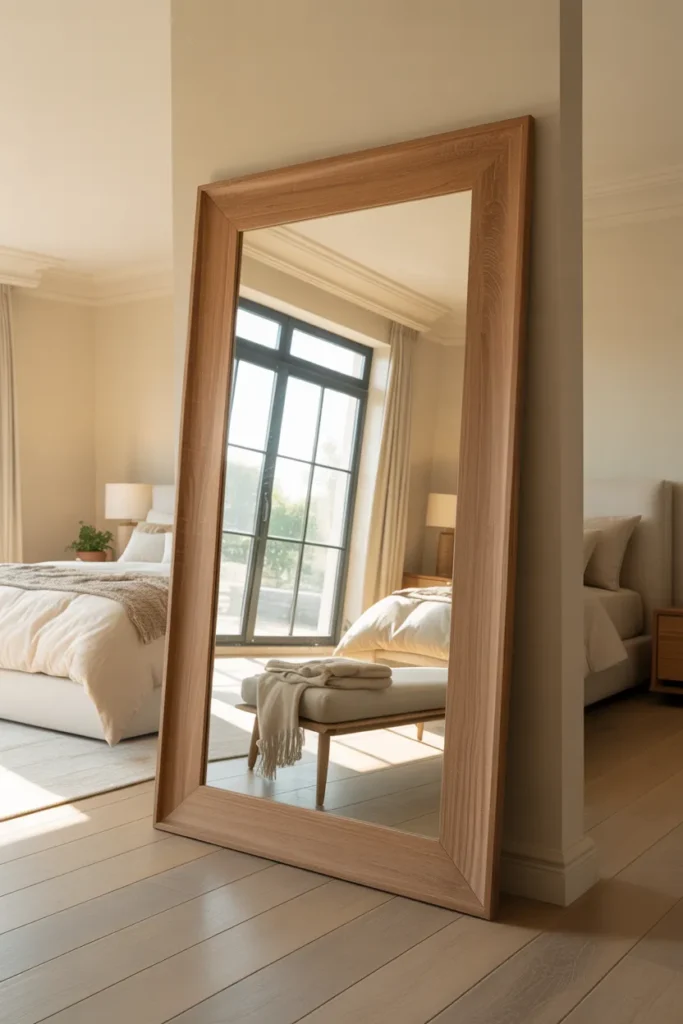
Frame selection for a master bedroom mirror should be based on scale first and style second. A mirror that is too small for its wall reads as decorative rather than architectural. In a master bedroom, a mirror should be at least 36 inches wide on any wall where it is intended to be seen as a designed element. Leaning a large mirror against the wall rather than mounting it is a valid alternative that reads as intentional and avoids permanent installation.
Avoid placing a mirror directly opposite the bed in a position where you see a full reflection of yourself upon waking. This is a widely reported sleep disruption issue that is worth addressing during placement planning, and it is a practical consideration that distinguishes informed design decisions from purely visual ones.
17. Concealed Bedside Charging and Cable Management Built Into the Nightstand
Visible cables and charging cords on a bedside table are one of the most consistent details that undermine the luxury feel of an otherwise well-designed master bedroom. A nightstand with a built-in charging surface, a hidden cable management channel, or a discreet power outlet integrated into the drawer eliminates this problem permanently and is one of the most practical upgrades available in modern luxury master bedroom decor for 2026.
Wireless charging surfaces integrated into the nightstand top are the most seamless solution. The surface looks like a standard wooden or stone top, and placing a compatible device on it begins charging without any visible cord. This requires nightstands specifically designed with this feature rather than after-market additions, which rarely look as clean.
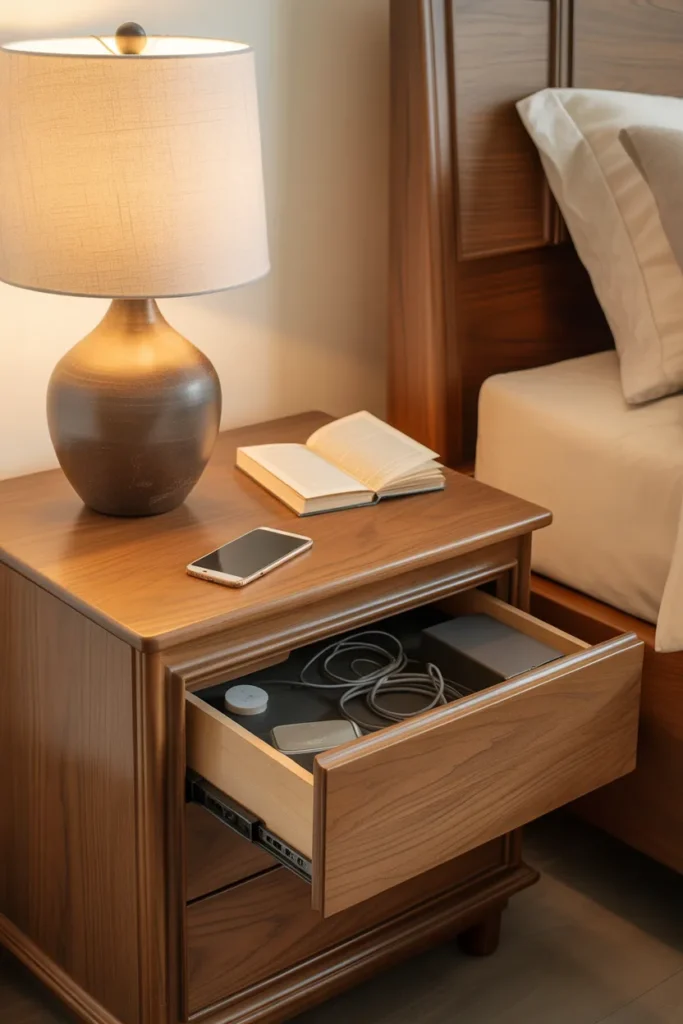
For existing nightstands without integrated charging, a cable management box positioned inside the top drawer with a small routed channel in the drawer back to route cords to a wall outlet is a simple and effective retrofit. From the outside, the nightstand looks completely clean. Inside the drawer, the charging cables are organized and accessible without being visible.
This detail matters disproportionately in master bedrooms because the bedside is always closely inspected and always photographed. A nightstand free of visible cables instantly reads as more expensive and more considered than the identical nightstand with a tangle of cords on its surface.
18. A Well-Designed Bedroom Bench at the Foot of the Bed
A bench positioned at the foot of the bed is one of the oldest signals of a properly finished primary bedroom, and it remains one of the most reliable in 2026. It serves a genuine functional purpose as a place to sit while dressing, to lay out clothing, or to fold throws and extra bedding, and it adds a horizontal element at the foot of the bed that visually completes the room’s furniture composition.
Bench length should be proportional to the bed width. For a king bed, a bench between 48 and 60 inches wide reads as correct. Shorter than 48 inches looks like an afterthought. Longer than 60 inches starts to impede the natural walkway around the bed in most standard master bedroom layouts.
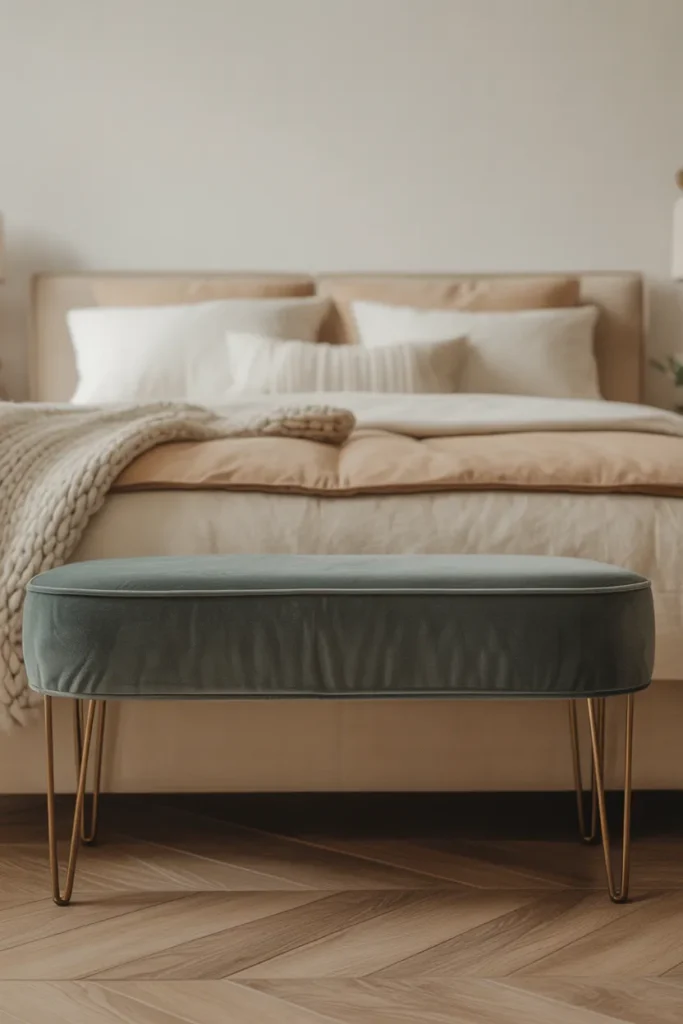
Upholstered benches are the most common and most versatile choice. A bench in a fabric that introduces a new but coordinating texture to the room, bouclé, velvet, or a textured linen, adds material richness without requiring any additional decorative layer. A wooden or cane bench without upholstery reads as lighter and more casual, which suits organic and relaxed luxury directions.
Height is the practical specification that most people overlook. A bedroom bench should sit at approximately the same height as the mattress top, which allows you to sit down and stand up from it at the same height as getting into or out of bed. A bench that is significantly lower than the mattress top is uncomfortable to use and reads as a visual mismatch relative to the bed.
Final Thoughts
Achieving a master bedroom that genuinely feels expensive is not about spending more. It is about making more intentional decisions in the right sequence, from lighting and wall finish to bedding texture and furniture scale. Every idea in this guide gives you a specific, actionable direction rather than vague inspiration, because the difference between a room that looks designed and one that actually feels luxurious lives entirely in the details and the decisions behind them.
Save this post to your Pinterest boards so you have it ready when you are planning your bedroom update. If you are still exploring, look into modern luxury living room decor ideas for 2026, master bedroom color palette guides, and primary suite layout strategies for more ways to bring this level of intention to every room in your home.