
Choosing the wrong wardrobe for your master bedroom wastes wall space, creates visual clutter, and makes even a well-decorated room feel unfinished. This guide gives you 13 master bedroom wardrobe ideas for 2026 that work in modern homes of every size, with clear guidance on layouts, materials, and the decisions that separate a functional wardrobe from a genuinely designed one.
1. Full Wall Built-In Wardrobe With Flush Panel Doors That Disappear Into the Room
A built-in wardrobe that spans an entire wall from floor to ceiling with flush panel doors is the most architecturally resolved wardrobe solution available in modern master bedroom design. When the doors are finished in the same color as the surrounding walls, the wardrobe effectively disappears into the room architecture, leaving the bedroom feeling spacious, clean, and intentionally designed rather than furnished.
This works in master bedrooms of any size but delivers the most dramatic transformation in smaller rooms where a freestanding wardrobe would consume valuable visual and physical space. A flush built-in on a narrow wall in a small master bedroom adds significant storage without making the room feel smaller because the eye reads the wall as a continuous plane rather than a piece of furniture placed against it.
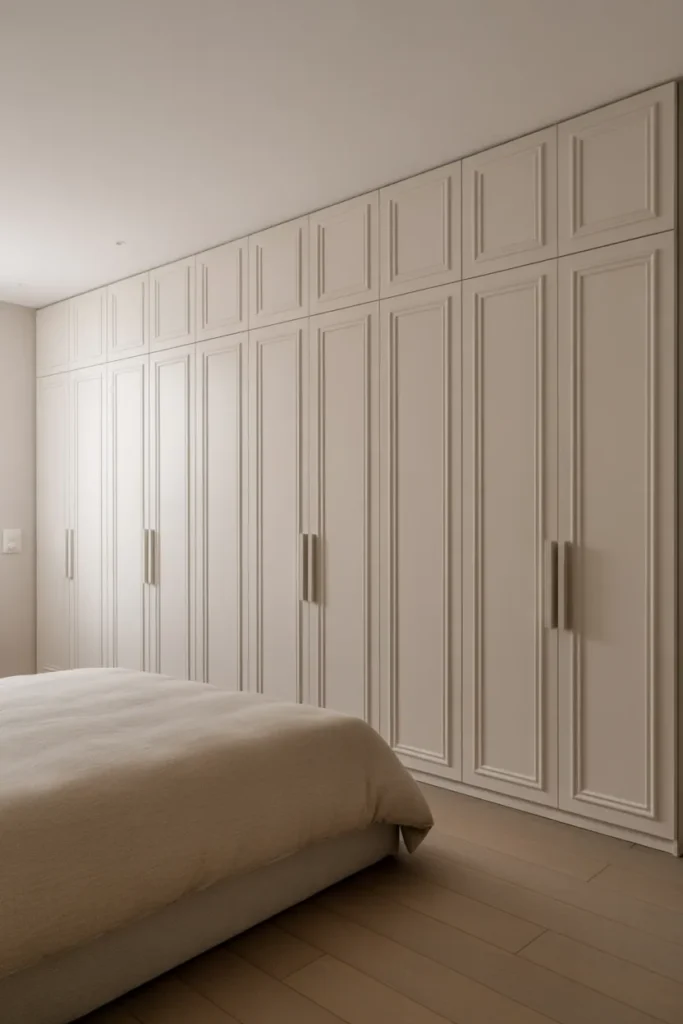
The detail that determines whether this looks luxury or builder-grade is the door reveal. A consistent 3 to 4 millimeter gap between each door panel creates a crisp shadow line that defines each door without requiring visible hardware. Combined with push-to-open mechanisms or routed groove handles, the result is a wardrobe wall that reads as architectural rather than utilitarian.
Avoid mixing door sizes across the same wardrobe run. Inconsistent door widths read as a space-planning mistake rather than a design variation. All doors in the same run should be equal width unless a structural column or beam forces a deviation, in which case that deviation should be clearly intentional and symmetrical.
2. Open Wardrobe With Integrated Dressing Area in a Large Master Bedroom
An open wardrobe concept that combines hanging rails, open shelving, and a built-in dressing table in one continuous unit along a single wall creates a fully functional dressing room experience within the master bedroom itself. This layout eliminates the need for a separate walk-in closet by consolidating all clothing storage and grooming functions into one organized, visible system.
This works best in master bedrooms over 200 square feet where the wardrobe wall can be viewed from a comfortable distance and the open storage does not feel visually overwhelming. In a smaller room, open storage requires a very high level of organization to avoid looking chaotic, which makes it a higher-maintenance choice than closed door alternatives.
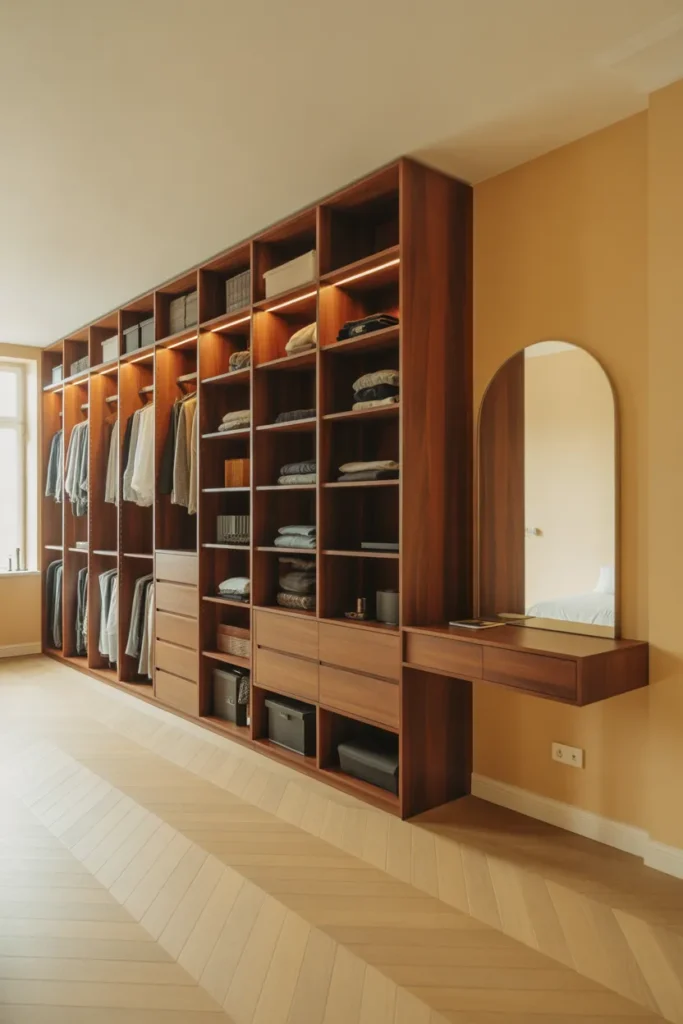
The dressing table section should be positioned at one end of the unit rather than in the center. Placing it at the end creates a natural visual anchor and separates the grooming zone from the storage zone without requiring a physical partition. A wall-mounted mirror above the dressing table section completes the zone without adding floor footprint.
Lighting within an open wardrobe system is a practical necessity rather than a luxury addition. LED strip lighting installed along the underside of each shelf tier illuminates the contents clearly and eliminates the shadow problem that makes open wardrobes difficult to use in lower-light bedrooms.
3. Sliding Door Wardrobe That Solves the Swing Space Problem in Tight Rooms
A sliding door wardrobe is the most practical solution for master bedrooms where the clearance in front of the wardrobe is limited and standard hinged doors would conflict with the bed frame, bedroom door, or natural walkway through the room. Sliding doors require zero swing clearance and allow the full depth of the wardrobe to be accessed without adjusting anything else in the room.
This layout is particularly relevant in apartments, smaller homes, and master bedrooms in older houses where room dimensions were not planned around modern wardrobe proportions. In these rooms a hinged door wardrobe is genuinely impractical and a sliding system solves the functional problem permanently.
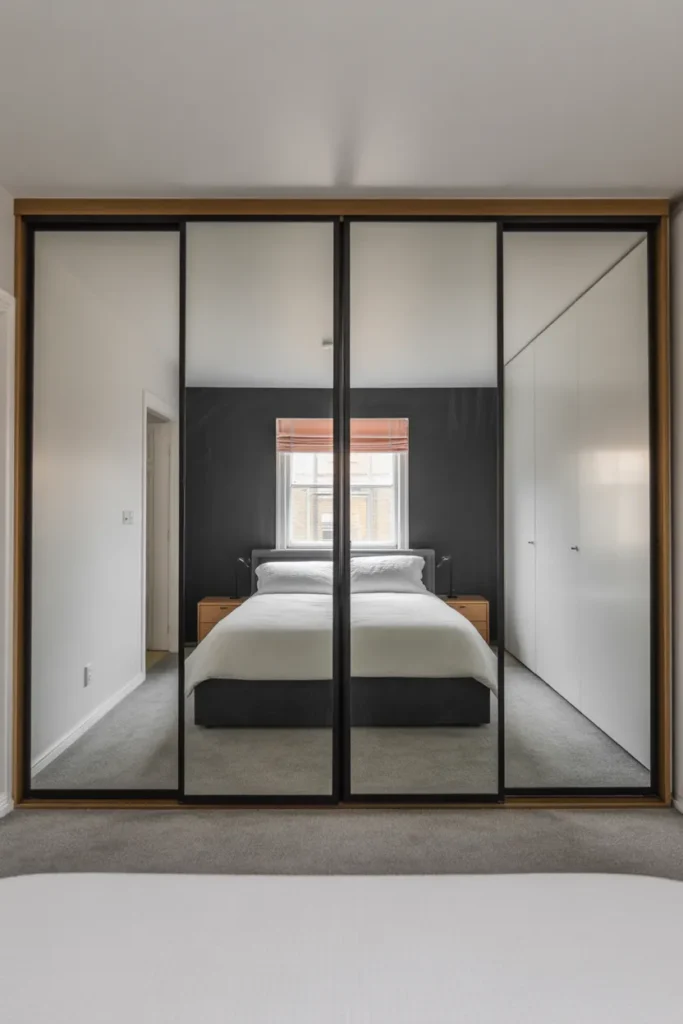
The track system is the quality decision that most people underinvest in. A bottom-track sliding door system is less expensive but collects dust, creates a trip hazard at the floor, and causes doors to jump off track over time. A top-hung track system with no bottom track is cleaner, safer, and significantly more durable. Always specify a top-hung system for a wardrobe that will be used daily.
Door panel material choices for sliding wardrobes range from mirrored panels, which add light and the illusion of space, to solid wood or lacquered panels, which read as more architectural and less reflective. In a small master bedroom, mirrored sliding panels are a functionally intelligent choice because they double the perceived depth of the room while serving as a full-length dressing mirror simultaneously.
4. Corner Wardrobe Layout That Uses the Most Wasted Space in the Bedroom
A corner wardrobe configuration that wraps around two adjacent walls, creating an L-shaped storage system, uses the corner of the master bedroom which is the most consistently wasted area in standard room layouts. By turning the corner into a functional wardrobe zone, you gain significantly more hanging and shelving capacity than a single-wall system of equivalent visual footprint.
This works particularly well in master bedrooms where no single wall is long enough to accommodate all the storage needed in one run. By wrapping the corner, two shorter walls effectively combine into one generous storage solution. The corner section itself can house a carousel system, a fixed shelf tower, or a walk-through opening that leads to a small dressing area.
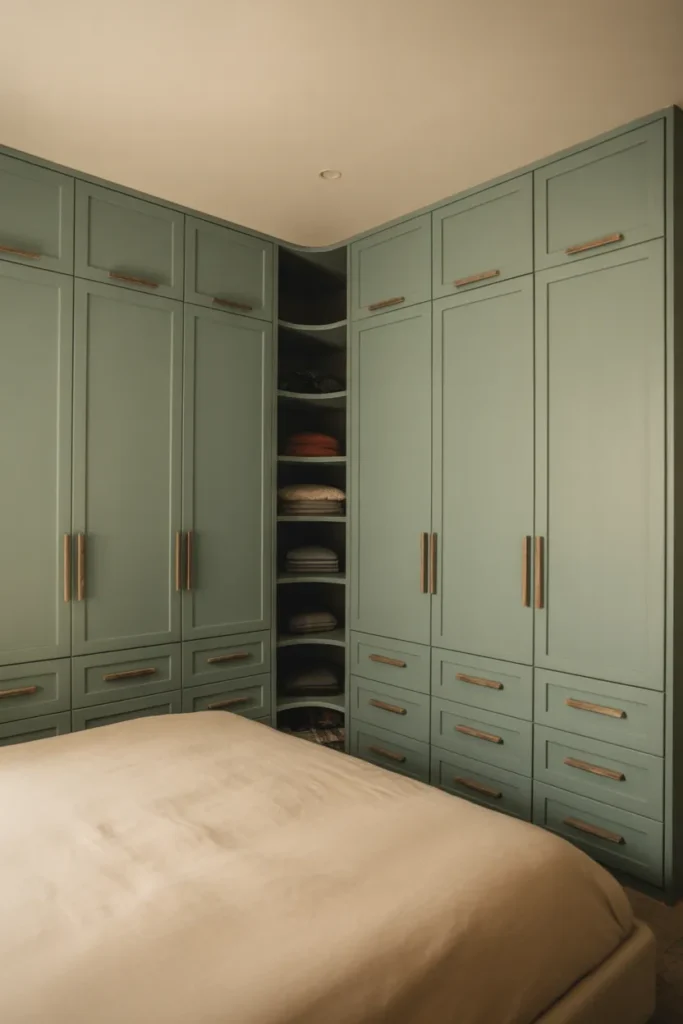
The internal corner junction is the planning detail that most people overlook. A poorly planned corner means two doors that cannot open simultaneously because they conflict with each other. The correct solution is to position the corner section as a fixed open shelving or drawer tower with no door, flanked by hinged or sliding door sections on each side that open away from the corner.
This layout is the closest thing to a walk-in closet experience that can be achieved within a standard master bedroom footprint. For homeowners who want walk-in closet functionality without a dedicated room, a corner wardrobe configuration delivers more storage per square foot than any other wardrobe layout.
5. Wardrobe With Integrated Bedhead Panel for a Seamless Bedroom Wall
A wardrobe system that incorporates the bedhead wall as part of its overall design, with the wardrobe running along the side walls and framing the bed in a continuous architectural composition, is one of the most sophisticated wardrobe approaches in master bedroom design for modern homes in 2026. The bed sits within the wardrobe composition rather than in front of it, creating a fully integrated room-within-a-room effect.
This works in master bedrooms that are roughly square in proportion or where the bed wall is flanked by two walls of sufficient length to carry wardrobe storage on both sides. The wardrobe sections on either side of the bed typically house hanging storage and drawers, while the wall directly behind the bed functions as an upholstered panel, a recessed niche, or a decorative surface that ties the composition together.
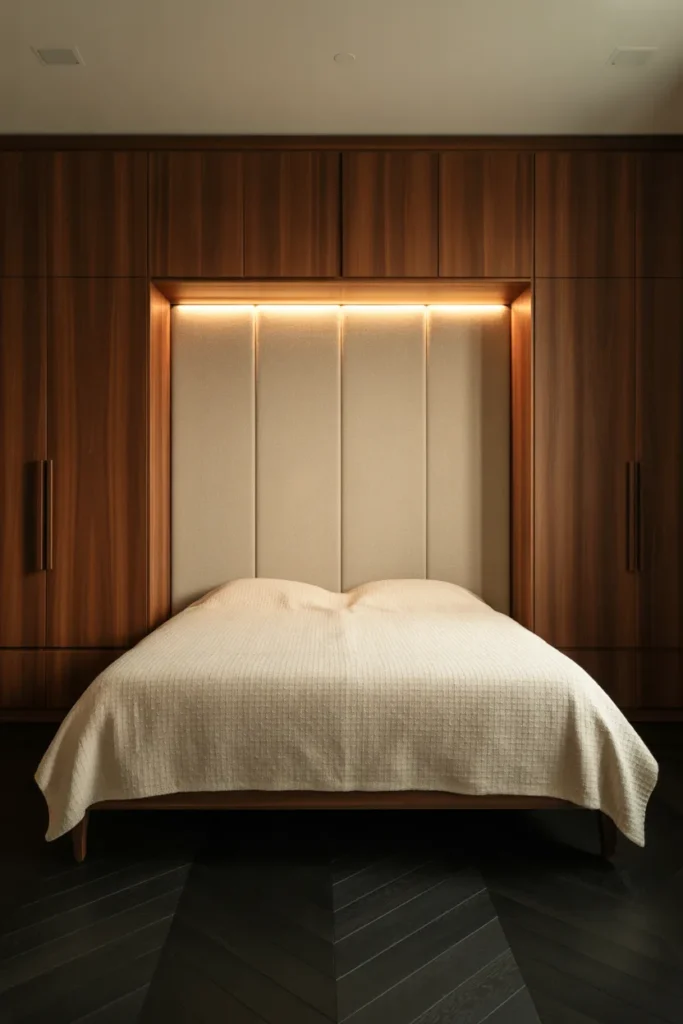
Symmetry is the non-negotiable requirement for this layout. The wardrobe sections on either side of the bed must be equal in width and height. Any asymmetry in the flanking wardrobe sections reads as a planning error rather than a deliberate design choice and disrupts the architectural quality the layout depends on.
This is the wardrobe configuration most commonly seen in high-end hotel suite design and in luxury residential projects, which is precisely why it reads as expensive and considered when executed correctly. It works in rooms of any ceiling height but is most impressive in rooms with ceilings at 9 feet or higher where the vertical scale of the composition can be fully expressed.
6. Wardrobe With a Dedicated Shoe Display Section That Functions as Decor
A wardrobe system that incorporates a dedicated open shoe display section, typically a series of angled or flat open shelves positioned at the end of the wardrobe run or as a central feature tower, turns what is usually a hidden storage problem into a visual element of the bedroom itself. When shoes are displayed on well-lit, well-organized open shelves, they function as a decorative layer that adds color and texture to the overall room composition.
This works best for households with a curated shoe collection that is worth displaying. The open shelving approach requires consistent organization to look intentional rather than cluttered. If the shoe collection is large and varied in condition, closed door storage with internal shoe racks is a more practical and more visually forgiving choice.
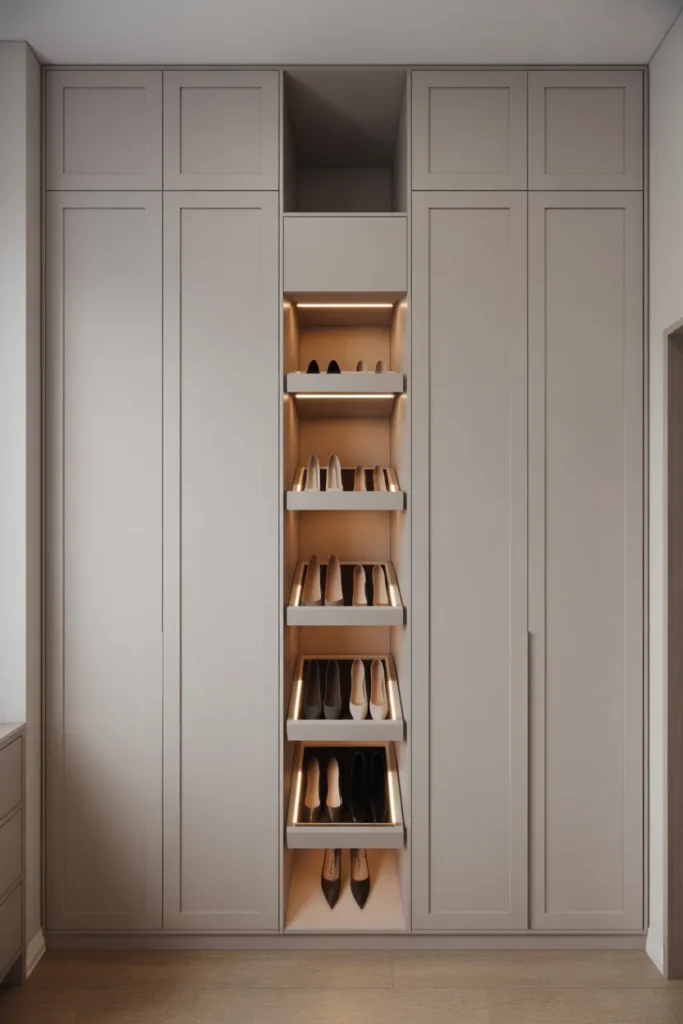
Shelf depth for shoe display should be sized to the specific footwear being stored. Standard women’s shoe shelves work well at 10 to 12 inches deep. Men’s larger shoes and boots require at least 14 inches of shelf depth. Shelves that are too shallow force shoes to hang over the edge, which looks untidy and defeats the display function.
Integrated lighting within the shoe display section is the detail that elevates this from functional storage to genuine room feature. LED puck lights or strip lighting inside each shelf tier create a warm illuminated display that reads as deliberate and luxurious at any time of day.
7. Dark Toned Wardrobe in a Neutral Bedroom for a Bold Anchoring Effect
A wardrobe finished in a deep, saturated tone, forest green, charcoal, navy, or near-black, positioned against a neutral or light-colored wall creates a bold anchoring effect that gives the master bedroom a defined focal point without requiring any additional decorative layer. The dark wardrobe becomes the room’s primary design statement, which means the surrounding walls, bedding, and furniture can remain calm and simple.
This works best in master bedrooms with good natural light where the dark wardrobe does not make the room feel dim. In a well-lit room, a dark wardrobe reads as dramatic and intentional. In a poorly lit room, the same wardrobe reads as heavy and oppressive. Assess your room’s natural light honestly before committing to this direction.
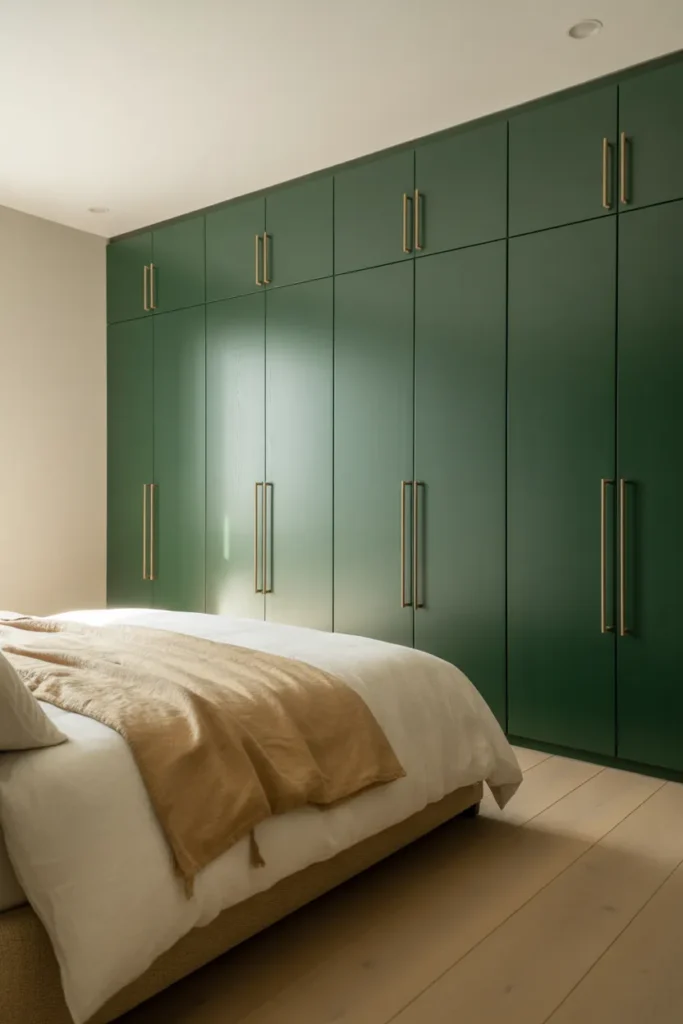
The finish of the dark tone matters significantly. A matte or satin lacquer finish on a dark wardrobe absorbs light softly and reads as sophisticated. A high-gloss finish on the same dark color reflects light more aggressively and reads as bolder and more dramatic. Choose based on the overall mood you are creating in the room.
Hardware selection on a dark wardrobe should lean toward warm metals. Brushed brass, unlacquered brass, or aged bronze handles against a deep green or charcoal wardrobe create a combination that reads as genuinely luxurious. Avoid chrome or polished nickel hardware on dark wardrobes, as the cool metal creates a disconnected quality that undermines the warmth of the dark finish.
8. Wardrobe With Internal Island Drawer Unit for a Walk-In Closet Feel
Adding a freestanding or built-in island drawer unit in front of a wardrobe run, positioned in the center of the floor space between the wardrobe and the bed, creates the functional experience of a walk-in closet within the master bedroom itself. The island provides additional drawer storage for folded items, accessories, and everyday essentials while creating a dressing zone that feels separate from both the sleeping area and the storage wall.
This works in master bedrooms over 220 square feet where the floor space between the wardrobe and the bed is deep enough to accommodate an island unit and still allow comfortable movement around it. The minimum clearance between the island and the wardrobe doors should be 36 inches to allow both to be accessed simultaneously without conflict.
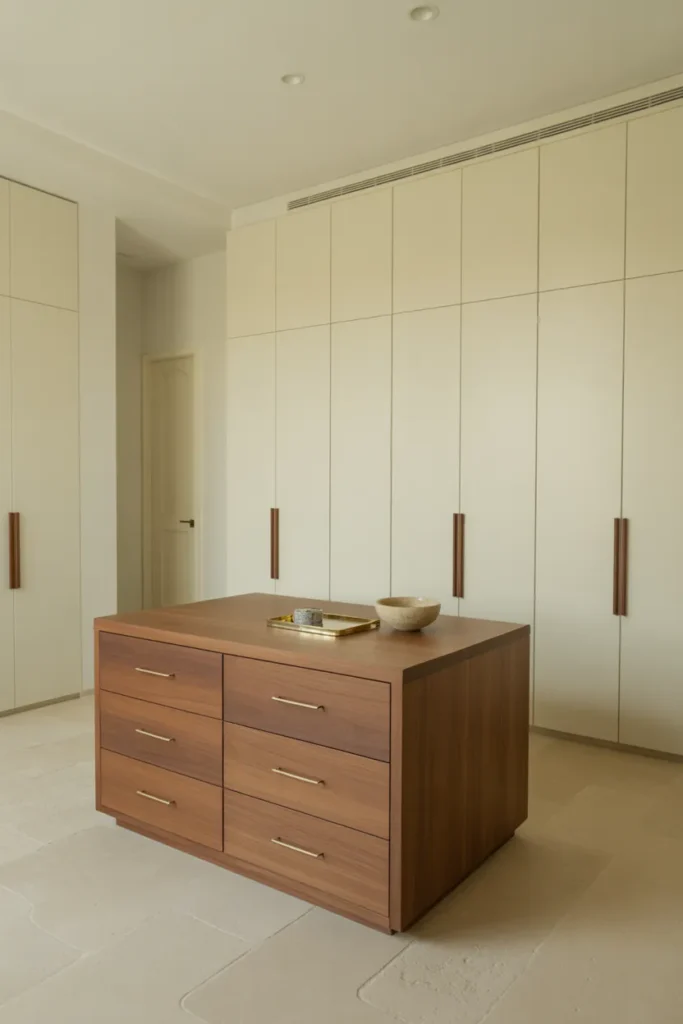
Island height is the practical decision that affects both function and aesthetics. A counter-height island at 36 inches provides a surface for laying out clothing and works as a styling and organization station. A lower chest-height island at 28 to 30 inches reads more like a traditional bedroom furniture piece and suits rooms where the island needs to feel less dominant visually.
The island material should coordinate with but not necessarily match the wardrobe. A wardrobe in a warm white lacquer paired with an island in a complementary warm oak creates a two-tone composition that reads as more considered than an island that exactly matches the wardrobe in every detail.
9. Wardrobe With Integrated Laundry Hamper and Valet Hook System
A wardrobe designed with a built-in pull-out laundry hamper and a dedicated valet hook section addresses two of the most consistent daily friction points in master bedroom organization. The pull-out hamper keeps worn clothing out of sight and off the floor. The valet hook provides a designated landing spot for the next day’s clothing, which eliminates the habit of draping clothes over chairs or the end of the bed.
This works in any size wardrobe system and is most valuable in master bedrooms that do not have an adjacent bathroom large enough to house a separate laundry hamper. Integrating the hamper into the wardrobe keeps it in the zone where clothing is changed, which is the most functionally logical placement.
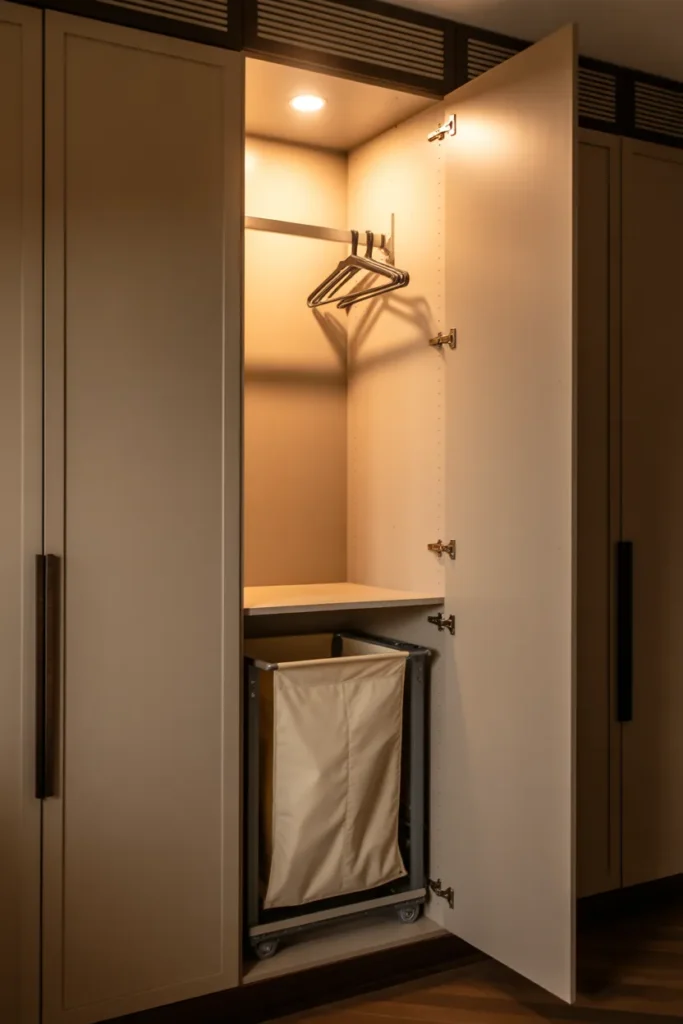
The pull-out hamper mechanism should use a full-extension drawer slide that allows the canvas or wire hamper basket to pull completely clear of the cabinet for easy access and removal. A hamper that only half-extends is difficult to use and is one of the most common specification mistakes in wardrobe planning.
The valet hook section is typically a narrow pull-out panel, approximately 4 to 6 inches wide, with a series of hooks on both sides that extends out from the wardrobe cabinet. When not in use it disappears flush into the wardrobe face. When extended it provides multiple hanging points for tomorrow’s complete outfit including jacket, shirt, and trousers or a full coordinated set.
10. Mirrored Wardrobe Doors With Integrated Frame Detail for a Luxe Finish
Mirrored wardrobe doors in a master bedroom perform two functions simultaneously. They provide a full-length reflection surface for dressing without requiring a separate floor mirror, and they reflect natural and artificial light back across the room, making the bedroom feel brighter and larger than its actual dimensions. When the mirror panels are framed with a thin integrated border in a coordinating metal or wood tone, the result reads as designed rather than simply reflective.
This works in any master bedroom but delivers the most significant spatial benefit in rooms with limited natural light or smaller square footage. A fully mirrored wardrobe wall in a compact master bedroom can effectively double the perceived depth of the room, which is one of the most impactful space-expanding techniques available without structural changes.
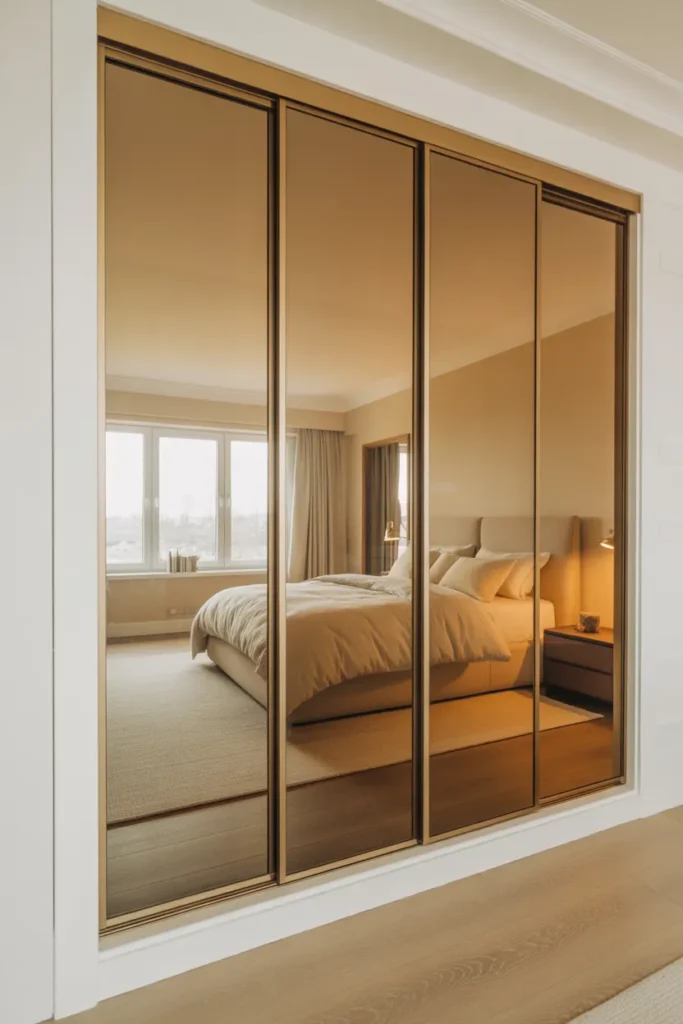
The integrated frame detail is the distinction between a standard mirrored sliding door and a luxury result. A 10 to 15 millimeter frame in brushed brass, matte black, or natural oak around each mirror panel gives the door a finished, furniture-quality appearance. Without this frame, mirrored doors read as a builder-grade addition regardless of the quality of the mirror itself.
Avoid positioning mirrored wardrobe doors directly opposite a window without considering the reflection carefully. A full-length mirror opposite a window can create uncomfortable glare at certain times of day. Position mirrored doors on the wall perpendicular to the primary window for the best light-amplifying effect without glare.
11. Wardrobe With Glass Front Panels on Upper Sections for Visual Lightness
A wardrobe that uses solid door panels on the lower sections and glass-front panels on the upper sections creates a visual break in what would otherwise be a solid wall of cabinetry. The glass panels allow the interior of the upper section to be visible, which adds depth and layering to the wardrobe wall while keeping the heavier everyday storage items behind solid doors at the lower level.
This works particularly well in master bedrooms where the wardrobe wall is long and the solid panel expanse would feel visually heavy and monotonous. The glass section breaks the wall into two distinct visual zones and gives the upper section a display quality that the lower storage section does not need to carry.
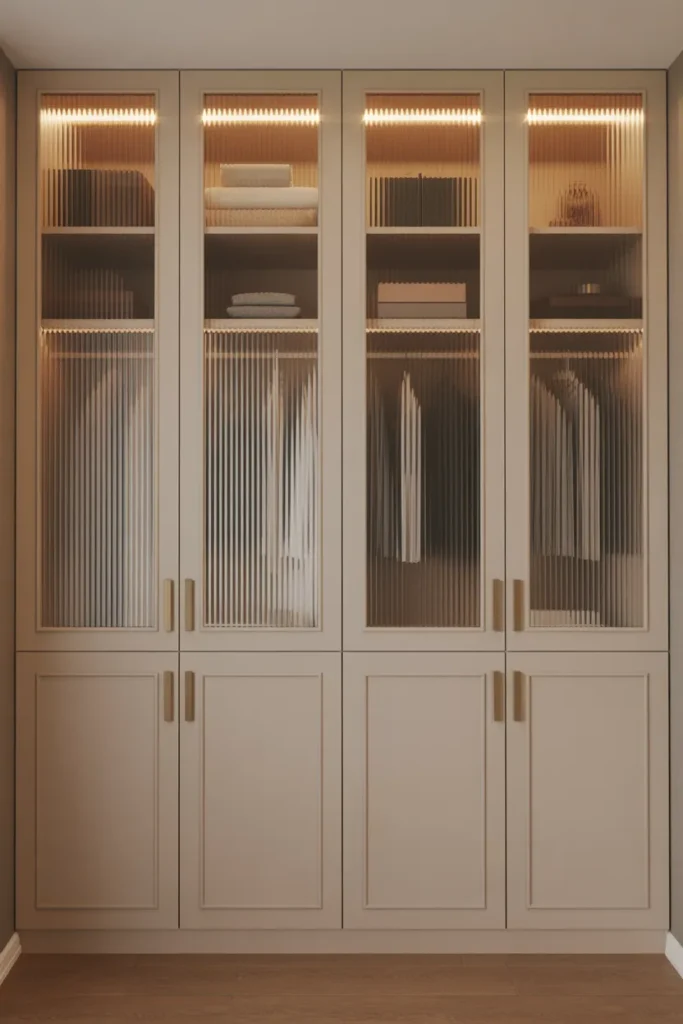
The glass type used in the panels changes the character of the wardrobe significantly. Clear glass reveals the interior completely, which requires the upper section contents to be consistently organized and visually curated. Reeded or fluted glass obscures the interior slightly while still allowing light to pass through, which is a more forgiving choice for everyday use. Smoked or tinted glass adds a moody, sophisticated quality that suits darker and more dramatic room directions.
Interior lighting within the glass-front sections is the detail that elevates this from a standard cabinet to a genuine display feature. LED strip lighting inside the upper sections creates a warm, illuminated effect that makes the wardrobe wall feel like a piece of high-end furniture rather than built-in storage.
12. Compact Single-Column Wardrobe Tower for Small Master Bedrooms
In a master bedroom where wall space is genuinely limited, a single tall wardrobe tower, a floor-to-ceiling column unit approximately 24 to 36 inches wide, used in combination with under-bed storage and over-door hooks provides a complete storage solution without dedicating an entire wall to cabinetry. The vertical tower maximizes height rather than width, which is the correct approach when horizontal wall space is not available.
This works in small master bedrooms, apartment bedrooms, and guest rooms that serve double duty as primary sleeping spaces. It is also the correct approach when the budget does not extend to a full built-in wardrobe system but the room still needs to read as considered and finished.
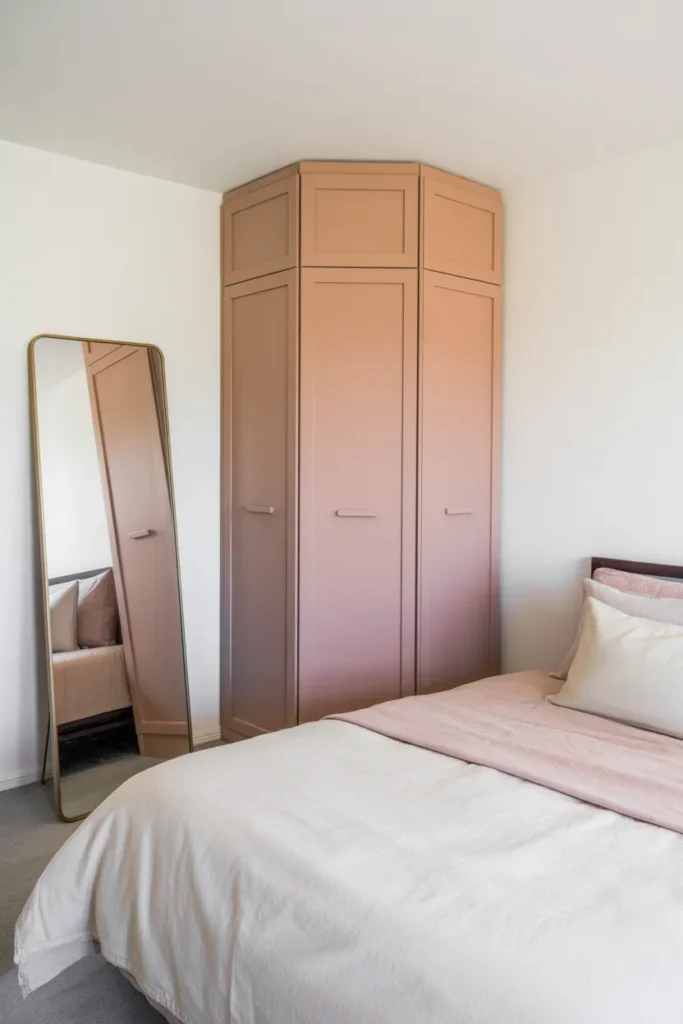
A single tower works best when it is positioned in a corner or at the end of a wall so it reads as a deliberate termination point rather than a random column in the middle of the room. A tower placed in the center of a wall with empty wall space on either side looks like a placeholder for furniture that has not arrived yet.
Internal configuration of a single tower should prioritize the specific storage needs of the user rather than defaulting to a generic mix of hanging and shelving. If hanging storage is the priority, the full interior height can be dedicated to a double hanging rail. If folded storage is the priority, a full tower of drawers or shelves delivers more usable capacity than a combination unit of the same external dimensions.
13. Wardrobe With a Dedicated Accessory and Jewelry Organization Zone
A wardrobe that includes a designated section for accessories, jewelry, bags, belts, and small items with appropriate internal fittings for each category solves one of the most persistent daily organization problems in master bedroom storage. When accessories have a fixed, visible home within the wardrobe system, the surfaces in the rest of the bedroom, the nightstand, the dresser top, the bathroom counter, remain clear and uncluttered.
This works in any wardrobe system and requires only one section of the unit, typically a column of 18 to 24 inches wide, to be fitted with the appropriate internal organization tools. Velvet-lined shallow drawers for jewelry, pull-out hooks for belts and bags, and a small interior mirror for reference are the core components of a well-planned accessory zone.
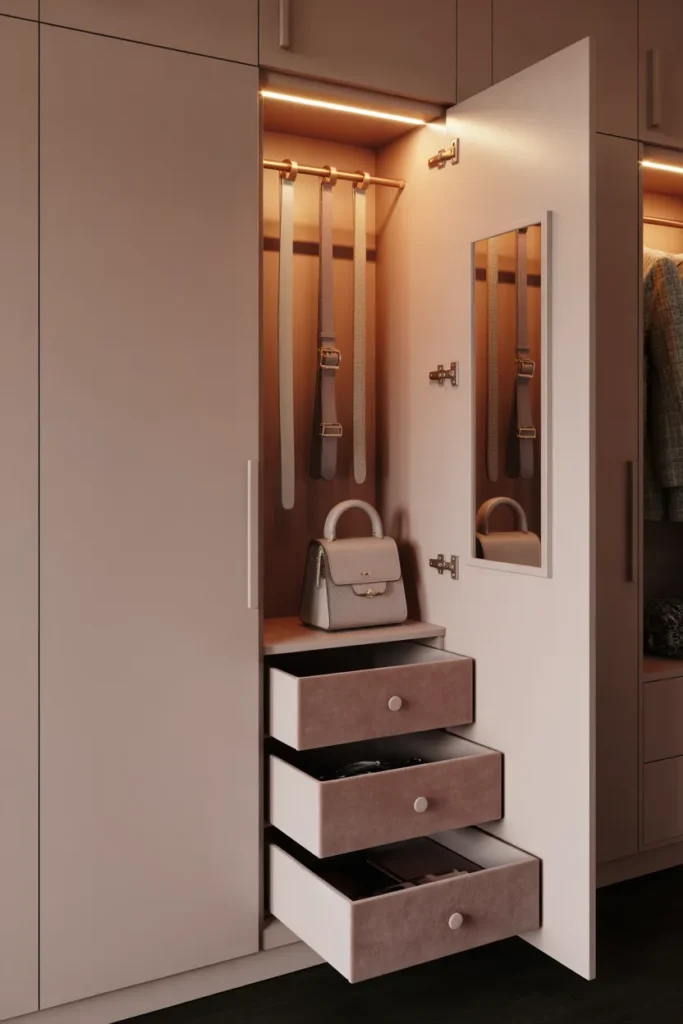
The velvet-lined drawer is the detail that most clearly signals a luxury wardrobe interior. Beyond the aesthetic quality, velvet lining protects delicate jewelry from scratching and keeps small items from sliding around when the drawer is opened and closed. This is a specification detail worth investing in because it is used daily and its quality is felt every time the drawer is accessed.
Position the accessory section at approximately eye level within the wardrobe so all contents are visible without bending or reaching. Accessory storage positioned too high requires items to be taken down one by one to be assessed. Positioned too low it requires bending daily. Eye-level placement is the functional sweet spot that makes the accessory zone genuinely easy to use rather than simply organized in theory.
Final Thoughts
The right wardrobe does more than store clothing. It defines the architecture of your master bedroom, controls the visual weight of the room’s largest wall, and either creates daily organizational ease or daily friction depending on how well it was planned. Every idea in this guide gives you a specific direction with the practical details you need to make a confident decision rather than simply a beautiful image to save for later.
Save this post to your Pinterest boards so you have it as a reference when you are ready to plan or update your master bedroom storage. If you are still exploring, look into master bedroom layout ideas for modern homes, luxury bedroom lighting guides for 2026, and built-in storage ideas for small bedrooms for more ways to make your bedroom work as hard as it looks.