
If your front porch feels flat, dated, or disconnected from the home you want, these timeless front porch ideas for a Mediterranean glow up will give you a clear, actionable path forward. This guide covers 10 distinct design approaches — each with real layout guidance, material specifics, and honest decision advice — so you can move from pinning to actually doing.
1. Terracotta Tile Flooring That Sets the Entire Tone
The floor is the foundation of any Mediterranean porch, and terracotta tile earns its place as the single most impactful starting point. Warm clay tones — from burnt sienna to dusty adobe — establish regional character before a single piece of furniture is added. Unlike painted concrete or generic stone pavers, terracotta visually grounds the space and works with both modern and traditional home exteriors.
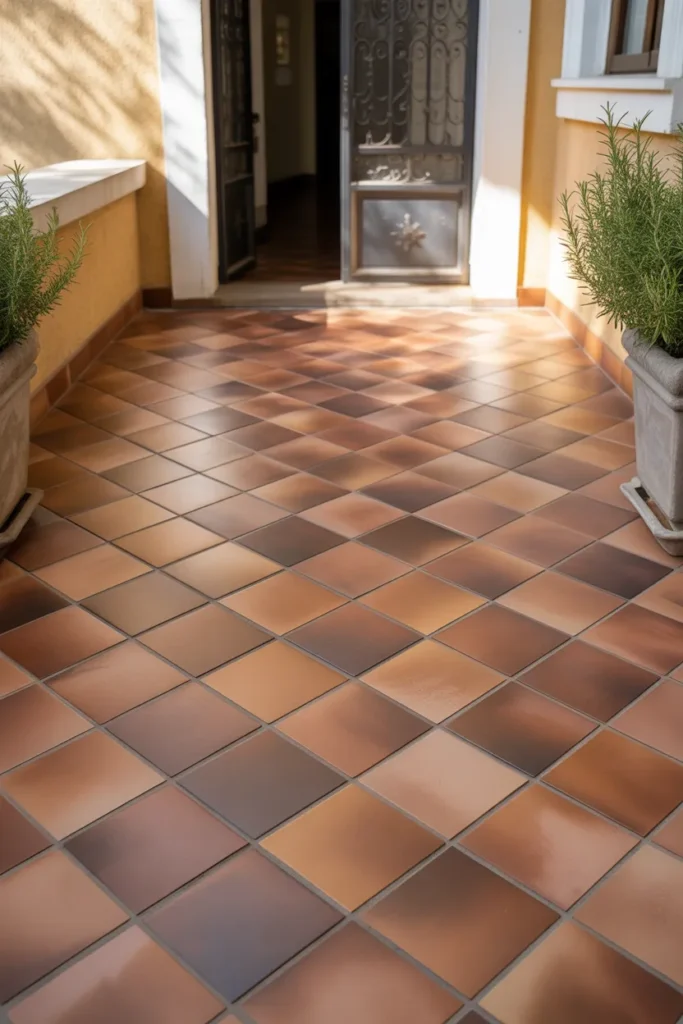
Choose unglazed or lightly sealed terracotta for outdoor use. Glazed versions get slippery when wet and chip faster under foot traffic. For a small porch, lay tiles in a diagonal pattern to make the space read larger. On a wider porch, a running bond or classic grid works well and is easier to cut around edges.

The most common mistake here is going too light on grout color. A warm sand or medium brown grout keeps the authentic look intact. White grout reads too modern and will show staining within one season.
2. Arched Entryway With White Stucco Walls
Nothing reads Mediterranean more immediately than an arched doorway framed by white stucco. This combination does two things at once: it creates strong architectural contrast and gives the porch a sense of permanence that painted wood simply cannot replicate. It works particularly well on homes in the Southwest, California, and Florida where the architectural vocabulary already leans in this direction.
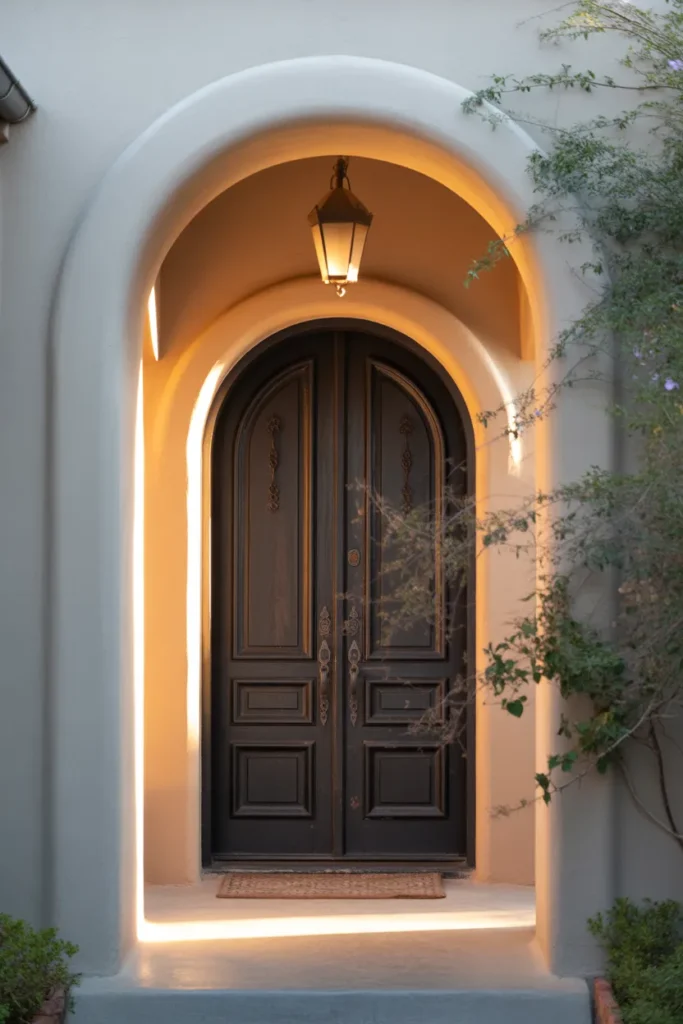
If your home has a flat or rectangular doorway, you can create the illusion of an arch using a curved overhead trellis or a painted arch detail on the exterior wall. These are lower-cost interventions that carry significant visual weight. If you are doing a full renovation, a true stucco arch with a keystone detail elevates the entry from decorative to architectural.
Keep the stucco white or warm white — avoid off-whites with pink or yellow undertones, which can look dirty in direct sunlight. Pair with a dark wood or wrought iron door to sharpen the contrast.
3. Wrought Iron Details That Add Structure Without Weight
Mediterranean design relies heavily on wrought iron — not as decoration layered on top of a space, but as structural detail woven into it. Railings, lantern brackets, window grilles, and furniture legs all benefit from this material. It adds visual weight and craftsmanship without closing off the porch or making it feel heavy.
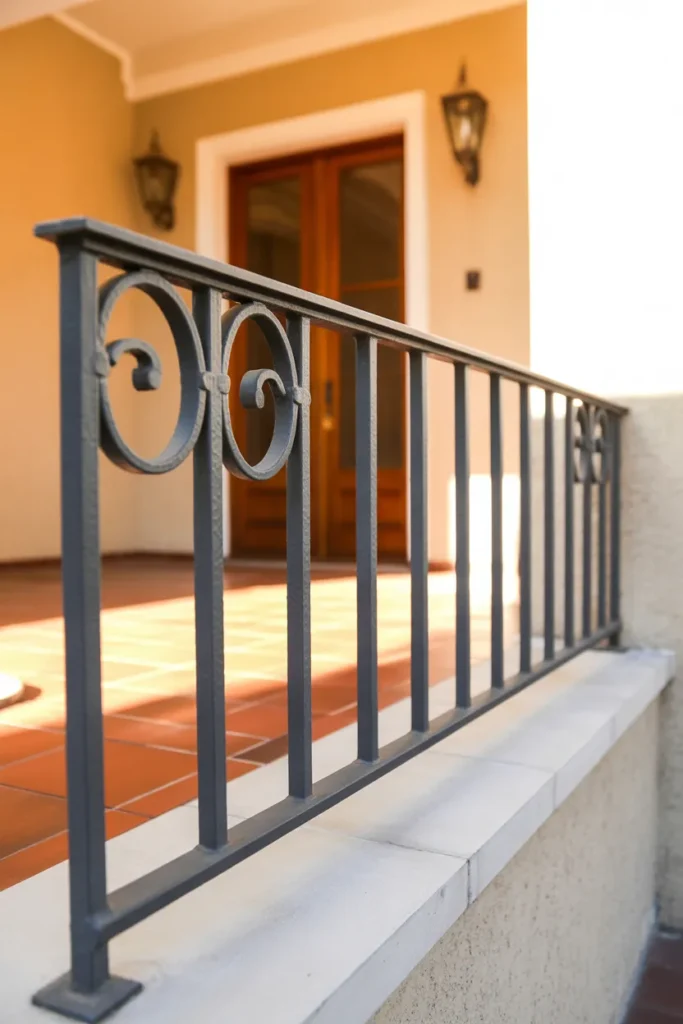
For a front porch glow up on a budget, start with lighting. A single wrought iron wall sconce or hanging lantern beside the door shifts the entire mood of the entry. If your porch has a railing, replacing basic wood or aluminum balusters with simple iron scrollwork balusters is a weekend-scale project with outsized impact.
Avoid overly ornate wrought iron patterns. The timeless Mediterranean look favors clean, simple curves — a single scroll or straight bar with forged ends — rather than elaborate floral patterns that date quickly. Flat black or oil-rubbed bronze finish both work; avoid shiny chrome or brushed nickel, which read too modern for this aesthetic.
4. Deep-Shade Pergola With Climbing Vines
A Mediterranean porch without overhead shade is an uncomfortable porch. A pergola with open beam construction solves two problems at once: it defines the outdoor room and filters harsh sunlight to create the dappled, livable light that makes this design style feel so inviting. This idea works on porches attached to the house as well as freestanding entry areas.
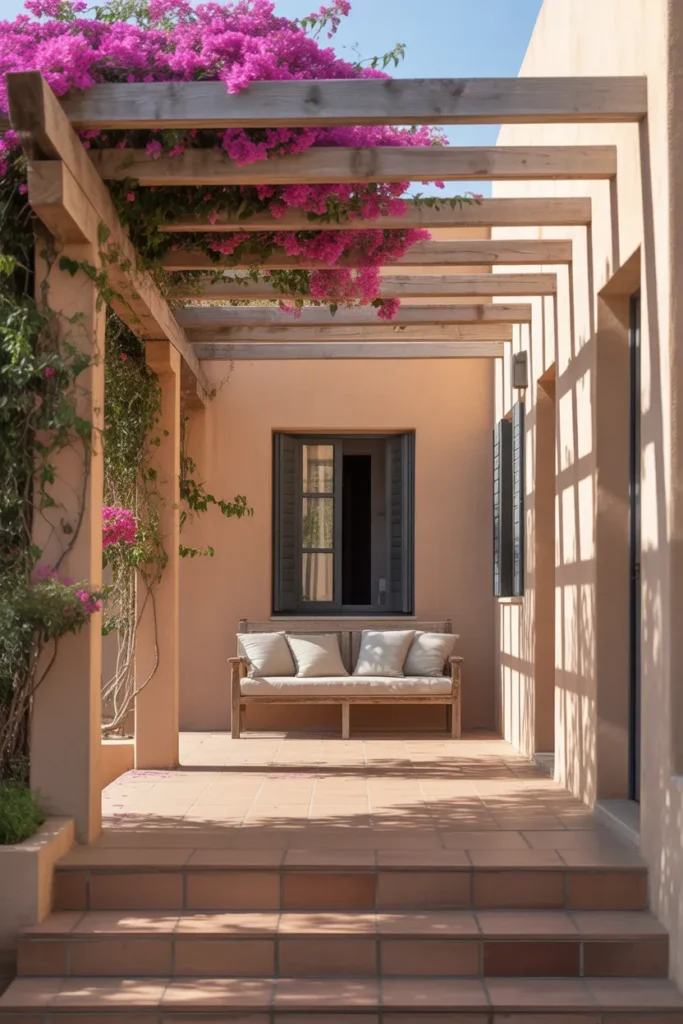
Use rough-hewn cedar or Douglas fir beams for an authentic look. Smooth, painted pressure-treated lumber reads more suburban deck than Mediterranean terrace. Train wisteria, bougainvillea, or star jasmine along the pergola structure — these are all heat-tolerant climbers that reward minimal care with dramatic seasonal color.
The structural spacing of your pergola beams matters. Beams spaced 18 to 24 inches apart provide the right balance of shade and light. Closer spacing makes the porch feel tunnel-like. Wider spacing looks unfinished and provides very little shade benefit.
5. Potted Citrus Trees as Symmetrical Anchors
Symmetry is one of the defining organizational principles of Mediterranean outdoor spaces, and nothing executes it more naturally than a matched pair of potted citrus trees flanking the front door. Lemon, kumquat, and dwarf orange trees all thrive in containers, stay manageable in size, and provide the dense green canopy that softens hard architecture.
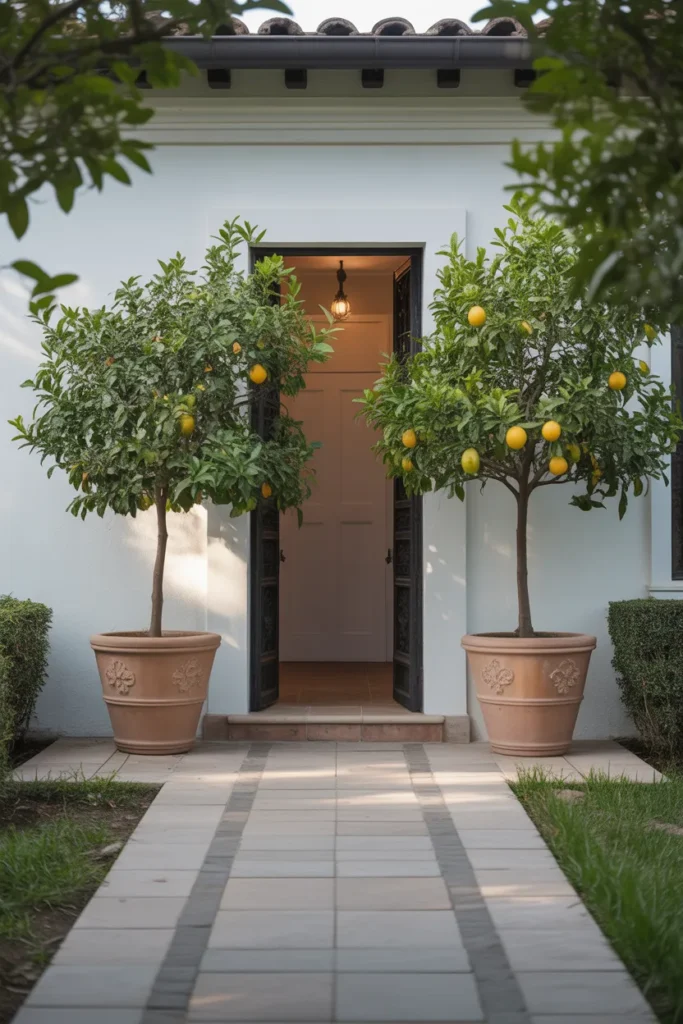
Use large terracotta or aged concrete pots — at minimum 18 inches in diameter — to give the root system room and to keep the proportions from looking small against the home’s facade. Trees in undersized pots look like an afterthought. Place them no more than 12 inches from the door on each side so the symmetry reads clearly from the street.
This idea works on both small and large porches because scale adjusts with pot size and tree variety. For a narrow porch, go with a compact kumquat in a tall, narrow planter. For a wide entry, a standard lemon tree in a broad low planter fills the space more convincingly.
6. Low Stucco Walls With Built-In Bench Seating
On porches with enough square footage, a low perimeter stucco wall — 18 to 24 inches tall — serves as both a boundary element and built-in seating base. This is one of the most functional layout decisions you can make for a Mediterranean front porch glow up. It eliminates the need for extra freestanding furniture, defines the porch as a true outdoor room, and adds serious architectural permanence.
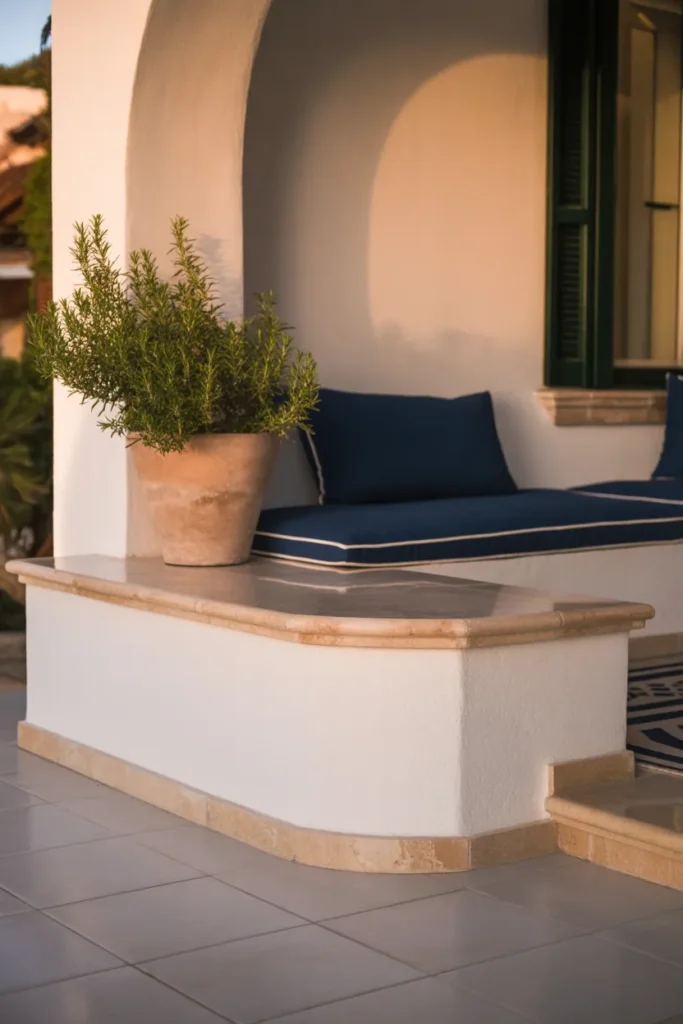
Top the wall with a thick wood plank, stone coping, or tiled surface to create a finished seat edge. A smooth stucco finish in warm white or pale sand keeps the look cohesive with the rest of the exterior. If your porch is on an elevated foundation, the low wall also serves as a safety barrier without requiring a traditional railing.
Avoid topping the wall with thin material. A one-inch ceramic tile edge will crack under sitting weight and freeze-thaw cycles in colder climates. Use a minimum two-inch stone slab or a three-inch hardwood plank treated for exterior use.
7. Handmade Tile Accents on Steps and Risers
Stair risers are one of the most underused design surfaces on a front porch. On a Mediterranean-style home, hand-painted or encaustic cement tiles on stair risers turn a functional transition into a signature detail. This is a high-impact, relatively low-cost upgrade that photographs beautifully and holds up well over time when the right tile is selected.
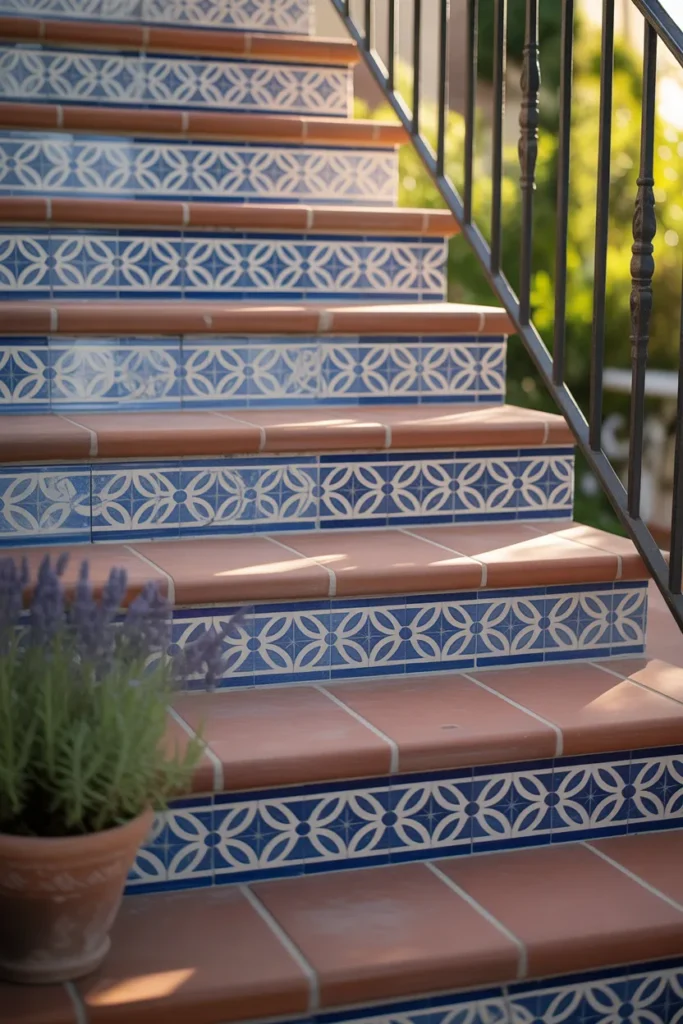
Blue and white Talavera-style patterns are the most recognizable option, but geometric Moroccan-influence tiles and solid-color encaustic tiles in terracotta, cobalt, or olive also read authentically. Mix patterns across risers for a collected, artisan feel, or use a single repeating pattern for a cleaner, more modern Mediterranean look.
Use only frost-rated exterior tile for outdoor steps. Many decorative tiles sold for interior use will crack through their first winter if used outdoors. Seal with a penetrating tile sealer annually in freeze-thaw climates.
8. Lantern-Style Lighting for Warm Evening Presence
Lighting is where many Mediterranean porch renovations fall short. Recessed can lights or generic flush-mount fixtures erase the character that every other design decision worked to build. Lantern-style fixtures — wall-mounted, hanging, or post-mounted — maintain the visual language of the style after sundown and make the entry look intentional and complete.
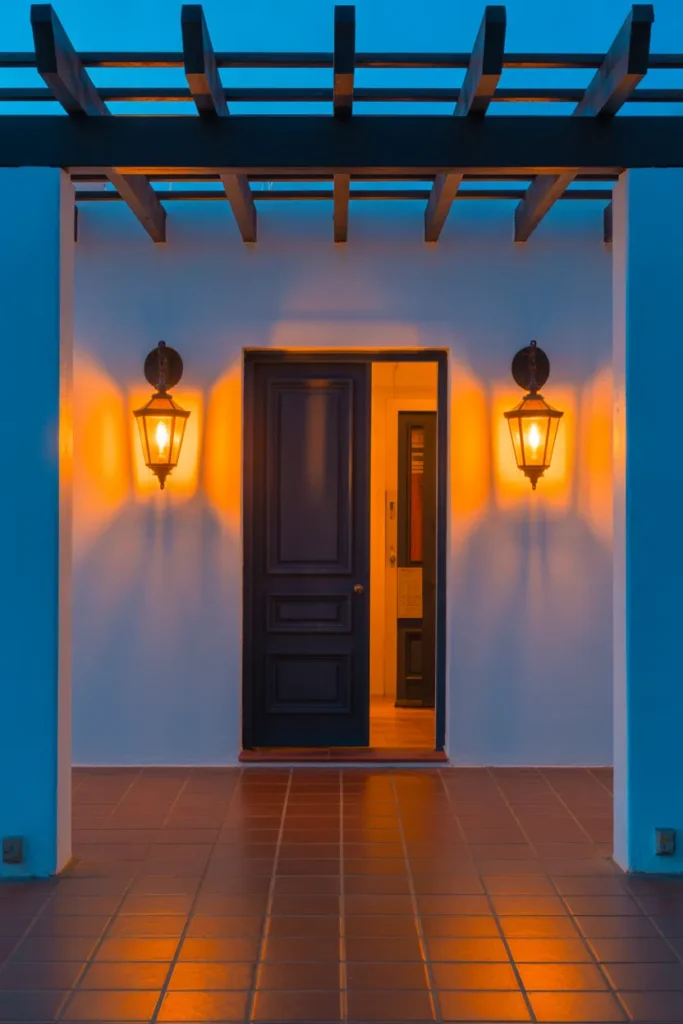
Opt for dark metal lanterns with clear or amber glass panels. Amber glass casts the warmest light and most closely approximates candlelight, which is the reference point for this aesthetic. For a symmetrical entry, flank the door with two matching wall-mount sconces at 66 to 72 inches from the floor — this height keeps the light at eye level rather than overhead, which is far more flattering and welcoming.
If your porch has a pergola or covered overhang, add one hanging lantern on a simple chain at the center. Avoid Edison-bulb-only fixtures, which are fashionable but produce uneven, dim light that makes the porch feel less safe at night.
9. Linen and Natural Fiber Textiles for Livable Comfort
A Mediterranean front porch is not just an entry — it is a transitional living space. Textiles are what push it from decorative to genuinely comfortable. Linen cushions, jute rugs, and woven throws bring softness to a predominantly hard-material aesthetic without undermining the design.
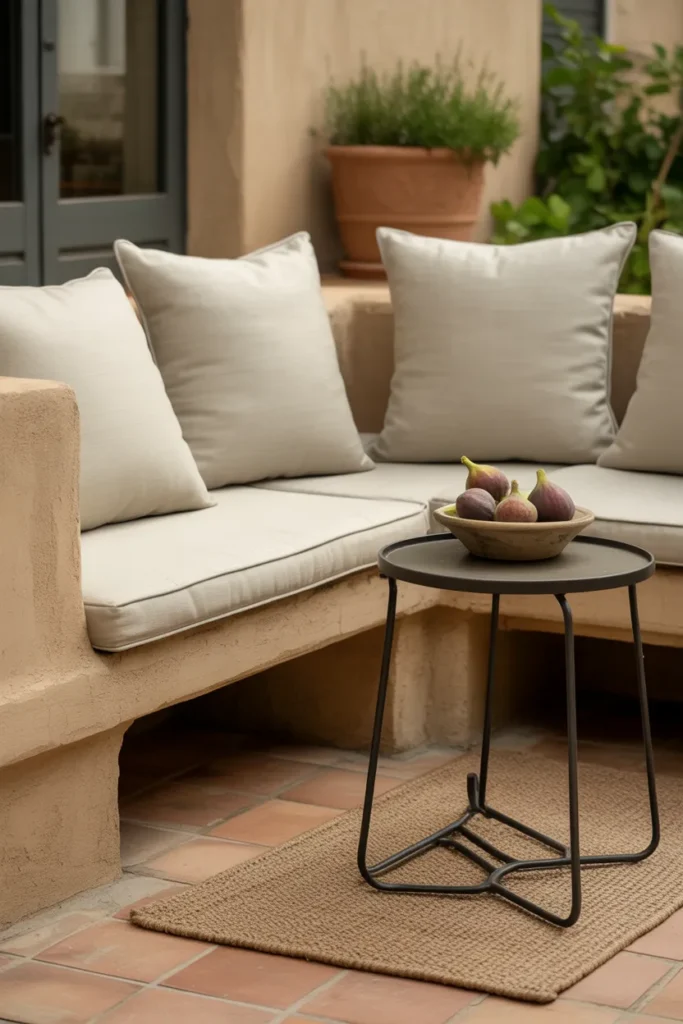
For seat cushions on a bench or chairs, choose fabric rated for outdoor use in linen-look textures — true linen fades and mildews outdoors. Colors in the warm neutral range — ivory, aged white, warm gray, dusty blue — maintain the calm, sun-washed look that defines Mediterranean spaces. Avoid bright pattern-heavy fabrics, which compete with the architectural details.
A flatwoven outdoor rug in a natural fiber tone — sand, jute, or pale sisal — defines the seating zone and anchors furniture groupings on a large porch. On a small porch, a rug can make the space feel complete rather than sparse. Size up: a rug that is too small makes the porch feel like a display rather than a livable room.
10. Layered Greenery That Looks Intentional, Not Overgrown
Mediterranean landscapes are lush but structured. The plant choices that work best on a front porch are those that combine visual softness with strong silhouette — lavender, rosemary, bougainvillea, agave, and olive trees are the core vocabulary. The goal is layering: tall background plants, medium fillers, and low or trailing edge plants that spill over pot rims or wall edges.
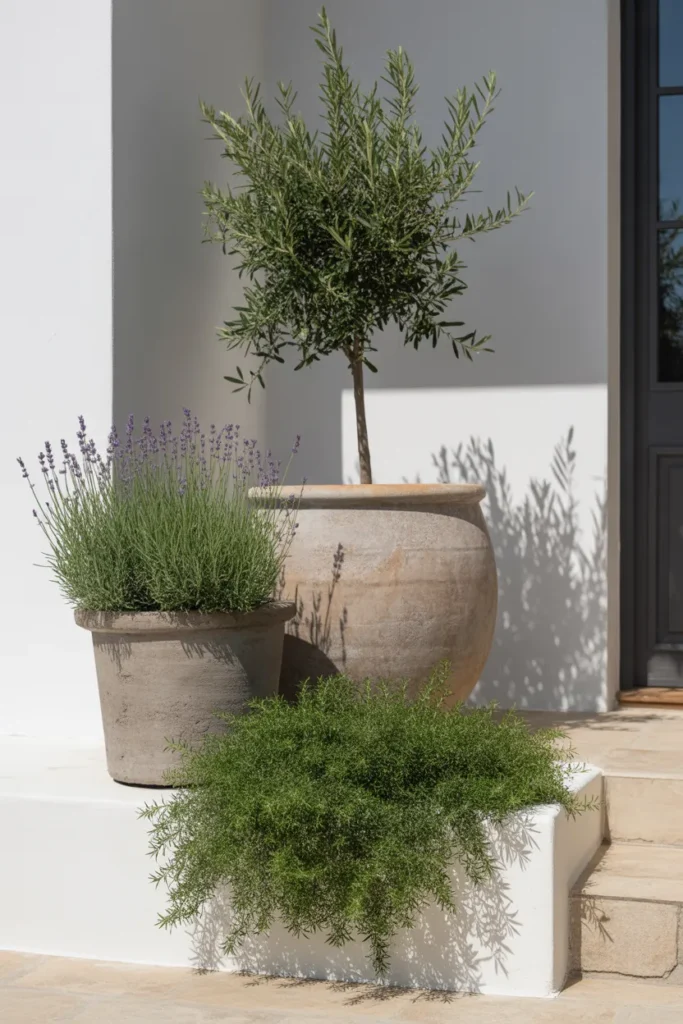
Group pots in odd numbers — three or five — and vary the heights deliberately. A single large pot at floor level looks isolated. A grouping with one tall plant, two medium, and one trailing element at the edge looks composed and purposeful. Use terracotta and aged concrete pots consistently to keep the material language cohesive.
Avoid mixing too many bloom colors at once. Mediterranean-style planting tends toward a restrained palette: white, purple, magenta, and dusty green. Adding yellow, orange, and red all at once shifts the look toward a cottage garden rather than a Mediterranean terrace.
Final Thoughts
These timeless front porch ideas for a Mediterranean glow up are designed to work together or independently — you do not need to implement all ten at once. Start with the floor or the lighting, get one decision right, and build from there. The most successful Mediterranean porches are the ones where every element earns its place rather than competing for attention.
If this post helped you narrow down your design direction, save it to your Pinterest boards so you can reference it during planning. For more front porch layout ideas, Mediterranean outdoor living inspiration, and functional space planning guides, continue exploring the blog.