
Most bathrooms fail as rest spaces not because of size, but because of too many competing materials, harsh lighting, and storage that never quite works. These zen Japandi bathroom ideas for a spa sanctuary give you 10 distinct, practical directions — each grounded in real design decisions — so you can identify exactly what your bathroom needs and make changes that hold their calm over time.
1. Wabi-Sabi Stone Walls That Bring Raw Texture Without Chaos
In a Japandi bathroom, walls do the heaviest design work. Natural stone — particularly honed travertine, rough-cut slate, or textured limestone — introduces the organic imperfection that defines wabi-sabi aesthetics without requiring any decorative objects to support it. The wall becomes the feature, which means everything else in the bathroom can stay quiet and minimal.
Honed finishes are the right choice for bathroom walls. Polished stone reflects light harshly and reads more luxury hotel than spa sanctuary. A matte or honed surface absorbs light softly and feels more grounded, which is the core goal of a zen bathroom design. Use large-format slabs where possible — a single continuous stone surface reads as more intentional than a tiled grid, and it eliminates grout lines that accumulate moisture and discolor over time.
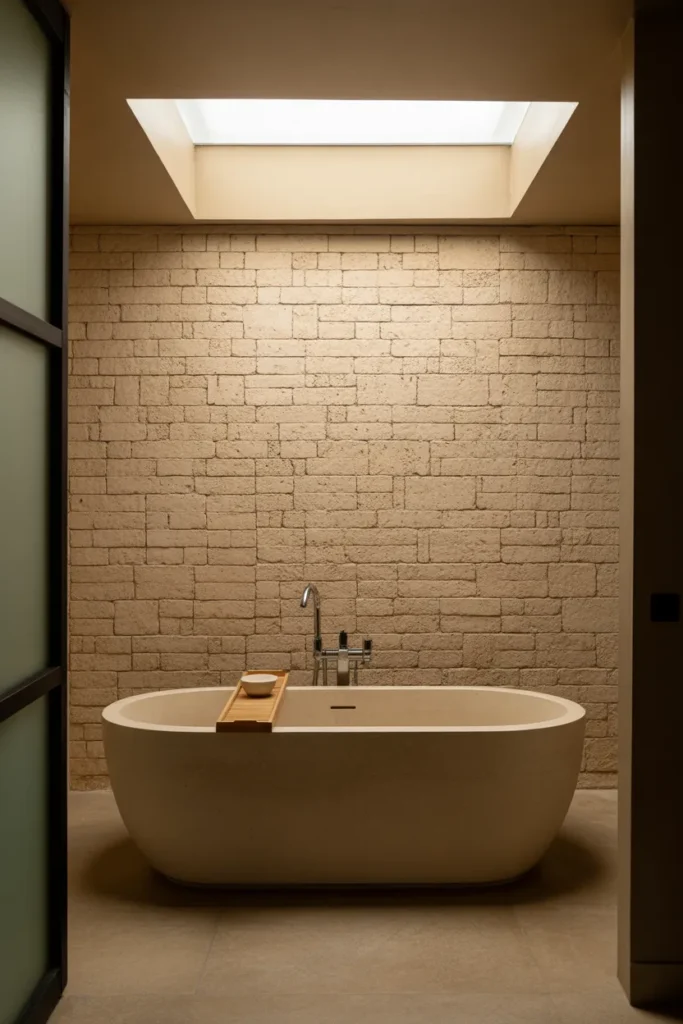

This approach works in both small and large bathrooms. In a small bathroom, limit the stone to a single feature wall behind the vanity or behind a freestanding tub. In a larger bathroom, running stone on two adjacent walls creates an enclosed, immersive quality that genuinely approximates a high-end spa environment.
The mistake to avoid is combining more than one stone type in the same bathroom. Mixed stone materials — travertine on one wall, slate on another — compete visually and undermine the calm coherence that makes this style work.
2. Freestanding Soaking Tub Positioned to Face Natural Light
The freestanding tub is the centerpiece of a spa sanctuary bathroom, and its placement relative to natural light is the single most important positioning decision you will make. A tub that faces a window — even a frosted or privacy-glazed one — creates a bathing experience that feels deliberate and restorative in a way that a tub tucked into a corner or against a wall simply does not.
In a zen Japandi bathroom, the tub should be the only major object in its zone of the floor plan. Clear floor space on at least three sides — a minimum of 24 inches on each open side — keeps the tub from feeling crowded and allows the eye to settle rather than navigate around obstacles. This is one of the clearest examples of how negative space in Japandi design is doing active design work, not wasting square footage.
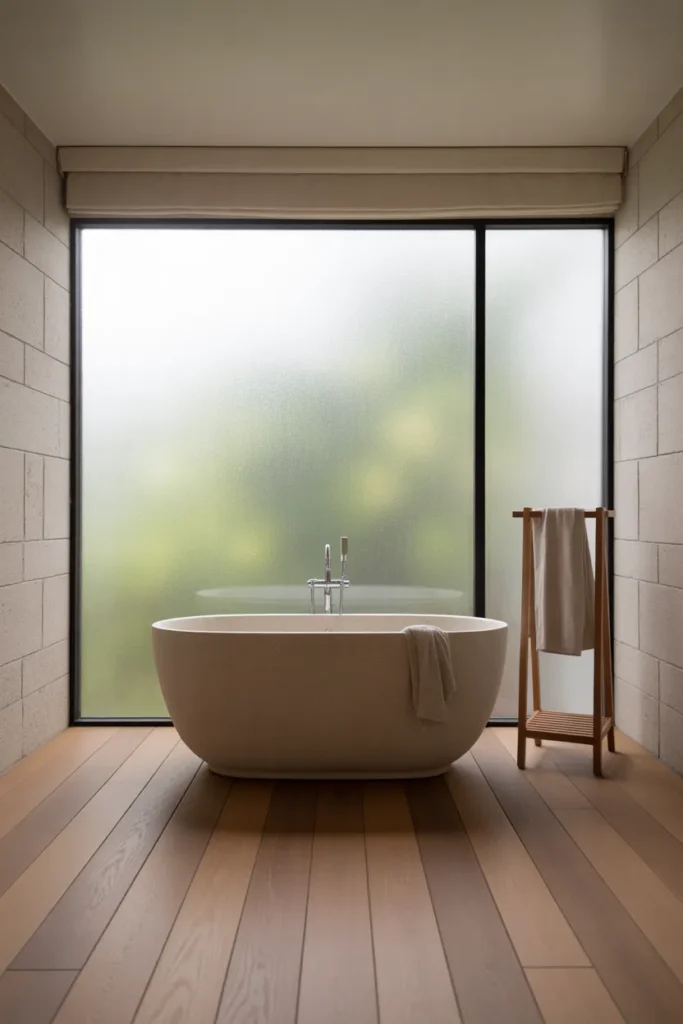
Choose a tub with a simple silhouette. Oval and rectangular freestanding tubs with a smooth matte exterior — white, warm stone, or concrete gray — maintain the visual quiet of the space. Ornate claw-foot tubs or highly glossy finishes both pull too much visual attention and disrupt the calm the style depends on.
For bathrooms in apartments or smaller homes where a freestanding tub is not feasible due to floor load or plumbing constraints, a deep Japanese-style soaking tub inset into a low platform achieves the same immersive quality with a smaller footprint.
3. Floating Wood Vanity That Keeps the Floor Visually Open
A floating vanity — mounted to the wall with the floor completely clear beneath it — is one of the most effective layout decisions in a small Japandi bathroom. The visible floor beneath the vanity makes the room read several feet larger than it is. Combined with a wood finish in a warm natural tone, the floating vanity brings the organic material warmth that Japandi design requires without adding visual weight.
White oak, teak, and bamboo are the wood species that perform best in bathroom humidity conditions when properly sealed. Avoid MDF with a wood-look veneer in high-moisture environments — it will delaminate at the edges within a few years regardless of the finish applied. Solid wood or high-quality marine-grade plywood with a genuine wood veneer are the minimum standards for a bathroom application.
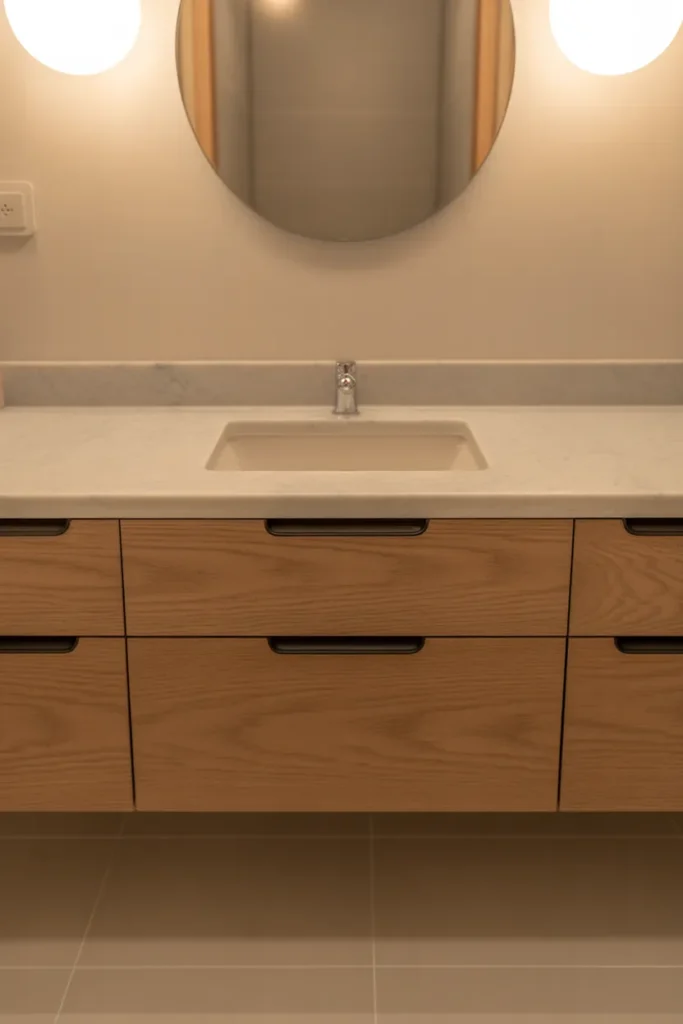
The vanity drawer configuration matters more than most people realize. In a zen bathroom, the goal is to keep every surface completely clear. That means the vanity needs to store everything — skincare, toiletries, hair tools, and cleaning supplies — behind closed doors or inside drawers. A floating vanity that is too shallow or has insufficient internal organization defeats the purpose and leaves items sitting out on the counter.
Keep the countertop material consistent with the floor or wall material where possible. A honed stone counter on a wood vanity that uses the same stone as the floor creates the seamless, spa-like continuity that elevates a Japandi bathroom from styled to designed.
4. Wet Room Shower With No Door or Threshold
A doorless wet room shower is one of the most spatially generous decisions in zen Japandi bathroom design. By eliminating the shower enclosure entirely — no glass door, no threshold, no frame — the bathroom reads as a single continuous space rather than a segmented room with separately defined zones. This is particularly valuable in bathrooms under 100 square feet, where every visual division reduces the perceived size.
The wet room format requires proper waterproofing of the entire bathroom floor and lower walls, a linear drain positioned to direct water efficiently, and a slight continuous floor slope toward the drain. This is not a DIY shortcut project — the waterproofing membrane installation and slope precision require professional execution. Done correctly, a wet room shower is lower maintenance than a framed enclosure and lasts significantly longer.
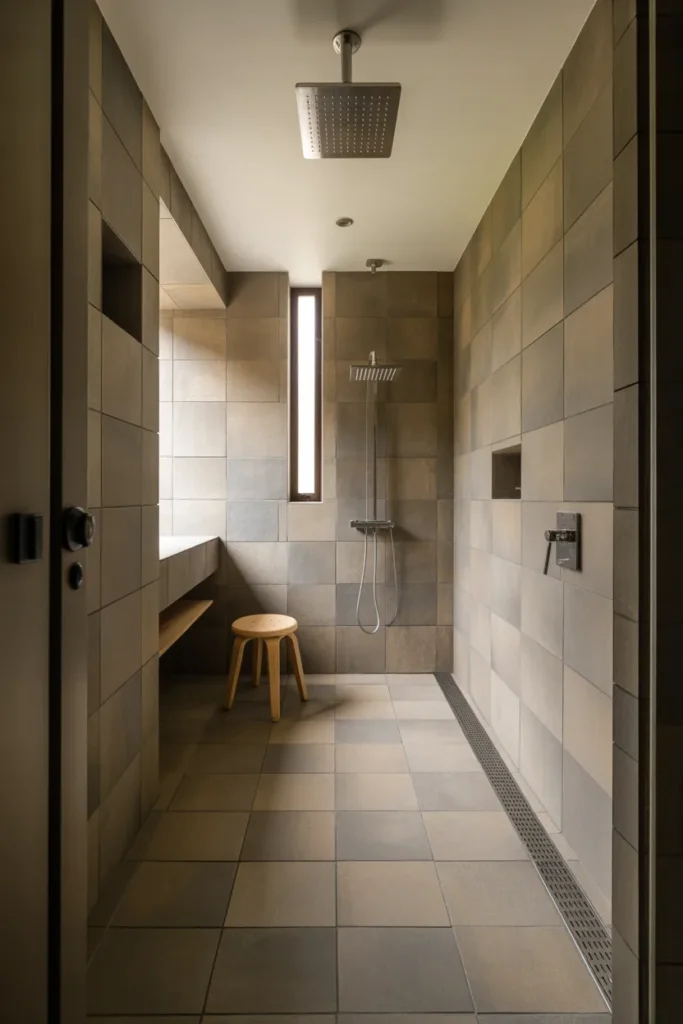
For the shower zone itself, use the same floor tile as the rest of the bathroom. A consistent floor material running wall to wall is what creates the seamless, spa sanctuary quality. Introducing a different tile in the shower area — a common approach — reintroduces the visual division that the doorless format was designed to remove.
A single large-format rain showerhead mounted flush to the ceiling is the correct fixture choice for this format. A handheld wand on a simple wall-mount bar addresses practical needs without adding visual complexity.
5. Warm Dim Lighting That Replaces Harsh Overhead Fixtures
Lighting is the element most responsible for whether a bathroom feels like a spa or a utility space, and it is the most commonly mishandled element in American bathrooms. The standard recessed grid of bright white overhead lights produces the kind of flat, cool illumination that makes a space feel clinical rather than restful. Zen Japandi bathroom lighting works on warmth and directionality instead.
The goal is to layer light from multiple low sources rather than flooding the room from above. Wall-mounted sconces at face height flanking the mirror provide flattering, functional task light for grooming without the harsh overhead wash. Recessed ceiling lights on a dimmer at 2700K — a warm, candle-adjacent color temperature — handle ambient light when the room is in use for bathing or relaxing. An LED strip tucked beneath the floating vanity or behind a ceiling cove adds a layer of indirect glow that makes the space feel genuinely warm at night.
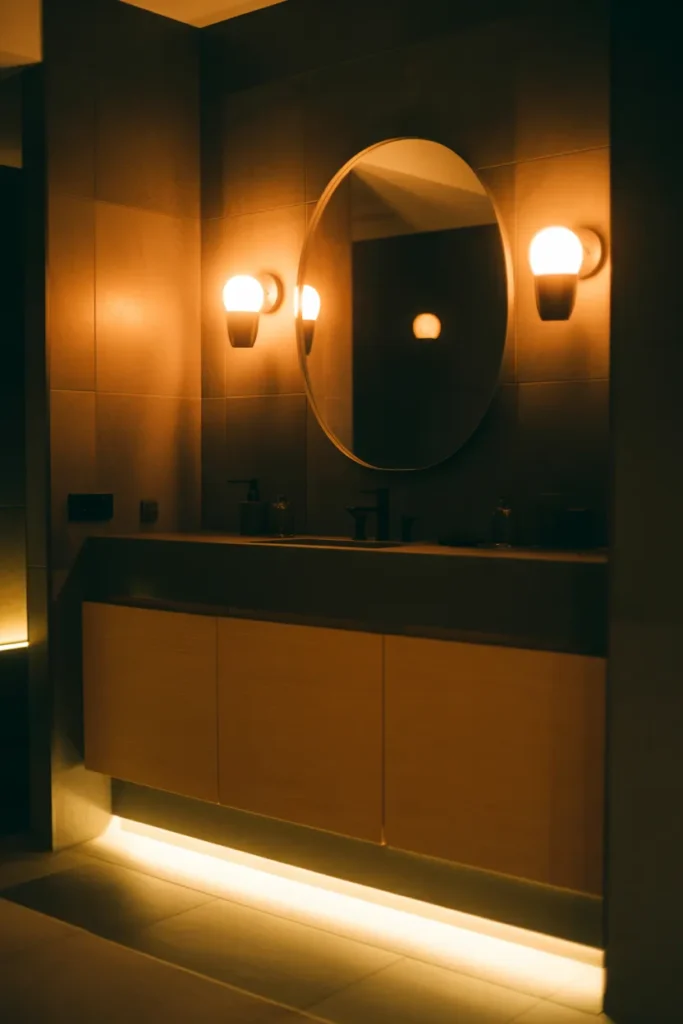
In small bathrooms, two sconces flanking the mirror and a single dimmable recessed light are sufficient. In a larger bathroom or one with a soaking tub, add a pendant or hanging lantern-style fixture above the tub zone. Keep it at least 8 feet from the tub rim per electrical code requirements for wet zones — verify this with your electrician before installation.
Avoid cool white or daylight bulbs anywhere in a spa sanctuary bathroom. Bulbs above 3000K will undermine every other design decision you make in the space.
6. Bamboo and Hinoki Wood Accents for Authentic Spa Detail
Material selection in a zen Japandi bathroom is where the spa sanctuary quality either comes together or falls apart. Bamboo and hinoki wood — the Japanese cypress used in traditional onsen bath culture — are the two natural materials most directly associated with authentic spa environments, and both are practical for bathroom use when handled correctly.
Bamboo performs well as a towel rail, bath tray, stool, or small shelf unit. It is naturally moisture-resistant and requires no special sealing for these non-submerged applications. Hinoki wood, when used as a bath platform, shower floor insert, or small bench, releases a mild, clean cedar-like fragrance when wet — an effect that is both genuinely pleasant and directly connected to the sensory experience of traditional Japanese bathing spaces.
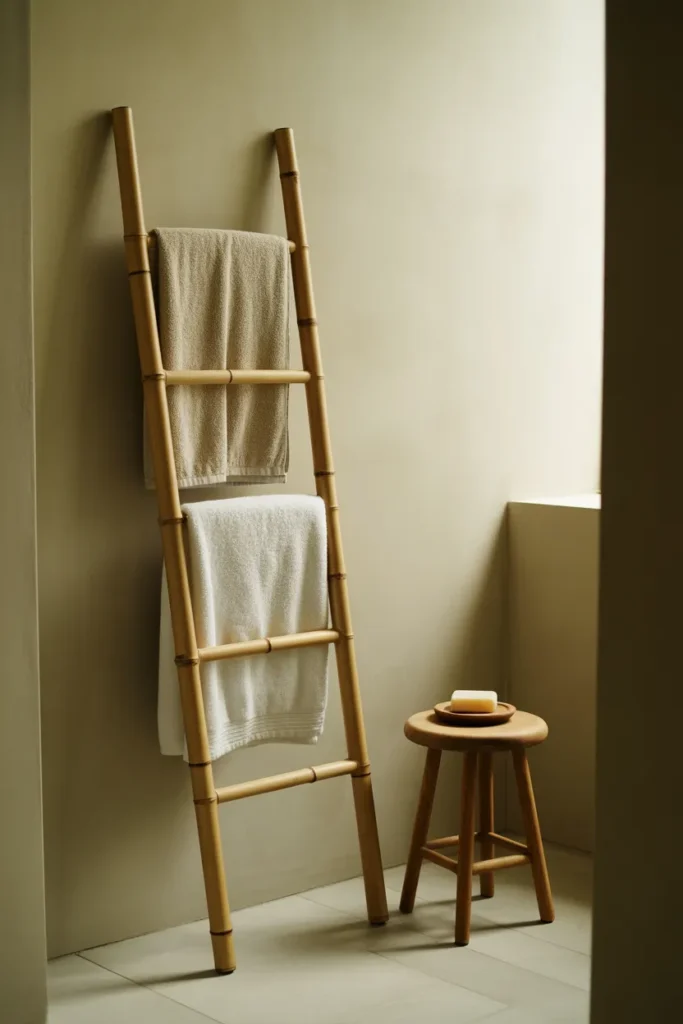
Both materials require air circulation to stay in good condition. A bamboo or hinoki element that sits in standing water or in a poorly ventilated bathroom will develop mold regardless of the wood’s natural properties. Keep these elements elevated, and ensure your bathroom has adequate ventilation — a properly sized exhaust fan running during and 20 minutes after each shower is the minimum standard.
Introduce these materials through one or two specific objects rather than attempting to cover surfaces. A single hinoki bath stool, a bamboo ladder towel rack, or a wood bath tray over the tub rim is enough to establish the material language without overdoing it.
7. Neutral Monochromatic Color Palette That Reads as Luxury
Color restraint is one of the defining characteristics of both Japanese minimalism and Scandinavian design, and in a zen Japandi bathroom it translates into a monochromatic or near-monochromatic palette built from warm neutrals. Warm white, sand, stone, warm gray, and soft clay are the working tones — used across walls, floors, fixtures, and textiles in slight variations of the same family.
The reason a monochromatic palette reads as luxurious rather than plain is that it forces material quality to carry the room. When there is no color contrast to distract the eye, the viewer notices texture, finish, and craftsmanship instead. A honed stone wall, a matte ceramic vessel sink, and a smooth plaster ceiling all register more fully when they are not competing with a contrasting color.
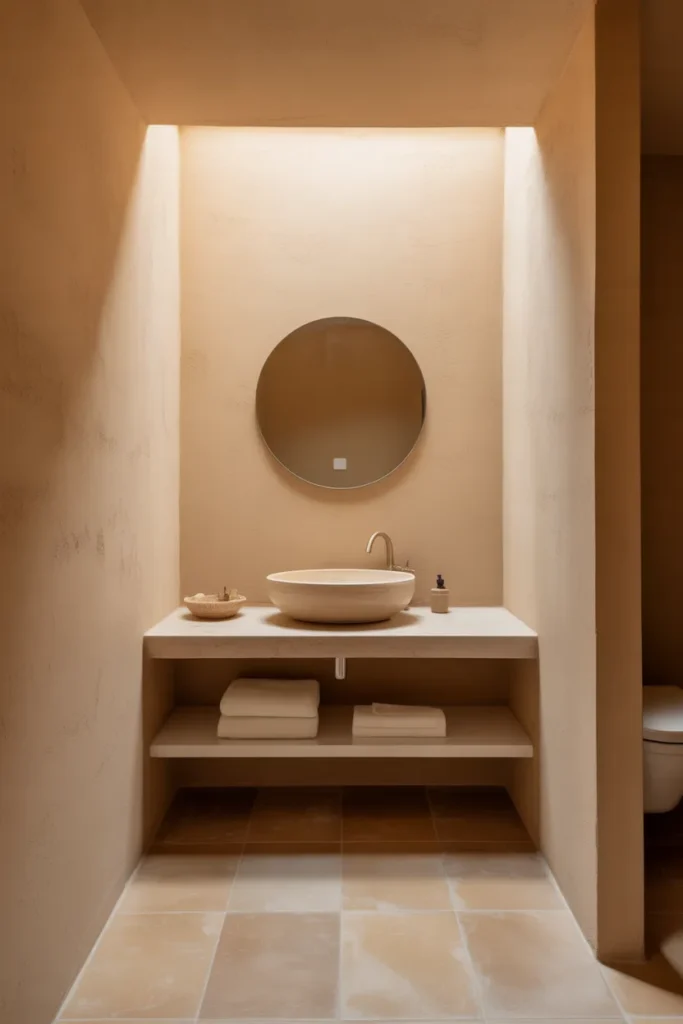
This approach requires careful coordination of undertones. A warm white wall paired with a cool gray floor and a yellow-toned wood vanity will feel disjointed even though all three are technically neutral. Choose one undertone direction — warm or cool — and apply it consistently across every material in the space.
For bathrooms where full renovation is not on the table, you can shift toward this palette incrementally. Replacing towels, a bath mat, and countertop accessories with items in the same tonal family costs very little and moves the room meaningfully in the right direction.
8. Live Moss Wall or Potted Greenery That Survives Humidity
Bringing living plants into a spa sanctuary bathroom is one of the most effective ways to close the gap between a styled room and one that genuinely feels like a retreat. In a zen Japandi bathroom, greenery is not decorative in the conventional sense — it connects the interior to the natural world, which is a foundational principle of Japanese spatial philosophy.
A preserved moss wall panel — framed simply in a thin wood border and mounted at eye level — requires no watering, no light, and no maintenance while providing the visual and textural quality of living moss. It is the most practical option for bathrooms without natural light. For bathrooms with a window, a potted peace lily, a snake plant, or a small bamboo palm all tolerate the humidity and lower light levels of most bathroom environments without special care.
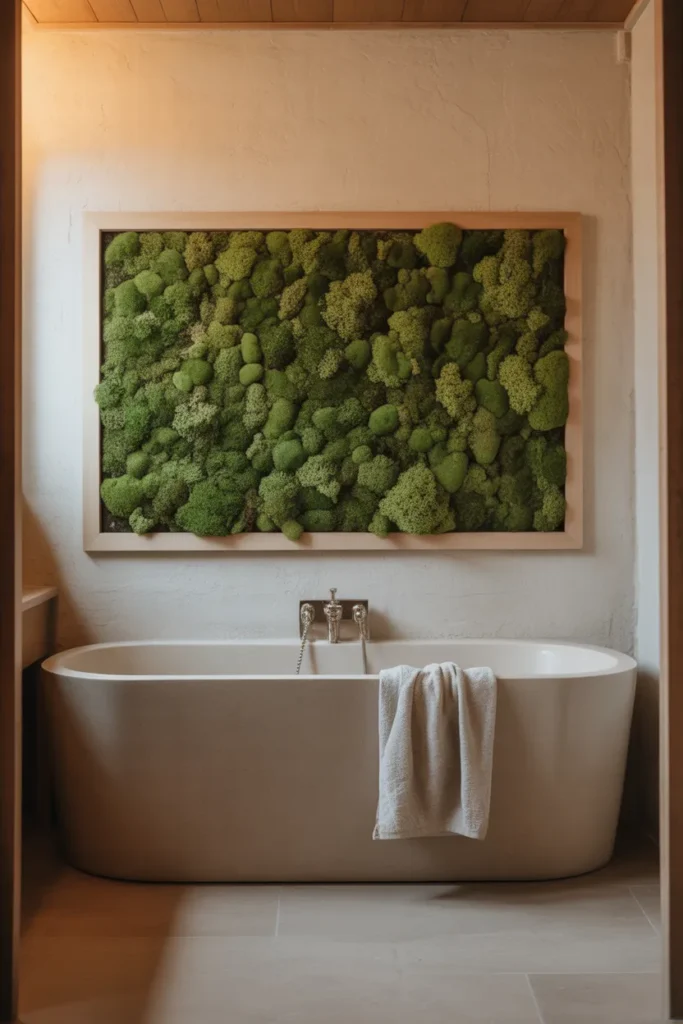
Position plants where they will be seen from the primary viewpoint — the doorway or the position of the soaking tub — rather than tucked into corners where they read as afterthoughts. A single plant in the right location carries more visual weight than four plants scattered around the room.
Avoid artificial plants in a space designed for sensory calm. The visual difference between a quality live plant and a convincing artificial one is detectable close up, and a spa sanctuary bathroom is a space people use at close range.
9. Concealed Storage System That Eliminates Every Counter Item
In a zen Japandi bathroom for a spa sanctuary, counter clutter is the single greatest threat to the calm you are trying to create. A half-full bottle of face wash, a scattered collection of hair ties, and a row of product bottles on the counter will visually overwhelm even the most carefully designed material palette. Concealed storage is not optional in this design direction — it is structural.
The most effective concealed storage approach in a Japandi bathroom is a recessed medicine cabinet flush with the wall surface, paired with vanity drawers that have organized interior trays. A cabinet that sits proud of the wall — even by two inches — reads as furniture rather than architecture and introduces a visual interruption that breaks the flat, calm quality of the wall plane.
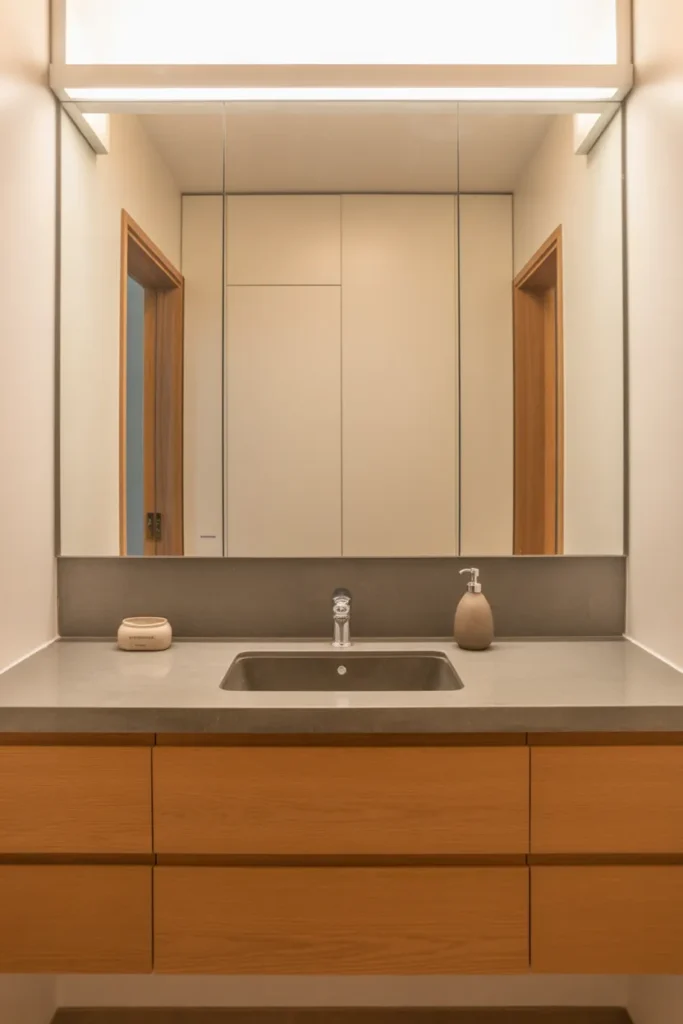
For bathrooms where recessed installation is not possible due to plumbing or structural constraints, a tall narrow cabinet with flat-panel doors positioned beside the vanity handles the storage load while maintaining a clean profile. Keep the cabinet finish consistent with the vanity — matching materials make multiple storage elements read as a single designed unit rather than collected pieces.
The operational rule for this kind of bathroom is simple: if it cannot be stored out of sight, it does not belong on the counter. Two items maximum on any visible surface — a hand soap dispenser and one small ceramic dish — is the discipline that keeps the space functioning as a sanctuary rather than a bathroom that happens to have nice tile.
10. Textured Linen Towels and a Minimal Textile Edit
Textiles in a spa sanctuary bathroom should be experienced rather than seen — meaning they contribute to the sensory quality of the space without drawing visual attention. In a zen Japandi bathroom, the textile edit is deliberately small: one set of high-quality towels, one bath mat, and possibly one linen shower curtain if the layout requires it. Nothing more.
Linen and waffle-weave cotton are the two materials that align best with the Japandi aesthetic. Both have natural texture that reads as organic and considered, both dry faster than thick terry cloth, and both hold their appearance through repeated washing without heavy fabric softener. The color should remain within the room’s established neutral palette — warm white, natural linen, stone, or pale sand.
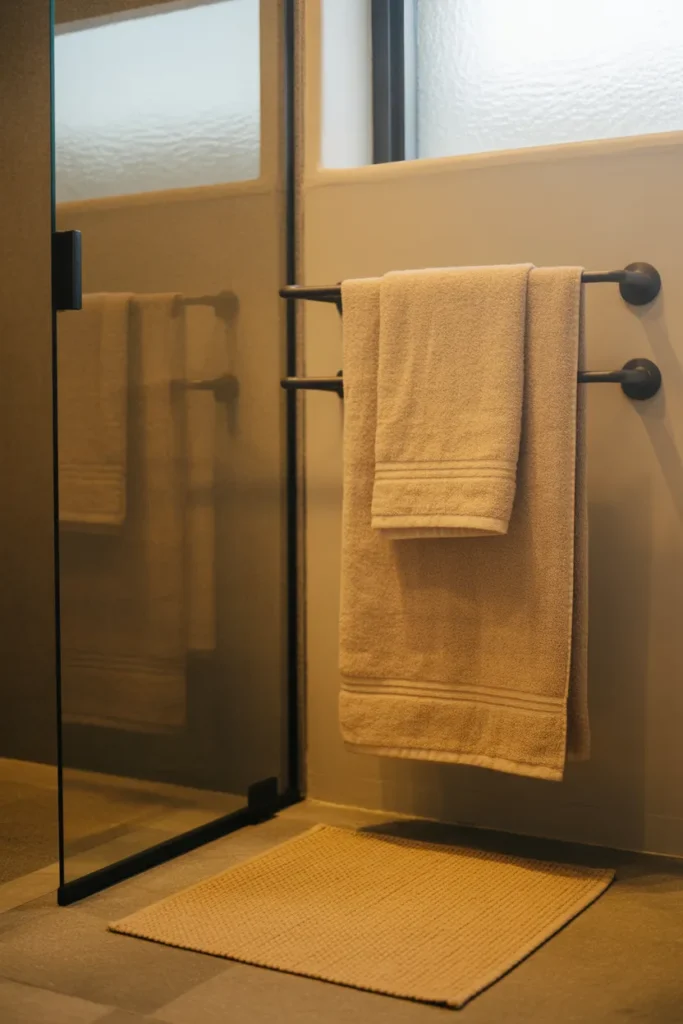
Fold and display towels in one location only — either on a wall-mounted rail beside the shower, on a ladder towel rack, or rolled in a shallow open shelf below the vanity. Towels draped over multiple surfaces, hung on different hooks around the room, or stacked on the toilet tank tank visually fragment the space.
A bath mat in a woven cotton or natural jute-look fiber laid directly in front of the tub or shower is the only floor textile a zen Japandi bathroom needs. Avoid bath rugs with thick pile, decorative borders, or pattern — they introduce a domestic, casual quality that works against the spa sanctuary environment you are building.
Final Thoughts
Creating zen Japandi bathroom ideas for a spa sanctuary is less about buying new things and more about editing down to what genuinely matters — quality materials, concealed storage, warm light, and negative space that gives the room room to breathe. Each of the ten ideas in this guide stands on its own, so you can implement one change at a time and still move the room meaningfully forward.
If this post gave you a clear direction, save it to your Pinterest bathroom board so you can return to it during planning or renovation. For more Japandi interior ideas, small bathroom layout strategies, and spa-inspired design guides for real American homes, keep exploring the blog.