If you have been searching for brown kitchen ideas 2026 that feel current rather than dated, this post gives you twelve distinct directions with honest guidance on what works in real homes. Brown is one of the most misunderstood colors in kitchen design — used correctly, it delivers warmth, depth, and timeless appeal that neither white nor gray can replicate. Every idea below includes practical layout advice and clear decision points to help you move forward with confidence.
1. Warm Walnut Flat-Front Cabinets in an Open-Plan Kitchen With a White Island Contrast
Walnut is the most refined expression of brown in a modern kitchen. Its tight grain, warm undertone, and natural variation between lighter sapwood and darker heartwood give it a material quality that painted finishes simply cannot reproduce. In an open-plan kitchen layout, walnut flat-front cabinetry on the perimeter creates a warm, grounded anchor while remaining visually connected to the living space beyond.
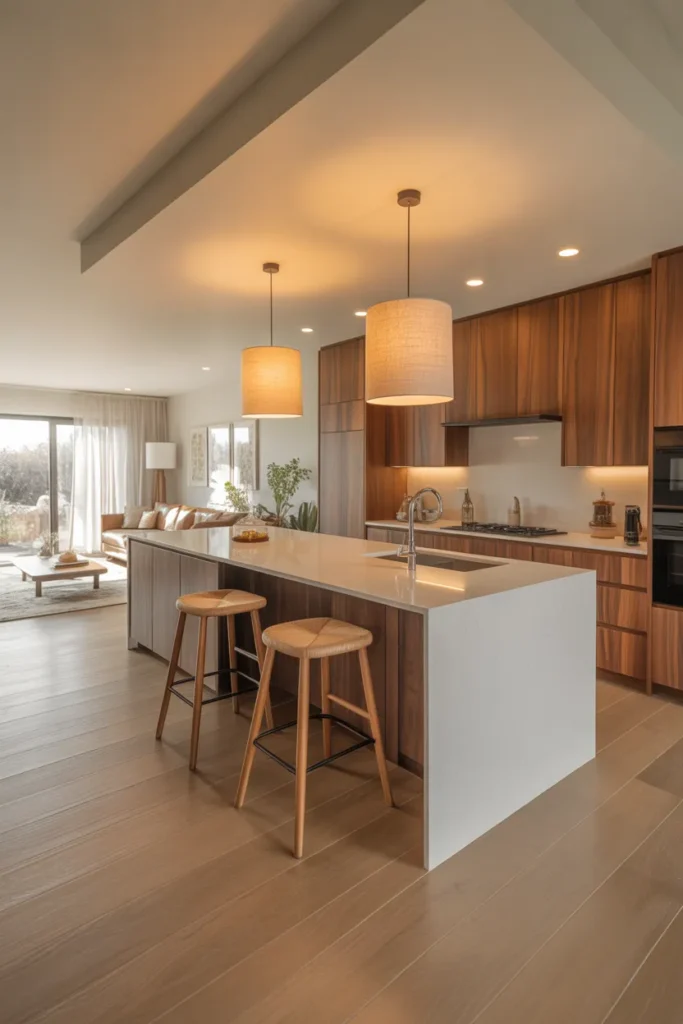
The white island contrast is not a stylistic preference — it is a functional decision. In an open-plan layout, the island is the most visible element from the connected living area. A white or light-toned island prevents the kitchen zone from reading as a dark mass in the room. It also creates a clear visual boundary between the cooking perimeter and the social island surface.
Flat-front walnut cabinets suit this layout better than shaker or raised-panel profiles because the absence of routing detail keeps the grain as the primary visual element. When you introduce deep profile detailing to a figured wood like walnut, the two compete for attention. Let the material speak with a clean door profile.
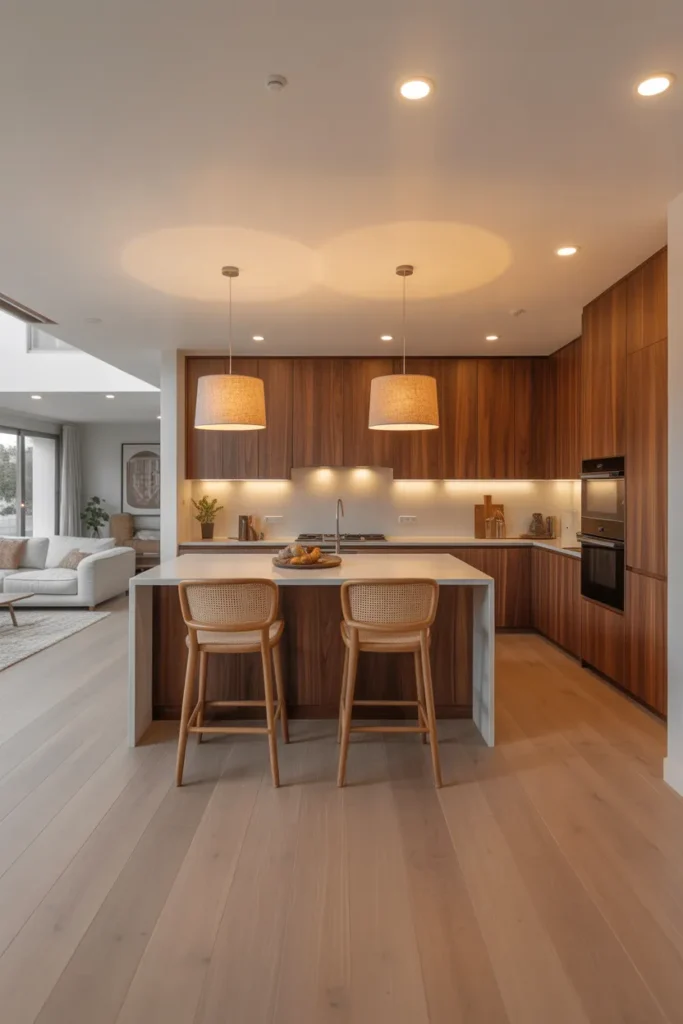
The most common mistake with walnut kitchens is pairing them with cool gray or stark white countertops. Walnut has distinctly warm undertones — it needs a countertop in warm white, cream, or a stone with honey or amber veining to feel cohesive rather than conflicted.
2. Chocolate Brown Shaker Cabinets in a U-Shape Kitchen With Brass Hardware
Chocolate brown shaker cabinetry in a U-shape kitchen layout is one of the most functional and visually complete brown kitchen ideas 2026 has to offer. The U-shape is among the highest-performing functional kitchen floor plans because it creates a natural work triangle between the sink, range, and refrigerator without requiring the cook to leave the kitchen zone. In chocolate brown, the three-wall configuration delivers an enveloping warmth that makes the kitchen feel intentional and complete.
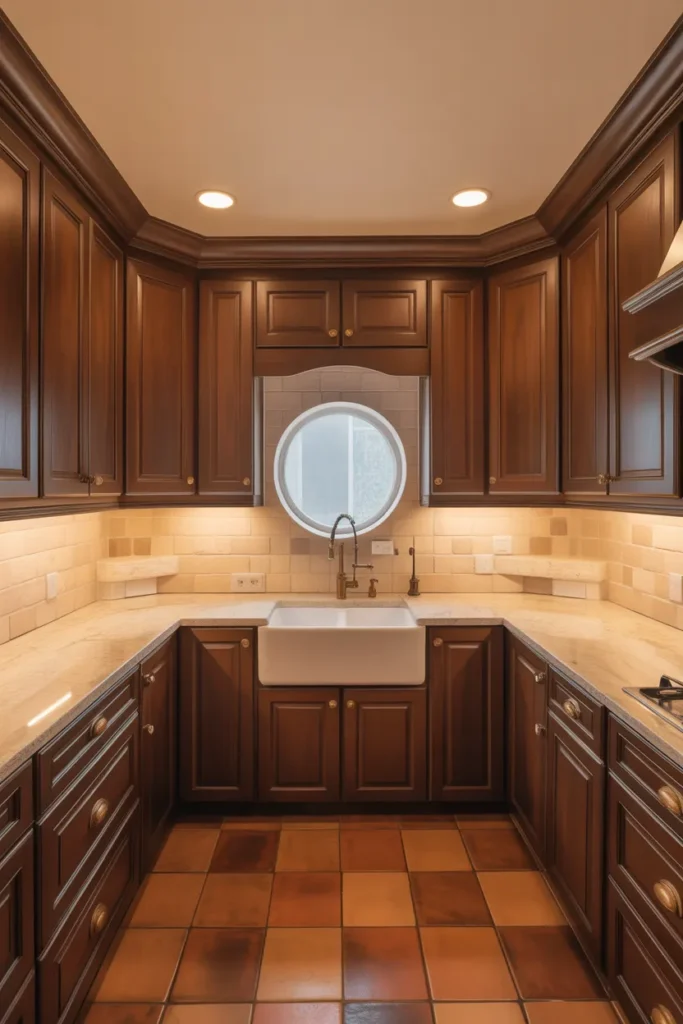
The shaker profile is the right cabinet door choice at this depth of brown. At very dark values — deep chocolate, espresso, near-black — flat-front doors can read as two-dimensional and heavy. The subtle recessed panel of a shaker door introduces shadow and dimension that breaks up the surface without adding complexity.
Brass hardware is the correct accent metal for chocolate brown cabinetry. The warm gold tone of aged or unlacquered brass pulls out the amber and red undertones in deep brown paint or stain, creating a tonal connection that feels earned rather than contrived. Brushed brass is more forgiving in a family kitchen than polished, which shows fingerprints readily.
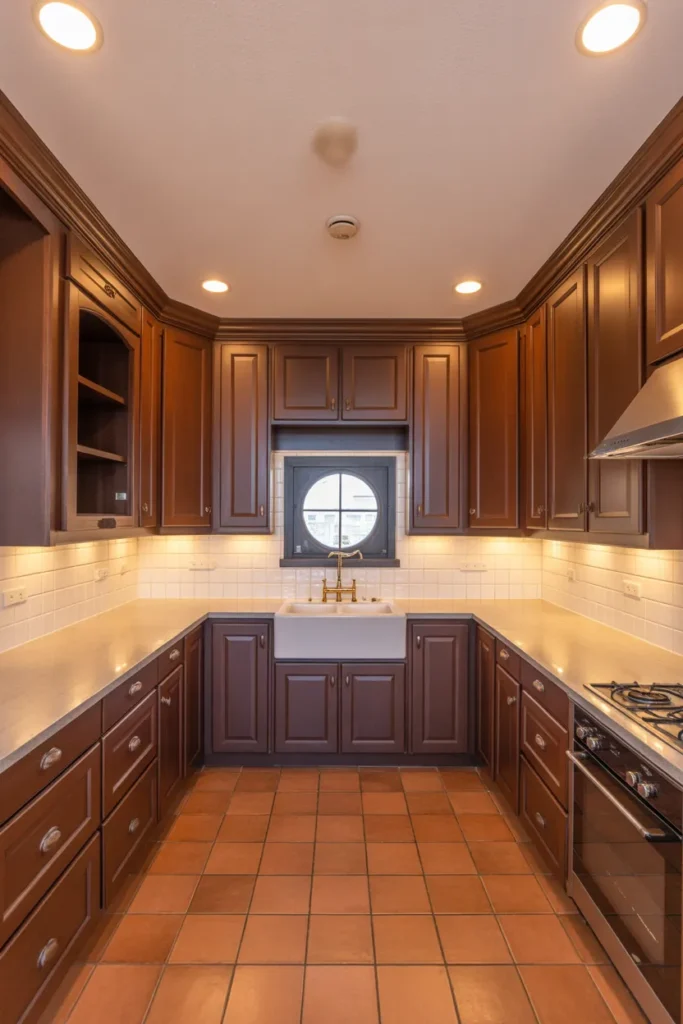
Avoid pairing chocolate brown shaker cabinets with a cool white countertop. The contrast will feel jarring rather than crisp. A warm cream, a veined stone with caramel tones, or a honed tan quartzite will read as a considered pairing. This is one of the most important material decisions in this kitchen direction.
3. Light Caramel Brown Two-Tone Cabinets in a Compact L-Shape Kitchen
Caramel brown occupies a uniquely accessible position in the brown spectrum. It is warm and rich without being dark or heavy, which makes it the most practical choice for compact kitchens where a deeper brown would feel oppressive. In an L-shape kitchen layout, caramel brown lower cabinets paired with white or cream upper cabinets deliver warmth at eye level while keeping the upper half of the room open and bright.
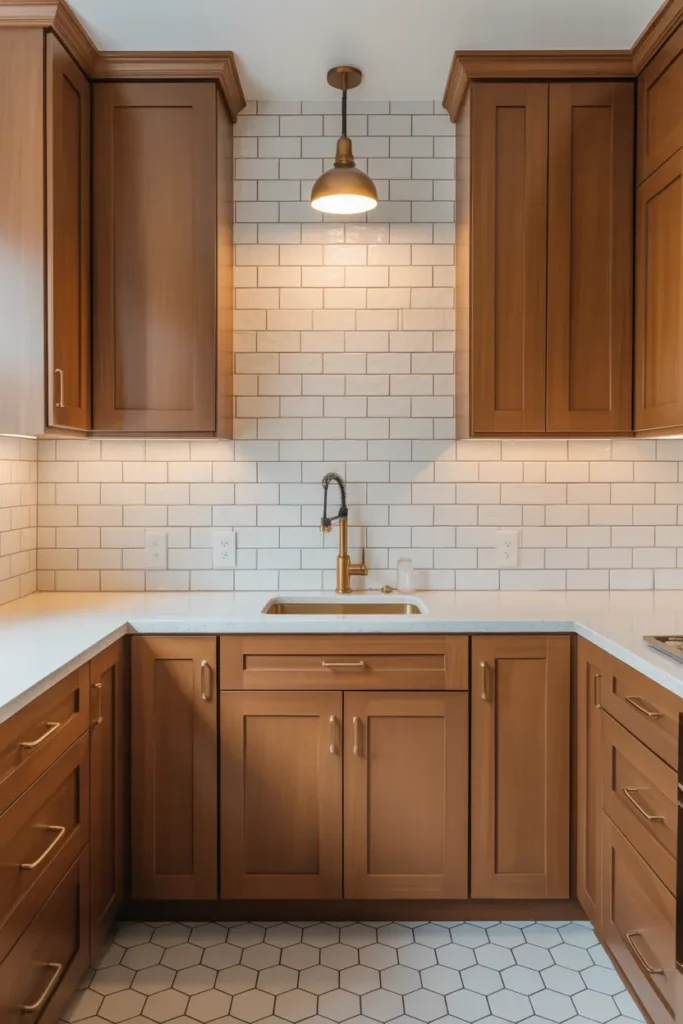
The L-shape is one of the most widely used layouts in American homes because it fits naturally into the corner of a room and leaves the remaining floor space open. In a small kitchen, this openness is not incidental — it is essential. The two-tone approach respects that by concentrating the color below the countertop and maintaining lightness above.
Caramel brown in a painted finish tends to shift toward orange in warm artificial light. Before committing to a paint color, view large samples in the kitchen under both daylight and evening lighting conditions. A caramel with a slight gray undertone will read more reliably across lighting conditions than a pure warm caramel.
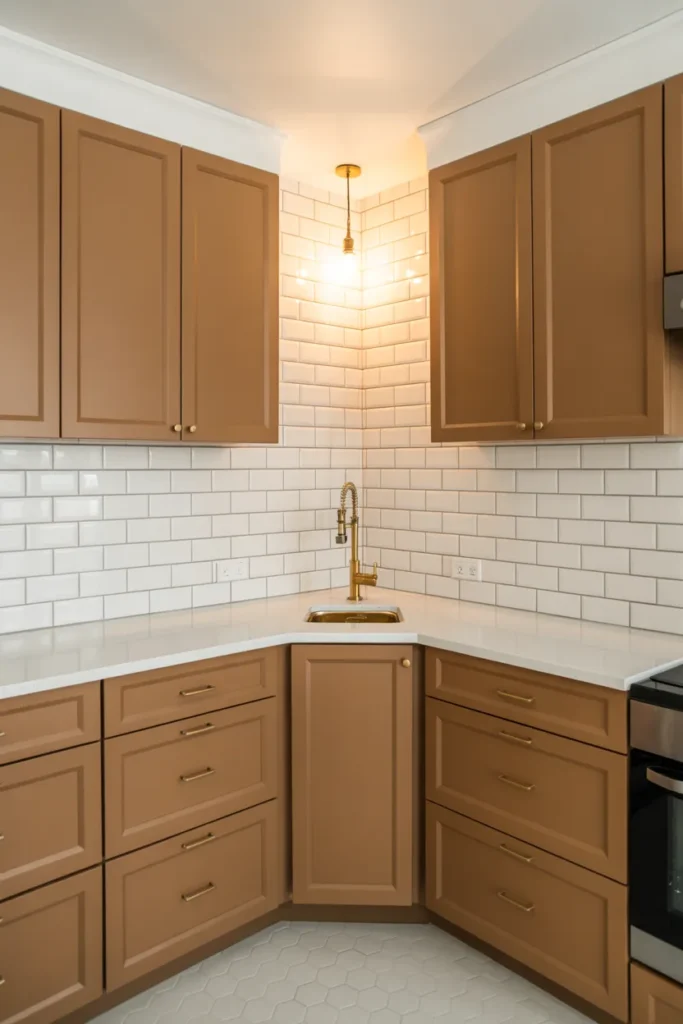
This is one of the most approachable small kitchen layout design directions for first-time renovators or homeowners working with limited budgets, because caramel brown reads as a full design commitment even in a basic shaker cabinet profile.
4. Raw Oak and Brown Leather Pull Kitchen in a Minimal Scandinavian-Inspired Layout
Raw or lightly oiled oak cabinetry is technically a brown kitchen — the pale, warm tone of unfinished or barely finished oak sits squarely in the light brown spectrum — and it is one of the most versatile directions in modern kitchen layout ideas 2026. In a Scandinavian-influenced minimal kitchen, raw oak flat-front cabinets with leather strap pulls deliver a warmth and material honesty that no painted surface achieves.
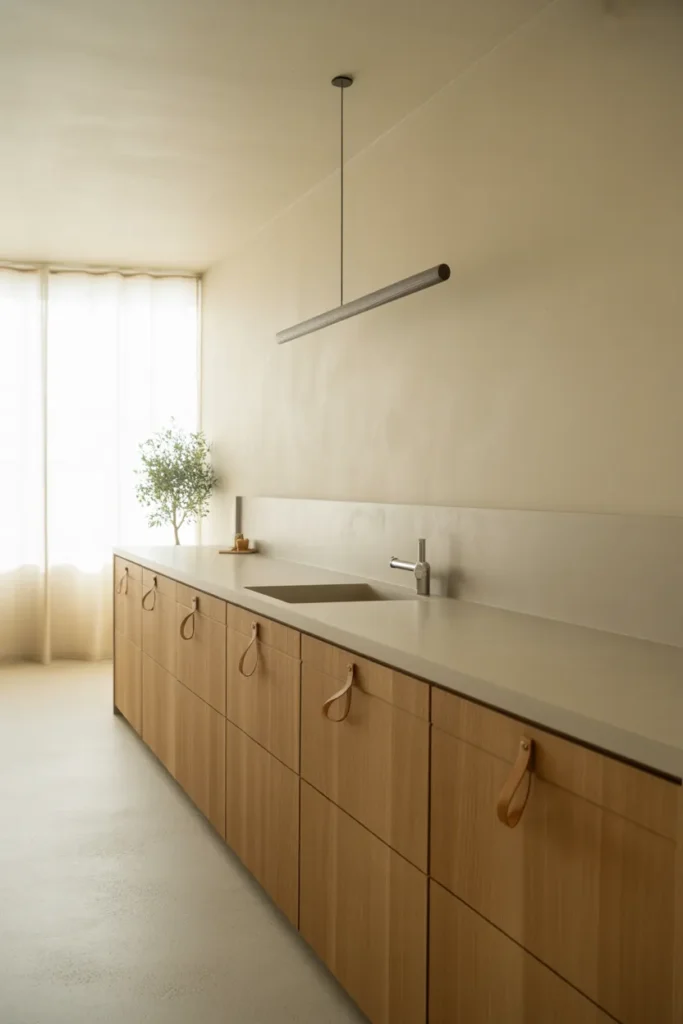
Leather pulls are a functional and aesthetic choice in this context. The leather softens the grip, warms over time with use, and reads as a handcrafted detail in an otherwise spare kitchen. They are not a novelty — they are a material-consistent hardware decision that suits natural wood cabinetry better than metal pulls in this specific aesthetic.
This layout works in any kitchen configuration but performs particularly well in linear or galley kitchens where simplicity of line is already established. The minimal Scandinavian approach requires restraint in every other material choice — stone or solid-surface countertops in warm white or pale gray, no patterned tile, no decorative hardware beyond the pulls.
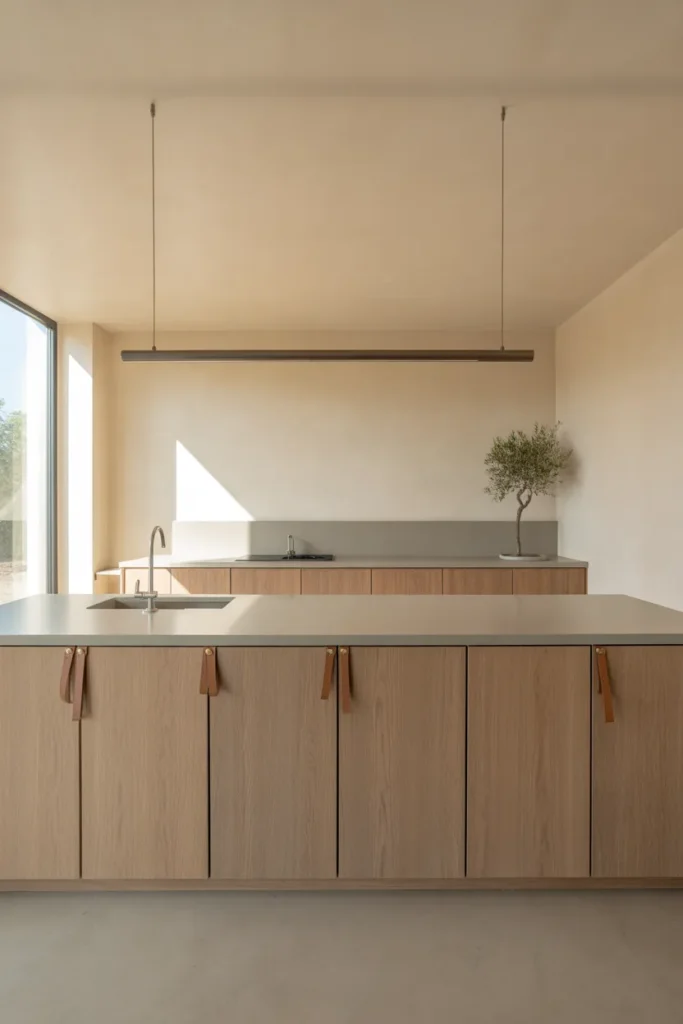
The critical mistake in this direction is introducing too many competing natural materials. Raw oak, natural stone, linen, and rattan all read as warm natural materials, but stacked together they create visual noise. Choose one or two supporting materials and let the oak carry the design.
5. Espresso Brown and Cream Two-Tone Kitchen in a Large Transitional Open Layout
Espresso brown is the deepest entry in the practical brown palette — dark enough to read as bold, light enough under certain conditions to reveal its brown base rather than reading as black. In a large transitional kitchen with an island, the combination of espresso lower cabinets and cream upper cabinets is one of the most enduring and broadly applicable brown kitchen ideas 2026 can include.
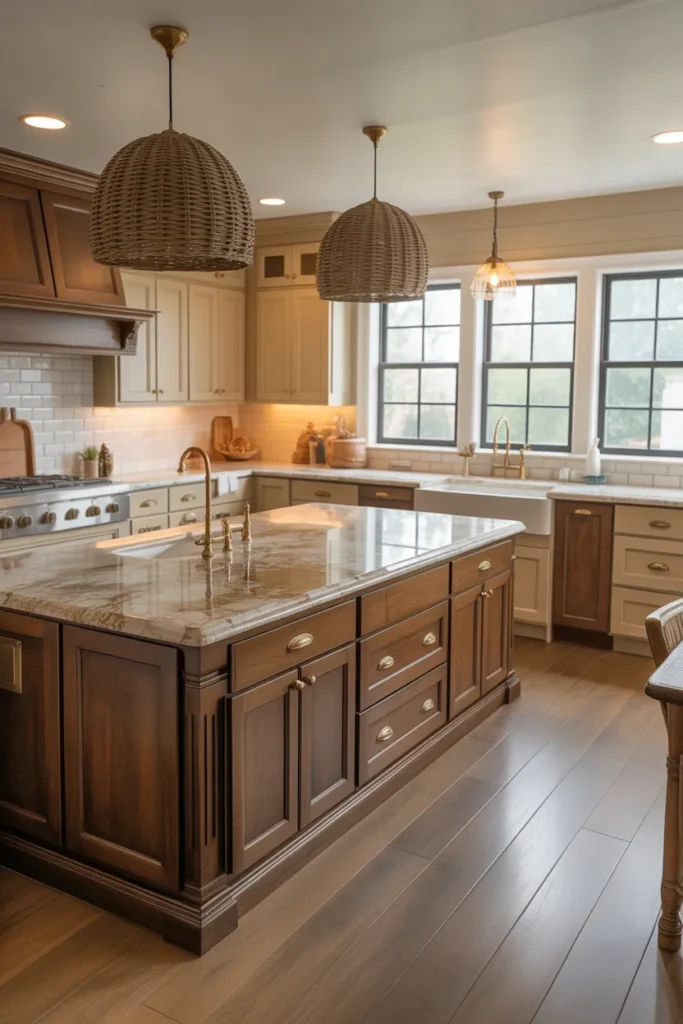
The transitional style — which blends traditional cabinet profiles with cleaner, more contemporary lines — is the most common design language in American residential kitchens. Espresso brown fits naturally within this context because it has historical associations with rich wood furniture, which is a traditional reference, while the flat or minimally profiled shaker door keeps the look from feeling overtly period-specific.
In a large open kitchen layout, the espresso and cream two-tone approach solves a specific spatial problem: how to introduce depth and contrast in a kitchen that is large enough to need visual anchoring. A uniformly cream or uniformly espresso kitchen at this scale can feel monotonous. The two-tone transition creates a natural horizon line that scales the space to a human proportion.
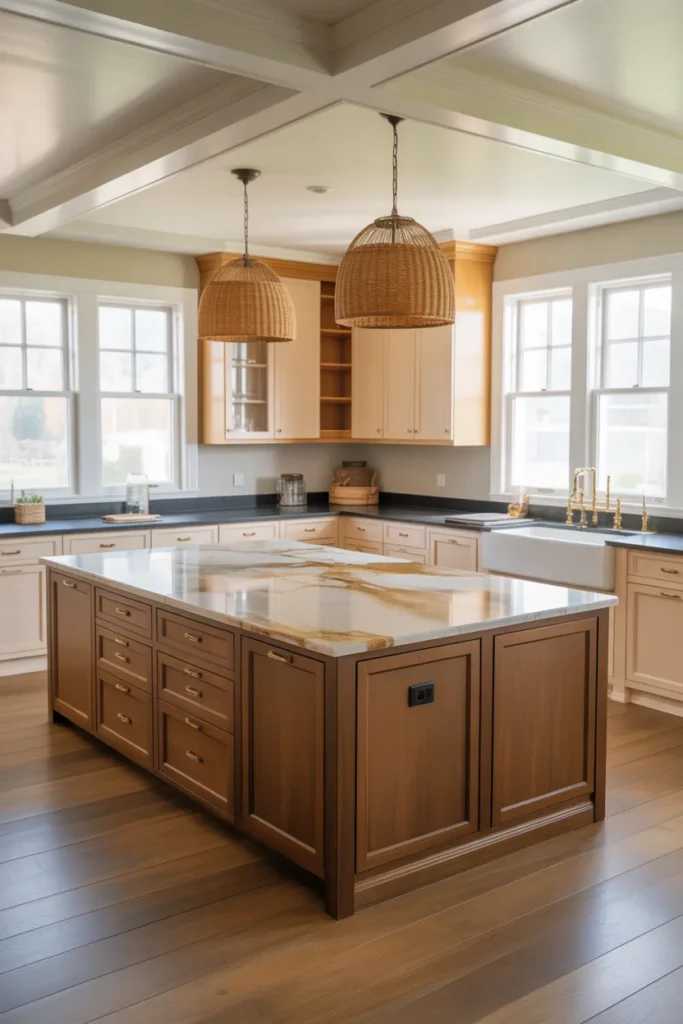
Avoid using a stark bright white as the upper cabinet color in this pairing. Bright white against deep espresso creates a contrast that is too sharp for a warm, transitional palette. An off-white, linen, or warm cream reads as a considered partner to espresso rather than a high-contrast foil.
6. Warm Terracotta Brown Kitchen Wall With White Cabinets in a Mediterranean Layout
Terracotta sits at the intersection of brown and orange, and its earthy clay quality makes it one of the most grounded wall colors available for a Mediterranean or Southwestern-influenced kitchen. Rather than using terracotta on the cabinetry itself, applying it to the walls — particularly the feature wall behind the range or the full perimeter — allows white cabinetry to stand clearly in front of a warm, enveloping background.
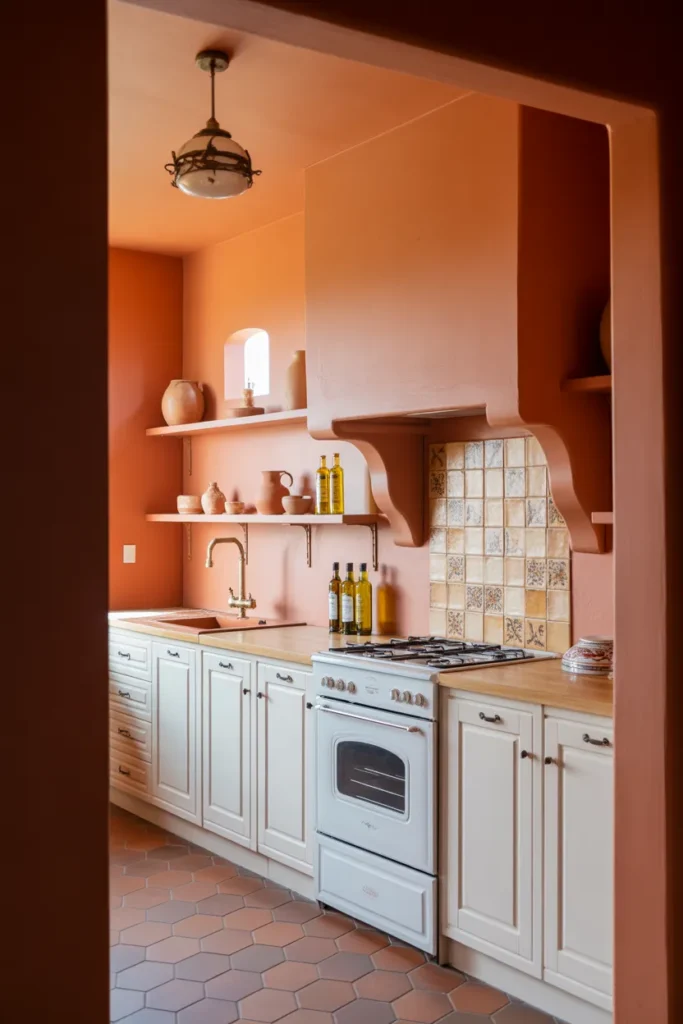
This approach is particularly effective for homeowners who want warmth and color but are not ready to commit to colored cabinetry. The white cabinets remain a timeless, resaleable choice, while the terracotta wall does the heavy lifting in terms of personality and warmth. This is one of the most reversible and low-risk brown kitchen ideas 2026 for renters and homeowners alike.
The Mediterranean kitchen layout typically involves open shelving on at least one wall, which creates an opportunity to let the terracotta wall show between displayed items — pottery, oils, ceramics — in a way that reinforces the design’s material story. In a U-shape or L-shape configuration, the terracotta can cover all walls or be limited to the range wall depending on the intensity of color desired.
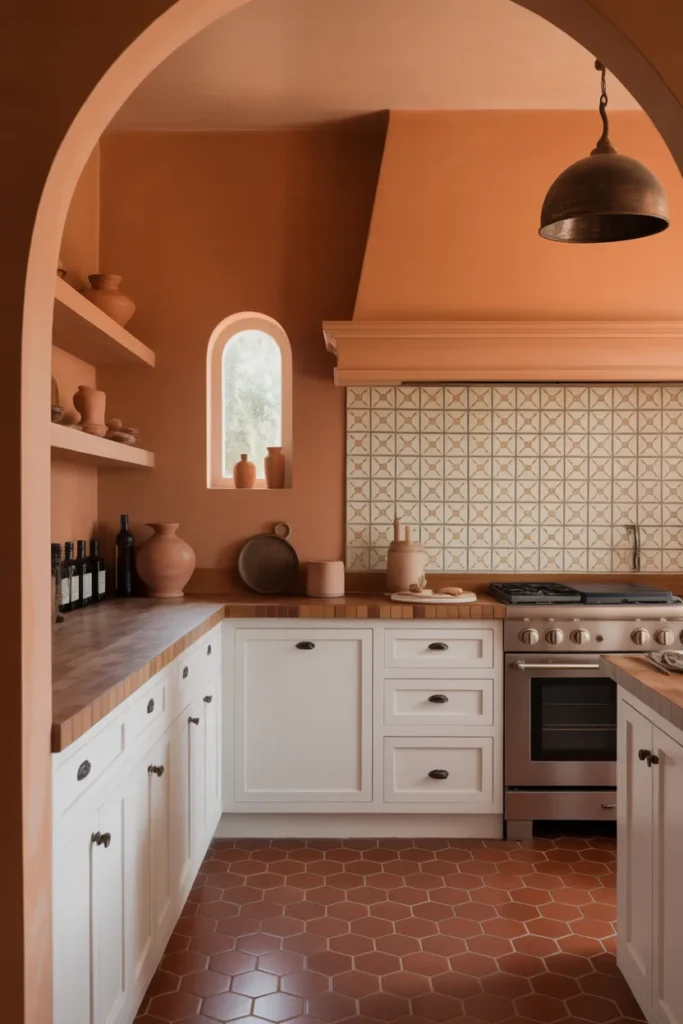
One important color selection note: terracotta paints vary significantly between manufacturers and in different lighting conditions. A terracotta that reads as warm and earthy in daylight can shift toward a pinkish or orange hue under warm incandescent lighting. Always test with a large sample in your specific kitchen before committing.
7. Mid-Brown Stained Oak Island With White Perimeter Cabinets in a Functional Family Kitchen
Using a mid-brown stained oak island as the color and material anchor in an otherwise white kitchen is one of the most practical kitchen space planning ideas for families who want visual warmth without sacrificing the brightness and functionality of a white kitchen. The island takes the most physical contact in a family kitchen — meal prep, homework, casual dining — and a mid-brown stained wood surface handles daily use far more graciously than a painted white island.
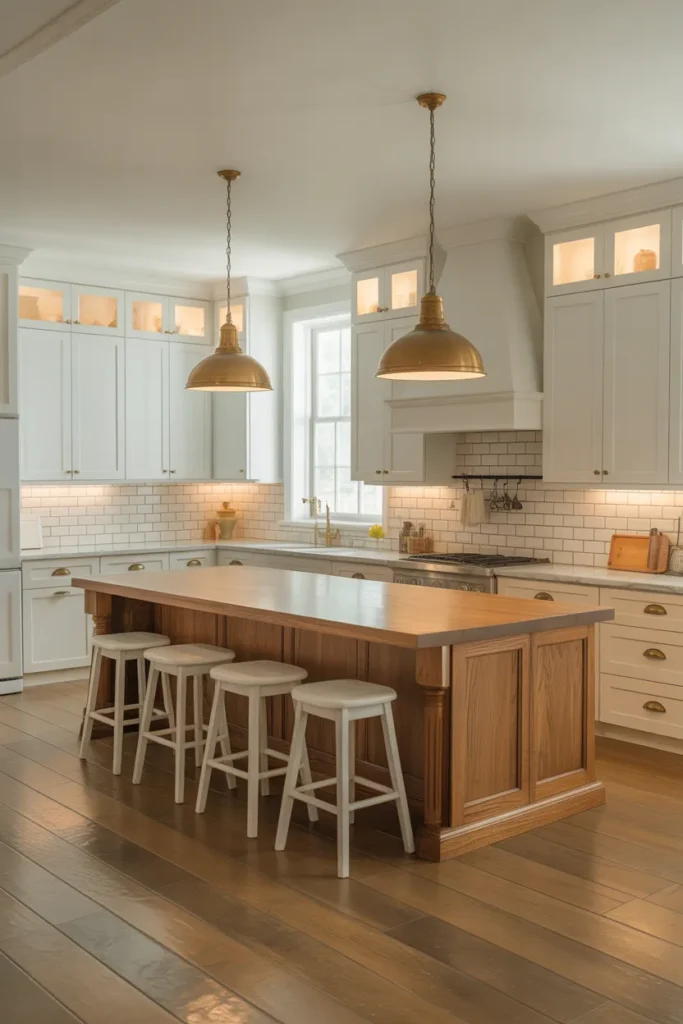
The stained oak island reads as furniture in the kitchen rather than built-in cabinetry, which is the intended effect. This furniture-piece quality is enhanced by slightly tapered legs, a butcher block top, or exposed wood frame details that distinguish it from the built-in white perimeter cabinets. In a large open kitchen layout, the island becomes the warmest and most inviting element in the room.
Mid-brown stain is more forgiving than raw or very dark stain in a family context. It shows less grain variation than raw oak — which can look unfinished to some eyes — and less wear than very dark stain, which highlights every scratch and mark. This is the practical middle ground for households with children.
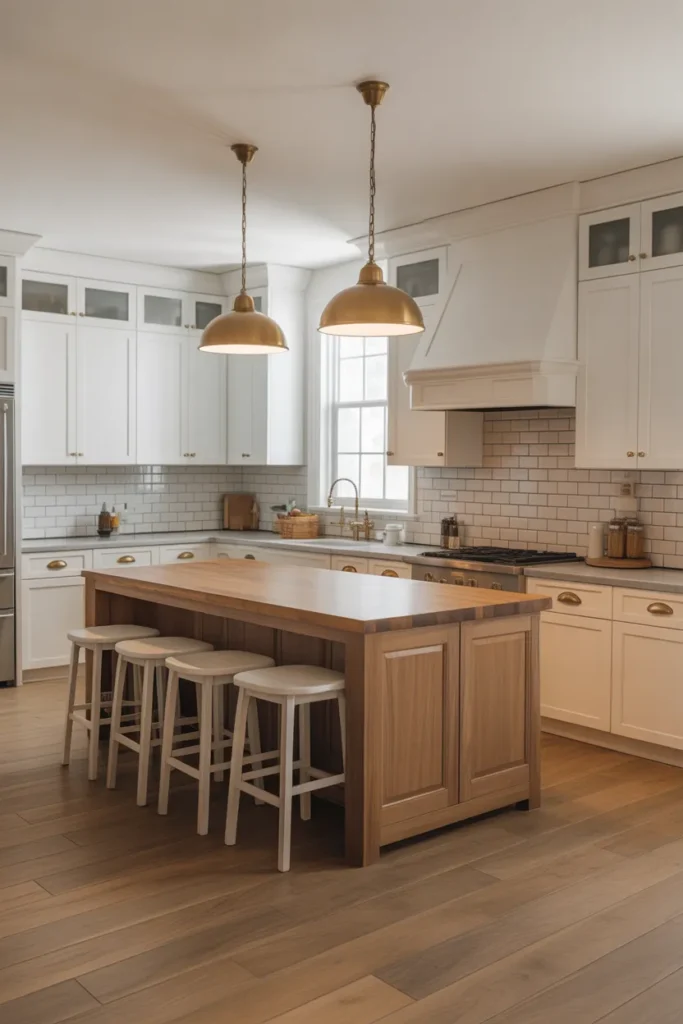
The layout works in any kitchen large enough to accommodate an island with clearance on all sides — typically 42 to 48 inches of walkway. In smaller kitchens, consider a mid-brown stained butcher block peninsula instead, which provides the same warm material presence without requiring a fully free-standing island footprint.
8. Muted Taupe-Brown Cabinets in a Sleek Apartment Galley Kitchen
Taupe-brown — a brown with enough gray in it to read as neither clearly brown nor clearly gray — is one of the most intelligent color choices for a small kitchen layout design in an apartment. In a galley kitchen, where the two parallel walls of cabinetry create an enclosed corridor, a pure dark brown can feel heavy and compressive. Taupe-brown retains the warmth of brown while the gray undertone keeps the room from closing in.
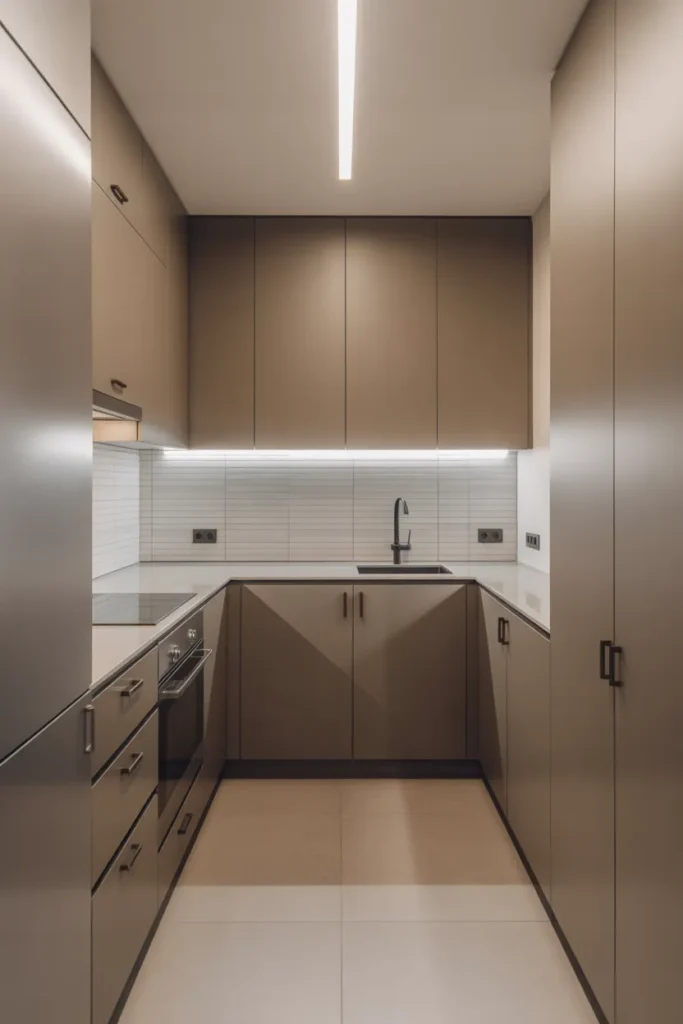
This color is particularly effective in apartments with limited natural light, where pure warm tones can tip into muddiness under artificial lighting. The gray component in taupe keeps the color reading cleanly under LED or overhead lighting that would make a pure warm brown look orange or dim.
In a galley layout, this color works best on both upper and lower cabinets as a unified tone, rather than as a two-tone combination. Two-tone cabinetry in a narrow galley increases visual complexity in a space that benefits from simplicity and flow. A single, unified taupe-brown across all cabinetry makes the corridor feel longer and more considered.
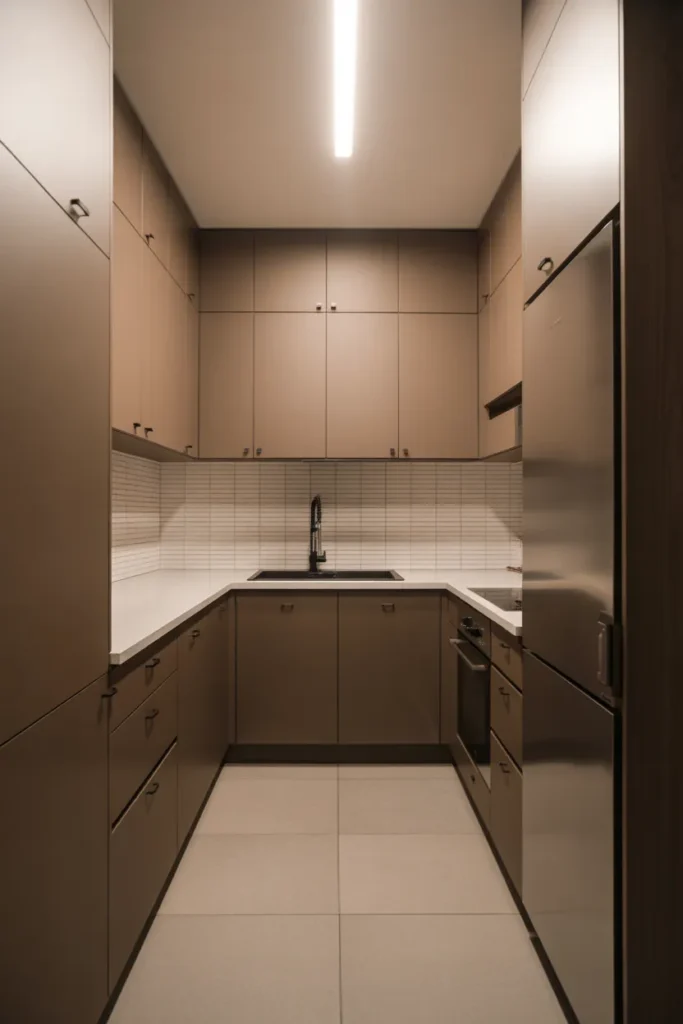
Hardware choice is critical in this direction. Matte black pulls or knobs provide a clean, modern contrast without warming the kitchen further. Brushed nickel works if the overall palette leans slightly cooler. Avoid warm gold or brass, which can push a taupe-brown kitchen back toward a purely warm palette and lose the sophisticated ambiguity that makes the color work.
9. Dark Brown and Sage Green Two-Tone Kitchen in a Cozy Cottage Layout
Dark brown and sage green is one of the most quietly compelling color combinations available in residential kitchen design, and it is gaining significant traction as one of the brown kitchen ideas 2026 most likely to age well. The two colors share an organic, earthy quality — both are nature-derived, both are warm without being saturated, and both feel grounded in a way that more fashionable color combinations do not.
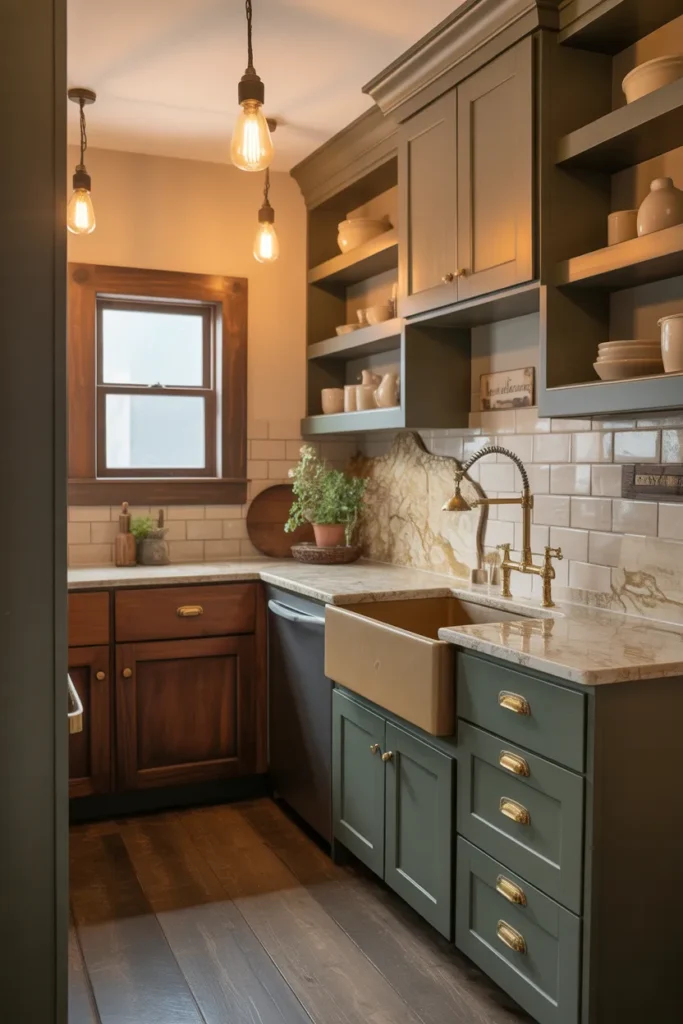
In a cottage-style kitchen layout — typically characterized by smaller scale, lower ceilings, and a mix of open and closed storage — this pairing creates an interior that feels simultaneously designed and livable. Dark brown lower cabinets deliver the grounding and weight appropriate for a lower storage zone, while sage green upper cabinets soften the upper half of the room and introduce color without intensity.
This combination is specifically well-suited to homes with natural wood floors, beadboard paneling, or brick details already present. It connects to those materials without mimicking them, which keeps the palette feeling cohesive with the broader home rather than like a kitchen that was designed in isolation.
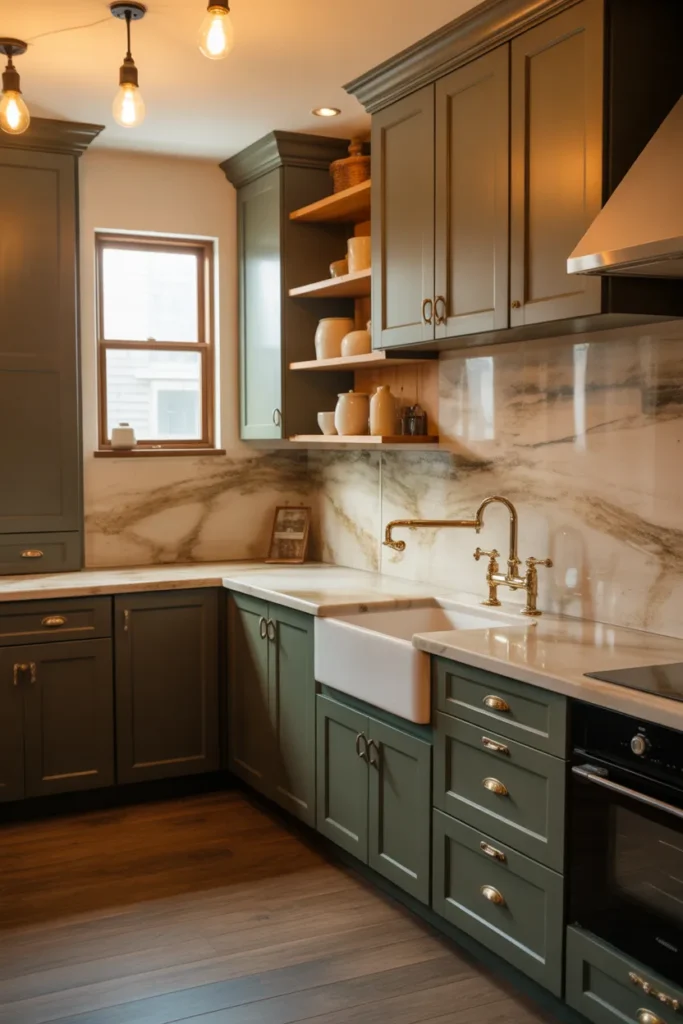
The mistake to avoid here is choosing a sage green that is too blue or too gray. A sage with a yellow or olive base will connect naturally to the brown tones below. A blue-based sage will feel disconnected from the warm brown and may read as two separately conceived color choices rather than a cohesive palette.
10. Pecan Brown Cabinets With Concrete Countertops in an Industrial Modern Kitchen
Pecan brown occupies a specific position in the wood stain spectrum — lighter than walnut, darker than oak, with a reddish-brown warmth that is distinctly its own. In an industrial modern kitchen, pecan brown cabinetry provides the warmth that industrial materials — concrete, steel, exposed brick — typically lack. It humanizes an otherwise cool aesthetic without softening the overall design character.
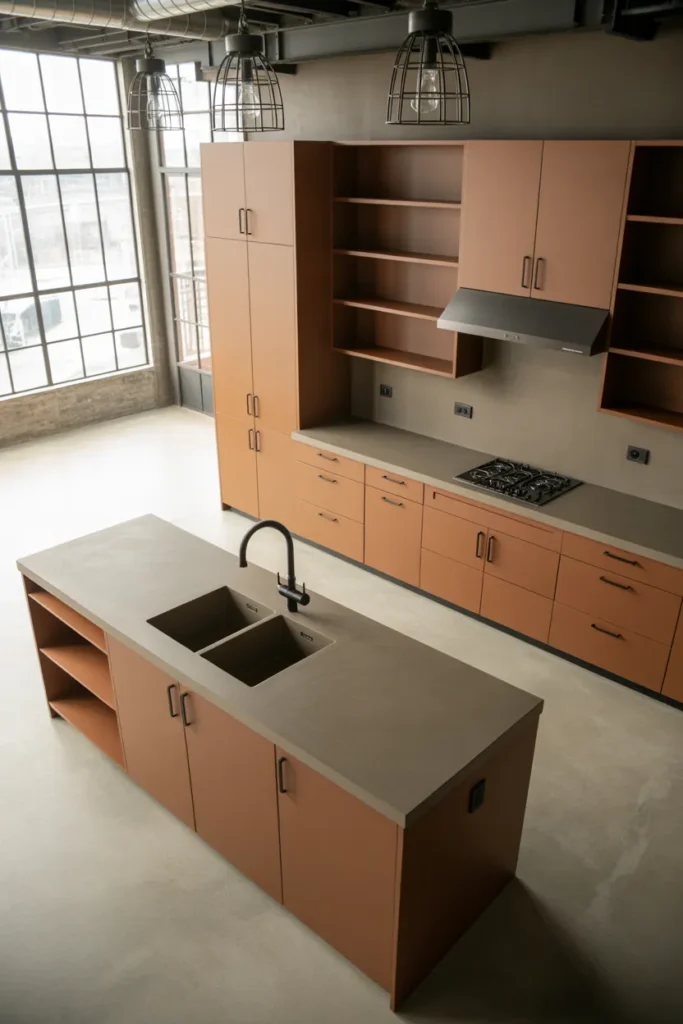
Poured or precast concrete countertops are the most coherent pairing for pecan brown in this context. The cool gray of concrete sits in direct but complementary contrast to the warm reddish tone of pecan brown. The textural difference between the smooth, matte concrete surface and the wood grain of the cabinetry adds another layer of material interest that keeps the kitchen engaging without decorative excess.
This direction works best in loft-style apartments, converted industrial spaces, and modern homes with high ceilings and exposed structural elements. In a more conventional suburban home, the industrial character of concrete countertops may feel inconsistent with the surrounding architecture. The kitchen should connect to the rest of the home, not operate as a separate design universe.
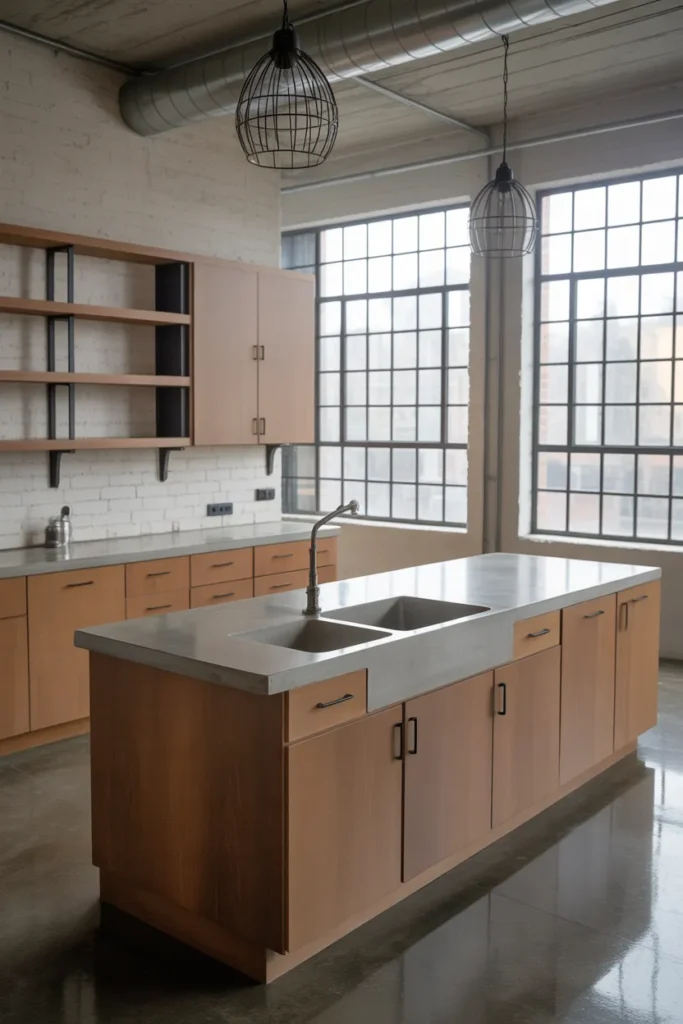
For open kitchen layouts in a loft or modern home, the pecan brown cabinetry visible from the living area reads as a warm furniture tone rather than a kitchen-specific color, which helps the kitchen integrate seamlessly with connected living spaces.
11. Honey Brown Cabinet Kitchen With Warm Gold Stone Backsplash in a Luxury Layout
Honey brown cabinetry — a mid-tone warm brown with amber and gold undertones — is the natural partner for warm gold stone backsplash materials like golden travertine, honey onyx, or gold-veined quartzite. In a luxury kitchen layout with a large island, this combination creates a layered warmth that feels expensive without requiring a single bold statement piece.
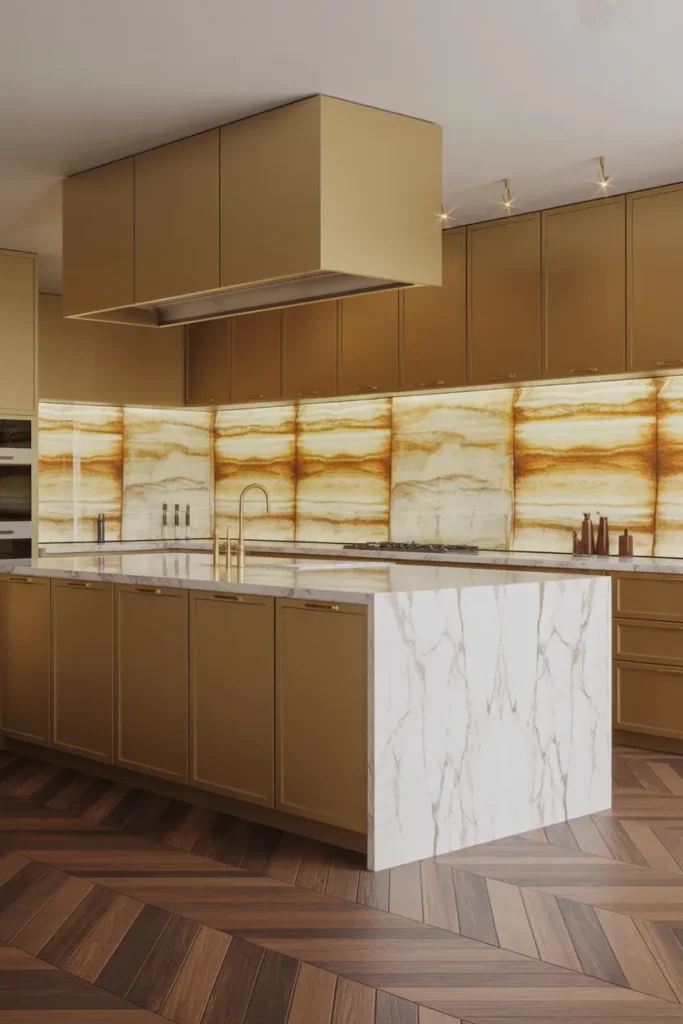
The gold stone backsplash is the key element that elevates honey brown from merely warm to genuinely luxurious. Natural stone with gold, amber, and cream veining reads as a material of genuine quality, and when its tones align with the warm honey brown of the cabinetry, the entire kitchen appears to have been designed from a single material family — everything belongs.
This is one of the most cohesive approaches available in current modern kitchen layout ideas 2026 for homeowners investing in a high-specification renovation. The key is choosing a stone backsplash with color tones that genuinely connect to the cabinet finish rather than simply being another warm material. Bring a cabinet door sample to the stone yard and hold it against slabs before selecting.
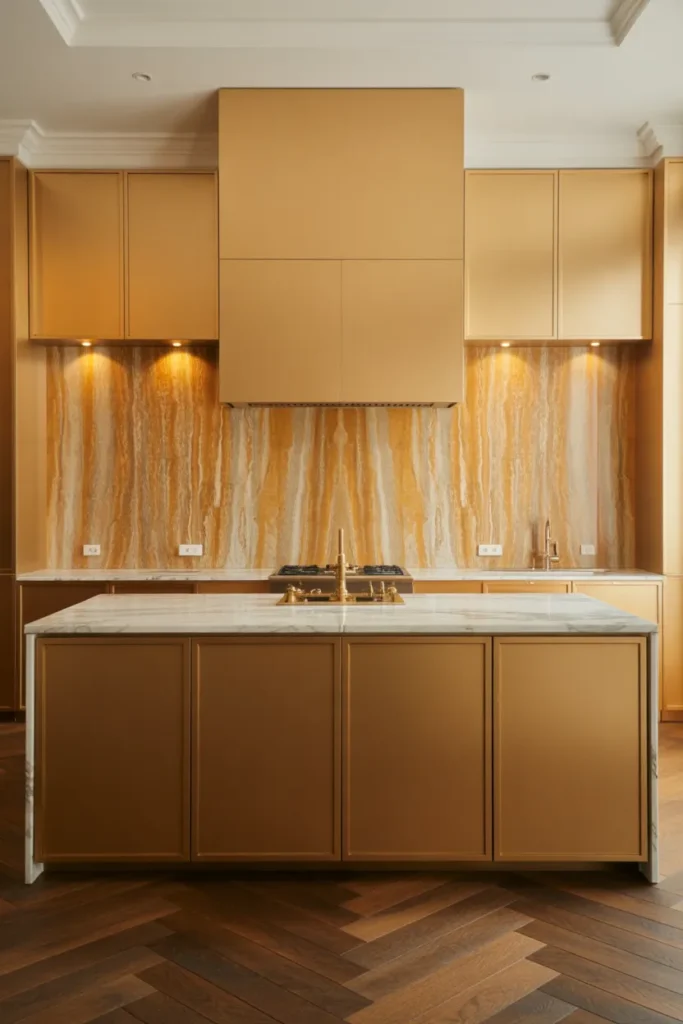
The most important layout decision in this configuration is the island countertop. A white or cream stone with warm veining balances the richness of the honey cabinets and gold backsplash without adding another warm-toned surface. A fourth warm element — a gold stone island countertop, for example — can push the palette into excess.
12. Burnt Sienna Brown Kitchen Cabinets in a Bold Maximalist Open-Plan Layout
Burnt sienna is the most saturated and visually assertive color in the brown family — a red-brown that references clay, terracotta, and raw pigment. Used on kitchen cabinetry in a maximalist open-plan layout, it is one of the most bold and photogenic brown kitchen ideas 2026 has produced. It is not a color for the undecided — it requires full commitment and a supporting cast of materials chosen specifically to balance its intensity.
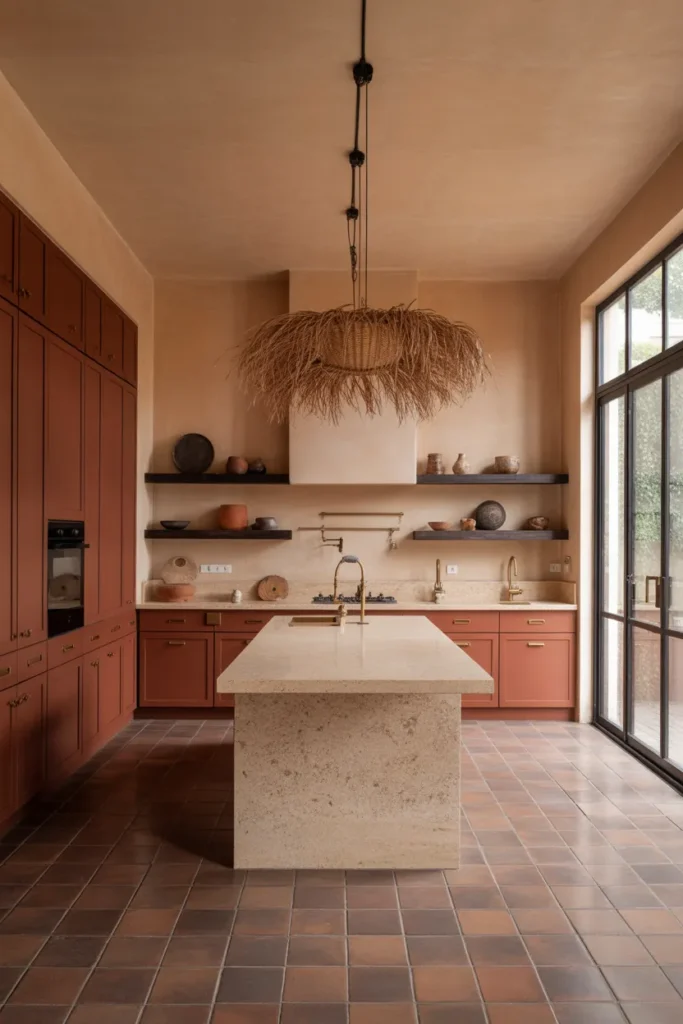
The maximalist open-plan kitchen is the correct context for burnt sienna because the scale of the space absorbs the color’s intensity without being overwhelmed by it. In a compact or closed kitchen, the same color would feel claustrophobic. In a large, light-filled open plan with high ceilings and generous windows, burnt sienna becomes a rich, confident statement that anchors the entire ground floor of a home.
Supporting materials should stay within the organic and earthy register: unpolished natural stone in cream or sand tones, raw plaster walls, unlacquered metals, and natural fiber textiles. Introducing bright whites, cool grays, or shiny chrome finishes alongside burnt sienna will create a conflict rather than a contrast.
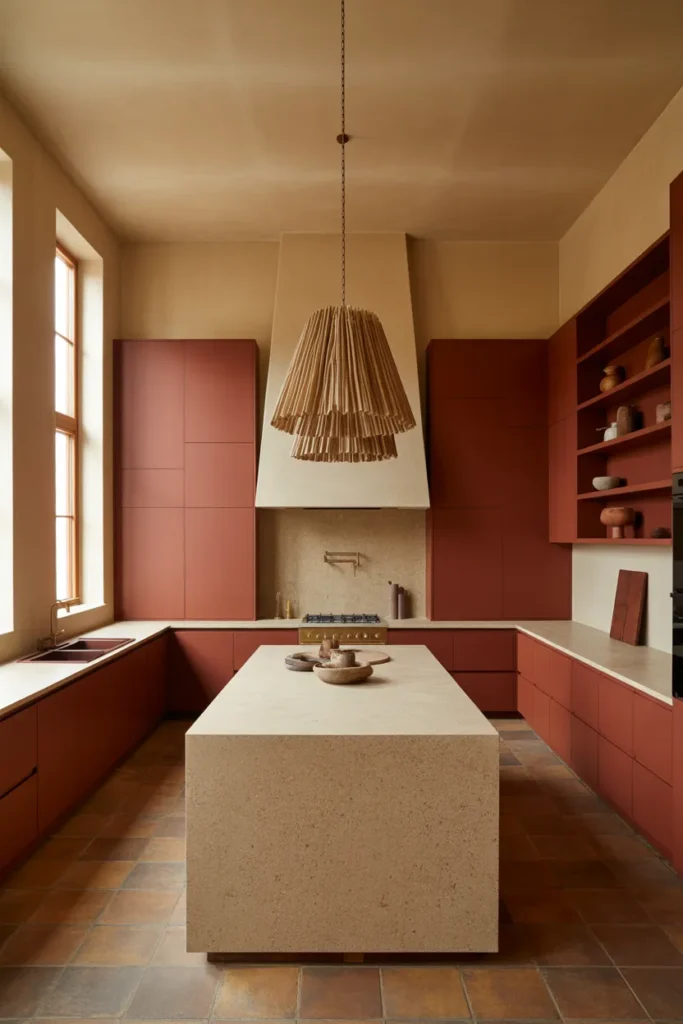
From a functional kitchen floor plan standpoint, this color works on perimeter cabinets only — keeping the island in a neutral stone or cream tone is essential. An island in the same burnt sienna as the perimeter cabinets would create an enclosed, color-saturated space that works against the openness of the layout.
Final Thoughts
Brown is one of the most versatile and enduring kitchen color directions available in 2026, and the twelve ideas above prove that it operates across every scale, style, and budget. From the refined warmth of raw walnut to the bold confidence of burnt sienna, each direction has a specific home type, layout, and lifestyle it serves best. The decisions that matter are not just the color choice — they are the countertop pairing, the hardware tone, the cabinet profile, and the layout that gives the color room to work.
Save this post before you close it. Whether your renovation is six weeks away or six months away, having a concrete reference of well-considered brown kitchen directions will make your conversations with contractors and designers sharper and faster. If you are still working through layout decisions alongside your color choices, explore functional kitchen floor plan guides and open kitchen layout resources to make sure the space works as well as it looks.