
Choosing accent chairs for living room 2026 is not just about finding something that looks good in a photograph — it is about finding the right silhouette, scale, and material for your specific floor plan, seating configuration, and daily use. This guide gives you 9 distinct accent chair directions with clear, practical guidance on when each one works, when it does not, and how to make the decision confidently for your room.
1. A Curved Barrel Chair That Softens a Room Full of Hard Lines and Rectangular Furniture
The barrel chair — defined by its rounded back that wraps continuously around the sides — is one of the strongest accent chair choices for 2026 because it introduces organic, curved geometry into living rooms dominated by rectangular sofas, boxy coffee tables, and linear shelving. The contrast between the curve and the straight lines of surrounding furniture creates visual interest without requiring any additional decor.
Functionally, the barrel shape works well as a single accent chair because its enclosed form makes it feel like a self-contained seating unit rather than an orphaned piece of furniture. It reads as intentional whether placed beside a sofa, in a corner, or at an angle across from the main seating arrangement.
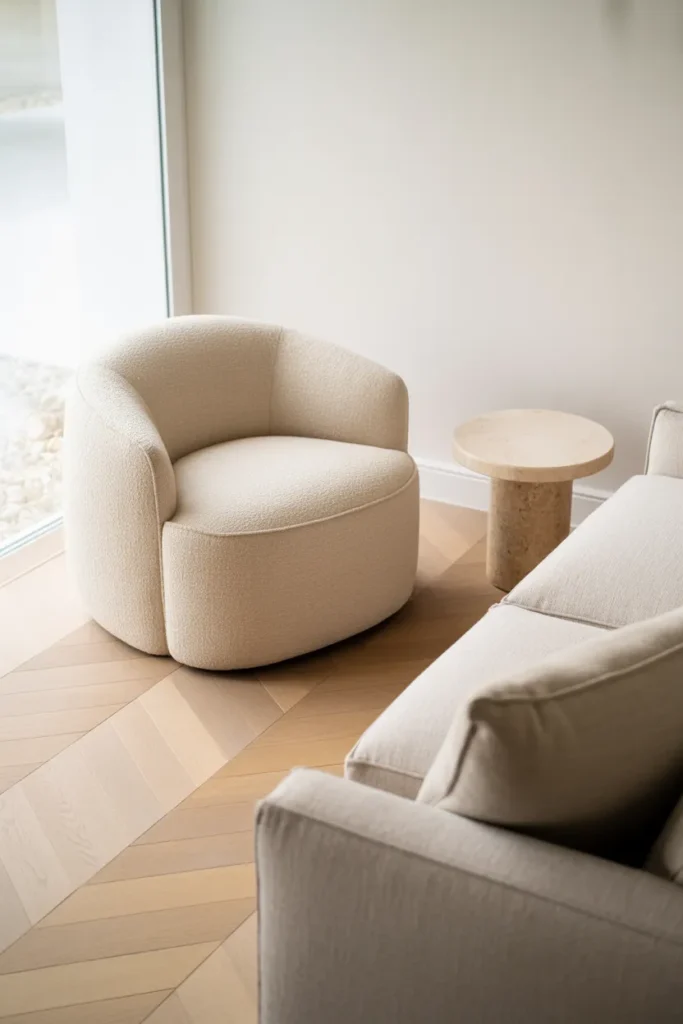

The best upholstery choices for a barrel chair in a modern living room are bouclé, velvet, or a medium-weight linen. Bouclé in particular has become strongly associated with this silhouette and suits rooms with a warm, contemporary, or transitional aesthetic. Avoid very thin or slippery fabrics like sateen on a barrel chair — the curved seat tends to cause slippage without the grip of a more textured material.
Scale is the most important consideration when selecting a barrel chair. A barrel chair that is too wide — over 32 inches — loses the compact, deliberate feeling that makes the shape effective. Keep the width between 27 and 32 inches for the proportions to read correctly beside a standard 84 to 96-inch sofa.
2. A Sleek Slipper Chair for Small Living Rooms Where Floor Space Is Non-Negotiable
The slipper chair — armless, low-profile, and compact — is the most space-efficient accent chair available for small living rooms and apartments. Its defining characteristic is the absence of arms, which reduces the chair’s overall footprint significantly while still providing genuine, comfortable seating.
In a living room under 200 square feet, every inch of visual floor space matters. The slipper chair’s slim silhouette keeps the floor plan open and avoids the boxed-in feeling that fully upholstered armchairs can create in tight layouts. Two slipper chairs facing a loveseat or small sofa is a common and highly functional seating arrangement for studio apartments and smaller living areas.
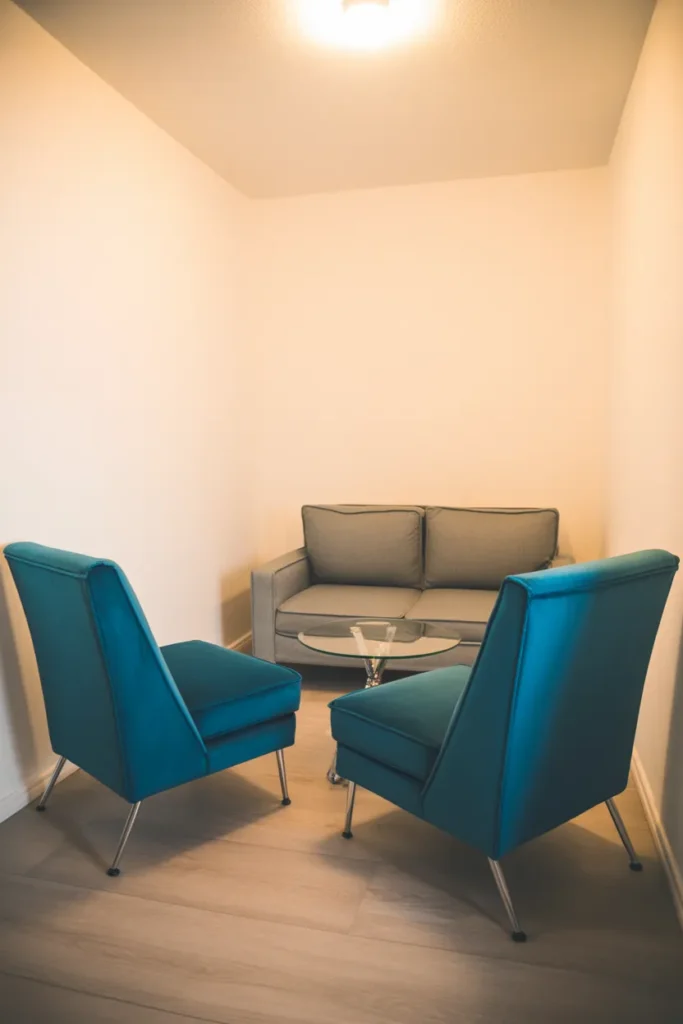
The slipper chair works best in rooms where occasional seating is the goal rather than primary daily seating. Because it lacks arms, extended sitting for long periods is less comfortable than in an armchair. If the accent chair will be used for daily reading or television watching by one occupant, the slipper chair is not the right choice — opt for a chair with arm support instead.
Upholstery choice is more impactful on a slipper chair than on most other silhouettes because the fabric covers nearly the entire visible surface of the chair. A bold color, a graphic pattern, or a rich texture — deep teal velvet, a black-and-white geometric, warm cognac leather — makes a strong design statement on a slipper chair that the same fabric would deliver more quietly on a fully upholstered armchair.
3. A High-Back Wing Chair That Creates a Reading Nook Feeling Without a Dedicated Room
The wing chair — characterized by its high back and side panels that angle forward from the backrest — is one of the most functionally distinct accent chairs for living room use. The wings create a subtle sense of enclosure around the sitter’s head and shoulders that makes the chair feel like a private zone within a larger open-plan space.
This enclosure effect is what makes the wing chair particularly effective in open-plan living areas where there are no physical walls to define a reading or quiet seating zone. Positioned in a corner with a floor lamp beside it, a wing chair creates a dedicated retreat within the larger room without any structural change.
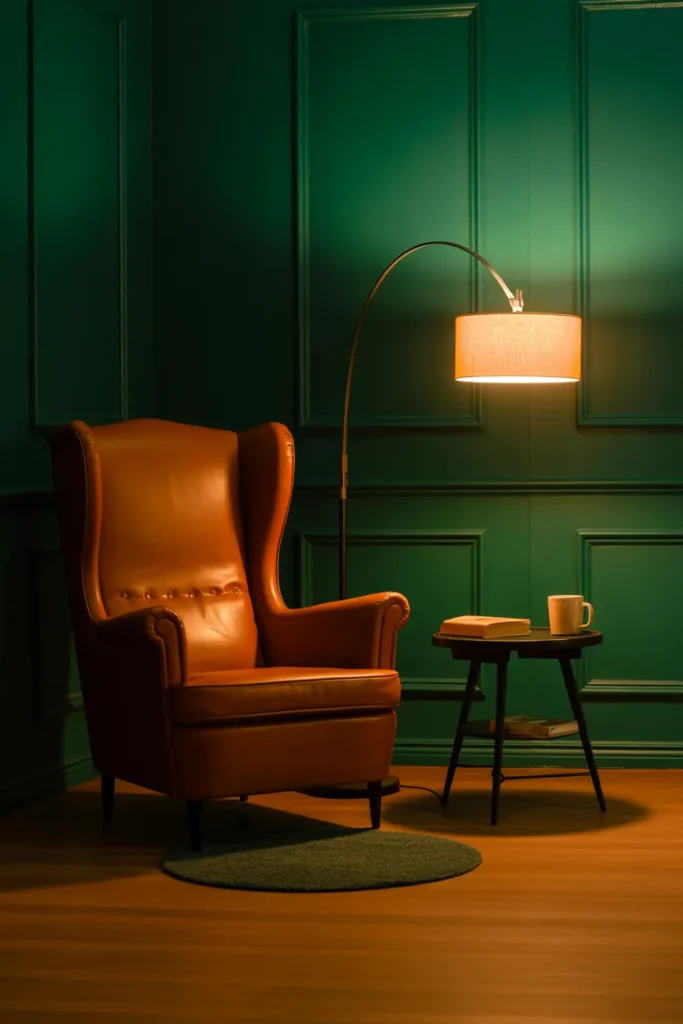
Modern wing chairs in 2026 trend toward a cleaner interpretation of the traditional silhouette — lower overall height, less pronounced wing angles, and contemporary upholstery choices like bouclé, performance linen, or leather. This updated version works in transitional and modern interiors that the heavily carved, traditional wing chair does not suit.
The mistake to avoid is placing a wing chair in the center of a seating arrangement where its high back faces the room. The wing chair is directional furniture — it faces one way and has a clear front and back. Position it so the back faces a wall or corner, and the seated occupant looks toward the room. Reversing this orientation makes the chair look awkward and blocks sightlines in the room.
4. A Swivel Accent Chair That Solves the Multi-Direction Problem in Open-Plan Spaces
In open-plan living spaces where the seating area connects to a dining zone, a kitchen, or an entertainment wall, a fixed-position accent chair forces the occupant to choose one orientation permanently. A swivel base solves this problem completely — the chair rotates to face conversation, the television, or the kitchen island without moving any furniture.
The swivel accent chair is one of the most practical living room accent chair ideas for 2026 precisely because open-plan floor plans have become the dominant layout in American homes and apartments. A chair that can redirect without being physically moved is a genuine functional improvement in any multi-use living space.
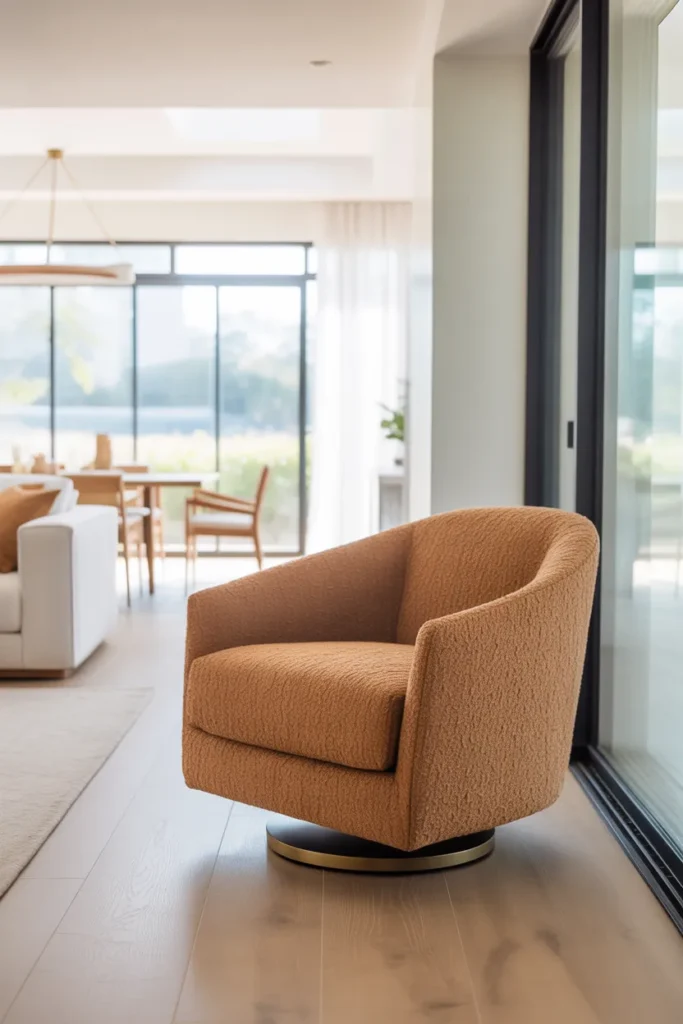
From a design standpoint, swivel chairs work best in the middle or transitional zone of an open-plan space rather than pushed against a wall. Against a wall, the swivel function is partially wasted — the chair can only rotate toward the room, not in a full circle. Positioned floating in the space, it serves as a flexible pivot point that connects different functional zones.
Choose a swivel chair with a low-profile base — a flat disc base or a slim five-point base rather than a thick pedestal — to keep the chair from looking heavy in the center of a room. The base is the most visible part of a swivel chair from across the room, and a bulky base undermines the visual lightness that makes this configuration work in open-plan living.
5. A Papasan or Rounded Cocoon Chair That Adds Texture and a Relaxed Mood to Modern Rooms
The papasan and its close relative, the egg-style cocoon chair, represent the most relaxed and informally comfortable end of the accent chair spectrum. In a living room that trends modern or minimal, one of these chairs introduces an unexpected softness — both in silhouette and in mood — that makes the room feel more livable and less curated.
The rounded, deep-seat cocoon shape has seen a significant design update in 2026 interiors, moving away from the wicker-and-cotton pad version of earlier decades toward upholstered interpretations in bouclé, sherpa, and high-pile boucle weaves on powder-coated metal frames. This updated version is compatible with contemporary interiors in a way the traditional rattan version is not.
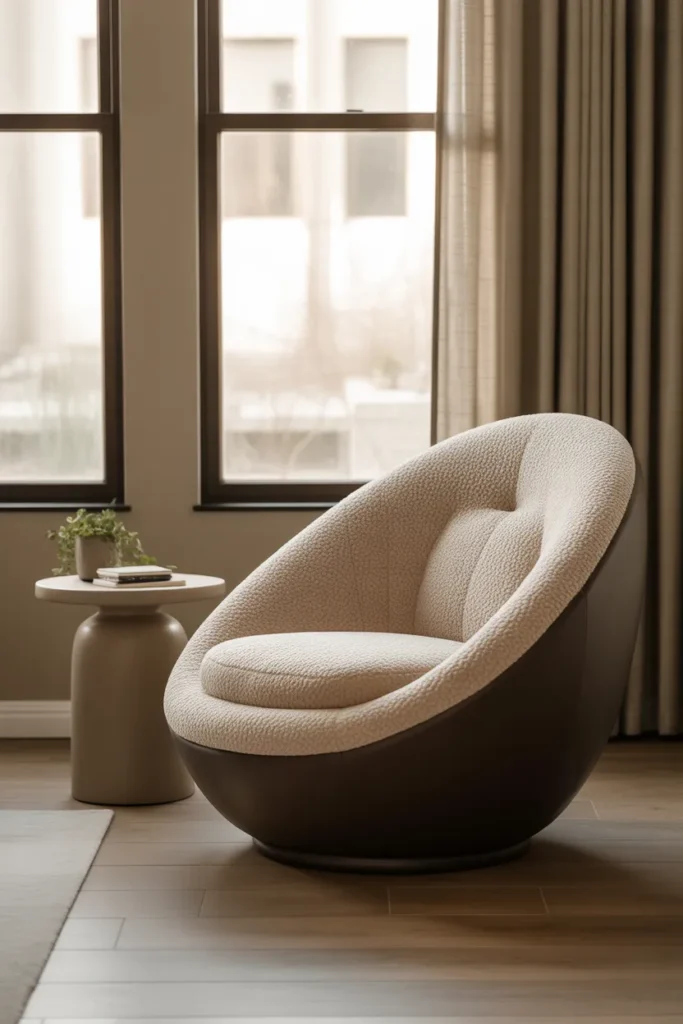
Sizing is the primary practical challenge with rounded cocoon chairs. The papasan in particular has a wide, circular seat that requires significant floor clearance on all sides — typically at least 12 to 16 inches from any wall or adjacent furniture. In a room under 180 square feet, this can make the chair feel intrusive rather than inviting. In rooms with 250 square feet or more of living space, the visual impact of the rounded shape is an asset.
Position a cocoon or papasan chair as a deliberate visual statement rather than functional seating in a formal arrangement. It does not pair well as a matched set with a sofa in a face-to-face layout. It works best as a solo accent in a reading corner, beside a window, or as the single non-sofa seating option in a casual, relaxed living room layout.
6. A Leather or Faux-Leather Accent Chair That Anchors a Living Room With Visual Weight
A leather or high-quality faux-leather accent chair performs a specific design function in a living room: it introduces material contrast in spaces that are otherwise predominantly upholstered in soft fabric. Where a sofa in linen or velvet creates softness and warmth, a leather accent chair adds structure, visual weight, and a sense of permanence.
The leather accent chair works particularly well in living rooms that blend warm woods, metal accents, and natural materials — the combination of leather with oak, walnut, brass, or raw linen creates a layered material palette that feels considered and grounded. It also ages with genuine character, developing a patina that fabric chairs do not.
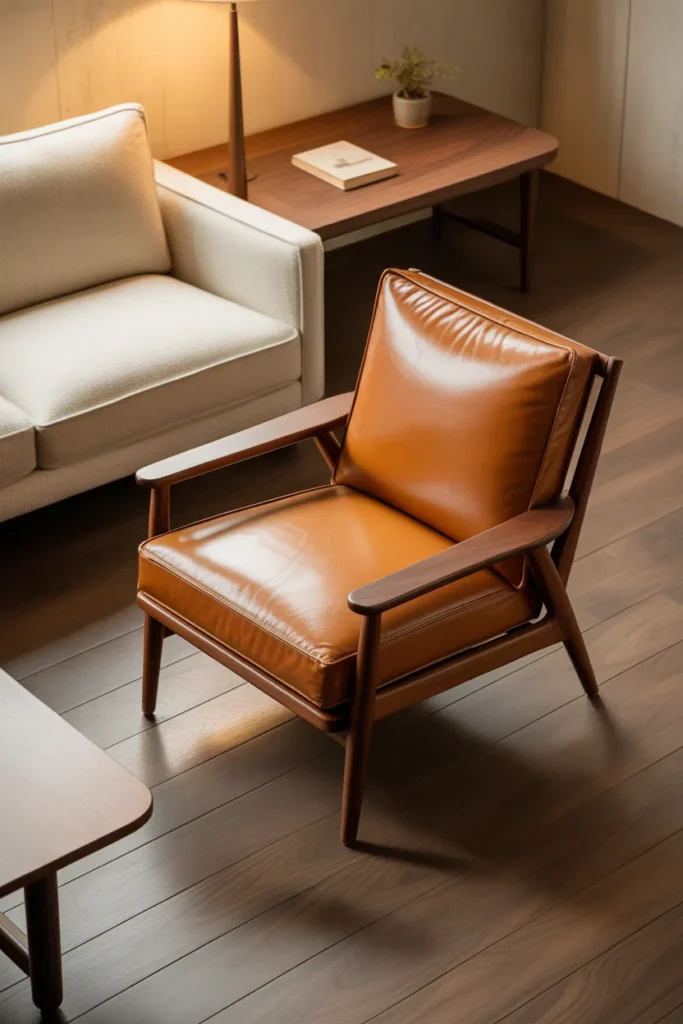
For 2026 living room design, the most relevant leather accent chair profiles are the mid-century-inspired lounge chair with a visible frame in wood or metal, the clean-lined modern armchair in full leather, and the slim-leg occasional chair in a smooth or semi-aniline leather finish. Each of these reads as contemporary without sacrificing the material’s inherent warmth and longevity.
One practical consideration for households with children or pets: full-grain and top-grain leather develops scratches and marks over time that become part of the material’s character. Corrected-grain leather and high-quality faux leather are more surface-resistant and easier to clean, making them the more practical choice for high-use living rooms without sacrificing the look significantly.
7. A Bold Pattern or Color Accent Chair That Does the Work of an Art Piece
In a living room with a predominantly neutral palette — white walls, gray sofa, natural wood tones — a single accent chair in a bold color or graphic pattern functions as the room’s focal point in the same way a large piece of art would. It gives the eye a place to land and communicates design confidence without requiring a full room redesign.
The most effective approach is to treat the accent chair as the one intentional departure from the neutral foundation. This means the sofa, rug, and walls remain in the neutral palette while the chair carries the color or pattern responsibility alone. Distributing the bold element to multiple pieces — a patterned chair, a colorful throw, and a bright rug — fragments the impact and makes the room feel busy rather than bold.
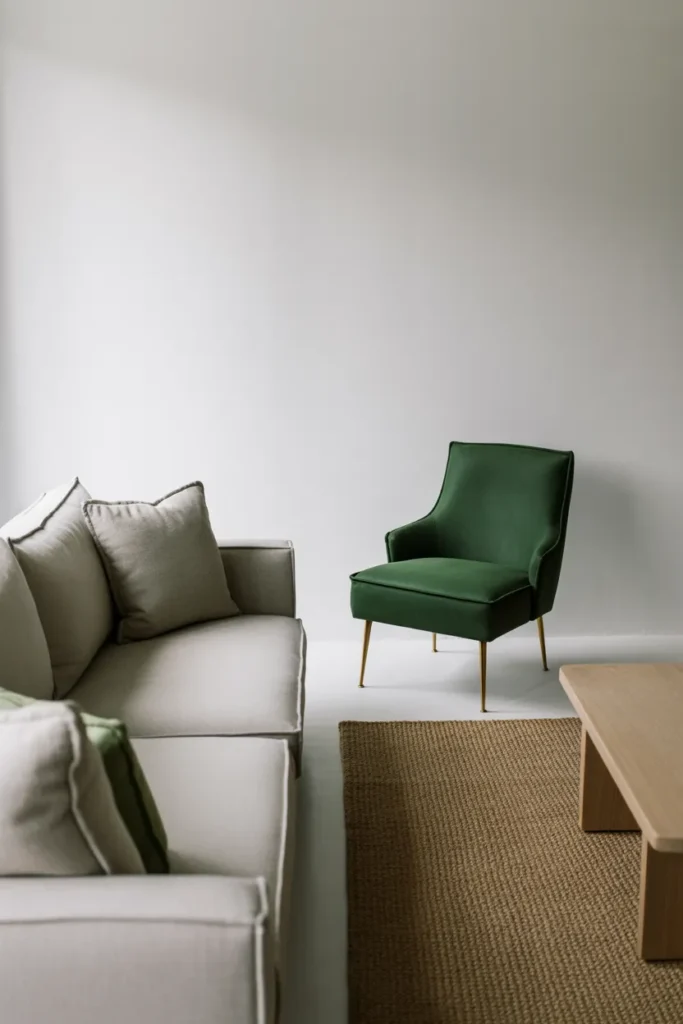
Color choices that work consistently well as accent chair statements in 2026 interiors include deep terracotta, forest green, warm rust, cobalt blue, and mustard yellow — all earth-adjacent tones that feel current without being trend-dependent. Highly saturated primary colors (bright red, electric blue, hot pink) work in specific design contexts but require more surrounding design restraint to avoid feeling jarring.
Pattern choices for a statement accent chair should scale appropriately to the chair’s size. A large-scale geometric or botanical print reads clearly on the generous surface area of a full armchair. The same large pattern on a small slipper chair can look disproportionate and unresolved. Match pattern scale to chair scale for the most successful result.
8. A Accent Chair With an Exposed Wood or Metal Frame That Keeps the Room Feeling Open
Fully upholstered accent chairs — where fabric covers all surfaces including the arms and legs — can add significant visual bulk to a living room. In rooms where the sofa is already large or the floor plan is relatively compact, a second fully upholstered piece creates a heavy, filled-in feeling that makes the room harder to breathe in visually.
An accent chair with an exposed frame — where wood or metal legs, arms, or a partial frame are visible — solves this problem by keeping the chair visually lighter. The negative space visible through and around the frame prevents the chair from reading as a solid block of mass, which makes the overall room feel more open even when the seating count is the same.
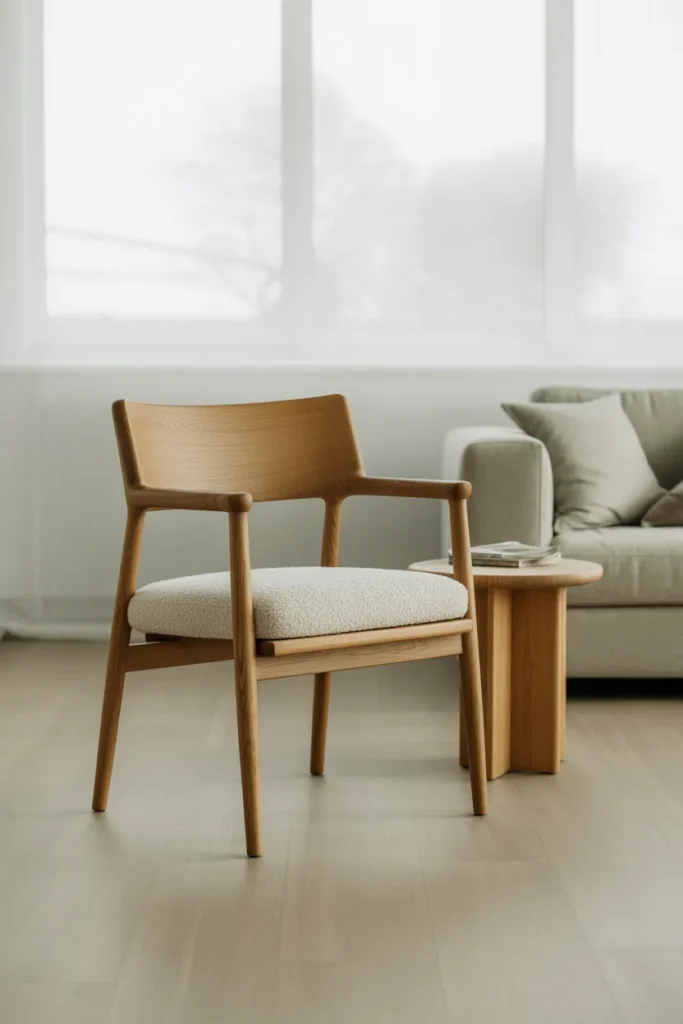
Exposed wood frames in warm tones — walnut, oak, and teak — work best in living rooms with other warm natural materials. Exposed metal frames in matte black, brushed brass, or powder-coated finishes suit contemporary and industrial-leaning interiors. The frame material should connect to at least one other material already present in the room — a brass frame chair works better in a room that has brass lamp bases or hardware than in a room with exclusively chrome and black finishes.
The seat and back cushion on an exposed-frame chair should be in a fabric substantial enough to maintain its shape over time. Thin cushions on an exposed frame flatten and shift with use, making the chair look worn and neglected quickly. A medium-density foam cushion covered in a structured fabric like woven cotton, performance fabric, or leather holds its form significantly better.
9. A Pair of Matching Accent Chairs That Anchor a Seating Arrangement Without a Second Sofa
Two matching accent chairs positioned across from or flanking a sofa is one of the most functional and visually resolved seating configurations for a living room — particularly in rooms where a sectional is too large and a second sofa creates an overcrowded or formal feeling.
The paired accent chair arrangement works because it provides balanced, face-to-face seating for four to six people without the visual mass of two sofas. The chairs feel lighter than a sofa, keep the center of the room more open, and allow the coffee table to remain a functional, accessible centerpiece rather than being hemmed in by upholstered furniture on all sides.
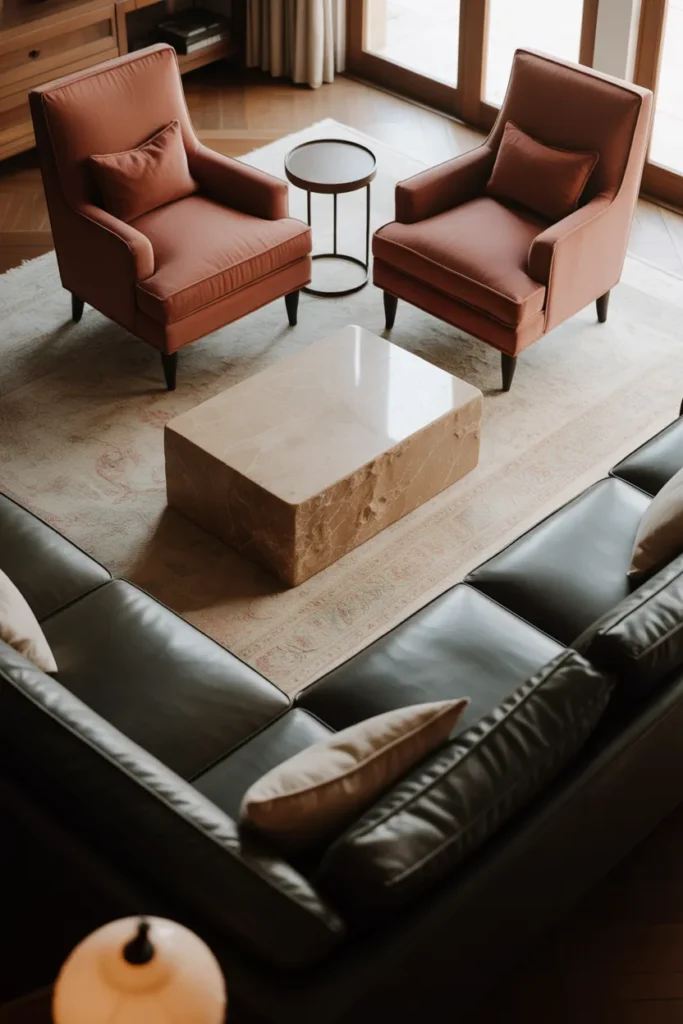
For the arrangement to read correctly, the two chairs should share at least one design element — the same silhouette, the same upholstery, or the same leg finish. They do not need to be identical; a matched pair in two complementary colors or two similar textures creates more visual interest than perfectly matched chairs while still communicating intentional pairing.
Spacing between the two chairs is a practical consideration that many living room layouts get wrong. Chairs positioned too close together feel crowded and difficult to exit gracefully. A gap of 18 to 24 inches between the chairs — enough for a slim side table or simply open floor — is the correct spacing for comfortable use and a balanced visual composition.
Final Thoughts
The right accent chair for living room 2026 is not the most beautiful one you can find — it is the one that solves a specific problem in your specific room, whether that is adding seating without bulk, introducing color without repainting, or creating a defined zone in an open-plan layout.
Use this guide as a decision tool, not just an inspiration source. Identify which idea addresses your actual room challenge, then use the practical guidance in that section to make the selection with confidence. Save this post so you can return to it as your living room evolves — these accent chair principles apply across style directions and room sizes and will remain relevant long past 2026. If this guide was useful, explore more living room furniture arrangement and seating layout content for the same level of practical, decision-focused guidance.