
Finding the right workspace for your child is one of the most practical decisions you can make for their daily routine. This guide covers the best kids desk ideas 2026 — from tiny bedroom corners to dedicated homework rooms — so you can choose a setup that fits your space, your child’s age, and how they actually study. Every idea here is actionable, visually distinct, and designed to help you make a confident decision.
1. The Floating Wall Desk That Saves Floor Space in Small Bedrooms
A wall-mounted floating desk is one of the most efficient solutions for bedrooms under 120 square feet. It eliminates the bulky legs of a traditional desk, keeps the floor open for play, and can be installed at the exact height your child needs — which matters more than most parents realize.
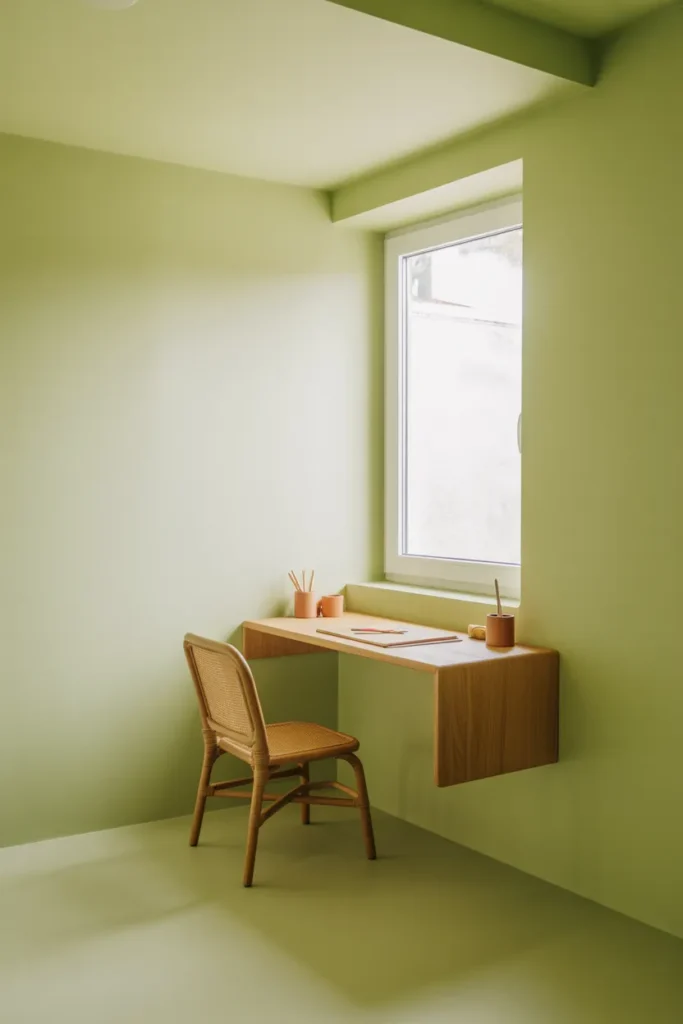
The key benefit is flexibility. As your child grows, the desk height can be adjusted without replacing the entire unit. Pair it with a slim wall shelf above for books and supplies, and you have a fully functional study zone that takes up less than 18 inches of depth.

Where this works best: rooms shared between siblings, small apartments, or any bedroom where floor space doubles as play area. Where it fails: very young children who need supervision, since the open design offers no structure for keeping things organized without added accessories.
2. The L-Shaped Corner Desk for the Kid Who Does Everything at Once
An L-shaped desk turns a dead corner into the most productive spot in the room. One side handles schoolwork, the other holds a reading lamp, sketchbooks, or a tablet. The configuration works because it separates tasks without requiring the child to leave the desk entirely.
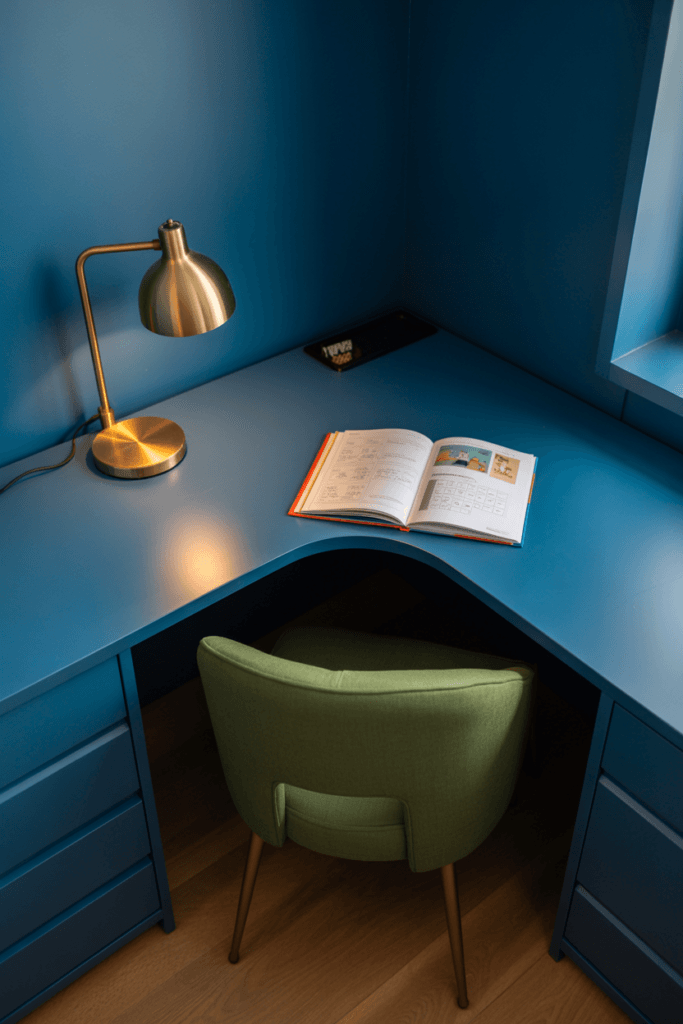
This layout is especially effective for kids aged 9 and older who have multiple subjects, extracurricular materials, or creative hobbies that live alongside academics. The corner placement also creates a natural sense of enclosure — something that genuinely helps many children focus better.
Avoid making both sides equally cluttered. One side should stay clear at all times. The most common mistake is treating the L-shape as extra storage rather than a dual-purpose work surface.
3. The Standing Desk Converter Setup for Active Kids Who Hate Sitting
Children who struggle to sit still are not undisciplined — they often need movement built into their environment. A standing desk converter placed on top of a standard desk lets them toggle between sitting and standing without interrupting their work.
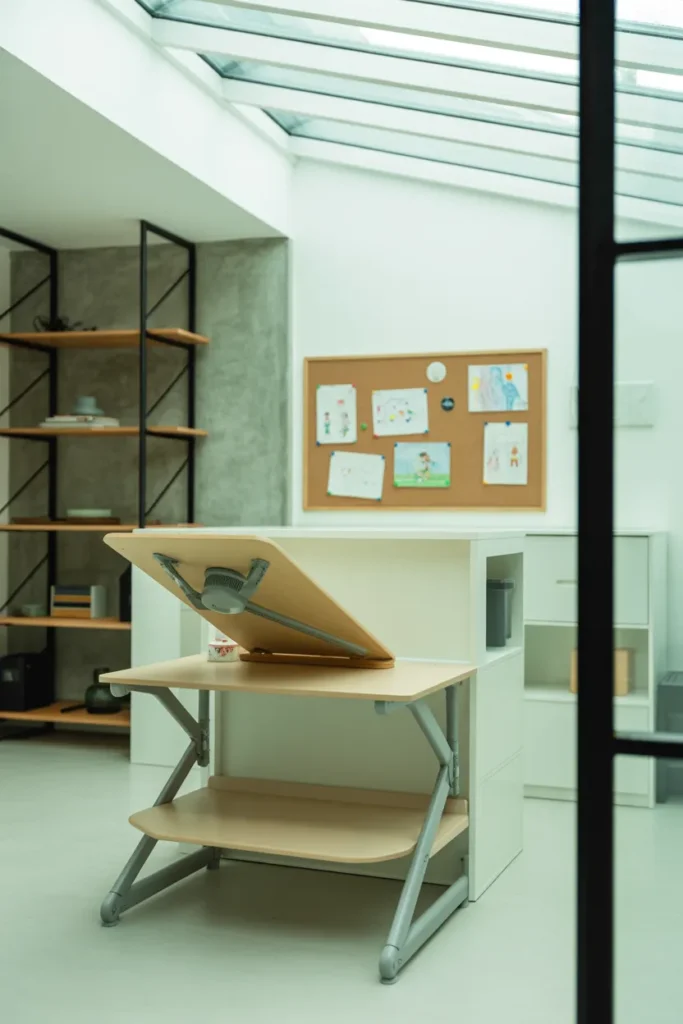
Research consistently shows that elementary-age children retain information better when they can shift posture during study sessions. A converter costs far less than a full adjustable standing desk and works on most existing surfaces. Pair it with a low-profile anti-fatigue mat for longer sessions.
This works best for kids in grades 3 through 8. It is less effective for very young children who still need to develop fine motor skills at a stable seated height. Do not force the standing option — let the child choose when to switch.
4. The Built-In Desk Nook That Makes a Hallway Alcove Useful
Dead hallway alcoves and under-stair spaces are frequently ignored in American homes. A built-in desk nook in these spots creates a dedicated homework zone that feels intentional — not like an afterthought shoved into a bedroom corner.
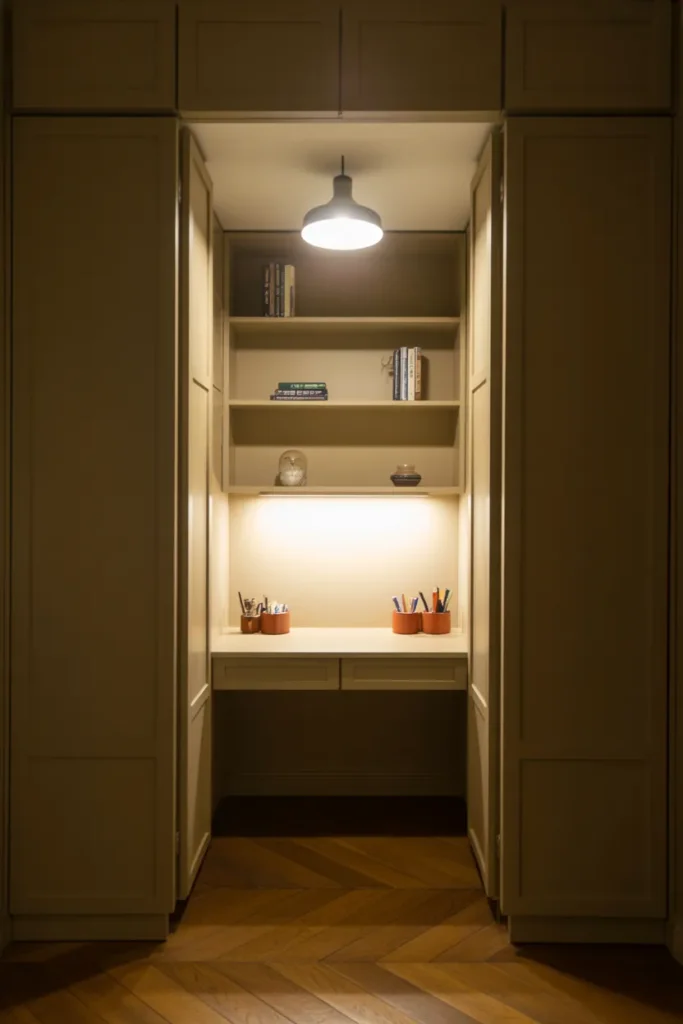
The advantage of a nook desk is containment. Supplies, bags, and homework stay in one place. When the child walks away, the mess is hidden from the rest of the home. For families without a dedicated home office or study room, this is one of the most space-efficient kids desk ideas 2026 has brought back into focus.
Custom built-ins can be expensive, but flat-pack cabinetry from any home improvement store replicates the look at a fraction of the cost. Keep the palette light — white, cream, or light wood — to prevent the nook from feeling cramped.
5. The Shared Double Desk for Two Kids in One Room
When two children share a bedroom, a long double desk along one wall is far more practical than two separate desks fighting for space. A 60-to-72-inch surface gives each child a defined zone without duplicating furniture.
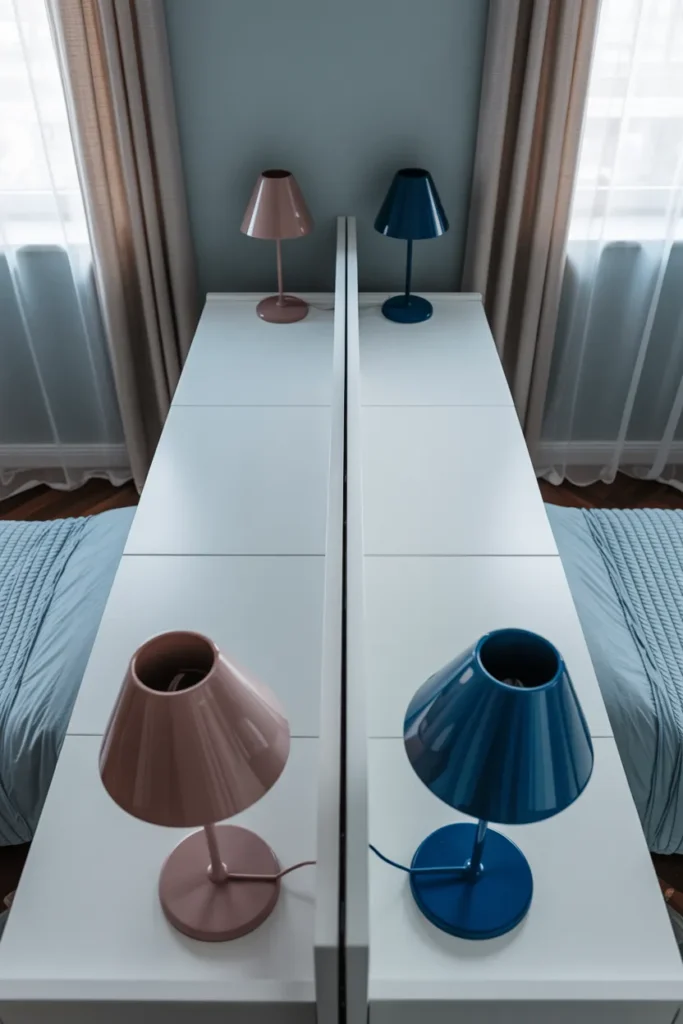
Use a simple physical divider — a small bookend, a plant, or a slim organizer — to establish personal territory without a literal wall between them. This works better than separate desks because it preserves walking space and creates a shared routine: both children sit down to study at the same time, in the same direction.
The mistake most parents make is buying two identical small desks. They end up taking more space and creating a visual mess. One long, clean surface almost always performs better in a shared room.
6. The Window-Facing Desk That Uses Natural Light as a Focus Tool
Positioning a desk directly in front of a window is one of the simplest and most effective study environment decisions a parent can make. Natural light reduces eye strain, regulates circadian rhythm, and keeps a child alert during afternoon homework sessions better than any overhead fixture.
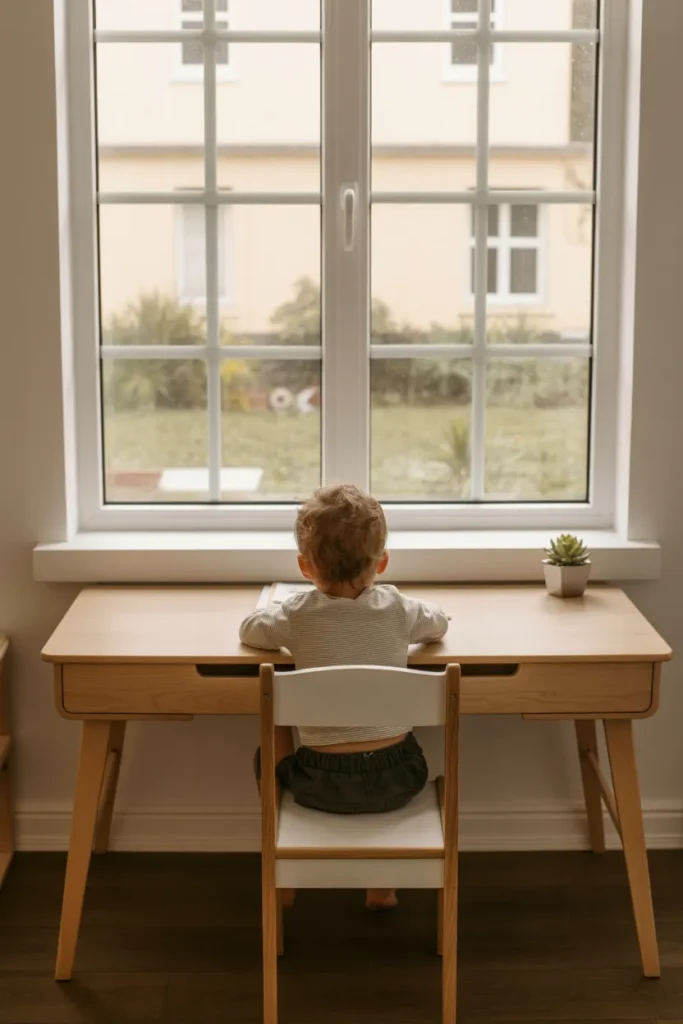
The desk should sit close enough that the child gets full benefit of the daylight — ideally within four feet of the glass. East-facing windows work best for morning study; north-facing windows offer the most consistent, glare-free light throughout the day.
Avoid west-facing windows for desk placement unless you add sheer blinds. Late afternoon sun creates harsh glare directly on the work surface. South-facing is workable with proper shading.
7. The Loft Bed Desk Combo That Doubles a Small Room’s Usable Area
A loft bed with a built-in desk underneath is one of the most space-efficient configurations available for rooms under 100 square feet. The sleeping area moves vertical, freeing the entire floor footprint for the desk, storage, and movement.
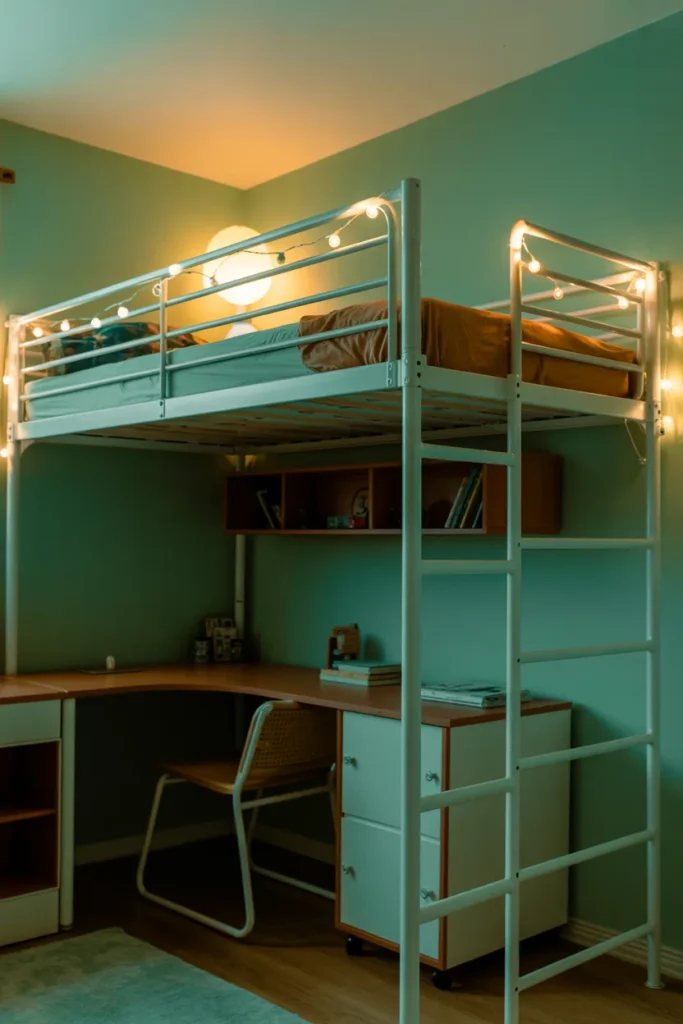
This setup works particularly well for children aged 6 to 14. The desk underneath the loft creates a natural canopy effect that many kids describe as their “own space” — which has a real and measurable effect on focus and comfort. The enclosed feel also reduces visual distraction.
Before committing to this layout, confirm ceiling height. You need at least 8.5 feet of ceiling clearance to make the loft comfortable and the desk functional. Rooms with 8-foot ceilings are too tight for most loft-desk configurations.
8. The Minimalist Single-Surface Desk for Kids Who Focus Better with Less
Some children perform significantly better at a desk with nothing on it except what they are currently working on. A minimalist single-surface setup — one desk, one lamp, one chair — is the right choice for easily distracted kids or those with attention-related challenges.
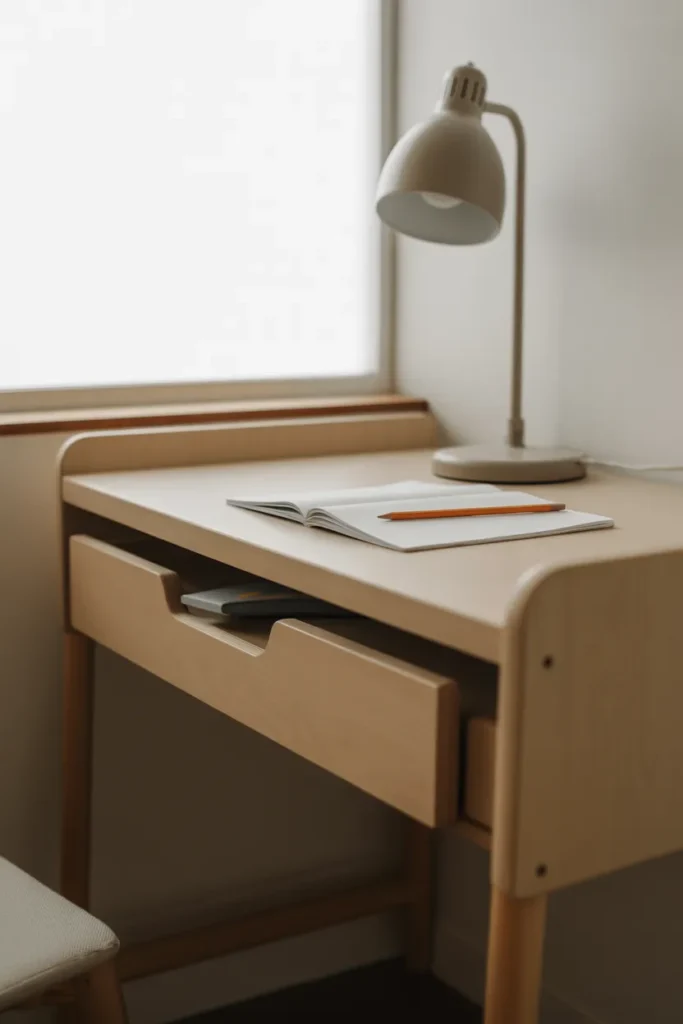
The design principle here is radical reduction. No corkboards covered in pins, no open shelves within eyeline, no multiple supply cups. Everything the child does not need in the next 30 minutes should be inside a drawer or a closed cabinet nearby.
Choose a desk with at least one deep drawer so supplies are accessible but invisible. Surfaces that stay visually clean throughout the week require intentional storage design — the desk alone is not enough.
9. The Homework Station Inside a Closet Converted to a Study Space
A standard reach-in closet — typically 24 inches deep and 36 to 48 inches wide — is exactly large enough to house a functional desk when the doors are removed. This “cloffice” concept works especially well for children in apartments or homes without dedicated study rooms.
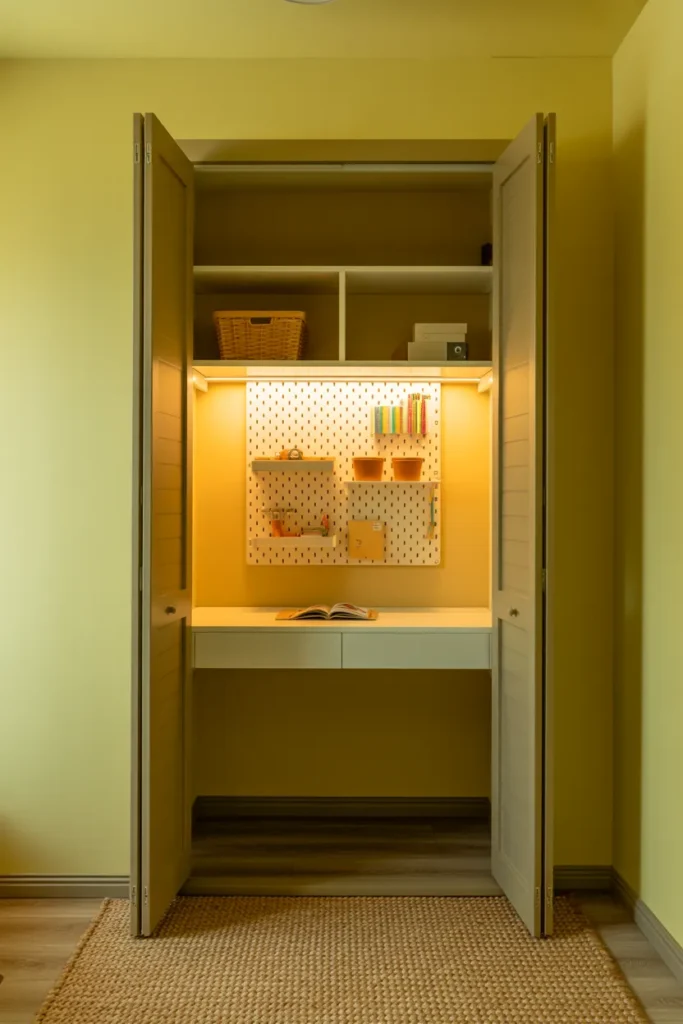
Install a floating shelf at desk height, add task lighting inside the closet frame, and use the upper shelf for organized supply storage. When the child finishes studying, the visual clutter disappears the moment you close the doors — if you choose to rehang them, or replace them with curtains.
This is one of the most underused kids desk ideas for 2026 because parents underestimate how much usable depth a closet provides. The enclosed three-wall structure also creates a naturally distraction-reduced environment.
10. The Art-Integrated Desk Setup for Creative Kids Who Draw and Study
A child who splits time between homework and drawing needs a desk configuration that supports both without constant rearranging. The solution is a primary desk surface for academic work paired with a secondary flat surface at the same height — a drafting board, an extra table, or a pull-out extension — dedicated entirely to creative work.
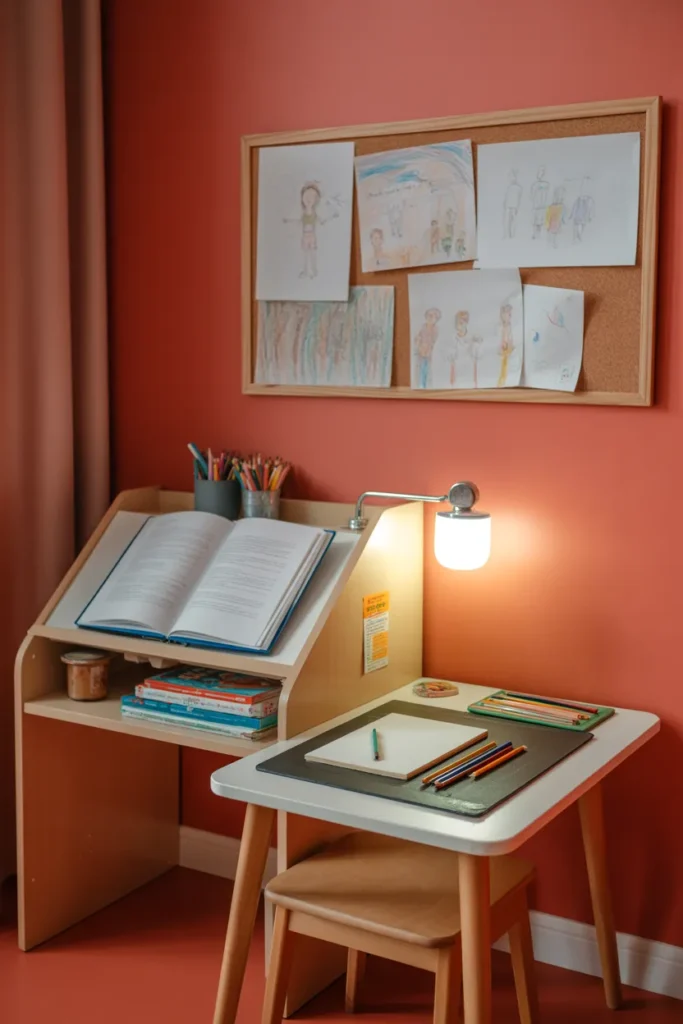
Keep the academic side clean and supplied with school tools. Keep the creative side stocked with what the child actually uses: markers, sketchbooks, colored pencils. The separation prevents creative materials from migrating across schoolwork and reduces the transition friction between the two activities.
This layout works best against a wall where you can also mount a corkboard or pegboard above the creative side. Seeing their work displayed while they create is genuinely motivating for most children.
11. The Galley-Style Study Wall for a Teen Who Needs Full Command of Their Space
A galley study wall runs a single long desk surface along one full wall — 6 to 10 feet — giving a teenager dedicated zones for different types of work: writing on one end, computer in the center, reading and reference materials on the other end.
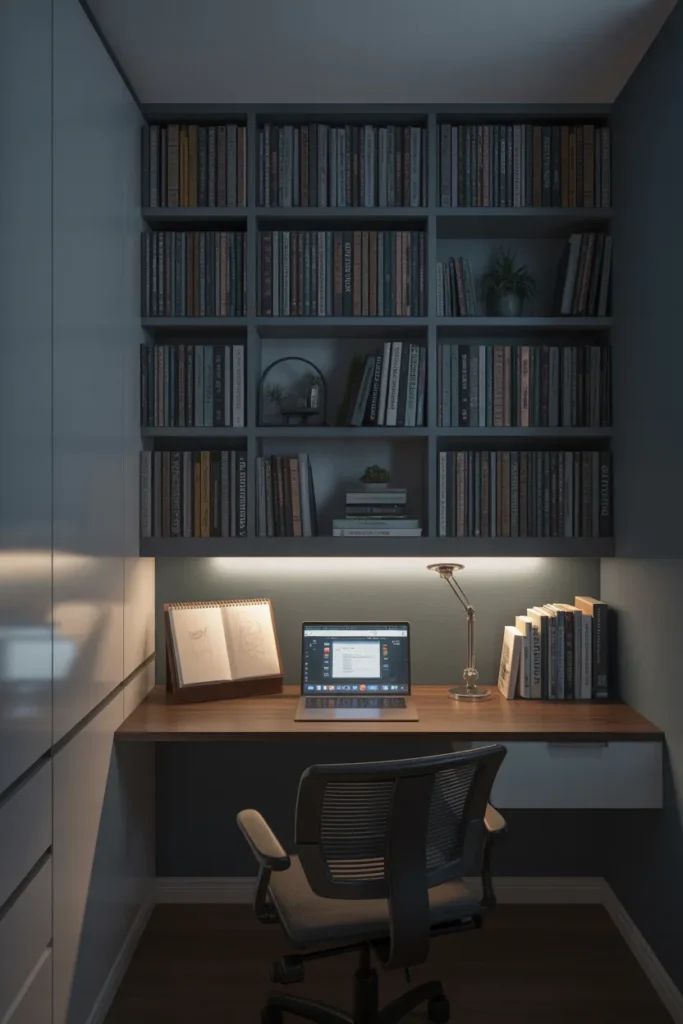
This works specifically for older children, ages 12 and up, who have advanced coursework, projects, or creative pursuits that require multiple simultaneous workstreams. It is the residential equivalent of a professional work wall.
The critical design rule is lighting continuity. Install under-shelf lighting across the entire run so every zone is equally lit. Relying on a single desk lamp creates uneven shadows across a long surface and forces the teenager to constantly reposition.
12. The Outdoor-Adjacent Desk That Brings in Natural Views for Motivation
Placing a child’s desk adjacent to a sliding glass door, patio window, or screened porch entrance creates a study environment that feels connected to the outside world — which measurably reduces study fatigue during long sessions.
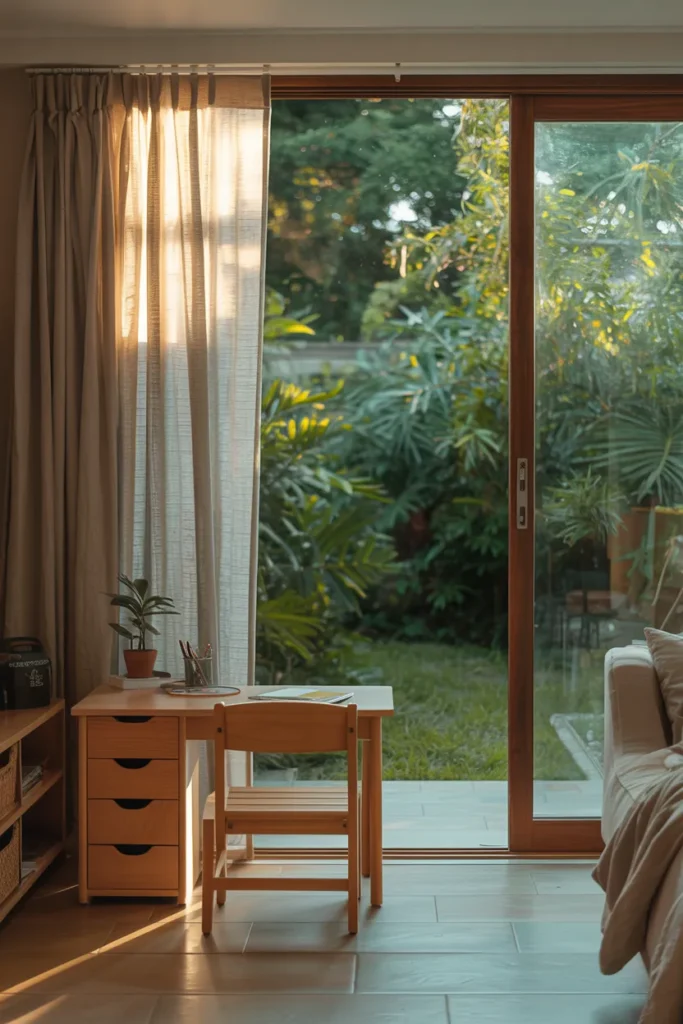
This is not the same as a window-facing desk. The outdoor-adjacent setup is specifically about access to green space or open sky views at a near-distance, which reduces cortisol levels and restores attention after demanding cognitive tasks. It works best in the late afternoon when outdoor time would otherwise be the reward for finishing homework.
Use solar shades rather than blackout curtains here. You want filtered natural light and the view, not full exposure to direct afternoon sun. Keep the desk surface itself minimal so the view remains the dominant visual element.
13. The Adjustable-Height Desk That Grows With Your Child
An adjustable-height desk is one of the few furniture investments in the kids category that pays off over a decade. Most models adjust from approximately 22 inches to 32 inches, covering ergonomic desk height from preschool through high school.
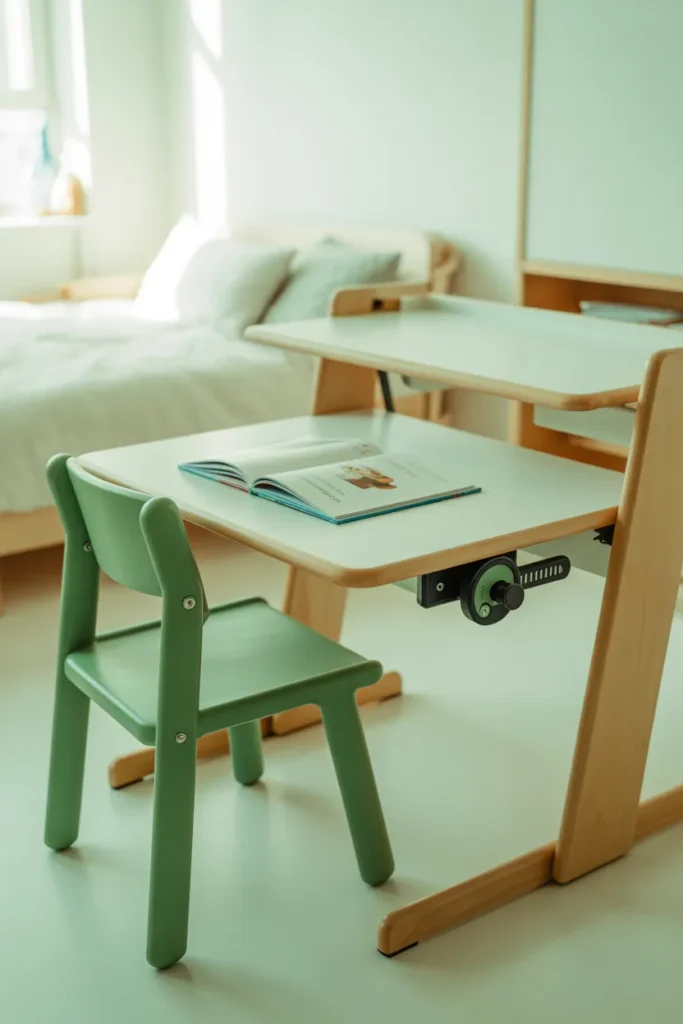
The real value is ergonomic accuracy at every age. A desk that is too high forces a child to raise their shoulders while writing — which creates tension and fatigue within 20 minutes. A desk that is too low causes hunching. At the correct height, forearms rest parallel to the floor and the child can sustain focus far longer.
Check the adjustment mechanism before purchasing. Crank-style height adjusters are more durable for kids than lever-style, which can slip. The chair must also be adjusted to match every time the desk height changes — this step is often skipped.
14. The Reading Nook Desk Hybrid for Kids Who Learn by Reading First
Some children process information through reading before they write or solve problems. A hybrid reading nook desk — a desk chair with deep lumbar support paired with a small side table at writing height, inside a defined nook with bookshelves on both sides — supports that learning pattern better than a traditional desk setup.
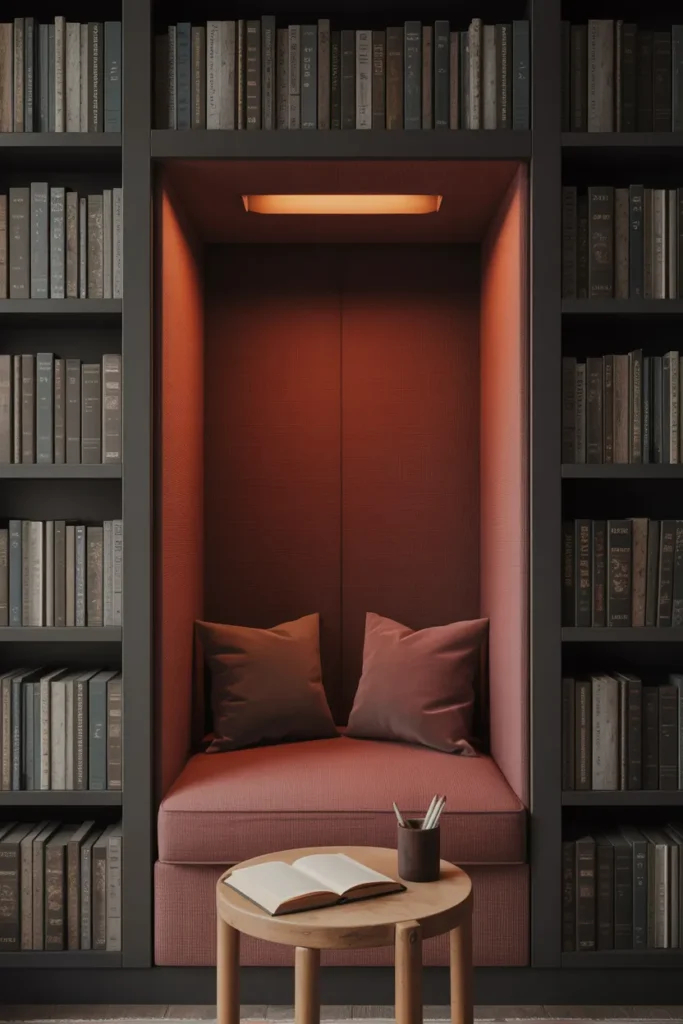
The bookshelves flanking the child create immediate access to reference books, assigned reading, and personal interest books without requiring them to get up. The side table functions as a desk when needed, but the chair itself is the primary focus zone.
This works best for strong readers, children in grades 4 and up, and kids who resist sitting at a traditional desk. It repositions the desk as secondary rather than primary — which, counterintuitively, often increases willingness to sit down and study.
15. The Pegboard Command Center Desk for the Highly Organized Kid
A pegboard mounted directly above a desk transforms a flat surface into a three-dimensional organization system. Hooks, small shelves, containers, and clipboards all mount to the pegboard, removing everything from the desk surface and placing it at eye level for easy retrieval.
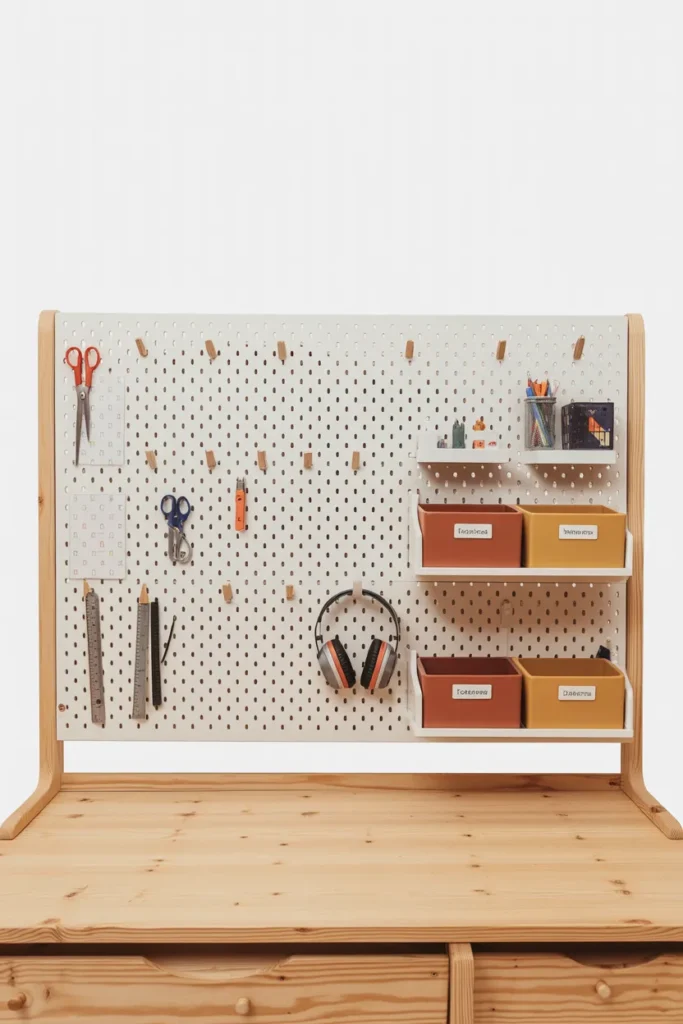
This setup works best for children who are naturally organized or who are learning organizational systems. The visibility of all supplies — rather than searching inside drawers — reduces the time spent not working and keeps the desk surface available for actual work.
Choose a pegboard that spans the full width of the desk for maximum utility. A pegboard that is narrower than the desk creates visual imbalance and does not solve the storage problem fully.
16. The Dual-Monitor Ready Teen Desk for the Student Who Uses Technology Heavily
High school students managing multiple browser tabs, research documents, video lessons, and note-taking applications genuinely benefit from a dual-monitor desk configuration. This is not excessive — it is a functional response to how modern coursework actually operates.
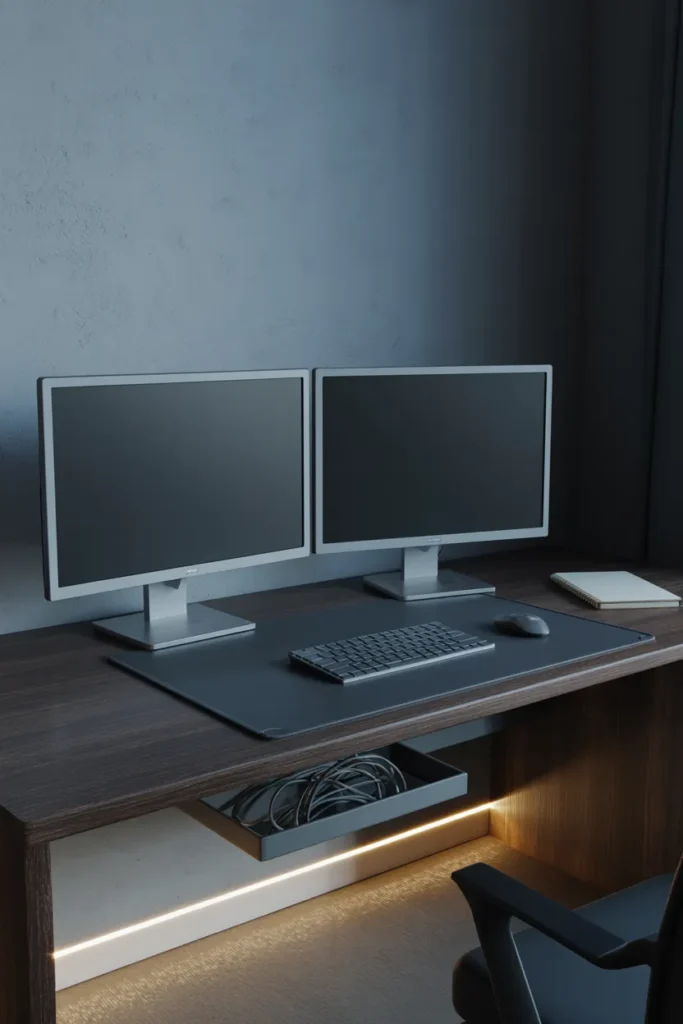
The desk needs to be at least 55 inches wide to accommodate two monitors with appropriate spacing. Cable management is the most important detail to address from day one: a visible cable mess is the fastest way to undermine the entire setup. Use a cable spine, under-desk tray, or cable box to route everything cleanly.
Position the primary monitor directly in front at eye level. The secondary monitor should sit at the same height, slightly angled inward. Avoid stacking monitors vertically — that requires constant neck movement and causes fatigue faster than side-by-side placement.
17. The Low Japanese-Style Floor Desk for a Non-Traditional Study Approach
A low-profile floor desk — used with a zaisu floor chair or a bolster cushion — is a genuine and effective study environment for children who resist conventional desk setups. It is not novelty furniture; in many parts of the world, floor-level study environments are standard and produce strong academic outcomes.
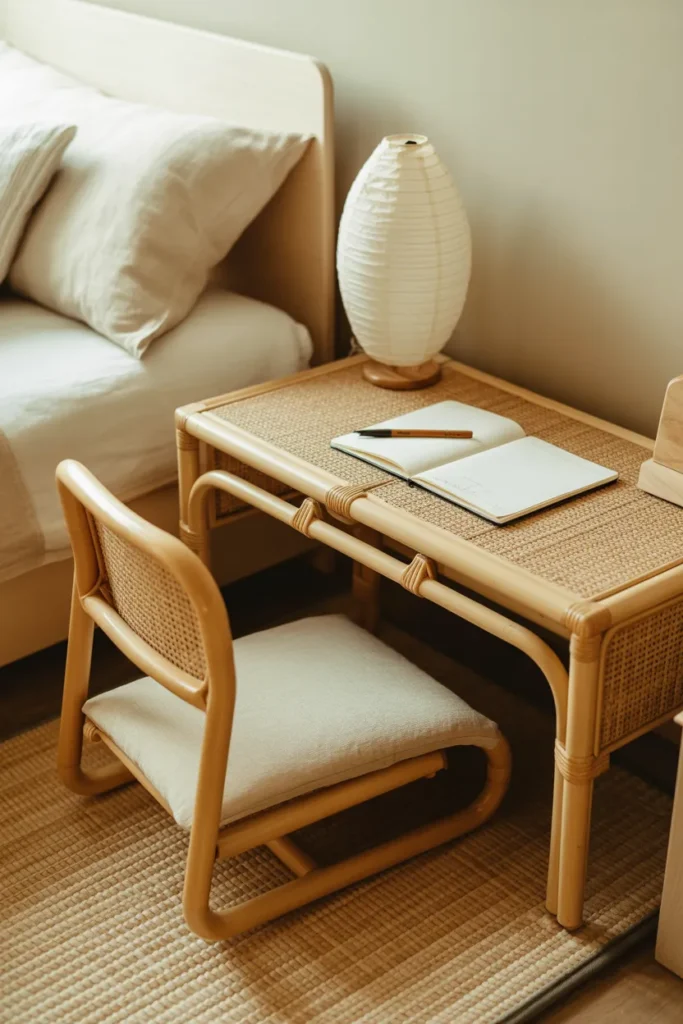
The setup works well for children who prefer to sprawl, who do most of their work reading or drawing rather than typing, and who find conventional chairs uncomfortable. The floor desk also transforms a bedroom floor area into a flexible dual-use space — play zone by day, study area in the evening.
Keep the surface low — 12 to 15 inches from floor to desk surface. Higher than that forces awkward wrist angles. Use a firm, supportive floor cushion rather than a soft pillow, which collapses and causes the child to hunch.
18. The Color-Zoned Homework Corner That Makes Studying Feel Like a Destination
A color-zoned study corner uses intentional paint, wallpaper, or material choices to define a study area within a larger bedroom — without walls or partitions. The visual distinction between the study zone and the rest of the room signals to the child’s brain that this area is for focused work.
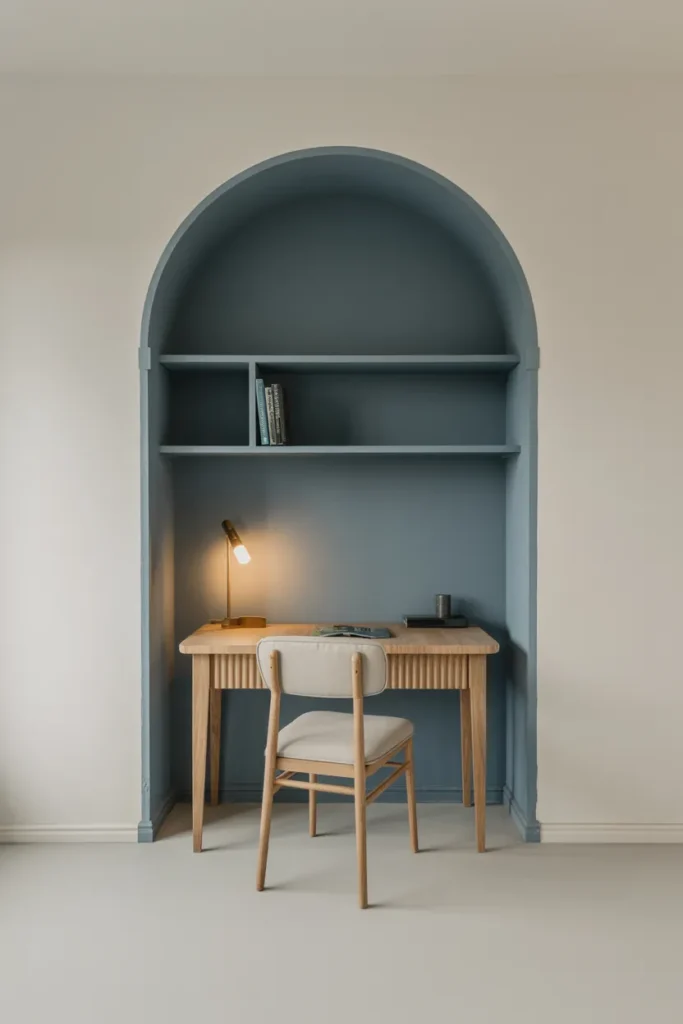
This is one of the most psychologically effective kids desk ideas 2026 has refined from earlier years of flexible-space design. The zone does not need to be elaborate — a painted arch behind the desk, a distinct wallpaper panel, or a different flooring material underfoot is enough to create the separation.
Choose a color for the study zone that is different from the bedroom’s dominant palette. Cooler tones — soft blue, sage, slate — support focus. Avoid high-contrast neons or very dark colors in the study zone, which can feel stimulating rather than settling.
Conclusion
The right desk setup does more than organize school supplies — it shapes how confidently and consistently your child sits down to learn. Whether you are working with a shared bedroom, a small apartment, or a dedicated study room, there is a functional configuration in this list that fits your specific situation.
Save this post to your Pinterest boards so you can refer back to each idea as your space or your child’s needs evolve. The best kids desk ideas for 2026 are not about trends — they are about understanding how your child actually works and building around that. If you found this useful, explore more kids room layout and study space ideas to keep refining your approach.