
Creating a functional outdoor relaxing area is harder than it looks — most setups either feel too sparse to be comfortable or too crowded to be calming. This guide covers 12 distinct outdoor relaxation layouts for 2026 that work across different yard sizes, climates, and budgets, giving you the practical detail you need to make the right decision for your specific space.
1. Shaded Daybed Corner That Turns Unused Patio Space Into a Rest Zone
An outdoor daybed positioned in a shaded corner of a patio or deck converts what is typically dead corner space into the most-used spot in the yard. The key is enclosure on two sides — a wall, fence, or tall planter on each flanking side creates the sense of shelter that makes a daybed feel like a destination rather than furniture placed randomly outdoors.
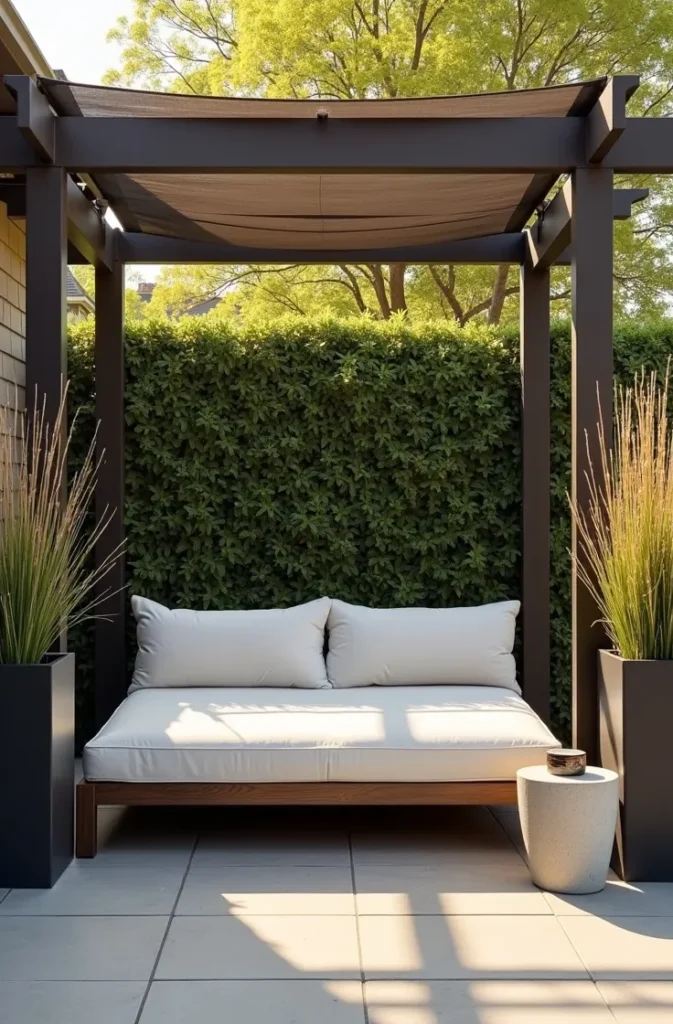
This layout works best on covered patios or under an existing pergola where overhead protection is already in place. Without overhead coverage, a daybed in direct sun becomes unusable by mid-morning in most US climates from May through September. If a covered structure is not available, a large cantilever umbrella positioned directly above provides sufficient shade for practical use.

The most common mistake with outdoor daybeds is undersizing the cushion depth. A cushion under 4 inches thick compresses to an uncomfortable level within one sitting season. Look for cushions rated for outdoor use with a minimum fill depth of 5 inches in a quick-dry foam or polyester fill designed for UV and moisture exposure.
2. Japanese Zen Gravel Garden Seating Area for Low-Maintenance Calm
A gravel-based seating area drawn from Japanese garden principles — raked decomposed granite or fine pea gravel surrounding a low platform seat or two simple stone benches — creates one of the most visually calming outdoor relaxing area designs available in 2026. The absence of lawn maintenance, complex planting, or furniture arrangement decisions makes this particularly practical for homeowners who want beauty without ongoing upkeep.
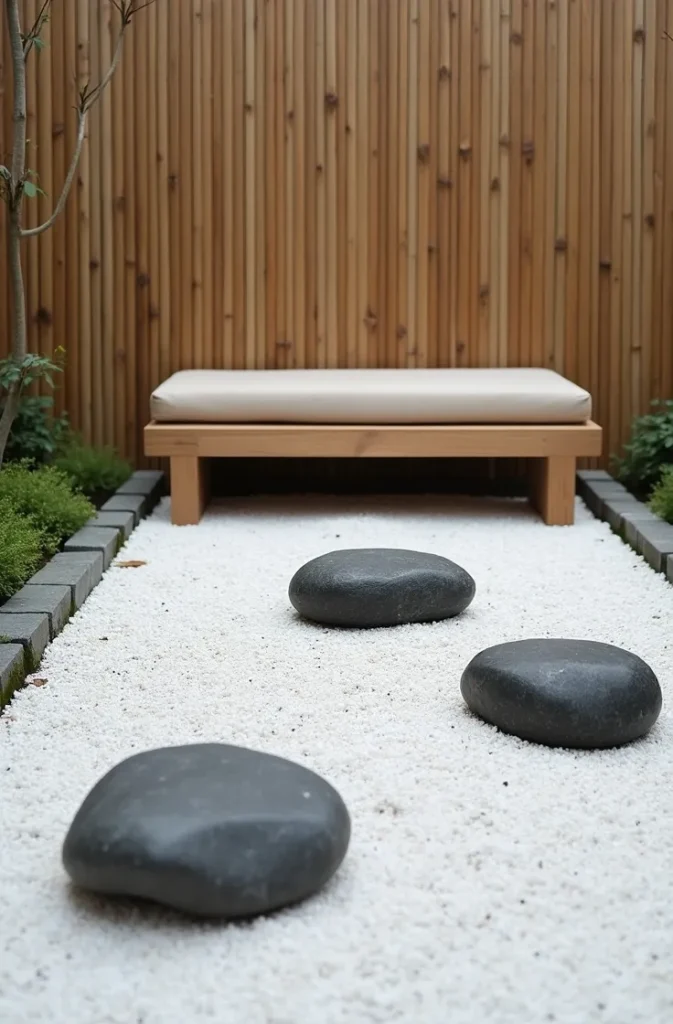
The gravel base serves both aesthetic and functional purposes. It provides excellent drainage, eliminates the need for pavers or decking, suppresses weeds when laid over landscape fabric at a depth of 3 to 4 inches, and creates natural sound dampening that contributes to the quiet quality of the space.
This layout suits side yards, narrow urban backyards, and any space that is too shaded for lawn grass. It is one of the few outdoor relaxation layouts that performs well in both full sun and deep shade without adjustment. The seating element — typically a low teak platform bench or a single boulder-style concrete seat — should be kept minimal. Two elements maximum in the gravel field maintains the open, uncluttered quality that makes this design work.
3. Floating Deck Lounge With Built-In Bench Seating Around the Perimeter
A floating deck — a ground-level platform that sits directly on the grade without posts or footings — with built-in bench seating around two or three of its perimeter edges is one of the most space-efficient outdoor relaxation layouts for mid-size backyards. The bench seating doubles as a retaining border for the deck surface and eliminates the need for freestanding furniture that shifts, tips, or requires seasonal storage.
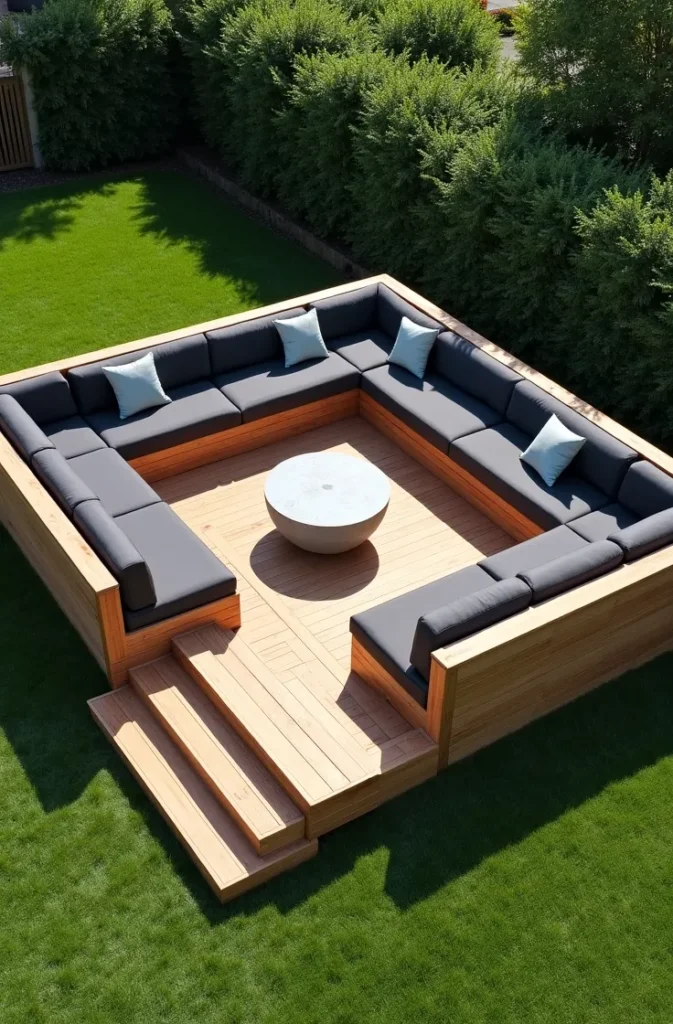
Built-in perimeter benches work particularly well in backyards where furniture storage is limited or where the deck will receive heavy foot traffic from multiple users. Because the seating is fixed, the center of the deck remains open for additional floor cushions, a low coffee table, or simply open barefoot space.
Deck surface material choice significantly affects year-round usability. Composite decking in a medium gray or warm brown tone stays cooler underfoot in direct sun than dark-stained natural wood. Ipe and dark-toned hardwoods absorb heat significantly in full-sun installations and can reach surface temperatures that make barefoot use uncomfortable in peak summer hours.
4. Small Balcony Relaxation Setup That Maximizes Every Square Foot
Urban apartments and townhomes with balconies under 60 square feet present a specific outdoor relaxation challenge — standard patio furniture is too large and heavy, while folding furniture often looks temporary and unintentional. The solution for a well-designed small balcony outdoor area in 2026 is a fixed two-seat loveseat with integrated side tables, a wall-mounted fold-flat table, and vertical planting on one wall to add greenery without using floor space.
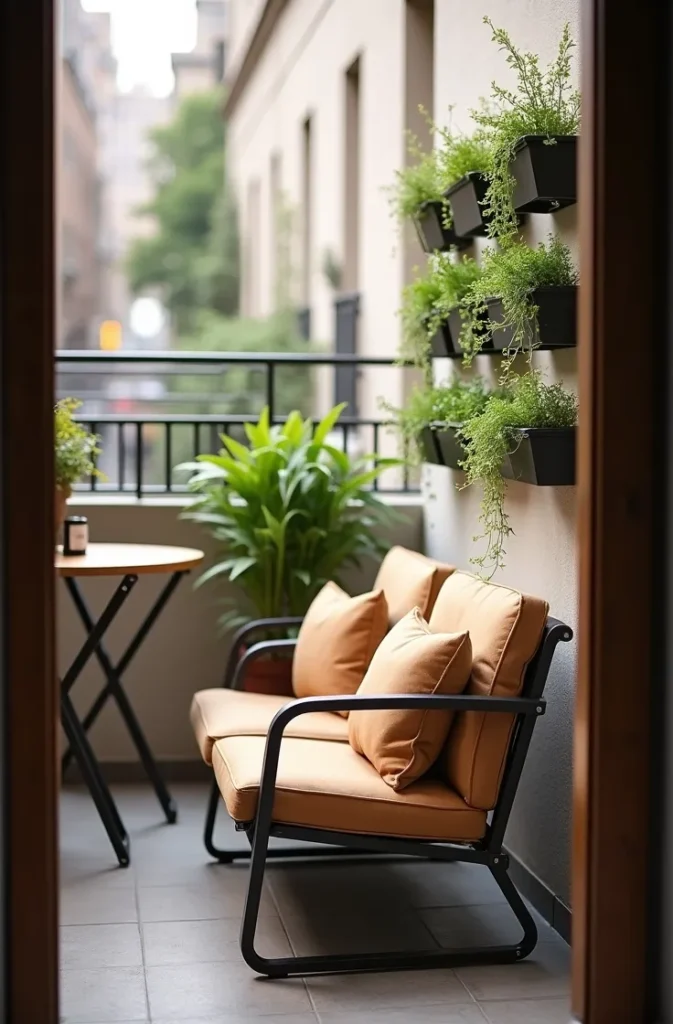
The loveseat should face outward toward the view or the yard, not inward toward the building wall. This orientation changes the entire psychological quality of the space from a storage ledge to a genuine relaxation destination. Even on a balcony that overlooks another building, outward-facing seating with a tall planter screen on the sides creates a filtered view that is significantly more restful than sitting parallel to the building face.
Weight is a practical constraint on upper-level balconies. Avoid heavy concrete planters, ceramic garden stools, and solid teak furniture on balconies above the ground floor without first checking the building’s load rating. Aluminum-framed furniture and lightweight composite planters provide the same visual quality at a fraction of the structural load.
5. Pergola With Outdoor Curtains That Creates a Private Retreat in Any Yard
A pergola fitted with weather-resistant curtain panels on two or three sides transforms an open backyard structure into an enclosed outdoor room that functions as a genuine retreat space. The curtains introduce privacy, filter afternoon glare, and create the sense of enclosure that open pergolas without side treatments cannot provide.
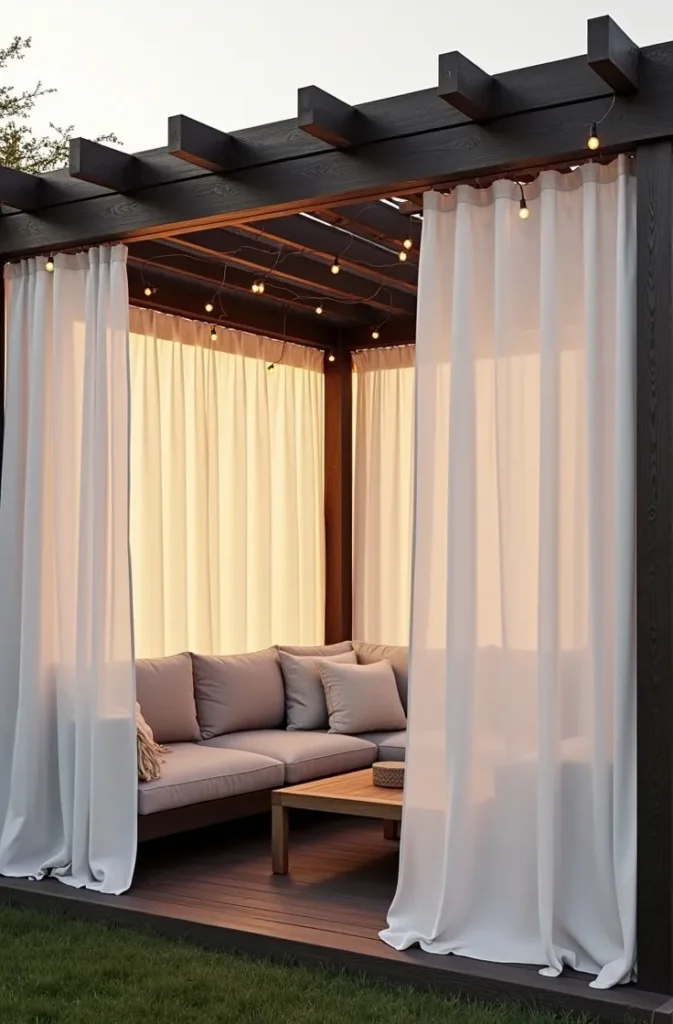
This is one of the most effective upgrades for existing pergolas that feel too exposed to be truly relaxing. In suburban settings where neighboring properties are close, open pergola seating offers little psychological privacy — which is why homeowners often underuse these structures despite having invested in them. Curtain panels on the side panels facing neighboring properties solve this directly.
For outdoor curtains to hold up through a full season, the fabric must be solution-dyed acrylic or a polyester outdoor canvas. Linen-look indoor curtains marketed for outdoor use typically last one season in sun before fading and one rainy season before developing mildew on the lining. The rod hardware must be rust-resistant stainless or powder-coated steel — standard indoor curtain rods corrode at the bracket contact points within months of outdoor exposure.
6. Fire Pit Conversation Circle With Low Adirondack-Style Seating
A fire pit placed at the center of a conversation circle — seating arranged in a complete ring rather than on one side — is fundamentally different in social function from a fire pit with chairs scattered loosely around it. The circular arrangement with 5 to 7 feet of distance between the fire center and each seat position creates a defined space that reads as a room rather than an activity zone.
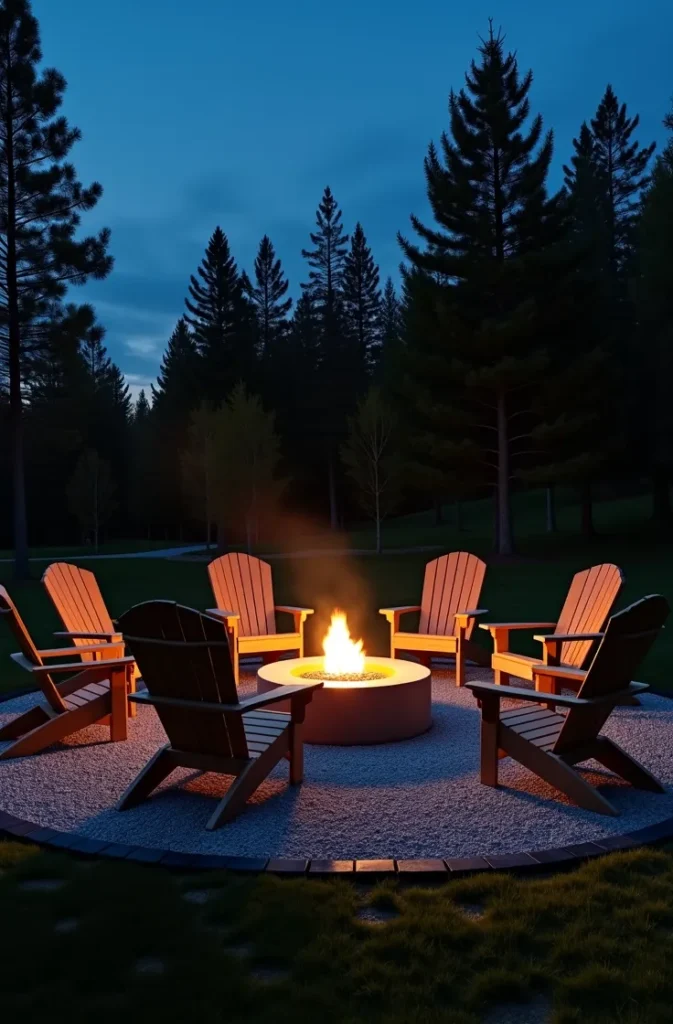
Low-profile seating is critical to this layout’s success. Standard patio dining chairs sit too high relative to a ground-level or sunken fire pit, creating an awkward lean-in dynamic for warmth and conversation. Adirondack-style chairs, low sling chairs, or log-style benches keep the sightline and warmth exchange at the correct angle for a centered fire pit.
The ground surface within the conversation circle matters significantly. Placing the fire pit and seating on gravel, stone pavers, or decomposed granite rather than lawn or wood decking provides fire safety clearance and defines the zone visually. A circular gravel pad with a stone border that contains the seating arrangement is the most resolved version of this layout and one of the most searched outdoor relaxing area designs for 2026.
7. Hammock Garden Zone Between Two Trees or Posts for Zero-Cost Relaxation
A hammock strung between two healthy hardwood trees or between two purpose-installed 4×4 wooden posts is one of the highest-value outdoor relaxation additions relative to its cost and effort. The key design difference between a hammock that gets used daily and one that sits untouched is placement — specifically, the relationship between the hammock, shade, and sightline.
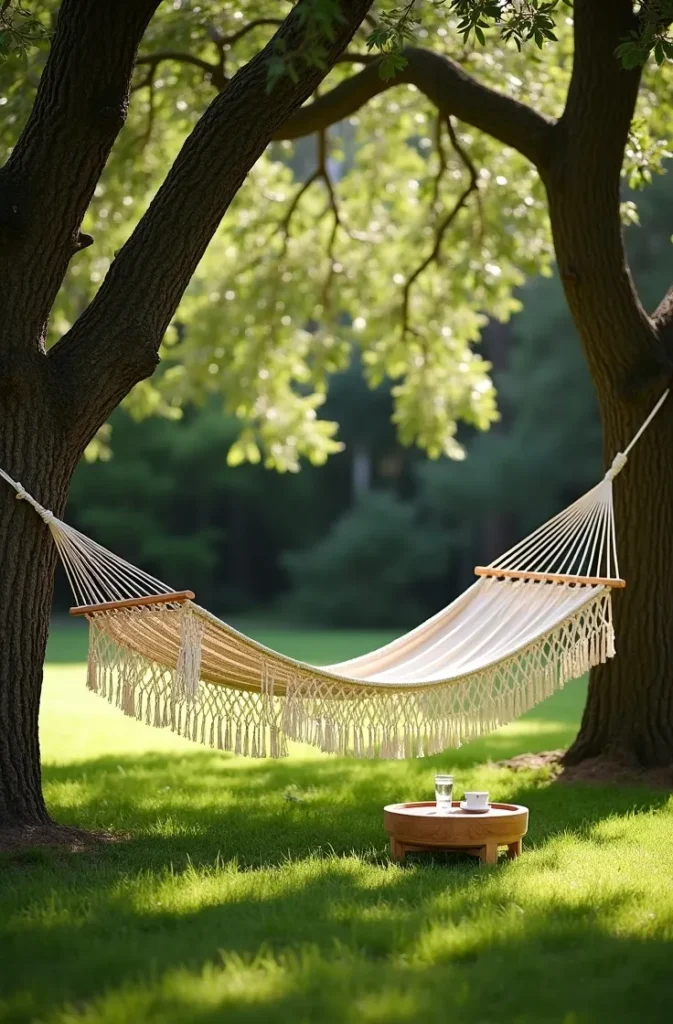
A hammock installed in full sun in most US climates is usable for only a few weeks in spring and fall. Position the hammock in natural shade from deciduous trees, a building overhang, or a shade sail stretched between anchor points above the hang line. A hammock in filtered shade with a sightline toward the yard or garden — not toward a fence or wall — is used consistently.
The hang angle is a technical detail that most installations get wrong. The hammock straps or ropes should hang at approximately 30 degrees from horizontal. Too flat a hang creates a banana-shaped sag that strains the back. Too steep a hang tightens the hammock into a narrow strip that is difficult to enter and uncomfortable to lie in. Most two-point hammock kits include angle guidance, but the 30-degree rule is the reliable benchmark regardless of hammock length.
8. Rooftop Terrace Lounge With Weatherproof Modular Sectional
Rooftop terraces and elevated flat-roof outdoor spaces present specific design challenges that ground-level outdoor areas do not — wind exposure, weight restrictions, drainage patterns, and the absence of natural shade structures. A well-designed rooftop outdoor relaxing area in 2026 addresses all four through furniture and layout selection rather than structural additions.
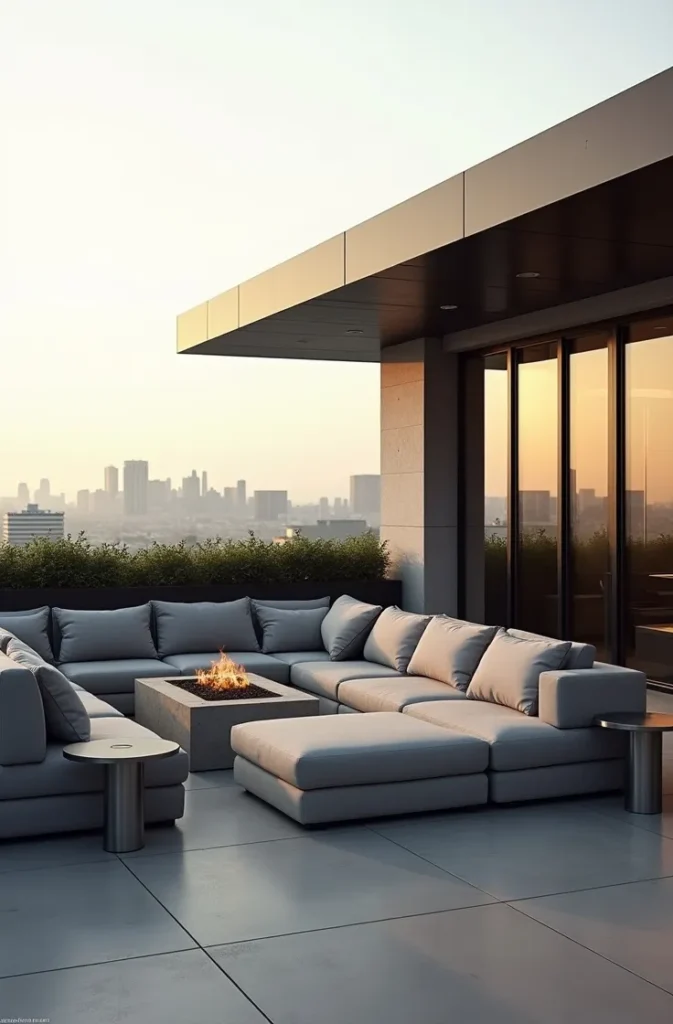
A low-profile modular sectional in a weatherproof all-aluminum frame with UV-stable cushions is the correct furniture choice for a rooftop terrace. The low profile reduces wind resistance on the cushions and creates a lounge-level sightline that takes advantage of the elevated view. Tall furniture on a rooftop terrace catches wind at the cushion face, leading to constant displacement and cushion storage demands.
Privacy screening on rooftop terraces should be tackled with horizontal cable rail or frosted tempered glass panels on the perimeter rather than fabric screens or tall planters, which act as wind sails at elevation. Living walls and lightweight planting in anchored raised beds add greenery without the weight and wind catch of large freestanding planters.
9. Side Yard Meditation Path With a Single Seating Node at the End
Side yards are consistently the least utilized outdoor spaces in residential properties, typically serving as service corridors for trash and utility access. Converting a side yard into a meditation path — a simple linear stepping stone path flanked by low ornamental grasses or ground cover plantings, terminating in a single chair or bench at the far end — creates a purposeful destination space from otherwise wasted footage.
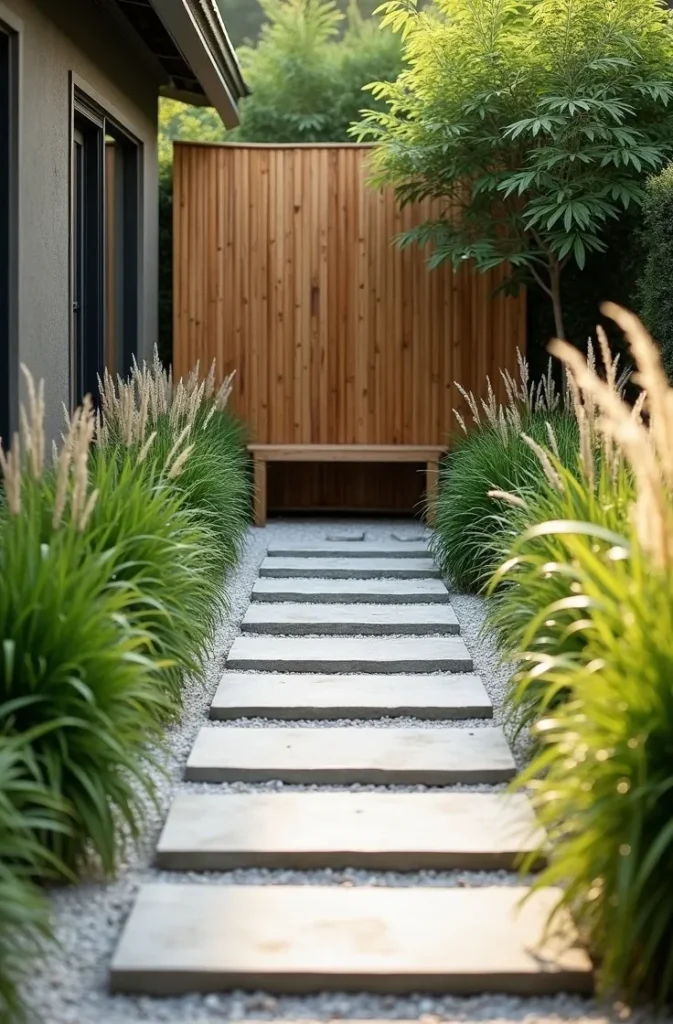
The critical design principle here is terminus. The seating at the end of the path must feel like an arrival point, not furniture placed in a corridor. Enclosing three sides of the end seating node with tall ornamental grasses, a simple trellis with climbers, or a curved bamboo screen creates that arrival quality.
This layout works in side yards as narrow as 5 feet, which is too narrow for any conventional patio furniture arrangement. The path itself can be stepping stones set in gravel or ground cover, keeping maintenance minimal in a zone that is typically shaded and difficult for lawn grass. This is one of the most practical small space outdoor relaxing area solutions for urban and suburban homes with standard lot configurations.
10. Poolside Lounge Layout That Separates Sun From Shade Zones
A functional poolside outdoor relaxing area is not simply furniture placed near a pool — it is a deliberate zone plan that separates the sun exposure area from the shade retreat area, so users can choose their environment without relocating to a different part of the yard. The two-zone approach — four to six sun loungers in the full sun plane facing the pool, and a shaded seating group set back under a pergola or sail shade — is the resolved version of this layout.
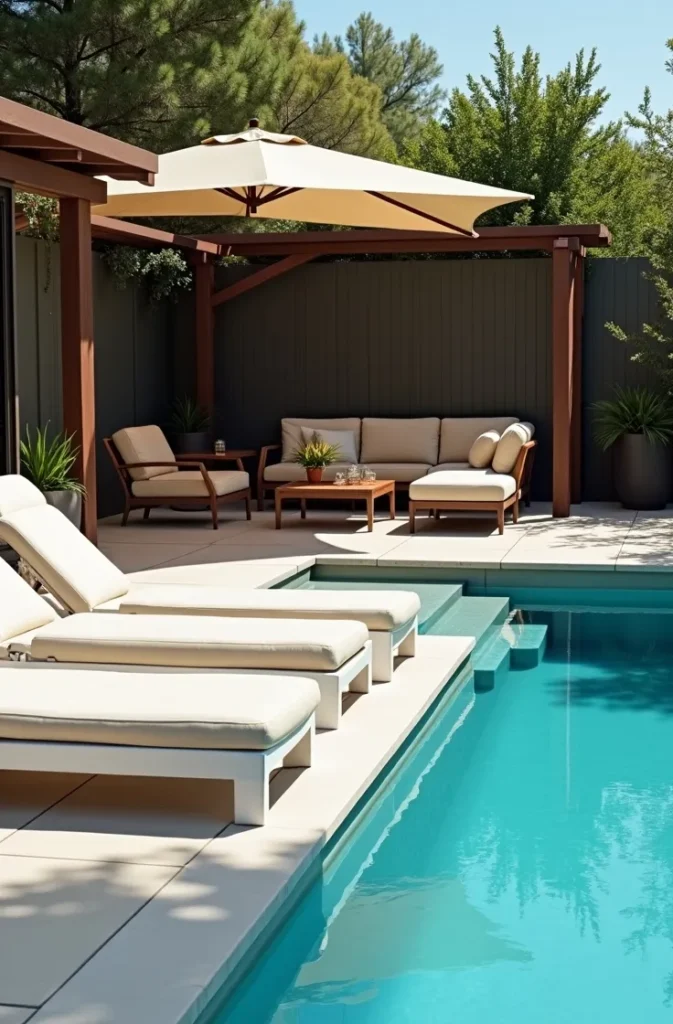
The shade zone in a poolside layout should contain conversational seating, not additional loungers. A small sectional or two club chairs around a low table in the shaded zone creates a social environment distinct from the sun lounger rows, giving the poolside area two functional modes: passive sunning and active conversation.
Furniture material selection is more important poolside than in any other outdoor zone. All materials must tolerate chlorine splash, UV exposure, and wet contact from regular pool use. Powder-coated aluminum, teak, or all-weather wicker with quick-dry cushions are the only materials that perform reliably in this environment without annual refinishing or replacement.
11. Bohemian Floor Cushion Seating Area Under a Shade Sail
A floor-level seating area under a stretched shade sail — using large outdoor floor cushions, a low wooden platform coffee table, and layered outdoor rugs — creates one of the most relaxed and visually distinctive outdoor relaxing area configurations available in 2026. The floor-level approach removes the visual weight of standard patio furniture and creates a gathering space that feels more like an outdoor living room than a furniture arrangement.
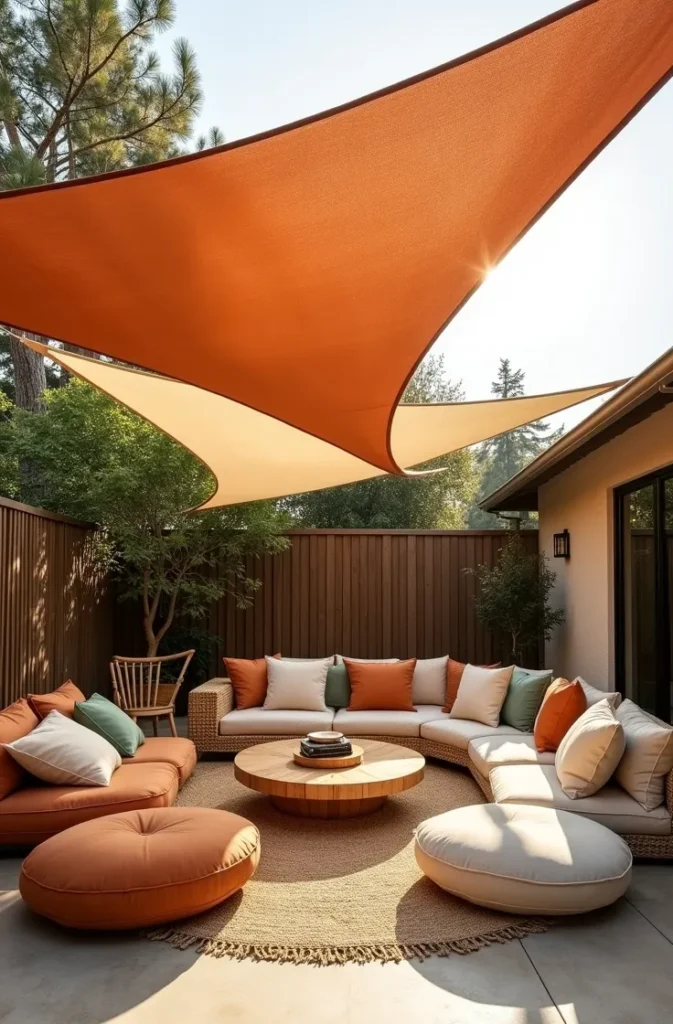
Shade sail geometry is the first practical decision. A single triangular shade sail is the most common choice but provides the least coverage efficiency. Two overlapping triangular sails or a single square sail provide more complete shade coverage for the seating area below. The sail must be tensioned at a slope — not horizontal — to allow rain runoff, which prevents the pooling and sail damage that horizontal installations experience.
Floor cushion seating outdoors requires specific product selection. Standard indoor floor cushions deteriorate within weeks of outdoor exposure. Purpose-built outdoor floor cushions use solution-dyed covers with drainage grommets on the underside and foam rated for moisture. Storing floor cushions in a deck box between uses extends their usable life significantly in climates with regular summer rainfall.
12. Screened Porch Conversion That Makes Outdoor Relaxation Weather-Proof
Converting an existing covered porch into a screened enclosure is the single highest-impact improvement for homeowners in mosquito-active, high-humidity, or high-rainfall regions of the US, particularly the Southeast, Gulf Coast, and Mid-Atlantic states. A screened porch extends the usable outdoor relaxation season by eliminating the two primary deterrents to outdoor comfort in those climates — insects and sudden rain.
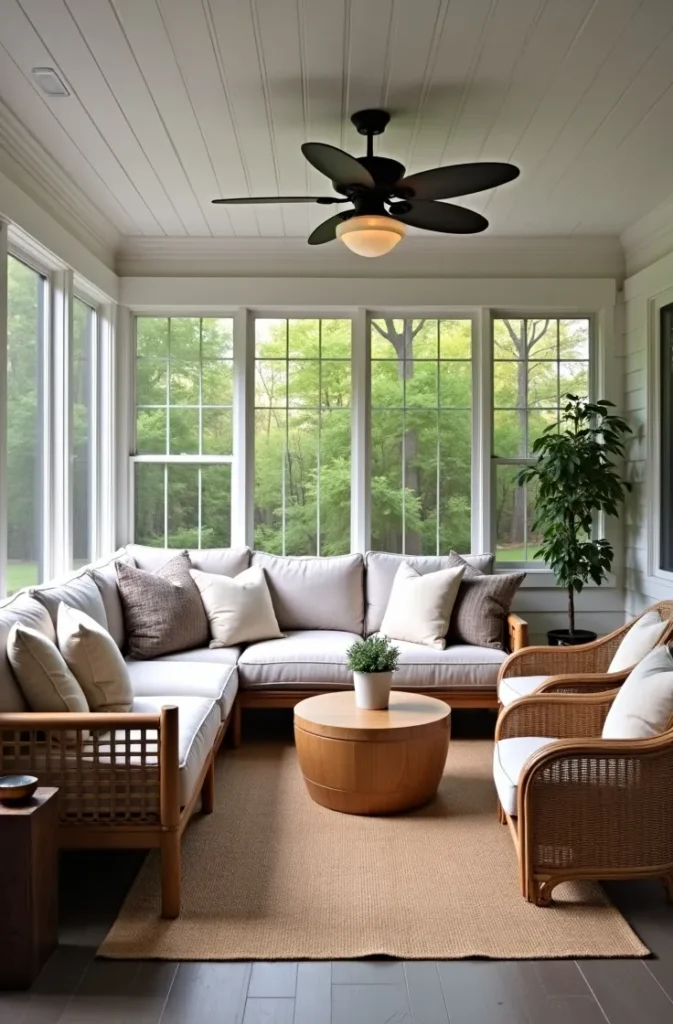
The interior of a screened porch should be furnished and decorated to the same standard as an interior living room, not as outdoor furniture storage. Because the screening handles weather exposure, the furnishings can include indoor-quality upholstery, woven rugs, pendant lighting on a junction box, and decorative accessories that standard open-air patios cannot accommodate.
The screen material selection is a practical decision with long-term consequences. Standard fiberglass screen is the most affordable but has the shortest lifespan and the least visibility clarity. Aluminum screen provides better durability and insect resistance. Pet-resistant screen — a heavier gauge woven material — is the correct choice for households with dogs or cats, as standard screen tears easily under paw pressure and requires replacement within one season of pet contact.
Conclusion
A well-planned outdoor relaxing area is not about spending more — it is about making the right layout decision for your specific space, climate, and how you actually use your yard. Every idea in this guide solves a real problem, whether that is an underused side yard, a balcony that feels too small to bother with, or a poolside setup that only works for sunbathing and nothing else.
Save this post now so you can reference the specific sections that match your space when you are ready to make changes. When you have your primary relaxation zone in place, explore outdoor lighting design and landscape screening ideas to complete the environment and extend your time outside well into the evening hours.