
Most garden planning fails not from lack of creativity but from lack of structure — the ideas look beautiful online and fall apart in the actual yard. This guide cuts through that gap with 10 focused garden inspiration ideas 2026 that are grounded in practical layout decisions, real plant choices, and design principles that hold up across different yard sizes, soil conditions, and maintenance levels.
1. Layered Cottage Border Garden That Looks Intentional, Not Overgrown
A layered perennial border — tall plants at the back, mid-height in the center, low groundcovers at the front edge — is the structural principle behind every cottage garden that looks deliberately designed rather than accidentally wild. Without this height progression, cottage planting reads as chaotic regardless of how beautiful the individual plants are.
The back layer should reach 4 to 6 feet at maturity: ornamental grasses, Russian sage, or tall coneflowers work well in most US hardiness zones. The middle layer sits between 18 and 36 inches — salvia, catmint, and coreopsis are reliable choices that bloom across a long season. The front edge, at 6 to 12 inches, uses low sedums, creeping thyme, or alyssum to soften the border line without crowding forward onto the lawn or path.
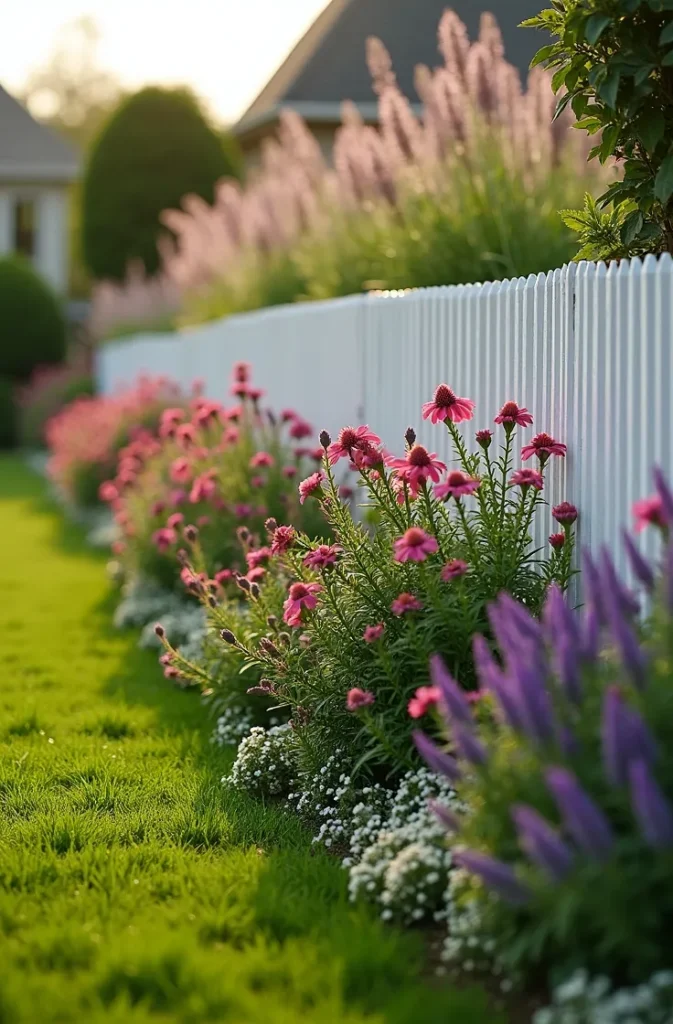

The mistake most gardeners make is planting everything at the same density regardless of mature size. Plants that look appropriately spaced at installation become overcrowded within two seasons when mature spread is not accounted for. Space mid-layer perennials at two-thirds of their mature spread distance — they will fill in correctly by the end of the second growing season without competition stress.
This approach works along any fence line, house foundation, or property border at least 4 feet deep. Narrower borders under 3 feet do not provide enough depth for true layering and are better planted as a single-species edging rather than a mixed border.
2. Raised Bed Vegetable Garden Layout That Maximizes Yield in a Small Footprint
A raised bed kitchen garden arranged in two parallel rows with a central access path between them is the most productive layout for residential vegetable growing in a limited footprint. Two beds of 4 feet wide each allow full arm reach from either side without stepping into the bed, which preserves soil structure and eliminates compaction that reduces drainage and root penetration over time.
The ideal bed length for a manageable home garden is 8 to 12 feet. Longer beds become inconvenient to walk around and tend to develop neglected far ends. Bed height should be a minimum of 10 inches for most vegetables, and 18 to 24 inches for deep-rooted crops like carrots, parsnips, and tomatoes.
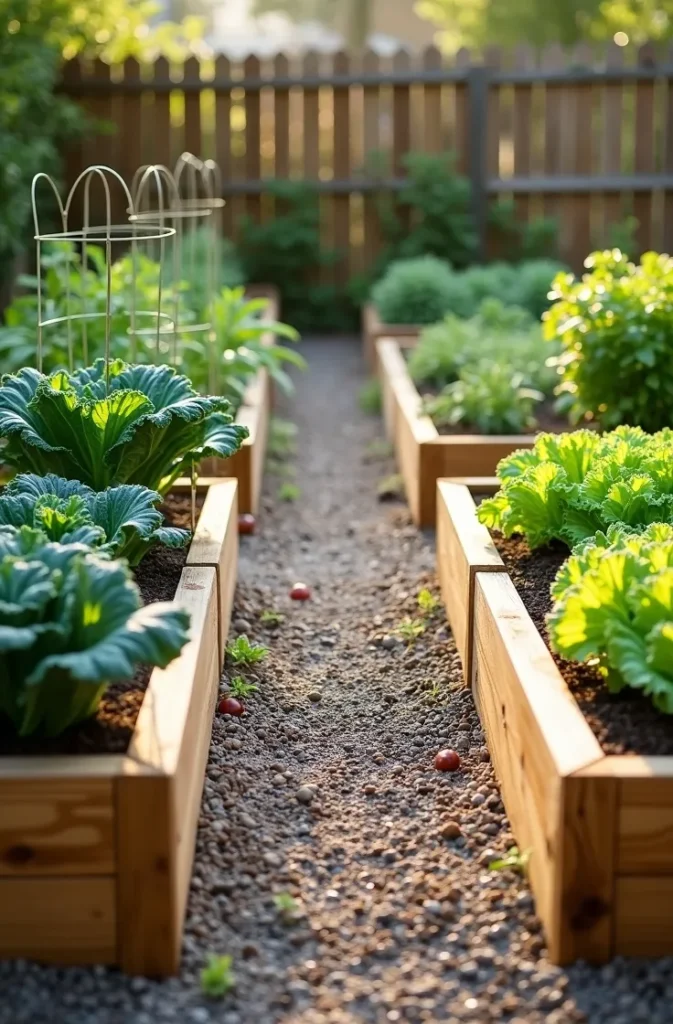
Cedar is the standard material recommendation for raised bed construction because it naturally resists rot without chemical treatment. Untreated pine will degrade within 3 to 5 years in contact with moist soil. Composite lumber and galvanized steel are longer-lasting alternatives that do not require any seasonal treatment.
This layout suits any garden space as small as 10 by 12 feet — two 4×8 beds with a 2-foot path between them fit in that footprint. Position the beds on a true north-south axis so both long sides receive direct sun across the growing day without one bed shading the other in morning or afternoon.
3. Dry Creek Bed Landscape Feature That Solves Drainage and Adds Natural Beauty
A dry creek bed — a shallow channel lined with smooth river stones in graduated sizes — solves two problems simultaneously: it manages surface water runoff from sloped yards or areas where water pools after rain, and it adds a naturalistic landscape feature that requires zero ongoing maintenance once established.
The creek bed should follow the natural water flow path of the yard, which you can identify after a heavy rain by observing where water channels across the surface. Forcing a dry creek bed to run against the natural gradient creates a feature that fails during rain events and collects debris rather than moving it.
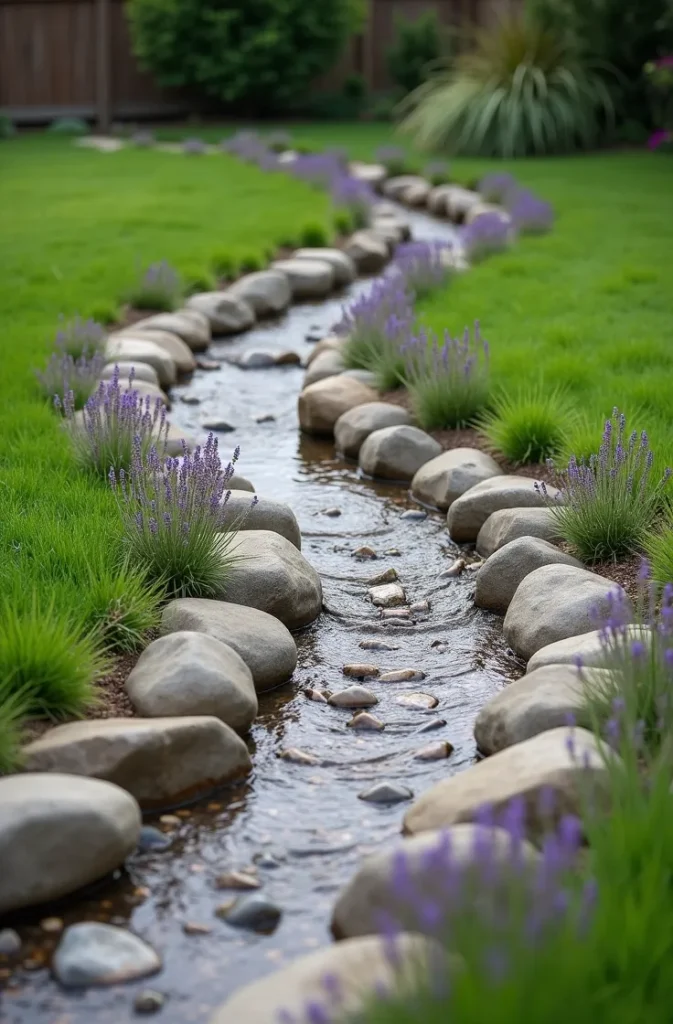
Stone sizing is the key technical detail. Place larger boulders and cobbles along the outer edges of the channel, medium river stones in the body of the creek, and pea gravel at the center low point. This size graduation mimics natural creek formation and provides adequate drainage velocity for moderate rainfall events. A flat layer of all one stone size creates surface pooling rather than drainage.
Among the most practical garden inspiration ideas 2026, this one delivers the highest return in problem-solving value for yards with drainage issues. Plant the banks of the creek with drought-tolerant ornamental grasses, lavender, or low junipers — plants that tolerate both the dry periods and the occasional wet conditions that a drainage channel experiences.
4. Modern Geometric Garden With Clipped Hedges and Gravel Panels
A geometric garden layout — symmetrical or asymmetrical rectangular planting beds separated by gravel or decomposed granite panels, edged with clipped low hedges in boxwood or holly — brings architectural clarity to a backyard that feels shapeless or undefined. This is the contemporary alternative to the English formal garden, scaled for residential lots and designed for lower maintenance than traditional topiary.
The geometric structure works by replacing the lawn as the primary ground plane with a combination of gravel panels and planted rectangles. Each rectangle is edged with a clipped hedge 12 to 18 inches tall that defines the boundary between planting zone and gravel zone. Inside the rectangles, planting can range from a single ornamental grass variety to a mixed perennial palette — the geometry of the hedge edge provides the order regardless of what grows inside.
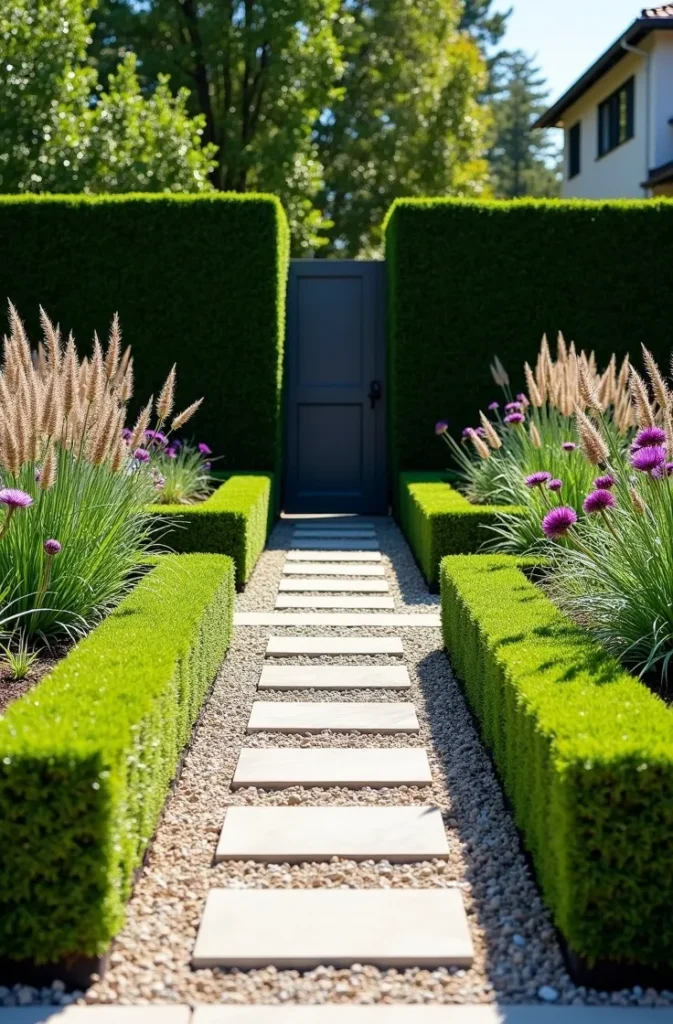
This layout is particularly well-suited to flat, rectangular backyards in suburban settings where the yard has a clear boundary but no natural features or grade changes to give it character. It works in both full sun and partial shade depending on plant selection, and the gravel panels reduce the total lawn area that requires mowing and irrigation.
Avoid clipping hedges into shapes more complex than a flat-topped rectangle or gentle rounded form for residential installations. Elaborate topiary requires professional-level maintenance multiple times per season to hold shape — flat-topped hedges can be maintained with a single annual trim in most US climates.
5. Native Plant Meadow Garden That Eliminates Lawn Maintenance
Replacing a portion of traditional lawn with a native plant meadow planting — a mix of regional wildflowers, native grasses, and flowering perennials suited to the local climate — is one of the most significant garden inspiration ideas for 2026 as water restrictions and lawn maintenance costs continue to shape residential landscaping decisions across the US.
The critical design step that separates a native meadow from an unkempt yard is a defined boundary. A mown grass border 18 to 24 inches wide around the perimeter of the meadow planting communicates to neighbors and passersby that the planting is intentional. Without this mown edge, native meadow planting is consistently perceived as neglect, regardless of the plant quality inside.
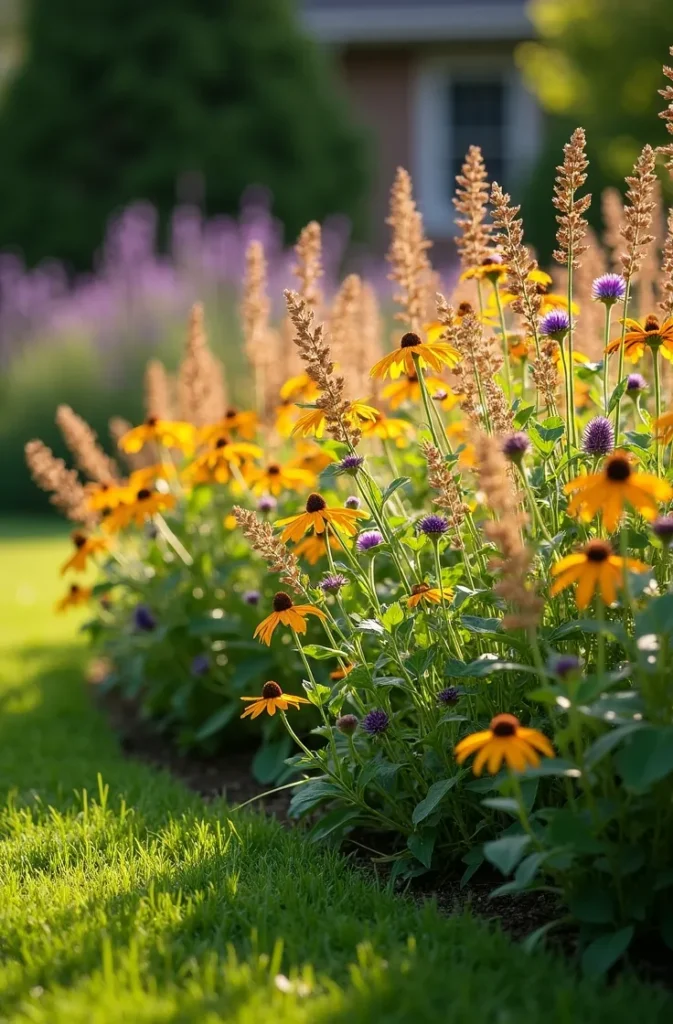
Native plant selection must be regional. Plants native to the Pacific Northwest do not perform in the Southeast, and vice versa. The correct starting point is the USDA Plant Hardiness Zone map combined with the specific moisture and sun conditions of the planting site. A meadow in the Upper Midwest should center on little bluestem grass, black-eyed Susans, and prairie dropseed. A Southeast meadow performs better with muhly grass, native coneflower, and wild bergamot.
The maintenance requirement for an established native meadow is dramatically lower than a traditional lawn — one annual cut in late winter or early spring clears the previous season’s growth and stimulates new growth without irrigation, fertilization, or pest management in most climates. The establishment period of 18 to 24 months requires more attention but the long-term maintenance reduction is significant.
6. Vertical Garden Wall That Adds Greenery Without Using Ground Space
A vertical garden — planting installed on a wall-mounted frame, trellis, or modular panel system — solves the fundamental problem of gardens on properties where horizontal ground space is unavailable or already fully committed. This is the most relevant layout solution for urban backyards, enclosed courtyards, and any outdoor space smaller than 200 square feet.
The structural approach matters more than the plant selection. A vertical garden must be mounted on a wall or fence that can support the combined weight of the frame, growing medium, water-saturated soil or substrate, and mature plants — which can reach 8 to 15 pounds per square foot in a fully planted modular system. Fence pickets and lightweight trellis panels are not adequate mounting structures for heavy vertical garden systems.
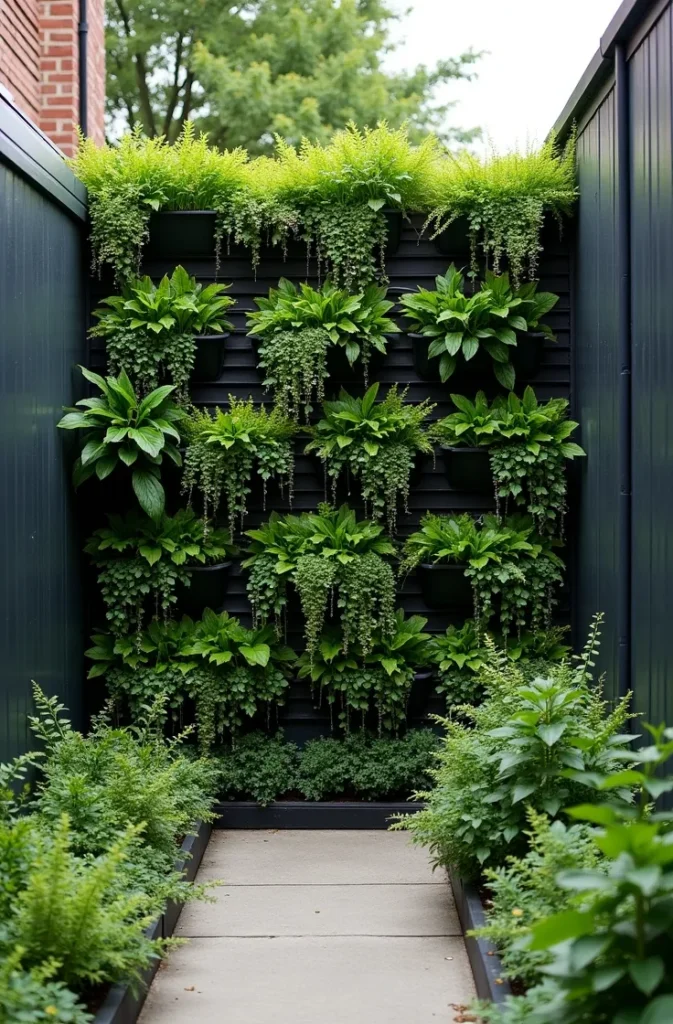
For a beginner-friendly version, a simple cedar trellis mounted on a fence or wall supporting climbing plants — clematis, climbing hydrangea, or native coral honeysuckle — provides vertical green coverage without the complexity of a modular planting system. Climbing plants on a trellis require only a ground planting point and appropriate support structure, making them the lowest-barrier vertical garden option.
A wall of climbing plants or a modular vertical garden is also one of the most effective privacy solutions for overlooked yards and urban spaces. At full coverage, a 6-foot-tall climbing plant installation on a trellis creates complete visual screening that is more effective and more visually interesting than a solid wood privacy fence.
7. Gravel Garden With Drought-Tolerant Planting for Low-Water Landscapes
A gravel garden — a planting scheme where ornamental gravel replaces mulch and lawn as the primary ground surface, with drought-tolerant perennials, sub-shrubs, and ornamental grasses planted directly through the gravel layer — is the most practical garden design response to water-restricted climates across the American West, Southwest, and increasingly the Southern Plains.
The gravel layer performs multiple functions simultaneously. It suppresses weeds more effectively than organic mulch by creating a surface condition hostile to weed germination. It reflects heat away from the soil surface in summer while retaining soil warmth in shoulder seasons, extending the active growing period. And it creates the sharp drainage that Mediterranean-climate plants — lavender, cistus, euphorbia, and ornamental sage — require to perform at their best.
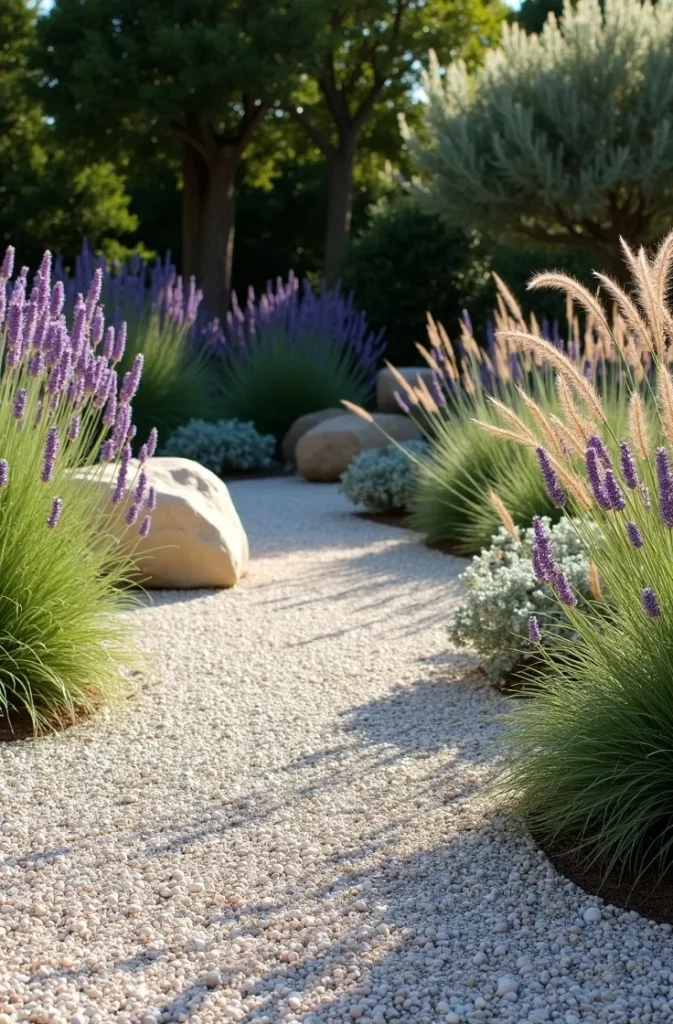
Plant spacing in a gravel garden should appear generous rather than dense. Unlike a traditional perennial border where plants grow together to cover bare soil, a gravel garden’s ground plane is the gravel itself, and visible gravel between plants is part of the aesthetic rather than a gap to fill. Crowding plants in a gravel garden causes the competition and moisture retention that defeats the purpose of the gravel surface.
This layout works on any flat or gently sloping site with reasonable sun exposure. It is not suitable for heavily shaded sites or low-lying areas with drainage problems — those sites require different plant communities and surface treatments.
8. Shade Garden Under Tree Canopy That Turns a Problem Spot Into a Feature
The area under a mature tree canopy — typically deep shade, root competition, and dry soil — is one of the most consistently underused and problematic spots in residential gardens. Turning this zone into a deliberate shade garden with the right plant palette converts a maintenance headache into one of the most visually distinctive garden areas on the property.
The planting approach for under-tree shade gardens must account for root competition and reduced soil moisture. Surface roots from mature trees make traditional digging and soil amendment difficult. The practical solution is to add a shallow 2 to 3-inch layer of quality compost over the existing soil surface — without disturbing the root zone — and plant shade-tolerant species that are accustomed to competing conditions: hostas, astilbe, hellebores, epimedium, and native wild ginger.
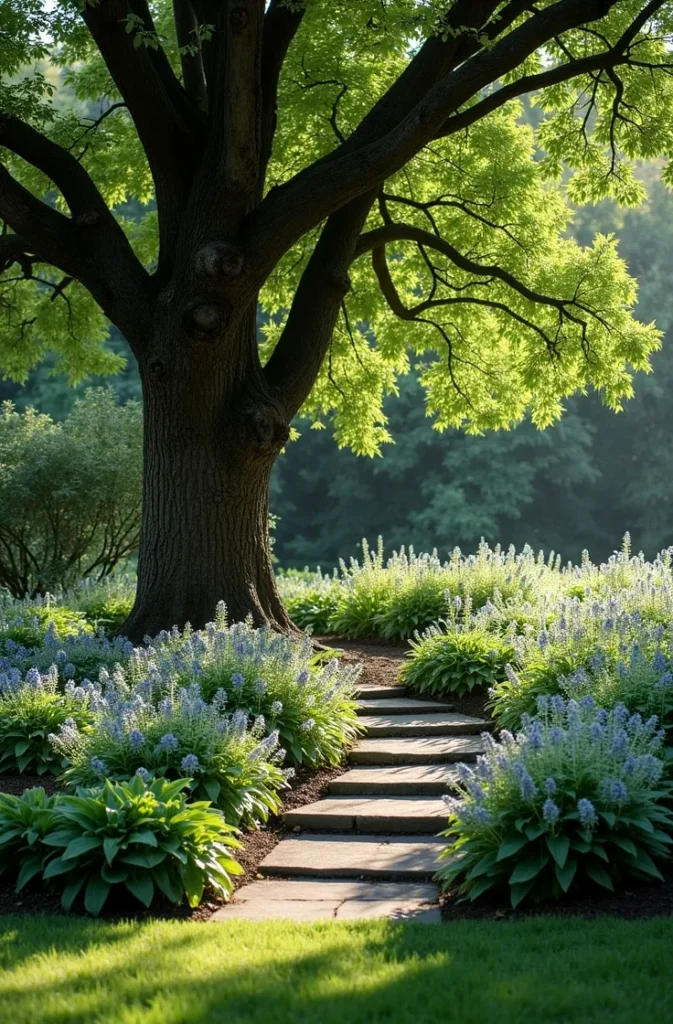
Never mound soil or thick mulch against the base trunk of a tree to create planting beds. Soil contact against tree bark creates conditions for crown rot and long-term structural damage to the root flare. Keep all planting and mulch at least 12 inches from the trunk base.
A single shade garden under a mature tree, edged with a clean metal or stone border, with a simple stepping stone path leading to its center, is one of the most impactful garden inspiration ideas for transforming a challenging spot into a calm, deliberate garden destination.
9. Front Yard Garden Redesign That Replaces Lawn With Structured Planting
Converting a traditional front lawn to a planted garden design is the most visible and neighborhood-impacting garden decision a homeowner can make. Done correctly with structure and defined edges, it dramatically improves curb appeal and reduces weekly maintenance. Done without clear structure, it creates a front yard that looks unfinished regardless of the plant quality.
The structural elements that make a front yard garden redesign read as intentional are a defined path from the street or driveway to the front door, a clear ground plane treatment, and planting arranged in distinct masses rather than scattered individual plants. Mass planting — groups of the same plant species in blocks of five to nine specimens — creates visual coherence that scattered mixed planting cannot achieve at the street-level scale of a front yard.
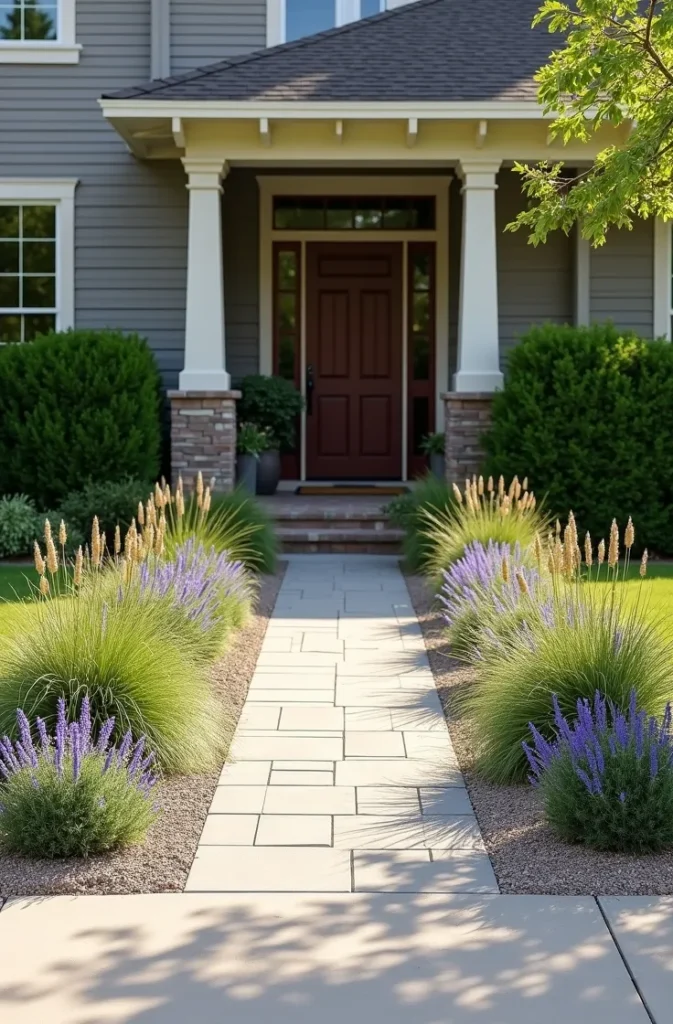
Ground plane options beyond lawn include decomposed granite with a compacted base, flagstone set in gravel, concrete pavers in a simple pattern, or a low groundcover like creeping thyme or drought-tolerant sedge. The ground plane choice should be consistent with the architectural character of the house — gravel and ornamental grasses suit contemporary architecture, while flagstone and mixed perennials suit traditional or cottage-style homes.
Check local HOA and municipality regulations before removing front lawn entirely. Some jurisdictions have minimum lawn coverage requirements or approved plant lists for front yard gardens that must be reviewed before planning begins.
10. Four-Season Garden Plan That Keeps the Yard Interesting Year-Round
Most residential gardens peak in summer and fade entirely by October. A four-season garden plan is a deliberate planting strategy that ensures visual interest in every month of the year by distributing bloom times, foliage interest, and structural plant forms across all four seasons — solving the specific problem of a garden that looks abandoned for half the year.
The four-season framework assigns a primary plant role to each season. Spring relies on early bulbs — tulips, alliums, and daffodils — and flowering shrubs like forsythia and viburnum. Summer carries the main perennial bloom load. Fall extends interest through ornamental grasses going golden, late-blooming asters and rudbeckia, and shrubs with berry interest like winterberry holly. Winter interest comes from structural plant forms: the skeletal framework of deciduous shrubs, evergreen foliage, ornamental grass plumes left standing, and the dried seed heads of coneflowers and alliums.
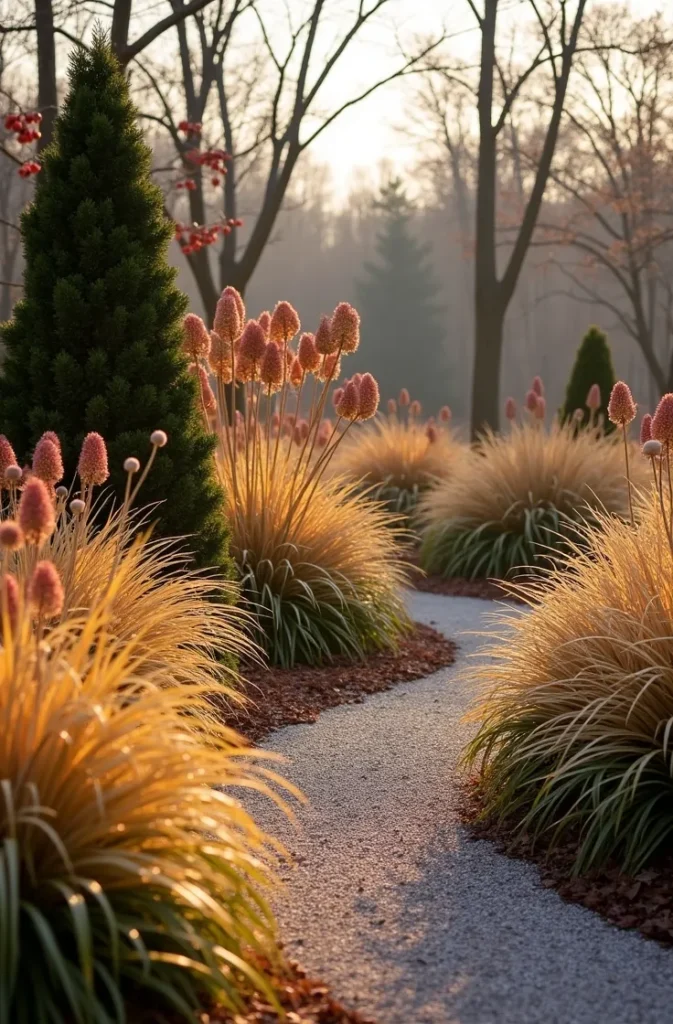
The common planning mistake is spending the entire planting budget on summer-blooming perennials and ignoring the other three seasons entirely. A garden with twelve summer perennials and zero winter structure will look genuinely empty and brown from November through April in most US climates — seven months of the year.
This four-season approach applies to any garden size from a 10-foot foundation planting to a full backyard landscape. The proportioning principle is roughly equal investment across seasons, with summer carrying slightly more than the others since it receives the most daily use and enjoyment.
Conclusion
The best garden inspiration ideas 2026 are the ones that match your specific yard conditions, maintenance capacity, and climate — not simply the ones that look beautiful in photographs. Every idea in this guide includes the practical reasoning behind the design so you can judge whether it applies to your situation before committing time and money to the work.
Save this post now as a planning reference — garden decisions made over several weeks with a clear reference point consistently produce better results than decisions made during a single nursery visit without a plan. When your primary garden layout is in place, explore outdoor lighting design and hardscape planning to extend the functionality and visual appeal of your garden into the evening hours and the cooler seasons ahead.