
If you have a Victorian terrace and a small courtyard garden, the challenge is real — narrow space, limited light, and zero room for mistakes. These victorian terrace courtyard garden ideas are built around practical layouts that solve specific problems, so you can make confident decisions before you spend a dollar or dig a single hole.
1. Use a Central Paved Circle to Open Up a Narrow Courtyard
A circular paving layout placed at the center of a narrow rectangular courtyard immediately draws the eye inward rather than along the walls. This creates the visual illusion of width in a space that might only be 8 to 12 feet across.
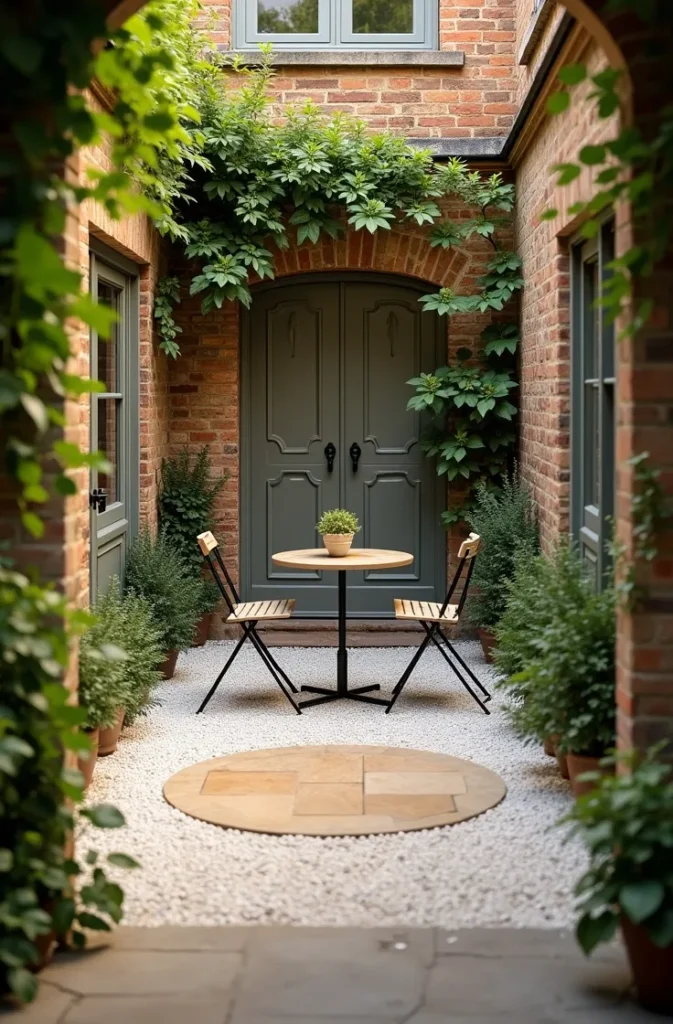
Choose natural stone or textured porcelain tiles in a warm gray or sandstone tone. Surround the circle with low-growing ground cover or fine gravel to keep the edges soft. The contrast between hard paving and loose material adds texture without adding clutter.

This layout works best when the courtyard is longer than it is wide. Avoid filling the circle with furniture — keep it open or use a single small bistro table so the spatial effect is not lost.
2. Build a Raised Timber Platform to Define a Seating Zone
In a courtyard with uneven ground or poor drainage, a raised timber deck platform solves two problems at once. It levels the surface and creates a clearly defined seating area without permanent construction.
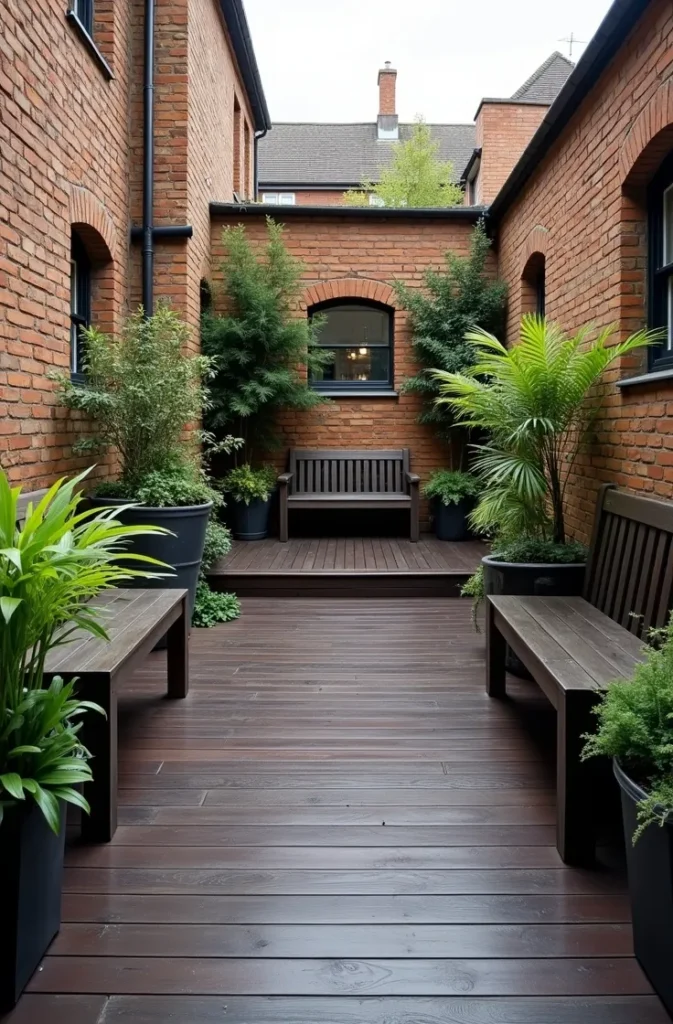
Use hardwood decking or composite boards in a dark charcoal or natural oak finish. Keep the platform low — four to six inches above ground level is enough. Add built-in bench seating along one or two edges to save space and make the area feel intentional.
This approach works particularly well in Victorian terraces where the courtyard sits below the back door threshold. Avoid wide gaps between boards if you plan to use the space year-round, as debris and moisture accumulate quickly.
3. Line Both Side Walls With Vertical Planters to Reclaim Floor Space
When floor space is measured in square feet, not yards, the walls become your most valuable real estate. Vertical planter systems mounted along both side walls keep the center of the courtyard clear while still delivering greenery and life.
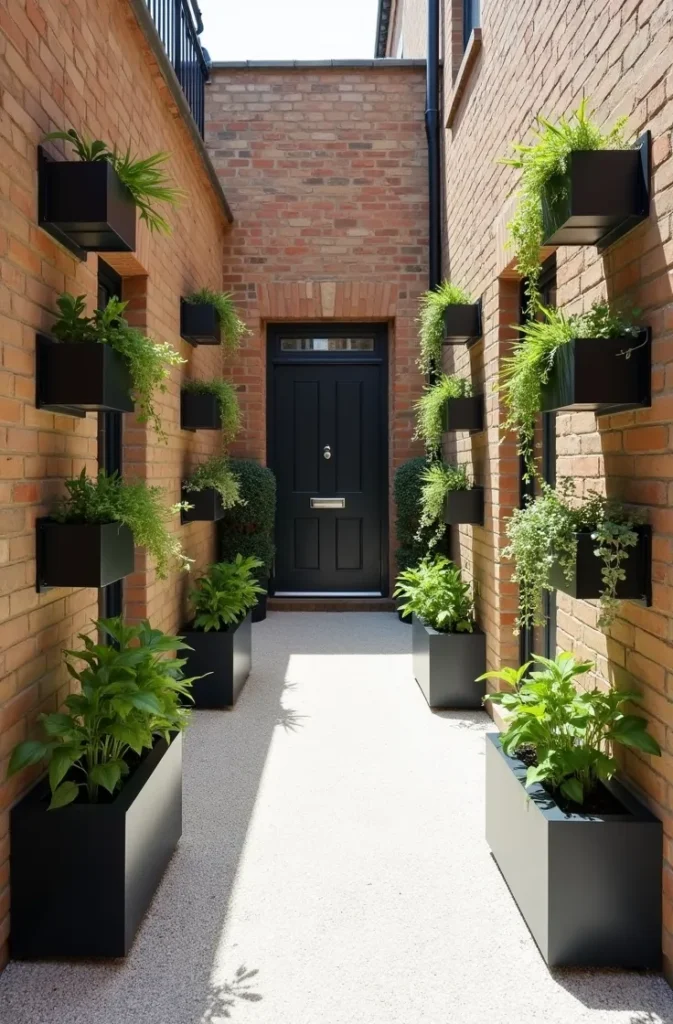
Use powder-coated steel wall-mounted troughs or timber box planters staggered at different heights. Plant trailing herbs, ferns, or ivy for a layered look that softens the hard brick surfaces without overpowering the space.
This is one of the most practical small courtyard garden layout ideas for Victorian terraces because it adds visual depth on a horizontal plane. The mistake most people make is mounting all planters at the same height, which creates a flat, uninspired look. Stagger them deliberately.
4. Create an L-Shaped Seating Layout Around a Corner Fire Pit
An L-shaped bench or modular sofa layout tucked into one corner of the courtyard frees up the opposite end for planting, a water feature, or simply open circulation space. Anchor the corner with a small fire pit or a tall lantern cluster.
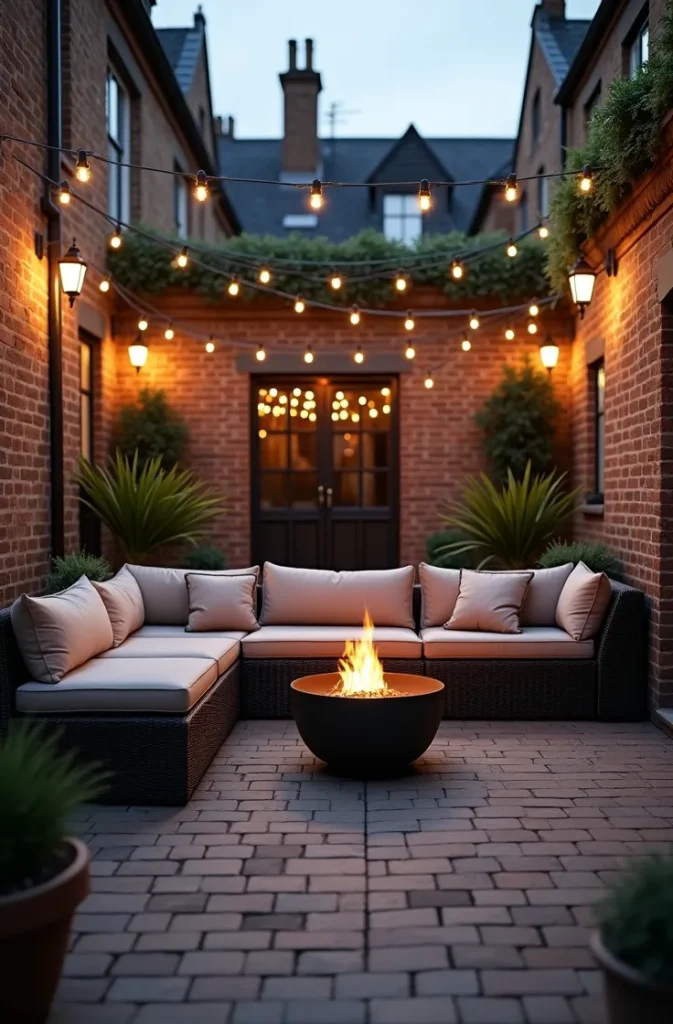
Use weather-resistant rattan or powder-coated aluminum furniture in black or dark forest green. Keep the cushion fabric in a neutral linen or stone tone so it reads as calm and considered. The L-shape naturally draws people to sit facing the garden rather than each other, which makes the space feel larger.
This layout suits courtyards that are square or close to square. In a long narrow space, it can make the courtyard feel pinched at the sides, so use it only when you have at least 10 feet of width to work with.
5. Lay Diagonal Paving to Make a Compact Courtyard Feel Wider
The direction of your paving pattern has a significant impact on how large a space appears. Laying rectangular or square pavers at a 45-degree angle to the walls draws the eye diagonally across the courtyard, which reads as wider than it actually is.
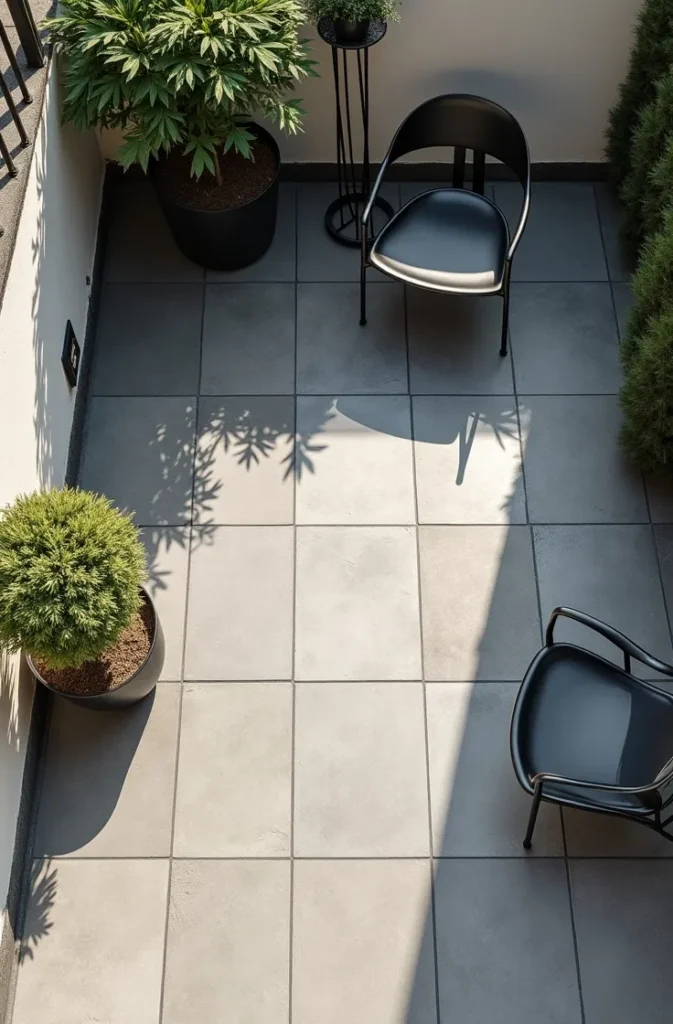
Choose a mid-tone porcelain tile in a concrete or limestone finish. Keep the grout line thin and in a matching tone so the pattern reads as continuous rather than segmented. This detail alone can make a courtyard feel 20 to 30 percent larger visually.
This is a well-tested technique in small courtyard garden space planning, and it works regardless of whether the space is square or rectangular. The mistake to avoid is combining diagonal paving with too much furniture — keep the floor visible so the pattern can do its job.
6. Install a Wall-Mounted Water Feature to Add Sound Without Taking Floor Space
A wall-mounted water feature — a simple trough spout or a recessed blade fountain — adds sensory interest and masks urban noise without occupying any floor area. In a Victorian terrace courtyard, this is often the single most impactful upgrade for livability.
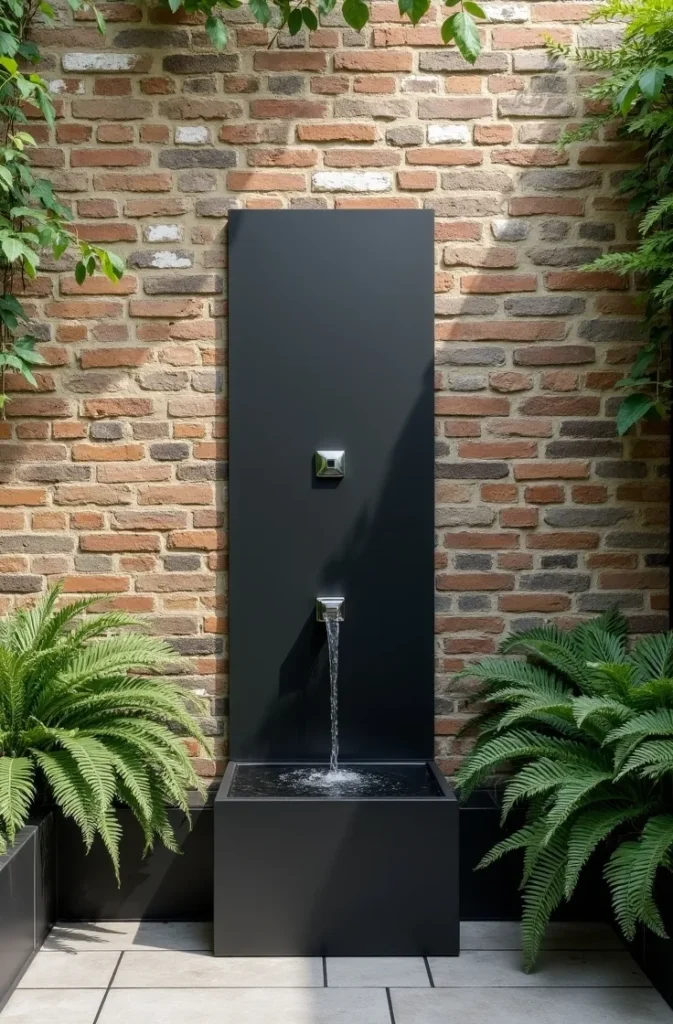
Mount the feature on the rear wall at eye level or slightly above. Use a matte black or weathered copper finish to complement aged brick. Keep the basin shallow and wide rather than deep and narrow so it reflects sky light and opens the space visually.
Sound is often overlooked in small courtyard garden design. Running water softens the acoustic hardness of surrounding brick walls and creates a sense of calm that furniture alone cannot achieve. Make sure the pump is positioned for easy winter drainage.
7. Use Large-Format Single Slabs to Simplify an Overcrowded Courtyard
If a small courtyard feels busy or chaotic, the problem is usually too many competing materials or patterns on the floor. Switching to large-format paving slabs — think 24×24 inch or 24×48 inch — immediately calms the space and reduces visual noise.
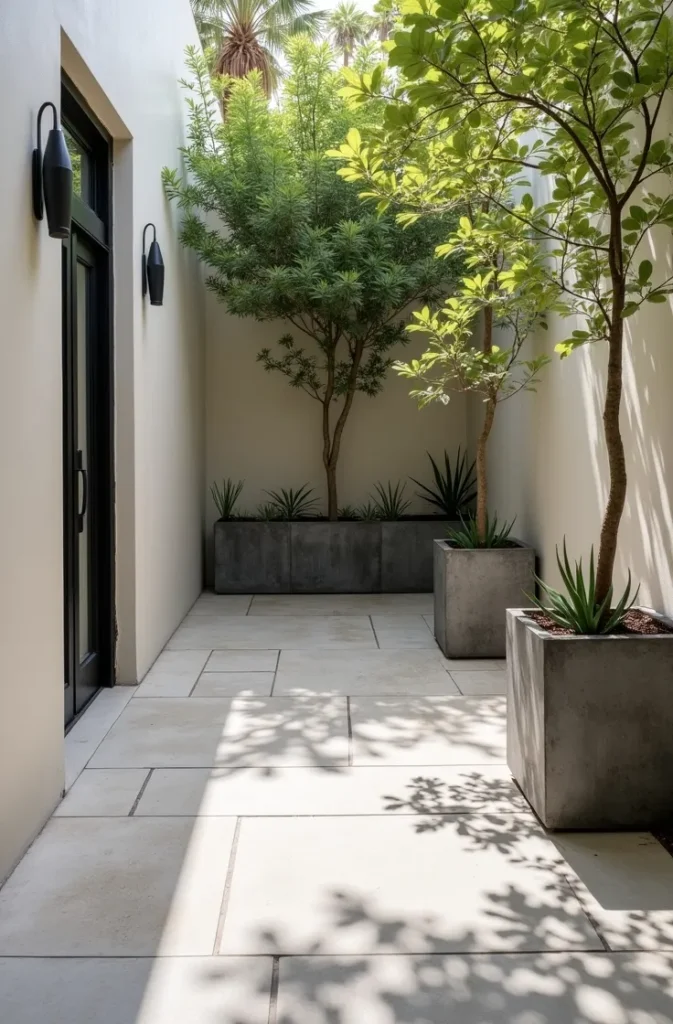
Natural slate, honed limestone, or large-format porcelain all work well. Fewer grout lines mean fewer interruptions to the eye, which reads as more space. Pair with a simple planting scheme in one or two tones of green to keep the restrained look consistent.
This layout decision is especially relevant in victorian terrace courtyard garden ideas because the surrounding brickwork is already visually complex. A simple floor gives the eye somewhere to rest. The mistake here is choosing large slabs in a very light color — they show dirt quickly in a sheltered courtyard environment.
8. Design a U-Shaped Planting Bed Around Three Walls for Maximum Greenery
Wrapping a narrow planting border around three walls of a courtyard creates an immersive green surround without sacrificing the central paved area. This U-shaped layout works exceptionally well in Victorian terraces where brick walls are the dominant visual feature.
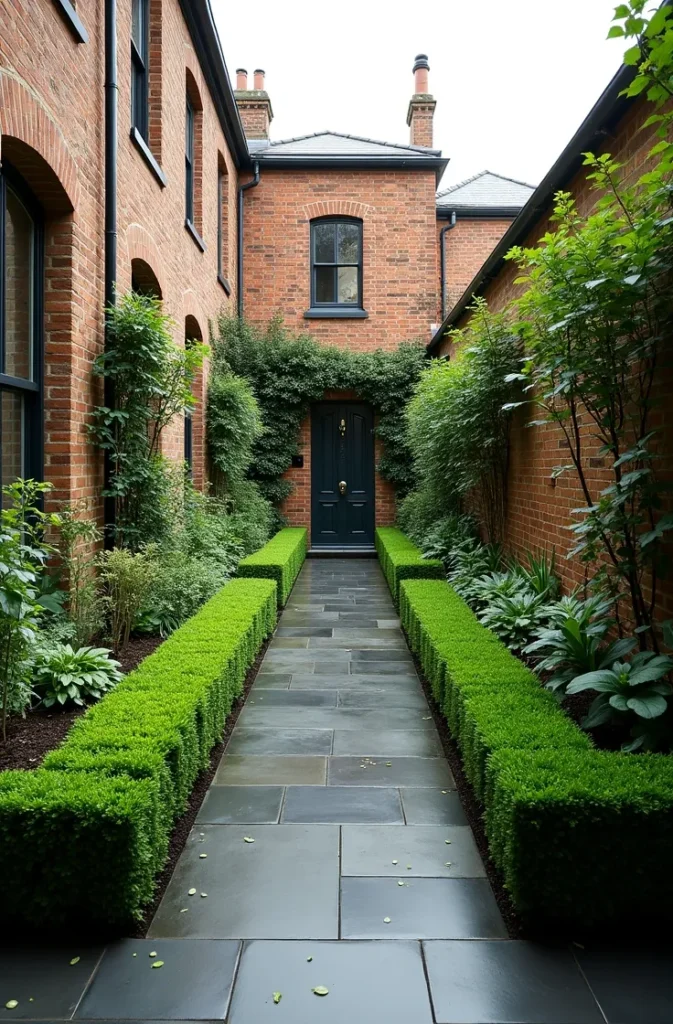
Keep the border between 12 and 18 inches deep. Use a layered planting scheme with taller evergreen shrubs at the back, mid-height perennials in the middle, and low ground cover or edging plants at the front. The layering creates depth and makes the planting read as intentional rather than accidental.
This approach is practical for courtyards that receive moderate shade, which is common in Victorian terrace situations. Choose plants that tolerate partial shade — fatsia japonica, ferns, hellebores, and box balls all perform well. Avoid filling the border with seasonal annuals that require constant replanting.
9. Add a Pergola Frame Over Half the Courtyard for Shade and Structure
A pergola does not need to cover the entire courtyard to be effective. Installing one over half the space — typically the seating end — creates a defined sheltered zone while leaving the other half open to light.
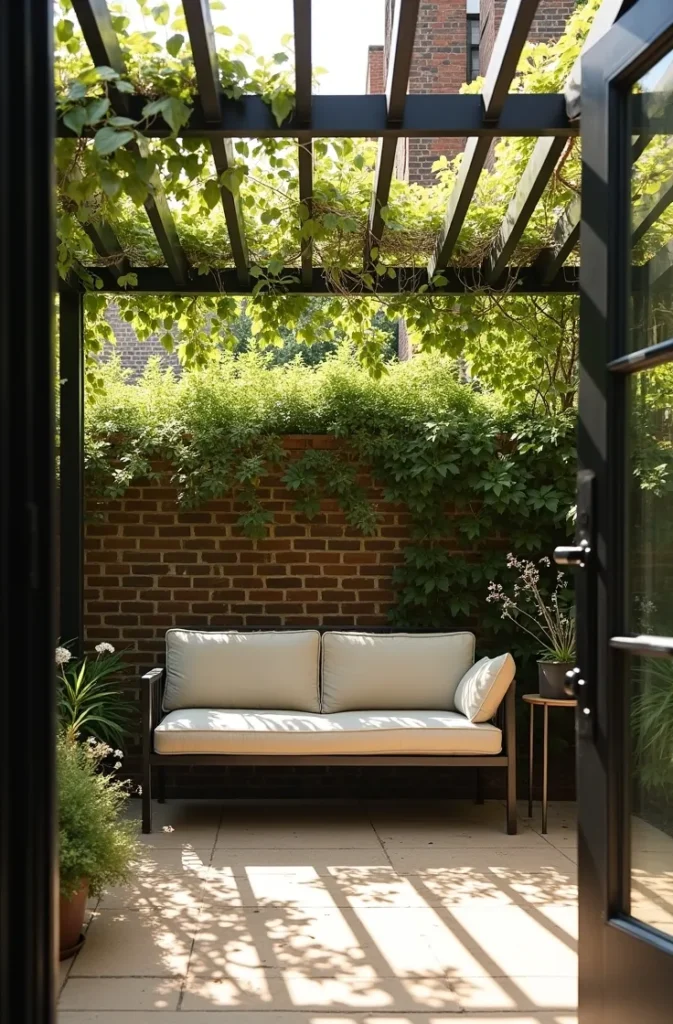
Use powder-coated steel or painted hardwood in a dark tone that contrasts with the brick. Train climbing plants such as wisteria, jasmine, or climbing hydrangea across the top to soften the structure over time. The partial coverage also allows light to reach any planting beds in the open section.
This is a strong layout decision for courtyards that face south or west and receive harsh afternoon sun. It extends the usability of the space through more months of the year. Avoid full-coverage pergolas in north-facing Victorian courtyards where light is already limited.
10. Use Mirror Panels on One Wall to Double the Perceived Depth
A full-height or oversized mirror panel mounted flush against one side wall creates the illusion that the courtyard continues beyond its actual boundary. This technique is used frequently in London garden design for exactly the kinds of enclosed Victorian terrace spaces common across the USA’s Victorian-era row house neighborhoods.
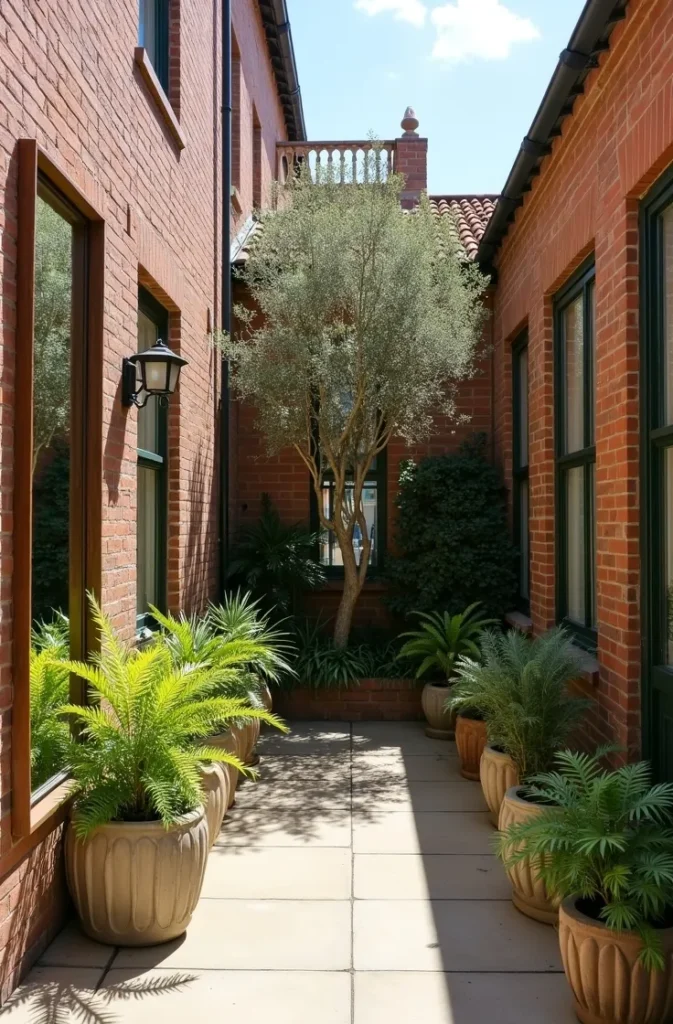
Choose a frameless or slim steel-framed outdoor mirror and mount it at standing eye level or slightly higher. Position a planting arrangement in front of it so the mirror reflects greenery rather than a blank wall. This doubles the visual impact of the planting.
The key mistake is mounting a mirror where it reflects a door, a window, or a blank fence — these reflections read as confusing rather than expansive. The mirror should reflect the most attractive part of the garden to work properly.
11. Lay a Gravel Floor With Stepping Stone Path for a Low-Maintenance Courtyard
A full gravel floor with a simple stepping stone path from the door to the seating area is one of the most functional and low-maintenance small courtyard layouts available. It handles drainage naturally, requires no maintenance beyond occasional raking, and suits the Victorian aesthetic well.
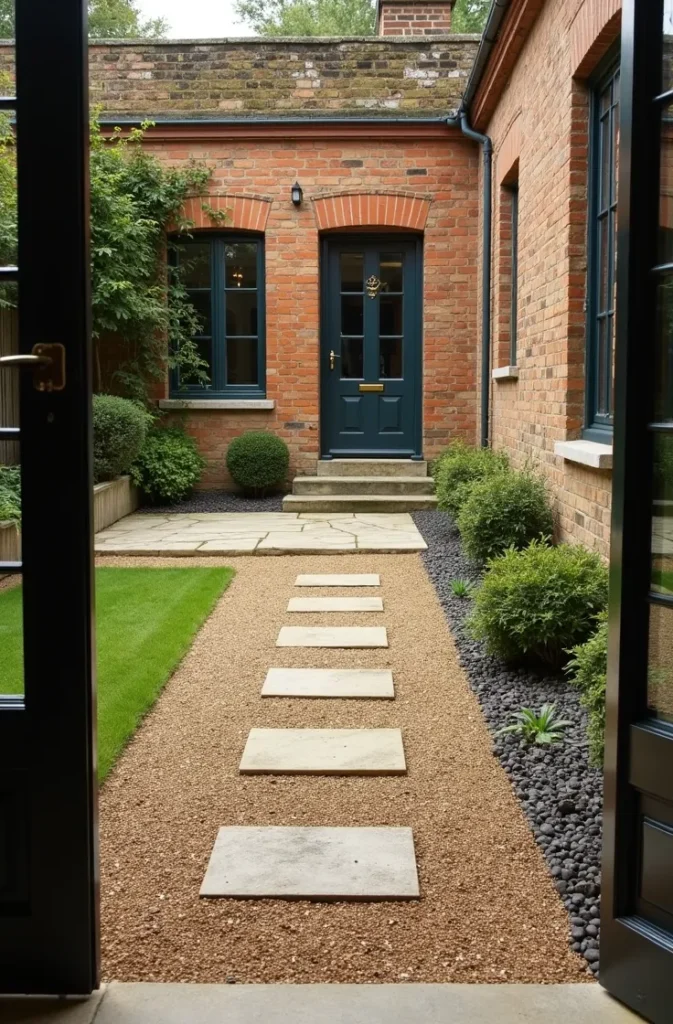
Use a washed angular gravel in a warm buff, pale gray, or charcoal tone. Set large irregular stepping stones or square pavers as a deliberate path through the center. Edge the gravel with a simple steel or timber border to prevent migration onto planted areas.
This approach works best in shaded or partially shaded courtyards where grass or moss would struggle. It is also a smart choice for rental properties or for homeowners who want a finished-looking courtyard garden without ongoing upkeep. Avoid fine round pea gravel if the space is used daily — it moves underfoot and becomes uncomfortable.
12. Install Slim Raised Beds Along One Wall for an Urban Kitchen Garden
A single wall of slim raised timber or steel beds converts one side of the courtyard into a productive kitchen garden without affecting the usable central area. Two or three beds stacked at different heights — 12 inches, 24 inches, and 36 inches — create a stepped visual effect and allow you to grow herbs, salad leaves, and compact vegetables.
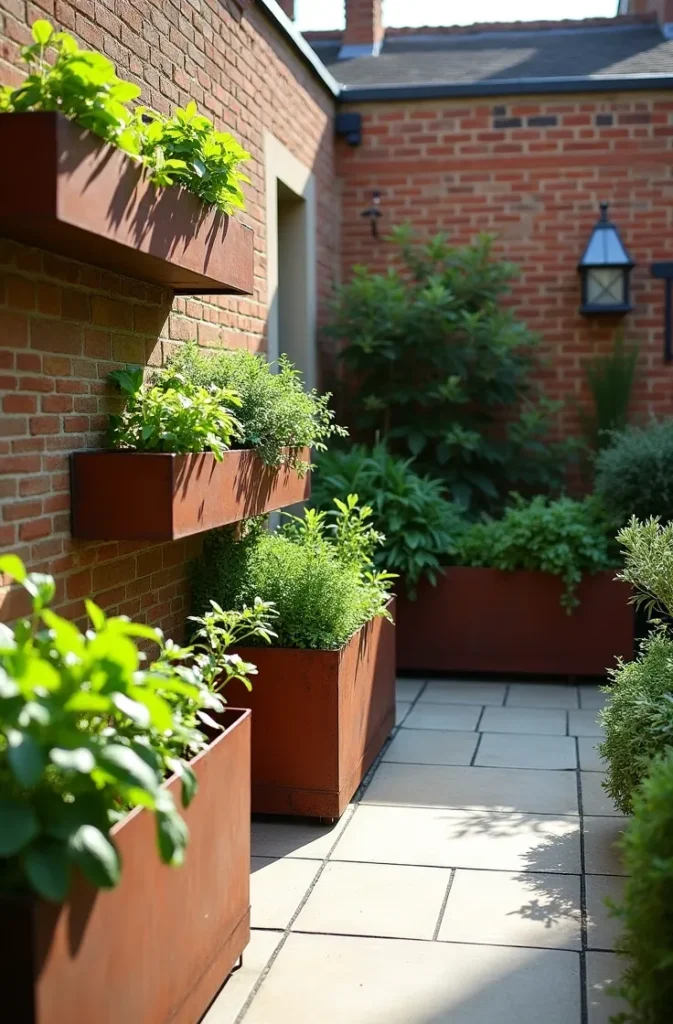
Use Corten steel planters for a contemporary finish that develops a warm rust patina over time and complements Victorian brick naturally. Alternatively, painted hardwood in charcoal or forest green works well. Line the beds with membrane to protect the structure and fill with high-quality loam-based compost.
This is a practical layout for homeowners who want a functional courtyard garden rather than a purely ornamental one. It also works as a design element — a well-planted raised bed wall is visually interesting year-round. The mistake to avoid is overcrowding the beds with plants of different heights that fight each other for light.
13. Use Black-Framed Glass Panels as a Wind Break Without Blocking Light
Exposed Victorian terrace courtyards can be cold and windy, making them unusable for much of the year. Slim black-framed glass panel screens — either freestanding or wall-mounted — provide wind protection while keeping the space feeling open and light-filled.
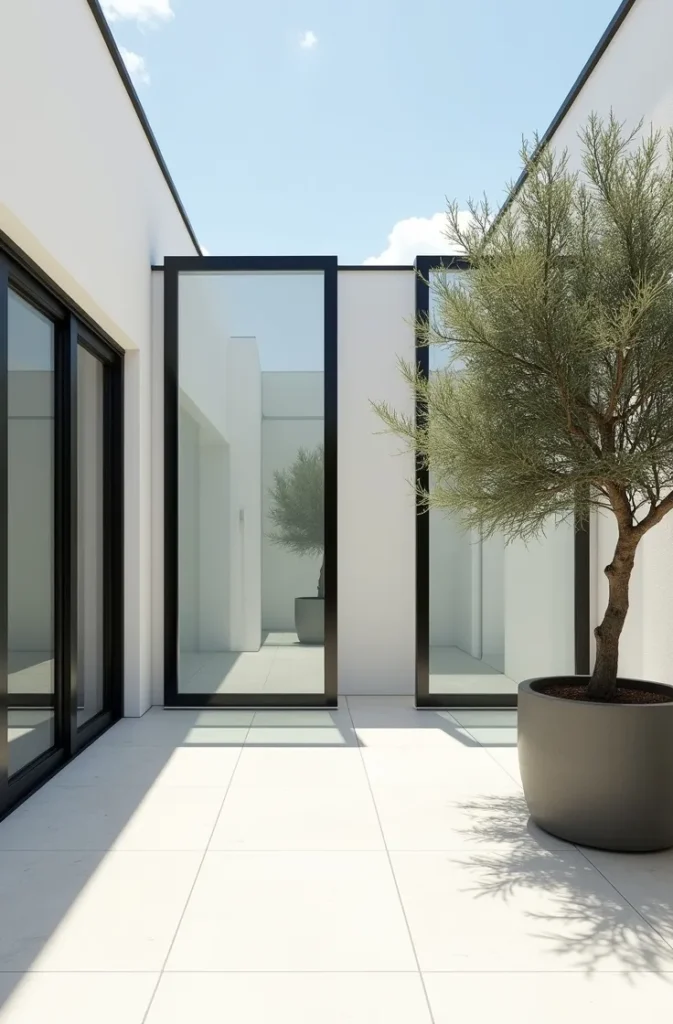
Position one or two panels at the windward end of the courtyard, typically the side facing the prevailing wind direction. Use toughened clear glass in a steel frame. The transparency means the panels do not visually reduce the space the way a timber fence panel would.
This solution is particularly relevant in functional courtyard floor plan design for terraced homes in urban areas where privacy and wind exposure are both concerns. Glass panels address the wind issue without sacrificing the open feel. Avoid frosted or textured glass, which makes the courtyard feel enclosed.
14. Create a Monochrome Black and White Courtyard for a Bold Minimal Look
A strictly monochrome courtyard — white rendered walls, black paving, white planters with dark foliage plants — reads as intentional and contemporary against the Victorian brick of a terrace. The contrast is graphic and works especially well in small spaces where every detail is visible.
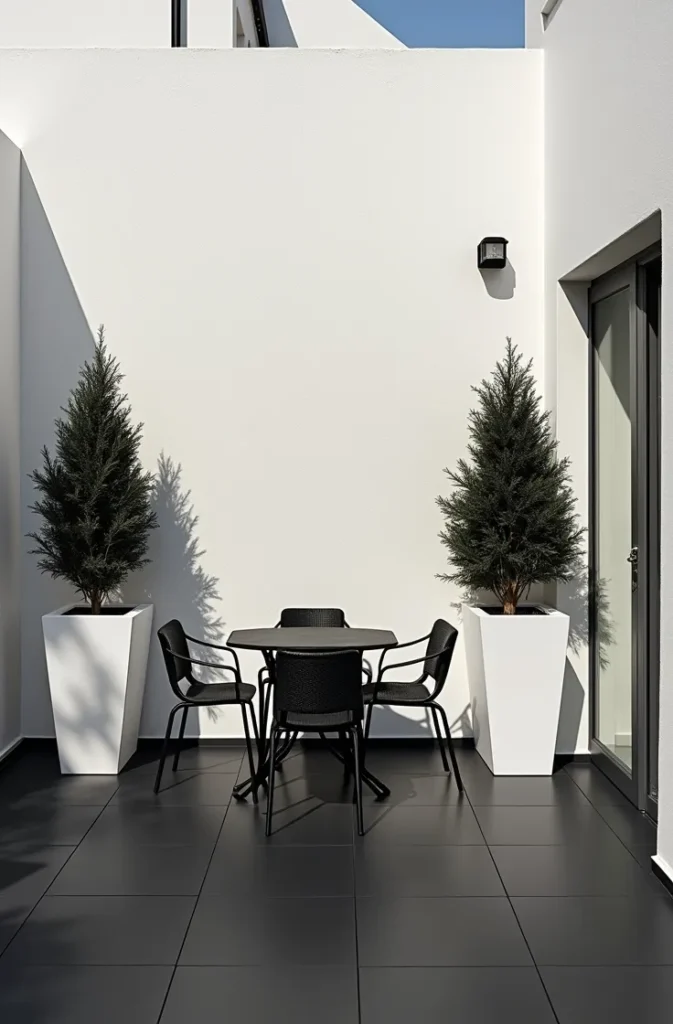
Render or whitewash one or two of the boundary walls and paint any doors or gates in matte black. Lay black porcelain or slate paving. Choose plants with dark or deep green foliage — black mondo grass, phormium, or glossy evergreen shrubs — to complete the palette.
This is a confident design decision that works in courtyards that receive reasonable light. In a very dark north-facing space, the black paving absorbs too much of the available light and can make the courtyard feel gloomy. In a south-facing courtyard, the high contrast reads as sophisticated and sharp.
15. Add Layered Lighting to Make the Courtyard Usable After Dark
A courtyard used only during daylight hours effectively halves its value. Layered lighting — wall-mounted sconces, in-ground uplights on plants, and warm string lights overhead — transforms an enclosed Victorian terrace courtyard into an evening outdoor room.
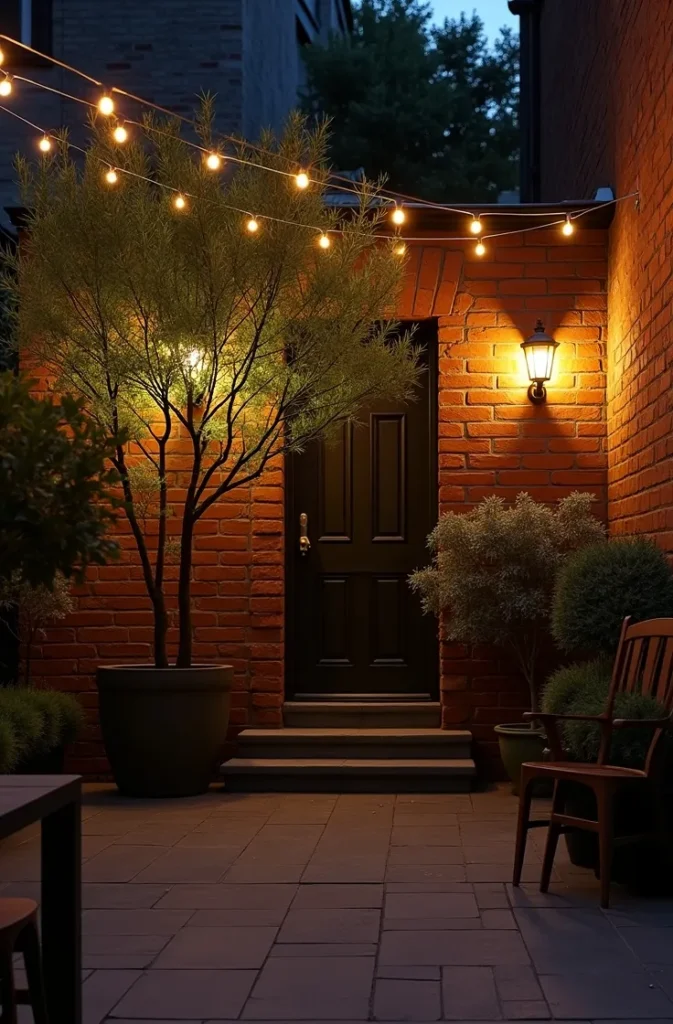
Position wall sconces at head height on the main wall and use warm white bulbs (2700K) to complement the brick tones. Add low-voltage uplights at the base of any specimen plants or trees to create focal points after dark. Finish with a simple overhead string light run between two walls or hooks.
Avoid cool white or blue-toned light in a small courtyard — it makes brick and stone look harsh and uninviting. The goal of evening lighting in a small courtyard garden is to create pools of warm light rather than flooding the entire space with uniform brightness.
16. Design a Zen-Inspired Dry Garden With Raked Gravel and Specimen Plants
A Japanese dry garden interpretation — raked fine gravel, a handful of carefully chosen specimen plants, and one or two large boulders — brings calm and order to a courtyard that would otherwise feel bare or under-designed.
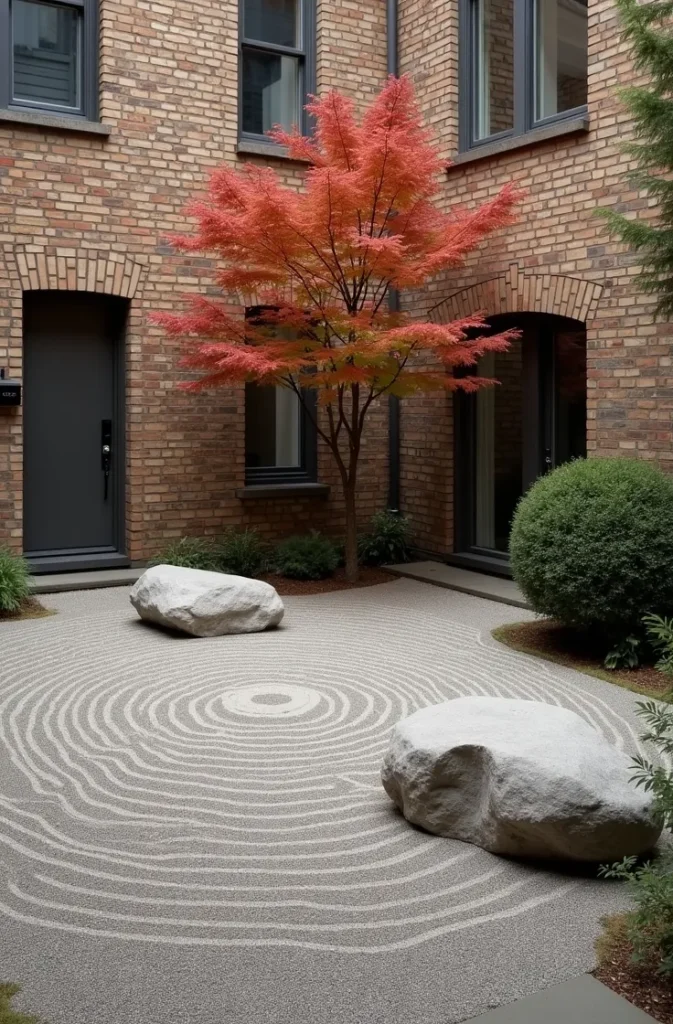
Use pale gray or white fine decomposed granite. Choose three to five architectural plants: a Japanese maple, a cloud-pruned box, a single bamboo in a containment pot, or a specimen fern. Position one or two large smooth boulders as focal anchors. Rake the gravel in concentric lines around the boulders.
This is a strong layout for courtyards where planting conditions are difficult — dry, shaded, or exposed. The dry garden requires very little water or maintenance once established. The key is restraint: this layout only works when you commit to it fully and resist adding extra plants or decorations that break the visual calm.
17. Use a Full-Width Skylight or Overhead Glazing to Solve a Dark Courtyard Problem
Some Victorian terrace courtyards sit in deep shadow for most of the day due to surrounding walls and neighboring buildings. Rather than fighting the light conditions with shade-tolerant planting alone, an overhead glazed cover — a simple lean-to glass roof or polycarbonate canopy — solves the problem structurally.
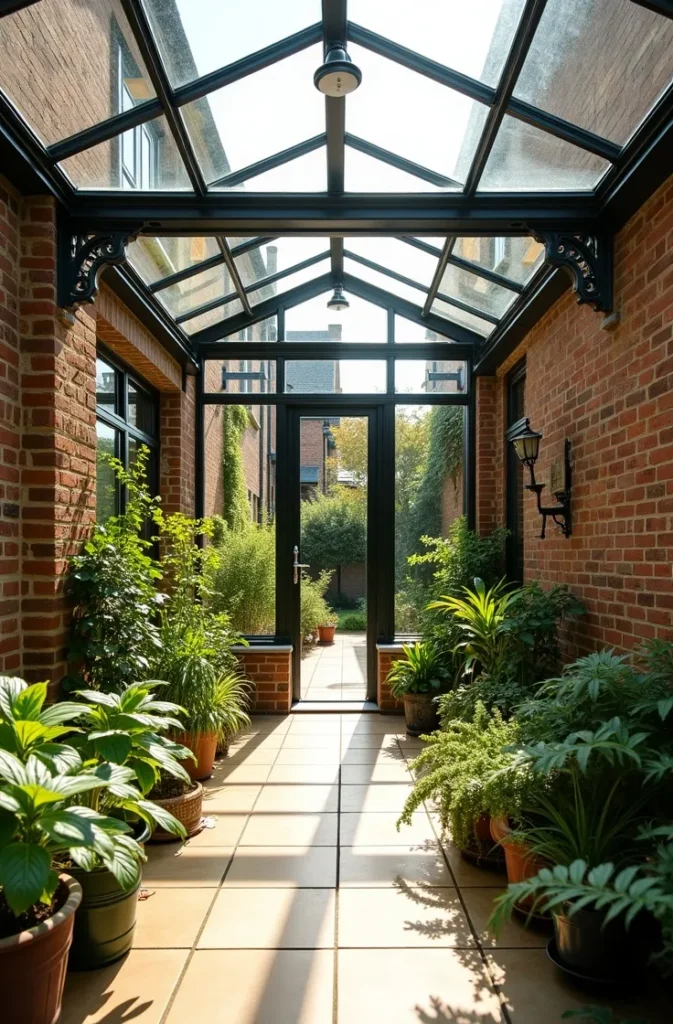
A lean-to glass roof mounted against the rear wall of the house and extending 6 to 8 feet out over the courtyard keeps the space weather-protected and bright year-round. It effectively converts the courtyard into a semi-indoor room that works in all seasons.
This is one of the most transformative small courtyard garden layout decisions available for Victorian terraces, but it requires planning permission in some jurisdictions — verify local rules before committing. The mistake to avoid is using opaque or tinted polycarbonate, which reduces light rather than maximizing it.
18. Frame the Courtyard Entrance With an Arch and Espaliered Fruit Trees
If the courtyard is accessed through a passage or side gate, framing the entrance with a simple metal arch and training espaliered fruit trees — apple, pear, or fig — flat against the adjacent walls creates an immediate sense of arrival and intention.
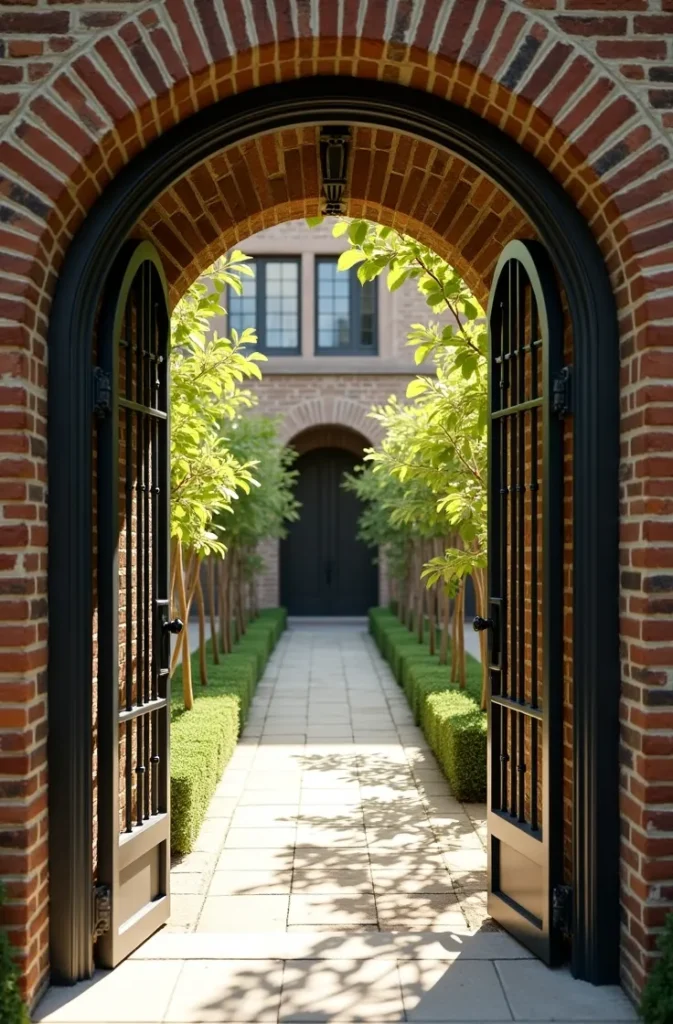
Use a powder-coated steel arch in matte black or dark green. Espalier training keeps fruit trees completely flat against the wall, typically only 12 inches deep, so they take up no floor space while delivering seasonal interest, blossom, and fruit. This technique is well-suited to the narrow passages common in Victorian terrace layouts.
This idea works as both an entrance statement and a productive garden feature. It gives a small courtyard a sense of purpose and craft that purely ornamental layouts sometimes lack. The long-term commitment of training espalier trees pays off visually within two to three seasons.
Conclusion
A well-planned Victorian terrace courtyard garden does not require a large budget or a large footprint — it requires the right layout decision made early. Whether you are solving a drainage problem, a light problem, or a space problem, the ideas above give you a practical starting point rather than vague inspiration.
Save this post to your Pinterest boards before you start planning — you will want to come back to these layouts as your project develops. Each idea here stands on its own, but many can be combined: diagonal paving with vertical wall planters, a raised platform with layered lighting, or a dry garden under a glazed canopy.
If you found these victorian terrace courtyard garden ideas useful, explore more small outdoor space planning content for further layout guidance on terraces, balconies, and compact urban gardens.