
If you are planning a new backyard structure this year, the best backyard shed ideas 2026 are moving well past simple storage boxes toward fully functional spaces that serve real daily needs — home offices, studios, gyms, garden workrooms, and more. This guide covers 18 distinct shed concepts, each with layout logic, material guidance, and decision criteria, so you can build something that actually fits how you live.
1. The Modern Flat-Roof Shed: Clean Lines That Work in Any Yard
A flat-roof shed design is the most architecturally versatile backyard structure available in 2026. The horizontal roofline integrates cleanly with contemporary, mid-century, and transitional home styles without competing with the main house silhouette. It also costs less to frame and roof than a gabled structure of the same footprint.
Flat roofs on outdoor structures are not truly flat — they require a minimum slope of one-quarter inch per foot for water drainage. A properly sloped flat roof with a quality EPDM rubber membrane or TPO roofing system performs reliably in most USA climates. The common failure point is inadequate slope, not the flat-roof concept itself.
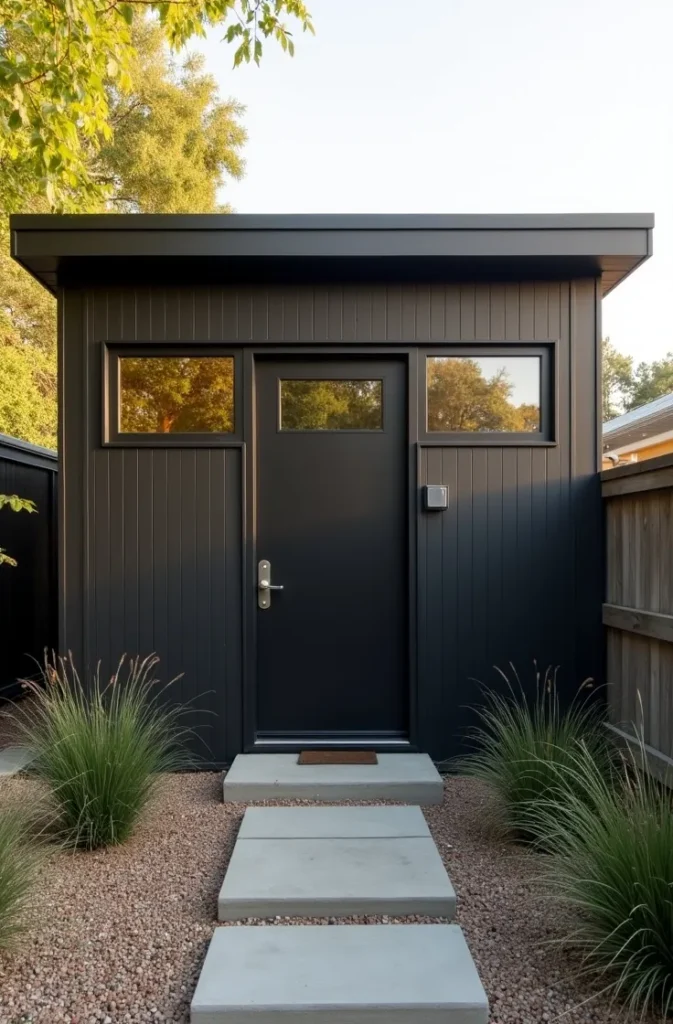

Use this design when your yard has a clean, modern aesthetic and you want the shed to read as a designed architectural element rather than a utilitarian outbuilding. It is also the right choice when you want to install a green roof or rooftop planter in the future — the flat surface accommodates both without structural modification.
Avoid placing a flat-roof shed directly under a deciduous tree. Leaf and debris accumulation on a flat surface accelerates membrane wear and can block drainage points. Position the structure in a clear area or under an evergreen canopy only.
2. She Shed With Interior Shiplap and French Doors: A Functional Retreat Design
A she shed built with interior shiplap walls and outward-swinging French doors creates a light-filled, finished interior that works as a reading room, art studio, or wellness retreat without the investment of a full room addition. The French door opening — typically five to six feet wide — floods the interior with daylight and visually connects the shed to a garden or patio beyond.
Shiplap on interior walls in an outdoor structure serves a functional purpose beyond aesthetics. It allows for easy installation and future removal of wall-mounted shelving, hooks, and fixtures without framing knowledge. Any point on a shiplap wall accepts a screw anchor, which is not the case with drywall-finished interiors in outdoor humidity conditions.
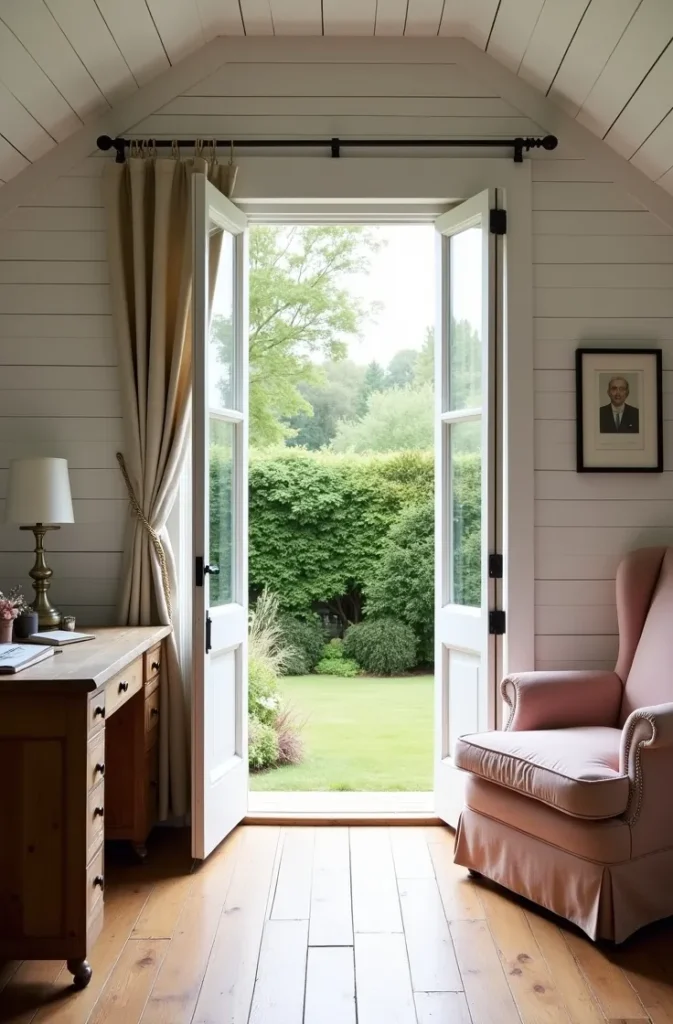
Insulate the walls and ceiling if the space will be used year-round. A well-insulated she shed with a mini-split heating and cooling unit can function comfortably in nearly any USA climate without the operating cost of a full HVAC system. A single 9,000 BTU mini-split handles up to 300 square feet effectively.
The French door orientation matters for light quality. North-facing French doors deliver consistent, glare-free light ideal for art and craft work. South-facing doors bring strong afternoon light but require window treatments to manage glare and heat gain in summer months.
3. Backyard Home Office Shed With Dedicated Cable Management
A purpose-built backyard office shed is one of the most high-ROI backyard shed ideas for 2026 among remote workers and small business owners. Unlike converting a spare bedroom, a detached office shed creates genuine physical separation between work and home life — a boundary that significantly improves both productivity and mental decompression at the end of the workday.
Electrical planning is the most important step in a home office shed build, and it is where most DIY projects fall short. A dedicated 20-amp circuit from the main panel, run underground in conduit, is the minimum requirement for a functional office. Add a separate circuit for HVAC, and include at least six duplex outlets distributed across all four walls — not clustered on one wall as is common in basic shed electrical plans.
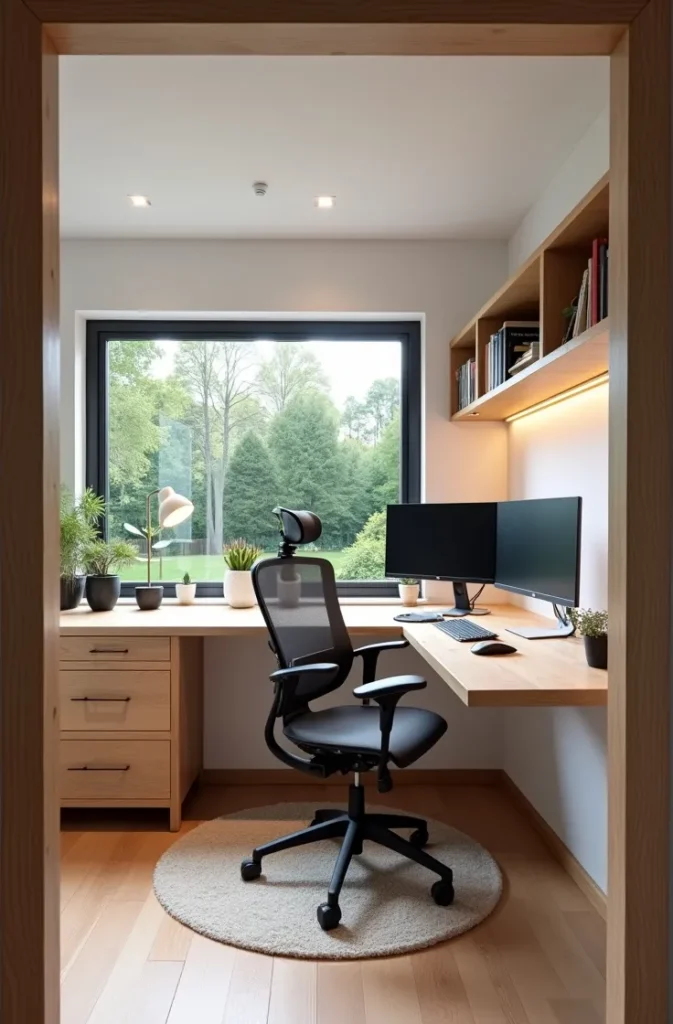
Cable management begins at the design stage, not during finishing. Decide where the desk will sit, where the monitor will go, and where internet cable will enter the building before framing begins. Running cables through interior wall cavities before drywall or shiplap installation takes minutes. Routing them after the walls are finished takes hours and produces inferior results.
Include at least one operable window on the wall opposite the desk for cross-ventilation and a visual rest point during screen-intensive work sessions. This is a detail that distinguishes a thoughtfully planned office shed from one that was simply wired and furnished.
4. Gabled Cottage Shed With Board-and-Batten Siding: Traditional Charm, Modern Function
A gabled roof cottage shed with vertical board-and-batten siding is the most compatible backyard shed design for traditional, farmhouse, and craftsman-style homes. The peaked roofline and vertical siding create a visual rhythm that complements rather than competes with main house architecture.
Board-and-batten siding on a shed performs better than horizontal lap siding in most outdoor applications. Vertical orientation allows water to run off cleanly without trapping moisture at horizontal seams. With proper priming and exterior paint, board-and-batten on a shed exterior holds its finish for eight to twelve years before repainting is required.
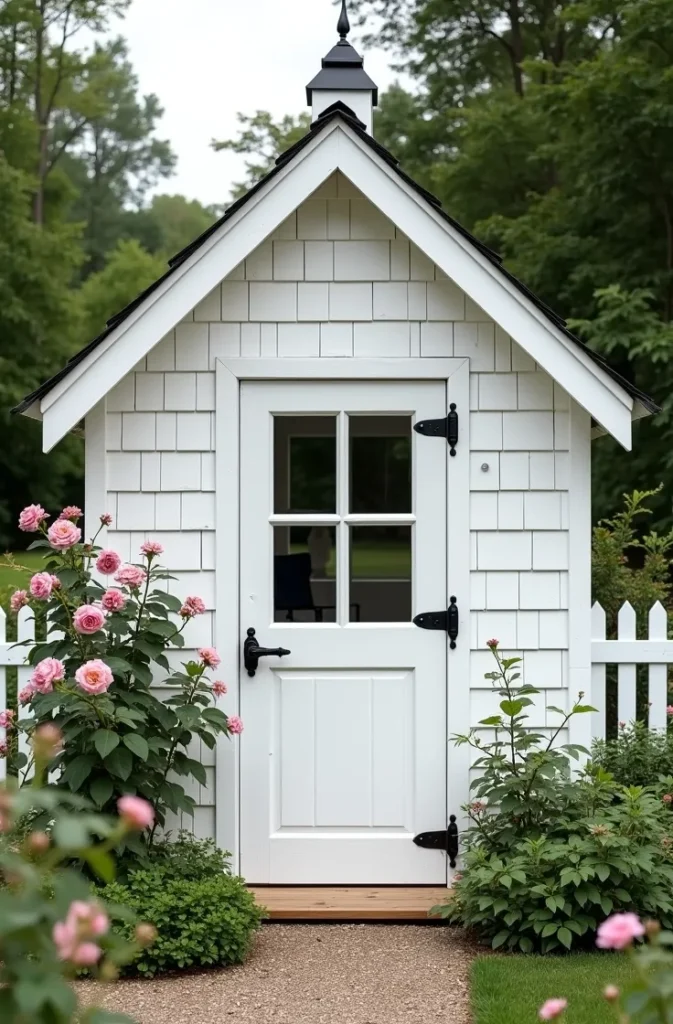
Interior planning for a cottage shed benefits from tall storage on the gable end walls, where ceiling height is greatest. Shelving running floor to ceiling on both gable walls maximizes cubic storage without consuming central floor space that you need for working or moving around.
Add a cupola or ridge vent to improve attic space ventilation. Heat accumulation in an unventilated gabled shed shortens the lifespan of stored tools, finishes, and materials. A simple ridge vent adds minimal cost during construction and makes the structure significantly more functional in summer.
5. Lean-To Shed Against the House or Fence: The Space-Efficient Side-Yard Solution
A lean-to shed — a single-slope structure built against an existing wall, fence, or outbuilding — is the most space-efficient backyard shed design for narrow lots and side yards. By using an existing structure as one wall, you reduce material costs, simplify construction, and fit usable covered storage into spaces too narrow for a freestanding shed.
The minimum practical lean-to width is four feet for storage use and six feet for a functional workshop or potting bench layout. Below four feet, you cannot use the space efficiently — tools cannot be retrieved without removing other items, and the sightline into the shed from the entry is too compressed.
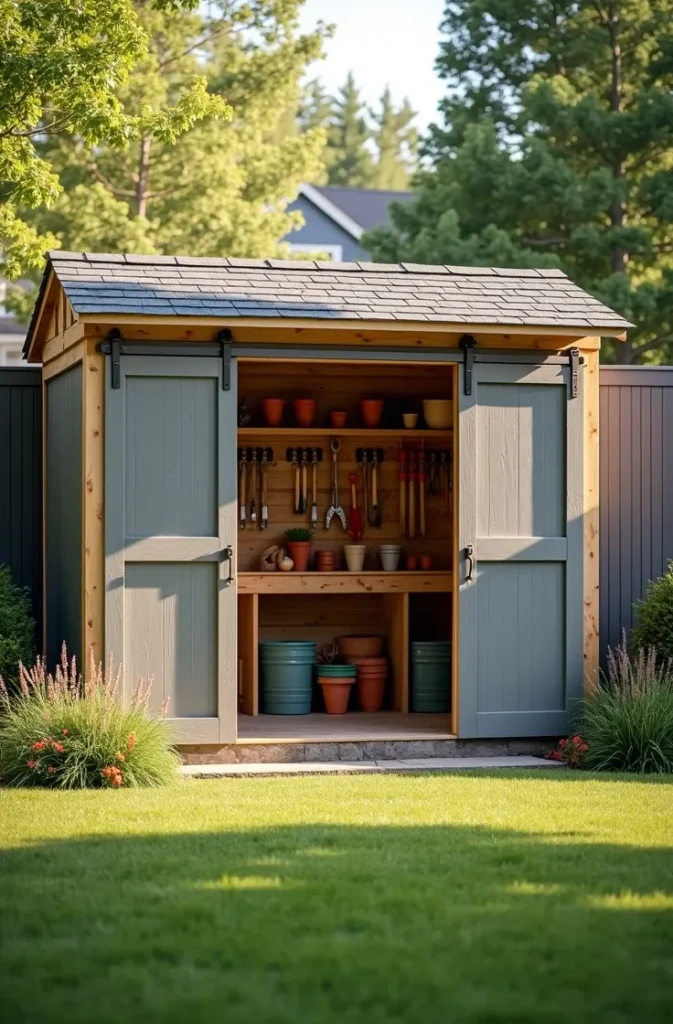
Drainage is the critical design issue in a lean-to. The roof must slope away from the wall it leans against, and a drip edge with a rain gutter directed to a downspout or French drain is essential. Water running back toward the main wall creates foundation moisture problems and accelerates rot at the base of both structures.
A lean-to built against a fence rather than the house wall is the more flexible option — it does not require waterproofing the wall connection, and it can be relocated or removed without affecting the main structure. This is a useful distinction for renters who own their fence but not their home.
6. Backyard Workshop Shed With Skylights and Workbench Wall
A purpose-built workshop shed differs from a standard storage shed in two critical ways: lighting and workbench placement. Most storage sheds are built with one window and one door. A functional workshop needs a minimum of two operable windows plus one or two skylights, and a continuous workbench along at least one full wall.
Skylights are the single most effective workshop lighting upgrade available. A 24-by-24-inch fixed skylight delivers more usable daylight to a work surface than a wall window three times its size, because the light comes from directly above rather than at an angle. Position skylights over the workbench run, not over the center of the shed floor.
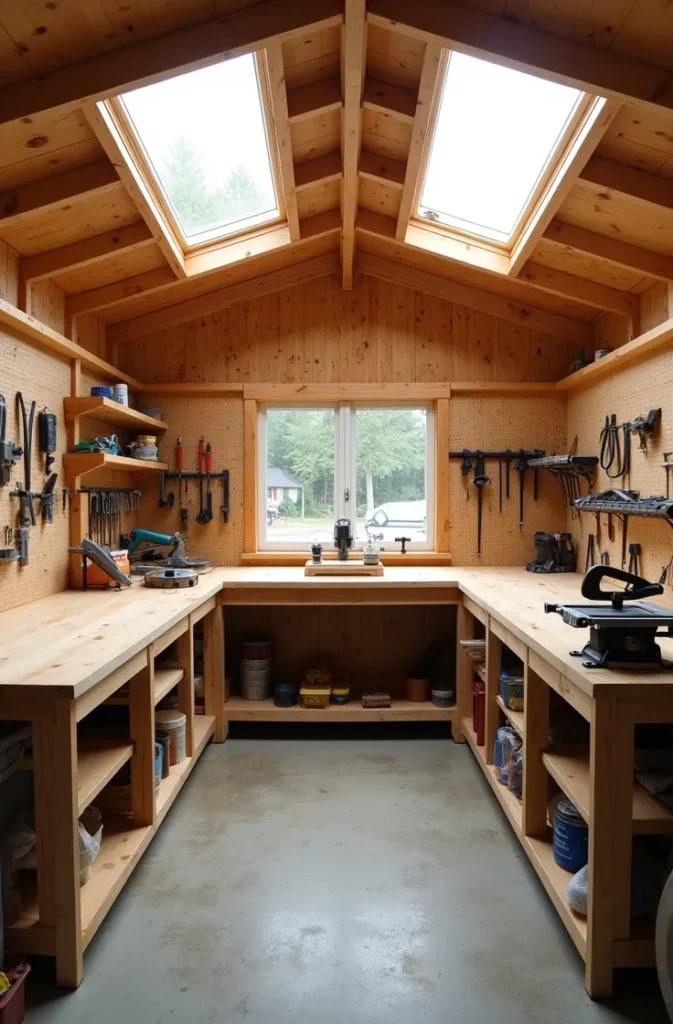
The workbench wall should sit on the long wall of the shed, oriented to receive the most natural light. A standard workbench height of 34 to 36 inches works for most standing work. Add a four-inch toe kick recess at the base if you plan to use the bench for precision work where you will stand close to the surface for extended periods.
Electrical planning for a workshop shed requires more capacity than an office shed. Include a 240V outlet for larger power tools, a dedicated dust collector circuit, and ground-fault protected outlets at the workbench. Overhead fluorescent or LED shop lights on a separate switch from the outlet circuits give you full lighting control independent of tool use.
7. Painted Black Shed With Metal Roof: The Bold Modern Farmhouse Statement
A shed painted in matte or satin black with a standing seam metal roof is one of the most visually striking backyard shed ideas for 2026 and one of the easiest to execute well. The combination reads as modern farmhouse or contemporary rural — a pairing that suits a wide range of USA home styles from the Pacific Northwest to the Southeast.
Black exterior paint on wood siding absorbs more solar heat than lighter colors, which has practical implications in warm climates. In USDA zones 7 and above, a black shed interior will be noticeably hotter in summer unless ventilation is designed from the start. Add a ridge vent, two gable vents, and at least one operable window to manage the heat load. In zones 4 through 6, the absorbed heat is often an asset rather than a problem.
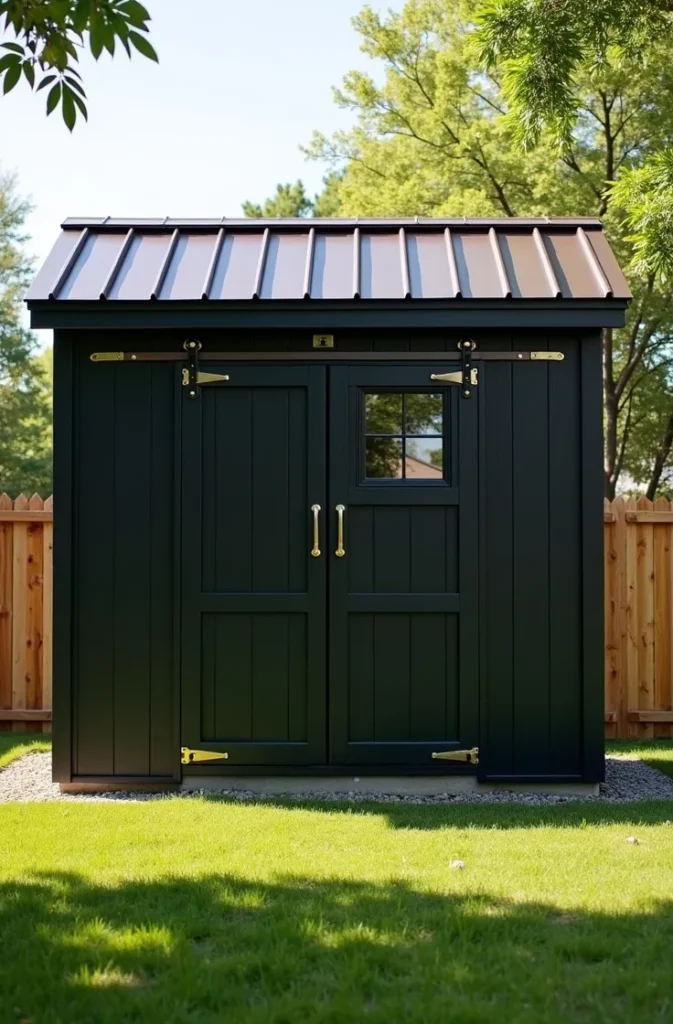
The metal roof is the pairing that elevates a black shed from dark to sophisticated. Galvalume natural metal, dark bronze, or charcoal standing seam all work well. Avoid bright silver corrugated metal with a black body — the contrast is too sharp and reads as agricultural rather than designed.
Brass or aged bronze hardware — hinges, door handles, hasps, and hooks — complements the matte black and metal combination with warmth. Matte black hardware on a matte black shed disappears. Bright chrome reads as too modern for the farmhouse aesthetic this combination naturally evokes.
8. Garden Potting Shed With Galvanized Steel Sink and Potting Bench
A dedicated potting shed — equipped with a real working sink, continuous potting bench, and organized storage for soil, amendments, and hand tools — transforms a routine garden chore into an efficient, enjoyable process. This is one of the most functional shed specializations available, and it is consistently underbuilt by homeowners who later wish they had invested more in the initial design.
The sink is the element that separates a true potting shed from a storage shed with a bench. A simple utility sink connected to an outdoor water line and a gray water drain to a dry well or garden bed handles all potting and cleanup needs. The connection does not require indoor plumbing — a frost-free hose bib at the shed exterior, with a short run of copper or PEX to the indoor sink, is a straightforward installation.
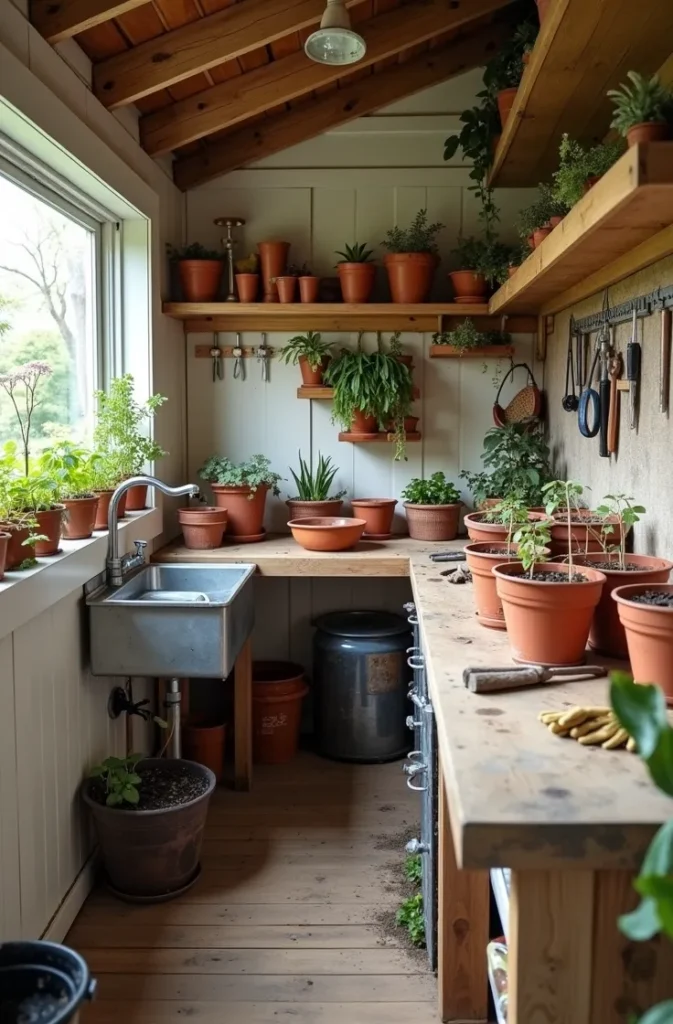
Build the potting bench at 36 inches height with a concrete board or galvanized steel surface, not wood. Soil, fertilizers, and constant moisture destroy wood bench tops within two to three seasons regardless of finish. A galvanized steel surface cleans with a brush and hose and lasts decades without maintenance.
Overhead storage is essential in a potting shed. Hanging baskets suspended from the roof structure keep frequently used pots accessible without consuming bench or floor space. A vertical wall grid or pegboard panel above the bench holds hand tools, spray bottles, and seed packets in plain sight — searching for buried tools in a cluttered shed is the primary frustration that a thoughtfully organized potting shed eliminates.
9. Tiny Guest Cabin Shed With Sleeping Loft and Mini Kitchen
A shed converted to a tiny guest sleeping cabin is one of the most ambitious and rewarding backyard shed ideas for 2026 among homeowners with ADU-friendly zoning. A 120 to 200 square foot structure with a sleeping loft, a two-burner cooktop, compact refrigerator, and a wet bath accommodates short-term guests without requiring them to enter the main house.
Zoning compliance is the first step, not an afterthought. Many USA municipalities allow accessory dwelling units or guest sleeping structures under specific size thresholds — typically 120 square feet without a permit in states that have adopted streamlined ADU rules. Confirm your local regulations before designing. Installing a sleeping space with a bathroom in a structure not permitted for habitation creates legal and insurance liability.
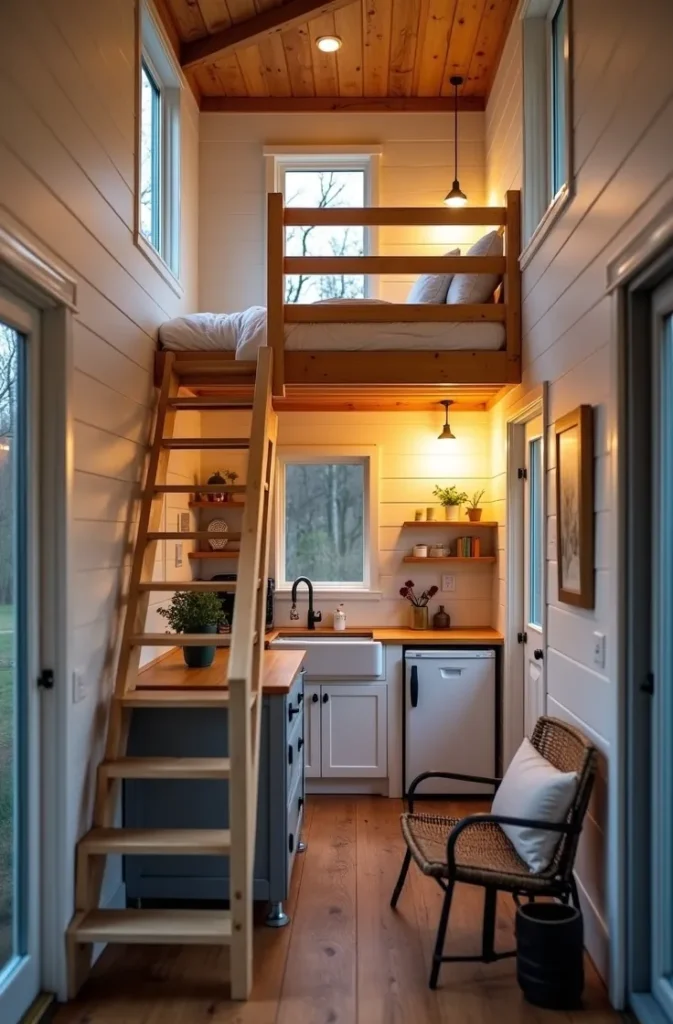
The sleeping loft must have a minimum ceiling height of 36 inches at the low edge and at least 48 inches at the center for adult use. A loft at 36 inches flat across is uncomfortable for sitting up. Design the loft with enough headroom for a seated adult to avoid the space feeling punishing rather than cozy.
A micro-kitchen in a guest cabin needs only four elements: a two-burner induction cooktop, a compact refrigerator, a small sink, and twelve inches of counter on each side of the cooktop. More than this competes with sleeping and sitting space in a 120 to 200 square foot footprint. Keep the kitchen concentrated on one wall to preserve the center of the plan for circulation and furniture.
10. Cedar Shed With Copper Roof Accents: Natural Material Combination
A cedar-sided shed with copper flashing, drip edges, or cupola cap creates a naturally elegant combination that improves in appearance over time rather than deteriorating. Cedar weathers to a silver-gray. Copper oxidizes to a soft blue-green patina. The two materials age in a complementary direction without any maintenance beyond occasional cleaning.
This combination is best suited to naturalistic garden settings — woodland gardens, cottage gardens, or properties with significant mature tree canopy. The organic material palette reads as out of place in a stark, minimalist yard where concrete and steel dominate. Visual context matters as much as material quality.
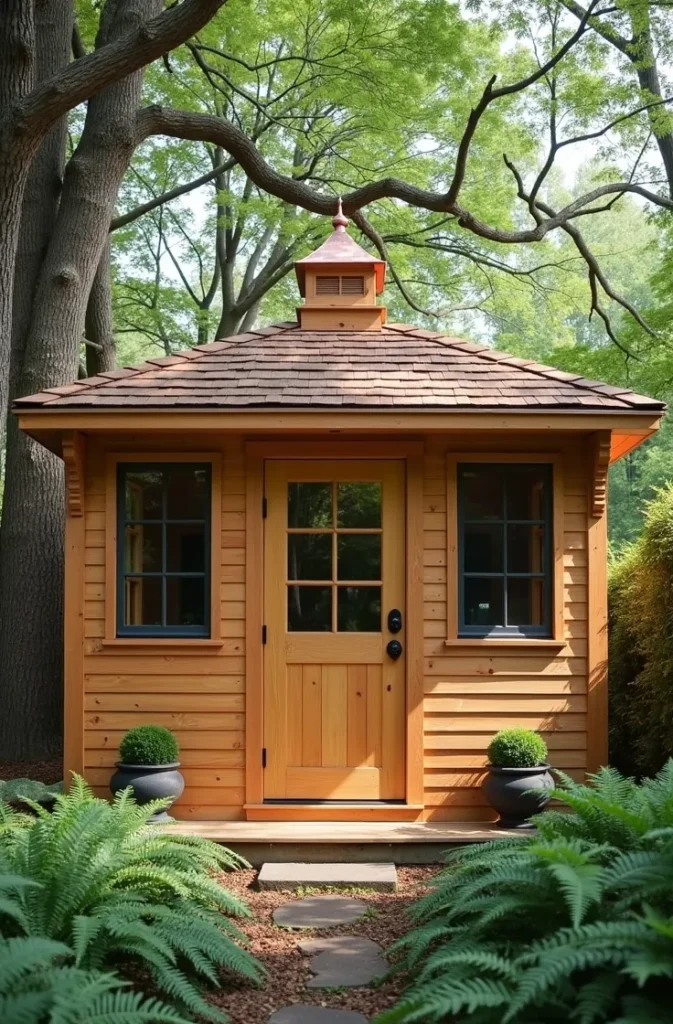
Cedar shingles or shakes on the shed roof extend the natural material vocabulary and create a fully cohesive exterior. Cedar shake roofing on a small shed structure is practical — the footprint is small enough that material cost is manageable, and the lifespan of quality cedar shakes in a maintenance schedule of annual sealer application is 25 to 30 years.
Avoid using copper flashing on a cedar shed if the roof drains toward a garden pond or planted area. Copper leachate is toxic to aquatic life and harmful to some plant species in concentrated amounts. Direct copper roof drainage to a gravel dry well or lawn area rather than a planted bed or water feature.
11. Backyard Gym Shed With Rubber Flooring and Wall-Mounted Equipment
A backyard gym shed eliminates monthly membership fees and commute time while creating a training environment precisely calibrated to your specific needs. This is one of the fastest-growing backyard structure categories in 2026, and the design decisions made at the build stage determine whether the space functions as well as a commercial gym or becomes an expensive piece of outdoor furniture.
Ceiling height is the non-negotiable starting point. A standard eight-foot shed ceiling eliminates overhead pressing, pull-up bars, and rope climbing. A gym shed should have a minimum interior clear height of nine feet, with ten feet preferred for overhead work. Specify this height before purchasing a kit shed — most standard kits default to seven and a half to eight feet, which is insufficient.’
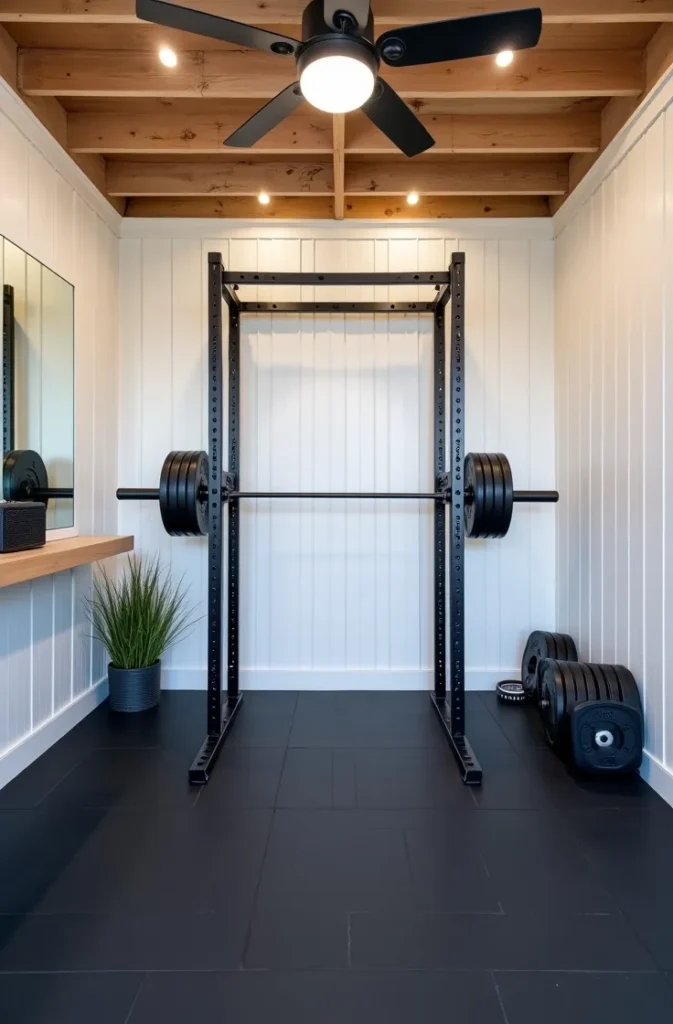
Rubber flooring — 3/4-inch vulcanized rubber tiles — is the correct floor surface for a gym shed. It absorbs impact from dropped weights, provides non-slip traction during dynamic movement, and insulates the floor slightly against cold concrete in winter. Do not use foam mat flooring in a weight training environment. Foam compresses permanently under heavy equipment and creates an unstable surface for barbell work.
Wall-mounted equipment dramatically expands the functionality of a small gym footprint. A fold-down squat rack or wall-mounted pull-up station folds flat when not in use, converting the footprint from a weight training space to an open floor for stretching, yoga, or bodyweight work. Design the wall stud layout to accommodate heavy mounting hardware before framing is complete.
12. Vertical Garden Shed With Green Roof and Living Wall
A backyard shed designed with a green roof system and a south-facing living wall panel is one of the most ecologically integrated small garden structures ideas for 2026. The green roof adds insulation value, manages stormwater runoff, and extends the roof membrane lifespan by protecting it from UV exposure. The living wall panel maximizes planting density in a small footprint.
A green roof requires structural planning before construction begins. A saturated growing medium — even a lightweight sedum mat system — adds 15 to 25 pounds per square foot of load. A standard residential shed roof framing is not designed for this load. Increase rafter sizing, reduce rafter spacing, or consult a structural engineer before proceeding if you intend to add a green roof.
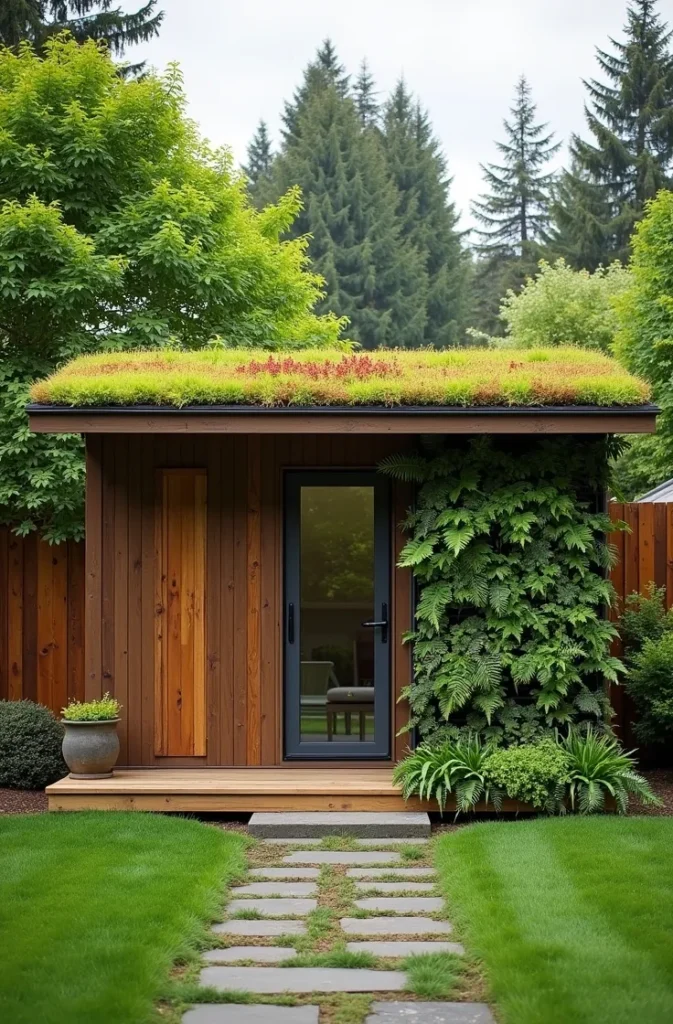
The minimum viable green roof for a small shed uses a modular tray system with pre-grown sedum or native groundcover plants. Tray systems are lighter than built-up systems, easier to inspect and maintain, and can be removed for roof membrane access if repairs are needed. They are the correct starting point for a first-time green roof installation.
A south-facing living wall panel on a shed exterior pairs well with a green roof visually and functionally. Use a modular pocket system with drip irrigation for the living wall. Without irrigation, maintaining consistent moisture on a vertical planted surface in summer heat requires daily manual watering — an unrealistic commitment for most homeowners.
13. Rustic Barn-Door Shed With Double Sliding Entry
A shed designed with double sliding barn doors across the full front face creates a wide, unobstructed opening that standard hinged doors cannot match. When fully open, the entire front of the shed is accessible — ideal for riding mowers, garden tractors, large power tools, and oversized material storage where maneuvering through a narrow door opening is impractical.
The sliding door hardware is the component most frequently underspecified in DIY barn-door shed builds. Use commercial-grade sliding door hardware rated for exterior use and sized for the door weight — a full-width double barn door in 2-inch thick rough cedar can weigh 150 to 200 pounds per panel. Undersized hardware fails within one to two seasons of regular use.
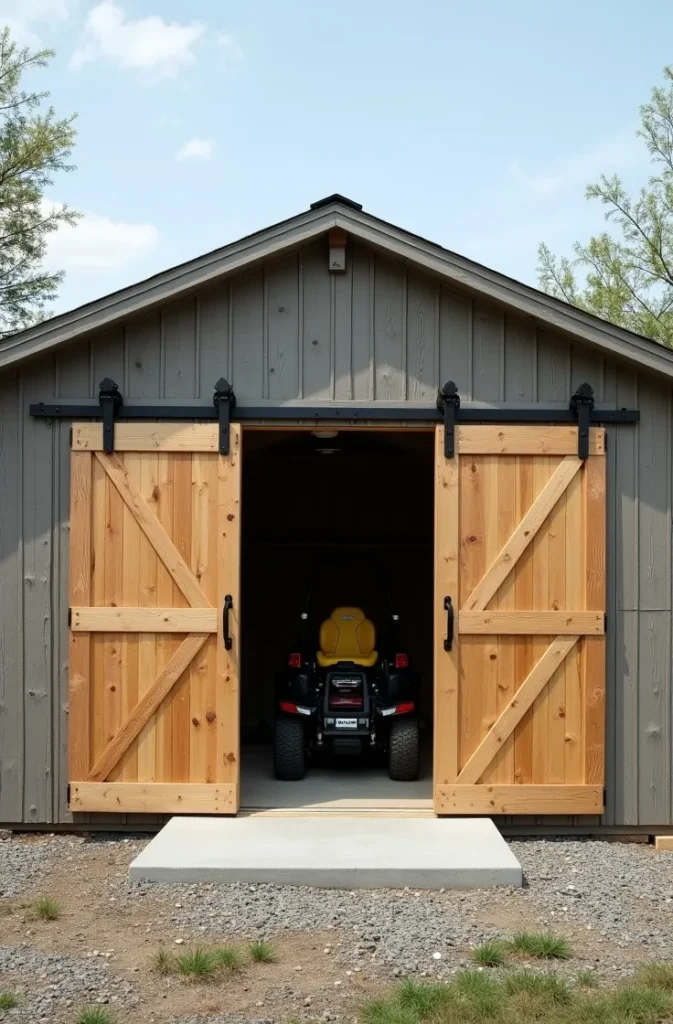
A concrete or compacted gravel apron extending four to six feet in front of the sliding doors is essential for operational function. Sliding large equipment in and out of a shed across soft lawn creates ruts, damages the lawn, and makes the task physically harder than it needs to be. Budget for the apron as part of the shed construction cost, not as an optional add-on.
The rustic aesthetic of a barn-door shed pairs naturally with rough-sawn cedar or Douglas fir siding, a corrugated metal roof, and minimal painted detailing. Stained rather than painted wood holds its appearance better with the inevitable weathering that comes with an outdoor structure in regular working use.
14. Fully Insulated Year-Round Shed Studio for Art or Music
A fully conditioned backyard shed studio designed for art or music production requires a different set of build specifications than any other shed type on this list. The goals — thermal comfort, acoustic control, controlled humidity, and appropriate lighting — each require deliberate design choices that cannot be retrofitted easily after construction.
Insulation values should match a habitable room, not a basic outbuilding. Aim for R-19 in the walls (2×6 framing with fiberglass batts) and R-30 in the ceiling. These values maintain comfortable temperatures in most USA climate zones with a single mini-split system. Below R-13 in walls, the heating and cooling loads become unmanageable in extreme seasonal temperatures.
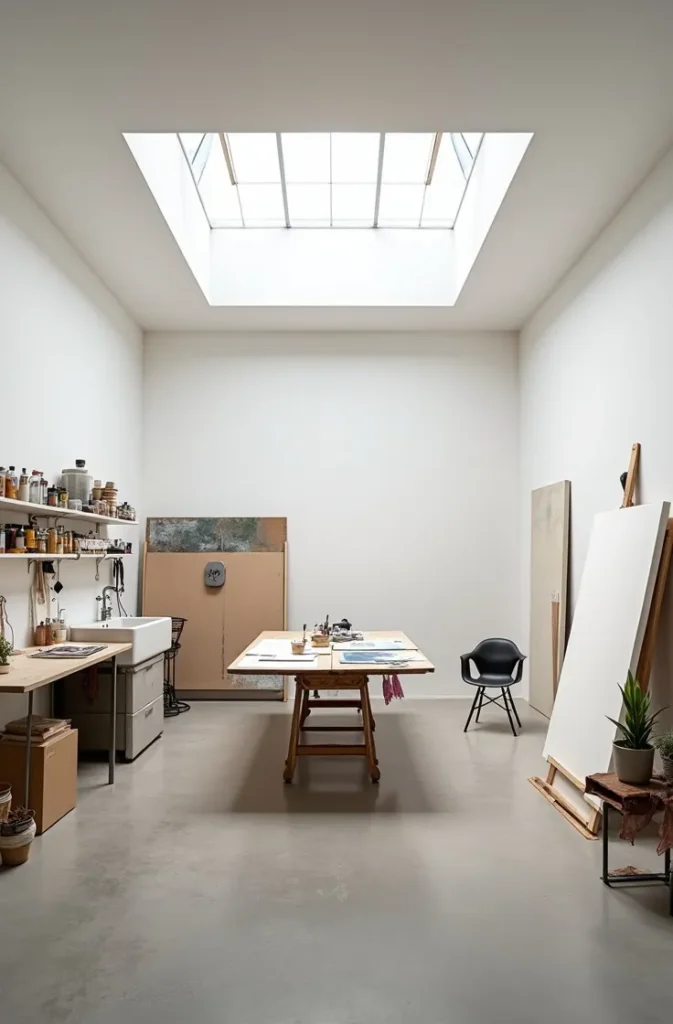
Acoustic treatment for a music shed begins with the building envelope before interior acoustic panels are considered. Mass-loaded vinyl between the framing layers, staggered stud wall construction on the shared interior wall nearest to the house, and solid-core door with an acoustic threshold seal reduce sound transmission significantly. Acoustic foam panels on interior walls address room resonance but do nothing for sound transmission through the structure.
For an art studio, natural north light is the professional standard. A large fixed skylight on the north-facing roof slope delivers consistent, color-accurate daylight throughout the day without the directional shifts and glare of east, west, or south exposures. Supplement with high-CRI (90+) LED overhead lighting for evening and overcast-day work.
15. Smart Shed With Solar Panels and Off-Grid Power System
A solar-powered shed — one that generates and stores its own electricity without a utility connection — is one of the most technically advanced and financially compelling backyard shed ideas for 2026. For sheds located more than 50 feet from the main panel, the cost of running underground electrical conduit often equals or exceeds the cost of a modest off-grid solar system.
A functional off-grid shed power system requires four components: solar panels mounted on the roof, a charge controller, a battery storage bank, and an inverter. A basic 400-watt panel system with a 100-amp-hour lithium battery bank handles lighting, device charging, a small refrigerator, and intermittent tool use reliably in most USA sun zones. It is not adequate for a workshop with large power tools or an HVAC system — those loads require a grid-tied or much larger off-grid system.
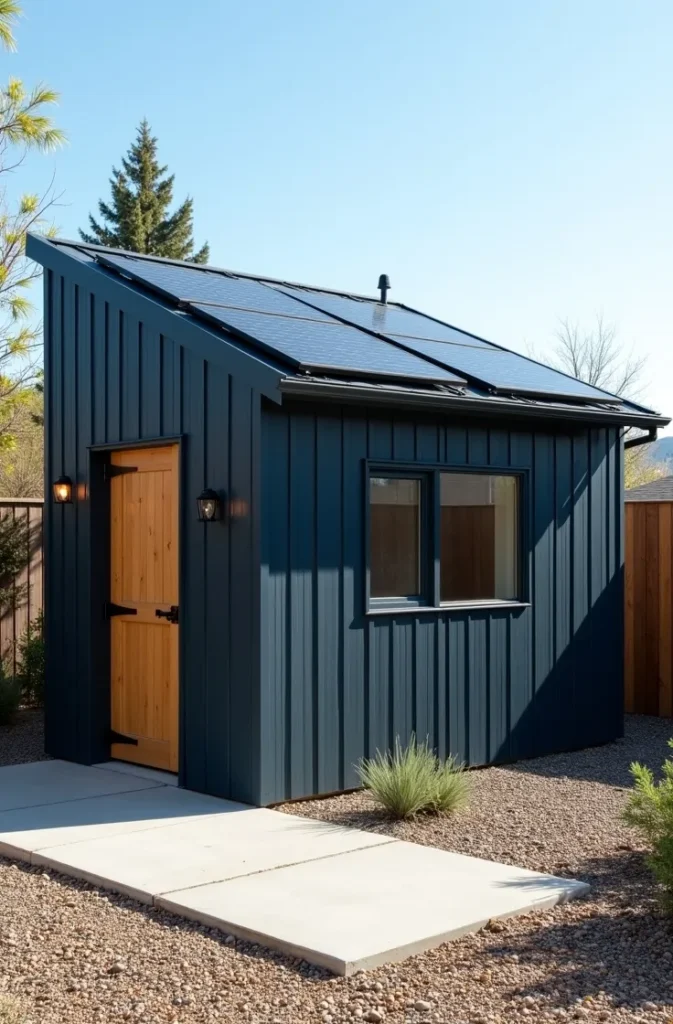
Panel placement on a south-facing roof slope at the correct tilt angle for your latitude matters more than panel wattage for system performance. A 400-watt panel on a properly oriented south-facing slope outperforms a 600-watt panel on a flat east-facing surface in annual energy production. Calculate your latitude-optimized tilt angle before finalizing the roof pitch.
Smart monitoring adds real practical value here. A basic battery monitor visible from inside the shed shows current state of charge, daily generation, and estimated runtime remaining — information that helps you use the system intelligently rather than discovering a depleted battery when you need it most.
16. Victorian-Inspired Backyard Shed With Ornamental Trim and Stained Glass
A Victorian-inspired shed with decorative gingerbread trim, a finial-topped cupola, and one or two small stained glass accent windows is the most visually distinctive small garden building design for traditional and Victorian-era homes. The ornamentation that reads as excessive on a large structure becomes charming and proportionate at shed scale.
Gingerbread trim — the decorative wood fretwork applied to gable ends, porch edges, and fascia boards — is available pre-cut from specialty millwork suppliers in dozens of historical patterns. Installing pre-cut millwork is significantly faster and more precise than attempting to cut decorative profiles by hand. Prime and paint all millwork before installation, reaching the back faces that will contact the shed framing — unpainted back faces trap moisture and cause peeling from behind.
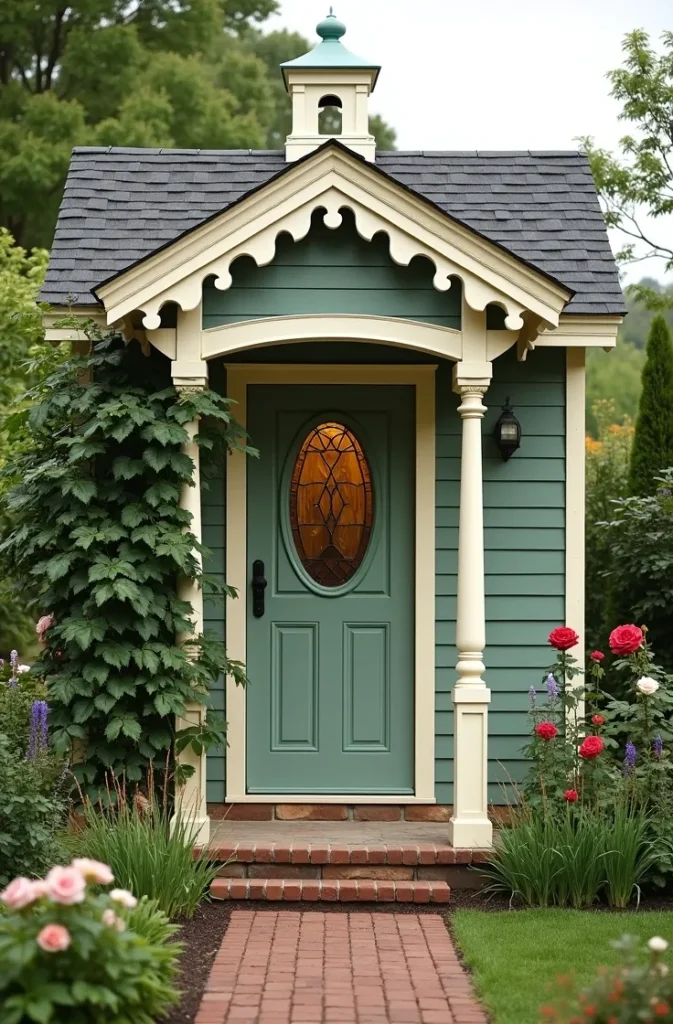
Stained glass accent panels in a shed window are best sourced as pre-made inserts sized to fit a standard window rough opening. Commissioning custom stained glass is a significant investment for a backyard structure. Pre-made Victorian-pattern stained glass inserts in jewel tones — burgundy, emerald, amber, cobalt — achieve the intended effect at a fraction of the cost.
Paint colors for a Victorian shed should reference historical palettes rather than contemporary colors. Deep sage green, dusty plum, brick red, and warm cream are historically grounded choices. Use at least two body colors plus a contrasting trim color to honor the Victorian tradition of polychromatic exterior painting.
17. Wired Backyard Movie and Entertainment Shed
A dedicated outdoor entertainment shed — wired for a projector, surround sound, and climate control, with a serving counter opening to a patio — creates a semi-permanent outdoor cinema and gathering space that operates independently of weather conditions. This is a growing shed specialization in 2026 as homeowners invest in outdoor entertainment infrastructure.
The serving counter — a pass-through window with a fold-down counter ledge on the exterior — is the design element that makes an entertainment shed genuinely functional rather than simply a box with a screen. Guests can access drinks and snacks from the patio without entering the shed interior, which keeps traffic flow organized during gatherings.
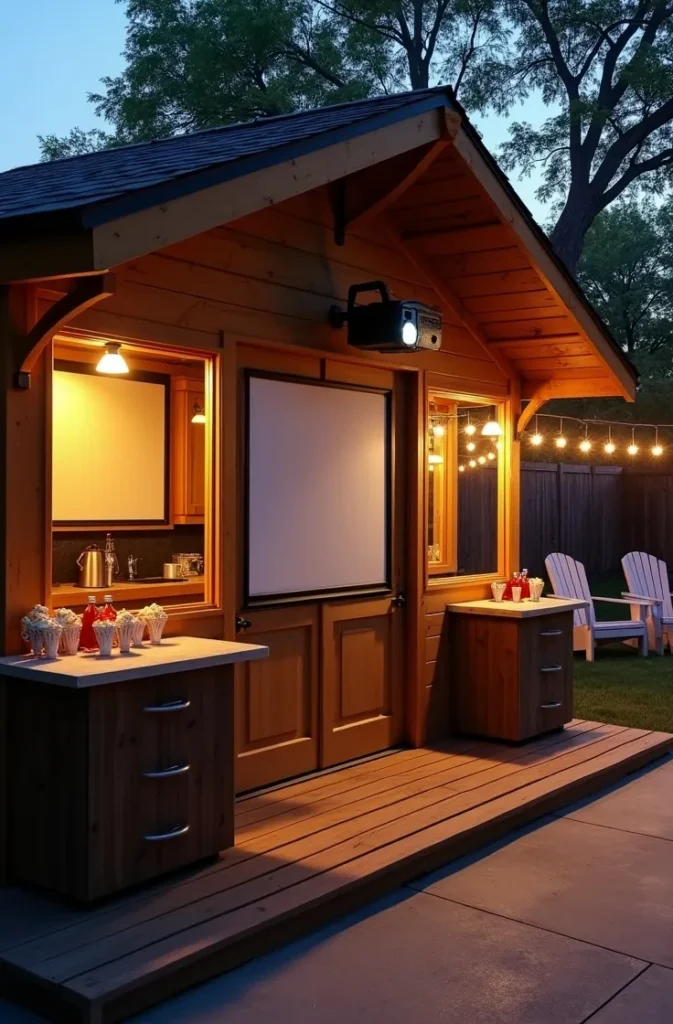
Projector placement and screen distance determine the minimum useful shed size for this application. A 120-inch projection screen requires a throw distance of approximately eight to twelve feet from the projector lens, depending on the lens specification. The shed interior must accommodate the projector mount plus a clear throw distance — this typically requires a minimum 10-foot interior depth.
Acoustic considerations matter more in an entertainment shed than most homeowners anticipate. A shed interior without acoustic treatment has a short, harsh reverb that makes dialogue difficult to understand at volume levels comfortable for music. Add acoustic panels on the rear and side walls to absorb reflections, and include a bass trap in each corner to reduce low-frequency buildup.
18. Scandinavian-Inspired Shed With Whitewashed Wood and Minimalist Interior
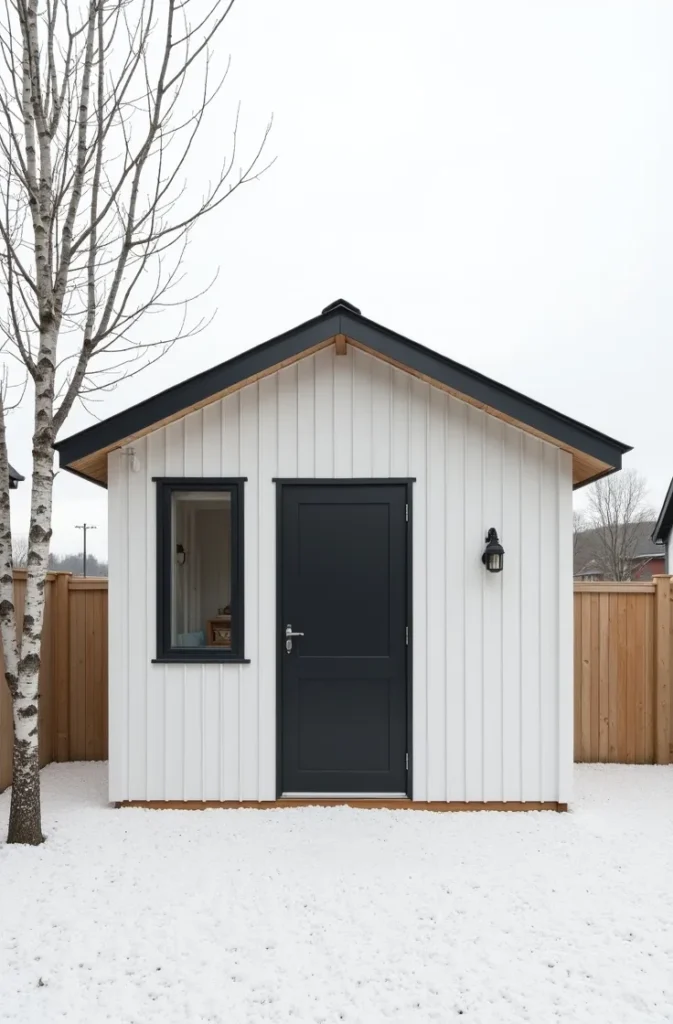
A Scandinavian-inspired shed — built with whitewashed or limewashed wood siding, a simple gabled or mono-pitch roof in dark gray metal, and a sparse, light-filled interior — captures one of the most sought-after design aesthetics in residential outbuildings for 2026. The appeal is functional as much as visual: the whitewashed exterior reflects heat, the minimal interior stays organized by necessity, and the natural material palette requires minimal maintenance.
Whitewashing exterior wood is a straightforward DIY finish. A diluted water-based white paint (one part paint to three parts water) brushed onto raw cedar, pine, or fir and then partially wiped back while wet creates the limewashed appearance. The wood grain remains visible. The white pigment fills the surface pores and creates the muted, chalky tone characteristic of Scandinavian architecture.
The interior of a Scandinavian-inspired shed benefits from a single clear purpose. Trying to make a small shed serve storage, work, and relaxation simultaneously produces clutter that destroys the aesthetic. Choose one primary function — reading room, meditation space, garden storage — and design every element to serve that function precisely.
Natural linen, unbleached cotton, bare concrete, natural pine, and matte black metal are the material vocabulary that reinforces the Scandinavian aesthetic inside the structure. Introduce these materials through a single textile (a linen curtain), one furniture piece (a natural pine stool), and the hardware (matte black hooks and handles). Restraint is the design principle — adding more elements degrades the aesthetic rather than enhancing it.
Final Thoughts
The right backyard shed does one thing exceptionally well — whether that is creating separation for focused work, housing a serious workshop, giving guests a private retreat, or simply organizing a garden in a structure that looks as good as it functions. The eighteen ideas in this guide represent the full range of what a well-planned backyard structure can accomplish in 2026, from the simplest lean-to to a fully solar-powered smart studio.
Save this post before you start pricing materials or requesting permits. Having a clear picture of which shed type matches your actual daily needs — not just the one that photographs best — is the decision that determines whether your build delivers real value or becomes an underused storage dump.
When you are ready to go deeper, explore backyard ADU regulations by state, small shed electrical planning guides, and outdoor studio insulation specifications for your climate zone. The planning stage is where successful shed projects are won or lost.