
Planning summer party ideas that look polished without requiring professional event coordination is the real challenge most hosts face. This guide cuts through the vague inspiration and gives you 18 specific, decision-ready ideas built around setup logic, material choices, and layout principles that work for backyards, patios, apartments, and covered porches alike. Each section tells you not just what to do, but why it works and what to avoid so your gathering looks intentional from the moment guests arrive.
1. Backyard Grazing Table Setup That Feeds a Crowd Without Constant Hosting Effort
A grazing table is one of the most functional summer entertaining decisions you can make because it removes the need to serve food in courses, allows guests to return on their own schedule, and creates a visual centerpiece that photographs well throughout the event. The table itself becomes part of the party decor rather than a separate catering task.
The most important structural decision is table length. A grazing setup requires a minimum of six linear feet to display food without crowding, and eight feet or more for groups over twenty. A table that is too short forces vertical stacking, which is unstable outdoors and makes replenishing difficult without disrupting the arrangement. Use a folding table covered with a linen runner or kraft paper roll rather than a full tablecloth, which traps heat underneath and can cause faster spoilage in summer temperatures.
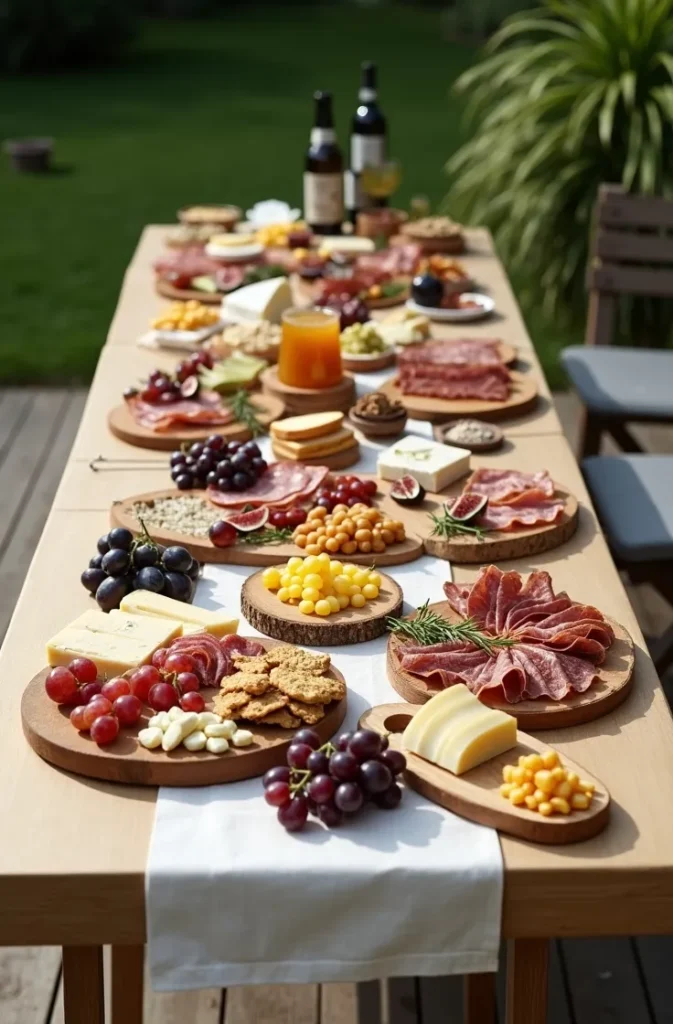

Build the grazing table in layers using riser blocks or inverted bowls under the linen to create height variation before placing food. A flat single-level surface, regardless of how much food it contains, reads as cafeteria service rather than a curated table. Keep the perishable items, soft cheeses, sliced meats, and dips, in the center of the table where they are accessed and replenished most frequently, and use non-perishable elements, crackers, dried fruits, nuts, and hard vegetables, at the outer edges where they hold up longer in summer heat.
Replace perishable items every ninety minutes at outdoor summer temperatures. Foods left longer than that in direct or ambient heat above 80 degrees Fahrenheit enter the bacterial growth risk window regardless of how they look on the table.
2. Tropical Cocktail Station With a Self-Serve Bar Setup That Runs Itself
A self-serve cocktail station solves one of the most consistent pressure points in summer party hosting: the host spending the entire event mixing and serving drinks instead of engaging with guests. When set up correctly, a self-serve bar station empowers guests and reduces host obligation to restocking rather than active service.
The station needs three components to function independently: a clear drink menu card at the back of the setup telling guests what is available and in what proportion, all required tools within arm’s reach including a jigger, citrus press, and muddler if needed, and a labeled ice station with enough ice to last the full event without a host refilling it mid-party. A 20-pound bag of ice handles approximately 25 guests for a three-hour outdoor summer party. Double that for four-hour events in direct heat.
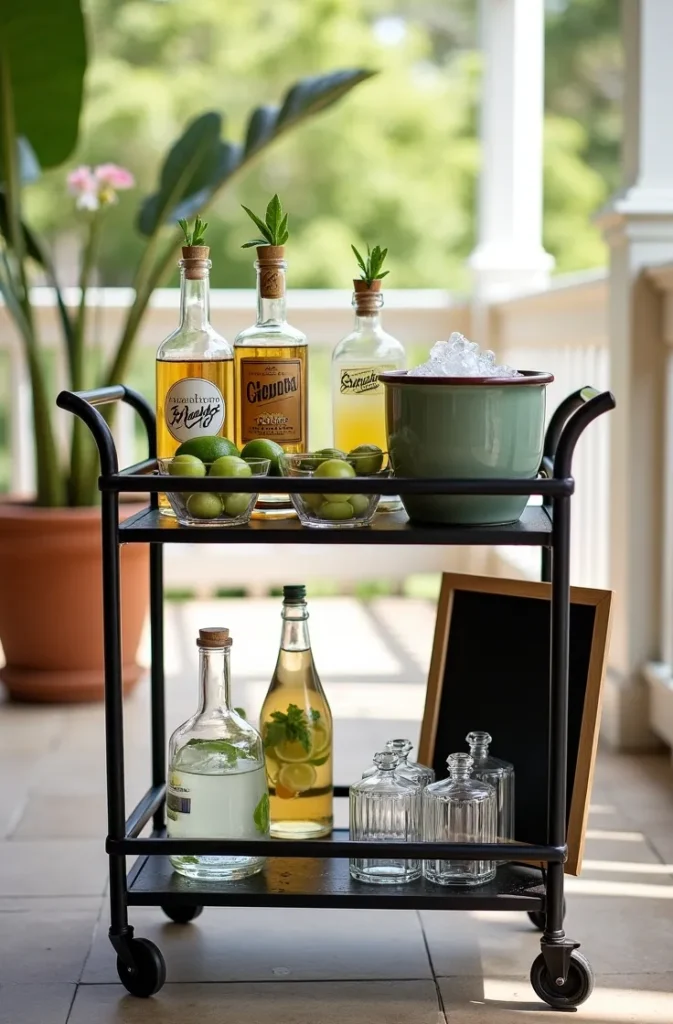
Build the station on a bar cart, a covered side table, or a dedicated bar table and create visual hierarchy by placing bottles at the back, mixers and garnishes in the middle tier, and glassware at the front within easy guest reach. A tropical palette for the setup, fresh citrus halves, hibiscus flowers or marigolds in a small vase, pineapple halves, and mint sprigs in a glass of water, communicates the party aesthetic without requiring separate decor investment.
Keep spirits in a shaded position. Direct summer sun rapidly warms liquor and damages citrus garnishes within 30 to 45 minutes. If the station will be in full sun, position a large parasol above it rather than moving the station to a less convenient location.
3. Outdoor Movie Night Setup for a Backyard Summer Party That Actually Works After Dark
An outdoor movie night as a summer party format has one critical execution requirement that most setups overlook: ambient light management. A projector screen that looks adequate during setup becomes washed out and unviewable the moment any light source, including a string light canopy, competes with the projection surface. Solving the light management issue is the difference between a successful outdoor movie event and a frustrating one.
Use a projector with a minimum of 3000 lumens for outdoor use in conditions where full darkness cannot be guaranteed until late in the evening. Lower-lumen projectors work in fully dark rooms but fail against even ambient sky brightness in early evening summer settings. Position the screen facing away from any artificial light sources and ensure the screen surface is white rather than off-white or gray, which absorbs more projection brightness.
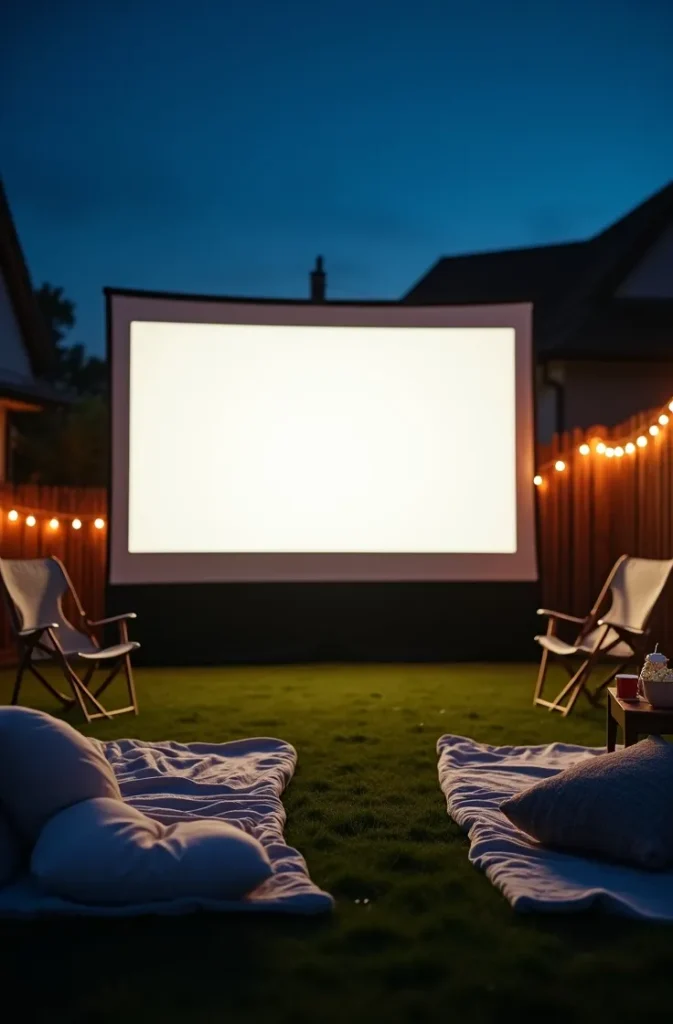
Set up seating in concentric rows that mirror an indoor cinema layout, with the lowest seating at the front and progressively taller seating behind. A mix of outdoor blankets on the ground, low camp chairs, and standard outdoor chairs in the back row manages sightlines for all guests without requiring perfectly matched furniture. Blankets and pillows on the ground for front-row guests is specifically the layout that makes outdoor movie nights feel experiential rather than like watching TV outside.
Control competing light by turning off all non-essential exterior lighting, keeping the cocktail and food stations positioned behind the seating area so their illumination faces away from the screen, and using red or very warm amber toned lanterns for any pathway safety lighting that must remain on during the screening.
4. Patriotic Fourth of July Party Table Setup With Red, White, and Blue Done Right
The most common failure in patriotic summer party table design is defaulting to equal thirds of red, white, and blue across every surface element, which reads as themed rather than designed. A well-executed patriotic table uses white as the dominant neutral base, blue as the primary accent, and red as the punctuation color, the same proportion logic that makes any three-color palette work in interior design.
Set the table with a white linen tablecloth as the base. Use deep navy blue table runners, navy plates, or navy napkins as the mid-layer color. Introduce red only in small elements: a tight cluster of red flowers, red napkin rings, or small red votive candles rather than a red tablecloth or red plates. This proportion immediately lifts the palette from novelty to curated.
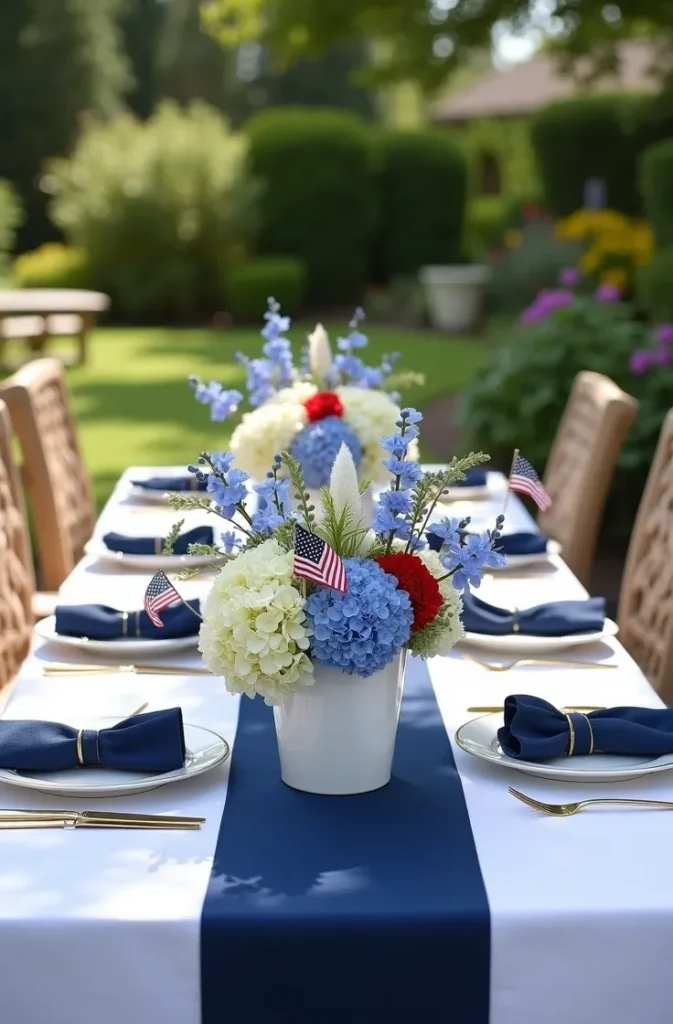
For the centerpiece, use a long low arrangement of white hydrangeas or white carnations with deep blue delphiniums and occasional red blooms, kept below 12 inches in height so it does not obstruct sightlines across the table. A tall patriotic centerpiece is the most common mistake in this table style, it blocks conversation and often tips in outdoor breeze conditions.
Add subtle textural interest with natural elements, a woven table runner under the cloth edge, small flag picks in the flower arrangement, or gold star confetti sealed under a clear placemat, to prevent the table from reading as costume-grade seasonal decor.
5. Tropical Luau Backyard Party Layout That Uses Space Efficiently
A luau-themed summer backyard party works best when the space is divided into functional zones rather than decorated as a single open area with tropical elements scattered throughout. Zone division, a food area, a bar area, a seating area, and an activity or dance area, allows a luau theme to feel like an event rather than a decorated yard.
Define each zone using physical anchors rather than signage. A large outdoor rug anchors the seating zone. A tall bamboo screen or a cluster of oversized tropical plants defines the bar station boundary. A wooden pallet platform or a contrasting ground material, gravel, sand, or outdoor pavers, marks the activity zone. These physical boundaries guide guest movement naturally without needing explicit direction.
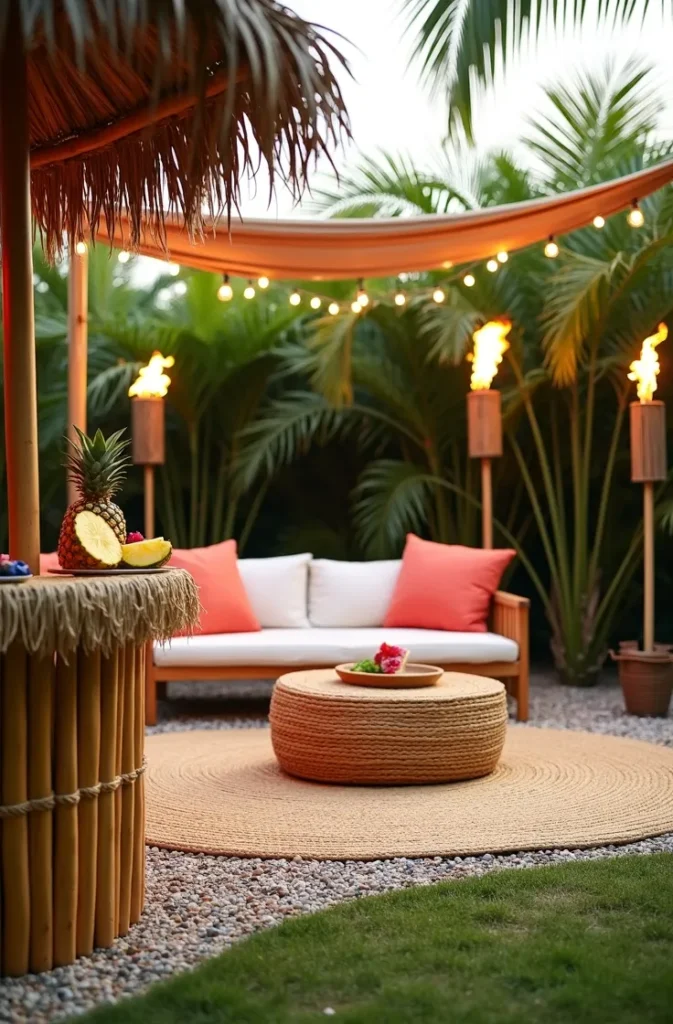
The visual language of a luau party lives in the material palette: natural textures like bamboo, rattan, tiki torches, woven grass table runners, and palm leaf prints rather than plastic leis and foam decorations. Natural materials photograph significantly better and hold up to outdoor conditions without deteriorating during the event.
Keep the color palette anchored in warm tropical tones rather than neon. Coral, mango orange, warm turquoise, and natural green read as sophisticated tropical rather than tourist-shop tropical. The distinction determines whether the party looks like a designed event or a theme party.
6. Intimate Garden Dinner Party Setup for Eight Guests That Feels Luxurious
An intimate outdoor summer dinner party for eight is a different design challenge than a large backyard event because the smaller scale requires every detail to hold up under close visual scrutiny. Elements that read fine from a distance in a large party setup become obvious at close range during a seated dinner.
A round or oval table is strongly preferred over a rectangular table for eight guests because it eliminates head-of-table hierarchy, allows every guest to see and converse with every other guest, and photographs better from any angle. A 60-inch round table seats eight comfortably with enough space for a centerpiece and serving vessels without overcrowding.
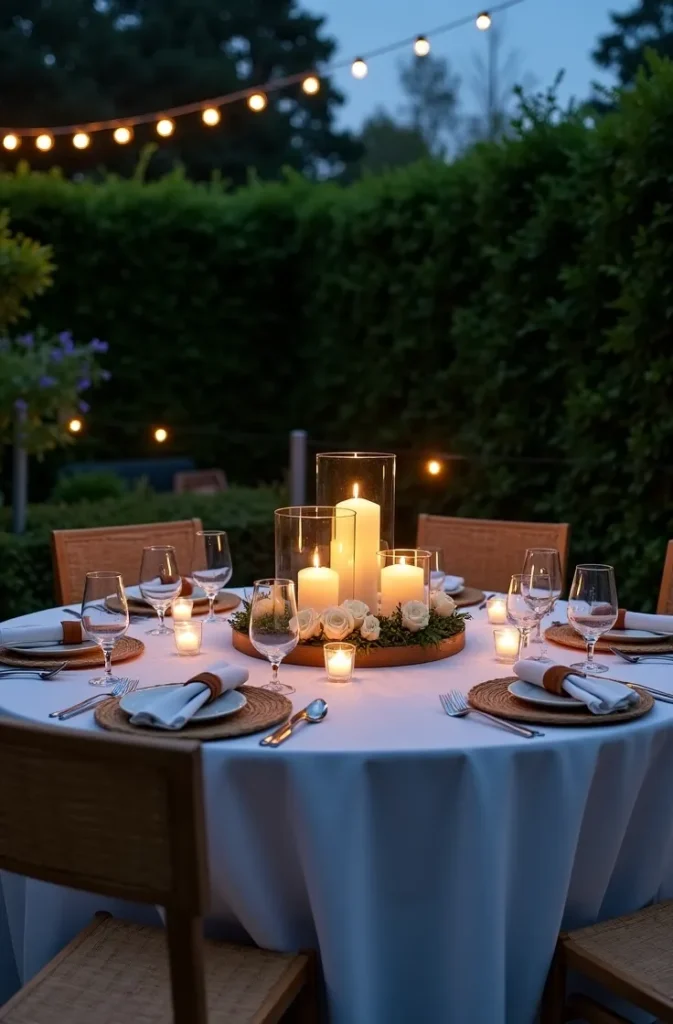
Layer the table setting with a tablecloth, individual placemats on top, and a charger plate beneath the dinner plate. This three-layer approach creates a dimensional table surface that reads as intentionally set rather than placed. Napkins folded and tucked into a ring or folded simply into a rectangle placed on top of the charger, not stuffed in the glass, signal a relaxed-formal register appropriate for a garden dinner.
Use candlelight as the primary evening light source rather than relying on overhead string lights alone. Place pillar candles in hurricane glass at varying heights at the center of the table and tea lights in small glass holders distributed across the table surface. The horizontal candlelight creates the intimate, face-flattering atmosphere that overhead string lights alone cannot produce.
7. Kids Summer Pool Party Setup That Contains the Chaos Without Sacrificing Style
A kids summer pool party has one design priority that adult parties do not: clear spatial delineation between wet zones and dry zones. Without that physical separation, towels, food, electronics, and dry seating become wet within the first 30 minutes of a pool party, which creates a maintenance burden for the host that overtakes the event.
Establish the wet zone boundary using a physical material transition. A rubber pool mat or a row of large flat stepping stones creates a surface transition that naturally prompts kids to stop, towel off, and register that they are crossing from wet to dry territory. This boundary does not need signage. The material change communicates it nonverbally.
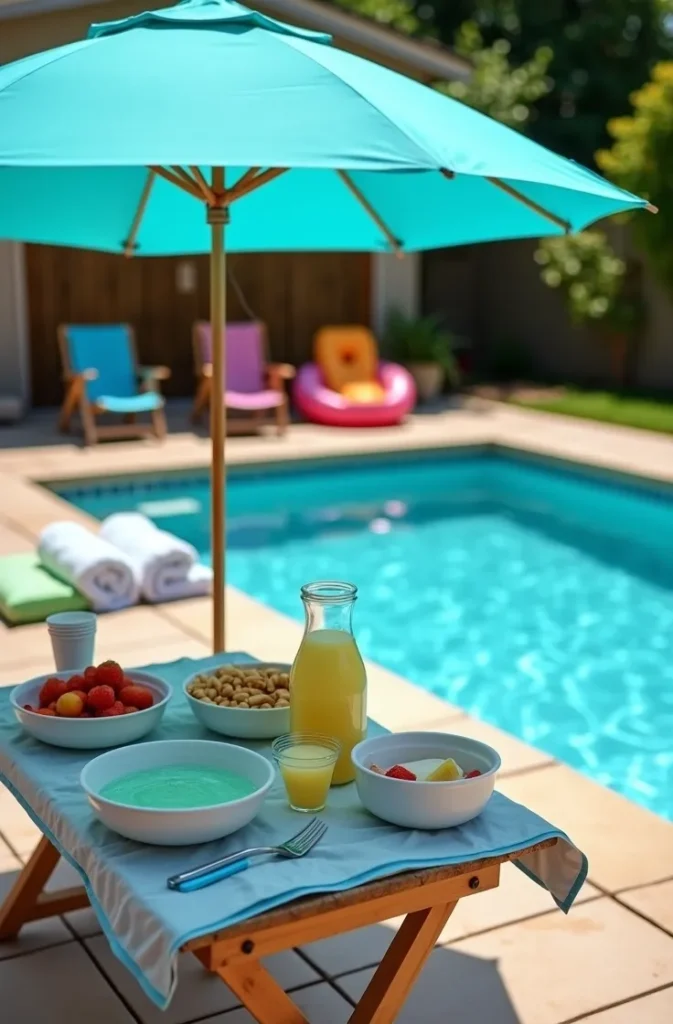
Keep the food and drink table on the dry side of the boundary, covered with a simple outdoor umbrella to protect from both sun and pool splash. For kids parties, keep all food at table height in covered serving dishes to minimize insect exposure. Open bowls of snacks left uncovered at ground level in summer heat are rapidly compromised by bees, wasps, and sun exposure within 20 to 30 minutes.
For decor, use a simple cohesive color palette, one or two colors plus white or natural tones, rather than mixing multiple theme patterns. A tropical palette of aqua and white, a watermelon palette of pink and green, or a classic blue and yellow works better than mixing multiple pool party themes on the same table. Consistent color is what makes a simple kids party setup read as styled.
8. Backyard Bonfire Party Setup With S’mores Station and Low Seating Circle
A bonfire party works as a summer party format from late June through September in most of the continental USA, particularly in regions where evenings cool after 8 or 9 PM. The setup is defined by a single design principle: everything faces the fire, and every guest has equal access to it.
Arrange seating in a full or three-quarter circle around the fire pit rather than on one side. A one-sided or two-sided arrangement creates a social dynamic where some guests have prime firepit access and others are bystanders, which works against the communal purpose of a bonfire gathering. Use low seating, Adirondack chairs, low camp chairs, log sections as seats, and large outdoor cushions on the ground, to keep the eyeline at a natural firepit-viewing height.
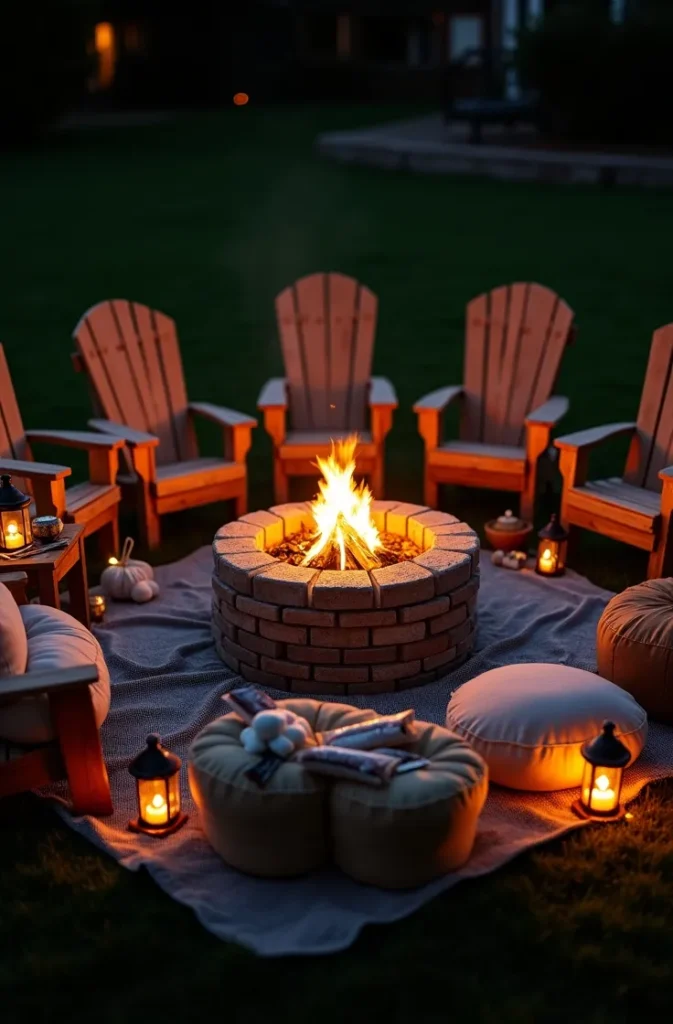
Position the s’mores station within reach of the seated circle rather than across the yard. A dedicated s’mores station at an adjacent small table or on a large flat rock near the circle keeps the assembly process organized and contained. Lay out ingredients in order of assembly: chocolate, marshmallows, graham crackers, with roasting sticks beside each place or in a central cup. A disorganized s’mores setup with ingredients scattered without logic creates a bottleneck that interrupts the flow of the evening.
Add lighting at the perimeter of the seated circle, not overhead. Ground-level lanterns or tiki torches positioned between chair gaps illuminate the space and define the party boundary without competing with the fire as the visual focus of the gathering.
9. Outdoor Taco Bar Setup That Works for 20 or More Guests Without a Chafing Dish
A taco bar is one of the strongest summer outdoor party food formats for groups of 20 or more because it is self-assembling, naturally accommodates dietary restrictions, and allows guests to return for multiple rounds without requiring plating or serving from a host. The setup challenge is maintaining food temperature without professional equipment.
The key is thermal management through vessel choice rather than chafing dishes. Cast iron pots and heavy ceramic crocks retain heat significantly longer than lightweight serving bowls. Pre-warm these vessels with hot water before filling them with hot protein and beans immediately before guests arrive. A heavy cast iron pot of seasoned ground beef or shredded chicken holds adequate temperature for 45 minutes to an hour at outdoor summer temperatures without any heat source beneath it.
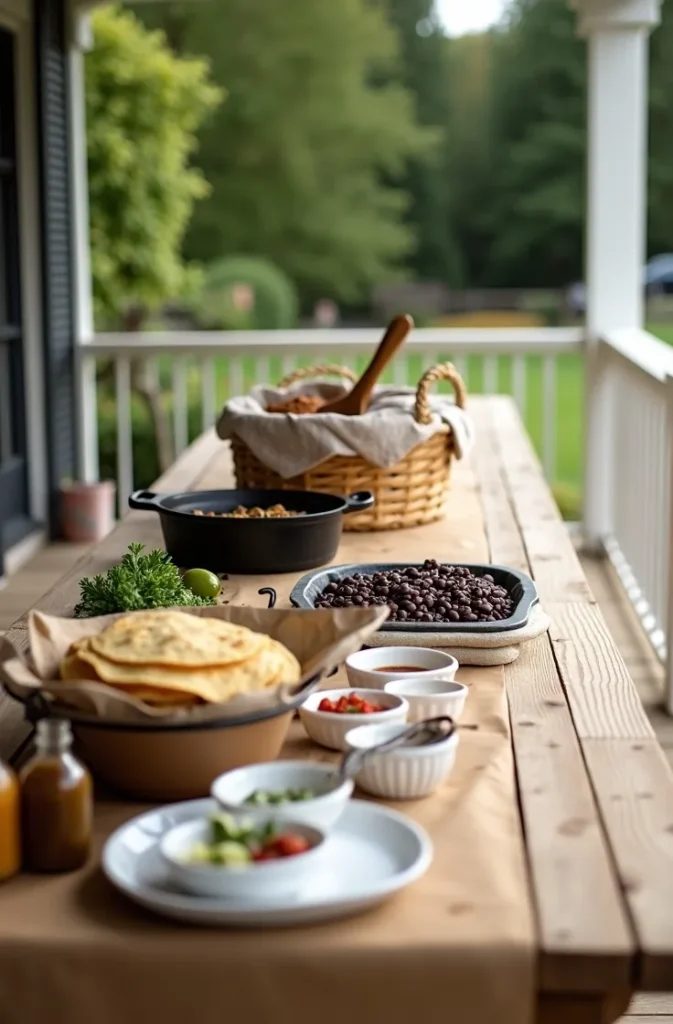
Keep cold ingredients, shredded lettuce, fresh salsa, pico de gallo, shredded cheese, and sour cream, in individual small bowls nested inside a larger bowl filled with ice. This simple ice-nest technique maintains cold temperatures for two hours outdoors without any refrigeration equipment. Refill the ice every 90 minutes.
Arrange the taco bar in assembly-line sequence from left to right: tortillas first, then protein, then beans, then cold toppings, then sauces. A taco bar that requires guests to move back and forth across the table to assemble their plate creates a traffic bottleneck that slows the line and frustrates guests. Linear sequence from left to right is the functional layout standard for any self-serve food station.
10. Outdoor Birthday Party Dessert Table for Adults That Skips the Balloon Arch
The balloon arch has become the default visual anchor for outdoor birthday party setups, but it is not the only option, and for adult celebrations it often undercuts the sophisticated atmosphere the rest of the setup works to create. A dessert table built around a cohesive material palette and varied-height display levels can function as a stronger visual focal point without requiring inflatable structures.
Build the display surface at three levels using a mix of cake stands, tiered trays, and decorative boxes or risers covered in the table’s linen. The height variation creates the visual interest that draws the eye and photographs well from any angle. A flat single-level dessert table, regardless of the quality of the food on it, reads as underset.
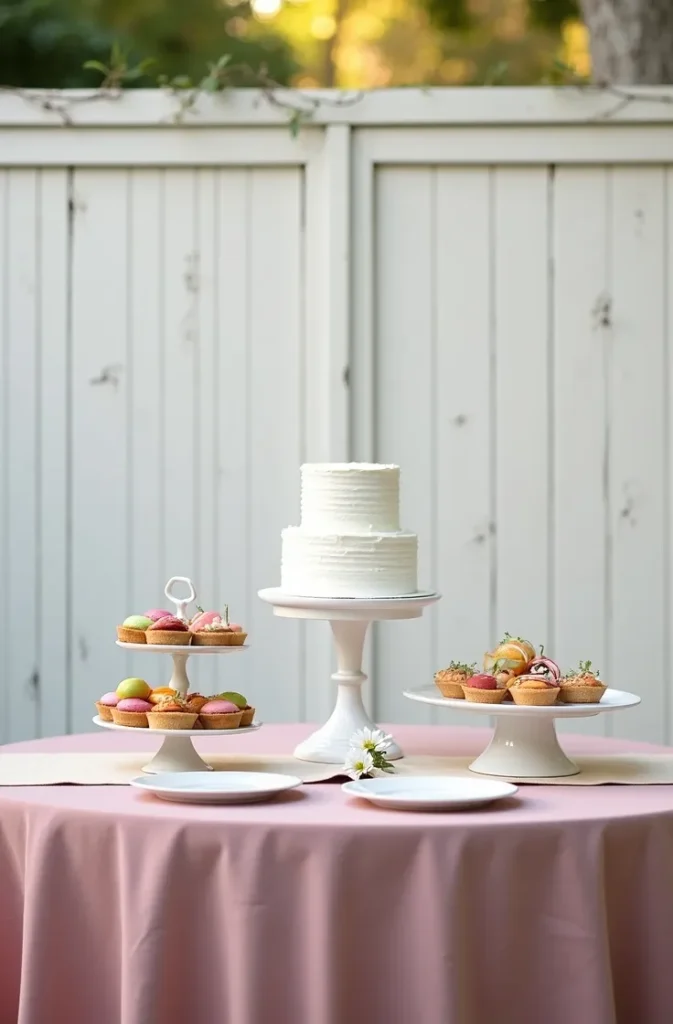
Choose a two-color palette for the dessert table linens, vessels, and small decorative elements. Layer a full tablecloth with a contrasting table runner, and keep all serving vessels within the same two-color family. A single coordinated palette across all table elements creates a finished, event-quality result that mismatched serving pieces and multiple color families cannot achieve.
Place the birthday cake as the highest point at the back center of the table rather than on a low surface in the middle of the display. The cake, as the anchor piece, earns the peak position in the display hierarchy. Everything else on the table should be lower than the cake tier to preserve its visual priority.
11. Summer Bridal Shower Garden Party Layout That Feels Elegant Without a Large Budget
A garden party bridal shower succeeds when the natural environment is treated as part of the decor rather than a backdrop that requires covering with fabric draping and purchased floral arrangements. Using existing garden plantings, potted herbs, and natural greenery as integrated elements of the tablescape and party layout reduces floristry cost while creating an authentic outdoor atmosphere.
Set tables in the garden itself rather than clearing plants to create a flat open event space. Chairs tucked between existing garden beds, a table surrounded by potted lavender or rosemary, and place settings on a table shaded by an existing tree canopy all leverage the garden environment as a feature. Clearing and flattening a garden space to then re-decorate it with purchased silk florals and paper backdrops negates the entire advantage of the garden setting.
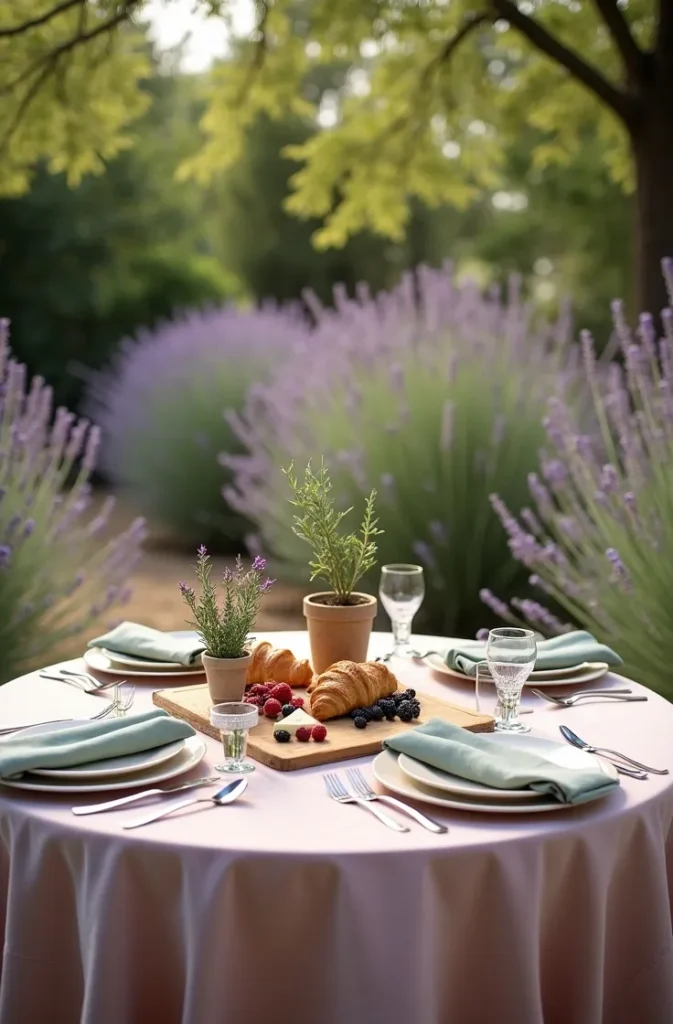
Choose a soft, feminine color palette of dusty rose, sage green, and ivory rather than the bright pinks and whites of a traditional bridal shower. The dusty tones read as sophisticated and photograph naturally in garden settings without clashing with green foliage backgrounds. Bright white linens against outdoor green backgrounds often read as overexposed in photographs.
Serve a grazing brunch board rather than a plated menu for outdoor bridal shower food. A display of croissants, fresh fruit, soft cheeses, honey, and small pastries arranged on a marble board or a wood slice functions as both food service and a visual table feature that guests photograph and interact with throughout the event.
12. Outdoor Graduation Party Setup That Handles a Large Mixed-Age Crowd
A graduation party typically serves the widest age range of any summer entertaining format, young children, teenagers, college-age guests, parents, and grandparents in a single event. The layout decisions must accommodate that range in seating comfort, food access, and activity space.
Divide the yard into at least three distinct zones: a formal seating area with table and chairs for older guests who prefer structured seating, a casual lawn area with blankets and low seating for younger guests, and a standing social area near the food and drink stations for guests who move between conversations. This three-zone approach lets each guest age group find their comfortable mode without the entire party defaulting to one format.
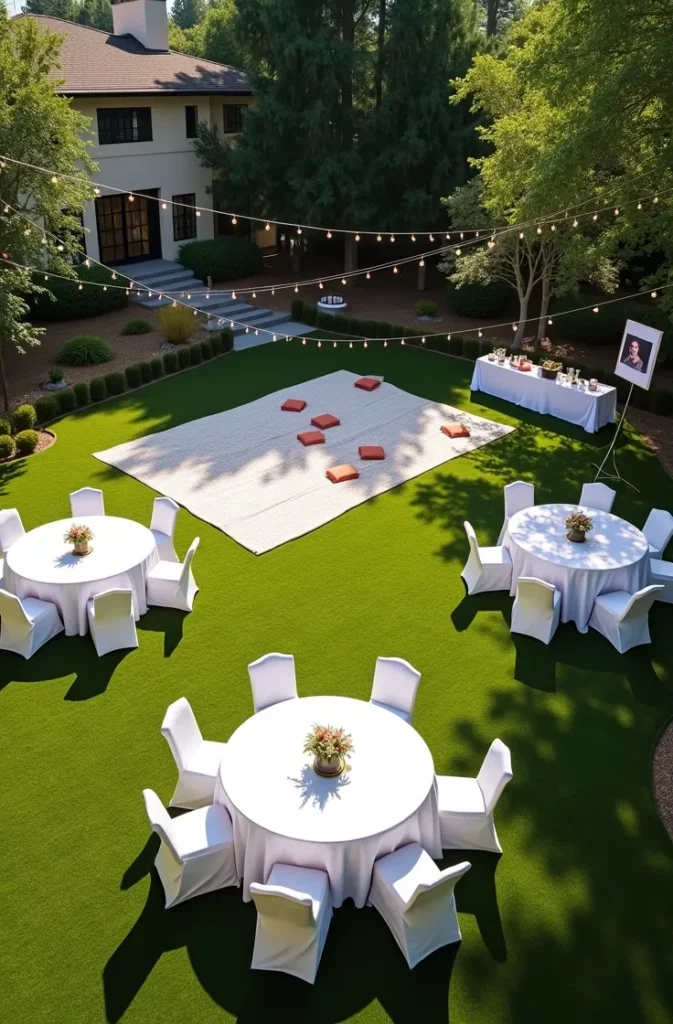
The food station layout matters especially at large mixed-age events. Keep the main food table at standard table height for adult and elderly guests, and add a separate low-height kids snack station nearby with finger foods and simpler options at a height accessible to children. This prevents the main table from becoming blocked by children and allows parents to manage their children’s food without repeatedly accessing the main adult table.
Position the graduation photo display, often a collection of milestone photos, where it functions as a social conversation point. A foam board or easel placed near the bar station or the main entrance directs guest traffic past it naturally rather than relegating it to a corner where it goes unnoticed.
13. Outdoor Cocktail Party Setup With High Tables That Maximizes Guest Circulation
A standing cocktail party format with high tables rather than seated dining is the most efficient setup for indoor-outdoor summer entertaining in moderate-sized spaces because it maximizes the number of guests a space can hold without creating seating competition, and it promotes active guest circulation rather than static table-anchored conversation clusters.
High cocktail tables, typically 42 inches in height, require no chairs and hold drinks and small plates at a natural standing position. Space them at least 5 feet apart from edge to edge, not center to center, to allow guest circulation between tables without contact. Crowding tables too closely together defeats the circulation benefit and creates the same static clustering that seated arrangements produce.
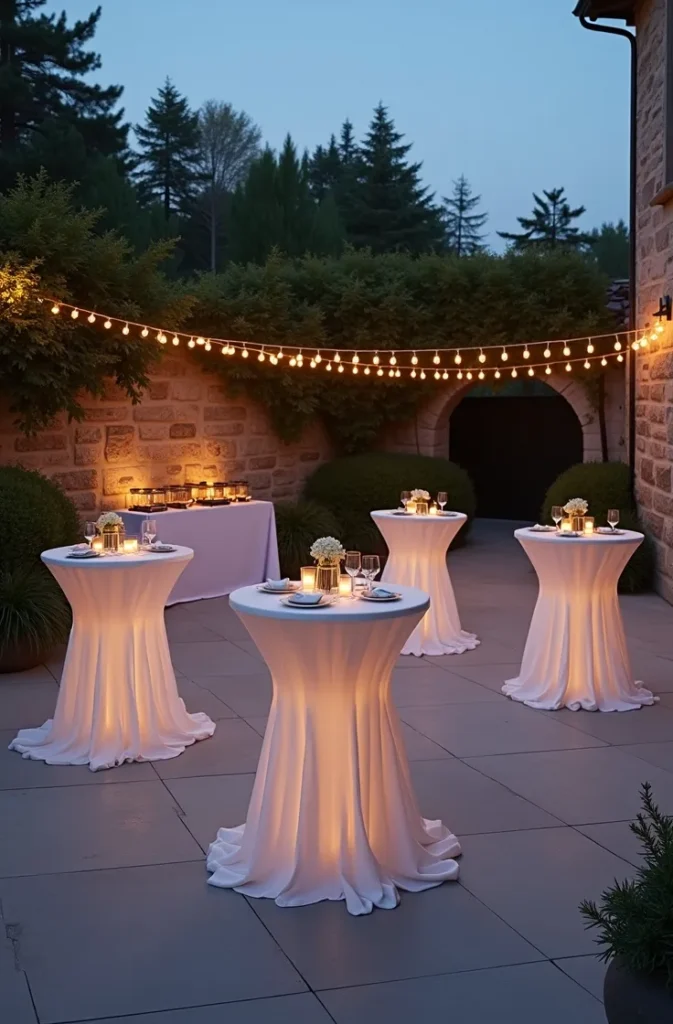
Cover each high table with a linen tablecloth that falls to floor level rather than a short skirt that exposes the table base. Floor-length linens on cocktail tables create an event-quality visual that is disproportionate to the cost of the linen itself. Clip the linen to the table edge with discreet binder clips to prevent lifting in outdoor breeze conditions.
Distribute food across multiple small stations positioned at different points in the party space rather than centralizing all food at one table. Distributed food stations pull guests through the full space and prevent congestion at a single point. One stationed appetizer display, one passed tray circuit from a helper if available, and one charcuterie board positioned at the far end of the party space from the bar gives guests a reason to move across the full venue.
14. Outdoor Summer Baby Shower Under a Shade Structure That Keeps Guests Comfortable
A summer baby shower scheduled between 10 AM and 2 PM faces the most significant heat management challenge of any outdoor gathering format. Shade structure coverage is not optional at those hours, it is a functional requirement that determines whether the event is comfortable for a mixed-age, potentially pregnant guest list.
The shade structure options in order of coverage quality are: a rented frame tent with full sides if temperatures will exceed 90 degrees, a 10×20 foot or larger market umbrella cluster if mild shade is sufficient, and a shade sail if the primary concern is sun angle rather than ambient heat. For baby showers specifically where pregnant guests and infants may be present, err toward more shade coverage than you think necessary rather than less.
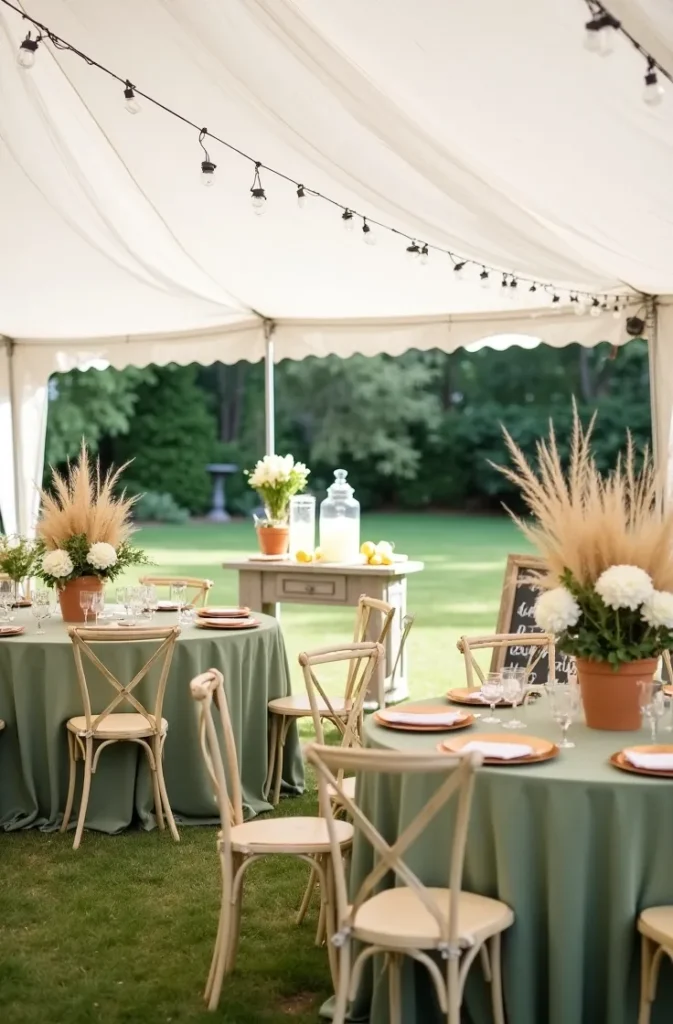
Keep the color palette soft and the decor language botanical rather than novelty. A sage green, dusty blue, and cream palette with dried pampas grass arrangements, potted plants, and simple linen table linens translates the baby shower format into a garden party aesthetic that avoids the infantilizing visual language of cartoon animals and pastel novelty balloons.
Provide water, lemon water, and a non-alcoholic mocktail as the featured beverages rather than making guests feel that alcohol is the default. A decorated lemonade station or a floral hibiscus iced tea dispenser serves as both hydration and a visual table display that reads well in party photographs.
15. Tropical Pool Party for Adults That Feels Like a Resort Experience
An adult pool party that achieves a resort-quality atmosphere depends on the removal of visual clutter more than the addition of decor. The resort pool aesthetic is defined by restraint: consistent furniture, clean surfaces, and a limited palette rather than an accumulation of inflatable objects and multicolor accessories.
Choose one to two coordinating towel colors for all pool-side seating rather than mismatched personal towels. Providing matching towels as part of the party setup is a small investment that produces an immediate resort-quality visual. Fold them uniformly over chair backs or roll and stack them in a large woven basket near the pool entry. This single detail elevates the entire setup.
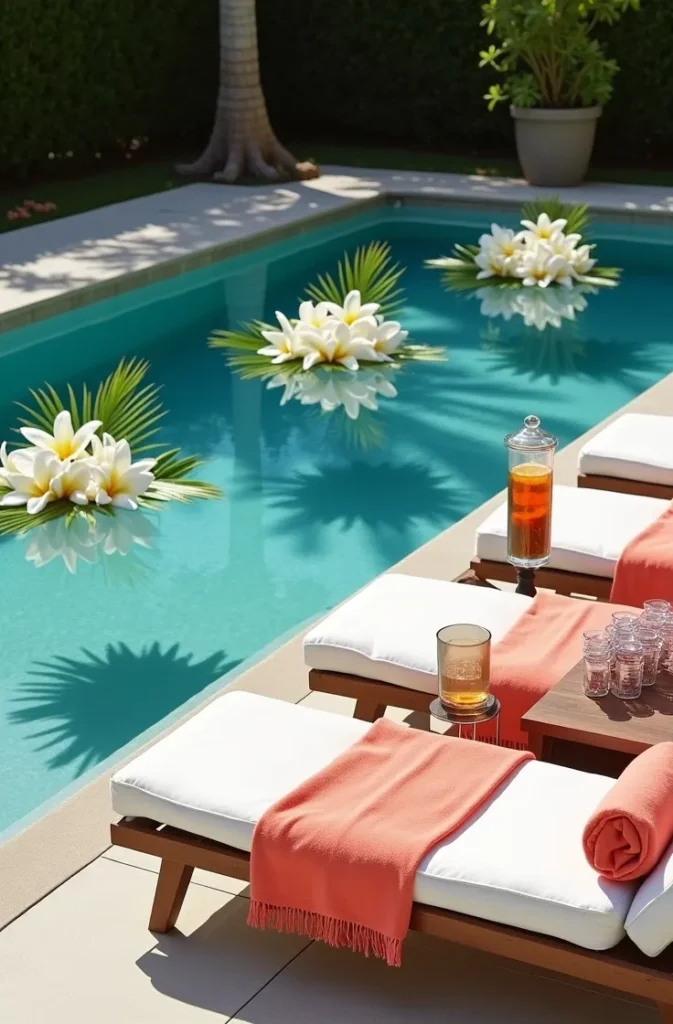
Create one styled drink station at pool edge with a large glass drink dispenser of fresh fruit infused water or a pre-batched cocktail, surrounded by matching acrylic stemware or clear plastic cups in a coordinating color. Keep the station minimal: dispenser, cups, ice bucket, and one or two fresh citrus or herb garnish options. A tropical drink station that is overloaded with bottles, garnishes, and tools reads as a cluttered bar setup rather than a curated poolside feature.
Position floating candles or floating floral arrangements in the pool itself as the primary visual centerpiece of the party. Floating elements in the pool space are visible from every standing and seated position around the pool, making them the most universally viewed decor investment at any pool party.
16. DIY Photo Booth Backdrop for an Outdoor Summer Party That Photographs Well
A DIY photo booth backdrop is one of the highest-social-media-return investments in any summer party setup because it creates a dedicated photography moment that guests use throughout the event and share afterward. The execution quality of the backdrop determines whether guests actually use it or walk past it.
The backdrop needs three qualities to function well outdoors: enough visual interest to read as a designed installation rather than a decorated corner, enough structural stability to stand without constant adjustment in outdoor breeze conditions, and a color palette that photographs well against a variety of guest clothing colors. Busy multi-pattern backdrops or extremely dark backdrops photograph poorly and compete with guests rather than framing them.
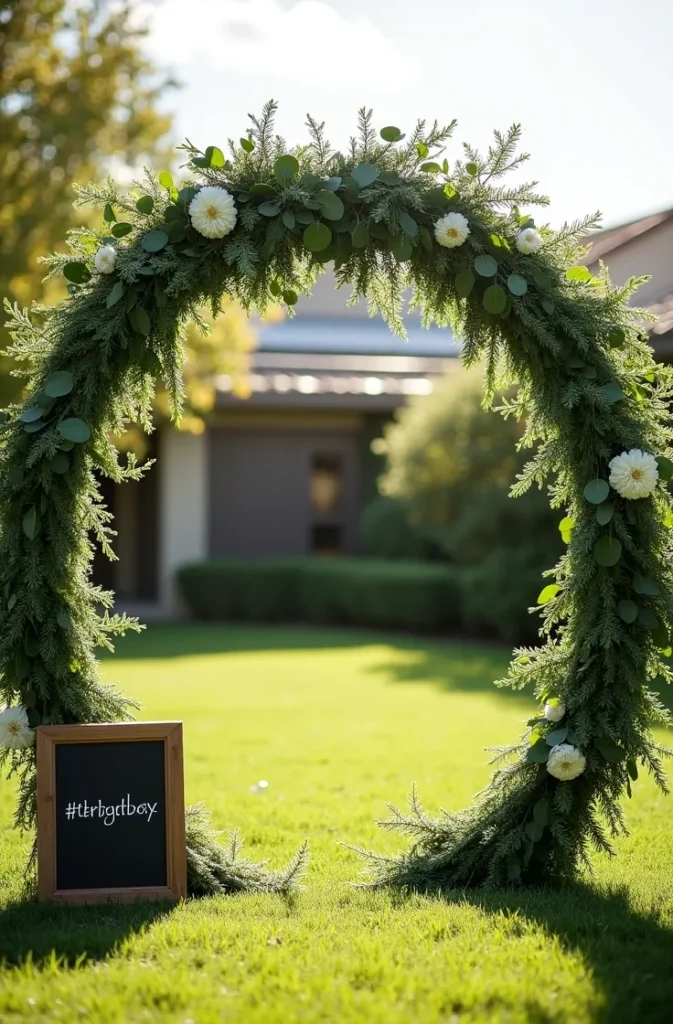
A simple arch frame wrapped in fresh or artificial greenery with one or two clusters of white or neutral flowers is the most reliably successful outdoor photo booth backdrop because greenery reads well in daylight photography, holds its shape and color for six to eight hours outdoors, and provides a neutral background against any clothing color. Colored fabric backdrops and balloon backdrops are both more vulnerable to wind and light variability.
Position the backdrop with the sun behind the photographer rather than behind the backdrop. Backlighting the backdrop and the guests standing in front of it produces silhouetted, underexposed photographs. The optimal position is with soft directional morning or late afternoon light falling on the front surface of the backdrop and the subjects standing in front of it.
17. Outdoor Dinner Party Table for Two That Creates a Private Summer Date Night
A table-for-two outdoor dinner setup for a summer evening at home is one of the most underutilized summer entertaining ideas because most decor guidance focuses on groups. A private outdoor dinner for two requires different design logic: intimate scale, focused lighting, and the removal of elements that work for group entertaining but feel impersonal at a table for two.
Use a small round bistro table rather than a rectangular dining table. A rectangular four-top or six-top table set for two persons creates a social distance that undermines intimacy regardless of how beautifully it is decorated. A 24 to 30 inch round bistro table positions two diners in natural conversational proximity.
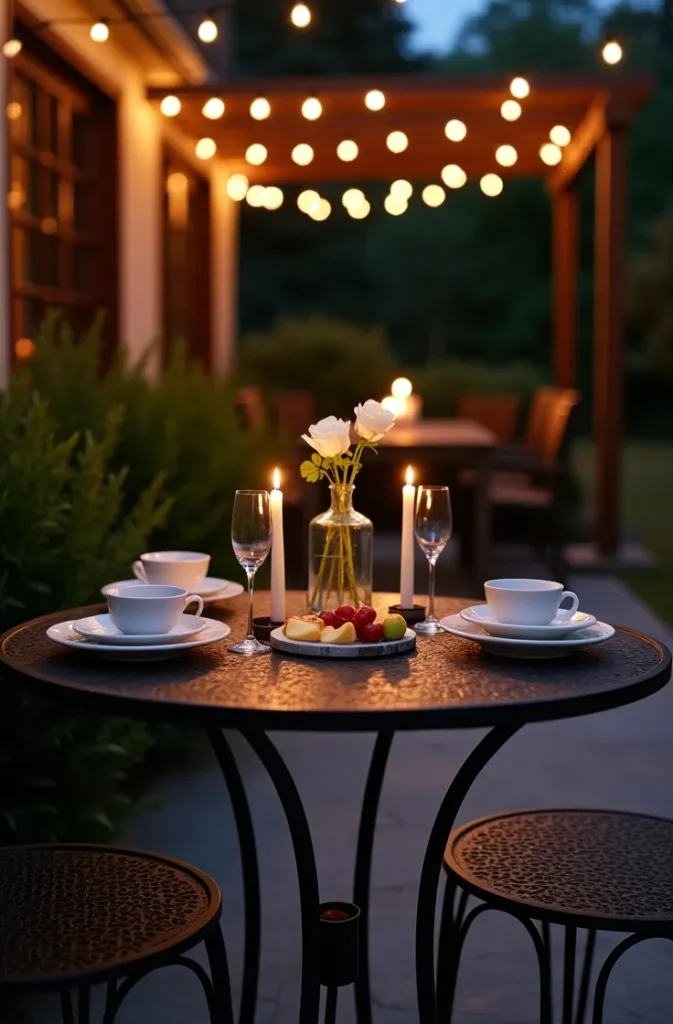
Light the table with two tapered candles in low holders and two to four tea light candles in small glass holders distributed on the table surface. No overhead lighting source should be brighter than the candle light at the table level. If the porch or patio has an overhead fixture, switch it off or switch to a bulb dimmed to its lowest setting. Overhead bright light at an intimate dinner table is the single most common decor decision that undercuts the atmosphere.
Style the table with two place settings, two bud vases with single stems rather than a multi-flower centerpiece, and a simple cloth napkin folded at each place. A small charcuterie board or appetizer plate at the center removes the need for a formal serving sequence and allows the evening to begin immediately on a relaxed note when both guests are seated.
18. Summer Block Party Setup With Lawn Games Area That Keeps All Ages Engaged
A block party or large neighborhood summer gathering has a specific design challenge that smaller parties do not: keeping guests distributed across a large space rather than clustering in one spot, which creates both a crowd management problem and a visual imbalance in the event layout.
Lawn games solve the guest distribution problem by creating destination points across the party footprint. Position game setups, cornhole boards, bocce court markers, lawn bowling, or ring toss stations at strategic intervals through the party space at distances of at least 20 to 30 feet apart. Guests migrate between games and between food and game areas, which keeps the full space active rather than concentrating the crowd at the food table.
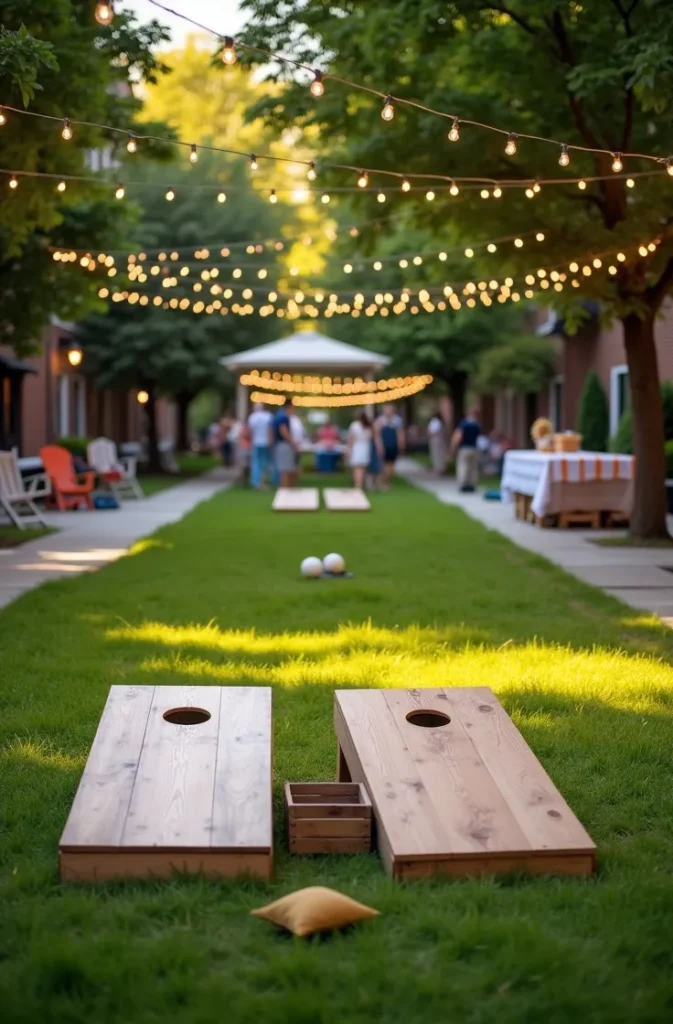
Organize the game equipment with visible, simple boundaries so guests self-organize without requiring explanation or facilitation from a host. Chalk lines or colored rope laid on the lawn define a bocce court. Cornhole boards positioned facing each other at regulation 27-foot distance with a small crate of bean bags at each end is a complete self-explanatory setup. Games that require verbal explanation before play slow the social uptake significantly.
For the food setup at a block party scale, use multiple small food stations distributed throughout the space rather than one large food table. Each station should be complete and independently functional: its own serving utensils, napkins, and plates, rather than requiring guests to carry items across the space. A distributed food layout reduces traffic bottlenecks and keeps guests circulating rather than forming one long serving line.
Conclusion
The summer party ideas in this guide are built around a consistent principle: every element you add to an event setup should solve a specific functional or visual problem, not simply fill space. When you start with that framework, the decisions get clearer and the results get better regardless of your budget or the size of your outdoor space.
If one or more of these setups fits a gathering you are planning this season, save this post to your Pinterest boards so you can return to the specific layout sections and image prompts when you are ready to execute. These ideas are designed to be used as working references throughout the summer, not just read once.
The strongest summer party outcomes come from choosing the right format for your guest list and space, then executing two or three details exceptionally well rather than attempting to incorporate every element at once. Start with your space and your guest count, and the right ideas from this list will identify themselves.