
Refreshing your space for summer does not have to mean a full renovation or expensive overhaul. These summer styling ideas for home focus on practical, room-by-room changes that improve comfort, airflow, and visual calm — all without clutter or compromise. Whether you are working with a small apartment or a larger open-plan layout, each idea below gives you a clear action step and a reason it works.
1. Swap Heavy Drapes for Sheer Linen Panels to Instantly Brighten Any Room
Heavy drapes trap heat and block the soft, diffused light that makes a room feel airy in summer. Replacing them with sheer linen panels — even temporarily — transforms how a room reads during daylight hours.
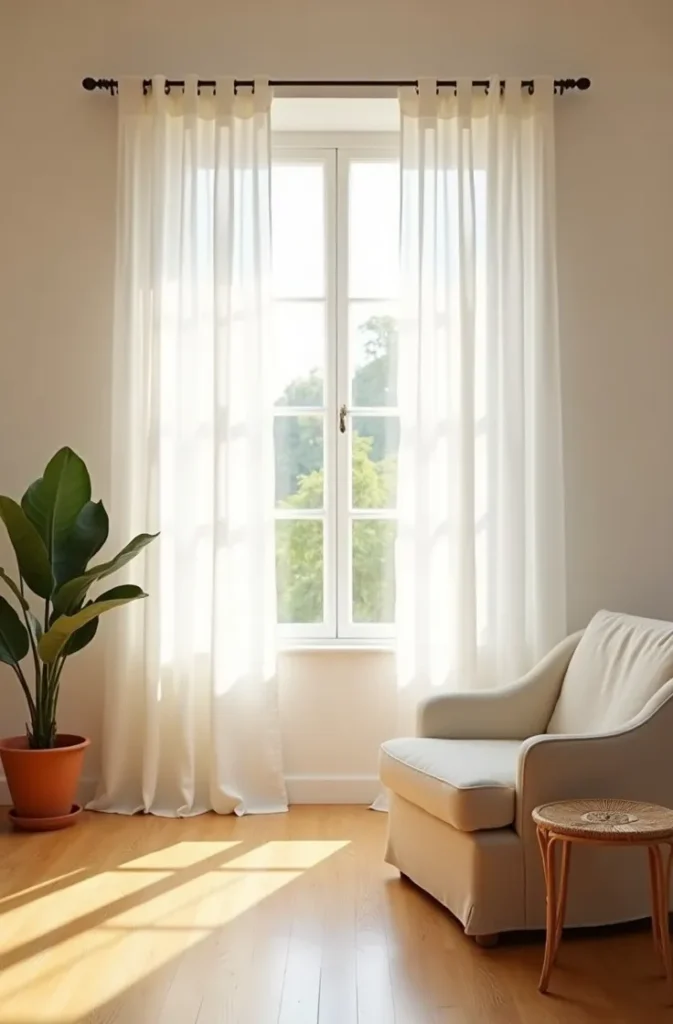
Linen sheers filter direct sunlight without blocking it completely, creating that natural, glowing interior effect you see in well-styled summer homes. This works especially well in living rooms and primary bedrooms where you want light without harsh glare.

Avoid panels that are too short or too narrow. A common mistake is buying sheers that barely cover the window frame. For maximum visual impact, hang them close to the ceiling and let them fall to the floor — this elongates the wall and makes the ceiling feel higher.
2. Use a Cool Neutral Palette on a Statement Wall to Reduce Visual Heat
Color has a measurable psychological effect on perceived temperature. Rooms painted in warm tones — deep reds, burnt oranges, dark browns — can feel heavier and hotter in summer, even with good ventilation.
Choosing one wall for a cool neutral refresh — think warm whites, soft sage, dusty blue, or pale clay — creates a focal point without overwhelming the space. This approach works well in dining rooms and home offices where you spend long hours.
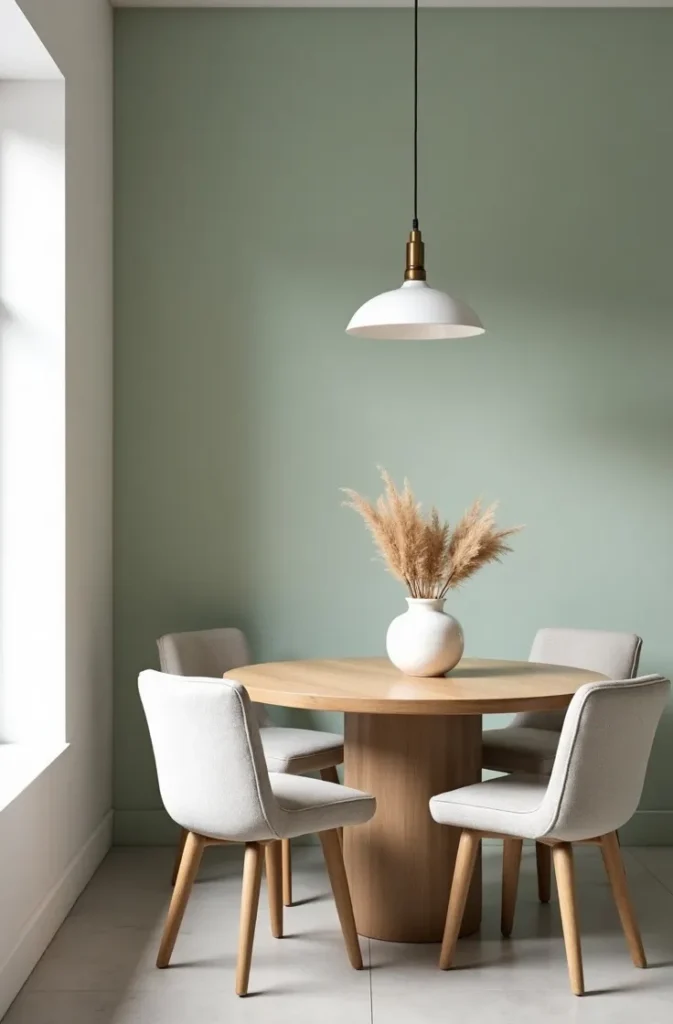
The key is contrast: the statement wall should be noticeably different from adjacent walls but not jarring. A soft sage green against warm white walls reads as calm and intentional rather than bold.
If you are renting or do not want to paint, large-format removable wallpaper panels in muted botanical or linen textures achieve the same effect.
3. Introduce Woven Textures Through Rugs and Baskets for Effortless Summer Warmth
Summer styling is not about stripping a space down to nothing — it is about replacing heavy materials with lighter ones that still add tactile interest. Woven textures do this more effectively than most people realize.
A jute or seagrass area rug under a coffee table grounds the living room in a natural, organic way without the visual weight of a wool rug. Paired with a few woven baskets for storage, the room immediately reads as curated and intentional.
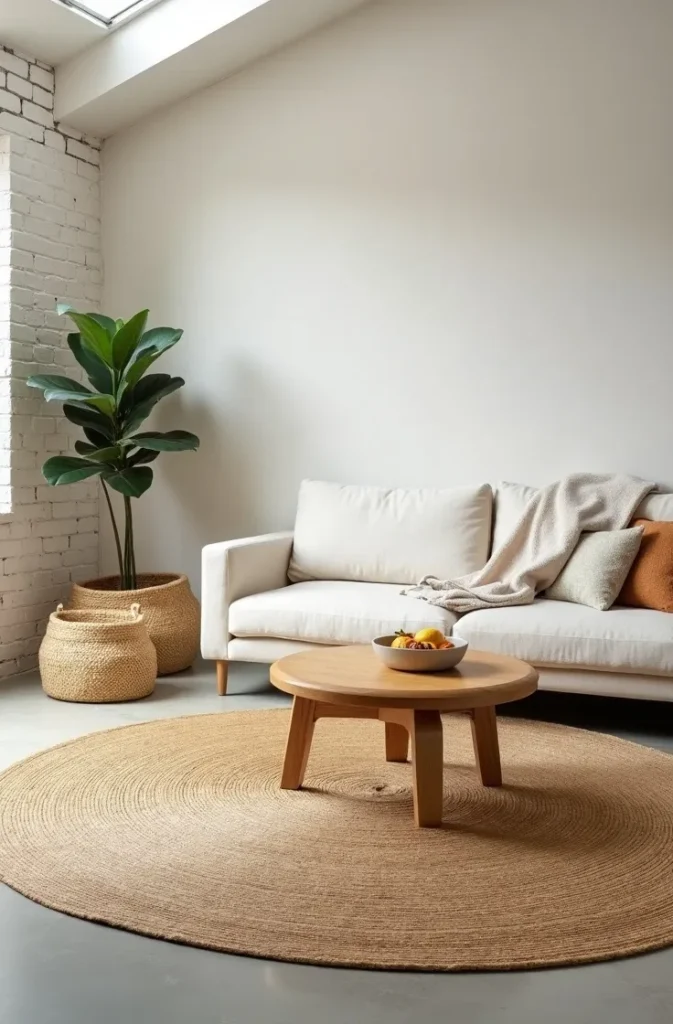
This approach works particularly well in open-plan homes where you want to define zones without walls. A woven rug placed under a seating arrangement creates a visual “room within a room.”
Avoid overly large weaves or rough textures in high-traffic areas — they collect debris quickly and look worn within one season. Tight flatweaves or medium-pile jute are the most durable summer options.
4. Layer Outdoor-Style Lanterns Indoors for Soft, Non-Overhead Summer Lighting
Overhead lighting is one of the least flattering and least comfortable light sources in summer. It creates harsh shadows and emphasizes ceiling height in a way that feels stark rather than welcoming.
Bringing in low-level lantern-style lighting — the kind typically used on patios or porches — creates warm pools of light that feel relaxed and seasonal. Battery-operated lanterns or plug-in versions require no rewiring and can be repositioned easily.
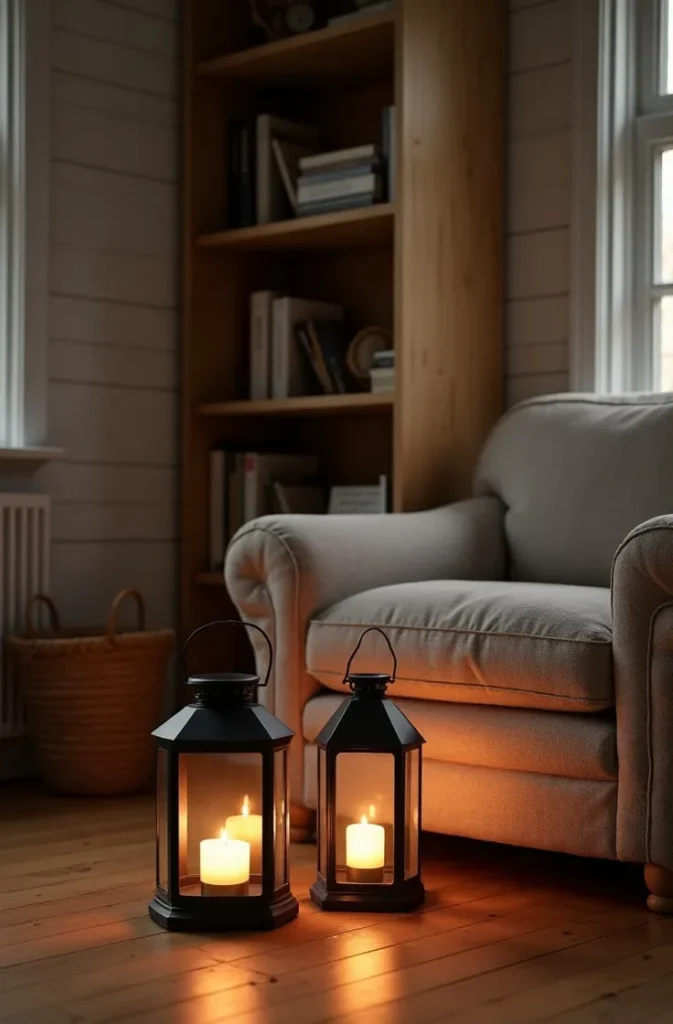
Group two or three lanterns of varying heights near a fireplace, bookshelf, or in a corner to create a lighting moment that competes with, and often beats, a standard floor lamp.
The mistake to avoid: using lanterns with cool-white bulbs. Stick to warm amber or 2700K light sources to maintain the soft, golden quality that makes summer interiors feel inviting after dark.
5. Replace Upholstered Throw Pillows With Textured Cotton or Chambray Covers
Pillow covers are one of the fastest and most affordable ways to shift a room’s seasonal feel. Velvet, bouclé, and heavy wool covers belong to fall and winter. For summer, the swap to cotton, chambray, or slubby linen makes an immediate difference — both visually and physically.
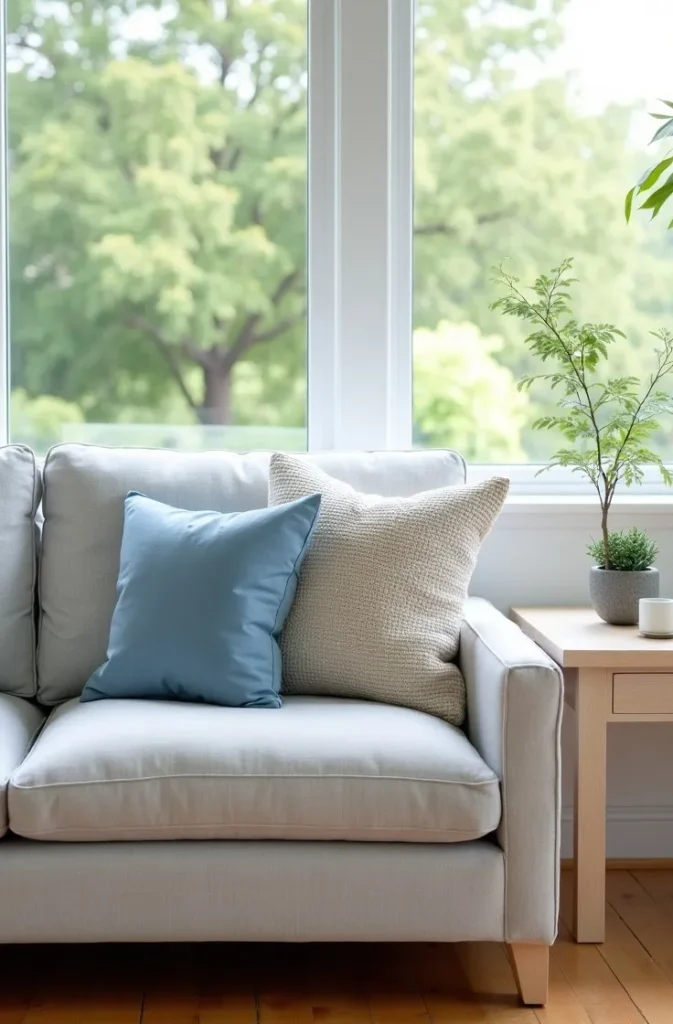
The key is not just to change the fabric but to also reduce the number of pillows. Summer interiors tend to look better with fewer, well-chosen cushions rather than layered stacks. Two to three pillows per sofa is usually the right count for a modern, clean summer look.
Color matters here too. Keeping pillow covers within two to three tones of the sofa maintains cohesion. Slight contrast — a soft blue on a warm gray sofa, or natural linen on white — is more effective than stark color blocking.
6. Create a Functional Entryway Drop Zone That Looks Styled, Not Cluttered
Entryways take a beating in summer — shoes, sunglasses, bags, keys, and wet swimwear all accumulate at the front door. A drop zone that is functional without looking chaotic is one of the most practical summer home upgrades you can make.
The structure is simple: one hook rail at two heights (for adults and children), one low bench with under-bench storage, and one tray or shallow bowl for keys and small items. That is all a well-designed entryway needs.
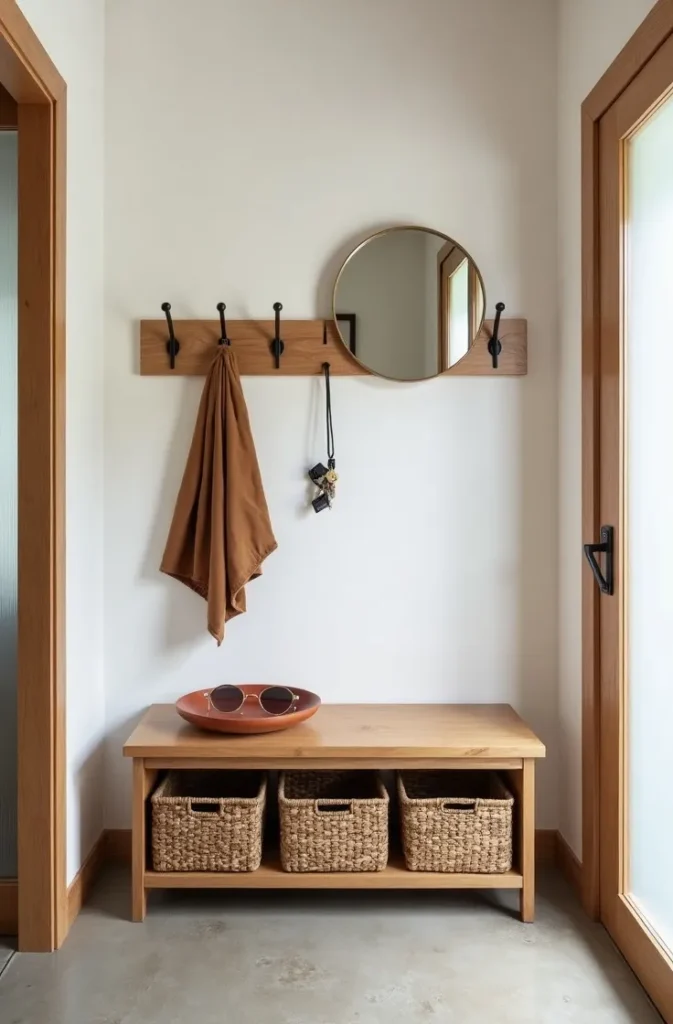
The styling layer comes from keeping the wall above the hook rail intentional — a single piece of art, a round mirror, or a framed print at eye level makes the space feel considered rather than improvised.
Avoid the temptation to add a console table unless your entryway is genuinely wide enough. A console in a narrow entry forces people to turn sideways and immediately makes the space feel congested.
7. Bring the Dining Table Outside With a Streamlined Al Fresco Setup
If you have a patio, deck, or even a small balcony, moving meals outside for summer is one of the highest-impact lifestyle upgrades with minimal styling investment. The barrier for most people is not space — it is setup complexity.
A streamlined al fresco setup works with what you already have: a folding or lightweight table, four to six chairs, and a single large umbrella or shade sail. The styling layer is a linen tablecloth, a ceramic pitcher, and a cluster of simple votives.
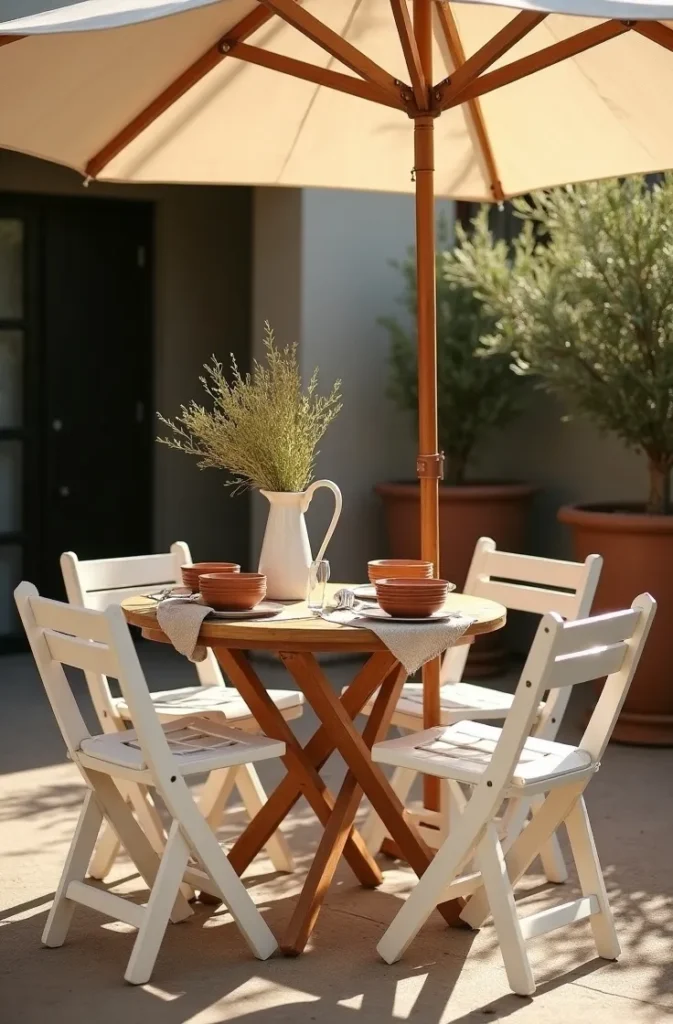
What makes this feel elevated rather than improvised is repetition of one material. If you use natural wood on the table, bring in a wooden serving board and wooden-handled flatware. This consistency is what separates a styled outdoor table from a random arrangement.
Avoid polyester tablecloths in summer. They trap heat, look flat in photographs, and wrinkle in a way that reads as neglected rather than casual.
8. Use a Gallery Wall of Botanical Prints to Add Summer Character Without Paint
If repainting is not an option — whether due to rental restrictions or budget — a carefully arranged gallery wall of botanical prints is the single most effective way to give a room a summer identity.
The key to a gallery wall that looks intentional rather than random is keeping all frames the same color or material. Black frames, natural wood frames, or thin brass frames each read differently, but consistency within your choice is what makes it work.
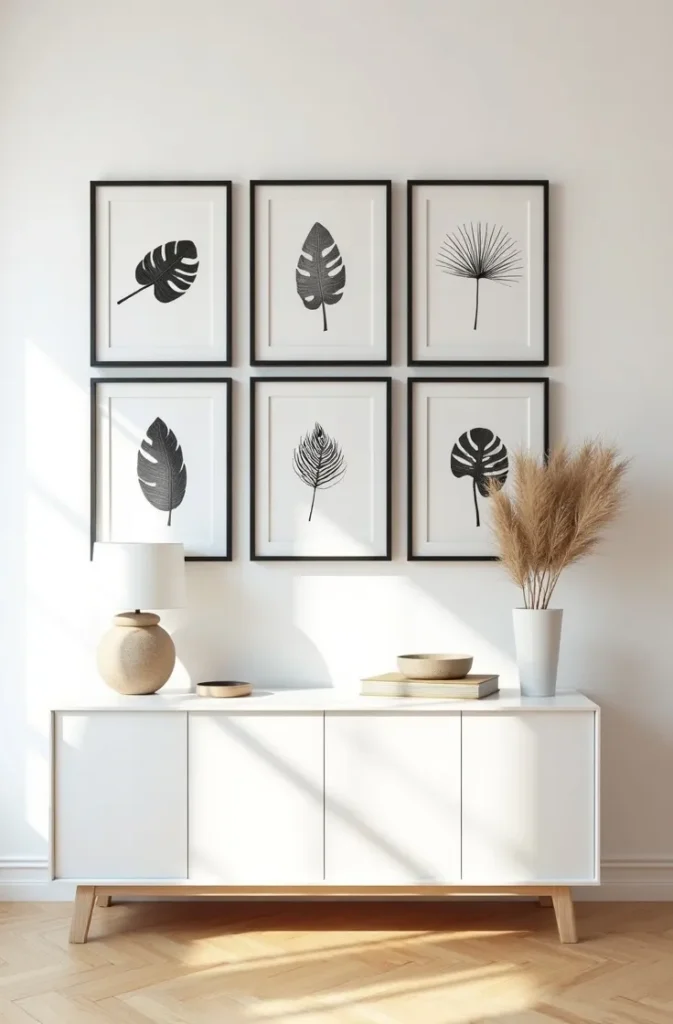
For summer, lean toward prints that feature clean line art of tropical or garden plants, abstract organic shapes, or coastal scenes. Avoid overly colorful or illustrated prints — they compete with the rest of the room rather than complementing it.
Lay the arrangement on the floor before hanging anything. This step alone prevents the single biggest gallery wall mistake: hanging pieces too far apart or misaligning the visual center of the arrangement with the furniture below it.
9. Rearrange Furniture Around Natural Airflow Paths, Not Just Aesthetics
Most people arrange furniture based on the room’s focal point — the TV, the fireplace, the view — without considering airflow. In summer, this matters more than most people expect.
Pulling seating even six to twelve inches away from walls allows air to circulate more freely around the room. Positioning a sofa near a window rather than against an interior wall places people in the path of natural cross-ventilation rather than away from it.
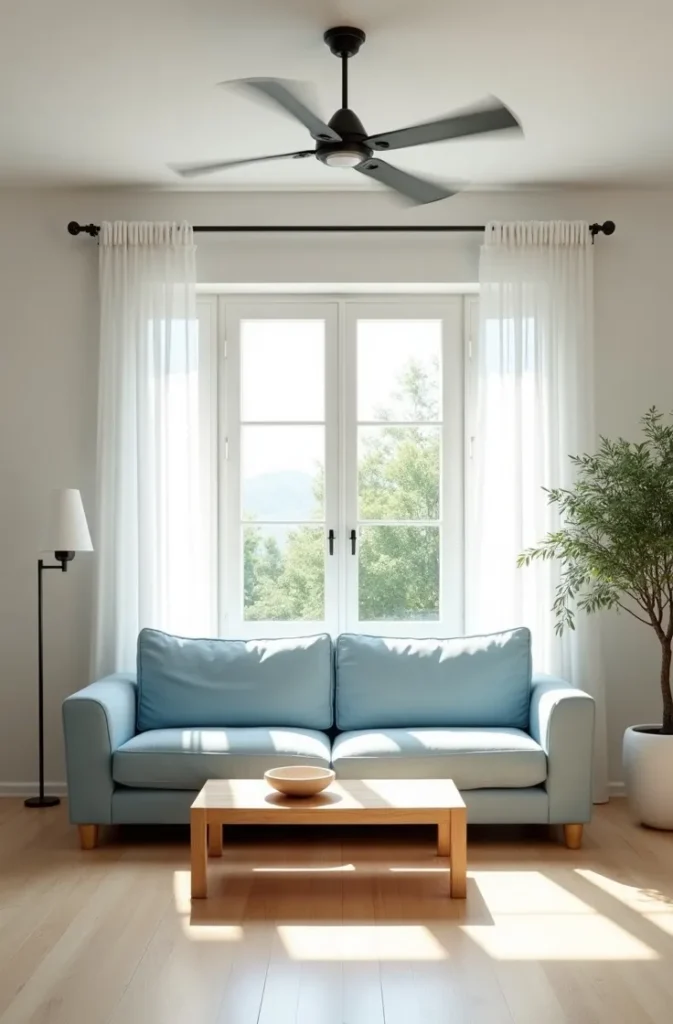
This is especially relevant in rooms where you run a ceiling fan. The furniture should be arranged so that people sitting in the primary seating area are directly beneath the fan’s rotation — not offset to one side where airflow is minimal.
The summer furniture rearrangement does not need to be dramatic. Small adjustments — rotating a rug, pulling a chair toward a window, angling a sofa slightly — can meaningfully change how a room feels at peak afternoon temperatures.
10. Style the Kitchen Counter With a Summer Produce Display That Doubles as Decor
A styled kitchen counter that combines function and visual appeal is one of the simplest summer home upgrades. A bowl of seasonal produce — lemons, limes, peaches, or tomatoes — is not just decorative; it is intentional, sustainable, and genuinely useful.
The arrangement works best when it is contained. A large wooden bowl or a ceramic pedestal keeps the produce organized and prevents it from reading as cluttered. A single item in abundance always looks more deliberate than a mix of five different things.
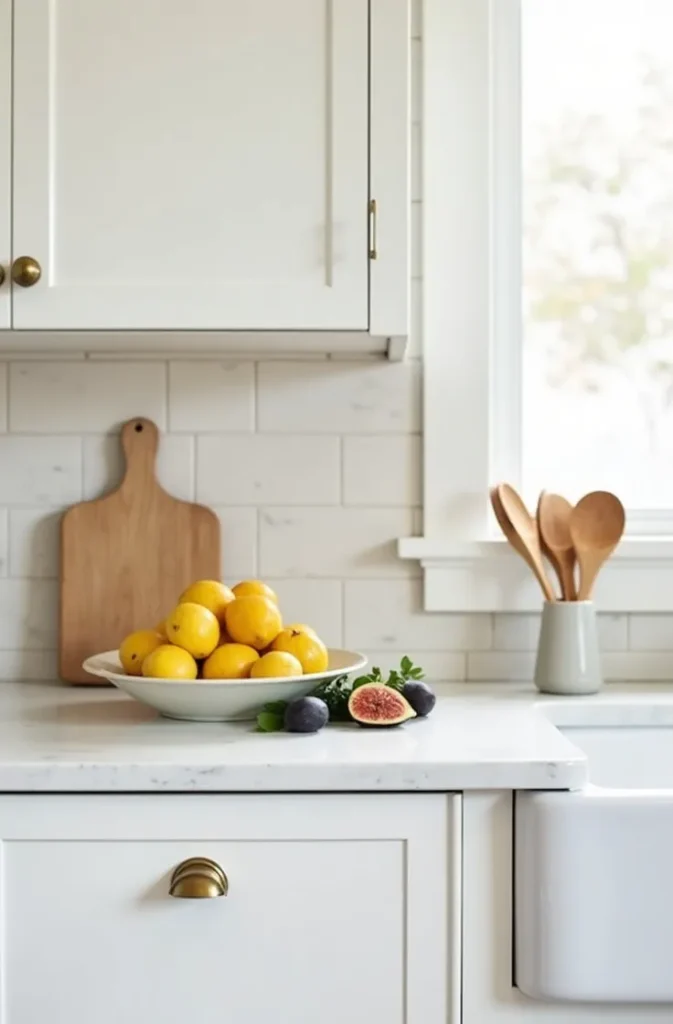
Pair the produce display with one other counter element: a clean cutting board, a ceramic utensil holder, or a glass pitcher of water with mint and citrus. Keep everything else off the counter if possible.
Counter styling for summer should also consider what you remove, not just what you add. A coffee maker, toaster, and cluttered spice collection will visually overwhelm even a well-chosen produce bowl.
11. Transform a Spare Bedroom Into a Minimal Summer Guest Room in One Weekend
A guest room that feels like a hotel rather than a storage overflow space takes one focused weekend to achieve. The framework is straightforward: clear everything non-essential, install a quality mattress topper, and style the bed with three layers of white or neutral linen.
The three-layer bed approach: fitted sheet, flat sheet folded crisply at the top, and one or two sleeping pillows with a lightweight quilt or cotton coverlet at the foot. That is it. Avoid decorative pillow stacks that require clearing before sleep — they look staged and read as high-maintenance.
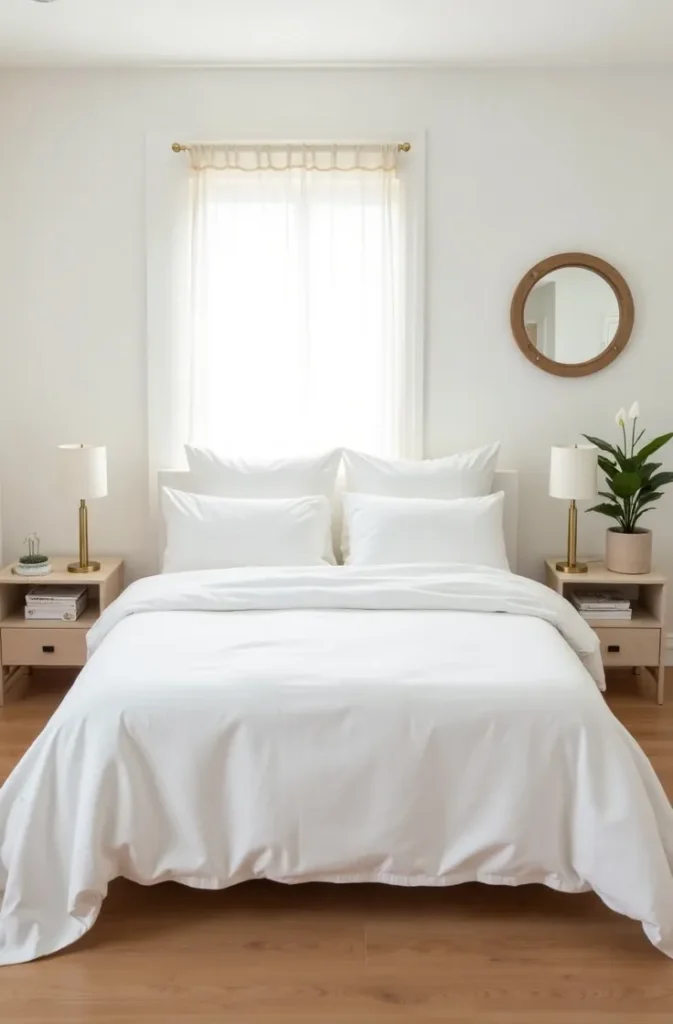
One nightstand per sleeping side, one lamp per nightstand, and one small mirror on the wall opposite the bed complete the functional layer. The summer styling layer is one potted plant in the corner and a clean white candle on the nightstand.
What does not work: patterned bedding mixed with patterned rugs in a small room. In a space under 150 square feet, one pattern maximum keeps the room from feeling visually busy.
12. Use a Vertical Herb Garden in the Kitchen or on a Balcony for Function and Freshness
A vertical herb setup solves two summer problems at once: it gives you fresh herbs for cooking during the season when you use them most, and it adds a genuinely functional layer of green to your space.
Wall-mounted systems — whether simple pegboard with terracotta pot hooks or a dedicated vertical planter — work on both interior walls with bright natural light and on exterior walls. The most common mistake is placing them in low-light corners where herbs fail within two weeks, making the setup look neglected rather than intentional.
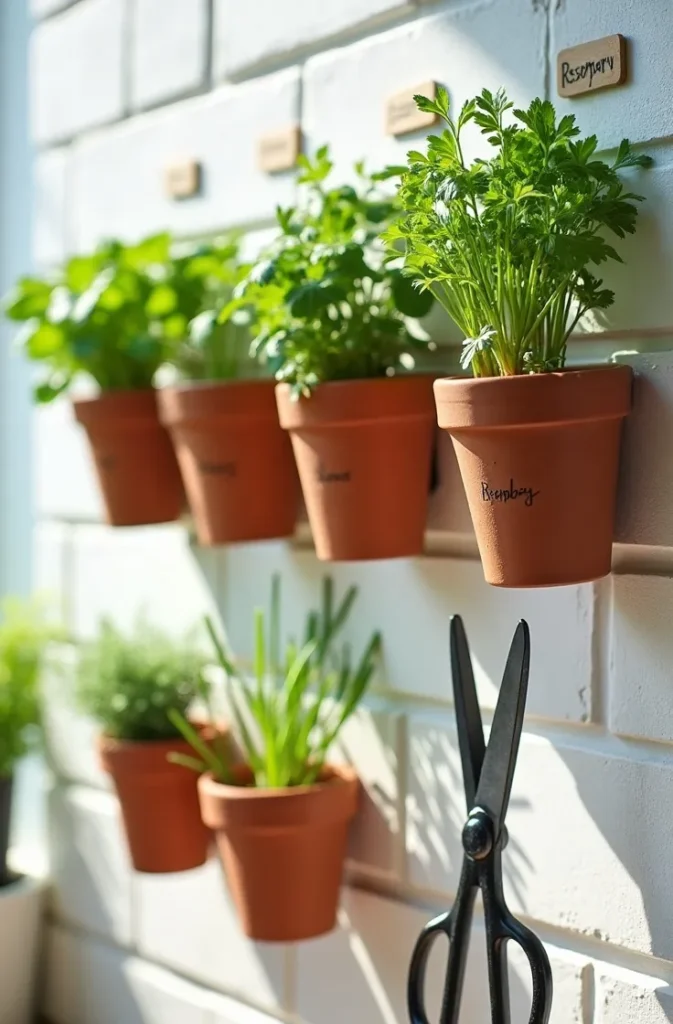
Basil, mint, chives, and parsley are the most visually lush and practically useful summer herbs. Avoid overcrowding — four to five distinct plants in separate containers look more curated than eight herbs competing for visual attention.
For balconies, a railing-mounted planter system keeps the floor clear while maximizing growing space. This is particularly useful in urban apartments where floor space is limited.
13. Anchor the Living Room With a Single Oversized Art Print in a Cool Tone
A single large-format piece of art does more for a room’s summer identity than a dozen small decorative accessories. The oversized format creates a focal point that grounds the space and gives it visual direction without requiring additional styling.
For summer, cool-toned works — abstract pieces in sage, dusty blue, seafoam, or warm white — read as calm and seasonally appropriate. A 24×36 or 30×40 inch print in a simple natural wood or thin black frame is enough to anchor an entire living room wall.
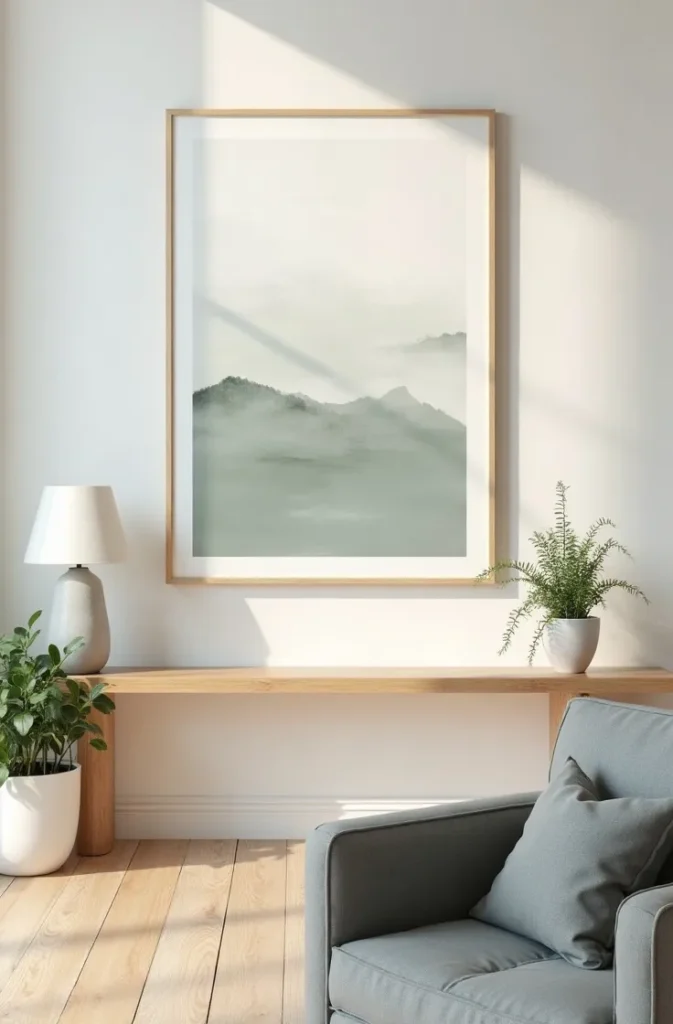
The placement rule: center the artwork at average eye level (57 to 60 inches from floor to center of the piece), and hang it so the bottom edge is 6 to 8 inches above the top of the sofa or the primary furniture piece below it.
Avoid gallery walls in this scenario — when you have one strong piece that works, adding smaller prints around it dilutes its impact. Let it stand alone.
14. Design a Porch or Stoop Moment That Welcomes Without Overwhelming
Front porches and stoops are the first styling surface people see, and they are consistently understyled or overstuffed. A good summer porch moment is about restraint: two chairs, one side table, one plant, and one lighting element.
The furniture choice matters. Two weather-resistant chairs in natural teak, painted white wood, or powder-coated metal read as intentional. A mismatched pair of plastic chairs does not — regardless of how the rest of the porch looks.
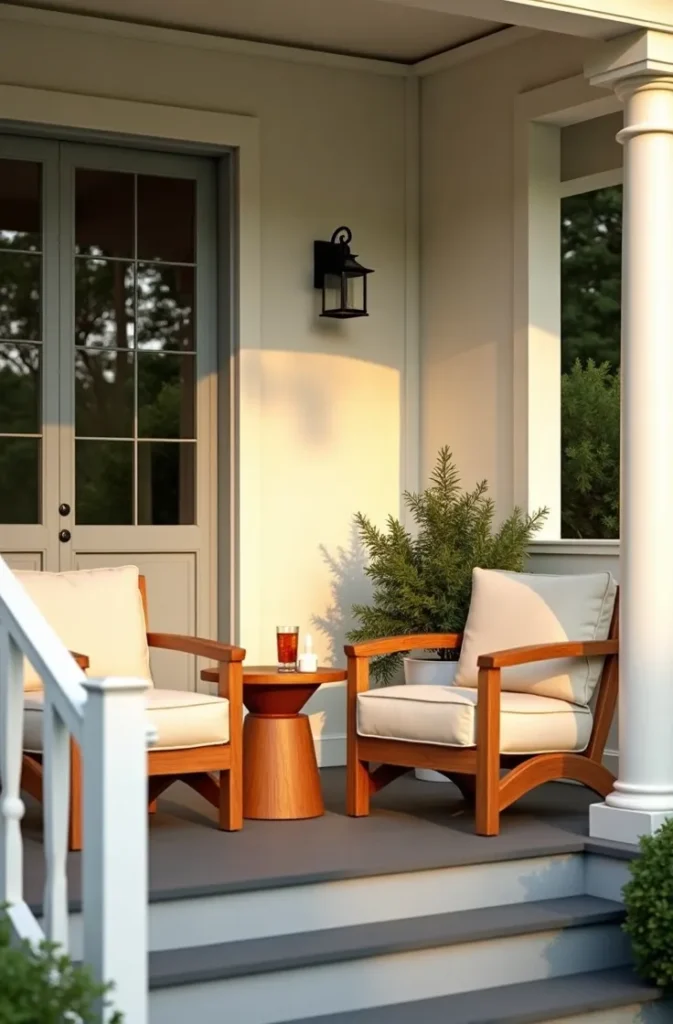
One large potted plant (a citrus tree, a gardenia, or a tall ornamental grass) anchors the space vertically. A string of warm Edison bulbs overhead or a single wall-mounted lantern provides the lighting moment.
What does not work: too many small plants competing for attention, a doormat with novelty text, and decorative signs. These choices individually seem minor but collectively make a porch look busy and unresolved.
15. Refresh a Bathroom for Summer With Spa-Inspired Minimalism
Summer is the right moment to strip a bathroom back to its simplest form. Heavy towels, decorative candles, and accumulated personal care products are the main culprits that make bathrooms feel heavy and hot.
The spa-inspired summer bathroom relies on three visible elements: one set of tightly rolled or neatly folded lightweight cotton towels in white or warm sand, one living or architectural plant (a snake plant or air plant thrives in bathroom humidity), and one quality soap dispenser and a small tray to contain it.
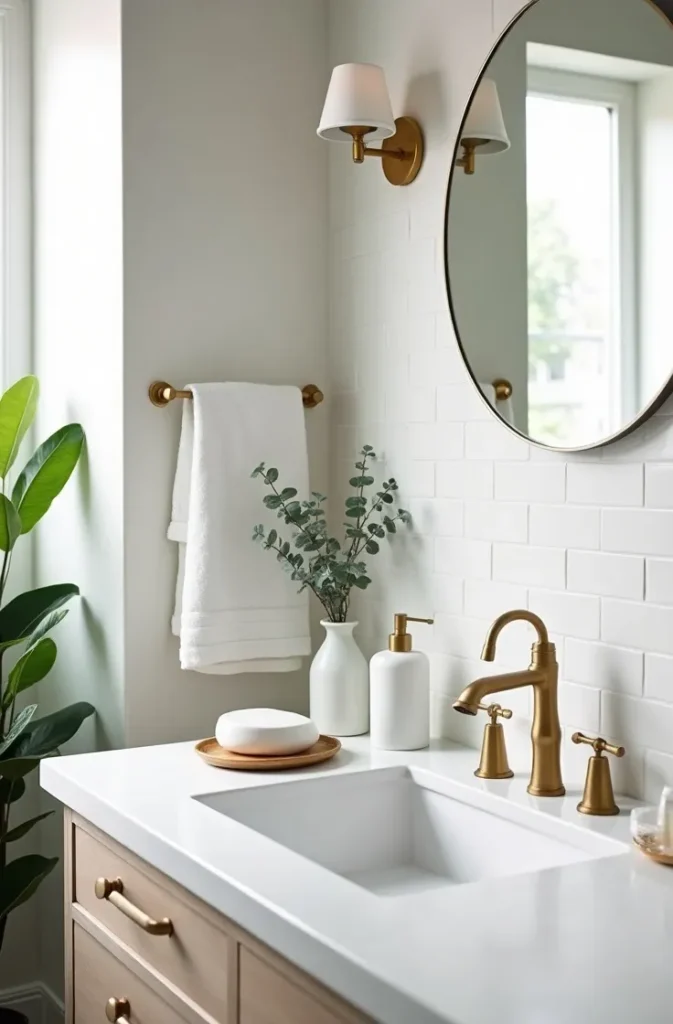
Everything else goes under the sink or in a cabinet. The surface — whether counter, shelf, or windowsill — should be clear except for these intentional pieces.
For small bathrooms, a large frameless mirror or a round arch mirror replaces the need for art and also bounces light, making the room feel larger and more open on bright summer mornings.
16. Style a Home Office for Summer Productivity With Better Light and Less Visual Clutter
Summer home office styling is not just aesthetic — it directly affects focus and output. The two biggest summer office problems are glare from increased daylight and visual clutter that accumulates over the year.
Addressing glare: position the desk so that windows are to the side of the monitor rather than behind or in front of it. Side lighting reduces eye strain and still lets you benefit from natural light.
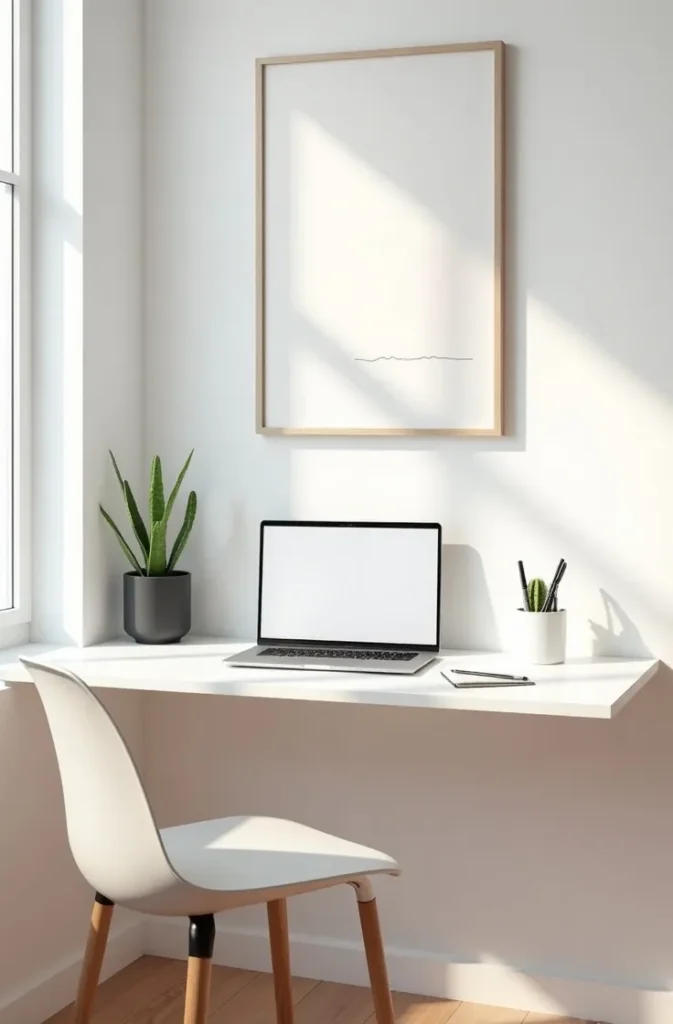
For visual clutter: remove everything from the desk surface that is not used daily. File it, store it, or discard it. A clean desk with a laptop, one notebook, and one pen is the correct summer starting point — not a goal, but a baseline to work up from with intention.
Summer desk styling additions that work: a small potted cactus or succulent (requires no regular care), a ceramic cup for pens, and a single framed print or small piece of art on the wall at eye level to the seated position.
17. Create a Cooling Bedroom Sleep Environment Through Layered Textile Strategy
Sleep quality in summer depends on both temperature and the visual calm of the bedroom. These two goals are solved by the same textile strategy: remove, simplify, and layer with breathable natural fibers.
The starting point is taking the duvet off the bed entirely and replacing it with a single flat cotton percale sheet and one lightweight cotton or bamboo coverlet. This combination keeps you covered without trapping heat.
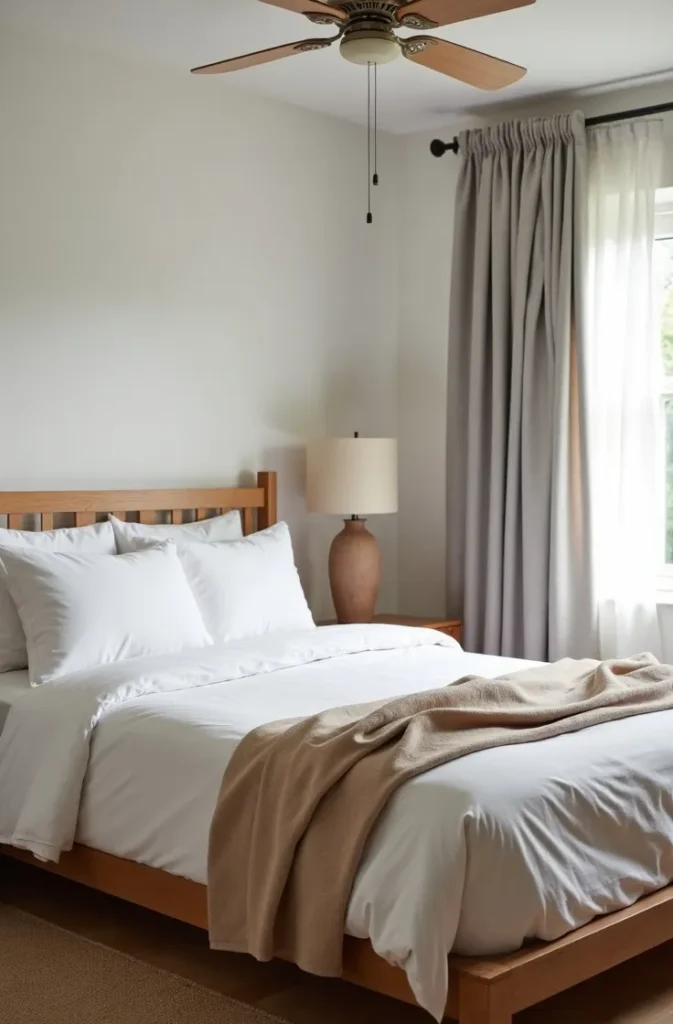
The visual impact is equally important. A bed made with one flat sheet and a neatly folded coverlet at the foot reads as intentional and calm — a significant visual upgrade over an unmade duvet that never quite looks right in summer.
Pillow count for summer sleep: two sleeping pillows maximum per person, in 100% cotton pillowcases. More than this traps heat and creates a visually cluttered bed.
18. Build a Summer Reading Nook in a Corner, Alcove, or Under a Window
A reading nook is one of the highest-satisfaction summer home projects because the result is immediately usable and visually rewarding. It does not require a dedicated room — a corner, a bay window seat, or even the space beside a bookshelf is enough.
The minimum components: one comfortable chair or a cushioned bench, one adjustable light source (a floor lamp or a wall-mounted reading light), and one small surface for a drink or a book. These three elements are sufficient.
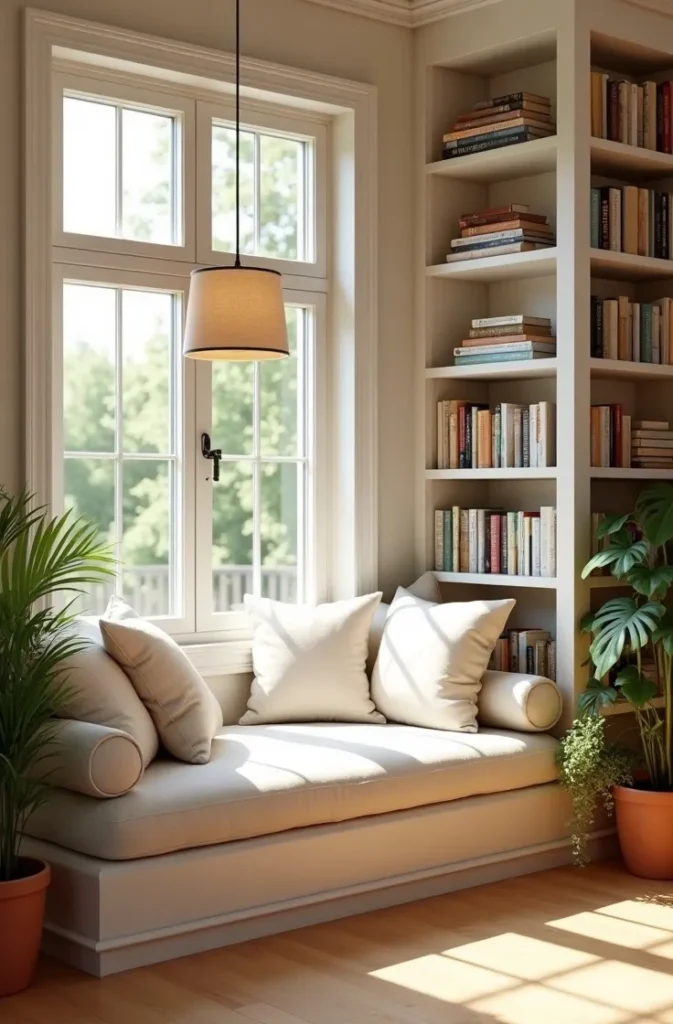
The styling layer adds personality: a woven throw, a small stack of books, a plant at floor level, and a single piece of art on the adjacent wall. Keep the nook defined — a small area rug underneath the chair signals that this corner is intentional, not leftover space.
The most common nook mistake is choosing a chair that is too upright. For reading, the seated angle matters. Choose a chair with a slightly reclined back and armrests — this is the difference between a nook you use every day and one that looks good in photographs but gets avoided.
Final Thoughts
These summer styling ideas for home work because they start with purpose, not aesthetics alone. Each change — whether it is a textile swap, a furniture rearrangement, or a counter edit — is designed to make daily life more comfortable and your space more functional during the warmer months.
If you found ideas worth returning to, save this post so you can work through each section at your own pace. You do not need to tackle all 18 at once — even two or three of these changes applied this week will make a visible difference in how your home looks and feels this summer.
For more room-by-room styling guidance, explore open-plan layout ideas, small space design strategies, and functional home organization approaches that work year-round.