
Most porches underperform in summer — they get too hot, feel unfinished, or accumulate clutter that makes them unusable by July. These porch ideas for summer comfort address the actual problems: heat, glare, lack of shade, poor furniture choice, and missing functional layers. Each idea below gives you a specific setup, a reason it works, and the mistakes that prevent most porches from reaching their potential.
1. Install a Ceiling Fan on a Covered Porch to Make 90-Degree Days Usable
A ceiling fan is the single highest-impact upgrade for a covered porch in summer. It does not reduce air temperature, but it creates a wind-chill effect that makes sitting outside feel 8 to 10 degrees cooler — a meaningful difference on afternoons above 85 degrees Fahrenheit.
The selection criteria matter more than most people realize. An outdoor-rated ceiling fan is not the same as an indoor fan brought outside. Outdoor fans are rated either “damp” (covered porch use) or “wet” (fully exposed areas). A damp-rated fan on a covered porch is the correct specification and will last significantly longer than an indoor unit exposed to humidity.
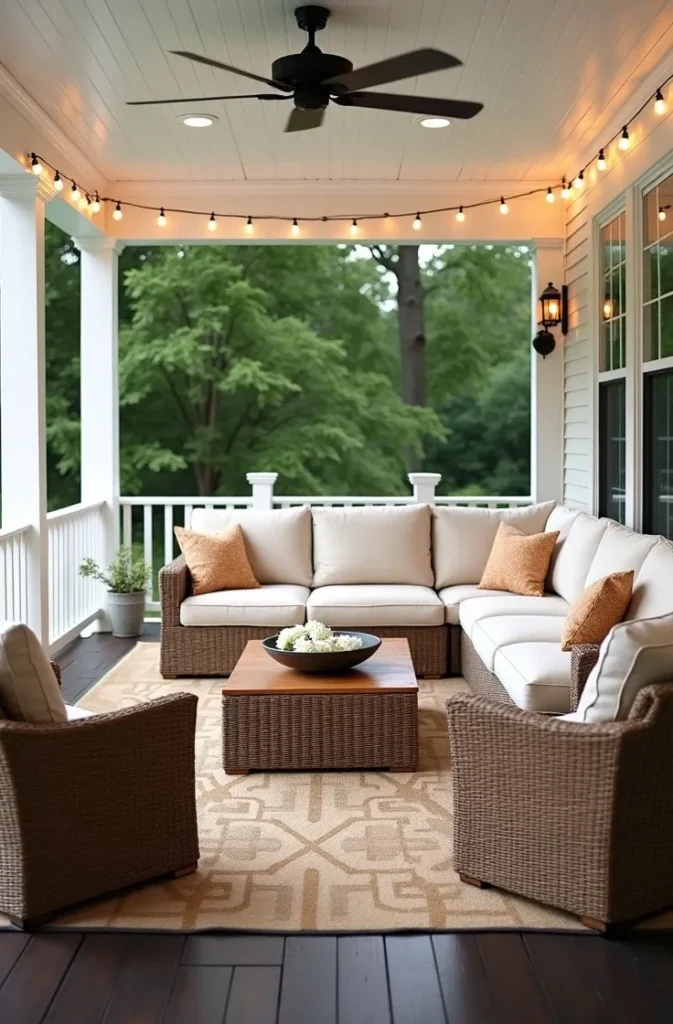

Sizing: for a porch between 75 and 144 square feet, a 44- to 52-inch fan is appropriate. Smaller fans on larger porches move too little air to have a meaningful cooling effect. Mount the fan so the blades sit 8 to 9 feet above the floor for maximum airflow to seated occupants.
The mistake to avoid: installing a ceiling fan without an outdoor-rated electrical box. Standard indoor boxes are not designed for the weight and movement of a fan and can fail over time. This is a safety issue, not just a code compliance matter.
2. Add a Shade Sail Over an Open Porch or Deck to Block Direct Sun Without Enclosing the Space
An open porch or deck without overhead coverage becomes unusable between 11 AM and 4 PM in summer across most of the United States. A shade sail — a tensioned triangular or rectangular fabric panel anchored between fixed points — is the most versatile and cost-effective solution that does not require a full pergola or roofing project.
Shade sails are rated by UV block percentage. Look for options in the 90 to 95 percent UV block range, which provides meaningful sun protection without fully blocking airflow the way a solid roof would. High-density polyethylene (HDPE) fabric is the most durable choice — it resists mildew, stretches minimally under tension, and holds color through multiple seasons.
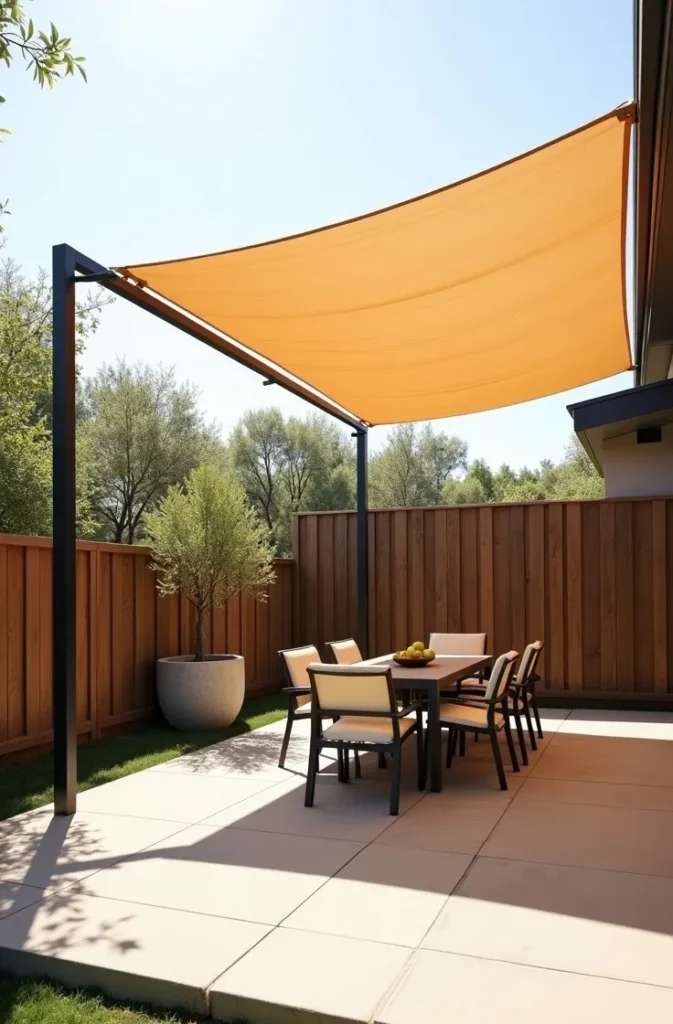
Anchor points are the most important structural consideration. The sail must be attached to posts, walls, or structures that can handle the tension load, which increases significantly in wind. Improperly anchored shade sails are the primary reason for hardware failure — use galvanized steel or stainless hardware rated for the sail’s size.
Neutral tones — sand, stone, warm gray, or off-white — work in any outdoor context and photograph cleanly. Bright blue or red shade sails read well in catalogs but can cast colored light onto outdoor furniture and skin that makes the space feel less inviting in practice.
3. Choose an Outdoor Rug in a Flatweave Polypropylene to Define the Porch Zone and Stay Clean
An outdoor rug does more than add color to a porch — it defines the seating zone, prevents furniture legs from scratching the floor surface, and makes the space feel furnished rather than improvised. The material choice determines whether it stays looking good through a full summer or becomes a maintenance problem by August.
Polypropylene flatweave rugs are the correct material for porch use. They resist UV fading, dry in hours after rain, and can be cleaned with a garden hose. Pile rugs — even those marketed as “outdoor” — trap debris, take days to dry fully, and develop mildew in humid climates.
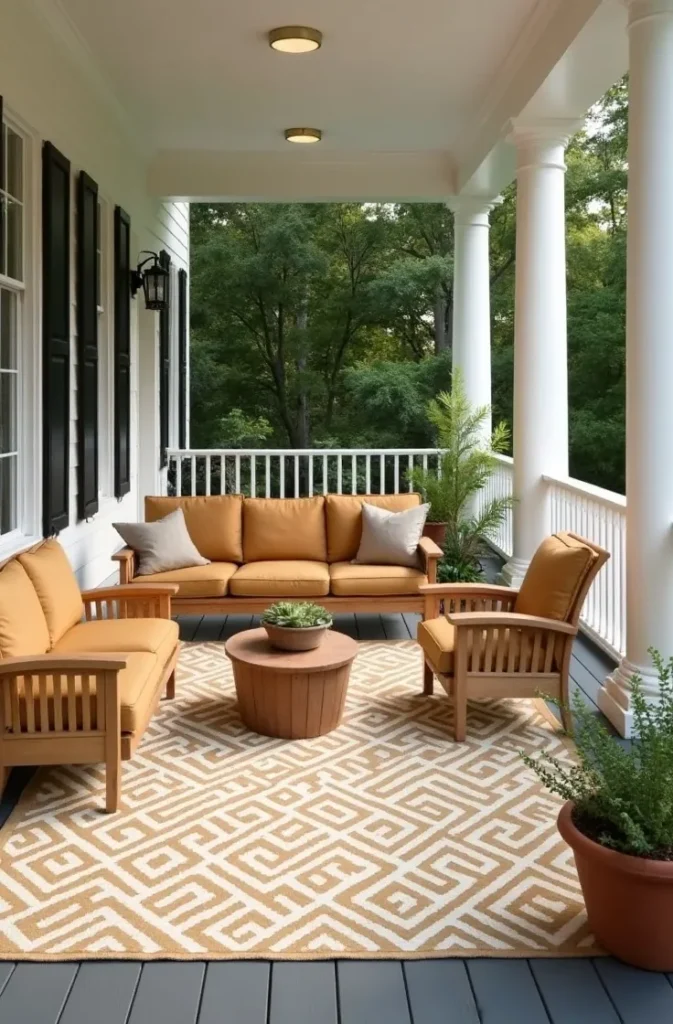
Sizing is where most porch rug choices go wrong. The rug should be large enough that all four legs of each seating piece rest on the rug simultaneously. A rug that only catches the front two legs of a chair makes the space look poorly proportioned and creates a trip hazard at the rug edge.
For a standard porch seating arrangement with a two-seat sofa and two chairs around a coffee table, a 5×8 foot rug is typically the minimum. On larger porches, an 8×10 or 9×12 provides better visual weight.
4. Use Weather-Resistant Throw Pillows in Sunbrella-Grade Fabric to Add Color Without Replacement Cost
Outdoor throw pillows are replaced constantly in most homes because standard indoor pillows fade within one season and hold moisture after rain. Switching to solution-dyed acrylic fabric — most commonly sold under performance-fabric categories — eliminates this cycle entirely.
Solution-dyed acrylic means the color is woven into the fiber during manufacturing rather than applied as a surface dye. This process makes the color UV-stable for years and allows the fabric to be cleaned with a mild bleach solution without fading — a critical advantage for white and light-colored outdoor pillows.
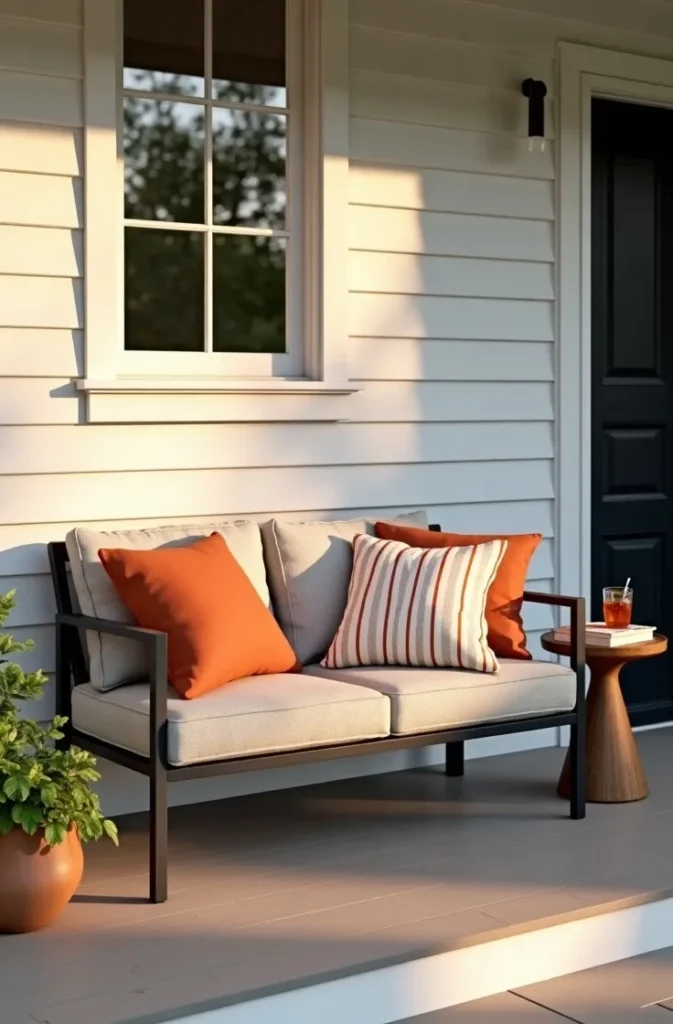
For summer porch styling, pillows in two complementary tones work better than multiple patterns competing for attention. One solid and one subtle stripe in coordinating colors — navy and natural, sage and cream, terracotta and off-white — reads as curated without requiring an interior design background.
Pillow inserts matter as much as covers. Polyester fiberfill or closed-cell foam inserts resist moisture absorption. Down or feather inserts outdoors will clump, smell, and develop mildew within weeks of the first rain.
5. Build a Simple Vertical Garden Wall on a Small Porch to Add Green Without Using Floor Space
On porches under 80 square feet — common on townhouses, rowhouses, and apartment-style first floors — floor space is the limiting factor. A vertical garden wall panel or a series of wall-mounted planters solves the green-without-clutter problem by using the porch wall as the growing surface.
A simple system of wall-mounted horizontal planter rails, pegboard with pot hooks, or reclaimed wood shelves with drainage-appropriate containers achieves the visual effect of a lush garden without any floor footprint. Keep the planting palette consistent: two or three plant types repeated across the wall looks intentional; ten different plants looks like a collection.
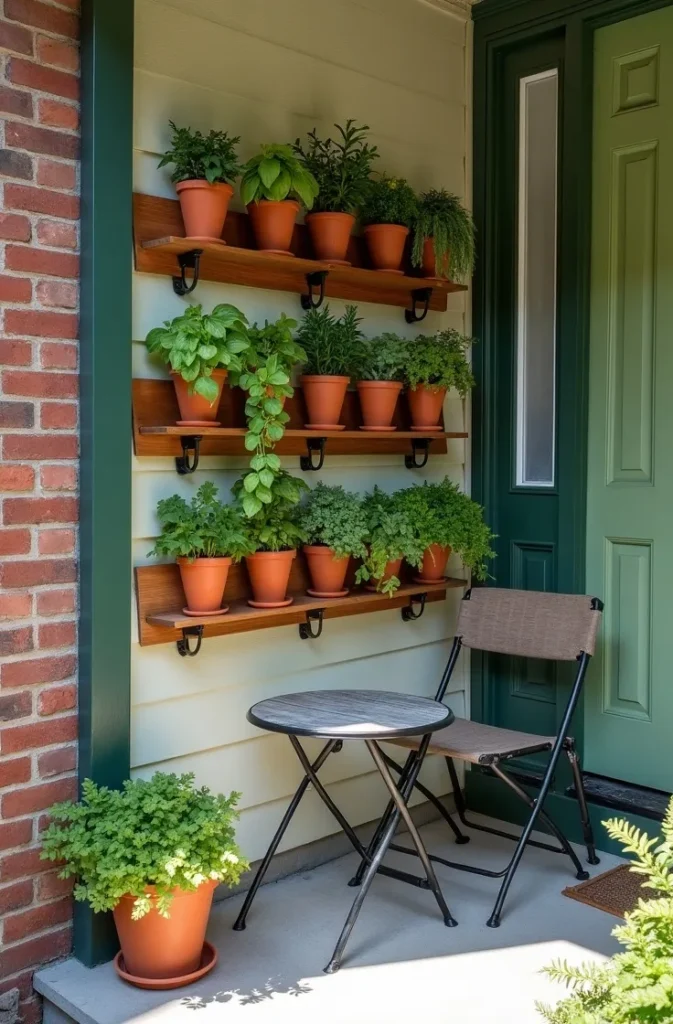
For summer specifically, the best performers in vertical porch gardens are trailing pothos (shade-tolerant), herbs like mint and basil (sun-tolerant and practical), and ferns (ideal for humid, partially shaded conditions in southern and coastal climates). These are also the most visually lush with minimal care.
The structural consideration: wall-mounted planters add weight, especially after watering. Make sure any mounting hardware is anchored into the wall’s structural material — wood studs, masonry, or concrete — and not just into siding or drywall.
6. Hang String Lights at the Correct Height to Create an Outdoor Room Feel After Dark
String lights transform a porch’s function after sunset — they extend the usable hours of the space through summer evenings and create the warm, enclosed feeling of an outdoor room. The difference between string lights that work and string lights that disappoint is almost entirely about installation height and bulb temperature.
Height: string lights strung at eight to nine feet above the porch floor — at or slightly above head height — create an enveloping canopy effect. Lights strung at five or six feet look like holiday decorations and interrupt sightlines. If your porch has a ceiling, mounting the string at the ceiling plane and draping a slight catenary curve gives the best visual result.
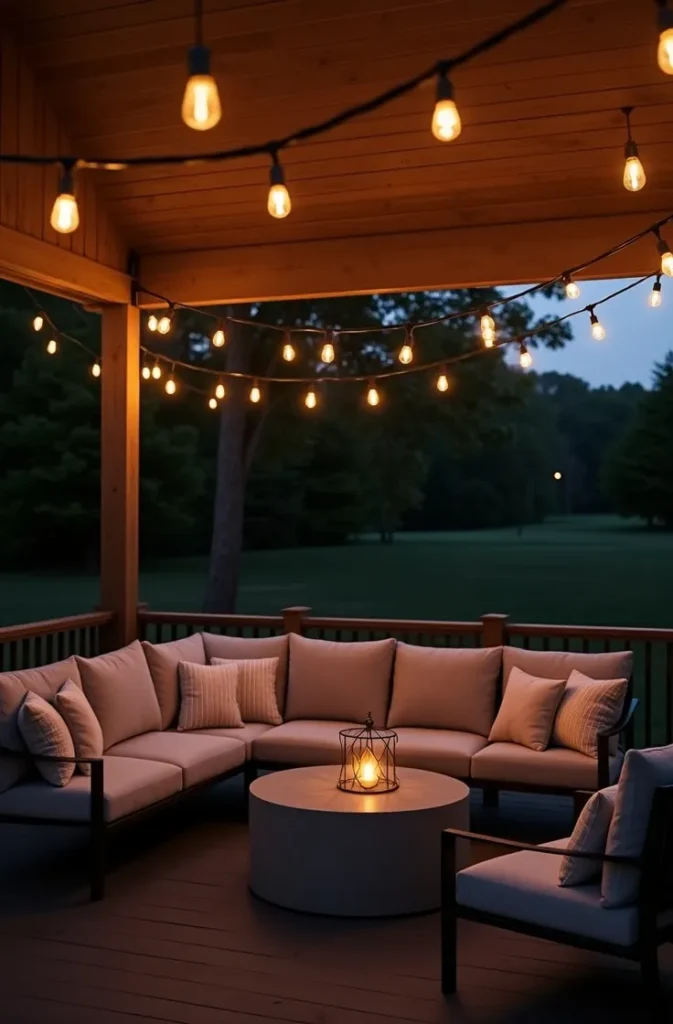
Bulb temperature: 2200K to 2700K is the warm amber range that makes people look good, creates a relaxed mood, and photographs well. Anything above 3000K starts to read as cool or clinical rather than inviting.
Bulb style: Edison-style filament bulbs in the G40 or S14 shape are the most visually appealing outdoor string light choice. They produce warm, point-source light rather than diffuse glow, which creates the attractive halo effect in photographs and in person.
7. Select a Porch Swing With the Correct Chain Spacing and Ceiling Clearance for Daily Use
A porch swing is one of the most satisfying long-term porch investments, but one that frequently goes wrong due to sizing and mounting errors that make it uncomfortable or unsafe to use regularly.
Ceiling clearance: the swing should hang so the seat sits 17 to 19 inches above the floor — standard chair-seat height. With a typical swing seat about 4 inches thick, the chain or rope attachment point needs to be at the 21 to 23 inch mark from the ceiling. A swing mounted too high makes occupants feel suspended; too low reduces the arc and defeats the swinging function.
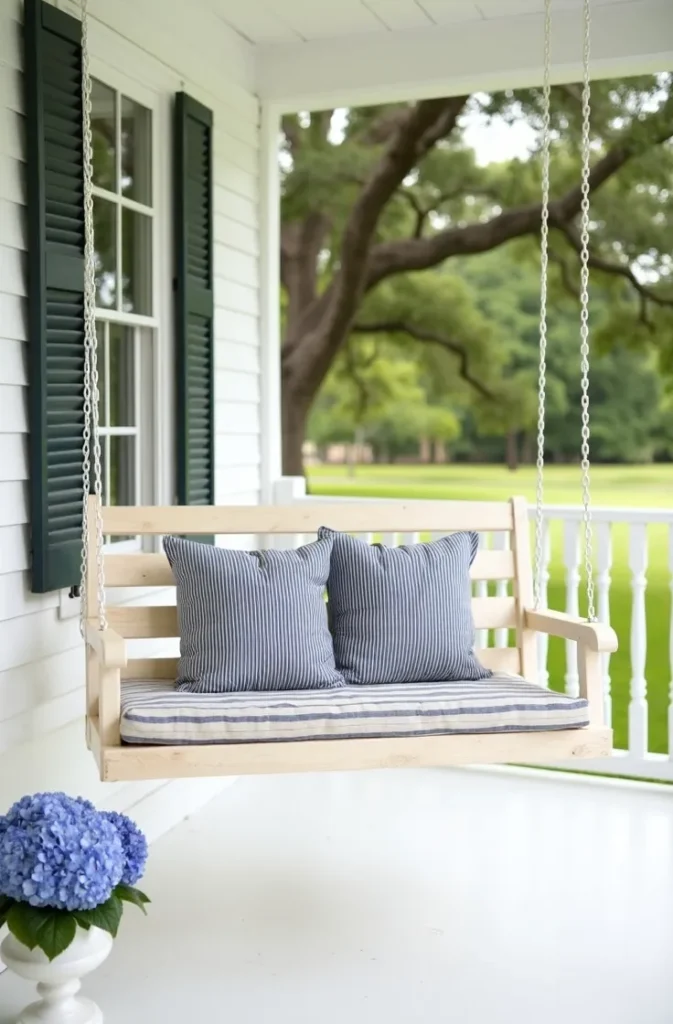
Chain spacing determines comfort. Most swing seats are 48 to 52 inches wide. The chains should hang vertically — not angled inward — which requires ceiling mounting points that match the width of the swing. Angled chains compress the seat subtly and cause the swing to rock side-to-side rather than swing cleanly front-to-back.
For daily use, a porch swing needs to be mounted into structural ceiling joists, not just the porch ceiling finish. Use 3/8-inch or larger eye bolts with load-rated swivel hooks and verify the joist location before drilling. A swing bearing an adult’s weight and momentum requires hardware rated for dynamic (moving) loads, not static ones.
8. Create a Porch Reading Corner With a Hanging Egg Chair and a Side Surface
A dedicated reading corner on a porch requires three elements working together: a seat with back support in a reclined position, a surface for a drink or book within arm’s reach, and adequate shade to make reading in daylight practical without squinting.
A hanging egg chair — suspended from a ceiling-mounted swivel hook or a freestanding frame — provides the reclined, cocoon-like seating position that makes extended outdoor reading comfortable. The gentle motion also reduces the feeling of sitting in heat by maintaining air movement around the seated person.
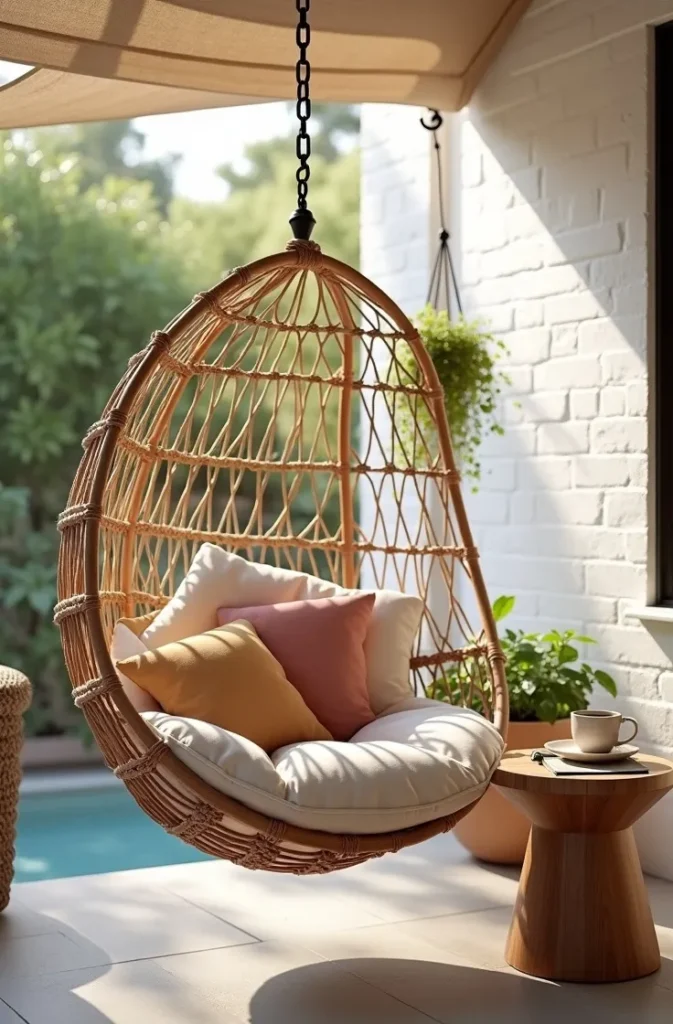
The side surface is the element most often omitted. A small C-table (a table with an arm that slides under the seat) or a low stool beside the chair provides a place for a glass, sunglasses, or a book without requiring the occupant to reach to the floor or a distant side table.
For shade, position the egg chair where the porch roof or an overhead sail provides direct coverage between 10 AM and 3 PM — the peak reading hours when glare is most likely to cause discomfort. If shade is not architecturally available, a freestanding cantilever umbrella positioned to the sun-side of the chair is the most flexible solution.
9. Use a Pergola With a Retractable Canopy to Control Sun and Rain Without a Permanent Roof
A pergola with a retractable canopy gives a porch or deck the best of both outdoor and covered living: open sky when you want it, shade and rain protection when you need it. It is one of the most functional porch upgrades available for open-air spaces with no existing overhead coverage.
The retractable canopy mechanism — either manual crank or motorized — should be specified for your local wind conditions. Most residential canopies are rated for 20 to 35 mph winds, which covers typical summer afternoon breezes but not storm-force gusts. Closing the canopy when wind exceeds its rating protects the mechanism and the fabric.
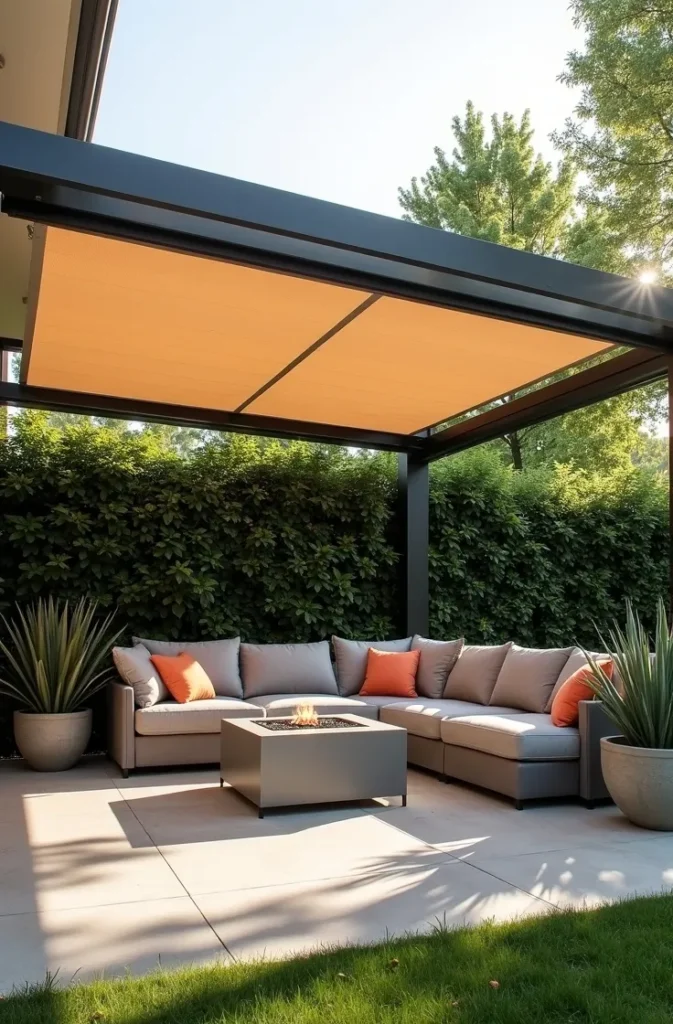
Canopy fabric should be waterproof, not just water-resistant. There is a meaningful difference: water-resistant fabrics slow penetration; waterproof fabrics — solution-dyed acrylic with a PU coating — shed water completely. For summer climates with frequent afternoon thunderstorms (Florida, Texas, the Southeast), waterproof specification is not optional.
The pergola frame material affects both maintenance and appearance. Powder-coated aluminum requires no seasonal maintenance and will not rot or warp. Cedar and pressure-treated wood require annual sealing in wet climates. Composite pergola materials fall between these in both cost and maintenance demand.
10. Add a Misting System Along the Porch Perimeter to Cool the Air by 10 to 20 Degrees
Misting systems use very fine water droplets that evaporate almost instantly in warm air, absorbing heat as they do and reducing the ambient temperature in the immediate area. In dry to moderately humid climates — the Southwest, Southern California, the Mountain West — they can reduce perceived temperature by 15 to 20 degrees. In high-humidity climates, the effect is smaller but still measurable.
A basic porch misting kit attaches directly to a standard outdoor hose bib and runs along the porch railing or ceiling perimeter via flexible tubing with brass nozzle heads every 18 to 24 inches. No pump is required at typical residential water pressure, though a pump booster improves mist fineness and evaporation in low-pressure systems.
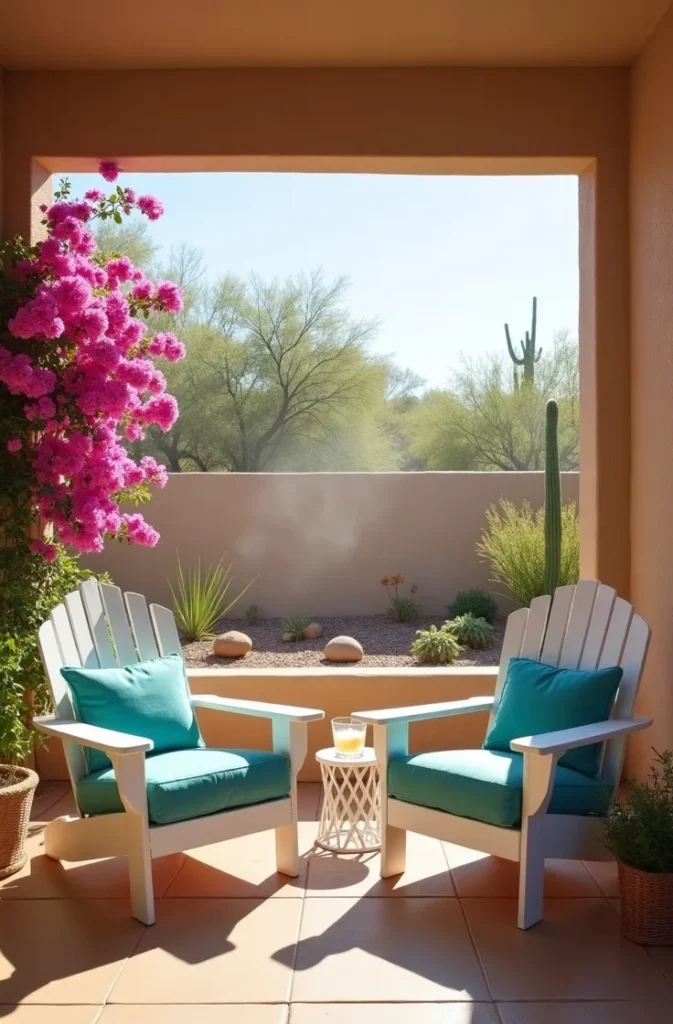
Nozzle placement determines whether the mist reaches seated occupants or dissipates before having any effect. Mount nozzles at eight to nine feet above floor level around the porch perimeter, angled slightly inward and downward. Lower placement produces larger droplets that wet furniture; higher placement loses the mist to upward drafts before it reaches the occupied zone.
In high-humidity climates (above 65 percent relative humidity), standard misting systems produce less cooling and more wetness. In these conditions, a ceiling fan combined with limited perimeter misting at the perimeter only — not overhead — provides better results without wetting the seating area.
11. Design a Narrow Porch for a Townhouse or Rowhouse Using Vertical Space and Foldable Furniture
Narrow porches — those under five feet deep — present a specific design challenge that most outdoor furniture fails to solve. Standard outdoor sofas and lounge chairs are too deep; bistro chairs are often the right scale but chosen in styles that make the space feel improvised.
The framework for a narrow porch that works: one or two folding or slimline chairs (under 24 inches deep when seated), a wall-mounted folding table or a very narrow console table against the wall, and vertical green elements. This configuration allows passage along the porch while still providing a functional seated space.
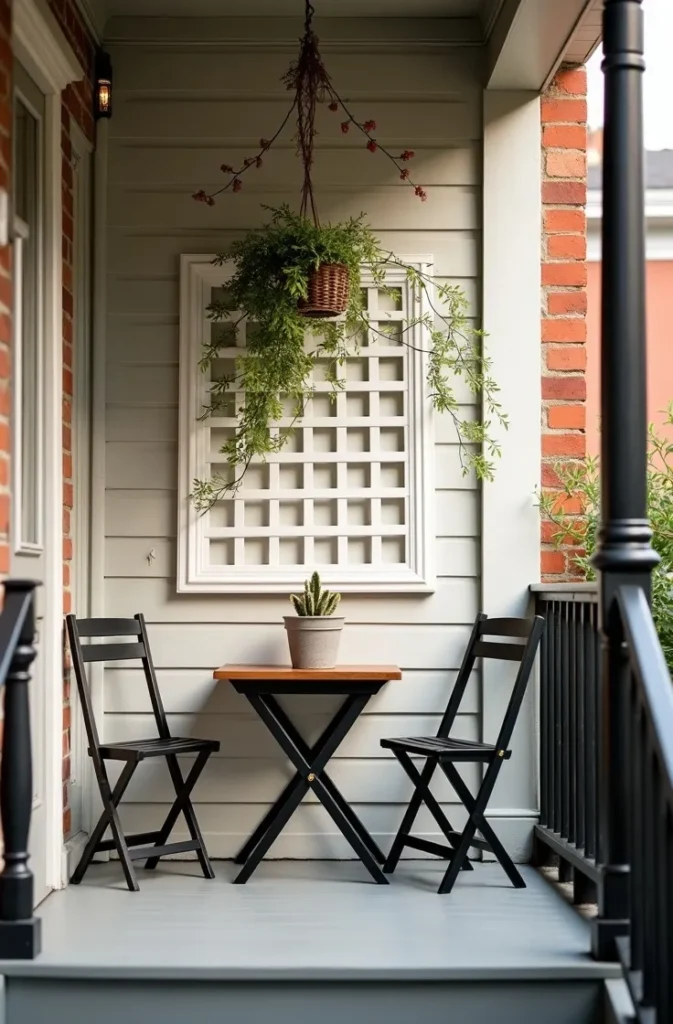
Wall-mounted folding tables — the kind that fold flat against the wall when not in use — are especially valuable here. A 14-inch-deep wall-mounted table provides enough surface for a drink and a plant without encroaching on the walking lane.
The vertical layer — a wall trellis with jasmine or clematis, a vertical planter, or a series of hanging pots from a ceiling-mounted rod — adds visual richness without depth. In summer, fast-growing flowering vines can cover a bare porch wall within six to eight weeks of planting.
12. Install Outdoor Privacy Screens on a Side Porch to Block Sightlines Without Fencing
Porches on corner lots, narrow side yards, or properties with close neighbors often have a comfort problem that is not about heat or furniture — it is about exposure. A porch that feels observed is a porch that goes unused. Privacy screens solve this without the permanence or cost of a fence.
The most effective privacy screening options for porches are: outdoor bamboo roll shades (mount from ceiling to railing), lattice panels with planted climbers, outdoor curtain panels on a tension rod system between porch columns, and freestanding slatted wood panels that can be repositioned seasonally.
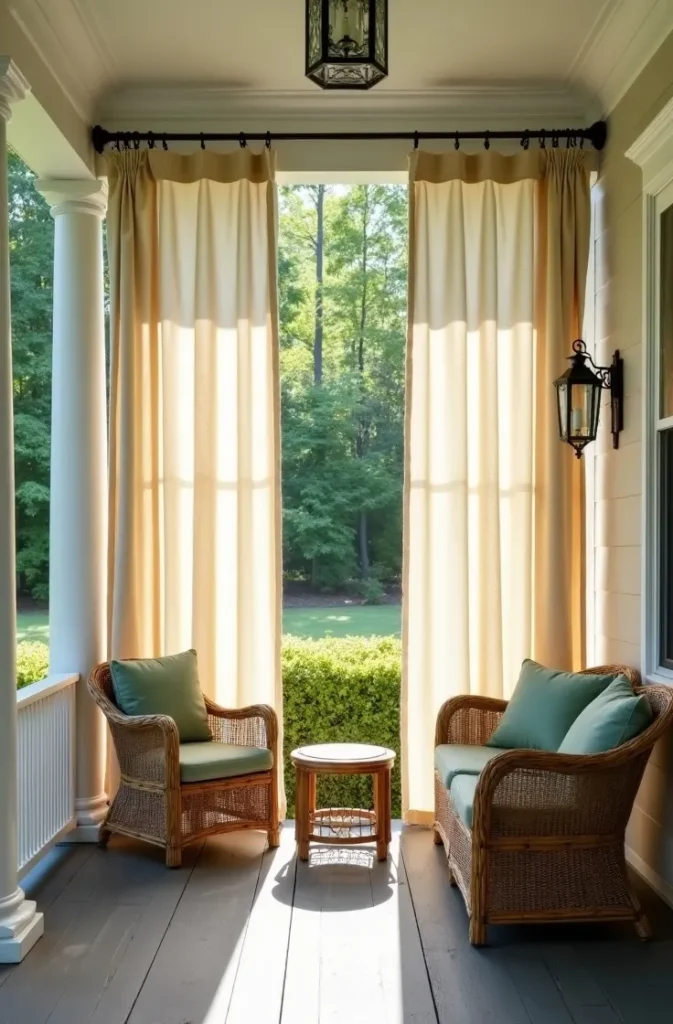
For column-mounted outdoor curtain panels — one of the most visually appealing options — use a 3/4-inch outdoor tension rod between porch columns and hang weather-resistant curtains at full ceiling height. The panels should be heavy enough to hang straight without billowing in light wind but light enough to move in a breeze without resistance. 280 to 300 GSM outdoor polyester or solution-dyed acrylic is the appropriate weight range.
The mistake: choosing white outdoor curtains for a sun-exposed side porch. White panels allow a clear silhouette to show through in direct sun — the opposite of privacy. Choose natural linen-look, oat, or warm gray panels that are opaque enough to block sightlines in all light conditions.
13. Add a Concrete or Resin Side Table That Handles All Weather Without Covering
The side table is the hardest-working piece of furniture on a summer porch — it holds drinks, books, sunscreen, phones, and potted plants across every weather condition without being moved indoors. Choosing the right material eliminates a constant maintenance task and preserves the porch’s styled appearance throughout the season.
Concrete and fiber-reinforced resin side tables are the two materials best suited to year-round outdoor exposure. Both are impervious to moisture, UV-stable, and heavy enough that they do not tip in wind. Concrete develops a slight patina over seasons that most people find attractive; resin maintains its appearance with minimal cleaning.
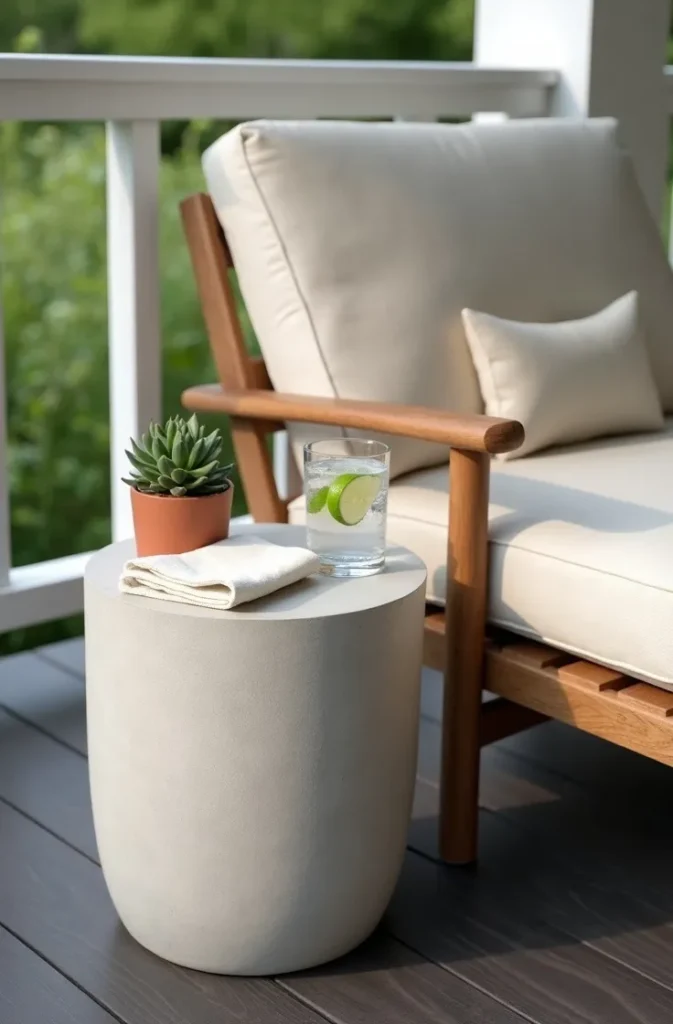
Teak is the best natural wood option for outdoor tables but requires annual oiling if you want to maintain its warm honey color. Left untreated, teak weathers to a silver-gray within one to two seasons — which is aesthetically acceptable and requires no maintenance, but is a visual direction to decide on deliberately rather than by default.
Avoid aluminum and thin-gauge steel side tables outdoors without protective coating. Aluminum is appropriate, but thin-gauge versions dent under minimal impact and feel lightweight in a way that reduces perceived quality. Powder-coated steel tables are fine in covered areas; in wet-exposed positions they rust at cut edges over time.
14. Arrange a U-Shaped Seating Layout on a Large Porch for Conversation-First Comfort
Large covered porches — those over 200 square feet — frequently have a furniture arrangement problem: pieces are pushed to the perimeter, leaving an unused void in the center and making conversation awkward across long distances. A U-shaped seating arrangement solves this by creating an enclosed social zone within the larger porch footprint.
The U-shape consists of a primary sofa or loveseat at the closed end, two single chairs or a pair of smaller loveseats along the open sides, and a coffee table or outdoor ottoman at the center. This geometry keeps every seated person within easy conversational distance — no one is more than six to eight feet from the center.
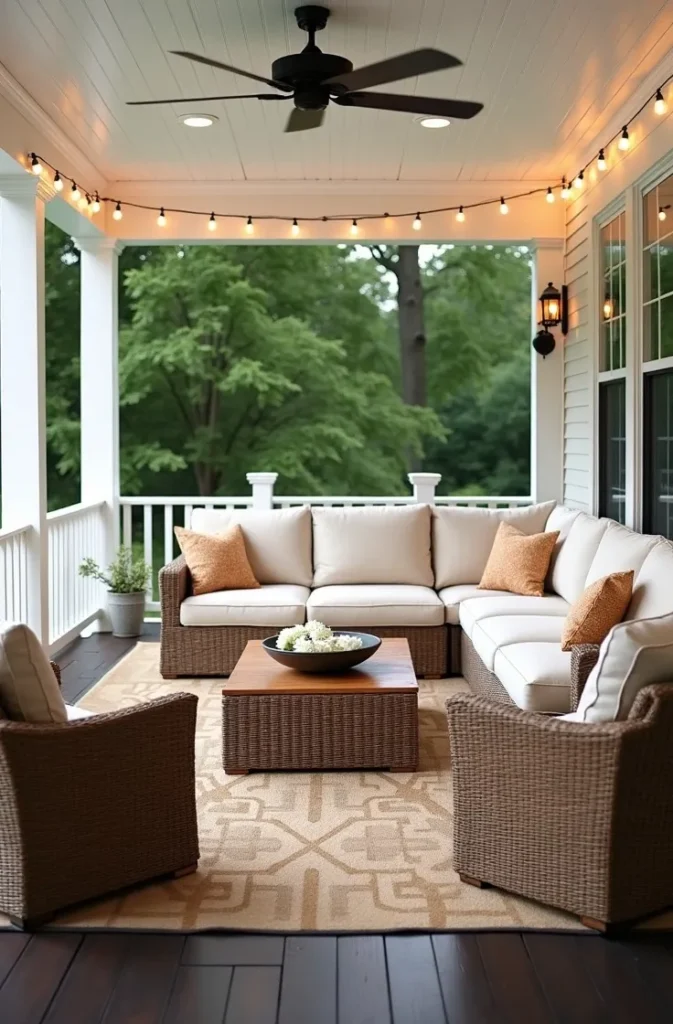
Scale the furniture to the porch, not to a showroom catalog. On a large porch, a 90-inch outdoor sofa at the closed end of the U reads correctly. On a medium porch, a 72-inch loveseat achieves the same arrangement in a smaller footprint.
Leave at least 30 to 36 inches of clearance at the open end of the U for traffic flow — enough for two people to pass comfortably without navigating through the seating arrangement.
15. Use Potted Citrus Trees to Frame a Porch Entry and Add Fragrance Through Summer
A pair of potted citrus trees flanking a porch entry or positioned at the top of porch steps serves three functions simultaneously: they frame the entry architecturally, contribute fragrance when in bloom, and produce usable fruit through summer and into fall. This is among the highest-value plant investments for porch comfort and curb appeal combined.
Meyer lemon trees are the most porch-appropriate citrus variety for most of the continental United States. They are more cold-tolerant than standard lemons, bloom repeatedly through the warm season with intensely fragrant white flowers, and produce fruit on a continuous cycle. They grow well in large containers — 16 to 20-inch diameter pots — and can be brought indoors in winter in climates that freeze.
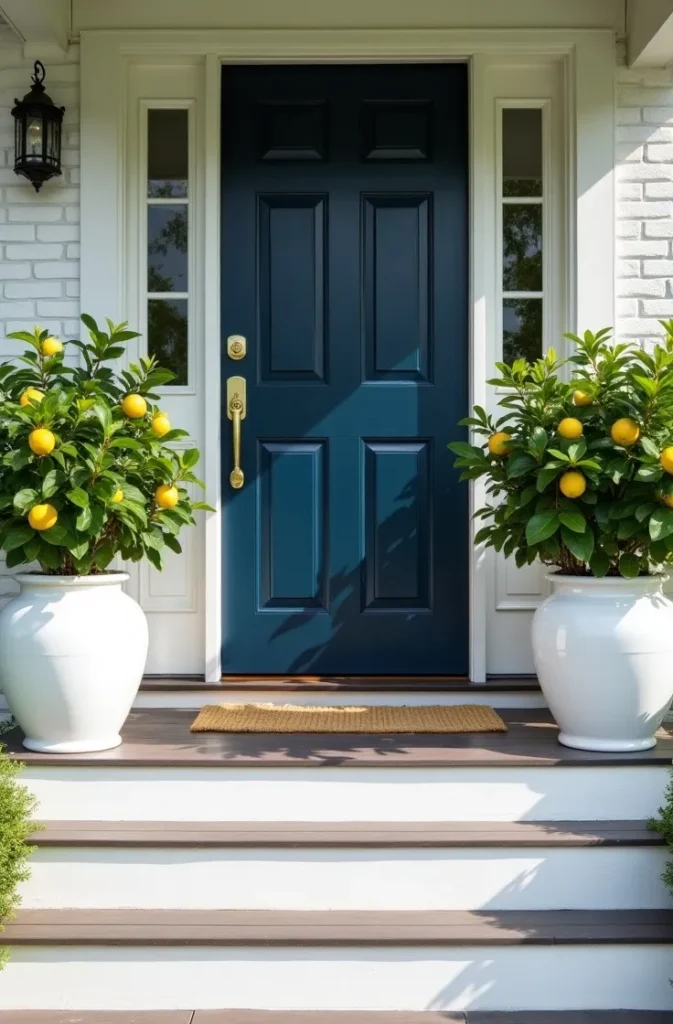
The container choice affects both function and appearance. Heavy glazed ceramic pots in white, cream, or terracotta read as architectural and provide the thermal mass that citrus roots prefer in container growing. Lightweight plastic pots may be practical but undermine the visual quality of the porch entry statement.
Position citrus where they receive a minimum of six hours of direct sunlight daily. A shaded porch entry will not sustain a citrus tree through summer — it will survive but will not bloom or fruit, eliminating most of the plant’s practical value.
16. Layer Outdoor Lighting in Three Tiers to Make a Porch Usable From Dusk to Midnight
A single overhead porch light — the default in most homes — produces harsh, unflattering illumination that makes a porch look like a security perimeter rather than a living space. Three-tier lighting design resolves this by distributing light sources at different heights for different purposes.
Tier one (ambient, overhead): a damp-rated ceiling fan with a light kit or a hanging lantern pendant at the porch center. This provides the functional light needed for active use — eating, reading, hosting.
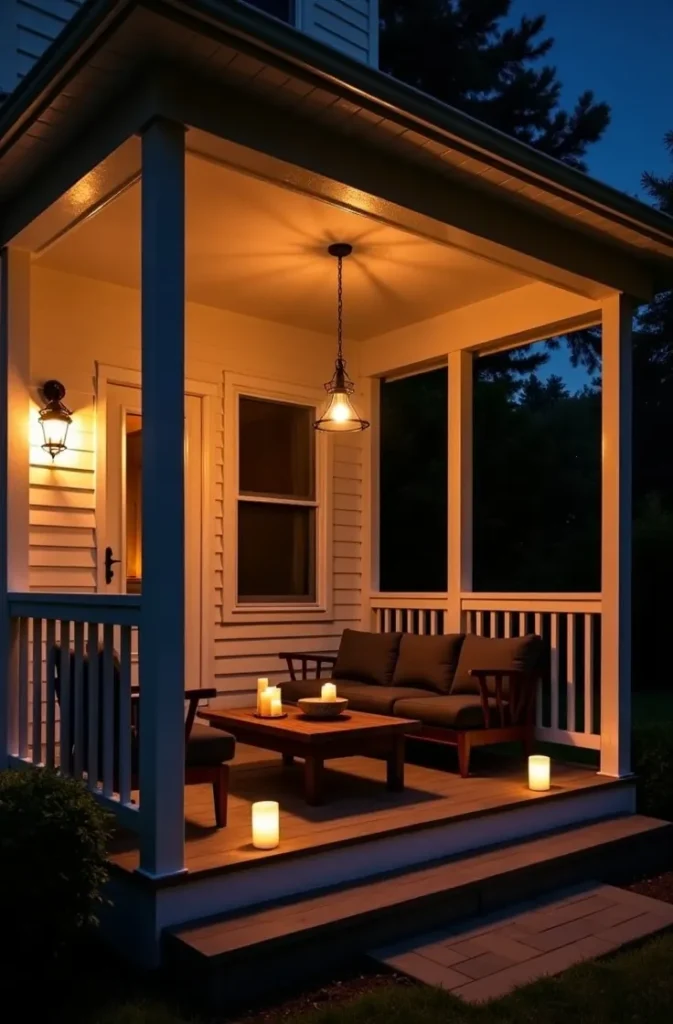
Tier two (accent, mid-height): wall sconces beside the door or on porch columns, ideally on a dimmer. These create visual warmth on vertical surfaces and soften the contrast between the lit porch and the dark yard beyond.
Tier three (ground-level, atmospheric): solar or low-voltage path lights along the porch steps and perimeter, and candles or battery lanterns on tables and railings. These ground the space visually and create the warm, layered glow that defines a summer porch after dark.
The key to this system: put the overhead source on a dimmer and use it at low level once the sun sets. At full brightness, an overhead porch light overpowers all lower-tier light sources and defeats the layering effect entirely.
17. Choose Teak or Eucalyptus Furniture for a Porch That Stays Beautiful With Minimal Care
Wood outdoor furniture is frequently avoided because of its maintenance reputation — a reputation that applies to softwoods like pine but not to naturally dense hardwoods like teak and eucalyptus. These two species contain natural oils that repel moisture and resist rot without annual treatment in most climates.
Teak is the premium standard in outdoor hardwood furniture. Grade A teak — from the heartwood of mature trees — is dense, tight-grained, and will weather to an attractive silver-gray within six to twelve months of outdoor exposure. If you prefer the honey-brown color to be maintained, one annual application of teak oil restores it completely in an afternoon.
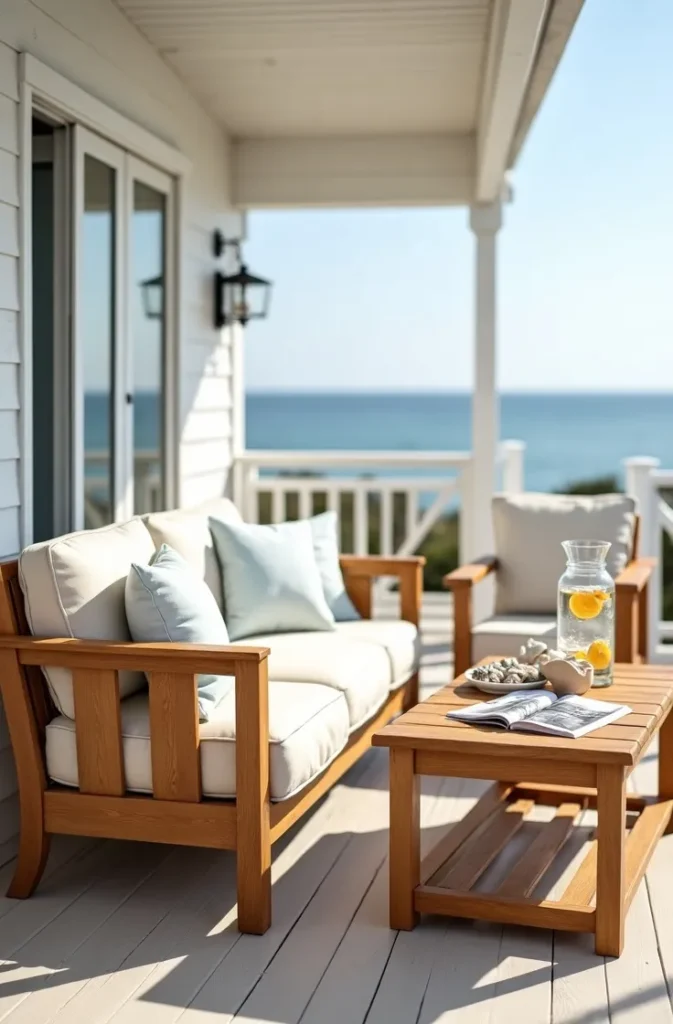
Eucalyptus performs comparably to teak in moisture resistance and durability at a lower cost point. It is slightly harder than teak and takes staining well if you want a specific color rather than the natural tone.
The mistake to avoid with both species: using heavy chemical sealers or varnishes that trap moisture beneath the finish and lead to cracking as the wood expands and contracts seasonally. Both teak and eucalyptus perform best with either no finish at all or a penetrating oil that feeds the wood without forming a surface layer.
18. Build a Summer Porch Bar or Drink Station to Keep Hosting Flow Off the Dining Table
One of the most practical upgrades for summer porch entertaining is a dedicated drink station — a bar cart, a sideboard, or a simple two-shelf unit positioned near but separate from the primary seating and dining areas. This single addition reduces the number of times the host leaves the porch during gatherings and prevents the dining table from becoming a cluttered serving surface.
A bar cart on wheels is the most flexible option: it can move to wherever the gathering is centered, be wheeled inside during rain, and repositioned seasonally without tools. Look for carts with at least two shelves, a gallery rail to prevent items from sliding, and rust-resistant hardware.
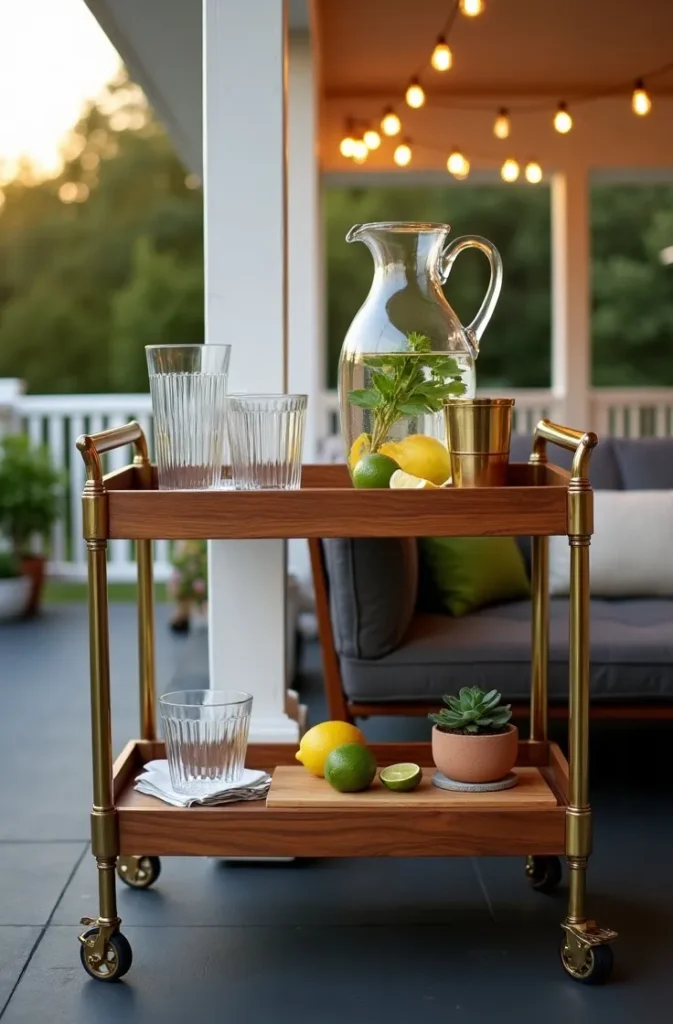
The cart setup for summer: top shelf for active drinks — a glass pitcher or carafe, four to six glasses, and an ice bucket. Lower shelf for backup — extra glasses, a cutting board with citrus, and napkins. A small potted plant or bud vase at one corner of the top shelf transitions the cart from purely functional to styled.
For porches without room for a cart, a small wall-mounted shelf at 36-inch counter height with a railing edge — the kind sold as a bar shelf for small kitchens — achieves the same function with no floor footprint.
Final Thoughts
These porch ideas for summer comfort cover the full range of porch types, sizes, and climates found across the United States — from narrow urban rowhouse stoops to wide southern wraparounds, from dry southwestern decks to humid coastal side porches. Each idea is designed to solve a real problem rather than simply add decoration.
Save this post to your Pinterest boards so you can return to the specific ideas that match your porch type and the season you are preparing for. The most effective approach is to pick two or three ideas from this list that address your porch’s biggest current limitation — heat, lack of shade, poor furniture choice, or missing ambiance — and apply them sequentially rather than all at once.
For more ideas that build on these foundations, explore covered patio design layouts, small outdoor space furniture arrangements, and summer curb appeal upgrades that work with your existing porch architecture.