The vintage grandma house aesthetic is one of the most searched home decor styles right now, and for good reason. It blends layered textures, warm color palettes, and collected-over-time pieces that modern minimalism simply cannot replicate. This guide breaks down 12 specific, actionable ideas so you can bring this style into your own home without it looking cluttered or outdated.
1. Layer Mismatched Floral Patterns Without Making the Room Feel Busy
The defining visual signature of the grandma house aesthetic is pattern mixing, and the most common mistake people make is avoiding it entirely out of fear. The rule is not to match florals, it is to vary their scale. A large cabbage rose print on a sofa reads completely differently from a small sprig pattern on a throw pillow, and when you combine them, the eye reads variety rather than chaos.
Start with one dominant floral in a muted or faded colorway, then introduce a smaller secondary pattern in a coordinating tone. Dusty rose, sage green, and cream are the most forgiving base palette for this approach. If your walls are already painted a warm neutral, patterns will land even more softly.
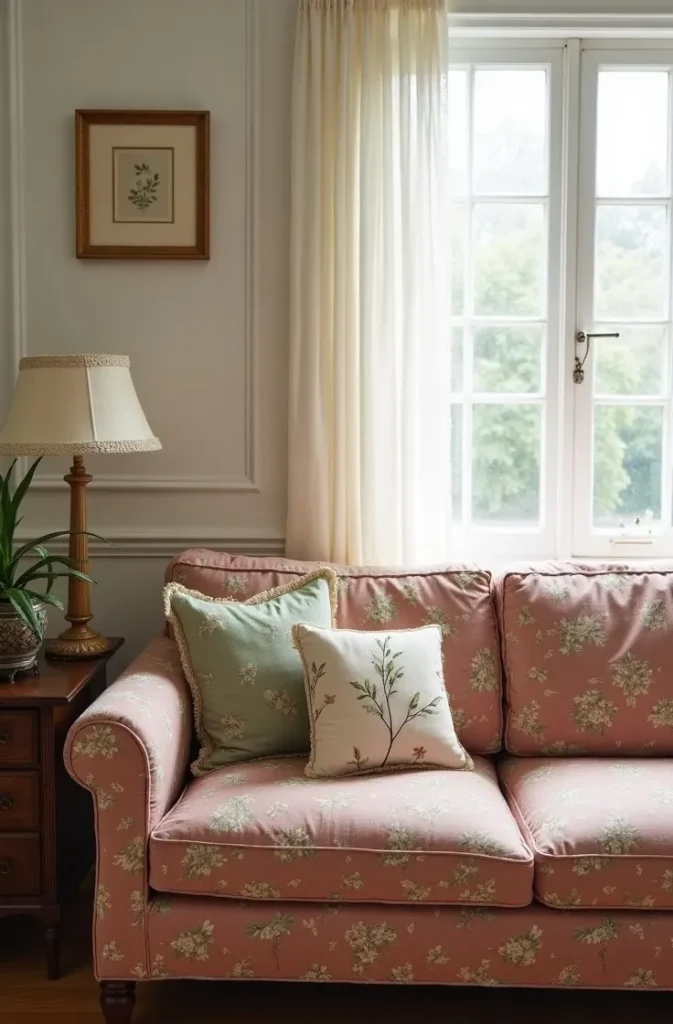

What does not work is mixing florals that share the same scale and intensity. Two bold, graphic floral prints placed side by side read as a visual collision. Use texture, scale, and color saturation to create distance between prints.
This approach works in living rooms, bedrooms, and reading nooks. It is especially effective in smaller rooms where a single bold pattern would overwhelm, but layered lighter prints create visual warmth without visual noise.
2. Use Crocheted and Knitted Textiles as Functional Decor Pieces
Crochet afghans, knitted table runners, and hand-stitched doilies are the textile layer that separates a grandmacore space from a generic vintage room. These pieces serve a dual function: they add tactile depth and they signal a sense of care and craftsmanship that machine-made decor cannot replicate.
On a sofa or armchair, a crocheted throw draped over one arm reads as intentional rather than messy. On a wooden dining table, a hand-crocheted runner softens the hardness of the surface and adds the layered look that defines this aesthetic. Doilies under lamps or ceramic pieces on side tables complete the effect without requiring major investment.
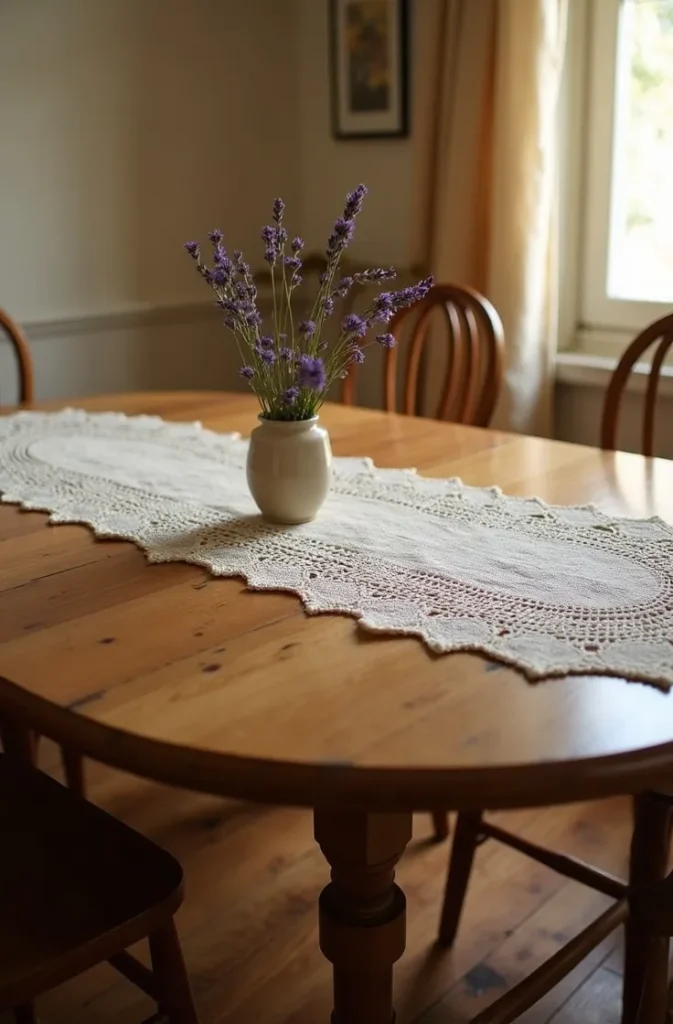
The practical guidance here is to keep the textile colors within a tight, muted range. Cream, ecru, pale lavender, and dusty yellow all work. Avoid bright white or synthetic-looking fibers, which read as craft-store rather than heirloom.
This idea works best in rooms where you already have hard surfaces that need softening, such as oak dining tables, solid wood floors, or dark upholstered furniture. It also layers exceptionally well with the floral pattern approach in the previous idea.
3. Build a Gallery Wall With Oval Frames and Botanical Prints
Gallery walls in the grandma house aesthetic follow a different logic than modern gallery walls. Instead of clean grids and matching black frames, this version uses oval portrait frames, mismatched wood finishes, and soft botanical or bird prints. The asymmetry is intentional and is what gives the wall its lived-in quality.
When assembling this type of wall, start with your largest piece, typically an oval portrait frame or a framed needlepoint, and build outward. Mix frame materials: gilded gold, dark walnut, painted white, and tarnished silver all coexist naturally in this style. The prints themselves should lean toward antique botanical illustrations, pressed flower art, or bird engravings on aged paper.
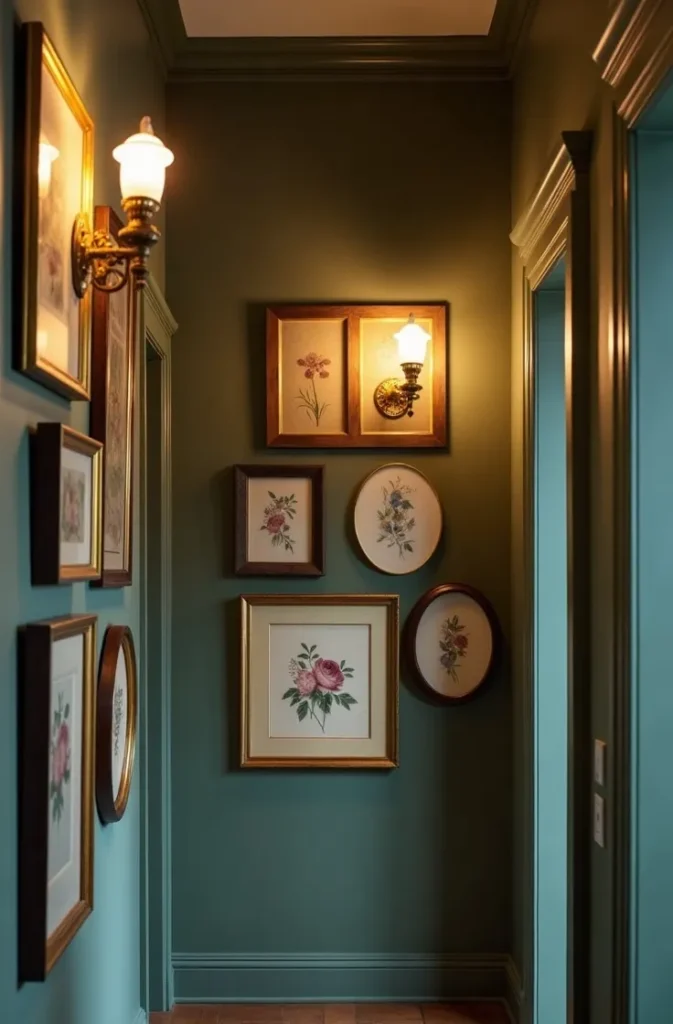
Avoid the temptation to color-code or over-plan the arrangement. Take measurements, but allow for an organic grouping rather than a structured grid. Spacing does not need to be uniform. Some frames can overlap slightly. This creates depth that a perfectly spaced grid cannot.
This works on any wall in the home but is most impactful in entryways, stairwells, and living rooms where the wall is a focal point. It is one of the most pinnable elements of the grandma house aesthetic because it photographs well and feels deeply personal.
4. Choose Furniture With Carved Wood Legs and Curved Silhouettes
One of the fastest ways to shift a room toward the vintage grandma house aesthetic is through furniture silhouette. Carved wood legs, cabriole curves, button-tufted upholstery, and rolled arms are the furniture signatures of this style. Modern furniture trends toward straight, tapered lines, so even one or two curved vintage pieces shift the entire mood of a room.
Curved silhouettes work in any room size, but they are especially effective in small living rooms where a boxy sectional would dominate the space. A single barrel chair or a small loveseat with rolled arms takes up similar square footage but creates a warmer, more human-scale feel.
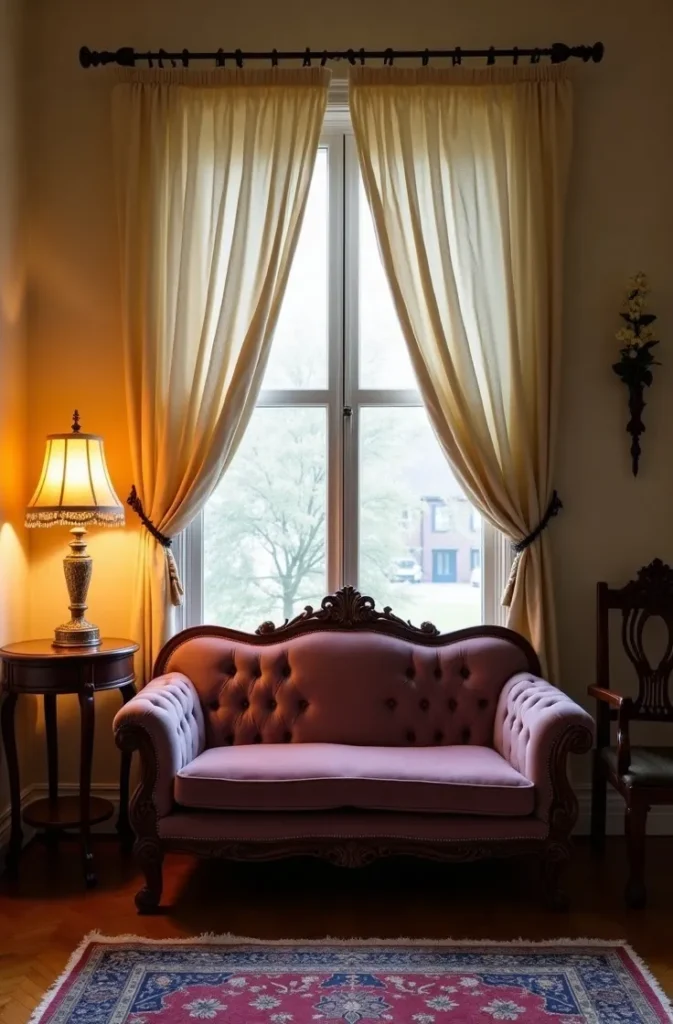
The most common mistake is combining too many ornate carved pieces, which pushes the aesthetic from cozy to cluttered. Anchor the room with one or two standout carved pieces, such as a settee or an ornate side table, and keep surrounding furniture simpler.
For upholstery, faded velvet in dusty jewel tones such as teal, mauve, or amber reads as authentically vintage without requiring a full room commitment. These colors photograph exceptionally well and are among the most saved visuals in this aesthetic category.
5. Style Open Shelving With Mismatched China and Collected Glassware
In the grandma house aesthetic, open shelving is never styled the way a modern interiors account would do it. There are no uniform ceramic sets, no matching canisters, and no deliberate negative space. Instead, the shelves hold mismatched china patterns, pressed glass pitchers, collected teacups, and small decorative objects that suggest years of accumulation.
The key to making this look work rather than look like a garage sale is to create color cohesion across objects that are otherwise mismatched. If your china features dusty pink and gold, look for pressed glass in amber or pink tones. A shared color thread running through different pieces is what ties the collection together visually.
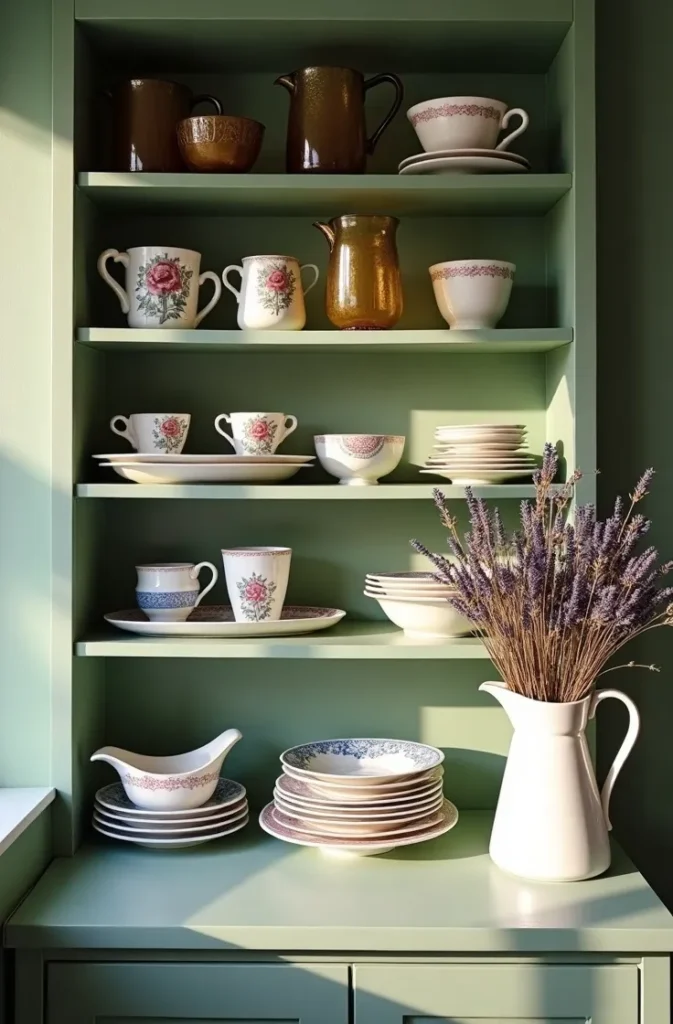
Stacking dinner plates upright using plate stands, mixing heights with cake stands and compotes, and adding a small pitcher of dried flowers or eucalyptus are practical ways to add structure without making the shelf look staged.
This approach works best in kitchens, dining rooms, and butler’s pantries. It is one of the most functional ideas in this list because these items are actually used, not just displayed.
6. Incorporate a Sunroom or Reading Corner With Wicker and Rattan Furniture
Wicker and rattan furniture carries a very specific nostalgic warmth that fits the grandma house aesthetic precisely because it bridges indoor and outdoor living in a way that was common in mid-century American homes. A reading corner with a wicker chair, a rattan side table, and a small floor lamp becomes one of the most cozy and visually distinct spaces you can create in a home.
The functional advantage of wicker and rattan is weight and scale. These pieces feel substantial visually but are physically light, making them easy to move and rearrange. In a sunroom or bay window area, a wicker chaise or armchair with a floral cushion and a crocheted blanket creates the full vintage grandma house aesthetic in a single vignette.
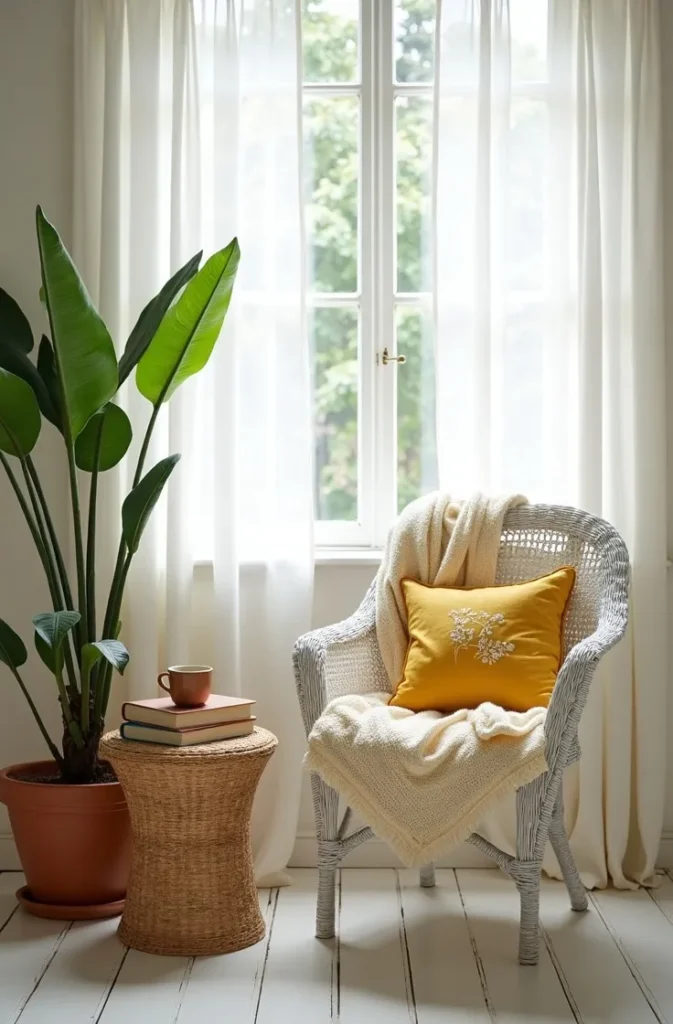
Pair rattan with warm-toned soft furnishings: mustard yellow cushions, faded green floral pillows, or cream cotton throws. Avoid pairing rattan with cool gray or white accents, which modernize the piece and undercut the aesthetic.
Natural light is essential for this corner to read correctly. Position it near a window, ideally with sheer curtains that filter but do not block sunlight. This is one of the most photographed and saved configurations in vintage home decor because it communicates comfort immediately.
7. Add Vintage Wallpaper or Wallpaper-Inspired Paint Techniques to One Accent Wall
Wallpaper is one of the strongest signals of the grandma house aesthetic, and you do not need to wallpaper an entire room to achieve the effect. A single accent wall in a bedroom, dining room, or powder room with a vintage-inspired print, such as toile de Jouy, small-scale damask, or trailing vine florals, immediately anchors the room in this visual world.
For rooms where peel-and-stick wallpaper is more practical, the quality and pattern selection have improved significantly. Toile prints in black and cream or soft blue work in dining rooms and bathrooms where the vintage aesthetic lands most naturally. A small-scale trailing floral in muted green works in bedrooms without overwhelming the space.
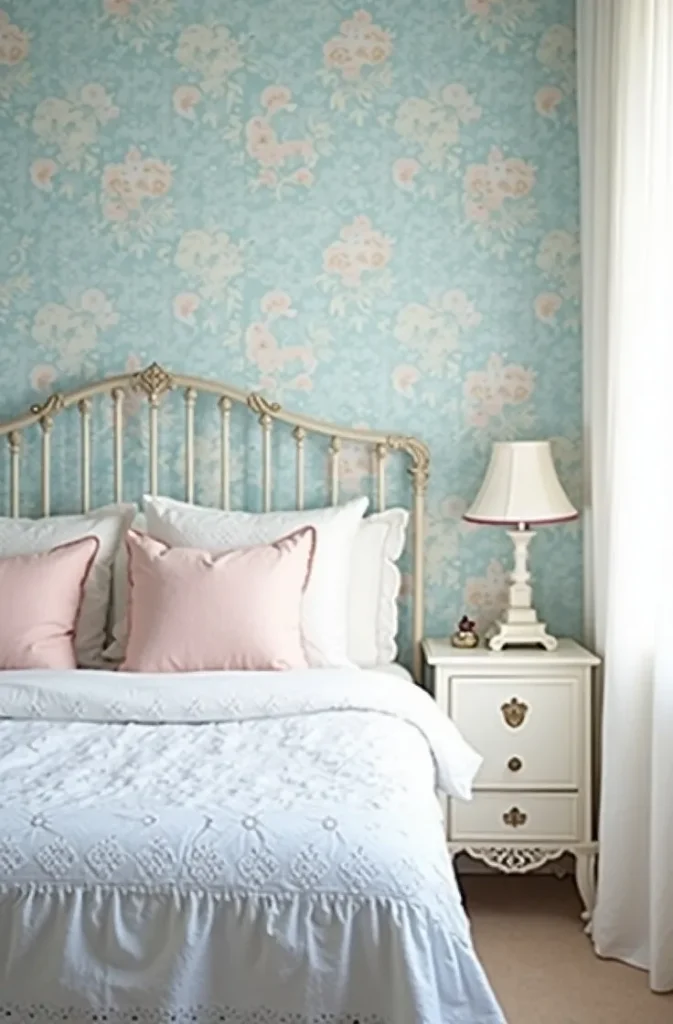
If you prefer paint, a rag-rolled or color-washed paint technique on one wall mimics the layered depth of aged wallpaper without the commitment of actual paper. Pair with a matte finish to avoid any modern sheen.
The mistake to avoid is choosing a wallpaper that is too graphic or too modern in its palette. High-contrast geometric florals or papers with bright, saturated colors do not read as vintage. Stick to muted, dusty, or faded colorways and small-to-medium scale repeat patterns.
8. Display Dried and Pressed Flowers as Year-Round Decor
Fresh flowers have their place, but in the grandma house aesthetic, dried and pressed botanicals carry more visual weight. They last indefinitely, they develop a patina over time, and they align perfectly with the collected-over-time quality this aesthetic requires. Pressed flower frames, dried lavender bundles, pampas grass in ceramic vases, and dried hydrangea arrangements all work within this style.
The practical advantage is obvious: dried flowers require zero maintenance. Placed in the right vessel, they become permanent decor that evolves in color as they age. Dried hydrangeas, for example, shift from dusty pink to muted green to parchment over months, and each stage fits the vintage palette naturally.
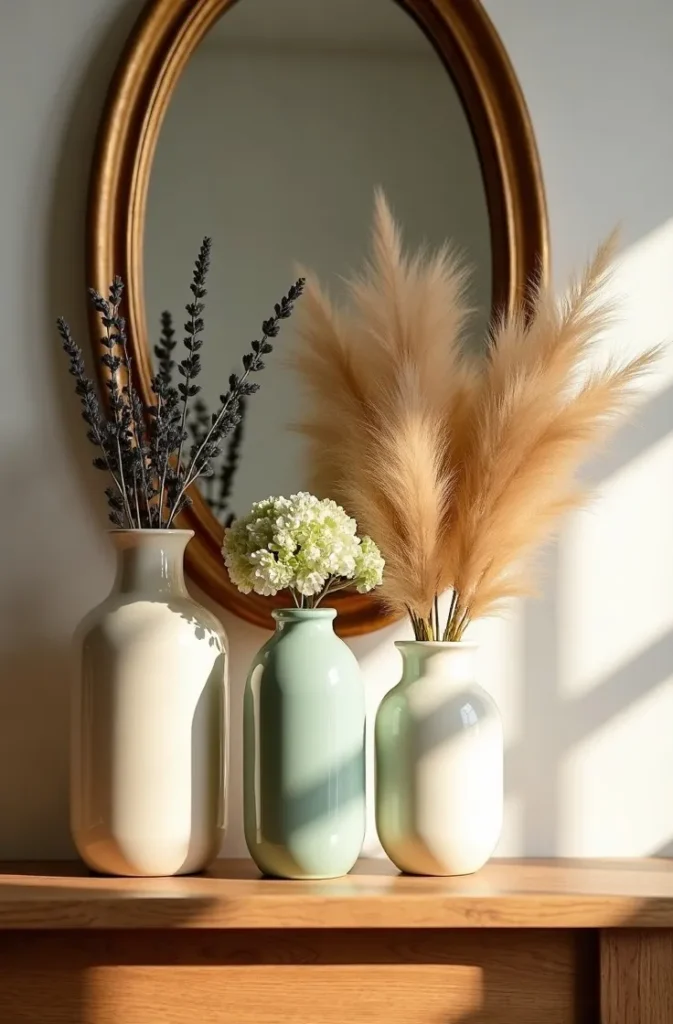
Grouping dried botanicals together amplifies the effect. A trio of vessels in different heights, each holding a different dried stem, creates a cohesive display that photographs well and fills a shelf or mantel without visual noise.
Avoid placing dried flowers in rooms with direct harsh sunlight, which bleaches them quickly. Ambient or indirect light preserves the subtle dusty tones that are central to this look.
9. Use Embroidered Linens and Needlepoint Pillows as Accent Pieces
Embroidered linens and needlepoint are the handcraft layer that most directly evokes the grandma house aesthetic, and they are also the most overlooked in modern vintage decor interpretations. A single needlepoint pillow on a sofa, or a hand-embroidered table runner on a buffet, adds a dimension of craftsmanship that no mass-produced decor can replicate.
Needlepoint pillows in floral, animal, or scenic motifs work in living rooms and bedrooms. They do not need to match the sofa fabric; in fact, contrast is preferable. A needlepoint pillow in cream and rose on a dark green velvet sofa is a stronger visual choice than matching fabrics.
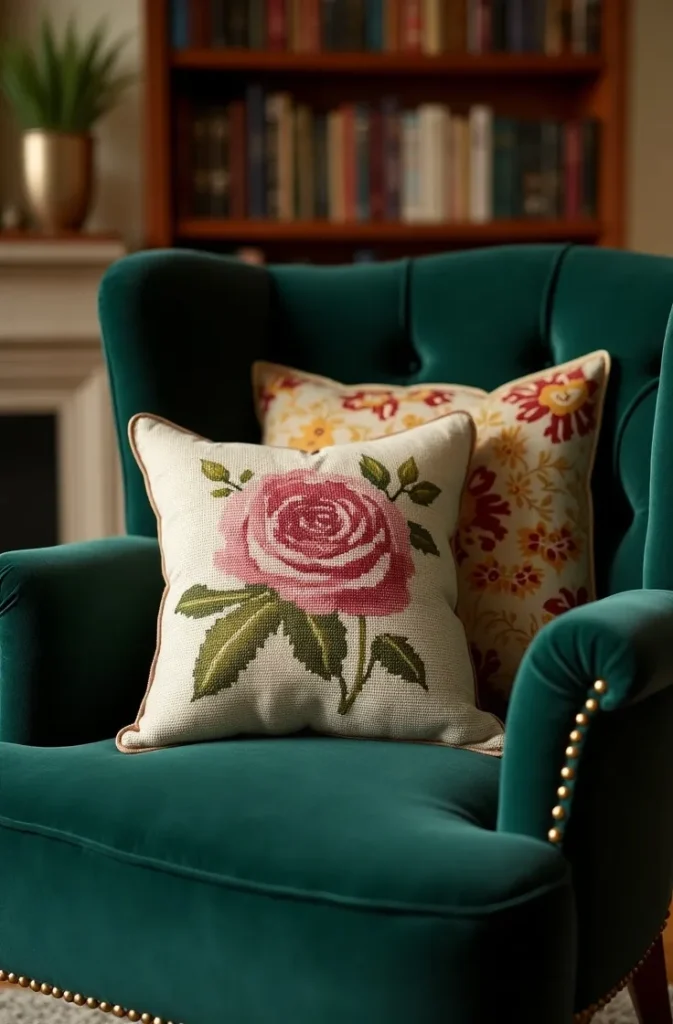
Embroidered linen napkins folded on a dining table or draped over the back of a chair add texture without occupying significant space. These are also among the most affordable entry points into the vintage grandma aesthetic because they are widely available at estate sales and vintage markets.
What does not work is using needlepoint or embroidery pieces that are too pristine or too formal. The slightly worn, slightly imperfect quality of vintage embroidery is part of its appeal. If you are purchasing new reproductions, look for designs that use muted thread colors rather than bright, saturated hues.
10. Style a Bedroom With a High Headboard, Layered Quilts, and Heirloom Bedding
The bedroom is where the vintage grandma house aesthetic is most immediately felt, and the bed is the centerpiece. A tall upholstered or iron headboard, layered with quilts, a chenille bedspread, and extra throw pillows in different sizes and patterns, creates the signature look that makes this style so widely saved on Pinterest.
The practical guidance for layering bedding: start with your base quilt or coverlet in a solid or subdued pattern. Add a chenille or cable-knit throw folded at the foot of the bed. Use three or four pillows in a mix of sizes, including at least one in a vintage floral or needlepoint case. The layering communicates warmth and does not require that any two pieces match perfectly.
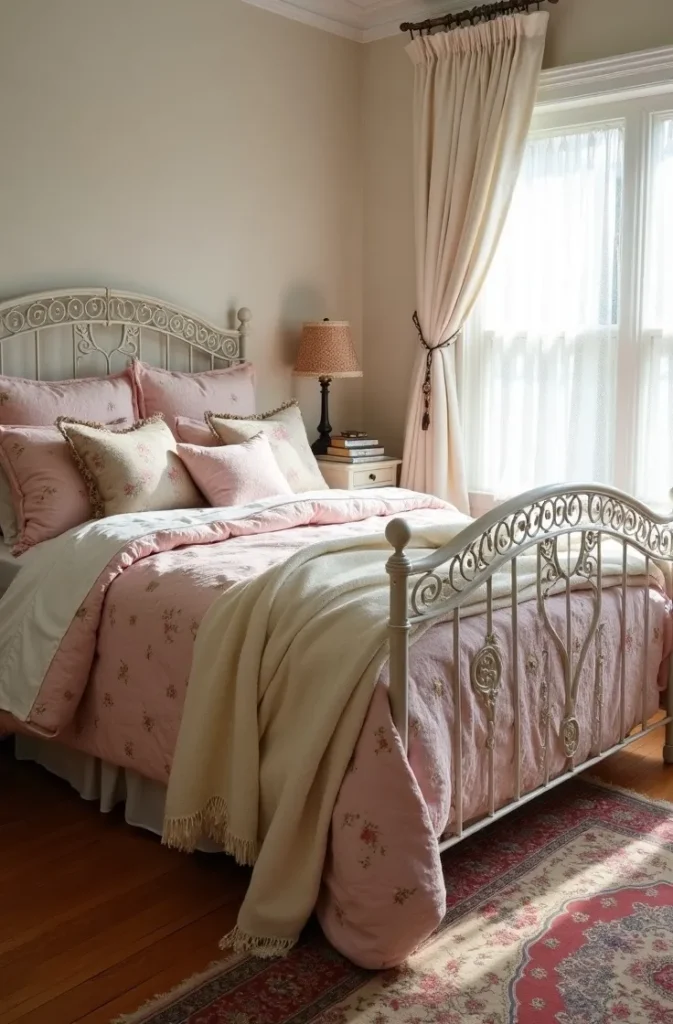
Headboard height matters. A tall headboard, whether upholstered in cream linen, painted iron, or carved wood, anchors the bed and creates the proportional grandeur that low-profile modern bed frames cannot achieve. If ceiling height allows, a canopy or half-tester adds an additional layer of vintage character.
Avoid crisp, hotel-style bedding in this aesthetic. The sheets should look slightly soft, the quilts slightly rumpled, and the arrangement should look slept-in and comfortable rather than staged.
11. Fill a Kitchen With Open Wooden Cabinetry, Vintage Hardware, and Ceramic Accessories
The vintage grandma house aesthetic kitchen differs significantly from the modern farmhouse kitchen. Instead of shiplap, open shelving with a minimal look, and matte black hardware, this kitchen features warm wood-toned cabinetry, brass or bronze hardware with patina, and ceramic accessories that feel collected rather than curated.
Open upper cabinetry is the most important decision in this kitchen style. Closed cabinets in a modern finish immediately undercut the aesthetic. If a full kitchen renovation is not feasible, replacing hardware with aged brass pulls, adding open shelving to one section of wall, and introducing a ceramic crock for utensils are practical incremental changes.
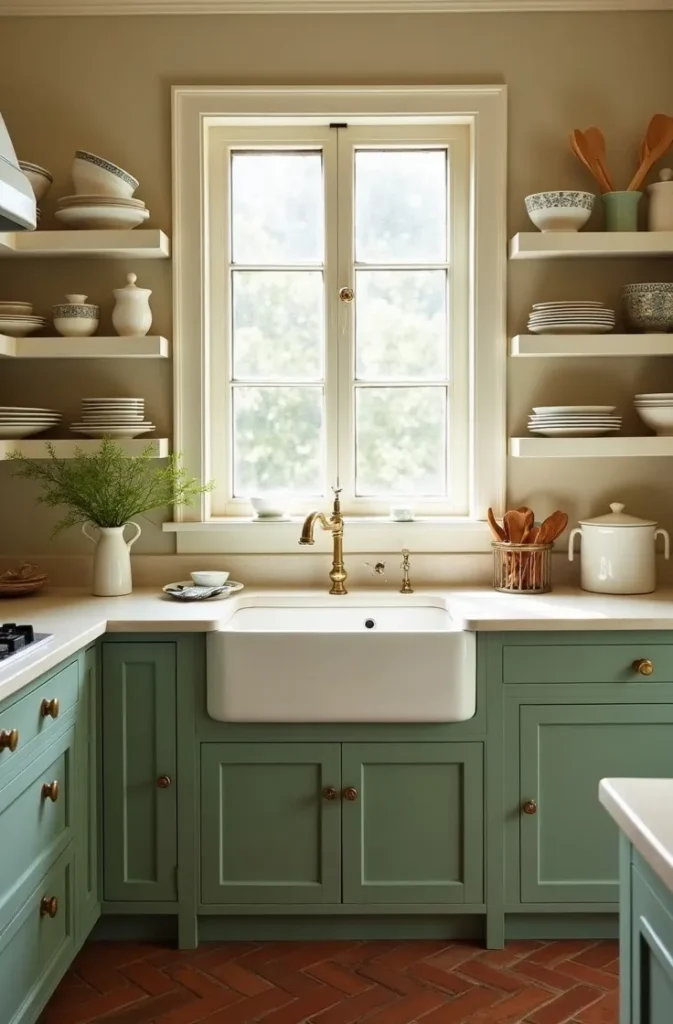
Color on the lower cabinetry is effective here in a way it is not in modern kitchens. Sage green, dusty robin’s egg blue, or butter yellow on lower cabinets with cream or natural wood uppers reads as authentically vintage without requiring a period-accurate restoration.
Ceramic accessories complete the look: a large cream pottery bowl on the counter, a hand-painted trivet on the stove, transferware plates displayed upright on open shelves, and a ceramic cookie jar near the range. These are the small-scale elements that photography picks up and that give the kitchen its character.
12. Create a Maximalist Mantel Display Using Clocks, Mirrors, and Collected Objects
The mantelpiece in the grandma house aesthetic is never minimal. It is the display surface for the most meaningful collected objects in the home: a large gilded mirror or painting above, flanked by an asymmetric arrangement of clocks, ceramic figurines, brass candlesticks, and framed photographs below. The arrangement reads as personal history rather than styled decor.
The functional rule for this type of display is to vary height across the mantel and work in an odd number of groupings. Tall brass candlesticks on one side balance a mid-height porcelain lamp on the other, with smaller objects grouped in threes at the center and edges. A large overmantel mirror reflects the room and visually doubles the display without adding more objects.
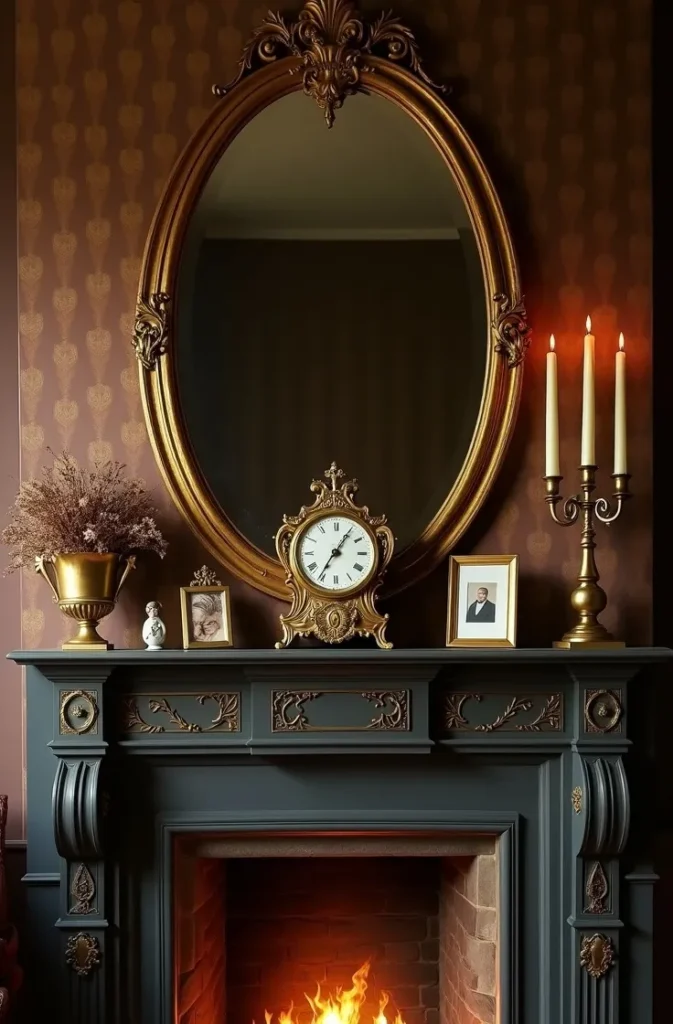
Clocks are particularly important in this aesthetic. A gilded mantel clock or a wooden anniversary clock becomes the visual anchor that ties the display together. Even non-functioning clocks serve this purpose because their presence communicates the collected-over-time quality of the aesthetic.
Avoid the modern tendency to leave negative space on a mantel styled in this way. The fullness of the display is intentional and is what makes it read as authentically vintage rather than loosely inspired by it. Every object should look as though it belongs there permanently, not as though it was recently purchased as a set.
Final Thoughts: Building the Vintage Grandma House Aesthetic Room by Room
The vintage grandma house aesthetic works because it is built on accumulation and authenticity, not on purchasing a matching set of decor from one source. The ideas in this guide are designed to be implemented gradually, one room or one surface at a time. Start with the areas that photograph and function the most: the living room seating area, the bedroom layering, or the kitchen open shelving.
If you found this guide useful, save it to your Pinterest boards so you can reference individual ideas as you work through each space. Each section above covers a distinct visual element, and returning to specific ideas as you shop and style will give you more targeted direction than trying to hold the full picture in mind at once.
The most important thing to remember about this aesthetic is that it rewards patience. The rooms that read most authentically as vintage grandma house spaces were not assembled quickly. They were built over time, with pieces that carry real history or that convincingly imply it.
Explore more vintage and cottagecore home decor ideas to continue building out your personal version of this style.