Knotty pine walls have a reputation problem: most people associate them with dark, dated cabins from the 1970s rather than with the warm, character-rich interiors they can actually produce. This guide gives you 10 specific knotty pine wall ideas with practical direction on how to use, update, or install pine paneling in a way that reads as intentional and modern. Whether you are working with existing pine walls or planning a new installation, every idea here helps you make a confident decision.
1. Paint Knotty Pine Walls White to Brighten a Room Without Losing the Texture
Painting knotty pine white is the single most effective way to modernize existing pine paneling without removing it. The knots remain visible beneath the paint, giving the wall texture and visual interest that a smooth drywall surface cannot replicate. The result sits somewhere between a shiplap wall and a traditional painted paneling look, and it works in living rooms, bedrooms, bathrooms, and hallways.
The right approach is two coats of a high-quality interior primer formulated for wood, followed by two coats of a matte or eggshell finish paint. Skipping primer on knotty pine is the most common mistake, and it leads to tannin bleed-through where the knots show as yellow or brown stains within months. Shellac-based primer is the most reliable option for blocking pine tannins completely.
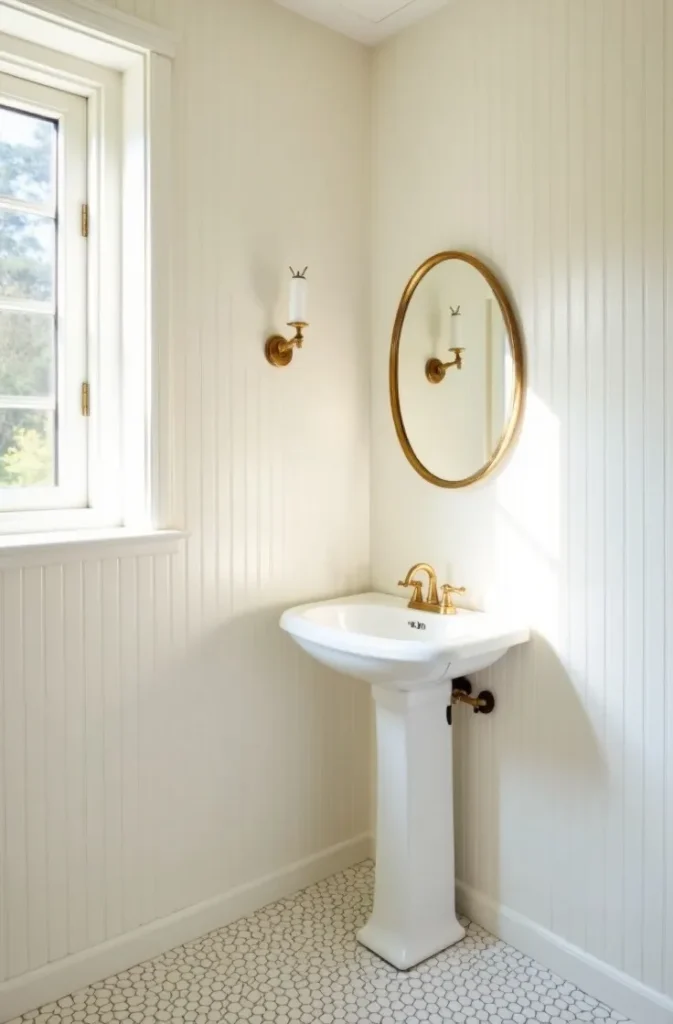

Color choice matters beyond white. Soft off-whites such as warm cream, pale greige, or light linen tones photograph better than bright white, which can wash out in natural light and make knots look gray. If your room receives limited natural light, a warm off-white will keep the space feeling cozy rather than cold.
This approach works in rooms of any size, but it is especially impactful in small bedrooms and bathrooms where dark natural pine would otherwise make the space feel enclosed. Painted knotty pine in a small bathroom with vintage fixtures is one of the most saved combinations in the rustic cottage decor category.
2. Leave Knotty Pine Natural and Balance It With White Trim and Ceilings
Natural knotty pine walls do not automatically read as dated. The problem in most older pine interiors is that the pine extended to every surface simultaneously, including walls, ceilings, cabinetry, and trim, creating a monochromatic wood environment with no contrast or relief. The fix is not always paint. Often it is contrast.
White-painted trim, ceiling, and baseboards against natural honey-toned pine walls create the visual boundary that makes the pine look deliberate. The eye reads the pine as a feature rather than a default. This works especially well in living rooms, bedrooms, and mountain cabin-style spaces where the warmth of natural wood is an asset.
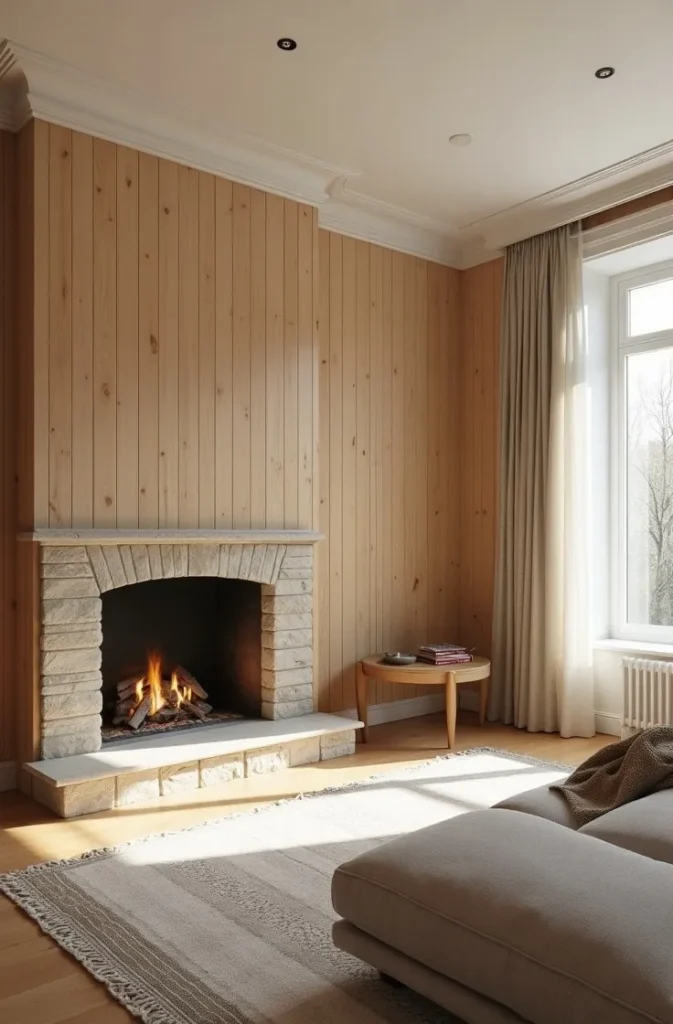
The finish on natural pine matters significantly. A satin polyurethane over original pine tends to look plastic and dated. If you are working with existing natural pine, lightly sanding and applying a water-based matte finish or a hardwax oil product will shift the tone from orange-amber to a more golden, natural wood appearance that photographs and reads much better in a modern context.
New knotty pine paneling installed with wide vertical boards and minimal spacing between them reads more architecturally current than the thin horizontal tongue-and-groove paneling typical of mid-century installations. If you are planning a new installation, board width and orientation are the two variables with the most visual impact.
3. Install Knotty Pine on a Single Accent Wall to Add Warmth Without Commitment
A full-room knotty pine installation is a significant commitment. A single accent wall is not. Applying knotty pine paneling to one wall, typically behind a bed, sofa, or fireplace, creates a warm focal point that anchors the room without requiring you to balance pine on all four sides.
This approach is particularly effective in bedrooms where the pine accent wall serves as a headboard alternative. A full-width pine wall behind the bed, painted in a warm white or left natural, creates depth and warmth that no upholstered headboard can replicate at the same visual scale. Paired with white or light-colored bedding, the contrast is immediate and strong.
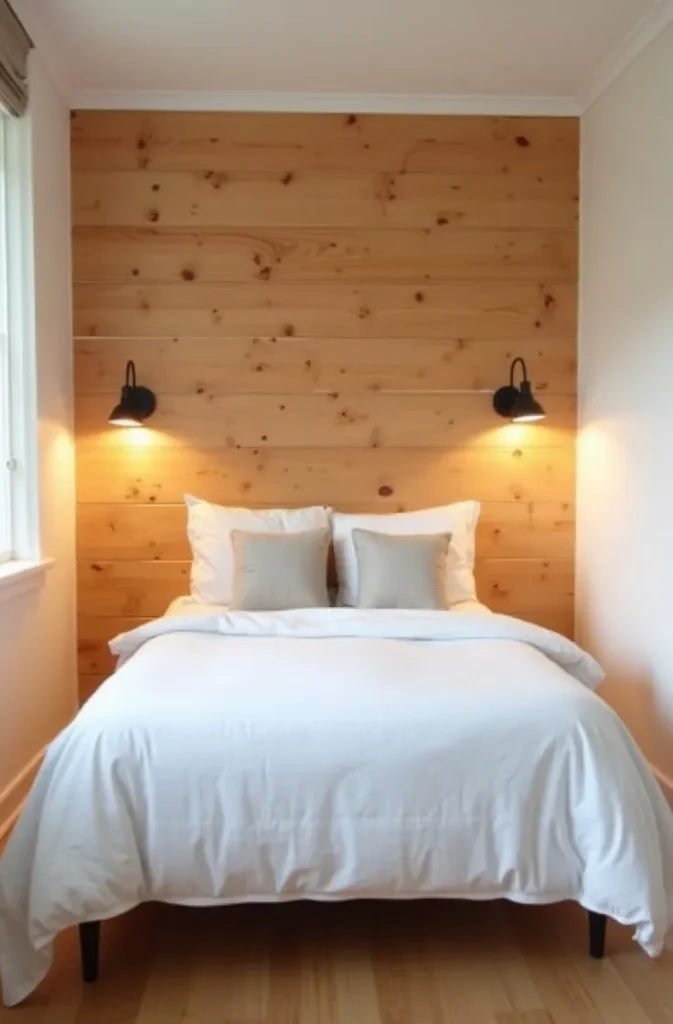
In living rooms, a single knotty pine accent wall behind the sofa works in the same way as a shiplap or brick accent wall, but with more texture and grain variation. The natural irregularity of the knots adds visual complexity that machine-made surfaces lack.
The installation consideration for a single accent wall is horizontal versus vertical board orientation. Vertical boards make ceilings feel taller, which works in rooms with standard eight-foot ceilings. Horizontal boards create a more relaxed, cabin-like feel and work better in rooms with higher ceilings where the horizontal line does not compress the space.
4. Combine Knotty Pine Walls With Dark Painted Ceilings for a Moody Interior
Dark ceiling paint above natural knotty pine walls is a less common application but one of the most visually distinctive knotty pine wall ideas currently gaining traction in design-forward interiors. The dark ceiling anchors the space, the pine provides warmth, and the contrast between the two creates a layered, intentional look that reads as neither rustic nor contemporary but as something more personal.
Deep forest green, charcoal, navy, or black work as ceiling colors in this combination. The pine walls provide enough warmth to prevent the dark ceiling from feeling oppressive. This works best in rooms with natural light because the pine reflects warmth upward and prevents the dark ceiling from flattening the space.
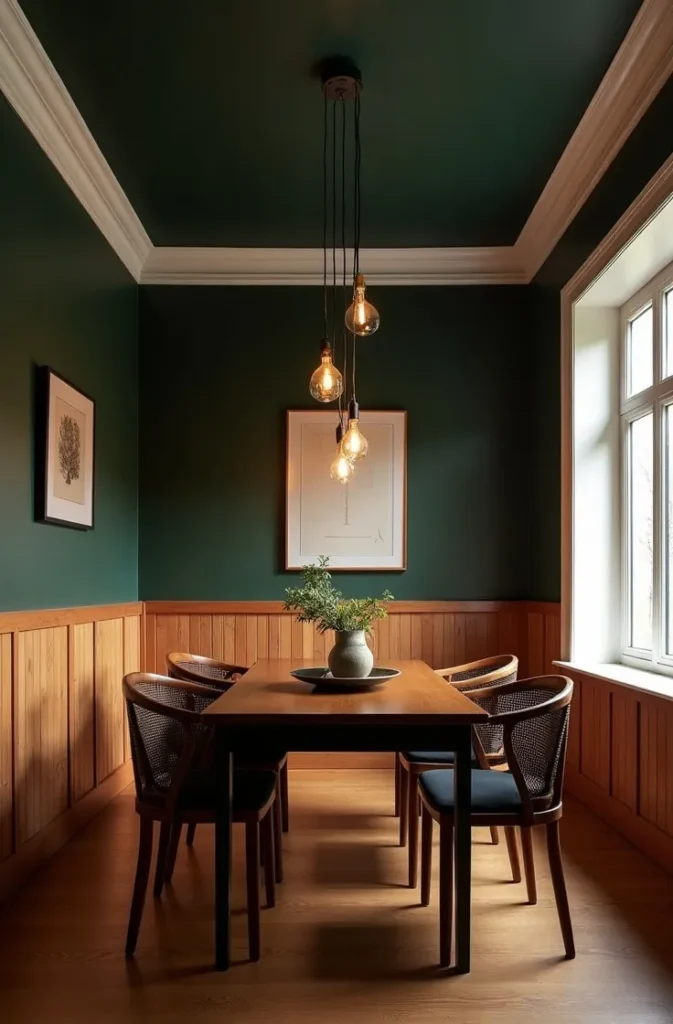
Trim color is the critical third variable. White trim in this combination creates clear visual separation between all three surfaces. Dark-stained trim that matches the ceiling wraps the room in a more immersive way. Both approaches work, but the choice affects the overall mood significantly. White trim is brighter and more transitional. Matching dark trim is moodier and more committed.
This combination is most effective in dining rooms, home offices, libraries, and bedrooms where a moody, cocoon-like atmosphere is a goal rather than a liability. It is not a good fit for small rooms with low ceilings or rooms with minimal natural light.
5. Use Knotty Pine Walls in a Bathroom for a Spa-Inspired Cabin Feel
Pine paneling in a bathroom is underused, and in the right application it creates one of the warmest, most textured bathroom environments possible. The key concern most people have is moisture, and it is a legitimate one. However, properly sealed pine in a bathroom that has adequate ventilation performs well and develops a patina over time that adds to its character.
The specification for bathroom knotty pine is important. Boards should be sealed with at least two coats of a water-resistant finish before installation, and all gaps and edges should be caulked. A high-quality exhaust fan that runs during and after every shower is non-negotiable. Inadequately ventilated bathrooms with wood walls will develop moisture problems regardless of the wood species.
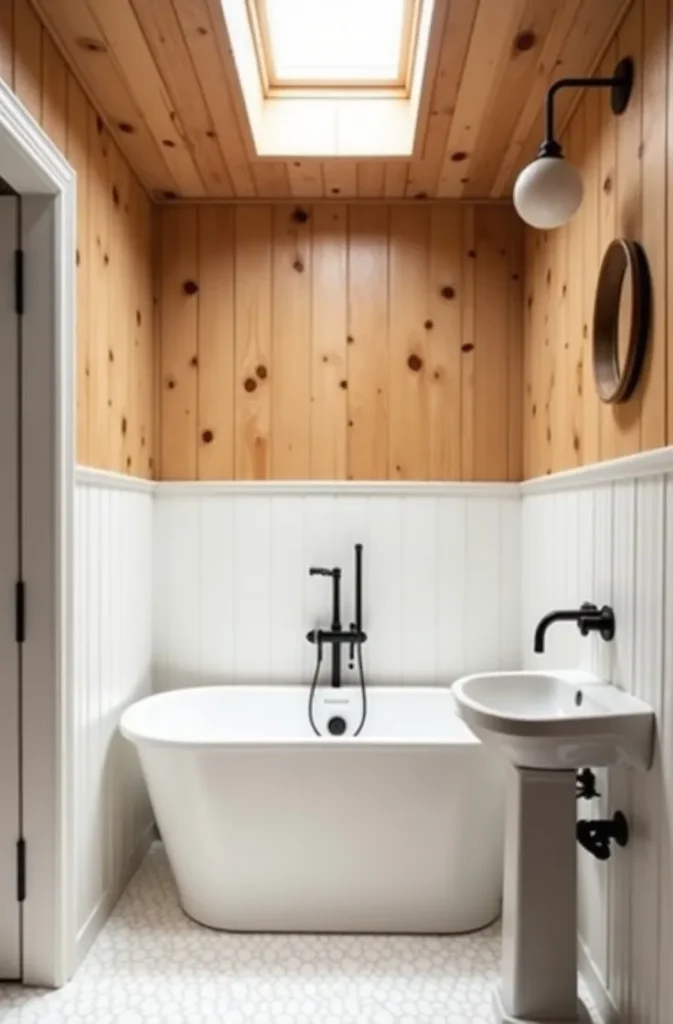
Visually, knotty pine works best in bathrooms when it is installed on the upper half of the wall, wainscot style, with painted lower walls or tile below. This keeps the wood away from the most moisture-intense zone near the floor and tub. Full-wall pine in a bathroom with strong ventilation is also achievable but requires more maintenance awareness.
In a small bathroom, natural pine walls with white fixtures, a simple mirror, and a single pendant light create a spa-adjacent warmth that tile alone cannot replicate. This is one of the most searched rustic bathroom ideas because the combination of wood warmth and bathroom function is rare and visually striking.
6. Paint Knotty Pine a Deep Color to Create a Sophisticated Paneled Room
White is not the only paint option for knotty pine walls. Deep, saturated paint colors applied over knotty pine produce a paneled library or study aesthetic that feels expensive and intentional. Dusty sage green, navy blue, deep terracotta, and warm charcoal all work exceptionally well on pine paneling because the texture of the knots prevents the color from looking flat.
The same shellac primer rule applies here as with white paint. Deep colors actually make tannin bleed-through more visible, not less, so priming is even more critical with dark or saturated paint choices. Two coats of primer followed by two coats of paint in a satin finish is the standard approach. Satin finishes work better than matte for deep colors because they are more cleanly wipeable and the slight sheen adds depth to the color.
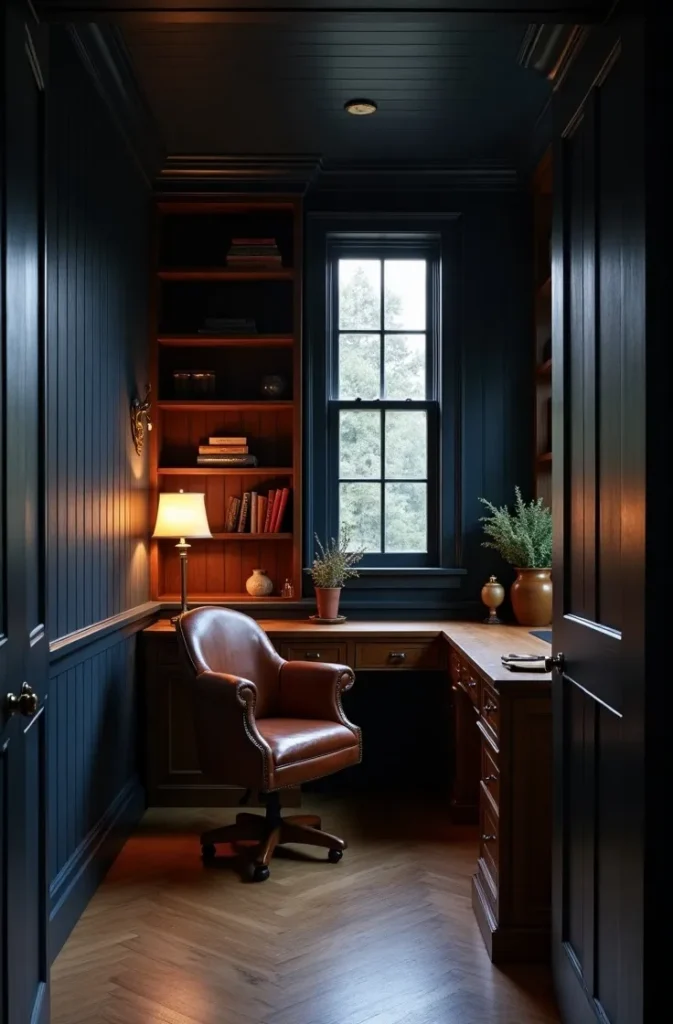
This approach transforms a room’s perceived formality. Natural pine reads as casual and cabin-like. Painted pine in a deep, sophisticated color reads as intentional paneling with architectural character. The same pine boards produce two entirely different results based on paint color alone.
Home offices, libraries, and dining rooms are the strongest rooms for this application. A home office with deep navy or forest green painted knotty pine walls, built-in shelving, and warm brass lighting is among the most saved home office configurations on Pinterest because it combines warmth, function, and visual authority.
7. Install Knotty Pine on the Ceiling Instead of the Walls for a Statement Overhead
Knotty pine wall ideas do not always have to stay on the walls. Moving the pine to the ceiling, while keeping walls painted in a neutral or contrasting color, is one of the most architecturally current applications of this material. A pine-planked ceiling adds warmth and texture overhead without creating the cave-like effect of all-pine walls in a low-ceiling space.
This works particularly well in open-plan living areas, great rooms, and kitchens where the ceiling is the largest uninterrupted surface in the room. In these spaces, a pine plank ceiling becomes the focal feature that visually ties the space together and adds warmth to what would otherwise be a flat white overhead plane.
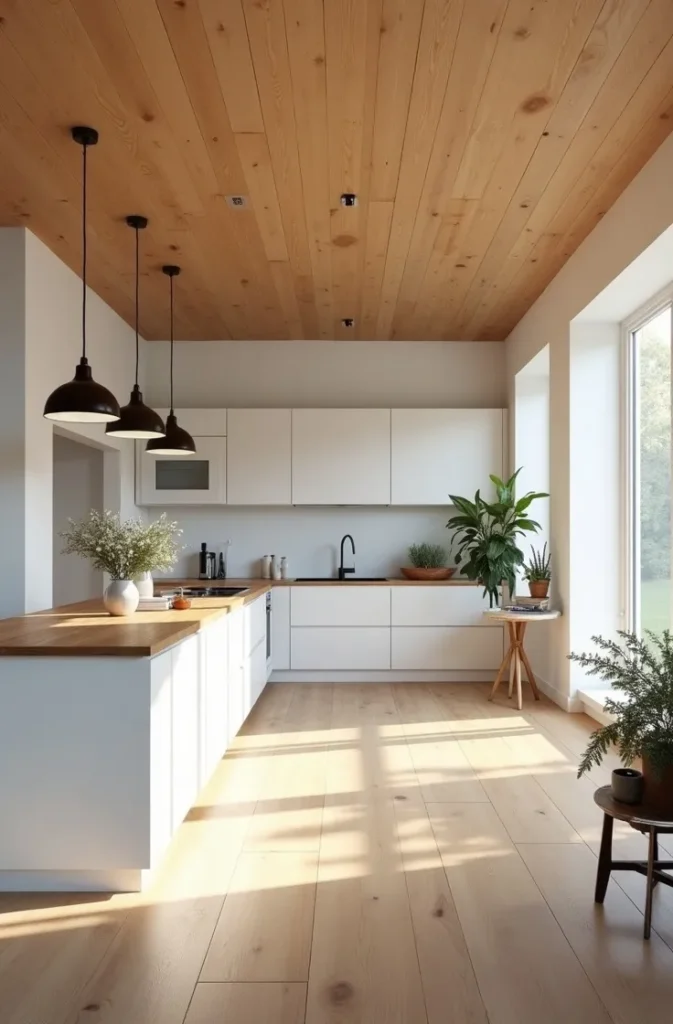
Board width is important here. Wider pine boards on a ceiling, four inches or more, reduce the number of seam lines and create a cleaner, more architectural look. Narrow tongue-and-groove boards on a ceiling create more of a traditional beadboard effect, which reads as cottage rather than cabin-contemporary.
The most common mistake with pine ceilings is applying a high-gloss finish, which reflects light downward in a harsh way and makes the ceiling feel lower. A matte or satin finish absorbs light softly and allows the natural grain of the wood to read clearly. If you are leaving the pine natural, a water-based matte sealer preserves the golden tone without the amber cast of oil-based finishes.
8. Mix Knotty Pine Walls With Black Metal Accents for a Modern Rustic Look
The modern rustic interior style depends on material contrast: raw or natural wood surfaces paired with sleek metal finishes. Knotty pine walls are an excellent base for this approach because their irregular grain and knots provide enough visual texture to hold their own against matte black metal without being overwhelmed.
Matte black window frames, door hardware, light fixtures, and furniture legs are the primary points of introduction for this contrast. In a room with natural pine walls, matte black sconces flank a sofa wall. A black-framed window becomes a picture frame for the view outside. Black door hardware and hinges read as intentional details rather than builder-grade afterthoughts.
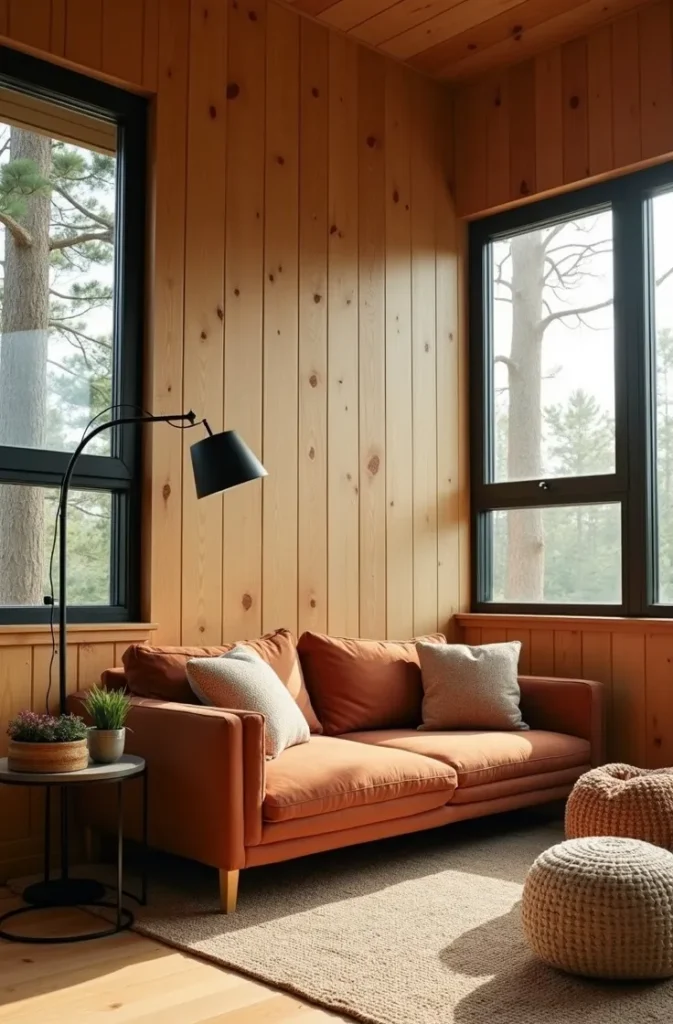
The ratio of metal to wood matters. In a room dominated by knotty pine, black accents should be distributed across multiple surfaces rather than concentrated in one area. One black fixture, black window frames, and black hardware together create a cohesive thread rather than a single focal point that looks out of place.
This combination works in living rooms, kitchens, and bathrooms. It avoids the dated associations of knotty pine because the black metal element reads as contemporary, pulling the whole room forward visually. This is one of the most effective ways to use existing natural pine paneling without painting it.
9. Use Knotty Pine Wainscoting at Chair Rail Height to Add Texture Without Overwhelming
Full-wall knotty pine is not always the right choice, and knotty pine wainscoting installed to chair rail height, typically 36 to 42 inches from the floor, gives you the warmth and texture of pine with significantly less visual weight. The wall above the wainscot cap can be painted in any color, creating a layered wall treatment that reads as thoughtful and architectural.
This approach is practical in dining rooms and hallways where full-height pine might feel too heavy, and it works especially well in rooms with taller ceilings where a lower band of warm pine grounds the space. In a dining room, pine wainscoting below chair rail height with a soft sage or cream wall above creates a traditional room that feels collected and considered.
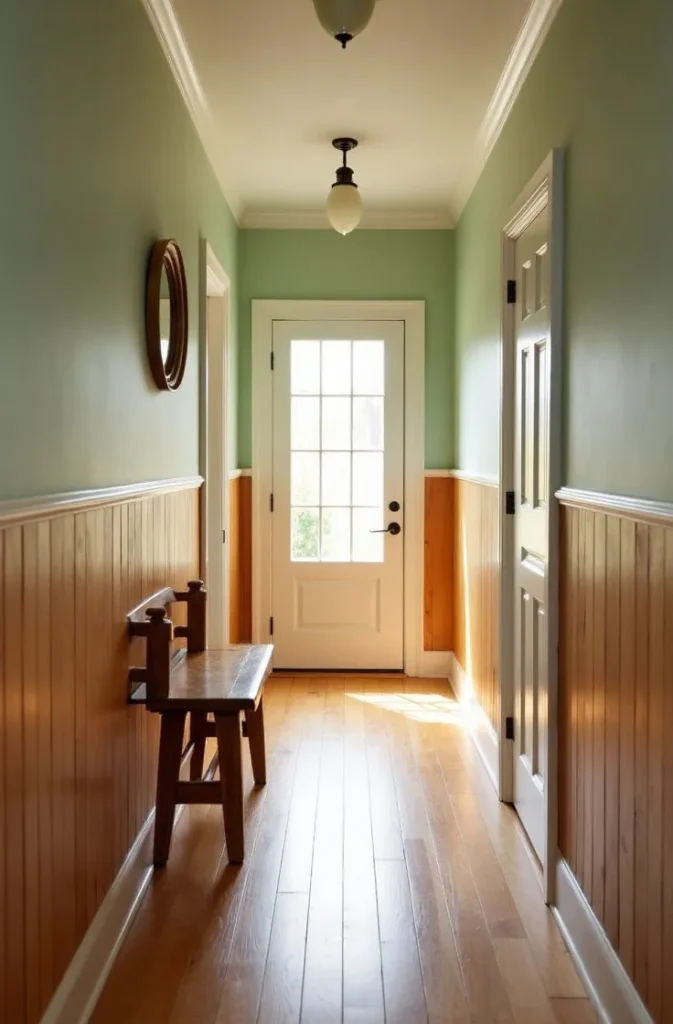
The cap rail detail on top of the wainscoting is an important finish element. A simple painted wood cap, a more detailed ogee profile, or a simple square-edge rail all work, but the cap should be painted rather than stained for a cleaner, more modern boundary between the two materials.
In a hallway, pine wainscoting with a painted upper wall in a slightly deeper tone than the trim creates a protective and visually interesting wall treatment that also serves a practical function. Hallway walls take more physical wear than any other surface in a home, and wood wainscoting at contact height is one of the most durable solutions available.
10. Create a Full Knotty Pine Bedroom for a Warm, Enveloping Cabin Environment
A full-room knotty pine bedroom, with pine on all four walls and sometimes the ceiling, is the most immersive application of this material and the one that requires the most confident execution. When it works, it creates a warm, enveloping room that no other material combination can replicate. When it goes wrong, it feels dark and suffocating.
The variables that determine success are ceiling height, natural light, and finish. Rooms with low ceilings and minimal windows will feel oppressive with all-pine walls, regardless of how the pine is finished. Rooms with eight-foot or higher ceilings and at least one good window become cozy and cabin-like with natural pine on all surfaces.
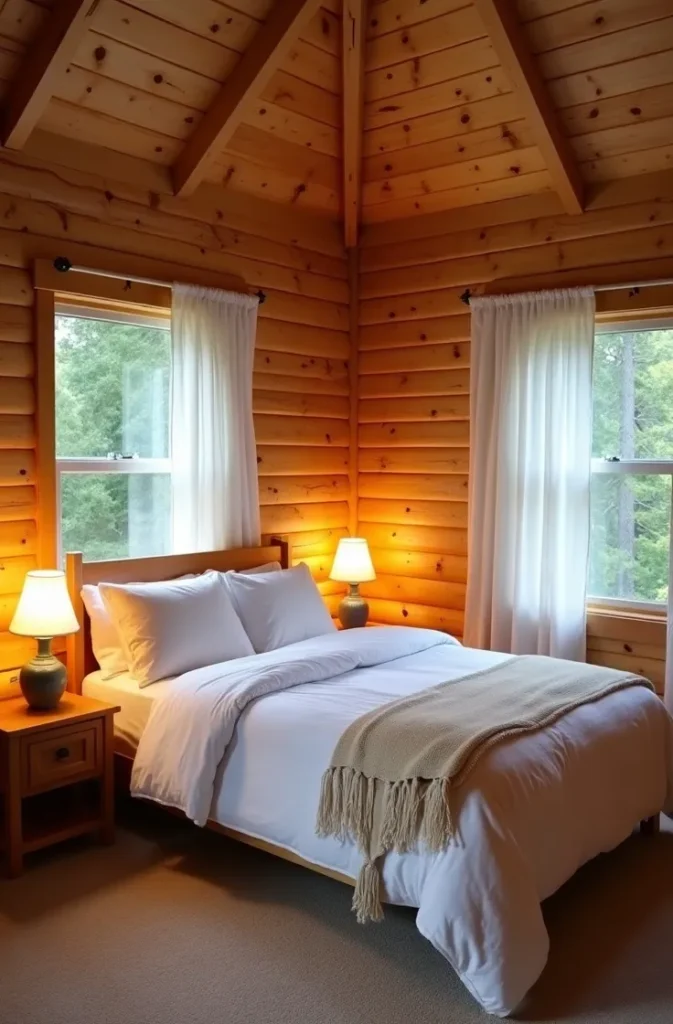
Bedding and textile choices are the primary way to prevent a full pine room from feeling dated. White or cream linen bedding, simple cotton throws, and natural fiber rugs in neutral tones create the contrast that keeps the room from reading as too dark or too uniform. Avoid heavy, patterned bedding in jewel tones, which competes with the wood rather than complementing it.
Lighting is the second control variable. A room with only overhead lighting will feel flat and moody in a negative way. A mix of table lamps, wall sconces, and natural light sources prevents the pine from absorbing too much of the room’s perceived brightness. Warm-toned bulbs in the 2700 to 3000 Kelvin range complement the golden tones of pine without creating a yellow cast.
Final Thoughts: Choosing the Right Knotty Pine Wall Approach for Your Space
Knotty pine walls are one of the most versatile and underestimated materials in American residential interiors. The ideas in this guide range from full natural installations to painted transformations, from accent walls to ceiling applications, and each one solves a different design problem. The right approach depends on your room’s dimensions, light levels, and the overall aesthetic you are building toward.
If you are working with existing pine that feels dated, painting it or adding contrast with trim color and modern metal accents are the lowest-commitment starting points. If you are planning a new installation, board width, orientation, and finish selection will have more impact on the final result than almost any other decision.
Save this guide to your Pinterest boards so you can reference specific ideas as you work through your space. Each section above addresses a distinct application, and returning to individual ideas as you plan and shop will give you more targeted direction. Explore more rustic wall treatment and wood paneling ideas to continue building your design direction.