
If your courtyard wall feels like an afterthought, these courtyard wall designs will change that. This guide breaks down 10 practical, visually distinct wall treatments — each with a clear explanation of what works, when to use it, and what mistakes to avoid. Whether you are working with a compact urban courtyard or a larger open-plan exterior, every idea here is built to help you make a real decision.
1. Textured Concrete Panels That Add Depth Without Clutter
Smooth concrete walls are easy to get wrong — they either look clinical or feel unfinished. Textured concrete panels solve that problem by introducing visual depth through pattern, not decoration. The texture catches natural light differently throughout the day, giving the wall a dynamic quality without adding visual noise.
This approach works best in modern or minimalist courtyards where you want a strong architectural statement. If your outdoor space already has a lot of competing elements — planters, furniture, pergolas — textured concrete gives you a wall that holds attention without screaming for it.
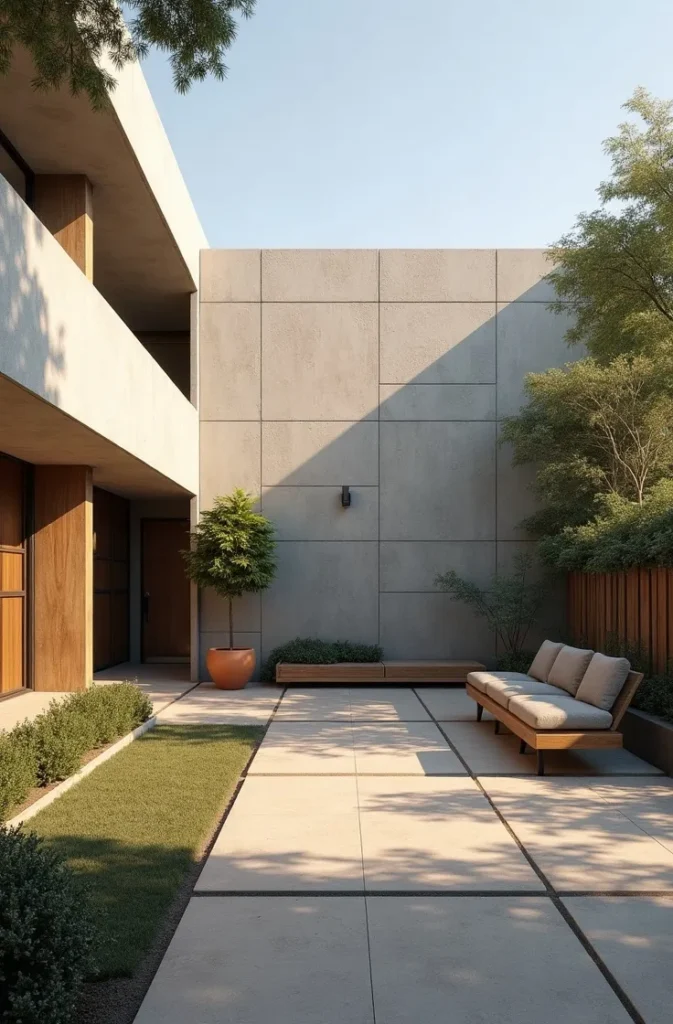

The most common mistake here is using overly deep textures in small courtyards. Heavy relief patterns can make a tight space feel boxed in. Stick to shallow-relief geometric or horizontal line textures if your courtyard is under 200 square feet.
When paired with warm-toned ground materials like sandstone pavers or light wood decking, textured concrete shifts from cold to grounded — and that balance is what makes it work in residential settings.
2. Vertical Garden Walls That Double as Living Privacy Screens
A vertical garden wall does two jobs at once: it softens hard architecture and creates genuine privacy without the visual weight of a solid fence or masonry wall. In dense urban areas or tightly packed neighborhoods, this is one of the most functional courtyard wall designs available.
The key is selecting plants with different textures and growth patterns — mixing trailing varieties with upright ones creates a layered look that reads as intentional rather than overgrown. Ferns, pothos, and small-leaf ivy work well in shaded courtyards. Succulents and ornamental grasses perform better in full-sun conditions.
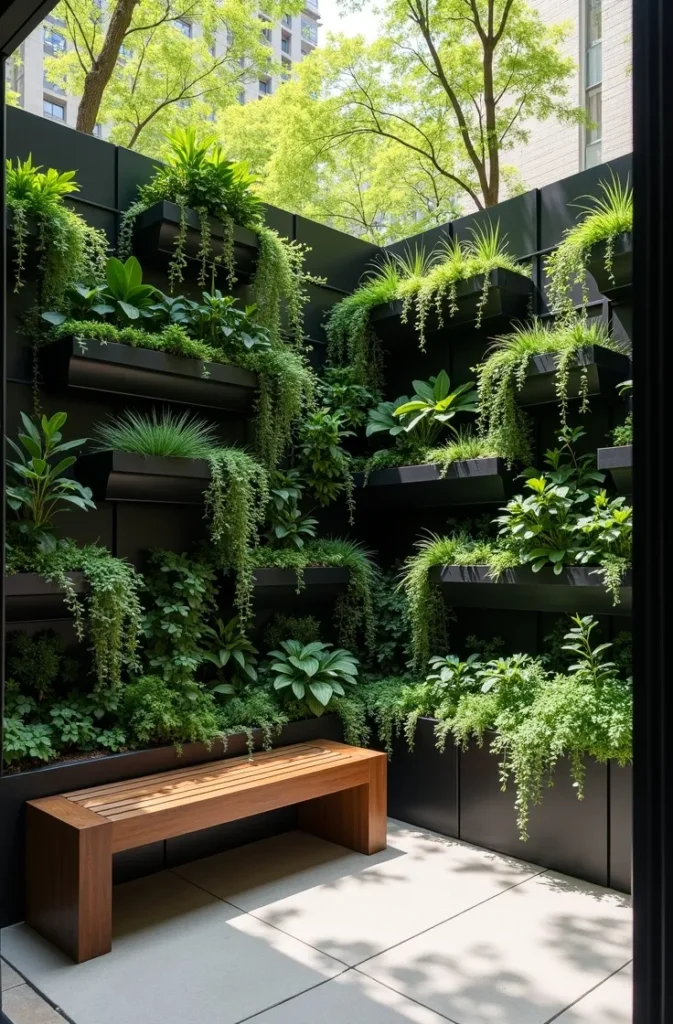
Where people go wrong is underestimating maintenance. A vertical garden wall needs consistent irrigation — ideally a built-in drip system — and seasonal pruning. If you want the look without the upkeep, a hybrid approach works: live plants on the lower two-thirds, with weathered metal or cedar panels above. This reduces watering demand while keeping the organic aesthetic.
This design suits courtyard wall ideas for homes where the wall faces a street or neighbor property. It provides a natural buffer that a painted block wall simply cannot replicate.
3. Whitewashed Brick Walls That Brighten Small Courtyard Spaces
Dark or heavily weathered brick absorbs light, which makes small courtyards feel enclosed. Whitewashing the brick — rather than fully painting it — preserves the texture of the original material while bouncing natural light back into the space. The result is an outdoor room that feels twice its actual size.
This is one of the most cost-effective courtyard wall designs for older homes with existing brick walls. You are not replacing the structure; you are reframing it. The whitewash technique lets some of the original brick color bleed through, which creates warmth that a flat white paint finish cannot achieve.
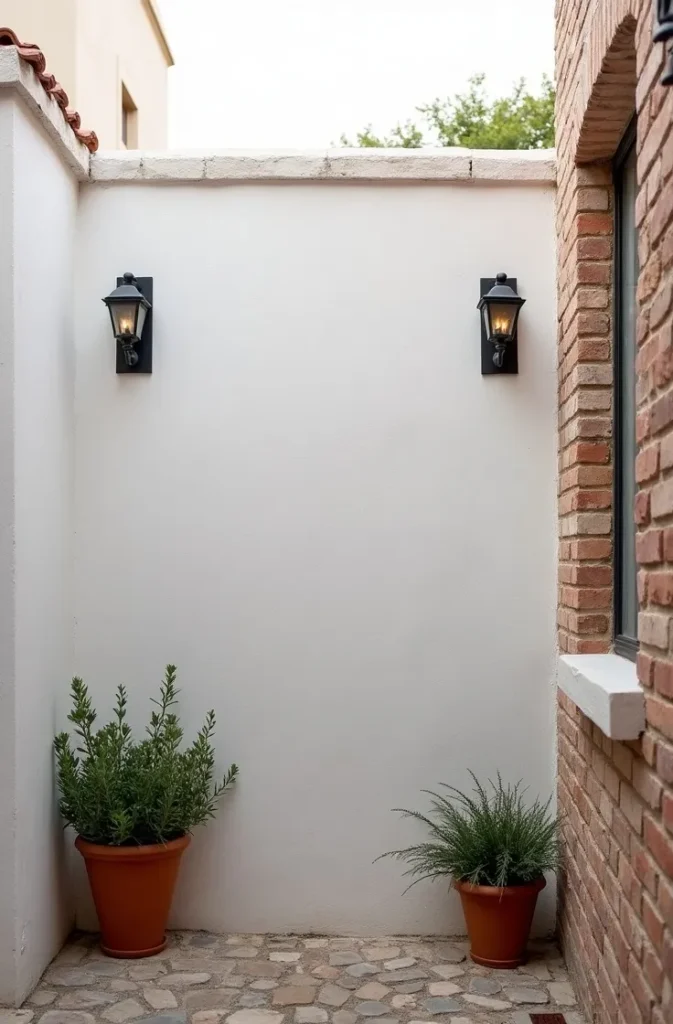
Pair this wall treatment with dark iron or matte black accents — wall-mounted sconces, trellises, or narrow planter brackets — to create contrast that keeps the overall look from feeling washed out or institutional.
Avoid using standard interior white paint. Exterior lime wash or masonry-specific paint formulations hold up better against moisture and temperature changes, especially in climates with freezing winters. Reapplication every five to seven years is typical and straightforward.
4. Slatted Wood Panel Walls That Create Filtered Privacy
Slatted wood panels are a smart solution when you need privacy but do not want to feel sealed off from the surrounding environment. The gaps between the slats allow air circulation and partial light transmission, which makes a courtyard feel connected to its surroundings rather than isolated.
Cedar and pressure-treated pine are the most common materials for this application in the USA. Cedar is naturally rot-resistant and weathers to a silver-gray finish over time if left untreated — a look that suits both modern and transitional courtyard styles. If you prefer to maintain the original warm wood tone, an annual coat of exterior wood oil is all that is needed.
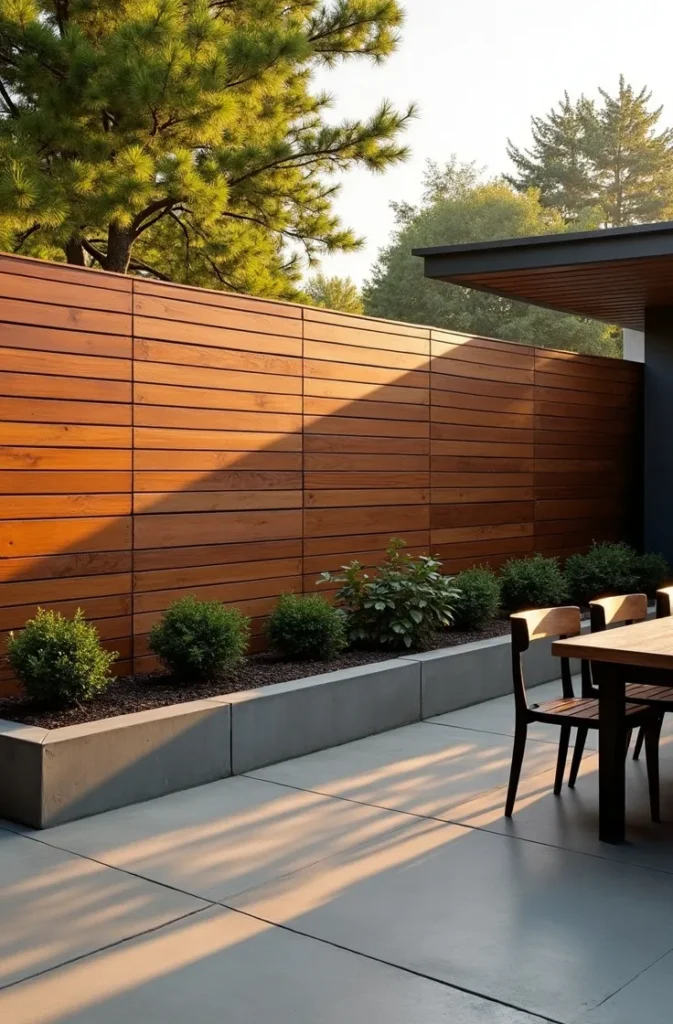
Slat spacing matters more than most people realize. Wider gaps (two to three inches) allow more light and visibility — ideal for pool surrounds or courtyards where ventilation is a priority. Narrower gaps (half an inch to one inch) give you near-total privacy while still reading as a wood panel rather than a solid fence.
This design performs particularly well in functional courtyard floor plan ideas where the outdoor space is used for dining or entertaining. The texture of wood adds warmth that masonry walls cannot replicate, and the slatted design avoids the tunnel effect that solid walls create in narrow courtyards.
5. Gabion Walls Filled With River Stone for Industrial-Natural Contrast
Gabion walls — wire cages filled with stone, gravel, or river rock — bring a material contrast to courtyard spaces that feels both rugged and considered. The wire cage structure is industrial; the stone filling is natural. Together they create a texture and mass that neither element could produce alone.
These walls work best in courtyards that blend hardscape with landscape — where you have ground-level planting beds alongside paved areas. The rough texture of the stone reads as intentional when paired with clean concrete or steel architectural elements nearby.
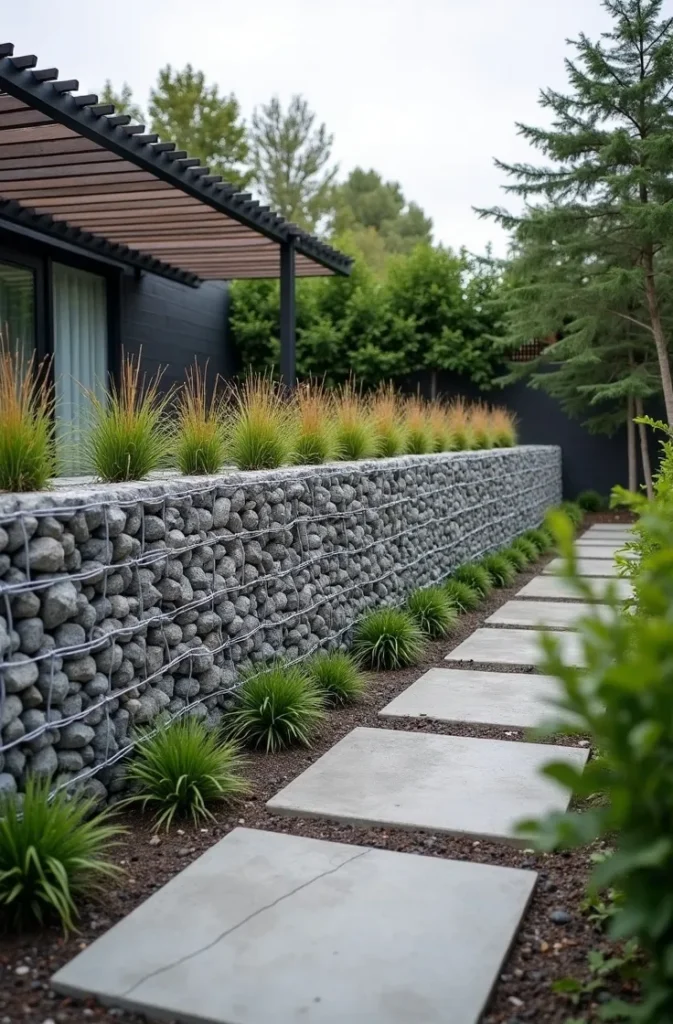
Gabion walls are also practical. The permeable structure allows water to drain through, which means no hydrostatic pressure buildup behind the wall — a common problem with solid masonry in areas with heavy rainfall. For sloped courtyards or hillside properties, gabion walls can also serve a retaining function.
The one design mistake to avoid is using mixed stone sizes with clashing colors inside the same cage. For a cohesive look, choose one stone type and one dominant color family — either warm tan river rock, cool gray granite, or dark basalt — and keep it consistent across the entire wall surface.
6. Painted Mural Accent Walls That Define the Focal Point
Not every courtyard wall needs to be a structural statement. In courtyard space planning ideas where the wall functions as a backdrop — behind a seating area or water feature — a painted mural accent wall can anchor the entire outdoor layout by giving the eye a clear focal point.
The most effective mural treatments for exterior courtyard walls are abstract or botanical. Abstract color-block murals in earthy tones work well in minimalist courtyards. Large-scale botanical motifs — oversized leaf shapes, abstracted branch patterns — suit transitional and eclectic outdoor spaces.
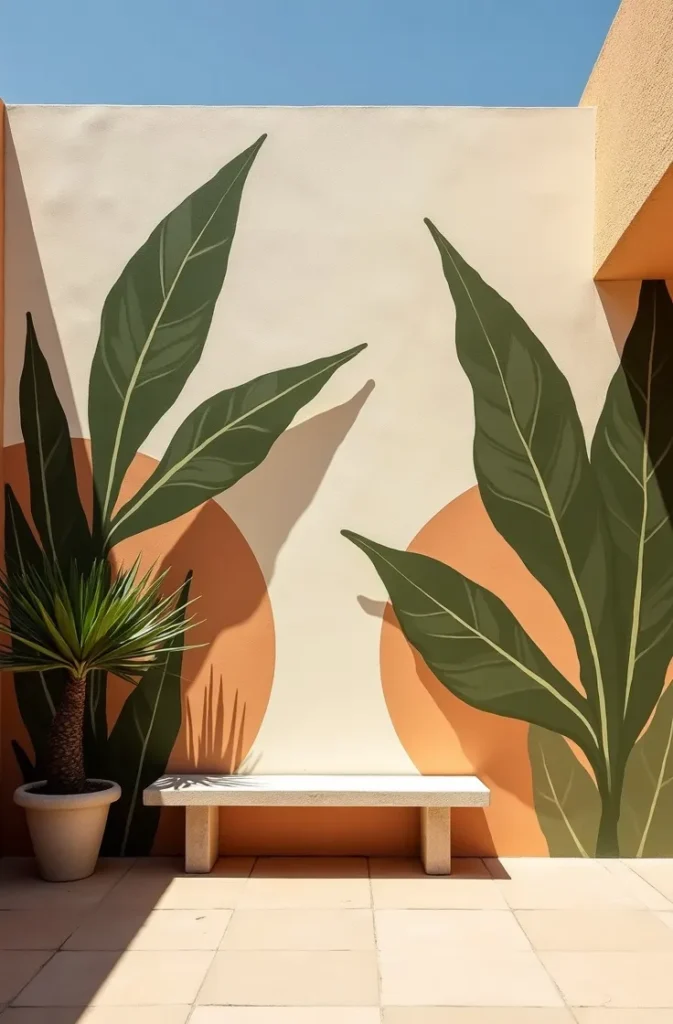
Use exterior-grade masonry paint rated for UV resistance. Courtyard walls in direct sun experience significant paint fade within two to three years without UV protection built into the finish. A clear masonry sealer on top of the finished mural extends the life of the work considerably.
This approach is especially useful in rental properties or homes where permanent structural changes are limited. A painted mural adds personality and design presence without altering the wall’s construction.
7. Perforated Metal Screens That Merge Security With Style
Perforated metal screens are one of the more underused courtyard wall designs in American residential settings — despite being extremely effective in climates with high sun exposure. The perforations reduce the visual mass of a solid wall while still providing a defined boundary, privacy, and passive shading.
Corten steel (weathering steel) is the most popular material for this application. It develops a rust-patina surface over time that is self-protecting and visually distinctive. Powder-coated aluminum in matte black or dark bronze is a lower-maintenance alternative that performs well in coastal climates where steel oxidation can be unpredictable.
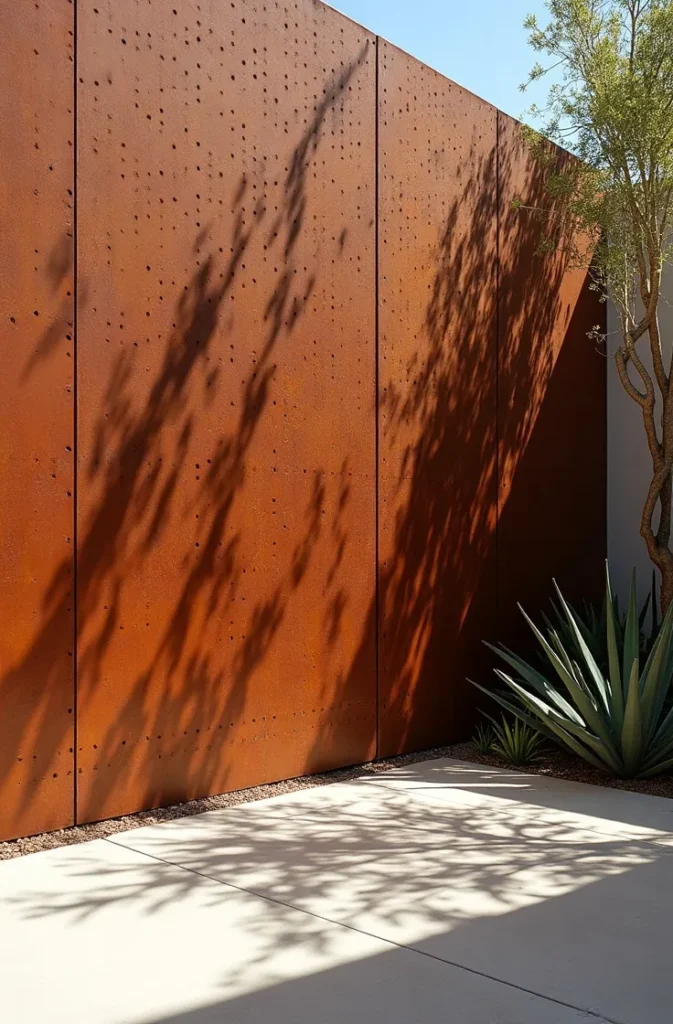
The perforation pattern should be chosen based on the sun angle in your specific courtyard. Smaller and more densely packed perforations reduce heat and glare more effectively. Larger open patterns let in more light and create more dramatic shadow play on the ground.
This design is well-suited to narrow courtyard layouts or side-yard passages where a solid wall would make the space feel like a corridor. The perforated screen maintains the boundary without closing off airflow or light.
8. Stacked Stone Veneer Walls for a Timeless Transitional Look
Stacked stone veneer is one of the most reliable courtyard wall designs for homeowners who want a classic, high-end look without full masonry construction. Real or manufactured stone veneer adheres to an existing block or concrete wall, transforming the surface at a fraction of the cost of full stonework.
Ledgestone and linear stacked patterns are the two most popular profiles. Ledgestone has irregular, slightly jutting stones that create depth and shadow. Linear stacked stone has clean horizontal courses that suit modern and transitional architectural styles more directly. For most American suburban homes, linear stacked stone reads as elevated without being ostentatious.
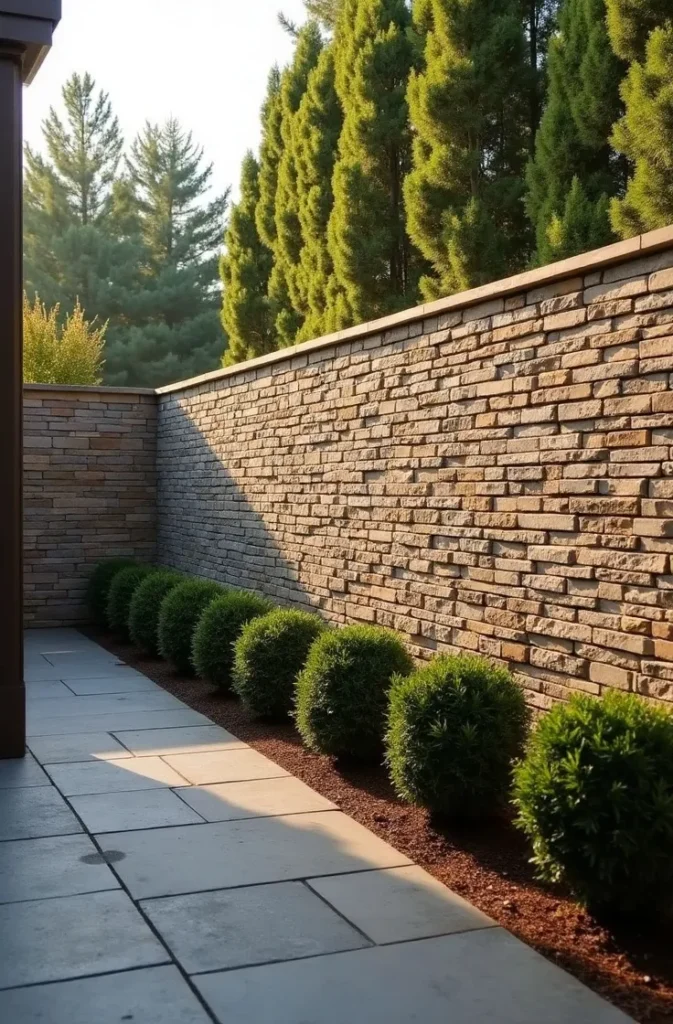
Color selection is important. Earth-toned blends — buff, taupe, warm brown, and charcoal — photograph well and complement a wide range of landscape palettes. Avoid veneer products with heavy pink or orange undertones unless you are confident they complement your home’s primary exterior materials.
Water infiltration is the main long-term risk with stone veneer walls. Use a quality mortar mix rated for exterior application, and ensure the base wall has proper waterproof membrane coverage before installation. Correctly installed stone veneer has a service life of 20 to 30 years.
9. Glass Panel Walls That Open Up Compact Courtyard Views
Glass panel walls are the right solution when you have a view worth keeping — or when a courtyard is so small that any solid boundary makes it feel like a cell. Structural glass panels framed in powder-coated steel or brushed aluminum maintain the defined boundary of the courtyard while keeping sightlines open.
This is one of the most impactful small courtyard layout ideas because it visually extends the space beyond its actual footprint. A glass wall between an interior living room and a courtyard blurs the threshold between inside and outside, making both spaces feel larger.
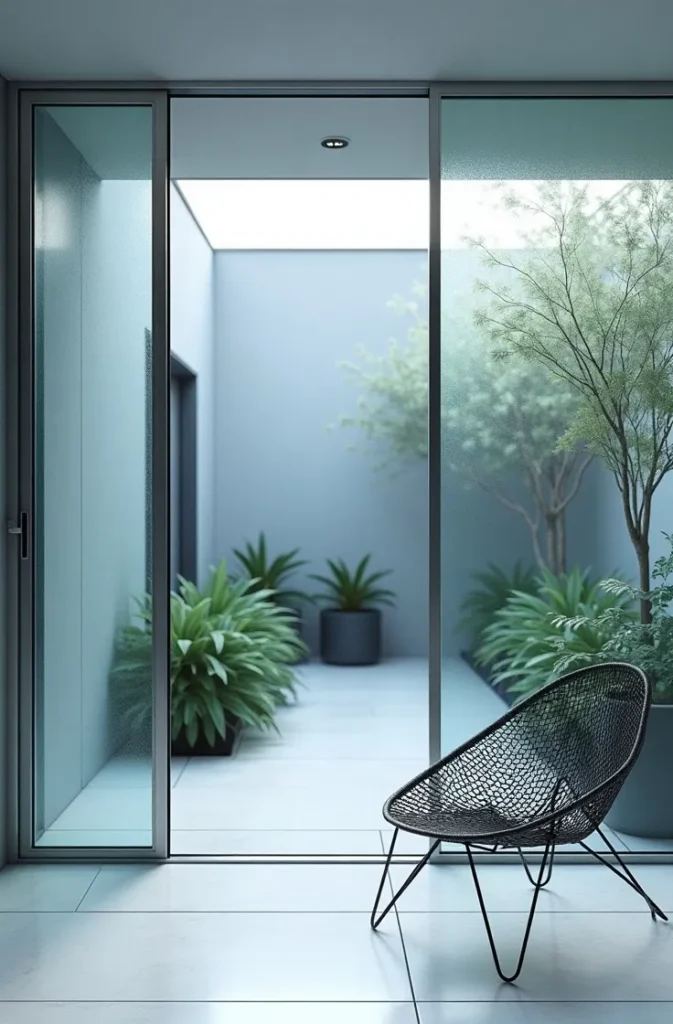
Tempered safety glass is the standard for exterior courtyard panels. Frosted or acid-etched glass is an alternative for situations where you need some visual screening without completely closing off the view — useful when the courtyard faces a neighboring property.
The main practical concern with glass panel walls is cleaning and maintenance. Exterior glass in dusty or high-pollen environments needs regular wiping to maintain the visual clarity that makes this design worth the investment. In very windy climates, the structural framing needs to be engineered to handle lateral load — this is not a DIY installation.
10. Mosaic Tile Feature Walls That Add Color and Craft
A mosaic tile feature wall is the most personal of all courtyard wall designs — and when done well, it becomes the design signature of the entire outdoor space. Unlike painted murals, mosaic tile is permanent, weather-resistant, and gains character with age rather than fading.
Handmade encaustic cement tiles and traditional ceramic mosaic are both strong options for exterior courtyard walls in USA climates. In freeze-thaw climates (northern states), choose tiles specifically rated for frost resistance — not all outdoor tile products meet this standard, and cracking from water expansion is a real risk.
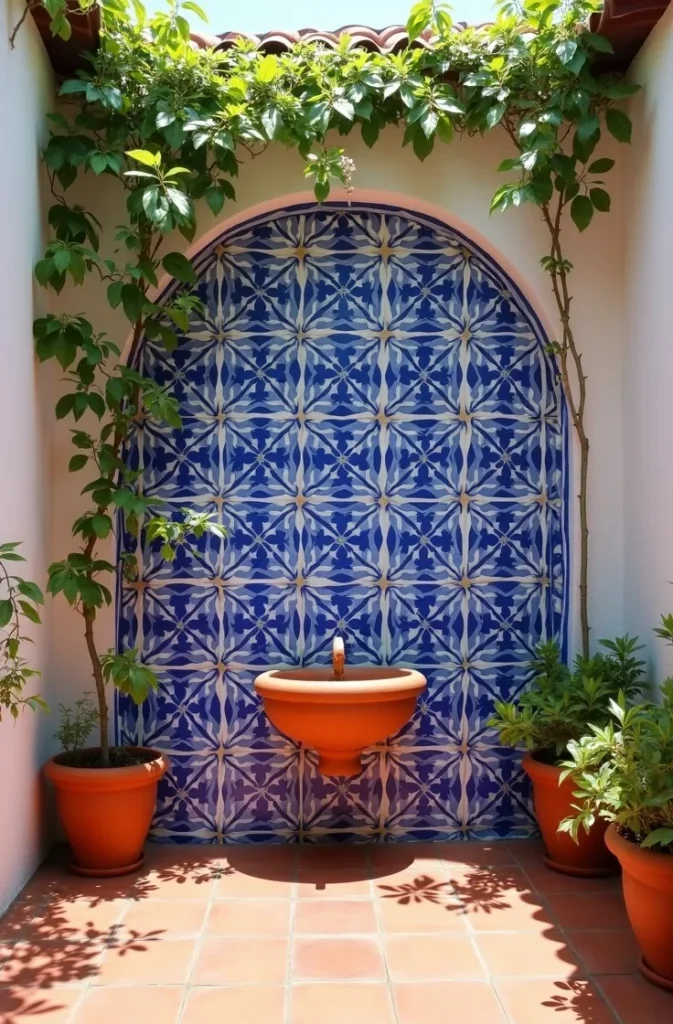
Pattern scale should be calibrated to wall size. Small mosaic patterns get lost on large walls and read as texture rather than design. On a compact feature wall — six to eight feet wide — a bold geometric pattern in two or three colors creates maximum visual impact without overwhelming the space.
Use this courtyard wall idea selectively. One mosaic feature wall in a courtyard is a statement. Multiple mosaic surfaces compete with each other and dilute the impact. Keep the surrounding walls neutral — white stucco, raw concrete, or whitewashed brick — to let the tile wall breathe.
Final Thoughts
These ten courtyard wall designs cover a wide range of materials, budgets, and spatial conditions — from compact urban plots to larger open-plan outdoor spaces. The right choice comes down to three factors: how much privacy you need, how much light you want to preserve, and how much maintenance you are willing to commit to over time.
Save this post so you can return to it when you are ready to plan. Each idea here is practical enough to brief a contractor or use as a starting point for your own project. If you want to go further, explore functional outdoor space planning ideas that connect wall design to furniture layout and ground material selection — because a courtyard wall only performs at its best when the full space is considered together.