
Most small bedroom problems are not space problems — they are layout problems. This guide breaks down 18 practical layouts for very small bedrooms, each designed to solve a specific spatial challenge with clear reasoning, not just inspiration. Whether you are working with a 8×10 room, a studio alcove, or a narrow rental bedroom, every idea here helps you make a real decision about what to put where and why.
1. The Wall-to-Wall Bed Alcove That Turns Dead Space Into a Design Feature
When a bedroom is too narrow for nightstands on both sides of the bed, most people default to centering the bed and losing storage potential on both walls. The alcove layout flips that logic entirely. By pushing the bed fully into one end wall and building low shelving or recessed niches on either side, you create a sleeping zone that feels architecturally deliberate rather than spatially compromised.
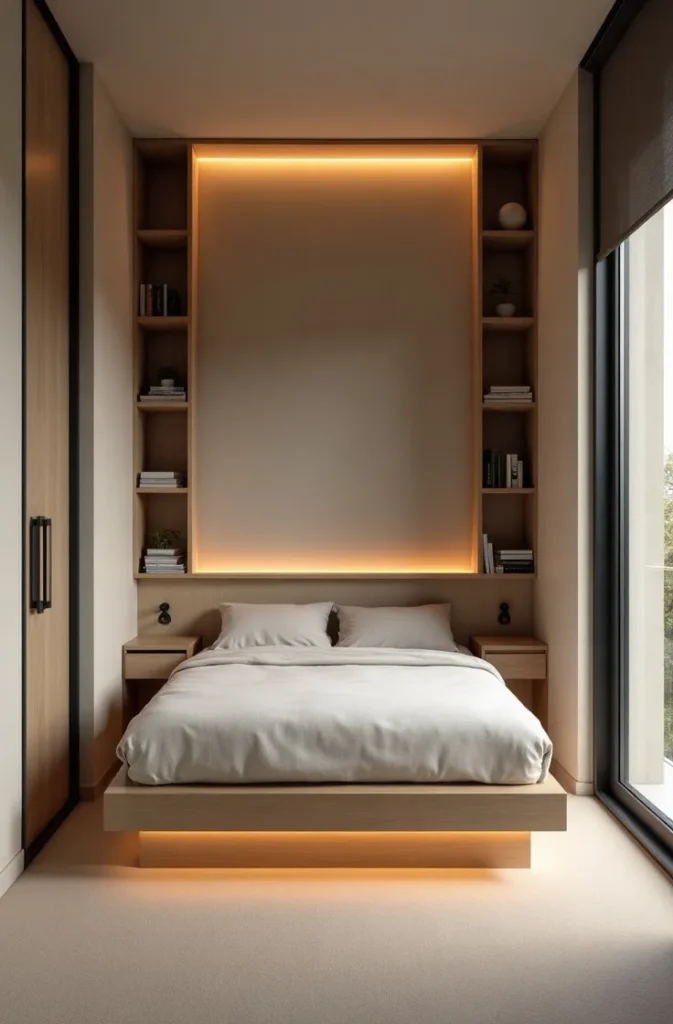
This layout works best in rooms that are longer than they are wide — think 8×12 or 9×14 proportions. The bed becomes the terminus of the room, and everything else — a desk, a dresser, a compact reading chair — occupies the remaining open length.

The mistake most people make here is leaving the wall above the bed blank. A recessed light strip, a low-profile shelf, or a mounted panel headboard with integrated lighting transforms the alcove from a squeeze into a luxury-adjacent sleeping nook. Keep the palette on the alcove wall one shade darker than the rest of the room to visually frame the space without adding furniture.
2. The Floating Bed Frame That Reclaims Visual Floor Space Without Shrinking Storage
Floor-level clutter is the fastest way to make a small bedroom feel smaller. A floating bed frame — one mounted to the wall or elevated on a minimal-profile base with significant clearance underneath — creates a visual break between the floor and the mattress that makes the room read as more open, even if the square footage has not changed.
The clearance beneath the frame is where this layout earns its keep. At nine to ten inches of clearance, low-profile under-bed storage bins slide in and out without resistance. At twelve inches or more, purpose-built drawers can be incorporated into the base design. Either way, you recover substantial storage without adding a single piece of furniture to the footprint.
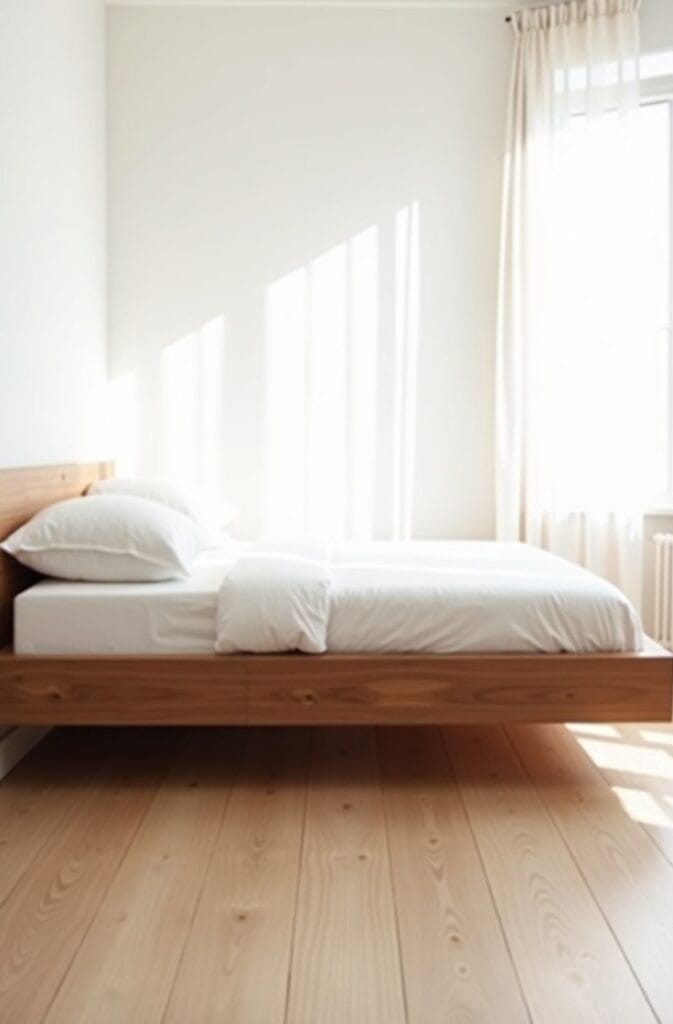
Choose a frame in a finish that reads close to the floor color. A dark walnut frame on a dark hardwood floor visually disappears, making the room feel taller. A white frame on a light oak floor achieves the same effect from the opposite direction. The worst outcome is a frame that creates a harsh horizontal band mid-room — avoid high-contrast combinations in small spaces.
This is one of the most adaptable small bedroom layout ideas for apartments, where drilling into walls for built-ins may not be permitted. The floating effect is achieved through furniture selection alone.
3. The Corner Desk and Bed L-Layout That Separates Sleep From Work in a Single Room
In a studio apartment or a very small bedroom that doubles as a home office, the most common failure is placing the desk directly facing the bed. This creates visual conflict between rest and productivity — and it makes both zones feel provisional rather than purposeful.
The L-layout solves this by running the bed along one wall and positioning the desk along the adjacent perpendicular wall, forming an L-shape with the corner as the pivot. The two functions share the room without directly facing each other. The corner acts as a natural visual separator — no partition wall or curtain required.
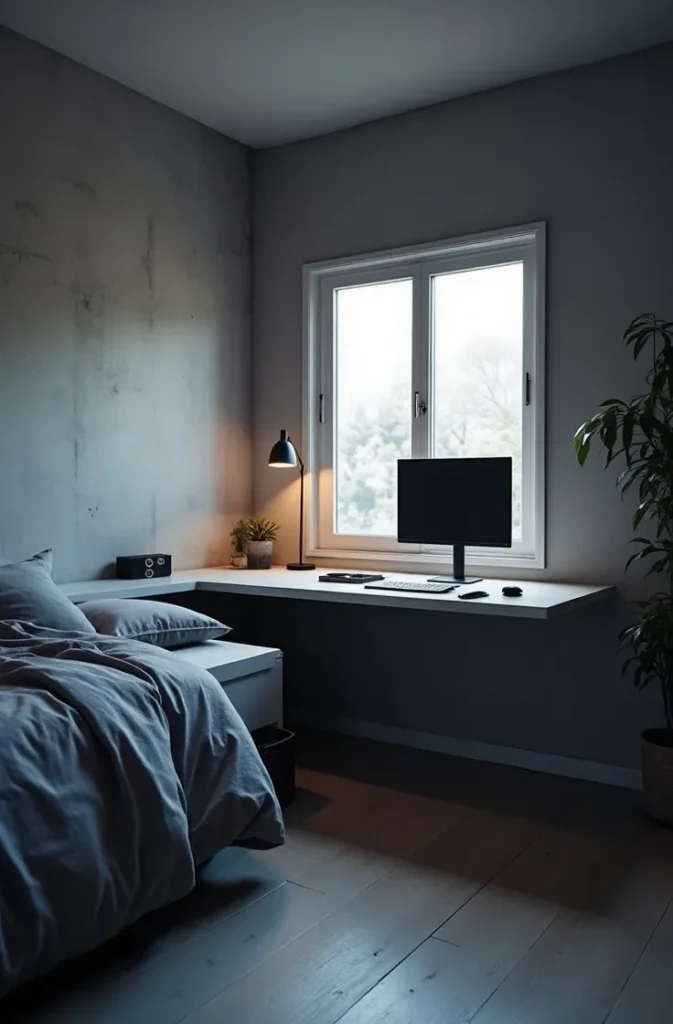
Keep the desk surface compact: a 40-to-48-inch wall-mounted desk or a floating shelf with a monitor arm is enough for most work setups. Avoid freestanding desks with four legs in small rooms — they eat visual floor space aggressively. A wall-mounted unit with one slim steel leg reads as far lighter.
This layout is particularly effective in 10×10 bedrooms and studio alcove configurations. The L-shape maximizes corner space that would otherwise sit unused, and it creates two functional zones within the same uninterrupted floor area.
4. The Vertical Storage Wall That Draws the Eye Upward and Doubles Capacity
Rooms that are tight on square footage almost always have unused cubic footage. The vertical storage wall layout exploits ceiling height — often eight to ten feet in standard American homes — by running shelving, cabinetry, or a wardrobe system from floor to ceiling on a single wall.
This does more than add storage. A tall vertical element draws the eye upward and makes the room feel taller in proportion. The visual effect is measurable: a well-executed floor-to-ceiling wardrobe on one wall can make a 9×10 room read closer to a 9×12. The key is keeping the front face of the unit flush and cohesive — open shelves with varied clutter negate the spatial benefit.
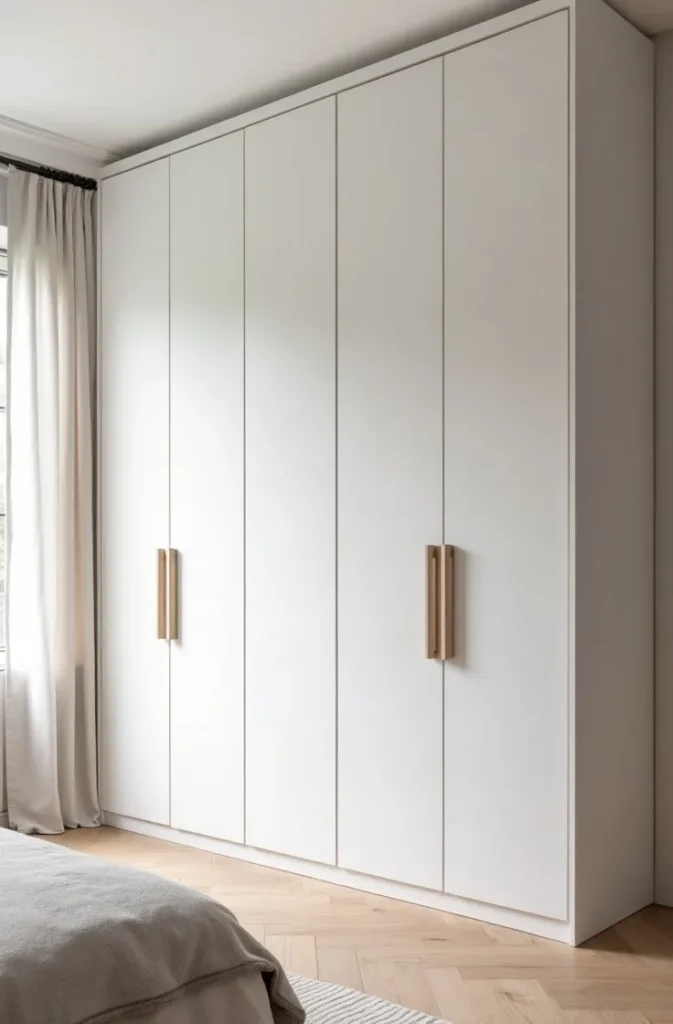
Use push-to-open hardware or recessed pulls on cabinetry rather than protruding handles. In a small room, even small projections catch the eye and fragment the clean horizontal surface that makes this layout work visually.
If the room has a window on the vertical storage wall, split the unit into two towers flanking the window. This frames the natural light source, integrates the window into the composition, and still gives you the full vertical storage run on either side.
5. The Murphy Bed With Integrated Shelving That Makes a Bedroom Disappear When You Need It To
A Murphy bed — a wall-mounted fold-down mattress — has evolved far beyond its utilitarian origins. Modern Murphy bed systems integrate seamlessly with surrounding shelving, cabinetry, and even a fold-out desk, so when the bed is stowed, the wall reads as a complete, designed built-in unit rather than a folded mattress panel.
This layout is the right choice when the bedroom doubles as a living room, home office, or guest room that is only occasionally used for sleeping. It is also one of the most effective very small bedroom layout solutions for rooms under 100 square feet, where a permanently deployed bed would consume most of the functional floor area.
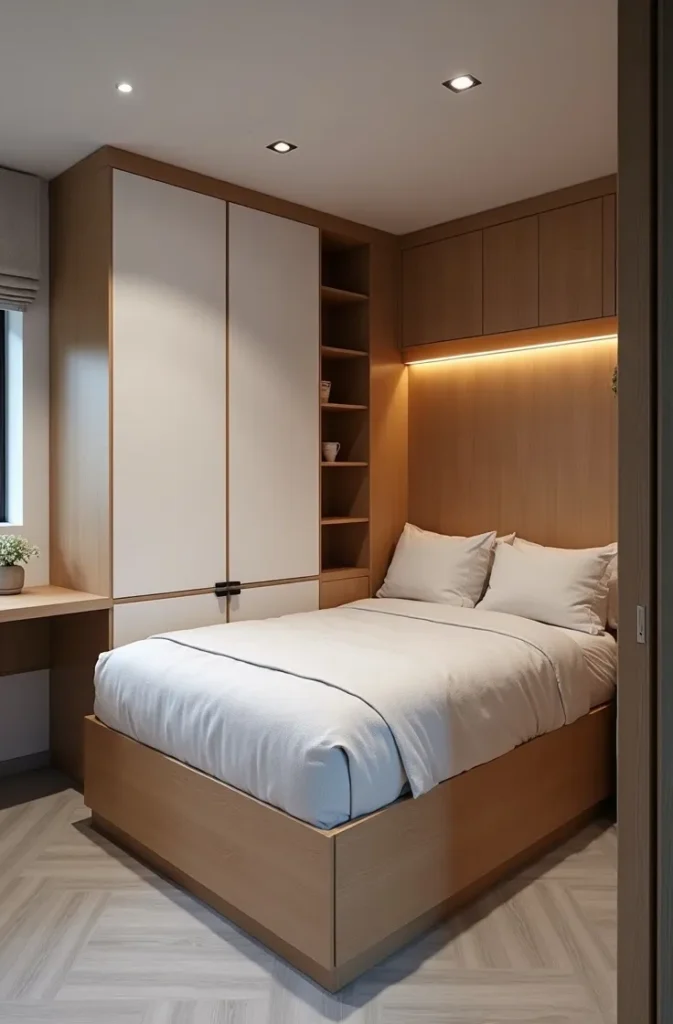
The mechanism quality matters significantly. Low-quality Murphy bed hardware develops resistance over time and can become difficult or unsafe to operate alone. Look for piston-lift systems with weight-rated springs. The mattress depth also affects how flush the closed unit sits against the wall — stay at or under ten inches of mattress depth for the cleanest profile.
When the bed is open, treat the surrounding shelving as nightstands by placing a lamp, a glass of water, and a book within reach. This removes the institutional feel that Murphy beds can project in lesser installations.
6. The Single-Wall Wardrobe Run That Keeps a Narrow Room Walkable
In bedrooms under nine feet wide, placing furniture on opposite walls creates a corridor effect that makes the room feel like a hallway. The single-wall wardrobe run addresses this directly: all storage — wardrobe, dresser, shelving — is consolidated onto a single long wall, leaving the opposite wall completely open.
The result is a room with one active side and one passive side. The active side holds all function; the passive side holds the window, a piece of art, or simply an uninterrupted painted surface. This asymmetry is not a compromise — it is a deliberate spatial strategy used in Scandinavian and Japanese-influenced interior design to make narrow rooms feel calm rather than compressed.
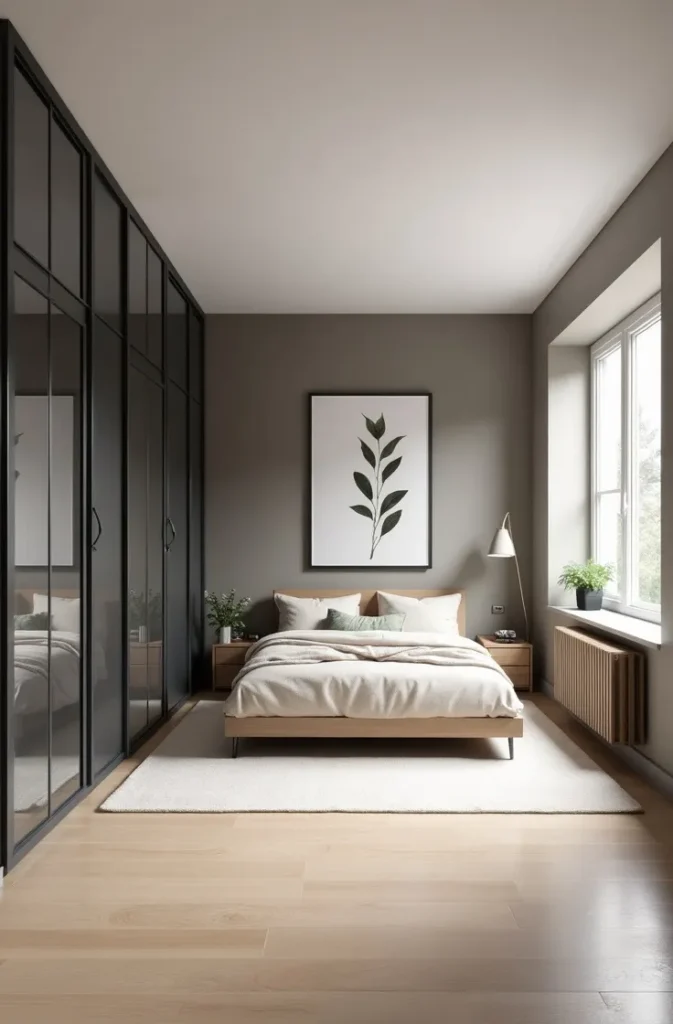
Maintain a consistent depth across all units on the storage wall. A standard wardrobe is twenty-four inches deep. If you integrate a dresser, choose one that matches or comes close to that depth. Inconsistent depths on a single wall create a jagged profile that undermines the clean-line effect.
This layout pairs particularly well with sliding wardrobe doors rather than swing-out doors, which would consume clearance on the narrow walking path.
7. The Bed-Against-the-Window Layout That Converts the Worst Wall Into the Best View
Most design guides tell you never to place a bed against the window — and in most cases, they are right. But in a very small bedroom where no other placement allows adequate clearance, a bed positioned beneath a window can become the room’s best design decision rather than a reluctant compromise.
The success of this layout depends entirely on the window treatment. A blackout Roman shade or a ceiling-mounted blackout curtain that covers the full window width eliminates the light problem. A headboard installed just below the windowsill, rather than against it, gives structural definition to the sleeping zone while maintaining a few inches of clearance for ventilation.
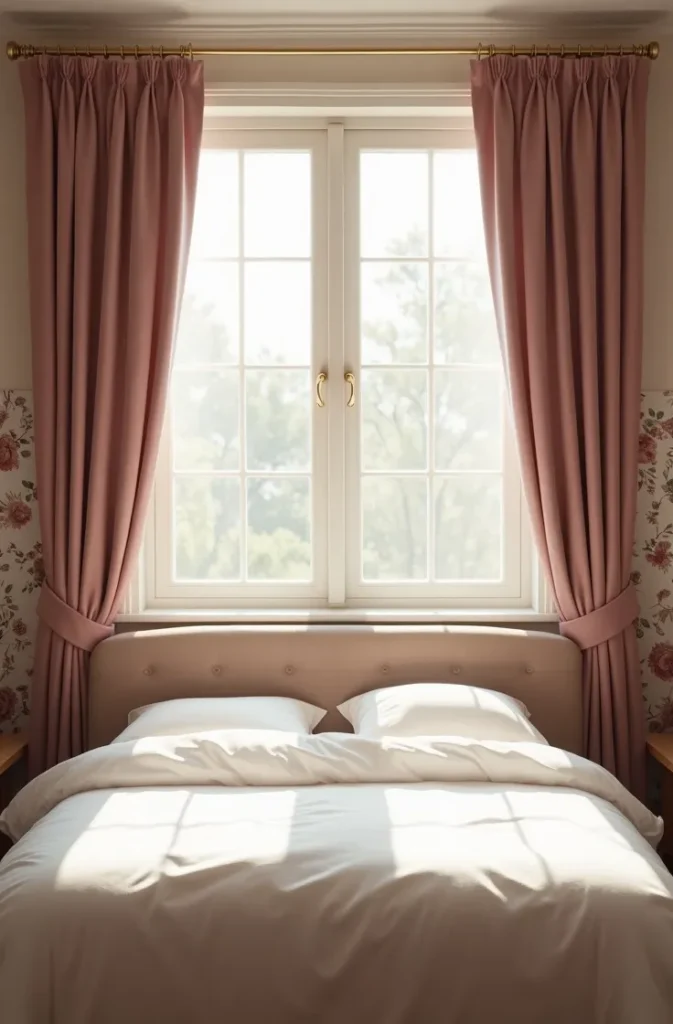
The view from bed in this layout is upward — toward the window and the light or sky beyond. This is a specific kind of spatial experience that feels more considered than accident-driven. In a room where space is tight, turning a constraint into a vantage point is how good design thinking works.
Avoid this layout if the window faces a neighbor’s wall or a street with significant noise. Both problems override the visual benefit. It works best with a garden-facing, courtyard-facing, or high-floor-view window.
8. The Loft Bed With Living Zone Below That Stacks Two Rooms Into One Footprint
A loft bed — a raised sleeping platform accessed by a ladder or compact staircase — is the most spatially aggressive solution in very small bedroom design. It removes the bed entirely from the floor plane and opens the space beneath for a desk, a reading nook, a wardrobe, or a combination of all three.
This layout is calibrated by ceiling height. At eight feet, a loft bed is marginal — you may have only three to four feet of clearance above the mattress, which works for sleeping but feels confined. At nine feet, the upper level becomes genuinely comfortable. At ten feet or more, the loft can be designed as an intentional sleeping retreat rather than a space-saving measure.
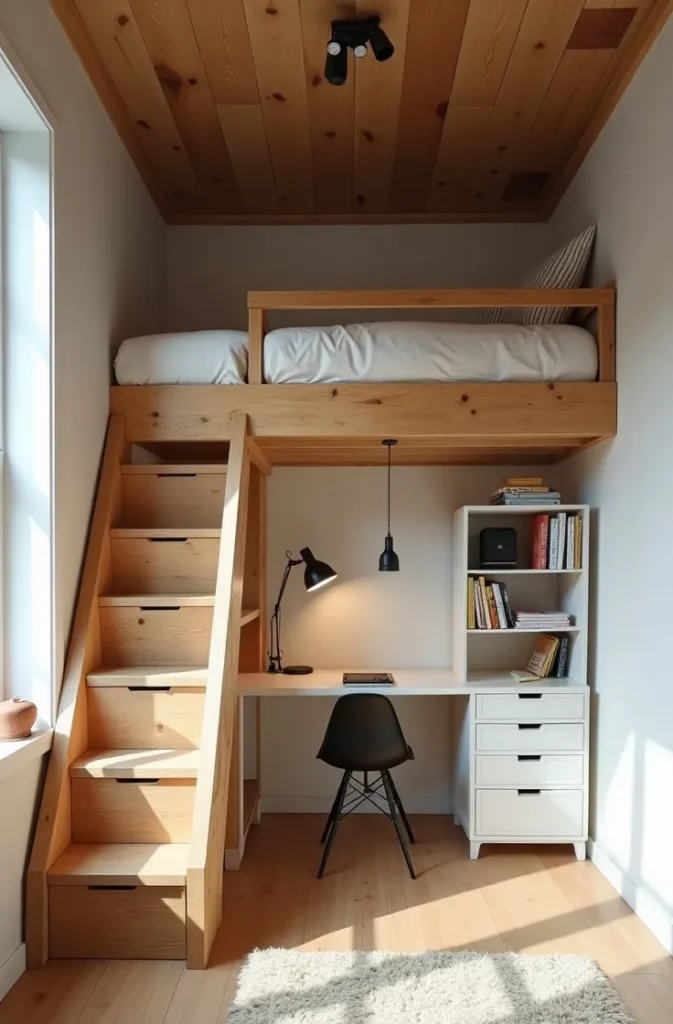
The zone below the loft is where the design quality of this layout is determined. A well-designed under-loft area with task lighting, a fitted desk, open shelving, and a small wardrobe reads as a functional room within a room. An under-loft filled with miscellaneous clutter and poor lighting reads as wasted space.
This is one of the most impactful small bedroom design ideas for children’s rooms, studio apartments, and urban micro-units — anywhere the priority is maximizing usable floor area within a very limited footprint.
9. The Mirrored Accent Wall Layout That Doubles Perceived Depth Without Adding Square Footage
A full-height mirror or a mirrored wall panel on the correct surface can visually double the apparent depth of a small bedroom. The operative word is correct — placement determines whether a mirror expands a space or creates confusion.
The most effective position for a mirrored expansion wall in a small bedroom is directly opposite the window or opposite the room’s longest sightline. When light hits the mirror from the window opposite, the room gains both a visual depth illusion and amplified natural light. In a north-facing room with limited daylight, this effect is especially impactful.
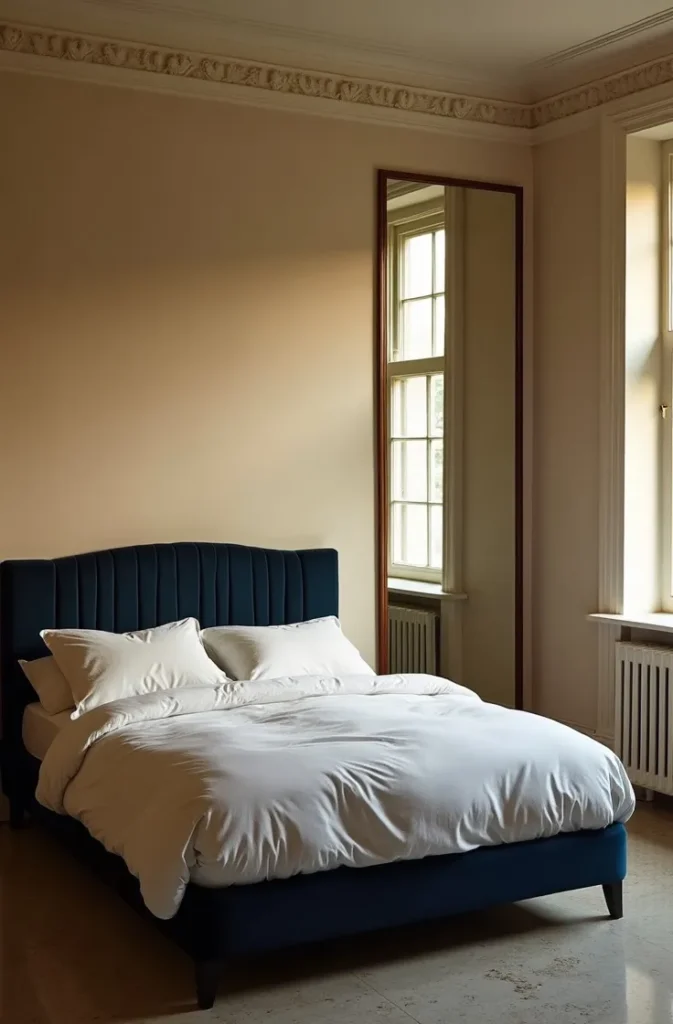
A single large-format mirror panel — four feet wide by six feet tall — is more effective than a collection of smaller mirrors. Multiple small mirrors fragment the reflection and reduce the spatial depth effect. Floor-to-ceiling mirrored wardrobe doors on one wall achieve the same outcome with added storage function.
Avoid placing a mirrored wall directly facing the bed in most layouts. Sleeping with a direct reflection of the bed in view is uncomfortable for many people and is a well-documented issue in both ergonomic and traditional design guidelines. Position the mirror on the wall adjacent to the bed rather than opposite it wherever possible.
10. The Daybed Against the Wall Layout That Makes a Small Bedroom Work as Two Rooms
A daybed — a bed with a back and two arms that reads like a sofa when styled with cushions — can make a very small bedroom function as a sitting room during the day and a bedroom at night without any furniture moving required. The layout is simple: the daybed runs along the longest wall, styled with cushions against the back, with a slim coffee table or a pair of ottomans in front.
This layout works in rooms where the occupant needs the space to feel like a living room rather than only a bedroom — guest rooms that double as home offices, studio apartments with a defined bedroom alcove, or teenager’s rooms where the social function of the space matters as much as the sleeping function.
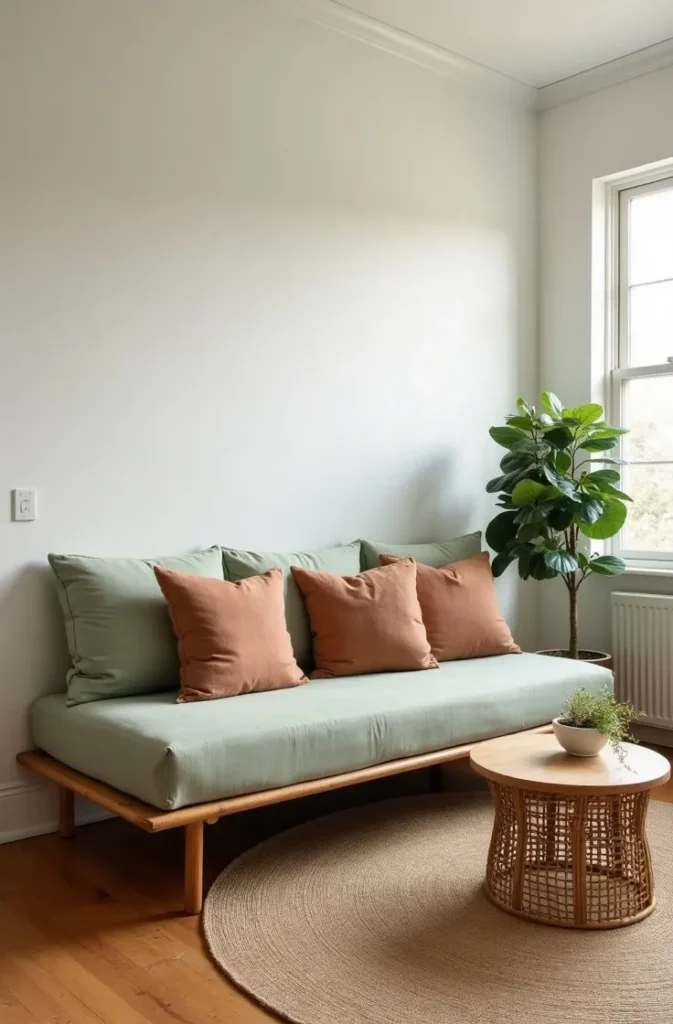
The key styling decision is the cushion arrangement. Use three to four large square cushions as back cushions during the day and remove them to a storage ottoman at night. A properly styled daybed is indistinguishable from a sofa in photographs — and in person, it should feel that way too.
Choose a daybed frame with under-bed storage drawers. In a room where a daybed replaces a full sofa-plus-bed setup, under-bed storage becomes the primary linen and clothing storage location.
11. The Built-In Bed Platform With Drawer Base That Eliminates the Need for a Dresser
A bed platform built directly into the room — not a freestanding frame but a constructed base that sits flush with the wall on two or three sides — creates one of the most space-efficient bedroom configurations available. The platform base is deep enough to house full-width drawers accessible from the side and foot of the bed, replacing a dresser entirely.
In a very small bedroom, this eliminates one of the largest pieces of furniture from the floor plan. A standard six-drawer dresser occupies roughly eighteen inches of depth and four feet of wall width. Removing it from the layout opens up significant circulation space and allows the rest of the room to breathe.
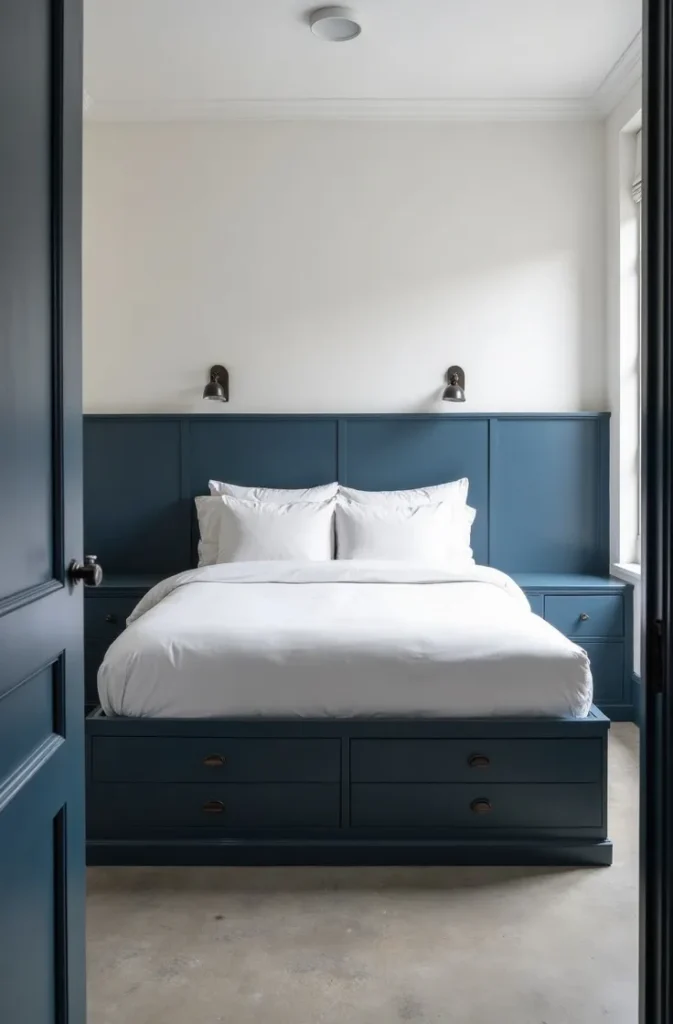
The platform should be built at a height that matches a standard bed frame — approximately fourteen to sixteen inches from floor to mattress base. This maintains ergonomic comfort while integrating the storage below. Paint the platform the same color as the walls for a seamless built-in effect, or use a contrasting material — concrete-look MDF, white oak plywood — to make the platform a design feature.
This is one of the most compelling functional bedroom layout ideas for primary bedrooms in smaller homes, where every square foot of floor space counts and built-in solutions justify the investment over time.
12. The Canopy Frame Layout That Adds Visual Height Without Raising the Ceiling
A canopy bed frame — or a DIY ceiling-mounted canopy structure — in a small bedroom sounds counterintuitive. The assumption is that tall frames make small rooms feel smaller. The reality is the opposite when executed correctly. A canopy frame with slim uprights and no overhead fabric creates a vertical anchor that draws the eye upward and makes the ceiling feel further away than it is.
The key is restraint in the canopy material. Heavy draping closes the space off. Sheer, semi-transparent fabric panels — or no fabric at all on the overhead frame — achieve the vertical proportion benefit without the visual weight. A raw brass or matte black steel frame with no fabric at all reads as a sculptural architectural element rather than a traditional bed.
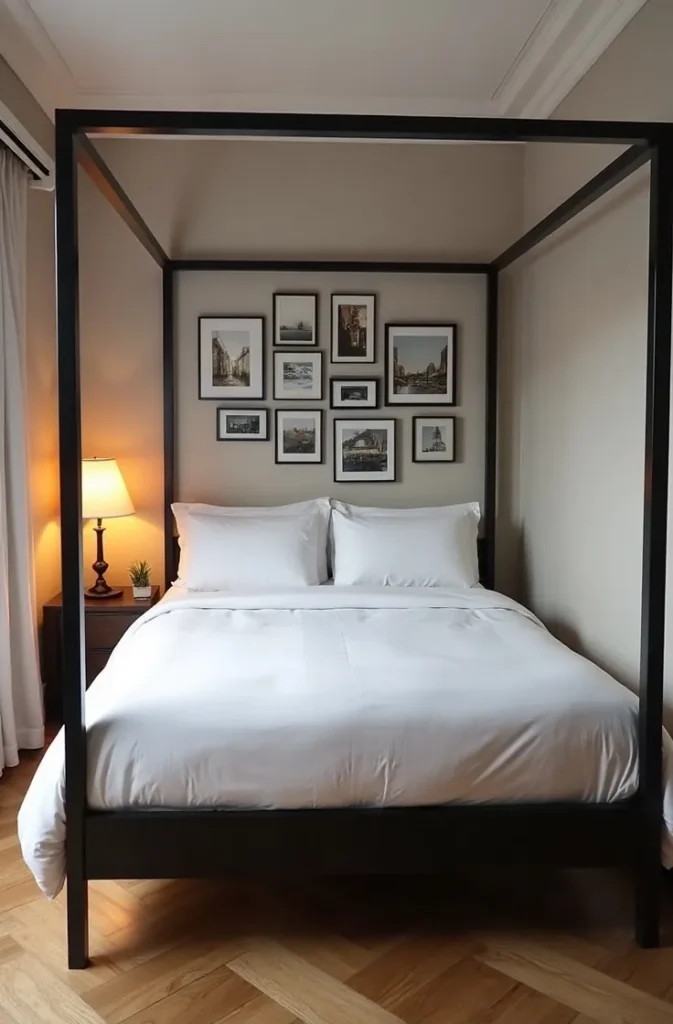
This layout works best when the canopy frame is the only tall vertical element in the room. If you also have a floor-to-ceiling wardrobe and a tall floor lamp, the canopy becomes one competing vertical among several. In a small room, the canopy works because it owns the verticality alone.
Position the frame a few inches away from the wall rather than pushed fully against it. This small gap gives the structure shadow depth and prevents it from looking like a headboard bolted to the wall.
13. The Narrow Bedroom Runway Layout That Uses Length as a Design Feature
A bedroom that is significantly longer than it is wide — sometimes called a bowling alley or runway layout — is one of the most common challenges in older American homes, urban apartments, and converted carriage houses. The instinct is to fight the proportions. The correct approach is to work with them.
The runway layout places the bed at the far end of the room on the short wall, with circulation running the full length toward it. Storage is positioned on one long wall only, keeping the path open and the sightline unobstructed from the doorway to the bed. A narrow bench or slim console at the foot of the bed marks the transition point and prevents the room from feeling like it simply runs out at the end.
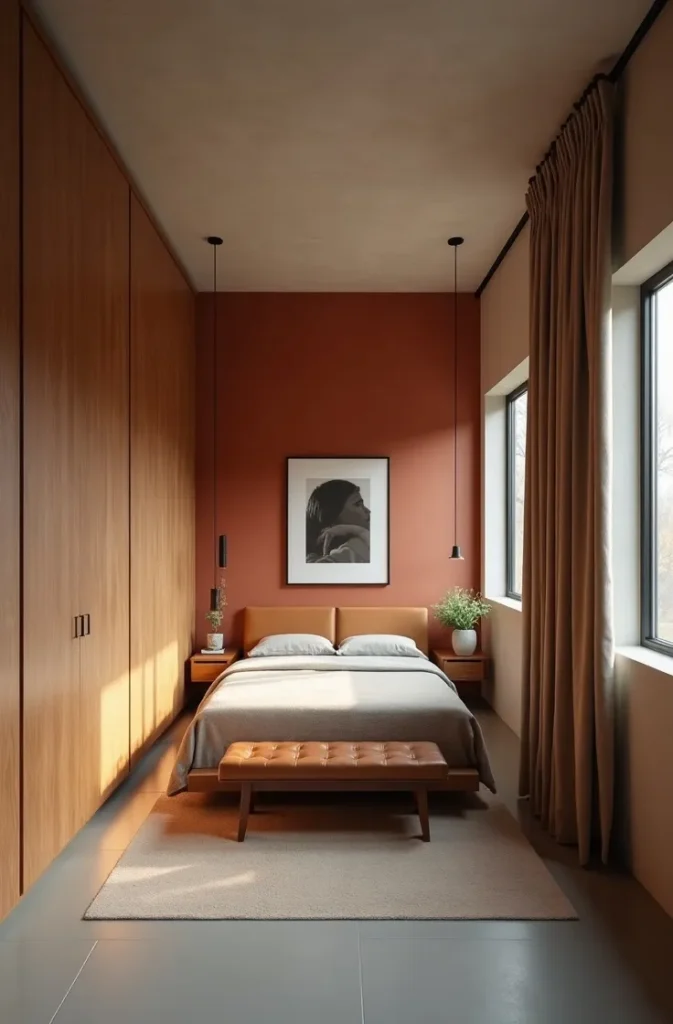
The psychological success of this layout depends on what the eye lands on at the far end. A strong visual terminus — a bold headboard, a piece of art above the bed, an accent wall in a contrasting color or material — gives the room intentionality. Without it, the eye travels the full length without resolution, which creates a restless rather than restful feeling.
Avoid splitting the long walls between storage on one side and a desk or chair on the other. This re-creates the corridor problem. Keep one long wall active and one passive for the runway layout to read correctly.
14. The Window Seat With Storage Base That Converts a Structural Intrusion Into Functional Square Footage
Many small bedrooms have a bay window, an awkward window alcove, or a protruding structural element that disrupts the floor plan and makes furniture placement difficult. The window seat layout resolves this by building a seat platform — with hinged-lid storage beneath — into the recess or along the window wall, converting the disruption into the room’s most used seating and storage zone.
A window seat base depth of eighteen to twenty-two inches is the sweet spot. It is deep enough for comfortable seated use and for meaningful storage volume inside, but shallow enough not to feel like a full piece of furniture consuming the room. Add a custom cushion in a durable fabric — performance velvet, bouclé, or indoor-outdoor linen — and the seat becomes both functional and visually finished.
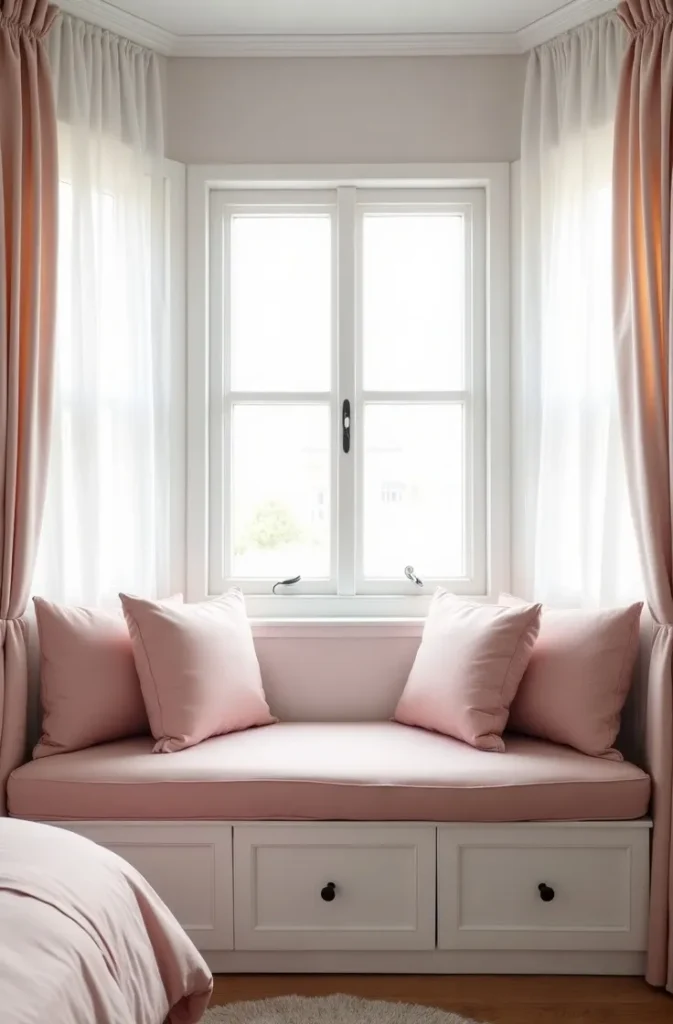
The storage inside the seat base is most useful for bedding, out-of-season clothing, or items needed occasionally rather than daily. The lid-lift mechanism should use soft-close hinges for safety and ease of use.
In very small bedroom floor plans, a window seat can also replace a nightstand if positioned close enough to the bed. A small tray on the seat cushion holds a lamp, a book, and a glass of water — everything a nightstand typically holds, but without occupying any floor or wall space that a traditional bedside table would require.
15. The Bunk Bed Layout for Two Children in One Room That Feels Designed, Not Improvised
When two children share a very small bedroom, the default bunk bed solution — a factory-made metal or pine frame pushed into a corner — usually reads as a space-saving necessity rather than a designed environment. The structured bunk layout changes that by integrating the bunk into the room’s architecture with built-in elements that give each child a defined personal zone.
Each bunk level should have its own reading light — hardwired or plug-in — positioned at head height for that level. The lower bunk benefits from a curtain rod mounted at the upper bunk base, giving the bottom occupant a privacy curtain that slides open and closed. The upper bunk occupant benefits from a guardrail that is designed to hold small items — books, a cup, a small plant — rather than a safety rail alone.
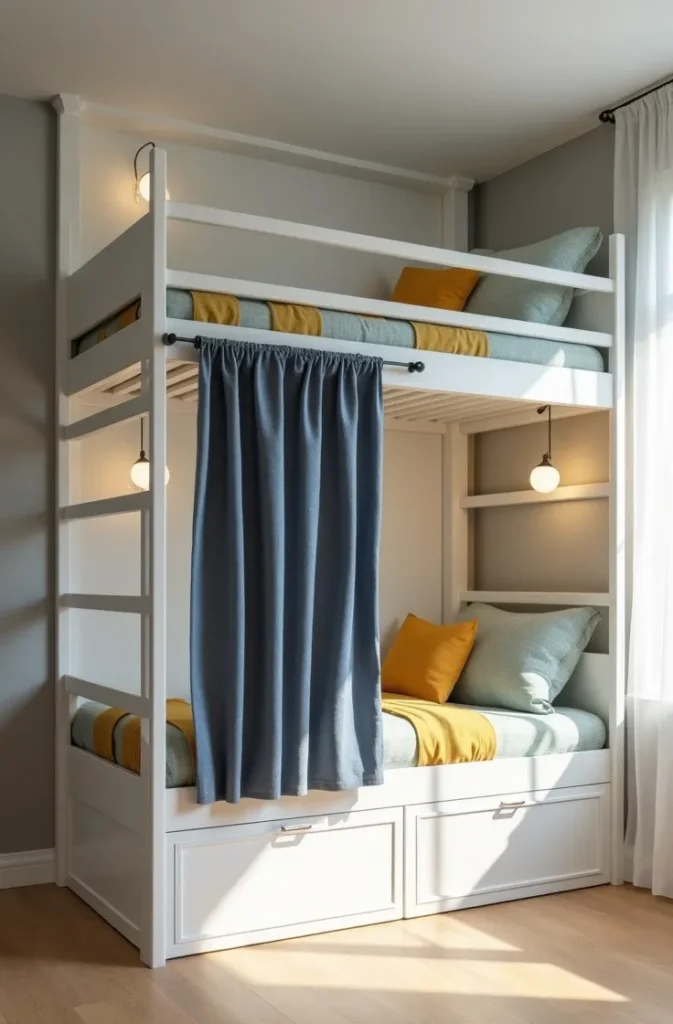
Storage in this layout is distributed across multiple compact locations rather than centralized. Under the lower bunk, a pull-out trundle or flat storage drawers handles bedding. Built-in cubbies at the side of the bunk frame hold toys, books, and clothing. Each child gets equivalent storage volume within arm’s reach of their bed level.
This layout works best when the bunk runs along the shortest wall, leaving the room’s length available for play, a small desk setup, or a shared wardrobe run on the opposite long wall.
16. The Studio Bedroom Divider Layout That Creates Privacy Without Building a Wall
In a studio apartment or an open-plan space where the sleeping area exists within a larger room, the absence of a defined bedroom boundary makes it difficult to mentally and physically separate rest from daily life. A layout divider — not a wall, but a considered physical element — resolves this without construction.
The most effective dividers for studio bedroom separation are open bookcases positioned perpendicular to the main space (height of five to six feet for partial separation), curtain tracks mounted to the ceiling running the full width of the sleeping zone (for full visual separation on demand), or a low platform that raises the sleeping zone two to four inches above the main floor level (a subtle but spatially effective separation signal).
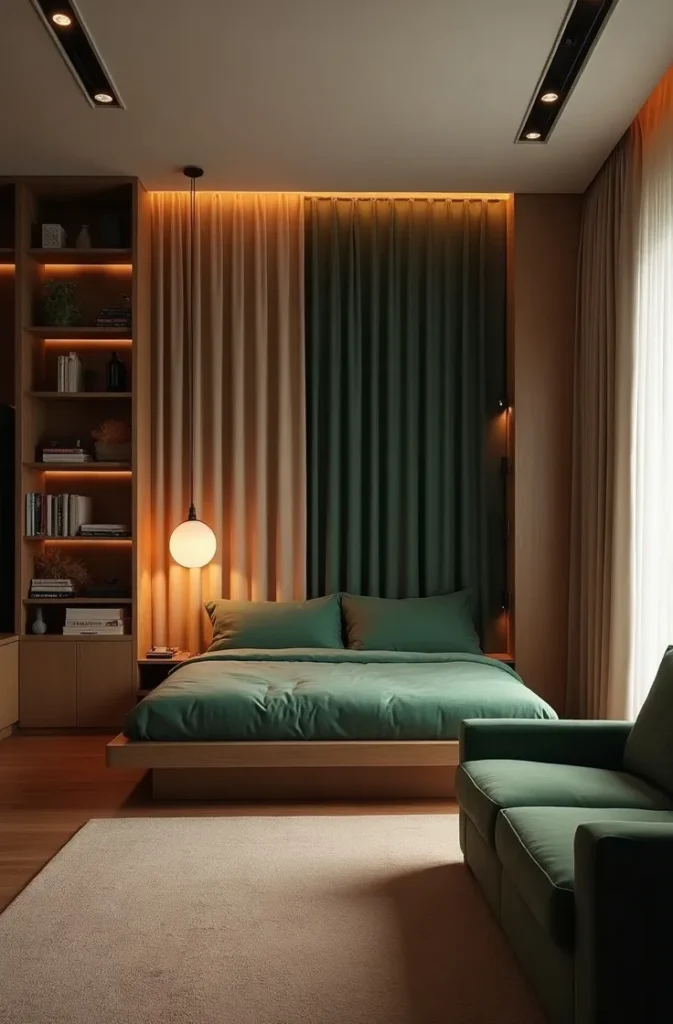
Each solution has a different trade-off. The bookcase adds storage but is permanent in placement. The ceiling curtain track is the most flexible — the privacy it offers is completely reversible. The platform is the most architectural statement but requires planning and installation.
In layouts where the bedroom zone is defined by a ceiling curtain, the curtain fabric becomes a significant design decision. A floor-to-ceiling linen panel in a color that coordinates with the bedding pulls the sleeping zone together visually and makes the division feel intentional rather than provisional.
17. The Maximalist Small Bedroom Layout That Earns Every Inch of Pattern and Color
Maximalism in a small bedroom is not the absence of restraint — it is a different kind of discipline. A maximalist layout for a very small bedroom works when every surface, color, and pattern decision serves the whole composition. The difference between a maximalist small bedroom that feels rich and one that feels chaotic is whether the choices were made together or accumulated over time.
The structural layout rule remains unchanged from any small bedroom: keep the floor as clear as possible. The maximalism lives on the walls, ceiling, textiles, and lighting — not on the floor. A boldly wallpapered room with a patterned quilt and layered cushions still reads as intentional when the floor has only the bed frame and one bedside table visible.
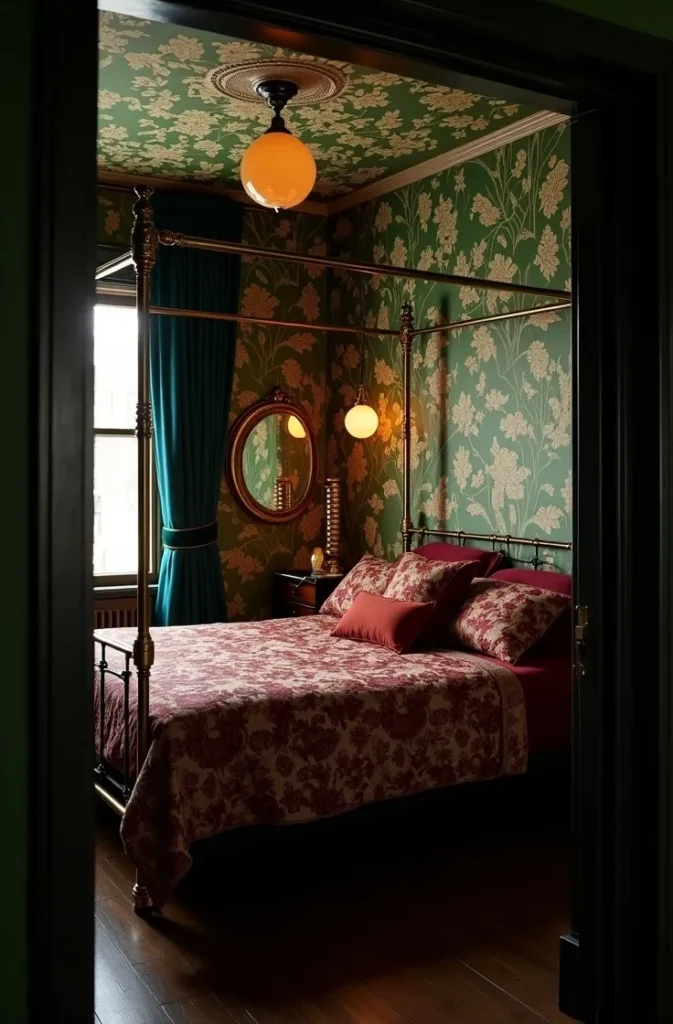
Color strategy in a maximalist small room should follow a dominant-secondary-accent system. One dominant color family (the wallpaper, the bedding) anchors the room. A secondary color (a curtain, a rug) balances it. One or two accent colors (cushions, a lamp, a small chair) bring the composition to life. Without this structure, pattern-on-pattern-on-pattern in a small room becomes exhausting rather than enveloping.
This is one of the most visually compelling very small bedroom ideas for individuals who resist the minimalist approach and want their space to reflect personality, not restraint.
18. The Hotel-Room-Inspired Layout That Prioritizes Guest Experience in a Tight Footprint
Hotel designers work within tight footprints daily and consistently produce sleeping environments that feel more comfortable, more functional, and more visually resolved than the average small bedroom in a private home. The hotel-room layout adapts those principles — symmetry, built-in storage, deliberate lighting layers, and surface discipline — to a residential very small bedroom.
The defining characteristic of the hotel layout is bilateral symmetry around the bed. Identical or near-identical nightstands on both sides. Matching wall-mounted lights at the same height. A single artwork or mirror centered above the headboard. This symmetry creates immediate visual calm and makes even a very small room feel considered and complete.
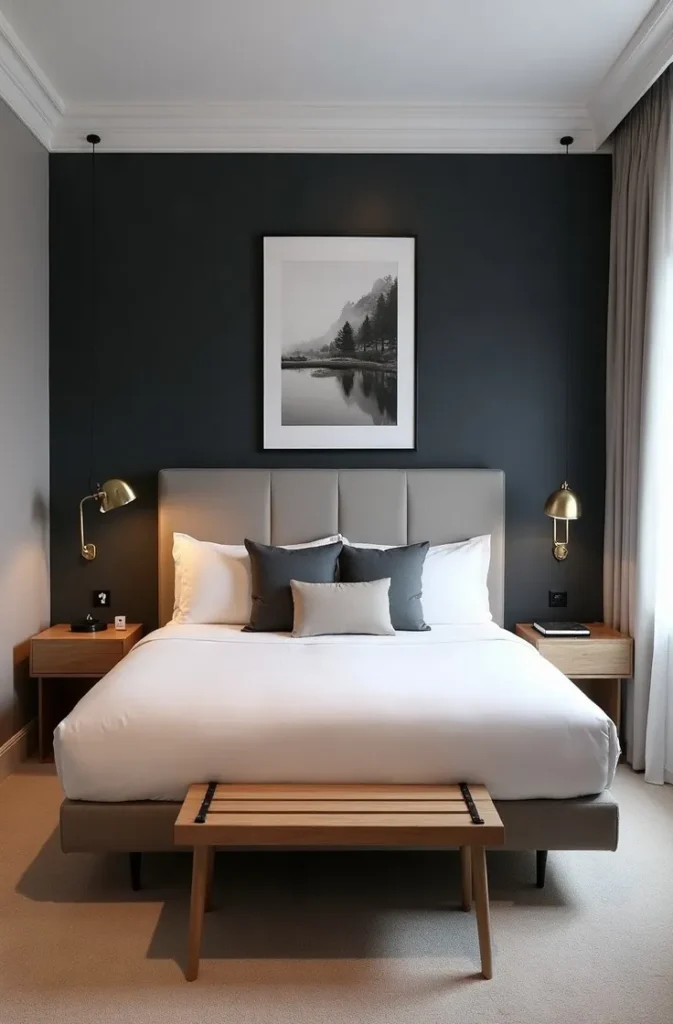
Lighting is the second hotel principle that most residential bedrooms miss. A hotel room has at minimum four light sources: ambient overhead, two bedside reading lights, and accent lighting (often above the headboard or behind a bedside panel). In a small bedroom, the equivalent is recessed overhead lighting on a dimmer, two wall-mounted swing-arm reading lights, and one accent lamp on a dresser or console.
The third principle is surface discipline: nothing on the floor that does not need to be there, nothing on surfaces that does not serve a function or add deliberate aesthetic value. In practice, this means a luggage rack replaces a chair (the chair is rarely sat in and always ends up as a clothing pile), and a tray on the dresser corrals small items rather than letting them scatter.
Final Thoughts
The right layout for a very small bedroom is the one that solves your specific constraint — whether that is a narrow width, a lack of storage, a dual-function requirement, or a difficult window placement. None of these ideas require a renovation. Most require a rethink of where things go and why.
Save this post before you start moving furniture. Return to it when you are deciding between two approaches — the answer is usually in the tradeoffs each layout presents. If you found these layouts useful, explore more small bedroom floor plan ideas and space planning strategies for rooms under 150 square feet. The best bedroom design decisions are always the ones made before anything is purchased.