
Outdoor railing ideas that blend safety and beauty are harder to find than they should be — most guides give you one or the other: code-compliant galvanized pipe or magazine-worthy glass panels with no mention of wind load, grading, or what actually holds up through a Midwest winter. The twelve ideas here are chosen specifically because they perform structurally and look like a decision someone made with intention, not a checkbox someone ticked at the permit office. By the time you finish reading, you will know exactly which railing direction fits your home’s architecture, your climate, and the look you have been trying to articulate.
The Cable Railing System That Disappears Into Your View Instead of Blocking It
Cable railing does one thing better than any other railing system on the market: it gets out of the way of the landscape behind it. Horizontal stainless steel cables tensioned between slim posts create a horizontal line that the eye reads as a plane rather than a barrier — and that distinction is the difference between a deck that frames your yard and one that walls it off.
The structural principle is tension, not mass. Each cable runs under significant load between end posts, which means the end posts themselves must be engineered for that lateral force. This is the technical detail that most DIY guides skip, and it is the reason cable railing installations fail: the posts are undersized for the tension load. For a standard 36-inch residential railing run, stainless steel cables at 3/16-inch diameter with marine-grade swage fittings are the correct spec — not the lighter 1/8-inch cables sold in home improvement stores for trellis applications.
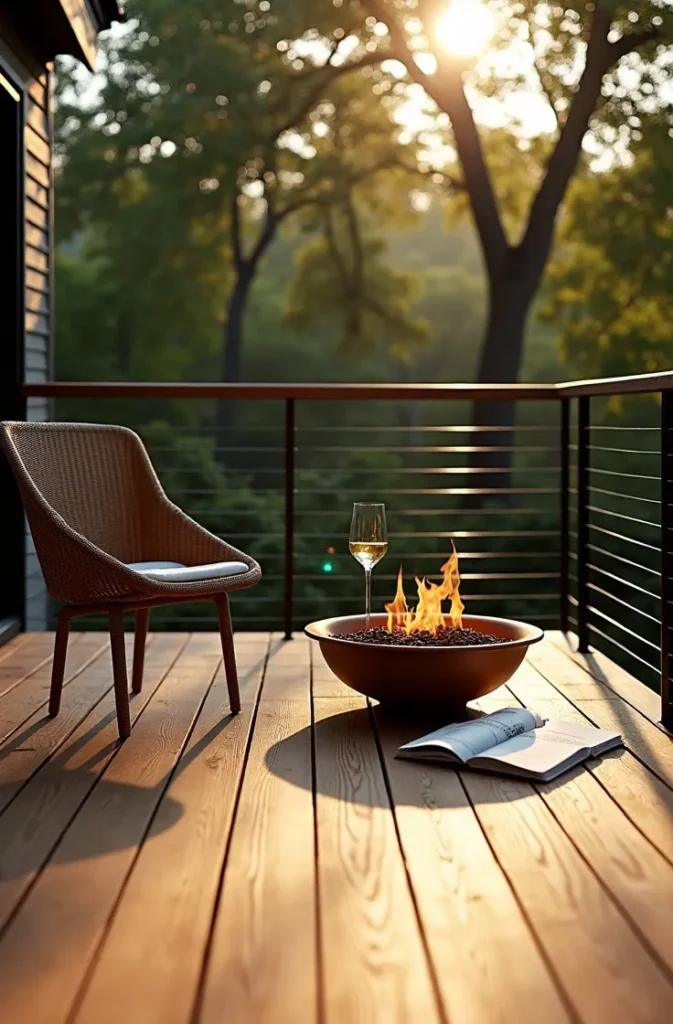

Cable railing works best on elevated decks with a view worth keeping: the mountain-facing back decks common in Colorado and Utah homes, the bay-view properties on the California coast, and the elevated back porches on Southern homes where the yard drops away from the house. In flat suburban settings with a six-foot privacy fence as the backdrop, cable railing’s main advantage — the transparency — goes unused. In those cases, another system makes more sense.
The one mistake that undermines otherwise beautiful cable railing: running cables vertically instead of horizontally. Vertical cable creates a subtle jail-cell visual that horizontal cable never does, and it is harder to meet code spacing requirements. Horizontal is almost always the correct orientation for residential outdoor railing ideas.
Why Glass Panel Railings Are Worth Every Penny on a Small Deck or Balcony
A small deck with an opaque railing is visually cut in half — the floor space is real, but the perception of space ends at the railing line. Frameless glass panel railing removes that visual wall and allows a 120-square-foot balcony to read as an extension of the interior room behind it rather than a cage bolted to the exterior.
Tempered glass panels at 3/8-inch thickness are the residential standard for frameless systems, and they meet the same lateral load requirements as wood or metal railing when properly installed in a base channel or post-mounted standoff system. The surface cleans with a standard glass cleaner and shows less water spotting than people expect — this is the maintenance fear that most homeowners have with glass railing, and in practice it is far less significant than the fear.
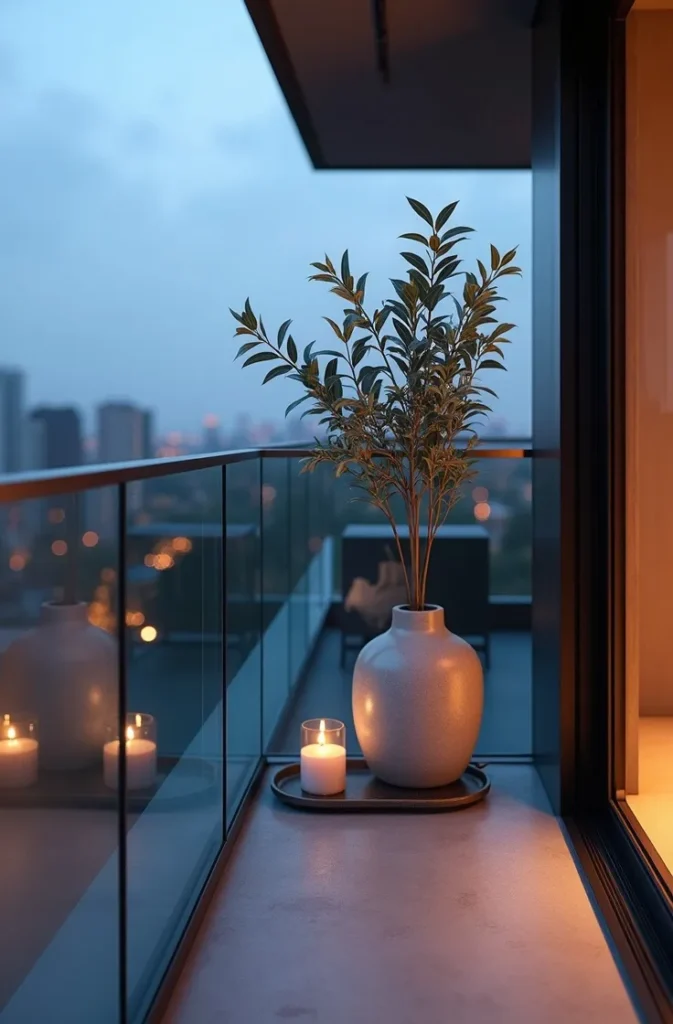
This system is especially valuable on urban balconies — the kind on Chicago high-rises, Atlanta midrise condos, and San Francisco Edwardian flats — where the exterior view is the amenity and any opaque railing reduces it significantly. It is also the right choice for second-story additions on California bungalows where natural light matters as much on the interior as it does outside: frameless glass keeps the light moving through rather than stopping it at the railing.
What not to do: choose tinted or frosted glass panels to reduce glare. Tinting kills the transparency that makes glass railing worth the cost. If glare is a concern, address it with an exterior shade structure — not the glass itself.
The Horizontal Wood Railing That Makes a Ranch-Style Home Look Custom-Built
Horizontal wood railing is the outdoor equivalent of shiplap on an interior wall: it reads as intentional, architectural, and warm — and it is far less common than it deserves to be on residential decks. The horizontal line references the long, low profile of ranch-style and Prairie-style homes in a way that vertical balusters simply do not.
The practical mechanics are straightforward. Horizontal boards or flat bar stock run between posts at specified spacing to meet code — typically no more than four inches of open space between rails. For wood, cedar and redwood are the material standards in the western USA, while pressure-treated pine remains the choice in humid southeastern climates where moisture resistance is the primary concern. Composite materials with a wood-grain finish have become a legitimate alternative for horizontal applications because they hold their flatness better over time than natural wood in wet climates.
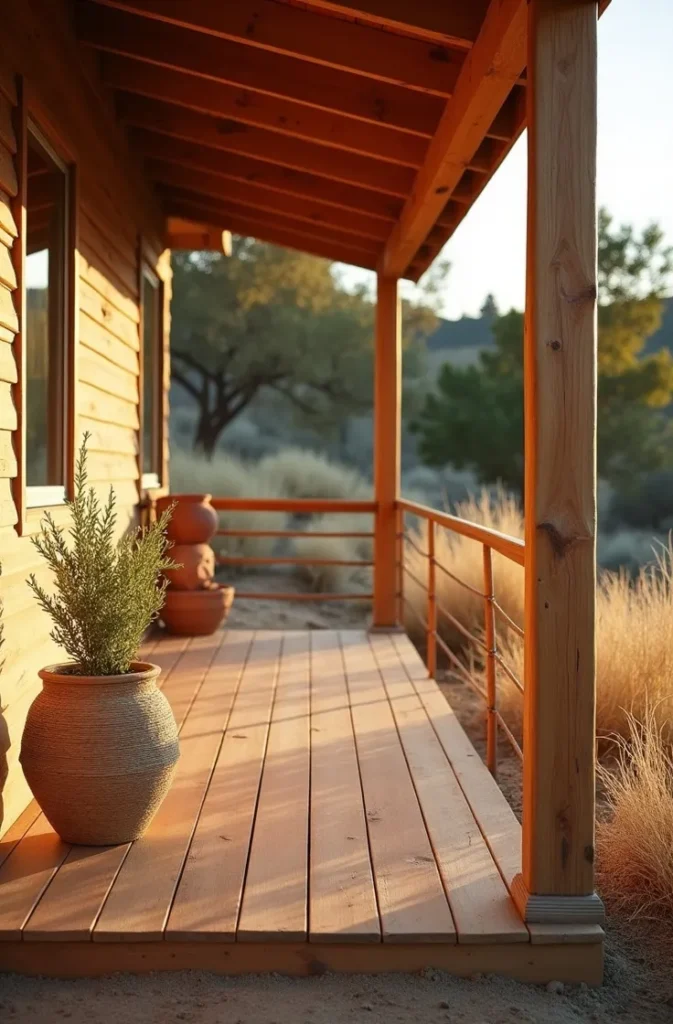
This railing direction works best on single-story homes where the deck is at or near grade — the long horizontal lines visually anchor the house to the site rather than lifting it off. It is a particularly strong choice for homes in Texas Hill Country, Arizona desert communities, and the Pacific Northwest where the ranch typology is dominant and the landscape is strong enough to hold a bold horizontal element.
The critical mistake with horizontal wood railing: inadequate fastening. Horizontal boards have a tendency to bow outward over time when fastened only at the ends. Mid-rail blocking every 24 to 36 inches prevents this and keeps the railing plane flat and tight for the life of the installation.
The Mixed-Material Railing That Solves the Problem of a House With No Clear Style
Many American homes — particularly the transitional and builder-grade homes built across the suburban Southeast and Midwest through the 1990s and 2000s — have no strong architectural identity to pull a railing direction from. They are not clearly modern, not clearly traditional, not clearly anything. Mixed-material railing is the design solution that works specifically because it does not require the house to have a defined style.
Pairing a painted wood or composite top rail and post system with metal insert panels — whether that is laser-cut steel, simple flat bar, or powder-coated aluminum — creates a railing that is warm enough to sit with traditional trim details and geometric enough to read as intentional in a more modern context. The wood softens the metal; the metal sharpens the wood. Together they read as curated rather than defaulted.
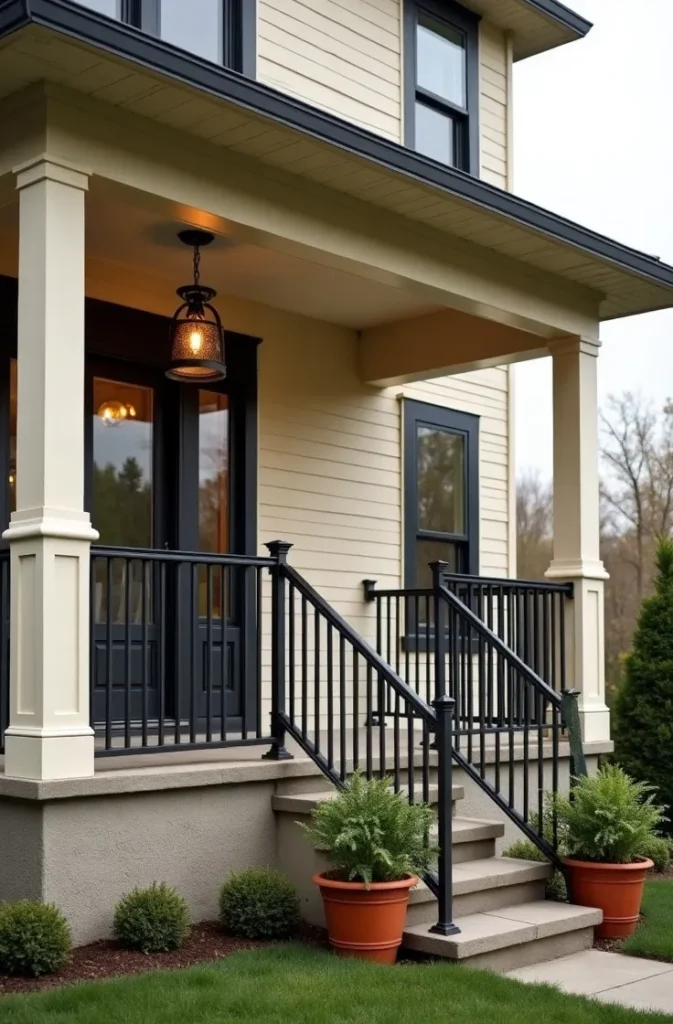
The practical advantage of this system is its modularity. The top rail and posts can be built to any dimension using standard lumber or composite decking, while the insert panels can be sourced as prefabricated infill sections and installed flat between the posts. This is the approach used on many of the mid-range outdoor railing ideas you see on home renovation shows — it looks custom because of the material contrast, but the individual components are all available at any good lumber yard or online metal fabricator.
This railing system is especially effective on two-tone or painted houses where the exterior color palette is already doing some architectural heavy lifting. Match the metal insert color to the roof trim or window frame color, and match the wood to the body — suddenly the railing ties the house together rather than existing as an afterthought.
The Wrought Iron Alternative That Looks Timeless Without the Maintenance Cost
Classic wrought iron railing is one of the most beloved railing types in American residential architecture — present on the shotgun houses of New Orleans, the brownstones of Chicago, the historic bungalows of Pasadena — but solid wrought iron is heavy, expensive, and requires periodic refinishing to prevent rust in humid climates. Modern tubular steel and aluminum systems that replicate the wrought iron aesthetic have closed that gap significantly.
Powder-coated tubular steel in a matte or satin black finish, with traditional scroll or spear-point finial details, is visually indistinguishable from true wrought iron at normal viewing distance. The powder coating resists moisture, UV degradation, and surface rust for significantly longer than paint-over-iron, and when it does eventually need attention, the surface can be repainted in place without stripping. This is the material choice that most historic preservation projects use today when original wrought iron needs to be replaced.
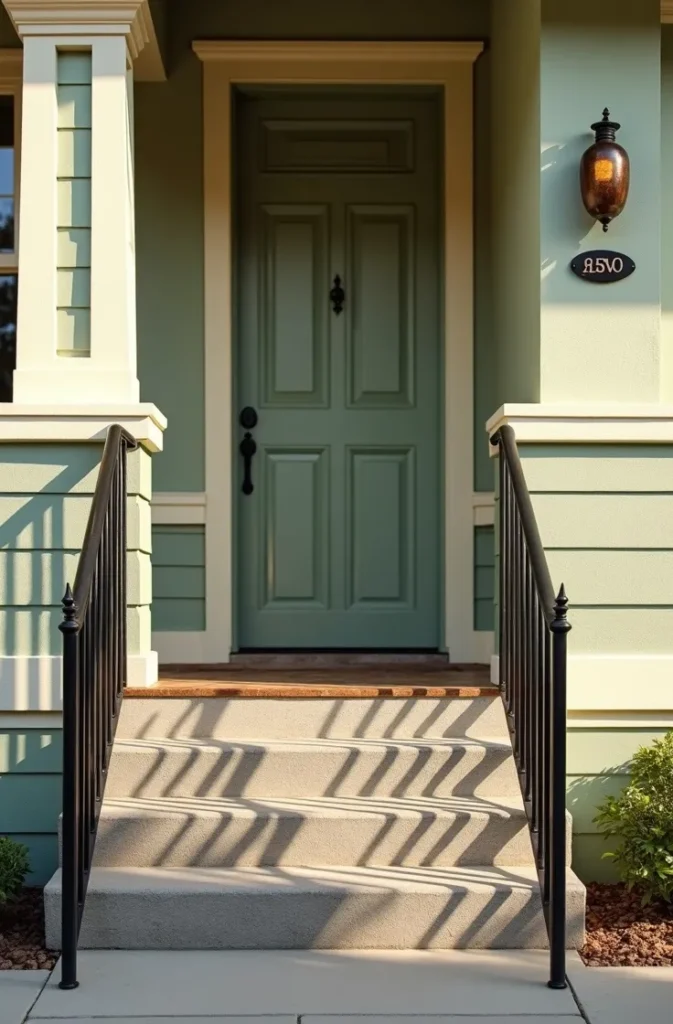
This railing type is the right call for craftsman homes, colonial revivals, and Victorian-era properties anywhere in the country — but it earns the most visual value on homes with a strong historic identity where the railing is visible from the street. A craftsman bungalow in Pasadena with a well-detailed iron-style railing on the front porch reads as a house that was properly restored. The same house with a builder-grade aluminum railing reads as a house that was casually updated.
The one detail that separates a railing that looks historically accurate from one that looks like a hardware store substitution: the post cap. A solid ball or spear-point finial cap in a matching finish, rather than a flat cut tube end, is the difference between a railing that reads as designed and one that reads as installed.
The Aluminum Railing That Performs Like Metal and Installs Like a Weekend Project
Aluminum railing is the most practical choice for the majority of American homeowners, and it is consistently underestimated because the name does not sound luxurious. What aluminum actually delivers is corrosion resistance that steel and iron cannot match in coastal and humid climates, a powder-coat finish that holds color for fifteen or more years without repainting, and a weight that makes it genuinely installable as a solo weekend project rather than a contractor engagement.
The system works through a channel-and-baluster assembly: a top rail and bottom rail in aluminum extrusion, pre-cut balusters dropped into position at code-compliant spacing, and posts that either surface-mount to the deck or fascia-mount to the rim joist. Every component is designed to be cut with a standard miter saw and assembled with basic hardware. The result is a railing that looks factory-built because it is — the prefabricated components simply fit together correctly in a way that site-built wood railing requires more skill to achieve.
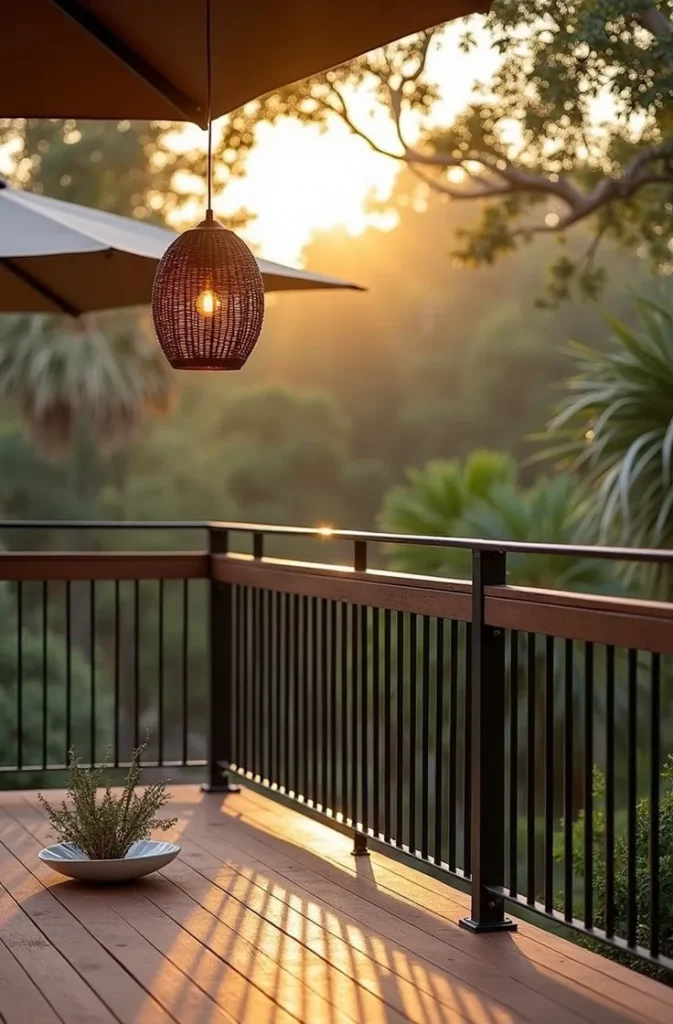
For homeowners along the Gulf Coast, in coastal Florida, or in the Pacific Northwest where moisture is the primary enemy of outdoor materials, aluminum railing is not just the practical choice — it is the only intelligent one. The same system that looks conservative in a beige factory finish takes on a completely different aesthetic character when specified in a matte charcoal, a satin black, or a dark bronze finish. Finish color is the primary design variable, and the range of available colors from major manufacturers is considerably wider than most people realize when they dismiss aluminum as a budget material.
What undermines aluminum railing visually is pairing it with the wrong post cover. The standard aluminum post in a hollow square extrusion looks institutional. Wrapping the post base in a composite trim collar or a simple wood skirt adds the material warmth that closes the gap between aluminum railing and something that looks genuinely designed.
How a Planter-Integrated Railing Turns a Plain Deck Into a Living Garden Room
A railing that incorporates planters — either as post-cap boxes, built-in rail troughs, or rail-hung clip containers — does something no other railing type achieves: it makes the boundary between interior and exterior dissolve by bringing the garden into the structural envelope of the deck. The railing stops being a safety barrier and starts being a garden wall.
The structural approach depends on the integration level. Post-cap planter boxes sit on top of newel posts and add no structural complexity — they are simply heavy, so the post and footing need to be sized accordingly. Rail trough systems, where a planter channel is built into or suspended from the top rail, distribute weight along the entire rail run rather than concentrating it at a post, which is a more forgiving load path for older deck structures. Clip-on planters that hook over the railing cap are the most flexible option and the right starting point for anyone who rents or who wants to test the concept before committing to a built system.
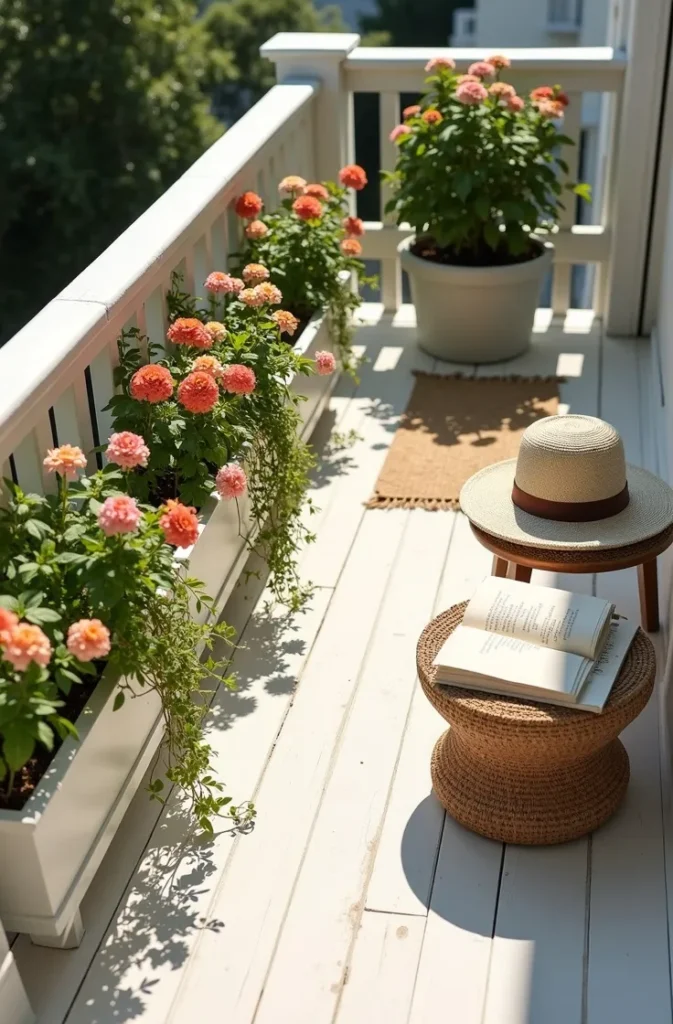
This approach works especially well on urban decks and balconies in cities like Chicago, Boston, and New York where garden space is limited and every horizontal surface capable of holding a plant becomes precious. A narrow balcony with a planted railing creates the privacy and sensory richness of a garden without the square footage — trailing nasturtiums in the front, herbs in the side sections, a trailing vine at the corner post. The railing becomes infrastructure for living things, and the deck becomes the kind of place that feels restorative rather than simply functional.
The mistake that turns this idea from beautiful to chaotic: using too many different plant varieties without a cohesive color palette. Choose one color family — all cool white and silver, all warm peach and coral, all green and purple — and repeat it across the railing length. The best railing planters look like a decision, not a collection.
The Black Steel Flat Bar Railing That Costs Less Than You Think and Photographs Better Than Anything
Flat bar steel railing — horizontal or vertical flat steel bars in a simple, minimalist frame — has become the signature railing of modern residential design in the last decade, and it is regularly mistaken for an expensive custom fabrication when it is, in many cases, a straightforward weld-up that any competent local metalworker can produce from standard flat bar stock for significantly less than a fabrication shop quotation.
The visual power of this system comes from its thinness. Flat bar at 1-inch by 1/4-inch profile creates a railing that reads as a line drawing — a graphic element imposed on the exterior rather than a bulky structural system. The eye moves through it rather than stopping at it. In photographs, it disappears beautifully, which is why it appears so often in architectural photography of outdoor spaces.
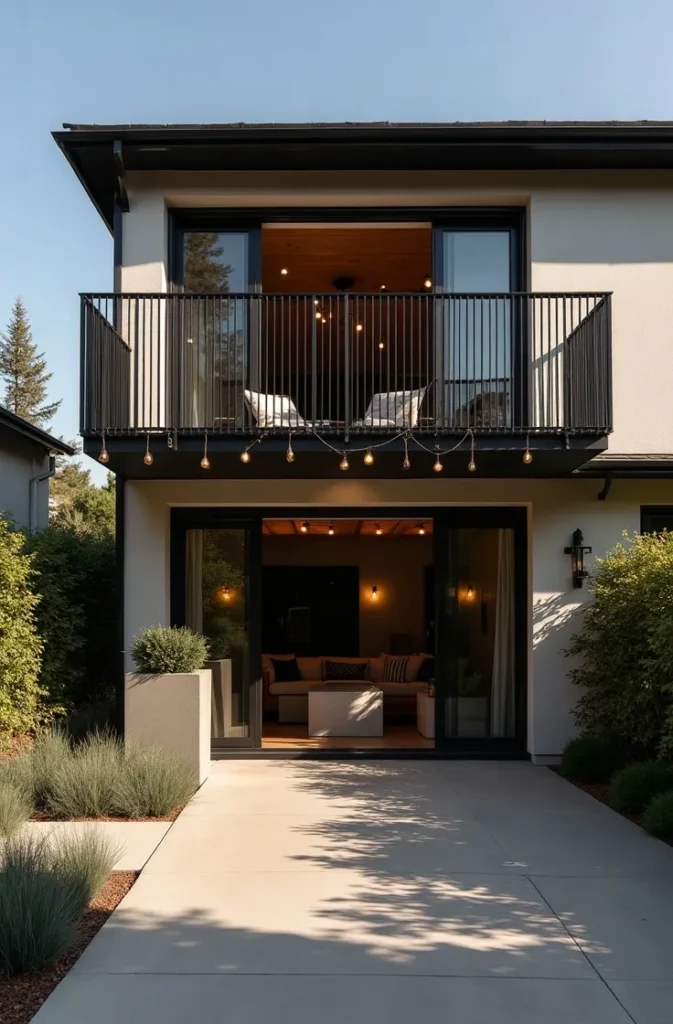
This railing type belongs on modern and contemporary homes — the clean-lined new construction appearing across the Texas Hill Country, the Arizona desert communities, and the Pacific Northwest urban neighborhoods where modern residential design has taken hold. It looks equally strong on industrial-style urban lofts with exterior terraces and on farmhouse-modern properties where the contrast between soft natural materials and hard black metal is intentional.
The most important detail in a flat bar railing installation: surface preparation and finish. Raw steel must be cleaned, primed, and finished in a rust-inhibiting paint or powder coat before installation — unfinished steel in an exterior application will begin surface rusting within one season regardless of climate. Matte black is the most widely used finish because it does not show surface variation, but a dark graphite or an oil-rubbed bronze reads as warmer and works better on homes with a softer material palette.
The Wood Post-and-Rail System That Feels Like It Has Always Been Part of the Property
There is a reason wood post-and-rail railing has been used on American residential properties for generations: it looks like it belongs to the land rather than having been applied to a structure. The thick timber posts, the generous top rail, the simple spacing — it references barns, paddocks, and farmsteads in a way that feels rooted rather than installed.
A modern interpretation of the classic post-and-rail uses square timber posts at 4-by-4 or 6-by-6 dimensions with a built-up top rail and either traditional wood balusters or a cable infill system for a cleaner look. Cedar and redwood are the traditional choices for exposed wood railing of this type in the western USA — they resist decay and insect damage without chemical treatment. In the Southeast and Mid-Atlantic regions, pressure-treated pine finished with a solid-color stain in a warm gray, black, or cedar tone is the standard approach.
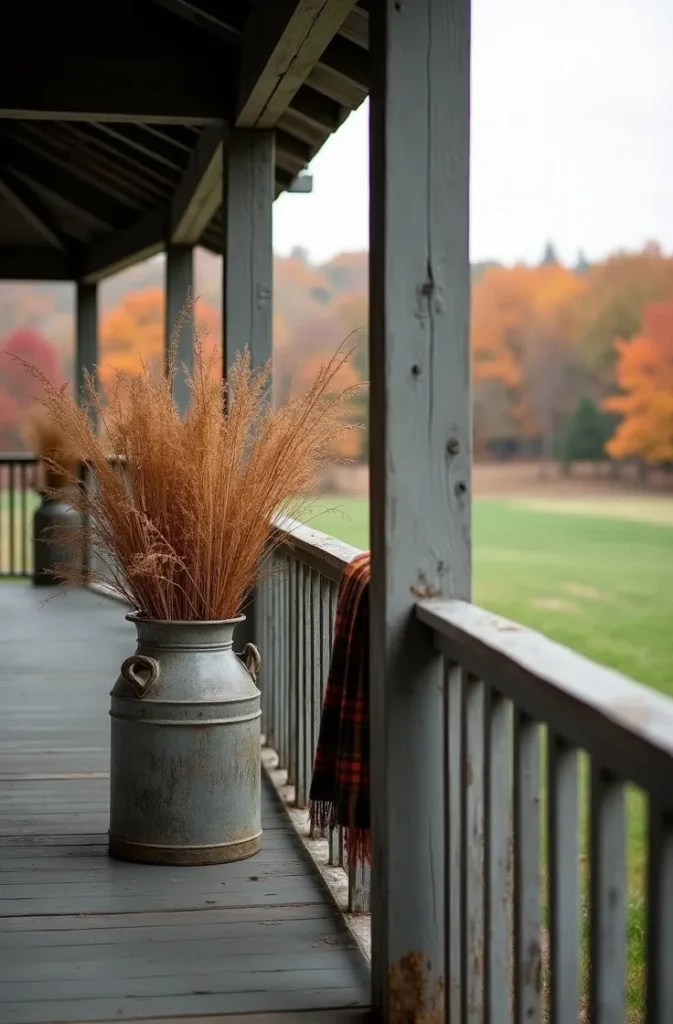
This railing system works on any property with a strong sense of site — a farmhouse in Vermont, a lake house in Minnesota, a mountain cabin in Colorado, or a rural property in the Texas Hill Country where the landscape is the architecture and the buildings are secondary. The chunky proportions hold their own against large-scale natural settings in a way that slender cable or glass railing cannot.
The aesthetic error most common with this system: staining the railing in a color that does not coordinate with the house siding or trim. Wood railing should read as an extension of the building envelope, not a separate element. Pull the railing stain color from the existing trim or siding palette and the whole property tightens immediately.
The Rope Railing That Brings Coastal Character to Any Outdoor Space
Rope railing — thick marine-grade natural or synthetic rope threaded through drilled holes in wood or metal posts — is one of the most underused railing systems in residential outdoor design, and one of the most immediately evocative. It reads as coastal, nautical, and relaxed in a way that no other material achieves, and it installs with tools no more specialized than a drill and a heat gun for sealing rope ends.
The mechanics are simple: posts spaced at standard intervals with 1-inch diameter holes drilled at code-compliant heights, rope threaded through and knotted on the inside with a simple stopper knot, tensioned at the end post with a stainless eye bolt and turnbuckle. Marine polypropylene rope holds up to UV and moisture better than natural manila, but natural manila has a texture and warmth that synthetic cannot replicate — the choice depends on how much maintenance you are prepared to do over time.
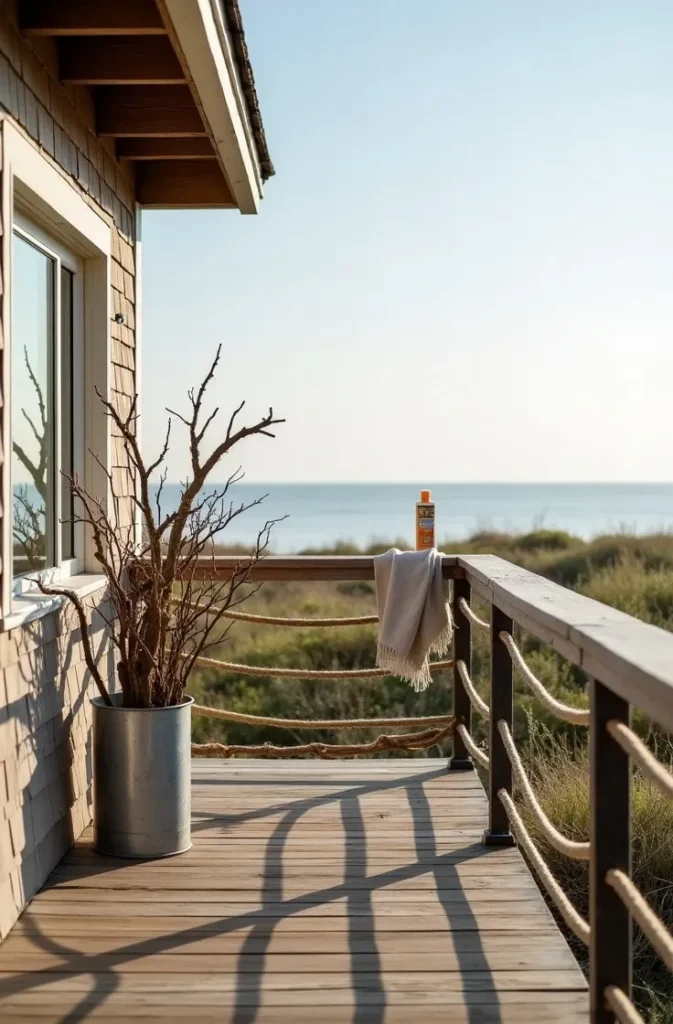
This railing is the right call for beach houses, lake houses, and coastal cottages — the cedar-shingle homes on Cape Cod, the low-slung beach houses in the Carolinas, the surf-town bungalows in San Diego. It also works beautifully on interior mountain properties where a rustic, handmade quality is part of the property’s appeal. Where it does not work: high-design modern homes, urban properties, or any context where the nautical reference would read as arbitrary rather than grounded in the setting.
The detail that makes rope railing look designed rather than improvised: the post finish. Natural wood posts with a simple oil finish, or powder-coated steel posts in a warm bronze, pair with rope in a way that looks curated. Painted white posts undercut the warmth of the rope and make the whole system read as costume rather than character.
The Frosted Acrylic Panel Railing That Gives Privacy Without Closing Off Natural Light
Frosted or translucent acrylic panel railing solves a specific problem that glass railing and open baluster systems cannot: the need for visual privacy without sacrificing light. On decks and balconies overlooked by neighbors — which describes the majority of attached homes, townhouses, and zero-lot-line properties built across suburban America in the last thirty years — a fully transparent railing provides no sense of enclosure, and open balusters offer none either.
Frosted acrylic panels at 1/4-inch thickness installed in a standard aluminum channel frame diffuse the view in both directions while still transmitting light. From inside the deck space, the panels glow with ambient light rather than blocking it. From the neighbor’s side, the view through the panel is softened to shapes and movement rather than detail. The deck becomes a private outdoor room without becoming a closed box.
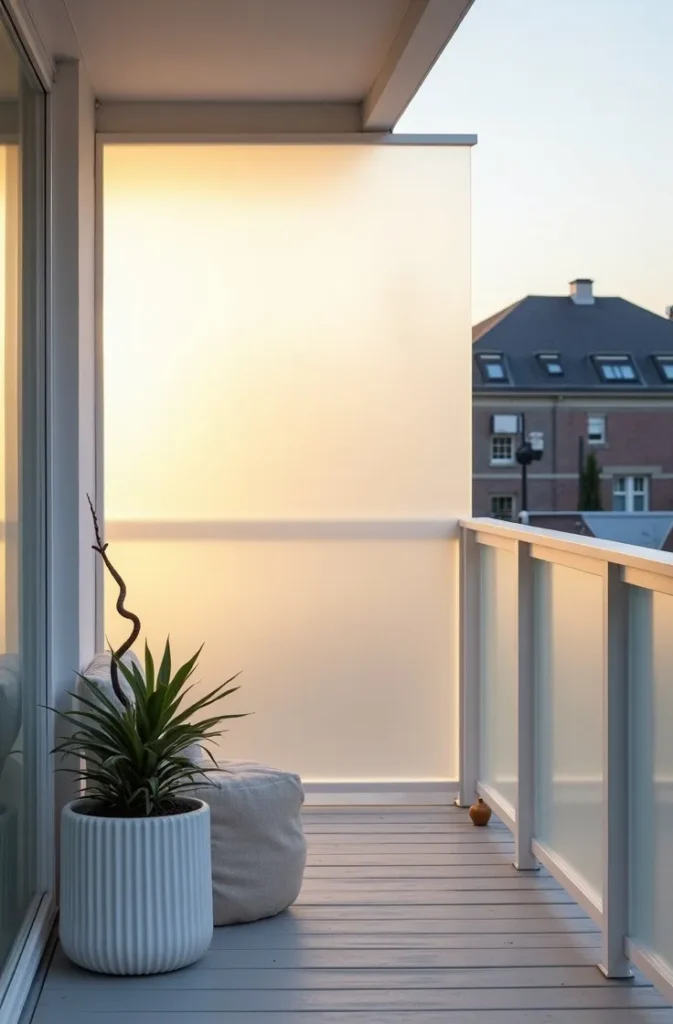
This system works in direct competition with other privacy solutions — wood lattice, shade fabric, planters — but wins on light transmission. A privacy fence blocks light. Acrylic diffuses it. For urban townhouse decks in cities like Denver, Austin, Nashville, and Charlotte where new construction has pushed densities higher and deck-to-deck sightlines are a genuine quality-of-life issue, frosted acrylic railing is one of the most practical outdoor railing ideas available.
The one maintenance reality to acknowledge: acrylic scratches more easily than glass. Avoid abrasive cleaners and keep the panels away from raking contact with furniture or plant material. A microfiber cloth with a simple diluted dish soap solution is the correct cleaning approach, and it keeps the panels looking clear and intentional rather than hazed and neglected.
The Vintage Wrought-Style Railing Revival That Makes New Construction Feel Like It Has a Past
One of the quiet problems with new residential construction in the USA — particularly the fast-built subdivisions common across the Sunbelt and Mid-Atlantic — is that the homes lack architectural age, and no amount of fresh paint or new landscaping solves it. The railing is one of the few exterior elements where a material and design choice can add the visual weight and character that new construction typically lacks.
A traditional baluster profile — an urn shape, a turned column, or a fluted design — in a painted composite material with a painted wood or composite rail system adds decades of perceived architectural history to a new home. The profile details reference the colonial and craftsman traditions that dominate American residential architecture, and when paired with appropriate trim colors (deep navy, black, cream, forest green), they signal that a house was built with intention rather than efficiency.
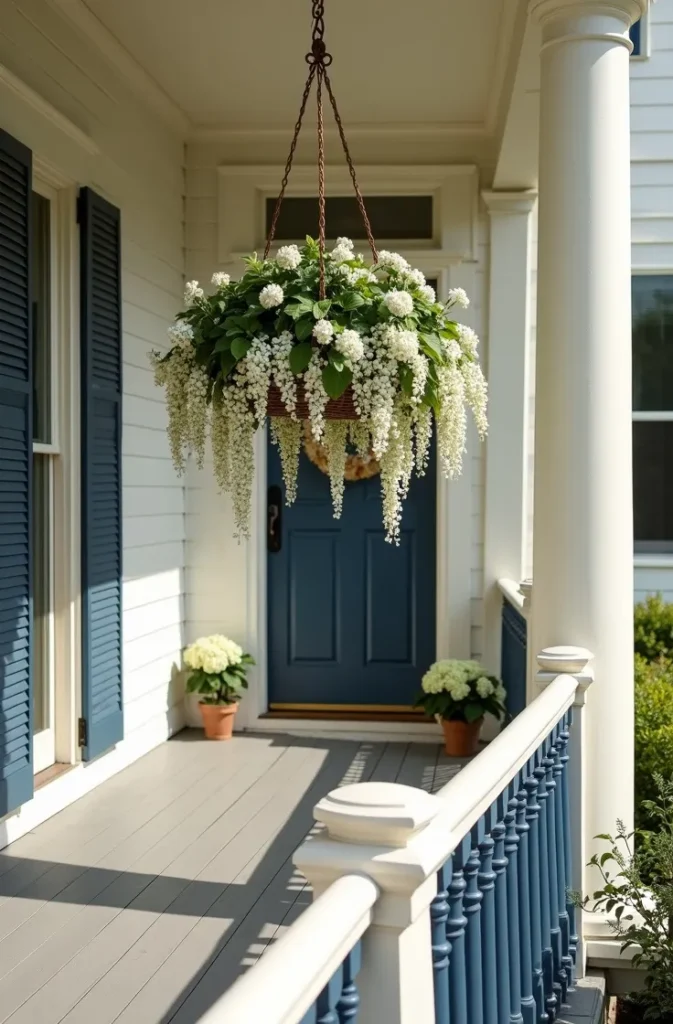
This approach is particularly effective on front porch railings, where the railing is visible from the street and contributes directly to curb appeal. Real estate professionals in established neighborhoods from Savannah to Richmond to Portland consistently note that front porch details — including railing character — are among the first things buyers respond to positively when a house feels like it belongs to its neighborhood.
The mistake that undermines traditional baluster railing: under-scaled top rails and posts. Slender components on a traditional baluster profile look like costume. A proper top rail at 2.5 to 3 inches wide, and posts at a full 4-by-4 or boxed composite to that dimension, give the railing the visual weight it needs to read as architectural rather than decorative.
You now have twelve specific, structurally understood, and visually distinct directions for outdoor railing — not a mood board, but a real framework for making a decision that you will live with for years. Save this post and come back to it when you are ready to specify materials, pull permits, or brief a contractor. Every idea here has been chosen because it works in the real conditions of American residential life — not because it photographs well on a European villa. This is the resource you come back to when you are ready to get it right the first time.