
Rose garden ideas rarely fail because of the roses themselves — they fail because of the layout around them, the awkward gaps, the beds that looked good on paper but never quite bloom into the picture you had in your head. You have stood in your own yard more than once, staring at a patchy bed or a bare fence line, wondering why it never looks like the gardens you save. By the end of this, you will know exactly where to put the path, the arbor, and the first rose so the whole thing finally comes together.
The Curved Path Trick That Makes a Small Rose Garden Feel Twice as Large
A straight path through a rose bed tells your eye exactly how small the space is in one glance. A gently curved path does the opposite — it hides the far edge of the garden until you are already walking toward it, which makes even a modest backyard feel like it keeps unfolding. The curve does not need to be dramatic. A soft S-shape or a single wide bend around a central bed is enough to break the sightline and slow the eye down.
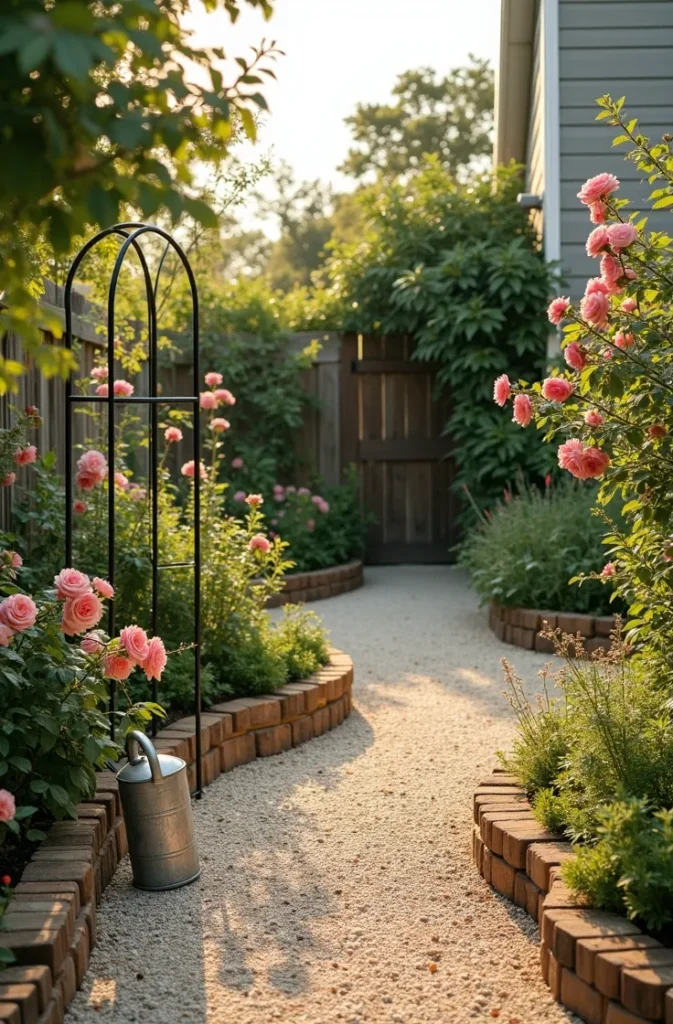
This works especially well in postage-stamp yards common in older neighborhoods across the Midwest and Northeast, where the lot is narrow and every straight line makes the space feel like a hallway. It is one of the more reliable small space rose garden ideas because it solves a spatial problem, not just a decorative one.

The mistake most people make is curving the path but keeping the beds on either side perfectly symmetrical, which cancels out the effect. Let one side of the bed bulge slightly wider than the other so the path feels like it is genuinely moving around something, not just decorating a straight line underneath. Picture yourself walking that curve with a cutting basket in one hand — that is the moment this layout is built for.
Why an Arched Trellis Entrance Turns a Plain Yard Into a Rose Garden Destination
An arched trellis at the entrance to a rose bed does something a flat garden never can — it creates a threshold. The moment you walk through it, your brain registers that you have entered a different space, even if the bed on the other side is only a few feet deep. This single structural choice does more visual work than adding several more rose bushes.
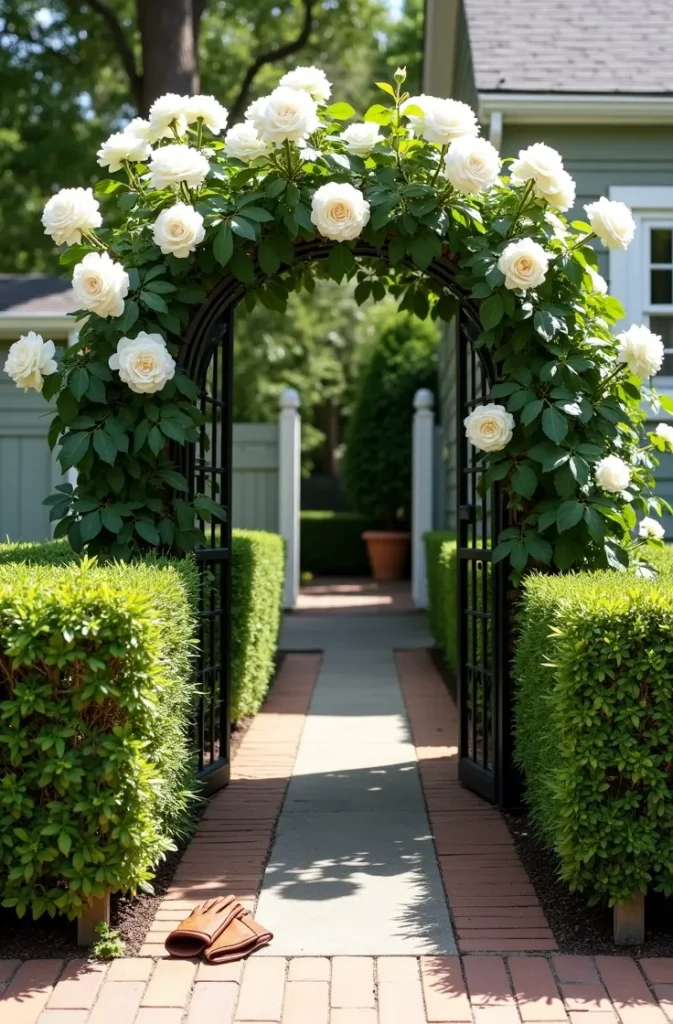
This is one of the most effective rose garden ideas for California bungalows and Southern front yards, where the entry sequence from driveway to door is short and needs a moment of arrival. It also works beautifully for renters and homeowners alike, since a freestanding arch does not require permanent structural changes to the yard.
The mistake to avoid is placing the arch in the center of a wide-open lawn with nothing framing it — an arch needs a fence line, a hedge, or a bed edge to anchor into, or it reads as a lonely prop rather than an entrance. Anchor it where two beds nearly meet, and let a climbing rose soften the top within the first season.
The Layered Planting Method That Keeps Roses Blooming From Spring Through Fall
Most beginner rose beds look full in June and bare by August, because everything planted is the same height and the same rose variety, blooming on the same schedule. A layered bed staggers heights — climbing roses at the back, shrub roses in the middle, low groundcover roses or companion perennials at the front — so something is always drawing the eye even when one layer finishes its bloom cycle.
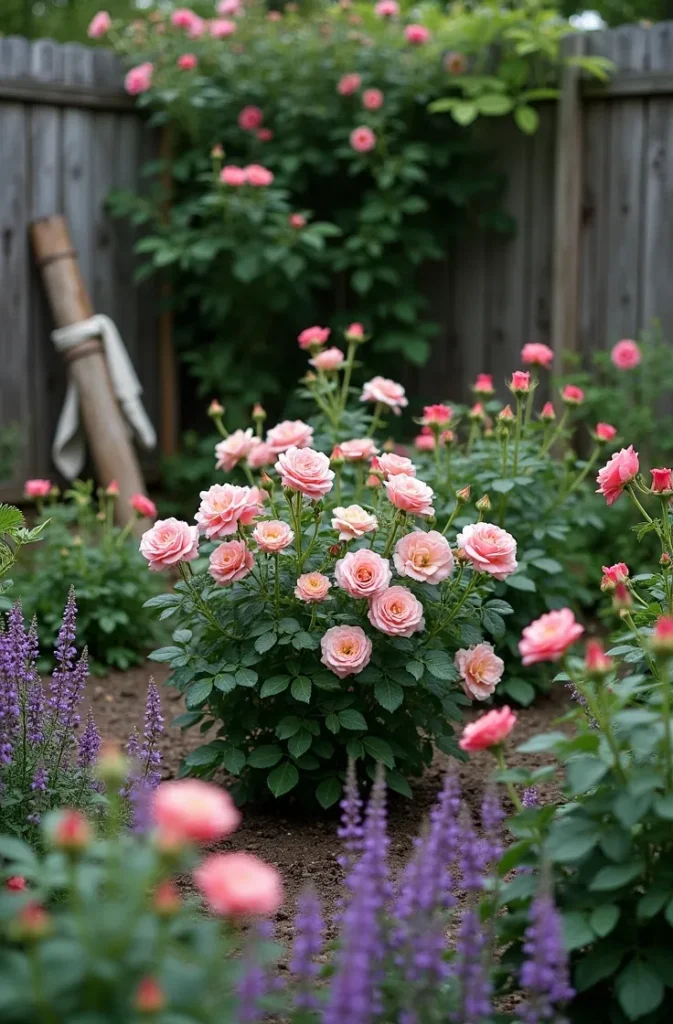
This layout is one of the more forgiving small bedroom layout ideas of the garden world in that it hides the awkward gaps that appear naturally as different roses cycle through bloom and rest. It works particularly well for cutting garden enthusiasts who want continuous stems to harvest without leaving an obvious hole in the bed.
The mistake is layering by height alone and ignoring bloom timing, which still leaves flat stretches later in the season. Mix a repeat-bloomer like a modern shrub rose with an old garden rose that blooms once but heavily, so the eye has movement across the whole season, not just the layout.
A Corner-Anchored Rose Bed That Solves the Awkward Side-Yard Problem
Side yards are the most neglected part of most American properties — too narrow to feel like a real garden, too visible to ignore. Anchoring a rose bed into the corner where the fence meets the house, rather than running it in a thin strip along the fence, gives the eye a clear focal point instead of a leftover sliver of dirt.
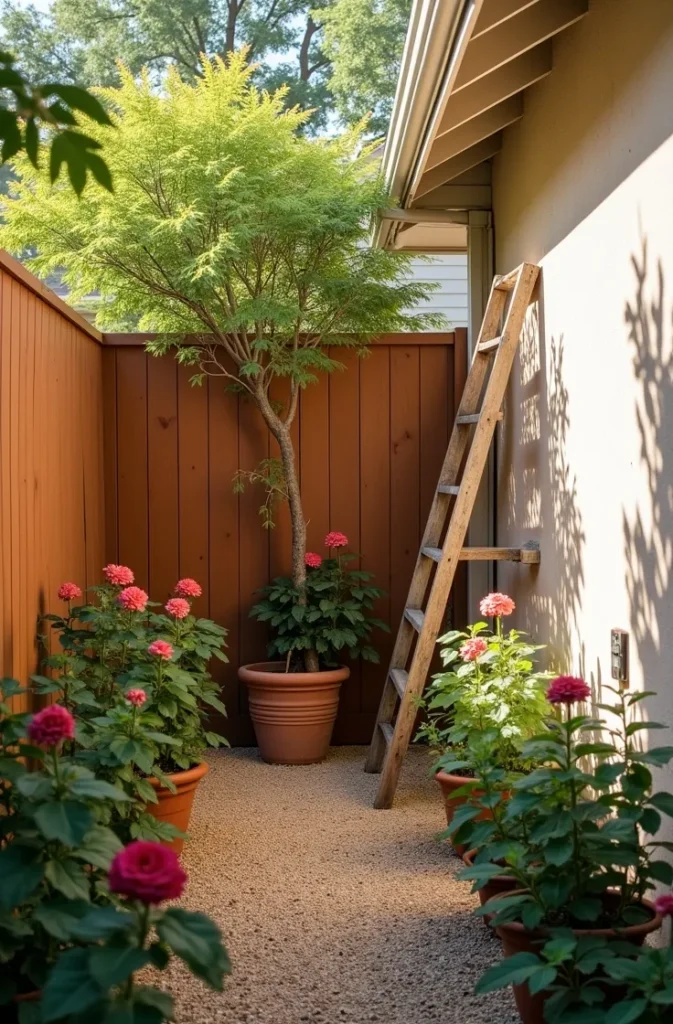
This is especially useful for Texas ranch-style homes and Midwest starter homes, where side yards tend to be long, narrow, and mostly used as a walkway to the backyard. A corner anchor turns that walkway into a moment worth passing through rather than a gap to get past quickly.
The mistake is trying to plant the entire length of the side yard evenly, which spreads the visual interest too thin to register from either end. Concentrate the roses and structure in the corner, and let the rest of the strip stay simple with gravel or low groundcover so the eye has somewhere to land.
The Climbing Rose Wall Trick for Yards With No Room to Spare
When there is no ground left to plant in, the wall becomes the garden. Training climbing roses up a trellis mounted flat against a fence or wall turns vertical space into planting space without taking a single square foot from the lawn or patio below.
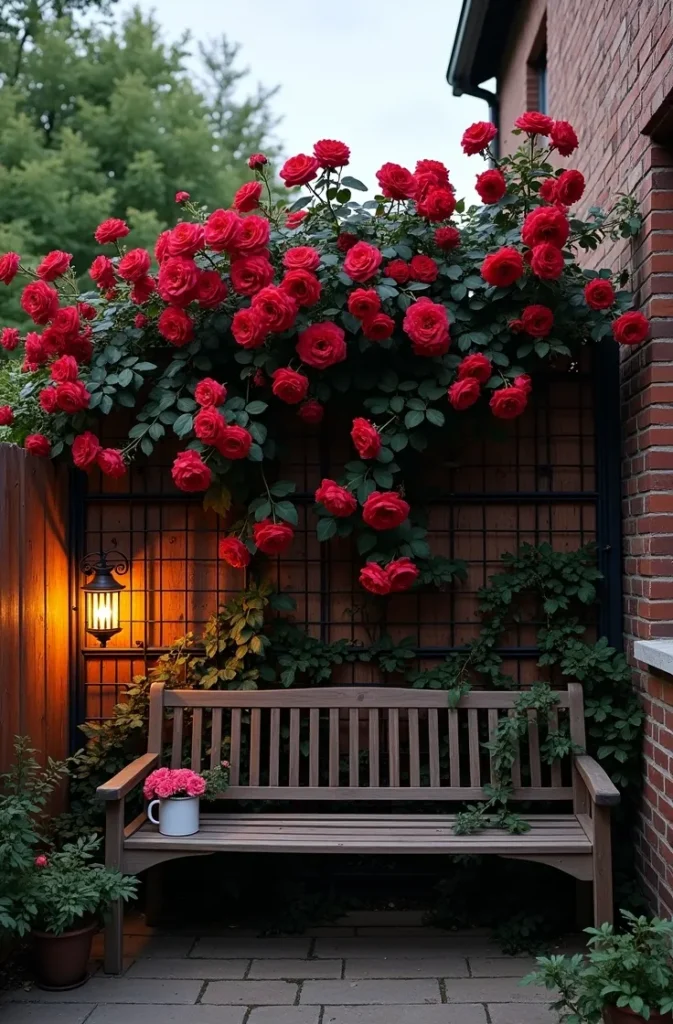
This is one of the most practical small space rose garden ideas for urban lots and New York studio-adjacent townhomes with tiny fenced yards, where every foot of ground is already spoken for. It also suits shared yards, where a wall of roses can visually divide a space without a hard boundary.
The mistake is mounting the trellis flush against the wall with no gap behind it — roses need airflow to avoid mildew, and a flush-mounted trellis traps moisture against the surface. Leave two to three inches of clearance behind the trellis, and the wall of blooms will actually thrive instead of struggling by midsummer.
Why a Gravel Path Beats Grass for a Low-Maintenance Rose Garden
Grass paths between rose beds need mowing around thorny canes, which is slow and often results in scalped edges or scratched ankles. A gravel path solves this instantly — it defines the walkway permanently, drains well after rain so roses do not sit in soggy soil, and never needs to be mowed at all.
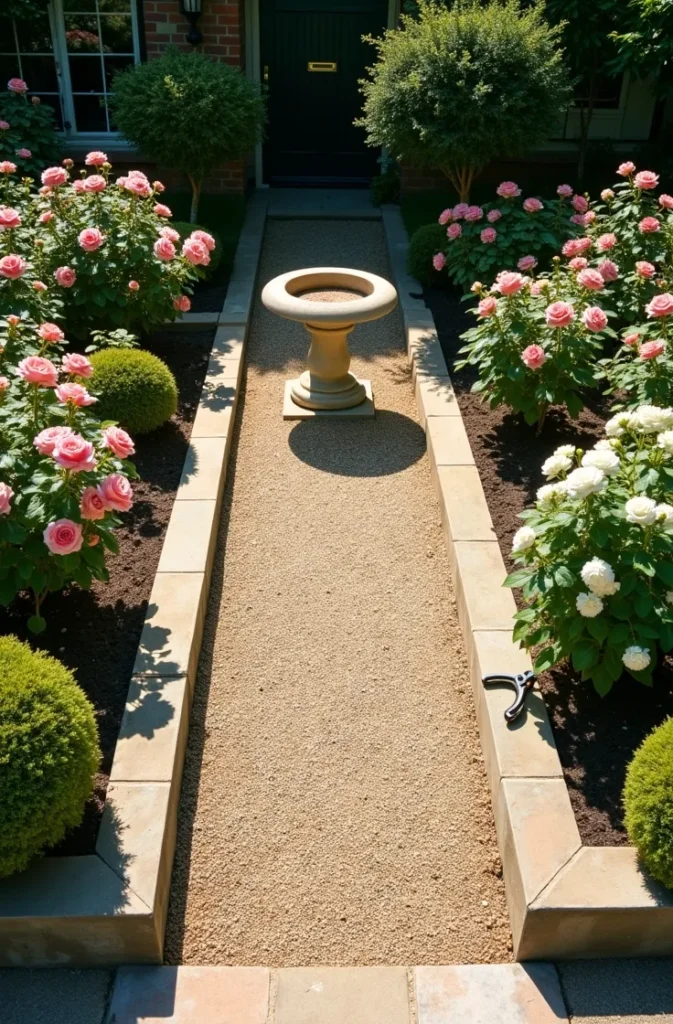
This is one of the more practical low maintenance rose garden ideas for anyone who wants the look of a cottage garden without a weekly mowing commitment, particularly useful in warmer Southern climates where grass paths brown out in summer heat anyway.
The mistake is choosing gravel that is too fine, which shifts underfoot and migrates into the beds within a season. A slightly angular, medium-sized gravel locks together underfoot and stays where it is placed, giving the path a finished, intentional look rather than a loose, scattered one.
The Cutting Garden Layout That Lets You Bring Roses Indoors Without Wrecking the View
A dedicated cutting section, tucked slightly apart from the main display bed, solves a problem most rose growers do not plan for: every stem you cut for a vase is a gap in the garden you have to look at afterward. Setting aside a smaller, denser row specifically for cutting means you can harvest freely without disturbing the beds people actually see.
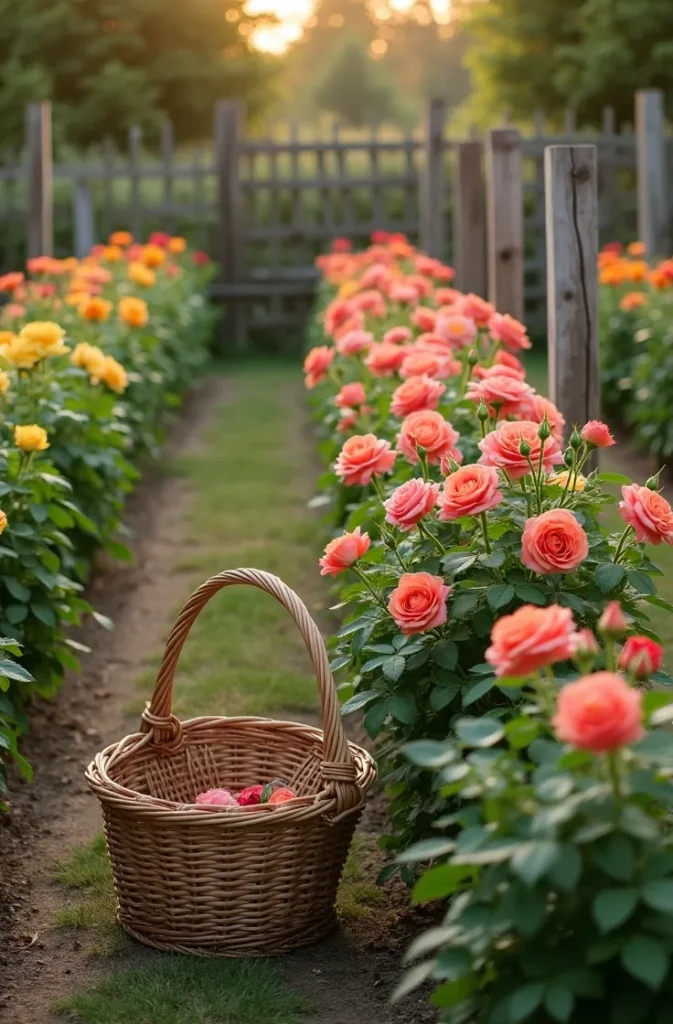
This layout works well for anyone who wants roses on the kitchen table regularly, and it is one of the better rose garden ideas for someone newer to growing, since the cutting row can be planted more densely and forgiven for looking a little utilitarian.
The mistake is mixing cutting varieties into the main display bed and cutting from it anyway, which leaves visible holes right where guests look first. Keep the cutting row along a side fence or behind a low hedge, out of the primary sightline, so the harvesting never shows.
A Rose and Lavender Pairing That Solves the “All Green, No Structure” Problem
Rose beds planted alone often collapse visually between blooms, leaving a stretch of plain green foliage with nothing to hold interest. Underplanting with lavender or another silvery, low perennial gives the bed a second texture and color even when the roses themselves are between flushes.
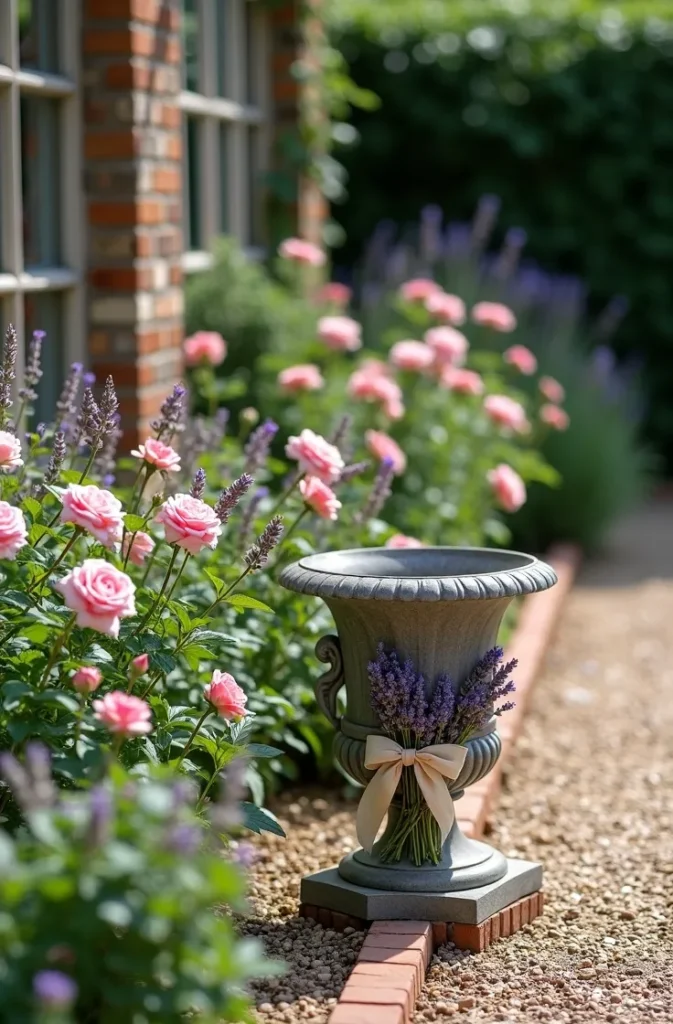
This pairing is one of the more classic cottage rose garden ideas because it echoes the layered, slightly wild look of English cottage borders while staying genuinely low-maintenance, since lavender needs the same well-drained soil and full sun that roses do.
The mistake is planting lavender too close to the rose’s root zone, where the two compete for the same nutrients and both end up smaller than they should be. Leave at least twelve to eighteen inches between the rose’s base and the lavender line, letting the silvery foliage act as a border rather than a rival.
The Circular Bed Layout That Makes a Small Backyard Feel Like an English Garden
A circular or oval rose bed set into the center of a lawn reads as intentional and formal in a way that scattered rectangular beds along the fence line never quite manage. The curve draws the eye around the full shape rather than letting it slide off the edge of a straight border, which is part of why classic English rose gardens rely on this layout so heavily.
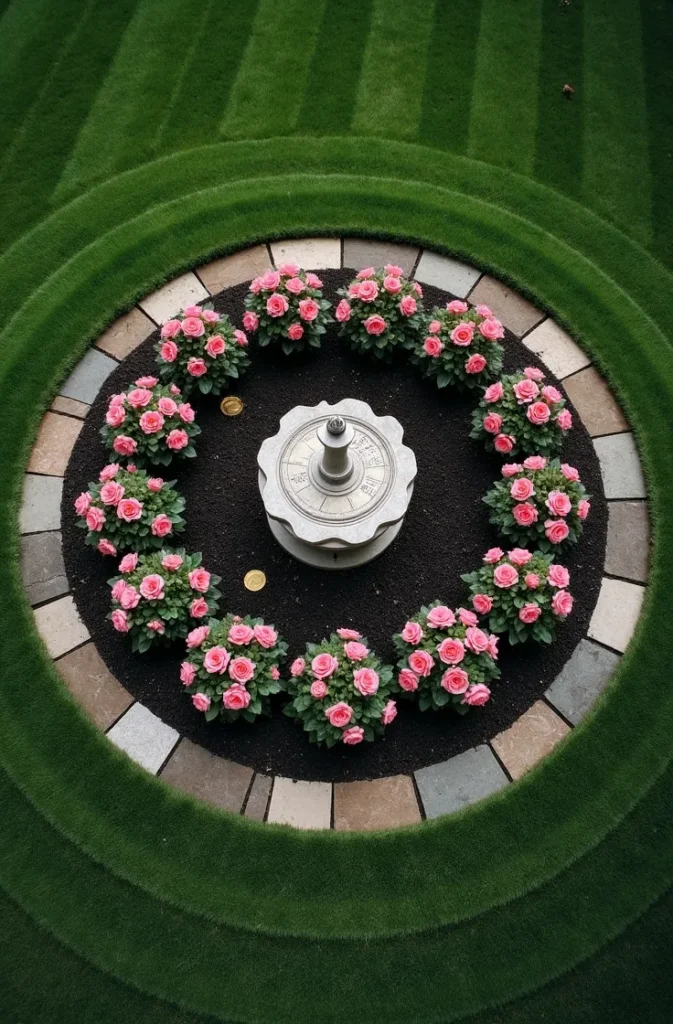
It is one of the stronger small master bedroom layout ideas’ garden equivalent for a backyard that otherwise feels shapeless — a plain rectangle of lawn with beds only at the perimeter. A centered circular bed gives the whole yard a sense of destination.
The mistake is making the circle too large for the yard, which crowds out usable lawn space and makes the whole layout feel tight rather than generous. As a rule, keep the bed’s diameter to no more than a third of the yard’s shortest dimension, leaving clear lawn or gravel breathing room around it.
Why Raised Beds Are the Secret to Growing Roses in Clay or Poor Soil
Roses need well-drained soil to thrive, and a huge number of yards across the Midwest and parts of the South sit on dense clay that holds water and suffocates rose roots no matter how much compost gets worked in. Building a raised bed sidesteps the problem entirely by giving the roses their own controlled soil environment above the native ground.
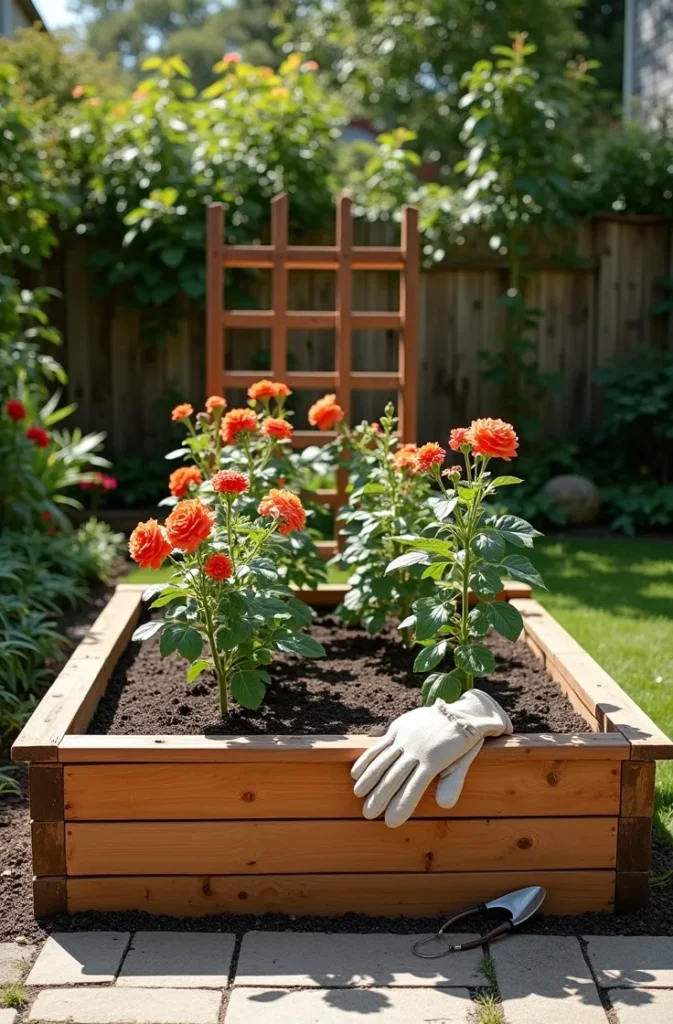
This is one of the more useful functional small bedroom floor plans USA parallels for the garden — a raised bed is essentially a floor plan you get to design from scratch, choosing the exact soil mix rather than fighting what is already there. It suits Midwest starter homes and older Southern lots equally well.
The mistake is building the bed too narrow to reach the center comfortably, which means stepping into the bed to prune or deadhead and compacting the soil you just improved. Keep raised beds no wider than four feet if accessible from one side, or the full width doubled if reachable from both sides.
The Balcony Rose Garden Layout That Works in 20 Square Feet
A balcony does not need a bed at all — it needs a hierarchy. One larger container with a compact climbing or patio rose against the railing, a mid-height container beside it, and a low trailing plant in front creates the same layered depth as a full garden bed, just scaled down and entirely portable.
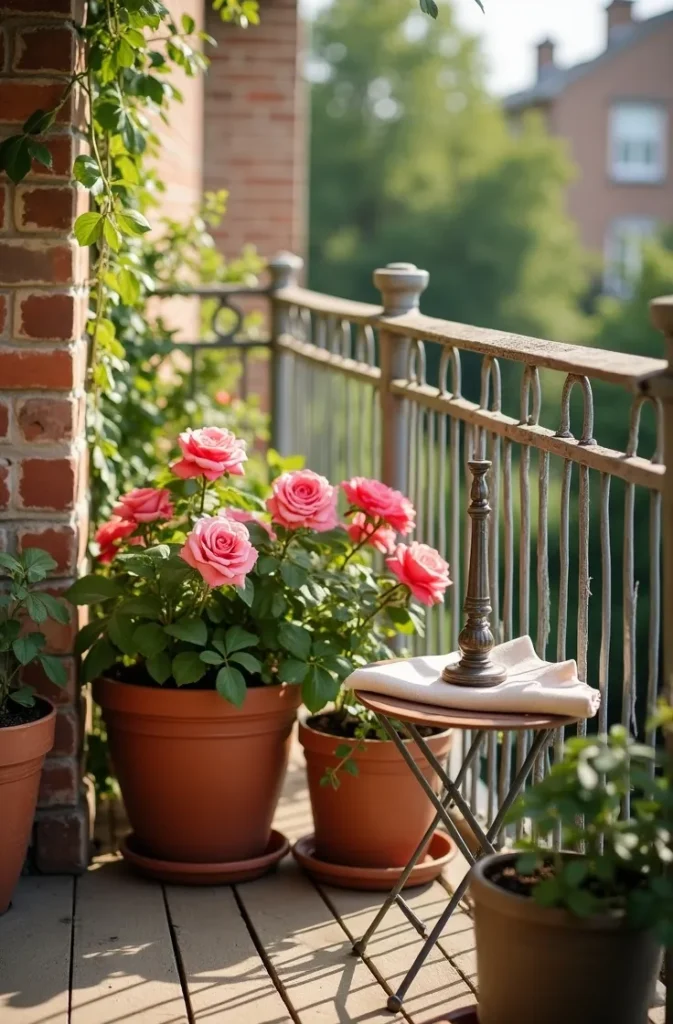
This layout is one of the better studio bedroom layout for small spaces equivalents for renters in apartment buildings across major cities, where a balcony rose garden is often the only outdoor growing space available, and everything needs to survive a move if the lease ends.
The mistake is choosing full-size climbing rose varieties bred for ground planting, which quickly outgrow a container and become root-bound within a season or two. Look specifically for patio or miniature climbing varieties bred for container life, which stay proportionate to the space for years.
A Rose Garden Bench Placement That Turns a Yard Into a Retreat
A bench placed facing into the rose bed, rather than facing out toward the lawn or the house, changes the entire function of the garden — it becomes somewhere to sit and be inside the roses rather than a backdrop viewed from a distance. This single placement decision is what separates a garden that photographs well from one that actually gets used.
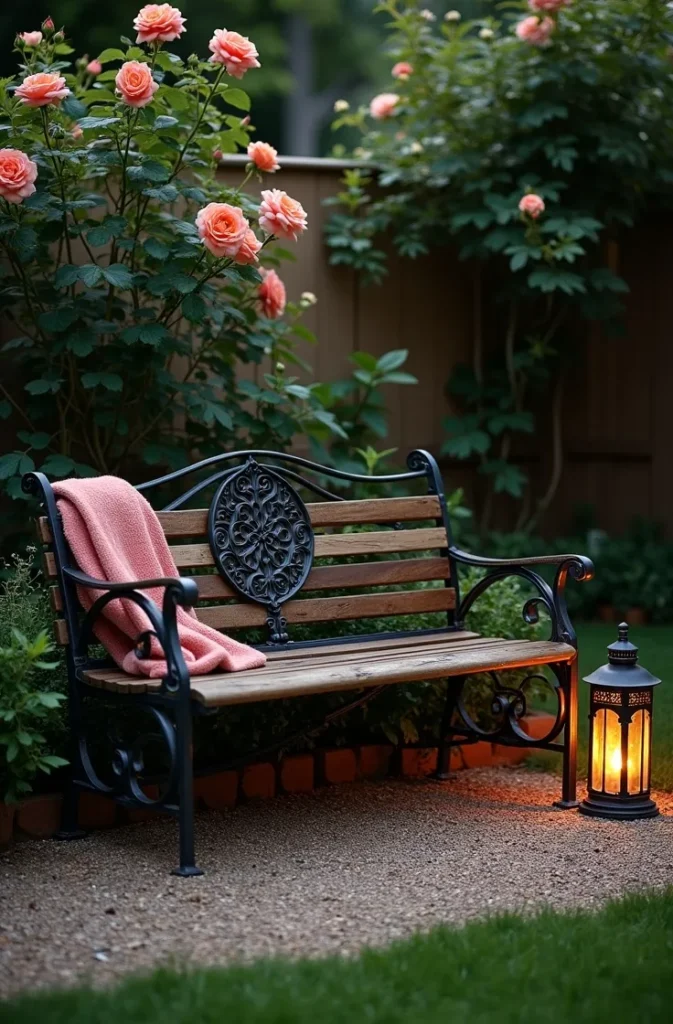
This works particularly well in cozy small bedroom design ideas’ outdoor equivalent, tucked into a corner of a fenced backyard where the bench is partially enclosed by the roses on two or three sides, creating a genuine sense of retreat rather than exposure.
The mistake is placing the bench too close to the bed, where thorny canes brush against anyone sitting down. Leave at least eighteen inches of clearance between the bench and the nearest rose, and let a low, thornless groundcover fill that gap instead.
The Mixed-Height Border That Hides an Ugly Fence Line
A chain-link fence or an aging wood fence is one of the most common reasons people avoid spending time in their own backyard. A mixed-height rose border planted directly in front of it, tallest at the fence and stepping down toward the lawn, obscures the fence almost entirely within one to two growing seasons without requiring a full fence replacement.
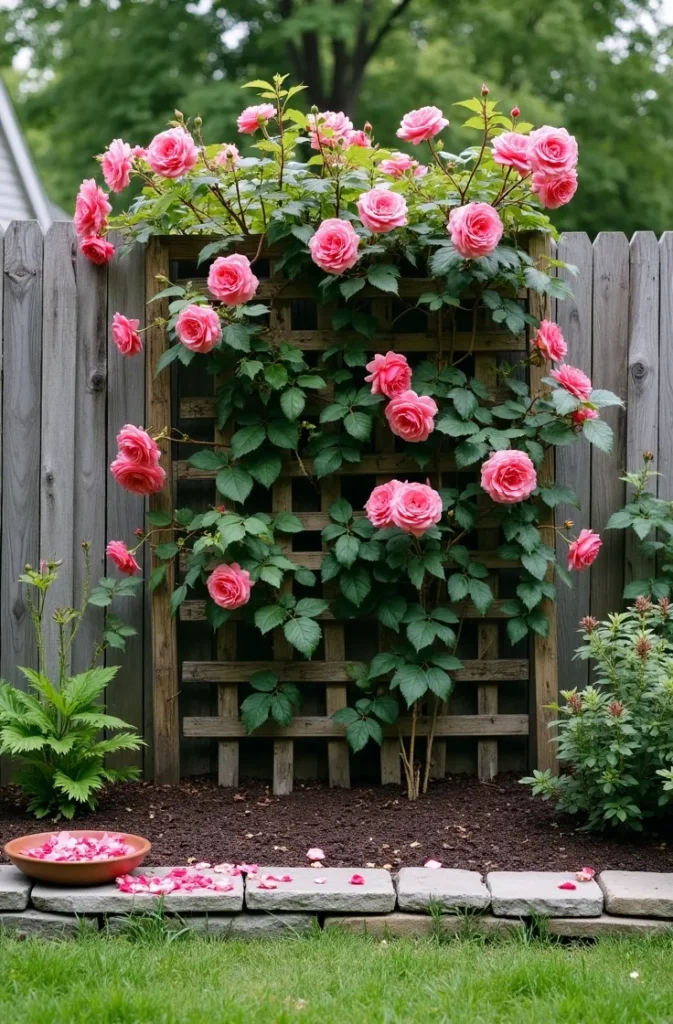
This is one of the most cost-effective rose garden ideas for older Midwest and Northeast homes with inherited fencing that would be expensive to replace, giving the yard a finished look for a fraction of the cost of new fencing.
The mistake is planting a single row at one height, which screens the bottom of the fence but leaves the top visible and awkward. Stagger three height tiers — climbing roses trained flat against the fence itself, shrub roses in front of that, and a low border rose or perennial at the very front edge.
Why a Single Statement Rose Arbor Outperforms a Dozen Scattered Bushes
It is tempting to fill a yard with as many individual rose bushes as it can hold, but a scattered planting reads as busy rather than intentional, and no single element ever gets to be the star. One well-placed arbor, heavily planted with two or three climbing varieties, creates a focal moment that a dozen scattered bushes never achieve on their own.
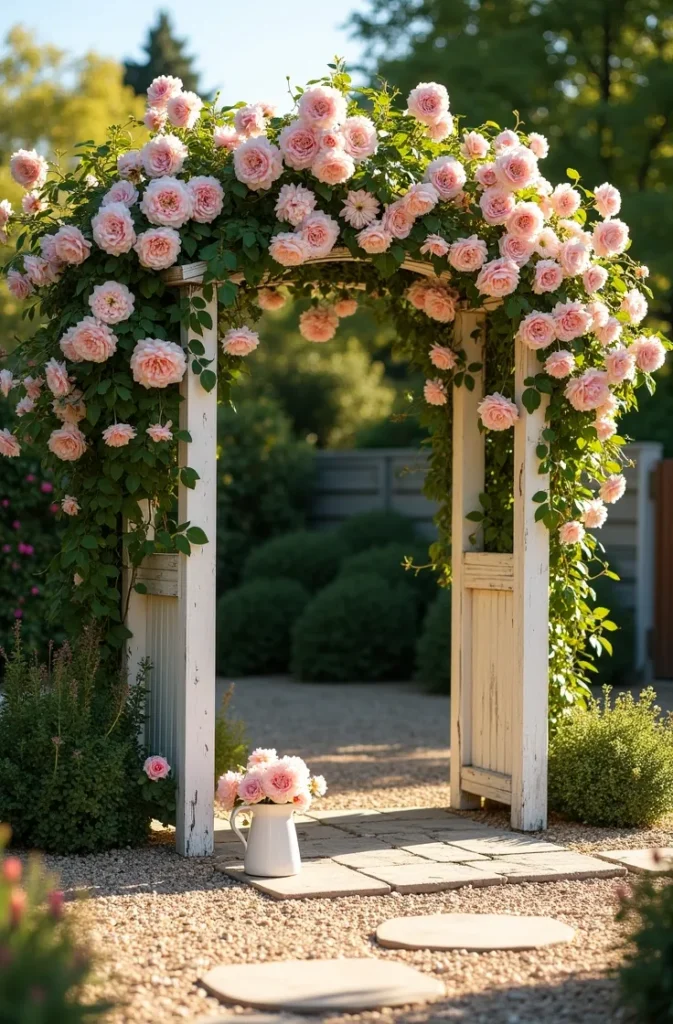
This is one of the strongest minimalist small bedroom layout parallels for a garden — restraint, not abundance, is what makes the space feel designed. It suits smaller yards especially well, where there simply is not room for scattered planting to read as anything but cluttered.
The mistake is under-planting the arbor, expecting one rose to fill the whole structure within a year or two. Plant two to three climbing roses at the base of a single arbor so it fills in fully and quickly, rather than looking sparse for several seasons while a lone plant catches up.
The Rose Garden Layout That Works Around an Existing Patio
Most patios were poured or paved before the garden around them was ever planned, which usually means beds get squeezed into whatever oddly shaped strip of yard is left. Rather than fighting that shape, running a narrow, dense rose border directly along the patio’s edge turns the patio itself into part of the garden’s structure instead of an obstacle to plant around.
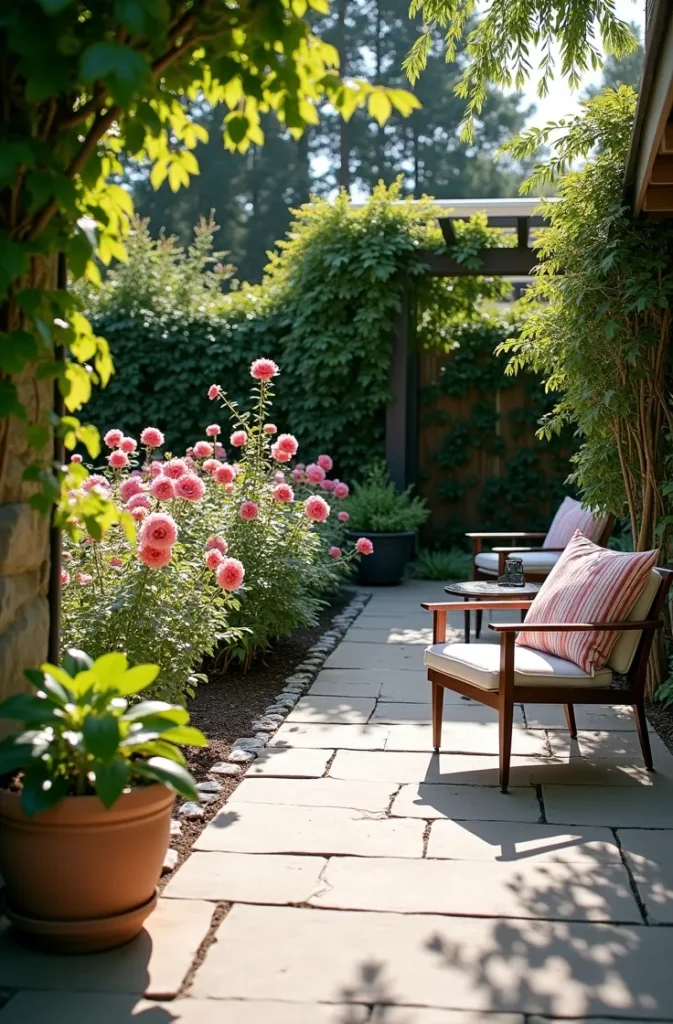
This works particularly well for California bungalows and Texas homes where the patio is used daily and needs to feel connected to the garden rather than separate from it, one of the more livable bedroom layout ideas for small rooms with a window’ outdoor equivalents, where the “window” is simply the open view from the patio seating.
The mistake is planting tall roses directly against the patio edge, which brush against furniture and drop petals onto seating cushions. Keep the row closest to the patio to lower, compact varieties, and save taller climbing roses for the outer edge of the border, farther from where people actually sit.
A Container Rose Garden Trick for Renters With No Yard at All
Renters without any yard access are not actually out of options — a cluster of large containers on a shared patio, stoop, or fire escape landing can hold a genuine rose garden’s worth of variety and color, as long as the containers are grouped rather than scattered individually along a wall.
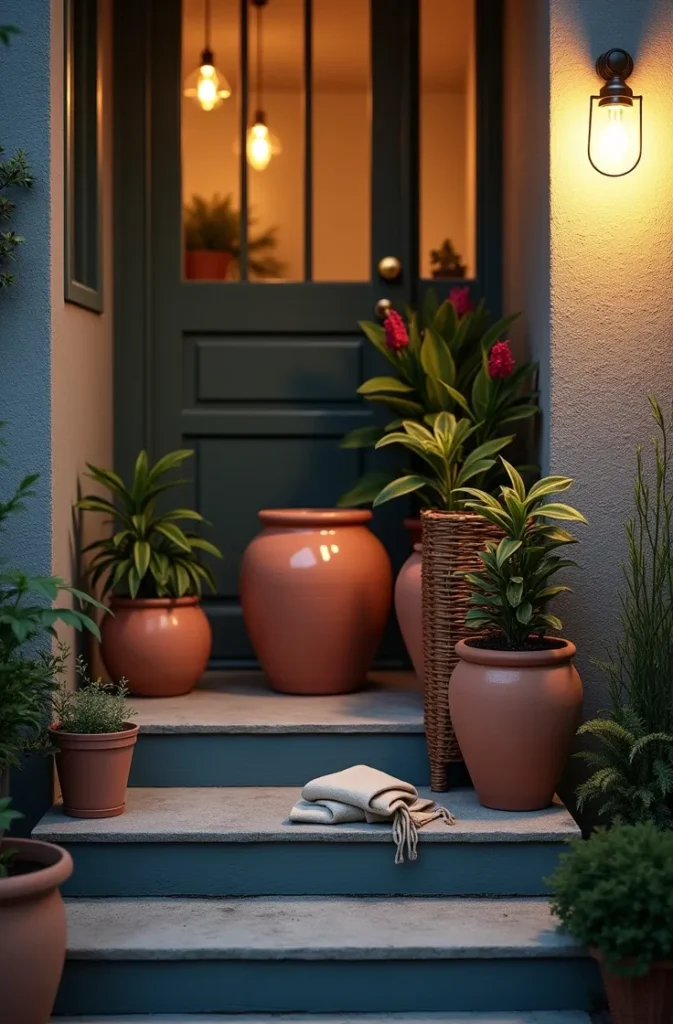
This is one of the most workable small bedroom with no closet layout ideas’ outdoor parallel — solving a fixed-space limitation by grouping and layering rather than spreading thin. It suits city apartment dwellers particularly well, where every container needs to be movable if the lease changes.
The mistake is using containers that are too small for a rose’s root system, which forces frequent repotting and stunted growth. Choose containers at least eighteen inches in diameter for any rose, even compact patio varieties, and group three or four at varying heights rather than lining them up in a single row.
The Formal Parterre Layout That Makes a Small Front Yard Look Intentional
A parterre — a symmetrical, geometric bed layout usually edged in low boxwood or another clipped hedge — is one of the fastest ways to make a small front yard look deliberately designed rather than simply planted. The geometry itself does the work; even a modest rose selection looks curated once it is contained inside crisp, symmetrical lines.
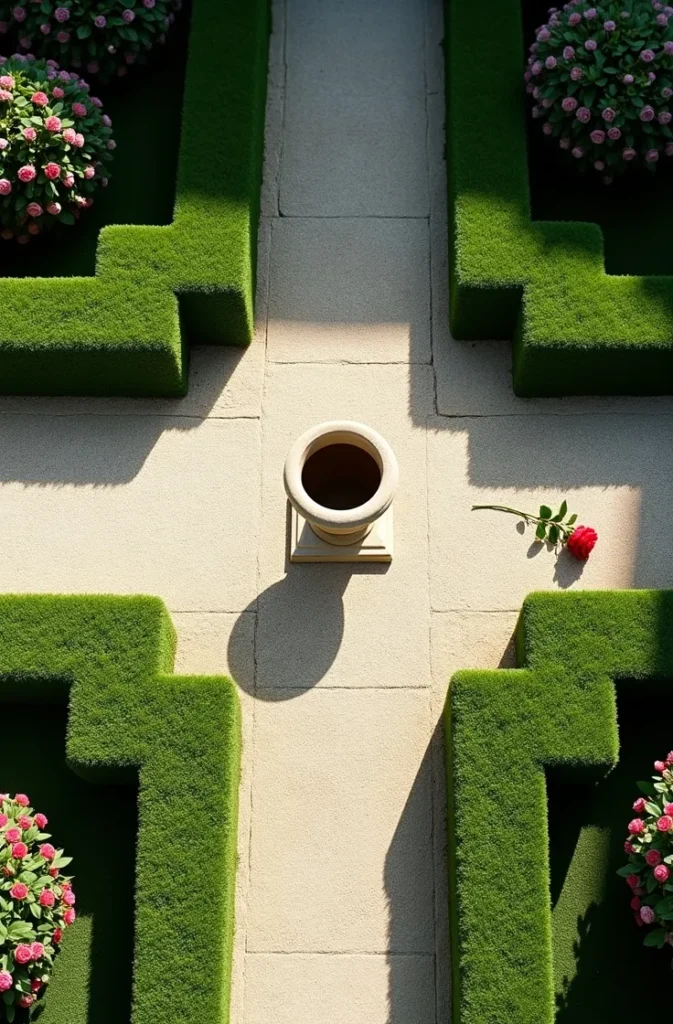
This layout suits front yards specifically, where curb appeal depends on the garden reading as intentional from the street, and it is one of the more classic layouts for very small bedrooms 2026 equivalents in front-yard design, expected to see a strong resurgence as more homeowners move away from plain foundation shrubs.
The mistake is choosing a parterre pattern too intricate for the available space, which reads as cluttered rather than crisp once roses fill in. Keep the pattern to two or four simple geometric beds divided by a clear path, and let the roses provide the color while the hedge lines provide the structure.
Why Evening Lighting Placement Matters as Much as the Roses Themselves
A rose garden that looks beautiful at noon and disappears entirely after sunset only gets half the use it could. Placing low, warm path lighting along the bed’s edge and one uplight at the base of a taller feature, like an arbor or obelisk, extends the garden’s presence well into the evening without requiring elaborate electrical work.
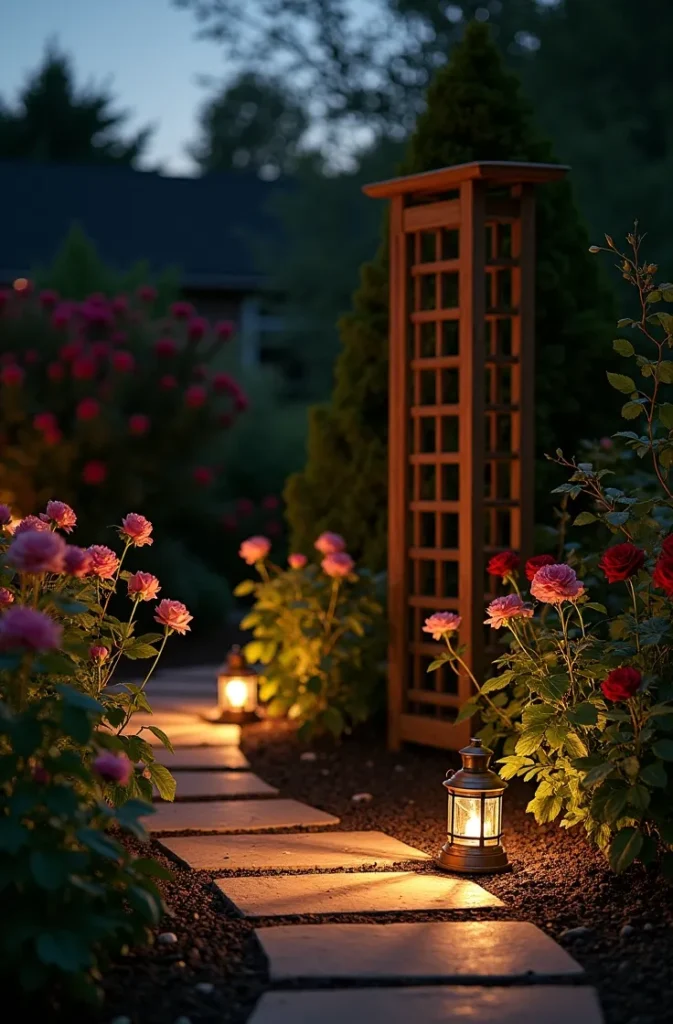
This matters most for anyone who actually spends evenings outdoors — a common reality across Southern climates where daytime heat pushes garden time toward dusk, making evening lighting less of a luxury and more of a functional necessity for the space to get used at all.
The mistake is lighting the roses directly with a bright, even wash of light, which flattens the blooms and makes the garden look like a parking lot rather than a garden. Use low, warm-toned fixtures angled upward from below, casting shadow and depth rather than flat, shadowless light across the whole bed.
Bring the Layout to Life Before You Buy a Single Rose
You now have an actual plan, not just a folder of pretty pictures — a way to think about paths, structure, and placement before a single rose goes into the ground. Save this post before you head to the nursery, because the layout decisions matter more than the variety you choose, and you will want to come back to it once you are standing in your own yard with a shovel in hand. Consider this your go-to reference for getting a rose garden right the first time.