
Most basements sit unfinished for years — not because of budget, but because no one knows where to start. This post walks you through the most compelling basement remodeling ideas for 2026, from multi-use layouts to materials that hold up over time. If you’ve been staring at a concrete floor wondering what’s possible, this is exactly the guidance you need.
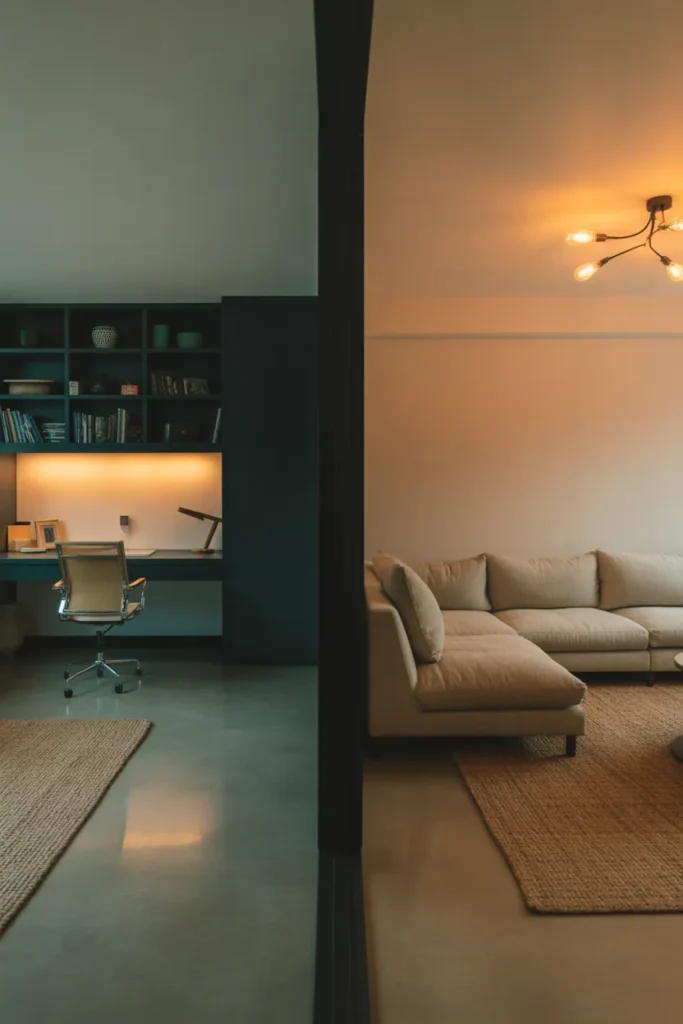
1. Turn Dead Square Footage Into a Real Living Zone
Before picking a color palette or flooring material, define the zone’s purpose. A basement without a clear function ends up a half-finished storage room again within two years.
Think in categories: entertainment, work, rest, fitness, or a blend of two. The most successful basement remodels in 2026 are dual-purpose — a home office that converts into a guest suite, or a gym with a wet bar along one wall.
Zoning doesn’t require walls. Area rugs, ceiling treatments, and lighting levels can separate a basement into distinct “rooms” without a single partition. Once your zones are locked in, every other decision becomes faster and cheaper to make.
2. How to Make a Low Ceiling Basement Feel Taller Than It Is
Low ceilings are the most common basement complaint — and the easiest to visually fix without touching a joist.
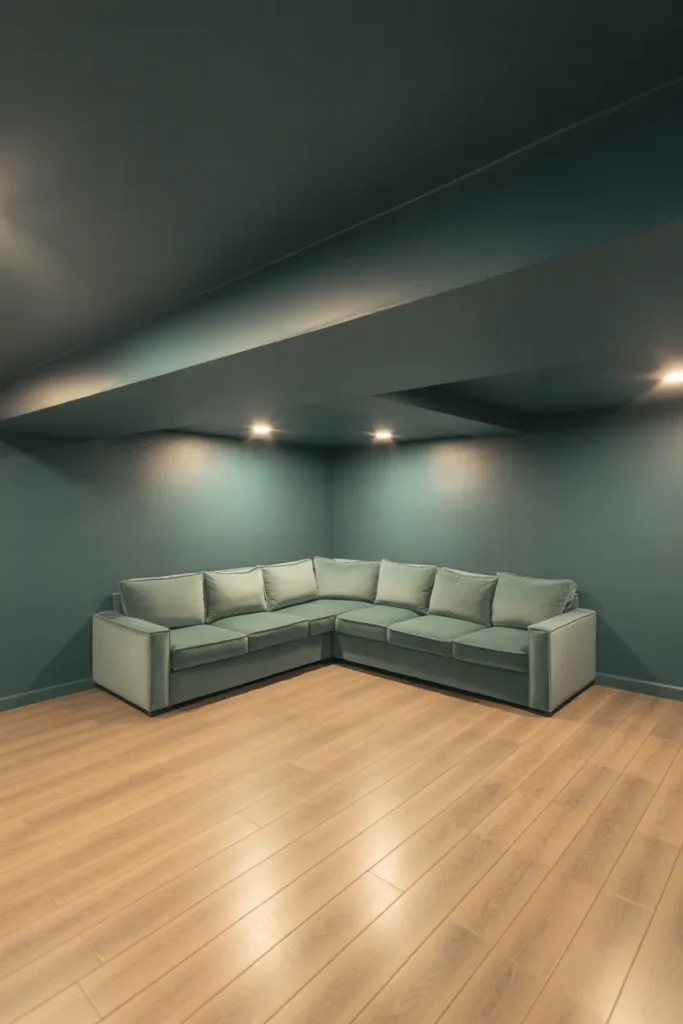
Paint the ceiling the same color as the walls, or go one shade darker. Counter-intuitively, a dark ceiling recedes rather than presses down. Pair this with vertical elements — floor-to-ceiling shelving or tall curtain panels — to pull the eye upward.
Avoid ceiling fans with light kits. They hang too low and immediately break the illusion. Recessed lighting flush with the ceiling is the 2026 standard for low-clearance basement spaces. Furniture scale matters just as much — low-profile sofas, thin-leg tables, and floating shelves all create breathing room that tricks the eye.
3. The Flooring That Actually Holds Up Below Grade
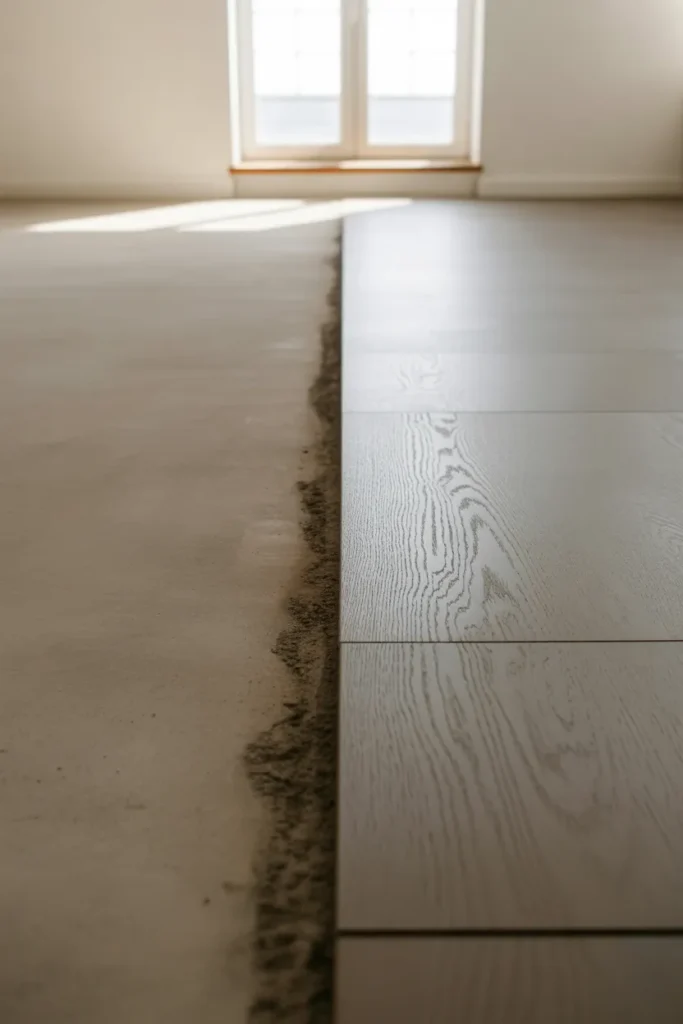
Not all flooring belongs in a basement. Here are your best options ranked by performance:
- Luxury Vinyl Plank (LVP) — 100% waterproof, warmest underfoot, floats above any subfloor
- Polished Concrete — zero moisture risk, industrial-modern look, needs rugs for comfort
- Engineered Hardwood — real wood appearance with better moisture tolerance, but not fully waterproof
- Porcelain Tile — premium durability, cold without in-floor heat
- Cork — moisture-resistant, soft, quiet, naturally antimicrobial
- Carpet Tiles — modular and replaceable; avoid wall-to-wall in flood-prone regions
Never install solid hardwood, standard laminate, or glue-down carpet in a basement. These are the three materials that fail when moisture migrates up through a slab — and it always does eventually.
4. A Basement Home Office That Actually Makes You Want to Work
The shift to remote work made basement home offices the most-searched basement remodel category of recent years — and 2026 raises the bar considerably.
A good basement office prioritizes light, air, and acoustic control. Egress windows with solar tubes bring in daylight without major excavation. A mini-split handles temperature without running new ductwork throughout the house.
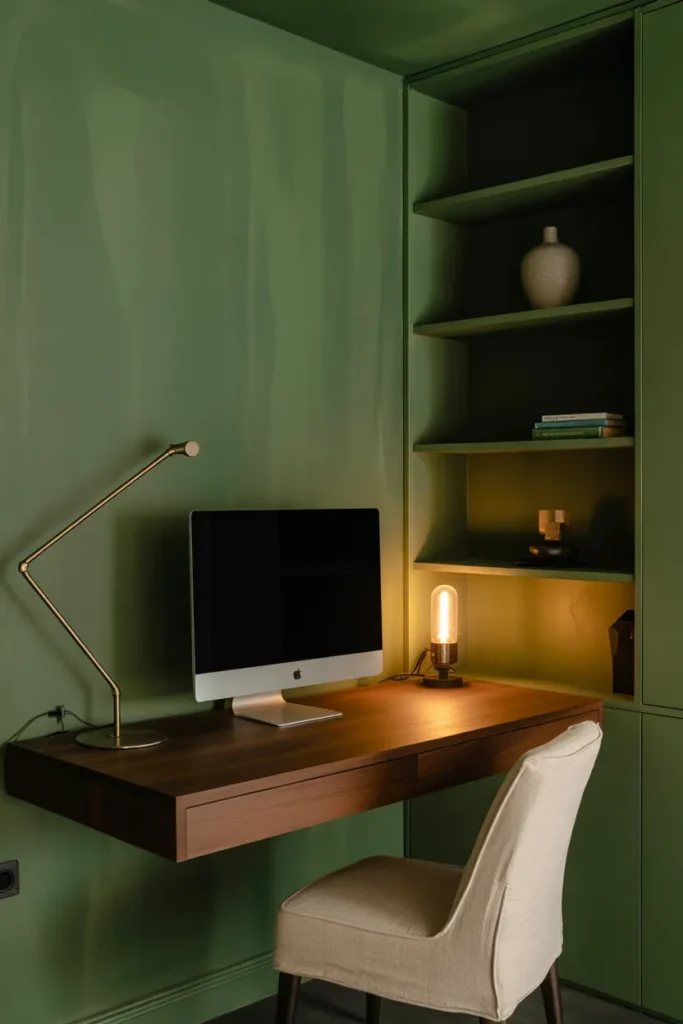
Wall-mount your monitor, use floating shelves instead of bulky bookcases, and keep the desk surface clear. Add one intentional design moment — a statement wall in deep green, navy, or warm terracotta behind the desk. It anchors the room visually and creates a polished video call background without any extra effort.
5. Basement Lighting — Do This, Not That
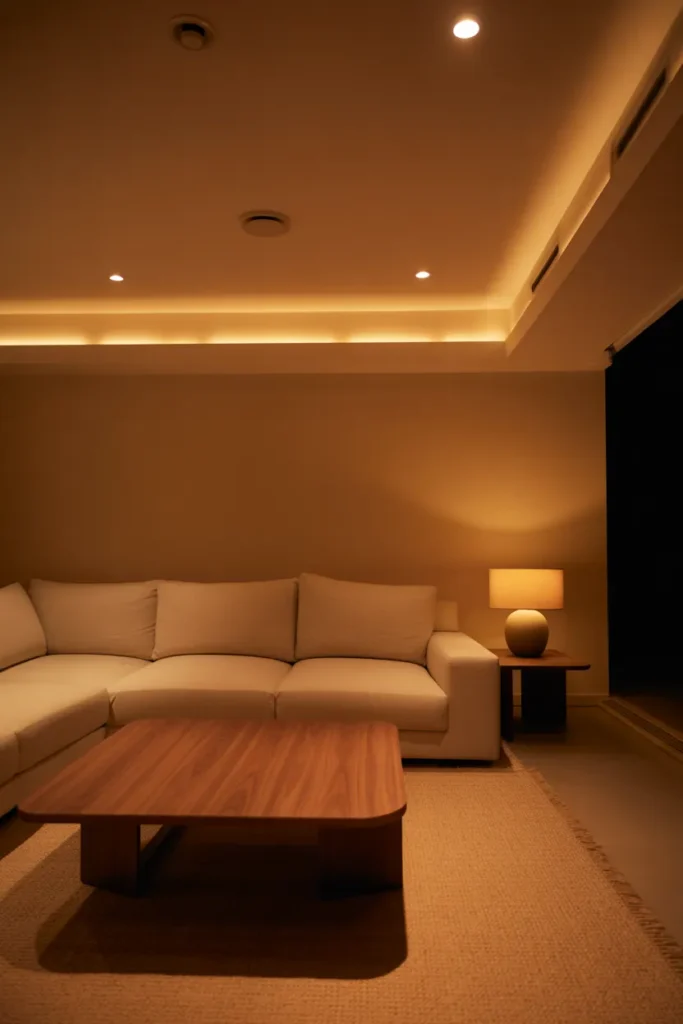
DO: Layer three types of lighting — ambient (recessed), task (under-shelf or sconce), and accent (LED strip cove or art lighting).
DON’T: Rely solely on a single overhead flush-mount fixture. This creates flat, hospital-grade light that makes every surface look dull.
DO: Use warm white bulbs (2700K–3000K) in living and lounge zones. They compensate for the naturally cool cast of below-grade spaces.
DON’T: Install cool white or daylight bulbs (5000K+) in a basement without natural light. The result is a harsh, fluorescent-office feel that no amount of decor can fix.
DO: Put all basement lighting on dimmers. The ability to lower light levels in the evening transforms how the entire space feels.
6. How to Design a Basement Guest Suite Guests Actually Request
The basement guest room gets a bad reputation — usually because it feels like an afterthought. Done right, it becomes the room guests ask for by name.
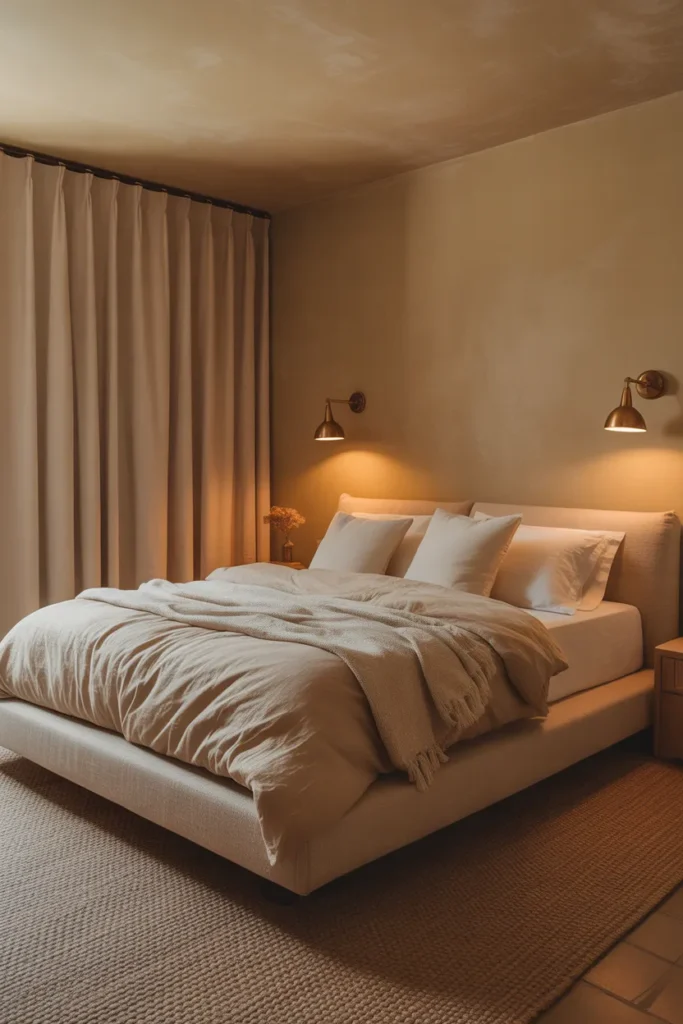
The key is sensory warmth. A below-grade room has no ambient outdoor sound, which makes it quieter than any upstairs bedroom. Lean into that. Add blackout curtains, a quality mattress, and bedside reading lights on each side.
Use warm, enveloping wall tones — clay, warm white, or a deep saturated hue like dusty plum or aged terracotta. Avoid cool grays and bright whites, which read as clinical without natural light. A small ensuite 3/4 bathroom is one of the highest-ROI additions in a basement remodel — it turns a guest room into a guest suite, and buyers notice the difference.
7. Wet Bar vs. Beverage Station — Which One Makes Sense
- Full wet bar with sink — ideal for primary entertainment spaces used regularly; requires plumbing rough-in
- Floating beverage station — best for casual use, no plumbing needed, lower build cost
- Built-in bar cabinet — closed storage, mini-fridge niche, countertop for serving; no contractor required
- Wine storage wall — works as a design feature even in non-drinking households; doubles as a display wall for ceramics or plants
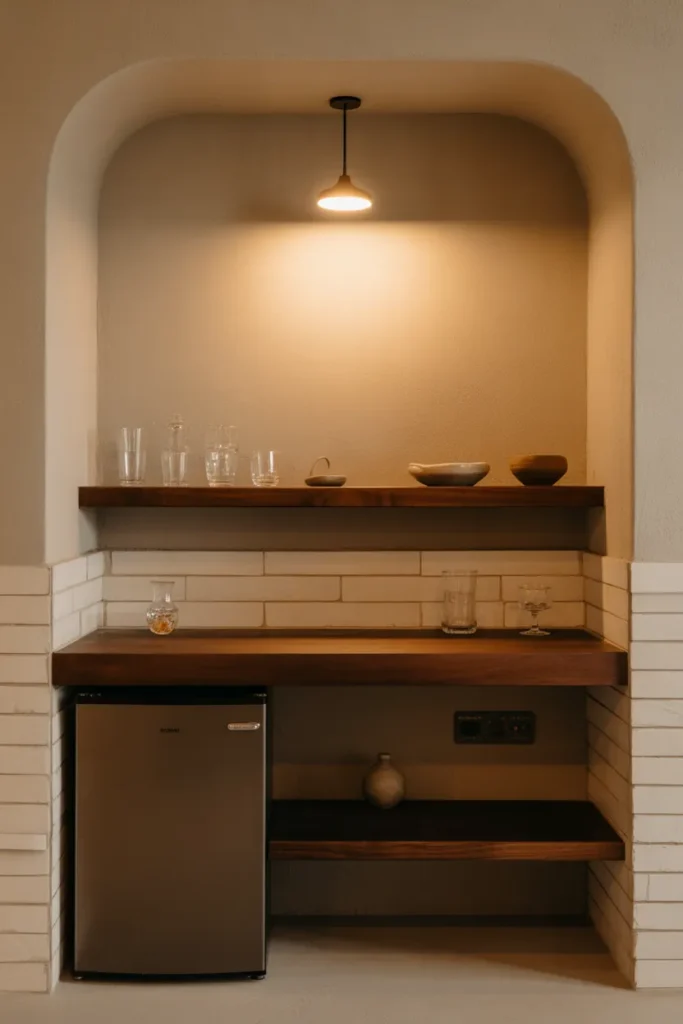
The most versatile 2026 basement bar is a floating shelf system with a mini-fridge below and open display above. It looks intentional, skips the plumbing cost, and can evolve as the space does.
8. How a Basement Gym Can Double as a Flex Room
The biggest mistake in a basement gym build is designing it as gym-only. Life changes — and a room that only works for workouts becomes underused fast.
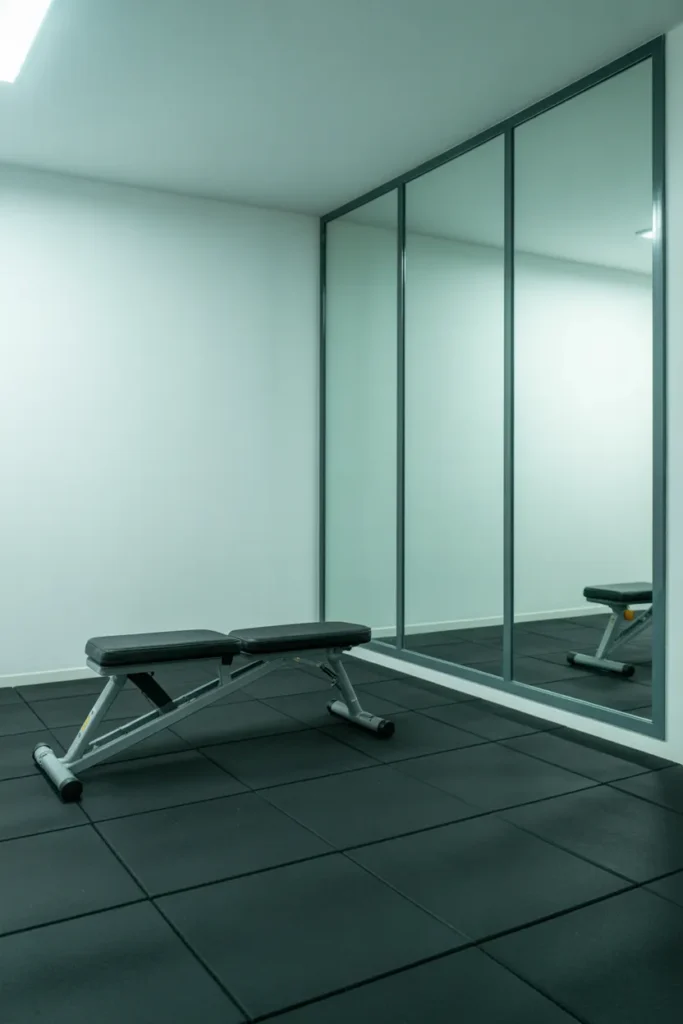
Design with removable or foldable equipment. A wall-mounted fold-down bench, rubber floor tiles that lift up cleanly, and a mirrored wall section that slides behind panels all keep the room multipurpose.
Leave one wall completely clean — no equipment, no shelving. This creates visual calm for yoga or stretching, and doubles as a clear backdrop for workout videos. Good ventilation is non-negotiable: a dedicated exhaust fan and a mini-split for cooling turn a workout space from unpleasant to genuinely usable year-round.
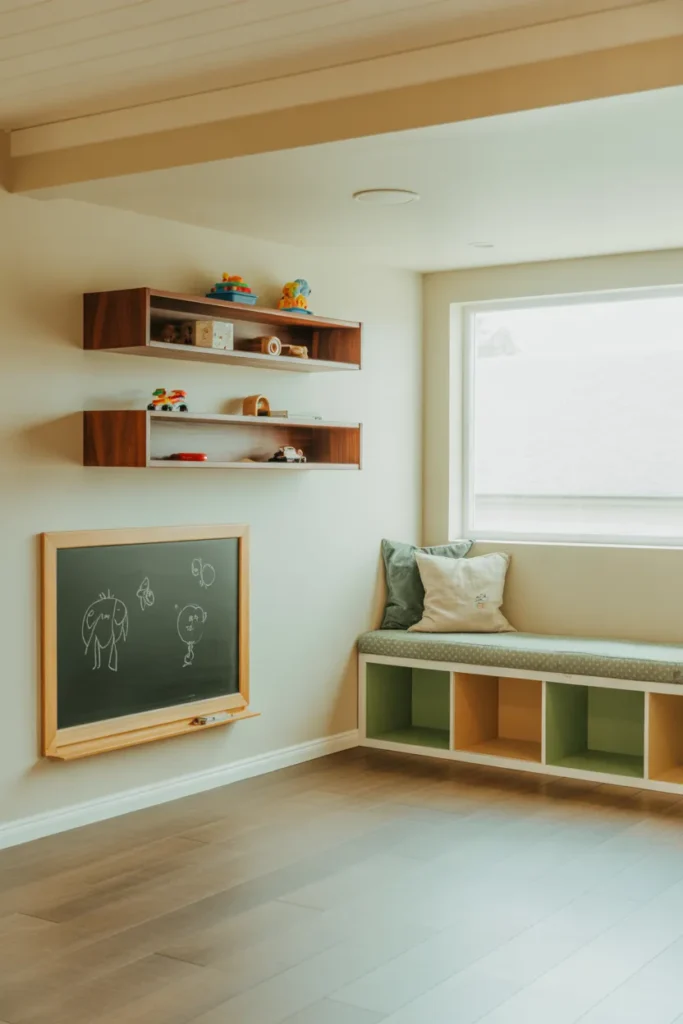
9. The Basement Playroom That Grows With Your Kids
The playroom designs that last longest are built for the next age, not the current one. A toddler-focused space with foam mats becomes useless in three years.
Instead, install low floating shelves that work for toys now and books later, a chalkboard wall section that evolves with the child’s creativity, and durable LVP flooring that survives every phase. Keep the palette calm — soft greens, warm whites, and natural wood tones feel less chaotic long-term than primary-color schemes.
A built-in window seat with storage below is the single most versatile piece of furniture in a basement playroom — reading nook, toy storage, and seating all in one compact footprint.
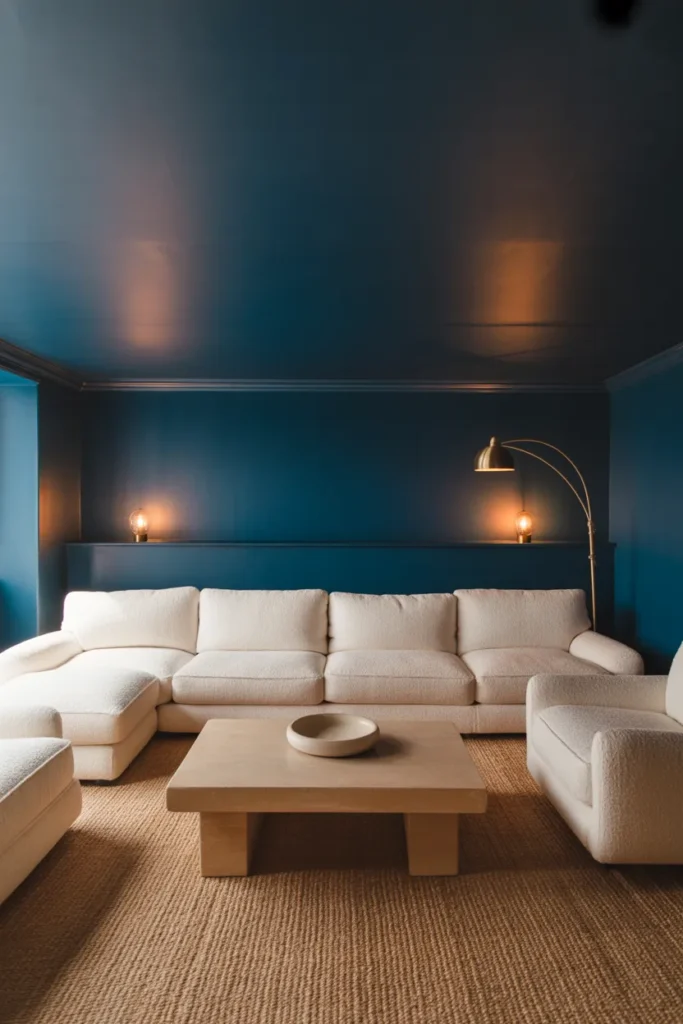
10. The Moody Basement Lounge: Designing Confidently With a Dark Palette
Dark doesn’t mean dreary. The most-saved basement lounge aesthetics share one trait: confident commitment to a deep color palette.
Choose one dominant dark tone — forest green, navy, deep terracotta, or near-black — and apply it to three or more surfaces: walls, ceiling, and one large furniture piece. This creates a “room within a room” feeling that reads as cozy rather than oppressive.
Layer in warm textures: bouclé throws, velvet cushions, aged leather, and woven baskets. These materials absorb sound (important below grade) and add visual warmth that hard surfaces can’t replicate. One point of contrast — a cream area rug or natural wood coffee table — keeps the palette from feeling heavy.
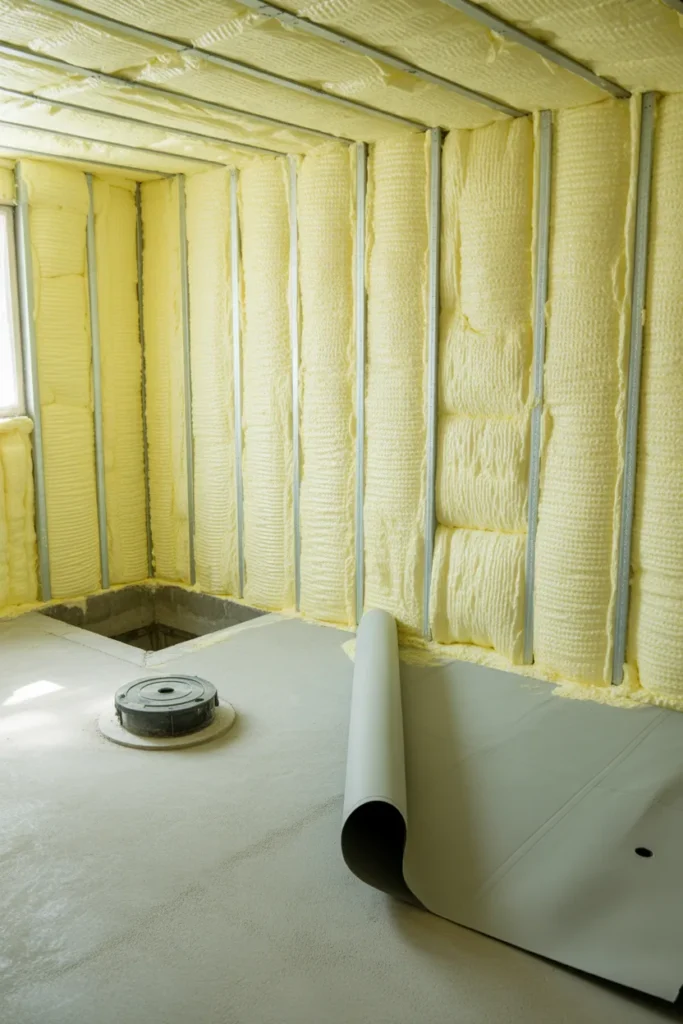
11. Moisture Control First — The Step Most Remodels Skip
Before any finish work begins, this checklist is non-negotiable:
- Waterproof exterior foundation walls if water intrusion has ever occurred
- Install a sump pump with battery backup
- Seal the concrete slab with a penetrating epoxy or vapor barrier membrane
- Frame interior walls with pressure-treated lumber at the base plate
- Use closed-cell spray foam insulation — not fiberglass batts
- Install a whole-basement dehumidifier, hardwired with a floor drain connection
Skipping moisture control and finishing over a damp basement doesn’t hide the problem — it accelerates it. Mold behind drywall, buckled LVP, and swollen cabinetry are expensive to remediate and will undo every dollar spent on the finish work above it.
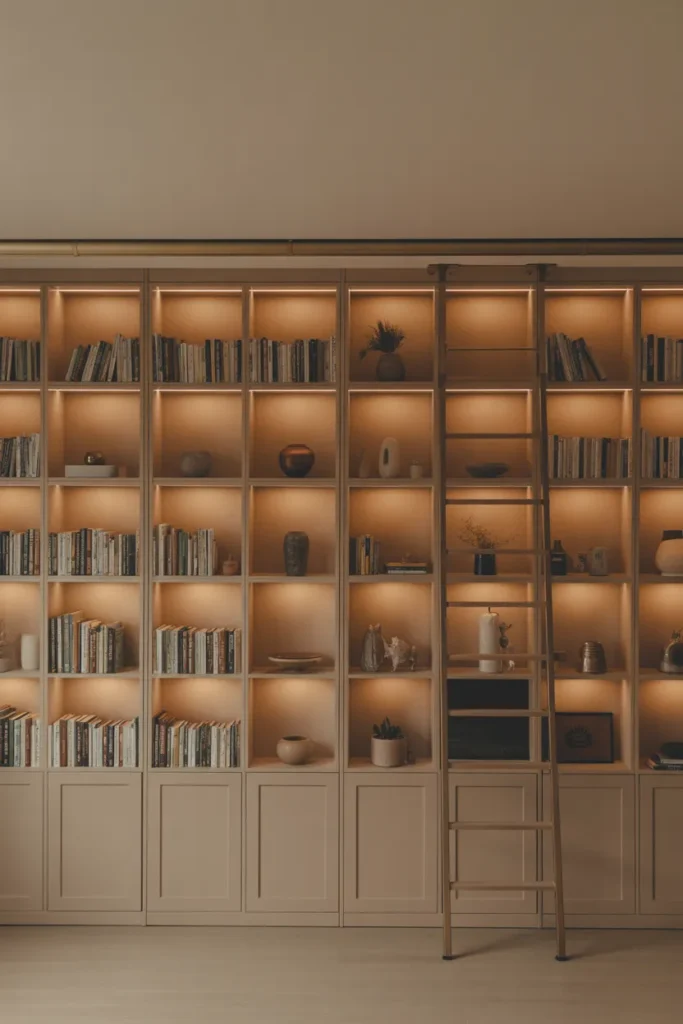
12. The Built-In Bookcase Wall That Makes Any Basement Feel Designed
A floor-to-ceiling built-in bookcase is the single highest-impact feature per square foot in a basement remodel. It reads as custom, adds storage without consuming floor space, and photographs beautifully for resale.
Build with 3/4-inch plywood, painted to match the wall color for a seamless millwork look. Add integrated LED strip lighting inside each shelf bay and the result looks far more expensive than the material cost.
Use the rule of thirds when styling: 1/3 books, 1/3 objects (ceramics, small plants, art), 1/3 negative space. Overcrowded shelves cancel out the architectural impact entirely. Vary shelf heights — this creates visual rhythm and allows larger pieces to lean against the back panel naturally.
13. Basement Ceiling Treatments — Do This, Not That
DO: Install a drop ceiling with acoustic tiles in a rental or budget remodel — modern options now come in wood-look and textured finishes that look intentional.
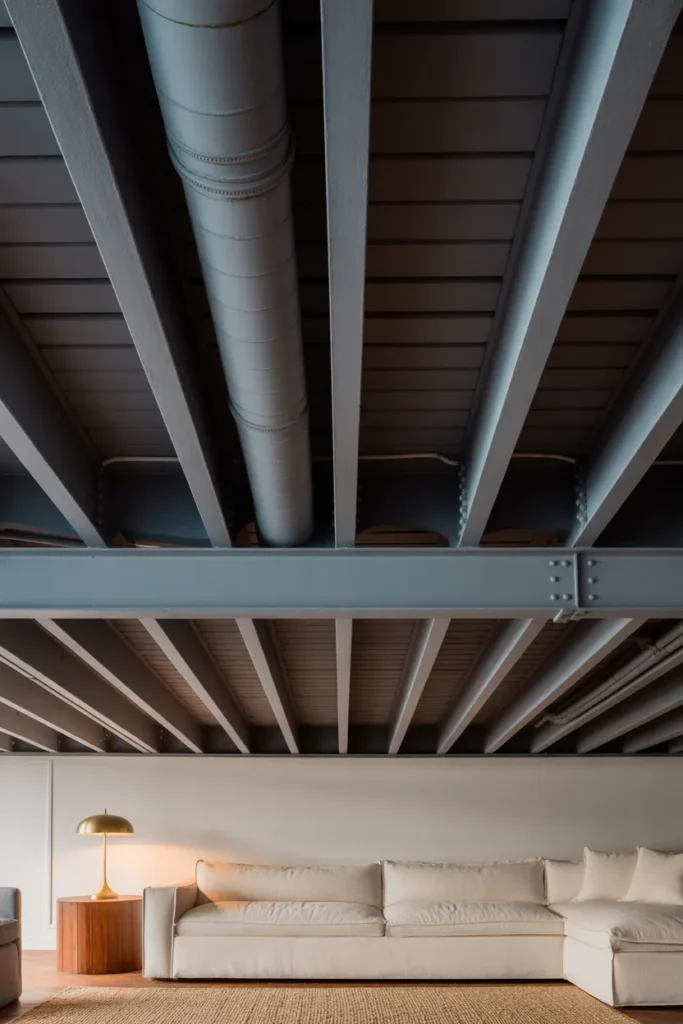
DON’T: Assume exposed ductwork is automatically “industrial-chic.” Without intentional styling, it just looks unfinished.
DO: Paint all exposed elements — pipes, beams, joists, ducts — the same matte black or deep charcoal to create visual unity in an open ceiling design.
DON’T: Mix ceiling treatment styles in one open-plan basement. Pick one approach and commit fully.
DO: Consider a coffered or beamed ceiling if you have adequate height — it adds architectural character that significantly increases perceived home value.
14. How Egress Windows Transform a Basement From Code-Compliant to Livable
Egress windows are required by code for any basement bedroom — but their impact goes far beyond legal compliance.
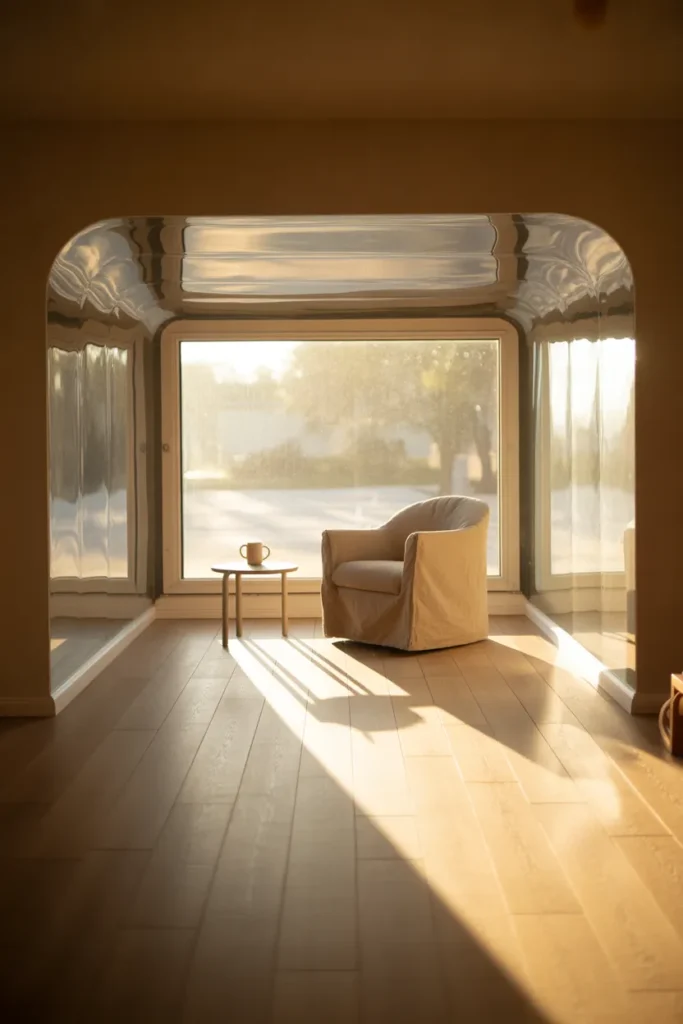
A properly sized egress window with a reflective window well liner can bring enough natural light into a basement to genuinely change the atmosphere of the whole level. Position furniture to take advantage of that light — a reading chair angled toward the window, a desk positioned to catch morning sun.
For interior rooms where a window isn’t possible, a solar tube brings natural daylight from the roof directly into the space. The quality of light is remarkably similar to a standard window, and the installation footprint is minimal.
15. The Basement Bathroom Addition: What’s Worth It
A 3/4 bath — toilet, sink, and shower, no tub — is the sweet spot for basement additions. It serves guests overnight, supports a basement gym, and adds measurable resale value without the footprint of a full bath.
The non-negotiables: proper rough-in drainage (often requires breaking the slab), adequate ventilation with a dedicated exhaust fan, and waterproof tile or LVP throughout. Never use standard drywall in a below-grade bathroom — use moisture-resistant cement board or greenboard at minimum.
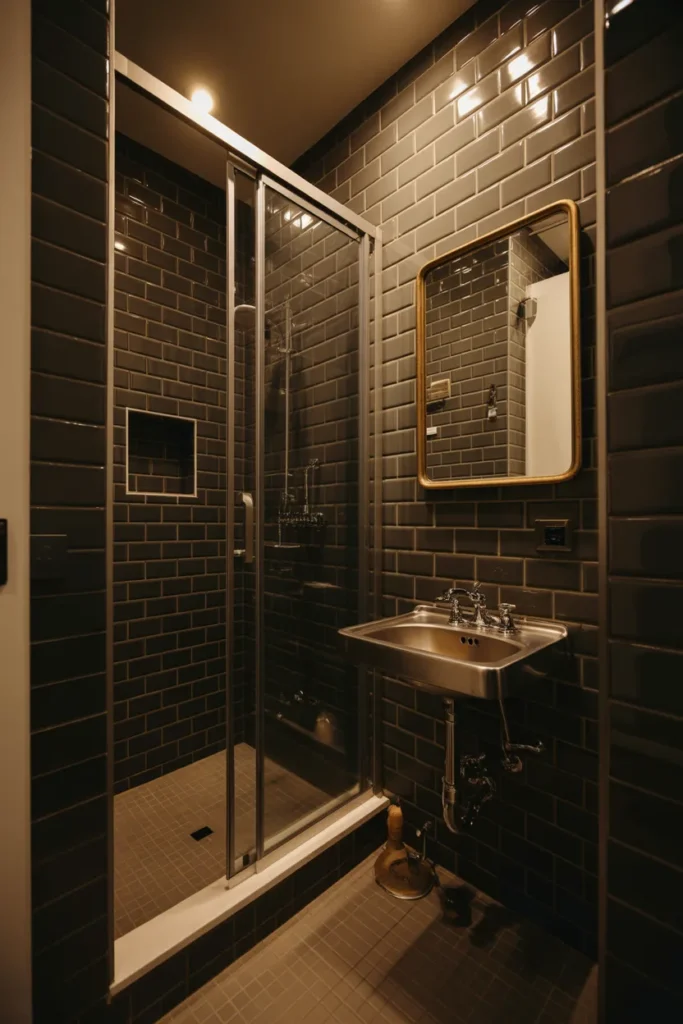
A well-designed basement bathroom in a warm, dark tile palette feels like a high-end spa. It’s one of the most surprising upgrades a basement can offer — and one of the most remembered by buyers.
Whether you’re tackling one room or the entire level, these basement remodeling ideas for 2026 give you a clear framework to make decisions with confidence. Save this post to your Pinterest boards so you can return to it at every stage of your project — and explore more design guides when you’re ready for the next step.