The bathroom is the most personal room in any home — and these bathroom interior ideas 2026 treat it that way. No generic tile grids, no cold white lighting, no wasted decisions. Whether you’re renovating a primary suite or refreshing a half bath, every idea here is chosen to help you build a space that functions beautifully and feels genuinely considered. Start with the ideas that match your space, your style, and your real life.
1. Wet Room Layout — The Bathroom Upgrade That Changes Everything
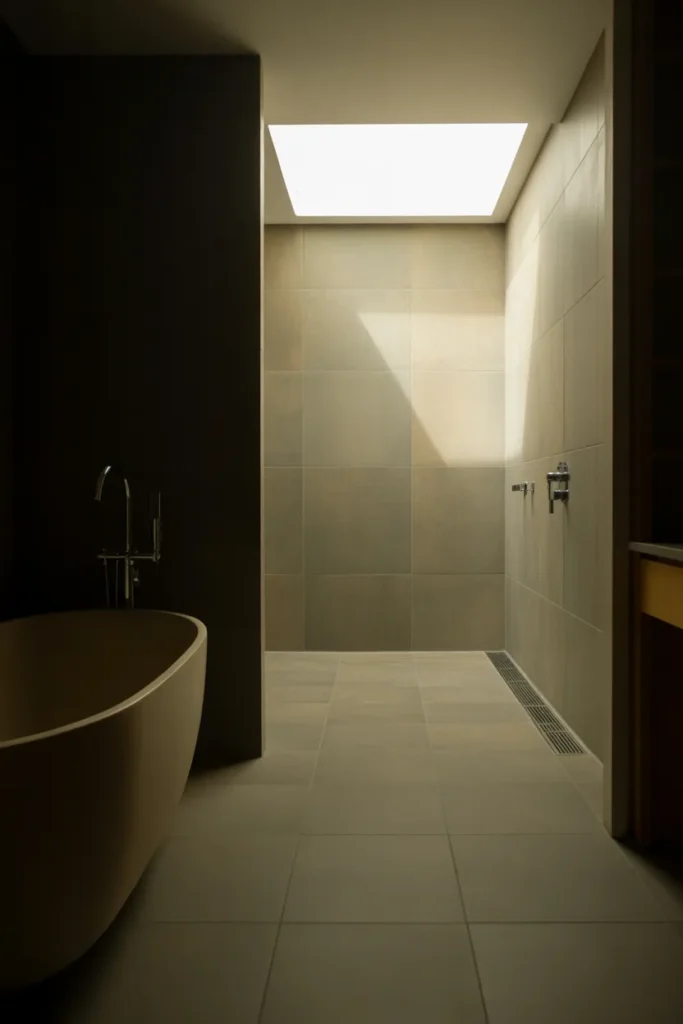
A wet room — where the shower area is flush with the rest of the bathroom floor, separated only by a glass panel or nothing at all — is one of the most transformative bathroom interior ideas 2026 is producing. It eliminates the visual barrier of a shower enclosure and makes even a modest bathroom feel significantly larger.
The entire floor and shower zone use the same continuous tile, which reduces grout lines, simplifies cleaning, and creates an uninterrupted surface that reads as luxury regardless of the tile material chosen. Continuity is what creates the spa feeling, not the size.
A linear drain running along one wall rather than a center drain completes the effect. It’s nearly invisible, handles water efficiently, and allows large-format tile to run uninterrupted across the floor.
2. Fluted Tile Walls — The Texture Detail That Photographs Like a Dream
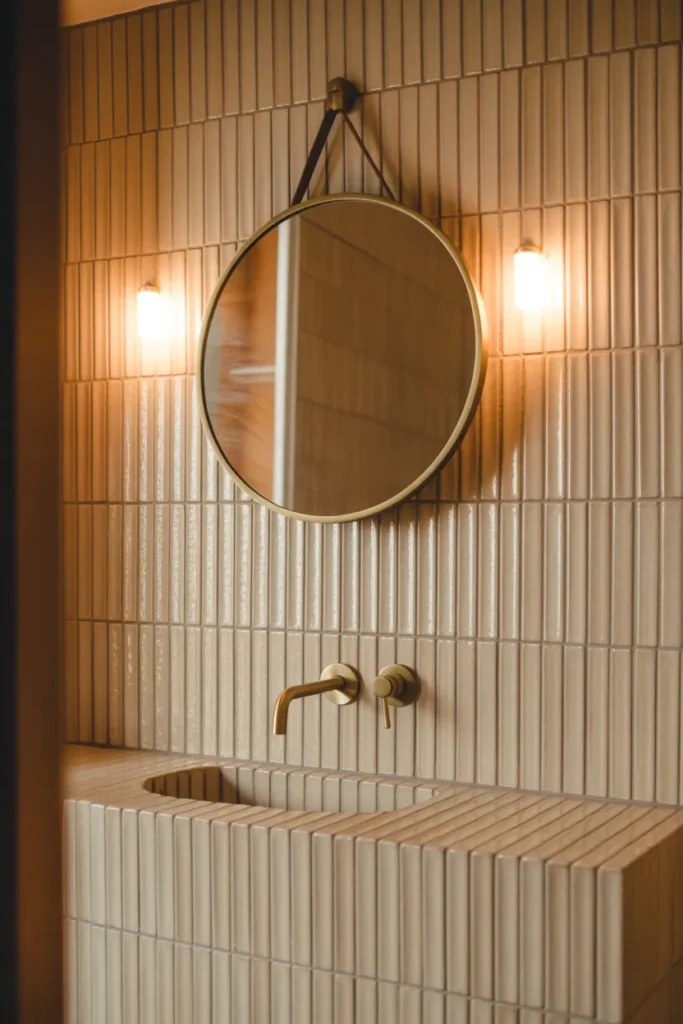
Fluted or reeded wall tile — vertical channels pressed into ceramic or stone — is one of the most visually distinctive small bathroom interior design ideas trending hard into 2026. The channels catch light at every angle, making the wall look different in morning natural light versus evening warm lighting.
Use fluted tile on a single feature wall — behind the vanity or inside the shower — rather than all four walls. One textured surface against smooth surrounding walls creates far more visual tension and interest than a room fully wrapped in the same texture.
Cream, warm white, and soft terracotta are the strongest colors for fluted tile because the channel shadows add natural depth without requiring a bold base color. The texture does the work.
3. Dark Moody Bathroom — Small Space, Maximum Drama
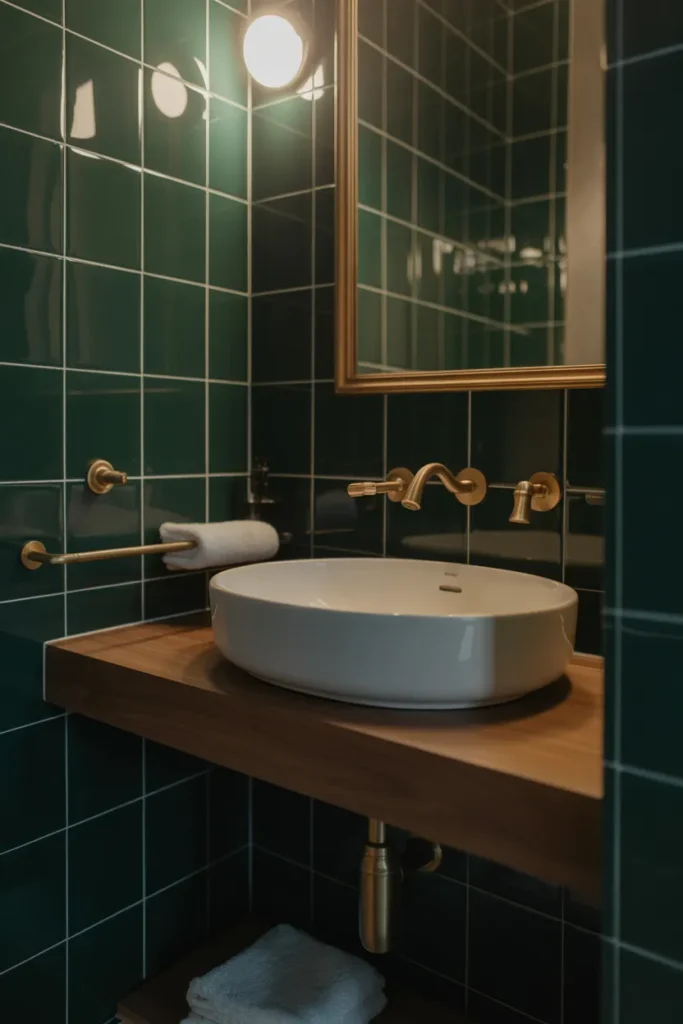
Dark bathrooms are among the most-saved modern bathroom interior design ideas because they solve the small bathroom problem in a completely counterintuitive way. Deep charcoal, forest green, or midnight navy walls make a small bathroom feel like a deliberate design decision rather than a space limitation.
The psychological shift is real: a small bright white bathroom reads as small. A small dark bathroom reads as intimate, designed, and intentional. The size doesn’t change — the perception does.
Keep fixtures light against dark walls: a white or cream basin, chrome or brushed gold fixtures, and white towels folded and displayed. The contrast between dark surfaces and light objects creates the visual hierarchy that makes dark bathrooms so compelling in photographs.
4. Japandi Bathroom — Calm, Material-Honest, and Built for 2026
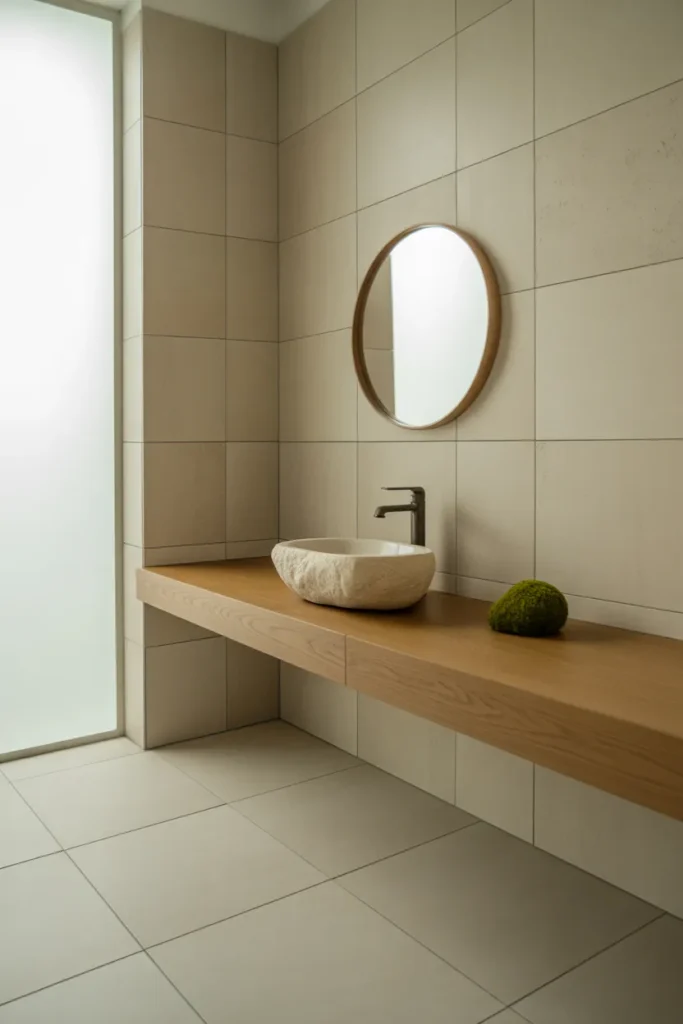
Japandi bathroom design — the blend of Japanese restraint and Scandinavian warmth — is one of the most enduring bathroom interior ideas 2026 has to offer precisely because it doesn’t chase trends. It chases calm. Low vanities in warm wood, a stone or concrete basin, and a single large mirror with no frame or a thin wood edge.
Everything in a Japandi bathroom earns its place. There are no decorative objects without function. A wooden bath stool, a single ceramic dish for soap, a linen hand towel on a simple hook. The emptiness between objects is part of the design.
Neutral stone tile in a large format with minimal grout lines, matte fixtures in a single finish, and one small plant — a trailing pothos or a moss ball — are the only elements needed to complete this direction.
5. The Double Vanity Done Right — Symmetry That Actually Functions
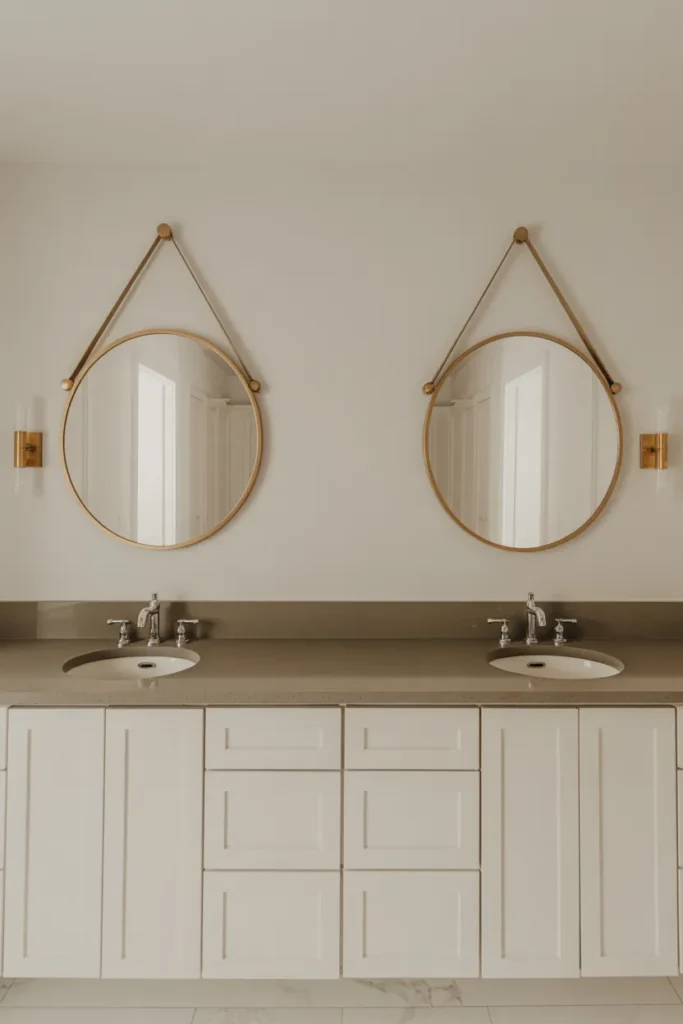
A double vanity is one of the most requested primary bathroom interior design ideas in the USA — and one of the most commonly done wrong. The mistake is always the same: two identical sinks crammed into a space that needs breathing room between them.
The correct approach: allow at least 18 inches of clear counter space between the two basins. This is where toothbrushes, hand soap, and daily items live. Without it, a double vanity becomes two sinks competing for the same usable surface.
Frame each sink with its own mirror rather than one long shared mirror. Two individual mirrors — round, oval, or rectangular — create separate visual zones, make the bathroom feel more personal, and photograph with significantly more depth and interest.
6. Terrazzo Is Back — And It Belongs in Every Part of the Bathroom
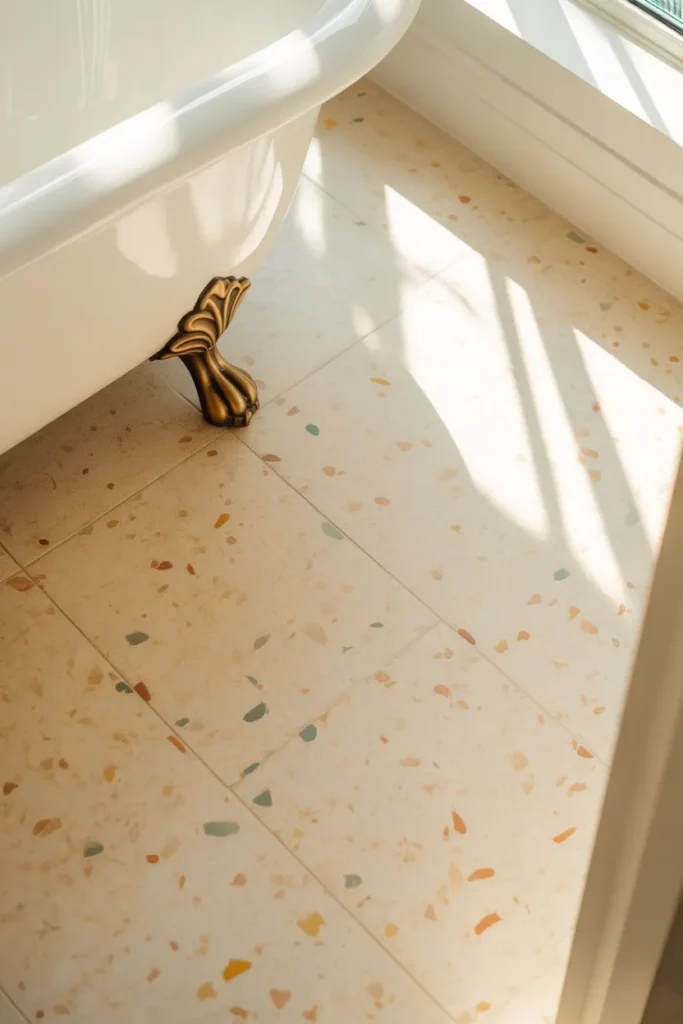
Terrazzo — the composite material of marble, granite, or glass chips set in cement or resin — is one of the most joyful bathroom remodel ideas 2026 is reclaiming from mid-century design. Modern terrazzo is nothing like the institutional floors of the past. It comes in fine chip sizes, warm background tones, and formats ranging from large-slab tile to small mosaic.
Use terrazzo on the floor only, with clean solid walls above, for a grounded look that lets the pattern speak. Or flip it: terrazzo feature wall in the shower with plain large-format floor tile for an unexpected focal point.
Warm terrazzo backgrounds — cream, warm grey, blush — with chips in terracotta, sage, and gold feel contemporary and collected. Avoid stark white backgrounds with black chips — it reads too retro without the irony.
7. Walk-In Shower Without a Door — The Opening That Changes the Room
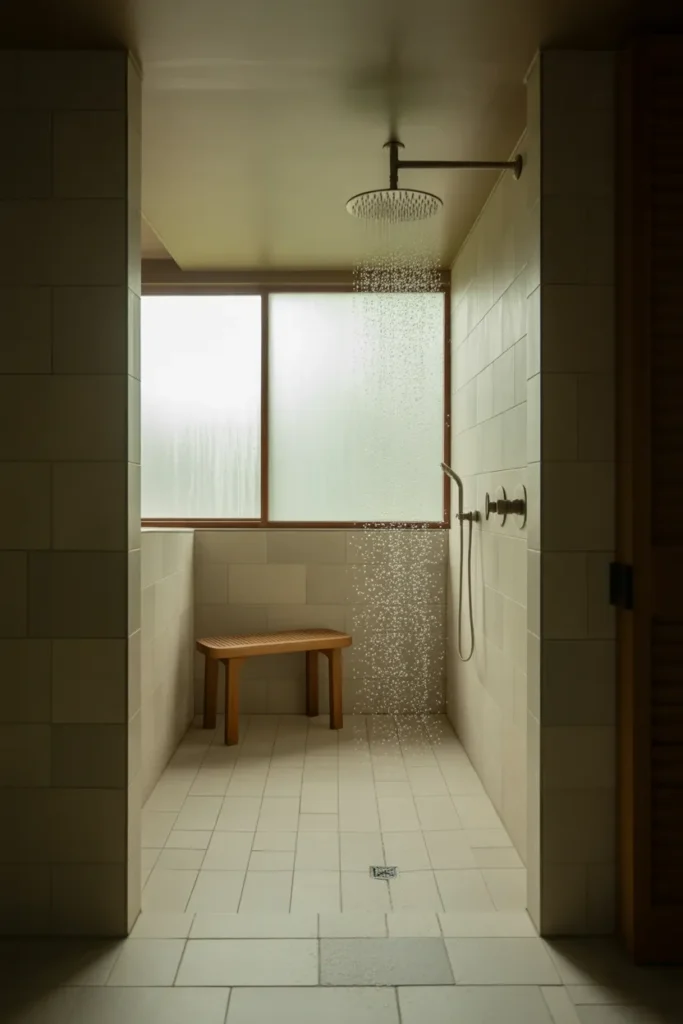
A doorless walk-in shower — designed with a sufficient entry width and a correctly angled showerhead — is one of the most functional and visually impactful bathroom interior ideas 2026 continues to push forward. Without a door, the shower becomes part of the room rather than a separate pod within it.
The entry opening needs to be at least 36 inches wide for the doorless design to function without water escaping. The showerhead should be positioned at the wall opposite or perpendicular to the opening, angled inward. This is a geometry problem as much as a design one.
Large-format tile in the shower zone that matches or coordinates with the bathroom floor creates the continuous surface that makes doorless showers read as spa-caliber. The fewer transitions between surfaces, the more expensive the bathroom feels.
8. Arched Mirror as the Vanity Focal Point — One Swap, New Bathroom
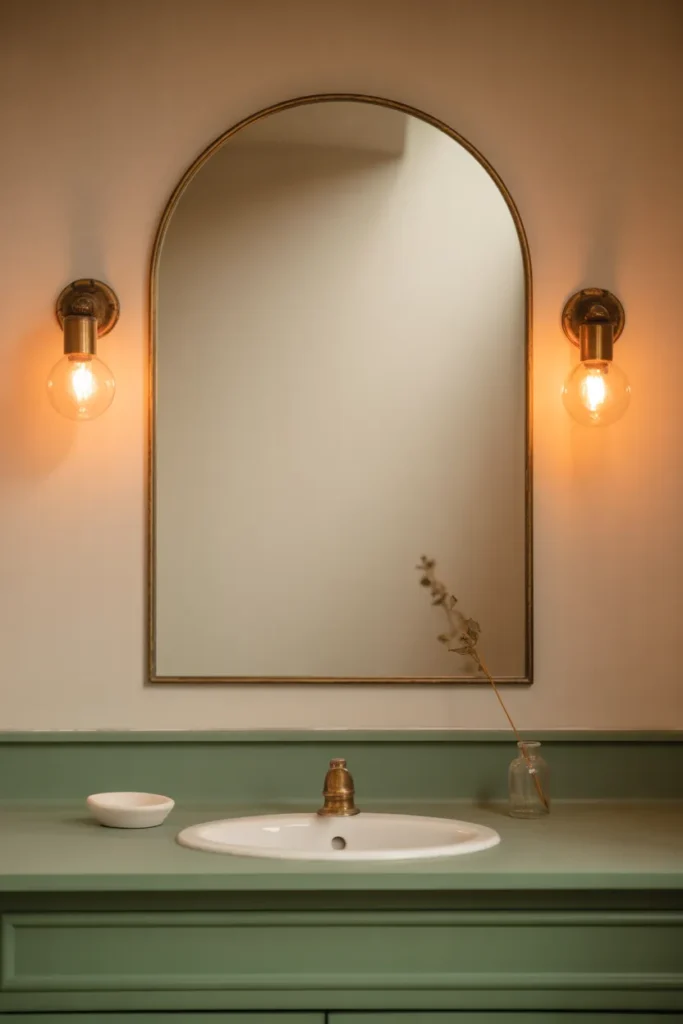
Replacing a builder-grade rectangular mirror with an arched or scallop-top mirror is one of the highest-return single-item upgrades in all of bathroom interior design. The arch introduces a soft geometry that immediately elevates the entire vanity zone.
An arched mirror works against tile, painted walls, and shiplap equally. It doesn’t require a style commitment — it crosses modern, transitional, and romantic aesthetics without belonging exclusively to any of them. This is exactly why it’s one of the most universally applicable bathroom makeover ideas.
Pair the arch with a wall sconce on each side at eye level rather than overhead lighting. The sconce-plus-arch combination is the vanity lighting arrangement that most consistently flatters both the room and the person standing in it.
9. Heated Floors — The Invisible Upgrade Worth Planning For
Radiant heated floors are the bathroom upgrade that nobody sees and everybody who has them refuses to live without. If you’re already opening up the floor for any bathroom renovation, adding electric radiant heat under tile is one of the highest-comfort-per-dollar decisions available in 2026 bathroom remodel ideas.
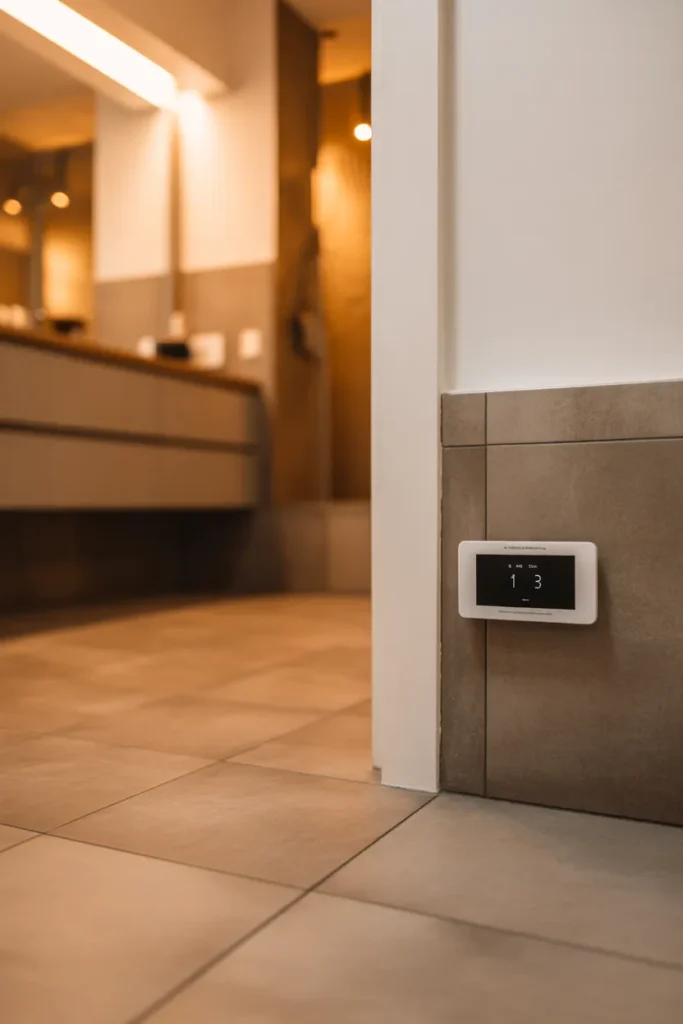
The system is thin — less than a quarter inch — and installs directly under tile before the adhesive layer. It requires a dedicated thermostat, usually installed inside the bathroom door, and operates on a timer so the floor is warm precisely when you need it.
Stone and large-format porcelain tile conduct heat most efficiently. Small mosaic tile, thick natural stone, and wood-look tile are less effective conductors. This is a specification decision worth making before your tile selection, not after.
10. The Freestanding Bathtub — Placed Correctly, Not Just Centered
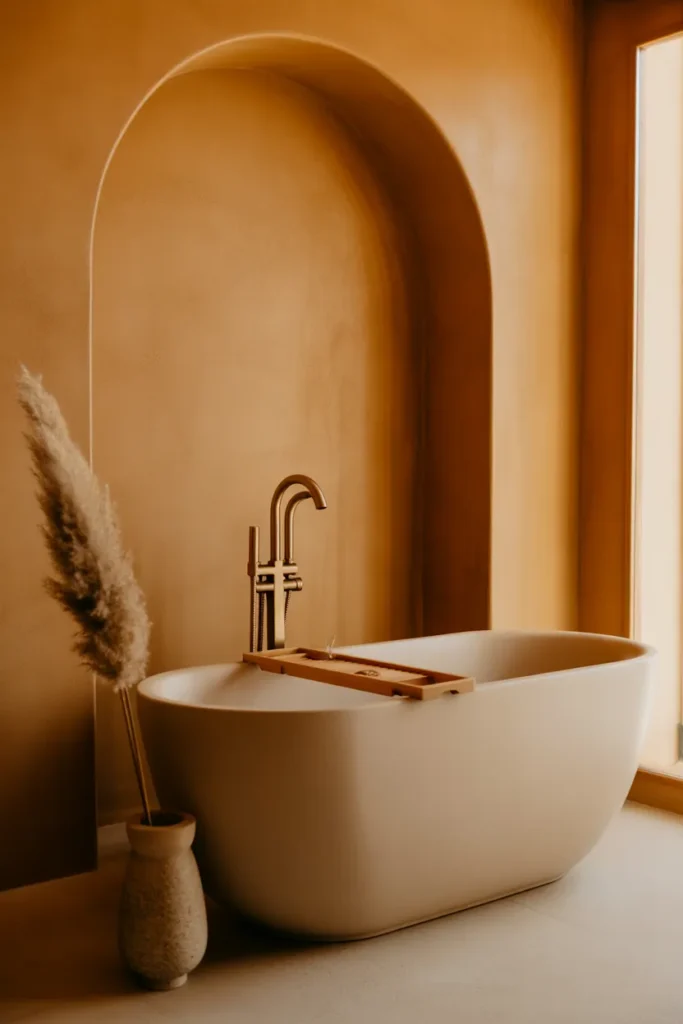
A freestanding bathtub is one of the most aspirational primary bathroom interior ideas in the USA — and one of the most frequently placed incorrectly. Centering a freestanding tub in the middle of the room only works when the room is large enough to allow comfortable circulation on all four sides. In most bathrooms, it doesn’t.
The more effective placement for most primary bathrooms is against a feature wall, angled slightly, or in a nook or alcove created by the surrounding architecture. This grounds the tub visually, reduces the required floor clearance, and creates a more intimate bathing experience.
The wall behind the tub becomes a design opportunity: a slab of stone, a painted accent color, a vertical stack of large-format tile, or a dramatic piece of art at the correct moisture-safe height.
11. Vertical Tile Layout — The Direction Change That Adds Height
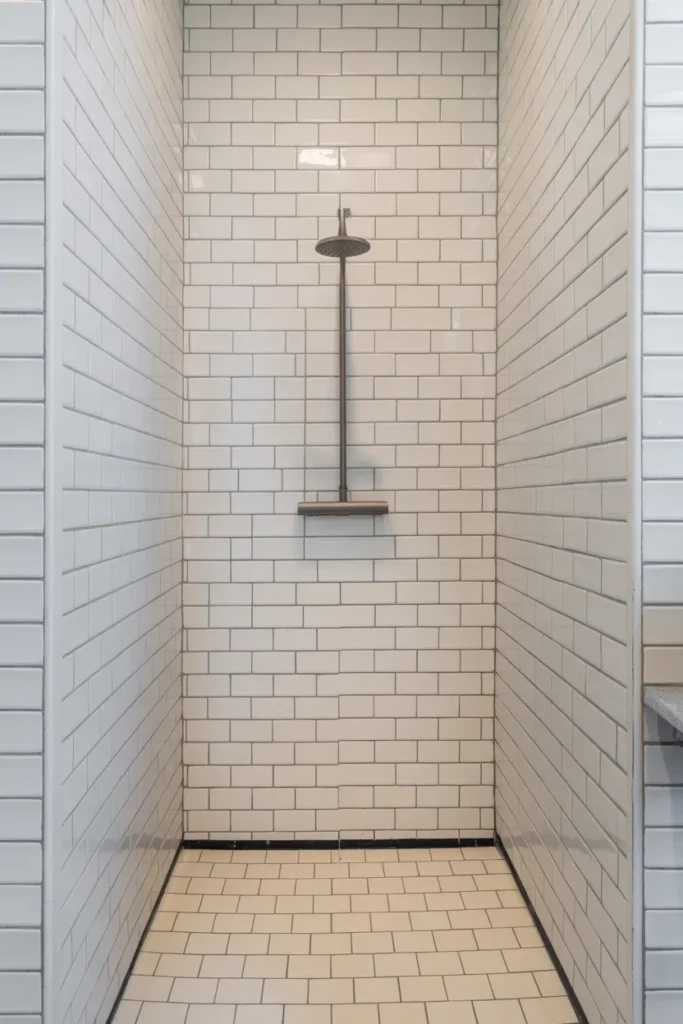
Horizontal tile runs make a bathroom feel wider. Vertical tile runs make it feel taller. In bathrooms with standard eight-foot ceilings — which is most American bathrooms — running wall tile vertically is one of the simplest and most effective small bathroom interior design ideas available.
Subway tile in a vertical stack rather than a horizontal brick pattern, or large-format rectangular tile stood on its long edge, draws the eye upward and creates the impression of significantly more ceiling height.
Take vertical tile from floor to ceiling without a border or chair rail interruption. The unbroken vertical line is what creates the height illusion. Any horizontal interruption resets the eye and negates the effect.
12. Warm Lighting Only — Retire the Cool White Bathroom Bulb
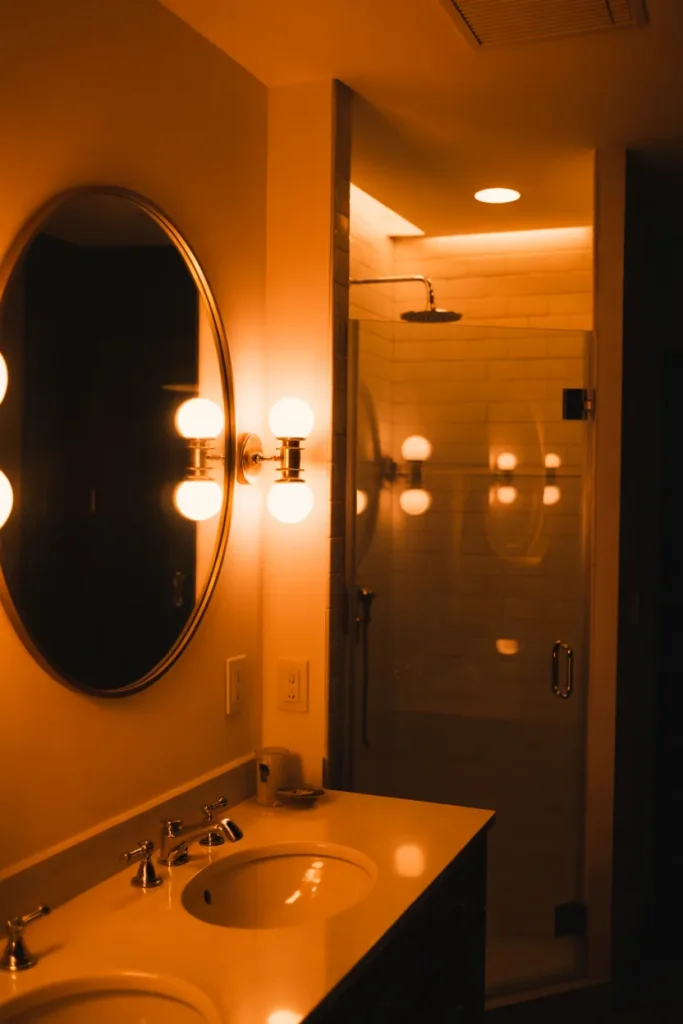
Cool white lighting — anything above 4000K — is the single most common reason bathrooms feel clinical, unflattering, and uncomfortable. Switching every bathroom light source to warm white at 2700K to 3000K is one of the most impactful bathroom interior ideas 2026 homeowners are finally acting on.
Warm lighting makes skin tones look natural, makes white tiles look cream rather than sterile, and makes warm wood vanities glow rather than flatten. The entire bathroom shifts in perceived temperature — literally and visually.
Layer the warm light: a wall sconce at face height beside the mirror for task lighting, a recessed warm downlight above the shower, and a dimmable overhead source for ambient use. Three sources, all at 2700K, and no bathroom ever feels harsh again.
13. Floating Vanity — The One Fixture That Makes Small Bathrooms Bigger
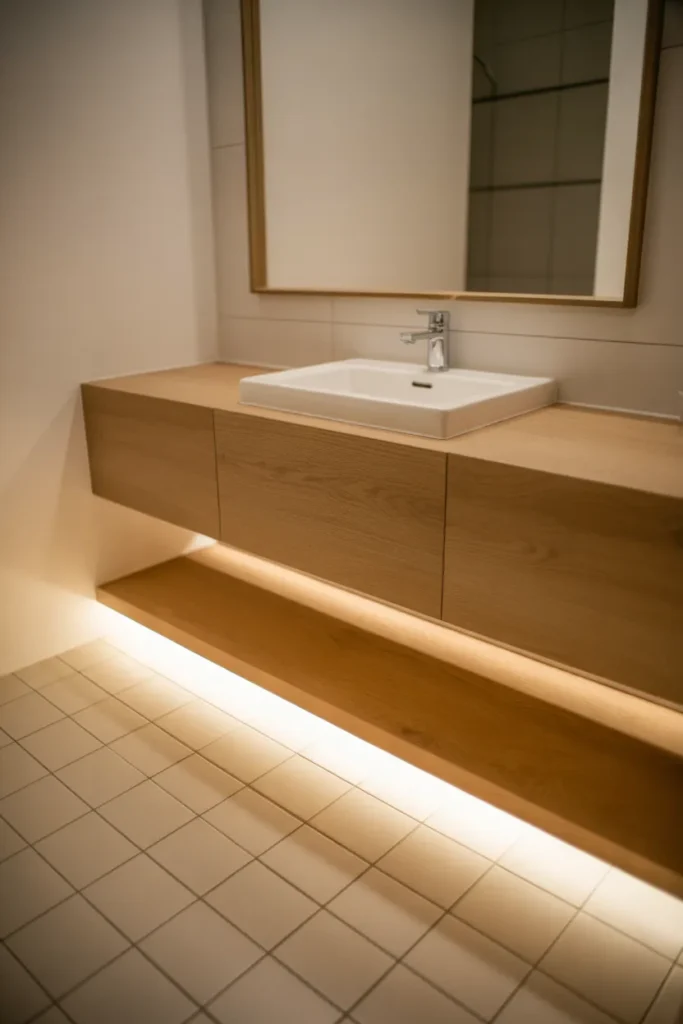
A floating wall-mounted vanity — with floor clearance beneath it — is one of the most effective small bathroom remodel ideas because visible floor space reads as usable space, even when it isn’t. The eye perceives the uninterrupted floor running under the vanity and registers the room as larger than it measures.
The sweet spot for floating vanity height is 34 to 36 inches from floor to countertop — slightly higher than traditional vanity height, which improves ergonomics for most adults significantly. The under-vanity space also allows for a small LED strip to be mounted beneath, creating a soft floating light effect at floor level.
Choose a vanity depth of 18 to 20 inches for smaller bathrooms rather than the standard 21 inches. Two inches of recovered floor space in a tight bathroom changes the entire circulation experience.
14. Limewash Paint in the Bathroom — Texture Without Tile
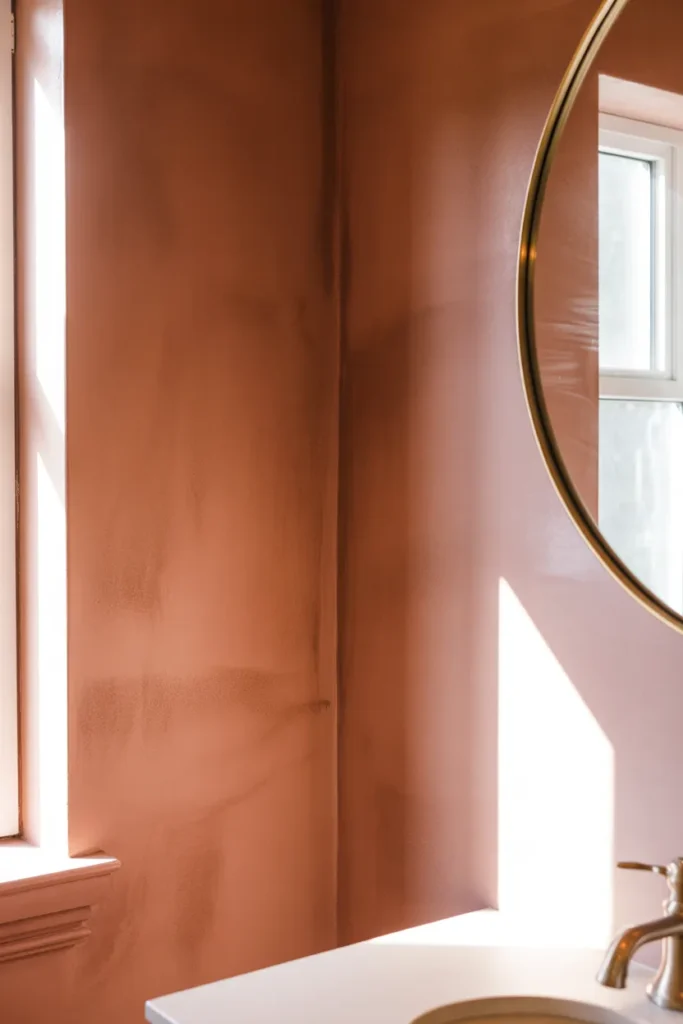
Limewash paint — traditionally used in Mediterranean and Italian interiors — is one of the most unexpected bathroom interior ideas 2026 is bringing mainstream. Applied to bathroom walls in moisture-tolerant formulations, it creates a soft textural depth that shifts with the light throughout the day.
Unlike flat paint, limewash has a translucency that builds in layers, creating natural variation in tone across the surface. No two walls look identical, and no two hours of the day produce the same appearance. It’s living finish in a space where you experience light changing most dramatically — morning versus evening bathroom light are entirely different environments.
Use limewash in the dry zones of the bathroom: vanity wall, exterior of the shower, and ceiling. Keep tile in the wet zones. The combination of textured painted walls and clean tile creates a material conversation that feels high-end and artisanal.
15. The Spa Shower System — Multiple Functions, One Decision
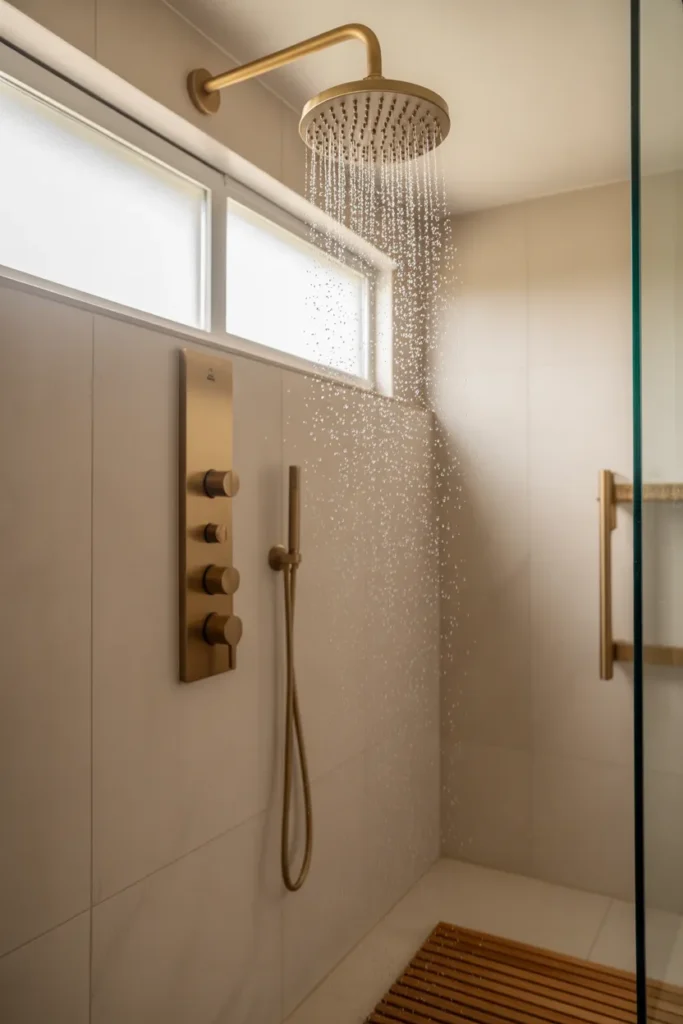
A thermostatic shower system — with a rain head, a handheld, and optional body jets controlled by a single thermostatic valve — is the functional pinnacle of 2026 bathroom interior ideas for primary suites. It delivers consistent water temperature from the moment it’s turned on and allows different outlets to run simultaneously or independently.
The design benefit is as important as the function: a thermostatic valve panel with clean round or square controls reads as architectural hardware rather than plumbing. It becomes a feature of the shower wall rather than a utility item on it.
Specify a ceiling-mounted rain head at minimum 8 inches in diameter — 12 is better — for the immersive overhead water experience that defines spa showers. A wall-mounted handheld on a slide bar handles everything else.
Save These Before Your Bathroom Renovation Begins
These bathroom interior ideas 2026 are here to sharpen every decision before you spend a dollar or move a single tile. The difference between a bathroom that feels like a renovation and one that feels like a transformation is almost always in the details — the lighting temperature, the tile direction, the vanity height, the fixture finish. Go back through, save the ideas that speak to your space, and let them anchor every conversation with your designer or contractor. More room-by-room interior ideas are ready when you are.