Over the past year, I’ve walked through hundreds of bedroom renovations, consulted on countless floor plans, and spent more nights than I can count studying how people actually use their sleeping spaces. What I’ve seen shifting in 2026 is remarkable — bedrooms are no longer treated as an afterthought. They are the most intentional rooms in the home. People are rethinking every inch: how the bed sits, where the light lands, how the walls breathe.
What I’ve noticed most is that the old rules simply don’t apply anymore. The bed-against-the-center-wall formula has been abandoned. People want layouts that serve their mental health, their relationship with technology, their desire for calm, and their need for genuine personal sanctuary. These 15 bedroom layout ideas for 2026 reflect exactly that shift — and I’m confident at least one of them will completely transform how you think about your own room.
1. The Corner Nest Bed Placement
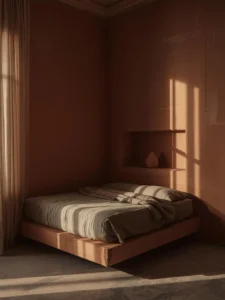
Instead of floating the bed in the center of the room, the corner nest layout tucks the headboard into a natural room corner, freeing up two full walls for function and flow. This placement psychologically anchors the sleeper on two sides, creating a deep sense of security and enclosure that flat-wall placements simply cannot replicate. In 2026, with anxiety-driven design becoming a serious interior trend, this layout hits differently — it feels like being held by the room itself.
The freed walls become home to layered storage, reading alcoves, or slim workspace panels without the room ever feeling crowded. It works exceptionally well in both small and mid-size bedrooms because it reorganizes the room’s visual weight and opens up a generous, uninterrupted floor path from door to window.
2. The Floating Bed With Wrap-Around Headboard Wall
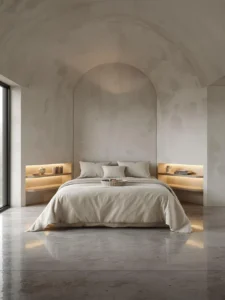
This layout keeps the bed floating centrally but introduces a full-width feature wall behind it that extends floor to ceiling and wraps slightly around both sides — forming a visual alcove without any structural build-out. In 2026, this design replaces the traditional accent wall with something far more architectural. The wrap-around effect makes the headboard zone feel like a room within a room, which dramatically increases the perceived coziness of even a large master bedroom.
The flanking sides of the wrap wall can house recessed lighting panels, slim floating nightstands built directly into the surface, or softly backlit niches. The result is a bedroom that feels designed by an architect rather than assembled from a furniture catalog. It works particularly well with curved or arched headboard forms.
3. The Diagonal Bed Orientation
Placing the bed on a 45-degree diagonal against the room’s corner is one of those moves that sounds wrong until you see it done right — and then you wonder why every room doesn’t do it. In 2026 interiors, the diagonal bed has become a defining statement of confident, rule-breaking design. It instantly creates dynamic energy in a space that traditional parallel arrangements can never achieve. The triangular space behind the headboard becomes a perfectly-sized nook for plants, pendant lights, or a sculptural floor lamp.
This works best in square or near-square rooms where the diagonal maximizes floor visibility from the doorway. The room immediately looks larger because the eye travels further before hitting a wall. Pair with a circular rug to soften the geometry and anchor the bed visually without competing with its angle.
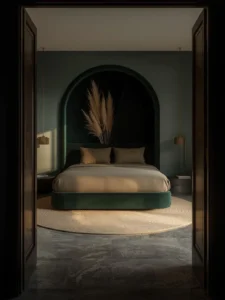
4. The Sleeping Zone Partition Layout
Rather than having the bed visible the moment you enter the bedroom door, this layout uses a partial partition — a low bookshelf, a slatted wood screen, a suspended fabric panel — to create a visual transition zone between the door and the sleeping area. In 2026, bedroom wellness design has placed enormous value on the decompression journey: the idea that entering your bedroom should feel like a mental shift, not just a physical one. The partition makes that shift tangible and spatial.
This is especially powerful in open-plan apartments or studio configurations where the sleeping zone shares a room with other functions. Even in a dedicated bedroom, the partition adds a layer of ritual and privacy that makes sleep feel more intentional. A low bouclé bench in the entry zone doubles as a place to transition from day to night.
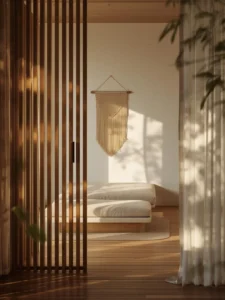
5. The Sunken Bed Platform
The sunken bed platform lowers the sleeping area by 20–30 cm below the room’s main floor level, creating a defined, cocooning sleep pit that feels both architecturally dramatic and profoundly comforting. In 2026, this is one of the most searched luxury bedroom alterations globally — and for good reason. The lowered position changes the entire sensory experience of being in bed. You see less of the room, which reduces visual noise, and the walls around the sunken zone feel taller and more enveloping.
While it requires structural consideration, many designers are achieving the same visual effect with built-up platforms surrounding a standard floor-level mattress, creating the perception of a sunken area without any excavation. The surrounding stepped platform becomes integrated storage, seating, and a natural ledge for lighting and soft objects.
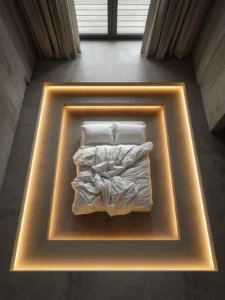
6. The Bedroom-Office Hybrid Split Layout
With remote and hybrid work still shaping how homes are used in 2026, the bedroom-office split layout has been refined into something genuinely beautiful rather than just functional. The key is hard zoning using architectural language: a full-height painted arch defines the work zone on one wall, while the opposite sleeping zone is kept entirely screen-free. This layout respects the psychological need for separation while accepting the physical reality of limited space.
The work wall is built with deep-shelved joinery, task lighting, and a floating desk that folds or slides away at night. Critically, the desk chair is tucked completely out of sightline from the bed. A warm neutral color wraps the entire room so both zones feel cohesive rather than visually competing. This is the layout that makes remote workers sleep better.
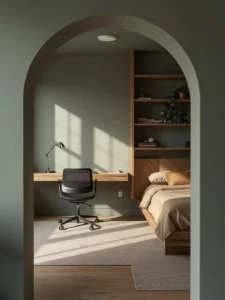
7. The Circular Bedroom Flow Layout
Designed around the idea of circular movement rather than linear traffic paths, this layout positions every furniture piece so that the room can be circled entirely without doubling back. The bed, wardrobe, dressing area, and reading chair are placed sequentially around the room’s perimeter, creating an almost ritual-like morning and evening flow. In 2026 wellness-focused design, this concept has gained major traction because it reduces friction and decision fatigue in daily routines.
The circular flow layout is especially effective in master bedrooms with en-suite access, where the path from sleep to shower to dressing can become a single, uninterrupted movement. It also prevents the common problem of furniture blockading natural traffic lines — a significant source of low-level daily irritation that most people don’t consciously recognize as a design failure.
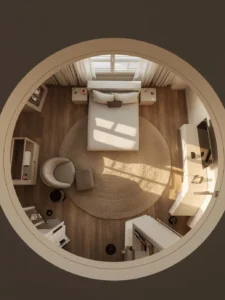
8. The Window-Facing Bed Layout
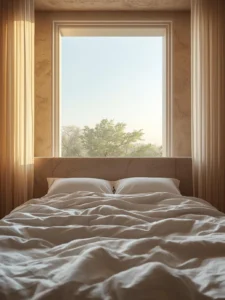
Breaking perhaps the most entrenched bedroom convention — that the bed should face away from or sit perpendicular to the window — this 2026 layout turns the bed so the sleeper wakes facing natural light directly. Circadian rhythm research has increasingly influenced interior designers to prioritize morning light exposure in bedroom planning, and this layout is the purest expression of that principle. Waking up to open sky rather than a wall is a fundamentally different and documented mood-altering experience.
The headboard wall becomes a rich opportunity for texture and art since it faces into the room rather than toward light. The foot-of-bed window view can be softened with sheer layered curtains that diffuse morning light without blocking it. This layout works especially well in east-facing rooms and for anyone working on improving their sleep quality and natural wake cycle.
9. The Curtained Bed Canopy Zone Layout
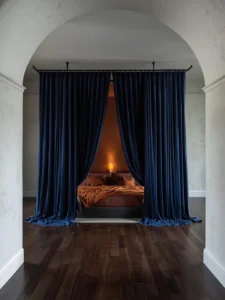
Rather than adding a traditional canopy bed frame, this layout creates a canopy zone using ceiling-mounted tracks that allow full linen or velvet curtains to be drawn completely around the bed — transforming it into a soft, enclosed sleeping chamber within the larger room. In 2026, this idea has exploded in popularity because it solves the desire for privacy and enclosure without any permanent structural change. The curtains open fully during the day, making the room feel expansive, and close at night for a deeply intimate sleeping environment.
The curtained zone approach works in any ceiling height above 2.6 meters and is particularly powerful in large bedrooms that feel cavernous or cold without visual anchoring. Choosing a curtain fabric that contrasts the wall color — a charcoal velvet in an all-white room, for example — ensures the sleeping zone reads as a genuinely separate spatial experience rather than just decoration.
10. The Asymmetric Nightstand Layout
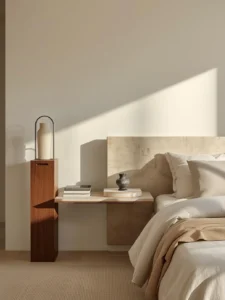
Perfectly matching nightstands on either side of the bed have been the default bedroom layout for decades — and in 2026, that symmetry has been deliberately broken by designers who understand that asymmetry signals confidence and personality. The asymmetric nightstand layout pairs a tall, narrow bedside table on one side with a low, wide surface on the other. Or a wall-mounted shelf opposite a freestanding sculptural table. The visual tension created is immediately more interesting and alive than mirrored sameness.
This layout also respects the reality that two people sharing a bed have completely different bedside needs. One person may need a full charging station and bookshelf while the other needs only a lamp and a glass of water. Designing for actual behavior rather than visual convention is one of the most intelligent shifts in bedroom planning in 2026 — and the asymmetric layout is its most visible expression.
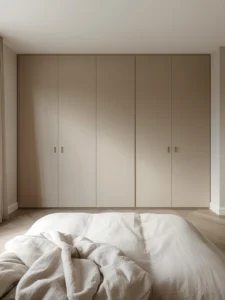
11. The Full-Room Wardrobe Wall Layout
Instead of a freestanding wardrobe or a walk-in closet tucked into a corner, this layout dedicates one complete wall of the bedroom — floor to ceiling, edge to edge — entirely to integrated storage. In 2026, this approach has become the gold standard for bedroom organization because it eliminates visual clutter completely. Every door is flush, handle-free, and finished in the same tone as the walls, so the wardrobe wall essentially disappears into the architecture of the room.
The full wardrobe wall creates a powerful sense of visual calm because the eye has nothing to catch on or be distracted by. The remaining three walls and the floor become a clean canvas for the bed, soft furnishings, and art. This layout is particularly transformative in bedrooms where existing freestanding storage was making the room feel chaotic — the change is immediate and dramatic from the very first night.
12. The Reading Nook Built Into the Bedroom Layout
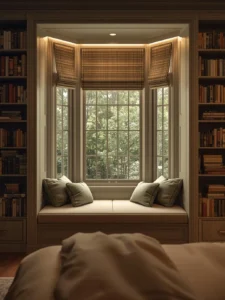
Rather than treating the reading chair as an afterthought shoved into a corner, this 2026 layout plans a dedicated reading nook as a primary functional zone alongside the sleeping area. It is typically carved into a window recess, a structural alcove, or a purpose-built joinery nook with its own lighting, storage, and acoustic softness. The reading nook layout positions books, task lighting, and a deeply comfortable seat as equal in importance to the bed itself.
This layout reflects the documented rise in pre-sleep reading as a screen-replacement ritual and the growing understanding that having a comfortable non-bed space in the bedroom encourages people to leave the bed when they can’t sleep — a key behavioral tool recommended by sleep specialists. In design terms, it creates a two-zone bedroom that is richer, more layered, and significantly more livable than a single-function sleeping room.
13. The Zen Minimalist Empty-Floor Layout
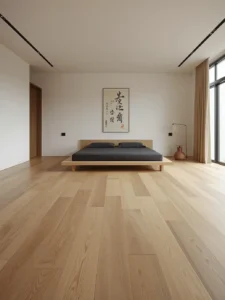
This layout is defined as much by what is removed as by what is placed. The zen minimalist layout strips the bedroom down to the absolute essentials — a bed, a light source, a single surface for a few chosen objects — and deliberately keeps a generous portion of the floor completely empty and visible. In 2026, with overstimulation and mental fatigue at culturally high levels, the empty-floor layout is being embraced as a form of active self-care. The space itself becomes the design statement.
This layout requires the most thoughtful editing of possessions and often a complete rethinking of where storage lives in the home. When done correctly, the visible floor area creates a physical sense of breathing room and spaciousness that no amount of clever furniture arrangement can replicate. It works best with low-profile beds, natural material floors, and a single powerful art or textile piece that earns its place.
14. The Dressing Room Integrated Bedroom Layout
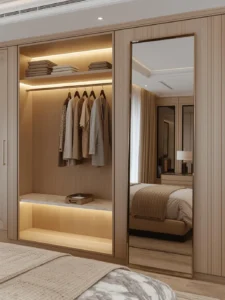
Rather than treating the dressing area as a separate walk-in room or a curtained corner, this layout fully integrates an open dressing zone into the bedroom design as a visible, curated display of clothing and accessories. Open rails, backlit shelving for folded items, and a full-length integrated mirror are arranged as considered design elements rather than hidden utility. In 2026, inspired by boutique hotel suites and fashion-forward apartment design, the exposed dressing layout treats clothing as part of the interior aesthetic.
This works exceptionally well for people who take pride in a curated wardrobe and are willing to keep it visually edited. The open display removes the closet entirely as a closed box and makes the act of getting dressed part of the bedroom’s daily ritual. Strategically placed lighting transforms even modest clothing collections into something that feels like a personal retail moment every morning.
15. The Biophilic Headboard Wall Layout
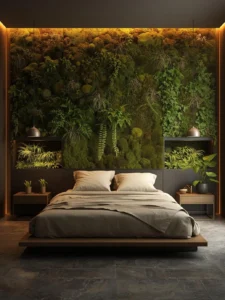
In 2026, biophilic design has moved beyond scattering a few plants around a room and into something far more structurally intentional — and nowhere is this more powerful than behind the bed. The biophilic headboard wall replaces or supplements a traditional headboard with a living moss panel, a deeply textured bark-effect plaster, a floor-to-ceiling vertical garden trough, or a wood slice installation that brings raw natural material into direct visual proximity with the sleeper. The effect on morning mood and evening wind-down has been widely reported as significant.
This layout positions nature as the primary design element of the most important wall in the room. It works with any bed style but is most powerful with a low, simple platform bed that doesn’t compete visually with the richness of the wall behind it. This is the bedroom layout for anyone who feels most at peace in natural settings and wants that restoration available every single night.