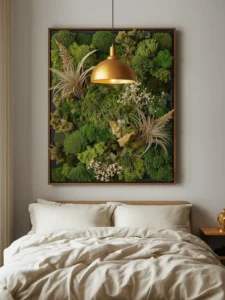
I’ve walked into hundreds of tiny bedrooms over the years — and I’ll be honest, most of them feel like a wasted opportunity. I’ve seen rooms barely bigger than a walk-in closet transformed into genuinely beautiful, functional retreats simply by rethinking how every inch is used. In 2026, the conversation around small bedroom design has shifted completely. It’s no longer about making a small room look bigger — it’s about making it feel intentional, curated, and deeply personal.
What I find most exciting right now is that the tools, materials, and design thinking available to everyday homeowners have caught up with what only architects and interior designers could pull off a decade ago. Whether you’re renting a studio apartment, furnishing a child’s room, a guest room, or squeezing a bedroom into a converted attic or basement — the 20 ideas below are drawn from the best of what’s working in 2026. Each one is specific, actionable, and designed to solve a real problem.
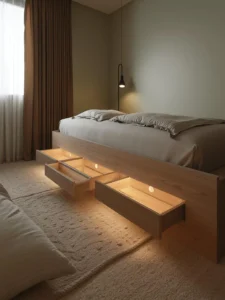
1. Floating Bed Platform with Under-Deck Storage Drawers
The floor is the most wasted surface in any tiny bedroom. A floating bed platform — built or purchased as a low-profile unit that sits 10–12 inches off the ground — lifts the mattress while opening up every inch of space beneath it.
Built-in pull-out drawers replace the need for a dresser entirely, removing a piece of furniture that typically eats 15–20 square feet of floor space. In 2026, this idea is more refined than ever, with platform systems available in modular flat-pack formats that don’t require a contractor to install.
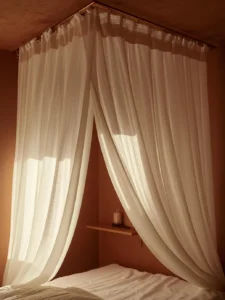
2. Ceiling-Mounted Curtain Canopy as a Faux Headboard
In a room too narrow for a traditional headboard — or in a rental where wall-mounting isn’t an option — a ceiling-mounted curtain canopy creates the visual anchor of a headboard without using a single inch of floor space.
A slim ceiling track holds sheer linen or velvet panels that frame the bed from above, creating a cocoon effect that feels luxurious rather than cramped. This technique also doubles as a soft acoustic buffer, subtly reducing noise in apartments with thin walls.
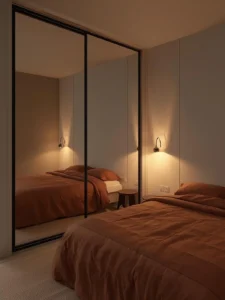
3. Wall-to-Wall Built-In Wardrobe with Mirrored Sliding Doors
Custom built-ins no longer require a budget renovation. In 2026, system wardrobes from modular flat-pack manufacturers can be configured wall-to-wall and floor-to-ceiling in a tiny bedroom in a single weekend.
The addition of full-height mirrored sliding doors serves a triple function: concealing clothing and clutter completely, reflecting light to visually expand the space, and replacing the need for a separate full-length mirror. The result is a room that feels twice as wide from the doorway.
4. Murphy Bed Integrated with a Full Home Office Desk
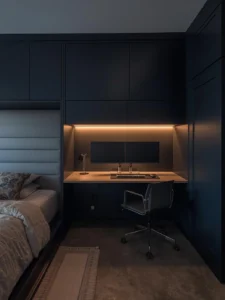
The Murphy bed evolved — and in 2026, the most intelligent versions fold up to reveal not just a blank wall panel but a fully functional standing desk, monitor shelf, and lighting system. When the bed is down, the workspace disappears entirely.
When it’s up, the bedroom becomes a real working environment. This is the defining solution for studio apartments and single-room homes where a bedroom and office must coexist without compromise on either function.
5. Loft Bed Over a Walk-In Wardrobe Nook
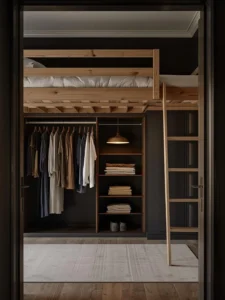
Instead of treating the vertical space above the bed as wasted air, a loft configuration uses that height strategically. A custom loft bed positioned at 5.5 feet elevation creates exactly enough clearance beneath it for a walk-in wardrobe nook — a hanging rail, shelving, and even a small dresser — all tucked under the sleeping platform.
In rooms with 9-foot or higher ceilings, this configuration can nearly double the usable storage volume of a tiny bedroom without expanding its footprint by a single square foot.
6. Arched Alcove Bed Nook Built Into the Wall
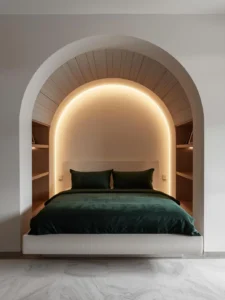
Borrowed from centuries of European domestic architecture, the built-in bed alcove is having a full renaissance in 2026. Where a structural wall allows, carving or framing a shallow 8–12 inch recess to host the full width of a mattress creates a sleeping nook that feels like a private sanctuary within the room.
The walls of the alcove can be upholstered in fabric, painted a contrast colour, or lined with integrated shelving, transforming what would have been dead wall space into the bedroom’s most dramatic feature.
7. Pegboard Accent Wall as Flexible Bedside Storage
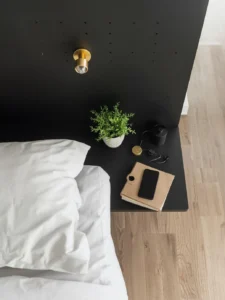
Bedside tables take up precious floor space — and in a tiny bedroom, even a small nightstand can feel intrusive. A pegboard accent wall panel flanking the bed head replaces the bedside table entirely. Pegs, hooks, and custom shelves hold a lamp, phone, book, plant, and alarm clock in a fully reconfigurable arrangement that can be rethought in minutes.
In 2026, premium pegboard systems come in powder-coated steel, raw oak, and even terrazzo-look composite panels that feel far from the craft-room aesthetic of their predecessors.
8. Slim Floating Shelves as Bedside Tables at Window Sill Height
Where floor space is too tight for any furniture beside the bed, a single slim floating shelf (8–10 inches deep, 24–30 inches wide) mounted at window-sill height on each side of the bed eliminates the bedside table entirely.
In white, oak, or black finish, these shelves are virtually invisible against the wall while holding everything a nightstand would. When positioned at a window, they double as a window seat surface or a display ledge bathed in natural light.
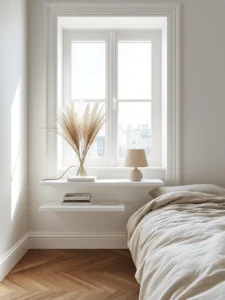
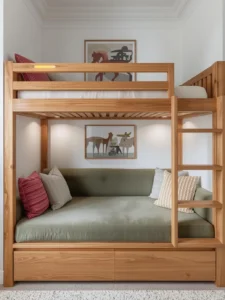
9. Bunk Bed with Full Sofa Integrated Below
For a child’s tiny bedroom, the evolution of the bunk bed concept in 2026 replaces a traditional lower bunk with a full sofa or daybed. The lower sleeping surface converts from seating to sleeping in a single pull-out motion, making the room functional as both a bedroom and a small lounge during the day.
This is particularly powerful in shared children’s bedrooms or teen rooms where having a social space within the bedroom is just as important as the sleeping function.
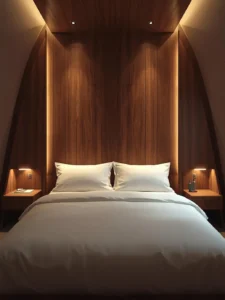
10. Wraparound Headboard Wall Panel with Integrated Nightstand Ledges
In tiny bedrooms, a wraparound headboard wall panel — spanning the full width of the wall from floor to ceiling — acts as both the room’s primary design statement and its most efficient storage piece. Integrated into the panel at nightstand height are two slim wooden ledges on either side of the bed head, with concealed cable channels, built-in wireless charging pads, and a small reading light recess.
Everything the bedside area needs is resolved in a single clean architectural element that takes zero floor space.
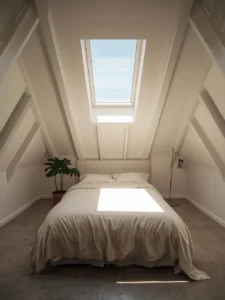
11. Skylight Addition to Create Vertical Illusion and Natural Light
A tiny bedroom can feel significantly larger — not from storage tricks alone, but from light. A single well-positioned skylight floods the ceiling plane with natural light, drawing the eye upward and giving the room a visual height it doesn’t architecturally possess.
In 2026, tubular skylight systems make this feasible even in multi-story buildings without full roof access. In rooms where wall windows are blocked or minimal, a skylight is often the single most transformative structural investment possible.
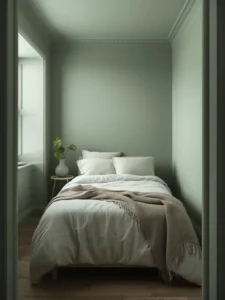
12. Monochromatic Color Scheme to Visually Expand Every Surface
One of the most powerful — and most underused — tools in small bedroom design is the monochromatic palette. When walls, ceiling, floor, bedding, and furniture all share the same tonal family (not necessarily identical color, but harmonious shades of one hue), the eye struggles to find a stopping point.
The room reads as continuous rather than chopped into competing surfaces. In 2026, the most sophisticated applications use three to four shades of a single color — for example, dusty rose, blush, and pale terracotta — for a layered, intentional result.
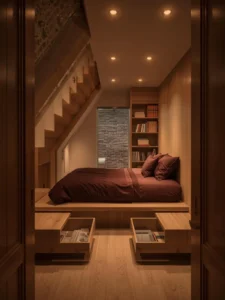
13. Under-Stair Bedroom with Custom Built-In Storage Walls
Where a staircase runs adjacent to or above a small room, the dead space created by the stair geometry is one of the most valuable and overlooked opportunities in a tiny home. A sleeping nook tucked under the stair rise — fully custom-fitted with a built-in mattress platform, storage drawers in every tread void, and shelving at the head end — creates a bedroom that feels architectural and intentional rather than improvised.
Properly lit with warm recessed lighting, under-stair bedrooms can feel remarkably cozy.
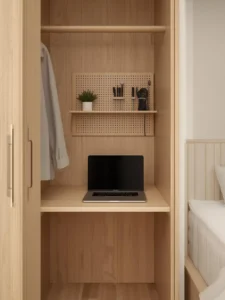
14. Foldable Desk Built Into Wardrobe Door Interior
In tiny bedrooms that must serve as study spaces, a surface to work at is non-negotiable — but a permanent desk is often simply not possible. The inner face of a wardrobe door, reinforced and fitted with a fold-down desk surface on piano hinges, reveals a fully functional workspace when opened and disappears completely when closed.
In 2026, these systems come with pre-drilled cable ports, integrated power strips, and even small pegboard organizer panels above the desk surface, making a genuinely useful working station out of a surface that previously went entirely unused.
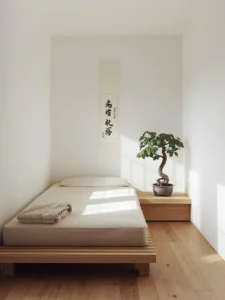
15. Japandi Minimalism: Futon, Floor-Level Living, Decluttered Walls
The Japandi design movement — a fusion of Japanese wabi-sabi and Scandinavian hygge — is particularly well-suited to tiny bedrooms because its entire philosophical foundation is radical intentionality with objects. A low-profile futon or tatami-height platform bed, natural materials (linen, cotton, wool, raw wood, rattan), and a strictly edited selection of objects create a bedroom that feels spacious precisely because of what has been removed.
In 2026, this approach is increasingly popular with minimalist younger renters who value experience over possession.
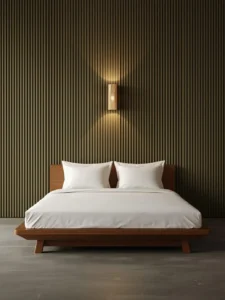
16. Textured Accent Wall Behind the Bed as a No-Furniture Statement
When there is no room for a traditional headboard, a textured accent wall creates visual richness and focal depth behind the bed without occupying any floor space at all.
In 2026, the most compelling options include limewash paint (which creates an ancient, dimensional plaster effect), reeded timber paneling, fluted MDF panels in bold painted finishes, and 3D geometric wall tiles. A single stunning accent wall transforms a tiny bedroom from a room that feels empty-and-small to one that feels edited-and-intentional.
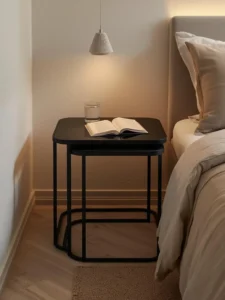
17. Nesting Bedside Tables That Tuck Away When Not Needed
Conventional bedside tables are permanent furniture. Nesting tables — a set of two or three tables that stack inside one another — solve the small bedroom bedside problem with complete flexibility. One surface is available when needed, all three when hosting, and all are stacked flat against the wall when the room needs to feel open.
In 2026, slim powder-coated steel nesting table sets with marble or glass tops are widely available and sit at a design level that holds up beautifully in even sophisticated bedroom schemes.
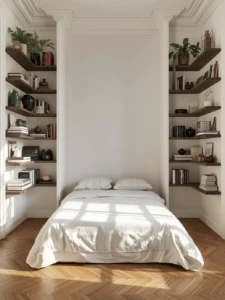
18. Corner Bed Placement with Two-Wall Floating Storage System
Moving the bed into a corner rather than centering it on a wall is one of the most effective — and most resisted — layout decisions in a tiny bedroom. Corner placement frees the center of the room entirely while allowing two walls above and beside the bed to be devoted entirely to floating storage.
Shelves, cabinets, hooks, and rails arranged on two intersecting walls at different heights create a storage system that is both more efficient and visually more interesting than furniture placed on a single wall.
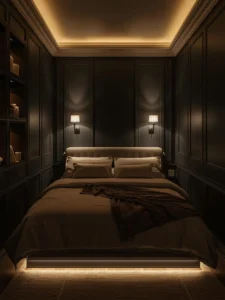
19. Smart Lighting Zones to Create Depth and Perceived Space
Lighting architecture in a tiny bedroom is as important as furniture arrangement. A room lit by a single overhead light source flattens every surface and makes the walls feel closer. A four-zone lighting scheme — ceiling wash, wall-mounted bedside reading light, accent shelf lighting, and a floor-level night-light strip — creates layers of light that give the room visual depth at every height.
In 2026, smart dimmer systems make this approach affordable and app-controllable, with preset scenes for sleeping, reading, dressing, and waking up.
20. Biophilic Feature Wall: Living Moss Panel as a Focal Point
Where artwork or a headboard might conventionally go, a living moss panel — a framed installation of preserved or fresh moss, ferns, and air plants — brings a biophilic focal point to the tiny bedroom that is both visually stunning and, in preserved moss form, entirely maintenance-free. Studies consistently show that exposure to natural materials, even in small doses, reduces cortisol and improves sleep quality.
In 2026, preserved moss panels are widely available from interior plant retailers and represent one of the most original design statements possible in a small room.