
A small dining space does not have to feel like a compromise — the right tiny dining room hacks for big style can make even the most limited square footage feel intentional, comfortable, and visually impressive. This guide gives you 16 practical, layout-specific ideas that explain exactly what to do, why it works, and when to use it so you can make real decisions for your space.
1. Choose a Round Table to Eliminate Dead Corners and Seat More People
A round dining table is one of the single most effective layout decisions you can make in a small dining room. Without corners, the table takes up less perceived visual space, allows easier movement around it, and can seat one or two additional people compared to a same-diameter rectangular table because there are no corner seats that feel awkward or cramped.
The round shape also removes the question of which end is which — every seat feels equal, which makes the table work better for daily use in apartments and small homes where the dining area doubles as a workspace or homework zone.
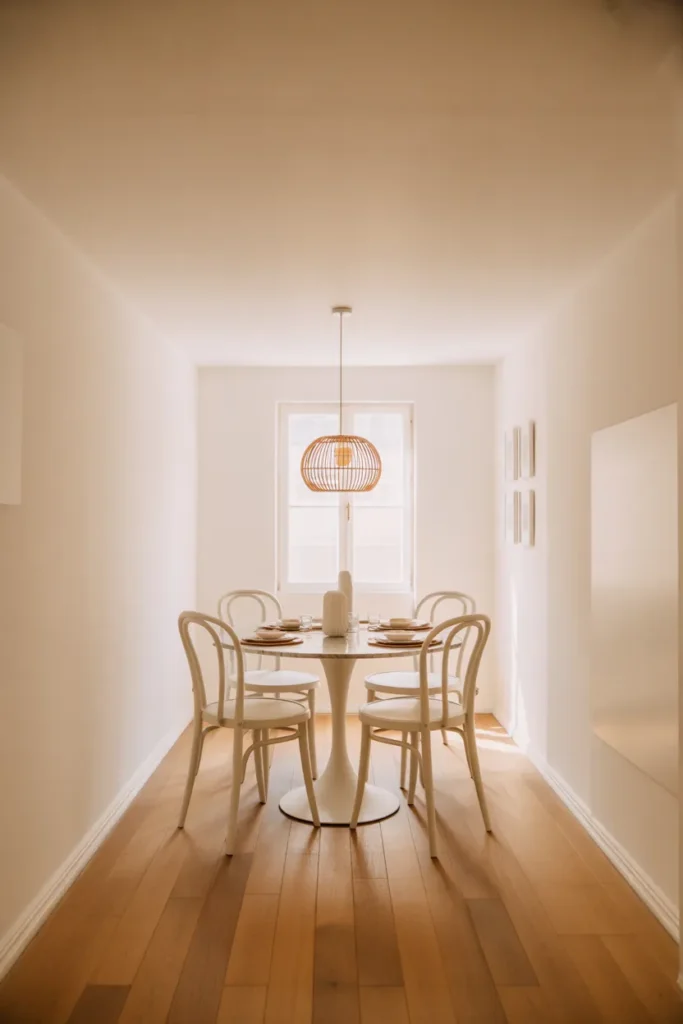

For very tight rooms, a pedestal base is far superior to a four-leg table. Four legs at the corners restrict chair placement and create obstacles for anyone trying to slide in or out of a seat. A single center pedestal leaves the floor zone completely open, which makes the room feel larger and makes seating significantly more comfortable.
Mistake to avoid: Do not choose a round table that is too large for the room just because it is round. A round table still needs a minimum of 36 inches of clearance on all sides for comfortable chair movement. Measure before purchasing.
2. Mount a Fold-Down Wall Table to Reclaim the Room When Dining Is Done
A fold-down wall-mounted table is the most space-efficient dining solution available for genuinely tiny rooms, studio apartments, and open-plan living areas where the dining zone needs to disappear when not in use. When folded flat against the wall, it occupies almost no floor space at all. When open, it functions as a fully usable dining surface for two to four people depending on the size selected.
This is one of the most practical tiny dining room hacks for big style because it solves the core problem of small dining spaces — the table takes up room all day even when it is only used for 30 to 60 minutes. Removing that footprint changes how the entire room functions throughout the day.
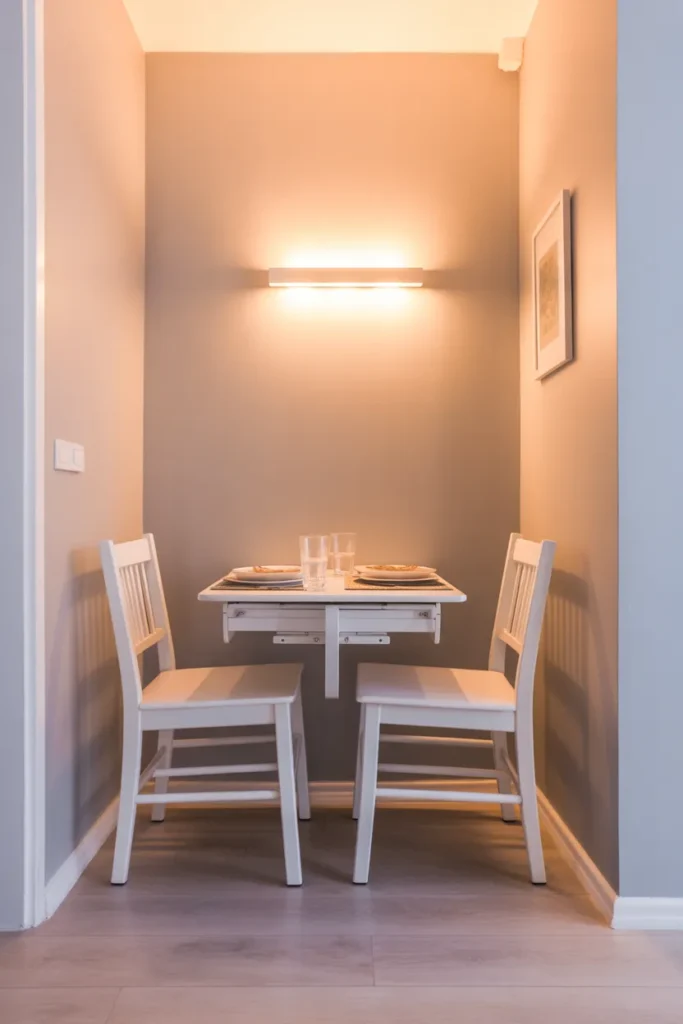
Wall-mount the table at a height of 28 to 30 inches, which is standard dining height and ensures chairs slide under cleanly. Pair it with stackable chairs or stools that store flat or nest together nearby to keep the full system compact.
From a design standpoint, the wall plate and fold mechanism should be painted or finished to match the surrounding wall so the unit reads as architectural rather than temporary. A fold-down table in a contrasting finish looks like equipment. One that blends with the wall looks like a design feature.
3. Use a Bench Along One Wall to Seat More Without Consuming Extra Floor Space
Replacing one or two dining chairs on the wall side of a rectangular table with a built-in or freestanding bench is one of the most efficient seating upgrades available in a small dining room. A bench pushed flush against the wall requires no chair-pull clearance behind it — diners simply slide along the bench to their seat. That single change can recover six to twelve inches of usable floor space on that side of the table.
This is particularly useful in dining rooms that open directly into a kitchen or hallway, where the space behind the chairs becomes a circulation path. Eliminating the chair-pull zone on one side of the table makes that path genuinely functional rather than something people squeeze through.
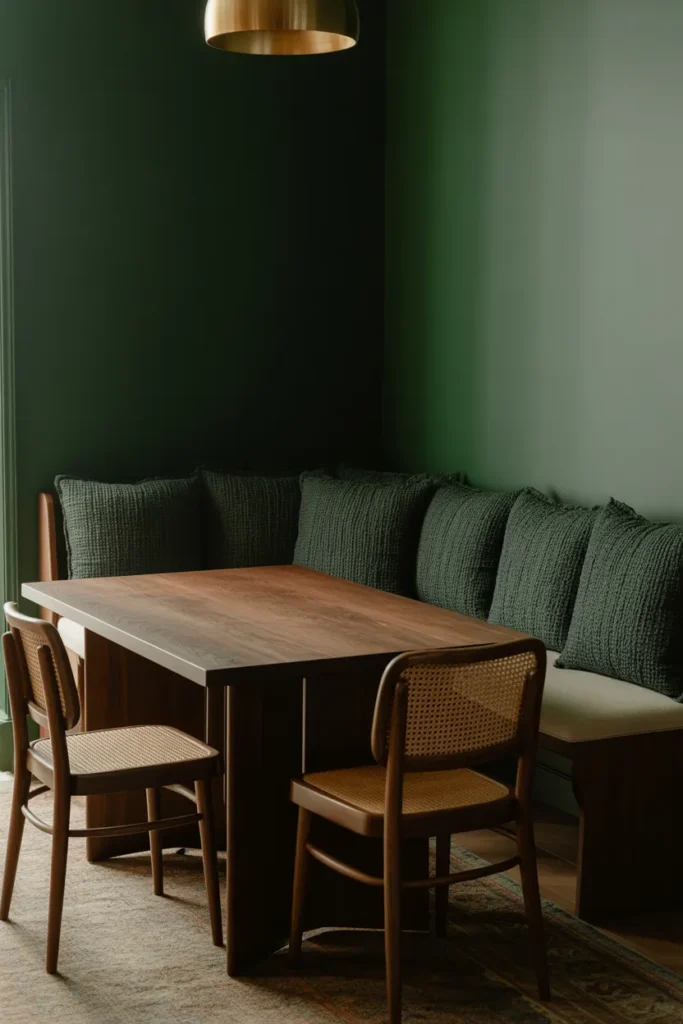
Built-in banquette benches with storage underneath are the premium version of this solution. The seat lifts to reveal storage for table linens, seasonal items, or anything else that needs a home in a space-limited apartment or small home. This stacks two functions into one piece of furniture, which is always the right move in a small dining room.
A freestanding bench is the lower-commitment option and works equally well in rented spaces. Choose one that fits the full length of the wall side of the table so it reads as intentional rather than as a makeshift substitution for a missing chair.
4. Hang a Large Mirror on the Main Wall to Double the Visual Size of the Room
A large mirror on the primary dining room wall is one of the oldest and most reliable small space planning ideas — and it works because it is not a trick, it is a genuine visual mechanism. A mirror reflects both natural and artificial light back into the room, and it creates a secondary perceived depth that makes the room read as twice its actual size.
In a tiny dining room, position the mirror so it reflects the most interesting part of the room — ideally the table setting, a window, or a pendant light. A mirror that reflects a blank wall doubles the blankness and delivers none of the benefit.
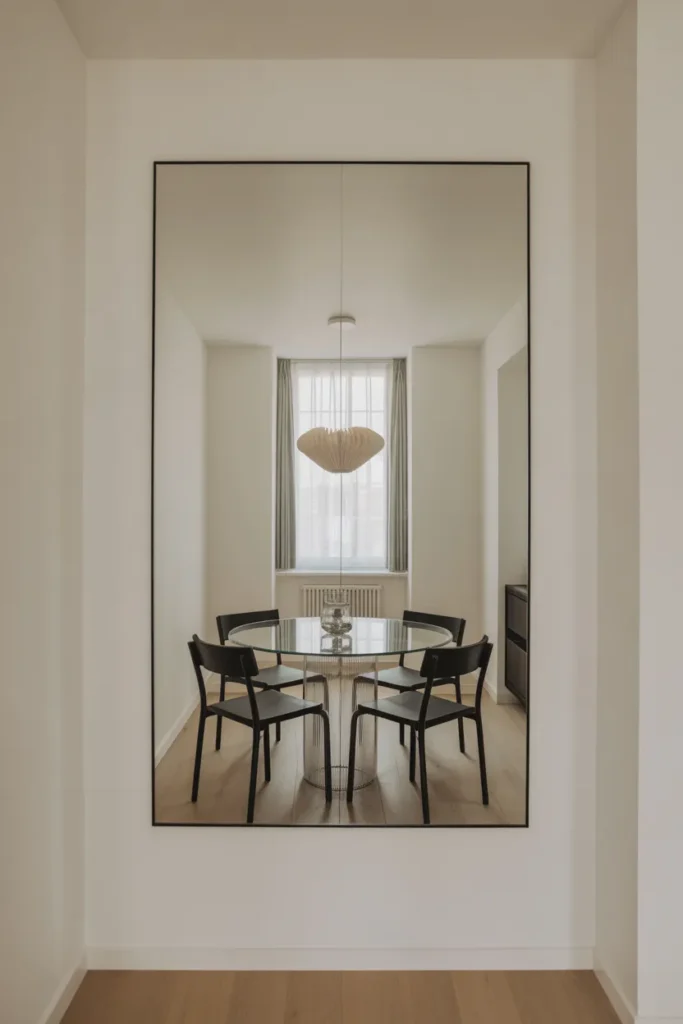
The mirror should be large — at least 24 by 36 inches, and ideally larger. Small decorative mirrors in a dining room do almost nothing for the spatial perception of the room. Scale is what activates the effect.
Frame style matters for the overall design. A thin metal frame in black or brass reads as modern. A wide ornate frame reads as traditional. A frameless mirror reads as minimal and contemporary. Match the frame to the existing hardware and furniture finishes in the room for a cohesive result.
5. Choose Transparent Acrylic or Glass Dining Chairs to Visually Reduce Chair Mass
One of the most effective and underused tiny dining room hacks for big style is replacing solid dining chairs with transparent acrylic or clear glass alternatives. Because the eye passes through rather than stops at the chair, the room reads as having significantly more open floor space even though the physical footprint of the chairs is identical.
This effect is strongest in small dining rooms that also have limited natural light — transparent chairs do not block light from traveling across the room the way a solid upholstered chair does. The room stays brighter and more open-feeling throughout the day.
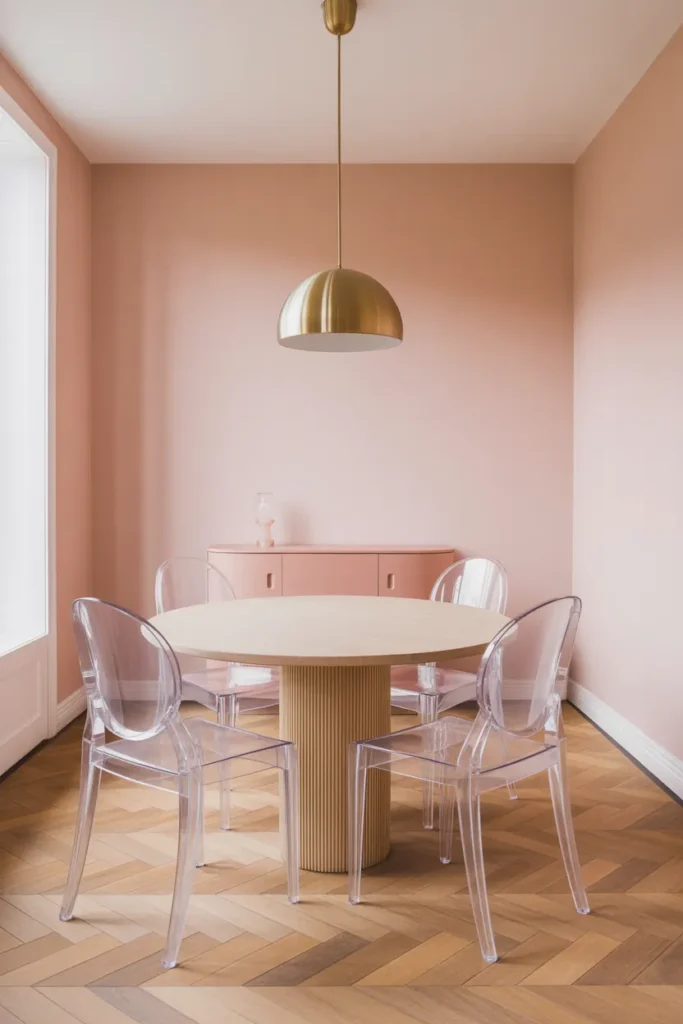
Clear acrylic chairs work with almost any table material because they are visually neutral. They suit a round marble table, a dark walnut rectangle, a white lacquer surface, and a glass-top equally well. This makes them a flexible investment if you plan to change other dining room elements over time.
Practical consideration: acrylic chairs scratch over time, particularly on the legs and seat edge. In households with children or heavy daily use, clear chairs require more maintenance to keep looking sharp. If that is a concern, ghost chairs with a slight tint or a smoked finish hide surface wear significantly better than clear.
6. Install a Floating Sideboard Instead of a Freestanding Buffet to Free the Floor
A freestanding sideboard or buffet in a small dining room creates two problems: it consumes floor space with its legs and base, and it visually grounds that wall with heavy mass. A wall-mounted floating sideboard solves both issues. It provides the same storage surface and display space, but the floor beneath it remains open and visible — which is one of the most effective ways to make a room read as more spacious.
The floating approach works in small dining rooms, apartment dining areas, and any open-plan dining zone where the dining wall is visible from a connected living or kitchen space. From a distance, a floating sideboard looks lighter and more architectural than a freestanding equivalent.
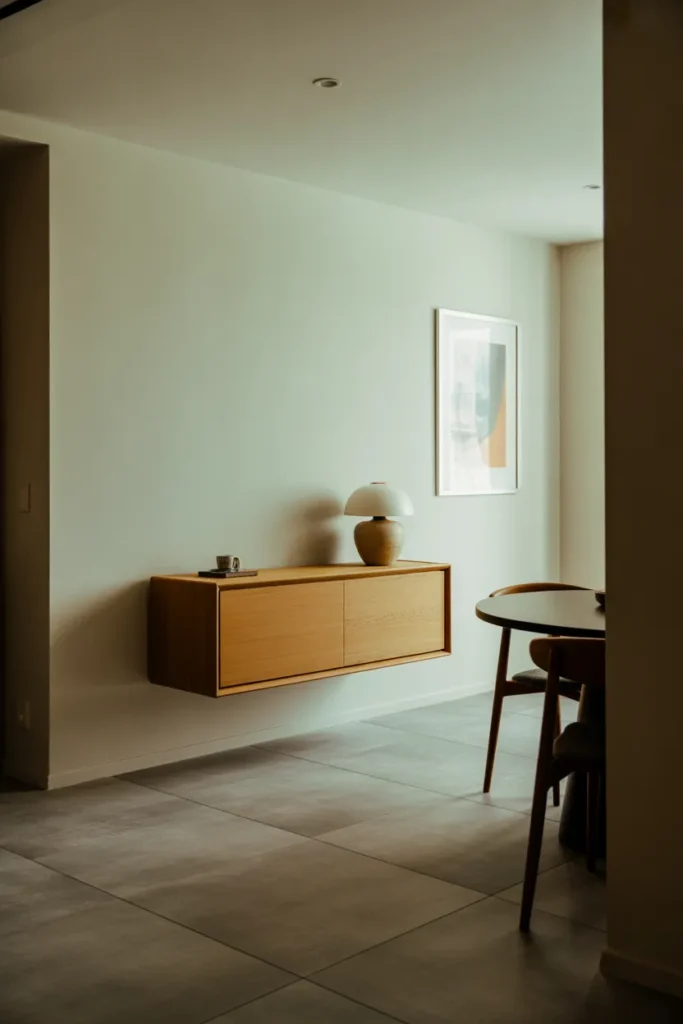
Mount the sideboard at approximately 28 to 32 inches above the floor. This is high enough to feel floating and to allow for a small stool underneath if needed, but low enough to be functional as a serving surface during meals.
From a small dining space planning standpoint, the space beneath a floating sideboard can also hold baskets or a small wine rack without visually cluttering the room, because the eye perceives the open floor as the dominant condition and reads items stored low as secondary.
7. Layer Two Light Sources to Make a Small Dining Room Feel Larger After Dark
Overhead recessed lighting alone flattens a small room. In a small dining room, layering a low-hung pendant directly over the table with secondary ambient light from wall sconces or a buffet lamp creates depth, warmth, and the illusion of a more expansive space — particularly in the evening when the dining room is most often in use.
The pendant should hang 28 to 34 inches above the tabletop for standard 8-foot ceilings. Lower than that and it becomes an obstacle. Higher than that and it loses the intimate, anchoring effect that makes a pendant work in a dining space.
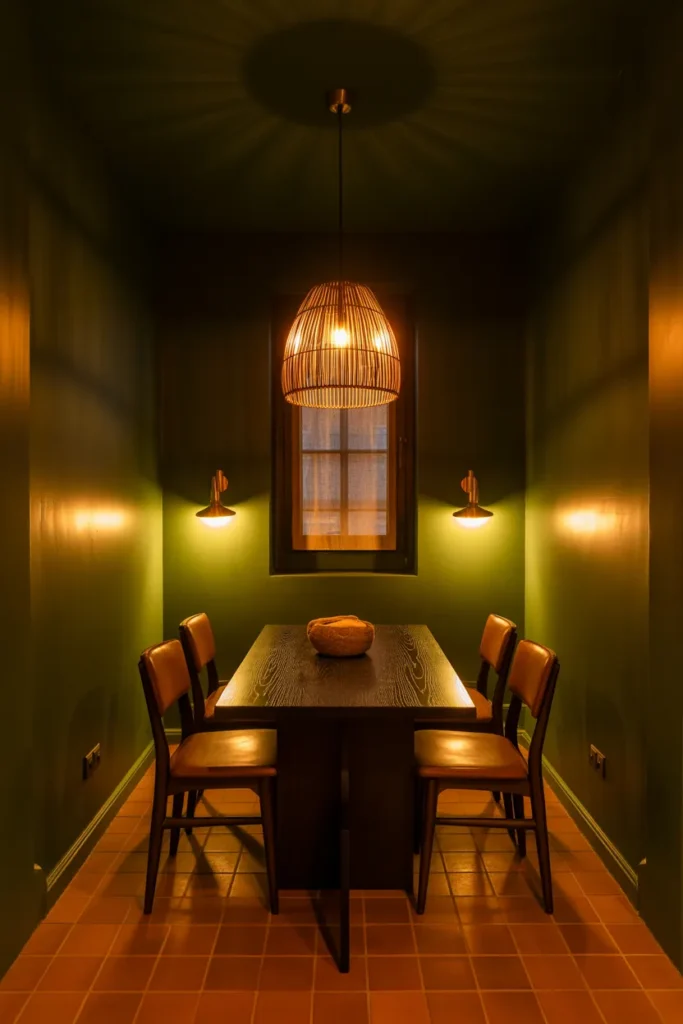
Wall sconces mounted at approximately 60 inches above the floor on the walls flanking the table provide the secondary light layer without consuming any floor or surface space. This is a strong solution for tiny dining room hacks for big style because it adds design complexity and sophistication with zero footprint.
Avoid recessed lighting as the only light source in a small dining room. Recessed lights positioned above the table cast shadows downward onto faces and food — exactly the opposite of what dining lighting should do. A pendant centered over the table always outperforms overhead can lights for this specific purpose.
8. Use Vertical Stripes or Tall Vertical Elements to Increase Perceived Ceiling Height
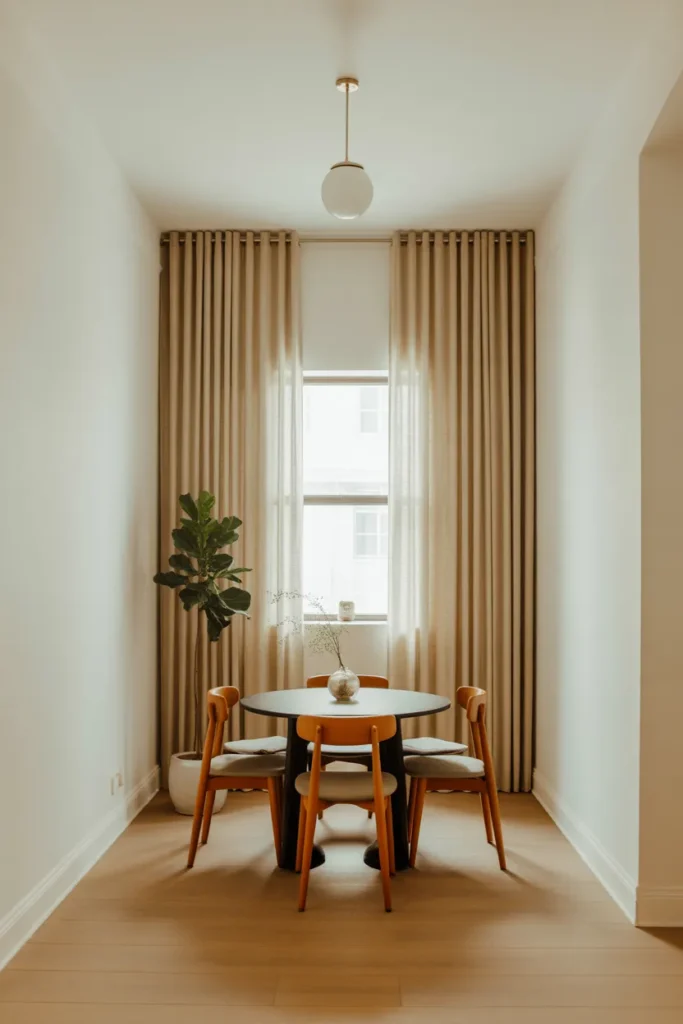
When a small dining room has low ceilings, the sense of compression makes the space feel smaller than its floor area actually is. Introducing strong vertical lines — through wallpaper, a tall narrow mirror, floor-to-ceiling drapes, or a tall plant — draws the eye upward and creates the perception of greater height without any structural changes.
Floor-to-ceiling drapes are the most effective single vertical element available because they span the full height of the room and frame the wall in a way that makes the ceiling read as higher than it is. Mount the curtain rod as close to the ceiling as possible, even if the window is significantly lower. The drape falling from near-ceiling height to the floor is what creates the illusion.
Vertically striped wallpaper on one accent wall delivers the same upward eye movement and adds pattern and depth to the room simultaneously. Choose a stripe that is narrow and the contrast between stripe colors is subtle — wide, high-contrast stripes in a small room can feel aggressive and overwhelming.
This is one of the more design-forward small dining room space planning ideas and works best in rooms that are square or slightly taller than wide. In a room that is already quite tall, the vertical emphasis is redundant — focus instead on warmth and furniture scale.
9. Paint the Ceiling a Darker Shade Than the Walls to Create a Cozy, Intentional Atmosphere
Painting the ceiling a shade or two darker than the walls is a counterintuitive move that works particularly well in tiny dining rooms. Rather than trying to make the ceiling disappear (the conventional small-room advice), this approach leans into the intimacy of the low ceiling and makes the room feel like a deliberately cozy, enclosed space — which is actually what a dining room is supposed to feel like.
A deep navy, warm charcoal, or rich forest green ceiling above white or soft-toned walls creates a layered, sophisticated effect that reads as intentional design rather than a small room trying to look bigger. The ceiling becomes a design element rather than a limitation.
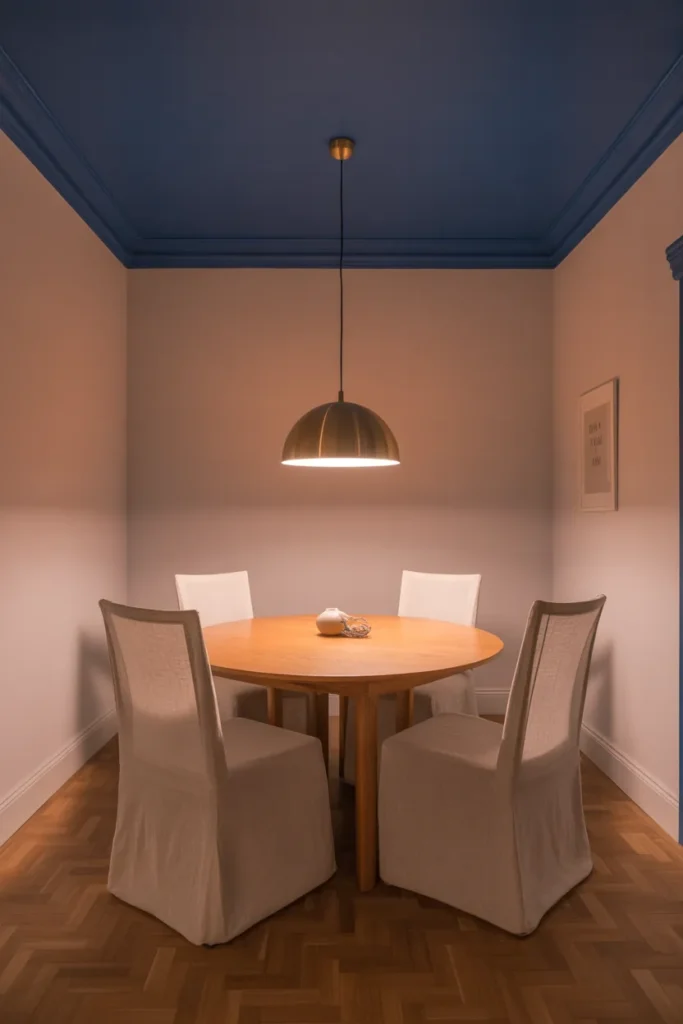
This works best in dining rooms used primarily in the evening, where artificial lighting controls the mood of the space. The dark ceiling recedes under warm pendant lighting and the effect is dramatic and refined. In a room with heavy daytime use and limited natural light, a dark ceiling can feel heavy rather than cozy — assess your light conditions before committing.
Pair a dark ceiling with a low-hung pendant in a warm metal finish to activate the full effect. The pendant light bouncing off the dark ceiling creates a warm glow that makes the room feel enveloping rather than cramped.
10. Add Built-In Corner Seating to Use the Most Wasted Space in a Small Dining Room
The corners of a small dining room are almost always underused. Standard dining chairs cannot occupy corners comfortably, and most furniture arrangements leave corner space empty by default. A built-in corner banquette seat turns that wasted geometry into the most functional seating in the room.
An L-shaped corner bench paired with a round or square table can comfortably seat four to six people in the same footprint that a conventional rectangular table with four chairs would occupy — because the bench requires no pull-out clearance and the corner anchors the entire seating arrangement naturally.
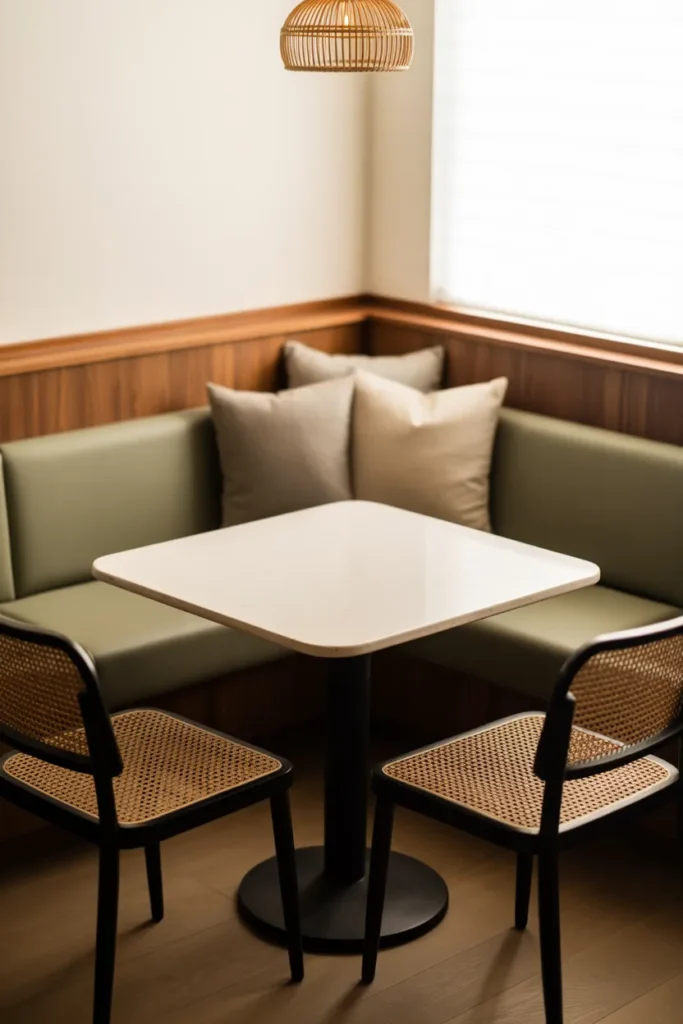
Built-in banquette seating also presents a strong opportunity for under-seat storage. In apartments and small homes where storage is always limited, lift-top bench storage in the dining room holds seasonal linens, extra serving pieces, and overflow pantry items without consuming any additional space in the home.
The investment required for a true built-in banquette is higher than for a freestanding furniture arrangement, but the return in functional floor space, storage gain, and seating capacity makes it one of the most impactful decisions available in a genuinely small dining room.
11. Select a Dining Table with Slim Tapered Legs to Keep the Floor Zone Open
Table leg design has a larger impact on how spacious a small dining room feels than most people realize. A table with thick block legs, trestle supports, or a solid base panel blocks the view across the floor and makes the room feel more divided and heavier. A table with slim tapered legs — particularly in a metal or light wood finish — lets the eye travel across the floor uninterrupted, which significantly improves the perceived spaciousness of the room.
This is one of those small dining room space planning ideas that costs nothing extra to implement — the price difference between a heavy-base table and a slim-leg table is not predictable in either direction. It is simply a matter of knowing what to look for and prioritizing leg design as a selection criterion.
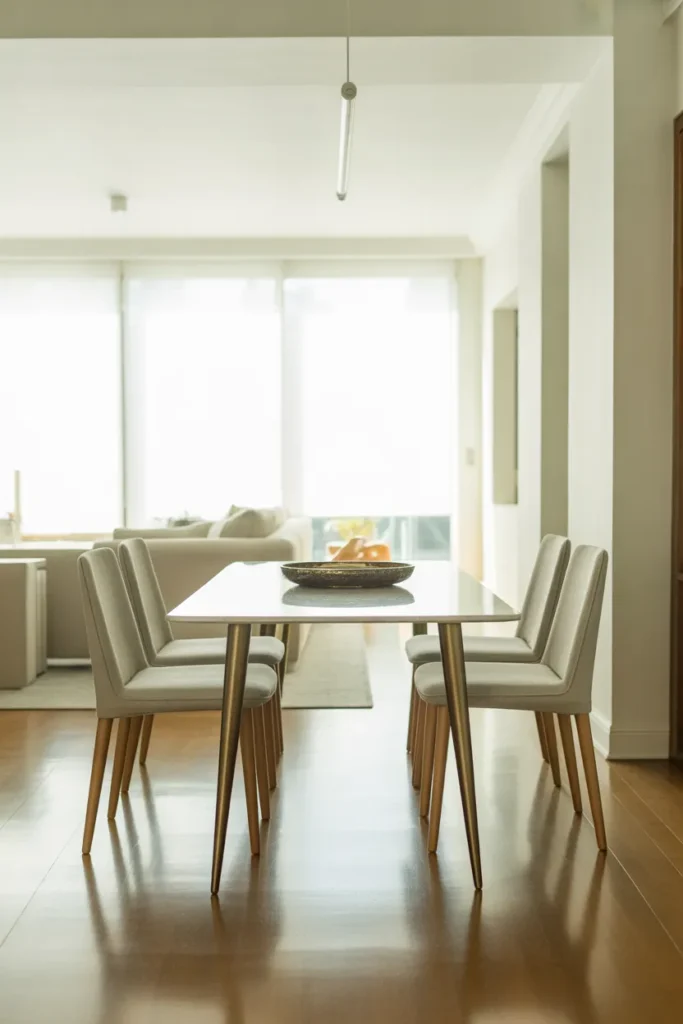
For maximum visual lightness, choose a table with four legs positioned close to the corners rather than spread wide. Wide-spread legs on a small table create more tripping hazards and interrupt floor movement in a room where clearance is already tight.
This approach pairs directly with the transparent chair concept — slim table legs and clear chairs together create a dining arrangement with the smallest possible visual footprint in any small dining room or open-plan dining zone.
12. Use a Narrow Console Table as a Dining Table for One or Two in a Studio or Alcove
A console table — typically 12 to 18 inches deep and 48 to 60 inches long — is a practical dining table substitute for studios, alcoves, and any space where a full-width dining table is simply not proportionate to the room. Against a wall, it functions as both a dining surface for one or two people and a display surface when not in use.
This is one of the more specific tiny dining room hacks for big style that applies to a defined situation: single-person or couple households in urban apartments where the dining table is rarely used for more than two people simultaneously, and where floor space is the primary constraint.
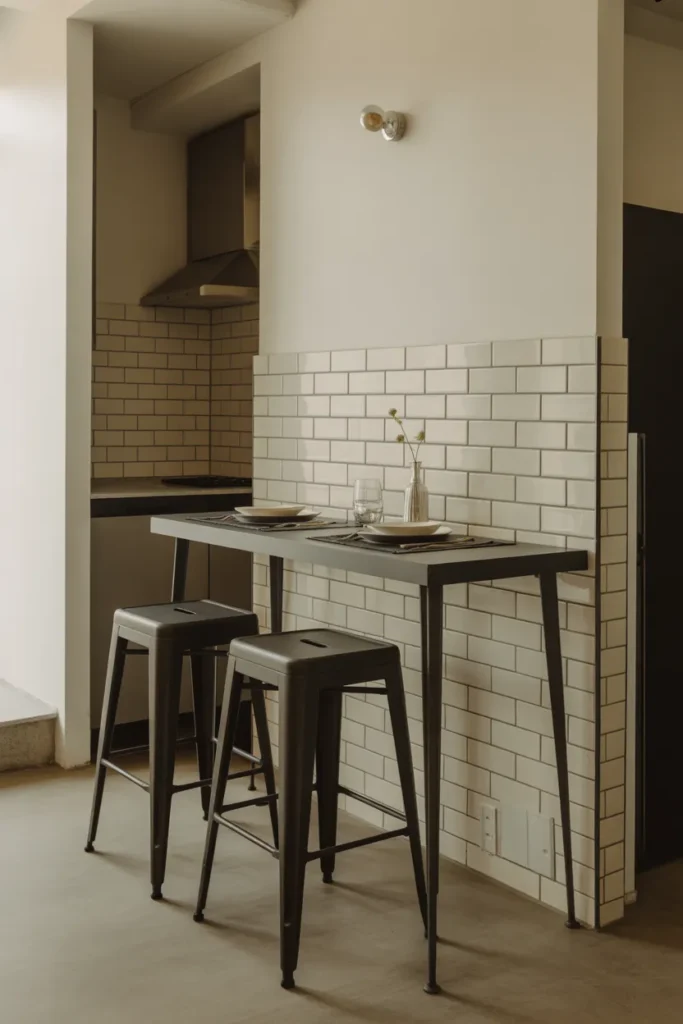
Style the console as a dining table by pairing it with one or two high stools or slim chairs that tuck fully underneath when not in use. When the table is not set for a meal, a lamp, a small plant, and one or two objects make it read as a deliberate entryway or display console — which prevents the room from looking like it is missing a proper dining space.
Avoid using a console table as a dining solution if you regularly host four or more people. For that use case, a drop-leaf table that expands from two seats to four is the more honest solution.
13. Hang Pendant Lights on a Dimmer to Control Mood and Perceived Room Scale
Light intensity directly affects how large or small a room feels. A small dining room at full bright overhead lighting shows every corner, every wall, and every limit of the space simultaneously. The same room at 40 to 60 percent brightness on a dimmer, with a warm pendant creating a pool of light over the table, focuses attention on the table itself and lets the peripheral edges of the room recede visually.
Installing a dimmer switch for dining room lighting is a low-cost electrical upgrade that changes how the room functions across every season and time of day. During a daytime lunch, full brightness is appropriate. During an evening dinner, dimmed pendant light transforms the same room into a space that feels intimate and generous rather than small and confined.
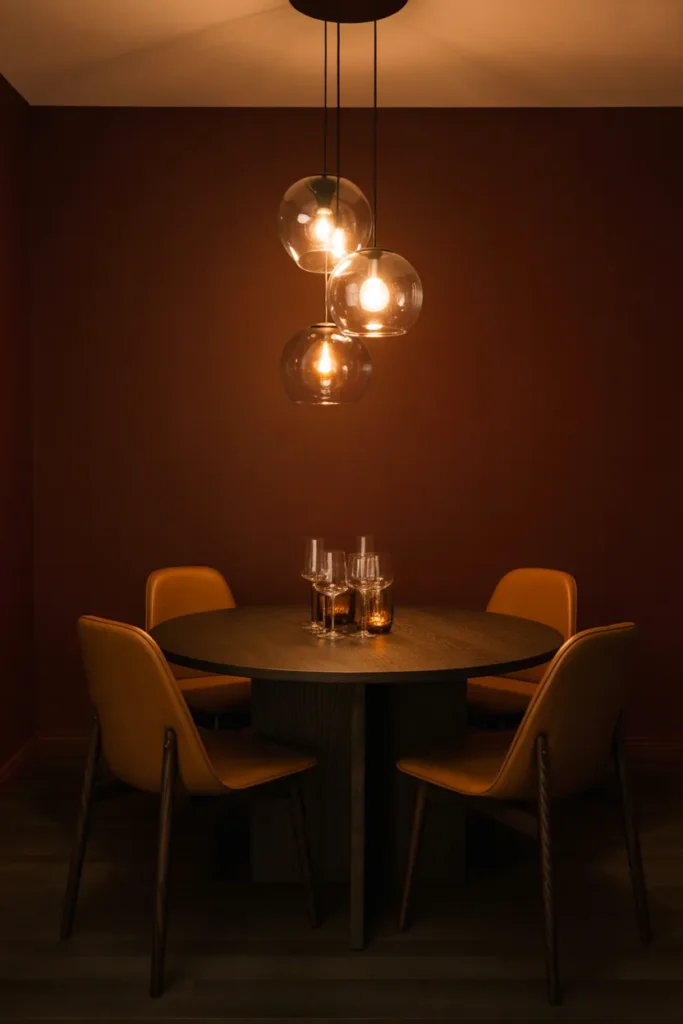
This works as a supporting layer in any small dining room layout — it does not replace the need for good furniture and layout decisions, but it meaningfully upgrades the experience of being in the space during the hours when dining actually happens.
Ensure the bulbs in the pendant are dimmable LED — not all LED bulbs are compatible with dimmer switches, and incompatible combinations result in flickering or buzzing that undermines the entire effect. Check compatibility before purchasing either the bulb or the dimmer.
14. Choose a Drop-Leaf Table That Expands Only When You Need the Extra Space
A drop-leaf dining table is one of the most functionally intelligent furniture choices available for a small dining room or open-plan dining area. At its minimum configuration — both leaves down — it may be as narrow as 12 to 18 inches, functioning more like a console. With one or both leaves raised and locked, it becomes a full four to six seat dining table. The transformation takes seconds and requires no tools.
This is directly relevant to any household where daily dining involves one or two people but occasional hosting requires full table capacity. A drop-leaf allows the room to scale up for those occasions without permanently consuming the square footage required for a fully expanded table.
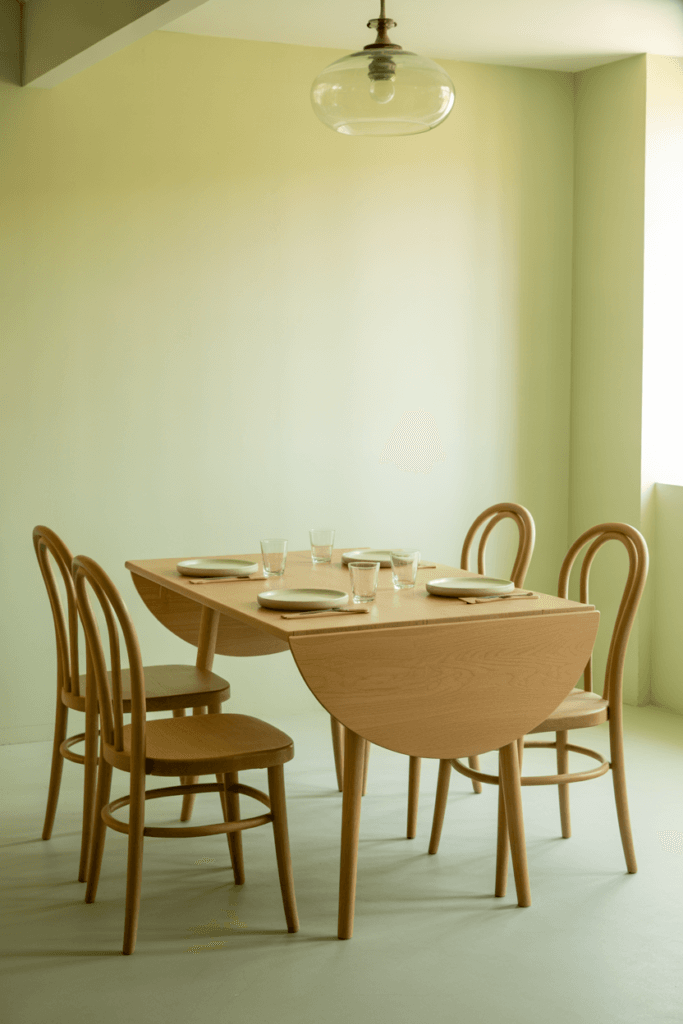
Placement matters: a drop-leaf table works best positioned against a wall when compact, so it is not an obstacle in the middle of the room. When expanded, it moves away from the wall to allow seating on all sides.
From a design standpoint, choose a drop-leaf with a mechanism that is clean when the leaves are down. Some designs show the leaf hinge hardware prominently when folded, which looks unfinished. A well-designed drop-leaf has a clean profile in the compact position — it should read as a console or sofa table, not as a table that is missing its sides.
15. Introduce One Bold Focal Point to Give a Small Dining Room a Clear Design Identity
Small rooms without a clear focal point tend to feel unresolved — the eye has nowhere to land, so it registers the smallness of the space instead. Introducing one deliberately bold element — an oversized piece of art, a sculptural light fixture, a statement wallpapered wall, or a dramatically painted ceiling — gives the room a strong visual identity that overrides its size.
This is one of the more counterintuitive tiny dining room hacks for big style: making something bigger and bolder in a small room, rather than keeping everything scaled down and restrained. When the focal point is strong enough, it becomes what people notice and remember about the room — not its square footage.
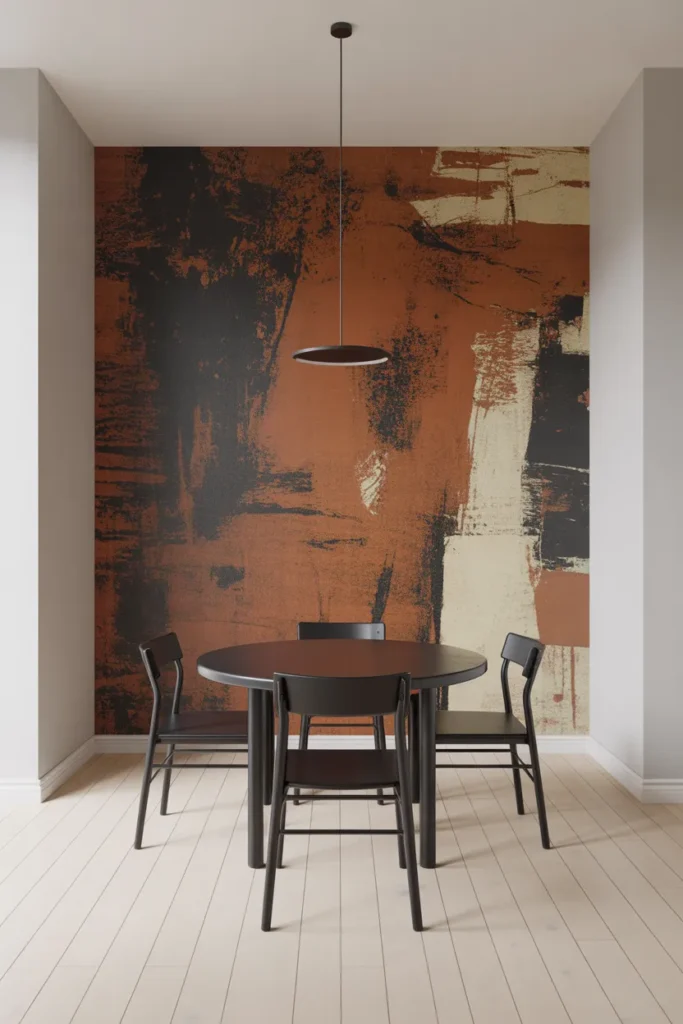
The focal point should be on the wall most directly visible from the dining chairs or from the entry point to the room. A bold piece of art above a sideboard, a large-scale pendant that is sculptural as much as functional, or a single wallpapered wall in a graphic print all work in this role.
One focal point only. Two competing bold elements in a small room cancel each other out and create visual noise instead of impact. Choose one, commit to it fully, and keep the remaining surfaces calm and subordinate.
16. Create an Illusion of a Larger Zone by Extending the Dining Rug Beyond the Table Edge
The rug under a dining table defines the visual boundary of the dining zone. A rug that is too small — one where the chairs fall off the edge when pushed back — makes the dining area feel cramped and disconnected from the room. A rug that extends generously beyond the table and chairs visually expands the perceived size of the dining zone, even in a physically small room.
The minimum rule is that all four chair legs should remain on the rug even when the chairs are pulled out for seating. In practice, this means adding at least 24 inches of rug beyond the table edge on all sides. For a 36-inch wide table, that translates to an 84-inch minimum rug width — larger than most people initially expect.
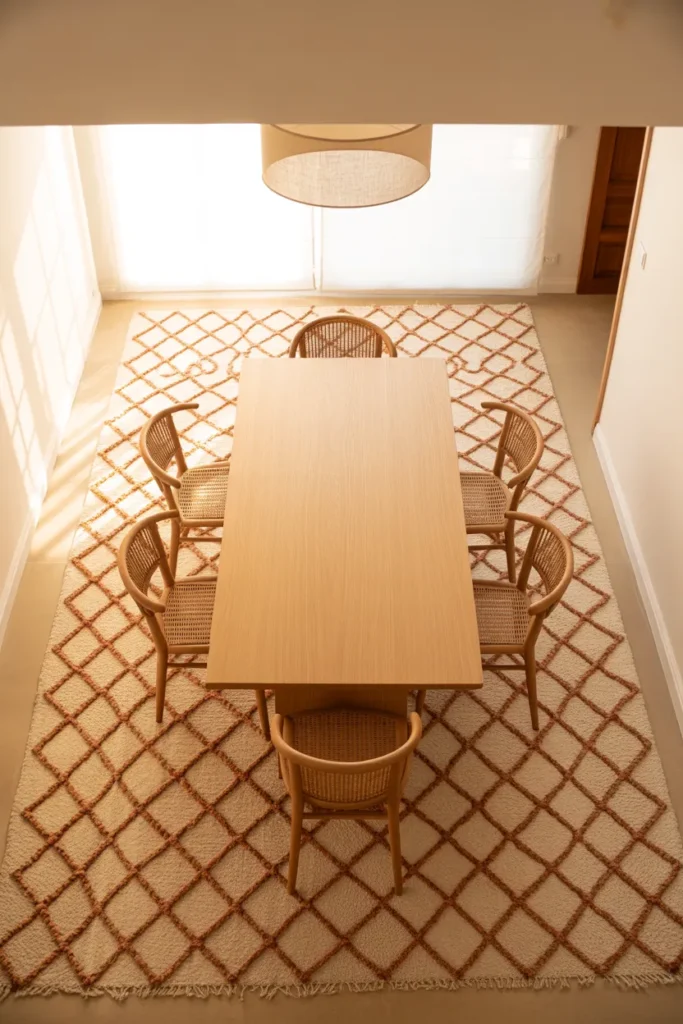
In a small dining room, a large rug that fills most of the floor area has an additional benefit: it reduces the visible hard floor surface area, which makes the room feel more enclosed and finished rather than sparse. An almost wall-to-wall rug in a small dining room reads as confident and intentional.
Pattern scale matters in a small room. A large-scale geometric or abstract pattern on a dining room rug reads as bold and designed. A very small all-over pattern in a confined space can feel busy and visually shrinking. Opt for a medium to large scale pattern, or a solid textured weave, both of which hold up well under a dining table with regular use and cleaning needs.
Final Thoughts
Every idea in this guide solves a real, specific problem that comes with designing a small dining space — from seating more people without consuming more floor, to making a room feel larger through light, color, and furniture choice. The best results come from combining two or three of these approaches rather than applying just one.
Save this post now so you can return to it when you are ready to make decisions — whether you are planning a full room refresh or making one targeted upgrade at a time. If these tiny dining room hacks for big style were useful, explore more small space planning ideas and functional room layout guides to keep building a home that works as well as it looks.