
Bringing the cottagecore home aesthetic into your entryway is one of the most effective ways to set a warm, nature-inspired tone throughout your entire home. If your entryway feels cold, generic, or unfinished, this guide gives you 18 specific, decision-ready ideas to transform it using natural textures, vintage-inspired pieces, and soft organic layering. Each idea is practical, easy to apply, and designed for real American homes of every size.
1. Use a Reclaimed Wood Bench to Ground the Space Immediately
A reclaimed wood bench is one of the fastest ways to establish a cottagecore entryway without committing to a full renovation. The imperfect grain, natural color variation, and worn texture immediately signal warmth and intentionality. It works both as a functional seat for removing shoes and as a visual anchor point.
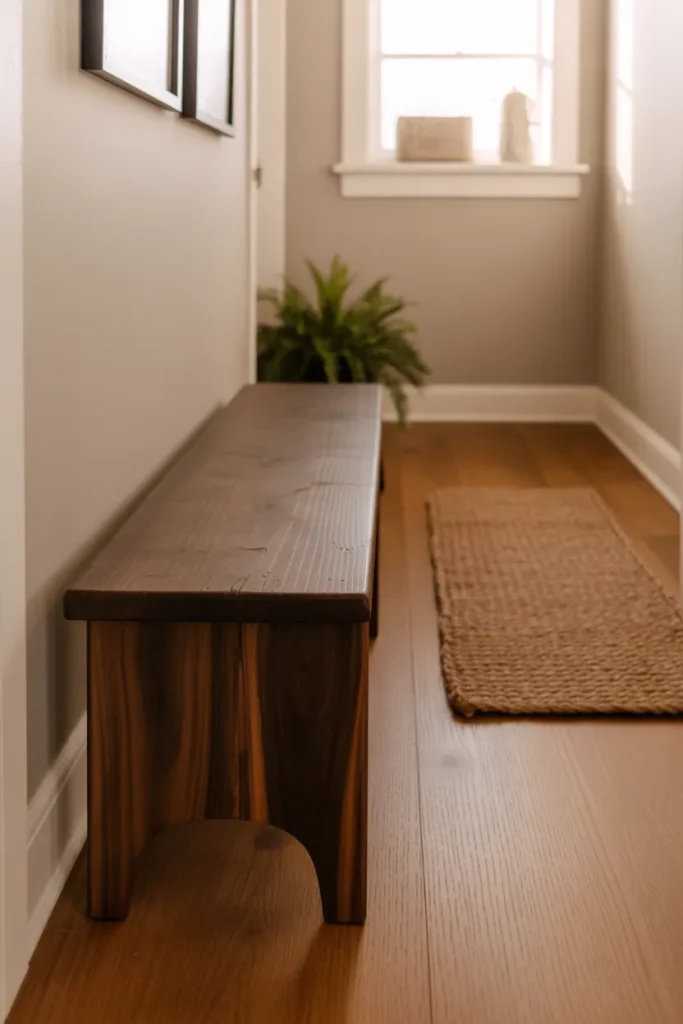
Place it against the wall directly opposite or beside the entry door. Avoid benches that are too sleek or modern, as they compete with the organic feel. Look for pieces with visible knots, tool marks, or patina, as these details do the heavy visual lifting.
If your entryway is narrow, a wall-mounted fold-down version achieves the same effect without consuming floor space. Pair it with a jute runner beneath it to complete the grounded, earthy feel.
2. Hang a Vintage-Style Mirror With a Botanical Frame
Mirrors are functional necessities in any entryway, but the frame is where cottagecore styling lives. A mirror with a hand-carved wooden frame featuring leaf, vine, or floral motifs immediately communicates the aesthetic without overwhelming the space.
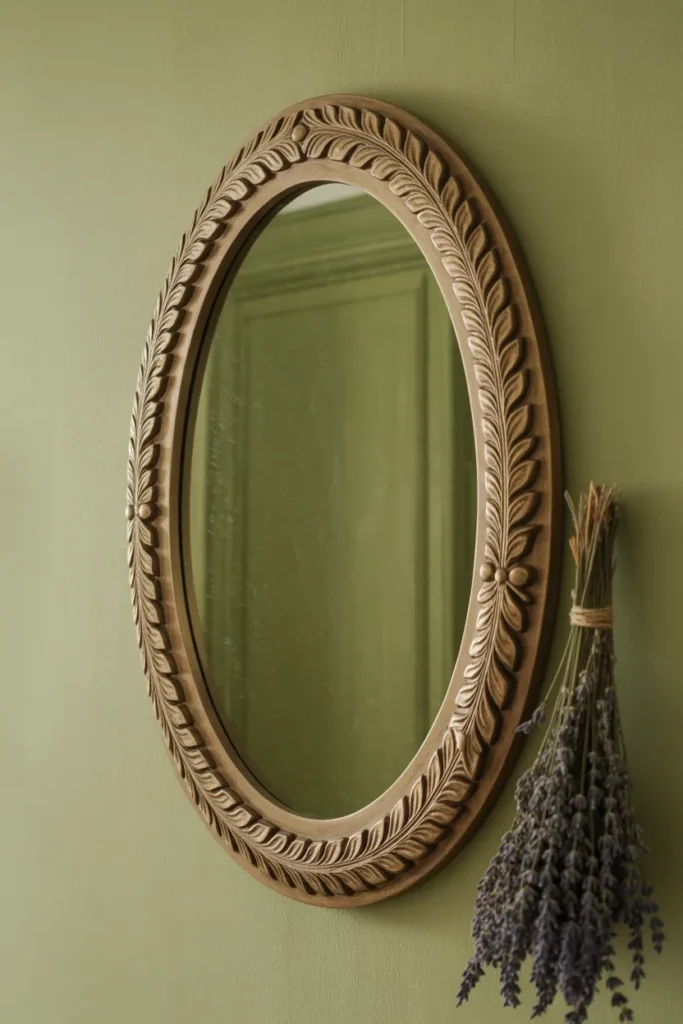
This works best on walls with at least 18 inches of open space and works in both small apartments and larger foyers. Avoid oversized modern frameless mirrors, as they visually contradict the warmth you are building.
Position the mirror at eye level and slightly off-center if you have other wall elements. A slightly aged gold or matte bronze finish on the frame performs better than bright chrome or black metal in this context.
3. Layer a Braided or Hand-Woven Rug Over Existing Flooring
The floor is one of the most overlooked elements in entryway design. In cottagecore styling, a braided wool rug or a hand-woven cotton flatweave instantly softens hard tile or bare wood floors and introduces natural fiber texture.
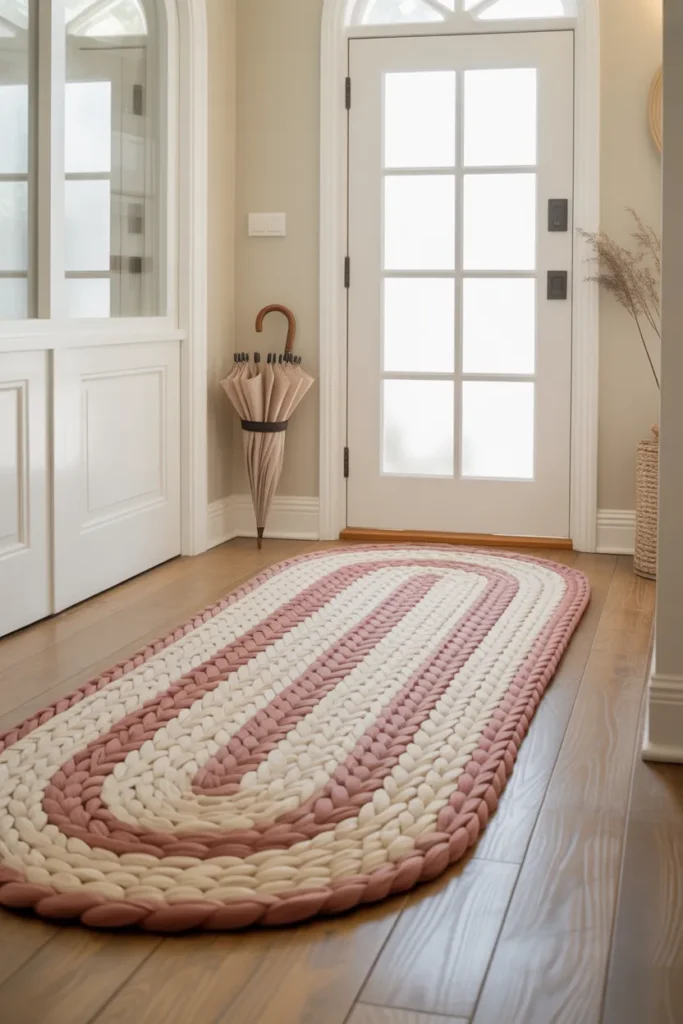
Use a rug that is proportional to your entryway width. In a standard 4-foot-wide hallway entry, a 2×3 or 2×4 rug works well. Avoid synthetic rugs with geometric patterns, as they break the visual language of the aesthetic.
Neutral tones like cream, oatmeal, dusty rose, or sage green work best and age gracefully with foot traffic. If you already have patterned floors, use a solid-colored rug to avoid visual clutter.
4. Create a Wall-Mounted Coat Hook Display Using Wooden Pegs
Function and form merge cleanly in a wooden peg rail. A simple Shaker-style peg rail or a row of hand-turned wooden hooks mounted at consistent height adds structure to the entryway while staying completely within the cottagecore visual language.
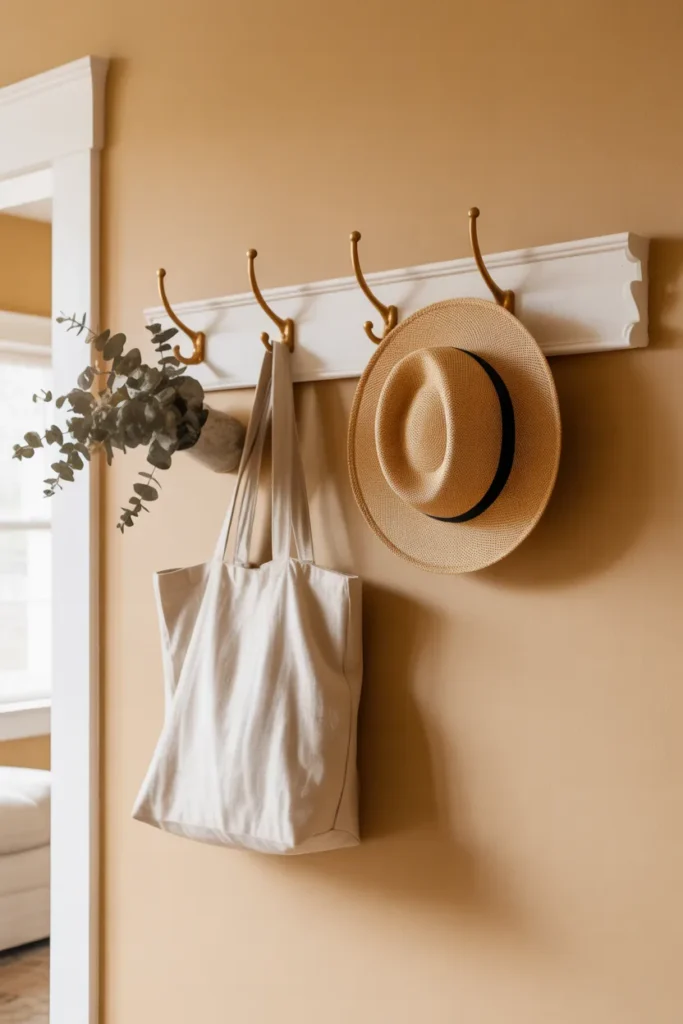
Mount the rail at 60 to 66 inches from the floor for adults. Space pegs 6 to 8 inches apart for practical hanging without crowding. Use it for coats, hats, canvas tote bags, and dried herb bundles, which double as decor.
Avoid metal hooks with industrial finishes. Even a minor material mismatch, such as matte black hardware in a cottagecore entry, creates visual tension that pulls the space out of tone.
5. Place a Tall Ceramic or Clay Umbrella Stand Near the Door
An umbrella stand may seem like a minor detail, but in a cottagecore entryway it functions as a grounding sculptural element. A hand-thrown ceramic or terracotta clay stand in an irregular, organic shape adds material variety and tactile interest at floor level.
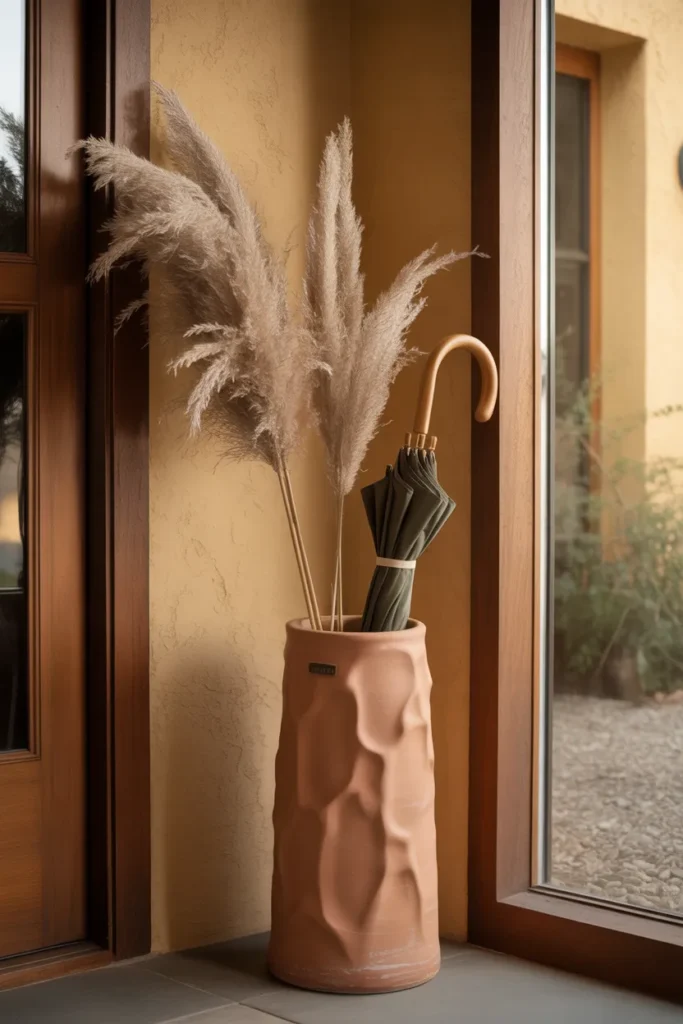
This is especially effective in entryways with minimal floor space because it occupies vertical rather than horizontal area. Avoid plastic, chrome, or machine-made geometric stands. The hand-made quality is essential to the authenticity of the look.
Fill it with more than just umbrellas. Dried pampas grass stems, walking sticks, or even long-stemmed dried wildflowers extend the aesthetic upward and add height variation to the overall entry composition.
6. Install Open Floating Shelves for Layered Cottagecore Styling
Open shelves in an entryway give you a dedicated zone for intentional styling without requiring built-in cabinetry. In cottagecore design, the shelf itself should be natural wood, preferably with visible grain and raw or lightly oiled finish rather than painted.
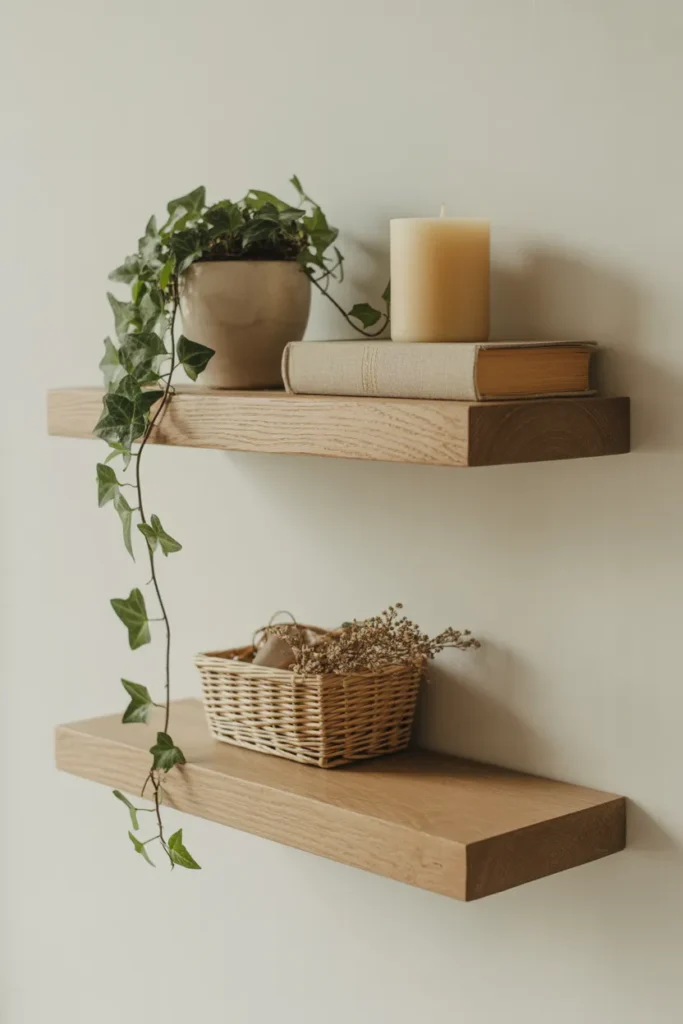
Use the shelves to display a curated mix of small potted plants, ceramic vessels, vintage books with cloth or leather spines, and small wicker baskets. Avoid overcrowding. Three to five objects per shelf is the functional limit for readability.
This works best in entryways with at least 8 feet of wall height. For lower ceilings, one shelf placed at 5 feet creates the same effect without making the space feel compressed.
7. Introduce a Potted Trailing Plant or Fern for Living Texture
No cottagecore entryway is complete without living greenery. A trailing pothos, Boston fern, or English ivy placed on a wooden stand or in a hanging macrame holder near the entry brings the space to life in a way no decor item can replicate.
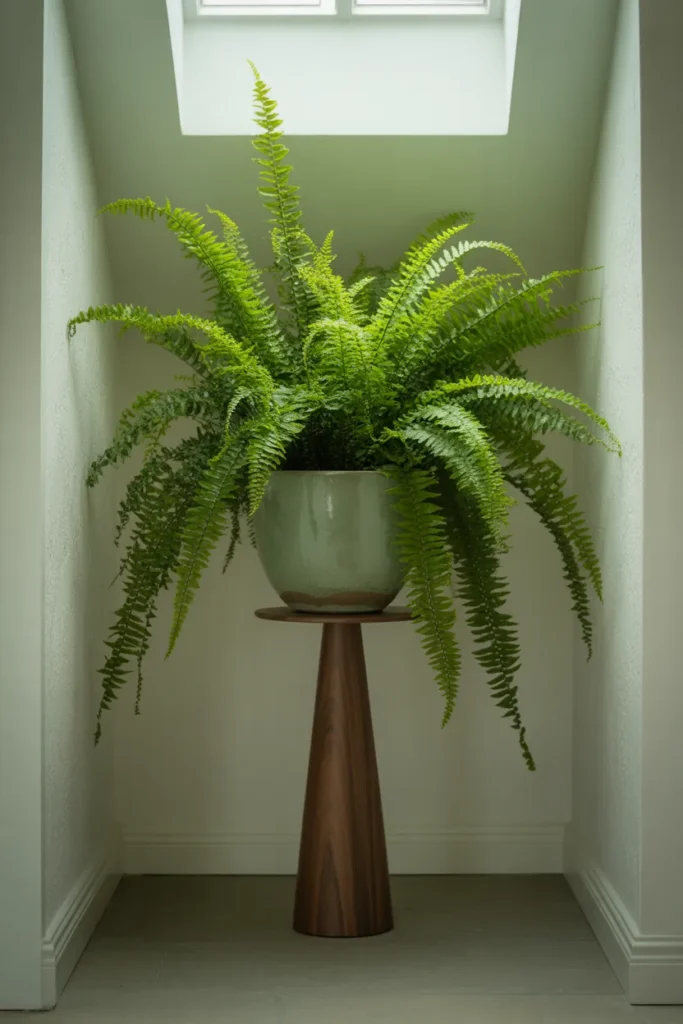
Choose plants that can tolerate low to medium indirect light, as most entryways have limited sun exposure. Avoid artificial plants, as they visually undermine the authenticity of the aesthetic even when well-made.
Place the plant at varying heights depending on your entryway size. A tall floor stand with a fern works well in larger entries, while a wall-mounted small shelf with a trailing plant suits narrow hallways effectively.
8. Use Shiplap or Beadboard Wainscoting for Architectural Warmth
If you are open to a light renovation, adding shiplap or beadboard wainscoting to the lower half of your entryway walls creates an architectural foundation that reads as authentically cottagecore without being overtly country or farmhouse.
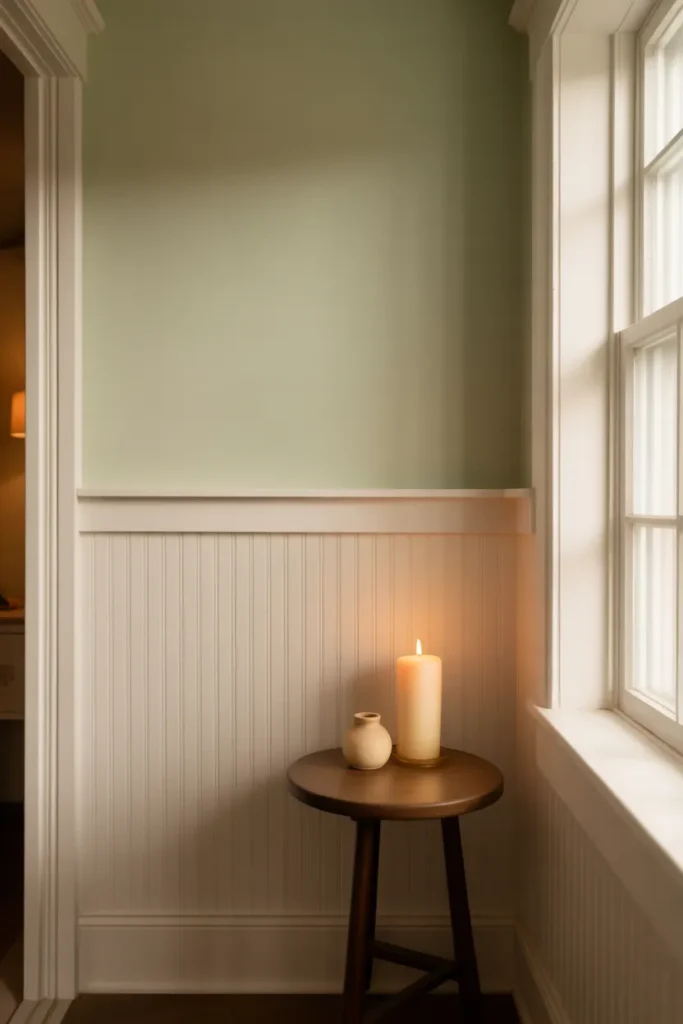
Paint it in soft whites, cream, or pale sage. The horizontal or vertical texture adds depth and visual interest at a height that matters most in a narrow space. Avoid dark staining the wainscoting, as it visually compresses small entryways.
This works best when paired with a complementary upper wall color in a muted warm tone. The contrast between the paneling and the upper wall gives the space a layered, finished quality that flat painted walls cannot achieve on their own.
9. Add a Linen or Cotton Curtain Panel to Soften a Side Window
If your entryway has a side or transom window, a simple linen curtain panel is one of the most cost-effective ways to add texture and warmth. The softness of natural linen diffuses light beautifully and introduces movement that makes the space feel alive.
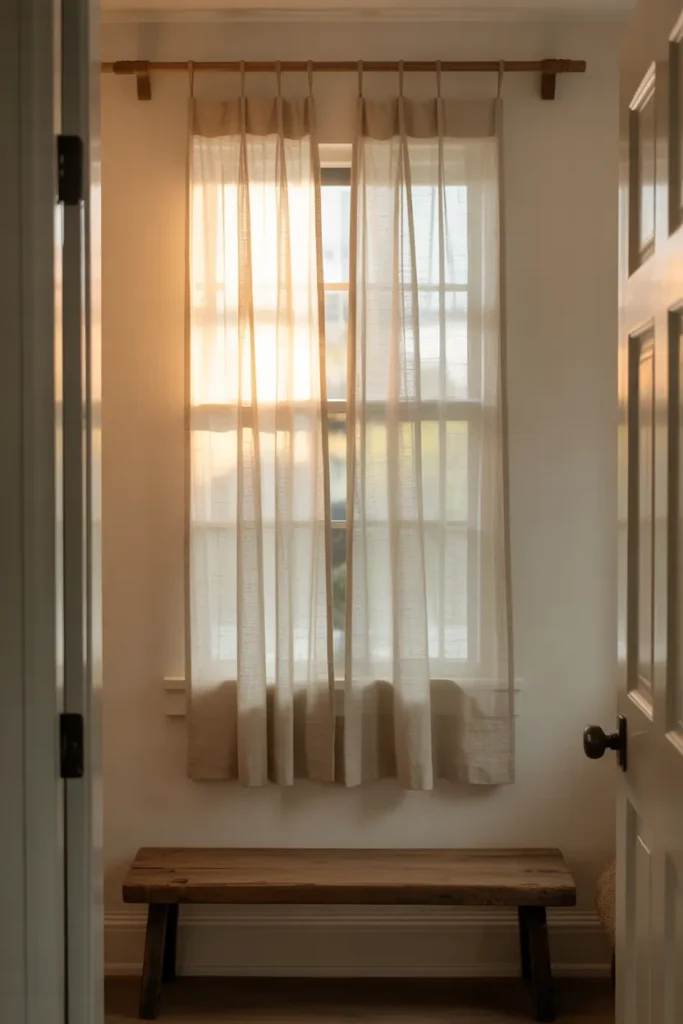
Use a tension rod or a simple wooden curtain rod with ring clips for an unfussy, relaxed hang. Avoid stiff synthetic fabrics or heavy drapes, as they contradict the light, breathable quality that defines cottagecore interiors.
Keep the curtain in an undyed or lightly washed tone. Natural linen, warm white, or faded sage are the most reliable choices. These tones work harmoniously with nearly every other cottagecore material you introduce.
10. Style a Small Entryway Table With a Curated Seasonal Vignette
A small console or side table near the entry door gives you a surface for both function and styling. In cottagecore design, the items on this table should feel like a thoughtful, seasonal collection rather than a random arrangement.
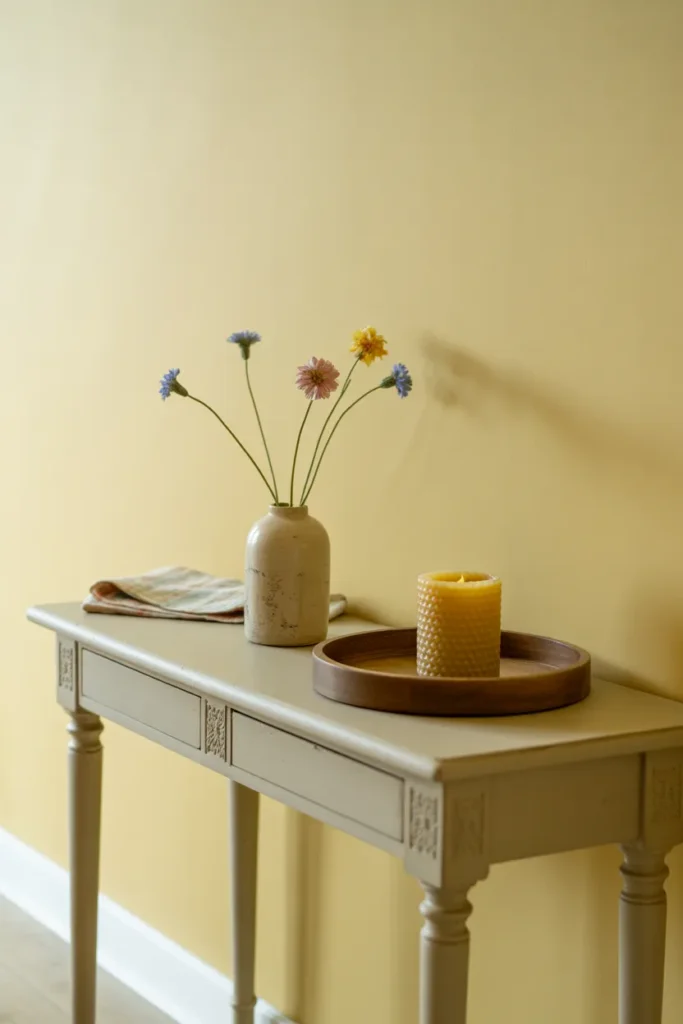
In spring and summer, use a small glass or ceramic vase with fresh wildflowers, a wooden tray, and a single beeswax candle. In fall and winter, swap in dried botanicals, pinecones in a shallow bowl, and a linen table runner. This seasonal rotation keeps the space feeling intentional year-round.
Avoid using this table for mail, keys, or daily clutter unless you have a covered tray to contain it. Visual clutter on the entry table is the fastest way to undermine the calm, curated mood of the aesthetic.
11. Hang Dried Botanical Bundles as Wall Art
Dried botanical arrangements, specifically bundles of lavender, eucalyptus, wheat, or wildflowers, function as both wall art and natural fragrance sources in a cottagecore entryway. They require zero maintenance after drying and improve visually as they age.
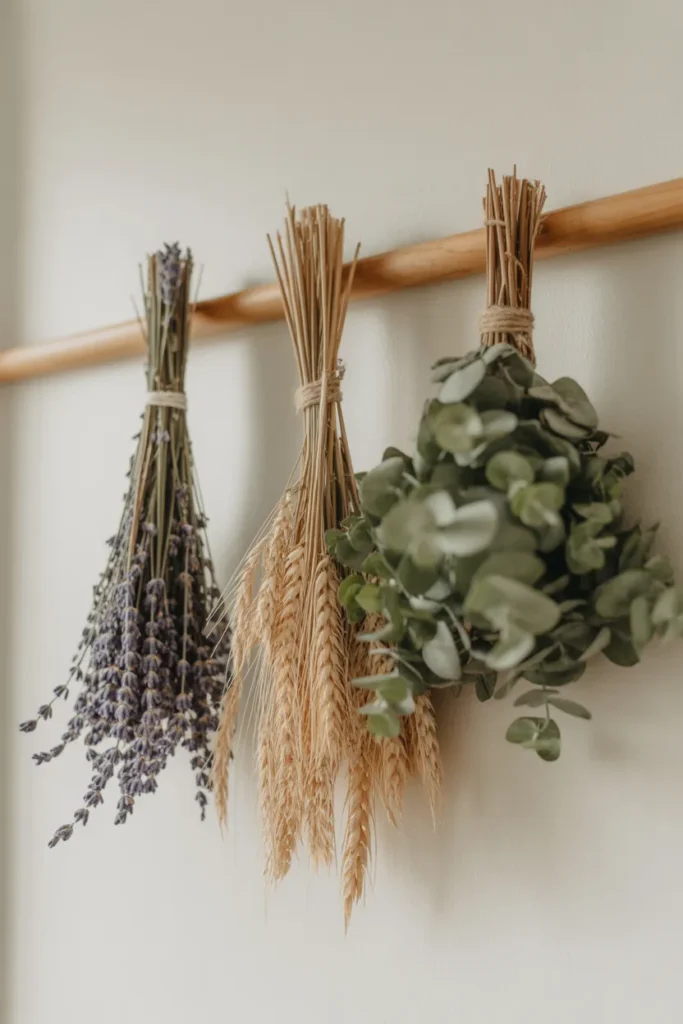
Hang them with simple jute twine from a peg hook, a wooden dowel, or directly from a decorative nail. Group three bundles of varying heights and stem types for a more dynamic display than a single bundle.
Avoid synthetic or dyed dried florals. The natural muted tones of real dried botanicals, pale lavender, cream wheat, dusty sage, are what give this type of display its authenticity and visual restraint.
12. Use a Wicker or Rattan Storage Basket for Practical Cottagecore Function
Storage is a real need in any entryway. The cottagecore approach is to make storage feel like decor. A large wicker or rattan basket placed on the floor beside a bench or door handles shoes, scarves, dog leashes, and seasonal accessories without visual disruption.
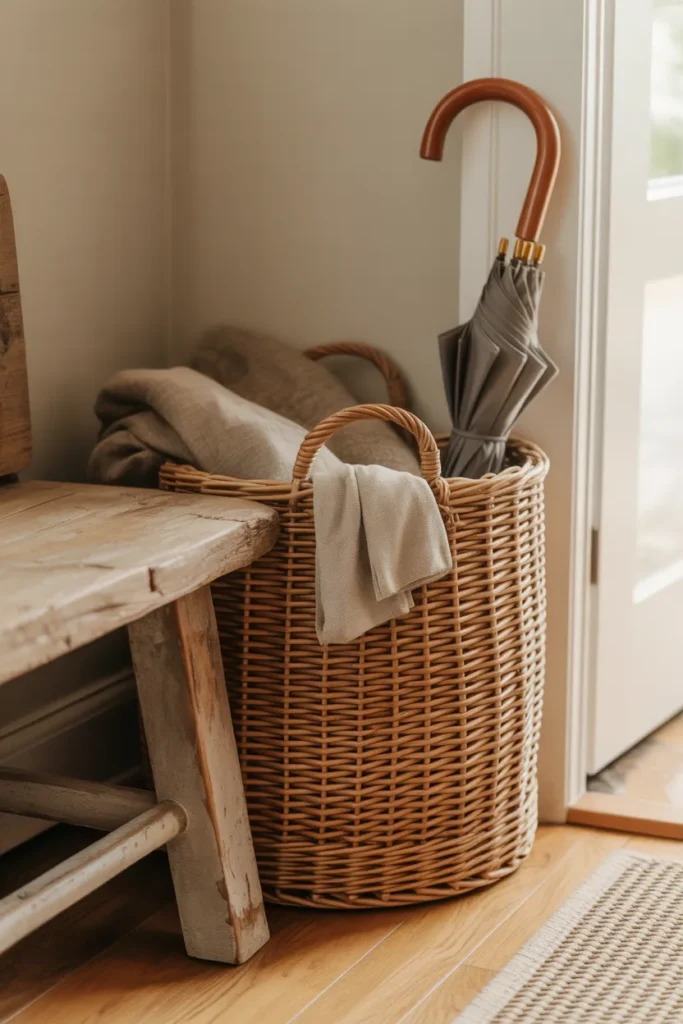
Choose a basket with natural, undyed material and a slightly irregular weave. Avoid tight, machine-perfect weaves as they read as generic rather than handcrafted. A small linen liner inside the basket keeps contents from falling through while adding another texture layer.
For narrow entryways, a tall cylindrical basket uses vertical space more efficiently than a wide flat one. Position it against the wall to keep the walking path clear.
13. Paint the Front Door Interior in a Muted Sage or Dusty Green
The interior face of your front door is a design element that most people ignore. In a cottagecore entryway, painting it in a muted sage green, dusty olive, or warm forest green creates an immediate focal point and frames the space with intentional color.
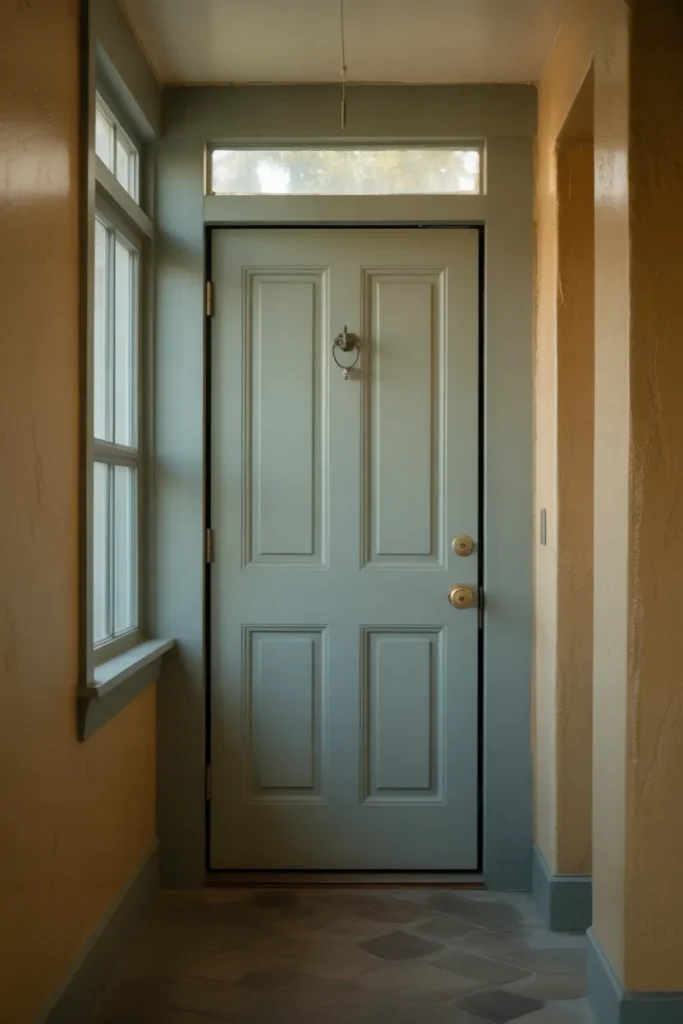
This approach works in virtually any size entryway and requires only one quart of paint. It performs best when the surrounding walls are kept in a neutral warm tone, cream, warm white, or pale oat, so the door color has room to read clearly.
Avoid bright or saturated greens, as they shift the tone from calm and organic to bold and contemporary. The dusty, slightly grayed quality of the green is what makes it feel cottagecore rather than modern.
14. Incorporate a Vintage-Inspired Wall Clock as a Functional Focal Point
A wall clock in the entryway is practical and, when chosen correctly, visually powerful. In cottagecore styling, look for a clock with a wooden or hand-painted ceramic face, Roman numerals, and simple wrought iron or aged brass hands.
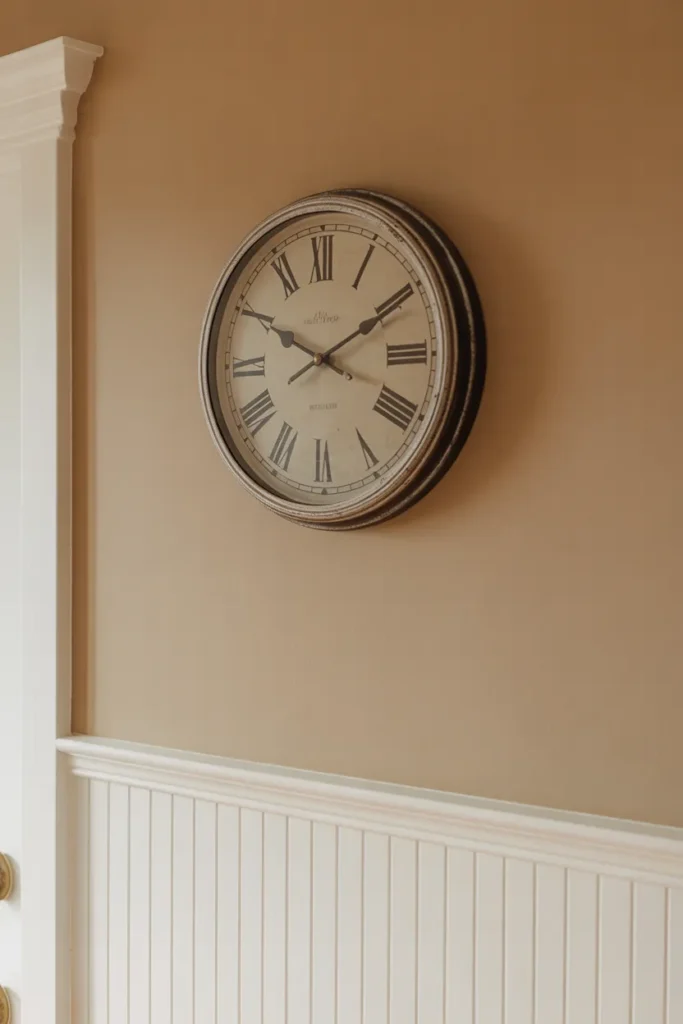
Mount it at eye level on a wall that receives natural light so the face stays readable. Avoid digital clocks, backlit clocks, or any clock with a chrome or plastic frame, as these materials are jarring against natural textures.
A clock positioned above a console table or peg rail ties multiple elements together into a cohesive wall composition. It also gives the entryway a sense of permanence and functionality that purely decorative items cannot.
15. Layer Lighting With a Rattan or Paper Shade Pendant
Most entryways rely on a single overhead recessed light or a basic flush-mount fixture. Replacing or supplementing this with a rattan, bamboo, or handmade paper shade pendant immediately transforms the quality of light and the visual warmth of the space.
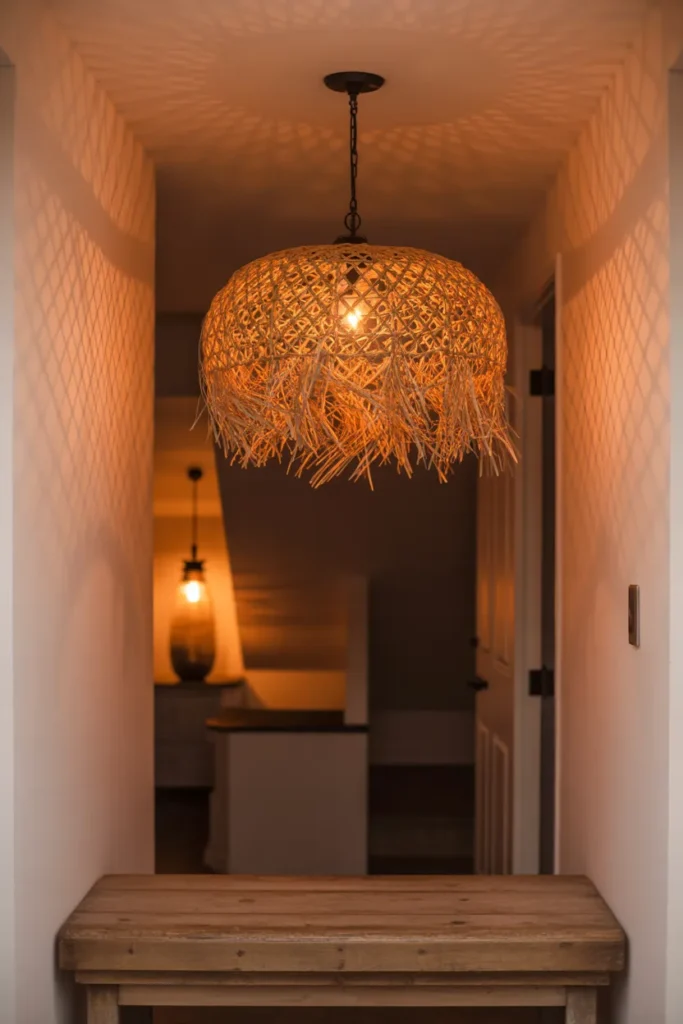
A woven rattan pendant casts beautiful dappled shadow patterns on surrounding walls, which enhances the organic, layered quality of the cottagecore aesthetic. Choose a warm white bulb, 2700K or lower, to reinforce the cozy, amber-toned light quality.
In entryways with low ceilings, a semi-flush rattan shade mount achieves the same effect without sacrificing headroom. Avoid cold white or daylight bulbs, which flatten the warmth of natural materials.
16. Display a Small Herb or Succulent Arrangement in Terracotta Pots
A cluster of small terracotta pots with herbs or hardy succulents on a shelf, bench, or console table brings an everyday, lived-in quality to the cottagecore entryway that larger plants sometimes miss. The rustic clay material of terracotta is one of the most naturally cottagecore materials available.
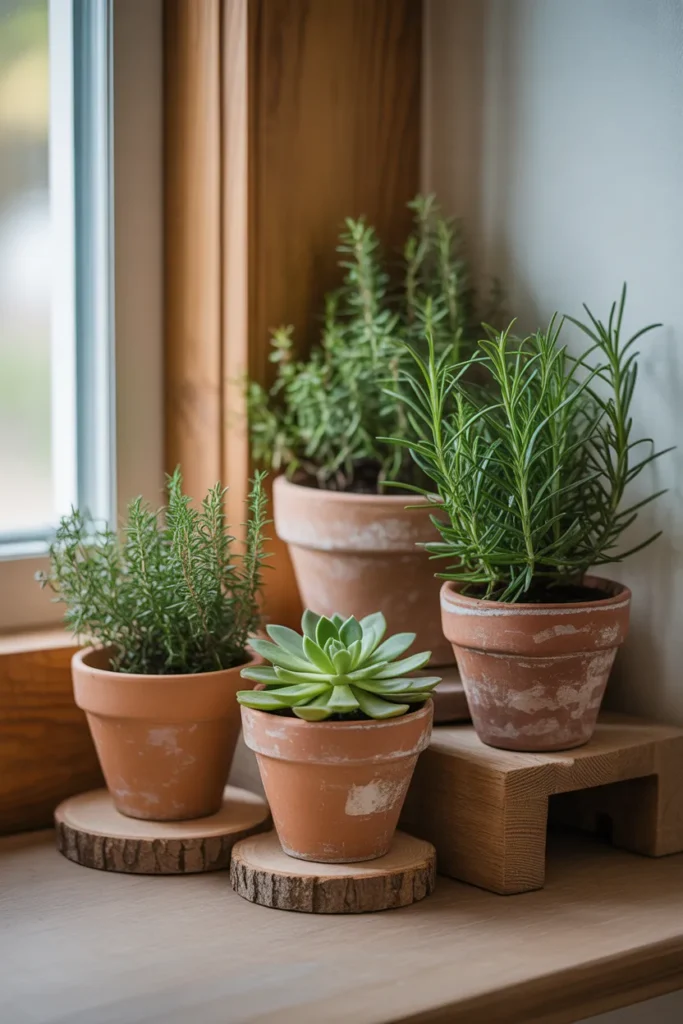
Group pots in even numbers, two or four, at slightly varied heights using stacked books or small wooden risers. Choose low-maintenance plants like thyme, rosemary, echeveria, or string of pearls that tolerate the variable light of an entryway.
Avoid plastic nursery pots. Even if the plant inside is identical, the container material determines whether the arrangement feels intentional or provisional.
17. Add a Linen or Embroidered Welcome Mat With Natural Fiber Texture
The welcome mat is the very first physical element anyone encounters. In a cottagecore entryway, it should be made from coir, jute, seagrass, or woven cotton. Simple embroidered botanical motifs, leaf borders, or a clean woven texture are ideal.
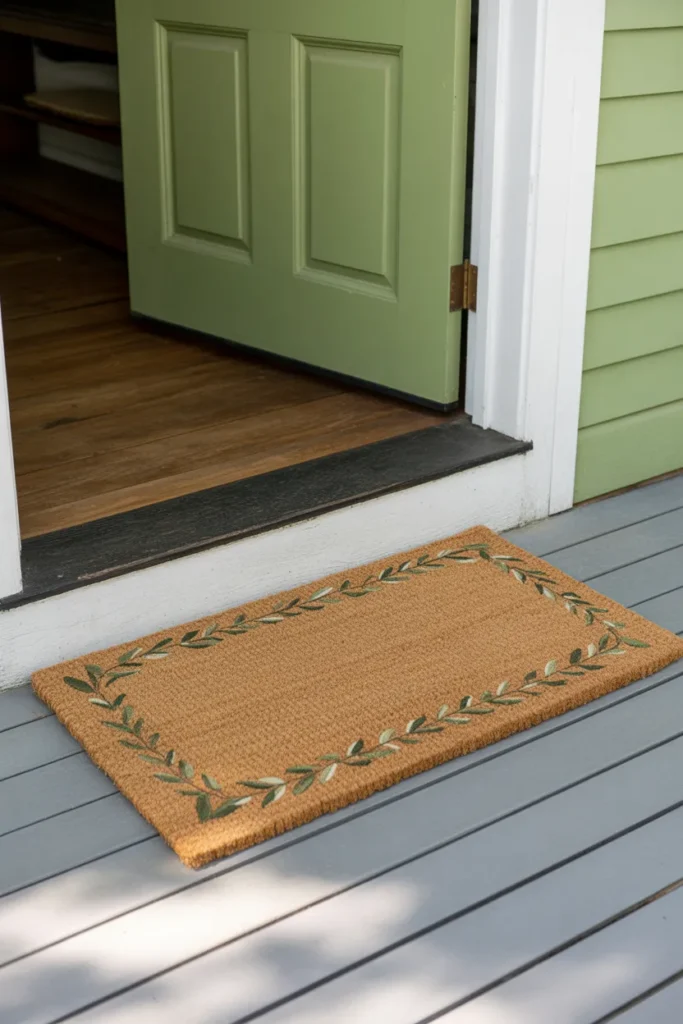
Avoid rubber-backed mats with synthetic loops or novelty prints. These materials and patterns break the tonal consistency of the aesthetic before anyone even steps inside.
Size the mat proportionally to your door width. A mat that is too small looks decorative rather than functional, and a mat that extends beyond the door swing creates a tripping hazard. Standard sizing of 18 by 30 inches works for most single doors.
18. Frame Pressed Botanical Prints for an Affordable Gallery Wall
A small gallery wall of framed pressed botanical prints is one of the most cost-effective and high-impact ways to complete a cottagecore entryway. Real pressed flowers or high-quality botanical illustration prints in simple wooden or thin black frames create a curated, personal collection feel.
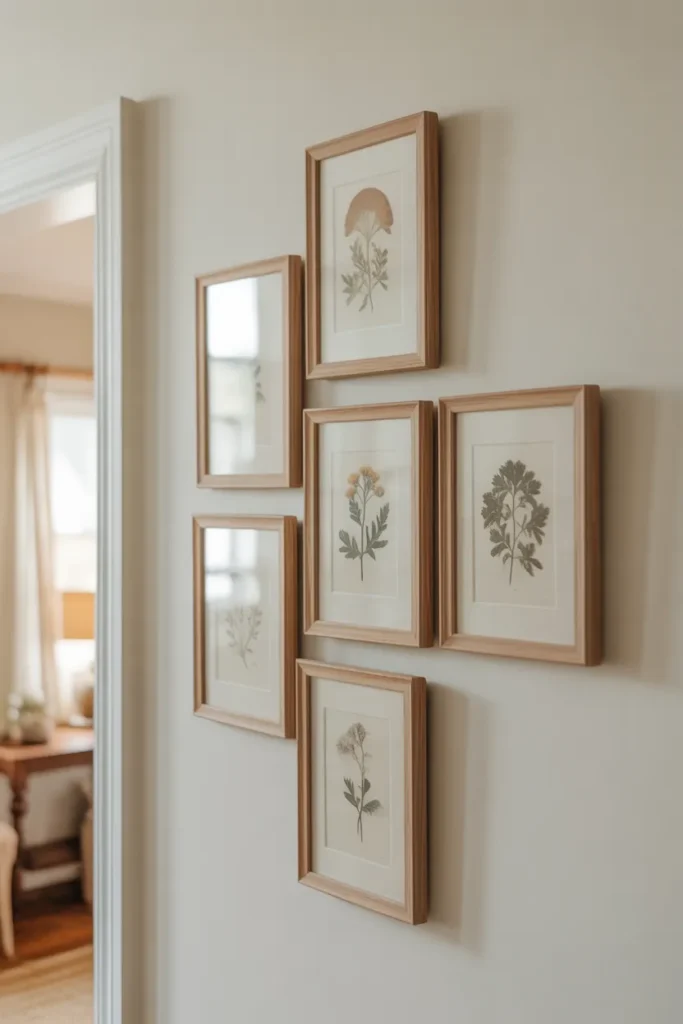
Arrange three to five frames in an asymmetric cluster at eye level. Mix frame sizes slightly but keep the matting consistent in color, cream or warm white, for visual cohesion. Avoid matching frame sets that look like they came as a packaged collection.
This works especially well on a blank wall beside the entry door that might otherwise feel empty. It fills vertical space without the weight of a large single piece and gives you flexibility to swap prints seasonally.
Conclusion
The cottagecore home aesthetic in your entryway does not require a full renovation or a large budget. It requires intentional material choices, natural textures, and a consistent visual language built idea by idea. The 18 approaches in this guide give you practical starting points whether you are working with a narrow apartment hallway or a spacious foyer.
Save this post so you can return to it as you work through each idea at your own pace. Every entryway is different, and the most effective cottagecore spaces are built gradually with pieces that hold real meaning rather than assembled all at once. For more room-by-room cottagecore styling guidance, explore the rest of the site for ideas on living rooms, bedrooms, and kitchen spaces.