
Most parents assume that a polished, designer-quality kids room requires a significant investment. Learning how to create a high end transitional kids room on a budget comes down to knowing which specific decisions drive the look and which ones drain money without visible results. This post gives you 18 practical, decision-ready ideas that cover layout, materials, color, lighting, and furniture choices so you can build a room that looks expensive without spending like it.
1. Choose a Neutral Base Palette That Does Not Age Out
The single most important budget decision you will make in a transitional kids room is your wall color. Transitional design sits between traditional warmth and modern restraint, and the color palette is what holds that balance. A warm white, soft greige, or muted sage on the walls creates a foundation that works with almost any furniture or textile combination you add later.
Where parents overspend is by painting a room in a bright, theme-specific color and then repainting two years later when the child outgrows the theme. A neutral base eliminates that cycle entirely. You update the room by swapping textiles and accessories, not by repainting.
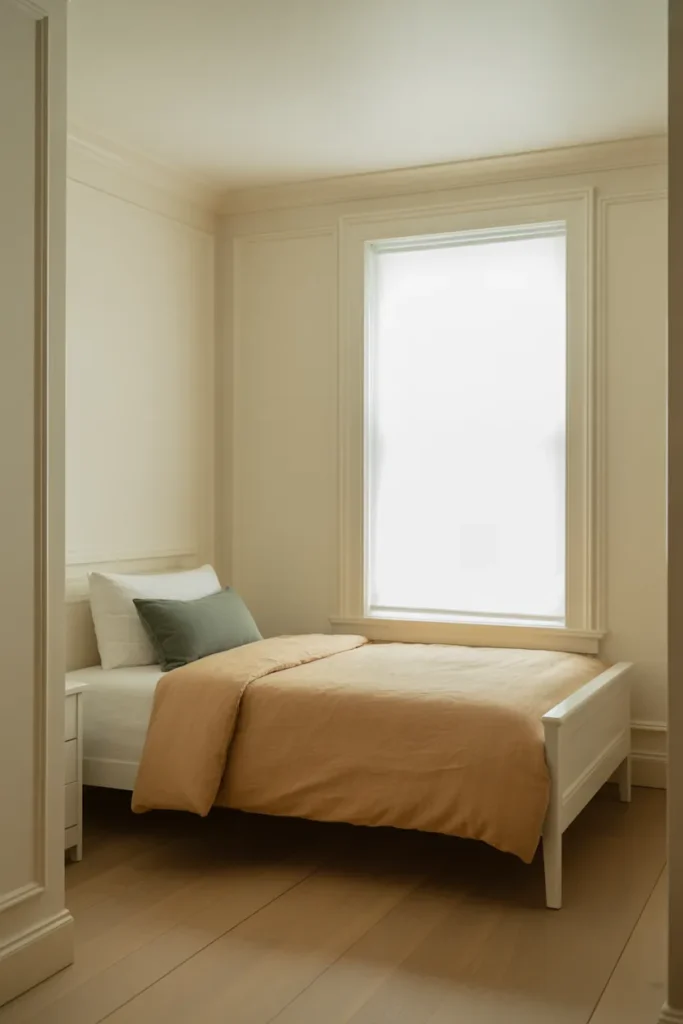

The one mistake to avoid here is choosing a true stark white. Cold whites flatten a room and make inexpensive furniture look cheaper. Warm whites with slight yellow or cream undertones reflect light in a way that reads as quality even in budget spaces.
This decision costs only the price of paint and has the highest return on investment of anything on this list. It is the starting point before any other purchase.
2. Use a Single Wood Tone and Commit to It Across All Furniture
One of the clearest markers of an expensive room versus a budget room is material consistency. High-end transitional kids rooms use one wood tone across all furniture pieces. Budget rooms typically mix three or four different wood finishes because pieces were purchased separately at different times without a plan.
Before buying any furniture, decide between light wood such as natural oak or birch, medium wood in honey or walnut, or darker espresso. Every wood piece in the room should fall within one step of that tone on either side. This rule applies to bed frames, nightstands, shelving, desks, and decorative wood accessories.
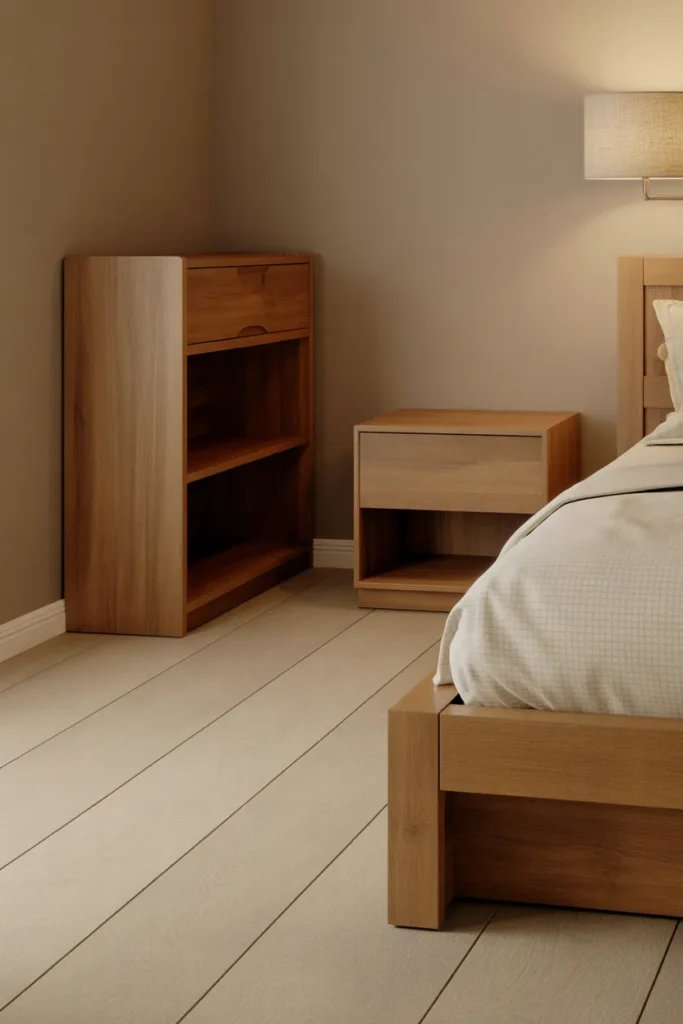
You do not need to buy matching sets. In fact, matching furniture sets often look less expensive than intentionally curated mixed pieces that share the same wood tone. The key is the tone itself, not the brand or the style.
This is also a practical longevity decision. A consistent wood tone allows you to replace individual pieces over time without disrupting the room’s visual coherence.
3. Install DIY Shiplap or Board and Batten on One Accent Wall
An accent wall treatment is one of the highest visual-impact moves available in a transitional kids room, and it is also one of the most achievable on a tight budget. Board and batten installed on a single wall behind the bed creates an architectural quality that elevates the entire room instantly.
The transitional style suits board and batten more than any other wall treatment because it bridges the traditional character of the paneling with a modern application. Paint the board and batten in the same color as the wall behind it for a tonal effect, or in a contrasting color such as deep navy, dusty green, or charcoal for a stronger statement.
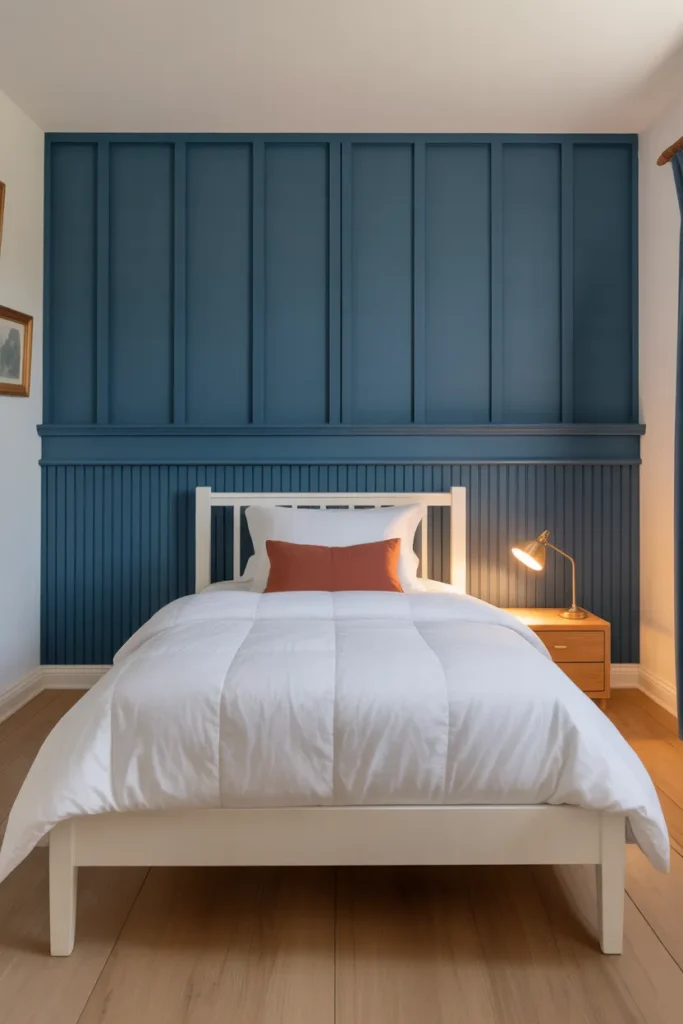
The most common mistake with DIY board and batten is inconsistent spacing. Measure twice and mark every board placement before cutting anything. Irregular spacing is immediately visible and undermines the architectural quality you are trying to achieve.
The material cost for board and batten on a standard 10-foot-wide wall is low. The skill requirement is manageable for any parent with basic tools and a free weekend.
4. Choose One Statement Light Fixture and Let It Do the Work
Lighting is the most underestimated budget tool in interior design. A single well-chosen ceiling light fixture in a transitional kids room does more to communicate quality than almost any furniture piece at the same price point. This is because light fixtures sit at eye level or above the main sightline and register immediately when someone enters a room.
For a transitional aesthetic, look for fixtures that combine classic silhouettes with modern materials. A drum pendant in a warm linen or cotton shade, a cage-style pendant in matte black or aged brass, or a simple rattan globe pendant all work without leaning too traditional or too contemporary.
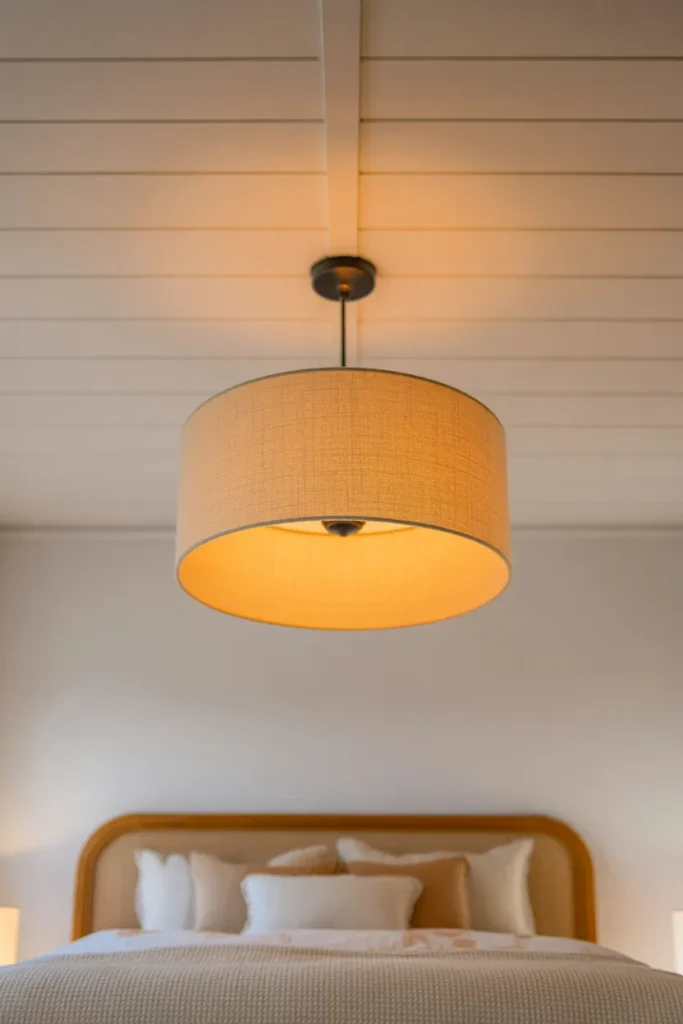
The mistake most people make is defaulting to a builder-grade flush mount light because it feels safe. A builder-grade fixture signals that no design decisions were made in the room. A $40 drum pendant in a warm material signals the opposite.
Replace the overhead fixture before buying any decorative accessories. The light fixture changes how everything else in the room reads.
5. Layer Textiles in Three Textures to Create Visual Depth
In a transitional kids room, textiles are the fastest and most reversible way to build the layered, curated look associated with high-end design. The rule is three textures minimum: one smooth, one woven, and one soft or nubby. These three together read as intentional layering rather than random accumulation.
A practical application of this rule is: smooth linen duvet as the base layer, a woven cotton throw folded at the foot of the bed, and a nubby boucle or sherpa pillow as the accent piece. These three textures together in coordinating neutrals produce a result that photographs like a styled editorial room at a fraction of the cost.
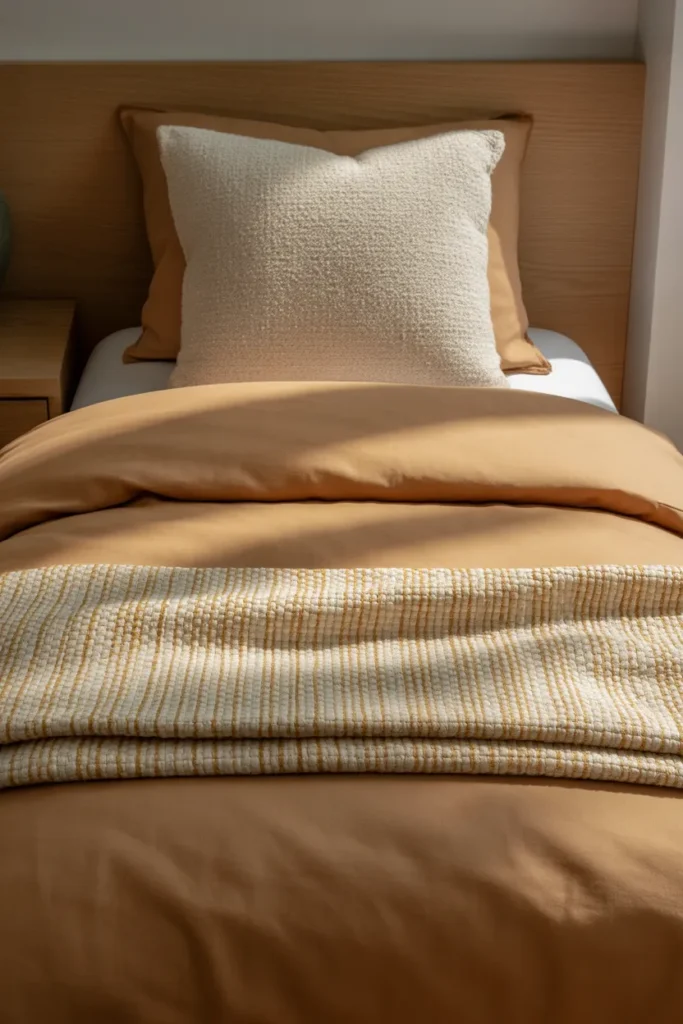
The most common mistake is buying all bedding from the same material family. When everything on the bed is the same smooth cotton, the room reads as flat regardless of how good the individual pieces are.
Textiles are also the easiest things to update. As your child grows, you change the throw and the accent pillow and the room feels new. The neutral base palette you established in section one makes this possible without repainting.
6. Swap Hardware on Existing Furniture for an Immediate Upgrade
If you already own furniture or are purchasing budget flat-pack pieces, changing the hardware is the single cheapest upgrade with the highest visible impact. Drawer pulls and knobs are the jewelry of furniture and transitional design uses them to bridge traditional form with modern finish.
For a transitional kids room, aged brass or brushed gold hardware on white or natural wood furniture is the most effective combination. Matte black hardware on light wood furniture is a strong alternative for a slightly cooler feel. Both read as elevated without the price tag of higher-end furniture.
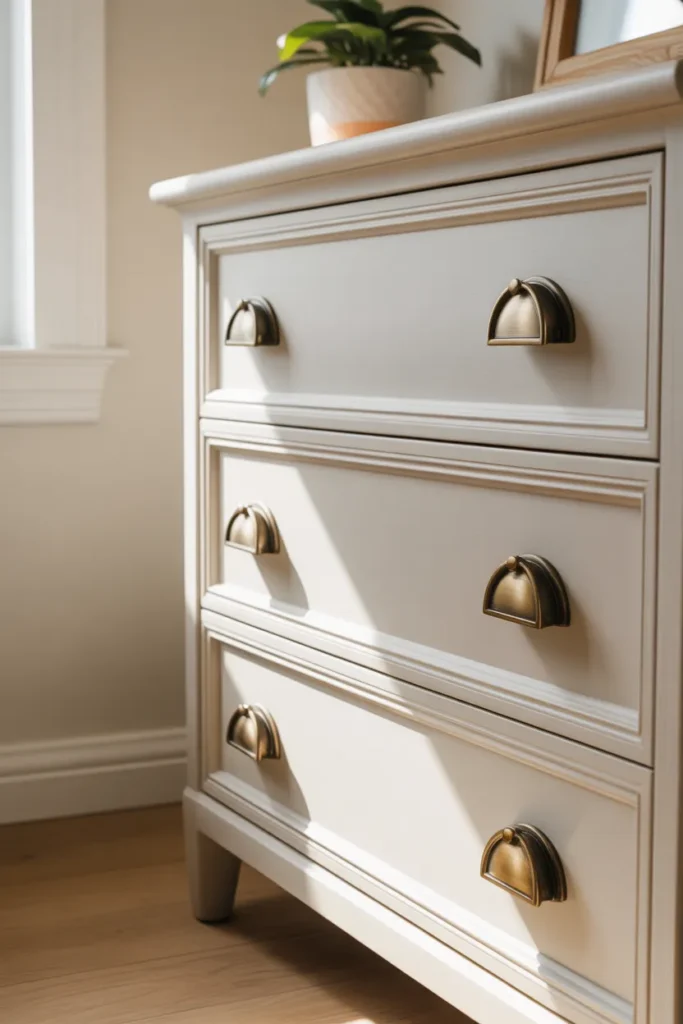
The mistake to avoid is keeping the original hardware that came with inexpensive furniture. Stock hardware on flat-pack furniture is almost always chrome or silver, which reads as low-cost and conflicts with a transitional palette.
Hardware replacement takes less than an hour per piece of furniture with a standard screwdriver. The total investment is low and the result is immediate.
7. Create a Reading Nook Using a Corner, a Cushion, and Floating Shelves
A reading nook does not require a built-in alcove or a contractor. In a transitional kids room, a reading corner built from three elements creates the impression of intentional architecture: a floor-level cushion in a durable fabric, two floating shelves mounted at accessible height on the adjacent corner walls, and a wall-mounted reading lamp positioned above the cushion.
This setup costs significantly less than any built-in option and produces a defined zone within the room that children naturally gravitate toward. The nook works in any room that has an open corner with at least three feet of clearance in each direction.
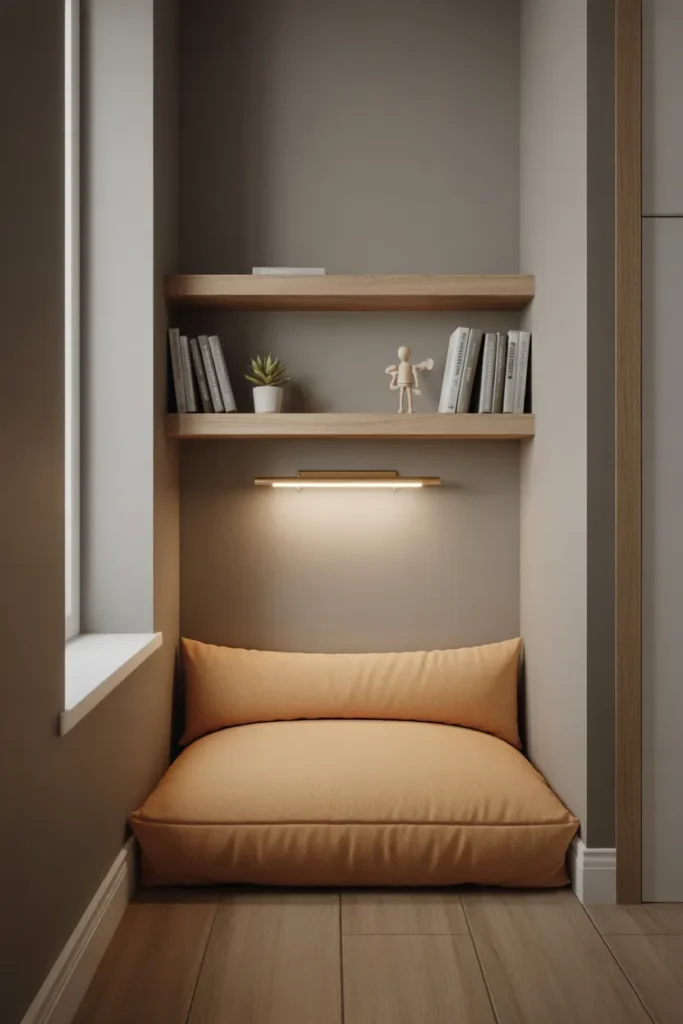
For the floating shelves, choose natural oak or painted white MDF depending on your wood tone decision from section two. Style the shelves with books, one small plant, and one or two simple objects. Leave open space on each shelf. Overcrowded shelves undermine the transitional aesthetic.
The reading nook also serves an important functional purpose. It separates the sleeping zone from the activity zone within the same room, which is the foundational principle of well-designed single-room kids spaces.
8. Use Curtain Height to Make Any Room Feel Larger and More Elevated
Curtains that hang at window frame height make a room feel like a budget renovation. Curtains that hang from ceiling height to floor length make any room feel taller, more architectural, and significantly more expensive. This is true regardless of what the curtains themselves cost.
The rule in transitional design is always ceiling to floor. Mount your curtain rod six to twelve inches above the window frame and as close to the ceiling as possible. Use curtain panels that are long enough to reach the floor with one inch of break, meaning the fabric just touches the floor surface.
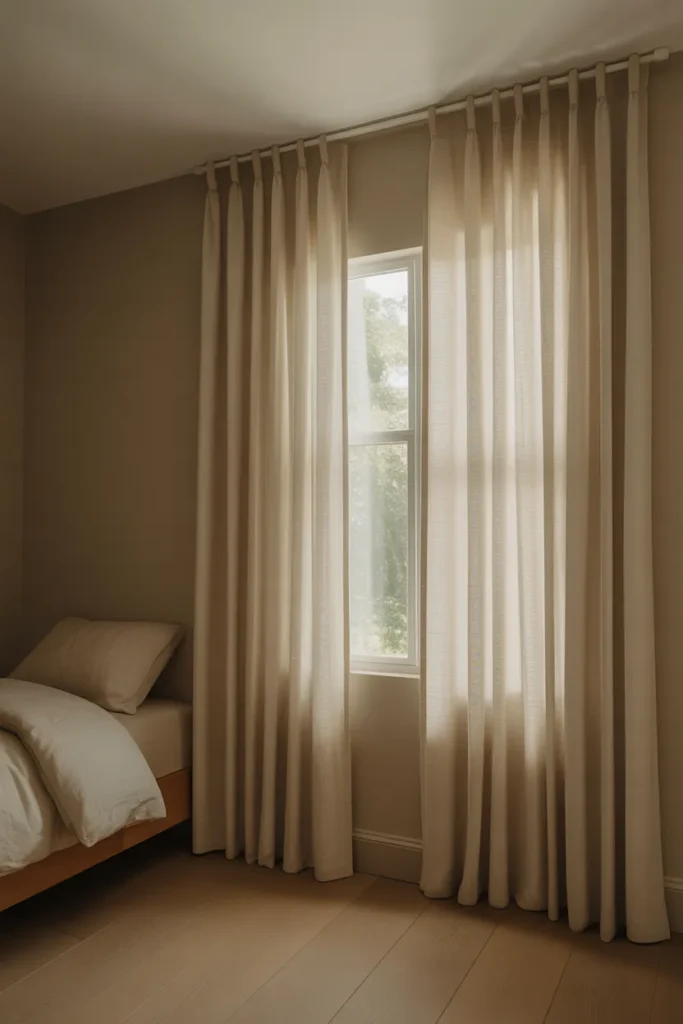
For a transitional kids room, choose curtains in a solid neutral such as warm white, soft linen, or muted sage. Avoid heavily patterned curtains in a kids room because patterns date quickly and fight with other design elements. A solid neutral panel reads as a design choice rather than a default.
This upgrade costs only the price of a ceiling-mounted curtain rod and the correct-length panels. The visual result is out of proportion to the investment and is one of the most effective tools for making budget spaces look designed.
9. Add a Low-Profile Area Rug That Grounds the Entire Room
A rug in a transitional kids room serves two purposes simultaneously: it defines the functional zone of the room and it adds the warmth and texture layer that prevents the space from feeling cold or flat. The common mistake is choosing a rug that is too small or too brightly patterned.
For a transitional aesthetic, the rug should be large enough to sit under the front two legs of the bed and extend at least eighteen inches beyond the sides of the bed frame. This anchors the bed to the floor and makes the room feel proportionally correct. A rug that floats in the center of the room with furniture around its perimeter looks ungrounded regardless of how well the rest of the room is designed.
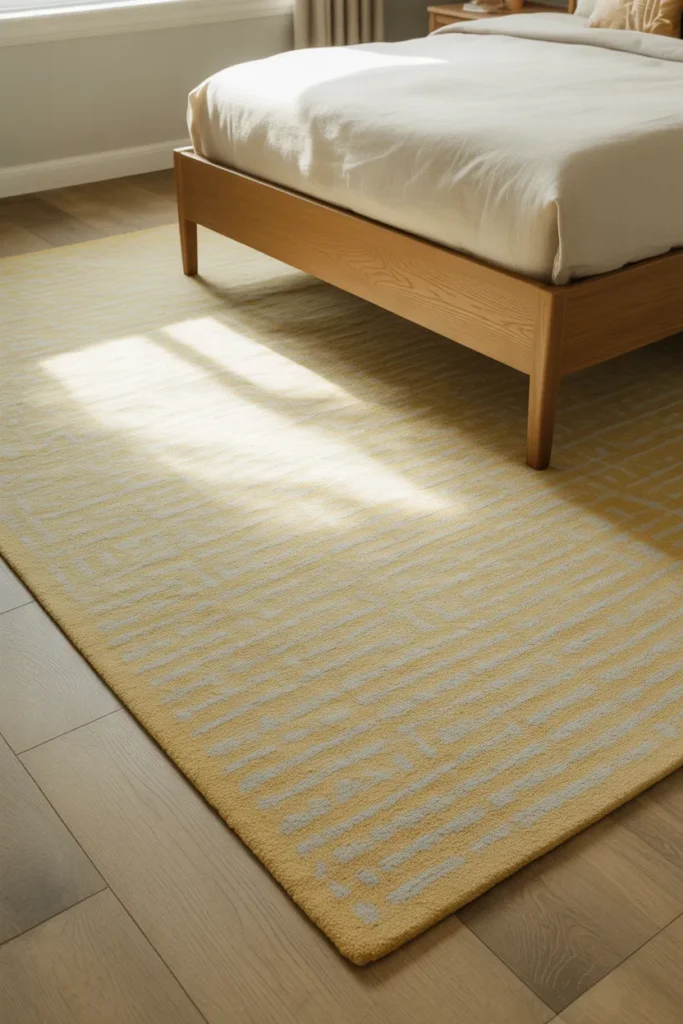
Pattern selection matters significantly in a transitional kids room. Abstract patterns in muted tones, simple geometric grids, or solid neutrals work consistently. Avoid cartoon-adjacent patterns or overly bold graphic rugs that limit the room’s flexibility as your child grows.
A flat-weave rug in a subtle diamond or grid pattern is the most versatile and durable choice for a kids room that sees real daily use.
10. Mount Floating Shelves Instead of Buying a Bulky Bookcase
Floating shelves mounted directly to the wall are one of the most effective space and budget tools in a transitional kids room. A floor-standing bookcase takes up square footage and can make a small room feel cluttered and heavy. Floating shelves use vertical wall space, keep the floor open, and look significantly more designed when styled correctly.
For a transitional look, install three shelves in an asymmetric arrangement rather than a straight vertical stack. A staggered arrangement where shelves sit at slightly different heights reads as architectural and intentional rather than utilitarian.
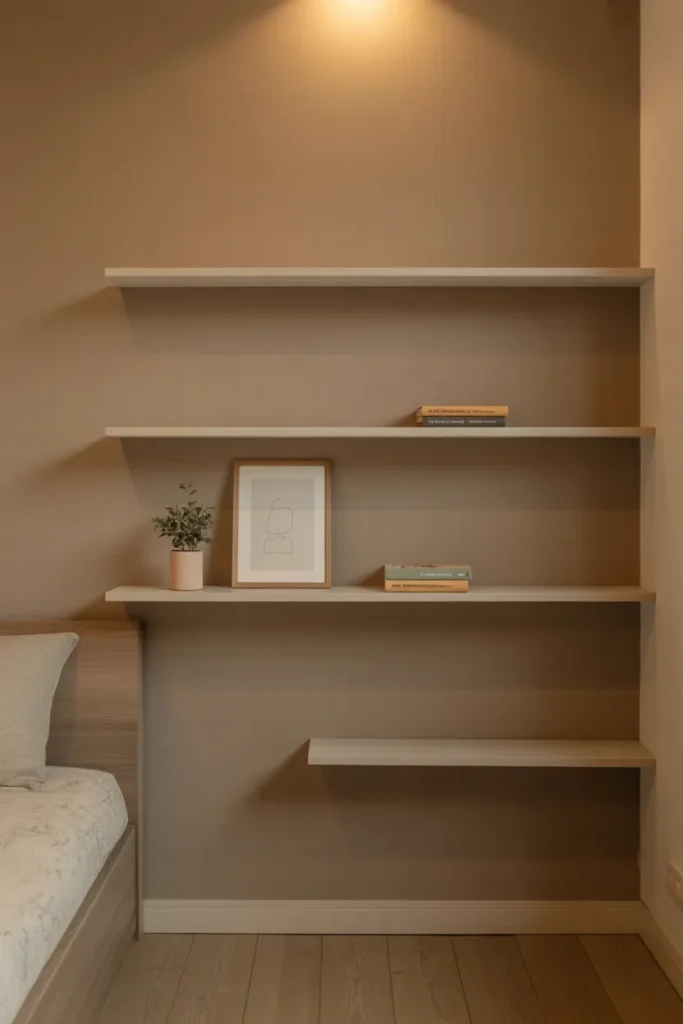
Style each shelf with the rule of three: one taller object such as a small plant or jar, one medium object such as a small framed print or figurine, and one horizontal object such as a stack of two or three books. Follow this rule on each shelf and leave open space at the ends. The negative space is as important as the objects.
This approach works in rooms of any size and on any wall. It is particularly effective above a desk or adjacent to a bed frame as a headboard-adjacent display zone.
11. Select a Bed Frame That Reads Adult and Grows With the Child
The bed frame is the largest and most visible furniture piece in a kids room. Choosing a bed frame that reads as children’s furniture guarantees the room looks childish regardless of what surrounds it. Choosing a frame that reads as adult-design first and kids-room second is the foundation of how to create a high end transitional kids room on a budget.
The best transitional bed frames for a kids room are simple platform beds in natural oak or white-painted wood, low-profile upholstered frames in performance linen or boucle, or classic spindle frames in white or natural wood. All three options read as adult design choices and transition seamlessly from a young child’s room to a preteen’s room without replacement.
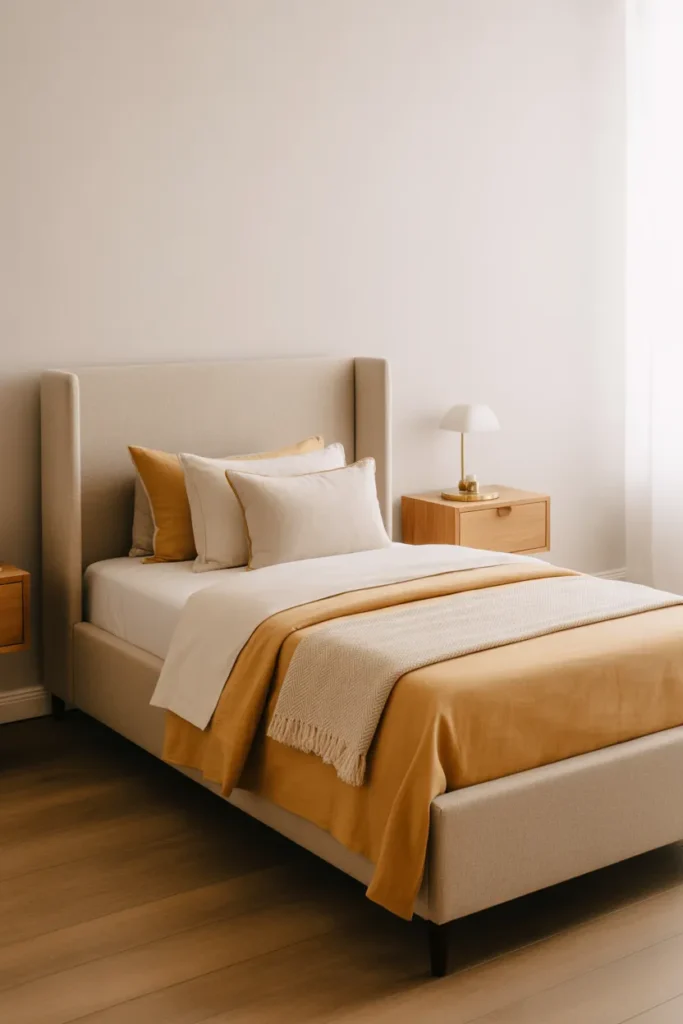
Avoid bed frames with built-in storage drawers on cheap roller mechanisms, car or house shapes, or heavily ornate headboards. These all signal that a specific design decision was made for a child rather than for a space.
A frame that lasts across developmental stages is a better budget decision than a lower-cost frame designed for one age range that requires replacement in three years.
12. Use Framed Vintage Educational Prints for Instant Art Credibility
Wall art is where most parents either overspend on themed kids room art that dates in two years or underspend with bare walls that make the room feel unfinished. Vintage educational prints, botanical illustrations, topographic drawings, and antique atlas pages sit in the middle: they are inherently appropriate for a kids space because of their educational character, and they read as sophisticated adult design because of their aesthetic.
These prints are available digitally at very low cost and can be printed locally or at home and framed in simple thin-frame black or natural wood frames. Three to five of these prints in matching frames arranged in a simple grid or line above the desk or bed constitute a complete art installation that looks curated.
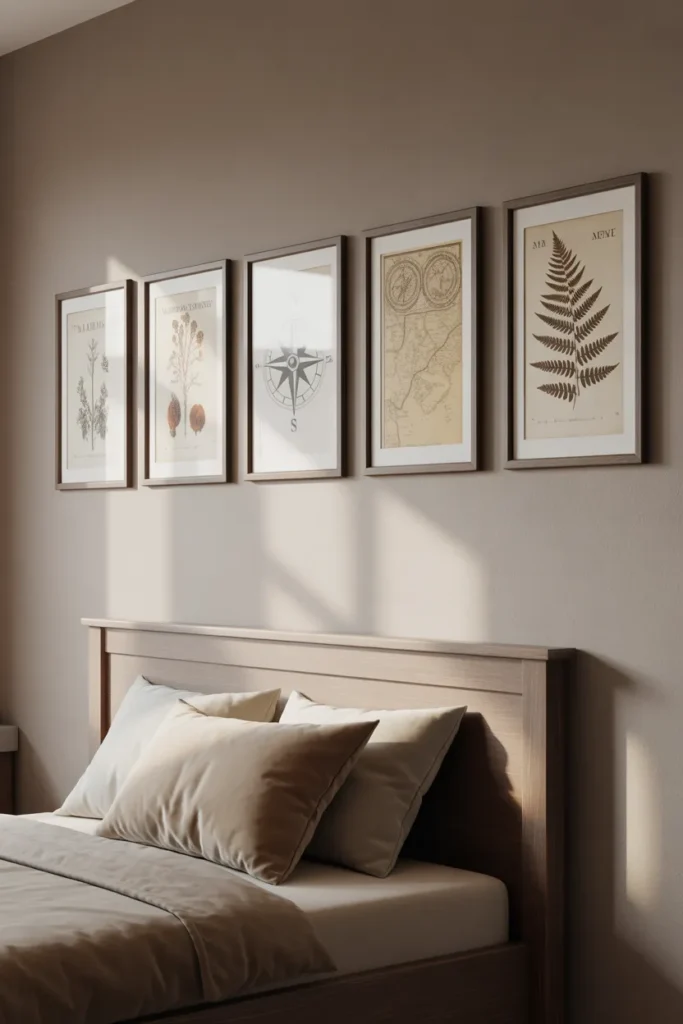
Keep all prints within the same tonal palette. Sepia, cream, and warm gray tones work best for the transitional aesthetic. Avoid full-color prints or those with heavy primary colors.
This approach also allows you to update the art as the child’s interests evolve. Swap the prints without replacing the frames, which keeps the room current at minimal cost.
13. Build a Desk Zone With a Floating Desktop and Simple Task Lighting
A dedicated study area in a transitional kids room signals both function and intentionality. A wall-mounted floating desktop is the most space-efficient and visually clean option available, and it costs less than most standalone desks while looking significantly more designed.
Mount the desktop at the correct ergonomic height for the child’s current age with room to adjust the seating height as they grow. Keep the desktop surface in the same wood tone as the rest of your furniture. A twelve to fourteen inch deep floating desktop is sufficient for schoolwork without projecting too far into the room.
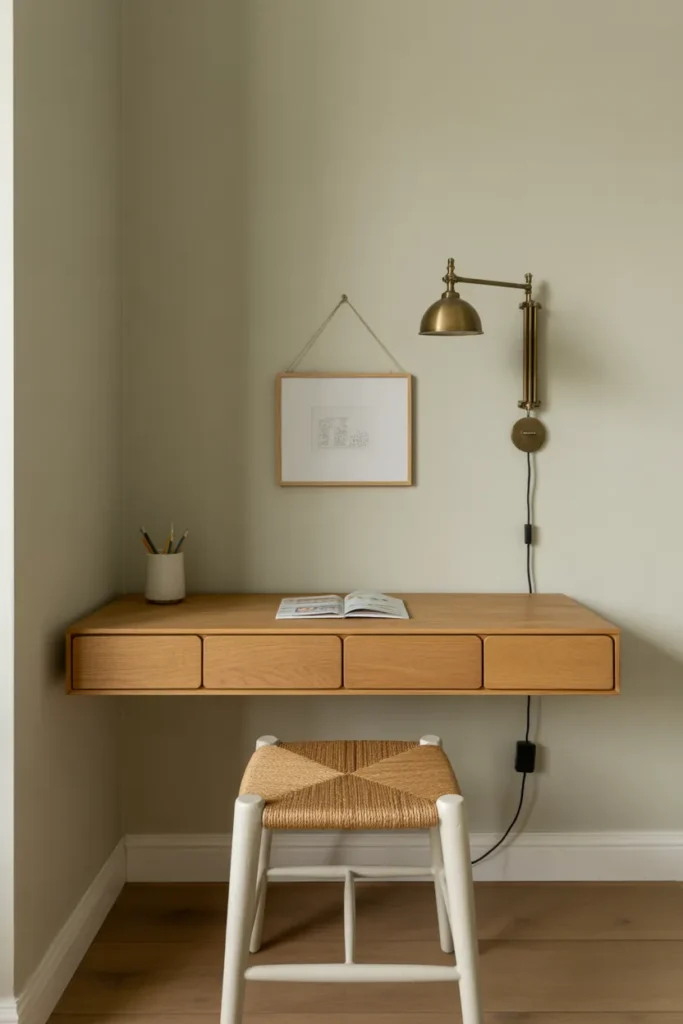
Task lighting on the desk wall should be wall-mounted to preserve the desktop surface. A simple articulating brass or matte black wall lamp provides directional light without taking up desk or floor space.
The mistake most parents make with desk zones is cramming in too much storage. A clean desktop with one or two wall-mounted organizers above it reads as designed. A desk buried under containers, caddies, and organizers reads as functional but not considered.
14. Use Black Accents Sparingly to Anchor the Transitional Palette
Transitional design derives much of its visual authority from the use of one dark anchor color that grounds the softer neutrals and natural materials in the room. In a budget kids room, black used strategically in two or three places prevents the room from feeling too soft or unresolved.
The most effective placements for black accents in a transitional kids room are: curtain rods and rings, light switch and outlet covers, one or two frames in a gallery arrangement, and a single piece of hardware or fixture. These are all low-cost items that cumulatively create a grounded, cohesive visual field.
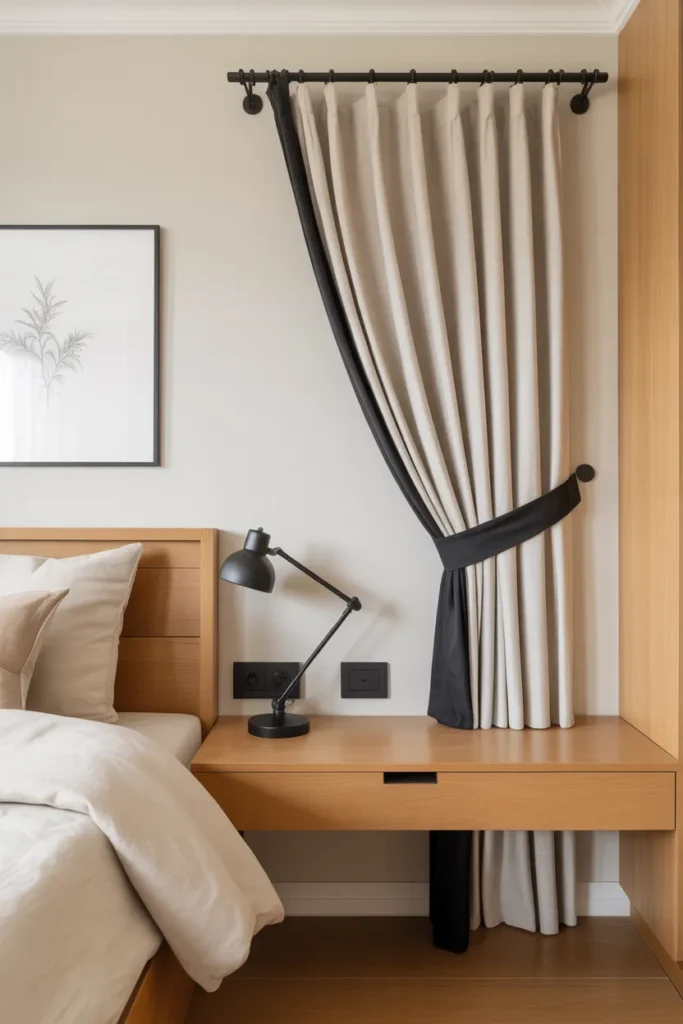
The critical rule is restraint. Two or three black accents read as intentional design decisions. Six or more black accents begin to compete with the neutral palette and push the room toward industrial rather than transitional.
Black accents also photograph extremely well against warm neutral backgrounds. If Pinterest performance is a goal, this strategic use of black creates the high-contrast definition that makes an image stop the scroll.
15. Layer Ambient, Task, and Accent Lighting for a Professional Result
The fastest way to identify a professionally designed room versus a DIY renovation is the lighting layer count. Single-source overhead lighting makes every room feel like a rental. Three-layer lighting, including ambient ceiling light, task lighting at the desk or reading area, and accent lighting from a table or floor lamp, creates depth and warmth that reads as considered design.
In a transitional kids room on a budget, achieve three layers with: the statement ceiling fixture from section four as the ambient source, a wall-mounted task lamp at the desk, and a simple table lamp on the nightstand in a ceramic or natural material base. These three together in warm bulb temperatures create a room that feels completely different at night from how it reads under single overhead light.
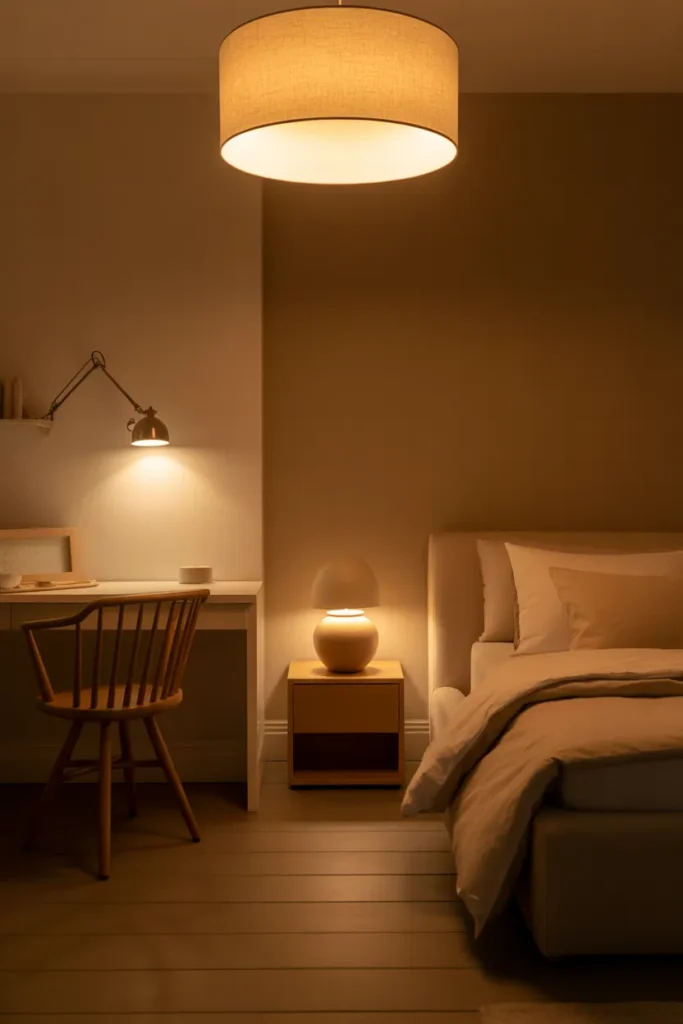
All bulbs should be warm white at 2700K to 3000K. Cooler color temperatures read as clinical and flatten the warm neutral palette you have built. This applies to every fixture in the room.
The nightstand lamp is the piece parents most often skip. It is also one of the highest-value additions because it creates the pool of warm light at bed height that makes a room feel genuinely cozy rather than simply decorated.
16. Introduce One Organic Element to Break the Formality
Transitional design can tip toward feeling overly formal or stiff if every element is structured and geometric. One organic element, meaning something derived from a natural irregular form, breaks that rigidity and makes the room feel livable and warm. This is especially important in a kids room where the space needs to feel approachable, not showroom-like.
The most effective organic elements in a transitional kids room are: a single live or high-quality faux plant in a simple white or terracotta ceramic pot, a small piece of driftwood used as a shelf object, a jute or seagrass basket used as a toy organizer, or a woven macrame wall hanging in a neutral tone kept to a small scale.
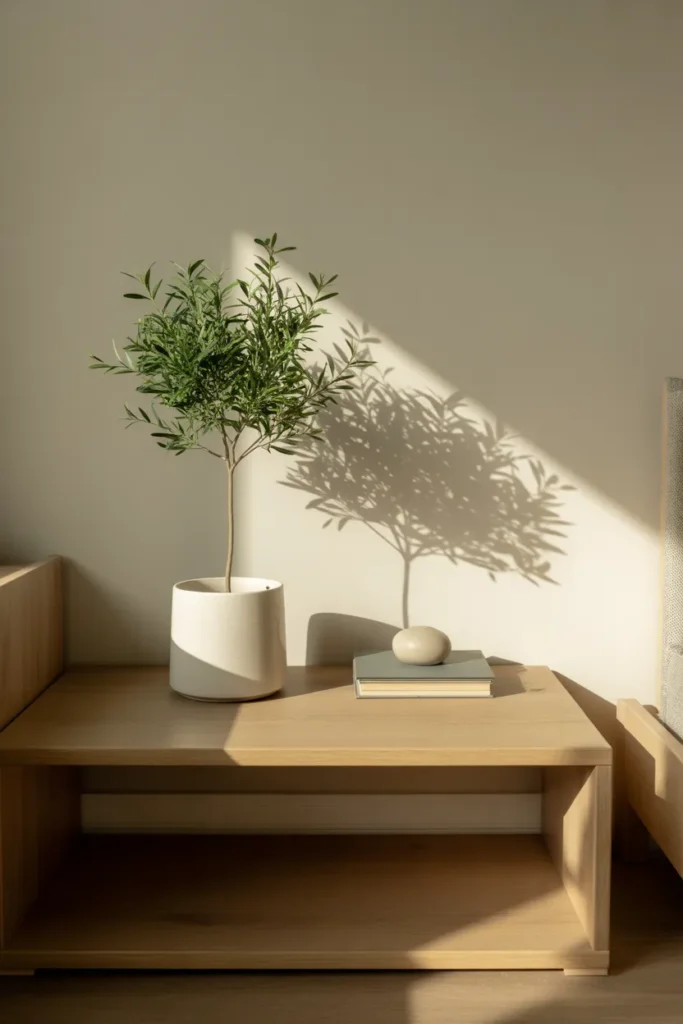
Choose one of these options, not all four. One organic element reads as deliberate. Four read as decoration stacking.
Placement matters as much as the object itself. An organic element positioned on a nightstand, a floating shelf, or the top of a dresser creates a natural focal point within a structured arrangement.
17. Style the Closet Interior to Extend the Room’s Design Language
Most parents treat the closet as a separate functional space entirely disconnected from the room’s design. In a high-end transitional kids room, the closet interior is an extension of the design language, and styling it correctly takes less time and money than most people assume.
Paint the closet interior in the same wall color as the room or one tone darker for depth. Replace wire shelving with simple wood shelves in the same tone as your room’s wood palette. Use matching baskets or bins in one neutral color for all toy and clothing storage. A closet that opens to reveal coordinating storage immediately communicates that the design was considered throughout rather than stopping at the doorway.
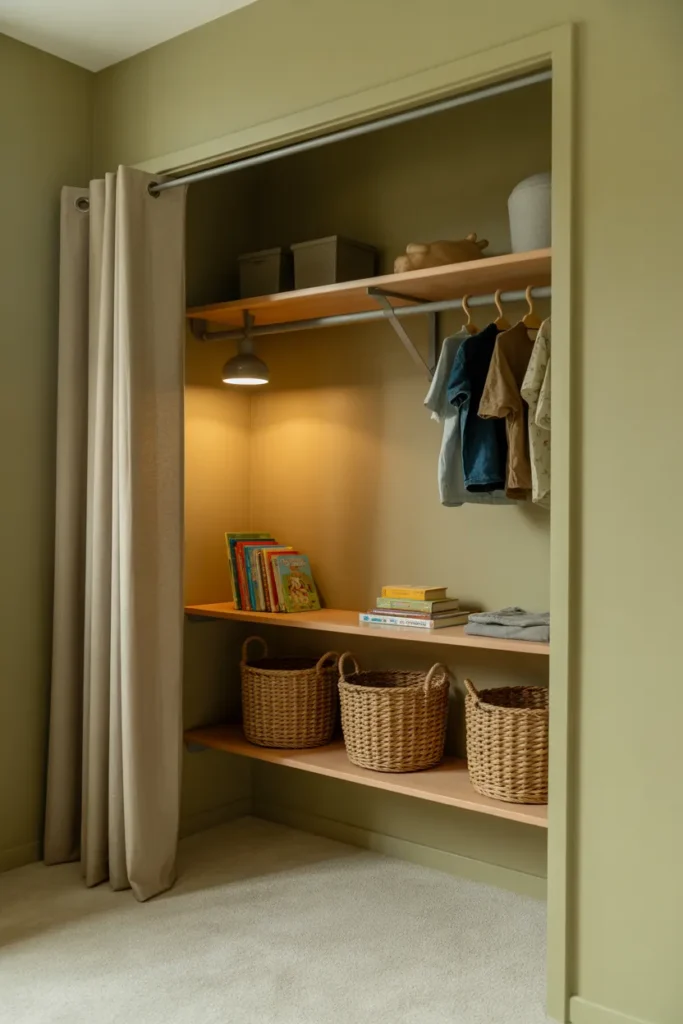
If the closet has an open entrance rather than a door, this becomes even more important because it is always visible from the room. In that case, treat the closet as a built-in display wall rather than a storage zone.
For rooms where the closet has bi-fold doors, consider removing the doors entirely and adding a tension rod with a linen panel as a soft cover. This is a low-cost change that instantly reads as a design decision and photographs significantly better than standard bi-fold hardware.
18. Apply the Rule of Odd Numbers to Every Surface You Style
The final principle of how to create a high end transitional kids room on a budget is not a purchase at all. It is a styling discipline that makes every surface in the room read as intentionally designed rather than casually accumulated. The rule of odd numbers states that objects grouped in threes or fives always look more natural and dynamic than objects in pairs or groups of four.
Apply this to every surface you style: the nightstand, the dresser top, the floating shelves, the desk surface, and the windowsill. A nightstand with three objects arranged at three different heights reads as designed. A nightstand with two matching objects reads as symmetric but flat. A nightstand with four objects of similar height reads as cluttered.
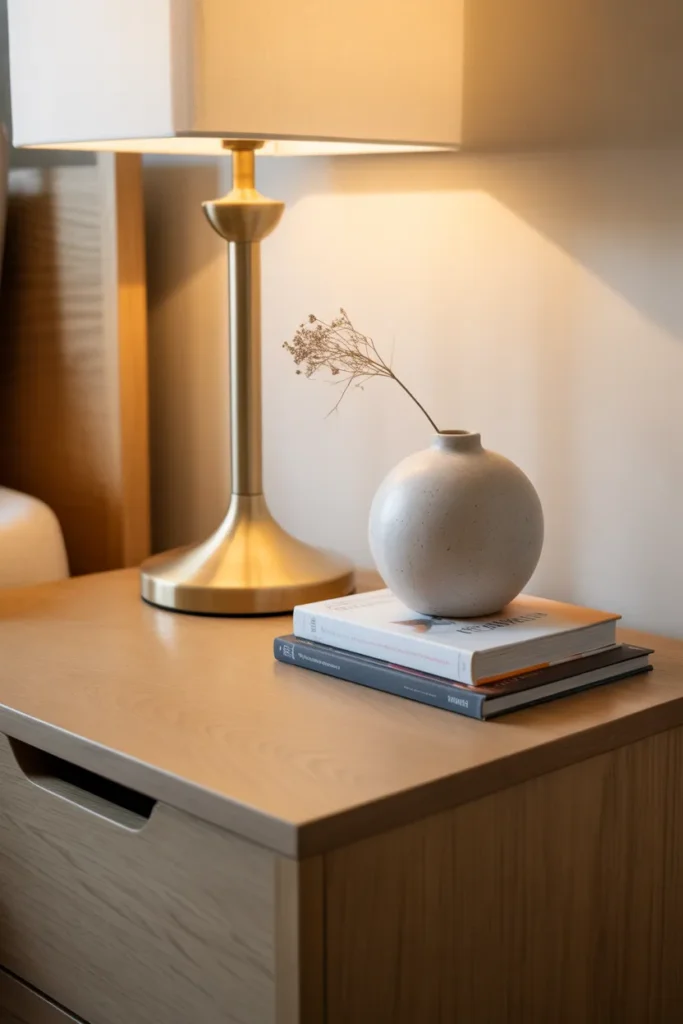
The three-object grouping formula that works most consistently is one tall object at the back, one medium object in the middle, and one low object at the front. Vary the shapes: one round, one rectangular, one organic. This formula produces a visually resolved arrangement on any surface in any room.
This rule costs nothing. It is a design principle applied at the final step of the room and it is the difference between a room that looks finished and one that looks lived-in but unresolved.
Conclusion
A high-end transitional kids room is not a product of a large budget. It is the result of a clear set of decisions made in the right order, starting with the palette, moving through structure, and finishing with styling discipline. The 18 ideas in this post build on each other intentionally, from the wall color foundation to the rule of odd numbers at the final step.
Save this post to your Pinterest boards now so you can return to each section as you move through the design process. If you are working with a smaller room or planning a shared kids space, explore our related posts on small kids bedroom layouts and shared room organization ideas for more targeted guidance tailored to your specific situation.