If you are searching for epic adventure bedroom ideas for a rustic kids room, you already know that most inspiration online looks great in photos but fails in a real home. This post cuts through the noise and gives you 15 practical, well-designed layouts that work across different room sizes, budgets, and age groups. Each idea explains exactly why it works, when to use it, and what mistakes to avoid so you can make a confident decision before buying a single piece of furniture.
1. Cabin Loft Bed With Built-In Rope Ladder and Storage Underneath
A loft bed styled as a log cabin interior is one of the most space-efficient layouts you can create in a rustic kids room. The vertical structure frees up the floor beneath for a reading nook, toy storage, or a small desk. This setup works especially well in rooms under 150 square feet where every inch counts.
The key to making this feel like an adventure space rather than just a tall bed is the framing. Use natural wood panels on the loft rails, add a rope ladder instead of a standard step ladder, and install a low-hanging pendant light beneath the platform. This creates a defined zone under the bed that children treat as their own private hideout, which encourages independent play.
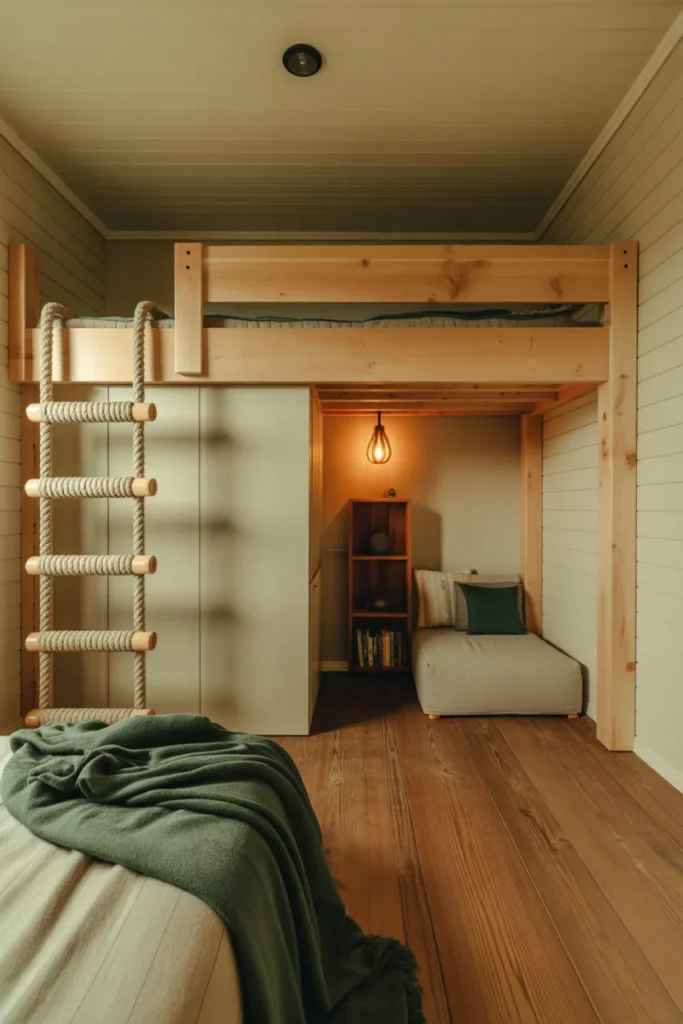

One common mistake is overloading the under-loft area with too much furniture. Keep it to one functional piece plus open floor space. If the room has a low ceiling, a loft bed is the wrong call entirely. Measure floor-to-ceiling height first and confirm you have at least 42 inches of clearance above the mattress for safe sleeping.
This layout suits boys and girls ages 4 through 12. It also adapts well as children grow by simply changing the decor underneath from a play area to a study zone.
2. Mountain Map Wall Mural Behind a Low Platform Bed
A large topographic or wilderness map mural used as a statement wall behind a low platform bed instantly anchors the adventure theme without cluttering the room. Unlike themed wallpaper with cartoonish characters, a topographic or national park-style map mural reads as elevated design and holds up visually as kids grow older.
This layout works best in rectangular rooms where one long wall faces the door. The mural becomes the first thing visible when entering the room, which creates strong visual impact. The low platform bed in natural wood or matte black metal keeps the overall silhouette grounded so the wall can breathe.
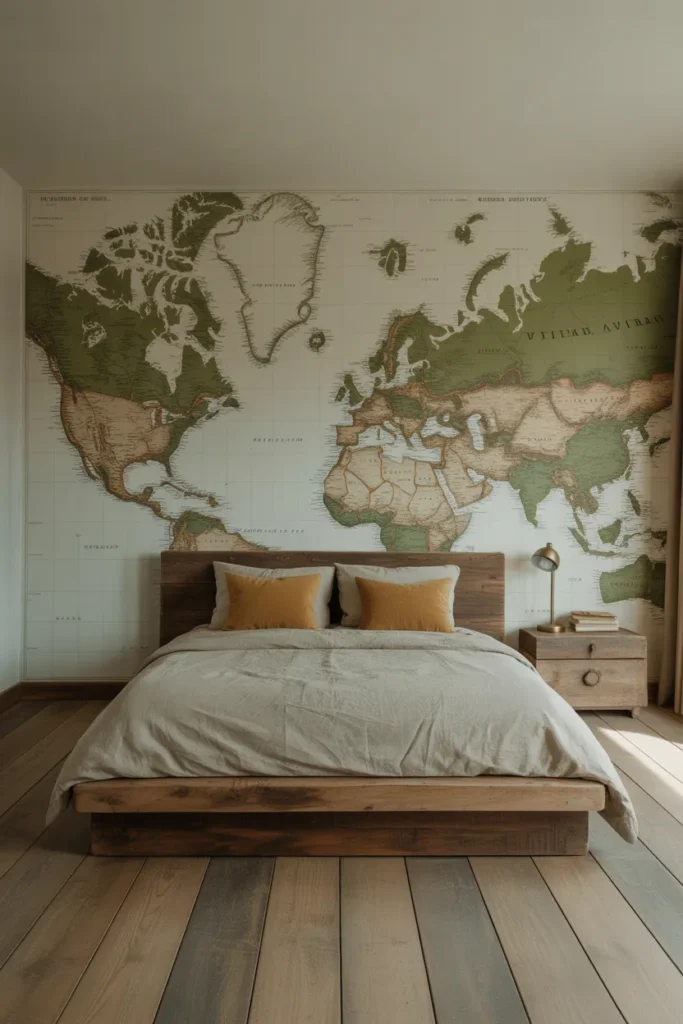
Use muted map tones rather than bright primary colors. Deep olive, slate blue, cream, and brown create a color palette that pairs easily with rustic wood textures and natural fiber rugs. Avoid using this approach in small or dark rooms where a large-scale graphic wall will feel heavy and closed-in.
For rooms that face north or have limited natural light, balance the mural with warm-toned light fixtures to prevent the space from feeling cold.
3. Teepee Corner Nook With Naturalistic Layered Textures
A floor teepee installed in a corner of the room creates a secondary zone that children use for imaginative play, quiet reading, or just having a space that feels exclusively theirs. In a rustic adventure kids room, a natural canvas teepee with wood poles is far more effective than fabric pop-up versions because it reads as a genuine design element rather than an accessory.
Place the teepee in a corner that is away from the main sleeping area to preserve the room’s functional layout. Layer the interior floor with a sheepskin or a woven kilim rug, add two or three floor cushions, and hang a small string of warm fairy lights inside the peak. The layered textures inside the teepee do more design work than almost any other single element in the room.
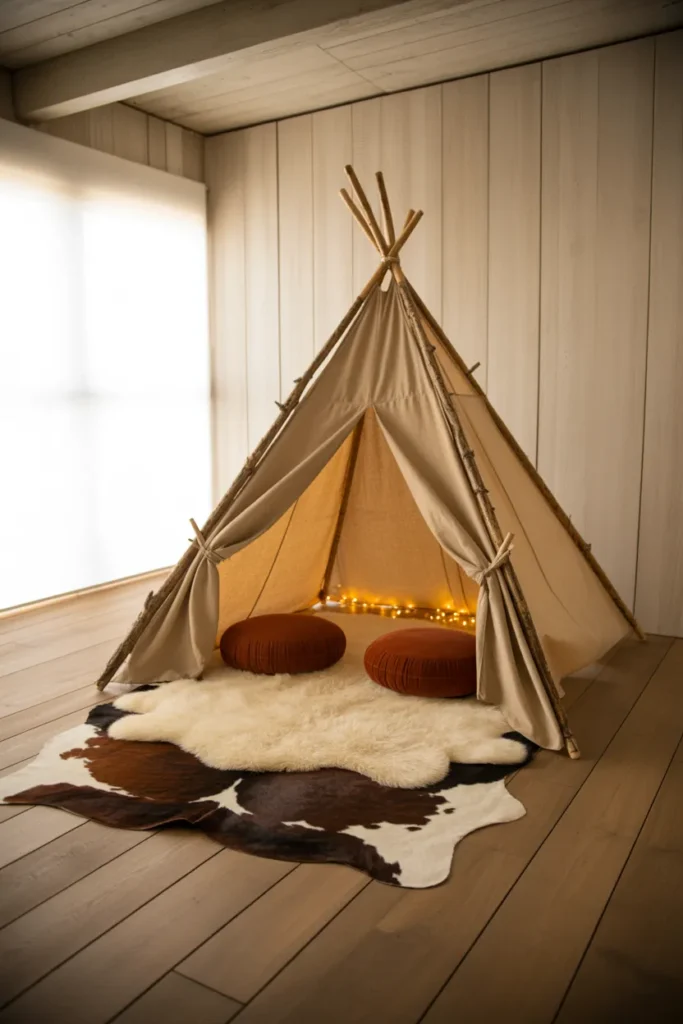
This setup works in rooms of any size. In small rooms, a compact teepee (around 4 feet wide at the base) fits without overwhelming the space. In larger rooms, a full-scale teepee becomes the visual centerpiece.
Avoid synthetic-looking teepees with printed patterns. Natural canvas in off-white or tan blends with the rustic palette and photographs significantly better for Pinterest-worthy results.
4. Bunk Bed With a Slide, Climbing Wall Panel, and Storage Stairs
For families with two children sharing one room, or for parents designing an adventure kids room where play is the priority, a bunk bed with an integrated climbing wall panel and a slide is the highest-impact layout available. This design consolidates sleeping, climbing, and sliding into one footprint, leaving the rest of the room open for other uses.
The structural requirements for this layout are important. The climbing wall panel needs to be secured to wall studs, not just drywall. The slide should be positioned so it discharges onto an open floor area free of furniture. The storage stairs on the opposite side should be wide enough for real use. Many parents make the mistake of choosing decorative narrow stairs that children cannot comfortably use, which creates safety issues over time.
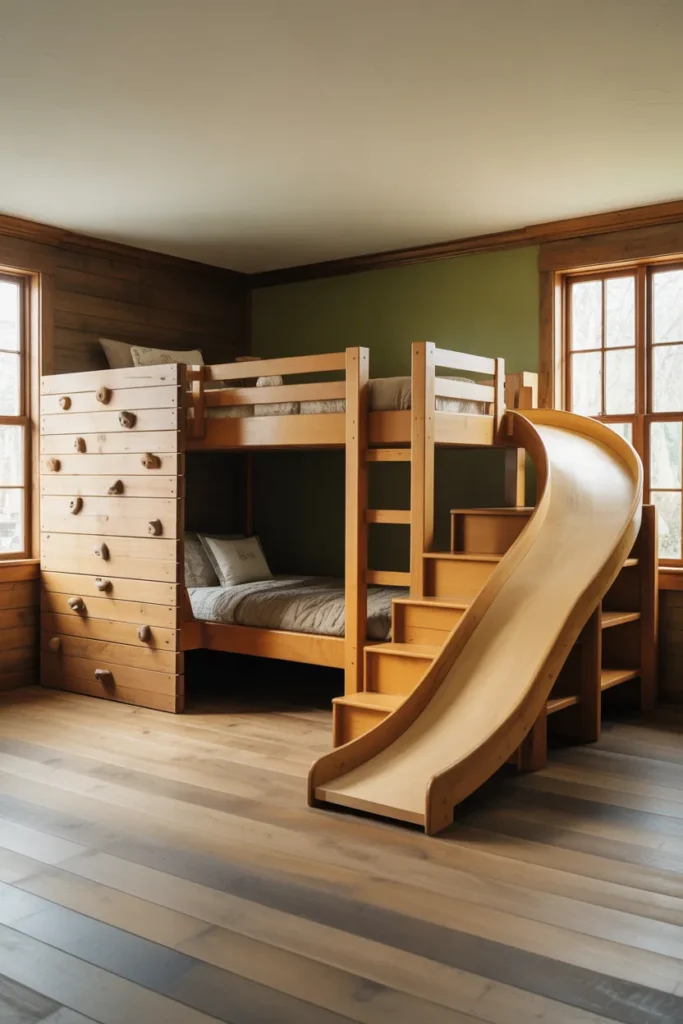
This layout performs best in rooms that are at least 10 by 12 feet. In smaller rooms, the footprint of the combined unit becomes too dominant and leaves insufficient space for any other function. Natural pine or solid birch are the best material choices for rustic character without sacrificing structural integrity.
Works well for ages 4 through 10. Beyond age 10, climbing wall interest typically declines and the design can feel childish.
5. Industrial Pipe Shelving With Vintage Wilderness Display Objects
Open shelving made from black iron pipes and reclaimed wood boards is one of the most practical and Pinterest-friendly design choices for a rustic adventure kids room. It provides visible, accessible storage while reinforcing the naturalistic theme through material and object choice.
The secret to making pipe shelving look designed rather than improvised is what you put on it. Limit the display to three categories: books with spines facing out, nature-themed objects in groups of odd numbers, and one or two functional items like a small clock or a table lamp. Keep every shelf from looking overcrowded. White space on shelves reads as intentional design.
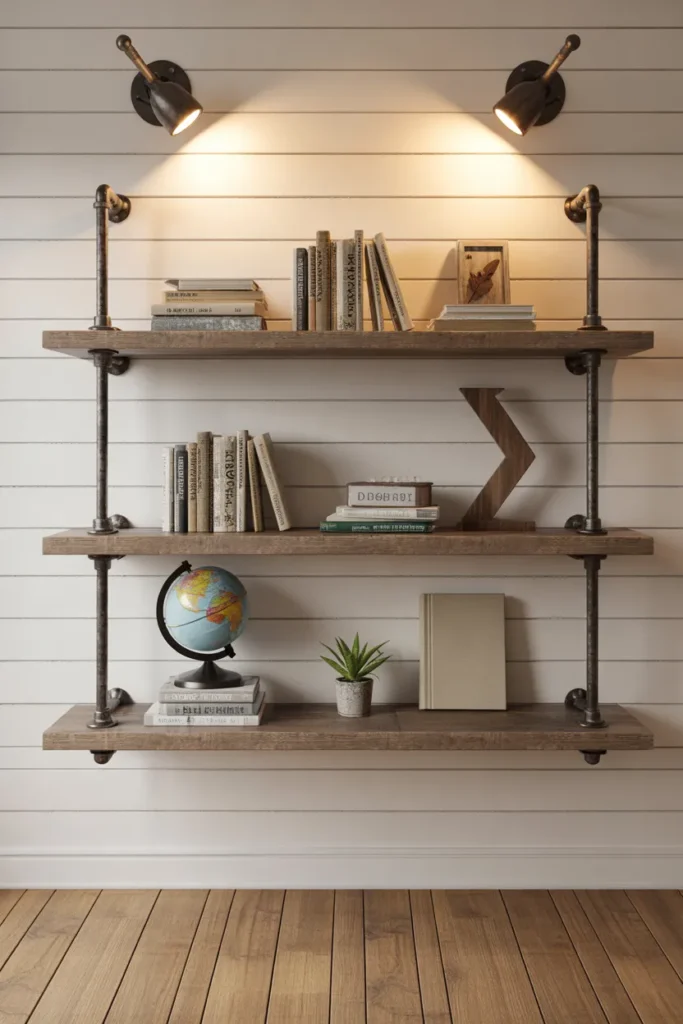
This approach works in virtually any room size and on any wall. It is particularly effective on walls adjacent to a desk area, where the shelving reinforces the functional zone without requiring additional furniture.
Avoid mixing too many object styles. A rustic adventure theme is diluted when plastic toys or brand-heavy items sit next to natural wood and stone objects. Keep the objects on display consistent with the theme.
6. Exposed Beam Ceiling With a Hanging Rope Swing Bed Frame
A ceiling-mounted rope swing bed frame is the single most visually striking element you can introduce into a rustic adventure kids room. When paired with exposed wooden ceiling beams, it creates a tree-house or barn-loft atmosphere that is genuinely difficult to replicate with any other design choice.
Installation is the critical factor. The rope anchor points must connect to structural ceiling joists, not drywall, and must be rated for the combined weight of the mattress, bedding, and the child. For safety, this bed style works best as a lounge or reading bed rather than the primary sleeping surface unless it is designed with motion-restricting hardware.
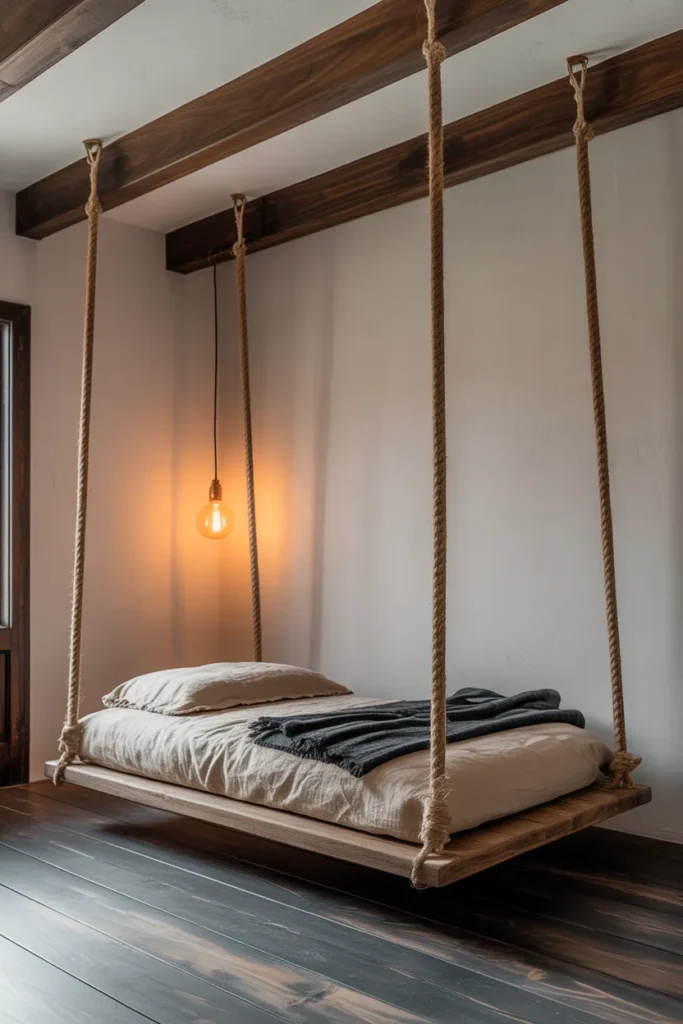
Use thick natural fiber rope rather than chain. Chain hardware reads as industrial and breaks the rustic character. The mattress should sit low in the frame, and the bedding should be natural in texture: linen, cotton canvas, or wool.
This layout suits rooms with ceiling heights of nine feet or more. In standard eight-foot-ceiling rooms, the structural requirements cannot be met safely.
7. Forest Green Accent Wall With Vertical Wood Slat Panel Headboard
A deep forest green painted accent wall combined with a vertical wood slat panel headboard creates a strong biophilic foundation for an adventure kids room without using any nature-themed graphics or prints. The combination of color and natural material texture does the visual work that wallpaper murals do but with more longevity and a less trend-dependent result.
The wood slat panel can be mounted directly to the wall surface and painted the same green or left in natural wood tone depending on the intended contrast level. Leaving the slats in natural wood against a deep green wall creates strong visual depth and suits photography-ready rooms for Pinterest.
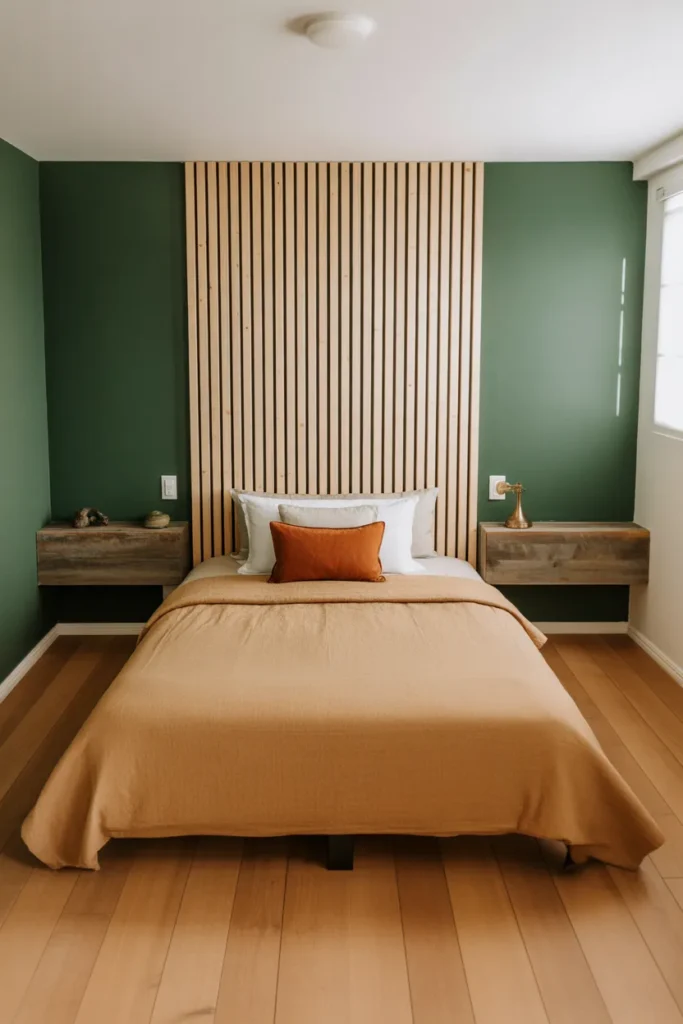
Pair this wall treatment with bedding in warm neutrals, cream, or soft tan. Avoid adding heavily patterned bedding when the headboard wall already carries significant visual texture. The room works best when the remaining three walls stay white or warm off-white.
This is one of the most scalable designs on this list. It works in small rooms, shared rooms, and large single-child rooms equally well.
8. Reading Nook Built Into a Recessed Alcove With a Barn Door
Converting a recessed wall space or a small closet opening into a built-in reading nook with a sliding barn door is one of the most functional and photographically compelling layouts for an adventure kids room. The barn door creates a sense of discovery, as children can open and close their own private space.
The interior of the nook should be kept simple. A thin mattress or bench pad in a washable fabric, two or three built-in shelves at children’s height, and a small wall-mounted reading light are sufficient. The simplicity inside the nook makes it feel like a retreat rather than an overcrowded corner.
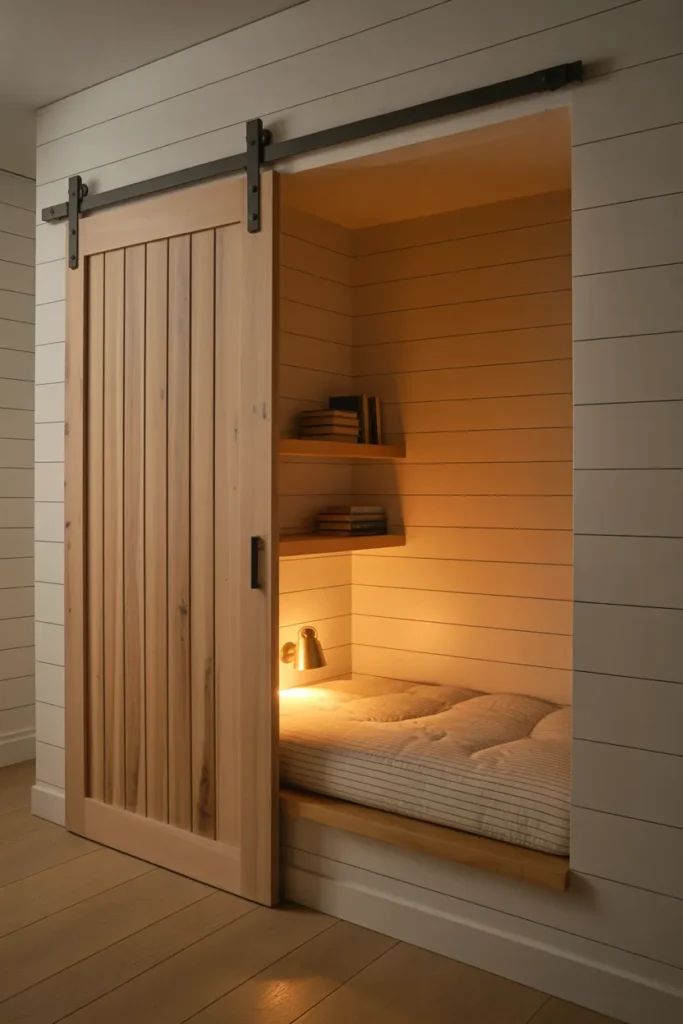
For the barn door, choose a natural knotty pine door with a standard black sliding hardware kit. Avoid faux-rustic doors with painted distress effects, as they look artificial in person and in photography.
This design requires either an existing architectural recess or a willingness to build one. Shallow closets that have been cleared out are the most cost-effective starting point. The nook performs best when it has at least 24 inches of depth.
9. Rustic Adventure Map Desk Nook With Pin Board and Pencil Holder Wall Rail
A dedicated study corner designed around the adventure theme serves both functional and aesthetic goals in a rustic kids room. The key is integrating the desk zone into the theme rather than treating it as a separate functional area that visually interrupts the room.
Mount a solid wood floating desk at the correct ergonomic height for the child. Above the desk, install a cork or burlap pin board framed in thin natural wood trim. Add a simple wall-mounted rail system with hanging hooks for pencil cups, scissors holders, and small baskets. The rail system replaces the need for a cluttered desk surface.
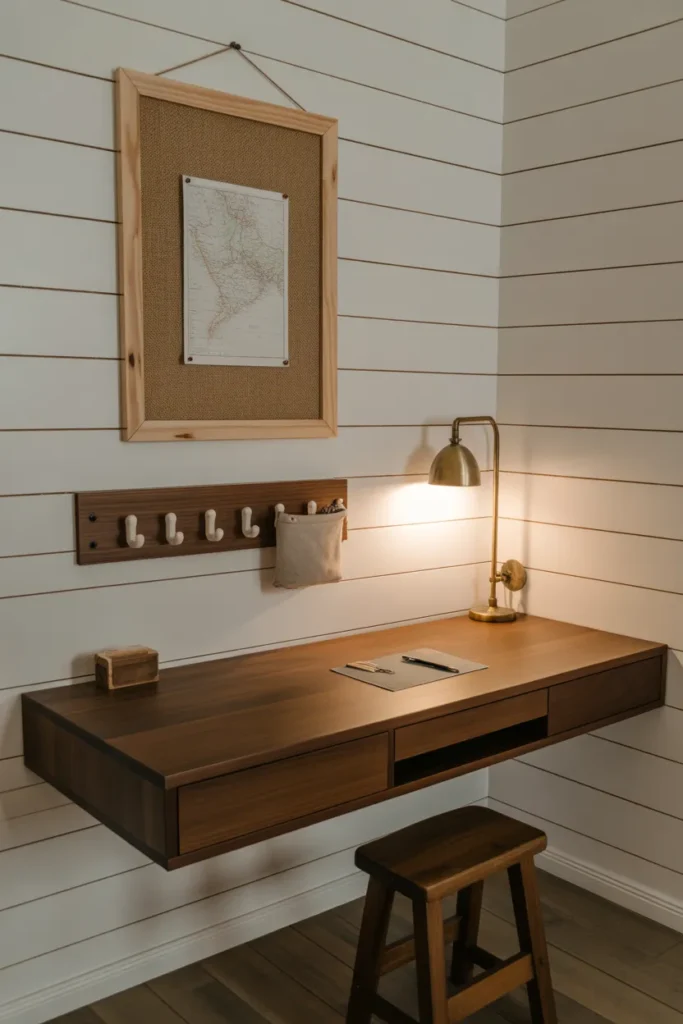
A wall-mounted brass or brushed iron gooseneck lamp provides targeted task lighting without taking up desk surface area. Keep the desk surface clear of everything except active schoolwork. A clear desk surface in photos is also critical for Pinterest performance.
Avoid placing the desk against a wall that lacks natural light entirely. Children benefit from at least indirect natural light at their study space, and the photography quality for this zone improves dramatically with a nearby window.
10. Vintage Canoe Hanging From the Ceiling as a Decorative Focal Point
A small vintage canoe suspended horizontally from the ceiling is the highest-statement rustic accent object available for an adventure kids room. It immediately signals the theme without using graphics, prints, or themed bedding, and it works in rooms that lean either rustic-minimal or rustic-maximalist in their overall character.
Structural mounting is essential. The canoe must hang from ceiling joists using proper load-rated hardware. A real antique or vintage canoe is preferable to a reproduction because the natural aging of the wood carries authenticity that reproductions cannot replicate. Keep the canoe empty or fill it lightly with rolled maps, a fishing net, or a few dried botanicals.
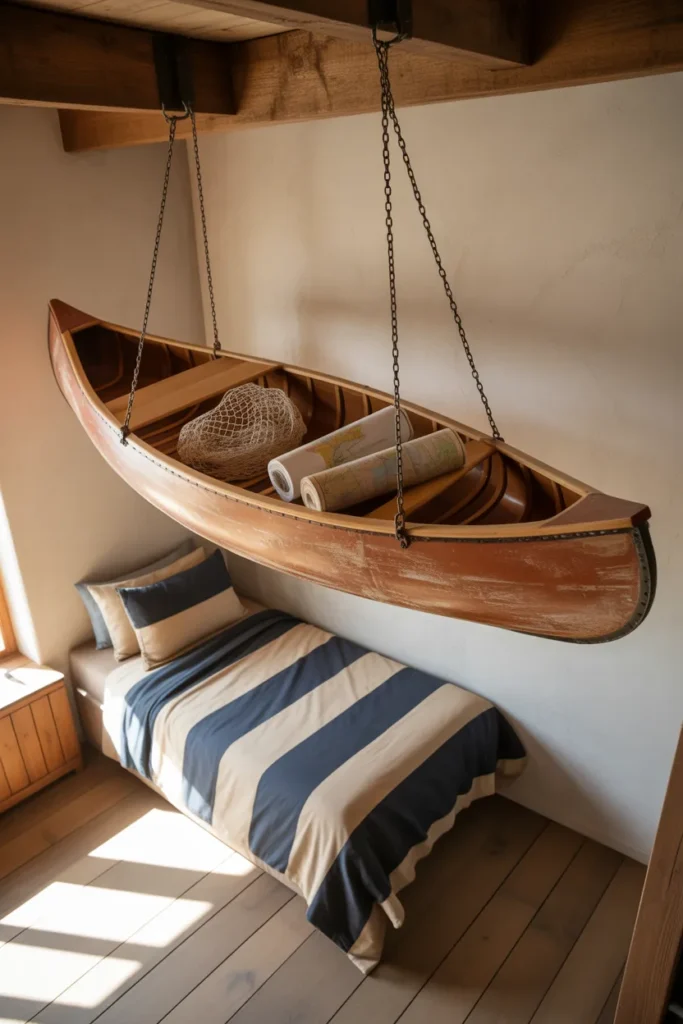
This design element works best in rooms with ceiling heights of at least nine feet. It also works significantly better in wider rooms where the canoe can hang lengthwise without dominating the entire visual field.
If a real canoe is not available, a narrower vintage wooden rowboat oar pair hung in a V-shape on the wall produces a similar character with less spatial requirement.
11. Stone Accent Wall Behind the Bed With Warm Edison Bulb Lighting
A stacked stone or faux-stone panel accent wall installed directly behind the bed frame creates an immediate cabin or mountain lodge atmosphere in a rustic kids room. When lit from below or from the sides with warm Edison bulbs, the stone texture casts dramatic shadows that make the space feel genuinely immersive.
Use natural stacked slate or a high-quality manufactured stone veneer panel. Avoid using single-tone smooth stone, which reads as dated rather than adventurous. Variegated tones in warm gray, tan, and rust work best for this application.
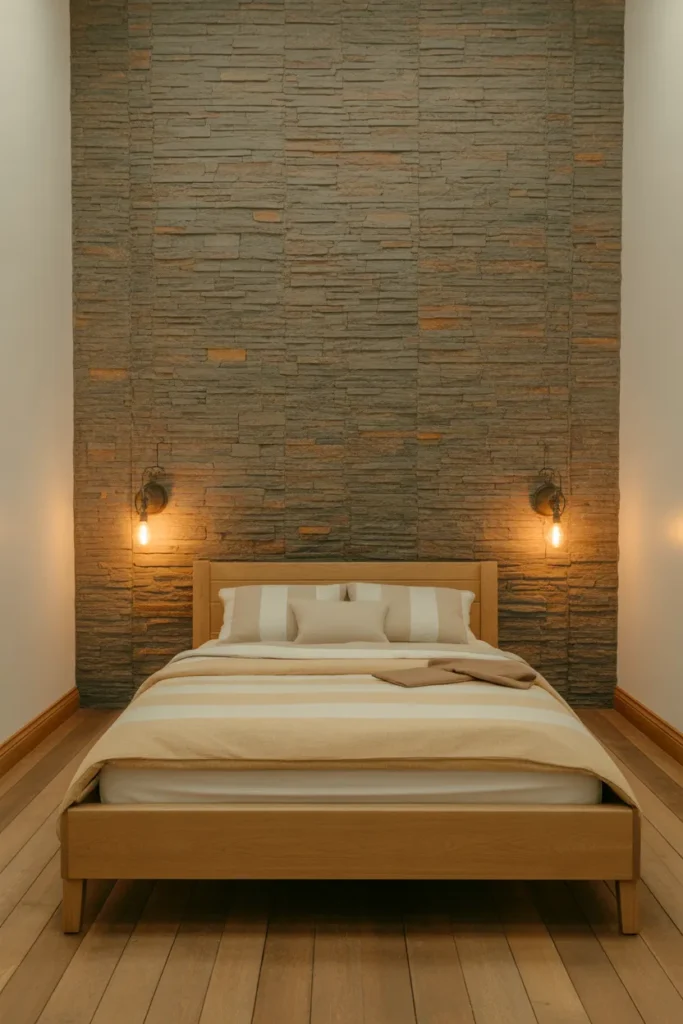
The bed frame in front of the stone wall should be relatively simple in design so the wall reads as the dominant element. A solid wood platform bed or a simple metal frame works well. Avoid heavily ornate or upholstered headboards that compete visually with the stone texture.
This design is particularly well-suited to basement bedrooms, converted bonus rooms, or rooms that have lower ceilings, where the stone wall creates warmth and visual interest without relying on height.
12. Outdoor Explorer Pegboard Command Station for Gear and Maps
A large pegboard panel mounted on one wall of the rustic kids room, styled as an outdoor gear command station, is one of the most Pinterest-saved ideas in the adventure kids room category. The pegboard functions as both storage and wall decor simultaneously, which is the defining characteristic of effective small room design.
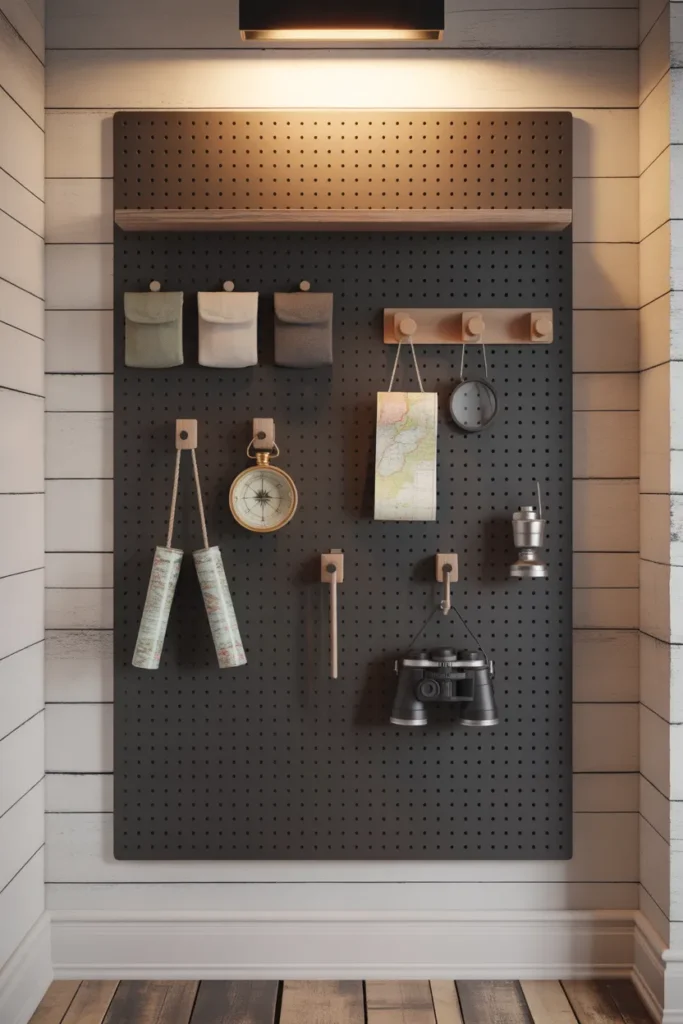
Paint the pegboard in matte black or leave it in raw wood MDF. Mount it at a height where the child can reach at least the lower two-thirds of the board independently. Accessorize with wooden hooks, small canvas pouches, a hanging magnifying glass, a compass, a rolled-up trail map, a small lantern, and a pair of binoculars. Every item on the board reinforces the theme and is a real usable object rather than a decoration.
The key distinction that separates a well-designed pegboard wall from a cluttered one is density control. Leave at least 30 percent of the pegboard empty. Overcrowded pegboards are among the most common mistakes in adventure-themed room design.
13. Nature-Inspired Gallery Wall With Botanical Prints and Wooden Frames
A curated gallery wall built around botanical specimens, topographic drawings, and hand-lettered adventure quotes in natural wood frames creates a cost-effective and highly adaptable layer of design for a rustic kids room. Unlike murals or wallpaper, a gallery wall can be updated one frame at a time as the child grows and interests evolve.
The arrangement should follow a structured grid layout rather than an eclectic salon-style hang. A structured grid reads as intentional and designed; eclectic arrangements work in adult spaces but often feel chaotic in smaller kids rooms. Use frames in two or three sizes maximum, all in the same natural wood or matte black finish.
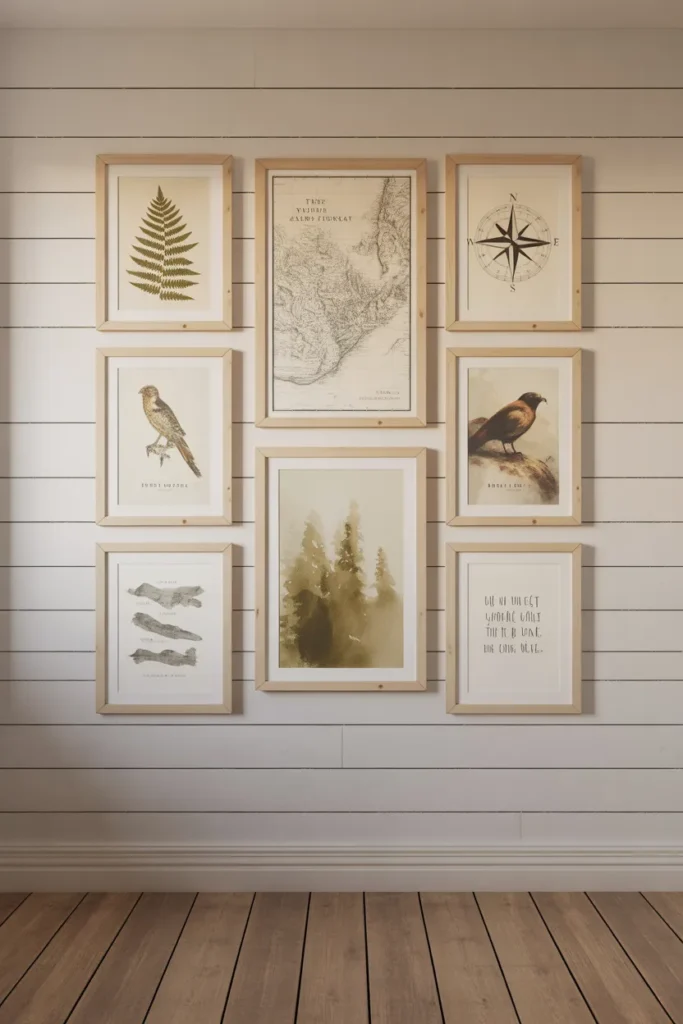
Content should be consistent in color palette. Prints in warm cream, olive, dark brown, and deep teal form the best color grouping for this theme. Avoid mixing bright primary colors or nursery-style illustration styles with realistic botanical or topographic prints.
This layout works on any wall in the room and pairs well with almost every other design element on this list. It is also one of the easiest options to execute without professional help.
14. Hammock Chair in the Corner With a Woven Rope and Driftwood Look
A ceiling-mounted hammock chair installed in an open corner of the rustic kids room provides an alternative seating option that children genuinely use daily and that photographs as a strong Pinterest anchor point. Unlike floor seating options, a hanging chair adds vertical visual interest to a corner that would otherwise remain empty.
Choose a woven cotton or macrame hammock chair in natural off-white, tan, or gray tones. Avoid brightly colored chairs that disrupt the natural palette of a rustic adventure room. The mounting point must attach to a ceiling joist and use hardware rated for dynamic load rather than static load, given the swinging motion involved.
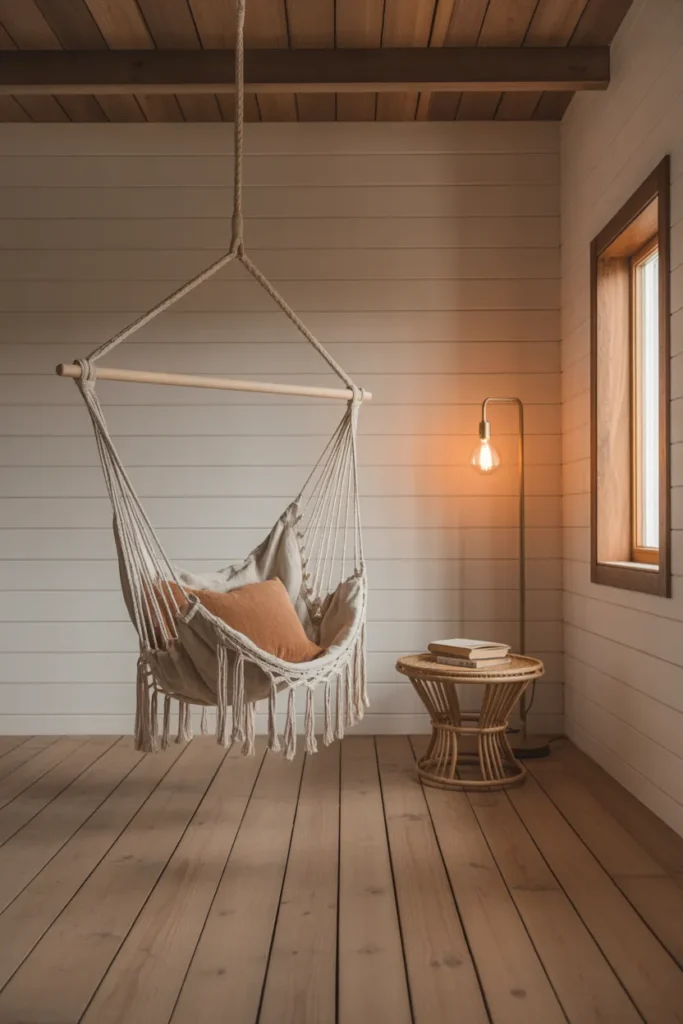
Add a small round rattan side table on the floor next to the hammock chair and a floor lamp with a warm Edison bulb. This transforms the corner from a single seating element into a complete secondary zone within the room.
This addition works in rooms that are at least 10 by 10 feet. Smaller rooms can accommodate a hammock chair but must sacrifice other furniture to maintain open floor space.
15. Full Under-Stair Conversion Into a Pirate or Forest Cave Den
For homes with accessible under-stair space adjacent to or connected to the kids room, converting that zone into an enclosed adventure den is the most imaginative and highest-engagement design decision available in adventure-themed bedroom design. The naturally low ceiling and enclosed shape of an under-stair space is perfectly suited to a cave, burrow, or forest hideout concept.
Line the interior walls with reclaimed wood paneling or add a stone-texture wallpaper inside the cave. Install a low wooden platform as the floor surface and cover it with a washable area rug and floor cushions. Mount a small LED strip light along the ceiling perimeter in warm amber to create an interior glow. Add a small window or porthole cutout between the den and the bedroom if the wall structure allows.
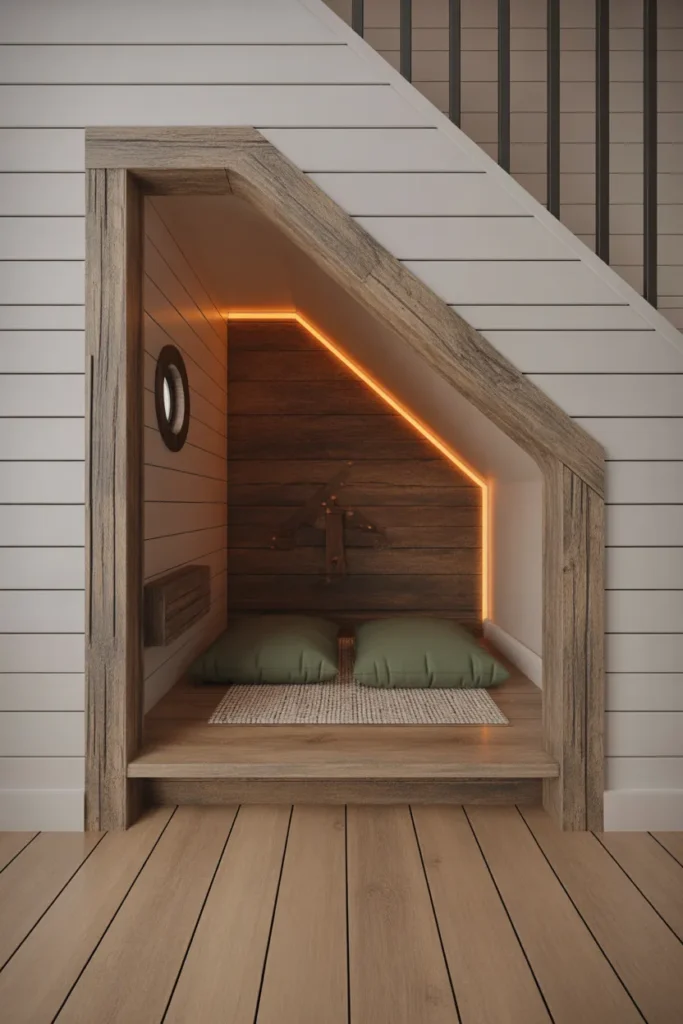
The entrance should be low and framed, not just an open gap. A small arched doorway framed in rough-cut wood creates the correct sense of entry and makes the space feel purposefully designed.
Avoid installing this type of feature without proper ventilation. Enclosed spaces without airflow become uncomfortable quickly and can create moisture issues in the wall cavity.
Conclusion
These 15 epic adventure bedroom ideas for a rustic kids room cover the full range of layouts, room sizes, and design approaches available today. Whether you are working with a compact room that needs smart vertical solutions or a generous space that can accommodate multiple zones, there is a design direction here that fits your specific situation.
The most effective rustic adventure kids rooms share three qualities: they use natural materials consistently, they build in at least one space the child can claim as their own, and they avoid overdecorating to the point where the room feels cluttered rather than curated.
Save this post to your Pinterest boards now so you can return to it when you are ready to move forward with a specific idea. If you are comparing layout options for a shared room or a particularly small space, explore our related posts on small kids room organization and shared bedroom floor plans for more targeted guidance.